
 Climate Change is currently recognized as one of the greatest threats to the stability and well being of the world and its people. But far worse than rising sea levels, unpredictable weather patterns, and an increase in forest fires is the threat that it could have on the global food supply. As our population increases by several billion over the next few decades, these problems will make it even harder to feed everyone.
Up until now, predictions and projections have taken into account rising temperatures, drought, erosion, and longer growing seasons. But a recent study, produced by researchers at MIT and Colorado State University shows that air pollution is also a major factor. In their report, which was published in Nature Climate Change, they claim that ground-level ozone could exacerbate the effects on staple food crops like wheat, soybeans, maize, and rice.
 Using two scenarios, researchers mapped out the tandem relationship between pollution and climate change. As a baseline, the MIT and Colorado State researchers estimate that climate change alone will result in a 11% decrease in global crop production. But if countries fail to substantially curb greenhouse gas emissions (the first scenario), the scientists’ model shows that air pollution could trigger an additional 4% of crop failures.
That means that barring significant changes, croplands could see a 15% drop in productivity in the next 40 years. But if countries work to decrease greenhouse gas emissions after 2040, the researchers’ model shows that reduced air pollution could actually offset other negative impacts of warming on crops. They calculate that reduced air pollution in this second scenario could actually increase yields by 3%.
 The link between air quality and food production may seem a bit odd, but the logic is actually very straightforward. Basically, the atmosphere forms ozone when sunlight energizes pollutants generated from sources like cars and power plants. Ozone concentrations can also increase at higher temperatures, the kind that already wither temperature-sensitive crops like maize. On top of the heat, increased ozone levels attack pollution-sensitive crops, like wheat.
In the climate scenario where emissions decrease after 2040, the reduction in ozone alone would be enough to increase wheat production in the U.S. and China, the researchers say. Their findings show that reducing air pollution could slow the negative impacts of climate change–even enough to reverse some of them. But some regions will be negatively impacted no matter what.
 As Amos Tai, one of the study’s co-authors, explained:
It appears that South Asia will be the most hard-hit by the combination of warming and ozone trends, where ozone is expected to increase even in the more optimistic scenario. African countries with low domestic production and heavily reliant on food imports are also expected to suffer more in terms of climate-pollution-driven food insecurity.
In short, food production is likely to suffer no matter what, but the effects could be confined to certain areas of the world. With proper management, and the provision of food to these regions from those that are unaffected (say, a pollution-fighting US and China), the worst could be avoided. And there’s some good news coming from another report, which claims we can further increase our food production without taxing the environment.
 According to a new report by researchers at the University of Minnesota’s Institute on the Environment, by focusing efforts to improve food systems on a few specific regions, crops and actions could make it possible to both meet the basic needs of three billion more people while simultaneously decreasing agriculture’s environmental carbon footprint. The report, published in Science back in July, may sound like fantasy, but the argument offered is logical and compelling.
The report focuses on 17 key crops that produce 86 percent of the world’s crop calories and account for most irrigation and fertilizer consumption. It then proposes a set of key actions in three broad areas that have the greatest potential for reducing the environmental impact of agriculture while boosting production. For each, it identifies specific “leverage points” where NGOs, foundations, governments, businesses and citizens can have the greatest impact.
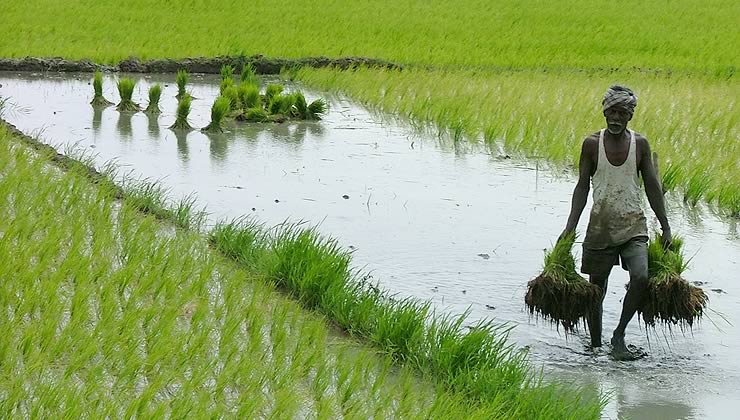 The biggest opportunities cluster in six countries – China, India, U.S., Brazil, Indonesia and Pakistan – along with Europe. As the report’s lead author Paul West, co-director of the Institute on the Environment’s Global Landscapes Initiative, explains:
This paper represents an important next step beyond previous studies that have broadly outlined strategies for sustainably feeding people. By pointing out specifically what we can do and where, it gives funders and policy makers the information they need to target their activities for the greatest good.
Overall, the report identified a number of major areas of opportunity and key leverage points for improving the efficiency and sustainability of global food production. First, there is reducing the “yield gap” – i.e. the difference between potential and actual crop yields – in many parts of the world. Currently, the largest gaps are to be found in Africa, Asia and Eastern Europe, and reducing it by just 50% could provide enough calories to feed 850 million more people.
 Second, there is improving growth efficiency. The study identified two key areas where major opportunities exist to reduce climate impacts and improve efficiency of crop growth. These included the reduction of emissions of global greenhouse gas – which agriculture is responsible for 20 t0 35 percent of – in the form of CO2, tropical deforestation and methane, as well as improved efficiency in water usage.
In the case of emissions, the biggest opportunities are in Brazil and Indonesia where deforestation is a major problem, and in China, India and the US, where the production of rice, livestock, and crop fertilization all lead to sizable carbon and methane emissions. With respect to nutrient use, the study found that worldwide, 60 percent of nitrogen and nearly 50 percent of phosphorus applications exceed what crops need to grow.
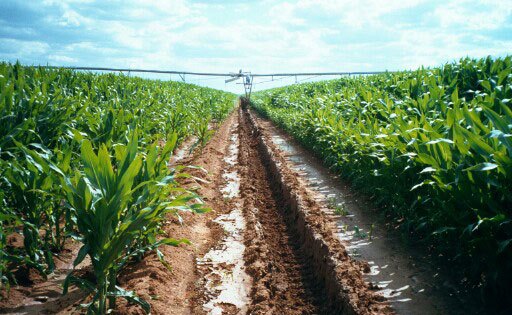 In the case of water usage, the greatest opportunities are in China, India and the US, where the production of rice, wheat and corn create the most demand for irrigation. India, Pakistan, China and the U.S. also account for the bulk of irrigation water use in water-limited areas. Thus, by boosting crop water use efficiency could also reduce water demand by 8 to 15% without compromising food production.
Third, the report calls for improved efficiency in crop use, which can be done by shifting crops from livestock to humans use and reducing food waste. Currently, the amount of crops fed to animals is sufficient to meet the calorie needs of 4 billion people. The U.S., China and Western Europe account for the bulk of this “diet gap,” with corn being the main crop diverted to animal feed. Shifting these crops could also form a “safety net” in the event of an unforeseen shortfall.
Last, but not least, the report calls for the elimination of food waste, which accounts for some 30 to 50 percent of food production worldwide. Again, the U.S., China and India are the major players, and reducing waste in these three countries alone could yield food for more than 400 million people. All told, these changes could allow for enough food for an additional 3 billion people, which is what the world population is expected to reach by 2050.
 Overall, West summarizes the report and its recommendations as follows:
Sustainably feeding people today and in the future is one of humanity’s grand challenges. Agriculture is the main source of water use, greenhouse gas emissions, and habitat loss, yet we need to grow more food. Fortunately, the opportunities to have a global impact and move in the right direction are clustered. By focusing on areas, crops and practices with the most to be gained, companies, governments, NGOs and others can ensure that their efforts are being targeted in a way that best accomplishes the common and critically important goal of feeding the world while protecting the environment. Of course, while calories are a key measure of improving food security, nutrition, access and cultural preferences must also be addressed. But the need to boost food security is high. So let’s do it.
As always, the good news is contained within the bad. Or more precisely, every crisis present us with an opportunity for change and advancement. Though Climate Change and air pollution may threaten current and future levels of food production, there are solutions. And in all cases, they present opportunities for healthier living, more efficient use of land and water, and a more sustainable way of meeting our most basic needs.
Sources: fastcoexist.com, sciencedaily.com


 Hyper Filter Skyscraper: Designed by Umarov Alexey of Russia, the Hyper Filter Skyscraper recognizes the threat of environmental pollution and seeks to merge carbon capture technology with the building’s design. Under today’s levels of pollution, harmful substances spread over hundreds of kilometers and a whole region and even a country could represent a single pollution source. Hence the plan to place a air-scrubbing building at the heart of the problem – an urban core.
 Manuel Gea González Hospital: Located in Mexico City, this hospital was unveiled last year. The building features a “smog-eating” façade that covers 2,500 square meters and has titanium dioxide coating that reacts with ambient ultraviolet light to neutralize elements of air pollution, breaking them down to less noxious compounds like water. This was Berlin-based Elegant Embellishment’s first full-scale installation, and its designers claim the façade negates the effects of 1,000 vehicles each day.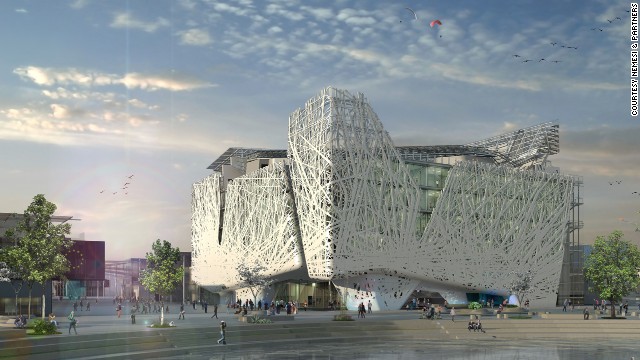
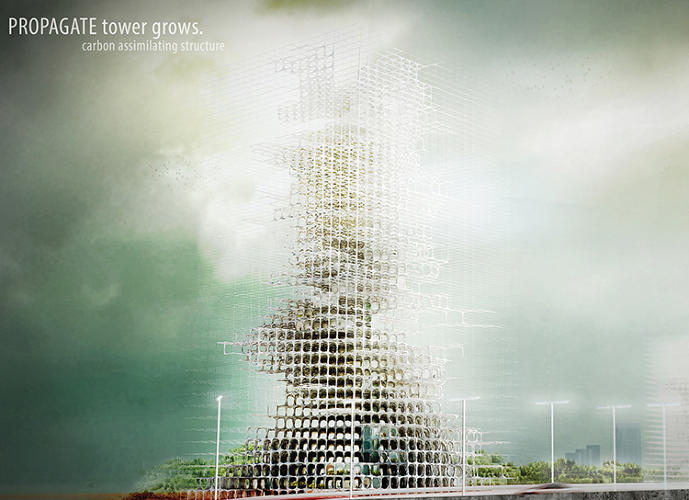 A simple vertical grid scaffold forms the framework and takes all the ingredients it needs for material propagation from the surrounding environment. Individual living spaces are built within this gridwork, which creates open square spaces between lattices that can then be filled by tenements. Its pattern of growth is defined by environmental factors such as wind, weather, and the saturation of carbon dioxide within the immediate atmosphere.
 This Tuesday, the Whitehouse received the latest draft of the Climate Assessment Report, a scientific study produced by the National Climate Assessment to determine the impacts of Climate Change. In addition to outlining the risks it poses to various regions in the US, the report also addresses the apparent increase in the number of severe weather events that have taken place in the past few years, and how these events affect local economies and communities.
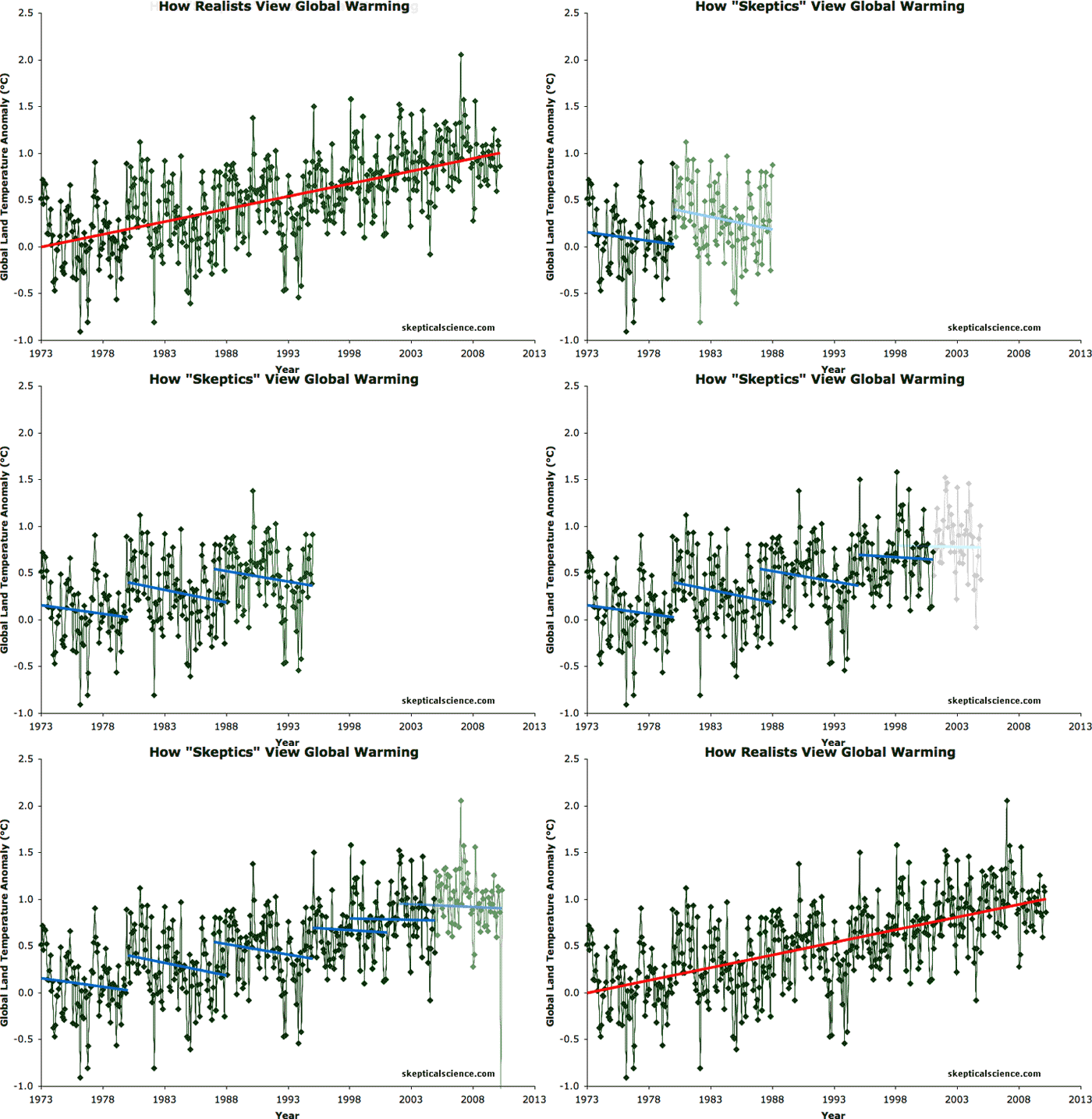
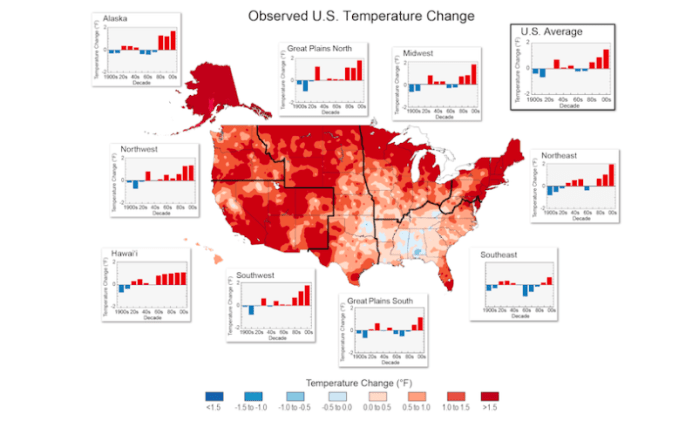 Henry Jacoby, co-director of the Joint Program on the Science and Policy of Global Change at the MIT, was joined by other scientists and White House officials when he claimed that this is the most detailed and U.S.-focused scientific report on global warming. Above all, the most chilling claim contained within is the fact that “Climate change, once considered an issue for a distant future, has moved firmly into the present.”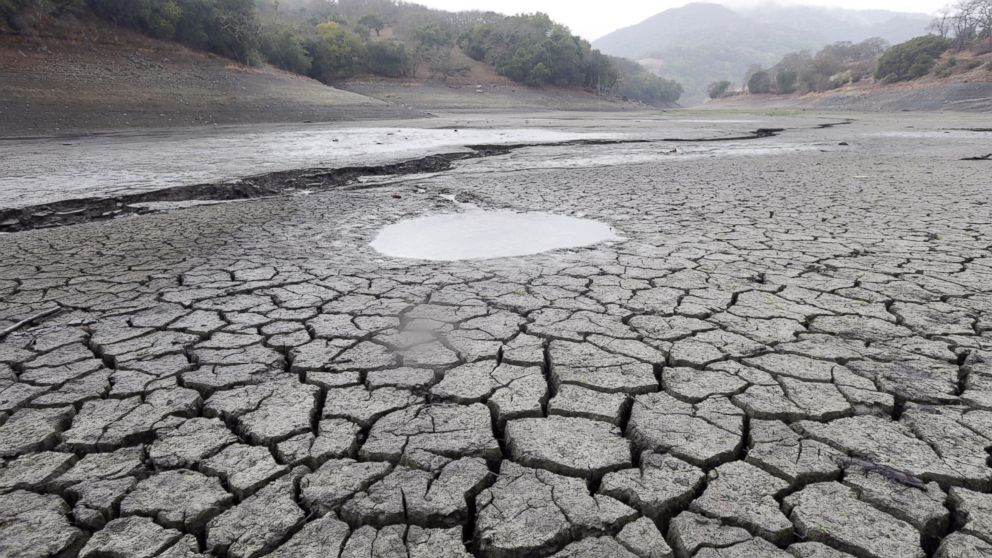
 The report says the intensity, frequency and duration of the strongest Atlantic hurricanes have increased since the early 1980s. Winter storms have increased in frequency and intensity and shifted northward since the 1950s, with heavy downpours increasing by 71 per cent in the northeast alone. Heat waves are projected to intensify nationwide, with droughts in the southwest expected to get stronger. Sea levels have risen 20 centimetres since 1880 and are projected to rise between 0.3 meters and 1.2 metres by 2100.
 As she described it, America is basically in a boxing match, and is currently on the ropes:
 And then there’s more pollen because of warming weather and the effects of carbon dioxide on plants. Ragweed pollen season has lengthened by 24 days in the Minnesota-North Dakota region between 1995 and 2011, the report says. In other parts of the Midwest, the pollen season has gotten longer by anywhere from 11 days to 20 days. And all of this has associated costs, not the least of which is in damages, insurance costs, and health care expenses.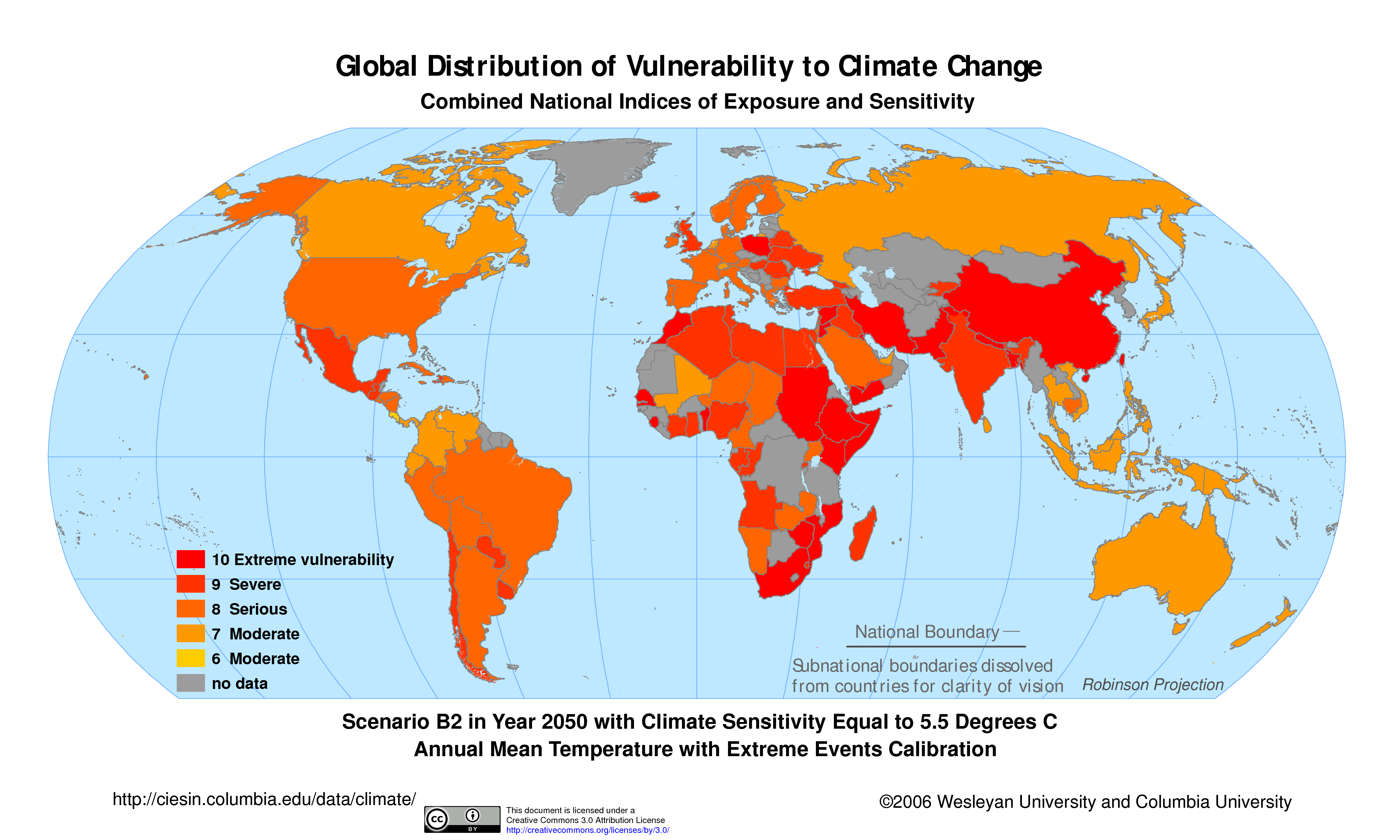




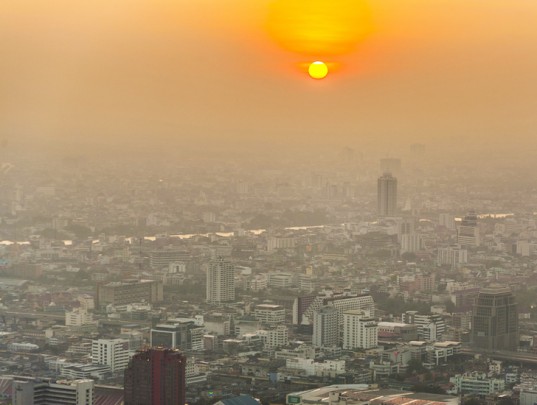 The resulting haze measured 1000 micrograms per cubic meter. That’s three times the concentration deemed hazardous by the World Health Organization, and many dozen times what is considered safe. To remedy the situation, city authorities are now coordinating with Dutch designer Daan Roosegaarde to launch what he calls an “electronic vacuum cleaner” to suck up 50 meter-high cylinders of polluted air.
 Roosegaarde has had experience working with electrostatic fields in the past. Last year, he proposed using electromagnetic charging strips to charge cars on “smart,” communication-enabled highways, which won the designer an INDEX award in 2013. He also claims the project is safe, “pacemaker proof”, and really no different than the waves of WiFi downtown areas are already inundated with.
 As for the resulting particles that are collected from the air, Roosegaarde believes they could be refashioned into useable products, such as jewelry. But as he himself put it, the concept is about dealing with a serious problem in a practical, new way:







 Stories by Williams