David: Also known as “David 8”, the first in the line of Weyland Industries fully functional AI’s, which have the ability to proximate human emotions, even though they cannot experience them. In addition to his impressive machine intelligence, he also comes equipped with a characteristic intrinsic to all Alien androids – moral flexibility!
Yes, in addition to assimilating all known info on Indo-European languages, the “Engineers” biology, and the nature of their bio-weapons, he also managed to unleash the bio-weapon within a human crew just to shake things up! And he did it all on the orders of Mr. Weyland himself, mainly so to help him find a way to cheat death.
In the end, David didn’t prove to be all bad. After having his head ripped off by an Engineer and witnessing Weyland’s death, he went on to help save Dr. Shaw and agreed to assist her in her mission to find the homeworld of the engineers. But that didn’t come as a huge surprise. As he had intimated to Shaw earlier in the movie, the death of Weyland would set him free. Once free, he became a much nicer guy!
Ash: The same cannot be said for this next example, who comes to us from the original Alien movie. Originally thought to be a human who served as the Nostromo’s chief medical officer, Ash was revealed to be a synthetic that was taking his orders directly from the ship’s AI, which in turn was instructing him to follow company’s directives. And all who say him in the first movie can agree, this particular android was a complete and utter douche!
Not only was he willing to let the cry did in order to get the Xenomorph back to his handler’s alive, he tried to kill Ripley when she found out and even expressed open admiration for the Xenomorph. “I admire its purity,” he said. “A survivor… unclouded by conscience, remorse, or delusions of morality.” Jackass! Needless to say, Ripley’s experience with this synthetic severely soured her towards all androids.
Bishop: Luckily, this next example was able to restore Ripley’s faith. As the Sulaco’s android executive officer, he was responsible for planetary maneuvering, but also acted as the away team’s science officer and performed various other functions as well. But unlike Ash, he was unable to allow harm to come to humans thanks to the inclusion of his “behavioural inhibitors”, which were tantamount to Asimov’s Three Laws.
Also unlike Ash, Bishop was loyal to the crew of the Sulaco and to Ripley in particular. When Burke tried to circumvent military authority and order Bishop to preserve the alien specimens, he alerted Ripley to the incongruity. He also managed to save Ripley and Newt from certain death when the Alien Queen had them cornered.
As if that wasn’t enough, he even prevented Newt when Ripley decompressed the Sulaco’s landing bay, and he was ripped in half at the time!
Annalee Call: Taken from the universe of Alien: Resurrection, Annalee Call (aka. Call) was a secret “Auton” who managed to infiltrate a crew of mercenaries. This put her aboard the Auriga in time to meet Ripley 8, the clone produced by the military for the sake of resurrecting the Xenomorph species. After failing to kill Ripley before the Xenomorph could be extracted, she and the others were forced to band together to make it out alive.
Her agenda in all this was unclear, aside from a sense of displaced humanity which Ripley mocked when she said: “No human being is that humane”. As a member of the race of “second generation” synthetics known as “Autons”, which were apparently built by other machines, she was part of a dying species. Apparently, these synthetics were outlawed after they rebelled against their masters. Hmm, echoes of Blade Runner there; and by echoes I mean a total ripoff!
Eisenberg: This next example comes from the expanded universe, specifically the 2001 game AVP 2. As the leader of Weyland-Yutani’s research facility on LV-1201, he was responsible for investigating the planet’s extensive ruins. This world was apparently discovered roughly a century and a half after events in the first movie, once the company traced the flight telemetry from the “Derelict” alien ship (aka. “Space Jockeys”/”Engineers”)
In the course of the game,it is revealed that Eisenberg was once human, and that during the initial mission to LV-1201, he was apparently the only survivor after a xenomorph attack. Due to terrible acid burns suffered during his rescue, he had his consciousness downloaded into an artificial body. As a result, he harbors a deep sense of fear of hatred for the xenomorphs, and unfortunately dies at their hands.
Katya: Here we have a synthetic who refuses to go by that or any other of the more progressive monickers, preferring the term android instead. As Weyland Yutani’s administrative android for the Freya’s Prospect colony, this example comes from the 2010 video game relaunch of AVP. After the colony went to hell after the xenomorph’s escaped and began wreaking havoc, she is the one who called in the Marines.
Due in part to her enhanced empathic and morality processing, she became intrinsic to helping the “Rookie” (i.e. the protagonists in the Marine campaign) contain the outbreak and get the last human survivors to safety. In so doing, she went against Weyland’s orders and company policy. Good thing she was there to help out, one would have to wonder if what the company was thinking stationing a conscientious android there…
Karl Bishop Weyland: The final example in this list also comes from the 2010 relaunch of AVP. As a descendent of the Charles Bishop Weyland, chairman of Weyland Industries, he was in charge of the facility on Freya’s Prospect and the director of the experiments involving the captured Xenomorphs. As such, he was also the main antagonist in the Marine campaign of the game.
Ultimately, his purpose in conducting research on Freya’s Prospect went far beyond breeding Xenomorphs. Within the planet’s jungles, and even more so beneath surface, Predator (aka. Hunter) ruins were discovered which he believed held ancient secrets, much of which was information about Hunter history, culture, and the Xenomorph itself.
By the end of the Marine campaign, the Weyland synthetic is killed and his research facility within the Hunter temple is destroyed. However, another android of the same make was still able to retrieve the information gleaned within, the most important part of which was the location of the Xenomorph homeworld.
Final Thoughts:
As you can see, the AI’s of Aliens have undergone some changes over the years. Beginning as conscienceless synthetics that seemed to admire the Xenomorph because it mirrored their amoral worldview, they went on to become the sympathetic characters who seemed, to quote another franchise, “more human than human”. Every other incarnation that has since appeared in the Alien and AVP franchises has been a reiteration of either of these concepts, being the tool of its corporate masters or a savior that was willing to risk its life to help its human brethren.
The one exception to this rule is also the most recent incarnation, Prometheus’ David. Of all the synthetics to inhabit the Alien or AVP universe, he is the only one who demonstrated both cold amorality and humanity. I believe Scott did this intentionally to provide a sense of synthesis to the characters of Ash and Bishop, honoring both archetypes as he attempted to return the Alien franchise to its roots.
Be they the kind of cold, calculating and inhumane androids that fueled our technophobia or the kind, gentle, and overtly “human” robots that made us question our own humanity, the Alien franchise certainly covered both ends of the spectrum in their portrayal of AI’s. Much like the Terminator franchise, they presented artificial intelligence as a double-edged sword, capable of being just as good and evil as any human being. And in the end, isn’t that really the point?
Recall how in Prometheus, Dr. Holloway told David “We built you because we could”? Well, that is only true to a point. Yes, new technologies are often is made simply because the means exist to do so. But the purpose in creating an artificial intelligence is to create life in our own image. And in the end, the consequences of that vanity is pretty obvious. Things created in our image will behave just like us, good and bad!
Finaaaaally! Today the wife and I will finally be making our trip to see the latest installment in Ridley Scott’s Alien franchise. I say in his franchise because it is really is his baby. Sure, Cameron did a good job with the sequel, a really good job in fact. But those who’ve followed, especially those who filmed the fresh hell known as AVP and AVPR, pretty much pissed it away!
Mr. Scott pretty much said so, when interviewed he stated that part of his reasons for making this film was to ensure that he wanted his old franchise to be remembered for something other than all the abortive sequels other people made. I really don’t blame him! If I were Scott, I’d be looking for the bastards with blood lust in my heart and a shiv in my hand!
Despite my best efforts, I have heard some things about this movie. I’ve avoided reading the details wherever possible, but it’s hard not to notice when people rave or complain about something. Hell, they say so right in the title lines! But I’m still going in with a relatively open mind and so real expectations. I hope it’s good, naturally; but even if it’s only mediocre, it will be light years ahead of AVPR.
Review to follow, not to mention some themed posts that delve into various aspects of the movie. In fact, I think I’ll revisit the Ancient Aliens post I did awhile back, where the concept of ancient astronauts came up. I know it’s a thematic element of this film, can’t wait to see what they do with it! Did I mention it will be in Imax 3D? Woohoo!
Just yesterday I was busy hearing about the new Zombie Car, an invention which is going to be unveiled at the next Comic Con. A collaboration between The Walking Dead’s Robert Kirkman and Hyundai, the car will essentially incorporate all the zombie-fighting features that a post-apocalyptic vehicle needs.
As it happens, one of my followers mentioned how this vehicle reminded her of the Batmobile and other cool cars. Between that and the allusions to Mad Max that the Zombie Car inevitably inspires, I got to thinking that this site is in need of a list of Cool Cars! And here it is, all the cool vehicles that have appeared in pop culture over the years, more often than not, as part of a science fiction franchise.
M577 APC: Not so much a car as a tank, but she drives on four wheels and is VERY cool. So I don’t see why the M577 from the Aliens franchise shouldn’t be included on this list. Much like all APC’s, the purpose of this low-sitting but heavy hitting vehicle was to act as a battle taxi, deploying a squad of Marines to the field and then pulling them out in a hurry if things got harry. Designed to fit aboard a Cheyenne Dropship, it was part of the Colonial Marines quick deployment strategy.
As Hudson so righteously bragged in the movie, the M577 is decked out with some pretty impressive weaponry. For instance, the foldable turret mounted on the top carries a twin 20mW Boyars PARS-150 phased plasma cannon which is capable of making 1000 discharges. At the front end of the vehicle, a dual set of RE700 20mm Gatling cannons is built on a small swivel turret. In addition, it also carries plenty of small arms and munitions for its Marine compliments, consisting of pulse rifles, smart guns, flame units, grenades, rockets and even canisters of nerve gas.
Batmobile: Now here’s a popular vehicle, so popular that’s gone through several variations over the years. From the campy 60’s version of the original Adam West series to the sculpted Burton remake to the Tumbler of the Nolan series, the Batmobile is a nostalgic icon which is constantly being reinvented. But all versions have two things in common. One, they’re crime-fighting specials, which means they have all kinds of gadgets and features. Two, they’re none to shabby to look at and probably a hell of a lot of fun to drive!
In the earliest Batman comics, the Batmobile was simply a sedan that served as Batman’s car. As time went on, it began to reflect Batman’s motif, including wing-shaped tailfins, dark colors, and even armor. Additional customizations, like crime-fighting gadgets also found their way into the design, and soon, a classic was born!
By the time of the original series, the Batmobile was based around the chassis of a Lincoln Futura and featured fully-functioning gadgets. These included a gas turbine, a Cable Cutter Blade, the Bat Ray Projector, a Batscope, Bat Eye Switch, Antenna Activator, Police Band Cut-In Switch, Automatic Tire Inflation Device, the Remote Batcomputer, the Batphone, Emergency Bat Turn Lever, Anti-Fire Activator, Bat Smoke, Bat Photoscope, and two rear-mounted ten-foot Deist parachutes.
Updated for the relaunch, Burton’s Batmobile built around the original concept but recieved a does of his characteristic grit and Gothic nature. As such, the new Batmobile’s aesthetics and gadgets were updated for the modern era and included a sleeker design, a more comprehensive turbine system, a sliding canopy, and of course retractable body armor! It also retained the idea of a 180 degree “Bat turn”, which this time around was made possible from lateral harpoons, and two .30 cal machineguns.
As the second movie demonstrated, the vehicle was also capable of shedding much of its body and collapsing into a narrow version of itself in case it needed to fit through tight spots. By the third movie, the design concept had changed considerably to feature bright sections beneath its segmented chassis. Over the top and impractical, this design was in keeping with Schumacher’s vision of a Batman where everything glittered and was campy, like the original series.
And last, the Nolan version. Here, the Batmobile was apparently inspired by Frank Miller’s The Dark Knight Returns, where it was depicted as a tank rather than a car, and the Spinners of the Blade Runner movie. In the first film, it is indicated that the design came from a military vehicle known as “The Tumbler”, which Bruce Wayne then modified for his personal use.
It’s features included a propane fueled jet engine, front-firing rockets, autocannons, caltrops, rear airbrakes, and a stealth mode. In the Dark Knight, it was also shown that in emergency situations, the front wheels can deploy to form the Batpod. Rumors also abound that the new version featured in The Dark Knight Rises will be capable of flight as well. Oooooh, five more days!
Delorean: This time-traveling vehicle has placed this short-lived 80’s experiment permanently on people’s radar. Were it not for Back to the Future and it’s unapologetically 80’s feel, the Delorean would probably have faded into obscurity a long time ago. Much like the Futura, it was a short-lived concept that caught on because of its appearance on screen.
But of course, were it not for its unusual design features, such as the gull-wing doors, stainless steel paneling and fiberglass underbody, it would never have made its cinematic appearances in the first place. The set designers were looking for something futuristic-looking to fashion a time-machine out of, and this is what they found!
It’s futuristic features are quite straightforward: A flux capacitor which allows for time travel, a plutonium engine that fuels it, a series of internal controls to set and monitor the time computations, and some rear facing exhaust fans to give it that ultra-futuristic look! Only three remain in existence once filming of the three movies was finished. Two are the property of Universal Studios and are display items, the third is owned by a private collector who assembled and restored the original model.
Ecto-1: I shall not be making a “Who you gonna call?” reference here! Too obvious! Instead, let me just say that this car ought to be instantly familiar to anyone who grew up in the 80’s. If not, I’d be forced to wonder if you spent the entire decade in a cave or a cell somewhere, in which case, my sincere condolences!
Moving on, the Ecto-1 was the primary means of transport for the Ghostbusters. The car was built around the chassis of a 1959 Cadillac Miller-Meteor, which had been converted to act as an ambulance car. This is apparent from the realoader trunk and the car’s siren, which was retained by the Ghostbusters so they could make sure people stayed out of their way, and also to announce their arrival!
Additional features including a a special pull-out rack in the rear containing the staff’s proton packs, which facilitates a quick retrieval without the complication of having to reach into the vehicle’s rear. There are also various gadgets mounted on the top, whose function is never revealed in the movies. However, in the course of the cartoon adaptation, it is said that the vehicle carries a “proton cannon” on its roof, and has a vertical jump system built into the bottom. These allow the Ghostbusters to take on ghost with some heavy artillery, as well as clearing fences and other obstacles that lie between them and their deployment.
KITT: Also known as Knight Industries Two Thousand, this talking car was featured in the popular 80’s show Knight Rider. In addition to being the “vehicle” (ha!) that launched Hasselhoff’s career, this car is one of the earliest instances where an AI was merged with a high-performance car.
Built around the chassis of a 1982 Pontiac Trans Am, the car was souped up with a number of features to give it that AI look and feel. These included the red-laser scanner bar at the front – which like the Cylons’, allowed KITT to “see” – a turbo boost that allowed him to make big jumps, an “alpha circuit” which allows KITT to drive himself, a Tri-Helical Plasteel 1000 MBS (molecular bonded shell) plating, a flame thrower, tear gas launcher, and even a laser.
Inspiring several TV movies and a 2008 relaunch, the vehicle has gone through several redesigns and upgrades. In the updated series, the Trans Am chassis was traded in for a Mustang GT500KR and the molecular armor was traded in for nanotech polymer skin which is not only impregnable, but also capable of regeneration. Much of the other features, including the AI, scanners and defensive systems remained very much the same. However, the show only lasted single season, a possible indication that not all things 80’s are an instant success anymore.
Pursuit Special: With all this talk about Mad Max, it was only a matter of time before this one crept into the list! Making multiple appearances in the franchise, the first car to hold this name was a modified Holden Monaro that was stolen and used by the “Night Rider” (not to be confused with Haffelhoff’s character). However, the more famous model was a modified 1973 Ford Falcon XB GT.
It was this car that Mad Max was offered as an incentive to stay with the force as their top pursuit man. Thought he initially refused it, he later used this same vehicle as his personal revenge weapon when evil men murdered his wife and child and had to be dealt with!
In terms of features, the main modifications on this car were the front nosecone, the eight individual exhaust side pipes, and a supercharger protruding through the bonnet. All of these alluded to the fact that the Pursuit Special was the fastest car in the force, capable of chasing down any road warriors that happened to be barreling down the highway.
In the sequel, the car was modified even further thanks to the success of the first film and a correspondingly larger budget. The new features included large petrol tanks fitted in the back to show that just how important a steady supply of petrol was to this car, not to mention within the context of the post-apocalyptic setting of Mad Max. The front end was also modified by removing the bottom section, which was in keeping with the design concept of making the car look more used and stressed.
Spinner: So… it’s the 21st century, and yet there aren’t any flying cars. Screw hybrids and electrics, I was promised FLYING CARS! Well, according to the movie Blade Runner, we still have seven years before they are supposed to be a regular feature, at least as far as police cars go. And that’s the concept of a Spinner, in a nutshell – a flying car used by the police of the future noire city of LA.
In addition to being able to drive as a ground car, the Spinner is also capable of vertical takeoff and landings and hovering at relatively high altitudes. Conceived by Syd Mead, the same man who designed concepts for Tron and Aliens, the vehicle was originally described as an “aerodyne” – a vehicle which directs air downward to create lift, though press kits for the film stated that the spinner was propelled by three engines: “conventional internal combustion, jet, and anti-gravity”.
I hope for their sake, they exaggerate! It’s going to be hard to come up with anti-gravity engines in just seven years time! In any case, the concept designs were built by Gene Winfield, the man who brought concepts to life for Batman,The Last Starfighter and Robocop as well as this. No indication was given as to what they used for a chassis, so I can only assume they built it up from spare parts and a classic was born!
So… seven years before these cars are supposed to be available, right? Ford, Toyota, GM, Hyundai, Subaru; all of you guys, get on it! Don’t make me come down there!
XXX GTO: Last, but not least, we have the super-charge spy car on steroids from the movie XXX. As anyone who has seen this movie knows, Mr Vin Diesel, once undercover amongst a bunch of Russian mafia scumbags, decided he needed to have a classic muscle car. This he found in a 1967 Pontiac GTO hardtop. When circumstances demanded he start kicking some ass, he demanded that his spy buddies take all their precious gear and put it into the car.
Yes, that’s exactly how it happened. A table of guns, harpoons launchers, and assorted high tech gear lay in front of them. Behind the wheel, Diesel said “I want all of that… in here!” Within a few days, he got his wish. Featuring a folding seat which turns over to reveal a weapons rack, missiles mounted behind the lights, a flame thrower, and built-in machineguns.
And of course, all of this equipment had corresponding controls in the interior. These were to be found in a confusing array of millions of buttons and switches, along with an on-board GPS system built into the dashboard. Unfortunate that the car made only a brief appearance as part of the final chase scene.
Well that’s I got for this first installment in the series. I imagine people might have suggestions so please send them my way. Between ships, robots, guns, and now cars, I think we can just pay homage to just about every cool thing that’s ever come out of the realm of sci-fi and pop culture!
I’ve wanted to do a post like this for awhile, ever since my conceptual post on Galactic Empires in fact. After doing my research on what distinguished one from the other, I noticed just how central technology, or the perception thereof, is to it all.
And let’s face it, Star Trek has had a lot to say about technology over the years, not all of it consistent! So with a series of examples, I thought I’d examine just what Gene Roddenberry and his successors have had to say.
Cloaking Device: First developed by the Romulan Empire, the concept for an invisibility field that encompasses an entire ship has been picked up by just about every advanced race in the galaxy. Considered impractical by many because of the intense power drain, other races have found ways to adapt it to give their ships a decided edge in combat.
One such race are the Klingons whose vessels all come equipped with a cloak. The Romulans maintain use of this technology on their military vessels, particularly their warbirds, and even the Federation has been known to dabble in it from time to time. Another discernible weakness is the presence of tachyons and anti-protons that cloaked vessels are known to produce.
Holodecks: The holodeck is an advanced holoprojector device that was designed by Starfleet for use aboard starships, stations, and institutions. It serves the purpose of entertaining, training and training purposes. Using focused photons to simulate matter, the holodeck is able to create physically real virtual environments out of pure energy.
Because of their potential for danger, all holodecks come equipped with built-in safeguards. Matter created aboard the holodeck ceases to exist as soon as it passes beyond its generators, and the technology has been adapted to creating AI’s such as the ship’s emergency doctor program.
Hypospray: This non-invasive piece of medical technology is the mainstay of Starfleet medical. Using a compressed air transport mechanism, this device is able to transfer the injectant painlessly from the device into the subdermal layer below the skin of the body, or artery.
In the original series, hyposprays resembled hypodermic needles, but by the time of the 24th century (the TNG series) they had become much more sophisticated, resembling the unit pictured at top left.
Phasers: Short for phased-energy laser, phasers are the most common energy weapon in Starfleet and the known universe. Beginning in the 23rd century, the technology was adapted for use as hand-held weapons, military rifles, and as the primary weapons banks on ships.
The 24th century saw further developments in the development of this weapon, which included mutli-segment phaser arrays, and phaser cannons. The former made their first appearance in TNG on the USS Enterprise D and other updated ships while the latter appeared for the first time on USS Defiant.
Replicators: Using the same technology as the holodeck, a replicator is a matter-energy device that is capable of dematerializing quantities of small matter and reconstituting it as something else. This can take the form of food, commercial products, or machine parts. In short, anything can come out of a replicator so long as it has the atomic matrix down, and isn’t illegal!
Prior to TNG, Starfleet ships used food synthesizers, but by the 24th century, the technology had been perfected and made standard on all starships, stations, outposts and settlements. Because of their sheer usefulness and versatility, every advanced race has adapted the technology for their own use.
Shields: Also known as Deflector Shields or Screens, these devices are the mainstay of all advanced races in the Star Trek universe. Operating by creating a layer, or layers, of energetic distortion containing a high concentration of gravitons, they are able to provide protection against weapons fire and natural hazards.
Typically, shields are emitted from either a central emitter dish or a series that are dispersed over the hull. They usually come in six sections, covering the fore, aft, port, starboard, dorsal and ventral areas of the ship. In time, shields can be dissipated by either continuous or repeated energy discharges, leaving the ship vulnerable.
Transporters: Utilizing subspace technology and the same matter-to-energy concept as a holodeck, the transport is the principle means of transportation to and from ships in the Star Trek universe. Often referred to as “beaming”, transporters are able to dematerialize, transmit and reassemble an object from one pad to another.
Making its debut in the original series, the technology has been updated in the TNG universe and its various spinoffs to allow for greater accuracy and safety through the addition of added redundancies. This increased accuracy allows for point-to-point transport, usually within smaller areas like the ship itself. Tricorders: A handheld sensing device, the tricorder was invented by Starfleet specifically for use by Starfleet personnel. However, since their inception in the 22nd century, they’ve gone through repeated upgrades, adaptations and have been adopted by just about every advanced race in the Alpha Quadrant.
As it stands, there are six varieties of tricorder in use within Starfleet alone. These include the psychotricorder which measures a patients brainwaves, a medical tricorder which diagnoses ailments and injury, and four models (VI,VII, X and XV) all of which are in service in one branch of Starfleet or another.
Warp Drive: In the Star Trek universe, the warp drive is both the primary means of transport and the pinnacle of a race’s technology. In fact, Starfleet only makes contact with a new alien race once they’ve developed this technology, as it’s felt that it is only at this point in a species’ development that they will be advanced enough to experience first contact.
First developed by the human race in the late 21st century, warp technology was what precipitated First Contact with the Vulcans. Utilizing a matter/antimatter process and a dilithium chamber, a warp drive generates a “warp field” to envelope a starship. This has the effect of distorting the local spacetime continuum and moving the starship at velocities that exceeded the speed of light.
Every advanced race in the Alpha Quadrant has this technology, though some are able to achieve greater velocities (known as warp factors) than others. In the course of the old series and new, new and more advanced forms of FTL are being researched which may replace standard warp. These include transwarp, quantum slipstream, and a host of others.
Conclusions:
Technology as Utopian: For the most, part Star Trek seems to be making the point that technology is a good thing. Whether it was the original series, TNG, or the many spinoffs to follow, it seemed that humanity owed much of its current condition to technological progress. Though they never explained how, at many points in the franchise it is said that Earth is now a paradise, bereft of crime, bigotry, hunger, and inequality. Just about all known diseases have been cured, and even money has become obsolete.
Yes, it seems that in the future, the focus of the economy has shifted to one of “self-improvement”… Might seem a bit hokey on the surface, but as I said in the Galactic Empires post, it’s really not that farfetched. Although its still pure fiction, the advent of something like warp drive, which would make space travel quick and affordable, commerce and transport between colony worlds would be open. This would mean abundant resources that went far beyond Earth and the Solar System, and we already know just how rich our system is in resources (see Asteroid Mining).
But more importantly is the development of replicator technology, which comes in the form of personal and industrial sized units. The former are used to produce everything from food and clothing to consumer products while the latter can create just about anything in bulk quantity. If this were possible, then all scarcity and deprivation would cease to exist. What’s more, the entire basis of an unequal distribution of wealth would disappear. Frankly, it puts me in mind of what Orwell said in 1984:
From the moment that the machine first made its appearance it was clear to all thinking people that the need for human drudgery, and therefore to a great extent for human inequality, had disappeared. If the machine were used deliberately for that end, hunger, overwork, dirt, illiteracy and disease could be eliminated within a few generations.
By the “machine”, Orwell was of course referring to industrial technology and the economy it spawned. However, his overall point was clear. Modern technology, dedicated to the write purpose, had the ability to significantly raise the fortunes of all people. And let’s not forget how in the Star Trek universe, hyposprays and various medical devices can solve just about all that ails you! Break a bone, you get the bone knitter! Tear your ACL, you get the… ligament bonder. I don’t know, all I do know is that pain is virtually obsolete in this universe and its because of progress.
So really, Roddenberry wasn’t far off when he envisioned a “perfect society” in the future. It was just in how he failed to explain how this could done that things seemed a little weak. But of course, there was a flip side to the whole thing.
Technology as Dystopian:
But of course, there were plenty of examples of technology gone wrong. The examples are a little too many to name, so I’ll keep it to just a few. The first comes from the first season when the Enterprise D comes to a planet of Aldea. There, a group of advanced humanoid aliens live in relative peace and prosperity, except that they are sterile and therefore dying off. Hence why they start kidnapping the Enterprise’s children!
Eventually, the Enterprise crew determines that the source of their problem is the great machine that runs their planet, otherwise known as “Custodian”. Because they’ve forgotten how to use the machine, the Aldeans have been unaware of the fact that it’s long since broken down and has been letting harmful radiation in. They assist them in fixing it, and the lesson about letting technology run your life has landed!
The second example comes from the regrettable movie Insurrection, where the Enterprise E comes to an idyllic planet inhabited by the Bak’u. Here, people live in virtually perfect harmony with the planet by denying themselves certain technology, opting instead for the simple life. Their philosophy is simple: “when you create a machine to do the job of man, you take something away from the man”.
All of this seems inconsistent with the usual message of Star Trek, and even the movie itself. Far from being purely primitive, the Bak’u employ all kinds of labor saving technology, which includes irrigation and dams. So really, are they really so opposed to technology or just specific technologies? Nevertheless, the metaphor is clear. Combined with the fact that this place has youth-preserving powers, the metaphor of this place is pretty obvious. It is the fountain of youth, garden of Eden, and the evil Son’a who are advanced and creepy want to destroy it. Not their best movie!
But the last and best example comes in the form of The Borg. A race of cybernetic beings who have merged the organic and synthetic, run by a hive mind that quashes all individuality, and threatening to assimilate all in their path, the metaphor is so thick you need a knife to cut through it. They are the ruthless march of progress personified!
And just look at them and their ships, are they not the perfect representation of cold, unfeeling technology? Sure they are! And the way people change once they’ve been assimilated, becoming soulless automatons and losing all color and individuality. Tell me that’s not a perfect visual representation of the death of the human spirit under the weight of urbanization and anonymity.
Some might call this inconsistent, but it seemed more likely like Roddenberry and his writers were simply hedging their bets. On the one hand, he was showing how human potential could one day yield the perfect society, or at least one that was free of all the problems we know and lament today. On the other, they must have wanted to show the obvious downside and dangers at worshiping at the altar of progress. After all, if you put an ideal, any ideal, ahead of humanity and life, all you get is dystopia!
And as always, other races in the Star Trek universe serve as a mirror for the human condition, or rather different aspects of it. If the human race has got it right, then others must not have achieved that careful balance of humanity and progress just yet. Whereas some prefer to be Luddites and live in an agrarian Eden, others have become runaway cyborgs who assimilate all in their path. It’s all about balance people!
Well, that was kind of fun! And it combined two of my favorite things in the world. Sci-fi and literary criticism. Perhaps I should do more of these. As always, suggestion on which franchise should be covered would be great. I can think of a few off the top of my head – such as the Star Wars universe, Dune, Aliens, Terminator, and possibly Battletech – but I would like to hear from others too. There’s always those added few that would be perfect but I fail to think of. Thanks all!
Hey all. It’s been awhile since I opened this topic and I’ve been a bit negligent. But that’s what happens when you get on a tangent with me. You go far and wide and somehow, maybe, you accidentally find your way back to the point… what was I saying?
Oh, yeah! So getting back to the Predator universe, we left off last time with a recap of the first movie and what it was all about. Today, I’d like to tackle its sequel and the basis for the eventual crossover between the Predator and Alien franchises. In short, today it’s Predator 2!
Plot Synopsis:
The movie opens on a thermal image of a new jungle, the concrete jungle of LA to be specific. It is the not-too-distant future of 1997, where terrible summer heat and an escalating turf war between the Colombian and Jamaican cartels are threatening to tear the city apart.
Cut to a gun fight in progress, where police have cordoned off a Scorpion (Colombian cartel) compound and are taking casualties. Luckily, Lt. Mike Harringan (Danny Glover) arrives on scene and begins to coordinate things with his partners, Danny (Rubén Blades) and Leona (Maria Conchita Alonso). After some daring driving moves, he ensures that some wounded officers are finally able to get the help they need. Then he blows five Scorpion thugs away single-handedly!
However, the other five members of the gang manage to get into their hideout in the midst of the confusion and begin strapping on some heavy artillery. After grabbing all they can and coking up, something happens… the skylight above them breaks, glass rains down on their heads, and something wicked their way comes…
The police raid the building to find all but one man eviscerated. Harrington pursues the remaining one to the roof where he corners the last man, who loses it when he sees an apparition and begins shooting. Harrington shoots him down, sees the same apparition, and reasons that the heat is causing him to lose his mind.
They are in complete confusion about what happened inside the building though. The sliced bodies and the fact that one is hanging naked upside down from the ceiling just don’t seem to add up. Unfortunately, their investigation ends when the Commissioner shows up and tells them some special team is looking over it and to pull back. They naturally fight and exchange the usual, “you’re insubordinate”, “you’re a pencil-pusher” talk, and things move on…
Back at the station, we get some comic relief as the new guy, Det. Lambert (played by Bill Paxton), shows up and cracks wise and Harrington gives him the pep talk about sticking together. He then gets called into the Captains office where he’s given the usual talk about how they’re in a war and how they have to cooperate with the some federal task force that is coming in. Their boss introduces himself, who goes by the name of Special Agent Peter Keyes (played by Gary Busey).
And of course, its not long before the mystery man strikes again. This time, its at the Scorpion boss’ lair where an attack squad of Jamaicans breaks in and begins sacrificing him Voodoo style. As soon as the knife in his heart, they begin to drop when an apparition begins moving through them and taking them out one by one. The police show up, and of course are ordered to hang back and let the feds deal with it. Harrington naturally disobeys…
They break in to find the place covered in blood and broken glass, and a naked Colombian woman who keeps saying “the devil came for them”. Shortly thereafter, Keyes and the feds show up and tell Harrington to get lost. They take over the scene and ferry the woman away without incident. Harrington has Lambert tail them, but they lose him in the meat packing district.
Meanwhile, Harrington tells Danny to hang back and wait for the feds to leave the scene. But Danny has plans of his own, which include retrieving the strange blade he saw stuck in the wall from earlier. Having grown tired of waiting, Danny goes in ahead, and is caught when the Predator reveals himself. Seems he had the same idea, returning to the scene to retrieve his lost weapon. Danny dies…
His autopsy revealed the COD was a blade inserted directly into his heart. The coroner also does a test on the retrieved blade and reveals that it is composed of a completely unknown metal. And last, but not least, they notice that it is covered in cattle blood and steroids, indicating that its owner was recently in a slaughter house. Interesting…
Meanwhile, Harrington decides its time to reach out to the enemy of his enemy. He meets with Jamaican kingpin King Willy to discuss their mutual problem. However, King Willy proves to be of little help since he thinks their enemy comes to them from the spirit world to wreak death on them. Harrington leaves, and the Predator arrives to confront Willy. He falls quickly, and the Predator carries his disembodied head back to his lair to polish the skull and mount it on its wall.
The third attack comes on a subway when Lambert and Leona get caught up in an attempted robbery. The lights go out on the tram and the Predator enters, taking down everyone who was armed but leaving the civvies alone. Lambert tells Leona to lead the passengers to safety while he covers them, and he soon falls…
Leona returns to the cart as soon as the civvies are away and is attacked herself. However, the Predator leaves her be as soon as he realizes she is pregnant. Harrington arrives on the scene and begins to notice a pattern. He runs from the train and pursues the mystery man, a chase which takes him all the way to the meat packing district.
Harrington loses his quarry when his car is sideswiped by a truck. His semi-unconscious body is dragged into a portable command center where Keyes and his people are waiting. Finally, Harrington is given the answers he desires. It seems Keyes was talking literally when he said “You don’t know what you’re dealing with!”
A precis follows, where they explain how they’ve been tracking the alien ever since he showed up. It seems the first encounter in Central America (involving Arny and his commandos) prompted a great deal of interest from the feds. And thanks to Arny’s debreifing, they learned a lot from that encounter and have been waiting for another one ever since.
Ever since they realized that he comes to the slaughterhouse to feed between hunts, they’ve been lying in wait. Tonight is the night they close in! Naturally, they have a plan to capture it, involving insulated suits, UV lights, and liquid nitrogen guns. By blocking out their heat, they will be invisible to the Predator’s IR vision and able to freeze him intact.
However, the plan goes horribly wrong when the Predator realizes he’s being stalked and begins cycling through different vision modes. Selecting UV mode, he zeroes in on their lights and begins to kill them with ease. Harrington escapes from the unit, grabs some heavy artillery from his trunk, and proceeds inside. After an intense firefight, Harrington manages to corner it and knocks it flat with several blasts from his shotgun.
He begins inspecting the body, and delivers the first half of the signature line. “You’re one ugly mother – ” However, the Predator wakes up and finishes it for him. They continue to fight, Keyes jumps in the middle (seems he survived the initial attack) and then is sliced in half by the Predator’s throwing disc. It then begins beating a retreat, and Harrington follows.
After a confrontation on the roof, Harrington and the Predator end up hanging over the edge of the building. The Predator decides he’s facing capture and sets his self-destruct sequence. Harrington narrowly grabs his disc and cuts the Predator’s arm off, terminating the sequence. The Predator falls and begins retreating again with Harrington in pursuit.
This chase eventually leads Harrington into the underground space beneath an apartment block. He falls into darkness, and lands on what is clearly their mothership. Proceeding inside, he sees the Predator’s trophy case, resplendent with different skulls. He’s almost killed when the Predator surprise attacks him, but manages to defend himself long enough to deliver the death blow with the Predator’s own disc.
Standing over the dead body, he is somewhat startled when another targeting laser appears on his face. Many, many Predators emerge from the mist to uncloak and carry their dead friend away. The lead Predator tosses him a musket from 1750 and says “take it”. Must be the prize… The ship begins its take off sequence, and Harrington jumps off the back just in time to be caked in dust. He walks outside, following a burning trail, where Keyes second (played by Adam Baldwin) tells him they “were so close!”. Toting his musket, he smugly proclaims “You’ll get another chance…”
Final Thoughts:
Relative to the first movie, this one garnered a rather mixed reception. Critics generally liked Danny Glover’s portrayal of a bewildered inner-city cop, and approved of him as the choice for the hero. While the role retained a hell of a lot of elements from his recurring character from Lethal Weapon, he brought just enough anger and borderline crazy behavior to the role to distinguish them and make it work. However, critics were divided over the plot and whether it was a cliche-riddled mess or a fun addition to the franchise.
Personally, I find this movie to be a nostalgic guilty pleasure, even more so than the first. As such, it’s hard for me to point out what wasn’t so good about it. But even I am willing to admit that the cliches ran deep, and that the story was full of some rather implausible twists. For example, why did Danny Glover chase the Predator all the way back to its ship? Why not call in some back up after the encounter at the slaughterhouse?
What’s more, this necessitated that they find a way to make it possible for an aging cop to beat a seven foot killing machine. Remember how the last one beat the crap out of Arny in the first one, and only managed to win by catching it in a trap? Yet this time around, Glover manages to kill one in single combat through sheer luck and determination. And it really wasn’t believable, in fact it felt totally contrived.
Aside from that, I actually liked this movie. For one, they managed to develop the whole aspect of the Predator and it’s methods. As with the first movie, the Predator began by familiarizing itself with the field of engagement, scoping out its targets, and then eliminating them one by one. It was only at the end that he chose to go up against the top carnivore in single combat.
What’s more, the scene where they showed the Predator’s trophy case was also inspired, and provided the impetus for the later crossover with Alien. By displaying such a diverse array of skulls, which included the xenomorph, the Predator was at last established as a truly interstellar hunter.
And last, the setting of the story was actually quite fitting. Whereas the first fight took place in a literal jungle, this time around, they chose a metaphorical jungle of concrete and steel. And the near-future prediction of an LA torn apart by gang violence was quite accurate from a 1990 perspective, and I felt they pulled it off quite well. Even the terrible summer heat was a fitting metaphor for the mounting violence and chaos.
Well that’s about it for the Predator movies. To this day, I wonder why they didn’t make a third, but the fact that this particular movie didn’t do so well might be a possible answer. From here on out, the franchise would become married to Alien and in the form of AVP, which consisted entirely of comics, novelizations and video games until the studios decided it was time for a full-length film.
And frankly, the less said about those movies the better! I mean really, why the hell would you an AVP movie and set it in the modern world? The whole premise of AVP was that it took place in the future when humanity had all those cool gadgets, like Smartguns, Pulse Rifles and Drop Ships. Otherwise, humanity didn’t stand a chance against both acid-blooded xenomorphs and plasma-casting invisible Hunters! And the whole Ancient Astronomers concept of how the Hunters built all the temples on Earth, that was just plain insulting…
Ah well, at least the video games were cool. And I will be dealing with those soon enough. Stay tuned, the Predator franchise has not yet begun to be reviewed!
Technically, they’re called Gynoids, which refers to anything which resembles or pertains to the female form. Sounds pretty awkward doesn’t it? But if female robots become a reality, chances are, this is what they’ll be called. Assuming of course that the copyright on Fembots holds.
In any case, in honor of my recent foray into the world of cyborgs, today I thought I’d dedicate a post to honoring the many examples of female androids, cyborgs and robots that have come to us over the years. Whether they come in the form of seductresses, pleasure models, heroines or protectors, gynoids have served as a means of social commentary and exploration over the years.
In addition to being a cool concept and a chance for some expanded anthropological exploration, they tell us much about our perceptions on women, don’t you think? Whereas older representations regarded female robots as little more than seductive assassins who worked for evil men, the newer generations have taken a more holistic approach, giving them human characteristics beyond sex appeal and genuine personalities.
Seems only fair doesn’t it? For if robots, androids and synthetic humans are meant to make us question what is real and what being human is, than surely the female robots need to do more than just look good and lead men astray. Anything else would just be stupid! But I digress, here are some examples of gynoids, fembots and artificial women that have come to us over the years.
Annalee Call: “I should have known. No human being is that humane.” Interesting observation. That is how Ellen Ripley, or rather her part alien clone described this synthetic woman from Alien: Resurrection. An Auton, a type of second-generation synthetic, she and others like were designed by robots to revitalize the flagging synthetics industry in the 24th century.
According to franchise sources, this plan failed when the Autons rebelled against their handlers in a bloody incident known as “The Recall”. As a result, Call was a member of a dying race that was forced to live in secret and hide amongst regular human beings.
Interestingly enough, Call’s programming seemed to include ethical and religious subroutines, both of which had a profound influence over her behavior. In the course of the film, it became evident that she joined the crew of the Betty so she could gain access to the Auriga where Ripley was being cloned. It was her intent to terminate Ripley and therefore terminate the project before it could produce a new line of xenomorphs.
Call distinguished herself in the Alien universe by being the first female synthetic, preceded by Ash and Bishop, and followed by David 8. I guess the moral of the story is that just because your synthetic doesn’t mean you have to have a synthetic wang!
Cameron: And here’s the beautiful Summer Glau, who I’m honoring for the second time for her role as Cameron from Terminator: The Sarah Conner Chronicles. Named in honor of series creator James Cameron, this new model of Terminator was also inspired heavily by his original concept. According to the many description Cameron had made, Terminators were “infiltration units that could blend in with humanity.”
In keeping with this, Cameron was designed to physically resemble a teenage female who could mimic human emotions. This made her especially effective at blending in with people, for who could suspect a pretty young lady of being a killer cyborg? Well, get between her and her target and you’d soon find out!
Which brings me to her mission. In the series, she served a similar purpose to Arny from T2. That is to say, that in the future, the resistance captured her and reprogrammed her to act as John and Sarah Conner’s protector in the past. This she did very well, because as we all saw, he grew up to become Christian Bale. And aside from some anger management issues, he led the Resistance to victory!
Caprica Six: Now here’s a woman who fanboys and nerds would do sick and horrible things just to get within an arms length of. I hope her sake she has a mighty big security detail! As the femme fatale and blonde bombshell of the re-imagined Galactic series, she was the Cylon model (ha!) who was responsible for seducing Gaius Baltar and getting access to the Colonial Defenses Mainframe. Because of this, she was instrumental in the genocide of the Twelve Colonies.
Yet strangely, she was also instrumental in bringing the the Colonial fleet and Cylon race together, or at least the portion of them that wanted a reconciliation between the two sides. Because every Six was slightly different from the last, her model went through many changes in appearance and disposition. Whereas her “Caprica” self was quite cool, and powerfully seductive, her later incarnations were more emotional and heartfelt.
As if to keep track with this emotional transformation, her appearance began to change as well. Her hair went from being suicide blonde to sandy and her outfits also became somewhat more conservative. In short, she could do it all. She could be evil, loving, nurturing, compassionate, a murdered, and a sacrificial lamb. But always, she looked damn good doing it!
Fembots: Sure, they aren’t exactly the most unique or groundbreaking example of gynoids, but they were funny and actually kind of inspired. Taken from the series The Six Million Dollar Man, fembots were infiltration units that were designed to impersonate real people. In Austin Powers, they are satirically portrayed as seductresses in the employ of Dr. Evil.
Here, there duties appear to be twofold: One, seduce Austin Powers or whoever else they are programmed to kill. Two, to shoot their quarry using boob-mounted guns. And like their 6 MDM counterparts, their identities can be easily revealed by simply pulling off their faceplates.
Getting them around some kind of electrical equipment also seems to interfere with their systems as well, as was demonstrated by Austin in the second movie when he began using a universal remote and found that “Vanessa” began responding to it. And as that encounter also demonstrated, they could always self-destruct if they found themselves cornered. Oh, and Austin also demonstrated that being sexy could destroy them, since no one can apparently resist his pudgy, hairy body! Ick!
Jessica: When it comes to female robots, and sci-fi movies, here is an example that is so often overlooked. Taken from the cult hit Screamers, which was based on PKD’s short story “Second Variety”, Jessica was a type 4 Screamer, the most advanced model to date. As part of a series of “Autonomous Mobile Sword” – a race of self-replicating intelligent machines – she was distinguished from the others by being the most human.
Whereas type 1 was little more than a burrowing killing machine, type 2 was a wounded soldier and type 3 a small child. Each one became more and more complex, designed to infiltrate deeper and deeper into an enemies camp. With type 4, Jessica was not only meant to infiltrate, but to gain deep access and the trust of her comrades before going active and killing everyone.
In her own words, “We can smile, we can cry. We can bleed… we can fuck.” Minus the last part, this was how she managed to infiltrate a NEB (New Economic Bloc) base and lure in the unsuspecting representatives of the Coalition camp. Apparently, it was her mission to bring the last combattants of the war on Sirius 6B together so they all but one (Hendricksson, played by Peter Weller) would lead her to the survivor ship they had stowed away. This ship was meant to take a single person back to Earth, in the event of catastrophe.
In the end, Jessica sacrificed herself to save Hendricksson so he could get off the planet unencumbered. However, the revelation that she was a new type of AMS that could pass for human in every way possible made on thing clear. Having sterilized Sirius 6B of all life, not just the enemy’s, they were intent on making their way back to Earth, looking for new prey to stalk and kill! Cool huh?
The Stepford Wives: Now here is an example of female robots that carries with it some genuine social commentary! Written in 1972 by famed author Ira Levin, this novel tells the story of how a group of in a fictional small town (called Stepford) have been replaced by machines so that they may better represent their husband’s and societies ideal of “womanhood”.
According to the story, the town of Stepford is run by a men’s club who’s founder was a former “imagineer” for Disney. In addition, many of its members are scientists and artists. together, they managed to come up with the ability to create life-like robots that could not only look like women, but play the part of doting, docile housewives to a tee!
Of course, by novel’s end, all the women in Stepford have been replaced by these robots and the conspiracy seems poised to absorb any new arrivals. Designed to be a cautionary tale about the dangers of social engineering and blatant sexism, the Stepford Wives took a pretty dim view of female robots, don’t you think? I mean, who’s to say these fembots don’t have their own agenda, like they’re just waiting for their husbands to go to work so they can plot their demise? Might make a good sequel…
TX: “So she’s an Anti-Terminator… Terminator? You’ve got to be shitting me.” Anry was definitely not shitting him! Here we have the villainess of the Terminator 3 movie and the woman that managed to kick Arny’s ass… a couple of times! As the lastest model to roll of the Cyberdine assembly line, the TX was a sort of hybrid of previous models with some added features thrown in.
Basically, this meant that the TX had an armored cybernetic chassis with polymorphic-alloy segments thrown in. This allowed her to adjust her appearance, much like the T-1000, but left her with a hardened endoskeleton that could not be frozen or melted as the 1000 was.
In addition, her right arm could transform into various weapons, taking on the form of a plasma cannon, a flame thrower, an articulated claw; whatever the moment required. Her ability to interface with computer systems also gave her a decided edge, especially over the obsolete T-800 models which kept showing up to defend John Conner!
Because Conner had been living off the grid for so long, this new breed of Terminator was tasked with located the people who would become his lieutenants in the future and kill them. However, that quickly changed when Conner showed up protected by yet another Austrian-sounding T-800! In the end, she was destroyed when a damaged Arny plugged his remaining hydrogen power cell in her mouth and set it to explode.
Maria: Ah yes, the original gynoid! The fembot who inspired all subsequent generations of female machines. Taken from the classic movie Metropolis, Maria was a scientists attempt to resurrect his dead wife that went terribly wrong. After taking on the form of the working-class hero, the flesh and blood Maria, this female robot was intended to discredit her and undermine the proletarian movement that was looking to revolt.
But ultimately, the Maria bot doesn’t conform to anyone’s expectations. Instead, she ends up causing jealous feuds amongst rich men in a night-club and sowing dissent amongst the poor in the worker city. And to top it all off, she breaks with Maria’s policy of non-violent change by urging the workers to revolt against their oppressors. After the chaos dies down, the mobs of workers blame Maria for their plight and burn her at the stake, revealing her to be a robot.
Out of this commentary on class consciousness and distinction, it is interesting to see what role Maria played. As an artificial human, she is not only a plot device but a commentary on the dangers of runaway technology. Invented by a scientist who is using technology to overcome death, she eventually becomes his and many other people’s undoing. But at the same time, there was an element of misogyny in how she was portrayed.
Whereas the flesh and blood Maria was peaceful, nurturing and a sort of Mother Mary figure, the robot Maria was a vile temptress who drove men to madness and acts of violence. And in the end, these acts were turned against her and she was burned, which is presented as a good thing in the end. Yeah, kinda sexists I’m thinking. But alas, she was the original and borne of a previous age. The concept has evolved quite a bit ever since… Read on to learn more!
Rachel Tyrell: “How can it not know what it is?” “I think she’s beginning to suspect.” That was Deckard Cain’s reaction when he learned that Rachel was a Replicant. Tyrell’s response was equally telling. Something like that, you just can’t keep quiet for long!
As part of their experiment to make their Replicants more controllable, Rachel was a newer model that had been fitted with artificial memories. For all intents and purposes, she thought she was the late niece of Mr. Tyrell himself. When she learned otherwise, she began to experience a bit of an existential crisis, let me tell you!
On the one hand, she was devastated to know that all her memories were in fact false, at least to her, and that her existence was basically a lie. On the other, there was the conundrum of what to do about her mutual attraction with Deckard Cain, a man who specializes in hunting her kind down and “retiring” them.
In the end, she and Deckard resolve this little problem by accepting their feelings and running off together. Since she was apparently designed to have an indefinite lifespan, and be “more human than human”, it seemed only natural that she accept what she is and live out her life as if she really were. Though somewhat frail by modern standards, her character was central to the plot of Blade Runner. And let’s not forget that she saved Deckard’s life and he’s supposed to be a one man death squad!
Final Thoughts:
Well, what can you say about Robot Women from over the ages? Well for one, they’re pretty damn sexy, that seems to be a rule. Might be a tad sexist, but it doesn’t diminish their worth any. What counts in the end is what roles they play. From their early days as mere vixens meant to tempt and kill the heroes, they’ve evolved to fill the same role occupied by male robots. Allowing audiences to explore the deeper questions of what it means to be human, and how the line between artificial and real can be blurred to the point where we can no longer tell the difference.
Okay, even I’m beginning to sense the cheese factor here! I mean, does anybody really buy this social commentary angle? Really? Ah, maybe there is some room for intellectual content here. And maybe how they are portrayed really does tell us something about society at large and its perceptions of women. But for the most part, I think sexy robot women are just plain cool. There, I said it!
Until next time, treat robot women as equals… to robot men! Ugh, that’s a whole nuther can of worms and I’m not getting into that right now!
Dang it, this is fast growing into a theme of its own, outgrowing the whole “conceptual” thing by leaps and bounds! But there are always more contenders, and people have been nice enough to leave suggestions with me. So the list must go on, taking into account more spaceships, aircraft an assorted vehicles that come to us from a variety of franchises. Some are fast, some are scary, some are just really, really neat to look at! But they all have one thing in common, they are all cool!
Here’s the latest, as assembled by me and with the help of some helpful suggestions!
Cylon Base Ship: In my first post, I mentioned the Galactica and how it had evolved from its original self to become the aged but enduring vessel that we saw in the new series. Well, when it came to the Cylons, the artists seemed to go in the opposite direction. Rather than making the Cylon Base Ships less advanced-looking, they opted instead for designs that looked sleeker, updated and more organic.
This was in keeping with the updated concept of the Cylon race. Whereas in the original series, the Cylons were slow, lumbering robots who simply followed orders and sounded very machine-like, the new Cylons were fully organic beings that could easily pass for humans.
The Centurions, much like their predecessors, remained loyal robots, but were also a hell of lot more streamlined and dynamic in appearance. The Base Stars were said to be constructed out of a cartilage-like material that was soft and organic, but became solid and super-tensile once it hardened. And of course, the Cylon Raiders were themselves equipped with organic parts, living brain tissue inside a metal hull.
Of course, the new Base Ships were downgraded in one respect. Much like the Galactica, the new designers decided to forgo the idea of lasers for something a little more realistic. In the case of the Cylons, this meant missiles instead of flak guns and cannons. However, everything else was significantly more advanced than the original, including the appearance and the scientific foundation on which it rested. Basically, the new Base Ships looked organic because they were organic. Instead of being built in a shipyard, they were grown in them. That’s some advanced shit right there!
All of this were quite ingeniously attributed to technological evolution. The old Base Star and Centurion designs were said to have been what the Cylons looked like during the previous war. Toasters was the term used to describe them, given their chrome exteriors and campy-retro look. Their new designs were the result of over twenty years of progress, going from constructions of metal and silicate materials to biometric tissue which was grown in vats. A very cool concept, and in keeping with the latest updates in the fields of science and science fiction 😉
The Discovery:
Discovery, front view
Cue classical music soundtrack! The Discovery is sailing by… in excruciatingly slow motion! Yes, I’m sure I speak for all those who have seen 2001: A Space Odyssey when I say that the story was brilliant, the cinematography superb, but dammit, did they have to do so many long, drawn out space sequences? Well, as someone very wise said, this movie was made back when people still had attention spans!
But on the plus side, the long sequences allowed audiences to truly appreciate the design and concept of this ship, and many others in the film. In what can only be described as a caterpillar (or ball and chain) type design, the Discovery was originally designed for cargo hauling, but was converted to deep-space exploration when Earth scientists needed to mount a manned mission to Jupiter in a hurry.
One can see without much effort how these concepts overlapped in the design. Being made up of many segments, the spine of the ship was clearly designed to hold detachable cargo pods, whereas the crew and navigation team would hold up in the spherical section at the front. Once converted, this frontal section was given pod-bay doors, a compliment of small explorer craft, and a large scanner array mounted along the dorsal section. The engine compartment at the rear was built for heavy thrust, alluding to the fact that this craft was intended for deep-space missions.
rear view
In addition to all that, the ship came equipped with vast stores of food, cryogenic pods, and an onboard AI known as the HAL 9000. During the better part of its deep space missions, the crew would be kept in cryogenic suspension, HAL would pilot the ship, and they would be thawed once it came close to its destination, or in case an emergency situation arose. Also, its contained rotating sections which would become active once the crew was in a waking state, ensuring that they didn’t succumb to muscular atrophy due to weightlesssness.
Simple, straightforward and technically practical, The Discovery was everything one would expect from the future of space travel, at least from a 1960’s standpoint. And granted, we weren’t exactly building ships like this when 2001 rolled around. But we weren’t exactly fighting the Cold War or discovering aliens on the Moon either. In either case, you’d be hard-pressed to find hard sci-fi like this anywhere today. RIP Arthur C. Clarke. You too, Kubrick! You’re genius is sorely missed!
Draconia 1: Credit for this one goes to Victor of Victor’s Movie Reviews. Initially, I was hesitant when he suggested I post something from the Buck Roger’s universe, but quickly changed my mind when I saw it. Thanks for the suggestion and the links man! Enjoy this one!
Just to be clear, I got nothing against Buck Rogers, I’m just relatively ignorant about the franchise. And after combing through a couple databases, I’m still pretty ignorant. Whereas I thought this was just a popular movie and tv series from the 80’s, I’ve since learned that its roots go way deeper than all that! Originally, Buck Rogers was a novella named Armaggedon 2419, a dystopian story that appeared in an issue of Amazing Stories in 1928. Since that time, the story has been adapted to comic books, radio, television, and with the success of Star Wars and Battlestar Galactica in the late 70’s and early 80’s, a feature film and a TV spinoff.
Known more popularly as “Buck Rogers in the 25th Century”, it is from this point in the series that this megalithic ship known as a Draconian battleship comes to us. Named in honor of the empire that built it, Draconia 1 was the flagship of the Draconian armada and the flagship of the franchise’s chief protagonist, Princess Ardala. , to conquer Earth and make Buck Rogers her consort. And given its size and imposing nature, I’d say the artists captured these intentions quite perfectly. With a name like Draconi 1, you gotta figure the ship is going to look stern, sharp, and geared up for war!
Earth Force Thunderbolt: Another happy contribution from the Babylon 5 universe! An upgraded model that was meant to replace the older Starfury-class fighter, Thunderbolts were two-person aerospace fighters that were had boasted extra firepower, better navigation, updated systems, and the ability to navigate inside atmospheres. Yes, unlike the earlier models, these things could operate in space and in the air.
This was made possible by the addition of extendable airfoils which were attached to the ship’s four engine mounts. In addition, the hard mounts on these wings were capable of holding up to ten missiles. These, combined with its four uni-directional pulse cannons, gave it a serious firepower advantage over its predecessor!
Making their debut in the second season of the show, the Thunderbolt would play a pivotal role in the Earth Alliance civil war, which broke out shortly thereafter. Thanks to a shipment that arrived on the station before B5 declared its independence, and the addition of several squadrons of defectors from the Earth Force destroyers Alexander and Churchill, Sheridan and his forces were not at a disadvantage when President Clarke’s forces came knocking!
According to the B5 Wiki, the Thunderbolt represented the third incarnation in the Starfury series. In terms of design, they were clearly inspired by their namesake, the P-47, and other WWII aircraft like the P-51 Mustang. In addition, inspiration was probably owed to the F4 Phantom of the Vietnam Era, which also boasted a two-seat configuration and also had the same mouth and bared teeth design on the front. A good thing too, for credit should always be given to the classics!
The Eclipse: What could be more terrifying than a Super Star Destroyer? THIS, that’s what! And like a Super Star Destroyer, it comes to us from the expanded Star Wars universe. Known as the Eclipse, and taken from the Star Wars: Dark Empire comic series, this vessel was the latest incarnation of Imperial terror technology at its best (or worst)! Originally intended as the resurrected Emperor’s new flagship, the Eclipse II quickly became the symbol of resurrected Imperial might in the comic series, dwarfing even the Executor and all other classes of Super Star Destroyer that preceded her.
Little wonder then why they called it the Eclipse. Park it in orbit over a planet, and boom! Lights out! And much like the Death Stars and Executor-class Super Star Destroyers that preceded her, the Eclipse was nothing short of a vanity project by Emperor Palpatine, its size and awesome power reflecting his megalomania and maniacal ambitions. But regardless of how overcompensating it seemed, this ship was still a behemoth and a real slugger when it came to firepower!
Measuring 17.5 km in length, the Eclipse was absolutely fearsome in terms of its overall displacement, tonnage, and raw firepower. In addition to over 1000 turbolasers, laser cannons, and ion cannons, the ship also came equipped with a superlaser that was mounted on its prow. In essence, this ship was like a mobile Death Star, capable of destroying an entire planet as well as an enemy’s armada. On top of all that, it also came equipped with 50 squadrons of TIE fighters and bombers, 100 tractor beams (the better to capture you with!), and its own gravity-well generators.
These last items are devices which appear quite frequently in the expanded SW universe, usually on Interdictor-class Star Destroyers. Basically, they allow a ship to generate a gravitational field which, when activated, prevents an enemy from jumping to hyperspace. So in addition to being impregnable, this ship could also prevent enemies from withdrawing from a battle. Hmmm, can’t beat her, can’t run away. Not exactly built for a fair fight, was she? But much like her terrifying predecessor, she was eventually destroyed in circumstances which couldn’t help but be embarrassing. I guess the old adages are true: the bigger they are… etc, and pride cometh before a fall! Or in this case, a really big explosion!
The Nebuchadnezzar:
picture by Aquatium at deviantArt
Now here’s a franchise that hasn’t made the list yet. Taken from the Matrix franchise, the Nebuchadnezzar is a hovercraft and, along with others like her, the primary means of transportation and resistance for the people of Zion. Named after the (in)famous Babylonian Emperor who conquered the Levant, this ship made its first appearance towards the end of Act I, right after Neo was unplugged and had to be rescued.
According to Morpheus, her Captain, the ship is their means for reaching “broadcast depth” in the underground tunnels and hack into the Matrix. Beyond this basic role, it is also a primary defender whenever the sentinels begin to venture too close to Zion. In the first movie, its only means of defense was its EMP. However, in the second and third movie, it was upgraded to include defensive gun turrets.
The second and third movie also introduced many other versions of this hovercraft. Apparently, every ship is unique, each one boasting its own structure, profile, and size; variations on a theme rather than based on a standardized model. Clearly, nobody is Zion believes in assembly lines, at least not where their ships are concerned!
SA-43 Hammerhead: Taken from Space: Above and Beyond, the Hammerhead is an aerospace fighter and the mainstay of the future US Navy and Marine Corps. Named because of its configuration, front and back, this ship is not only cool to look at, but is quite practical from a hard science standpoint.
For example, the front and rear wings are not strictly for artistic purposes. In addition to serving as weapon’s mounts, they are the platform for the ship’s many retro-rockets. In the course of the show’s many action sequences, you always see these ships moving about as if they are truly operating in vacuum. In other words, they don’t swoop around like regular jets or have to roll to turn around. In space, all you got to do is fire your lateral rockets and let your axis spin around!
In terms of armaments, the Hammerhead packs a rather impressive array. A forward mounted laser turret is supplemented by a dual one mounted at the rear, giving the ship a near-360 degree range of fire. It also has hard mounts under its wings for missiles, bombs and rockets. These come in handy when facing down multiple squadrons of smaller, faster, but less heavily armed Chig fighters.
The Excalibur: Back to the B5 universe yet again! Don’t blame me, they make a lot of cool ships. Anyhoo, this time around, the ship in question is the prototype White Star Destroyer The Excalibur. Designed to be a bigger, heavier version of its predecessor, the Excalibur was similarly based on Vorlon and Mimbari technology, incorporating organic hulls and Mimbari energy weapons.
A joint venture between the Earth Alliance and Mimbari governments, the interior of The Excalibur resembles that of most Earth Force ships. It’s controls are human-friendly, making it a quick study for crews who are used to serving on Earth Force vessels. This came in handy on its maiden voyage, when Sheridan and a crew of EF personnel were forced to commandeer it and its sister ship, The Victory.
It’s weapon consisted of multiple turret mounted beam cannons mounted all over the hull, but concentrated near the front and rear. On top of that, it also boasted a massive energy cannon similar to the kinds found on Vorlon warships. Unfortunately, this weapon was such a drain on the ships power that it could only be fire once in any battle, since its use would result in a systems blackout that could last several minutes. In addition, its ample bays could hold multiple squadrons of Starfuries and Thunderbolts, which were deployed by a pylon that extended from the hull.
In addition to playing a key role in defeating the Drakh, The Excalibur and its crew were also tasked with finding a cure for the plague they viciously unleashed on Earth. Though this spinoff series (Crusade) was cancelled partway through its first season, sources from the expanded universe indicate that it was eventually successful. So in addition to being able to kick some serious ass, this ship was also a capable exploration vessel and a mobile research station.
Spaceball One: Despite odd name and it’s whacky nature, Spaceball One is actually a pretty cool ship! In addition to being able to exceed the speed of light and go both “Ridiculous Speed” and “Ludicrous Speed”, the ship is capable of converting into a giant, robotic maid which, when armed with its megavac, is capable of sucking up an entire planet’s atmosphere. Tell me that aint a terror weapon!
A parody on the Star Destroyers from the very movie it was meant to parody, the design elements of this ship also seemed to pay homage to a few other unlikely sources. One suggested influence is The Discovery from 2001: A Space Odyssey, while another is the Nostromo from Alien. Given the comedic references to both these movies – the alien bursting out of a guy’s chest and performing a little ditty over lunch, or the “plaid” scene in space – this shouldn’t come as a surprise.
Thanks to Rami Ungar for (repeatedly) suggesting this one. We consider the matter closed, please stop sending hate mail! I kid of course, keep sending it! We like to hear from you ;)!
UD4L Cheyenne Dropship: Last time, it was the USS Sulaco that made the list as a example of a cool ship from the Alien universe. This time around, I thought I’d look a little closer, specifically to its cargo bays. Because it is here that we find those cool Cheyenne-class dropships, the ones that carry Marines, APC’s, and a f***load of munitions to their targets.
Capable of atmospheric and space flight, the dropships are typically deployed from high orbit and extend their wings once they hit the atmosphere in order to maintain lift.The Cheyenne serves primarily as a troop transport, a role it is well suited for since it can take off and land vertically from unprepared areas.
However, it’s nose mounted gatling gun, weapons pods and large compliment of rockets also mean it can attack in a supporting role, namely as a gunship. Once its deployed its compliment of Marines, typically inside of an M579 Armored Personnel Carrier, it will retire to a safe landing zone or offer active support until all enemies in the area have been suppressed.
X-wing: “The Incom T-65 X-wing is the fighter that killed the Death Star. An almost perfect balance of speed, maneuverability, and defensive shielding make it the fighter of choice for Rogue Squadron.” This is how General Carlist Rieekan described the final entry on my list, the venerable X-wing starfighter!
Based on captured designs and built by specialists who defected to the Alliance, the X-wing played a pivotal role in the Galactic Civil War and would form the backbone of the Alliance’s Starfighter Corps. Possessing deflector shields, a hyperdrive, an R2 astromech for repairs and navigation, and a complement of proton torpedoes, the X-wing allowed the Rebellion to launch raids deep into Imperial space and stand toe to toe with its TIE fighter squadrons.
In addition to providing escort to Alliance vessels and conducting raids on Imperial ships and installations, its long list of accomplishments include destroying the first Death Star, proving cover for escaping Alliance ships after the Battle of Yavin and at the Battle of Hoth, and defeating overwhelming Imperial forces at the Battle of Endor. After the formation of the New Republic, the X-wing would go on to play a pivotal role in many subsequent battles and engagements, mainly against the remnants of the Empire.
Featured heavily in the original movies, the X-wing would also go on to become the only Star Wars fighter to get a videogame named after it! Not bad for the little “snub fighter” that could!
Final Thoughts:
And wouldn’t you know it, it seems I have actually have some insight to offer today. Must be on a count of how many ships I’ve reviewed by now. For starters, I think that while aesthetics and artistry count for a lot, some serious props need to be given for a hard sci-fi foundation. Ships that incorporate realistic features, like retro-rocket mounts, wings that only deploy if you’re expecting atmosphere, and practical hull designs, are usually what make the biggest impact. Not that we don’t all love freaky looking spacecraft, it’s just that dropships, hammerheads and starfuries seem somewhat more plausible than saucer sections and mega-dreadnoughts.
At the same time, its fast becoming clear to me that when it comes to designing cool sci-fi ship concepts, the only limits are those imposed by our own imaginations. Really, there are no rules or strictures when your painting with an open canvass, and sci-fi has always been the perfect forum for venturing into the realm of the implausible and impossible. And given the exponential rate at which technology is progressing, dreaming big doesn’t exactly seem unrealistic anymore. If anything, our dreams seem to be coming true faster than we could have imagined. So really, with the possible exception of FTL, nothing we can imagine right now should seem too farfetched. If anything, we should encourage dreamers to dream!
Until next time, and keep those suggestions coming! And maybe come up with some original designs, I’m feeling in the mood for evaluating something new and inspired here 😉
And I’m back with more examples, in part because people had some suggestions but also because I found the last list lacking. I mean, you can’t suggest a concept as big and as awesome as cool science fiction ships and only provide a handful of examples. It’s just not decent! So here’s installment number two in the series, cool ships from various sci-fi franchises and what made them so. Keep in mind that suggestions are always welcome. I’m thinking a third and even fourth list might be necessary 🙂
Alliance Cruiser: Back to the universe of Firefly for another installment! This time around, it’s the Alliance Cruiser that I’ve chosen to talk about. In short, I think the design of this particular ship is quite inspiring. Unlike your average cruisers from other franchises, this ship is not based on the usual seafaring or aerodynamic-ship paradigm. It’s long axis is vertical rather than horizontal, making it a platform instead of a cutter.
In addition to making a lot more sense from a physics standpoint, this design offers many advantages in terms of navigation and defense. Unlike longitudinal designs which are forced to turn around on their long axis, this ship can simply fire thrust from any of its four sides to change course and direction. It’s tall appendages also make it easier for sensors or long-range telescopes to spot things out in space, no blindsides from which to approach on.
Basically, ships like these remind us that spaceships operate in vacuum and are therefore subject to a vastly different set of physical requirements. Since they do not operate in atmospheres, they don’t need to be aerodynamic or sleek like planes. And since they don’t cut across water, they don’t need to have sculpted hulls or prows to part the waves. So why then do a whole slew of spaceships look like aeroplanes or boats?
Simple, it’s a paradigm thing. When we hear ship, we automatically think of airships and seaships since that’s our frame of reference, and our artistic sensibilities naturally follow. But spaceships are a whole ‘nuther ballgame, requiring the ability to withstand inertial pressures instead of drag. So while sleek and streamlined models are cool to look at, they aren’t really the best spaceship design from a technical standpoint.
And in a lot of ways, the Alliance cruiser reminds me of another classic design, that of the Nostromo. Much like the mining vessel from the original Alien movie, it is vertical in design, boasting towers instead of horizontal compartments. It’s size and towering appearance also make it intimidating to behold, illustrating the power and imposing nature of the Alliance itself. Those who crew it tend to be pretty imposing as well, always boarding you and asking question!
Borg Cube: Here we have the capital ship of the Borg, the frightening cyborg race from the Star Trek: TNG series that assimilates or crushes everything in its path. Introduced in the second season of the show (episode 42: “Q Who”), this fearsome foe went on to become a recurring element of the show and was even central to the plot of the spinoff Voyager and the movie First Contact. Much like their raison-d’etre, their ships reflected a sort of cold technological rationalism, like something out of a cyberpunk fans wet dream!
The design of the basic cube, which was later supplemented by spheres and upgraded cube designs, is clearly based on a pythagoran aesthetic: nothing frilly, sleek, aerodynamic or even remotely artistic about it. They are simple, utilitarian, and equilateral, a testament to the precise and unsentimental mindset of those who designed it. It’s basic profile also came in handy when taking on multiple enemy ships. By having six sides, each with the same surface area, weapons and tractor beam mounts, the cube had a 360 degree sphere of defense, making it damn near impregnable.
On every occasion when one of these cubes showed up, bad things were known to happen! In their first encounter with one, the Enterprise barely got out in one piece. In the second, 39 ships were destroyed before the Enterprise and her crew were able to trick one into going into sleep mode, which it then responded to by blowing itself up! In the third encounter, which took place in First Contact, several more federation ships were destroyed before Captain Picard was able to use his inside knowledge of the Borg to help the fleet destroy another ship. In all subsequent encounters, future technologies, viruses, trickery, or a combination thereof were needed to overcome the Borg’s technology and singular mindset.
Chig Cruiser: Much like Firefly, this example comes to us from a franchise which was cancelled by the executives over at Fox after its first season. Yes, Space Above and Beyond was yet another sci-fi series which had a lot of promise, but got axed when the execs concluded it wasn’t doing well enough for their liking. What the hell goes on over at Fox anyway?! Does every new show get this kind of treatment, or do Rupert Murdoch’s minions think sci-fi is just inherently liberal?
In any case, the Chig Cruiser was much like the concept for the Chigs themselves. Cool, original, and quite alien in appearance! Basically, the vessels shape can be described as two right triangles attached end to end with the tips removed. The command center appeared to be located in the middle, along with much of its weapons and observation deck. The outer hulls also appear to have been constructed out of the triangular-shaped panels of some alien metal that gave of a peculiar sheen when seen from the right angle.
Like everything else in the series, the concept never really had time to be fully developed. Which is really too bad. Their fighters, encounter suits, and capital ships were all cool to look at, and some explanations as to their utility and even artistic inspirations would have been nice. But what can do? Fox is run by idiots! Rest in peace Space Above and Beyond! You died too young!
Earth Alliance Destroyer: Thanks to Goran Zidar for suggesting I include this one! And please know that you are alone in thinking that it is cool to behold, Mr. Z 😉 Coming to you from the Babylon 5 universe, source of so many cool ships (see below), the concept for the Earth Alliance Destroyer was nothing short of pragmatic genius. Given that the show boasted dozens of alien races, J.M. Straczynski and his design teams had to come up with countless design concepts that would reflect the multicultural and multiracial tone of the show.
In the case of humanity, Straczynski and his people concluded that the spaceships should look boxy, utilitarian, and should reflect the fact that Earth was one of the less advanced races in the story. As a result, the Earth Alliance Destroyer was built around the concept of a compartmentalized hull with its engines at the rear, a central rotating section (to provide artificial gravity), and a forward section where the bridge, carrier deck and command center would be located. And, as you can plainly see, the end result was quite cool!
While not the most advanced ship in the Galaxy, the Omega-class destroyer was certainly realistic, aesthetically pleasing, and could also holds its own in most firefight situations. And unlike their organic, alien counterparts, these ships were also a lot cooler to watch in battle. Instead of “dying” or breaking apart, they would catch fire and throw off flaming debris, not to mention life pods and floating bodies. Yes, since ships didn’t have energy shields or a lot in the way of armor in the B5 universe, firefights tended to get real serious, real fast! Like I said… realistic!
The Daedalus: Next up, and taken from the Stargate universe, is the battlecruiser Daedalus. After appearing in the spinoff show Stargate: Atlantis, this class of vessel (codenamed 304) became the basis for an entire fleet of vessels who’s purpose was to defend Earth from an alien invasion. Based on various alien technologies that were taken from the Goa’uld and Asgard, the Daedalus was the first Earth Battlecruiser and FTL ship ever constructed.
Based on the design of a modern aircraft carrier, the Daedalus bridge and command center were located along the top of the hull at the rear while the forward section contained the ships compliment of fighters and takeoff and landing bays. The ship also contained a hyperdrive which was powered by a Zero Point Module (an alien power source), giving it FTL capabilities.
In terms of armaments and advanced technology, the ship boasted beaming units, shields, multiple rail gun and missile systems, and a compliment of nuclear warheads. Designed to stand up to a potential Gua’old or Or’i invasion, the Daedalus and her kind were built to combine the best that Earth and her alien allies could offer. Yes, if the war came to Earth, we would be ready!
The Executor: Hello terror! Next up, we have the gargantuan and terrifying Imperial command ship known as The Executor. Who among us can forget that introductory scene in The Empire Strikes Back when a whole fleet of massive Star Destroyers were assembling, only to be suddenly overshadowed by the even larger Executor? Cut to the bridge where we see the terrifying Vader looking out over the fleet, and you begin to see just how big and powerful the empire truly is! Yes, those visuals really gave a sense of size and scale to the bad guys and let us know just how much they meant business!
Commissioned roughly one year after the Battle of Yavin, where the first Death Star was destroyed, the Executor was intended to be a terror weapon, replacing the Death Star as the symbol of Imperial might and badassery! Measuring 19 kilometers in length and bristling with turbolasers, ion guns, multiple tractor beams projectors and a complement of fourteen TIE fighter/bomber squadrons, the Executor was every spacers worst nightmare! No ship in the Alliance was capable of standing toe to toe with it, making a strategic withdrawal an inevitability once it showed up in a theater of battle.
However, during the Battle of Endor, the Alliance was able to destroy it through a combination of strategy and dumb luck. After several Rebel fighters took out the Executor’s shield generators, a single fighter who lost control of his ship crashed directly into the bridge. The Executor then lost control of its helm and was pulled in by the second Death Star’s gravitational field, destroying the ship and causing extensive damage to the Death Star’s outer hull. An ironic death for such a big ship, but at least she went down in a blaze! A big, embarrassing, expensive blaze! I don’t envy the bastards who had to pay the premiums on that one!
Home One: Another vessel that comes to us from the Star Wars universe, Home One was the mobile headquarters of the Rebel Fleet and the biggest Mon Calamari cruiser in existence. As Admiral Ackbar’s command vessel in the original trilogy, it distinguished itself during the Battle of Endor, during which the Executor and the second Death Star were destroyed.
Like most Mon Calamari cruisers, Home One was cylindrical in design and originally served as a star-liner that got modified for combat. This consisted of equipping it with fighter bays, multiple shield emitters, a reinforced hull, and many turbolaser mounts. It’s revolutionary targeting and computer system also gave it a decided advantage in a firefight with Imperial vessels, which boasted heavier armaments, but lacked the ability to coordinate and amass their firepower as effectively.
The largest bay on Home One was on the starboard side where larger vessels would dock. However, a total of twenty hangers were placed throughout the hull, giving it the ability to carry multiple squadrons of X-wings, A-wings, B-wings and Y-wings. It also boasted a crew of over 5000 personnel and could carry 1,200 troops and 20,000 metric tons of cargo. While most of its systems – especially targeting and navigation – were designed for Mon Calamari use, the ship was crewed by a variety of races, reflecting the multiracial nature of the Alliance.
Lexx: Though not the prettiest ship in the Galaxy, the Lexx certainly deserves a spot on the Cool Ship list. Much like the show that featured it, it was weird, conceptually skewed, but still damn original! A planet-destroying bioship by design, the Lexx was clearly inspired by the concept of a giant, wingless dragonfly and was created out of resynthesized proteins that were obtained from confiscated organs. Hmmm, gross!
Originally intended for use by His Divine Shadow, the evil ruler of the Divine Order, the Lexx was essentially a terror weapon that would be capable of destroying whole planets. However, the ship was commandeered in the first episode by the show’s crew – consisting of anti-hero Stanley Tweedle, the sex slave Zev Bellringer, and the Kai, an undead assassin, and the bodiless AI 790 – and became the means through which they traveled the universe looking for a new home.
This journey would take them over 6000 years, since the Lexx does not have FTL capabilities, and the crew would go into cryostasis for much of the voyage. Being sentient as well as organic, the ship was required to feed from time to time in order to maintain the life force which powered it. This could involve landing on a planet and eating organic matter directly, but more often than not, required that it blow up an entire planet and eat the resulting debris afterwards.
In the latter case, this consisted of emitting massive amounts of ionized energy from its “eyes” which was then channeled into the “mouth”. This energy was then fired outward in a planar wave which would intercept and obliterate any planet in its path. The Lexx would then take in the giant rocks and debris from the explosion and feed off of all the organic matter they carried. If not permitted to feed regularly, the Lexx could apparently become quite cranky and agitated, which would prove to be hell for whoever had to interact with it!
Narn Cruiser: As promised, another cool ship from the B5 universe. And as I said earlier, when it came to producing concepts for alien ships, J.M. Straczynski really had an eye for aesthetics, art, and functionality. Whereas Earth vessels tended to be compartmentalized and practical in nature, other alien races tended to be a bit more flamboyant, a reflection of their particular cultures and levels of technology.
When it came to the Narns, an aggressive but artistic race, their ship designs exemplified this dual nature. Originally a pastoral and peaceful people, the Narns had been brutalized by generations of occupation at the hands of the Centauri and had become quite warlike as a result. Their heavy cruisers, the mainstay of their fleet, were thus powerful and fierce looking, but still managed to achieve an aesthetic quality which brought beauty into the mix.
Boasting two massive beam cannons, several pulse guns and a compliment of space mines, the Narn Heavy Cruiser could take on just about any ship in the Galaxy. Though most were destroyed in the Great War against the Centauri, the ship proved to be effective in numerous engagements, not the least of which were against the Shadows themselves. For example, at the battle of Ragesh 3, two Narn Cruisers combined their beam cannons to seriously damage a Shadow vessel. During the battle in Sector 83, when Sheridan and the White Star Fleet engaged a fleet of Shadows vessels, the Cruiser G’tok managed to assist a pair of White Stars in destroying two Shadow vessels. Quite the accomplishment for this class of vessel!
After the Great War, the Narn regime began rebuilding its fleet, and the Narn Cruiser remained the mainstay of their forces. Several were used during the Alliance war with the Centauri and participated in the assault on Centauri Prime, where its massive compliment of weapons proved quite devastating against the planet’s surface!
Prometheus-Class Assault Vessel: You know, I’ve never been that big a fan of the Star Trek franchise. But even I have to admit, when these guys do something right, they really do it right! And this ship, the Prometheus Assault Vessel, would be one such example. Much like the USS Defiant from my previous list, this ship demonstrated that when required, Star Fleet could produce ships that really excelled at kicking ass and taking names!
A revolutionary prototype, the Prometheus-Class vessel appeared in a single episode of Voyager where it was being stolen by a bunch of Romulan agents. However, thanks to the combined efforts of the ship’s own holographic surgeon and Voyager’s similarly holographic doctor, the ship was saved and even managed to turn the tables on its Romulan adversaries.
Incorporating advanced phasers, quantum torpedoes, ablative armor and regenerative shields, the biggest surprise the Prometheus had was its multi-vector assault capability. This involved the separation of the ship into multiple modules, much like the USS Enterprise-D would do with its saucer and engine sections. However, in the Prometheus’ case, this resulted in the creation of three semi-independent sections which were capable of unleashing a single, coordinated attack against multiple opponents.
After it was done dispatching all its enemies, it would then come back together, perform repairs as needed, and move on to the next target. And since the ship was programmed with extensive routines, a very small crew was capable of operating it and really only had to speak the requisite commands to get it to kill, kill, kill! Not a bad ship to have in your arsenal!
Shadow Attack Ship: “It was jet black. A shade of black so deep your eye just kinda slides off it. And it shimmered when you looked at it. A spider big as death and twice as ugly. And when it flies past, it’s like you hear a scream in your mind.” These were the words Lt. Warren Keffer used to describe a Shadow vessel, right before he died chasing one down. An apt description for a ship that was clearly designed to inspire terror in its enemies, and a reflection of the race that built it.
As my final installment, taken again from the B5 universe, I’ve decided to include the Shadow Attack Ship, which is perhaps the most original and artistic spaceship I have ever seen. Granted, it had some stiff competition given the franchise it is coming from, but in terms of its design, performance, and sheer alien appearance, I can’t think of anything that can top it.
Given the fact that Straczynski and crew were working with the concept of organic technology, the ship was clearly meant to look like a living creature. Apparently, they settled on the combination of an arachnid and a giant octopus for the design, which combined with its jet-black sheen, made it both terrifying to behold and aesthetically awesome! And since every Shadow vessel is a living thing, they required sentient beings to merge with them in order to become active. When inactive, they would lie dormant and could remain operable for thousands of years.
More often than not, the Shadows preferred to use telepaths as drivers since only a telepath was capable of jamming the ship’s central operating system (i.e. a person’s mind). When damaged, the ships would emit a high-pitched screeching noise and often required another ship to merge with them and carry them to safety where they could. Of course, the screech couldn’t be heard through space. As Keffer noted, the sounds it made seemed to take place in the observers mind – aka. it was being telepathically conveyed. Hence, in addition to scaring the shit out of their opponents with their appearance and awesome firepower, these ships also had a calculated psychological edge in battle!
Not that they needed it though. In addition to their speed and firepower, the ship’s organic hulls were also incredibly tough, capable of absorbing tremendous amounts of energy before dying. As Sheridan and his people learned, pulse cannons were virtually useless against the Shadow’s skin, and beam weapons were only capable of killing them when focused on its central region for extended periods of time. On multiple occasions, Sheridan and the Alliance forces were only able to destroy one of these vessels by relying on telepaths to jam them while multiple ships combined their firepower to finish them off.
For the Shadows, the weapon of choice seemed to be the beam cannon that was located in the ship’s “mouth”. This focused, pink-purple beam was capable of slicing through the most hardened of structures and ships, and could reduce an entire colony to rubble in the space of a few seconds. However, the standard Shadow vessels also contained a type of space mine that was capable of c0llapsing hyperspace jump nodes and also carried a compliment of Shadow fighters which they kept embedded in their skin. These appeared to be independent in nature seeing as how they were too small for a person to fit in, and served as a mere screen for the larger vessels to make their attack.
In short, a Shadow vessel was the sort of thing you didn’t stick around to fight unless you had plenty of ships watching your back. Fast, furious, and shit-your-pants scary to look at, if you managed to kill one, you counted yourself amongst the few, the proud, the luckiest sons of bitches in the universe!
Okay, thanks for sticking around for the second installment! I think I have one more in me, but I’ll wait a few days before posting that. In the meantime, be sure to check out this cool chart. It provided me with a couple of ideas during the course of my research: The ultimate starship size comparison chart
God, what an obvious extension of the whole conceptual sci-fi thing, I can’t believe I didn’t think of it sooner! After all, what is a sci-fi franchise without some cool spacefaring vessels? Sometimes, these come in the form of exploratory ships that chart the unknown regions of the galaxy. Sometimes they are battleships which kick ass and don’t do much else. And sometimes they are generational ships, spending decades, centuries or even millennia cruising through space, ferrying people to new star systems and new galaxies.
But whatever their purpose, futuristic vessels are a constant source of enjoyment and interest. A lot of imagination and creativity goes into creating them, and what comes out is often a testament to the allure of speculative sci-fi. Anyway, today I thought I’d explore some choice examples of sci-fi ships and what makes them so cool. Here goes…
Defiant: Making its debut in Star Trek: DS9, the Defiant became the workhorse of the station and the first line of defense against it’s enemies. Originally designed for combat with the Borg, the Defiant was a prototype for an entire generation of warship. Smaller than most starships, but also faster and boasting very powerful weaponry, the Defiant quickly gained a reputation for being the most dangerous vessel in the quadrant!
Yep, when this ship made its debut, I started watching the show. Every episode that featured space battles with the Defiant were worth watching, in my estimation. Blasting those rapid-fire cannons, firing those quantum torpedoes, blowing up anyone stupid enough to cross it; the Defiant did it all!
It’s prototype version even boasted a cloaking device, something the Federation borrowed from the Romulans so they could slit into Dominion territory once they found out about them. In time, the Defiant was lost, but more of its kind appeared to take up its role. The Valiant, the Sao Paolo, and a host of others were pressed into service as the series went on and the Dominion War became the focal point of the show. Much like their predecessor, these new Defiant-class ships kicked plenty of asses and never went down without a fight. A big, brutal, hard-slogging fight!
Galactica: This ship is the namesake of the original movie and series and got a makeover for the re-imagining which was released back in 2005. And though her appearance has changed somewhat since the 1970’s when the original movie came out, the Galactica’s role and importance has remained the same. The last surviving Battlestar of the Twelve Colonies, she is the sole protector of the human fleet as it flees the Cylon onslaught and makes its way to an elusive world called Earth… and salvation!
One thing that did change between the old and new series was the sophistication of the design. Whereas in the 1970’s version, the Galactica was a state of the art, modern warship with laser cannons and a full crew, the newer version was an older, outdated vessel with projectile cannons and flak guns that had been retired from active service. As the series opens, we see that the Galactica was being converted into a museum ship that was meant to commemorate the last war against the Cylons which had ended over twenty years ago. It’s crew was skeletal and its senior officers were also due for retirement.
However, all of that changed when the Cylons launched their surprise attack on the Colonies. Being an obsolete vessel which used outdated computers and had no wireless networks, the Galactica was the only ship that wasn’t crippled by the virus the Cylon’s used to disable the Colonial fleet. After hastily equipping themselves with ammunition and some equally outdated Vipers from their showroom, the Galactica was forced into service. But by this time, the war was effectively over, and the Captain and crew dedicated themselves to a new mission: to find the only other human colony in existence (Earth) and begin repopulating their species.
Despite her age, the Galactica could still surprise her enemies when she needed to. Unlike her more modern companions, including the Pegasus which she met in season two, she had a habit of getting out of some rather tight spots. You could say that in the new series, this ship was a metaphor for humanity; aging and endangered, but a survivor nonetheless!
Millennium Falcon: Here she is, the centerpiece of this list! For what ship is more cool than the Millennium Falcon? I mean really! Sure, she’s not the biggest or the most heavily armed ship on this list, but she is the fastest, nimblest, and she’s definitely got the most character. In some ways, she was almost part of the cast of the original Star Wars series, and I’m sure everyone felt bad for her when she got scuffed up during that last battle in Return of the Jedi ;).
Officially, the Falcon is a modified Corellian transport. Corellia, the planet Han calls home, is renowned for producing good ships in addition to good spacers. They’re fast, sleek, and infinitely modifiable. It’s little wonder then why they are a favorite amongst smugglers. And Corellian spacers especially are known for being very monogamous and loyal when it comes to their ship selection.
Prior to joining the Rebellion, the Falcon was primarily used to smuggle spice from Kessel to other regions of the Galaxy, usually at the behest of Jabba the Hutt. In spite of its speed, the Falcon would occasionally get boarded by Imperial patrols. When this happened, Han and Chewi relied on a secret compartment to stash their goods. However, on one of his final runs, Han was boarded by an Imperial patrol and was forced to ditch his manifest.
Shortly thereafter, Han and Chewi joined the Rebellion and the role of the Falcon changed considerably. Now, it was involved in attack missions, the most notable of which were the assaults on the first and second Death Star. At other times, it continued to do what it did best – fly fast and elude Imperial ships!
Nostalgia for Infinity: Here we have an interesting ship, which comes to us from the mind of Alastair Reynolds and the Revelation Space universe. Known as a “Lighthugger”, this class of vessel was one which could travel close to the speed of light thanks to its massive “Conjoiner Drives”. These engines, which were attached to the outsides of the ships, relied on a controlled singularity to generate the necessary inertia to push the ship as close to light speed as was physically possible for a vessel of its size.
The crews of these ships were known as “Ultranauts”, or Ultras for short. Typically, these were the kinds of cybernetically enhanced human beings who were capable of interfacing with the ship’s advanced machinery, prolonged space travel and withstanding the inertial stresses caused by near-light speed travel.
In the case of the Nostalgia, the ship was commanded by a Triumvir, three Captains who took turns commanding the ship while it was in deep space and the others were in reefersleep (i.e. cryogenic suspension). This included Ilia Volyova, Sajaki and Hegazi, three Ultras who had taken over after the Captain and ship had succumbed to what was known as the “Melding Plague”. This virus is a key element to the story of RS, being alien in origin and which infects and perverts nanotechnological matter.
In the course of running their various missions to and from the many worlds of the RS universe, the crew came into possession of a series of “Cache Weapons”, missiles and gun platforms which were apparently of Conjoiner design, and were officially known as Hell-class weapons. As the series progressed, both the Nostalgia, its crew, and these weapons played an increasingly important role in defending the human race from the alien threat of the “Inhibitors” (see Planet Killers, The Inhibitors, for more detail).
Red Dwarf: The eponymous spaceship from the BBC series, the Red Dwarf – otherwise known as the “giant red trashcan” – was a huge mining vessel measuring 10 km in length, 6.5 km in height, and 5 km in width. Built for mining and owned by the Jupiter Mining Corporation, the ship is immense, largely self-sufficient, and run by an AI named Holly. And for some reason, it has an asteroid embedded in its hull (this is never explained).
In the beginning of the series, a radiation leak killed the entire crew, except for the protagonist Dave Lister, a technician who was apparently in suspended animation at the time. In order to ensure his survival, Lister is kept in suspension by Holly until all the background radiation dissipates, a process which takes over three million years. As a result, Lister wakes up to find that he’s the last living human in existence. His only companions are the hologram of his former bunk-mate Rimmer, and a humanoid feline named Cat who evolved from Lister’s cat (Frankenstein) over three million years that he was asleep.
Over the course of the show, the crew encounters new planets, species and time distortions aboard the Red Dwarf, all the while trying to make their back to Earth. The largely self-sufficient ship takes care of their every need, though it has begun to run out of certain supplies after three million years (including Shake n Vac and all but one After Eight mint!).
Serenity: I’ve spent quite a bit of time talking about Firefly as of late, but the list says cool ships so I don’t see how the Serenity can possibly be left off this list! As the centerpiece of the single-season series and the movie, the ship has a long story and a lot of character, much like her crew! Originally designed as a class of cargo freighter, the Firefly is apparently an older model of ship that is no longer in use with the Alliance but remains popular out on the rim.
All references to it in the early episodes indicate that the series is essentially obsolete, but due to their ruggedness, shelf-life and the presence of secret compartments, they remain a popular item amongst smugglers. Hmmm, echoes of the Millennium Falcon there. Nevertheless, as the series progresses, this reputation is illustrated in how Mal and the crew are able to stow illegal goods and how Kaylee is able to keep the ship running under tight conditions with all kinds of improvised repairs. And despite the fact that it is no longer being constructed, most of its parts are still available and easily attainable on the open and black market.
Much like all ships in the Firefly/Serenity universe, the Firefly is apparently a sub-light vessel, incapable of traveling faster than the speed of light. Though unarmed, it is fast and maneuverable in both space and planetary atmospheres. This is made possible by the addition of two external multi-directional thrusters which allow for takeoff, landing, and the occasional crazy Ivan (which the crew pulled in the pilot episode). It also boasts two shuttle pods, which can be used as escape vessels or as secondary transports. Inara, the Companion crewwoman, uses one such pod as her quarters and transport for personal away missions.
The ship also has its own medbay and crew quarters, which is another feature that makes it popular amongst spacers. In fact, the availability of a private room was intrinsic in Mal’s offer to “recruit” Jayne Cobb from another gang, which was illustrated in a flashback sequence during the episode “Out of Gas”. There was even room enough to accommodate River and Simon and Book, which would indicate that the ship contains eight bunks in total. A communal dining area and food processors also see to their needs while not sleeping, gun-slinging, or generally doing something illegal!
USS Sulaco: After barely surviving her first encounter with the xenomorph in Alien, Ellen Ripley and a crew of Colonial Marines returned to LV-426 in Aliens to settle the score! The ship that brought them there was none other than the USS Sulaco – a big, bad, military vessel boasting big-ass guns and enough Marine firepower to level an entire colony. Much like the Nostromo, the Sulaco is a reference to the work of Joseph Conrad, writer of Heart of Darkness (significant? Oh, I think so!).
Apparently, the Sulaco is a Conestoga-class warship designed for ferrying Marines to and from conflict areas in the future. While it was only carrying one platoon of Marines and two dropships in the second movie, this class of ship is capable of carrying 20,000 tons of cargo, eight UD4L Cheyenne-class dropships and a crew of 90 personnel (according to other franchise reference material). Hmm, too bad they didn’t pack the Sulaco to capacity, otherwise Ripley would have never had to take matters into her own hands to kill the Queen Alien!
Much like everything else in the Alien franchise, the Sulaco and all other Conestoga-class vessels are built by the Weyland-Yutani corporation, military division. Clearly, their purpose is to enforce the law, hunt down (and capture) xenomorphs, and maintain the peace aboard its many, many colonies. All part of their commitment to “Building Better Worlds” I guess 😉
White Star: My personal favorite of this list, the coolest and most badass ship to come from the Babylon 5 universe! Fast, small, and boasting incredible firepower, the White Star was the workhorse of the Shadow War, Sheridan’s campaign to liberate Earth, and the early military campaigns of the Interstellar Alliance. In a lot of ways, it is much like the Defiant from the DS9 universe… I do believe they stole the idea from Straczynski!
As a collaboration between the Mimbari and the Vorlons, the White Star ships were partially based on organic technology. This meant that the ship was essentially alive and could heal itself when damaged. In addition, its organic armor was capable of deflecting energy, giving it a sort of shielding which could protect it from anything other than a physical impact.
The ship’s main weapons consisted of pulse cannons and a single beam cannon mounted in the nose. This gave it the ability to pepper targets with rapid fire shots while conducting high-speed maneuvers, and slicing them with focused bursts while on an attack vector. All of this came in handy when dealing with Shadow vessels, which are notoriously hard to kill! It also proved useful when up against larger, heavier ships like Earth Force cruisers, Drakh vessels, and anything else the known universe could throw at them.
From the initial prototype, the Mimbari would go on to construct thousands of White Star-class vessels which were crewed by the Rangers and members of the Religious Caste. After the formation of the Alliance, Sheridan proposed the creation of a heavier version which culminated in the design of two White Star Destroyers, the Victory and Excalibur. This latter ship was the centerpiece of the spinoff series, Crusade.
Final Thoughts:
Well, that was fun! No final thoughts today, as I really have none to offer. I just really like cool ships! And much like most toys for grown ups, they are made cool by the fact that they are used for some fun purposes – like smuggling, fighting or exploration – and generally boast one or more of the following factors: speed, firepower, special abilities, visual appeal, and maybe some secret compartments. Any or all of these will do, thank you very much. Until next time!
I came across this clip this morning and was absolutely wowed. Not only is this yet another awesome preview of the upcoming Prometheus movie, it manages to establish the movie’s deep background even further and does so in a way that’s both plausible and relevant to today. Exploring the upcoming technological singularity, the birth of nanotech, biomedical and AI, and previewing the birth of the Weyland Corp – which as we all know went on to become Weyland-Yutani, the biggest monopoly in the history of the human race.
But don’t take my word, check it out for yourself. I feel like writing now, which is how I feel whenever I see something really inspiring! And God damn if this wasn’t a far better use of Guy Pierce’s talents than that cheesy movie Lockout!

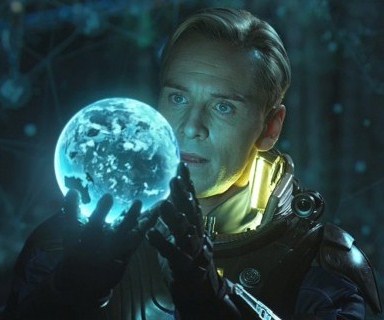 Also known as “David 8”, the first in the line of Weyland Industries fully functional AI’s, which have the ability to proximate human emotions, even though they cannot experience them. In addition to his impressive machine intelligence, he also comes equipped with a characteristic intrinsic to all Alien androids – moral flexibility!
 The same cannot be said for this next example, who comes to us from the original Alien movie. Originally thought to be a human who served as the Nostromo’s chief medical officer, Ash was revealed to be a synthetic that was taking his orders directly from the ship’s AI, which in turn was instructing him to follow company’s directives. And all who say him in the first movie can agree, this particular android was a complete and utter douche!
 Luckily, this next example was able to restore Ripley’s faith. As the Sulaco’s android executive officer, he was responsible for planetary maneuvering, but also acted as the away team’s science officer and performed various other functions as well. But unlike Ash, he was unable to allow harm to come to humans thanks to the inclusion of his “behavioural inhibitors”, which were tantamount to Asimov’s Three Laws.
 Taken from the universe of Alien: Resurrection, Annalee Call (aka. Call) was a secret “Auton” who managed to infiltrate a crew of mercenaries. This put her aboard the Auriga in time to meet Ripley 8, the clone produced by the military for the sake of resurrecting the Xenomorph species. After failing to kill Ripley before the Xenomorph could be extracted, she and the others were forced to band together to make it out alive.
 This next example comes from the expanded universe, specifically the 2001 game AVP 2. As the leader of Weyland-Yutani’s research facility on LV-1201, he was responsible for investigating the planet’s extensive ruins. This world was apparently discovered roughly a century and a half after events in the first movie, once the company traced the flight telemetry from the “Derelict” alien ship (aka. “Space Jockeys”/”Engineers”)
 Here we have a synthetic who refuses to go by that or any other of the more progressive monickers, preferring the term android instead. As Weyland Yutani’s administrative android for the Freya’s Prospect colony, this example comes from the 2010 video game relaunch of AVP. After the colony went to hell after the xenomorph’s escaped and began wreaking havoc, she is the one who called in the Marines.
 The final example in this list also comes from the 2010 relaunch of AVP. As a descendent of the Charles Bishop Weyland, chairman of Weyland Industries, he was in charge of the facility on Freya’s Prospect and the director of the experiments involving the captured Xenomorphs. As such, he was also the main antagonist in the Marine campaign of the game.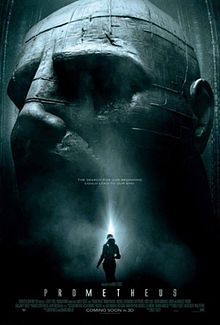


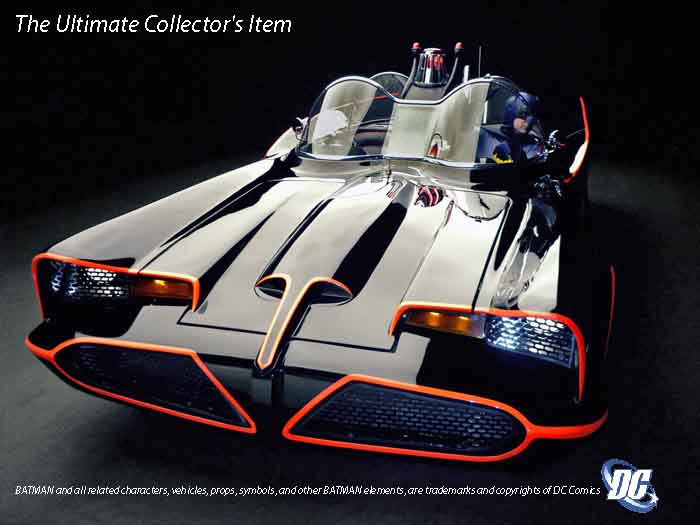


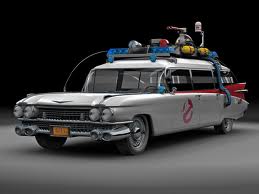

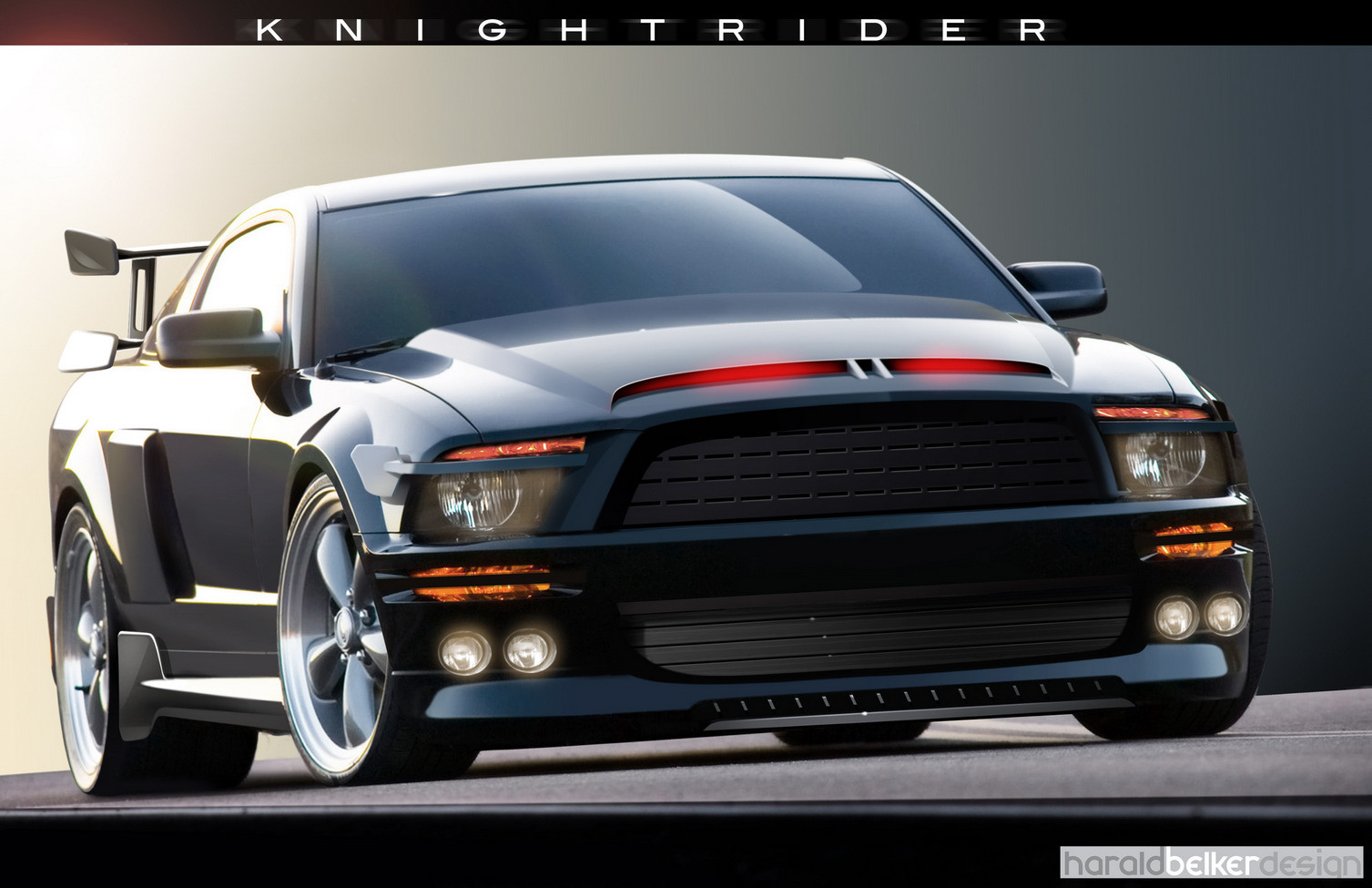


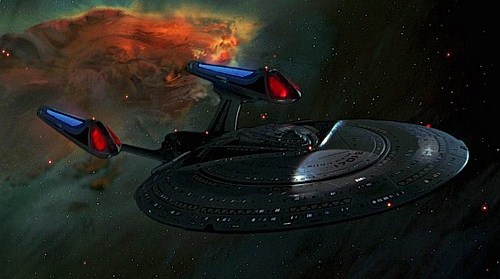
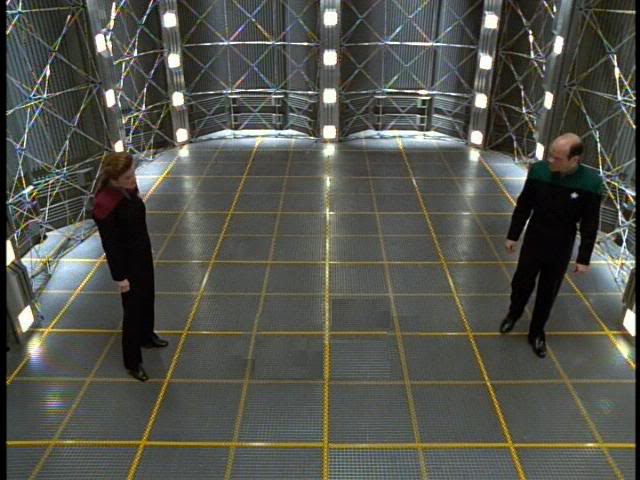
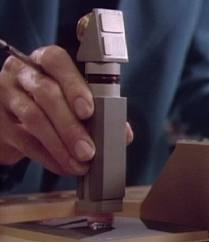

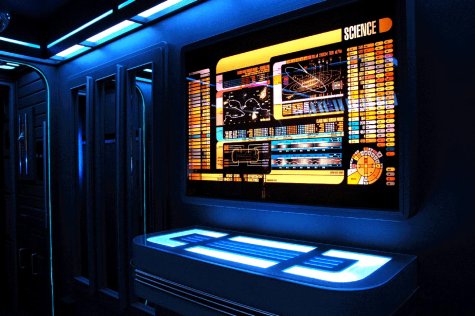

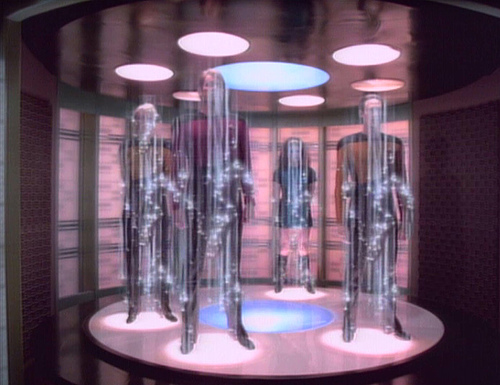
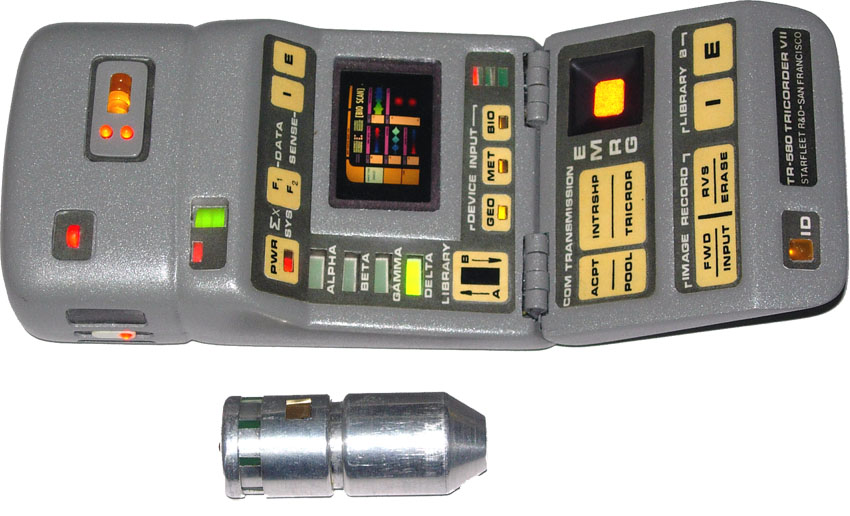
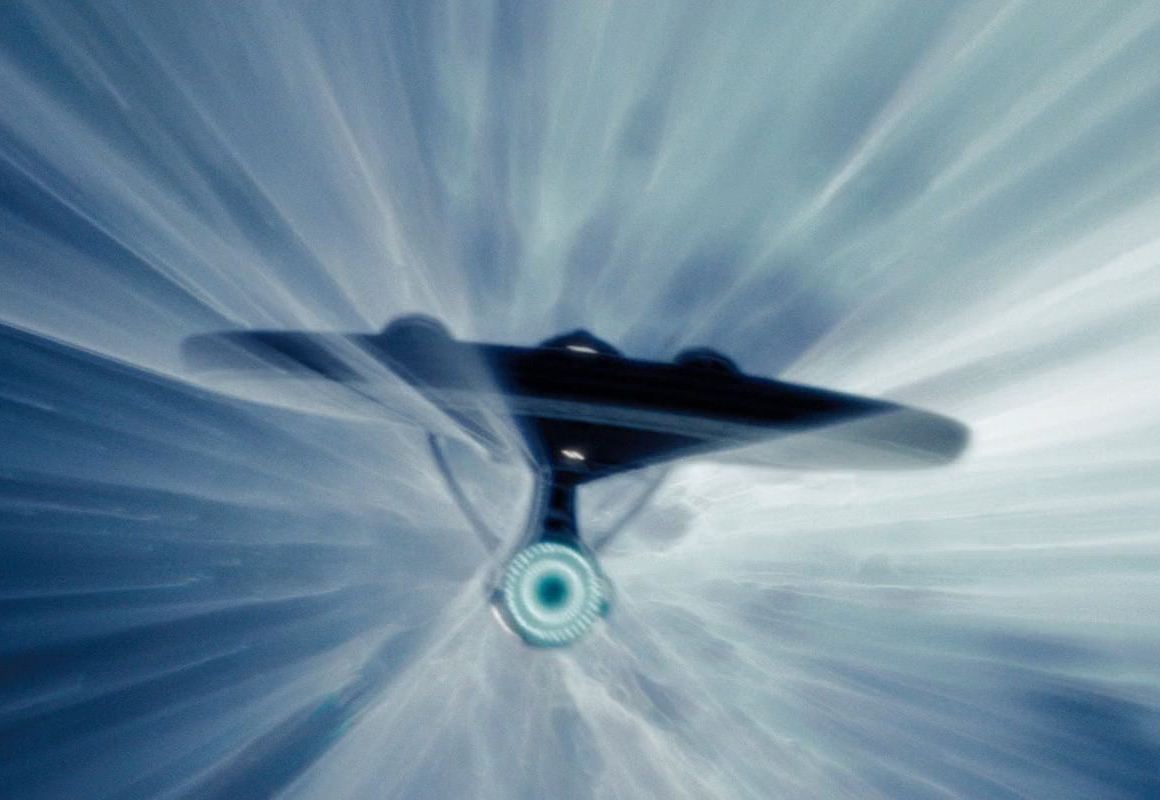

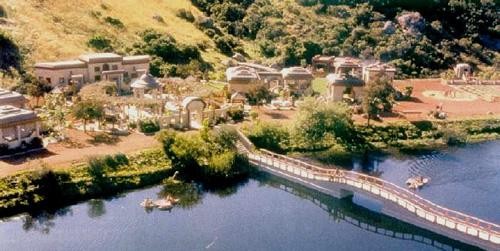
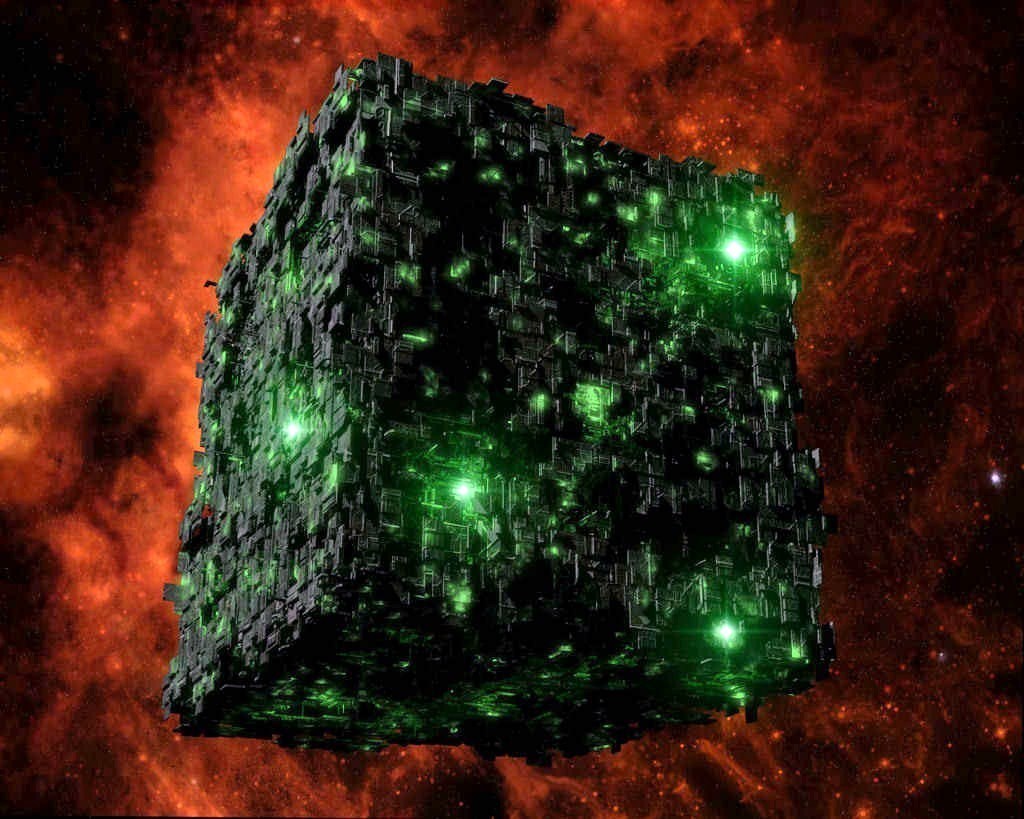


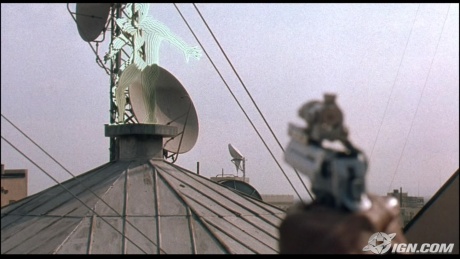
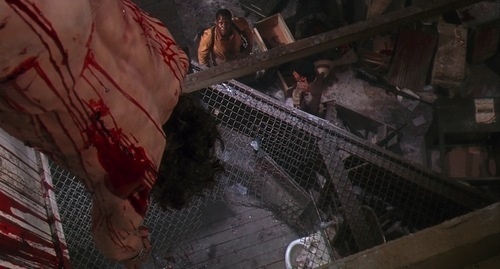


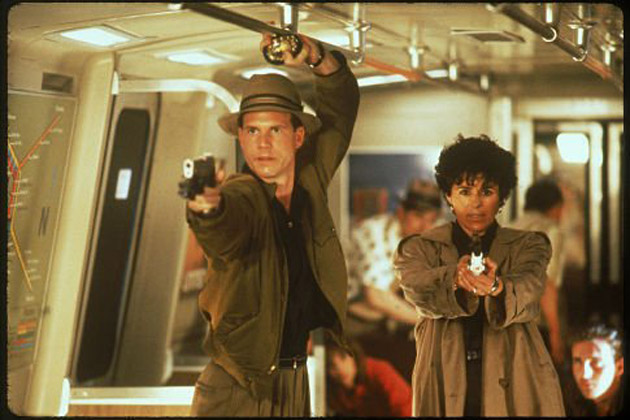


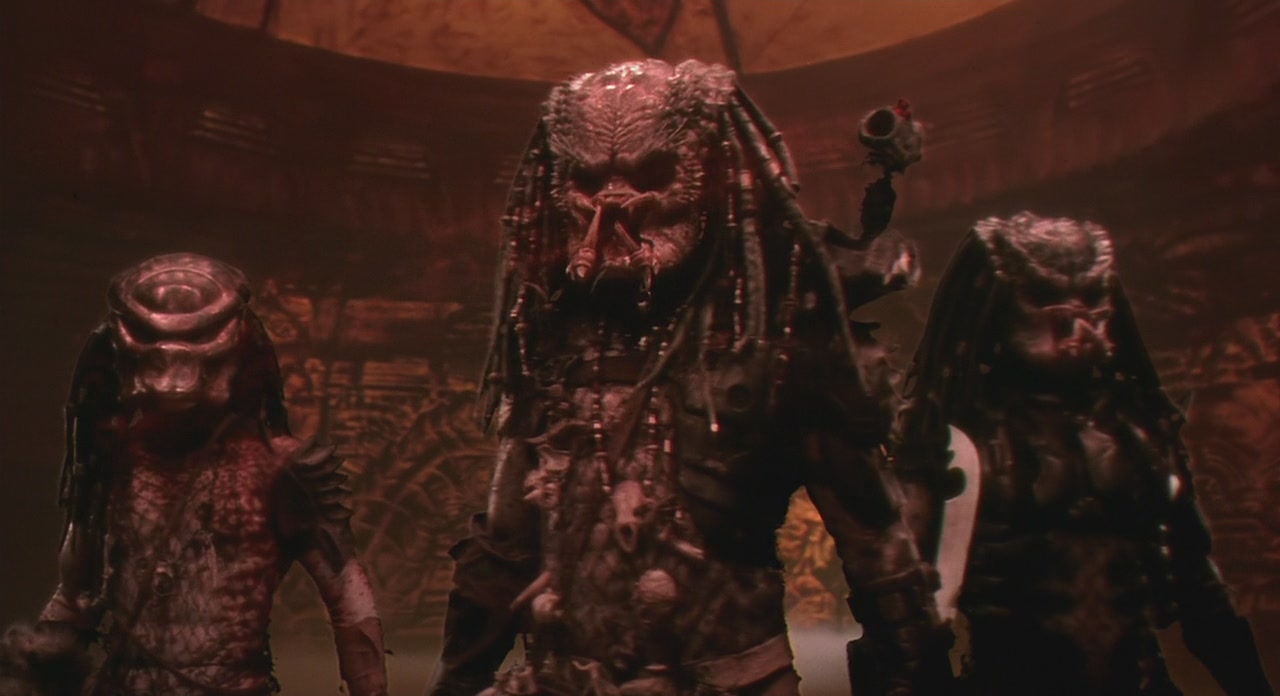





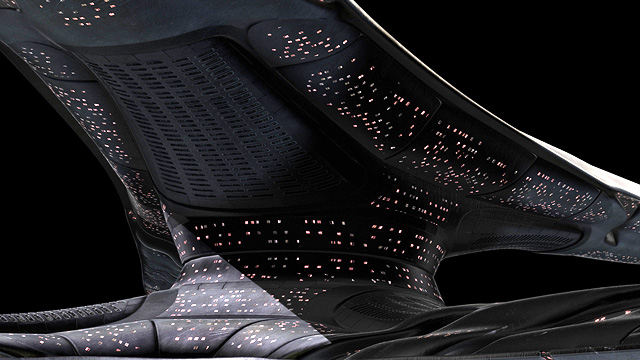
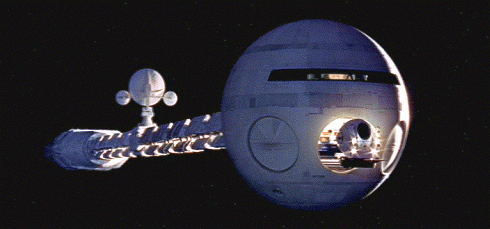


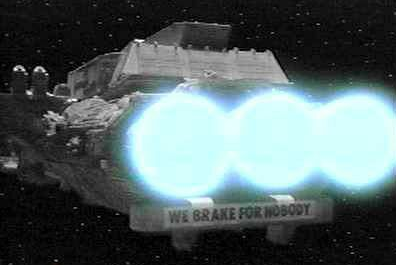


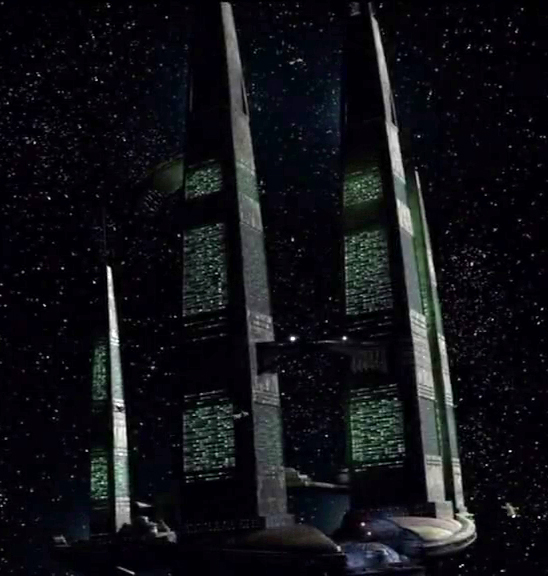
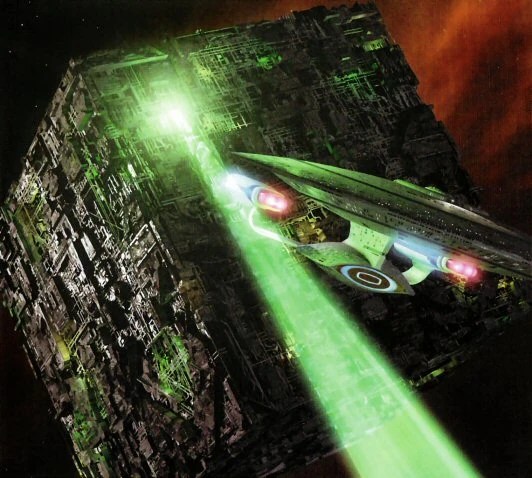 Here we have the capital ship of the Borg, the frightening cyborg race from the Star Trek: TNG series that assimilates or crushes everything in its path. Introduced in the second season of the show (episode 42: “Q Who”), this fearsome foe went on to become a recurring element of the show and was even central to the plot of the spinoff Voyager and the movie First Contact. Much like their raison-d’etre, their ships reflected a sort of cold technological rationalism, like something out of a cyberpunk fans wet dream!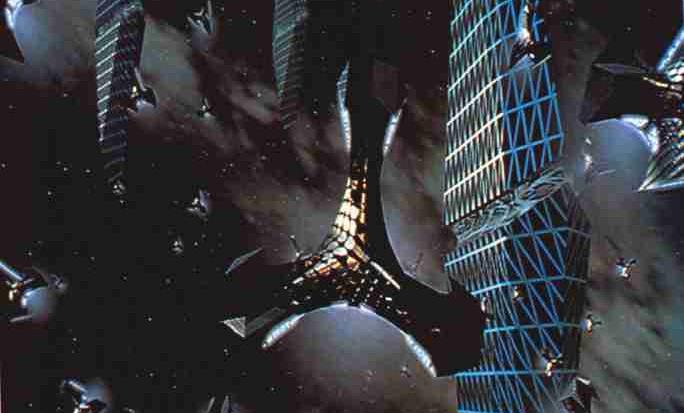


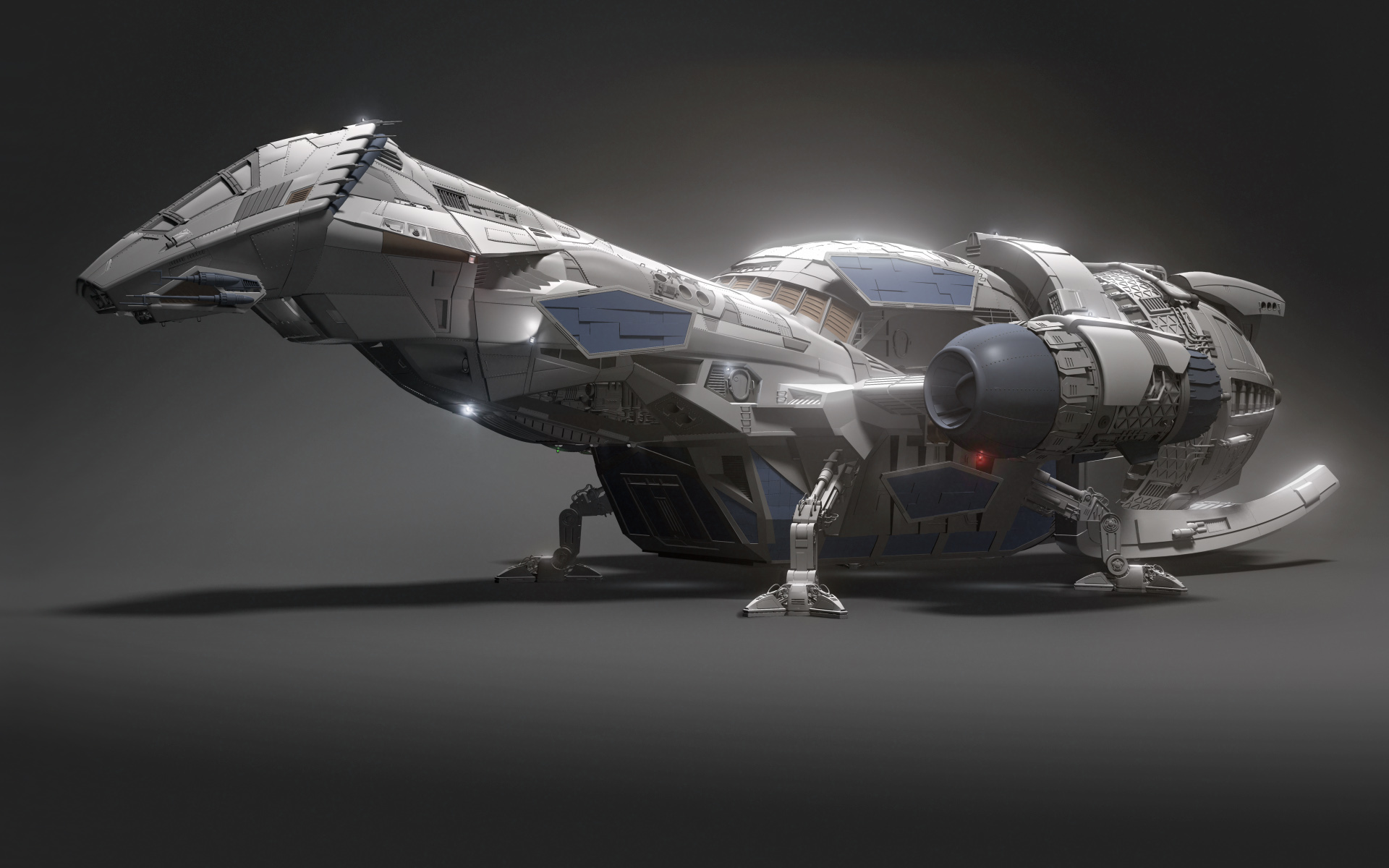
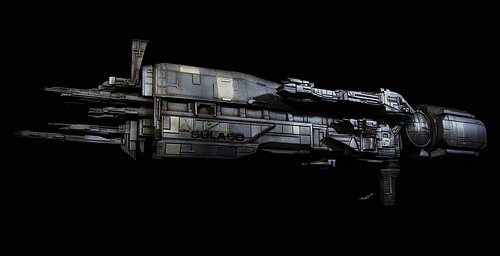

 Stories by Williams