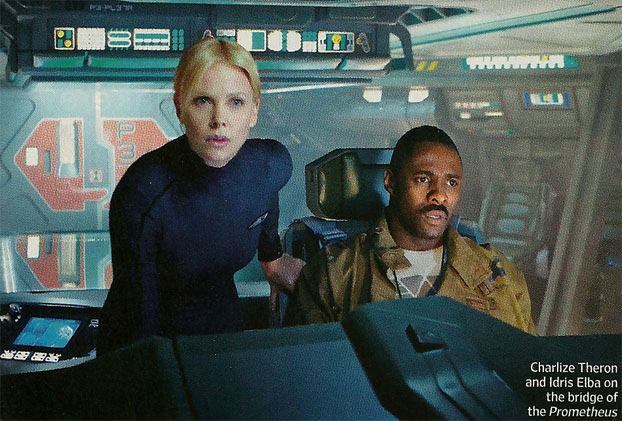
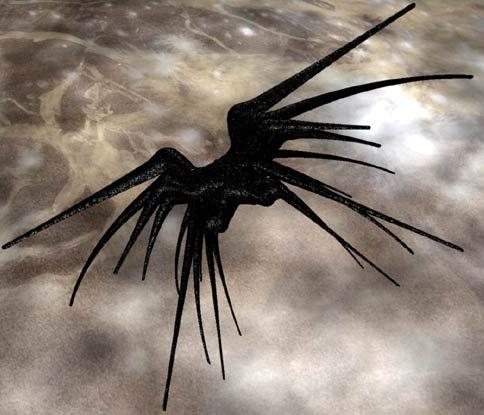
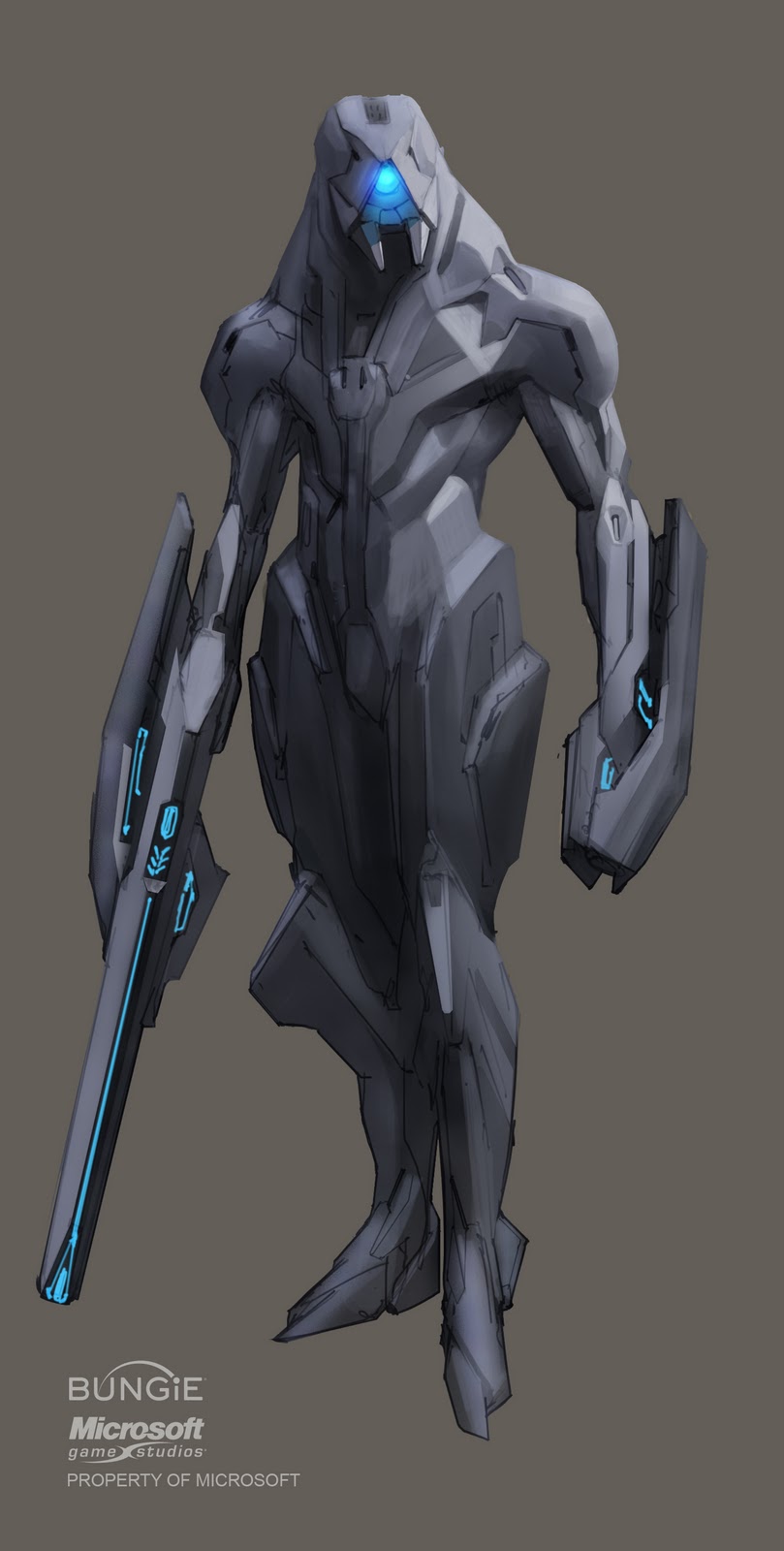
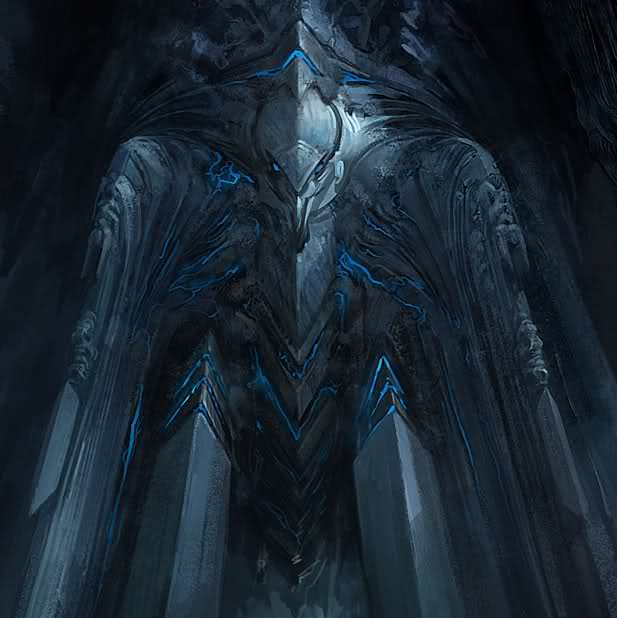
Weyland Industries “David 8”: a Prometheus preview

Just caught this, thanks to a scholar I follow (thanks Owl!). It certainly is an interesting way to go about previewing his new movie, but then again, Ridley Scott has always been known for being a creative bastard! In addition to revisiting the universe of aliens, he seems to be doing everything in his power to give it some genuine subtext and backstory.

As I’m sure we all remember, in the universe of Alien and Aliens, Weyland-Yutani was responsible for running… well, everything. In addition, “artificial lifeforms” or “synthetics” like Ash and Bishop were considered commonplace on board company ships, it seemed only natural that we that this movie give us a preview of their predecessors.

Good watching. Click on the video below and you’ll see…

A Tribute to Badasses!

You know those characters, people who come to us from our favorite movies, TV shows, or pop culture in general. The kinds of people who excel at kicking ass and taking  names? The kinds of people that just never seem to die, they just keep getting bigger and badder the more time passes? Yeah, we all have people like that in our collective imagination, the inspiration heroes and villain who just impressed the hell out of us and made us want to be badass like them!

Well today, I felt inspired to do a little tribute piece to characters such as these. On the one hand, this seemed like a good diversion from my usual conceptual pieces which deal with big and potentially boring stuff. I mean, outside of people like me, who really cares about planetary cultures and mega cities? On the other, it felt like an overdue acknowledgement to all the characters that were well written, well scripted and well executed over the years. Yes, today I’m paying tribute to all the people in sci-fi who were so good at being so bad, or just bad enough…

Here they are!

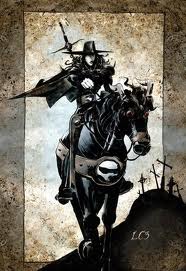
Alucard:
The main character from the short-lived by popular Hellsing series. Not to be confused with Van Hellsing, also about a vampire hunter, this series was all about an organization in the UK that was dedicated to fighting vampires, ghouls, and other hellish creatures. Their chief operative, a mysterious vampire named Alucard (Dracula backwards), was quite the epitome of badassness!

In addition to his cape, Victorian-era clothes, and massive handgun, he had the supreme confidence and “man of few words” thing going that can only come from being alive for so freaking long. As they say with most vampire series, the longer they live, the more powerful they get. And Alucard has been around for a long, long time!

Ordinarily, he would just dispatch his enemies with a few blasts of his massive double-action pistol. But when faced with truly powerful demons, he would break the really scary shit! We’re talking seriously dark, scary energies that would tear an enemy to pieces, body and soul! Though it was never made clear why he was helping humanity in the animated series, the original comic did a better job of exploring his back story and motivations.

Taking its cue from Bram Stoker’s original novel, Dracula was apparently defeated by the notorious Abraham Van Hellsing and agreed to become the family’s loyal servant. The main story takes place several hundred years, later when the latest descendent of the Hellsing family is carrying on the tradition of keeping England safe from the forces of evil.

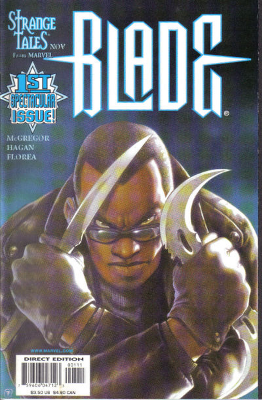
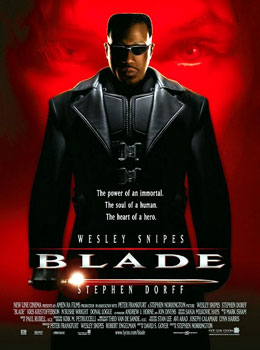
Blade:
Here we have another vampire hunter who’s more than just your average guy! Though his real name is Eric Brooks (according to the comic series), this street hunter goes by the professional name of “Blade”. Little wonder, considering that just about every weapon in his arsenal features an acid edged pig-sticker or a sharpened silver stake! But of course, the real twist comes in why he does what he does.

As if that wasn’t badass enough though, he also alternates between a Gran Torino and a motorbike, wears a leather cape over segmented body armor, and packs enough firepower to take down an entire SWAT team single-handedly! All the while, he utters his few, but cryptic lines through those big, vampire incisors.

Known ominously as the “Daywalker” to vampires who are scared shitless of him, he combines the best of both worlds when it comes to human and vampires. He is immune to silver, garlic and daylight, but can heal almost instantaneously and has super strength. His only weakness however comes in the form of the “thirst”, the need for blood which every vampire suffers from and must eventually succumb to, or die. In order to preserve his humanity, Blade relies on a synthetic “serum” which temporarily satisfies his cravings.

In a theme that has growing in popularity and familiarity since the early 80’s, Blade is a half-man, half-vampire who’s mother was bitten while pregnant with him. Tormented by his split identity, and the supposed loss of his mother, he has chosen to resolve this crisis by hunting those that made him what he is and robbed him of his human life. However, the question of what he will do once he’s rid the world of the last vampire, and what he will do when the serum stops working, are questions that remain unresolved, and help to drive the story.

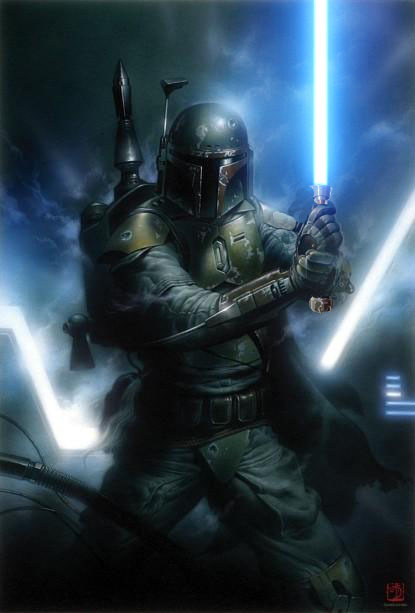
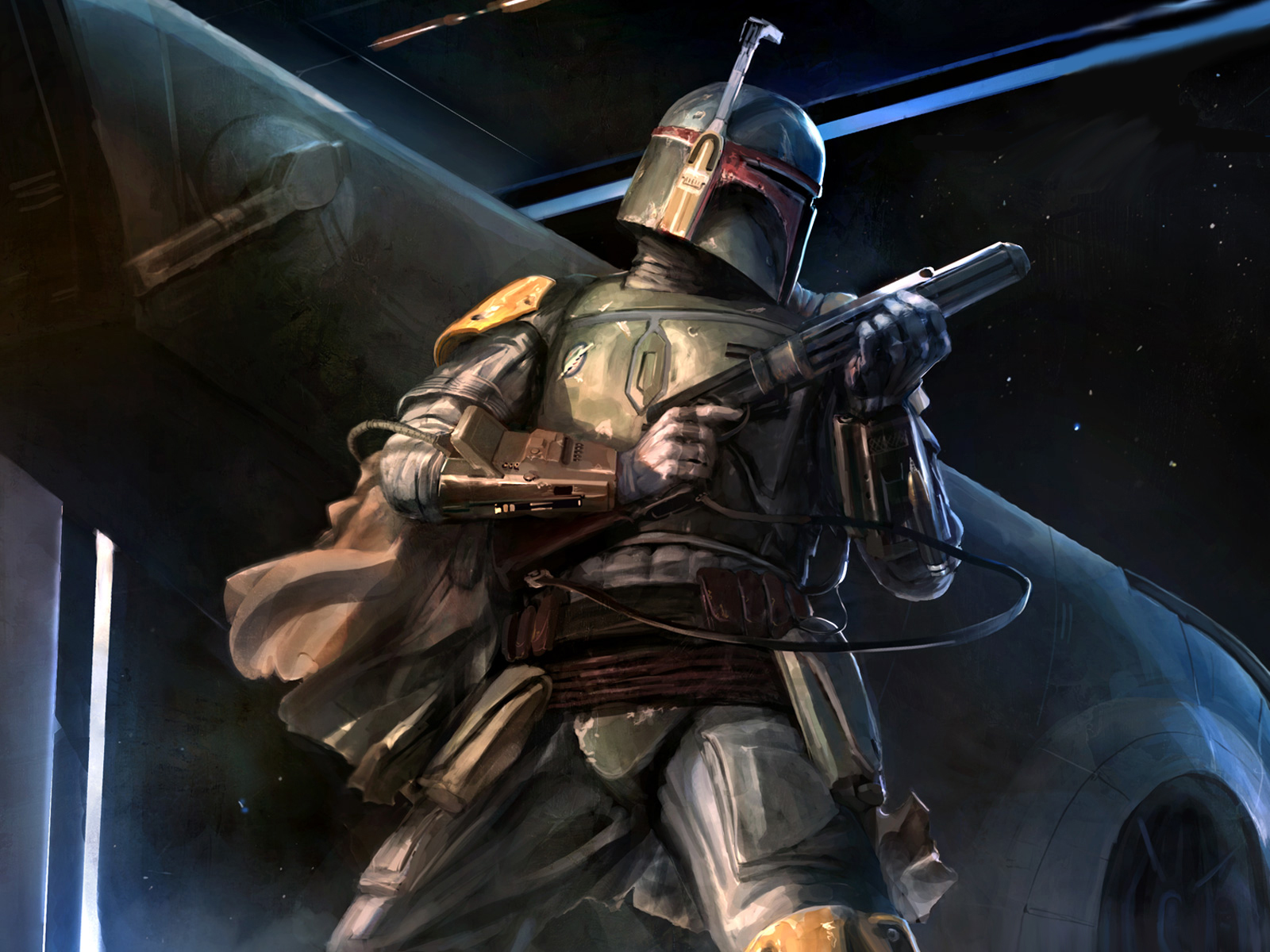
Boba Fett:
When you hear the name Star Wars and the word badass, what naturally comes to mind? Assuming you know anything about Star Wars, then chances you thought of Boba Fett! This notorious bounty hunter was probably the most badass thing about the series, dwarfing Vader, Jabba, and the Emperor in terms of shear awesomeness!

Hell, this guy not only appeared repeatedly in movies two and three (with a small cameo in a deleted scene in movie one), he also had entire novels, comics, and games dedicated to him. Annnnd, if the Dark Horse series Dark Empire is to be believed, Fett even escaped the mighty sarlacc. Who else amongst the expanded cast of the Star Wars saga can boast that kind of record? Lando? HA!

Though Lucas attempted to explain Boba’s origins in the prequel movie Attack of the Clones, other stories from the expanded universe claims that Boba was in fact a former Stormtrooper of Mandalorian origin.

However, on this latter point, all sources agree. Clearly, Boba Fett was of Mandalorian origin, a warrior race that had become virtually extinct after the Sith Wars and had relegated themselves to the role of bounty hunters and mercenaries. Boba had apparently distinguished himself amongst his rivals by delivering on contracts, charging exorbitant fees, and being very hard to kill. Hell, somebody who crawled their way free of the sarlacc aint no pushover!

The Joker:
Batman’s nemesis, and Gotham’s smiling psychopath, the Joker is one of those villians you just love to hate! And yes, he’s also pretty damn badass! Though he has gone through countless renditions and adaptations over the years, all the variations revolve around the same basic theme.

Basically, the Joker is a sociopathic criminal who thrives on chaos, the perfect polar-opposite to Batman’s vigilante persona. Over the years, he has been in and out of Gotham’s Arkham Asylum, examined by doctors, but always seems to escape to stir up shit again.

In his most recent incarnation, as performed by Heath Ledger, the Joker reached new heights of popularity and badassery! Not only did he manage to rip off the mob, turn Gothamites against the Batman, drive Harvey Dent mad, commandeer the mob, bring Gotham to the brink, and stay one step ahead of the Batman and police the whole time. He managed to do it all with a twisted smile on his face! That’s an awful lot for a man who claims he doesn’t do planning!

Looking to the comics and expanded franchise, one sees even more examples of badassery! Here, as well as in the movies, new and old, the Joker is notorious for causing trouble and doing it with a shit-eating grin. In addition to the general mayhem he’s been known to cause, his credentials include turning a psychologist into his willing sidekick (Harley Quinn), kidnapping and torturing the Commissioner’s daughter, killing one of the Robin’s, and nearly killing Batman on numerous occasions. Yet somehow, he always manages to escape, survive, and live to inspire chaos another day. Malevolent? Yes. Psychotic. Oh yes! But a notorious badass as well? You betcha!

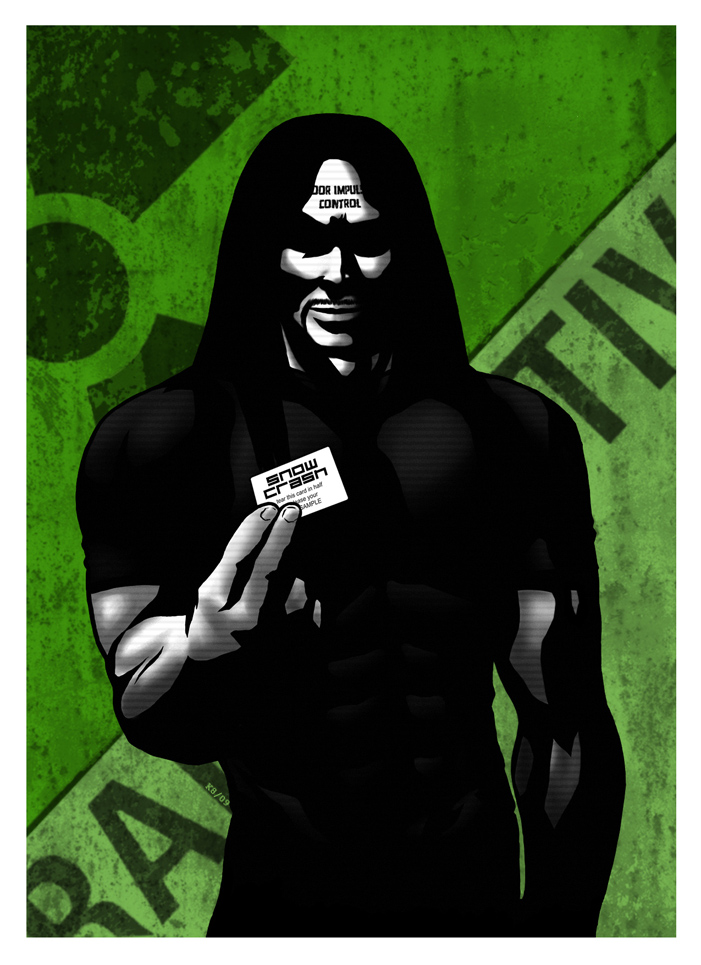
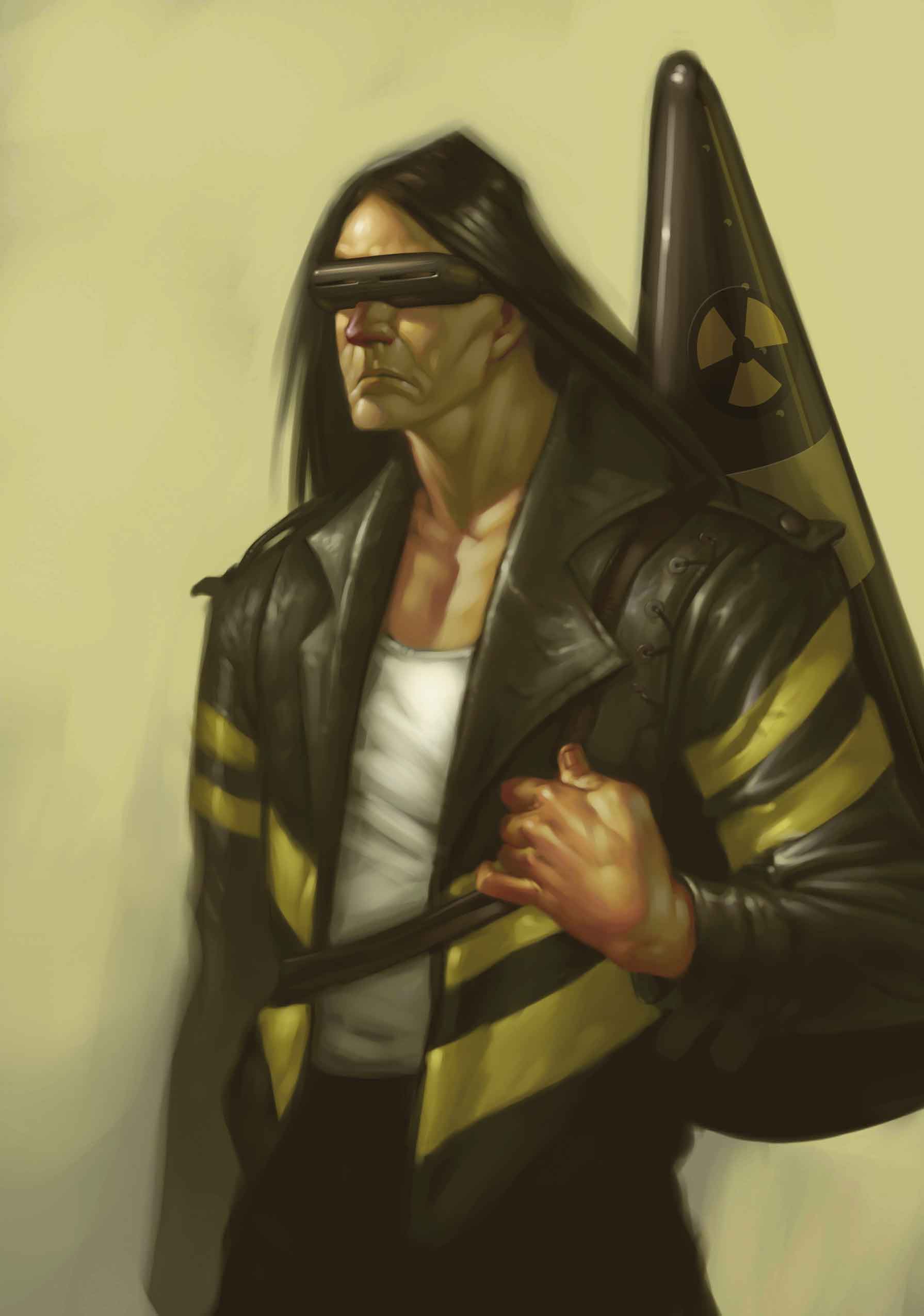
Raven:
“Until a man is twenty-five, he still thinks, every so often, that under the right circumstances he could be the baddest motherfucker in the world… Hiro used to feel this way, too, but then he ran into Raven. In a way, this was liberating. He no longer has to worry about being the baddest motherfucker in the world. The position is taken.

That pretty much says it all. Taken from Neal Stephenson’s Snow Crash, Raven is one of the chief antagonists of the story and one of the baddest motherflechter’s around! An Aleut by ancestry, he is skilled in the art of harpoon throwing, knife fighting, killing people, and being untouchable. Of course, this might have a lot to do with the fact that in the sidecar on his motorbike (pretty badass in itself!) he has a thermonuclear device stashed. This, apparently, he got off a Russian sub after stowing aboard and killing the entire crew with glass knives, and its wired to go off in case anybody does the unthinkable and kills him. Hence, nobody messes with Raven, as if his size and skill with weapons weren’t intimidating enough!

People recognize Raven not only by his obvious size, leather jacket, and motorbike, but also by the words “Poor Impulse Control” tattooed on his forehead. This is a holdover from his years in the corrections system of the future, where they’ve resorted to tattooing a prisoner’s particular maladjustments directly on their forehead for all to see. But for those who’ve pissed him off, or are just on his hit list, the first indication that Raven’s around is the telltale presence of his harpoon in your chest!

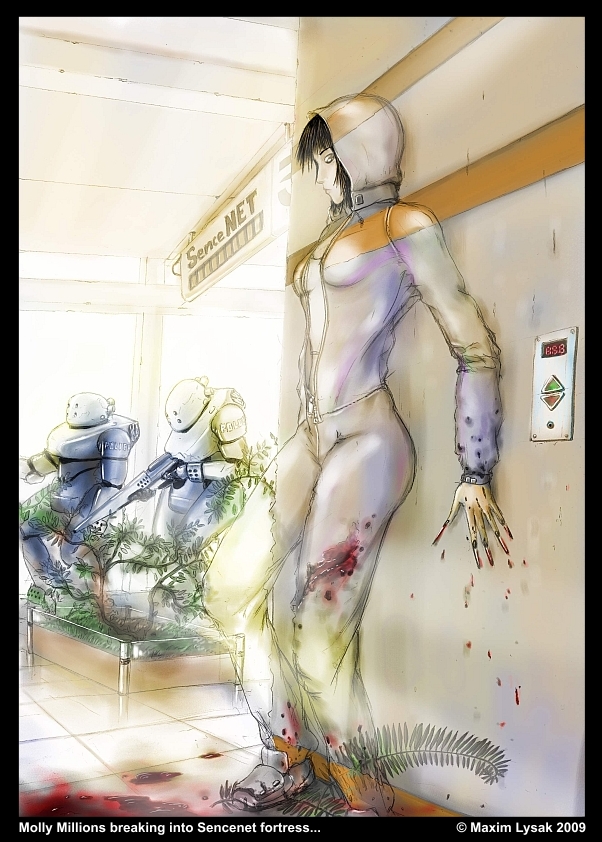
Molly Millions:
Also known as “Sally Shears”, Molly is a recurring character in William Gibson’s Sprawl Trilogy. Technically, she is what is known as a “razor girl”, though cyber-ninja works just as well. Basically, she’s a gun (or razor blade) for hire who gets paid by high-rollers to take out anyone who stands between them and their objectives. This, she typically does by slashing people with razor claws that are imbedded in her fingertips, though she’s adept at hand to hand combat and wield firearms with the best of them too!

Thought tough, deadly and ruthlessly efficient, she has shown herself to have a softer, sensitive side, not to mention a sympathetic past. For instance, her first appearance is in Gibson’s short story (and film adaptation) of Johnny Mnemonic. Here, she goes beyond her usual mandate and begins to fall in love with the story’s protagonist, Johnny.

In her follow-up appearance in Neuromancer, she admits that he was the first “client” she overstepped her boundaries with and still mourns him years later. She also reveals that she began as a “meat puppet”, a form of prostitute who allows their body to be controlled by handlers while they are maintained in a blank-outed state. This is how she apparently paid for her cybernetic enhancements and became a mercenary ninja.

On top of all that, she is a fiercely loyal and levelheaded woman who, despite the nature of her job, is committed to her moral code and values the kinds of human relationships that are becoming increasingly rare in Gibson’s world. One might say that she’s tough because she has to be and would much rather live an ordinary life where love is not obsolete and murder for hire is not the only way for street people to get ahead. Still, don’t mess with her! Just because she’s got a soft side doesn’t mean she won’t fillet your ass!

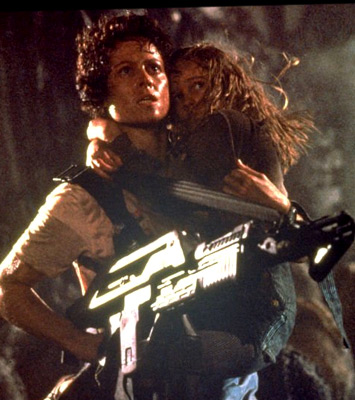
Ripley:
Mother, warrior, humanitarian and xenocidal ass-kicker, Ellen Ripley defined female badassery for an entire generation of moviegoers! From her humble origins as a crewman aboard the Nostromo to her showdown with the mother Alien, Ripley demonstrated the full range of the heroine protagonist. She was began as a regular officer who was put into a terrifying and claustrophobic situation, a lone survivor of a xenomorph attack aboard a confined spacecraft.

But living to fight another day, she faced her vulnerability, overcame her fear, and put it all on the line to save a little girl. And in the course of that, she also strapped on some heavy artillery and kicked some serious ass! And in the end, the showdown between herself and the Alien hive queen was not only cinematic gold, it was so thick with allegory you could cut it with a knife! Two mothers, two titanic forces, coming together to fight for their young!

Let’s face it, this is what makes Sigourney Weaver and her character so awesome and sympathetic. She’s a regular woman who, when faced with treacherous odds, went above and beyond to do the right thing. And let’s not forget that her motives were purer than anyone else’s. Whereas some people were interested in their bonuses and others in shooting shit up, she fought tooth and nail to protect and save the life of a young child, a girl who reminded her of the daughter she lost.

And it worked. In the end, she outlived all the professionals who ignored her or were sent in to “protect her”. When all else failed, this lady came through and showed that you don’t come between a  mother and her child and you don’t underestimate a determined woman, or she’ll kick your ass! Yes, years later and Ripley still remains an inspiration to women everywhere, and a reminder to us boys to respect and honor the women in their lives. In the end, they are a hell of a lot tougher than you think 😉

Vampire Hunter D:
Yet another vampire hunter who’s got some questionable ancestry! Vampire Hunter D is based on a novel series with manga and anime adaptations. Taking place in the distant future, thousands of years after WWIII took place, D wanders through a pre-industrial world hunting the demons, vampires and assorted creatures that have come to plague it. Apparently, in the distant future, vampires have established themselves as a sort of Nobility that control their fiefdoms through a combination of advanced technology and magic.

Much like Alucard, D has a questionable ancestry which is gradually established as time goes on. Right off the bat, it is clear that he is a dhampire, the child of a vampire mother and a human mother. As time goes on, it becomes established that he is fact the son of the ancient Count himself. As a result, he has some pretty badass powers, which include spontaneous healing, super strength, and some pretty dark powers! Unfortunately, he also has his share of weaknesses as well. Sun-sickness, garlic; all the things that are fatal to vampires are pretty harmful to him as well.

Believing that vampires have overstepped their traditional authority, D is dedicated to sending them back to the darkness from whence they came. Though he is part vampire, he values his human side and cannot condone how vampires abuse the humans they have dominion over.

Ah, and his weapon of choice for dispatching vampires and demons? A big katana-style sword! This weapon can decapitate even the most powerful vampire, or rend him from his neck to his navel. Oh, and did I mention he also has a smartass symbiot living on his hand? Might sound weird, but this thing keeps him company, keeps him honest, and has even saved his life a few times.

Vasquez:
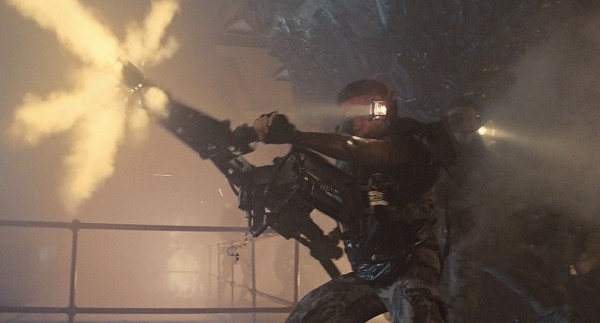
Yes, I realize I’m doubling down on a single franchise. But no list of badasses would be complete without mentioning Private Vasquez. Also of Aliens fame, this woman put the  bad in badass, toting that massive smartgun and telling everybody who got smart with her where to go! Seriously, those iconic lines, “Let’s ROOOOOCK!” and “I just want to know one thing… where-they-are!” Bam! There wasn’t a single person in the audience who wasn’t get goose bumps.

Not only was she clearly a tough, take-no-prisoners kind of woman, she commanded the respect of those around her, particularly the men. Hudson, played by Bill Paxton, would get smacked down anytime he tried to sass her. Recall the lines: “Vasquez, anybody ever mistake you for a man?” “No, how about you?” Classic! And of course Private Drake, her partner in arms, practically followed her around, even though he was twice her size!

But of course, she too had a sensitive side. When Drake fell protecting their group, she took it really hard. She was even willing to go back into the den of the xenomorph’s when it became clear he was still alive. Even though it was obvious he and the others were being used as symbiotes and the odds of them making it out alive were virtually nil, she was still willing to risk her life. One seriously got the impression that she loves the big lug after all…

But mainly, she was an ice cold chick and tough as nails. When those around her began to panic and cry “game over, man!”, she raised her gun and started kicking ass! And when at last she was cornered and wounded, did she roll over and die? Hell no! She grabbed hold of that grenade and went down with a bang, taking as many of those buggers as she could buggers with her! RIP Vasquez. You rock!

Well that’s all for now. I was going to include some non sci-fi examples in this list as well, but that would made it too long to post! Stay tuned, I’m thinking I’ll save those examples of mainstream badassery for next time. And I might just have some final thoughts to offer on this whole phenomenon known as badassesness. I love inventing words! Bye!

Prometheus and an interview with Ridley Scott

Recently, I came across the lovely article entitled “Don’t f—- around with gods” from the Sydney Morning Herald. The subject was director Ridley Scott’s new movie, Prometheus, which is currently in post-production and set to be released in June of this year. As I’m sure everyone is aware by now, this movie is a return to the universe of Alien, a franchise which Scott began in earnest 30 years ago. Originally thought to be a prequel, Scott has since revealed that this movie is in fact a sort of standalone movie which explores the concept of Exogenesis – the idea that life came to Earth or other planets from an extra-solar source.

Although linked to the original Alien movie in that it deals with the same derelict that the crew of Nostromo encountered, the story is far more concerned with the alien race known as the Space Jockeys than the xenomorphs themselves. Or at least, that appears to be the focus. I’m sure the xenos make an appearance, and probably end up screwing everybody over, as is there tendency! But mainly, Scott emphasized that the plot, as suggested by the title, has to do with the discovery of powerful, dangerous things. When one encounters alien technology, the specter of the bound god who gave fire to humanity can’t help but be resurrected. It’s just timeless like that!

In the course of the interview, Scott also spoke extensively about his reasons for getting into science fiction in the first place. I have to say that I loved his answer: “Science fiction is a wonderful – sorry about the pun – universe for – again, another much overused word – creativity. It’s an arena where anything goes… The opportunity presents itself to fundamentally do anything you want, providing that you draw up a rule book in the first place. You’ve got to draw up the rules of your drama and within that universe you’ve got to actually stick to your own rule book. I think that’s what’s happening – we’re not drawing enough rules up when we do materials. It feels like writing a book…”

Wow. It’s wonderful when you see words that you yourself have said put into the mouths of true veterans! If I was to make a list of directors whom I admire for their creativity and vision over the years, Scott would be tied with Stanley Kubrick for first place! With movies like Alien, Blade Runner, Black Hawk Down and Gladiator to his credit, I got to say that I’m pleased as punch that he and agree on two fundamental precepts. One, science fiction is a great realm for creativity and inventiveness due to the fact that the only limitations are those of the author’s imagination. And two, that it’s best to have a detailed game plan worked out in advance. This is what sunk Lucas’ prequels people! Always know where you’re going in advance and try to stick to the plan. Otherwise you wind up with contrived plot twists and forced situations. Trust me, I know!

Another great thing to read was Scott’s indictation that Prometheus wouldn’t be a massive CGI fest. Something which set Cameron’s Aliens apart from the dubious Avatar was the use of real live actors in suits or animatronics instead of digital creations. Granted, this was done in an age when CGI wasn’t available, but those who followed in Scott and Cameron’s footsteps understood the value of shooting things this way. If there was one thing AVP did right, it was the use of costumed actors and real sets rather than blue screens and generated images.

Having set the precedent, I think it’s only right that Scott remain true to this heritage. After all, his environments, especially that of the Space Jockey Ship, were known for their dark, gritty, grimy look, something which was very… Lovecraftian! Try doing that with digital effects, it just doesn’t work! CGI might be great for creating visuals, but the textures are always too clean and sterile. Or in the case of Avatar, too cartoony! And actors are far more convincing when they’re interacting with a real person, or even a robotic alien, than a standing stick or a tennis ball on the end of a string!

In any case, here’s the link to the article. It’s a good read, and definitely for fans of Scott, the Aliens franchise, and just sci-fi in general!

The Alien Graph

The Alien Graph

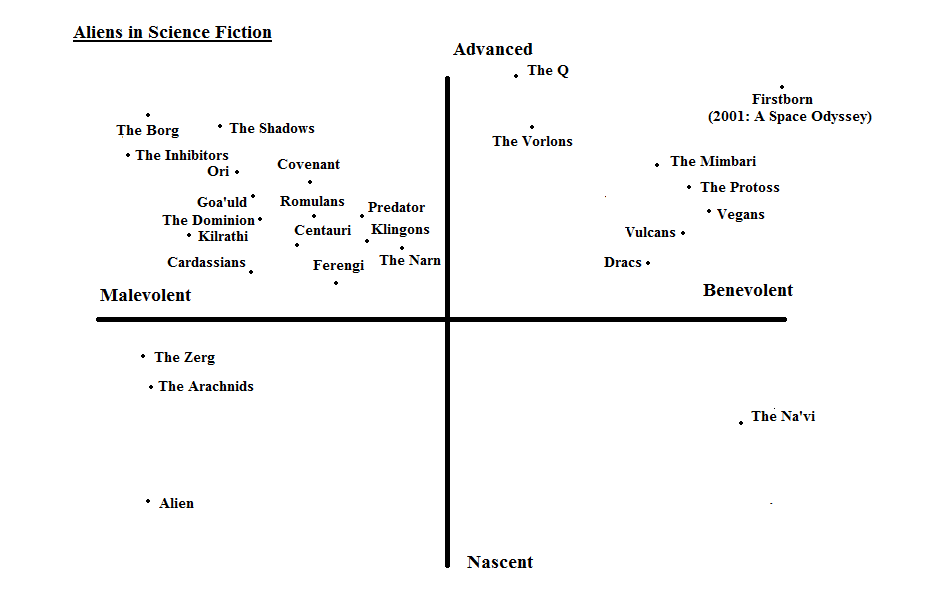
Behold! After a few days of contemplating what I said in the Ancient Aliens post – you know, about how alien’s technology and moral capacity are often interrelated in sci-fi – I realized I needed to put it into graphic form. And as I said in that post, if we are to consider technological advancement as one axis and level of benevolence as another, then the outcome would look something like this:

click to enlarge

The design is based on the Zombie graph that’s been floating around the internet for some time. There, the designer placed different Zombie movies based on two criteria: intelligence and speed. In much the same way, I’ve designed a graph for aliens that is based on two similar criteria: technological advancement and level of friendliness.

I selected aliens that I thought best represented the range of development and behavior in the sci-fi genre. I also included as many franchises as I could think of, just off the top of my head. I certainly wasn’t scientific about it, just relative and to the best of my abilities. And when I was done, I noticed an interesting pattern…

Hostile/Advanced Aliens Rule!:
For example, notice how the vast majority of races from your well-known franchises (Star Trek, B5, Stargate, Star Craft, AvP, Halo, etc) fall into the upper left quadrant. This is the area where malevolence and technological sophistication combine in varying degrees. By contrast, the second largest concentration of races occurs in the advanced/benevolent quadrant, again to varying degrees. Almost no races fall into the nascent (i.e. primitive) quadrants, be they hostile or gentle.

On the one hand, the Xenomorph from Alien and the Arachnids from Starship Troopers both fell into the technologically backward category (technically), and were both classified as malevolent because of their innate hostility to foreign organisms. The Na’vi, from Avatar, were the only alien race that fit the bill for technologically nascent and benevolent. I’m sure there are plenty of examples that could stack this analysis in a different way, but like I said, this was off the top of my head.

The Zerg, I have to admit, were a bit of a conundrum for me. While they are technically a race that does not employ technology per se, they are highly advanced in terms of their biological evolution, to the point where they rely on specialized creatures in the same way that humans rely on machinery. But then again, that’s all for the sake of ensuring that the different factions in the video game are evenly matched. It’s not meant to be a realistic assessment. Much the same is true of the Xenomorphs. While they do not employ tools, fly around in spaceships, or use guns, they are nevertheless an extremely evolved organism that is capable of besting humanity in any contest.

And just to be clear, the middle point of the graph (0,0, where the axes meet) is where humanity stands now in terms of moral behavior and technological development. Sure, some say we’d fall into the evil quadrant, but I tend to believe that humanity is morally ambiguous, neither too good or too evil. Where aliens fall into the spectrum in most sci-fi franchises is meant to reflect this. Much the same is true of technological prowess, where aliens are classified as “advanced” or “primitive” solely in comparison to ourselves.

This all might sound anthropocentric, but that’s the point, isn’t it? These are stories written by human beings for other human beings. All the references, symbols and measuring sticks come from inside us. So in the end, aliens themselves, as represented in our best science fiction, also come from inside ourselves. Their values, their tools, and even their appearances are all constructs of what is familiar and accessible to us. In short, they are merely tools with which we measure ourselves, both morally and technically.

Conclusions:
Well, right off the cuff I’d say the reason we prefer our aliens hostile and advanced is because it makes them seem more threatening and scary that way. Clearly, this makes for a more interesting story. While an alien race that is kind, innocent and backwards can make for an effective tale about the evils of colonialism and imperialism and how one can easily find themselves on the side of evil, these seem to be fewer and farther between. I’d say this is most likely because moral allegories are less intriguing than action dramas. Or maybe just prefer to think of ourselves as the good guys. Let someone else serve as the allegory for evil, selfish and runaway imperialistic behavior!

In addition, there’s the very real possibility that humanity will be making contact with an intelligent life form at some point in the future. And when we do, it’s likely to be the most awe-inspiring and frightening of experiences. When it comes to the unknown, ignorance begets fear and we prefer to err on the side of caution. So it would make sense that whenever we think of aliens, even if its just for the sake of fiction, we would naturally prefer to think of them as both learned and potentially hostile. If indeed aliens serve as a sort of projection for humanity’s own thoughts on itself, than pitching them as potentially hostile beings with advanced technology represents our own fear of the unknown.

In any case, if there is life out there, all these questions will be resolved in the distant future. Hell, maybe even the near-future. If some theorists are to be believed, aliens have already made contact with us and might even be walking among us right now. Granted, most of these people are hanging around the 7/11 with tin foil hats on, but they can’t all be crazy, right?

Aliens, revisited

After doing my due diligence to learn what I could about the Xenomorph for my post on Ancient Aliens, I found some interesting additional info that kept me reading. For one, I came to learn that there were a lot of details about the Alien universe that were revealed by Ridley Scott and James Cameron in the course of interviews, but never made it into the movies themselves. At the same time, there was plenty of info that made it into comics, novelization and other sources in the expanded franchise which fans of the movies would want to know about. There were a lot of mysteries in the Alien universe that were left deliberately vague, basic questions that never got answered.

For example:

  1. What was that derelict ship from the first movie and where did it come from?
  2. Why were there eggs aboard the ship in the first place?
  3. And of course, where do the Xenomorph’s come from?

Well, here are some of the answers that I found out:

1. Space Jockeys:
This is the name of the race that built the derelict craft that crashed on LV-426 and was investigated by the crew of the Nostromo. Based on the design of the skeleton that was featured in the movie, and additional material from the alien comics, this race was apparently humanoid, very large, and had elephant-like trunks on their faces. According to all sources on the subject, the Space Jockeys are millions of years old and go by many different names.

In fact, “Space Jockeys” was the name the set designers came up with, whereas H.R Giger (the designer of the Alien) called it “The Pilot”. This second name was used in the video game AVG 2, where the aliens are known as Pilots and examples of their technology as “Pilot Technology”. Yet another name comes from the novelization entitled Aliens: Original Sin by Michael Friedman, where they are known as the Mala’kak. Where they come from remains a mystery, but the fact that their ship was carrying Xenomorph eggs would seem suggests that there was some kind of relationship. Which brings us to question two…

2. The Eggs:
One theory has it that the Space Jockeys were the original victims of the Xenomorphs. Another has it that they were in fact their creators. This second theory is far more detailed and shows up in various sources. Apparently, the Space Jockeys (or Mala’kak) bred the Xenomorphs for use a civil war that was raging millions of years ago. This would certainly explain why the Xenomorphs are so hostile, so adaptive, and proliferate so quickly. Ultimately, the Xenomorphs turned on their creators and caused their extinction, and live on as weapons leftover from a forgotten war.

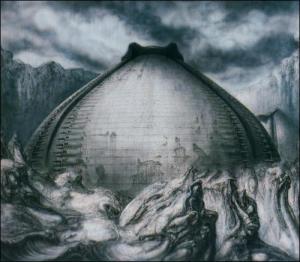
I got to admit, I didn’t like this theory too much. Somehow, it made the Aliens less scary to know that they were cooked up in a lab as opposed to say, borne out of conditions we can hardly imagine on a planet we have yet to discover. However, I also have to admit that it fit with something I notice whenever I watch the original Alien movie. Compare the Space Jockey ship to the architecture of a Xenomorph hive. Do they not look similar? All those curved surfaces and H.P. Lovecraftian sensibilities? Would it be so crazy to conclude that the Xenomorphs inherited their sense of aesthetics from their creators?

However, there remains the question of why a derelict ship was discovered on LV-426 carrying eggs. Could it be that this was a simple transport that was hauling eggs for the sake of the war effort? If so, then the most likely scenario would be that the pilot became infected accidentally and crashed into the planet, programming the ship to send out a distress signal before his untimely demise. However, we won’t know that for sure until the new movie comes out (see below!)

3. Xenomorph Prime:
According to various sources, the Xenomorph homeworld is a hostile planet named Proteus.  Much like LV-426, it boasts a cold and harsh climate that is rife with volcanoes and turbulent wind storms. According to one theory, the planet is not the actual source of the Xenomorph species, but was used as a storage house by the Space Jockeys to contain and breed them.

The exact source of this info is unclear, but in the 2010 AvP video game, things end with Weyland Yutani discovering the location of their homeworld. This would seem to indicate that it will be revealed and/or detailed in the sequel. Also, the info on Proteus (as it stands) is clearly linked to the theory that the Space Jockeys were responsible for the creation of the Xenomorphs, so I can only assume that it came up in one of the AvP comics or novels.

Prometheus:
In the course of learning all this, I also came to learn that Ridley Scott has been dropping some serious hints of late. Apparently, the concept of the Space Jockeys, the Xenomorph homeworld, and the link between the two species will be explored at some length in the upcoming movie, Prometheus. For those who don’t know, this upcoming movie is a prequel to the Alien franchise where the crew of an Earth starship discover the derelict years before the Nostromo. Originally, I was planning on avoiding it. But successive previews and all the promised explanations are starting to get to me. Coming to theaters this summer, people!

Cool Guns!

I’m getting hooked on writing conceptual posts, mainly because it gives me the chance to explore a lot different franchises of sci-fi without being too constrained. Not only that, I really like digging into subject matter of finding the common elements; in this case, the stuff that makes cool stuff cool! So far, I’ve covered the concepts of Galactic Empires, Planetkillers and Ancient Aliens. But today, I thought I’d tackle something a little simpler that’s been known to make sci-fi geeks experience collective nerdgasms! Today the topic is: COOL GUNS!

BFG 9000:
Starting off this review right is the BFG (Big F***ing Gun) that comes to us from the Doom universe. Fans of that old franchise know this one by heart, and I’m sure they remember with some nostalgia what it was like firing this thing. Given that Doom was like most first-person shooters, this weapon would turn up late in the game as a way of dealing with the more tenacious evil critters. And it worked! One shot released a big cloud of green plasma which killed everything in the vicinity. Unless it was a boss, in which case, it might take two or three… Apparently, Quake II and Quake III Arena pay homage by including their own version, known as the BFG10K.

“Blow Dryer”:
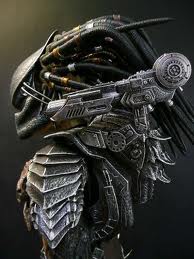
Also known as a “burner” or plasma caster, this weapon was the mainstay of the Predator aliens and is featured in the many movies, comics, video games, and novels of the franchise. Mounted on the shoulder, this weapon would discharge a ball of red-hot plasma into objects, causing damage akin to an explosive device, but with none of the messy shrapnel. Though the standard model is shoulder mounted and aimed using a heads-up-display and laser sight, the Predators in later movies were also known to carry wrist-mounted versions of this weapon as well. Like their claws and wrist bombs, they were embedded in the cuffs and served as a backup. One of these makes an appearance in Predator 2 during the meat locker shoot-out.

BR55 Battle Rifle:
This baby is a Halo universe invention, and is the mainstay of the UNSC infantry. Aesthetically, this rifle is based on several bull-pup assault rifles designs from the modern era, a design which is clearly growing in popularity. Some potential sources for inspiration include the Austrian-made Steyr AUG, the French FAMAS, the British L85, the Belgian F2000, and the experimental PAPOP design. Like all bull-pup rifles, this gun loads from the rear and can cut through Covenant opposition with ease! Even when I’m playing as the Covenant, this was my second favorite weapon to be carrying (the first was either two submachine guns or two pistols, or a combinati0n thereof!)

Blade Runner Gun:
In the classic move Blade Runner, Detective Rick Deckard was responsible for locating and “retiring” replicants. And the weapon he used to do just that is featured here. This is the model of a Blade Runner service revolver, for which little information exists, but whose appearance and performance pretty much speaks for itself. Based on a standard service revolver with several extra bits added on for effect, this gun pretty much screams cyberpunk.

In addition, there are several scenes in the movie where Deckard’s gun turned flesh (artificial though it was) into mush! Recall the scene where Deckard uses this gun to punch several holes in Zhora? Or how about the scene immediately thereafter where Leon is beating the crap out of him, and Rachael manages to save him by using his own weapon? Yeah, whenever this gun was brought out of his holster, some big holes resulted!

Blasters:
When asked about his idea for a “Galactic Empire”, George Lucas said that he wanted to create something that was as aesthetically similar to Nazi Germany as possible. This was reflected in the weapons as well. Numerous guns that were modified and used as props in the movie were based on WWII vintage weapons. The first and most recognizable is Han’s blaster, aka. the DL-44. Based on the German C96 Mauser pistol, this weapon was apparently a popular item amongst smugglers and traders, being very powerful and compact. It was also quick on the draw, which comes in handy when in a bar and looking down the barrel of a bounty hunter’s gun (Han shot first!)

The next was the standard issue blaster used by both the Stormtroopers and the heroes, especially in the first movie during their daring breakout from the Death Star. This blaster, known as the E-11, was based on the Sterling submachine gun of WWII. Simple, consisting of little more than a barel, a handle, and a side-mounted magazine, the gun was easily altered with a few pieces of molded plastic and a scope that made it look suitably futuristic.

The heavier T-21 Blaster Rifle was yet another WWII adaptation. Built around a Lewis machine gun, it was featured in the first movie during the Mos Eisley scene where Stormtroopers were seen walking through the streets searching for Luke and Obi Wan.

Last, there was the DLT-19 Heavy Blaster, the heaviest infantry weapon in the Star Wars franchise. In keeping with his love of WWII kit, Lucas’ set designers used a German MG42 to fashion this one. This blaster appeared aboard the Death Star in the hand of the search party that went over the Millenium Falcon, and again when Chewy commandeered one to take out the remote blasters and cameras in the cell block.

GE M134 Minigun Handheld:
How could I have forgotten this one? I mean really, is there a better visual representation of sheer badassery than the handheld minigun from Predator? Sure, the mere idea of a man carrying a minigun around by hand is so unbelievable its makes me want to laugh out loud. Considering the weight of the weapon, even before you factor in all the ammo, coupled with the killer recoil that no human could withstand – all of this makes the physics totally implausible! But what the heck? It was fun to watch! I can’t imagine anyone not feeling the hair on the back of their neck stand on end as those barrels started whirling and the bullets streamed out, so fast it sounded like a turbine! And I know from talking to actual pilots who’ve seen this baby in action that if you add tracers to the mix, its like watching a laser show. WHURRRRRRRRRRRR! Total carnage!

Grammaton Cleric Pistol:
Though it was not my favorite movie, there were undeniably cool aspects to the movie Equilibrium. One of which was all the cool Gun Kata moves pulled by Christain Bale, Angus Macfadyen, and the other Grammaton Clerics with their special pistols. These guns were clearly souped-up versions of the Beretta 92FS. They clearly fire in both semi-automatic and automatic bursts, and were retrofitted in one scene with impact hammers on the handles.

In addition, some rather curious reloading tricks were devised. One involved arm-rails that would deliver fresh magazines from inside the cleric’s sleeve. Another included magazines that could be balanced upright, which gave the cleric the ability to simply slam his gun down on the fresh magazine once the empty ones had been ejected and go right on shooting. It’s all about rate of fire in this movie, making sure the bullets (and dust) keep flying!

The Lawgiver II:
Also known as the Judge Dredd gun, this pistol is also a modified version of the Beretta 92FS, with molded plastic and LED lights giving it a future-city look. In addition to a rapid-fire setting, the gun also boasts a grenade launcher, signal flare launcher, and a special dual round known as the “double-whammy”. It also has a taser device built into the handle so that only a Judge can operate it, and a DNA tagging system that ensures that every slug fired can be traced back to the person operating it.

M41A Pulse Rifle:

The franchise Alien gave so much to the world of sci-fi geeks, not the least of which came in the form of cool guns. And the Pulse Rifle was arguably the mainstay of that contribution. In fact, it was this gun that inspired entire generations of futuristic weapons, and the name itself has been used many times over to refer to energy and slug-thrower weapons in sci-fi franchises.

This is an important disctintion seeing as how “pulse”, to most sci-fi acolytes, refers to weapons that fire out pulsing beams of energy (most likely plasma). But in this case, it referred to pulses of caseless ammo, big bursts of projectiles that would tear through acid-spewing aliens by the dozen. And let’s no forget the grenade launcher that was attached to the underside, how cool was that? The signature, click-click, BOOM! combination was as pleasing to the ears as it was to the eyes.

But in addition to being just so freaking cool to look at, the amount of creative energy and ingenuity that went into making it was quite impressive. For example, the people in charge of set design wanted a prop that would actually fire, so they built their rifle concept around the M1A1 Thompson submachine gun, a WWII vintage weapon that was small and sturdy enough to get the job done. To simulate the grenade launcher, they attached a cutdown Remington 870 shotgun beneath it and mounted the foregrip of the SPAS 12 shotgun on top of that. Then, they applied pieces of molded plastic and a little LED display to the side to make it look especially badass! Remember that scene where Ripley used it to level that room full of egg’s with the Alien queen inside? Iconic!

M56 Smart Gun:
I know, I’m shoving two examples from a single franchise into one post. But I think it’s worth it. And for fans of Aliens and sci-fi junk, you just can’t make a list of cool guns and not include the Smart Gun! Much like the Pulse Rifle, this weapon was the perfect marriage of aesthetics and ingenuity.

To fashion it, the set designers for Aliens used another vintage WWII weapon (like Lucas, they used the German MG42 machinegun) some motorcycle handles, and the arms from a Steadicam mount. The result, once again, was pure badassery! And the name, according to the expanded Aliens universe, comes from the fact that these weapons could aim themselves. Marines would simply employ their eyepieces and helm cameras, and the guns would pick up movement and target it. Oh, and that scene where Vasquez opens fire in the Alien lair… classic! “Let’s roooooock!”

PPG’s:
The PPG, or Phased Plasma Gun, is the standard weapon of security officers and soldiers in the Babylon 5 universe. According to franchise sources, the PPG fires a small charge of superheated helium which retains its shape and small volume via a residual magnetic field. Upon impact with an object, the magnetic field is dissipated and the heat discharged. PPG bolts also cause visible distortion as they travel through air, hence the blurred effects when people in the show fire off their weapons.

The PPG comes in several standard models. First, there’s the service pistol which every security officer and member of station personnel. The heavier rifles are busted out during riots and times of war, along with the vests and riot helmets. In two episodes (S01E20 Babylon Squared and S05E19 Wheel of Fire ) Garibaldi has scenes where he busts out the BFG version.

Reason:
This weapon is both deadly and cheekily-named, and is taken from Neal Stephenson’s smash-hit novel Snow Crash. This picture doesn’t quite do it justice, but its a close approximation. In the novel, Reason was a gatling gun that was the property of Uncle Enzo’s Mafia, an organization that ran a series of franchulates along the west coast of the former US. But unlike your conventional gatler, it fired caseless depleted-uranium slugs, bullets that are incredibly dense and very heavy. Hence, the weapon packed a massive punch and a mad recoil.

During one of the later chapters, Enzo’s men use the gun to take out a pirate yacht while firing from a life raft. A single burst demolished the pirate ship, but the recoil sent their boat about fifty meters in the opposite direction! This scene also had a hilarious set up when the mafiosos first broke it out, saying that if they ran afoul of any privateers, they were sure they’d “listen to Reason.”

Phaser Rifle:
Over the years, Star Trek has been a source of many weapons designs. However, some were arguably more cool than others, at least in my opinion. These came largely from the later spinoffs and movies, in particular DS9 and Voyager. Prior to this, phaser designs were either too boxy, too bulbous, or just too… Buck Rogers-y! When you’re repelling boarders, or on an away mission, one thing you want is a kick-ass weapon to bolster your confidence and inspire fear in your enemies.

These requirements were met by a new model of weapon, known as the type 3 Phaser Rifle. This weapon went through many variations throughout the course of the show. The first design was very boxy-looking, whereas later models tended to be more sleek and menacing (as shown above). Then came a whole new design, known as the Compression Rifle (seen below), which was apparently an even more powerful model. These weapons were specifically created for use on starships where heavy combat was expected, or in times of war.

Final Thoughts:
Man, that was a long list! But that’s the thing with cool ideas, they tend to get around. And as usual, I noticed some key patterns in the mix which I think should be pointed out. In all of these cases, there were apparently two classes  that each weapon fell into.

  1. Directed-Energy Weapons: Arguably the more science-fictiony of the two. These weapons first made their appearance in Saturday morning serials like Buck Rogers from the 1950’s. They come in many forms – ray guns, death rays, beam guns, blasters, laser guns, and phasers – but the core concept is the same. Phased or directed energy, usually in the form of plasma, that is focused into a tight beam and then emitted. The ironic thing is, since the 1950’s, sci-fi franchises have moved away from these seemingly farfetched devices and come to rely on ballistic weapons designs more and more. Meanwhile, Directed Energy Weapons have become more and more feasible, with several prototypes being explored by military contractors today.
  2. Ballistic Weapons: In the context of sci-fi, these often take the form of weapons that use caseless ammunition, electromagnetically-propelled ammunition, or just standard bullets. But in each case, the weapons that use them are adapted to look more futuristic. Interestingly enough, the future seems to be coming sooner than we thought. In just about every developed nation, firearm technologies are being explored under the banner of the “Future Soldier” program. Having studied many of these, I can tell you that they put much of what was shown in Aliens to shame, especially where Heads-Up-Displays and portable computers are concerned! Again, the future seems to be coming sooner than we thought!

Ancient Aliens (Updated)

And I’m back with another conceptual post, hard at work exploring the ideas that run deep in the grand genre that is sci-fi. And this is one that I find particularly cool, mainly because it’s just so freaking existential! I mean what is there that can possibly throw a wrench into our collective anthropomorphism more than knowing that there is sentient life out there that significantly predates our own, especially if we were to find out that they had something to do with our own evolution…?

In some ways, this is a shout out to the “ancient astronauts” theory, which speculates that extra-terrestrials came to Earth long ago and left some evidence of their visit behind. This can be limited to something as basic as a structure or a relic, or can run as deep as having influenced human cultures, religions and technological development. Regardless of whether or not this theory is to be taken literally, it is well represented in the sci-fi community. Here are some examples that I have assembled:

2001: A Space Odyssey:
A classic example of an ancient species, ancient astronauts, and one of my personal favorites! Originally conceived in the form of a screenplay by Arthur C. Clarke and Stanley Kubrick, the concept of the TMA-1 monolith aliens was a central plot element to one of the most groundbreaking science fiction movies of all time. However, owing to Kubrick’s esoteric style, not much was ever made clear about the species that built the monoliths. Luckily, Clarke went on to develop the idea at length in his novelization of the movie and its many sequels.

According to the novel, and ongoing interviews with Kudrick, the beings that built the monoliths were known as the Firstborn – an extremely ancient race that achieved sentience millions of years ago and were exploring the galaxy long before humanity even existed. The monoliths were their means of traveling from star to star, which they did in order to seek out life and help it along. In the course of their travels, they came upon Earth four million years ago and discovered Simians that were on the verge of starvation. By teaching them to expand their diet through hunting and some basic tricks to cultivate their manual dexterity, they ensured not only the survival of higher order primates, but the eventual emergence of humans as a species.

The story of 2001 thus takes place in the near-future (from when it was originally written) where humanity has developed into a star-faring race and colonized the Moon. Not far from this colony, a monolith is discovered buried under millions of years of moon dust. After examining it, to no avail, they discover that it has sent a signal out to Jupiter. The ship Discovery is then dispatched to investigate, where it finds an even larger monolith in orbit around Europa. The mission ends quite mysteriously as David Bowman, the last surviving member of the crew, flies closer to it in a small pod and disappears. Adding to the mystery were his last words: “My God, it’s full of stars!”

In subsequent books, the mystery of Bowman’s disappearance and the nature of the monoliths is made clear. Essentially, the monoliths are alien machines that contain their consciousness, and some are gateways which allow for FTL space travel. Bowman, when he came into contact with the one around Europa, was transformed or downloaded (depending on how you look at it) and became one with the monolith. The reason they are hanging out around Europa is because they are currently working to transform Jupiter into its own star so that life may blossom on Europa (which scientists speculate is already teaming with life underneath its icey shell).

Cool idea! But you see, there’s a snag… Apparently, the First Ones have also been known to weed wherever they’ve sown. What would happen if they came to the conclusion that humanity was too aggressive for its own good, the result of them teaching us how to harness an appetite for killing other animals and members of our own species? This is the premise that is explored in the finale 3001: Final Odyssey, and which was left on a cliffhanger note. Unfortunately, Clarke died in 2008, leaving fan fiction authors to speculate on how this would all play out…

Alien vs. Predator:
Note: this is not a reference to the terrible movie or its even more terrible sequel! No, in this case, I am referring to the wider franchise, as exemplified by its many video games, comics, novelizations, and even the independent (non-crossover) movies. In these cases, we get a glimpse of two races that predate humanity by hundreds of thousands or even millions of years. Their outward characteristics alone make them cool, and they are both pretty badass in their own special ways. But what is especially cool about them is the fact that very little known about them, other than the fact that they are very, very dangerous!

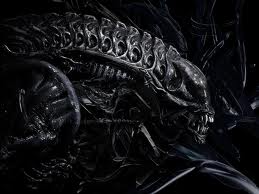
“I admire its purity. A survivor… unclouded by conscience, remorse, or delusions of morality”. That is how the Alien, or Xenomorph in AVP terminology, was described in the very first movie. Their origin is unknown, as is the timeline of their existence and the circumstances of their evolution. However, one thing is clear: on this last note, it must have been something pretty harsh! I mean really, how difficult must life have been on their homeworld for something like the xenomorph to have emerged. They proliferate at an alarming rate, require living being to gestate, and are designed purely for the hunt!

Overall, their race is divided into two symbiotic and interrelated species. First, there are the “Facehuggers”, the spidery creatures that attach themselves to living creatures and implant them with embryos. This in turn gives rise to the “Chestbusters”, the warrior aliens that seek out, kill and capture creatures for the Facehuggers to use. At the top of the pyramid is the Queen, a Chestbuster who has evolved to become the egg-layer who gives birth to more Facehuggers. An interesting chicken and the egg type arrangement, and something which only adds to their mystery!

The Predators, on the other hand, are relatively straightforward. At their core of their society lies a warrior ethic, where each and every male member of their species is trained to be a hunter. In time, hunters accumulates honor and seniority within their culture by attaining as many kills and trophies (i.e. skulls) as possible, preferably from different species. In fact, it is rumored that a single scene from Predator 2, in which an Alien skull appeared in a hunter’s trophy case was the basis for the whole AVP crossover.

In addition, there are also some clear and apparent rules to the hunt. First, each hunter is drawn to arenas of conflict. In the first movie, one chooses a hunt in Central America where a guerrilla war is taking place. In the sequel, one travels to LA during the height of the drug wars. In both cases, the get a sense of their terrain, taking out the easy prey first, and gradually working their way up to the top carnivore. At first, they rely on their advanced weaponry and stealth. But when at last they face off with the strongest prey, they fight them in the open in hand to hand combat.

God knows how long they’ve been doing this. But given their obvious level of technology, its clear they are not exactly recent additions to space race!

The “Ancient Humanoids”:
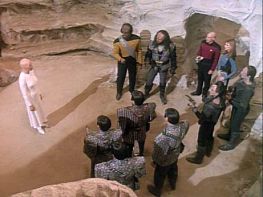
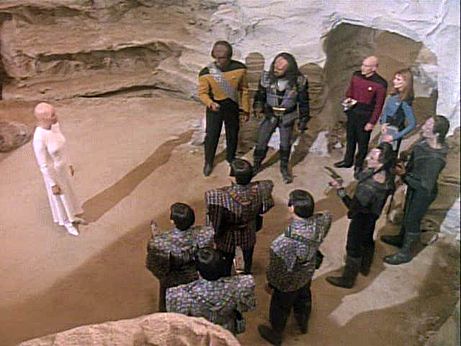
Now this was one I didn’t much like, but it’s an example of the concept of ancient astronauts nonetheless. And it comes to us courtesy of Star Trek: TNG. from an episode named “The Chase” (episode 146). In it, Picard’s old friend and mentor turns up dead in the course of an expedition which he claims could be the most profound discovery of their time.

After retracing his footsteps, Picard and the Enterprise are joined by three other search parties – one Klingon, one Romulan and one Cardassian – in orbit around a dead planet. When they reach the surface, they find that all the clues lead to a recording left behind by an ancient species. In the recording, the humanoid alien tells them all that they are the progenitors of every sentient race in the quadrant, that their DNA was planted on countless worlds. This is apparently why so many species are humanoid, and means that humanity shares ancestry with all these would-be enemies.

Heartwarming, and kind of cool if it weren’t such a convenient explanation as to why all aliens in the Star Trek franchise are humanoid. This is something that’s always annoyed me about the franchise. It’s not enough that all the aliens speak English and look like people, minus the occasional molded plastic on their faces. But to make matters worse, they always got to make a point of drawing attention to their humanoid forms. So when it came right down to it, this episode felt more like a contrived explanation than a homage. Personally, I would have thought that limited budgets would be the reason, but what do I know? I’m no xenobiologist!

The First Ones:
Another favorite which comes to us courtesy of the Babylon 5 universe. According to the expanded storyline, the First Ones were the first beings to achieve sentience in the Milky Way Galaxy. By the time of the show, most of them had left our corner of the universe in order to explore other galaxies and what lies between them. Only two remains behind, ostensibly to act as shepherds to the younger races. They were known as the Vorlons and the Shadows. However, in time, the two races turned on each other because of their diametrically opposed ideologies.

The Vorlons believed that development and progress came from order. In the course of their long history, they travelled to many worlds inhabited by sentient races and began tampering with their evolution. In each case, they presented themselves as angels, thus ensuring that sentient beings would see them as creatures of light and truth. In addition, they fostered the development of telepaths for use in the coming wars against the Shadows, whom they knew to vulnerable to psionics.

To illustrate this, the Vorlons are often presented as being aloof and rather stodgy figures. In fact, Lyta Alexander, one of the show’s secondary characters, commented that despite their power, the Vorlons are a highly sensitive people who do not react well to change! In the course of the show, they were initially hesitant to commit their forces to fighting the Shadows, they were extremely irked when Kosh (their ambassador to B5) was killed, and when Sheridan went – and presumably died  – at Z’ha’dum, they began destroying entire worlds in the hopes of erasing every trace of the Shadow’s influence.

In addition, their esoteric, mysterious nature was summed up with one question that they would ask anyone who was privileged enough to speak to them: “Who are you?” If ever you found yourself being asked that, odds were you were meant for some higher purpose, one which the Vorlons had a hand in arranging!
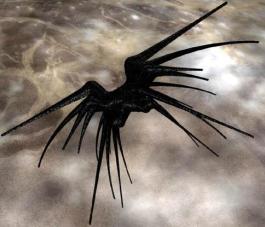
The Shadows, by comparison, were much more enabling and  intriguing, even if they were a little… oh, I don’t know, shit-your-pants scary!  In the course of their history, they too traveled to many worlds as ambassadors, encouraging different people and races to embrace their ambitious, darker side and go to war with each other. Whereas the Vorlons asked “Who are you?”, the Shadows big question was “What do you want?” Again, if you found yourself being asked this question, it meant that you were on their radar and they had big plans for you. The proper response to this would be feelings of flattery followed by abject terror.

In any case, whereas the Vorlons believed in order and stability, the Shadows believed that evolution came only through conflict and disorder. This, they reasoned, is what lead to the development of stronger, more advanced races. As Morden, their own representative to B5 said, humanity would never have come so far so fast were they not constantly “at each others’ throats”. Sure, some races had to be sacrificed along the way to make this philosophy work, but that was all for the greater good. In the end, what came out of it was a series of species that were stronger and better than they were before.

This philosophy eventually led them into conflict with the Vorlons as well as several other First Ones. Many younger races found themselves taking sides as well or just getting caught in the middle. In fact, wars between the two sides became a recurring thing, happening every few thousand years. In the last, which took place 10,000 years before the main story, the Shadows were defeated by the last great alliance between the First Ones, most of whom then chose to leave the galaxy. Then, just 1000 years before the events in the show take place, the Shadows were once again defeated by the Vorlons and an alliance of younger races and forced out of the galaxy entirely. However, as the show opens, we quickly learn that the Shadows are once again returning to their old stomping grounds, and the first spot on the tour is a planet known as Z’ha’dum.

This world is doubly significant because it is this planet where another First One – THE first one in fact – is thought to reside. His name is Lorien, and he is the last of his kind and the sole First One outside of the Vorlons and Shadows that is left in galaxy. All of the others have long since abandoned it, leaving the Shadows and Vorlons to their war and all the other races that have chosen to enlist in it. In the end, however, Sheridan, Delenn and the younger races form their own alliance which they use to draw a line against both races. With the help of those First Ones that they are able to reach and enlist the help of, they are successful. After a brief but decisive fight, both races agree to leave the galaxy with Lorien, never to return. In the last episode, when Sheridan is on the verge of death , he is found by Lorien who takes him to the great beyond where the other First Ones now reside.

Like I said, its a personal favorite, mainly because I felt it was so richly detailed and in-depth.

The Forerunners:
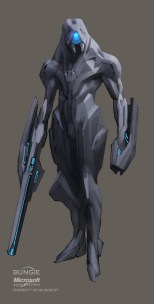
Now here is an interesting take on the whole ancient astronauts concept. Whereas in most versions of this idea, aliens make contact with a younger race and influence them for their own purposes, in the Halo universe, things happen in a sort of reverse order. It is established as part of the game’s back story that eons after they died out, the Covenant races came upon the remains of an ancient race which are referred to as the Forerunners. After learning how to reverse-engineer their technology, the Covernant began to merge it with their own and was able to jump thousands of years ahead as a result.

At the same time, they began to develop a religion and even a theocracy based on the Forerunners and what they believed their most important relics to be. These would be the Halo devices, for which the game takes its name. Believing that the Halos were the gateway to the afterlife, or the source of deliverance, the Convenant became obsessed with finding a working Halo and activating it. All of their mythology for the past few thousands years was based on this, and they pursued it with absolute single-mindedness.

So in this way, the Forerunners had a profound impact on the development and beliefs of the Covenant, but not intentionally. Rather than coming to the Convenant while it was still in its infancy and manipulating them for their own purposes, the Covenant instead found them, but only after they were long dead. In addition, they were influenced by their own assumptions about the Forerunners, and not anything they chose to tell them. And in the end, this influence had a near disastrous effect, given that the Halo devices were weapons of mass-MASS destruction and not holy relics. By attempting to activate them, the Covenant very nearly brought about their own extinction, and that of every other sentient race in the quadrant. One would think there was a message in all this about the dangers of blind faith and the dangers of deification or something!

The Goa’uld:
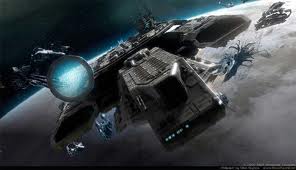
Here is a perfect example of the ancient astronauts theory, so bang on that you’d think it was tailor made to fit the premise! In the Stargate universe, which has expanded considerably over the years, an advanced extra-terrestrial species known as the Goa’uld came to Earth during the neolithic period and had a vast influence on our history. In the original movie, this involved a single alien who took on human form and appointed himself God Emperor over his human subjects. This, in turn, gave rise to the Egyptian civilization, with the alien-god Ra at its apex.

In addition to creating ancient Egypt though, Ra was also revealed to have taken human beings through the Stargate, an means of near-instantaneous interstellar transportation, and established similar civilizations on distant planets. On each of these, the Egyptian motifs of pyramids and the cult of Ra persisted, in some cases for thousands of years. Meanwhile, back at Earth, a revolt unseated Ra and he fled into the cosmos, to be found thousands of years later when humans accessed the Star Gate on Earth.

In the expanded universe, we learn that the Goa’uld were merely one of many races that visited Earth and appeared as gods to humanity because of their advanced technology. But whereas most had benign intentions,  the Goa’uld were concerned solely with establishing slave colonies on many worlds throughout the universe. In addition, their interference extended to other less advanced races as well. As a result, humanity is now faced with the task of preparing to face this and other threats, all of which involve highly advanced races that have visited Earth at one time or another and could very well be hostile.

Although it was not too good a movie (in my opinion), the concept is still a very fertile one! It’s little wonder then why it was made into a series, one which has done quite well for itself. Aliens came before, they may come again… Can we stop them this time. Who knows? Spooky stuff!

The Orions:
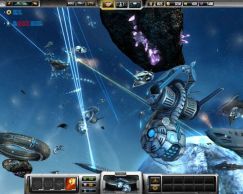
In the video game series Master of Orion, there is yet another take on the concepts of ancients aliens. In this turn-based strategy game, players select from different alien races that inhabit the galaxy and begin the process of colonization and expansion. In time, the concept of the Orions comes up. It seems that each race, though they are different and possess varying special abilities, have their own legends about this particular race.

One of the aspects of the game is to find the Orions homeworld, a place full of secret and advanced technology, but which is defended by a powerful robotic starship known as the Guardian. Whoever is able to destroy this ship and land on the planet is the most likely to win the game. This is advisable, seeing as the how the purpose of the whole game is to become the undisputed master of the galaxy – the Master of Orion, as it were 😉

The Xel’naga:
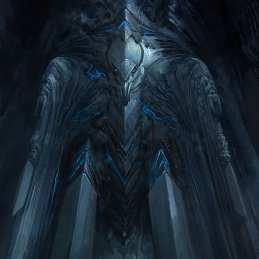
Another example of this concept which comes to us from the gaming world. of which fans of Starcraft will no doubt be instantly familiar with! Translated literally as “Wanders from Afar”, the Xel’naga were apparently a race from a distant galaxy that was concerned with creating the perfect life form. In the course of their lifetime, they apparent “seeded and cultivated thousands of various species” (from the SC game handbook). This included the Protoss and Zerg, two of the major players in the game, and figures pretty prominently in the game’s backstory.

In the case of the Protoss, the Xel’naga thought that they had found beings that possessed “purity of form” and began manipulating them. However, when they revealed themselves to the Protoss, the latter turned on them and they fled. They discovered the Zerg shortly thereafter, a species which they believed possessed “purity of essence”. They began by enhancing them from the small, parasitic larvae that they were, but found that they were too primitive. They therefore developed the Overmind as well to give them purpose and direction, but this only made matters worse. In time, the Zerg found the Xel’naga, who had chosen to remain hidden this time, and consumed them.

In the course of the game, Xel’naga ruins make only one appearance, in the form of an ancient temple which possesses the ability to sterilize the planet of all other species. However, other ruins are apparently featured in one of the game’s novelizations. Otherwise their is no mention of them, their existence merely constituting part of the story’s deep background.

Final Thoughts:
After looking through these and other examples of ancient astronauts, a few things began to stand out. Like I said before, sooner or later aliens serve an anthropological purpose in science fiction. Or to put it another way, they will always play the role of mirror and meter stick. On the one hand, they are the means by which we project aspects of ourselves onto others so we can study them better. On the other, they are means by which we measure our own flaws and development.

But above all, aliens tend to fall into any one of four categories based on where they fit into the moral and technological spectrum. This spectrum, which I made up myself (!), breaks down as follows:

  1. Benevolent/Malevolent: How aliens behave in our favorite franchises and what purpose they serve often has much to do with their basic motivation. In short, are they kind of benevolent, enlightened overseers as envisioned by Arthur C. Clarke in 2001: A Space Odyssey and Childhood’s End, or are they hostile, conquering species as envisioned in War of the Worlds and Invasion of the Body Snatchers? In either case, the alien serve a basic purpose: as a commentary on humanity. Their murderous ways are our murderous ways, their benevolent, technical perfection what we aspire to be. As Nixon is said to have muttered to JFK’s painting: “Men look at you, they see what they want to be. Men look at me, they see what they are.”
  2. Advanced/Nascent: Another important aspect to the aliens in question is their level of technical development. And, interestingly enough, this can have much to do with their moral character. Oftentimes, the aliens in a franchise are both advanced and malevolent, blowing up the White House Independence Day-style or trying to make us one with the Borg! Other times, they are advanced and enlightened, technology and evolution having erased whatever primitive impulses they might have had, but which humanity still possesses. And in other cases still, their are aliens who are less advanced than humanity and are either ethically challenged because they are behind the times, or noble and “untainted” because they haven’t been perverted by civilization’s greed and avarice. It’s a toss up, really, where the benefits and downfalls of technological progress are seen as having an influence on moral and social development.

Again, these are all mere projections, designed to focus attention on moral and ethical dilemmas that arise out of our collective history. Still, it is fun to take these various examples from popular culture and see where they line up on the moral/technological graph. That way we can see where different franchise place their aliens in terms of the overall spectrum.  And like I said at the beginning, its a cool concept. I mean seriously, wouldn’t it be cool if it were actually true? No one can prove aliens didn’t visit Earth thousands or even millions of years ago and mess with our evolution, right? Yeah, it’s not exactly a sound basis for a scientific theory, but a very fertile source for science fiction!

Strange Days

Here’s a cult classic you don’t hear about often. But that’s the way of cult classics, isn’t it? You never hear about them until you stray into the fan community and they insist that you have to see it. You finally do and then maybe, just maybe, you yourself become an accolade. Once that happens, you might eventually become aware of the community of fans that’s out there – most likely they have an internet fansite going – they spread the word and make sure the movie is listed as a “sleeper hit” or a “hidden gem”.

Yeah, that’s about how I came to see the movie Strange Days. I can remember when it came out back in 95, how little fanfare and attention it got and how briefly it was in theaters. In fact, I didn’t even hear about it again until recently when it turned up on somebody’s top ten lists of the best sci-fi movies. Upon further investigation, I found that this movie made it onto a lot of people’s lists, even a few professional ones. And since I committed to covering sci-fi cult-classics awhile back, I thought I’d check this one out. And, I am pleased to say, I was pretty impressed.

(Background—>):
In spite of being well-received by critics, this movie did quite poorly at the box office. Surprising, considering the all-star cast and the fact that James Cameron co-wrote and produced the thing. And when I stay all-star, I mean all-star! Ray Fiennes, Angela Basset, Juliet Lewis, Tom Sizemore, Vincent D’Onofrio, and Michael Winscott all had main roles in this movie (this last guy you may remember as the creepy villain from The Crow, and every other movie he’s ever done for that matter!)

However, as is often the case, the movie went on to attract a cult following who enjoyed the movies cyberpunk elements, its millennial theme and dark, paranoid feel. And with few exceptions, the acting and delivery was quite good. Ray Fiennes excels at being the sleazy but redeemable huckster, Basset as his concerned and beleaguered friend, and Winscott as the creepy, paranoid control-freak. Juliet Lewis came off as a little labored, but then again, her dialogue was kind of the cheesy, looks good on paper stuff. Still, she manages to pull off the abused, damaged damsel quite convincingly (draw whatever inference you will from that ;)).

In addition, the movie did a good job of capturing that pervasive sense of millennial madness that was beginning to manifest around the early-mid nineties. While things like the Y2K virus quickly became a cliche, especially after they proved baseless, the years leading up to the millennium were not without their share of fears, concerns and a general sense of imminence. Many people, both religious and secular, predicted doom, thinking the world would end. Others predicted a sort of social cataclysm, that mobs and rioters would take to the streets and begin looting, especially if all the grids went down. But most, I think, were just worried that the madness and hysteria would be self-fulfilling, that some riots and crackdowns might happen before everyone realized that the world wasn’t ending.

Also, the technological aspects of this movie were quite interesting. Mainly, they centers on a form of virtual entertainment known as the SQUID (Superconducting Quantum Interference Device), a device which can record and playback events directly from the wearers cerebral cortex. This predicted the internet phenomena in many ways, the concept of “viral videos” and snuff films being the main plot device in the story. And one of the major events in the movie, the murder of an outspoken hip-hop artist and the controversy surrounding it, predicted the death of Tupac Shakur, which took place around a year later.

(Content—>):
The movie opens on the last days of December, 1999. Violent crime and gang warfare are getting out of control, and in the midst of all this, a major recording artist and activist named Jeriko One (Glenn Plummer) is killed. Meanwhile, a woman is being chased by two policemen, played by Vicent D’Onofrio and William Fichtner, who clearly want to kill her. Seems she saw something and was wearing a SQUID at the time, and when she gets away, the policemen retrieve the device and realize she got it all on tape (disc, whatever!).

Meanwhile, we meet Lenny Nero (Ray Fiennes), a former LAPD officer who has since turned to the world of contraband and sleaze, selling SQUID tapes to anyone looking for a break from reality or themselves. However, Nero has a rule that he never sells “blackjacks” (i.e. snuff films), because he considers himself a purveyor of experiences, not a peddler of smut! His friends, Lornette ‘Mace’ Mason (Angela Basset) and Max Peltier (Tom Sizemore) are also former LAPD officers who have since retired. Mason now does private security while Justin is a private eye. They don’t approve of what Nero does, but stick by him because of their friendship, and in Mason’s case, feelings of unrequited love.

Things begin to unfold when the woman who was being chased, named Iris (Brigette Bako), finds Nero at a bar. She claims someone is trying to kill her and has to flee, but that she recorded the entire thing on a disc and dropped it in his car. However, his car is soon towed and he’s unable to figure out what she was talking about. Shortly thereafter, a “blackjack” is dropped off at his house that shows someone killing her. Nero is freaked, especially since when he last saw her, Iris also told him that their mutual friend and Nero’s former lover, Faith Justin (Juliette Lewis), is in danger as well. This presents Nero with an opportunity to see her, only to be told by her and her manager that he’s not wanted. In between telling him that they are through, Justin is sure to relate that she’s also afraid because her manager, Philo Gant (Michael Winscott), is becoming increasingly paranoid and controlling. Spurned, Nero shows Mason and Peltier the blackjack and they are similarly shocked.

Shortly thereafter, Nero and Mason go to pick up his car so they can see what Iris dropped off and run into the same two officers who were chasing Iris earlier. They narrowly escape them and then view the tape, where it shows these same officers murdering Jeriko in cold blood. Shortly thereafter, Nero finds his supplier, Tick (Richard Edson), dead from an overdose of the SQUID. It looks like an accident, but Peltier suspects foul play since what appears to be an isolated case of murder might have something to do with a larger conspiracy he’s been hearing about. According to Peltier, there is a militant movement coming from City Hall and the LAPD who are determined to bring the city under control, even if it involves death squads! Because Jeriko was a major activist who was bringing the gangs of LA together to reign in the LAPD and the cities politicians, these squads would have been targeting him.

They then go to pick up Faith who is at a New Years party being hosted Philo. She reveals to them that she knows what going on, that Philo has become a total “wirehead” (i.e. SQUID-addict), who’s in the habit of having his artists followed because of his increasing paranoia. Iris was his mole and was tailing Jeriko, and was therefore with him when he was murdered. When she showed the tape to Philo, he feared for his business, beat her up, burnt the tape and told her killer where to find her. However, she made a copy in advance which she then put in Nero’s car. They now understand why Faith was afraid and trying to keep Nero away. Clearly, she feared for her life as well and didn’t want him getting involved. They all agree they should release the tape, but both Peltier and Nero worry about the impact it will have – i.e. a full-scale war between the gangs and the LAPD.

However, their rescue attempt is thwarted as Philo and his thugs intervene. Faith is then taken to his suite where she expects to die. After arguing and regrouping, Nero and Mason decide to attempt to rescue her again. Meanwhile, the streets are filled with people celebrating, rioting, and signs boasting “2K”. In the midst of the rowdy chaos, Mason and Nero manage to sneak into Philo’s party, Nero attempts to rescue Faith while Mason confronts the police commissioner and slips him the disk. Mason gets into Philo’s suite but finds him dead, and that Peltier, his friend, is the one who killed him. Seems he and Faith have been having an affair, and that HE was the one who murdered Iris and sent the tapes to Nero. He also confesses that the whole conspiracy theory was just his way of keeping Nero away from the authorities. In the end, it was all just a “traffic stop gone wrong”.

While this might seem like a letdown, I actually preferred it to the alternative. Rather than there being some big conspiracy that goes all the way to the top, the real motivating factor in all this was just random violence. And it is for this reason that Peltier did what he did. In a world as messed up as theirs, he believes what matters most is getting what you can before you’re murdered senselessly. In any case, Faith comes in and distracts him long enough for Nero to get the upper hand and they fight. Nero gets a knife in his back (symbolic since his friend betrayed him) but manages to toss Peltier from the balcony in the end.

Down below, Mason has been forced to flee the party when the two crooked officers spot her and begin chasing her through a crowd. She subdues them, but then is set upon by several riot cops. She is cornered and beaten, and it looks like its all over until a number of people in the crowd decide to help her out. A big fight, symbolic of the war they were anticipating, begins, but is broken up when the commissioner arrives and reveals he’s seen what’s on the disc. The two officers are arrested, one eats his gun while the other – D’Onofrio, in true psychotic form – tries to shoot Basset and is gunned down!

The movie ends with the New Year being rung in. Yes, in spite of the shooting, several deaths and a near riot, the countdown happens as planned and people cheer. Ah whatever, it’s New Year’s right? No sense letting a few fatalities ruin the biggest party of the millennium. Everyone is merry, people kiss (even some riot troops and civilians), and of course, Nero and Mason hook up! Seems he’s finally taken the hint and broken it off with Faith who, let’s face it, is more trouble than she’s worth. War is averted, the New Year arrives without the apocalypse, and there’s resolution all around!

(Synopsis—>):
Overall, I can see why this movie was a cult hit and why it didn’t do so well in theaters. For one, it wasn’t the usual big-budget splashy action flick Cameron is famous for, and it didn’t have a faithful marketing effort behind it. And that’s to be expected from a noire, cyberpunk thriller such as this, studios just don’t seem to know how to peddle and pigeon hole it. However, given its obvious depth and signs of quality, I think it was inevitable that audiences would take notice of it, adding it to their lists of favorites alongside movies like Blade Runner and Akira.

For one, the movie managed to capture, years in advance, the feeling of paranoia that surrounded the actual millennium. Ultimately, these fears proved to be baseless (just like in the movie!), which was one of the things I found subtly brilliant here. Long before the myth of Y2K began to circulate, it was easy to see how people would treat the millennium with a certain degree of paranoia. The religiously minded would fear that the apocalypse was at hand, the paranoid would expect riots, and others believed the world’s infrastructure to all go down! But of course, the clock struck twelve… and nothing happened. And, the plot where a hip-hop artist/activist is murdered in many ways predicted the feelings of loss and suspicion that followed Tupac’s death. Many of his die-hard fans continue to say he was assassinated, some even that he’s still alive!

In addition, the concept of VR technology and human experience was explored in depth and I found this very effective as well. On the one hand, the SQUID technology is just like a drug, something people do to escape their daily lives. On the other, there’s a lot of time dedicated to showing how something like this would have a negative impact on people’s memories and experiences by depriving them of authenticity. On several occasions, Nero is criticized for not being able to let go of the past, mainly because he keeps reliving it with his SQUID. The character of Mason says at one point that memories are meant to fade. Ergo, reliving his old experiences is depriving him of the ability to move on.

But what was best was the twist at the end. Ultimately, the threat came from close to home rather than from death squads or in the form of some big, shadowy conspiracy. All along, the characters are moving about thinking that they are witnesses to an assassination and that they can’t trust the authorities. But in the end, it turns out that the “assassination” was just a random act of violence – albeit with disastrous consequences if it went public – and that it’s their best friend they can’t trust. All of this is in keeping with the central theme and setting of the movie, which again, is millennial madness and an impending set of doom, all of which proves baseless in the end.

Movies like this one remind me that Cameron had a keen mind and some pretty cool ideas way back when. So… what happened? How did he go from Aliens, T2 and Strange Days to “I’m king of the world” and “Unobtainium”? Was it the money? Must be the money. Screws up everything!

Strange Days:
Entertainment Value: 7/10 (admittedly, not the funnest movie around)
Plot: 9/10
Direction: 8/10
Total: 8/10

Avatar!

Oh, I was dreading doing this review. Although I do LOVE trashing bad movies, there a couple reasons why I wasn’t looking forward to doing THIS one. For one, I didn’t want to have to see it again. Second, it’s kind of a controversial subject, this being such a big movie and all. Those that liked it seemed to really like it, those who didn’t REALLY DIDN’T! That’s the funny thing about James Cameron movies, I guess. At least when it comes to everything since Titanic. But I’ve got little to say on the subject that isn’t directly to related the movie’s content, hype, and how it was TOTALLY OVERRATED! Yeah, this is Avatar… whatever.

Avatar (the Cameron flick, not the Japanese anime!)
Yes, that’s another well-known fact about this movie. In addition to sharing so many plot elements with other films (most of which James Cameron did himself), it also shares a name with a Japanese anime of the same name. To keep things differentiated, the anime and the live-action adaptation, directed by M. Night Shyamalan (huh! another terrible director!) went by its alternate name The Last Airbender. Personally, I think Cameron should have changed the name of HIS movie. Avatar, the anime, came first, and Cameron’s movie had far more to be ashamed of!

In any case, this movie was treated favorably by critics for a number of reasons. Foremost were the visual effects, which everybody agreed were pretty damn impressive! Then there was the powerful story-telling. Uh… okay. Then there was the multi-layered thematic nature of the film. Right! However, those of us who aren’t superficial morons who aren’t ignorant of cinematic history (or real history for that matter) noticed a few things that didn’t quite measure up to all the hype. Here they are…

1. Insipid Plot:
So many critics liked the story, huh? Odd, because what I saw was cheesy, cliched, and actually kinda racist film. And here was what made it all that… and by that I mean, really really bad! For one, the idea of an idealized native culture that is being ruthlessly exploited by evil corporations and their military stooges. Sure, sounds familiar enough, and its pleasing that in this context, the native species would be given its due considering how the opposite attitude – that of Europeans “civilizing” the “savages” of the world – has been so widely accepted for so long.

But it’s still pretty insulting. Simply flipping old racist constructs on their head and idealizing the victims doesn’t set the record the straight or undo the harm. If anything, its more for the sake of the victimizers that this is done. In short, its easier to vilify one’s ancestors in fiction that to actually address how that kind of shit went down in the real world. In fact, one thing I loved about the popular response to this movie was the people who came forward and demand that audience who claimed to love the movie do something about actual exploitation and genocide in the real world. Love the Na’vi, you gullible fops? Then fucking stop the ongoing oppression of First Nations!

Second, if you think about it, this movie was kinda racist itself. The Na’vi were helpless before the onslaught of the human corporation and their armed forces, until a defector came along and led them to victory. Can you say “Great White Hope”? Bingo, these people had to be rescued! What is that if not a heaping dose of the more recent, but not less racist notion that the indigenous people of the world who’ve been traditionally wronged by westerners can only be saved by them? God forbid you’d ever think that these individuals can help themselves, or need a break from being saved! Hell, it was the idea of “saving them” that created this whole problem in the first place! But I’m getting preachy here, moving on! Sure, there were lots of fitting elements that are taken from real history, such as the residential school which they had set up for the Na’vi, and the whole “negotiations for their land” angle, but it was all so painfully obvious! Which brings me to point two…

2. Obviousness:
Where to start? How about “Unobtainium”? Seriously… how lame was that?! We already have the many, many instances in the movie where people go on about how rare and valuable this mineral is. You don’t have to give it such an blatant name! Second, the name of the planet… Pandora. Also a patently obvious reference to the heavy handed moral of the story, which is that humanity shouldn’t be messing with people and places it doesn’t understand! There was that horrid speech the CEO (played by Giovanni Ribisi) gave where he talks about how precious and valuable “Unobtainium” is, and how the “flea-bitten savages” are getting in the way. And did anyone else notice that their was a Dream Catcher and other Native artifacts being prominently displayed on the wall behind him? Was that not just the most blatant case of symbolism ever? We get the allegory, and we also get that the guy’s a greedy little bastard. You don’t have to show AND tell us is such an insistent way.

And of course, there’s the divide between the scientists and the corporation and its military enforcers. Whereas the former appreciate the planet and its people and want to understand it, they wanna rape it. Add to that the clear and obvious indications that Jake Sully (Sam Worthington) was going to defect and that he and Neytiri (Zoe Saldana) were going to get together. All of this stuff has been so done to death that it was obvious how it was all going to play out as soon as the introductions were finished! Sure, its nice to have a script that writes itself, but man, a few surprises would be nice!

3. Weak Characters:
To put it simply, the characters in this movie are cardboard cut-outs. On the one hand, you’ve got the conflicted hero with the sympathetic injury, the hardened military man who doesn’t give a shit, and the corporate sleazebag who only cares about the bottom line. On the other, you’ve got the down-to-death native characters: the wizened old chief, the stern second in command, and the beautiful chiefs daughter who loves the foreigner. Holy shit were these last elements stolen out of Pocahontas, and it wasn’t even original when they did it! The former characters were largely stolen from Dances with Wolves, though just about any movie about the closing of the frontier would do here! As I’ve said already, there’s absolutely nothing original here, just a rehashing of old ideas and things that have been done to death.

4. Recycling:
According to Rotten Tomatoes, critics praised Avatar for its “imaginative, absorbing storytelling.” That’s also funny because when I watched this movie, all I saw was a whole heap of things Cameron’s already done, of course with some Pocahantas/Dances with Wolves stuff thrown in for good measure. For starters, you’ve got the theme that was present in Aliens, of the evil mega-corporation that is motivated by unbridled greed and using the military to further its aims. And let’s not forget those armored mechs, which very much resemble the cargo loaders from Aliens as well! Hell, even Sigourney Weaver was in this! I know Cameron likes to reuse actors, but given all the parallels he made to Aliens already, her presence was just a little tongue-in-cheek. Oh yeah, then you’ve got the unlikely love story between star-crossed lovers who managed to succeed against all odds. That’s Titanic right there! And the whole human-machine hybrid (some alien DNA sliced in there for good measure)? That’s right out of Terminator!

So really, the only thematic element in this movie that Cameron hasn’t already done was the whole raping the virgin planet and exploiting the natives thing, but that he simply ripped off from half a dozen other movies! So really, nothing this movie did was original! Sure, some would say that the concept of a massive, planet-wide organism who’s neural pathways connect everything is cool, but that’s been done too, by Stanislaw Lem no less. And when he did it, it was original, hence better (see Solaris)!

5. The F/X ARE The Movie!
The best criticism I’ve heard yet about this movie has to do with Cameron’s motivation for making it. I mean, if you think about it, what was the purpose of creating this… thing? It certainly wasn’t to tell a story that needed to be told. And it sure as hell wasn’t to add to the already impressive array of original franchises Cameron has under his belt (see Aliens and Terminator). Overall, it really seemed like the only motivation Cameron had in making this movie was to test out the latest in F/X technology. That and making an obscene amount of money! But really, one of the biggest selling points of Avatar, which the studio and distributors advertised ruthlessly, was the fact that it boasted the latest in CGI effects, 3D, and fully mapped-out virtual environments. Kinda reminds you of Lucas, huh? Another guy who makes movies simply so he can create something that has the latest in F/X… and no story. In fact, you might say that Cameron was even hoping to replace Lucas as Hollywood’s pioneer in the field of F/X. There’s something cool about being on the cutting-edge, but as many people have told Lucas, F/X do not a movie make!

And while we’re on the topic, what was the hell was all that stuff about people feeling depressed and experiencing withdrawal symptoms after they left the theater? I kid you not, apparently some people felt so depressed after returning to the real world that they reported suicidal thoughts! WHAT? Did they really think the movie was that beautiful? Sure, it was impressive, but personally, I also the whole set-up looked artificial and overdone! In addition to the Na’vi looking like a bunch of cartoon characters, the “rich” 3D environments were so obviously rendered. Some people obviously found that impressive, but really, all I could think was how CGI it all looked. Far from being immersive, it was actually kind of repellant. If the Matrix sequels and Star Wars prequels taught us anything, it was that saturating every scene with digital effects doesn’t make a movie look or feel any more real. It those case, it had the opposite effect; people were very much aware of the fact that they were watching something that WASN’T REAL. And when it comes to movies, suspension of disbelief is everything!

Okay, now for the good stuff. It WAS entertaining. And I liked the fact that this time around, the natives kicked ass! I was totally set for a sad ending when the final fight scene was happening, which would have been far more realistic considering that’s how it happened in the real world. But I think we can all agree, this way was much better! Screw you ya corporate-military asswipes, Eywa don’t take shit from nobody! But alas, I couldn’t get over the way this movie was pitched at sort of a fifth-grade level. It was cheesy, cliche, full of obvious references, recycled elements and themes, and really didn’t give us anything new aside from the special effects. And even those felt cheesy, and definitely weren’t enough to overcome the weaknesses of the plot (and I saw it in Imax!)

Clearly, the movie was a confluence of motivations that came down to money and testing out the latest digital effects. It pioneered the use of the new 3D technology – yet another thing that’s being recycled here – and as expected, other studios and movies are following Cameron’s lead (which was clearly the point!) And of course, Cameron made his obscene amount of money, once again earning the prize for top grossing-film of all time, as well as half a dozen Academy Awards for best visuals, effects and art direction. Mercifully, Cameron did NOT quote the movie when he got up to accept this time. Remember that dreadful “I’m king of the world!” speech after Titanic? Douche…

All in all, I think this movie is best filed in the guilty pleasure column, somewhere between Independence Day and Army of Darkness. Maybe you got other titles in mind, point is, don’t expect a lot from this one!

Avatar:
Entertainment Value: 7/10
Plot: 3/10
Direction: 8/10
Overall: 6/10

The Matrix: It’s Loaded!

When I wrote about the Matrix last, I believe I said something about how it basically rocked. And the critics all seemed to agree on this one: the action, the plot, the tone, and the rich metaphorical nature of the film all combined to create something that was entertaining, stimulating and even groundbreaking. The only problem with having such a big hit is, how good does the second one need to be in order to live up to the original? Even harder is creating a sequel that can top it! Greater people than the Wachoswkis have tried, few have succeeded.

In their heyday, Lucas, Scorsese, Cameron, Miller and a few others managed to top their first installments. In fact, Google a list of the best sequels ever made and I guarantee that The Godfather Part II, The Empire Strikes Back, Terminator 2, and Mad Max 2 will be in the top ten. Hell, top five! Go on, I’ll wait… Was I right? Yes, I’m sure there were other worthy entries in that list, but these ones stand out for one reason. Between movie one and two, they didn’t switch directors! That’s right, sometimes, when it was clear that a franchise was in the making, the studios brought in a pitch-hitter to give the movie a higher profile. But in cases where the original director was still in charge, it was even more impressive when the sequel was better.

Why should this be so, you ask? Well, two reasons that I can think of: One, inspiration is a fickle thing. Rarely does a creative mind know when their idea is truly spent. And unless they had the foresight to plot out where it was going ahead of time, rarely is a follow-up even foreseeable. Remember Highlander? There was a movie that had no business becoming a franchise! It ended in movie one, so movies two, three, four, etc, were mainly contrived explanations as to how there could possibly be any sequels. My apologies to any fans, but in this case, there really SHOULD have been only one…

And reason number two: Duty! If the first installment is a smash hit, the creator can’t help but feel obligated or pressured to create more of the same. In the process, they can overshoot and end up making something that feels totally forced. Or, to use another baseball metaphor, if you hit it out of the park on the first pitch, you’re likely to get nervous and end up hitting air on the second. And lets not forget, when it comes to the creative process, high expectations and pressure are like a hot lead enema. Little wonder then why movies like the aforementioned ones are so popular! In spite of the pressure and expectations, these creative minds managed to produce something golden not once but twice!

But enough about those sequels! Let’s get to this sequel! As I might have also alluded to in the last post, the Matrix: Reloaded did NOT quite live up to the first for many reasons, most of which had to do with why sequels fail in the first place.

The Matrix: Reloaded:
After the first movie’s success, the Wachowski brothers spent some time contemplating what they were going to do as a follow-up. Initially, rumor had it that they were going to make two more movies, one a prequel and the other a sequel. However, the brothers eventually decided on two sequels which would be filmed together and released within a few months of each other. I can’t say if this was done out of shrewdness or kindness, because while this did have some obvious commercial benefits for them, it was also a welcome relief to fans who wouldn’t have to wait a couple of years to see how it would all end.

However, this format also had some drawbacks. For one, it made the two movies seem more like a single movie told in two parts rather than two separate ones. It also meant that the critical flops were a lot more apparent, which led to some sour reviews towards the end. The Wachowksi’s had little to worry about though, since they still had the fans. But they too were saying bad things about the second and third movie that they weren’t saying about the first. In general, I tended to agree with these assessments, and here are some of the more glaring ones that I picked up on:

1. Convoluted Plot/that “Matrix within a Matrix” crap:
Reloaded suffered from a particularly obvious fact in that it was trying to do too much. This is surprising considering that the point of any second act is relatively simple: find a way to darken things. In the fist movie, Neo realized that he was the One and has superhuman powers which made him damn near invincible as far as the machines were concerned. But Act II had to end with things hanging by a thread and the heroes close to losing all hope. So the question remained, how were the machines supposed to get the upper hand on humanity now that their savior had arrived? How were we to get to that hopeless feeling that would keep us all guessing between parts II and III?

The answer: Well, turns out that the Matrix is older than anyone knows. And it has a way of dealing with the One too that ultimately serves its purpose. Basically, the machines periodically destroy Zion and time their system to crash at roughly the same time. As soon as the One emerges, they ensure that he/she finds their way to the Source where they are then given a choice: reboot the system and rebuild Zion once its been leveled, thus ensuring the human race remains alive and the Matrix keeps running; or let all humanity die. Honestly, not a bad idea. Kind of ties things up nicely too if you think about it (but not too much). Ah, but there was one problem when it came to the delivery of this plot line: nobody seemed to get it! After the movie opened at the box offices, the most common reaction reported by movie-goers, aside from being impressed with the special effects, was confusion! And who could blame them? Between the Oracle’s revelation that she is a program and that there are all kinds of exiled sentient programs running around in the Matrix, Smith’s long-winded diatribe about freedom and purpose, and the patronizing lecture from the Architect about the true nature of the Matrix with all the pointlessly big words (ergo, vis a vis, concordantly), everyone seemed to be just a little lost. What the hell did all that mean?

I wasn’t sure myself, and had to watch it a few times just to get it all down. Sure, it made sense in a convoluted way, but if you have to go over it again and again just to get it, the point is already lost. In fact, people were so confused that an entire culture of speculation seemed to spring up in the months between the release of the first and second movies. And rather than being concerned with what all the speeches meant, the focal point seemed to be on the last few minutes of the film where Neo killed those squiddies. Because of that, just about everyone seemed to think that there was a “Matrix within a Matrix”! In short, the characters were STILL in the Matrix when Neo killed them, and that meant… well, that depended on who you asked. Some even went so far (as one friend of mine did) as to say that Neo HIMSELF was a program. It made no sense to me and I told them so (sometimes arguments ensued!). But I could see why this was happening. When people don’t get a movie, they tend to make up their own plot. And just about everybody was doing that here!

2. Too much going on:
Another thing wrong with Reloaded was the fact that everything felt way too rushed. One minute, we’re getting a long speech or expository scene, and less than a second later, a big fight or a car chase. And all of it seemed to rush on endlessly towards a climax where, I hoped, everything would come together and things would make sense. I realized shortly after seeing it for the second or third time that it was for this very reason that the plot felt so convoluted. Had they taken their time to develop things and flesh things out some more, and not spent so much time cramming everything they could in, the movie might have made more sense and not been so overwhelming. Whereas in the first movie, time was taken to develop things and let questions and suspense build, this movie jumped right in and seemed to keep piling things on the longer it went. Here are some examples:

Mythological characters: In movie one, we were treated to a rich mythology where characters were obviously inspired by classical, biblical or historical figures and sources. This time around, the Wachowski brothers tried to do the same but both over and under-did it. On the one hand, we were saturated with characters who had obvious parallels to mythological figures:

Seraph- the guardian angel of the Oracle, based on biblical seraphs that protected heaven
The Twins – Castor/Pollux, the twin brothers of Greco-Roman mythology
The Merovingian – aka. the Frenchman, a power-hungry, exiled program named after the Merovingian dynasty of early France, who claimed descent from the union between Gods and humans (much like Greeks royals)
Persephone – his wife, based on the Greek goddess of renewal who was brought unhappily by Hades to the underworld to be his wife
The Keymaker – a sentient program imprisoned by the Merovingian who grants access to the back doors of the Matrix, the doors representing the doors of perception and the keys the answers
The Architect – the judicious and perfectionist mathematical program who designed the Matrix and is based on Yahweh, God in the Old Testament, in how he controls and binds all to his creation, even the One

On the other hand, not one of them was well-developed. Take any of the above mentioned characters and try to find a few words to describe them, but you can’t say who they were inspired by or what their basic function was. What can you say about Persephone other than she is inspired by the original and was the Merovingian’s wife, and angry? What can you say about the Merovingian other than he’s arrogant (and French)? How about the Architect, keeping in mind you can’t say he’s the creator of the Matrix and obviously a dick? Hard, isn’t it? The movie simply moved along too quickly to give a single one their due.

That stuff you notice is really the Matrix doing stuff: In this movie, we get a slew of explanations of how supernatural things and conspiracy theories are in fact aspects of the Matrix. A neat suggestion, and somehow related to the fact that there are sentient programs running around who are defying the Source. But do they take the opportunity to follow this thread and develop it, show us some examples and how it might be really, really significant? Not really… Remember that moment in the first movie where Neo’s says he’s having a moment of deja vu? Remember how everyone reacted and how it led to tension and an immediate action sequence? Not only was it a cool sci-fi concept, it was intrinsic to the plot. Here, not so much! Sure, we get to see some examples – the Vampires that work for the Merovingian or the Twins (who are decidedly ghost-like). But no time is spent explaining their purpose, why they chose to defy to the Matrix, or why they were behaving in such a way that the Matrix had to assimilate it. This is important shit, dammit! It shows just how detailed and rich the world of the Matrix is; but it goes by so fast, we barely notice!

Looooong action scenes: Last, but certainly not least, the action scenes were way too drawn out! I mean hey, I love a fight scene or a car chase as much as the next guy, but the fight with the Smiths and the freeway chase? Holy crap, did they go on! In both cases, it just felt like the Wachowski’s were trying to see how far they could take things. How many Smiths can we cram into one shot? How many cool moves can Neo do before he’s forced to fly away? How many cars can we crash and semi’s can we total? How many explosions? And after all that, Neo somehow manages to save EVERYBODY!

3. That dance scene: Really, what purpose did that scene serve? That long drawn out dance scene with the techno music interlaced with scenes of Neo and Trinity doing it in slow motion. Tell me what purpose it served! Was it meant to showcase how the people of Zion were trying to celebrate their freedom? Fine! Show them dancing in the background. Don’t do a ten-minute montage of slow motion dancing and screwing. It’s just plain weird!

4. CGI aint setting!: Here’s something George Lucas should have realized in the course of making his prequels. CGI does not a movie make! It must be somehow freeing to know that budgets are no longer an issue, but really, special effects are not a substitute for real settings or real people! This movie, just like all the Star Wars crap fests, was saturated with CGI, and it didn’t make it one bit more impressive! The massive fight scene between Neo and the Smiths, the Highway chase scene, and a plethora of other shots that were packed full of digital special effects… Well, they just showed! One fan-critic I remember hearing from pretty much summed it up: “No wonder all the characters wear glasses and trench coats and suits. Its so you don’t notice that they don’t look like the actors!”

And he was right! Especially during that fight scene, the Smiths and Neo just looked so… rendered! I mean really, the audience KNOWS when its CGI, so its not like you’re able to substitute it for a real shot and expect them not to know the difference. And in truth, it just seems lazy to rely on green screens and site lines rather than real actors, real sets and real costumes; which is why it should be used sparingly, not glaringly! If every face, every motion, every effect, and every background – hell, just everything in the shot – is rendered in CGI, it’s going to look fake! The result is that everyone’s going to be very aware of the fact that they are watching a movie. Suspension of disbelief will fly out the window!

5. Dialogue: Granted this movie had a few good lines, but nothing like the first. In fact, the dialogue in this one seemed very hackney and awkward compared to movie one, even when coming from Laurence Fishburn and Hugo Weaving! Smith’s opening speech to Neo, for example. Holy shit did that drag on! Not to mention that it was so full of cliches and philosophical claptrap! Yeah, I know it was obvious that Smith wanted to kill Neo by the way the background music was all menacing and building up to a crescendo, but you sure couldn’t tell from what he was saying: “I’m free, thanks to you. But see, I’m not really free. Blah, blah, blah, purpose. Blah, blah, blah, existence. Prepare to die!” And Morpheus, the one-time Pez dispenser of cool lines, became a big, over-enunciating machine in this one. Not once did he use a contraction! Right before the highway chase happens, he says “Yes… that is TRUUUE. Then let us PRAAAY, that I was WROOONG.” Laurence, I’m usually a fan, but that last line was hard to hear! Or how about “There are some things in this universe that do not change, Naobi. Some things DO change.” Ick! He aced his lines in movie one, sure, but this time around, both he and Weaving seemed daunted by bad script writing.

6. Neo saves everybody: A minor point, but it annoyed me, and I’m writing this, so there! Okay, so back to the freeway chase! Neo showed up at the last second to save Morpheus and the Keymaker, right? And remember how he did the exact same thing at the end and saved Trinity, even though he foresaw her death and we are told repeatedly that there is a very good chance she will die? So why does he get to save her in the end? One unlikely rescue was enough, two is pushing it. And in the end, this movie would have felt a lot more serious and dire if Neo lost the love of his life in the end. Hell, it would have been the perfect Act II downturn! He decides to forsake all other humans in order to save her, but then can’t! Can you feel the tragedy? I think movie-goers would have left thinking this movie made a lot more sense if that had happened! And before anyone tells me that’d be too sad, let me remind them that she dies anyway in Act III. This way, Neo goes into the final installment bitter, sad and full or rage; ready to kill and even die for the sake of one final act of vengeance/sacrifice in order to save Zion!

7. Holes: Even though I chose to challenge the whole “Matrix within a Matrix” idea on the basis that it made less sense than the actual movie, it did still have holes that could not be ignored. For instance, if the Oracle is on the side of humanity, why has she been helping them to fulfill the Architect’s plans for so long? By sending Neo, and all the other Ones before him, to the Source, she’s been ensuring that they end up doing exactly what the Architect wanted. Sure, they kept humanity alive this way, but they also kept the cycle of human slavery keeps going. Zion keeps getting destroyed, the system keeps getting rebooted, world keeps on spinning and humanity remains oppressed. Yes, Neo broke that cycle in the end and did it with her help. But in essence, she was screwing all those that came before him by feeding them the same bit of prophecy, the one that misled them into thinking that going to the Source would win the war. By the end of movie two, we were told that the Oracle is basically part of the system, thus making her the enemy. And you know what? I believed it! It didn’t seem plausible that she would be doing all that and somehow be on the side of humanity after all.

Which brings me to plot hole number two. The whole cyclical plot of the Matrix, where every One does the Architects bidding, was basically broken by one act of defiance. When Neo was given the choice to comply or let humanity die, he basically decided to try and save Trinity, and in the process condemned Zion and everyone still hooked into to the system. Did the Oracle foresee this? Did she foresee that at one point, a One would come along who could break the whole cycle by telling the Architect to go to hell, spawn a rogue Smith who would threaten to take over the Matrix, cut a deal with the Source to spare Zion, fail to stop him, let Smith assimilate him, then get himself killed by the Source, thus killing off Smith and injecting the reboot code into the Matrix at the same time, therefore rebooting the whole system in the process? Wow, just saying it makes my eyes cross! I can’t imagine how she must have felt! Point is, its hokey and kinda damn weird! I know, I’m going into movie three, but like I said, these two movies are kinda one and the same.

Next, there’s the question of timing. Essentially, we are told by the Architect that Neo was at the Source because Zion was “about to be destroyed”. Concordantly (ha!), the Matrix was about to go down unless he rebooted it with the code he got from passing into the Source. But here’s the thing! During much of the movie, there was still a good chance that the forces of Zion could have stopped or at least slowed the machines down before they reached Zion. The only reason why they made it to the front door without incident was because a Smith took over Bane (a human resistance fighter), set off one of the ship’s EMPs and disabled Zion’s entire fleet ahead of time. If the Zionites had been keeping the machines back when the Matrix went down (because Neo chose not to reboot it) wouldn’t that mean the machines themselves would die off? The Matrix is their main power source, so keeping 250,000 squiddies alive would become very difficult. At the very least, they’d be right screwed in the long run! Humanity’s eventual victory would be guaranteed!
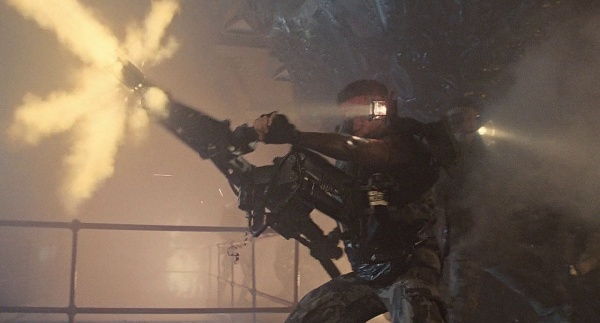
Makes you think doesn’t it? No? Maybe its just me!

In short, The Matrix: Reloaded suffered because the Wachowskis were clearly trying to do too much with this one film. On the one hand, they were trying to top the action scenes from the first. On the other, they were trying to live up or even outdo the mythology of the first. All that seems perfectly natural considering the hype they knew they were generating. After the success of the Matrix, expectations were high and any effort on their part to follow it up would be surrounded by buzz, expectations and high hopes. But if you try to compensate for all that by cramming more, more, more in, you get what you pay for in the end.

Ultimately, I think this movie and the final installment were good examples of what not to do with a franchise. In essence, stay true to the concept and don’t try to outdo it. And, wherever possible, plan for an eventual sequel ahead of time. Hell, that’s what Lucas did and look what came out of that! Empire Strikes Back and Return of the Jedi! On the other hand, he never bothered to storyboard the prequels til well into the 90’s, and look what happened there… On second thought, don’t! No sense opening up THAT can of worms again!

The Matrix: Reloaded
Entertainment Value: 8/10 (still entertaining)
Plot: 6/10 (convoluted!)
Direction: 8/10
Total: 7.5/10

Note: examples of Matrix mythology can be found at www.matrixmythology.com)