Approaching the Finish Line!

Approaching the Finish Line!

After about 8 years in development limbo, my WIP is on the verge of being done. There’s more to do after the last chapter is written, editing and the like, but I can smell the finish line. This is one of the hardest parts of writing, pulling off the big finish! In any case, I wanted to share some more details of the story and the artwork I generated to set some of the scenes. So here are some choice pics and the story they help frame…

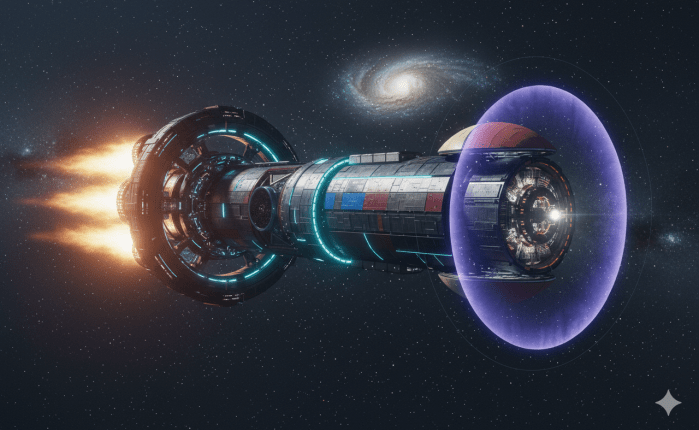
The Transverse is a generation ship bound for Delta Pavonis, a Sun-like star located about 20 light-years from the Sun. The ship is equipped with an anti-matter propulsion system, which allows the ship to achieve a maximum speed of 10% the speed of light. This means the total journey will take about 250 years, including acceleration and deceleration burns. It is protected from cosmic rays and small debris objects by a magnetic field projected from the front end.

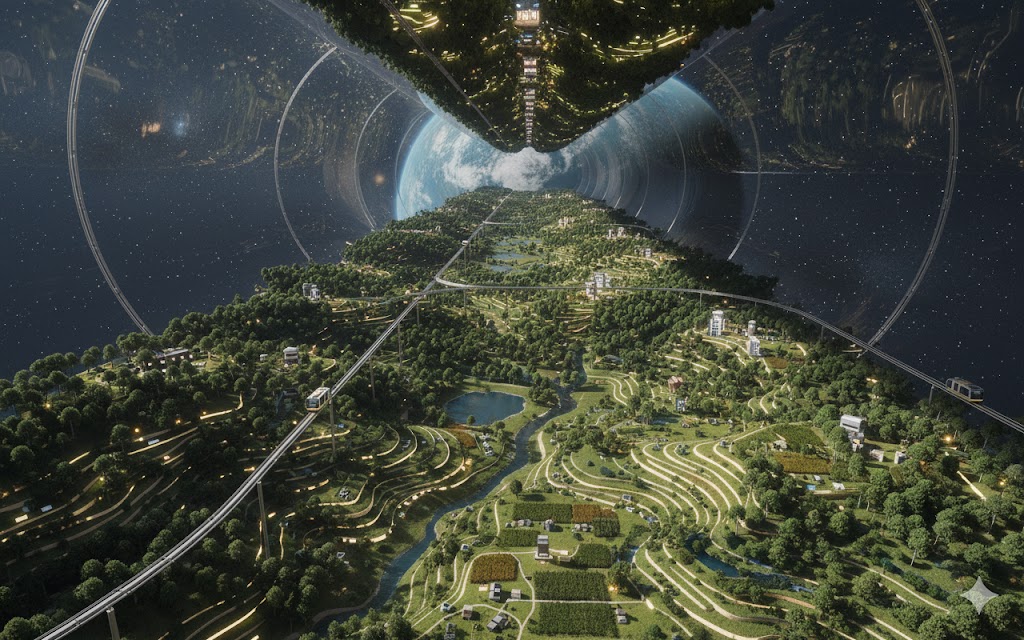
The ship has two counter rotating sections to simulate artificial gravity. The fore section is the Habitat Section, where the crew that is currently on rotation live and work. During acceleration and deceleration, the crew migrates to the rear wall of the Habitation Section, where the burst of velocity will simulate a full-g.

During the transit, the crew of the Transverse rotates, with one-third of the crew in a wakeful state. These people maintain the ship, tending to the farmlands, and steer the ship. The Engineers who oversee technical operations and serve as the de facto leaders of the mission also rotate, with three on while the remaining six are in cryosleep. The name of the individual shown here is taken from the story, and Xanadu Tepe is his birthplace – a settlement on Saturn’s largest moon Titan.

The inside of the Habitation Section simulates every climate on Earth, with landmasses that simulate entire continents separated by oceans and waterways. The entire volume is heated and lit by the “Sunband,” a flowing beam of photons designed to provide enough heat and light to maintain the climate in different regions. From one end of the Section towards the “equator,” the climates are arranged as Tundra, Boreal Forest, Grassland, Tropical, Desert. From the equator to the other end of the Section, the same climates are arranged in reverse.

The ship is powered by a Singularity Drive: a tiny black hole kept stable within a magnetic confinement chamber. This hole is created by gamma-ray laser arrays, positioned around the interior of the chamber, which fire simultaneously onto a single point. This causes mass to accumulate onto this tiny point until the Chandrasekhar limit is reached – the point where its achieves infinite density and undergoes gravitational collapse to form a black hole.

Matter is then fed into the chamber over time, which falls into an accretion disk that is sped up to near the speed of light. When the matter is eventually fed onto the face of the black hole (aka. accreted), its broken down to the subatomic level. Both of these processes release a tremendous amount of radiation that is harnessed to generate a steady and abundant supply of electricity.

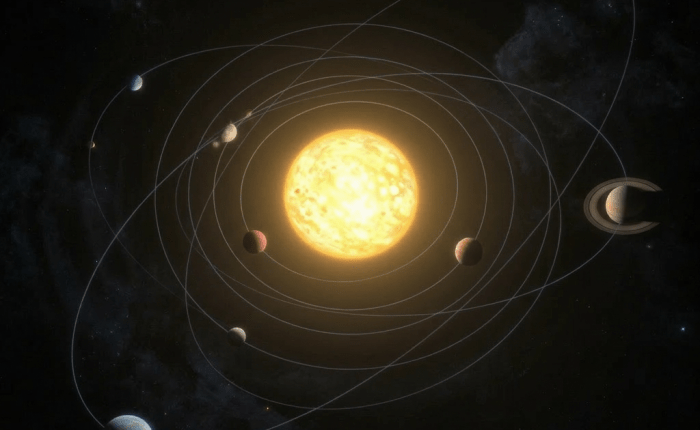
The Delta Pavonis system, which the crew of the Transverse have named Tōnatiuh (the Aztec Sun god). The third planet from the star, their habitable planet that is their destination, they’ve named Çatalhöyük, after the Neolithic settlement located in southern Turkey that existed from the ca. 7500 to 5600 BCE.

The other planets, in order from the star, include the molten world Zebaki, the “steam world” iKhwezil, the cold and desiccated Molokh, the gas giants Ararat, Kǒngquè, Sakwa, and the ice planet Lowell – or by the acronym ZICMAKSL. Sure, it sounds clunky, but it’s no more difficult than MVEMJSUNP, right? These names are all derived from different cultures:

  • Zebaki: the Swahili word for “mercury.”
  • IKhwezil: the Xhosa/Zulu name for Venus.
  • Molokh: the Arabic name for Mars.
  • Ararat: named after Mount Ararat in Turkey, the highest peak in the country and the place where legend says Noah’s Ark landed after 40 days of floods.
  • Kǒngquè: The Chinese name for “peacock,” owing to the planet’s cobalt blue atmosphere.
  • Sakwa: The Hopi word for “blue,” and also the name for turquoise, again because of the planet’s blue color.
  • Lowell: Named in honor of Percival Lowell, the American astronomer who predicted the existence of Pluto, and for whom the Lowell Observatory in Flagstaff, Arizona, is named. It’s also where American astronomer Clyde Tombaugh discovered Pluto.

No indication yet on when the book will be released, but I’m just a few chapters shy. All that remains is to check in my beta readers and educators. Those good folks know who they are, and they should expect to get chapters soon! All images were generated with ImagineArt.
Final Stretch!

Final Stretch!

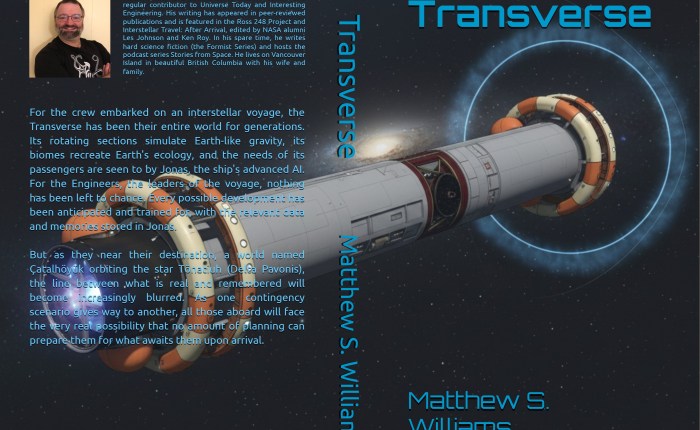
I feel fortunate that I am able to make good news posts these days. In the past few years, I have generally left bad news alone and otherwise posted nothing. I think we can all agree that that is NO WAY to run a website! Not when reader engagement is all about having things to say. So with that in mind, I have some very positive news. After nearly eight years of tinkering, my story Transverse is finally nearing completion!

I’ve been jazzed about this since I finished Part II of this three-act play a few short months ago. And as of the writing of this post, I am over 49,000 words in and just a few chapters shy of completion. While I am tempted to issue some well-deserved thanks yous and “I couldn’t have possibly done this without the support of” statements, it’s customary to leave that until the end. But trust me, those who helped out along the way know who they are and WILL be getting their mentions.

Transverse began several years ago, as I was plotting the story for my first true hard SF novel, The Cronian Incident. From the beginning, I wanted to write a story that would be part of a series, and I knew that it would begin in the Solar System. But I always hoped to expand it into the interstellar realm at some point. It was just the next logical step, really. I also wanted to get into some truly deep Fermi Paradox stuff eventually (i.e., Aliens!).

Transverse is also important as far as the whole series is concerned because it serves as the standalone-bridge novel that connects my first trilogy – The Formist Series – to subsequent trilogies. The next one will either be called the Seedling Series or the Dysonist Series, haven’t decided yet. But I promise to keep you posted. In the meantime, here’s some AI art that helps capture the spirit of my soon-to-be-finished novel!

1 – Awakenings

1 – Awakenings

The light reached him slowly, insinuating itself in the most gradual way. But when his eyes opened, it came too fast. It took several minutes before he could keep them open comfortably; and even then, his eyes couldn’t resolve a single thing. All he could really make out were the smudged lines of color, green, teal and red.

It took several more minutes for his eyes to adjust to the point that he could focus them. At that point, the smudges began to retreat around the edges of discernible lines. Eventually, he could tell what he was looking up at.

Display fields.

The lines and colored markers indicated vital signs. They were his. Eventually, his eyesight improved to the point that he was able to decipher what they meant.

His heart rate was slow.

His breathing was slow and shallow.

His blood pressure was low.

His brainwave activity was rapidly picking up. The mere act of looking at his brainwaves represented as dancing lines appeared to accelerate the pace. His mind was coming to full wakefulness, though the same could not be said of his body. In the race between cognition and body, the latter always seemed to lag behind the former.

Nevertheless, all his vitals were consistent with a person his age awakening from cryosleep after many decades. The process was always long, tedious, and difficult; the greater the duration, the more difficult it generally was. And he knew from experience that a headache and a general sense of malaise were on the way.

[Greetings, Engineer Dube.] said a gentle voice in his mind. He moaned. He had been hoping to have a few minutes of undisturbed dozing before the uplink took effect.

[How are you feeling?]

[Fine, Jonas,] he replied, using the same communication pathway. [How is the ship?]

[The Transverse is functioning well within established parameters. How are you feeling?]

Dube groaned again. The question was pointless. The ships AI had access to every bit of information his biomonitors and the tube’s systems were collecting. But in the interests of crew morale, it was generally agreed that Jonas should show an interest in crew welfare.

[I’m feeling fine, thank you for asking.]

[Very good. Your waking phase will be completed shortly.]

Excellent, Dube thought privately. It was nice to know that at least his thoughts were his alone, when he needed them to be.

He braced himself for the uncomfortable process, one which he knew all too well. Already, the nanites that were being introduced into his blood were increasing his core temperature and oxygenating his blood. In response, his body began shedding any remaining traces of cryo-induced numbness. Within seconds, he could feel some tingling in his extremities. 

This was perhaps the strangest part, where slowly becoming warmer suddenly made the body feel cold. As his body and mind were brought to full wakefulness, his body responded by complaining more loudly. Soon, everything ached, including his head.

“Ah, why must we do this?”

[I trust that is a rhetorical question?]

Dube smiled. The programmers had also insisted that the ship’s custodian be capable of grasping irony. It was felt that the crew would become less annoyed with it over time if that were the case.

Like his eyes and then his nerves, his mind was slowly returning to wakefulness as well. The medimachines had a part to play in that too. Extended cryosleep was known for leaving subjects in a fog when they woke up. The mind as well as the body could be slow to recover. By ensuring proper oxygenation, blood flow, and the production of specific neurotransmitters, the medimachines in his body were bringing Dube to full self-awareness.

Questions began to form in his mind.

[Jonas, what is the current date and time?] The ship’s AI relayed it to him, down to the subjective minute and second. None of the values it gave him mattered nearly so much as the year.

[So, it’s my time at the helm, is it?]

[Correct, Engineer Dube] replied Jonas. [Engineers Chen and Vorhees are also in process. I recommend getting up slowly.]

[Thank you, Jonas. I have done this before.]

[Of course, Engineer. Just a reminder.]

Dube terminated the conversation and waited for the tube’s seals to disengage. A faint hiss signalled a slight change in pressure and the tube’s cover slowly retracted. He felt a slight chill as the ship’s atmosphere touched his skin. It gave him a shiver, another reminder that he returning to full wakefulness. As he pulled himself slowly up from the tube’s interior, he got many sensations at once. Tingling, aching and straining. Several parts of his body, all at once.

Swinging his legs over the side of the tube, Dube managed to right himself eventually. The ship’s gravity made itself felt immediately. Dube had little strength to draw on, at the moment. The fact that he was feeling the stress of an additional point two gees worth of gravity, that only made him feel weaker.

[Do you require assistance, Engineer? I can summon an exoskin or foglets if you like.]

Dube strongly considered the offer. Using the available exoskeletons to get reacquainted with the ship’s gravity was an entirely sensible thing to do. But Dube still had a modicum of pride and preferred that he walk on his own.

[It’s alright, Jonas. I need to get accustomed to it sooner or later. No time like the present.]

[Very well, Engineer.]

It felt like an eternity before his feet finally touched the ground. Once that was done, it was a simple matter of putting one foot in front of the other until he finally reached the lavatories.

[Are you comfortable, Engineer?]

Within the stall, Dube groaned. [This is bordering on harassment, Jonas.]

[Point taken. We shall speak again when you are finished?]

[I’ll let you know when I’m ready.]

Dube was finished with his ablutions and got dressed, throwing on a nanofilament robe that immediately responded to his body heat. His eyes filled with readings from the garment that told him he was in good health, though there was some lingering concern about his core temperature.

Whether it was the ship’s custodian or embedded sensors, the technology had a way of pestering a person to the point where they wanted to shut it all down. If only such a thing were possible, or even the slightest bit practical for people on an interstellar voyage.

A Sneak Preview – Transverse

A Sneak Preview – Transverse

Boy, this has been a long time in the making! Years ago, as I was finishing work on the Formist series, I began working on my next project: Transverse. For years, I worked on it, but found that I was only moving the ball incrementally forward. And then life intervened when my wife had a stroke brought on by kidney disease. As you can imagine, this left little time or energy for creative writing.

However, as things got easier in our lives, I found myself returning to my Work-In-Progress (WIP). And a few months ago, I found the creative energy to finish chapter after chapter! As I write this post, I am nearing the completion of this project. In the spirit of this, I wanted to give you all a preview of my WIP by offering the first few chapters.

To recap, Transverse takes place aboard a Generation Ship en route to the not-so-distant system of Delta Pavonis. This Sun-like star is roughly 20 light-years from Earth and currently has no confirmed exoplanets, making it perfect for writing fiction. In my story, this star is named Tōnatiuh by the ship’s crew, which is Nahuatl for “Fifth Sun” (since it’s the fifth Sun-like star beyond the Solar System), and also the name of the Aztecs’ Sun god.

The world they are looking to settle is Delta Pavonis d, the third planet from the star, which they’ve named Çatalhöyük after the ancient neolithic settlement, one of the earliest known human settlements (dated to ca. 7500 BCE). The people aboard are highly advanced, led by a team of 9 Engineers and thousands of crew who tend to the ship on a rotational basis. While one-third of the Engineers and crew are awake, the others are kept in cryogenic preservation.

The rest, I hope, will become clear as the chapters go on…


The doors opened onto a vast theatre, dark, but with glowing patches where strategically placed lamps hovered next to the walls. Their light catches small surface spaces across the cavernous room: cream-colored walls, dark wood panels, russet seat cushions. The level of illumination is intentionally kept low; to the point that it makes the space and the few hundred people seated just discernible. On the stage, the focal point of the whole place, the lights are slightly brighter, drawing attention to a backdrop that not currently in operation.

Over ten thousand seats fill the room, arranged in a typical half-moon crescent on the ground floor. Dube knows there are just as many located in the gallery above, along with boxes along the walls that offer an elevated view of the stage. The place is familiar, though he knew somehow that he had never been here before.

Of the handful of patrons who’ve made themselves at home, a few looked at him when he entered. Of these people, Dube could make out some facial features, thanks to the brightened screens of their folios. A handful have no faces, just irises that beam light at him from the active display diodes embedded in them.

Dube felt inexplicably confused. The atmosphere that filled the theatre seemed very much calm. So many people, sprawled out in a room not ordinarily intended for self-directed tasks. No one appeared to be talking or calling in anyone else’s direction. Just the sound of their breathing the circulation of the ship’s air.

And yet, Dube felt that a strange tingle of unease.

He could think of nothing to justify that feeling. He recognized the room, the people were not behaving threateningly in any way, and there was sufficient light to see by.

Walking down the central walkway, he looked left and right for a familiar face. Strangely, everyone looked alien to him. That did not seem right, but he still couldn’t think of anything to contradict what he was seeing.

He smiled when he finally saw someone he recognized.

“Welcome home, Obuya,” she said.

“Home?”

She looked at him queerly.

“Of course. This has always been our home.”

She said the words in such a matter-of-fact way, as if it were somehow academic.

“I’m confused.”

“Can you remember a time before we were here?”

Dube sighed. He seemed to remember images of a distant place. He terrain was alpine, undulating in every direction. Where it ended, a cool valley stretched almost to the horizon, abutted by another mountainous outcropping. The ground before him was covered in shrubs and dotted with all manner of Acacia and Eucalypt trees. The sensations began to pile on: the warm Sun on his face, the cool shadow of the Blue Mountains on his back. And he could feel a gentle breeze coming up from the valley, the smell of wildflowers and eucalyptus oil.

His eyes snapped opened and he beheld the landscape with a new sense of disapproval.

“This is not my home.”

“Not anymore,” said Edennu, sternly. “We brought it all with us.”

These words made Dube feel a strange tingle. How did she know what he was thinking? He had not linked with her, nor had she reached out to him. He tried to do so now but couldn’t get a connection. Reaching out, he found no bandwidth with which to do so either.

He looked around again, harder this time. Somewhere in the sleepy room, there had to be some clue to what was going on. He couldn’t remember what he was looking for when he came in, but suspected it was here somewhere. And then there was the matter of where he had been before. He tried to call up the mental image again; perhaps what he sought was there.

“The trees…” he whispered. “I remember Baobabs, Umkwakwa, and Cinnamonum. Bushwillow blossoms, as many as the stars.”

Edennu quickly retorted, almost chiding him.

“Don’t worry about the trees, Obuya. We brought them all with us.”

He didn’t know why, but her words made perfect sense to him. He inquired further.

“And the oxen? And the aurochs?”

“We brought them too, Obuya.”

“And the Sun,” he said queerly. “What about that?”

She shook her head. “No, Obuya. We didn’t bring that with us. We just have to hope they have enough for all of us.”

“They? Who are you talking about?”

She didn’t reply. Her eyes remained fixed on her book. Dube tried again.

“What did you mean by that? Sandra?”

Edennu went dark. Her physical form was still there. But what was behind it was gone. In the space she occupied, it was as if an absence had formed. Dube looked around the room and noticed that the same thing was happening in other places too. He also noted the way it was spreading. In every seat, in every corner, the people were still there – and yet, not.

The room followed too. The stage, the auditorium, the lights – all of it became bathed in the same interminable darkness. And soon, an ill sound followed. The still quiet gave way to a terrible scurrying, as if something was crawling through the airways.

“What is that?” he asked. Edennu did not answer. She had gone dark and quiet, like everyone else. Nothing around him would answer. The only thing making any noise now was the one thing he couldn’t identify, and that was getting louder the closer the darkness came to envelop him. It was not in the airwaves. It was all around him now.

It only stopped once the darkness completely encompassed him.

He felt surrounded. Enveloped.

Yet strangely, he was unafraid.

He could still breathe, still feel, and was aware of an emptiness that surrounded him. The protective bubble, and his ignorance of what lay beyond it, staved off panic. He was alone, submersed in complete quiet and total darkness.

It felt like an eternity. But then again, it was. For the average mortal, centuries of sleep qualified as an eternity…

My Interview with AADYA Geo Talks!

My Interview with AADYA Geo Talks!

A few months back, I had the honor of appearing on AADYA Geo Talks, the podcast series launched by Bharti Sharma and the organization she founded – AADYA, whose name means “origin” in Hindi. As a geologist and world-traveller, Sharma launched this organization to promote knowledge about planetary and geoscience and create opportunities for collaborative research to address critical global challenges. 

During the interview, we talked about how I got into science journalism, my podcast series, and my science fiction writing. The interview lasted for more than an hour because she asked great questions about a range of wonderful topics (and she let me talk for as long as I wanted!) Here’s how she described our conversation:

“In this episode of AADYA Geo Talks, we explore the mind of a space journalist who has spent years unraveling the wonders of the universe. From the allure of dark matter to the search for extraterrestrial life, Matthew takes us on a journey through the most fascinating corners of space science. But here’s where it gets even more intriguing—science fiction has always fueled real-world space missions. “

Check it out, and watch it in segments if you need to! Also, visit the AADYA website to learn more about their education, outreach, and collaborative efforts.

Episode 71 of SfS – Voices of the Future: Frank Herbert – is now Live!

Episode 71 of SfS – Voices of the Future: Frank Herbert – is now Live!

This week’s episode picked up a series that I began long ago but then left untouched! Voices of the Future was intended to pay tribute to seminal thinkers and scientists who showed great insight and made some profound predictions about humanity’s future. The first installment was dedicated to the late and great Arthur C. Clarke. This week’s episode was dedicated to the man who literally wrote the book that made people “take science fiction seriously” – Frank Herbert!

In 1965, Frank Herbert released his best-known work, Dune. Over the next twenty years, he produced five sequels and died just a year after the release of the last installment: Chapterhouse: Dune. While much has been said about Frank’s social, political, philosophical, and historical commentary, what stands out for me all the years later was his predictions about humanity and AI. This was summarized in the event referred to as the “Butlerian Jihad,” which is part of the story’s deep background.

It was this event, which led to the Great Convention and its ban on AI, computers, and automation of any kind, that led to the power structure of the Imperium – with its absolute monarchy, feudal barons, religious proscriptions, and constant machinations and treachery. Basically, Frank appeared to present the Johad as something inevitable, which would have inevitable consequences. This nuance is completely lost in the prequels/sequels authored by his son and Kevin J. Anderson, who instead presented the Jihad as a cliche, humans vs. machines story.

This commentary and contrast are especially important today, amid fears about the development of AI and the often inarticulate (IMHO) existential concerns about it. Check the episode out below to hear more.

Where to Listen:

The Ten Day Book Challenge: Day One

The Ten Day Book Challenge: Day One

Well, it seems that I have been roped into another challenge. Somehow, I thought these days were behind me the moment I began using this site strictly for professional reasons – you know, like book releases and promotions. However, when a friend and colleague nominates you, you got to step up! And hey, this challenge seems kind of fun and it is a way for writers (and aspiring writers) to share their influences.

Okay, so here are the rules of this challenge!

  • Thank whoever nominated you with big, bold print. If they have a blog, link to the post where you got tagged there.
  • Explain the rules.
  • Post the cover of a book that was influential on you or that you love dearly.
  • Explain why it was so influential to you.
  • Tag someone else to do the challenge, and let them know they’ve been tagged.

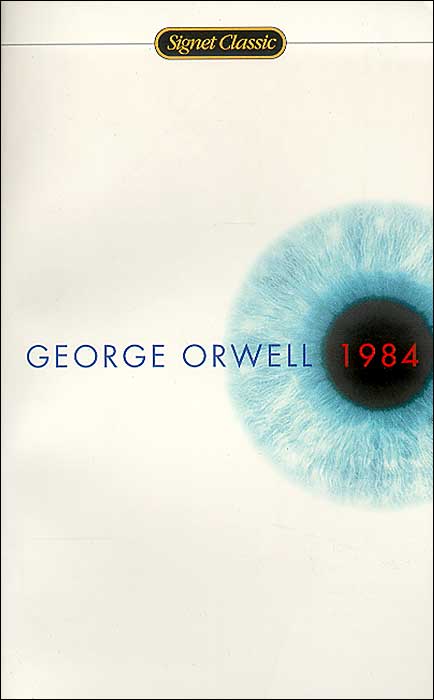
Okay, so my first act is to say thanks to RAMI UNGAR for the nomination, and you can find him at ramiungarthewriter.com. And here’s my selection for the challenge, the time-honored classic 1984.

1984_cover

I know, I know, everybody claims that 1984 is their favorite book, and apparently it is the novel that people lie about having read the most. But I actually have read it, three times now, and I can say without hesitation or doubt that it is one of the most influential books I’ve ever read.

The book was initially recommended to me by one of my high-school English teachers (Mr. David Gamble). He taught us Post-Colonial Literature and 1984 wasn’t on our syllabus, nor was it part of the senior English curriculum that year. But as he put it, this was a book that we all needed to read before we went off to college, university or whatever else we were doing with our lives. It would change the way we saw the world, he said.

That summer, I borrowed a copy from my mother and began digging into it. At first, I was only able to read a few pages at a time since I typically read before bed and had an early morning job that summer (like most summers when I was a student, I was working construction). However, I took the book camping with me and managed to finish reading it in a few sittings. I was so engrossed that I stayed up late just so I could finish it. And when I was done, I felt haunted, moved, inspired, and terrified all at once!

Needless to say, Mr. Gamble had been right, it DID change the way I saw the world! And twice more since University I’ve gone back to the book to re-read it with more appreciative and mature eyes. I even keep a list of quotes from the book that have had an enduring impact on me. All of them are taken from the Goldstein Manifesto, which (lesser-known fact) was the part of the novel Orwell wrote first. In this respect, the Manifesto is the part of the novel where Orwell is speaking directly to his audience, conveying his thoughts on history, politics, and human evolution:

“From the moment when the machine first made its appearance it was clear to all thinking people that the need for human drudgery, and therefore to a great extent human inequality, had disappeared. If the machine were used deliberately for that end, hunger, over-work, dirt, illiteracy and disease could be eliminated within a few generations.”

“But it was also clear that an all-round increase in wealth threatened the destruction – indeed, in some sense was the destruction – of a hierarchical society.”

“In earlier ages, class distinctions has not only been inevitable but desirable. Inequality was the price of civilization. With the development of machine production, however, the case was altered.Even if it was still necessary for human beings to do different kinds of work, it was no longer necessary for them to live at different social or economic levels. Therefore, from the point of view of the new groups who were on the point of seizing power, human equality was no longer an ideal to be striven after, but a danger to be averted.”

“In more primitive ages, when a just and peaceful society was in fact not possible, it had been fairly easy to believe it… But by the fourth decade of the twentieth century all the main currents of political thought were authoritarian. The earthly paradise had been discredited at exactly the moment when it became realizable.”

See? Still holds up even after all these years!

Okay, now it’s my turn to nominate someone, and I choose Fallacious Rose from butimbeautiful.com! I’ve always found her to be a very interesting woman and would like to hear what books have spoken to her over the years.

Good Zombie-Related News Everyone!

shutterstock_107588285Good evening all! I hope this August weekend finds you all happy, safe and having fun in the sun. But never mind that right now, I got some good news to share! For several months now, I have been trying to get Whiskey Delta placed on Goodread’s Listopia – a place where people can list their favorite works by genre.

And with a little push from some of my Goodreads friends, it finally happened! As of the writing of this post, it is placed at #220 on a list of 1139 original works. This list expands all the time as people vote to have their favorite works included, and books move up with each added vote.

If you have time, access, and would like to help a zombie fiction-writing indie writer out, here’s the link:

https://www.goodreads.com/list/show/933.Zombies_?page=3

Just scan the page for #220 (I will post again if it moves up in the queue) and vote for this humble work of fiction which I am working so hard to pimp out!

Video Breakdown of Fahrenheit 451

fahrenheit_451Hello all, and welcome to another glorious Friday! I feel fortunate today, due largely to the fact that yet another person who is dedicated to media literacy, science fiction, books and issues has chosen to get in contact with me and asked to be featured on this site. It’s always good to hear from people and know that what you are doing is garnering attention. But when they ask permission to share their message in your forum, well that’s just the bee’s knees!

F451Apparently. it was my tribute to Ray Bradbury which got this particular gentleman’s attention, and for good reason too. Through a site known as Academic Earth, where one can create and post educational videos on a variety of subject, Mr. Jack Collins created a video breakdown of Fahrenheit 451 that was both educational and insightful. In his brief but poignant segment, he takes a look at the major plot points, themes and motifs of Bradbury’s enduring classic.

To quote from his description of the video:

Ray Bradbury wrote his dystopian classic Fahrenheit 451 at the height of McCarthyism and Cold War paranoia. In the novel, Guy Montag is employed as a fireman who burns books. The whole of American society has descended into a zombie-like stupor of instant gratification, and books are seen as challenging and disruptive relics, which must be destroyed at any cost.

Today, with the increasing proliferation of surveillance equipment in American cities, the spread of digital books and the decline of attention spans the world over, Fahrenheit 451 remains a startlingly relevant work of fiction today. Watch this video and be instantly gratified (irony alert) with your knowledge of Bradbury’s most famous novel.

Trust me when I say it’s a fine educational short, one which I would definitely use if and when I got the chance to teach this novel. And after watching it, I couldn’t help but reflect upon a certain irony. More and more today, educators find themselves taking advantage of new media and video breakdowns in order to help students make sense of complex subject matter and lengthy texts. A few decades ago, they would simply be expected to read it, internalize it, and report on what they read.

One could easily argue that all this sort of trend really is a part of our society’s growing preoccupation with sound bites and easy accessibility. But then again, in our quest to maintain attention spans and promote thoughtfulness, we’d be fools to not take advantage of the very technology that is making it quicker and easier for people to do the opposite in the first place.

Enjoy the video! As you can tell, it got me thinking, and that’s not always the easiest thing for someone else to do 😉 Check out the video by following the link below, and be sure to comment!

academicearth.org/electives/tldr-fahrenheit-451/

Big News!

zombie-attackGood news from the my small corner of the indie publishing world. My latest book, Whiskey Delta has just sold over 500 copies, including ebooks and paperback! Yaaaaay! And what excites me about this is the fact the vast majority of those sales happened since the 21st of April. That means that over 400 books were moved in the last two weeks. I can only assume that this means the popularity of it is growing.

And to add to the good news ball, I got another four-star review, which in addition to being nice, put the book’s overall rating back to 3 and a half stars. Once again, the reviewer was sure to mention quality of story combined with poor editing. I’ll let him tell you:

FINALLY! A zombie story where the US Military is not hopelessly inept, but is instead taking the war to the enemy and doing a damn good job. I choose to look past the vast amount of editing needed… and instead focus on a kick-butt military adventure during a zombie apocalypse. Fun, exciting, great action, and characters that you get to know and even care about–what more can I say? Buy it, enjoy it, ignore the typos and other errors and just get into one of the better examples of military adventure/zombie apocalypse cross-overs out there.

Now that was exactly the kind of review I was looking for! And rest assured, sir, the editing is being done! I’ve managed to clean up three chapters so far and noticed that the most glaring mistakes seemed to be in the first chapter itself. Not good! Not good at all… But rest assured, the 2nd edition will be clean, and the second book immaculate! I’m taking steps right now to procure a professional editor so the quality of my books won’t be left in my (incapable) hands!