KLM – Claim Your Place In Space

KLM-Space-balloonOnce again, my boundless gratitude – and tumultuous envy! – to Raven Lunatick for learning about this before me and making me aware of it. It’s called the “Claim Your Place In Space” challenge, a social media campaign that offers a ticket on a maiden space voyage, and which is being hosted by the Royal Aviation Company – or Koninklijke Luchtvaart Maatschappij (KLM), as they are known in the Netherlands.

In just a few days time – eight days and fourteen hours as of the time of this article’s writing – they will be launching a high altitude balloon from the Nevada Desert that will ascend into Earth’s orbit. When and where the balloon pops is the subject of the social media campaign they are conducting, and people are encouraged to place bets by selecting the specific altitude and grid references where it will happen.

SXC-001_2-600x392The person who is closest will win the ultimate prize: a flight aboard the companies new zero gravity SXC Lynx Spacecraft! Much like Virgin Galactic’s SpaceShipTwo, this aerospace ship is a prototype that is intended to serve as the mainstay for the company’s commercial space flight fleet in the near future. But unlike the SS2, this vehicle is capable of performing its own take offs as well as landing.

Also relying on a rocket engine, but weighing considerably less than the SS2, the plane has successfully demonstrated the ability to perform vertical takeoffs from a runway, achieve a maximum speed of over mach 2.9, and achieve a suborbital ceiling 100 km above sea level. The entire flight will last only a few minutes, and aside from the pilot only one person will be on board… the winner!SXC-flight-information-space-expedition-astronaut-e1349979084549

To enter, simply go to space.klm.com and place your bets on where and how high the balloon will go. Then join me, Raven, and anyone else looking for a free trip to space in waiting with baited breath for the official draw on April 22nd. I wish everyone who enters luck, but you’ll forgive me if I secretly want this all to myself! Go orbital balloon, hit my grid spot, pleaaaase! Daddy needs a flight into space!

And of course, be sure to check out this promotional video:


Source: space.klm.com

2013, As Imagined By 1988

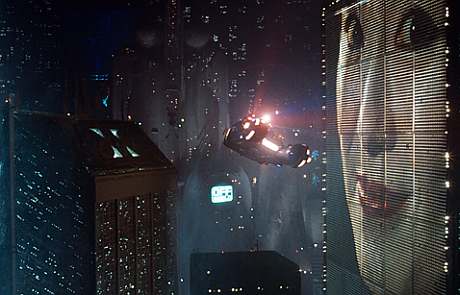
bladerunnerTwenty-five years ago, Los Angeles magazine envisioned what the world would look like in the current decade. And unlike Blade Runner, they avoided the cool but standard science fiction allegories – like massive billboards, flying cars and sentient robots – and went straight for the things that seemed entirely possible by contemporary standards.

The cover story of the magazine’s April 3, 1988 edition showed a futuristic downtown L.A. crisscrossed with electrically charged, multi-tiered freeways permeated by self-driving cars. The article itself then imagined a day in the life of the fictional Morrow family of the L.A. suburb Granada Hills, as “profiled” by the magazine in 2013 by science fiction writer Nicole Yorkin.

LAtimes_2013aIronically, the magazine did not envision that it would one day go out of business, or that print media would one day be lurching towards extinction. Nevertheless, the fictional article and the world it detailed were interesting reading. Little wonder then why, earlier this month, the LA Times along with an engineering class at USC, revisited the archives to assess what it predicted correctly versus incorrectly.

Together, pro­fess­or Jerry Lock­en­our and his class made a list of the hits and misses, and what they found paints a very interesting picture of how we predict the future and how its realization so often differs from what we expect. Of the major predictions to be found in LA of the 2013, as well as in the lives of the Morrow family (get it?), here is what they got right:

Smart-Houses:
smart-house_vCe6I_25016In the article, the Morrows are said to begin every morning when their “Smart House” automatically turns on. This consists of all the appliances activating and preparing them breakfast, and no doubt turning on all the environmental controls and opening the shades to get the temperature and ambient lighting just right.

While this isn’t the norm for the American family yet, the past few years have proved a turning point for home devices hooking up with the Internet, to become more programmable and serve our daily needs. And plans are well under way to find a means of networking them all together so they function as one “smart” unit.

Self-Driving Cars:
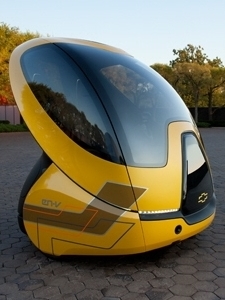
chevy_env_croppedThe writers of the article predicted that by 2013, cars would come standard with computers that control most of the settings, along with GPS systems for navigation. They also predict self-driving cars, which Google and Chevy are busy working on. In addition to using clean, alternative energy sources, these cars are expected to be able t0 self-drive, much in the same way a pilot puts their plane on auto-pilot. Drivers will also be able to summon the cars to their location, connect wirelessly to the internet, and download apps and updates to keep their software current.

But of course, they got a few things wrong as well. Here they are, the blots on their predictive record:

Homeprinted newspapers:
news_appThe article also predicts that each morning the Morrows would begin their day with a freshly printed newspaper, as rendered by their laser-jet printer. These would be tailor-made, automatically selecting the latest news feeds that would be of most interest to them. What this failed to anticipate was the rise in e-media and the decline of printed media, though hardly anyone would fault them for this. While news has certainly gotten more personal, the use of tablets, ereaders and smartphones is the way the majority of people now read their selected news.

Robot servants and pets:
kenshiro_smallIn what must have seemed like a realistic prediction, but which now comes across as a sci-fi cliche, the Morrows’ home was also supposed to come equipped with a robotic servant that had a southern accent. The family’s son was also greeted every morning by a robot dog that would come to play with him. While we are certainly not there yet, the concept of anthropomorphic robot assistants is becoming more real every day. Consider, for example, the Kenshiro robot (pictured at right), the 3D printed android, or the proposed Roboy, the Swiss-made robotic child. With all of these in the works, a robotic servant or pet doesn’t seem so far-fetched does it?

Summary:
Between these four major predictions and which came to be true, we can see that the future is not such an easy thing to predict. In addition to always being in motion, and subject to acceleration, slowing and sudden changes, the size and shape of it can be very difficult to pin down. No one can say for sure what will be realized and when, or if any of the things we currently take for granted will even be here tomorrow.

Alpha Moon Base at http://www.smallartworks.ca

For instance, during the 1960’s and 70’s, it was common practice for futurists and scientists to anticipate that the space race, which had culminated with humans setting foot on the moon in 1969, would continue into the future, and that humanity would be seeing manned outposts on the moon by and commercial space flight by 1999. No one at the time could foresee that a more restrictive budget environment, plus numerous disasters and a thawing of the Cold War, would slow things down in that respect.

In addition, most predictions that took place before the 1980’s completely failed to predict the massive revolution caused by miniaturization and the explosion in digital technology. Many futurist outlooks at the time predicted the rise in AI, but took it for granted that computers would still be the size of a desk and require entire rooms dedicated to their processors. The idea of a computer that could fit on top of a desk, let alone on your lap or in the palm of your hand, must have seemed farfetched.

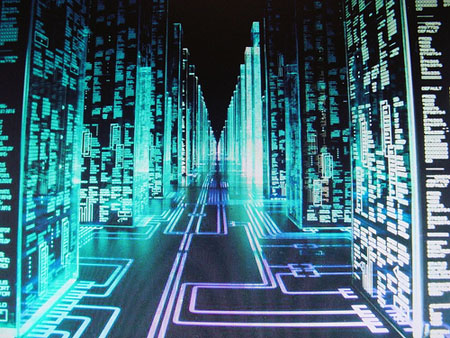
CyberspaceWhat’s more, few could predict the rise of the internet before the late 1980’s, or what the realization of “cyberspace” would even look like. Whereas writer’s like William Gibson not only predicted but coined the term, he and others seemed to think that interfacing with it would be a matter of cool neon-graphics and avatars, not the clean, page and site sort of interface which it came to be.

And even he failed to predict the rise of such things as email, online shopping, social media and the million other ways the internet is tailored to suit the average person and their daily needs. When it comes right down to it, it is not a dangerous domain permeated by freelance hacker “jockeys” and mega-corporations with their hostile counter-intrusion viruses (aka. Black ICE). Nor is it the social utopia promoting open dialogue and learning that men like Bill Gates and Al Gore predicted it would be in the 1990’s. If anything, it is an libertarian economic and social forum that is more democratic and anarchistic than anyone could have ever predicted.

But of course, that’s just one of many predictions that came about that altered how we see things to come. As a whole, the entire thing has come to be known for being full of shocks and surprises, as well as some familiar faces. In short, the future is an open sea, and there’s no telling which way the winds will blow, or what ships will make it to port ahead of others. All we can do is wait and see, and hopefully trust in our abilities to make good decisions along the way. And of course, the occasional retrospective and issue congratulations for the things we managed to get right doesn’t hurt either!

Sources: factcoexist.com, LATimes.com

News From Space: SpaceXs Reusable “Grasshopper” Rocket

spaceX_elonmuskThe concept of commercial spaceflight has been growing considerably in recent years. Basically, the idea is that it would be private aerospace companies that would responsible for ferrying people to and from space and putting commercial satellites in orbit, thus leaving space agencies free to conduct more crucial research and deep space exploration missions.

Intrinsic to this dream is the creation of a cheaper, reusable rocket system, something that can be deployed, landed, and redeployed. This will not only save the companies responsible for this new age of space travel billions of dollars, it will make a whole series of projects possible – like Space-Based Solar Power (SBSP) arrays, commercial trips to the Moon, and bigger, more elaborate space stations in orbit.

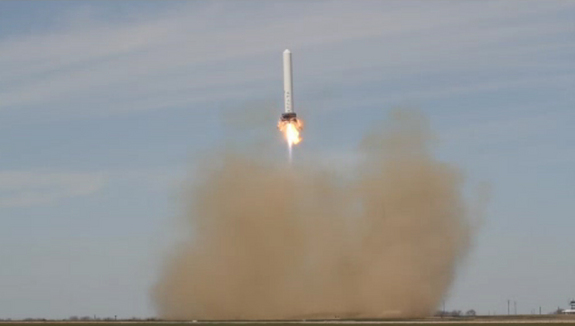
spacex_grasshopperAnd that’s precisely what SpaceX founder Elon Musk is working on with his “Grasshopper” rocket system. Designed to be reusable, the company has been running the Grasshopper through an ongoing series of tests to make sure it can take off, achieve orbit, and then successfully return to the Earth and land in one piece. In the latest test, the Grasshopper achieved its highest flight yet – reaching 80 meters (263 feet) – before sticking its landing.

The flight took place on March 7th, and it was the fourth of its kind to be conducted at the SpaceX’s rocket development facility in McGregor, Texas. And though the flight was unmanned, the crews placed a dummy dressed like Johnny Cash into the side, which might explain why the footage of the test featured the song “Ring of Fire” in the background.

spacex-grasshopper-highest-leapWhile this achievement might seem modest to some, its necessary to keep in mind that this is a very new concept. In addition, with each successive flight, the altitudes achieved have increased exponentially. In its first test flight in September of last year, the Grasshopper reached a height of only 2.5 meters (8.2 feet). In the two following tests in November and December, the rocket reached a height of 5.4 meters (17.7 feet) and 40 meters (131 feet) respectively.

With this latest flight, SpaceX believes it is getting close to their goal of a reusable rocket and its ultimate goal of making space travel cheaper and easier. Upon completion of this latest test, the company had positive things to say about the new rocket system:

With Grasshopper, SpaceX engineers are testing the technology that would enable a launched rocket to land intact, rather than burning up upon reentry to the Earth’s atmosphere.

Who knows? Given a few more tests, they might just be able to break atmo and land successfully. Then, all SpaceX has to do is sit back and watch their stock price jump by about a million points. At which time, I’m thinking missions will pour in for the deployment of just about any bit of space gear imaginable! Welcome to the era of renewed space exploration, my friends!

And be sure to check out this video of the Grasshopper makings its most recent jump!

Source: space.com

Asteriod Prospecting by 2015

asteroid_beltDeep Space Industries, a private aerospace company, has been making a big splash in the news lately. Alongside SpaceX, they have been pioneering a new age in space exploration, where costs are reduced and private companies are picking up the slack. And in their latest bid to claim a share of space, the company announced plans late in January to begin asteroid prospecting operations by 2015.

For some time, the concept of sending spaceships to mine asteroids and haul ore has been explored as a serious option. Within the asteroid belt that lies between Mars and Jupiter, countless tons of precious metals, carbon, silicates, and basaltic minerals. If humanity could tap a fraction of a fraction of that mineral wealth, it would be able to supply Earth’s manufacturing needs indefinitely, without all the harmful pollutants or run off caused by mining.

asteroid_miningSo to tap this potential goldmine (literally!) known as the Asteroid Belt, DSI plans to launch a fleet of mini spacecraft into solar orbit to identify potential targets near to Earth that would be suitable to mine. Lacking the resources of some of the bigger players in the space rush, DSI’s probes will ride-share on the launch of larger communications satellites and get a discounted delivery to space.

Initially, a group of 25kg (55 pounds) cubesats with the awesome designation “Firefly” will be launched on a journey lasting from two to six months in 2015. Then, in 2016, the 32 kilograms (70 pound) DragonFly spacecraft will begin their two-to-four-year expeditions and return with up to 68 kilograms (150 pounds) of bounty each. Beyond this, DSI has some truly ambitious plans to establish a foundry amongst the asteroids.

asteroid_foundryThat’s another thing about the Belt. Not only is it an incredibly rich source of minerals, its asteroids would make an ideal place for relocating much of Earth’s heavy industry. Automated facilities, anchored to the surface and processing metals and other materials on site would also reduce the burden on Earth’s environment. Not only would there be no air to befoul with emissions, but the processes used would generate no harmful pollutants.

In DSI’s plan, the foundry would use a patent-pending nickel gas process developed by one of DSI’s co-founders, Stephen Covey, known as “sintering”. This is the same process that is being considered by NASA to build a Moon Base in the Shackleton Crater near the Moon’s south pole. Relying on this same technology, automated foundries could turn ore into finished products with little more than microwave radiation and a 3D printer, which could then be shipped back to Earth.

deepspaceindustries-640x353Naturally, DSI will have plenty of competition down the road. The biggest comes from Google-backed Planetary Resources which staked it claim to an asteroid last April. Much like DSI, they hope to be able to mine everything from water to fuel as well as minerals and rare earths. And of course, SpaceX, which has the most impressive track record thus far, is likely to be looking to the Asteroid Belt before long.

And Golden Spike, the company that is promising commercial flight to the Moon by 2020 is sure to not be left behind. And as for Virgin Galactic, well… Richard Branson didn’t get crazy, stinking rich by letting opportunities pass him by. And given the size and scope of the Belt itself, there’s likely to be no shortage of companies trying to stake a claim, and more than enough for everyone.

So get on board ye capitalist prospectors! A new frontier awaits beyond the rim of Mars…

Source: Extremetech.com

Powered by the Sun: The Future of Solar Energy

Magnificent CME Erupts on the Sun - August 31Researchers continue to work steadily to make the dream of abundant solar energy a reality. And in recent years, a number of ideas and projects have begun to bear fruit. Earlier this year, their was the announcement of a new kind of “peel and stick” solar panel which was quite impressive. Little did I know, this was just the tip of the iceberg.

Since that time, I have come across four very interesting stories that talk about the future of solar power, and I feel the need to share them all! But, not wanting to fill your page with a massive post, I’ve decided to break them down and do a week long segment dedicated to emerging solar technology and its wicked-cool applications. So welcome to the first installment of Powered By The Sun!

spaceX_solararrayThe first story comes to us by way of SpaceX, Deep Space Industries, and other commercial space agencies that are looking to make space-based solar power (SBSP) a reality. For those not familiar with the concept, this involves placing a solar farm in orbit that would then harvest energy from the sun and then beam the resulting electricity back to Earth using microwave- or laser-based wireless power transmission.

Originally described by Isaac Asimov in his short story “Reason”, the concept of an actual space-based solar array was first adopted by NASA in 1974. Since that time, they have been investigating the concept alongside the US Department of Energy as a solution to the problem of meeting Earth’s energy demands, and the cost of establishing a reliable network of arrays here on Earth.

Constructing large arrays on the surface is a prohibitively expensive and inefficient way of gathering power, due largely to weather patterns, seasons, and the day-night cycle which would interfere with reliable solar collection. What’s more, the sunniest parts of the world are quite far from the major centers of demand – i.e. Western Europe, North America, India and East Asia – and at the present time, transmitting energy over that long a distance is virtually impossible.

NASA "Suntower" concept
NASA “Suntower” concept

Compared to that, an orbiting installation like the SBSP would have numerous advantages. Orbiting outside of the Earth’s atmosphere, it would be able to receive about 30% more power from the Sun, would be operational for almost 24 hours per day, and if placed directly above the equator, it wouldn’t be affected by the seasons either. But the biggest benefit of all would be the ability to beam the power directly to whoever needed it.

But of course, cost remains an issue, which is the only reason why NASA hasn’t undertaken to do this already. Over the years, many concepts have been considered over at NASA and other space agencies. But due to the high cost of putting anything in orbit, moving up all the materials required to build a large scale installation was simply not cost effective.

spacex-dragon-capsule-grabbed-by-iss-canadarm-640x424However, that is all set to change. Companies like SpaceX, who have already taken part in commercial space flight (such as the first commercial resupply to the ISS in May of 2012, picture above) are working on finding ways to lower the cost of putting materials and supplies into orbit. Currently, it costs about $20,000 to place a kilogram (2.2lbs) into geostationary orbit (GSO), and about half that for low-Earth orbit (LEO). But SpaceX’s CEO, Elon Musk, has said that he wants to bring the price down to $500 per pound, at which point, things become much more feasible.

And when that happens, there will be no shortage of clients looking to put an SBSP array into orbit. In the wake of the Fukushima accident, the Japanese government announced plans to launch a two-kilometer-wide 1-gigawatt SBSP plant into space. The Russian Space Agency already has a a working 100-kilowatt SBSP prototype, but has not yet announced a launch date. And China, the Earth’s fastest-growing consumer of electricity, plans to put a 100kW SBSP into Low-Earth Orbit by 2025.

space-based-solarpowerMost notably, however, is John Mankins, the CTO of Deep Space Industries and a 25-year NASA vet, who has produced an updated report on the viability of SBSP. His conclusion, in short, is that it should be possible to build a small-scale, pilot solar farm dubbed SPS-ALPHA for $5 billion and a large-scale, multi-kilometer wide power plant for $20 billion. NASA’s funding for SPS-ALPHA dried up last year, but presumably Mankins’ work continues at Deep Space Industries.

Cost and the long-term hazards of having an array in space remain, but considering its long-term importance and the shot in the arm space exploration has received in recent years – i.e. the Curiosity Rover, the proposed L2 Moon outpost, manned missions to Mars by 2030 – we could be looking at the full-scale construction of orbital power plants sometime early in the next decade.

And it won’t be a moment too soon! Considering Earth’s growing population, its escalating impact on the surface, the limits of many proposed alternative fuels, and the fact that we are nowhere near to resolving the problem of Climate Change, space-based solar power may be just what the doctor ordered!

Thanks for reading and stay tuned for the next installment in the Powered By The Sun series!

Source: Extremetech.com

New Anthology Sample!

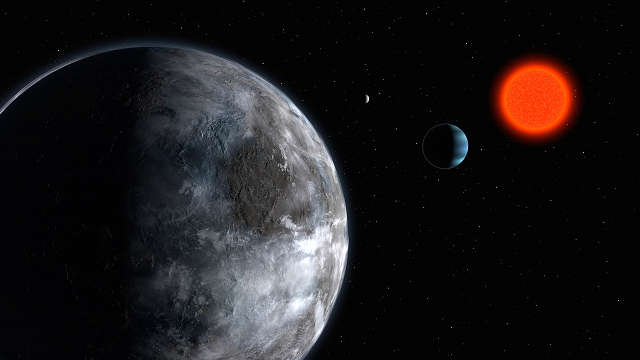
gliese 581Hi folks. Life has been pretty busy and distracting of late, but after a few busy weeks I find myself with some time on my hands once again the freedom with which to write. And so I have, specifically on my second contribution to the Yuva Anthology – the Prologue known as “The Torch”. Though the story is not yet complete, I am finally reaching the climax of the tale, where the main character Magid Muktari is arriving to meet his benefactor and the man who intends to make sure his dream of exoplanet colonization becomes a reality.

But of course, there is still the question of terms to consider, some details that need to be ironed out, and an explanation or two as to why this is all happening. But I won’t bore you with a big summation. Instead, I present you with the latest installments in the story where Muktari takes his first commercial flight into space and doesn’t much enjoy it! Relying on research I’ve been doing on Virgin Galactic, the “Skylon” engine, and other sources, this is basically my take on what commercial space flight will look like in the near future.

What’s more, the chapter includes some ideas on the subject of orbital living pods, habitation complexes, and private space stations which may also become a reality in a few decades. Yes, as the technology improves and more and more people find themselves going into space, to the Moon, and beyond, Earth’s orbit could become the new international waters, where just about anything is legal, people do their “off-world banking”, and the rich live and play in low-gravity environments. Enjoy the chapter and please feel free to offer any and all constructive criticisms or comments…

skylon

“Treat” was hardly the word Muktari would have used. After a strenuous take off, the plane pulled into a sharp ascent, engaged its hypersonic engines, and was soon breaking the sound barrier several times over. Thus far, the trip was conforming to his expectations, which could only mean things would get worse before they got better. For the duration of their ascent, he had only one thought on his mind.

Why am I doing this? Was entertaining a possible job offer really this important to him? Would a few years in Oslo and the North Atlantic be so bad by comparison? Of course it would, but that didn’t make this personal first any more pleasant.

Of course, it was obvious why Harding had such a place available to him. More and more, one heard of corporate offices being placed in orbit, where the laws were laxer and off world authority was still being established. Most financiers found that they had at least another few decades before the law caught up to them and some interplanetary body would be created that could monitor their floating financial holdings or havens.

Nevertheless, the idea of breaking orbit and enduring near-weightlessness was not something he thought too highly of. Heights had been known to give him vertigo. How would standing above an entire planet feel in comparison?

Things did not improve until they hit atmo, at which point, weightlessness returned all of the blood which had been pooling in his legs to his head . He grunted loudly as the transition hit him, making his headache feel all the more noticeable.

“Don’t drink much do you?” asked Natalia, seated across from him.

“No,” he replied heavily. “Ironically, I think I could use a drink right now.”

She smiled. Pressed the button on the side of her seat. “What can we get you? This flight comes with a full refreshment service.”

“Nothing, please. I doubt I could keep it down right now.” He raised his hand as he said this. The effort to bring it to face height was incredibly easy, and he began to stare at it and everything around him as the ship coasted into the upper atmosphere. Everything that wasn’t anchored in place seemed to be floating carelessly, as if underwater. The sight of it seemed ethereal, almost entirely incorporeal.

He looked out the cabin window and spotted the thin blue layer of the upper atmosphere that was slowly pulling away from them. He had heard of the effect of seeing the great blue marble from orbit, but had imagined it would feel somewhat differently. Looking down at it all, he did not feel particularly grandiose or tiny, as he’d been told to expect. He mainly felt empty, as if some sense of pathos was struggling to be realized within him. He didn’t understand why, nor did he particularly want to think about what it meant…

“Folks, we’re about to engage the third stage drive. Please hang on and remain seated.”

“Oh dear,” Muktari breathed, tightening his grip on the arm rests. Natalia raised her voice to be heard over the sound of the gentle warning bell that began to fill the cabin with its chimes.

“Don’t worry. It’s nothing like breaking orbit. You’ll barely feel it at all.”

She was right too. It was marginally better. As soon as the noise died down, they felt a push that pushed Muktari into his seat and pulled Natalia against her restraints. But the force was relatively calm compared to the concerted effort it took to get them from the ground into the lower atmosphere. It almost felt soothing by comparison, and ended quicker too.

When the engine cut out, they began to coast again and things once again seemed to float everywhere. Muktari leaned back once more and took a deep, cleansing breath.

“Better?” she asked.

“Oh, yes. I love the irony of it too.”

“Irony? What irony?”

He opened his eyes, saw the look of genuine confusion on her face. He considered explaining it to her, how the very man who seemed to be proposing that some segment of humanity break the bonds of Earth and travel to the stars was terrified of doing it himself. That in itself seemed like irony enough, but the deeper implications of that were not something he felt like discussing. It was not simply a joyous experiment, he knew, but a possible necessity.

Mankind would either slip the bonds of Earth forever, or risk perishing below as it became less and less hospitable.  How could he explain that to one such as her, someone still young and from all outward appearances, happy to be alive in her time?

“Never mind,” he said. “It’s a moot point. All that matters is, you’re father wants to see me and I’m obliging him. As I imagine all people do.”

“He does seem to have that effect on people.”

Muktari hummed thoughtfully. “And does he make them all go through the effort of coming topside to see him or does he deign to travel to meet them from time to time?”

Her eyes grew distant and she looked away as she answered. “Not for some time now.”

It was Muktari’s turn to look confused, but nothing more seemed forthcoming and he didn’t feel like asking. He was sure all things would be made plain enough once they reached Harding’s particular module. Then he could marvel over the engineering achievement of such a thing and stroke Harding’s ego by telling him he had never seen one up close. He was sure he would find that flattering enough, and might even choose to intrigue Muktari by describing it’s construction in detail to him. He was sure he would find any discussion of a module’s internal ecology quite interesting to.

After a moment of strained silence, Natalia smiled to him again and retrieved her Flexpad. For the duration of the flight, they said nothing more to each other. Only the occasional corrective burst from the retro rockets seemed to break the smooth monotony of their course. Earth disappeared out the port side window too and all he could see after that was a background of stars. Looking at the rotating star field was likely to trigger vertigo, so he simply closed his eyes and tried to rest until they arrived.

It wasn’t until sunlight broke through the window that he chose to open them again.

“Oh! Oh my!” he said, shielding them from the harsh light. Once more, he was suffering terribly from the effects of a single night of irresponsibility.

“Are you alright?” she asked.

“Yes, just let me know when the window’s adjusted.”

He heard her giggle. “It already has, so you’re safe. And you really should look. You can see it from here.”

“See what?”

“Curiosity,” she said plainly. That brought his eyes open. Anything with such an abstract name was something he had to see. Straining to adjust his eyes, he looked out the tinted window and waited for something other than the glowing ball in the background to become apparent to him.

And then it came to him. Twinkling in the night, it’s solar arrays stretching to the side like long, shining filaments, the small satellite hung before them. He could make out the hub in the center of it, discernible by its flashing status lights. As they neared, this bulbous middle section elongated and became a cylindrical structure, the lights flashing on it surface indicating that it was rotating. Only a small band at the very center of it remained steady, where the long arrays were mounted.

Towards the bottom end, where they seemed to be heading, a large aperture loomed. Bright lights shined out from within, and more blinking lights moved before his eyes as the doors on which they were mounted seemed to be sliding open to admit them.

Some more corrective bursts, and the entire thing shifted towards the nose of their craft. Slowly, Earth filled the window again and its yellow and green continents and shimmering skies were all that they could see. Another burst pushed him forwards against his restraints, and he felt them slowing.

And then, his window went grey. A long wall overtook them, metal, lighting and composite materials swallowing their ship and closing in behind them. More bursts, more corrective movements, and then a loud clang reverberated through the hall and he felt them come to a stop.

He felt blood trickle back into his feet and was struck by a slight dizziness. He lifted his arm again and noted the return of gravity, albeit just by a fraction. Clearly, the station was simulating barely a quarter g, if that much at all. He would find walking quite disorienting at first, then perhaps a bit adventurous. He would have to be careful.

Natalia’s voice was like a trumpeter call when she announced that it was time.

“Come on. I’ve arranged a short tour before we see my father. You’ll be quite interested to see what Curiosity has to offer.”

Muktari’s ears registered her voice like a harsh disturbance. At the moment, they were attuned to every noise in the ship, every din coming through the walls from the outside.  He could hear the sound of buzzing and whirring at work, coming through the walls fro somewhere to their fore. No doubt, a docking collar was extending from somewhere inside the bay and was busy mounting itself on the ship’s hatch.

“Are you coming?” she said, getting to her feet.

He very carefully undid his restraints, raised himself to his feet, and then sat back down.

“What are you doing?” she asked.

“I think I’ll wait. Don’t want to exit too soon. Decompression and all that.”

She didn’t laugh or giggle this time. After dealing with all his other hang ups, she appeared to be getting just the slightest bit tired of him. She extended her hand and addressed him the way a mother might address a child.

“I assure you, Doctor. No one is going to let you step off before the collar is fully fixed and pressurized. No one has ever died or suffered from asphyxiation while in my father’s care.”

She imbued his title with some degree of emphasis, he noticed. Perhaps she was seeking to remind him he was a man of science and such behaviors were supposed to be beneath him.

He shook his head. “Even so…”

She sighed once more and took hold of his hand. “Don’t worry,” she said calmly, but firmly. “I’ll be there with you in case anything bad happens. But I promise you, nothing will.”

He looked down at her hand, touching his, then to her face. Her eyes were insistent, but still soft and charming. And her hand felt warm against his, quite warm. Suddenly, he forgot about his dizzy spell and the remote chance he might die as he stepped off the craft. Even his headache seemed a distant memory right now…

More Top Stories of 2012

large-hadron-collider-640x399

With 2012 now officially behind us, and more and more stories trickling into this humble bloggers account about what was accomplished therein, it seems that the time is ripe for another list of breakthroughs, first, and achievements that made the news during the previous year!

Last time, I listed what I saw as the top 12, only to find that there were several others, some of which I actually wrote about, that didn’t make the cut. How foolish of me! And so, to remedy this and possibly cover stories that I neglected to cover the first time around, I have produced another list of the top stories from 2012.

And much like last time, I have listed them according to alphabetical order, since I couldn’t possibly assign them numbers based on importance.

Abortion Study:
anti-abortion-pushAbortion has always been a contentious issue, with one side arguing for the rights of the unborn while the other argues in favor of women’s right to control her own body and reproduction. And as it happens, 2012 saw the publication of the first longitudinal study of what happens to women who are denied this right.

The UC San Francisco research team, Advancing New Standards in Reproductive Health (ANSIRH), studied nearly 1,000 women from diverse backgrounds across the U.S. over several years. All of these subjects were women had sought out abortions but been denied access for one reason or another. What they discovered was that these women were more likely to slip below the poverty line, be unemployed, remain in abusive relationships, and suffer from hyper stress. What this ongoing study demonstrates is that abortion is an economic issue for women, with dire consequences for those denied them.

Autism Reversed:
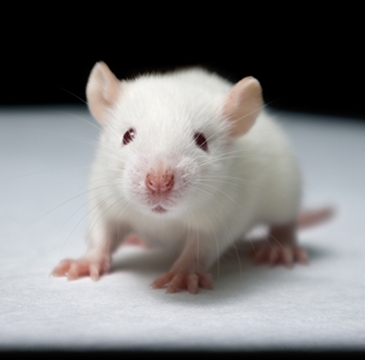
mice
2012 was an especially significant year in medical advances thanks to a team at McGill University in Montreal announced that they’ve successfully reversed the symptoms of autism in mice. Using mice with autism-like symptoms caused by a genetic mutation, the researchers figured out how to administer a protein that reversed the symptoms.

Naturally, this development is a step in the long process of understanding a disorder which remains largely misunderstood. In addition, it may, in time, lead to the development of a gene therapy that will prevent autism from being triggered in children and even weed it out of parent’s genetic code, ensuring that their children will be immune.

Commercial Space Travel:
virgin_galacticIt has long been the dream of financiers, captains of industry and enthusiasts to create commercial space travel; a means for the average person to go into space, the moon, and even beyond. And all at a reasonable price! This dream is still the subject of speculation and fantasy, but 2012 was a year of firsts that made it seem that much closer.

For starters, Virgin Galactic, the brain-child of Richard Branson, began flight tests on SpaceShipTwo, the rocket ship that will take people into orbit. Then came Reaction Engines Limited with the proposed design for the hypersonic aerospace engine. And finally, there was the creation of Golden Spike, a company made up largely of former astronauts, who want to make commercial flight to the moon a go by 2020.

Electricity-Creating Virus:
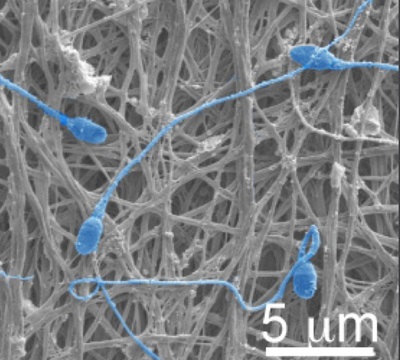
M13_virusA breakthrough virus named M13 made news in 2012 for being the first ever virus that could turn physical activity into electricity. The key is what is known as the “piezoelectric effect,” which happens when certain materials like crystals (or viruses) emit a small amount of power when squeezed. Created by a  team of scientists at the Berkeley Lab, this genetically engineered M13 viruses was able to emit enough electricity to power a small LED screen, but poses no threat to humans. One day, all devices could be powered through the simple act of typing or walking, and buildings could be powered by absorbing people’s activity.

Encyclopedia of DNA (ENCODE):
encodeThe publication of the human genome back in the late 90’s was a major breakthrough for genetics and medical science. And in 2012, another breakthrough was achieved by researchers at USC with the publication of ENCODE – The Encyclopedia of DNA Elements Project. Unlike the previous project, these researchers were able not only to catalog the human genome’s various parts, but what those components actually do.

Among the initiative’s many findings was that so-called “junk DNA” – outlier DNA sequences that do not encode for protein sequences – are not junk at all, and are in fact responsible for such things as gene regulation, disease onset, and even human height. These findings will go a long way towards developing gene therapy, biotechnology that seeks to create artificial DNA and self-assembling structures, and even cloning.
Face Transplant:
FaceTransplant_6062012 was also the year that the first full-face transplant was ever conducted. The recipient in question was a man named Richard Norris, a man who lost significant portions of his face from a gunshot accident back in 1997. And after years of attempted reconstructive surgeries, doctors working out of the University of Maryland Medical Center performed a procedure that gave Mr. Norris a has face, teeth, tongue, and a completely new set of jaws.

Not only that, but within days of the surgery, Norris was able to move his facial muscle and jaw. Combined with the nature of the surgery itself, this is not short of unprecedented, and could mean a new age in which severe accident victims and veterans are able to recover fully from physical traumas and live perfectly normal, happy lives.

The Higgs Boson Discovered:
higgs_boson
I can’t believe I didn’t include this story last time, as it is possibly the biggest story of 2012, and perhaps one of the biggest stories since the millennium! 2012 will forever go down in history as the year that the Higgs Boson was discovered. After some 40 years of ongoing research, and fears that it would never be discovered, the last missing piece of The Standard Model of particle physics was found.

Not only does the existence of the Higgs Boson confirm that the Standard Model is valid, it also helps explain how other elementary particles get their mass. This will herald a new step in the advance of particle and the quantum physics, and could lead to the development of quantum computing, quantum generators, and a greater understand of the universe itself.

High-Tech Condom:
condom1Using a revolutionary nano-fabrication process known as electrospinning, researchers at the University of Washington have produced the world’s first female condom that not only prevents pregnancy and protects against HIV, but also evaporates after use. In addition, the manufacturing method used is a step in the direction of viable nanotechnology. Score one for safe sex, public health, and a waste free future permeated by tiny machines and smart materials! That’s a big score card…

Infinite Capacity Wireless:
vortex-radio-waves-348x1962012 was also the year that it was proven that it could be possible to boost the capacity of wireless communication infinitely. The discovery was first made by Bo Thide of the Swedish Institute of Space Physics and some Italian colleagues in Venice, and then confirmed by a team of American and Israeli researchers who used the technique to transmit data at a rate of 2.5 terabytes a second.

Conventional radio signals are transmitted on a flat plane, but Thide twisted the transmitting and receiving antennae into the shape of corkscrew. By adding another dimension to the mix, the technique added a lot of extra bandwidth. As a result, the problem of bandwidth crunches might be a thing of the past, not to mention problems of slow download/upload.

Google Neural Net:
googleneuralnetwork1
Another first and definitely one of the biggest headlines of 2012, far as I was concerned. So why I forgot to include it last time is beyond me! For generations scientists have contemplating the idea of AI and wondered how and where the first leap might be made from basic computing towards true machine intelligence. And as it turns out, Google X Labs, the same place where Project Glass was conceived, seems to have accomplished just that.

The accomplishment came when the labs created a neural network based on sixteen core processors and a connectome with a billion connections. The network accomplished its first task by studying millions of images on Youtube and then demonstrating the ability to differentiate between the faces of cats and humans. This act of independent reasoning that went beyond mere image recognition, and is a major step towards the achievement of a fully-functional artificial intelligence.

Stem cell mammal:
stem_cellsFor the first time in history, researchers at Kyoto University created a mouse by using eggs derived from stem cells alone. The achievement once again shows the remarkable possibilities presented by regenerative technologies like stem cells, while raising pressing ethical questions about the potential for human births in which parents might not be required.

Water in the Solar System:
titan_lakes2012 was also the year that an unprecedented amount of discoveries were made in our solar system. In addition to all the interesting revelations made by the Curiosity Rover, a number of probes discovered water on Europa, Mercury, Titan, and other Saturnalian moons. Usually, this comes in the form of water saturated with hydrocarbons, as was evident on Titan, but the discoveries remain monumental.

In addition to Titan’s methane lakes and Nile-like river, ice and organic molecules were discovered near the poles of Mercury. Evidence of water was found on Mars, indicating the existence of rivers and oceans at one time, and the Cassini space probe confirmed that Enceladus has its own oceans. All of this bodes well for the future of space exploration and colonization, where domestic sources of water may be used for hydrogen cells, hydroponics and even drinking water.

World’s First Tractor Beam:
tractor_beamIn another interesting first, NASA scientists demonstrated in 2012 that another staple technology from Star Trek may be realizable. Yes, in addition to the warp drive, scientists scientists David Ruffner and David Grier demonstrated that a tractor beam may also be realizable in the not-too-distant future. And given the 100 Year Starship Project and other desires to commit to space exploration, such a device could come in mighty handy!

Using a prototype optical beam to pull a small sphere of silica (30 micrometers) suspended in water, Grier and Ruffner pioneered the use of a Bessel beam, a long-established concept, to pull an object of discernible size and mass around. Naturally, NASA hopes to create a more high-powered version of the technology for use on space craft down the road.

*                    *                    *

Thank you once more for attending this symposium on technological breakthroughs during the year of 2012! It was a good year, wouldn’t you say? And barring the advent of killer robots sometime in the near future that unleash a nuclear holocaust on us and force us all to work as slaves, I think people will look back on these developments in a positive light.

Yes, assuming humanity can keep its wits about itself and ensure the ethical application of all we’ve accomplished, 2012 may be seen as a turning point, where incurable diseases became preventable, AI’s became realizable, and limitless communications, super-fast computations, paper-thin flexible devices, green technology, commercial spaceflight, and Solar planet colonization all became truly viable.

Source: extremetech.com, IO9.com

SpaceShipTwo Makes First Flight!

For years, Richard Branson has been promising the world commercial spaceflight with his proposed aerospace line, Virgin Galactic. And with the advent of SpaceShipTwo, the rocket-powered vehicle designed for this end, the company has been promising to conduct a successful test flight by the end of the year. This past Wednesday, Virgin and the development company – Scaled Composites – delivered on that promise, as SS2 conducted its first fully-loaded glide test successfully and landed safe and sound.

Granted, the company has yet to test out the ship’s rocket motor, the propulsion that will be used to put the ship into the Earth’s atmosphere. However, it was the first flight where the space craft was deployed by itself, without assistance from its carrier, WhiteKnightTwo. It was also the first time the vehicle conducted a glide test with all its components and fuel tanks installed. By showing that it is capable of gliding while fully-loaded, Virgin Galactic has proven that SS2 is capable of making safe landings, which is just as important as getting into space when you think about it!

“It was also the first flight with thermal protection applied to the spaceship’s leading edges,” said Virgin in a press statement. “It followed an equally successful test flight last Friday which saw SpaceShipTwo fly in this configuration but remain mated to its WhiteKnightTwo carrier aircraft.”

Virgin also claims it intends to conduct two more glide tests before attempting a powered flight, where the rocket motor will be put to the test and the ship will finally acheive suborbital flight. And once all the bugs are ironed out, Virgin Galactic will then be able to finally offer the sub-orbital rides that have been the subject of talk for many years. One of the first to go with be Branson himself, along with five others who will travel aboard SS2 as it acheive a suborbital flight which will take it over 115,000 meters (350,000 feet) above the Earth and acheive weightlessness for the crew.

Source: Wired.com

Skylon: The Future of Commercial Aerospace Flight?

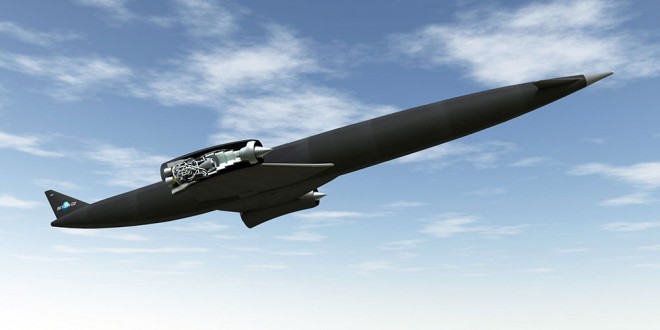
skylonBehold the Skylon! The Mach 5 hypersonic aerospace ship that is the future of commercial flight. Well, that’s the hope anyway, and if a British company known as Reaction Engines Limited get’s its way, it very well could be…

For some time now, hypersonic commercial flight has been batted around as an idea. And with billionaire Richard Branson promising commercial space flight to the world, it seemed like only a matter of time before aerospace flights became the norm. As it turns out, we may be closer than anyone previously thought, thanks to a heralded breakthrough by Reaction Engines.

In a recent statement, the British company claimed they have made “the biggest breakthrough in aerospace propulsion technology since the invention of the jet engine.” In the past, hypersonic flight has been hampered by the problem of propulsion, since at speeds beyond Mach 2, a jet engine has trouble getting the oxygen needed for combustion. Attempts to remedy this have already been made, such as with the SR-71 Blackbird which managed to reach speeds in excess of Mach 3. But for high-altitude and aerospace craft, where Mach 5 and above are essential, the problem remains, as does the issue of the amount of heat generated.

Reaction Engines claims it has solved the problem with a design that could allow a vehicle to take off, reach orbit using a combination of an air-breathing engine and rocket, then return to Earth. The secret is cooling the air as it enters the hypersonic SABRE engine. The air-breathing engine will accelerate a vehicle to about Mach 5.5, according to the company, after which a liquid oxygen tank will supply a rocket engine for the portion of the flight in space. But unlike current space vehicles, there will only be one stage involved for the entire flight thanks to the boost from the SABRE design.

In the same press release, RE claims the “pre-cooler technology is designed to cool the incoming airstream from over 1,000 Celsius to minus 150 Celsius in less than 1/100th of a second, without blocking with frost.” The company further claims to have conducting 100 test runs of the new engine’s cooling system and believes they can begin production of a prototype by 2015. The European Space Agency also says it has evaluated the design and is in negotiations to support further development.

To put it in terms every jetsetter and international traveler can understand, their proposed aerospace craft – known as the Skylon – will allow a passenger to enjoy breakfast in New York City and then lunch in Tokyo. And with a few years and plenty of investment, not just from the ESA, but NASA and the RSA as well, Skylons could be ferrying people all over the world in a matter of hours.

Source: Wired.com