The following are the core concepts of the novel The Repossession Mambo, by Eric Garcia (the same guy who brought us Matchstick Men and the Anonymous Rex series). It’s 2025. Thanks to a company known as “The Union”, society has been flooded with artificial organs and just about everyone has one. They have saved and prolonged many a life, and cost a mint! And if you fall behind on your payments, a Repossession agent will come to your house, slit you from your navel to your neck, and retrieve it.
In short, its a dystopian future where a single company an unrealistic amount of power – the power to save live, the power to take it away. Most people are struggling just to make ends meet and as a result, the debt-ridden masses struggle to make their payments and stay alive. Right out of the annals of classic sci-fi. And with all the other cyberpunk concepts that have been done, I’m surprised someone didn’t tackle the issue of artificial organs sooner.
And, let’s face it, the premise is very much in tune with our day in age, released at a time when homeowners and families are struggling to avoid foreclosure on their houses thanks to a series of bad mortgages (and re-mortgages) that they were sweet talked and pressured in taking them in first place. Yes, for people coming through the worst economic crisis since the Great Depression, and who are used to dealing with punitive cost of privatized health care, this movie was sure to resonate. A wonder then why it did so poorly at the box office!
PlotSynopsis: As already noted, the story opens on the US in the near future. Artificial organs, joints, and even a neurological matrix, have revolutionized life by ensuring that the terminally ill, crippled and people near brain death can live on happily, assuming they can pay of course!
Small hints are given as to what is going on in the world at large, all of it quite familiar and relateable to today. On the one hand, there is loose talk of an ongoing debt crisis and a crippled economy. There’s also the passing mention of US soldiers gearing up to go into Nigeria in what has been deemed “Operation: Hope Springs Eternal” (a parody on “Operation: Restore Hope” or “Operation: Iraqi Freedom” perhaps?)
Into all this, we get Remy (Jude Law) who appears to be writing a manifesto of sorts. He opens it with a reference to Schrodinger’s Cat, which any fan of Big Bang Theory will instantly recognize. He wonders how anything could be considered both alive and dead in the same instant, clearly alleging that his story illustrates just that. The movie then opens in a flashback sequence, all things building towards his session in a slum with an antiquated typewriter.
Basically, Remy was a Repo Man who, alongside his age-old friend and army buddy Jake Freivald (Forest Whitaker), is considered the best in the business. However, Remy’s wife would prefer it if he transferred to sales and stopped doing the grisly work of harvesting people’s organs for money. He agrees, but also tells Jake he will do one last job. He is nearly killed when his equipment (a defibrillator) shorts out and nearly kills him. He wakes up in the hospital and is told that he will need an artificial heart now. His angry, panicked reaction tells us all we need to know about his feelings on that 😉 After years of watching others get screwed over by The Union, he now is facing that very thing himself.
Naturally, he tries to go back to Repo’ing since his wife has already left him and he needs the money. But somehow, he just can’t bring himself to do it anymore. What’s more, time is running out on him making his payments. During a final attempt, he goes into a “Nest” – a slum area where people go to flee The Union’s repo men – where he is attacked and knocked unconscious.
He awakens to find a woman named Beth (Alice Braga) – a lounge singer that he’s seen playing clubs before – living in one of the abandoned buildings and decides to help her. After standing watch as she goes through withdrawal, he agrees to help her since they are in the same boat. Seems she has mucho enhancements, including artificial joints, organs, eyes, and ears.
He breaks into the company storeroom and begins filing the bar codes off of all the spare parts they currently have. No bar codes, no scans will be able to detect that they have organs with are past due. However, Remy is caught by his friend and told to get out while he can. Back at their slum lair, Beth has set him up with an old typewriter she found. He sets to work banging out a “cautionary tale” about what he did and what he’s learned, until at last a repo man finds them and they are forced to kill him. Naturally, Remy outsmarts the man and he dies, but Beth is injured in the course of things. They are then forced to find a black market dealer who will fix her up, which takes them to another “Nest”.
Unfortunately, Jake finds them there and reveals to Remy that he is responsible for shorting out his defibrillator. By forcing him to meet the payments of an artificial organ, he figured his friend would never leave the business. The two fight, and in the course of it, Remy is knocked unconscious. What follows is a total mind-f*** which is comparable only to Inception! I shall break it down succinctly.
Basically, Remy wakes up to find that Beth incapacitated Jake. They then flee together and decide the only way they can resolve this is to break into corporate HQ, find the “Pink Door” where repo personnel make their returns, and physically scan their organs. After an over-the-top scene where Remy fights everyone between him and the “Pink Door” (which is ridiculously labeled as such), they break in and begin performing field surgery on themselves so they can scan the bar-codes.
Jake and their boss walk in a moment later, and Jake decides to switch sides and kills their boss. They blow up the repossession machine together and escape to the tropics, where Remy has apparently published his manuscript under the name The Repossession Mambo. However, this idyllic scene is interrupted when things begin to get fuzzy and some hiccups appear, as if it were all a recording…
Oh wait, it is! You see, in real life, Remy was rendered near brain-dead from the blow Jake gave him. The medics who arrived shortly thereafter hooked him up to one of the new neurological matrix’s in order to keep up his brain function. Hence, all this stuff about beating the company and escaping to the tropics was all a lie. Jake also tells them to leave Beth (unconscious but not dead) alone for him to deal with later. He then picks up Remy’s manuscript and notices the title, the same one featured in his little reverie.
I seriously wasn’t expecting that, but respected the movie more for the little dystopian twist at the end. It was in keeping with the whole tradition of cyberpunk tales, making sure that things like happy endings only happen in the movies… or not!
Final Thoughts:
I’ll be honest, this movie didn’t suck. It was very hard to take Jude Law seriously as a cynical, bad-guy, but for the most part, it was ably acted. It was also hard to believe that a former jarhead turned repo man, a man who for all intents and purposes seemed to like killing and didn’t care about the pain he caused, could maintain a marriage and a family. Somehow, these two sides of his personality didn’t fit. And lastly, the gore level, especially in that scene behind the “Pink Door” seemed gratuitous. It’s like, if they can invent scanners that can read a bar code through flesh and clothing, why do they need to slice opens their own bodies to scan the bar-codes for the big machine? I might have mentioned that the fight scene which brought them there was also pretty stupid, but of course, that was all in a dream! Technically, it doesn’t count 😉
But other than that, I actually liked this movie. It had plenty of thematic elements which landed for me. For one, there was the issue of a company pressuring people to sign-up for a product no one seemed to be able to afford. The scenes where we see the salespeople do their thing, or the boss’s BS about “you owe it to your family to do this” and “we can come up with a plan that fits your financial standing” were just too perfect. Tell me that wasn’t a parody of the banking industry, pressuring people into taking sub-prime mortgages when they could barely afford their current payments!
What’s more, the high costs of the new organs, which people had to turn to payment plans, credit, and whatever else to afford were clearly a reference to the health care crisis in America. People need life-saving procedures, have no choice but to sign up for them unless they want to die and leave their families behind. But in the end, its more than they can afford, and all the smarmy reassurances of the salespeople can’t change that very fact.
Yeah, it kind of bombed at the box office, but I’m thinking that rentals, DVD sales and Netflix might help it recoup its losses. And I strongly recommend people, at least those who aren’t turned off by blood and gore, take the time to watch it. If you’re a fan of dystopian sci-fi, you might just like it. And if you’re a writer of dystopian sci-fi (for example, me!) then you might just find it inspiring.
Repo Men: Entertainment Value: 7/10 (not really a nail-biter, but definitely not boring)
Plot: 8/10
Direction: 7/10 (nothing special, but ably shot)
Overall: 7.5/10
Not long ago, I joined a new writing project, known as Writer’s Worth, which I learned about through Goodreads. At the time, I thought it might be a good opportunity to rub shoulders with other writers, get some promotional stuff going, swap ideas, etc.
However, in the few shorts weeks that I’ve been part of this group, I’ve found so much more worth than I expected (yes, that was a pun, my apologies!) For starters, we’ve commissioned an anthology project known as “Worlds Undone”. This book not only gave me a chance to write what I like best, dystopian lit, but also inspired me to explore the genre of dystopian sci-fi more fully.
And that, I am pleased to note, led to my being “freshly pressed” for the first time! Yep, it seemed that the first article in my dystopian series – entitled Dystopian Science Fiction – garnered some attention over at WordPress.com. As a result, I got more traffic in two days than I have in over a year. Or, to put it another way, I tripled my overall amount of hits. Went from just under 4000 views to just over 11000 in the thirty-six hours. Wow…
Yeah, that was nice. But not as nice as my new group coming together to develop this anthology. And since I have some experience with the self-publishing thing, I volunteered to tackle the dust-jacket design and produced some pretty kick-ass covers, if I do say so myself. But I can hardly take all or even most of the credit.
No, the real credit goes to the artists – Ashley Evans and Alex Popescu – famed artists who agreed to let us use their cover work to fashion a decent cover. I also posted top contenders in a photoshare over at Shaw. However, the winner will be posted on the website itself soon, so feel free to come by and check it out. We could use some outside opinions, just to make sure we’re not patting ourselves on the back too much!
In any case, named in honor of our first anthology, the site is called Grim5next, since the anthology contains three categories: “Grim Futures”, “Last 5 Minutes”, and “What’s Next?”. It’s an exciting process, and I look forward to the end product! Stay tuned if you want to know how and where to get a copy 🙂
Well, after many, many suggestions on how my list of dystopian franchises could be augmented – this mainly consisted of poeple asking me “what about (blank)?” – I decided there were a few that I really couldn’t proceed without mentioning. This will be my last tour of the dystopia factory, lord knows that place gets depressing after awhile! But one thing at a time. Here’s my final installment in dystopian science fiction series, a hybrid list of novels, graphic novels, and movies!
A Clockwork Orange: This dystopian novella was originally written in 1962 and was adapted into film by the great Kubrick almost a decade later. In addition, it was adapted into play after the author realized he didn’t like how the adapted movie ended. Having experienced all three, I can tell you that the movie was probably the best. In addition to the rather ingenious ideas presented by Anthony Burgess, it also benefited from Kubrick’s directorial genius and the superb acting of Malcolm McDowell.
Set in the not-too-distant future, the story revolves around a British youth named Alex who is growing up in a world permeated by youth violence. He is the leader of a group of thugs known as “The Droogs”, young men who go about committing acts of “ultra-violence” which consists of them beating up homeless people, random strangers and other gangs, as well as committing theft and gang rape.
In time, Alex and his friends go to far (even for them!) and an innocent woman is murdered during a break-in. His friends, who are already angry over his bullying and strong arming of them, decide to betray him and leave him to the police. Once in prison, Alex decides to cut his sentence short by undergoing a radical government experiment – an artificially created conscience through Pavlovian conditioning!
The result of this conditioning is that Alex is no longer capable of committing any acts of violence. In fact, even the mere thought of violence produces a reaction so strong that he breaks down and is overwhelmed by nausea. This renders him benign, but also helpless. And in time, all his past crimes begin to catch up with him and he is nearly killed. Once he wakes up in the hospital, he discovers the conditioning has worn off, and he can either resume his old ways, or strike out on a new path…
Another interesting side effect of the conditioning is that he can no longer listen to Beethoven without getting sick either. This has to be one of the most curious and intriguing scenes in the movie, where a restrained and helpless Alex begs the doctors to turn off the symphony because he can’t stand the idea of not being able to listen to it. Much like everything else he does, it speaks volumes of his sociopathic nature.
Ultimately, the movie differed from the novel in that the final chapter was omitted. Immediately before this, we see how Alex is now freed from the conditioning. He also seems intent on blaming the current government, which will oust them from power. But beyond that it not quite clear what’s going to happen. However, the following chapter shows how Alex has realized, independently, that he doesn’t want to live a life of violence anymore. Human freedom, he’s determined, is the ability to make choices for oneself, free of persuasion and operate conditioning.
As I said, I truly think the movie was an improvement on the novel, which is a rare thing with adaptations. Still, it is was in the film that the point of the story really came through, thanks to Kubrick’s usual attention to detail and subtlety. Whether it was through those long, close-up shots of McDowell and his crazy eyes, the combination of wide angle action shots in slow motion, or the way that it played to the tune of Beethoven, you really got a sense of the odd combination of genius and madness that is the anti-hero Alex. The reliance on white, sterile settings also helped to punctuate the sociopathic nature of the story – how underneath the veneer of domesticity, brutality and violence can exist! And last, by leaving the ending a mystery, the moral was more ambiguous, which made for a far more effective dystopian feel!
A Scanner Darkly: Next up, we have Philip K Dicks seminal novel about drug abuse, self-destruction and the various hypocrisies arising out of America’s war on drugs. In this near-future scenario, which takes place in California in 1994 (seventeen years after it was written), a new drug has hit the streets known as Substance D – or SD, which stands for Slow Death. This powerful hallucinogenic is a great high, is violently addictive, and can render users brain damaged after too much use and abuse. And as a result of its popularity and impact, society is gradually becoming a full-blown police state, where cameras – or “Scanners” – are on every street corner and in the home of every suspected dealer.
Written from the point of view of an undercover narcotics agent, the story follows his descent into addiction and his eventual inability to tell reality from fantasy. Through repeated use of Substance D, he gradually becomes brain damaged himself, is released from the police department, and must go to a privately run recovery-center known as “New-Path”. There, he discovers that these centers, which operate like franchises, are actually growing the plant that Substance D is synthesized from. An interesting twist in which we learn that the people profiting from the side effects are the one’s providing the drugs. A stab at strong-arm governments or the pharmaceuticals industry, perhaps?
For the sake of adapting the movie to film, director Richard Linklater shot the entire thing digitally and then had it animated through the use of interpolated rotoscope. The effect of this was to render every single image in a vivid, almost cartoon-like format, which could only be interpreted as an attempt to mimic the effects of hallucinogens. This animation also came in handy with the rendering of the “scramble suit”, a sort of cloak-like device that PKD invented to ensure that undercover agents in his story could completely disguise their appearance, voice, and any other identifying characteristics.
In addition to being science fiction genius, these cloaks were a clear allegory to the anonymity of undercover agents and a faceless system of justice. While responsible for infiltrating and busting up the narcotics subculture, PKD clearly understood that this sort of profession can lead to an identity crisis, especially if the agents in question find themselves using drugs and becoming over-sympathetic to the people they are spying on. This, of course, is precisely what happens to the main character in the story!
In short, the novel was a commentary on the dangers of recreational drug use, but also on the reasons for why such subcultures come into existence in the first place. In addition to ruining lives and causing crime, repression, domestic surveillance, and other extra-legal practices can become quite commonplace. All of this mirrored PKD’s own experiences with the drug subculture and the law, which is why he dedicated the book to all the friends he had who succumbed to drug abuse and died as a result. Very sad!
And let’s not forget the name, a play on the words from the Biblical passage, 1 Corinthians 13:12 : “Through a mirror darkly.” In this day and age, where “scanners” are the means for monitoring society and police officers spend hours looking at their feeds, the scanner has become a sort of means through which people attempt to gaze into other peoples’ souls. But, as with the Biblical passage, this title is meant to refer to how, when we look at the problems of drug use in our society, we are seeing it all through a haze, the result of our own prejudices and preconceptions.
Akira: How the hell did I forget this one last time? I mean seriously, this is one of my favorite movies and one of the most inspired Mangas of all time! Not only that, it’s a pretty good example of a dystopian franchise. And yet, I forgot it! WHAT THE HELL WAS I THINKING?! But enough self-flagellation, I came here to talk about Akira! So, here goes…
In 1988, famed Japanese writer, director and comic book creator Katsuhiro Otomo undertook the rather monumental task of adapting his Manga series Akira to the big screen. Though some predicted that a two hour movie could never do justice to the six-volume series he had written, most fans were pretty pleased with the end product. And the critical response was quite favorable as well, with the film being credited for its intense visualizations, cyberpunk theme, its post-apocalyptic feel, and the exploration of some rather heavy existential questions.
To break it down succinctly, Akira takes place in Neo-Tokyo, a massive urban center that was literally build up from the ruins of the original. According to the story’s background, WWIII took place in 1989, and after twenty years of rebuilding, the world once again appears to be one the brink. However, as we come to learn, the destruction of Tokyo was not the result of the nuclear holocaust per se. It’s destruction merely heralded it in after the world witnessed the city’s obliteration, assumed it to have been the result of a nuclear attack, and starting shooting their missiles at each other. The real cause was a phenomena known as “Akira”, an evolutionary leap that scientists had been studying and lost control of…
Quite the story, but what I loved most about the adapted movie and the manga on which it was based was the level of detail. Set in 2019 (the same year as Blade Runner, coincidentally!) this series incorporated a lot of concepts which made for a far more intricate and interesting tale. First off, there’s the concept of a post-apocalyptic generation that is filled with unrest and angst, having grown up in a world permeated by the horrors of nuclear war. Second, there’s the ever-present element of gang warfare that has sprung up amidst the social decay. Third, there’s a government slouching towards dictatorship in response to all the protests, unrest and chaos that is consuming the city.
Into all this, you get a secret military project in which the Akira phenomena is once again being studied. Though motivated by a desire to control it and prevent what happened last time from happening again, it seems that history is destined to repeat itself. Once again, the survivors must crawl from the wreckage and rebuild, their only hope being that somehow, they will get it right next time… A genuine dystopian commentary if ever I heard one!
But what was also so awesome about the series, at least to me, was the underlying sense of realism and tension. You really got the sense that Otomo was tapping into the Zeitgeist with this one, relating how after decades of rebuilding through hard work and conformity, Japan was on the verge of some kind of social transformation. Much like in real life, the characters of the story have been through a nuclear holocaust and have had to crawl their way back from the brink, and a sense of “awakening” is one everybody’s lips and they are just waiting for it to manifest.
A clear allusion to post-war Japan where the country had been bombed to cinders and was left shattered and confused! Not to the mention the post-war sense of uniformity where politicians, corporations and Zaibatsu did their best to repress the youth movements and demands for social reform. Well, that was my impression at any rate, others have their own. But that’s another thing that worked so well about Akira. It is multi- layered and highly abstract, relying on background, visuals and settings to tell the story rather than mere dialogue. In many ways, it calls to mind such classics as 2001, Clockwork Orange, and other Kubrick masterpieces.
Children of Men: Made famous by the 2006 adaptation starring Clive Owen, this dystopian science fiction story was originally written by author P.D. James in 1992. The movie was only loosely based on the original text, but most of the particulars remained the same. Set in Britain during the early 21st century, the story takes place in a world where several subsequent generations have suffered from infertility and population growth has dropped down to zero. The current generation, the last to be born, are known as “Omegas” and are a lost people.
What’s more, the growing chaos of the outside world has also led to the creation of a dictatorial government at home. This is due largely to the fact that people have lost all interest in politics, but also because the outside world has become chaotic due to the infertility crisis. Much like in V for Vendetta, the concept of “Lifeboat Britain” makes an appearance in this story and acts as one of the main driving forces for the plot.
In any case, this also leads to the birth of a resistance which wants to end the governments tyrannical control over society, and which comes to involve the main character and his closest friends. In time, the plot comes to revolve around a single woman who is apparently pregnant. Whereas some of the rebels want to smuggle her out of Britain and hand her over to the international Human Project, others want to use her as a pawn in their war against the government. It thus falls to the main character to smuggle her out, protecting her from resistance fighters and the military alike.
Naturally, the movie drew on all the novels strongest points, showing how society had effectively decayed once childbirth effectively ended. It also portrayed the consequences of impending extinction very well – chaos, withdrawal, tyranny, etc. However, when it came time to adapt it to the screen, Mexican film director Alfonso Cuaron (who brought us such hits as A Little Princess, Y Tu Mama Tambien, and Harry Potter and the Prisoner of Azkaban), also used a variety of visual techniques and sets to convey the right mood.
For example, most of the sets were designed to look like near-future versions of today. In Cuaron’s estimation, all technological progress would have ceased once the implications of the crisis had fully hit, hence all cars, structures, weapons and gadgets were only slightly altered, or used sans modification. So while the billboards, newspapers and signs were all updated and carried messages appropriate for the period, cars, guns and other assorted background pieces looked entirely familiar.
In addition, much of the movie is shot in such a way so that the images are grey and the light effect seems piercing. This conveys a general mood of drab sadness, which is very accurate considering the setting! Last, Cuaron and his camera crews made many continuous action shots using wide angle lenses in order to capture a sense of crisis and how it effected so many people. Never was there a sequence in which you only saw the main actors and their immediate surroundings. The focus, like the scope of the story, was big and far-reaching.
Ghost in the Shell: Much like Akira, this franchise comes to us by way of Japan and is cyberpunk-themed. In addition, it also came in the form of a manga, then onto a film, but with a television series to follow. And in many respects, it qualifies as dystopian, given that it took place in a dark future where technology has forever blurred the line between what is real and what is artificial. In addition, it also tapped into several cyberpunk trends which would prove to be quite apt (i.e. cyberspace).
Again, this story takes place in Japan in the early 21st century, a time when cybernetic enhancements and technological progress have seriously altered society. The main character is named Motoko Kusanagi, a member of a covert operations division of the Japanese National Public Safety Commission known as Section 9. She is affectionately known as “Major” given her previous position with the Japanese Self-Defense Forces. And did I mention she’s a cyborg? Yes, aside from her brain and parts of her spinal cord, she is almost entirely machine, and this plays into the story quite often.
In addition to facing external threats, Kusanagi and her companions also face conflicts that arise out of their own nature. These deal largely with issues relating to their own humanity, whether or not a person and their memories can even be considered real anymore if they have been replaced by digital or cybernetic enhancements. These questions were explored in depth in the movie, where events revolve around a sentient program that was developed by the government, but which has since gone rogue and is seeking an independent existence.
However, another thing that makes Ghost in the Shell a possible candidate for the category of dystopia is the setting. Whether it was the manga, the movie, or the television series, the look and feel of the world in which it takes place is quite telling. Always there is a dirty, gritty, and artificial quality to it all, calling to mind The Sprawl, Mega City One, and Neo-Tokyo.
As in these settings, things look futuristic, but also rustic, poor and improvised, hinting at extensive overcrowding and poverty amidst all the advanced technology. This is a central element to cyberpunk, or so I’m told. In addition to being futuristic, it also anticipates dystopia, being of the opinion that this “advancement” has come at quite a cost in human terms.
Logan’s Run: Considered by many to be a classic dystopian story, Logan’s Run takes place in a 22st century society where age and consumption are strictly curtailed to ensure that a population explosion – like the one experience in the year 2000 – never happens again. In addition, society is controlled by a computer that runs the global infrastructure and makes sure that the all the dictates of population and age control are obeyed.
In any case, the story revolves around this concept of an age ceiling, where people are monitored by a “palm flower” that changes color every seven years. When they reach 21 – on a person’s Lastday – the crystal turns black and they are expected to report to a “Sleepshop” where they will be executed. Those who refuse to perform this final duty are known as “Runners”, and it falls to “Deep Sleep Operatives” (aka. Sandmen) to track down and terminate these people.
The main character – Logan 3 – is one such operative. On his own Lastday, he is charged with infiltrated the underground railroad of Runners and finding the place they call “Sanctuary”. This is a place where they are able to live out their lives without having to worry about society’s dictates and controls. However, in time, Logan comes to sympathize with these people, due largely to the influence of a woman named Jessica 6. In the end, the two make plans to escape together for Sanctuary, which turns out to be a colony on Mars.
Right off the bat, some additional elements can be seen here. In addition to the concepts of Malthusian controls and ageism, there is also the timeless commentary on how rationalization and regimentation can lead to inhumanity and repression. Much like in We or Anthem (by Ayn Rand), people do not have names as much as designations. All life is monitored and controlled by a central computer, and it is made clear towards the end that the computer is in fact breaking down. I can remember this last theme appearing in an episode of Star Trek TNG, where a planet of advanced people are beginning to die off because their “Custodian” is malfunctioning and no one knows how to fix it.
Metropolis: A true classic of both film and expressionist art, this movie also has the added (and perhaps dubious) honor of being a classic of dystopian science fiction! Created in Weimar Germany in 1927 by Fritz Lang, this movie tells the story of a dystopian future where society is ruled by elites who live in vast tower complexes and the workers lives in the recesses of the city far below them where they operate the machinery that powers it all.
This physical divide serves to mirror the main focus of the story, which is on class distinction and the gap between rich and poor. To illustrate this artistic vision, director Fritz Lang relied on a combination of Gothic, classical, modern and even Biblical architecture. In an interview, Fritz claimed that his choices for the set design were based largely on his first trip to New York where he witnessed skyscrapers for the first time. In addition, the central building of the futuristic city was based on Brueghel’s 1563 painting of the Tower of Babel (right>).
The theme of class conflict is further illustrated by the fact that the workers who live in the bowels of the city are also responsible for maintaining the machinery that makes the city run. One is immediately reminded of H.G. Wells’ The Time Machine and the divide between the Morlocks and the Eloi. This comes through even more when the workers decide to revolt and begin ransacking the neighborhoods of the elites. Ultimately, it is only through the love of the two main characters – Freder and Mariah – that the gulf between the two is sealed and order is restored, a fitting commentary on how society must come together in order to survive and achieve social justice.
In another act of blatant symbolism, we learn early on in the movie that the workers have taken to congregating in a series of tunnels that run under the city. It is here that they meet with Maria, their inspirational leader, and makes plans to change society. So in addition to tall, Babel-like buildings illustrated the gap between rich and poor, we have workers who are literally meeting underground! Wow…
In addition, several other dystopian elements weave their way into the story. The line between artifice and reality also makes an appearance in the form of the robot which the movie is best known for. This robot was created by Rotwang, a scientist who is in the service of the main character’s father – Joh Fredersen, the master of the city. Apparently, this robot is able to take human form and was created to replace his late wife. Once this robot was released into the city, she began sowing chaos amongst men who begin to lust after her, and is the very reason the workers began revolting in the first place. She even causes the character of Rotwang to go insane when he can no longer distinguish between the robot and the woman she’s impersonating.
Neuromancer/Sprawl Trilogy: Gibson is one of the undisputed master’s of cyberpunk and future noire lit and it was this novel – Neuromancer – that started it all for him. In it, he coined the terms cyberspace, the matrix, and practically invented an entire genre of Gothic, techno-noire terminology which would go on to inspire several generations of writers. His work is often compared to Blade Runner given the similar focus on urban sprawl, cybernetic enhancements, the disparity between rich and poor, and the dark imagery it calls to mind.
The first installment in the “Sprawl Trilogy”, this book takes place in the BAMA – the Boston-Atlanta Metropolitan Axis (aka. The Sprawl). In this world of the 21st century, cyberspace jockeys or cowboys use their “decks” – i.e. consoles – to hack into corporate databases and steal information. The purpose is, as always, to sell off the information to the highest bidder, usually another corporate power. In addition, guerrilla tactics and domestic terrorism are often used to get employees out of their contracts, seeing as how most companies have no intention of ever letting their talent go!
picture by Maxim-Lysak on deviantArt
Also, there is the massive gulf that exists between the rich and the poor in these novels. Whereas the main characters tend to live in overcrowded tenements and dirty neighborhoods, the rich enjoy opulent conditions and control entire parts of the world. In addition, the richest clans, such as the Tessier-Ashpools and Vireks, actively use cloning and clinical immortality to cheat death, and often live in orbital colonies that they have exclusive rights to. Much like in his “Bigend Trilogy”, much attention is dedicated to the transformative power of wealth and how it affords one better access to the latest in technology.
But always, the focus is on the street. Here, jockeys, freelancers and Yakuza agents are at work, pulling jobs so they can buy themselves the latest enhancements and the newest gear. In the case of Molly Millions, a freelance lady-ninja, this includes razor nails that extend from her fingertips. In the case of Yakuza enforcer from the short-story (and movie) Johnny Mnemonic, it consists of a filament of monomolecular razor wire hidden inside his thumb. For others, it might consist of artificial limbs, new organs, implants of some kind. Whatever ya need, they got it in the Sprawl. If not, you go to Chiba City or Singapore, chances are it was made there anyway!
*Interesting Fact: according to Gibson, Blade Runner came out when he was still tinkering with the manuscript for this novel. After seeing it, he nearly threw the manuscript out because he was afraid Ridley Scott had pre-empted him! Funny how things work out, huh?
Final Thoughts: Gee, there really isn’t much more to say is there? One thing I have noticed is that much of modern dystopia comes to us in the form of the cyberpunk genre. Though the definition of cyberpunk appears to constantly be evolving, it is generally acknowledged that it is a postmodern form of science fiction that combines “high tech and low life.” Having sorted through several modern examples of dystopian sci-fi, I can say that this is certainly an apt description.
In essence, it assumed that the presence of high tech would entail the emergence of a dystopian society, that the endless march of progress would lead to the destruction of the environment, the devaluing of human life, the elimination of privacy, and the line between real and fake. This last aspect was especially important, embracing cybernetics, virtual reality, and things like cloning and clinical mortality. Since the 1980’s, all of these notions have infiltrated science fiction movies, television, and have even become cliches to some extent.
This genre has given rise to new kinds of science fiction as well. For example, it is generally acknowledged that a sub genre known as post-cyberpunk emerged in the 1990’s which broke away from its predecessor in one key respect. Whereas it too focused on the rise of technology, it did not anticipate dystopia as part of the process. This is best exemplified by books such as Neal Stephenson’s The Diamond Age, a 21st century bildungsroman which predicted vast social and political changes as a result of nanotechnology.
Other sub genres that have emerged in recent years include “Steampunk”, a literary form that combines Victorian era technologies with the punk genres noire sensibilities. Other derivatives include Dieselpunk, Nanopunk, Biopunk, and even fantasy-punk crossovers like Elfpunk. Yes, like most things in the post modern era, it seems that literary genres are becoming fragmented and tribalistic!
But alas, I still feel the need to ask the question, what’s happened to dystopian literature of late? In my initial post, I got a lot of people asking me if I could include some more modern examples. You know, stuff that’s come out since 1984 and The Handmaids Tale. But unfortunately, what I’ve found tends to be more of the same. Just about every example of dystopian fiction appears to draw its inspiration from such handy classics as the one’s I’ve already mentioned, or is in some way traceable to them. Does this mean that we’ve hit bottom on the whole genre, or could it just be we’ve moved away from it for the time being?
Well, I recently learned from an article on IO9 that Neal Stephenson himself stated that science fiction needed to stop being so pessimistic and had to start getting inspirational again. Perhaps he’s onto something… Maybe we’ve gone too far with the whole cautionary tale and need to steer things back towards a brighter future, urging people on with common sense and technological solutions rather than laments. Maybe we need to let them know that such problems as world hunger, overpopulation, pollution, climate change, poverty, war, licentiousness and greed can all be overcome.
Then again, I’m working on a couple dystopian tales right now… Is it too much to ask that this craze last just a few years longer?
Thanks to all who’ve written in and “liked” my dystopian series! Hope to see y’all again soon as I get into ore cheerful things…
Hello and welcome to the first literary review I have had the honor of doing for a fellow author! On the docket for today, a sci-fi, near future dystopian work known as Rabbletown: Life in these United Christian States of Holy America, by Randy Attwood. Awhile back, this author and his work came to my attention by way of my writers group. Like many of us, Randy has been writing for many years, had an idea and manuscript that was just awaiting completion, and which he recently finished and made available as an ebook and paperback (see links below for info on where to find it).
Author Bio: Randy is a retired journalist, but also worked as the director of university relations for Kentucky University medical center and as the media relations officer for the Nelson-Atkins Museum of Art in Kansas City. He retired in 2010 and now dedicates himself to his writing. He has several titles to date, and Rabbletown is (far as I can tell) the flagship of his fleet.
Plot Synopsis: The story takes place in a dystopian future, circa 2084, where the US has become a fundamentalist state (as the name clearly implies). The how and why of this are explained in the preamble, where ongoing tension between the US and Middle East eventually turn nuclear and result in the full scale devastation of both. Whereas the United States bombs Iran and environs into oblivion using its ICBM’s, the various nation-states and terrorist organizations strike back using backpack nukes and dirty bombs until most US major cities are ruined.
What emerges is, predictably, a renewed Dark Ages where civil authorities are replaced by religious ones, the Evangelical movement becomes the dominant political force in America, and Jews, Muslims and Catholics are either suppressed or eradicated. The president of the US is known as the Pastor President, and all offices (governor, mayor, etc) are also required to take on the title of pastor before their rank. Each president is named in honor of famous Evangelists; the current president is Jerry Falwell V, his VP is Pat Robertson.
In addition to demonstrating their lineage from these current media figures, this is also a clear and delicious stab at the Christian Right and its political machinations! Other names of note include Cheney – a former member of the regime who is languishing in jail after an attempted coup – thus ensuring that the political right are also included in this indictment. What’s more, the civil authorities are known as Inquisitors, who are naturally the enforcers of religious law, extract confessions through torture and regularly stone those who sin.
Foreign policy is similarly medieval in this day and age. Whereas the US has become a Christian Republic, there is talk of the “Caliphate”, presumably a united Arab world, where Christian and Muslim soldiers fight for control of Jerusalem once again. It is hinted in the story that this “Crusade” is not real, merely a political tool that the Pastor Presidents use from time to time to drum up support. Still, the purpose of having it is clear. Whereas politics in the US are now dominated by religion, so to is their view of the world.
In any case, what follows is a story of how one town – Rabbletown, Kansas (a borough of Topeka) – is working to create the country’s greatest Cathedral in preparation for a visit from the Pastor President. The main characters, the Mason Bob Crowley, his wife Cheryl, Pastor Governor Jerry Johnson IV, Healer Elmer, Father Superior Robert, Friar Francis and Pastor Teacher Harold, give us a inside view of life in this future Kansas town, presenting it from various angles and providing exposition of how society works. Their particular POV’s are also important when a seminal development takes place, the appearance of a boy who has a knack for quoting Bible verses and seems somehow… “touched” by the Lord. This boy is none other than Bobby Crowley, the son of Mason Bob.
(Spoiler Alert!): The story begins to truly come together after a series of holy events takes place involving Bobby and a routine stoning. Everyone, from the President to the boy’s father, becomes swept up in a frenzy after news of it spreads, the authorities condemning it as the work of Satan while others proclaim the boy to be Christ reborn. Repression and division follow, with the so-called holy authorities becoming very much the enemy of those who appear chosen and righteous. Needless to say, the allegory is clear. In time, the division between the authorities and believers reaches (ahem!) Biblical proportions, in a scene that very much resembles that of Jerusalem during the time of Jesus.
Weaknesses: It is this last part which fell short for me. Given the background and nature of the story, one would get the impression that religion is being cast in a negative light, or at least that it is being mocked for its current excesses and abuses. However, the story also seems to be making the point that religion will be the source of salvation. While this would seem like a keen observation about the duality of faith – the line between salvation and condemnation being so fine – it also makes for an unbelievable ending. Whereas the question of Bobby’s holiness would have seemed best if left vague and metaphorical, there is no doubt about it in the story. Bobby is literally divine, his nature and purpose a force of righteous redemption.
There are some other weaknesses, such as the relevant facts being presented in a matter-of-fact way that leaves the reader feeling spoon fed. The dialogue also comes off as expository and forced at times, something you wouldn’t expect to hear from real people no matter how politically conscious they are. And the intro gives us a full dose of the background which leaves the reader feeling less inclined to read and discover for themselves what’s already happened, what has led the characters to their current situation. And the ending, well its a little predictable given all the Biblical allusions. However, these are hardly fatal and don’t really take away from the overall plot. Really, its just the ending that felt like it misfired.
Strengths: Overall, the story has all the elements of good satire: corruption, decay, selfishness and power mongering; with small, shining lights of redemption amidst it all. The bit about people’s daily lives and how they turn to their PPC’s (Personal Pastor Counselor) is also quite ingenious, predicting the emergence of an internet-based personal religious counseling. The mock history, particularly the part about the Catholic Accommodation was also a stroke a fine art (I shan’t describe, read it yourself!).
And above all, the mockery of the Evangelical movement and its political ambitions feels quite apt. For what can be said about people who seem to think that its a good idea to combine religion and politics, and have little to no qualms about condemning their “liberal” adversaries and all the “undesirables” of society? If they got their wish, would it really resemble anything other than Taliban-style medievalism?
Hence, I recommend Rabbtletown for those people looking for a dystopian read with a religious twist. It’s clever, fun, and a short read which will inspire thought. And, given some tweaking and a little expansion, it could even be a bestseller someday! Hey, you gotta have faith (ba pa ra pum pum!).
Ah yes, another classic guilty-pleasure movie! At least, that is my enduring opinion of this film. When I first saw it as a surly teenager, I thought it was a good shoot-em-up. As I got older, I recognized the satirical elements in it – or rather, the attempts at them – and concluded that they fell short. Now I know for a fact that there are those who disagree with me on this point. Hell, there are even some who might say that this movie was a smart, satirical take on the PC age or an re-imaging of Brave New World for the early 90’s. I, however, don’t happen to be one of them! While I did get the allusions to BNW, I simply cannot bring myself to see how this film could possibly be compared to the brilliant and seminal work of Aldous Huxley. But as usual, some background info is needed before I get into all that.
(Background—>):
Ultimately, Demolition Man was a story about social engineering and control, but at the same time was marketed as an action movie. Fittingly, Sylvester Stallone and Wesley Snipes were brought in to the play the leads, both of whom were A-list action stars at the time. In the end, this combination of action-satire received mixed reviews, with Gene Siskel gave the movie a thumbs down for its violence and Ebert (as usual) praising it for it’s “satiric angle”. Rotten Tomatoes rates the movie as “fresh” with a 63% approval rating while on Metacritic, the movie scores a meager 34/100. In addition, Hungarian sci-fi writer István Nemere claimed the movie plagiarized the vast majority of his novel Holtak harca (Fight of the Dead), which was published in 1986. Regardless, audiences seemed suitably impressed. The movie did make over 50 million domestic, and 150 million foreign. Unfortunately, the director, Marco Brambilla, has gone on to do very little since. If this was the high-point in his career, all I can say is “tough break, man!”
(Content—>):
The movie opens in 1996, on a Los Angeles that is literally on fire. The opening scene where the Hollywood sign is burning is a pretty good indication that society has gone to hell at this time. It’s possible that it was even meant to call to mind the LA riots of 92. Enter John Spartan (Stallone), aka. “The Demolition Man”. At the movie’s opening, he is on his way to bust a domestic terrorist with the equally ridiculous name of Simon Phoenix (Snipes). The latter has commandeered a building and is holding hostages while his men are in a standoff with police. Meanwhile, Spartan, air cavalry-style, jumps from a helicopter, shoots some guys, and then takes down Phoenix in a hand to hand fight. But of course, the building was wired to blow, and the whole place goes up just as Spartan jumps out with Phoenix over his shoulder. Seems blowing shit up is what he’s famous for, hence the nickname!
Then, after the blow-up, the clean up crews find dozens of bodies – apparently, the remains of the hostages! Spartan claimed they had to be somewhere else since he did a thermal scan on the place and saw only Phoenix’s own men, but dead bodies don’t lie! Alas, he and Phoenix are both sentenced to cryogenic freezing for their crimes, since in this day and age (only three years from when the movie was released!) the penal system is no longer in use. Criminals are put in deep sleep and have their brainwaves altered using synaptic suggestion (kind of a neat idea!). His freezing scene is little more than an excuse for Stallone to show off his ass, but whatever.
Okay, first impressions? Well for starters, nothing about the opening sequence is believable, and the hints its dropping are pretty damn obvious. For one, the images and action call to mind things like Beirut and Baghdad more than downtown LA, the tracer fire alone in the opening shots are clearly meant to make us think of a war zone. And last I checked, police didn’t have access to military helicopters or were cleared for aerial insertions. But this is the future right? Sure, but only three years from when the movie was made! Did they expect society to go to hell in that amount of time? Well, it IS LA… Oh, and another thing about the tracers: with all the flak they were putting up, how is it the one thing they didn’t seem to be firing at was the one helicopter that was flying above them? Ah, who cares?
Fast forward to 2032. San Angeles (Los Angeles and San Diego merged after the Big One), is a peaceful, sterile, happy-faced place where violence is obsolete, swearing is illegal, and everything and anything unhealthy has been outlawed. But we quickly see that there is dissent; underground people’s who spray paint messages of resistance here and there and occasionally conduct raids. Enter Lenina Huxley (Sandra Bullock in her debut action role), a young cop who is curious about the past and longs for some action. Hm, no ironic foreshadowing there! In any case, in what appears to be a mix-up, Phoenix is awakened over at the cryo-facility for a parole hearing. In a scene that definitely tells us something is up, he escapes from his cage, kills the guards, escapes from the facility and begins spreading chaos in his wake. And when the police confront him, Phoenix whoops out some badass martial arts skills and kills a few. The police are frightened, and for good reason!
Naturally, they appeal to the man who runs things in San Angeles, Doctor/Dictator Raymond Cocteau (played by British actor Nigel Hawthorne), who just happens to be the inventor of the cryoprison as well. He says “do what you will”, but its clear he’s got something up his sleeve. The cops got nothing, and its clear they are unequipped to deal with such a violent criminal. But it just so happens that someone on the force is old enough to remember the man who brought Phoenix down the first time… John Spartan! They commence defrosting, and some expository dialogue lets us know some pertinent facts: the merger that created San Angeles, the Big One (which coincidentally claimed Spartan’s wife), and the fact that smoking, alcohol, red meat, contact sports, salt, etc etc are now illegal. A brief encounter between Spartan and a swear monitor also lets him know that swearing results in a fine!
Now this is a part of the movie I actually liked. It’s been established at this point that the new age folk are completely helpless in the face of a violent convict. They fear and revile Phoenix, but they’re impressions of Spartan are not much better. Essentially they think he too is a barbarian, in part because he’s a convict, but mainly because of where and when he comes from. This is a realistic touch and something that’s consistent throughout the movie. However, this is still an action flick and things quickly move to the first post-thaw confrontation between the two titans, and at a museum of all places! Seems Phoenix went there to find a gun, which is the only place one can even see a gun in the future. Spartan shows up, and two begin using the museum guns to shoot at each other. Yes, it seems the guns in this particular museum are kept loaded. Uh… okay! Makes absolutely no sense, but okay…
Phoenix escapes, and runs into Cocteau outside. He tries to shoot him, but cannot and is forced to flee. At this point, we are made aware of the fact that there’s some sort of conspiracy between them. Prior to this, it was obvious that someone has been pulling Phoenix’s strings since he got out of cryogenics. He’s obsessed with the name Edgar Friendly (played by Dennis Leary), another absurdly named character who just happens to be the man running the dissidents. What follows is some filler and background scenes where Spartan is invited by a seemingly grateful Cocteau to dinner (at Taco Bell, the only restaurant to survive the “franchise wars”!) he is subjected to more bigotry from the San Angeles folk, and is in the right place at the right time to stop a band of Friendly’s men from raiding the restaurant for food. Afterward, he and Lenina go back to her place where she asks him to have “sex”, which consists of wearing helmets that simulate sex-related sensations. Seems real sex has been banned due to STD’s! Bummer…
Anyway, irked and unable to adjust to this new form of “sex”, Spartan retires to his flat and begins looking at security footage from the museum. Upon seeing the clip where Phoenix couldn’t shoot Cocteau and the short conversation that ensued, he becomes highly suspicious. He looks up Phoenix’s file and finds that in addition to being thawed “accidentally”, he was programmed for mass destruction. Remember the bit about synaptic suggestion? Well, it seems that while Spartan was encouraged to knit (no joke!), Phoenix was encouraged to kill! At this point in the movie, things begin to revolve around Cocteau as both Spartan and Phoenix take turns confronting him. Spartan does so to get answers, but is told to get lost and that he’s going back into the freezer. Phoenix does so to find out why the hell he was thawed and why he’s been programmed. You see, in addition to being fixated on killing Friendly, he can access any computer in the city and seems to instinctively know his way around. He, in turn, is told everything, as is the audience!
Essentially, Cocteau tells him that he let Phoenix out of cryoprison and programmed to kill, be able to access any computer in the city and find his way around San Angeles with ease so that he would kill Friendly, the only remaining obstacle to him creating a “perfect society”. In exchange for this, Phoenix will get whatever he wants, and he even promises to put Spartan back in the freezer for him as “a guarantee”. Phoenix however, says he will take out Spartan himself, but will need the help of a dozen or so additional convicts from his past to complete these various tasks. For whatever reason, Cocteau consents and gives him his access to his old buds. Cue tense music!
Okay, two things! One, are we really to believe that this Cocteau fellow would thaw the most dangerous criminal of the 20th century just so he could deal with some meager political dissident? Why not hire some mercenaries from out of state, or out of the country? And its not like Friendly is a threat really! All he does is spray paint things and raid Taco Bells! Seriously, in what world is it smart to unleash a psychopath to deal with a simple political protester? That’s like unleashing a poisonous snake to deal with a rodent. Second, did he really believe he could control Phoenix simply by putting some kind synaptic block on him? Sure, Phoenix was unable to kill HIM, but what about everybody else in the city? Moreover, how was he planning on controlling him once he was finished with Spartan and Friendly? Cocteau had obviously given no thought to that since he had nothing in mind to offer him. Last, are we really to believe he would agree to thaw more psychos without bothering to take ANY precautions with them? With Phoenix he at least did something, but with these other guys, he does nothing! How stupid is this guy?
Alright, lets move on! Despite being told he’s going back into the freezer, Spartan is still walking around. He even leads Huxley and her partner Garcia (Benjamin Bratt) on a manhunt for Phoenix, a search which takes them into the sewers. Coincidentally, they run into Simon Friendly’s people, because the sewers are where he and his band of dissidents/thieves/scavengers live. Oh yeah, and they have guns too! They must have raided a museum at some point… Meanwhile, Phoenix is plotting with his psychos (duh!) to take over San Angeles society by killing Raymond and Spartan. After Spartan explains to Friendly what he thinks is going on (i.e. Cocteau wants to kill you and thawed a mass murdered to do so), Phoenix and his gang show up and a gunfight ensues. Spartan and Phoenix fight their way across town with an obligatory car chase, during which time Phoenix tells him that all those hostages Spartan allegedly killed in his capture attempt were already dead; or as he puts it, “Cold as Hagen Daas!” Well, as the Joker said to the Batman, “even to a guy like me, that’s cold!” Okay, nuff cold-related puns! Phoenix escapes again, and has his men kill Cocteau. Wow… didn’t see that one coming!
The police and Friendly’s scavengers then come together, with Spartan asking for their cooperation. They then march on Cocteau’s office where they find him dead and see that Phoenix and what remains of his thugs have taken to the cryogenics facility where they are planning on thawing all the convicts there. A final showdown takes place between Spartan and Phoenix and Spartan manages to (you guessed it!) blow up the place in the process! He escapes in the nick of time as the place is exploding all around him, all the while doing the Stallone signature grunt/yell. The movie ends with the uptight police chief fearing for the future, Friendly suggesting they all get drunk and “paint the town red”, and Spartan suggesting they find a middle path. Then, of course, Spartan kisses Huxley, and they agree to have sex the old fashioned way. Cue theme music by The Police!
(Synopsis—>):
Of the top of my head, I can think of several things that were good about this movie. For one, they actually did bring some satirical elements to the screen. The way the future citizens of San Angeles saw Spartan as a brute, for example. “Cro-Magnon”, “primate”, “caveman”; these are how they describe him, and to his face! And the paradox is quite clear: on the one hand, their values demand that they reject a man like him. On the other, they make them hopelessly dependent on him. Also, the nature of the “utopian” San Angeles society seems like a pretty fitting commentary on the PC age: how taken to its extreme, censorship and repression – even if its well-meaning – will lead to a society of stunted, helpless virgins. Though the entire plot may have been lifted from a Hungarian sci-fi novel, this aspect of the movie was kind of fitting given the year of its release. The early 90’s were kind of the dawn of the PC age, and it only made sense that there would be those who would want to warn people about the potential for danger before it had a chance to get in full swing!
There were also several funny moments I feel the need to acknowledge. Snipes manages to pull off the psycho quite well and has some downright funny lines. “Cold as Hagen Daas” was one, as was his Scarface imitation. Also, the joke about President Schwarzenegger wasn’t bad. One might get the impression that he and Stallone have some kind of agreement where they’re required to give a shout out to each other every few years. And how about the running joke about “the three seashells”? And the swear detectors were not just satirically apt, they were a pretty good comedic tool.
And now for the bad stuff… First off, the totally contrived, unthought-out nature of the plot! Again, are we really to believe some conniving future dictator would unleash a mass murderer to kill ONE MAN and expected he could control him? Wasn’t this guy supposed to be the leader of San Angeles and the creator of their entire way of life? Did he get to where he was by NOT planning ahead like this, or is he just this stupid? Also, the fact that people are able to get both guns and ammo in a future where there are supposed to be none made no sense either. I know, if you remove these elements, there’s no movie. But a few lines of dialogue would have patched this movie’s biggest holes, but no explanations were ever given! Hell, they could have even done a thing where Spartan and Phoenix were forced to improvise their weapons, showing how they had to resort to classic ingenuity in an age where mass-produced firearms were no longer available. I’m just saying…
There was also the small plot thread about John’s daughter that went nowhere in the movie. We learn that he had a wife and child before he went into cryosleep, and that his wife died in the Big One. But his daughter apparently survived and despite missing her, he doesn’t even bother to look her up. They do make a point of having Spartan say that he’s not sure if he wants to see her since she grew up in this new society and he fears she won’t be able to relate to him. But when Huxley offers to look her up, he says no and then the whole thing is just dropped! Seriously, if he had a daughter, I would think he’d want to reunite with her, and that this reunion would be intrinsic to the plot in some way. Say, for example, that after he’s finished killing Phoenix he decides to look her up and that’s how the movie ends; you know, as opposed to him and Huxley having sex and him learning how to work the damn three seashells! Or, she could even be central to the plot by having Phoenix abduct her in Act III in order to lure Spartan into a trap? Hell, either of these ideas would have been better than bringing the daughter up and then just writing her off like that. Why bring her up if she’s going to serve no purpose whatsoever?
Also, there’s the idea that this movie managed to adapt elements of Brave New World to the big screen. Sure, that was the aim, and the references were certainly clear enough. But that was the problem, in my opinion, and the reason for its failure. For one, the name of Sandra Bullock’s character is an obvious allusion to BNW. Her last name is Huxley (aka. Aldous), and Lenina is the name of BNW’s main female character (Lenina Crowe). And at one point, Phoenix even yells out, “Its a Brave New World” before firing off his weapon. Now that was just plain unnecessary! I mean, if you’re going for literary allusions, try some subtlety! Don’t just announce what you’re trying to emulate! It comes off as obvious, and its not like people aren’t going to make the connection anyway. In any tale of social engineering where freedom is being killed by soft measures, the inevitable connection is to Brave New World!
But then again, this was in keeping with what brought this movie down for me, which was its watered down character. Putting aside the fact that this movie was possibly a total rip-off, there were still the basic outlines of a decent plot before Brambilla and whoever else decided to turn it into an action movie got their hands on it. Once that was done, the potential for real satire and social commentary was pretty much lost. In the end, all that stuff just seemed like it was thrown in to give a feeling of depth to an otherwise cheesy action flick, which really wasn’t the case. The movie started out as a tale about a dystopian future borne out of the violence and chaos of the present, but was dumbed down in order to make it accessible to Hollywood audiences. And that’s a shame man! Consider how many otherwise decent movies or original novels have been ruined simply because of the director’s, producers and industry’s lack of respect for their audiences.
But that’s something for another time and I’m starting to get that preachy feeling again. And like I said, this really isn’t a bad movie, just one that requires a little brain-checking if you don’t want to come away disappointed. Overall, I’d say it belongs in the fun but kinda stupid bin, next to the other guilty pleasures that DON’T make you think!
Demolition Man Entertainment Value: 7.5/10
Plot: 4/10
Direction: 7/10
Total: 6.5/10
Hello again. Today I thought I’d break with the norm and do another “best of” post. Thing is, this time around I didn’t want to do one dedicated to “best lines” or anything like that. No, today I thought I’d tackle some of the worst moments in movie history. And if there’s one thing I’ve noticed plenty of in my collection of bad reviews, it’s plot holes! Those rare moments that make you stop and say “Uh… what?” Or the kind that make you want to reach out, grab the director by the ears and say “That makes no f@!%@%$ sense! What the hell were you thinking?” Not literally, of course. That’d be creepy, Kathy Bates in Misery creepy.
So, with that in mind, and inspired by all the moments that have made me – and I’m sure others – want to pull out my hair, here’s a list of some of the worst plot holes and oversights I have ever seen. Yep, its a veritable “best of the worst”! And who knows? This might just become a regular thing. There’s certainly no shortage of material. And on the chopping block for today: Independence Day, Terminator: Salvation!, and Equilibrium!
Independence Day:
As far as plots go, this movie was a doozy. In fact, it was lot more enjoyable if you checked your brain at the door and didn’t ask too many questions. But, inevitably, at some point you had to pick your brain up, reinstall it, and deal with all the logical inconsistencies it was sure to raise. Here were the one’s that came to my mind:
The Signal: Remember how Jeff Goldblum, a cable man, picked up on that alien signal, the binary code that was being transmitted using Earth’s satellites? Remember how NO ONE ELSE noticed the same thing? That’s right, the guy who installs your HBO noticed something that all the cryptologist and covert brains at the CIA, NSA, and NASA did not. But of course, Director/Writer Roland Emmerich had that one covered. Apparently, the signal was “subtle!”
Backdraft: This is a minor point, but it was still insulting! During the aliens’ assault on LA, Vivica A Fox, her son, and their dog Boomer were all trapped in a freeway tunnel. Whereas most people were consumed by the fire, they survived by hiding in a workman’s shed. Only problem with this is, the fireball went right by the open doorway and left them untouched. Funny, I always thought fire expanded to fill empty spaces. Forgot about the shed exception!
Small World: Remember how Will Smith managed to fly a commandeered helicopter into LA after the aliens leveled it to retrieve Vivica A Fox and her son? Yeah, how did he find them exactly? And what the hell happened to all those alien ships that were shooting down anything that flew? More importantly, how did Vivica A Fox manage to find the First Lady and the downed White House helicopter? Come to think of it, this movie was full of these kind of unlikely reunions! Why, for example, did Will Smith decide to wander to Area 51, hundreds of miles away from his airbase and where he got shot down? Was it just because the president and several other main characters happened to be there? And how is it that the big caravan of mobile homes, with Quaid and his family in it, manage to meet up with him in the middle of the desert? How small is LA? Or the Nevada Desert for that matter?
The Plan: Remember how Goldblum came up with the big world-saving plan towards the end? The one that involved planting a computer virus in the mother ship, yadda yadda yadda… Yeah, how did he manage to figure out how to crack the alien’s technology? We’re talking about a race with vastly superior technology. So not only was a cable man able to detect an alien signal that the best minds at NASA, the CIA and NSA could not, he was also the only one who could figure out how to bring them down. Oh yeah, and how does Will Smith know how to fly an alien ship? He saw one in combat… I’ve seen fighter jets in combat, does that mean I can fly one of those? I’d like to think so! Emmerich raised the holes in this one too, but he dismissed them by putting them in the mouth of a douche bag character who we weren’t likely to listen to! Seriously, by the time he was done bitching about the logical inconsistencies of this plan, we were ALL hoping he’d be fired. And then he was… yay!
The Mother Ships: Remember those big alien ships that had shields that could withstand nukes? Remember how when they went down, the US airforce started ripping one to shit with their missiles? Same with the alien fighters, they blew right up when hit with mere bullets. Seems odd… you’d think solid metal hulls that are capable of withstanding the intense pressure and heat of space flight and atmospheric entry would be able to withstand bullets and air to air missiles. Granted they DID say they weren’t doing ENOUGH damage, but the fact that they were doing much at all was a bit of a surprise. But that wasn’t nearly as odd as the stunt Randy Quaid pulled. Remember how the big alien ships had those big alien ray guns, the ones that could level entire cities? Yeah, turns out that if you fly a single jet into the barrel of one, the entire ship will explode… How the hell does that work?! Does putting your finger in the barrel of a gun make the gun explode? No, it makes your finger explode as the bullet rips through it and anything else in the way! And this was with a freaking city-leveling laser! In short, Randy Quaid’s plane should have exploded harmlessly beneath the gun, not blown the whole ship up! But that would have been way less heroic… Funnier, but less heroic.
Man that was a stupid movie! Fun, but stupid!
Terminator: Salvation:
Here was a movie that started off good but got real messed up towards the end! Yep, as soon as they dropped the hammer and revealed everything, you got to see how little sense this sequel really made. I tell ya, it had so many holes, you’d think a Terminator took a gatling gun to it!
The List: So the machines made a hit list in this movie with Kyle Reese’s name at the top and Conner’s not far behind, right? And they also created a man-machine hybrid in the form of Marcus, right? And their plot all along was to have him help them kill Reese and Conner so they would win the war, right? Right! So… why the hell didn’t he just kill them? What was the point of delivering Reese and Conner into their lair if the goal was to kill them all along? That’s like the long-movie equivalent of a villain putting James Bond into some complicated death machine instead of just shooting him! It’s like, if you want him dead, why put him in a situation he can actually get out of? You’re life not challenging enough as it is? Especially with Reese, Marcus had him at gunpoint twice within the first thirty minutes! First time when he stole his shotgun, second time when he was showing him how to hold said shotgun. Boom! Movie’s done! But instead, we get a big convoluted plot where they end up being captured, apparently thanks to Marcus, when it seemed like all he was doing from the beginning was try to help them!
“That was our plan all along!”: Marcus spent the first portion of the movie wandering from the desert to the ruins of LA. There, he met (totally by coincidence) Kyle Reese. Reese and his little friend were captured IN SPITE of Marcus’ efforts to protect them, not because of them. Marcus then found John Conner (again, purely by coincidence), and convinced him to let him go to Skynet’s base so he could save them. John then went to that base to save Reese as well because the resistance was planning on attacking it. So really… how was Skynet orchestrating all this from the beginning? Seems to me that everything that happened up until this point was well beyond its control. Contrived? Hell yes! But saying that this all be part of some master plan doesn’t make it any less so. If anything, it’s just a weak-ass attempt at justifying these contrivances by tying them all together.
The Future: How did Skynet know that Conner would somehow come to defeat it? How did it know that Reese was his father? Finally, how his did it know that it had failed repeatedly to “get John Conner” in the past? The only way Skynet could have known how the future would work out is if someone told it, just like how Conner knew about the future because his mother told him (and she was told by Kyle Reese). In short, someone who has actually been there needs to come back and tell you. And that bits ruled out by the fact that all three Terminators that came from the future were destroyed. So really, how does Skynet know a thing about this whole temporal thing? It got a crystal ball, some kind of device that can see the future? Nuh-uh!
Chip in the neck: If Skynet wanted to control Marcus, which apparently they were doing all along (though he didn’t know it and it really didn’t seem like they were), why do it through a chip he could easily remove? Why put the damn chip in his neck? Why not his brain? Just like with the whole delivering Reese and Conner to them, this seemed like an easily fixable situation. Rip, rip! Problem solved! Remember how Skynet said to Marcus, “You cannot save John Conner”? Well… yeah, actually he could! And thanks to Skynet’s stupid, convoluted planning, that was exactly what he did!
The Machine HQ: Did you notice how at the end of the movie, the Resistance people just show up and pull Conner, Reese and Marcus out of the base? Didn’t that seem remarkably easy? What about those gun towers and other defenses we just saw? What happened to those? Were they just for show? And if it was this easy, why couldn’t they have done it way back when and shaved a couple years off the war?
Temporal Paradox thingy: We know from the first and second movie that Conner exists because Reese went back in time and had sex his mother. We also know that he didn’t go back in time until after they broke into the machine HQ, presumably in 2029, destroyed Skynet and discovered the time machine. But in this alternate future, where Judgement Day happened later and the Resistance destroyed Skynet sooner (2018), there was no time travel to speak of. Sure they shamelessly and senselessly said that the war was still on because Skynet’s “global network” was still out there, but if Skynet is gone before it built its time machine, wouldn’t that mean that no time travel ever took place, and John Conner therefore wouldn’t exist? Think about it! Conner exists because Reese had sex with his mom, but if Skynet was destroyed 11 years before he was supposed to go back in time, then it would never have built the time machine, Reese would never have gone back, and Sarah Conner would never have gotten pregnant with him. Come to think of it, the same holds true of the Terminators and even Judgement Day! No time machine, no Terminators going back, no basis for Skynet’s creation… Whoa! I just went cross-eyed!
Wow, that’s a lot of holes. Am I being too harsh? I mean, I wanted to like this movie. Really, I did! But it made it just so damned hard!
Equilibrium:
Worst for last! This movie had holes so big a truck could pass through them! Seriously, by the end, you were taking stock of them all and realizing that they essentially rendered the entire premise moot. Where to begin…
Cleric Extraordinaire: So the movie starts with us being told that Bale’s character is like the prodigal son of Grammaton Clerics (not too subtle reference to the movie’s religious tone here!). Way he puts it, he’s always been able to get inside “sense offenders” (sex offenders!) heads and know how they think. And yet, this guy not only failed to notice his wife was an offender, but his children too! Turns out, she was loving him in secret for years, and the kids stopped taking their Prozium after she was hauled off to be incinerated. So really, that means he was living in a house full of offenders for years and didn’t even notice! If he’s the best they got its little wonder why they lost to the Underground!
“Don’t lie to me!”: There are countless examples of people who are supposed to be emotionless showing emotion in this movie. Taye Diggs does much of that with his constant smiling, but by far the worst was Angus MacFadyen’s huge outburst. Seriously, how did Bale’s character not notice that? I know, truth was he was never taking his Prozium, but that’s not supposed to be common knowledge. You’d think he’d be a bit more subtle than to slam his fist down on a table and yell at someone. Especially a man who is specially trained to seek out and kill the kinds of people who do that. But then again, this is the same guy who didn’t notice that his wife and kids were offenders, and they were doing it for years. Yeah, he’s safe!
Gun Switch: Ah, yes! The scene where Bale switches guns with Diggs, and then frames him for the murder he already committed by using his gun to do it. Wait, what? Yeah, that’s how it played out in the movie. Bale framed Diggs for the murder of several officers of the state by (apparently) using his gun to do it. Problem is, he didn’t swap guns with him until AFTER the event. Only way this would make sense was if he already switched them, committed the murders, and was just giving him his own weapon back at this point. That would have worked just fine. All that would be needed is an added scene or a flashback showing Bale how stole his gun beforehand. The other way, the way it happened in the movie, makes no damned sense! Sloppy stuff like that makes the audience think someone in the editing booth was either asleep at the wheel or high! Maybe they had the right idea!
“We planned this”: By the end, Bale is about to meet “The Father”, but realizes he’s been had. Turns out, his nemesis Diggs is alive, his whole mission to find the Underground was a ruse, and he himself was selected because apparently they thought he was a latent sense offender and just hadn’t realized it yet. Uh… how did they know this exactly? I mean yes, he did BECOME a sense offender, but that was the result of an accident! He somehow forgot to stock up on Prozium, broke his last vial, and the damn pharmacy was closed! That’s how it all began, the result of an unlikely, totally implausible accident. So really, how could they have foreseen this and planned it all out? Man, its just like what Terminator: Salvation did, except Wimmer did it sooner! Note to all writers and directors out there, DON’T IMITATE KURT WIMMER! I don’t know if you’ve noticed, but his movies aren’t exactly getting nominated for most original screenplay!
“I Feel!”: By the very end, we learn that MacFadyen, the true leader of Libria, is himself a sense offender. Makes sense in a “we ripped off” 1984 kind of way, the leaders are hypocrites who don’t follow their own rules. But really, this means that the head of this dystopian state has been breaking the rules all along and no one seemed to have noticed. Either that or all his colleagues in government were doing the same, how else could he have gotten away with it? With all the Clerics, informants and surveillance devices they have out there monitoring for offenders, wouldn’t it have been really easy to spot a public figure exhibiting emotion? Am I over-thinking the bit? Probably. At this point, the movie is over anyway so who the hell cares?
Man that was a stupid movie. No, no addendums to that statement – like it was still fun, so long as you checked your brain at the door. It was just a stupid, stupid movie!
Well, that’s all for now. I could go on, but I’m already in a bad mood just thinking about all these plot f$@*-ups! Quite frankly, I’d like to get back to reviewing books or movies that I actually enjoyed. And seeing as how I finally got my hands on a copy of Idoru, I think I’ll do just that. Stay tuned!
And we’re back! I tell ya, I’m mentally burnt from reviewing so many classics that I actually enjoyed! But I guess that’s to be expected. Somehow, its just easier to burn and mock bad movies, as opposed to dissecting and delving into movies with real themes, plots, memorable characters and complex messages. And I have covered a few movies in the last while that I had mostly good things to say about. So its about time I got back to bashing something worthy of it! Yeah, that seems about right. Here’s Equilibrium!
Now I already know that I’m stepping on some toes just by implying that this movie was fluff. As it turns out, Equilibrium is a cult-classic with its own dedicated fansite. That’s right, people actually came together and created a website strictly for fans of this 1984-ripoff. Go check it out, its actually pretty respectable: Equilibrium Fans
That shouldn’t come as a big surprise, people love an underdog after all! And considering the bashing it took and how little money it made, its little wonder why its fans would be so dedicated…
(Background—>)
Yes, as already noted, this movie did very poorly at the box office, grossing just over five million dollars, which was roughly a quarter of the movie’s budget. And it was generally panned by critics, earning only 37 percent on Rotten Tomatoes and a metascore of only 33 out of 100 on Metacritic. Little surprise. The general consensus amongst critics was that the movie was a rip-off, a “reheated mishmash of other sci-fi movies” as one review put it. Or, as the NY Times claimed, that it borrowed heavily from such classics as Fahrenheit 451, Nineteen Eighty-Four, Brave New World, and other science-fiction classics. Roger Ebert was the only one to be gentle, giving the film 3 out of 4 stars and saying that “Equilibrium would be a mindless action picture, except that it has a mind. It doesn’t do a lot of deep thinking, but unlike many futuristic combos of sf and f/x, it does make a statement”.
On the other hand, the movie did manage to attract a cult following that saw all this “borrowing” as signs of quality, who enjoyed the combination of action and sci-fi/satirical elements. But regardless of whether it was seen as a weakness or a sign of quality, the fact remains: Equilibrium borrowed HEAVILY from many sci-fi classics, particularly 1984, and tried to repackage them into an action movie riddled with plot holes, contrivances and topped off with a happy ending. You either loved it or hated it, and I personally thought it was pretty damn funny!
(Content—>)
So the movie opens with scenes of destruction and debacle, telling us that humanity was brought to the brink of annihilation by what was clearly WWIII. In response, a new order was formed, this one dedicated to creating a perfect society through the eradication of human emotion. Hmm, interesting spin on the 1984 concept (not to mention F451 and Brave New World!) So apparently, the civilized people live in a walled city called Libria (obvious reference to the movies title and their value system), the rest live in the “Nethers” where emotion is still practiced. The people of Libria take a drug named Prozium which “eliminates the highs and lows” of emotion (thinking they just mashed the words Prozac and Valium together) and the law is enforced by people called “Grammaton Clerics” who go out and arrest “sense offenders”. Oh, and the religious/political leader of this world is known as the “Father”. He’s the guy who founded the Librian philosophy and leads the state through the “Tetragrammaton Council”, even thought no one sees him except on big huge TV screens making his famous speeches.
Okay, first impressions… Obvious! For one, we have some clear satire on the culture of pharmaceuticals, the pills people pop when they are manic or depressed. Except here, you pop one to cure it all! Echoes of Soma, hello Brave New World! Then we have the Grammaton Clerics who go out and arrest “sense offenders”… They ARE the Thought Police, “sense offense” IS thought crime, and the way they burn the people’s houses and possessions out in the Nethers is every bit what happens in F451. Oh yeah, and the Father is totally Big Brother, and its already pretty clear he doesn’t even exist! And the religious angle is also very clear. The name Tetragrammaton for example, which is Greek for “a word having four letters, is clearly a reference to the Hebrew name of the God of Israel (YHWH). And the Grammaton Clerics, need I say more? Essentially, what they are trying to say is that the philosophy of unemotion has been elevated to the status of holy canon, making it unquestionable and the state’s authority total.
But the action is still pretty cool. For example, in the opening sequence after the intro, we see John Preston (Christian Bale) – cleric extraordinaire – go into a Nether compound. There, he shoots up an entire room of people after jump-kicking the door down and sliding into a room full of gunmen. Seems this is an example of what’s called the “Gun Kata” (or as some people called it “Gun Fu”), where clerics get into the middle of a crowd of hostiles and do a gun dance, inflicting maximum damage on the maximum amount of targets. After clearing this place out, they uncover a cache of art (sense offense materials) and burn them. We also see his partner, Errol Partridge (Sean Bean), steals a book from the scene by WB Yeats and claims he’s turning it in to be destroyed. But you totally know he isn’t! The man is clearly a “sense offender” (dammit, that sounds like sex offender when you say it fast!). Preston quickly realizes this and meets up with him in an abandoned church in the Nethers. There, they have a chat about why he’s chosen to break the law, forsake his career, and condemn himself to death. Bean claims that the price of emotion is a “cost I would pay gladly”. Not sure where that quote is from. Closest thing I could find was “I’ll gladly pay you Tuesday for a hamburger today” by Wimpy, the hamburger addict from Popeye.
Then, in a move that isn’t totally contrived, Preston accidentally breaks his last vial of Prozium and the clinic is closed so he can’t restock. That’s right, an elite cleric lets his stock of mind-altering drugs run out and the factory just happened to be closed so… yeah, he’s screwed until they open again! Then, wouldn’t you know it, he begins to experience emotions and finds the awakening quite appealing (and disturbing because he now feels remorse for killing his ex-partner!) Alas, he has to hide his emotions now because he gets a new partner, some career-minded dude named Brandt who is clearly gunning for the spot of top cleric. Preston’s kids, like something out of children of the corn, are also pretty suspicious (echoes of the Spies from ’84), so he has to be careful at home as well. Only place that’s totally private and safe is the few inches that lay inside his head (’84!)
Oh yeah, we also learn a few things in the course of this that also make little sense. One, Preston had a wife that was arrested and incinerated because SHE was a sense offender. When he meets with Dupont (Angus MacFadyen), the head of the Council under the Father, he is asked how this could have happened. How does an elite cleric, best in the business, NOT notice sense offense in his own home? He replies that he himself has never been able to figure that out. Well, that makes all of us! That and the death of his partner clearly tell us that he’s going rogue real soon! Oh yeah, we also learn that there’s an Underground apparently that operates within Libria. But unlike in 1984, this resistance ACTUALLY exists and literally lives underground. Its now Preston’s job, with his new partner, to find this group and eliminate them.
They then do a mission together where they find a new batch of people in the Nethers, one of them the enigmatic Mary O’Brien (Emily Watson) who has a cache of classical music and antiques. After saving her life, Preston goes through her stuff and has a deep, emotional moment as he listens to some Mozart. This is right out of ’84 again, where Winston found an antique shop in London and was totally enamored by everything he saw in the place. Preston than commits the same act that Partridge did in the beginning, pocketing a book and claiming he was going to get rid of it himself. He then rescues a dog because (holy evil Batman!) dogs are illegal and are have to be put down. He tries to let the dog loose at the edge of town, but that ends badly when a bunch of police show up and he’s forced to kill them using some of funky, acrobatic, Gun Kata moves! Also, in the course of interrogating O’Brien, he finds himself falling in love with her. We learn in the course of things that this lovely red-headed “sense offender” knew Partridge and led him down the path of sense offense in the first place. She’s slated to die now, and he’s obviously not too happy about it.
Shortly thereafter, Dupont summons him again to talk to him about his suspicious behavior. Convinced that Preston is not telling him the truth, he slams his fist down on the table and yells “DON’T LIE TO ME!” Uh, hello? Isn’t emotion supposed to not exist for these people? And this is just the first instance of this kind of plot oversight. Afterward, while practicing what appears to be truncheon Kata, Brandt comes in and starts fighting with Preston and he lets a lot of emotions fly. For one, he keeps smiling! Second, he taunts him by telling him that since some cops turned up dead (his work), there’s going to be a big offensive in the Nethers and all sense offenders will be wiped out on site. No more arrests are processing! Last, he seems disappointed when he looses their match. And these people are suspicious of HIM? No wonder he never suspected his wife, the man’s been surrounded by sense offenders all this time and he can’t even tell! (Still sounds like sex offenders to me!)
So he rides along on one such assault, sees lots of people die and feels bad about it. Then he tries to rescue some hideaways, but Brandt finds him and orders him to kill them. He even hands him his gun to do it. He says “no, you do it”, and hands him his gun back. As if Brandt’s suspicions weren’t already confirmed, he then catches him as he runs out of the “processing center” (where O’Brien has just been incinerated) where he breaks down and start to cry right there in the street. Arrested, Preston has his ass dragged before Dupont (again!) where Brandt tells on him and says that he’s the one who shot those officers. Strangely, Preston doesn’t seem too afraid because, you see, forensics can match bullets to a specific gun. Turns out, the gun used to kill those officers was Brandt’s! We then get a quick flashback to where Preston was handing Brandt back his gun while they were together in the Nethers. Brandt is then hauled off, claiming (screaming, in fact) that he has no feelings. Okay, two things here: One, that whole gun switcheroo happened AFTER he killed those cops. How could he have shot them with Brandt’s gun if he didn’t even have his hands on it yet? This is a major plothole! How could it have gone unnoticed?! Second, Brandt once again is blatantly demonstrating emotion. How is no one noticing this?
Regardless, Preston now seems to have gained Dupont’s trust, so he’s sent on a special mission to infiltrate the Underground. Seems right up his alley, since he’s already decided to become an offender himself. But before that can happen, he must rush home and get rid of the cache of Prozium that he hasn’t been taking. He gets home and rips off the bathroom mirror (he’s been hiding them inside the wall) and is confronted by his son who tells him he needs to do a better job of stashing his vials. His son then smiles! Turns out, his kids are sense offenders too, have been ever since their mother was incinerated! How sweet… Whoa, hang on here! You’re telling me that this guy’s KIDS have been offenders for years now and HE NEVER NOTICED?! What kind of cleric is this guy? First his wife, then his kids, then his partner??? Didn’t he say near the beginning that the key to his success as a cleric was being able to get inside the head of sense offenders? How can he be suspected of being a sense offender when he’s the only one in Libria who HASN’T been sense offending this whole time?
After this close shave, he goes to the Underground and begins plotting with them. Seems they have a plan: they will stage their surrender, Preston will get the credit for the arrest and, as a reward, a chance to meet the Father. He will assassinate him while their people attack the Prozium factory. With the shipments shut down, the people will experience emotions again and rise up against the system. Ah, but there’s a snag! Turns out, as he gets there, that the Tetrarchy have other plans. They sit him down, hook him to a polygraph, and then reveal that he’s been had! Brandt is alive, it seems, and it was all a set-up! And then a video of the Father, which suddenly turns into Dupont, comes on to address him lets him in on the double-cross. The Father (like we didn’t already know) has been dead for years and Dupont has been the real head of state since that time. Oh, and that whole thing of sending him to find the Underground? Part of the set-up! You see, they could tell he was a potential offender, and figured they could use him to locate the resistance and get their hands on them. Letting him beat Brandt was just a ruse so he would feel comfortable and able to fulfill his purpose.
Yeah, this isn’t totally contrived either! According to Dupont, they were looking for an infiltrator to get into the Underground, someone who could think and feel like they did, but who wasn’t aware of it yet. Now how the hell is that supposed to work? This guy couldn’t even spot his own wife and children, and he’s supposed to be an elite cleric AND a latent sense offender? Second of all… what are they, psychic? If he was the perfect candidate for knowing how sense offenders worked, why screw him over? Last, but certainly not least, the only reason he started offending was an unlikely accident! Remember, he broke his last vial and the Prozium factory was closed? Or did they set that up too? Once again, we have a climax where the bad guys somehow foresaw everything, how everything proceeded based on their designs, even though there’s no way they could have planned this without being psychic. Whatever, it’s not supposed to make sense, it’s just supposed to tie everything up into a nice little package!
In any case, Dupont tells him to surrender without incident, but Preston isn’t about to! His polygraph levels go flat, he breaks out the sleeve-guns, and starts blowing everyone away! Yeah, this is another pretty cool action scene, but that doesn’t prevent it from being totally stupid too! I mean, how did he get those guns past the guards? Also, he makes such short work of them that the fight isn’t even suspenseful. A few bullets, a few cuts with his Katana, and everyone’s dead. His ultra-fast fight with Brandt is especially bad; not once did their swords even cross! It was just, swipe, swipe, swipe, and Brandt’s face falls off! No joke! He then takes down Dupont in a Gun Kata fight, but not before Dupont begs for his life, confessing that he himself is a sense offender (he “feels” he says). But Preston kills him anyway, quoting that killing him is “a cost I would gladly pay”. So even Dupont is a sense offender, huh? No surprises there, he’s done enough emoting to put William Shatner to shame! But I guess this was meant to be in keeping with the whole 1984 motif, where the rulers are total hypocrites who don’t follow their own rules.
Anyway, the Underground then attacks the Prozium factory, killing all the guards with ridiculous ease, and then proceeds to blow the place up. The movie then ends with a closeup of Preston’s eye as he sheds a single tear. And that’s not the only piece of blatant symbolism before the movie ends. There’s also the part where Preston wipes his bloody fingers on one of the TV’s boasting the Father’s image, right before he blows this and every other screen in the building away (somehow, this shuts down every screen in the city). So between that and the destruction of the Prozium factory, the system is now in ruins and the people of Libria free to feel. Yaaaay, the sense offenders won! (STILL sounds like sex offenders!)
(Synopsis—>)
I think I better start with what I actually liked about this movie since that is a much shorter list. Yes, some of the action scenes were cool, but Kurt Wimmer (who wrote AND directed this movie) has a thing for action sequences where people die way too quickly. Again and again, we see people sprayed with bullets, tons of dust flying, and dozens of people dropping in the same second. The scene at the end where the Underground is storming the government buildings is the worst of the lot, entire squads of guards drop in seconds as untrained resistance fighters shoot at them. What kind of guards are these? Whoops, supposed to be covering the good stuff here… Okay, the classic sci-fi bits were also cool at times – like how people in the Nethers stockpile whatever emotional materials they can (art, literature, music), and how the clerics are required by law to confiscate and burn them. But here too, things get unbelievably hokey! At the beginning, for example, it turns out that the rogue house was keeping priceless pieces of objets d’art hidden in the floor, which included the (REAL) Mona Lisa! Are you kidding me?
Damn it, did it again! Okay, uh… the shooting locations, which included the Olympic Stadium in Berlin and the subway station under the Reichstag building. Yeah, the way they worked their sets into these locations, that was pretty cool. And the direction wasn’t bad. The camera work, casting and acting weren’t bad either… except for Taye Diggs, who smiles way too much (you’re supposed to be emotionless, dude!) The Gun Kata was neat, and the whole “sense offender” rating system (EC-10, which has to do with the MPAA’s emotional content rating system) was kind of clever as well. Last, there was the clerical/religious angle, which was kind of cool and ironic since the state is supposed to be a society of pure reason, free of emotion, and these terms can’t help but make one think of faith – something inherently irrational.
But other than THAT, this movie sucked! The plot was totally contrived, it was riddled with plot holes, some of them glaring (i.e. the gun switch), and the ending was so totally over the top it was ridiculous! Sure, some of us were encouraged that the good guys won, unlike in the real 1984, but that didn’t make it any more believable or respectable. In fact, it really just felt like Wimmer ripped off some respectable sci-fi classics, splashed them together with a cheesy action plot and called it a movie. I’m reminded of Demolition Man, and the less said about his other flop, Ultraviolet, the better! Uh oh, I’m sensing more bad reviews to come… Equilibrium, folks! Not bad if you’re looking for a guilty pleasure, check your brain at the door!
Equilibrium: Entertainment Value: 7/10
Plot: 3/10
Direction: 6/10
Total: 5.5/10
I’ll admit it, I don’t watch a lot of Anime. I know, that probably makes me a bad geek. But what can I say? You gotta be into that kind of thing and apparently, I’m not. But over the years, I’ve managed to find a few titles that I did like. Ninja Scroll, Vampire Hunter D, and – best of all – Akira! Yes, not only was this the best piece of Anime I’ve ever seen, it managed to tell a story that still intrigues me years later. Not long ago, I watched it for what felt like the umpteenth time and found that it I still get wrapped up by its stunning visual effects, existential ideas, and its post-apocalyptic, cyberpunk theme. I tell ya, the animators spared no expense when it came to visuals, and the story-writing and direction was reminiscent of Kubrick in a lot of ways. Much of what is happening is shown, not told, and those watching it might therefore feel the need to see it more than once. But enough gushing, time to get to the review!
(Background—>)
The movie Akira was actually based on the Manga series of the same name by Katsuhiro Otomo, who was also brought in to direct the movie. The movie condensed the storyline of the six original Manga novels, but kept all of the major themes and plot elements. Much like the comic, the movie is set in Neo-Tokyo, a post-apocalyptic, dystopian future city where biker gangs rule the streets and an authoritarian government is hiding secrets about human experiments. It was well received by critics when it was first released in 1988 and has gone to become one of the top-rated animated movies of all time, and of course it attracted a cult following in the process. However, there were also some critics who panned it, claiming that it did a poor job of condensing six volumes of Manga into one two hour movie and cut corners in the process (fans of the Dune series can no doubt relate!) These critics tended to be in the minority though, with fans and critics alike hailing the end product for its visual style, its imaginings of a dark future, and its attention to detail. I, if it hasn’t been made clear already, am one of them!
(Content—>)
The movie opens on a silent, birds-eye view of Tokyo in 1988, right before it is vaporized by what looks like a nuclear attack. The entire city is engulfed in light and things white out. The scene then changes to an orbital view, where the white light fades and we see what look like thermal images of Tokyo harbor. The white turns to red, which turns to blue, and the outline of a new city, build on the ashes of the old, appears. And then, a close up on the massive crater that was Tokyo and the name in big red letters… AKIRA! What is awesome about this scene is that there is virtually no sound at the beginning. You hear what sounds like a strong wind, but that’s all until the title rolls and a caption tells us that the setting is Neo-Tokyo, 31 years after WWIII. When the sound rolls, its just a series of loud, metallic pangs that chill you to your bones! An effective opening, conveying a sense of apocalypticism and dread, punctuating the visuals and making it clear that more horror and fright are on the way!
We then move to the streets of Neo-Tokyo where we meet the main characters of Shotoro Kaneda, the leader of a Bosozoku biker gang, and his buds. They’re up to their usual thing, battling the Clowns (a rival gang) and making a big mess of the streets in the process. Meanwhile, student and civilian protests are taking place not far away and the riot police are out in full force trying to contain them, shooting them with tear gas canisters and beating them with truncheons. In between all this, a man who is clearly a member of some underground cell is running through the streets and trying to stay ahead of the police. With him is a small boy who he appears to be rescuing, and we can tell he’s no ordinary child because his skin is blue! The resistance man is then shot when they run into the riot police’s barricade, and the boy gives us a preview of some freaky powers when he screams and shatters all the windows in the area, sending everybody running. In the crowd, a young girl and an older man are watching, themselves members of this same underground, and become perplexed when they see the blue boy disappear.
We go back to Kaneda and his biker gang, who appear to have routed the Clowns and are now chasing them down. Tetsuo, the obvious runt of the litter, gets seperated as he tries to chase down too Clowns, and ends up running into the blue-skinned boy. A mere second before impact, the boy freaks out again and Tetsuo’s bike explodes, sending him into the pavement. Kaneda and the others show up just in time to see him wounded but not killed, and the blue boy as well who’s appearance shocks them. Military choppers and shadowy figures show up seconds later, with some big mustached Colonel and an older, blue-skinned person leading them. The boy is taken away, the elder one scolding him for trying to get into the outside world where they don’t belong. Tetsuo is taken as well, with Kaneda and the rest unable to help because they are at gunpoint and face down on the asphalt.
This sets off the three intertwining plot elements that make up the movie. One the one hand, we have Kaneda and his friends trying to find Tetsuo, all the while trying to survive in the hostile environment that is Neo-Tokyo. We have the resistance looking to get back into some government facility so they can free these blue-skinned kids – known as the Espers, clearly the subject of experiments and covert activities. And we have the Colonel, who’s running said facility, overseeing the experiments on these individuals, and trying to figure out what to do with Tetsuo. It becomes clear after just a few scenes that his exposure to this small child is changing him, in the psionic sense, and now they must figure out what to do about it. While he presents an interesting phenomena, a normal person changed through accidental exposure, there are hints that this chance encounter could bring disaster.
In between all this, we get numerous snapshots of what life is like in the post-apocalyptic city, and all of it is interesting and awesome. The police are overworked trying to control a population that is beginning to become unruly after the shock and horror of a nuclear holocaust and the push to rebuild. The public school system is clogged with orphans who’s parents died in the war and who have to turn to biker gangs and deviant behavior to express themselves. And behind it all, there is the shadowy government project being run by the Colonel, who is haunted by the visions the blue kids are showing him and a name which might be a person, a phenomena, or both… Akira! At one point, in a scene that is both expository and foreshadowing, we are shown an underground facility where a massive cryogenic unit sits and waits. As they inspect it, the Colonel is reminded of conversations he had with the resident scientist about the children could be the next phase in evolution, how it is frightening, and how he fears for the city. In any case, we see a name on the big cryogenic unit… AKIRA! Whoever or whatever this is, its clear that the blue kids are related, and that the war itself might have had something to do with it.
At about this time, Tetsuo manages to escape from the military facility. He finds his girlfriend, Kaori, steals Kaneda’s bike, and makes plans with her to get out of the city. Unfortunately, some Clowns find them and begin beating the crap out of them. Luckily, Kaneda and his buds were on their tale and manage to intervene, but clearly something’s wrong. In the course of taking his revenge on one of the Clowns, Tetsuo begins to lose it. When they try to stop him, he starts to lose it and says that someday he’ll show all of them (case of foreshadowing here). To make matters worse, he starts experiencing intense migraines and has apocalyptic visions. He sees the city crumbling, his body falling apart, and hears the name Akira ringing like a shrill bell in his mind. And, wouldn’t you know it, the military shows up again and hauls him away! It seems that whatever is happening to Tetsuo is beyond his control, and naturally, his friends are even more determined now to find him and figure out what’s going on.
Paralleling this, we get a scene where one of the government bureaucrats is meeting with the leader of the resistance. The two watch a public protest where a religious cult begins burning TV’s and other “decadent” possessions, calling forth the name of Akira as some sort of messianic prophet and saying that the time for atonement has come. The bureaucrat explains how this is a sign, how the city is saturated and begiinning to rot like “an overripe fruit”, and how Akira is the seed that will soon fall and grow into a new order (clever metaphor). We are still not sure who or what Akira is at this point, but its clear that whoever or whatever it is, everyone is looking to it for deliverance. The resistance and their bureaucratic ally want it to pave the way to the future, the government wants to keep it under wraps, and the people on the streets see it as the name of the messiah. Real cool! From all of this, we see that at all levels of society, the name Akira is a secretive, powerful, and dangerous thing.
Along the way, Kaneda finds out about the resistance and begins making common cause with them. This begins when he notices that a particular young woman named Kei, whom he is obviously infatuated with, has a way of showing up repeatedly wherever and whenever shit is going down. At first, he was just trying to nail her; but in time, he comes to realize that she is part of an underground cell that is looking to expose a government secret, the same one that Tetsuo is now part of. They agree that they can help each other, mainly because she and her friends can get inside the facility and she is sympathetic with Kaneda’s desire to save his friend. Eventually, they succeed, but their attempt at a rescue coincides with another, scarier development.
In the facility, Tetsuo is still changing, and the process is getting beyond all control. His psionic abilities are reaching dangerous proportions, and he wants answers! He has come to see that there are others like him (the Espers), which happens after a psychedelic episode where the children enter his room in the guises of childhood toys and transform them into nightmarish creatures that try to devour him. It’s not quite clear why they do this, perhaps they grew scared of him and wanted to put him in his place. It is clear to them from their visions of a catastrophic future that Tetsuo is a threat, so perhaps this was their way of telling him to behave. In any case, this scene is nothing short of art! At once nightmarish, hallucinogenic and psychedlic, it manages to intrigue, creep out and terrify, in that order. And, ironically but fittingly, it ends when Tetsuo accidentally cuts himself and the children are terrified by the site blood and flee. However, Tetsuo is now angry and abundantly aware that he is not alone. He sees in his mind’s eye where the Esper’s nursery is, and sets out to find it, them, and the answers he seeks.
In the process, a number of attendees and guards try to stop him, but he makes short work of them all. Yes, Tetsuo has come to understand that whatever is changing him has given him some freaky powers, including the power to kill with a simple thought. As he walks along the hallway, he kills numerous people in sick and ugly ways, a clear indication of his descent into madness and a preview of what’s to come. Once he reaches the blue kids’ nursery, they begin fighting it out with their crazy mind powers, and the effects used to illustrate this are not just cool, they’re crazy! One really gets the sense of the psychic and psychotic; music, effects and dialogue all coming together to intrigue and scare the viewer! In the course of all this, Tetsuo gleams a name from their minds. Seems their is another like them, someone who is even more powerful than the Espers and Tetsuo combined. Tetsuo wants to find this person, this… Akira! He even manages to get the location from their minds before they are interrupted.
That interruption comes in the form of Kaneda and Kei who have successfully broken in amidst the chaos. They have a brief rendezvous, but Kaneda’s attempts to get Tetsuo to leave with them fail. Seems Tetsuo thinks he’s beyond Kaneda’s help now, and that he’s in charge and ready to show him what’s what, as promised earlier. The Colonel and more men enter and attempt to stop Tetsuo, but he kills even more people, destroys the nursery, and flies from the facility (much to his own surprise). Seems his body is now flying him on autopilot and taking him out into the city to find the last known location of the fabled Akira. The Colonel and his troops are then forced to declare martial law, in part because of Tetsuo’s escape, but also because the government has decided that he is not fit to run the program anymore and try to arrest him. After a brief scene where some bureaucrats show up and a minor gunfight ensues, the Colonel orders his troops to arrest all members of the government and get their asses to where Tetsuo is heading! He means business now!
Meanwhile, Kaneda and Kei have been arrested and stuck in a cell. Here,Kei begins to explain exactly what they think Akira represents. In a word: evolution! Essentially, Kei says that the power that has driven single cell organisms and reptiles to evolve into spaceship-making, atom-splitting humans is still at work. Harnessed in the human genome is a ton of energy that is just waiting to manifest itself in the form of freaky powers, the kind that Tetsuo and the Espers now demonstrate. Kei begins to become distant as it is made clear that one of the Espers, the young girl, is speaking through her. She explains that in the past, this process went horribly wrong, but someday soon, it would become a reality and their kind would exist freely. Kaneda is totally lost, but that doesn’t matter for long. Kei snaps out of her dream-like puppet state and reveals that the door to their cell is now open. Seems the Espers are pulling strings to make sure the two of them get out.
With the help of voiceover, they even say that they plan on using the girl to stop Testuo. And they don’t make it far before they put that plan into action. After meeting up with Kai, another member of the biker gang, Kaneda is told that a rampaging Tetsuo killed one of other members. He’s pissed, but is made even more pissed when the Espers show up and make Kei come with her. She walks away (on water, no less), and leaves Kaneda fuming angrily over how helpless he feels. Caught between a friend who’s gone rogue and some freaky kids who are using his would-be girlfriend for their own purposes, all the while caught up in plot he can’t begin to understand, he decides to set out on his own to find Tetsuo and end him!
Speaking of which, we meet up with Tetsuo next and see that he’s been stalking the streets and killing anyone who gets in his way, all the while seeking the other secret facility where, as we saw earlier, Akira is housed. This is without a doubt one of the best parts of the movie, as the street people, seeing some psionic boy in a red cape (yep, he fashions himself a cape!) become convinced that Tetsuo is Akira and start following him like a messiah. They all die, naturally, as Tetsuo’s is forced to fight his way through soldiers and his powers cause untold amounts of collateral damage. When he finally reaches the facility, just outside the uncompleted Olympic Stadium (bit of a side story to that one), he runs into Kei again and they fight. Not so much “they”, more like the Espers fight Tetsuo through her, but of course he beats them/her and breaks into the facility anyway. As soon as he cracks open the cryogenic seals that hold Akira, the Colonel arrived outside the stadium and begins to fill him in via a megaphone.
We then get the big moment of truth: turns out the facility was holding the remains of a boy, a boy named Akira. He is what caused Tokyo’s annihilation in 1988, as he was an evolutionary curiosity that evolved beyond anyone’s control. After the explosion, which started WWIII since everyone thought Tokyo was under nuclear attack, his remains were sealed away for future study. That’s it, that’s all! No mind-blowing conspiracy, no earth-shattering answers, just a bunch of test tubes and tissue samples in formaldehyde. And as for the conspiracy, that was just the government trying to keep the truth of Akira under wraps so they could study it in the hopes of preventing the same thing from happening again. Hence why they’ve been holding the Espers in a sealed location, seems they were Akira’s fellow potentates who survived the obliteration.
Tetsuo is obviously phased and disappointed, but he’s quickly snapped out of it with the arrival of Kaneda. The two get into it as Kaneda tries to talk him down, but a fight quickly ensues with Kaneda employing a captured laser gun and Tetsuo using his freaky powers. The government jumps in and tries to kill Tetsuo with their orbital laser satellite, but this only manages to critically injure Tetsuo by blowing off his arm. The kid proves beyond their control again, and flies into orbit where he takes over the satellite and then crashes it. This, however, gives Kaneda, Kei, and Kai a chance to escape.
A lull follows as the Colonel and his forces lick their wounds, Tetsuo fashions a new arm out of random machine parts, and Kaneda, Kei, and Kai recharge the laser gun and keep each other company. Some time later, they all meet up inside the stadium, where Tetsuo has placed the remains of Akira on a sort of shrine and is sitting in the chair he has fashioned into a sort of throne. Symbolism! The Colonel urges Tetsuo to come home, but he refuses. He is once again losing control and its beginning to show in his body, which is sprouting amorphous blob-like appendages! He is also losing his mind, at once amused and in terrible pain over what’s happening all around him. The Espers show up and begin praying to the remains of Akira, hoping to get some kind of instruction or deliverance. Seems they too revere him since he was the first to undergo what they are experiencing now.
Tetsuo’s girlfriend Kaori is also drawn to the stadium, but she soon dies as Tetsuo’s loses all control over his body and it consumes her. Kaneda returns, shooting his laser and trying to bring Tetsuo down, but the attempts appear to be in vain. Even Tetsuo is being killed by his own abilities now and there doesn’t appear to be any way to stop it. And the scientists watching it all are stunned when the queer instruments they have that measure psionic abilities go off the charts and begin to show the “Akira pattern”. And then, in a blinding burst of revelation (destructive, apocalyptic, revelation!) Akira appears to the Espers! His white light, much as it did at the beginning, starts consuming the stadium and Tetsuo’s amorphous body. Kaneda is willing to risk his own life to pull Tetsuo from the expanding ball of light, but the Espers decide they will take Tetsuo with them and save Kaneda by sacrificing themselves. Essentially, they are going into the light, which means either death, transcendence, or a little of both. Kaneda, Kei, and everyone else, will be sent back in the process so they can live on.
However, Kaneda is still inside the light for a moment and experiences what can only be described as a taste of transcendence, or possibly the afterlife. It is a totally mind-blowing scene, biggest one of the movie, as he watches entire city blocks get mangled in the light, catches glimpses from their and Tetsuo’s life, and hears the Espers speaking to him about the meaning of it all. He gets a chance to say good-bye to his friend, who appears before him as a blinding ball of light, and sees moments of their lives together. He then wakes up next to Kei, safe and sound. Might sound cheesy, but trust me, its sad, meaningful, and above all, awesome to behold. All the more so because you’re not being told what’s happening, you gotta figure it out on your own. The vivid imagery and passing bits of explanation paint a picture, but you’re left pondering what it means.
Meanwhile, the city is once again in ruins, even though Kei, Kai and Kaneda survived. The Colonel has also survived, having found shelter in a nearby tunnel when the apocalyptic light show began. Clearly, they are the survivors of this new apocalypse, and it is to them that the responsibility to rebuild once more falls. The Espers end things by reiterating their final message, how things are changing, and though the world may not be ready, someday what they have will become a reality. “It has already begun…” they say at the end. By it, of course, they mean the next leap in human evolution, where we will evolve beyond flesh and blood bodies and become unrestrained forces of pure consciousness, with all kinds of freaky psionic abilities! Yes, the day will come when we shall all be… Akira!
(Synopsis—>)
Okay, I’m feeling mind-blown just recounting all this. Like I said before, this movie did things right, relying on a sort of show-don’t-tell philosophy, psychedelic and existential themes, and an attention to detail that is unsurpassed. From a technical standpoint, there was also the stunning visual effects and a great combination of music, sound and visuals to punctuate the plot and dialogue. But the thing I liked most was the depth and development shown by the plot and thematic elements of the story. For example, the clear religious themes: First off, there was the coming of the messiah and the End of Days. There was also the Garden of Eden or Deluge Myth that was present at the end. Lastly, there is the Fall. All of these were present at one time or another, the first being a recurring theme while the others became clear closer to the end. The fascinating and gritty use of them all was awesome, terrifying and hugely intriguing.
Then, of course, there was the plot. You’d think that with the archetypal and religious tones that were at work, you’d get some cliches or cardboard cut-out characters. But, interestingly enough, the characters were pretty damn realistic throughout. They are at once cynical, greedy, scared, brutal, and sympathetic, no one a crystal-clear good guy or bad guy. Whether it was the overwrought bureaucrats, the cautious and troubled Colonel, the street toughs who see each other as a family, the fallen Tetsuo or the romantic scientists, every character felt genuine and justifiable. Just like real people, everyone is motivated by their own combination of things, no one is perfect, and everyone just wants to do what they think is right. That, plus the fact that the story doesn’t end happily, but with some hope, was also very realistic. In the event that human beings actually began manifesting psionic powers, we can expect that the results would be frightening and probably disastrous. And in all likelihood, it would take a few disasters before humanity found a way to control it or live with it.
That being said, the movie could also be a bit daunting at times. Towards the end, the action sequences and dialogue did get a little drawn out and could even feel emotionally taxing. Like with a lot of movies of its kind, there were moments where I was just like “enough death and destruction! Get on with it, already!” But for the most part, this is effective in that it conveys the right feel and attitude. After all, death, destruction and the apocalypse are not neat and tidy things. They are painful, demoralizing and downright brutal! One would expect scenes or total destruction and terrible strife to be sad and terrible, so I can only say that Katsohiro’s direction was realistic in that respect and in keeping with the overall tone of the movie. Speaking of which, the movie also showed some very obvious insight into the mentality of destruction and holocaust. All throughout the movie, there is a sense of shock and horror at work, and it comes out in full force at the end. But unlike your average disaster movie, the destruction in Akira wasn’t some cheap attempt at action-porn, it was the real deal!
And you really get the sense that this speaks directly to a sense of cultural experience, Japan being a nation that has not only experienced earthquakes, tsunamis and volcanoes regularly in the course of its history, but is also the only country on the planet that has experienced the horrors of a nuclear attack. When one sees the blast at the beginning, the flashing, cooling orbital view, and then the big, black crater, one immediately thinks of Hiroshima, and not just the physical impact but the terrible psychological toll it took as well. All the scenes involving the orphaned kids, the apocalyptic dreams, the post-war reconstruction; you really feel like Katsohiro was relying on the real-life experiences of those who had been there.
Oh, and one final note: I’ve since seen two versions of the movie, the original VHS release that was available back in the 90’s, and a more recent version which was clearly dubbed in Japan. The Japanese dubbed one is actually more faithful to the original dialogue, but my advice would be to get the version that was dubbed by Hollywood studios. The translation was better, and the dialogue and voices more effective and less cheesy. Don’t know what it is about Japanese voice actors, but the men sound too gruff and the ladies too high-pitched! Also, in what I am assuming was the original Japanese script, the dialogue was also remarkably less subtle. If you can see both versions and compare for yourselves, you’ll see what I mean.
But other than that, this movie is an enduring classic for me. Its appeal is cultish, its style awesome, and its effects stunning even though they are over twenty years old by now. I look forward to the live-action American remake of this movie, starring Leonardo DiCaprio and set for release sometime in the next year, or possibly 2013. One has to wonder how they will spin things and if they plan on sticking to the grit and realism of the original. I sincerely hope so, otherwise I might have to give it a scathing review!
Third on the queue, the sci-fi and cult classic Blade Runner! Thank God too, since my first two reviews were both about movies I really didn’t like. While it’s fun to bash bad movies, it can leave a bad taste in your mouth. Good movies are like Listerine that way, they cleanse the critical palette, renew your faith in the visual medium. And as promised when I first decided to do reviews, movies based on books would receive special mention, especially movies that differed greatly from the books that inspired them. Truth be told, I had Blade Runner in mind when I made that statement, and a number of other Philip K Dick stories that went on to become films. In fact, the movies Minority Report, Paycheck, Impostor, The Adjustment Bureau, and Screamers were all movies based on Dick’s stories (which I plan to review soon enough!). And in every case, the films were quite different from the original works. You might even say it’s the Philip K Dick curse: to see your novels and short stories inspire film adaptations, but only after you’ve died and always with big changes! And without a doubt, Blade Runner was the most extreme case of this curse at work. In terms of plot, story, and especially tone and setting, the movie was vastly different from the novel. I’d say shame on the people who made this movie, but the truth is, it kind of worked in their favor…
(Background—>)
A few years back, I finally got around to reading Do Androids Dream of Electric Sheep? which was the original title of the novel that would be the basis for the Blade Runner movie. Having already seen the movie, I found the novel quite surprising, and at times, downright odd. But it’s message and style eventually won me over, as did the comical and satirical aspects that Dick made use of. Whereas the movie was set in a Los Angeles of the future – a noire, dystopian crowded cityscape marked by flying cars and massive video advertisements on the sides of skyscrapers – the novel takes place in a relatively depopulated post-apocalyptic LA where the only people who remain are those who are either too poor or don’t have the requisite IQ levels to get a pass off-world. These colonies get a passing mention in the movie in the form of ads being broadcast from flying zeppelins, but the focus is overwhelmingly on life in the city. Another major difference is the lack of satirical consumer goods that were in the original novel: emotional dialers that people use to set their moods and empathy boxes that are basically TV’s that provide an interactive emotional experience. Both were touches of genius, hilarious but also very interesting in how they help to advance the story.
But by far, the greatest difference between the novel and the movie was in terms of theme. Whereas the novel was very much concerned with the fine line between artifice and authenticity (the robots representing the former), the movie depicted the Replicants (the AI’s) as tragic figures who are given the gift of life, only to have it taken away in the form of slavery, four-year lifespans, and “retirement” (i.e. execution) if they break the rules. So really, the book was a touch more simple in how it perceived machines: as cold and heartless, characterized by false animals, false humans, and nuclear arms. The movie depicted this in more complicated terms, blurring the lines between artificial and authentic, human and machine. Whereas in the book we don’t much care about the Replicants, in the movie, they are about the only characters we sympathize with.
(Content—>)
The movie opens on the city of Los Angeles in the future, circa 2019, where a Blade Runner detective has gone to the Tyrell Corp (the maker of Replicants for off-world use) to issue a Voight-Kampff test to one of the employees. This test, we soon learn, measures emotional responses and is the only way to tell the difference between a Replicant and a human. This is because the latest models (known as Nexus 6’s) have surpassed humans in all aspects, but still have a hard time mimicking human emotions. The Tyrell Corporations motto is “more human than human” for a reason, you see. And for reasons of legality that are mentioned in the movie’s preamble, no Replicants are allowed on Earth, so anyone suspected of being one is required to take the test and then “retired” if they fail. Upon realizing why he’s being tested, the employee shoots the Blade Runner and escapes. Guess he failed!
We then move to the character of Rick Deckard (played by Harrison Ford), who is enjoying a bowl of noodles at a street vendor when a bunch of LA police men approach him and demand he come with them. In this scene, we are given a ground level view of the noire city, as well as a taste of cityspeak. This lingo is the language of the street in the Blade Runner universe, a mishmash of various tongues which is illustrated beautifully by the character of Gaff (played by Edward James Olmos). Deckard goes with them and is told by his old chief that he’s needed again, and despite his reluctance, he takes the job. As his boss says, “you’re not cop, you’re little people!”, meaning he really has no choice in the matter. What follows is an admittedly expository scene, but a totally justified one, where we learn who the “bad guys” are as well as some other pertinent facts. For example, we learn that in addition to their difficulty approximating human emotions, Nexus 6’s also have a four year lifespan that ensures that they will never be able to overcome this flaw. Too much time, too many memories, and they might become totally indistinguishable from the rest of us. Spine tingly!
Afterward, Deckard goes to the Tyrell corp to meet the CEO and learn what he can from them. Sidenote: I could be wrong but I think the set designers got an award for the design of this one building. Part sky scraper, part Ziggurat, totally awesome! Here, we meet not only Tyrell himself, but a Replicant named Rachael (played by Sean Young). She represents a new breed of machine specially created by Tyrell to test out a new idea: giving Replicants memories so they’ll have an easier time dealing with emotions. After running the Voight-Kampff test on her, Deckard is both intrigued and frightened by her, a feeling that haunts him for the rest of the movie, and that I believe is meant to represent the love-hate relationship humanity has with technology. What is also interesting is that she doesn’t yet know that she’s a machine, but once the test is done, she overhears Deckard talking to Tyrell and is shattered by the news.
The movie then splits between the Replicant party, led by a unit named Batty (Rutger Hauer) who is trying to find the men most directly responsible for their creation, and Deckard who is trying to find the Replicants and determine why they came to Earth in the first place. In between, there are the scenes that catalog the budding romance between Deckard and Rachael, who herself seems to be torn between her attraction to Deckard on the one hand, and disgust over what he does. This part of the story, more than anything, helps to illustrate the blurred line that exists between artificial and real. While a relationship between the two of them would certainly be considered taboo, neither of them can resist the allure of the other. Over time, Rachael appears to make peace with the fact that she is a machine, and Deckard seems to get over it as well (wink wink!)
Ultimately, Batty and what is left of his companions (because Deckard keeps killing them), make their way to Tyrell himself. Their whole purpose, we learn, was to find a way to extend their lives. What follows is, in my opinion, one of the best scenes in cinematic history. In the course of a very civilized conversation, Batty is told that there is no way to extend his life, and never was. His hopes, and everything they did in order to get to Earth and find Tyrell, were therefore in vain. Tyrell tries to comfort him by telling him that “the candle that burns half as long burns twice as bright.” He further tells him to let go of whatever guilt he harbors for all the things he did to get to Earth and see him, that he should “revel in his time”. But, overcome by anger and grief, Batty kills Tyrell and escapes from the building. One of the things that makes this scene so good is the fact that you genuinely get the feeling that a sort of father-son dynamic (or that of a man meeting his God) is taking place between them. In addition, you can feel the pain being exuded by Hauer as he kills Tyrell. Obviously it pains him to murder his “father”, but he’s got nothing to lose and just needs someone to blame for the fact that he’s going to die and is helpless to do anything about it.
Shortly thereafter, a confrontation ensues between Deckard and Batty at the Replicant’s hideout. And in spite of the fact that Deckard has now killed all his companions and he is poised to deliver the death blow, Batty chooses instead to save his life. His final scene, as he sits half-naked in the rain holding a dove, are yet another example of cinematic genius. “I’ve seen things you people wouldn’t believe…” he says, the rain dripping from his face. “Attack ships on fire off the shoulder of Orion. I watched C-beams glitter in the dark near the Tannhauser gate. All those moments will be lost in time… like tears in rain… Time to die.” So sad, even Harris Ford shed tears, and he’s fricking Han Solo and Indiana Jones! The police then show up, Gaff let’s him know that his girlfriend’s secret is out, but that he left her alone. As he says, “It’s a shame she won’t live. But then again, who does?” Whether or not he’s referring to the fact that she will eventually be hunted down, or to her four year lifespan, is still a bit of a mystery to me. But in either case, by the end, Deckard is finished with being a Blade Runner and runs off with Rachael, finding a measure of redemption through his relationship with her.
(Synopsis—>)
Blade Runner was panned by some critics who didn’t like the pacing of it, and my own wife remarked the first time she saw it that she felt a little let down. But of course she, and I imagine many of those critics, were expected an action movie and not the cinematic tour de force that it was. With a name like Blade Runner, you kinda sorta think it’s going to be an action flick. But upon seeing it for a second time, her feelings changed and she saw the depth it undeniably has. And despite doing poorly at the box office, time has been very good to this movie, elevating it to the status of a cult classic and an example of cinematic gold. In fact, over the years it has appeared on numerous top 100 lists, not only as one of the best sci-fi movies of all time, but also one of the best movies period. Who am to argue? And hell, why would I even want to? I love this movie!
Blade Runner: Entertainment value: 7/10 (admittedly, bit slow in places)
Plot: 8/10
Direction: 10/10 baby!
Overall: 8.5/10

 The following are the core concepts of the novel The Repossession Mambo, by Eric Garcia (the same guy who brought us Matchstick Men and the Anonymous Rex series). It’s 2025. Thanks to a company known as “The Union”, society has been flooded with artificial organs and just about everyone has one. They have saved and prolonged many a life, and cost a mint! And if you fall behind on your payments, a Repossession agent will come to your house, slit you from your navel to your neck, and retrieve it.
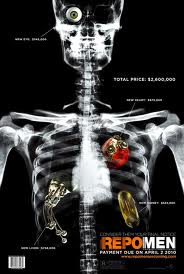 As already noted, the story opens on the US in the near future. Artificial organs, joints, and even a neurological matrix, have revolutionized life by ensuring that the terminally ill, crippled and people near brain death can live on happily, assuming they can pay of course!
 Naturally, he tries to go back to Repo’ing since his wife has already left him and he needs the money. But somehow, he just can’t bring himself to do it anymore. What’s more, time is running out on him making his payments. During a final attempt, he goes into a “Nest” – a slum area where people go to flee The Union’s repo men – where he is attacked and knocked unconscious.
 Unfortunately, Jake finds them there and reveals to Remy that he is responsible for shorting out his defibrillator. By forcing him to meet the payments of an artificial organ, he figured his friend would never leave the business. The two fight, and in the course of it, Remy is knocked unconscious. What follows is a total mind-f*** which is comparable only to Inception! I shall break it down succinctly.
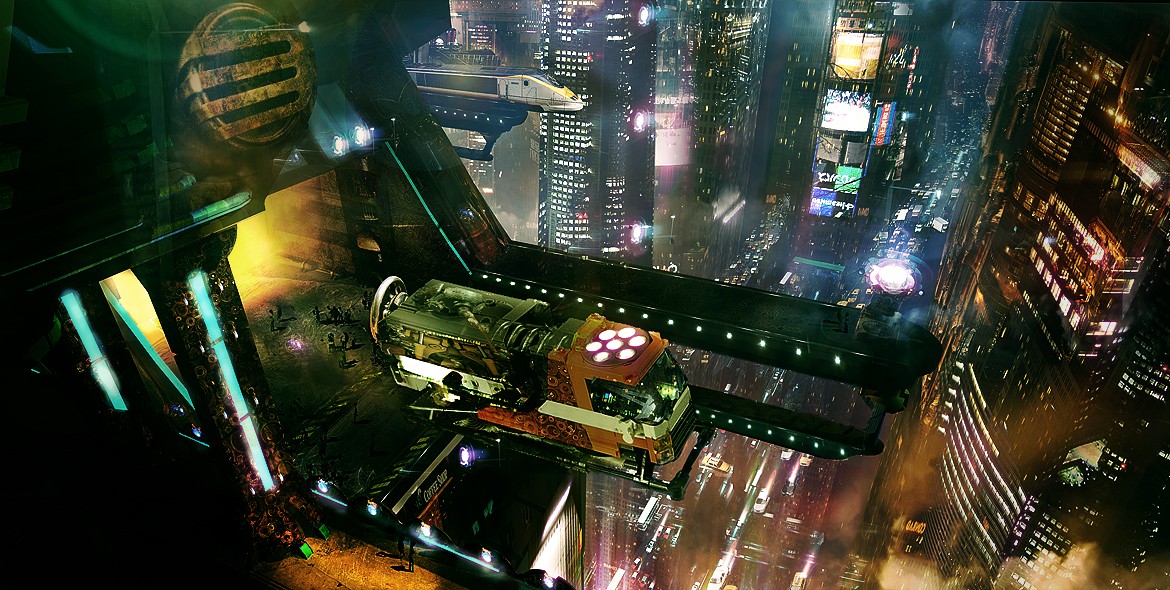


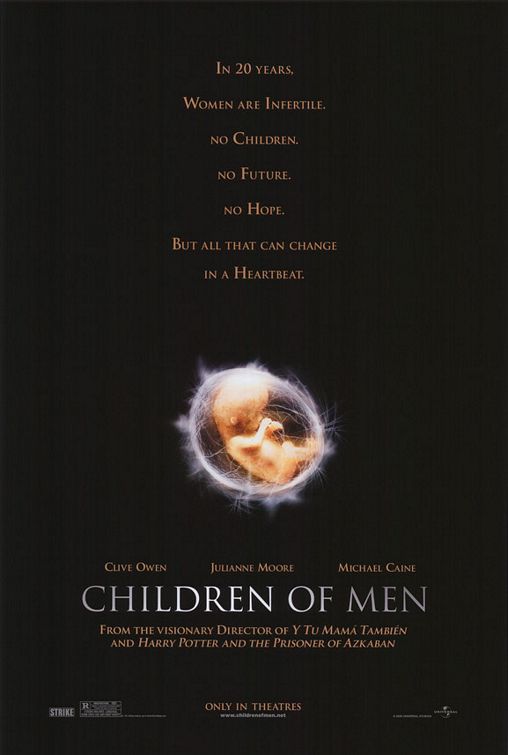
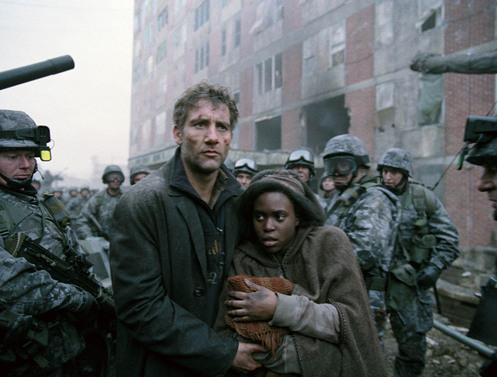





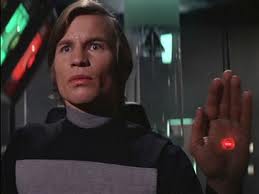


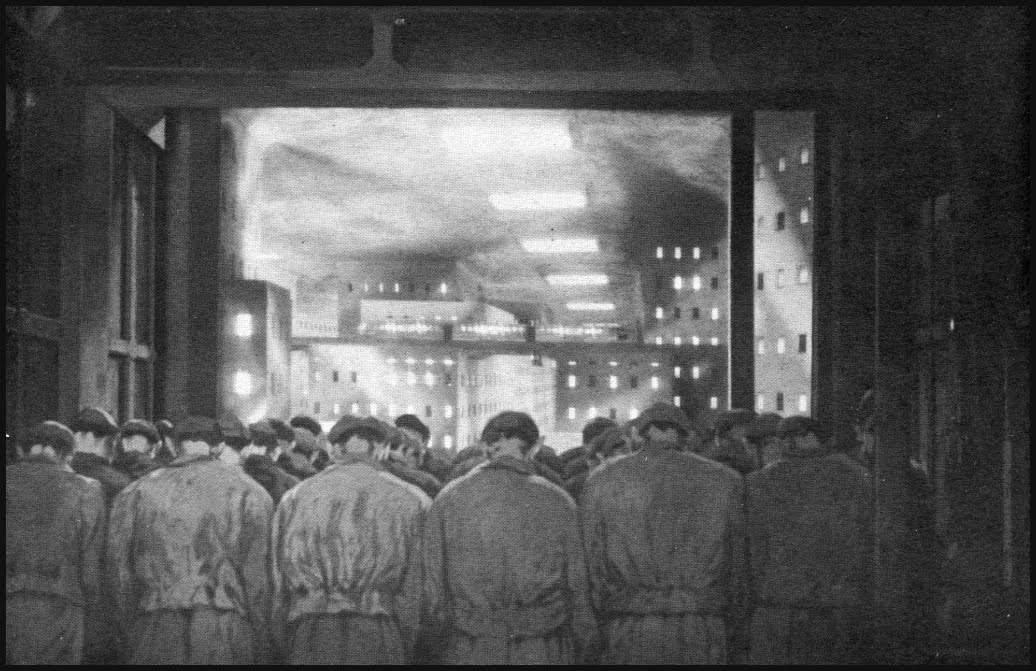
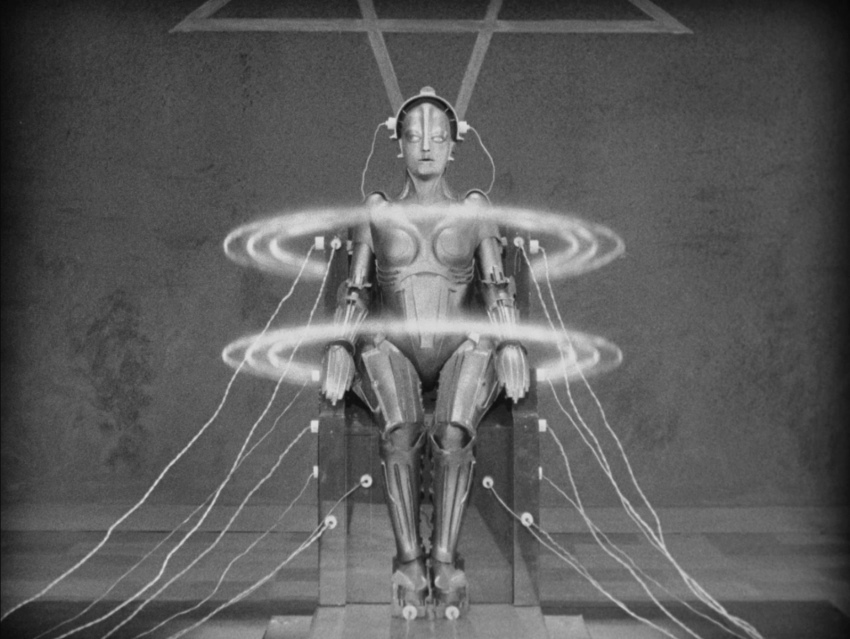



 Stories by Williams