With the development of vertical farms, carbon capture technology, clean energy and arcologies, the future of city life and urban planning is likely to be much different than it does today. Using current trends, there are a number of people who are determined to gain some understanding of what that might look like. One such group is Arup, a design and engineering firm that produced a mockup that visualizes what urban environments will look like in 2050.
Based on the world as it is today, certain facts about the future seem relatively certain. For starters, three-quarters of the population will live in cities, or 6.75 billion of the projected 9 billion global total. In addition, everyone will have grown up with the Internet, and its successors, and city residents will have access to less natural resources than they do today, making regeneration and efficiency more of a priority.
Add to this several emerging technologies, and our urban environments are likely to look something like the building mockup below. As you can see, it has its own energy systems (“micro-wind,” “solar PV paint,” and “algae facade” for producing biofuels). There is an integrated layer for meat, poultry, fish, and vegetable farming, a “building membrane” that converts CO2 to oxygen, heat recovery surfaces, materials that phase change and repair themselves, integration with the rest of the city, and much more.
Most futuristic of all is the fact that the structure is completely modular and designed to be shifted about (by robots, of course). The building has three layer types, with different life-spans. At the bottom is a permanent layer – with a 10 to 20-year lifespan – which includes the “facade and primary fit-out walls, finishes, or on-floor mechanical plant” – and a third layer that can incorporate rapid changes, such as new IT equipment.
As Arup’s Josef Hargrave described the building when unveiling the design:
[A]ble to make informed and calculated decisions based on their surrounding environment… [a] living and breathing [structure] able to support the cities and people of tomorrow.
In short, the building is designed with personal needs in mind, based on information gleamed from a person’s behaviors, stated preferences, and even genetic information.
But what is even more interesting is how these buildings will be constructed. As countless developments are made in the field of robotics, biotechnology and nanotechnology, both the materials used and the processes involved are likely to be radically different. The rigid construction that we are used to is likely to give way to buildings which are far more flexible, adaptive, and – best of all – built by robots, drones, tiny machines and bacteria cultures.
Once again, this change is due mainly to the pressures that are being placed on urban environments, and not just technological advances. As our world becomes even more densely populated, greater proportions of people live in urban environments, and resources become more constrained, the way we build our cities must offer optimum efficiency with minimal impact.
Towards this end, innovations in additive manufacturing, synthetic biology, swarm robotics, and architecture suggest a future scenario when buildings may be designed using libraries of biological templates and constructed with biosynthetic materials able to sense and adapt to their conditions.
What this means is that cities could be grown, or assembled at the atomic level, forming buildings that are either living creatures themselves, or composed of self-replicated machines that can adapt and change as needed. Might sound like science fiction, but countless firms and labs are working towards this very thing every day.
It has already been demonstrated that single cells are capable of being programmed to carry out computational operations, and that DNA strains are capable of being arranged to carry out specialized functions. Given the rapid progress in the field of biotech and biomimetics (technology that imitates biology), a future where the built environment imitates organic life seems just around the corner.
For example, at Harvard there is a biotech research outfit known as Robobees that is working on a concept known as “programming group dynamics”. Like corals, beehives, and termite colonies, there’s a scalar effect gained from coordinating large numbers of simple agents to perform complex goals. Towards this end, Robobees has been working towards the creation of robotic insects that exhibit the swarming behaviors of bees.
Mike Rubenstein leads another Harvard lab, known as Kilobot, which is dedicated to creating a “low cost scalable robot system for demonstrating collective behaviors.” His lab, along with the work of researcher’s like Nancy Lynch at MIT, are laying the frameworks for asynchronous distributed networks and multi-agent coordination, aka swarm robotics, that would also be capable of erecting large structures thanks to centralized, hive-mind programming.
In addition to MIT, Caltech, and various academic research departments, there are also scores of private firms and DIY labs looking to make things happen. For example, the companies Autodesk Research and Organovo recently announced a partnership where they will be combining their resources – modelling the microscopic organic world and building bioprinters – to begin biofabricating everything from drugs to nanomachines.
And then there are outfits like the Columbia Living Architecture Lab, a group that explores ways to integrate biology into architecture. Their recent work investigates bacterial manufacturing, the genetic modification of bacteria to create durable materials. Envisioning a future where bacterial colonies are designed to print novel materials at scale, they see buildings wrapped in seamless, responsive, bio-electronic envelopes.
And let’s not forget 3D printing, a possibility which is being explored by NASA and the European Space Agency as the means to create a settlement on the Moon. In the case of the ESA, they have partnered with roboticist Enrico Dini, who created a 3-D printer large enough to print houses from sand. Using his concept, the ESA hopes to do the same thing using regolith – aka. moon dust – to build structures on Earth’s only satellite.
All of these projects are brewing in university and corporate labs, but it’s likely that there are far more of them sprouting in DIY labs and skunkworks all across the globe. And in the end, each of them is dedicated to the efficiency of natural systems, and their realization through biomimetic technology. And given that the future is likely to be characterized by resources shortages, environmental degradation and the need for security, it is likely to assume that all of these areas of study are likely to produce some very interesting scenarios.
As I’ve said many times before, the future is likely to be a very interesting place, thanks to the convergence of both Climate Change and technological change. With so many advances promising a future of post-scarcity, post-mortality, a means of production and a level of control over our environment which is nothing short of mind-boggling – and a history of environmental degradation and resource depletion that promises shortages, scarcity, and some frightening prospects – our living spaces are likely to change drastically.
The 21st century is going to be a very interesting time, people. Let’s just hope we make it out alive!
With Curiosity’s ongoing research and manned missions being planned for Mars by 2030, it seems that the other planets of the Solar System are being sadly neglected these days. Thankfully, the MESSENGER spacecraft, which has been conducting flyby’s of Mercury since 2008 and orbiting it since 2011, is there to remind us of just how interesting and amazing the planet closest to our sun truly is.
And in recent weeks, there has been a conjunction of interesting news stories about Earth’s scorched and pockmarked cousin. The first came in March 22nd when it was revealed that of the many, many pictures taken by the satellite (over 150,000 and counting), some captured a different side of Mercury, one which isn’t so rugged and scorched.
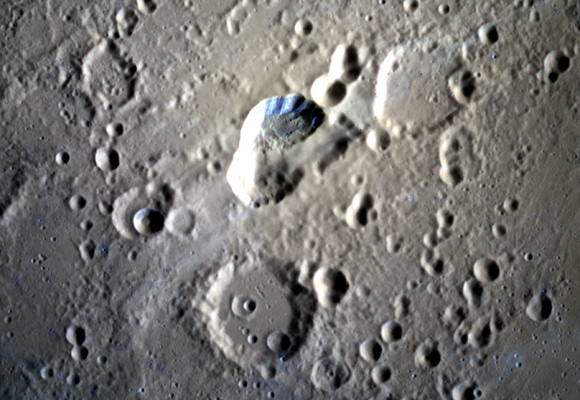
The pictures in question were of a natural depression located northeast of the Rachmaninoff basin, where the walls, floor and upper surfaces appear to be smooth and irregularly shaped. What’s more, the velvety texture observed is the result of widespread layering of fine particles. Scientists at NASA deduced from this that, unlike many features on Mercury’s ancient surface, this rimless depression wasn’t caused by an impact from above but rather explosively escaping lava from below.
In short, the depression was caused by an explosive volcanic event, which left a hole in the surface roughly 36 km (22 miles) across at its widest. It is surrounded by a smooth blanket of high-reflectance material, explosively ejected volcanic particles from a pyroclastic eruption, that spread over the surface like snow. And thanks to Mercury’s lack of atmosphere, the event was perfectly preserved.
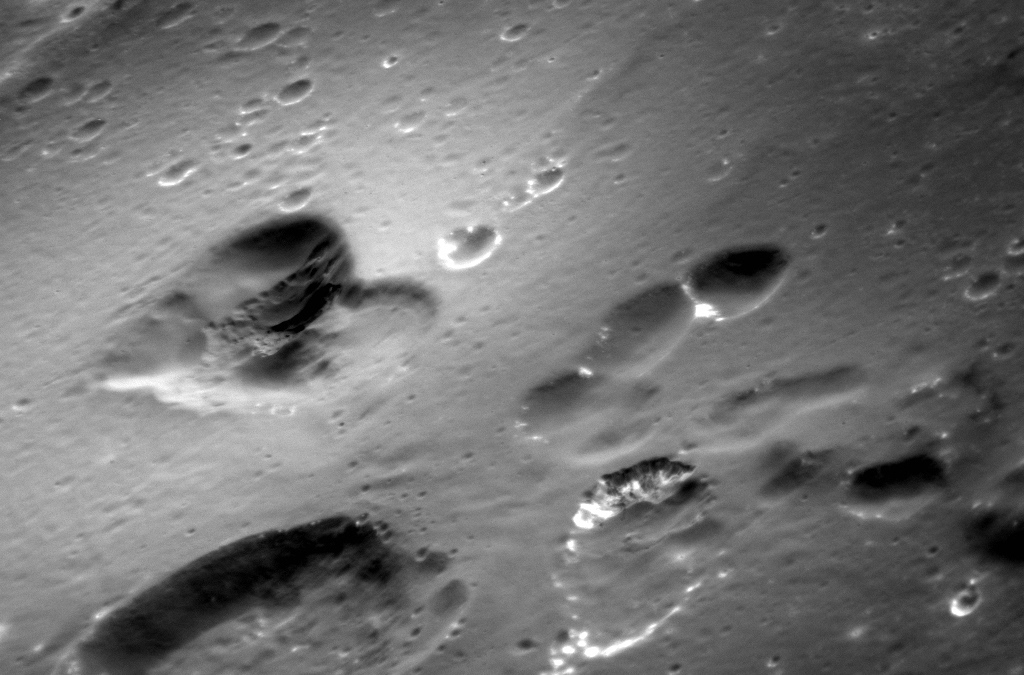
Other similar vents have been found on Mercury before, like the heart-shaped depression observed in the Caloris basin (seen above). Here too, the smooth, bright surface material was a telltale sign of a volcanic outburst, as were the rimless, irregular shapes of the vents. However, this is the first time such a surface feature has been captured in such high-definition.
And then just three days later, on March 25th to be exact, Mercury began to experience its greatest elongation from the Sun for the year of 2013. In astronomy, this refers to the angle between the Sun and the planet, with Earth as the reference point. When a planet is at its greatest elongation, it is farthest from the Sun as viewed from Earth, so its view is also best at that point.
What this means is that for the remainder of the month, Mercury will be in prime position to be observed in the night sky, for anyone living in the Northern Hemisphere that is. Given its position relative to the Sun and us, the best time to observe it would be during hours of dusk when the stars are still visible. And, in a twist which that may hold cosmic significance for some, people are advised to pay special attention during the morning of Easter Day, when the shining “star” will be most visible low in the dawn sky.
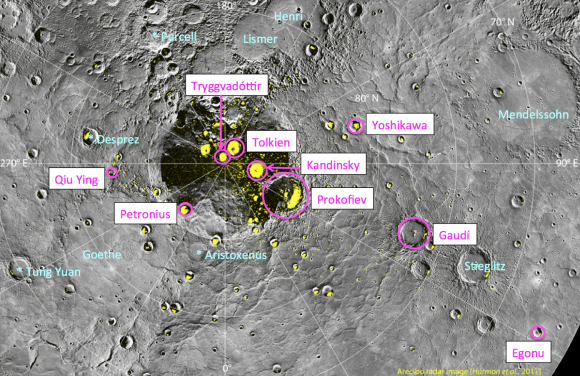
And then just three days ago, a very interesting announcement was made. It seems that with MESSENGERS ongoing surveys of the Hermian surface, nine new craters have been identified and are being given names. On March 26th, the International Astronomical Union (IAU) approved the proposed names, which were selected in honor of deceased writers, artists and musicians following the convention established by the IAU for naming features on the innermost world.
The announcement came after MESSENGER put the finishing touches on mapping the surface of Mercury earlier this month. A good majority of these features were established at Mercury’s southern polar region, one of the last areas of the planet to be mapped by the satellite. And after a submission and review process, the IAU decided on the following names of the new craters:
Donelaitis, named after 18th century Lithuanian poet Kristijonas Donelaitis, author of The Seasons and other tales and fables.
Petofi, named after 19th century Hungarian poet Sandor Petofi, who wrote Nemzeti dal which inspired the Hungarian Revolution of 1848.
Roerich, named after early 20th century Russian philosopher and artist Nicholas Roerich, who created the Roerich Pact of 1935 which asserted the neutrality of scientific, cultural and educational institutions during time of war.
Hurley, named after the 20th century Australian photographer James Francis Hurley, who traveled to Antarctica and served with Australian forces in both World Wars.
Lovecraft, named after 20th century American author H.P. Lovecraft, a pioneer in horror, fantasy and science fiction.
Alver, named after 20th century Estonian author Betti Alver who wrote the 1927 novel Mistress in the Wind.
Flaiano, named after 20th century Italian novelist and screenwriter Ennio Flaiano who was a pioneer Italian cinema and contemporary of Federico Fellini.
Pahinui, named after mid-20th century Hawaiian musician Charles Phillip Kahahawai Pahinui, influential slack-key guitar player and part of the “Hawaiian Renaissance” of island culture in the 1970’s.
L’Engle, named after American author Madeleine L’Engle, who wrote the young adult novels An Acceptable Time, A Swiftly Tilting Planet & A Wind in the Door. L’Engle passed away in 2007.
The campaign to name Mercury’s surface features has been ongoing since MESSENGER performed its first flyby in January of 2008. Some may recall that in August of last year, a similar process took place for the nine craters identified on Mercury’s North Pole. Of these, the names of similarly great literary, artistic and scientific contributors were selected, not the least of which was Mr. J RR Tolkien himself, author of Lord of the Rings and The Hobbit!
It’s no secret that the MESSENGER spacecraft has been a boon for scientists. Not only has it allowed for the complete mapping of the planet Mercury and provided an endless stream of high resolution photos for scientists to pour over, it has also contributed to a greater understanding of what our Solar System looked like when it was still in early formation.
Given all this, it is somewhat sad that MESSENGER is due to stand down at the end of the month, and that the next mission to Mercury won’t be until 2022 with the planned arrival of the joint ESA/JAXA BepiColombo mission. But of course, we can expect plenty of revelations and stories to emerge from all the scientific data collected on this latest trip. And I’m sure Mars will be more than willing to provide ample entertainment until 2022 comes to pass!
While we’re waiting, be sure to check out this informative video of MESSENGER’s contributions over the past few years:
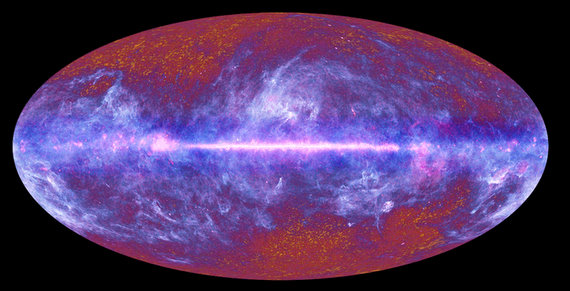
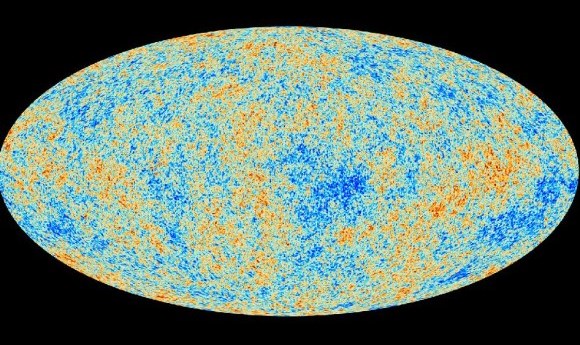
After 15 months of observing deep space, scientists with the European Space Agency Planck mission have generated a massive heat map of the entire universe.The “heat map”, as its called, looks at the oldest light in the universe and then uses the data to extrapolate the universe’s age, the amount of matter held within, and the rate of its expansion. And as usual, what they’ve found was simultaneously reassuring and startling.
When we look at the universe through a thermal imaging system, what we see is a mottled light show caused by cosmic background radiation. This radiation is essentially the afterglow of the Universe’s birth, and is generally seen to be smooth and uniform. This new map, however, provides a glimpse of the tiny temperature fluctuations that were imprinted on the sky when the Universe was just 370,000 years old.
Since it takes light so long to travel from one end of the universe to the other, scientists can tell – using red shift and other methods – how old the light is, and hence get a glimpse at what the universe looked like when the light was first emitted. For example, if a galaxy several billion light years away appears to be dwarfish and misshapen by our standards, it’s an indication that this is what galaxies looked like several billion years ago, when they were in the process of formation.
Hence, like archaeologists sifting through sand to find fossil records of what happened in the past, scientists believe this map reveals a sort of fossil imprint left by the state of the universe just 10 nano-nano-nano-nano seconds after the Big Bang. The splotches in the Planck map represent the seeds from which the stars and galaxies formed. As is heat-map tradition, the reds and oranges signify warmer temperatures of the universe, while light and dark blues signify cooler temperatures.
The cooler temperatures came about because those were spots where matter was once concentrated, but with the help of gravity, collapsed to form galaxies and stars. Using the map, astronomers discovered that there is more matter clogging up the universe than we previously thought, at around 31.7%, while there’s less dark energy floating around, at around 68.3%. This shift in matter to energy ratio also indicates that the universe is expanding slower than previously though, which requires an update on its estimated age.
All told, the universe is now believed to be a healthy 13.82 billion years old. That wrinkles my brain! And also of interest is the fact that this would appear to confirm the Big Bang Theory. Though widely considered to be scientific canon, there are those who dispute this creation model of the universe and argue more complex ideas, such as the “Steady State Theory” (otherwise known as the “Theory of Continuous Creation”).
In this scenario, the majority of matter in the universe was not created in a single event, but gradually by several smaller ones. What’s more, the universe will not inevitable contract back in on itself, leading to a “Big Crunch”, but will instead continue to expand until all the stars have either died out or become black holes. As Krzysztof Gorski, a member of the Planck team with JPL, put it:
This is a treasury of scientific data. We are very excited with the results. We find an early universe that is considerably less rigged and more random than other, more complex models. We think they’ll be facing a dead-end.
Martin White, a Planck project scientist with the University of California, Berkeley and the Lawrence Berkeley National Laboratory, explained further. According to White, the map shows how matter scattered throughout the universe with its associated gravity subtly bends and absorbs light, “making it wiggle to and fro.” As he went on to say:
The Planck map shows the impact of all matter back to the edge of the Universe. It’s not just a pretty picture. Our theories on how matter forms and how the Universe formed match spectacularly to this new data.
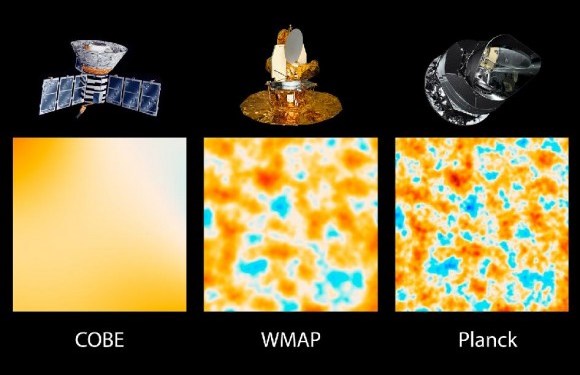
The Planck space probe, which launched in 2009 from the Guiana Space Center in French Guiana, is a European Space Agency mission with significant contribution from NASA. The two-ton spacecraft gathers the ancient glow of the Universe’s beginning from a vantage more than a million and a half kilometers from Earth. This is not the first map produced by Planck; in 2010, it created an all-sky radiation map which scientists, using supercomputers, removed all interfering background light from to get a clear view at the deep background of the stars.
However, this is the first time any satellite has been able to picture the background radiation of the universe with such high resolution. The variation in light captured by Planck’s instruments was less than 1/100 millionth of a degree, requiring the most sensitive equipment and the contrast. So whereas cosmic radiation has appeared uniform or with only slight variations in the past, scientists are now able to see even the slightest changes, which is intrinsic to their work.
So in summary, we have learned that the universe is a little older than previously expected, and that it most certainly was created in a single, chaotic event known as the Big Bang. Far from dispelling the greater mysteries, confirming these theories is really just the tip of the iceberg. There’s still the grandiose mystery of how all the fundamental laws such as gravity, nuclear forces and electromagnetism work together.
Ah, and let’s not forget the question of what transpires beneath the veil of an even horizon (aka. a Black Hole), and whether or not there is such a thing as a gateway in space and time. Finally, there’s the age old question of whether or not intelligent life exists somewhere out there, or life of any kind. But given the infinite number of stars, planets and possibilities that the universe provides, it almost surely does!
And I suppose there’s also that persistent nagging question we all wonder when we look up at the stars. Will we ever be able to get out there and take a closer look? I for one like to think so, and that it’s just a matter of time!
Back in January, National Geographic Magazine celebrated its 125th anniversary. In honor of this occasion, they released a special issue which commemorated the past 125 years of human exploration and looked ahead at what the future might hold. As I sat in the doctor’s office, waiting on a prescription for antibiotics to combat my awful cold, I found myself terribly inspired by the article.
So naturally, once I got home, I looked up the article and its source material and got to work. The issue of exploration, especially the future thereof, is not something I can ever pass up! So for the next few minutes (or hours, depending on how much you like to nurse a read), I present you with some possible scenarios about the coming age of deep space exploration.
Suffice it to say, National Geographic’s appraisal of the future of space travel was informative and hit on all the right subjects for me. When one considers the sheer distances involved, not to mention the amount of time, energy, and resources it would take to allow people to get there, the question of reaching into the next great frontier poses a great deal of questions and challenges.
Already, NASA, Earth’s various space agencies and even private companies have several ideas in the works or returning to the Moon, going to Mars, and to the Asteroid Belt. These include the SLS (Space Launch System), the re-purposed and upgraded version of the Saturn V rocket which took the Apollo astronauts to the Moon. Years from now, it may even be taking crews to Mars, which is slated for 2030.
And when it comes to settling the Moon, Mars, and turning the Asteroid Belt into our primary source of mineral extraction and manufacturing, these same agencies, and a number of private corporations are all invested in getting it done. SpaceX is busy testing its reusable-launch rocket, known as the Grasshopper, in the hopes of making space flight more affordable. And NASA and the ESA are perfecting a process known as “sintering” to turn Moon regolith into bases and asteroids into manufactured goods.
Meanwhile, Virgin Galactic, Reaction Engines and Golden Spike are planning to make commercial trips into space and to the Moon possible within a few years time. And with companies like Deep Space Industries and Google-backed Planetary Resources prospeting asteroids and planning expeditions, it’s only a matter of time before everything from Earth to the Jovian is being explored and claimed for our human use.
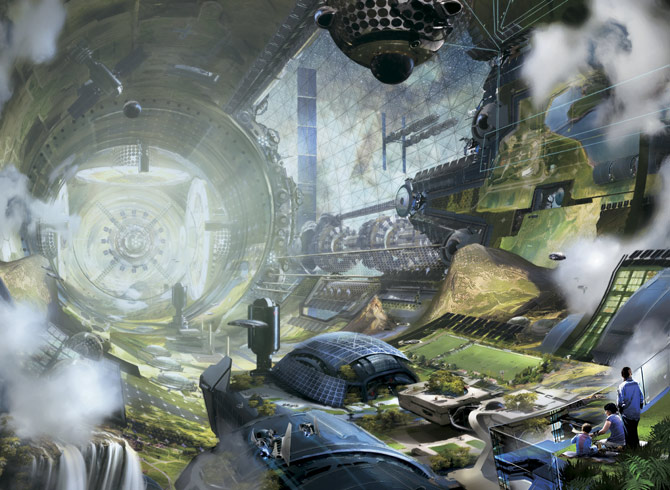
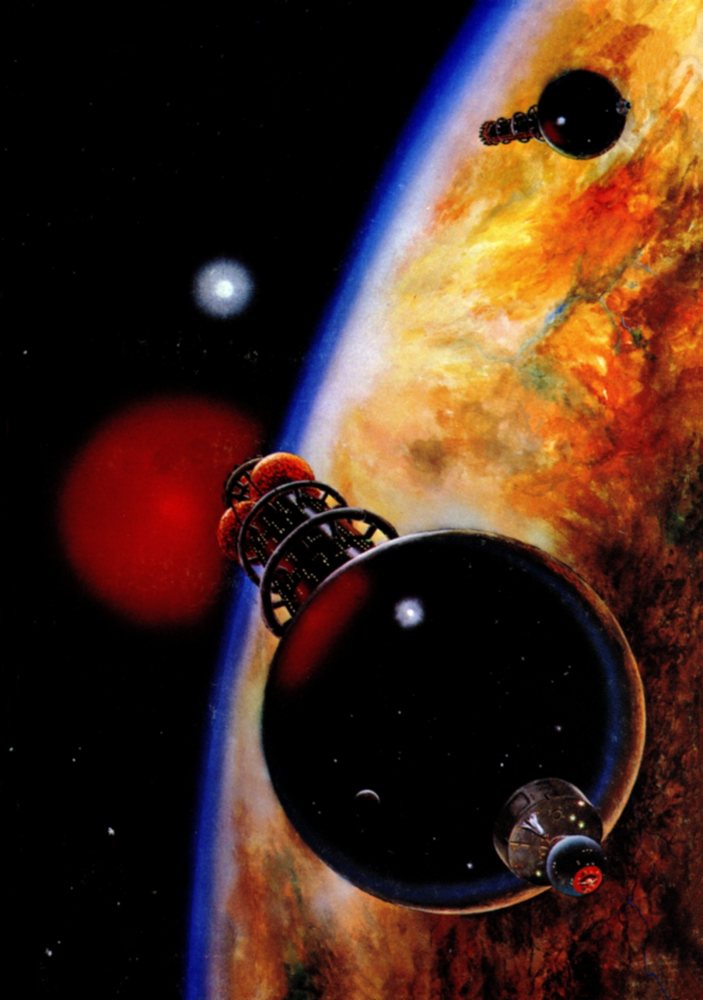
Space Colony by Stephan Martiniere
But when it comes to deep-space exploration, the stuff that would take us to the outer reaches of the Solar System and beyond, that’s where things get tricky and pretty speculative. Ideas have been on the table for some time, since the last great Space Race forced scientists to consider the long-term and come up with proposed ways of closing the gap between Earth and the stars. But to this day, they remain a scholarly footnote, conceptual and not yet realizable.
But as we embark of a renewed era of space exploration, where the stuff of science fiction is quickly becoming the stuff of science fact, these old ideas are being dusted off, paired up with newer concepts, and seriously considered. While they might not be feasible at the moment, who know what tomorrow holds? From the issues of propulsion, to housing, to cost and time expenditures, the human race is once again taking a serious look at extra-Solar exploration.
And here are some of the top contenders for the “Final Frontier”:
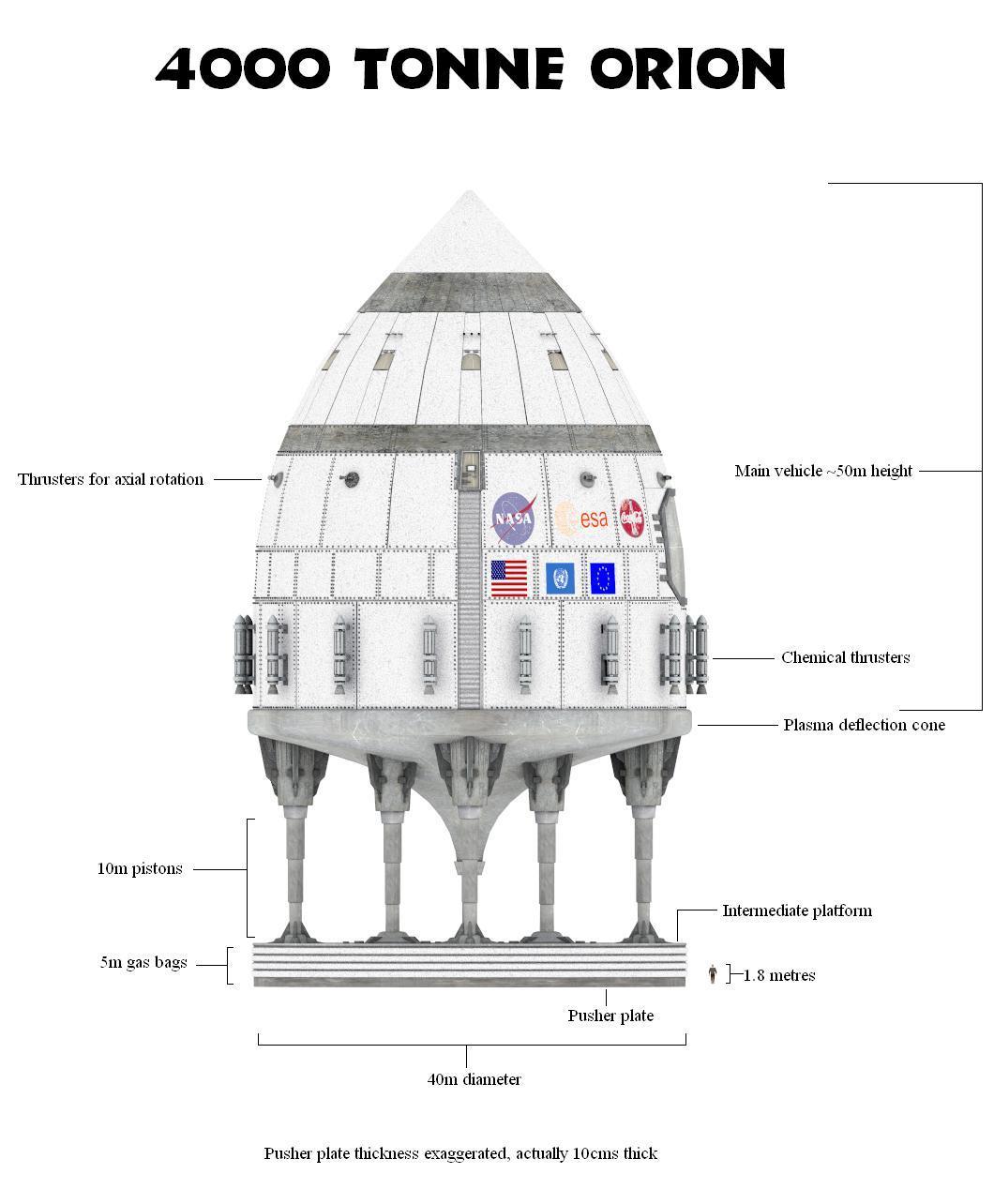
Nuclear Propulsion: The concept of using nuclear bombs (no joke) to propel a spacecraft was first proposed in 1946 by Stanislaw Ulam, a Polish-American mathematician who participated in the Manhattan Project. Preliminary calculations were then made by F. Reines and Ulam in 1947, and the actual project – known as Project Orion was initiated in 1958 and led by Ted Taylor at General Atomics and physicist Freeman Dyson from the Institute for Advanced Study in Princeton.
In short, the Orion design involves a large spacecraft with a high supply of thermonuclear warheads achieving propulsion by releasing a bomb behind it and then riding the detonation wave with the help of a rear-mounted pad called a “pusher”. After each blast, the explosive force is absorbed by this pusher pad, which then translates the thrust into forward momentum.
Though hardly elegant by modern standards, the proposed design offered a way of delivering the explosive (literally!) force necessary to propel a rocket over extreme distances, and solved the issue of how to utilize that force without containing it within the rocket itself. However, the drawbacks of this design are numerous and noticeable.
F0r starters, the ship itself is rather staggering in size, weighing in anywhere from 2000 to 8,000,000 tonnes, and the propulsion design releases a dangerous amount of radiation, and not just for the crew! If we are to rely on ships that utilize nuclear bombs to achieve thrust, we better find a course that will take them away from any inhabited or habitable areas. What’s more, the cost of producing a behemoth of this size (even the modest 2000 tonne version) is also staggering.
Antimatter Engine: Most science fiction authors who write about deep space exploration (at least those who want to be taken seriously) rely on anti-matter to power ships in their stories. This is no accident, since antimatter is the most potent fuel known to humanity right now. While tons of chemical fuel would be needed to propel a human mission to Mars, just tens of milligrams of antimatter, if properly harnessed, would be able to supply the requisite energy.
Fission and fusion reactions convert just a fraction of 1 percent of their mass into energy. But by combine matter with antimatter, its mirror twin, a reaction of 100 percent efficiency is achieved. For years, physicists at the CERN Laboratory in Geneva have been creating tiny quantities of antimatter by smashing subatomic particles together at near-light speeds. Given time and considerable investment, it is entirely possible this could be turned into a form of advanced propulsion.
In an antimatter rocket, a dose of antihydrogen would be mixed with an equal amount of hydrogen in a combustion chamber. The mutual annihilation of a half pound of each, for instance, would unleash more energy than a 10-megaton hydrogen bomb, along with a shower of subatomic particles called pions and muons. These particles, confined within a magnetic nozzle similar to the type necessary for a fission rocket, would fly out the back at one-third the speed of light.
However, there are natural drawback to this design as well. While a top speed of 33% the speed of light per rocket is very impressive, there’s the question of how much fuel will be needed. For example, while it would be nice to be able to reach Alpha Centauri – a mere 4.5 light years away – in 13.5 years instead of the 130 it would take using a nuclear rocket, the amount of antimatter needed would be immense.
No means exist to produce antimatter in such quantities right now, and the cost of building the kind of rocket required would be equally immense. Considerable refinements would therefore be needed and a sharp drop in the cost associated with building such a vessel before any of its kind could be deployed.
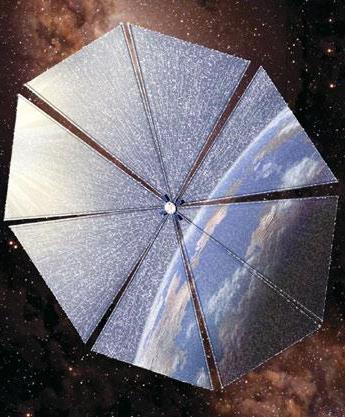
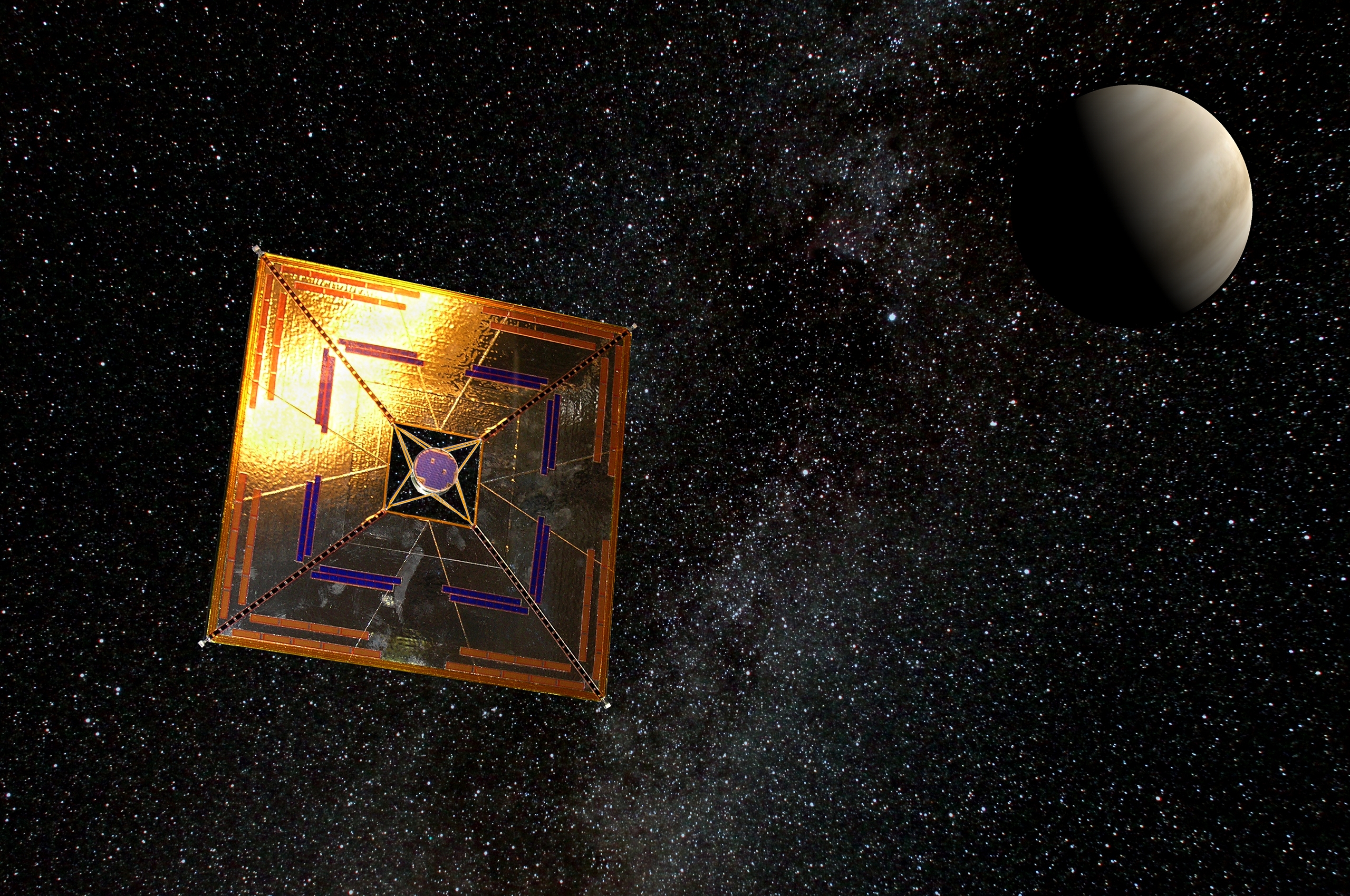
Laser Sail: Thinking beyond rockets and engines, there are some concepts which would allow a spaceship to go into deep space without the need for fuel at all. In 1948, Robert Forward put forward a twist on the ancient technique of sailing, capturing wind in a fabric sail, to propose a new form of space travel. Much like how our world is permeated by wind currents, space is filled with cosmic radiation – largely in the form of photons and energy associated with stars – that push a cosmic sail in the same way.
This was followed up again in the 1970’s, when Forward again proposed his beam-powered propulsion schemes using either lasers or masers (micro-wave lasers) to push giant sails to a significant fraction of the speed of light. When photons in the laser beam strike the sail, they would transfer their momentum and push the sail onward. The spaceship would then steadily builds up speed while the laser that propels it stays put in our solar system.
Much the same process would be used to slow the sail down as it neared its destination. This would be done by having the outer portion of the sail detach, which would then refocus and reflect the lasers back onto a smaller, inner sail. This would provide braking thrust to slow the ship down as it reached the target star system, eventually bringing it to a slow enough speed that it could achieve orbit around one of its planets.
Once more, there are challenges, foremost of which is cost. While the solar sail itself, which could be built around a central, crew-carrying vessel, would be fuel free, there’s the little matter of the lasers needed to propel it. Not only would these need to operate for years continuously at gigawatt strength, the cost of building such a monster would be astronomical, no pun intended!
A solution proposed by Forward was to use a series of enormous solar panel arrays on or near the planet Mercury. However, this just replaced one financial burden with another, as the mirror or fresnel lens would have to be planet-sized in scope in order for the Sun to keep the lasers focused on the sail. What’s more, this would require that a giant braking sail would have to be mounted on the ship as well, and it would have to very precisely focus the deceleration beam.
So while solar sails do present a highly feasible means of sending people to Mars or the Inner Solar System, it is not the best concept for interstellar space travel. While it accomplishes certain cost-saving measures with its ability to reach high speeds without fuel, these are more than recouped thanks to the power demands and apparatus needed to be it moving.
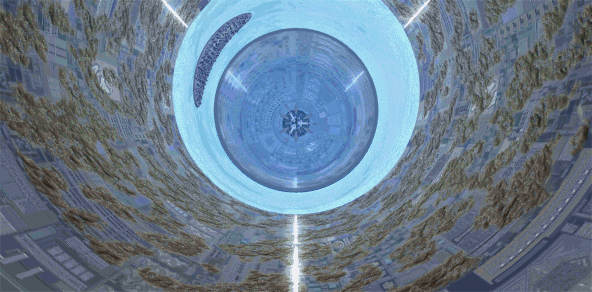
Generation/Cryo-Ship: Here we have a concept which has been explored extensively in fiction. Known as an Interstellar Ark, an O’Neill Cylinder, a Bernal Sphere, or a Stanford Torus, the basic philosophy is to create a ship that would be self-contained world, which would travel the cosmos at a slow pace and keep the crew housed, fed, or sustained until they finally reached their destination. And one of the main reasons that this concept appears so much in science fiction literature is that many of the writers who made use of it were themselves scientists.
The first known written examples include Robert H. Goddard “The Last Migration” in 1918, where he describes an “interstellar ark” containing cryogenic ally frozen people that set out for another star system after the sun died. Konstantin E. Tsiolkovsky later wrote of “Noah’s Ark” in his essay “The Future of Earth and Mankind” in 1928. Here, the crews were kept in wakeful conditions until they reached their destination thousands of years later.
By the latter half of the 20th century, with authors like Robert A. Heinlein’s Orphans of the Sky, Arthur C. Clarke’s Rendezvous with Rama and Ursula K. Le Guin’s Paradises Lost, the concept began to be explored as a distant possibility for interstellar space travel. And in 1964, Dr. Robert Enzmann proposed a concept for an interstellar spacecraft known as the Enzmann Starship that included detailed notes on how it would be constructed.
Enzmann’s concept would be powered by deuterium engines similar to what was called for with the Orion Spacecraft, the ship would measure some 600 meters (2000 feet) long and would support an initial crew of 200 people with room for expansion. An entirely serious proposal, with a detailed assessment of how it would be constructed, the Enzmann concept began appearing in a number of science fiction and fact magazines by the 1970’s.
Despite the fact that this sort of ship frees its makers from the burden of coming up with a sufficiently fast or fuel-efficient engine design, it comes with its own share of problems. First and foremost, there’s the cost of building such a behemoth. Slow-boat or no, the financial and resource burden of building a mobile space ship is beyond most countries annual GDP. Only through sheer desperation and global cooperation could anyone conceive of building such a thing.
Second, there’s the issue of the crew’s needs, which would require self-sustaining systems to ensure food, water, energy, and sanitation over a very long haul. This would almost certainly require that the crew remain aware of all its technical needs and continue to maintain it, generation after generation. And given that the people aboard the ship would be stuck in a comparatively confined space for so long, there’s the extreme likelihood of breakdown and degenerating conditions aboard.
Third, there’s the fact that the radiation environment of deep space is very different from that on the Earth’s surface or in low earth orbit. The presence of high-energy cosmic rays would pose all kinds of health risks to a crew traveling through deep space, so the effects and preventative measures would be difficult to anticipate. And last, there’s the possibility that while the slow boat is taking centuries to get through space, another, better means of space travel will be invented.
Faster-Than-Light (FTL) Travel: Last, we have the most popular concept to come out of science fiction, but which has received very little support from scientific community. Whether it was the warp drive, the hyperdrive, the jump drive, or the subspace drive, science fiction has sought to exploit the holes in our knowledge of the universe and its physical laws in order to speculate that one day, it might be possible to bridge the vast distances between star systems.
However, there are numerous science based challenges to this notion that make an FTL enthusiast want to give up before they even get started. For one, there’s Einstein’s Theory of General Relativity, which establishes the speed of light (c) as the uppermost speed at which anything can travel. For subatomic particles like photons, which have no mass and do not experience time, the speed of light is a given. But for stable matter, which has mass and is effected by time, the speed of light is a physical impossibility.
For one, the amount of energy needed to accelerate an object to such speeds is unfathomable, and the effects of time dilation – time slowing down as the speed of light approaches – would be unforeseeable. What’s more, achieving the speed of light would most likely result in our stable matter (i.e. our ships and bodies) to fly apart and become pure energy. In essence, we’d die!
Naturally, there have been those who have tried to use the basis of Special Relativity, which allows for the existence of wormholes, to postulate that it would be possible to instantaneously move from one point in the universe to another. These theories for “folding space”, or “jumping” through space time, suffer from the same problem. Not only are they purely speculative, but they raise all kinds of questions about temporal mechanics and causality. If these wormholes are portals, why just portals in space and not time?
And then there’s the concept of a quantum singularity, which is often featured in talk of FTL. The belief here is that an artificial singularity could be generated, thus opening a corridor in space-time which could then be traversed. The main problem here is that such an idea is likely suicide. A quantum singularity, aka. a black hole, is a point in space where the laws of nature break down and become indistinguishable from each other – hence the term singularity.
Also, they are created by a gravitational force so strong that it tears a hole in space time, and that resulting hole absorbs all things, including light itself, into its maw. It is therefore impossible to know what resides on the other side of one, and astronomers routinely observe black holes (most notably Sagittarius A at the center of our galaxy) swallow entire planets and belch out X-rays, evidence of their destruction. How anyone could think these were a means of safe space travel is beyond me! But then again, they are a plot device, not a serious idea…
But before you go thinking that I’m dismissing FTL in it’s entirety, there is one possibility which has the scientific community buzzing and even looking into it. It’s known as the Alcubierre Drive, a concept which was proposed by physicist Miguel Alcubierre in his 1994 paper: “The Warp Drive: Hyper-Fast Travel Within General Relativity.”
The equations and theory behind his concept postulate that since space-time can be contracted and expanded, empty space behind a starship could be made to expand rapidly, pushing the craft in a forward direction. Passengers would perceive it as movement despite the complete lack of acceleration, and vast distances (i.e. light years) could be passed in a matter of days and weeks instead of decades. What’s more, this “warp drive” would allow for FTL while at the same time remaining consistent with Einstein’s theory of Relativity.
In October 2011, physicist Harold White attempted to rework the equations while in Florida where he was helping to kick off NASA and DARPA’s joint 100 Year Starship project. While putting together his presentation on warp, he began toying with Alcubierre’s field equations and came to the conclusion that something truly workable was there. In October of 2012, he announced that he and his NASA team would be working towards its realization.
But while White himself claims its feasible, and has the support of NASA behind him, the mechanics behind it all are still theoretical, and White himself admits that the energy required to pull off this kind of “warping” of space time is beyond our means at the current time. Clearly, more time and development are needed before anything of this nature can be realized. Fingers crossed, the field equations hold, because that will mean it is at least theoretically possible!
Summary: In case it hasn’t been made manifestly obvious by now, there’s no simple solution. In fact, just about all possibilities currently under scrutiny suffer from the exact same problem: the means just don’t exist yet to make them happen. But even if we can’t reach for the stars, that shouldn’t deter us from reaching for objects that are significantly closer to our reach. In the many decades it will take us to reach the Moon, Mars, the Asteroid Belt, and Jupiter’s Moons, we are likely to revisit this problem many times over.
And I’m sure that in course of creating off-world colonies, reducing the burden on planet Earth, developing solar power and other alternative fuels, and basically working towards this thing known as the Technological Singularity, we’re likely to find that we are capable of far more than we ever thought before. After all, what is money, resources, or energy requirements when you can harness quantum energy, mine asteroids, and turn AIs and augmented minds onto the problems of solving field equations?
Yeah, take it from me, the odds are pretty much even that we will be making it to the stars in the not-too-distant future, one way or another. As far as probabilities go, there’s virtually no chance that we will be confined to this rock forever. Either we will branch out to colonize new planets and new star systems, or go extinct before we ever get the chance. I for one find that encouraging… and deeply disturbing!
Sounds like the title of a funky children’s story, doesn’t it? But in fact, it’s actually part of NASA’s plan for building a Lunar base that could one day support inhabitants and make humanity a truly interplanetary species. My thanks to Raven Lunatick for once again beating me to the punch! While I don’t consider myself the jealous type, knowing that my friends and colleagues are in the know before I am on stuff like this always gets me!
In any case, people may recall that back in January of 2013, the European Space Agency announced that it could be possible to build a Lunar Base using 3D printing technology and moon dust. Teaming up with the architecture firm Foster + Partners, they were able to demonstrate that one could fashion entire structures cheaply and quite easily using only regolith, inflatable frames, and 3D printing technology.
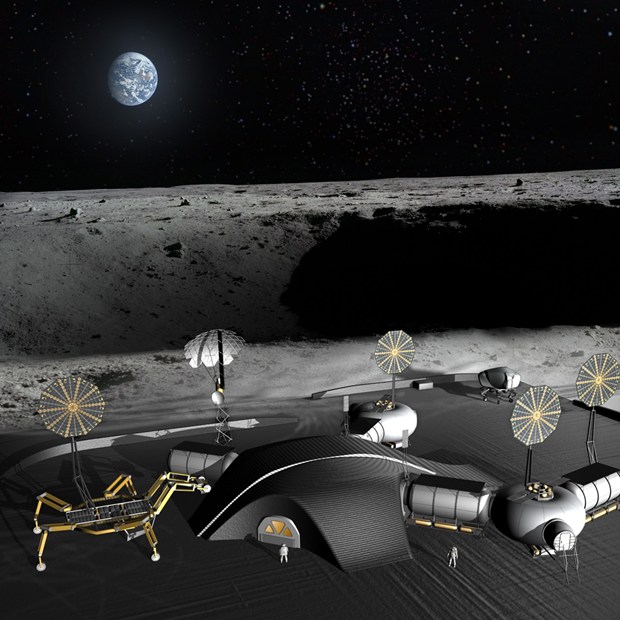
And now, it seems that NASA is on board with the idea and is coming up with its own plans for a Lunar base. Much like the ESA’s planned habitat, NASA’s would be located in the Shackleton Crater near the Moon’s south pole, where sunlight (and thus solar energy) is nearly constant due to the Moon’s inclination on the crater’s rim. What’s more, NASA”s plan would also rely on the combination of lunar dust and 3D printing for the sake of construction.
However, the two plans differ in some key respects. For one, NASA’s plan – which goes by the name of SisterHab – is far more ambitious. As a joint research project between space architects Tomas Rousek, Katarina Eriksson and Ondrej Doule and scientists from Nasa’s Jet Propulsion Laboratory (JPL), SinterHab is so-named because it involves sintering lunar dust: heating it up with microwaves to the point where the dust fuses to become a solid, ceramic-like block.
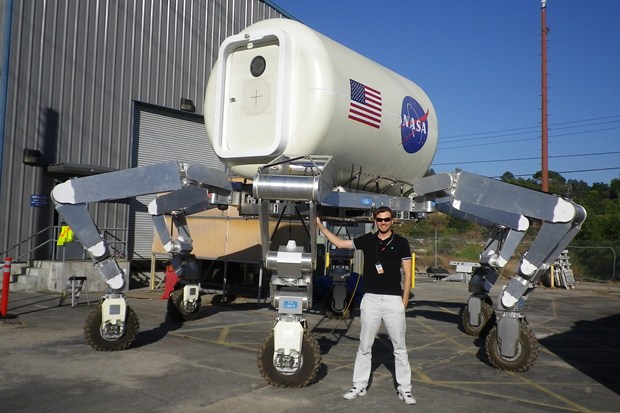
This would mean that bonding agents would not have to be flown to the Moon, which is called for in the ESA’s plan. What’s more, the NASA base would be constructed by a series of giant spider robots designed by JPL Robotics. The prototype version of this mechanical spider is known as the Athlete rover, which despite being a half-size variant of the real thing has already been successfully tested on Earth.
Each one of these robots is human-controlled, has six 8.2m legs with wheels at the end, and comes with a detachable habitable capsule mounted at the top. Each limb has a different function, depending on what the controller is looking to do. For example, it has tools for digging and scooping up soil samples, manipulators for poking around in the soil, and will have a microwave 3D printer mounted on one of the legs for the sake of building the base. It also has 48 3D cameras that stream video to its operator or a remote controlling station.
The immediate advantages to NASA’s plan are pretty clear. Sintering is quite cheap, in terms of power as well as materials, and current estimates claim that an Athlete rover should be able to construct a habitation “bubble” in only two weeks. Another benefit of the process is that astronauts could use it on the surface of the Moon surrounding their base, binding dust and stopping it from clogging their equipment. Moon dust is extremely abrasive, made up of tiny, jagged morcels rather than finely eroded spheres.
Since it was first proposed in 2010 at the International Aeronautical Congress, the concept of SinterHab has been continually refined and updated. In the end, a base built on its specifications will look like a rocky mass of bubbles connected together, with cladding added later. The equilibrium and symmetry afforded in this design not only ensures that grouping will be easy, but will also guarantee the structural integrity and longevity of the structures.
As engineers have known for quite some time, there’s just something about domes and bubble-like structures that were made to last. Ever been to St. Peter’s Basilica in Rome, or the Blue Mosque in Istanbul? Ever looked at a centuries old building with Onion Dome and felt awed by their natural beauty? Well, there’s a reason they’re still standing! Knowing that we can expect similar beauty and engineering brilliance down the road gives me comfort.
In the meantime, have a gander at the gallery for the proposed SinterHab base, and be sure to check out this video of the Athlete rover in action:
With the recent passage of DA14 – an asteroid half as large as a football field and packing the power of a hydrogen bomb – and the rather explosive display that occurred above Russian skies, it’s little wonder then why NASA and other space agencies are publicizing various existing and proposed solutions to our “asteroid problem”.
Granted, there really isn’t much of a threat of an asteroid colliding with the Earth in the foreseeable future. And we also know that the meteor that graced the skies over the Urals was unrelated to the DA14 behemoth. But given that an impact could mean an Extinction Level Event, similar to the Cretaceous-Paleogene event that caused the extinction of the dinosaurs, a little planning doesn’t hurt.
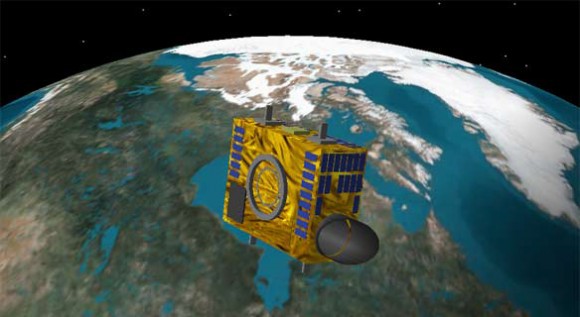
The first in a series of three existing or proposed designs is the NEOSSat – Short for Near-Earth Object Surveillance Satellite – that was built in Canada and was deployed last week on an Indian rocket with six others. In addition to watching space debris in orbit and tracking their movements, it will also be keeping a sharp eye out for asteroids that may swing by Earth in the future.
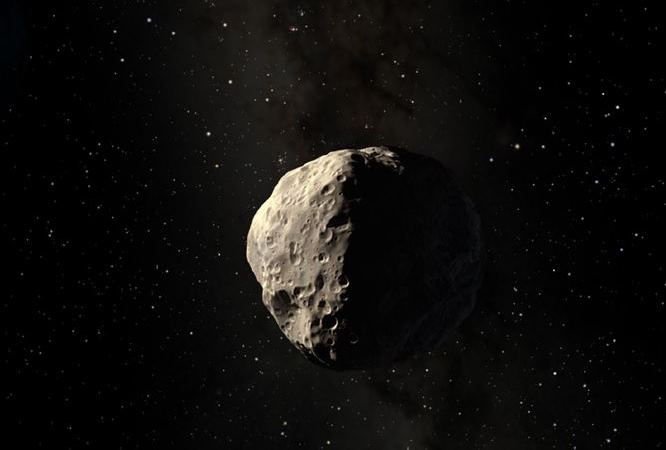
Then there is the ESA’s proposed Asteroid Impact and Deflection Assessment mission (or AIDA), a group of planetary defense satellites that will are designed to collide with an asteroid, then push it off course. And after two years of planning, research teams from the US and Europe have selected the mission’s target – a so called ‘binary asteroid’ named Didymos – that AIDA will intercept when it passes the Earth by a mere 11 million km in 2022.
The third and final proposed solution is something that sounds ripped from the pages of a science fiction novel. Known as the DE-STAR, or Directed Energy Solar Targeting of Asteroids and exploRation, this satellite is essentially a orbiting laser that would be capable of destroying approaching asteroids 10 times larger than the DA14 and at a distance as far away as the Sun.
Proposed by two California scientists – UC Santa Barbara physicist and professor Philip M. Lubin, and Gary B. Hughes, a researcher and professor from California Polytechnic State University – the satellite is designed to harness the power of the sun and convert it into a massive phased array of laser beams that can destroy asteroids that pose a potential threat to Earth. At the same time, it will be capable of changing an asteroid’s orbit – deflecting it away from Earth, or into the Sun.
Feel safer? Well, considering that the odds of Earth getting anytime soon are pretty low, and are likely to fall even farther once we get these rock killers destroyed. Once more, it seems that sane planning and sensible solutions are winning out over doomsday predictions. Good for us!
It’s no secret that in recent years, the technology behind 3D printing has been growing by leaps and bounds, and igniting a lot of imaginations in the process. And it seems that with every passing day, new possibilities are emerging, both real and speculative. Some are interesting, some are frightening, and some are just downright mind-blowing. Consider this small sampling of what’s emerged most recently and decide for yourself…
First off, it now seems that there is a design for an android that you can download, print and assemble in the comfort of your home – assuming you have access to a 3D printer. Designer Gael Langevin, who calls his project InMoov, has spent the last year perfecting the concept for a voice-controlled android that can be constructed from parts generated by a 3D printer. And not only that, he has made the entire project freely available via open source so that any DIY’er can print it on their own.
Starting with the android’s right hand, Langevin’s idea quickly took off and morphed into a the full-body concept that is now available. Designing the bot with Blender software and printing it on a 3D Touch using ABS plastic as the material, the end product is a fully animated machine that responds to voice control and can “see” and hold objects. And as you can see from the video below, it looks quite anthropomorphic:
Then came the announcement of something even more radical which also sounds like it might be ripped from the pages of a science fiction novel. Just yesterday, a team of researchers at Heriot-Watt University in Scotland announced that they used a new printing technique to deposit live stem cells onto a surface in a specific pattern. This is a step in the direction of using stem cells as an “ink” to fashion artificial organs from a 3D printer, which is their ultimate goal.
The process involves suspending the cells in a “bio-ink,” which they were then able to squeeze out as tiny droplets in a variety of shapes and sizes. To produce clumps of cells, they printed out the cells first and then overlaid those with cell-free bio-ink, forming spheroids, which the cells began grouping together inside. Using this process, they were able to create entire cultures of tissue which – depending on the size of the spheroids – could be morphed into specific types of tissue.
In short, this technique could one day be used to print out artificial tissues, such as skin, muscles and organs, that behave like the real thing. It could even serve to limit animal testing for new drug compounds, allowing them to be tested on artificially-generated human tissue. According to Jason King, business development manager at Roslin Cellab and one of the research partners: “In the longer term, [it could] provide organs for transplant on demand, without the need for donation and without the problems of immune suppression and potential organ rejection.”
And last in the lineup is perhaps the most profound use proposed for 3D printing yet. According to the European Space Agency, this relatively new technology could turn moon dust into moon housing. You read that right! It seems that a London-based design firm named Foster+Partners is planning to collaborate with the European Space Agency to build structures on the Moon using the regolith from the surface.
The process is twofold: in the first step, the inflatable scaffolding would be manufactured on Earth and then transported to the Moon. Once there, a durable shell composed of regolith and constructed by robotically-driven 3D printers would be laid overtop to complete the structures. The scheme would not only take advantage of raw materials already being present on the lunar surface, but offers a highly scalable and efficient model for construction.
Should the plan be put into action, a research expedition or colony would first be established in the southern polar regions of the Moon where sunlight is constant. From there, the scaffolding and components of the printing “foundry” would be shuttled to the moon where they would then be assembled and put to work. Each house, once complete, would be capable of accommodating four people, with the possibility of expansion should the need arise. For now, the plan is still in the R&D phase, with the company looking to create a smaller version using artificial regolith in a vacuum chamber.
Impressed yet? I know I am! And it seems like only yesterday I was feeling disillusioned with the technology thanks to the people at an organization – that shall remain nameless – who wanted to print out “Wiki-weapon” versions of the AR-15, despite the fact that it was this very weapon that was used by the gunman who murdered several small children in the town of Newton, Connecticut before turning the weapon on himself.
Yes, knowing that this technology could be creating life-saving organs, helpful androids and Lunar housing goes a long way to restoring my faith in humanity and its commitment to technological progress. I guess that’s how technology works isn’t it, especially in this day and age. You don’t like what it’s being used for, wait five minutes!
Discovered back in 2004, the Apophis asteroid garnered lots of attention when initial calculations of its orbit indicated that there was a 2.7 percent chance that it would hit Earth when it did a flyby in 2029. After running additional calculations based on the asteroids data, scientists were able to rule out a 2029 impact, but there was still a remote possibility that it might hit Earth during another flyby in 2036. However, that estimate has also been revised.
Thanks to the European Space Agency’s Herschel Space Observatory, a number of thermal infrared observations were captured of Apophis at different wavelengths. Taken together with optical measurements, Hershel was able to refine earlier estimates of the asteroid’s properties, which included its overall diameter. Initially, it was estimated to be 270 m on a side but now stands at a robust 325 m, an increased which translates into a 75% increase in its volume.
The thermal readings on the asteroid also provided a new estimate of the asteroid’s albedo, which is the a measure of its reflectivity. Knowing the thermal properties of an asteroid indicates how its orbit might be altered due to subtle heating by the Sun. Known as the Yarkovsky effect, the heating and cooling cycle of a small body as it rotates and as its distance from the Sun changes can instigate long-term changes to the asteroid’s orbit.
All of this taken together, has allowed NASA, the ESA and other space authorities to rule out the possibility of an impact by 2036 as well. Don Yeomans, manager of NASA’s Near-Earth Object Program Office at the Jet Propulsion Laboratory:
“We have effectively ruled out the possibility of an Earth impact by Apophis in 2036. The impact odds as they stand now are less than one in a million, which makes us comfortable saying we can effectively rule out an Earth impact in 2036. Our interest in asteroid Apophis will essentially be for its scientific interest for the foreseeable future.”
But the flyby on April 13, 2029 will be one for the record books, says NASA. On that date, Apophis will achieve the closest flyby of an asteroid of its size when it comes to within 31,300 kilometers (19,400 miles) of the Earth’s surface. And in the meantime, an smaller asteroid (40 meters in diameter) named 2012 DA14 will make an ever closer flyby as it passes Earth at a distance of 27,670 km (17,200 miles).
So people can rest, safe in the knowledge that no asteroids are likely to hit us anytime soon. But at the same time, apocalyptics can rest assured that there will be plenty of remote chances to exploit for the sake of their unusual brand of paranoia. As Yeomans said:
“With new telescopes coming online, the upgrade of existing telescopes and the continued refinement of our orbital determination process, there’s never a dull moment working on near-Earth objects.”

 With the development of vertical farms, carbon capture technology, clean energy and arcologies, the future of city life and urban planning is likely to be much different than it does today. Using current trends, there are a number of people who are determined to gain some understanding of what that might look like. One such group is Arup, a design and engineering firm that produced a mockup that visualizes what urban environments will look like in 2050.
 But what is even more interesting is how these buildings will be constructed. As countless developments are made in the field of robotics, biotechnology and nanotechnology, both the materials used and the processes involved are likely to be radically different. The rigid construction that we are used to is likely to give way to buildings which are far more flexible, adaptive, and – best of all – built by robots, drones, tiny machines and bacteria cultures.
 Towards this end, innovations in additive manufacturing, synthetic biology, swarm robotics, and architecture suggest a future scenario when buildings may be designed using libraries of biological templates and constructed with biosynthetic materials able to sense and adapt to their conditions.
 For example, at Harvard there is a biotech research outfit known as Robobees that is working on a concept known as “programming group dynamics”. Like corals, beehives, and termite colonies, there’s a scalar effect gained from coordinating large numbers of simple agents to perform complex goals. Towards this end, Robobees has been working towards the creation of robotic insects that exhibit the swarming behaviors of bees.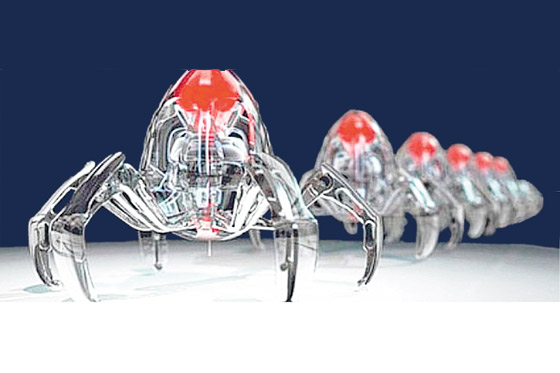
 And let’s not forget 3D printing, a possibility which is being explored by NASA and the European Space Agency as the means to create a settlement on the Moon. In the case of the ESA, they have partnered with roboticist Enrico Dini, who created a 3-D printer large enough to print houses from sand. Using his concept, the ESA hopes to do the same thing using regolith – aka. moon dust – to build structures on Earth’s only satellite.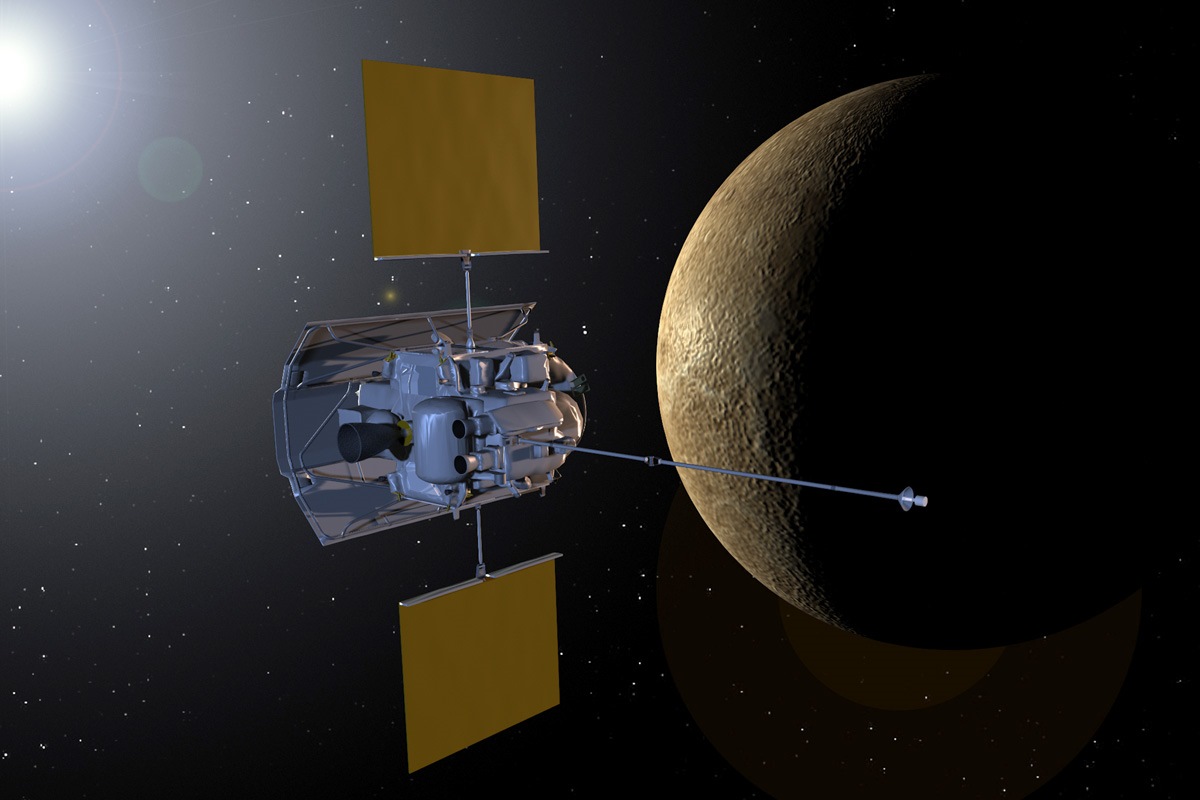
















 Stories by Williams