Of Cybernetic Hate Crimes

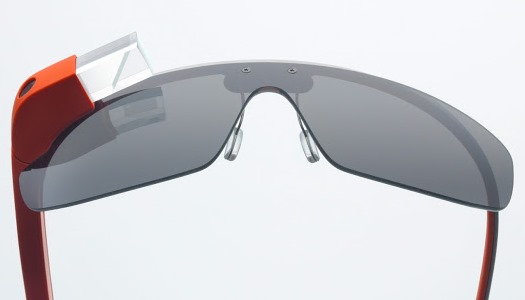
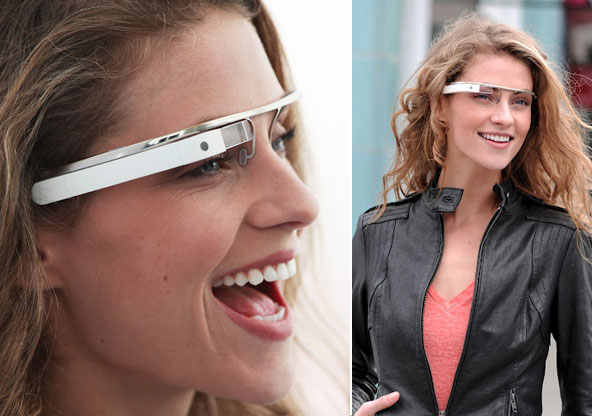
Google Glass_CalaLast week, a bar in Seattle banned the use of Google Glass. The pub declared on their Facebook page that if anyone wanted to order a pint, they had better remove their $1500 pair of augmented reality display glasses beforehand. Citing the glasses potential to film or take pictures and post them on the internet, the bar owner unflinchingly declared that “ass-kickings will be encouraged for violators.”

This is the second case of what some are dubbing a new wave of “Cybernetic hate crimes”. The first took place back in July 2012 when Steve Mann, a Canadian university professor known as the “father of wearable computing”, was physically assaulted at a McDonalds in Paris, France. In this case, three employees took exception with his wearable computer and tried to physically remove it, an impossibility since it is permanent screwed into his head, and then three him out of the restaurant.

steve-mann1Taken together, these two incidents highlight a possible trend which could become commonplace as the technology grows in use. In some ways, this is a reflection of the fears critics have raised about the ways in which these new technologies could be abused. However, there are those who worry that these kinds of fears are likely to lead to people banning these devices and becoming intolerant to those who use them.

By targeting people who employ augmented reality, bionic eyes, or wearable computers, we are effectively stigmatizing a practice which may become the norm in the not too distant future. But Google responded to the incident with optimism and released a statement that cited shifting attitudes over time:

It is still very early days for Glass, and we expect that as with other new technologies, such as cell phones, behaviors and social norms will develop over time.
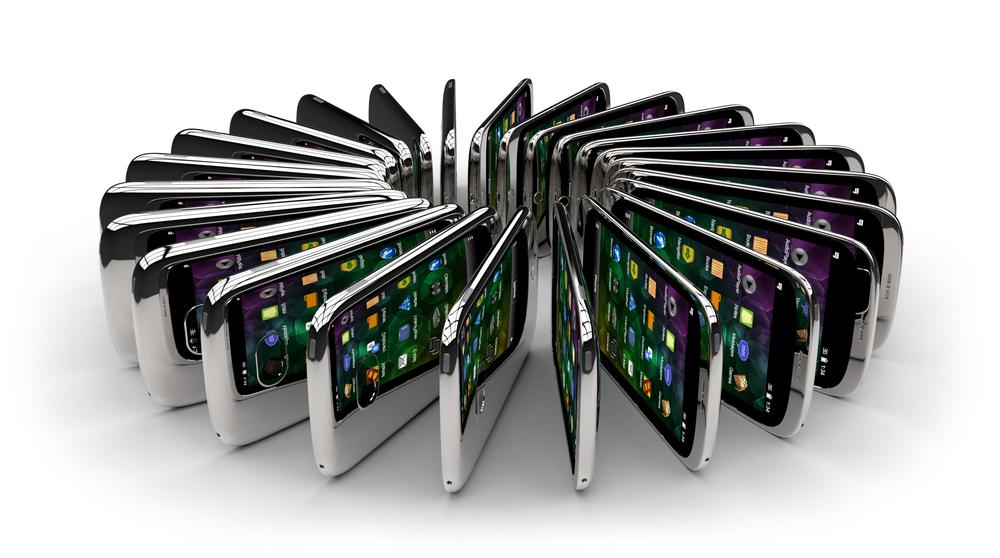
smartphonesYes, one can remember without much effort how similar worries were raised about smartphones and camera phones not that long ago, and their use has become so widespread that virtually all doubts about how they might be abused and what effect they would have on social norms have gone quiet. Still, doubts remain that with the availability of technologies that make it easier to monitor people, society is becoming more and more invasive.

But to this, Mann, responds by raising what he had always hoped portable computing would result in. Back in the 1970’s when he first began working on the concept for his EyeTap, he believed that camera-embedded wearables could be both liberating and empowering. In a world permeated by security cameras and a sensory-sphere dominated by corporate memes, he foresaw these devices a means for individuals to re-take control of their environment and protect themselves.

EyeTapThis was all in keeping with Mann’s vision of a future where wearable cameras and portable computers could allow for what he calls sousveillance — a way for people to watch the watchers and be at the ready to chronicle any physical assaults or threats. How ironic that his own invention allowed him to do just that when he himself was assaulted!

And in the current day and age, this vision may be even more important and relevant, given the rise in surveillance and repressive measures brought on in the wake of the “War on Terror”. As Mann himself has written:

Rather than tolerating terrorism as a feedback means to restore the balance, an alternative framework would be to build a stable system to begin with, e.g. a system that is self-balancing. Such a society may be built with sousveillance (inverse surveillance) as a way to balance the increasing (and increasingly one-sided) surveillance.

Raises a whole bunch of questions, doesn’t it? As the issue of dwindling privacy becomes more and more of an issue, and where most people respond to such concerns by dredging up dystopian scenarios, it might be helpful to remind ourselves that this is a form of technology that rests firmly in our hands, the consumers, not those of an overbearing government.

google_glass_banBut then again, that doesn’t exactly ease the fears of a privacy invasion much, does it? Whether it is a few functionaries and bureaucrats monitoring us for the sake of detecting criminal behavior or acts of “sedition”, or a legion of cyberbullies and gawking masses scrutinizing our every move, being filmed and photographed against our will and having it posted is still pretty creepy.

But does that necessitate banning the use of this technology outright? Are we within our rights, as a society, to deny service to people sporting AR glasses, or to physically threaten them if they are unable or unwilling to remove them? And is this something that will only get better, or worse, with time?

Sources: IO9, (2), news.cnet.com, eecg.toronto.edu

Introducing Google Nose (April Fools!)

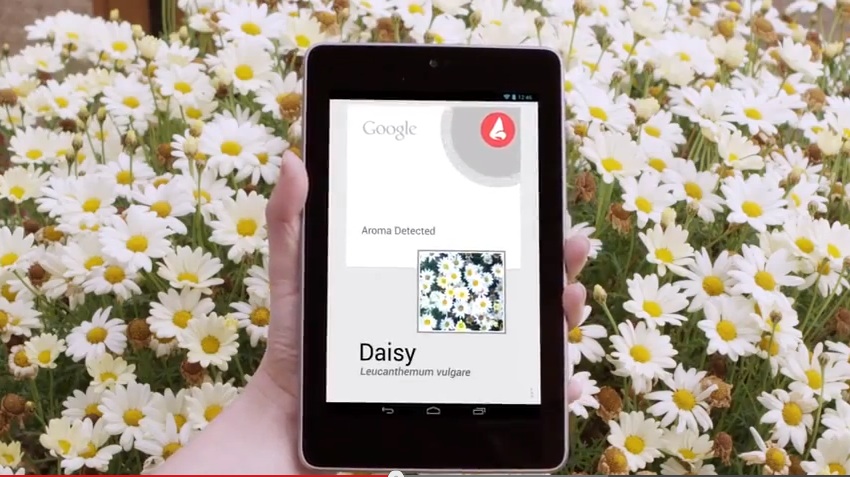
google_noseGoogle, makers of the fame internet search engine, investors in future tech, and pioneers in commercial space flight (and no stranger to practical jokes, fyi) has just released a video for a new system known as Google Nose Beta. For too long, the video claims, people have been restricted when searching the internet, relying on clumsy explanations and words that just don’t capture the proper feel of what they are looking for.

And what’s more, the internet is so often a feast for the eyes and the ears, but sadly neglects an all-important sense that is so near and dear to our hearts. When it comes right down to it, our olfactory senses go beyond simply observing and witnessing and phenomena and make us a part of it. So why haven’t we found a way to include smells into our daily internet activity?

google_nose1Apparently, this new system combines “photons with infrasound waves” and “temporarily aligns molecules to emulate a particular scent,” Google Nose allows users to experience simulated smells from various environments. And when it comes to identifying them, users can rely on the “mobile aroma indexing program” at the heart of the product which has amassed a “15 million scentibyte database of smells from around the world.”

And this is just the latest in a long string of quirky (and hilariously impossible) inventions brought to you by Google. Who can forget the 2007 TiSP, “a self-installed, ad-supported online service that will be offered entirely free to any consumer with a WiFi-capable PC and a toilet connected to a local municipal sewage system.” And what about Gmail Paper, a service that Google said would allow Gmail users to request paper copies (via postal service, of course) of their emails?

Google_nose2Sound too good to be true? Well that’s because it is, not to menti0n pretty damn ridiculous. But like any good sci-fi geek, it made me wonder, “just what would it take to make something like this real?” Within seconds, I was wondering if a quantum internet could theoretically beam particles into your laptop that would simulate a certain scent, but that’s as far as I got.

I think that’s the downside to being a geek. Our imaginations often mean we have a tenuous grasp on what’s real and what’s not. In the meantime, check out the hilarious video below, and learn more about this latest prank by clicking here.

Source: huffingtonpost.com

Asteriod Prospecting by 2015

asteroid_beltDeep Space Industries, a private aerospace company, has been making a big splash in the news lately. Alongside SpaceX, they have been pioneering a new age in space exploration, where costs are reduced and private companies are picking up the slack. And in their latest bid to claim a share of space, the company announced plans late in January to begin asteroid prospecting operations by 2015.

For some time, the concept of sending spaceships to mine asteroids and haul ore has been explored as a serious option. Within the asteroid belt that lies between Mars and Jupiter, countless tons of precious metals, carbon, silicates, and basaltic minerals. If humanity could tap a fraction of a fraction of that mineral wealth, it would be able to supply Earth’s manufacturing needs indefinitely, without all the harmful pollutants or run off caused by mining.

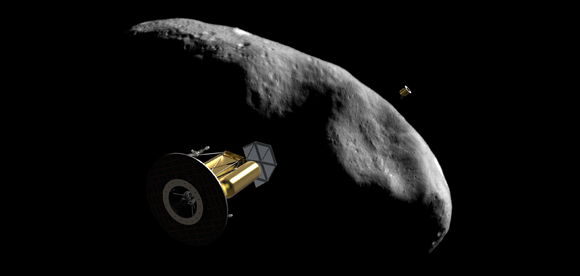
asteroid_miningSo to tap this potential goldmine (literally!) known as the Asteroid Belt, DSI plans to launch a fleet of mini spacecraft into solar orbit to identify potential targets near to Earth that would be suitable to mine. Lacking the resources of some of the bigger players in the space rush, DSI’s probes will ride-share on the launch of larger communications satellites and get a discounted delivery to space.

Initially, a group of 25kg (55 pounds) cubesats with the awesome designation “Firefly” will be launched on a journey lasting from two to six months in 2015. Then, in 2016, the 32 kilograms (70 pound) DragonFly spacecraft will begin their two-to-four-year expeditions and return with up to 68 kilograms (150 pounds) of bounty each. Beyond this, DSI has some truly ambitious plans to establish a foundry amongst the asteroids.

asteroid_foundryThat’s another thing about the Belt. Not only is it an incredibly rich source of minerals, its asteroids would make an ideal place for relocating much of Earth’s heavy industry. Automated facilities, anchored to the surface and processing metals and other materials on site would also reduce the burden on Earth’s environment. Not only would there be no air to befoul with emissions, but the processes used would generate no harmful pollutants.

In DSI’s plan, the foundry would use a patent-pending nickel gas process developed by one of DSI’s co-founders, Stephen Covey, known as “sintering”. This is the same process that is being considered by NASA to build a Moon Base in the Shackleton Crater near the Moon’s south pole. Relying on this same technology, automated foundries could turn ore into finished products with little more than microwave radiation and a 3D printer, which could then be shipped back to Earth.

deepspaceindustries-640x353Naturally, DSI will have plenty of competition down the road. The biggest comes from Google-backed Planetary Resources which staked it claim to an asteroid last April. Much like DSI, they hope to be able to mine everything from water to fuel as well as minerals and rare earths. And of course, SpaceX, which has the most impressive track record thus far, is likely to be looking to the Asteroid Belt before long.

And Golden Spike, the company that is promising commercial flight to the Moon by 2020 is sure to not be left behind. And as for Virgin Galactic, well… Richard Branson didn’t get crazy, stinking rich by letting opportunities pass him by. And given the size and scope of the Belt itself, there’s likely to be no shortage of companies trying to stake a claim, and more than enough for everyone.

So get on board ye capitalist prospectors! A new frontier awaits beyond the rim of Mars…

Source: Extremetech.com

The Future is Here: The Apple iWatch!

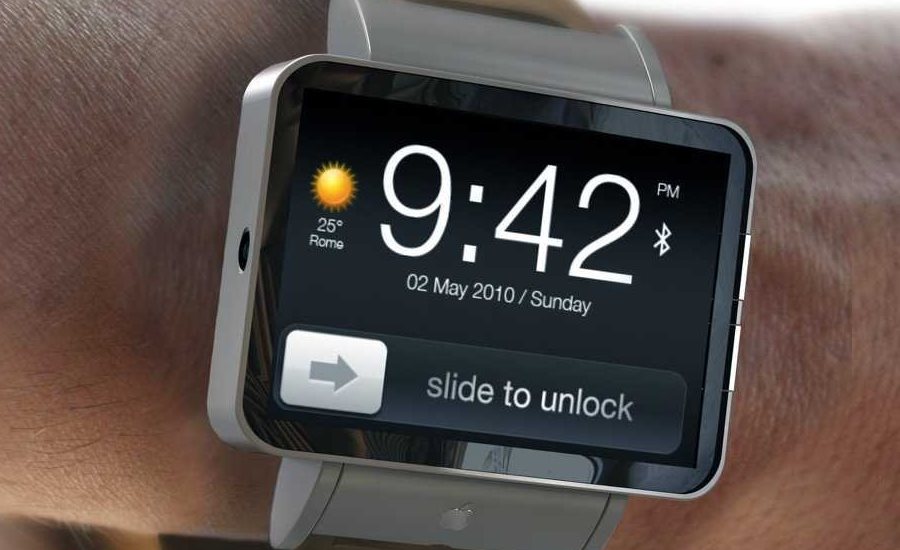
iWatchLeave it to Apple to once again define the curve of technological innovation. Known as the iWatch, this new design for a smartwatch is expected to make some serious waves and spawn all kinds of imitations. In addition to keeping time, it will boast a number of new and existing abilities that will essentially make it a wrist-mounted computer. As a result, there are many who claim this device is a response to Google’s Project Glass, since it signals that Apple is also looking to stake a big claim to the portable computing revolution.

According to Bruce Tognazzini, a principal with the Nielsen Norman Group and former Apple employee who specializes in human-computer interaction, an Apple iWatch is likely to have a serious impact on our lives. In addition to some familiar old features that were created for the iPhone, Apple has filed numerous patents and made plans to incorporate several new options for this one device. For example:

  • The iWatch will apparently make use of wireless charging, something Apple holds the patent for
  • Voice interaction through Siri, removing the need for a complicated control interface
  • Networking with your iPhone, iPod and other devices
  • Health monitor, including pedometer, bp monitor, calorie tracker, sleep tracker, etc.
  • NFC chip for personal, mobile banking
  • The phone acts as an ID chip, eliminating the need for passwords and security questions

Wearable ComputerSo in essence, the phone combines all kinds of features and apps that have been making the rounds in recent years. From mobile phones to PDAs, tablets and even fitness bands, this watch will combine them into one package while still giving the user the ability to network with them. This ensures that a person has a full range of control and can keep track of their other devices when they’re not on their person.

Apple also indicated that with this portable computer watch, people could take part in helping to correct faulty maps and other programs that require on the spot information, allowing for a degree of crowd-sourcing which has previously been difficult or impossible to provide. And since it’s all done through a device you strap on your wrist, it will be more ergonomic and portable than a PDA or smartphone.

Paper-Thin-Pamphlet-Smartphone-Concept-2And with other companies working on their own smartwatches, namely Cookoo, Pebble, and even Google, this could be the end of the smartphone as we know it! But in the course of making technological progress, some inventions become evolutionary dead ends, much like over-specialized creatures. I’m sure Steve Jobs would approve, even if the iPhone was one of his many, many babies!

New Video Shows Google Glasses in Action

GOOGLE-GLASS-LOGO1In a recently released teaser video, designed to expand Google Glass’ potential consumer base from the tech-savvy to what it refers to as “bold, creative individuals”. While the first video of their futuristic AR specs followed a New Yorker as they conducted mundane tasks through the city, this new clip hosts a dizzying array of activities designed to show just how versatile the product can be.

This includes people engaged in skydiving, horseback riding, catwalking at a fashion show, and performing ballet. Quite the mixed bag! All the while, we are shown what it would look like to do these activities while wearing a set of Google glasses. The purpose here is not only to show their functionality, but to give people a taste of what it an augmented world looks like.google_glass

And based on product information, videos and stillpics from the Google Glass homepage, it also appears that these new AR glasses will take advantage of the latest in flexible technology. Much like the new breeds of smartphones and PDAs which will be making the rounds later this year, these glasses are bendable, flexible, and therefore much more survivable than conventional glasses, which probably cost just as much!

Apparently, this is all in keeping with CEO and co-founder Larry Page’s vision of a world where Google products make their users smarter. In a 2004 interview, Page shared that vision with people, saying: “Imagine your brain is being augmented by Google.” These futurist sentiments may be a step closer now, thanks to a device that can provide on-the-spot information about whatever situation or environment we find ourselves in.

google_glass1One thing is for sure though. With the help of some AR specs, the middle man is effectively cut out. No longer are we required to aim our smartphones, perform image searches, or type things into a search engine (like Google!). Now we can just point, look, and wait for the glasses to identify what we are looking at and provide the requisite information.

Check out the video below:

Robot Cars in Five Years?

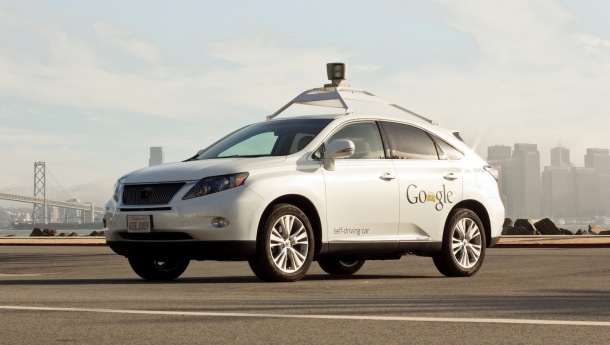
Could it be, that after decades of failed predictions, especially where flying cars were concerned, that science is finally making good on its promise of robot cars? Well, according to Google co-founder Sergey Brin, that’s what’s going to happen. Just two days ago, Brin was on hand for the signing of a bill in the California legislature which establishes safety and performance standards for cars operated by computers on California roads and highways. As the third state to pass this law – Nevada and Florida have already signed similar provisions – California will now allow licensed drivers to use automated vehicles, once they become commonplace.

Apparently, Google has been testing the concept quite extensively. Several prototypes have been developed, and over 300,000 miles worth of driving have been conducted for the sake of testing the software. Brin admits that their are bugs that still need to be worked out, such as improving the sensors and hardware failure supports for the technology. In addition, there are the big challenges of adapting the vehicles to “tricky situations”, such as weather conditions, temporary construction, and emergency vehicles. In any and all of these cases, the robots need to be able to interpret the situation and respond accordingly.

However, Sergey and Larry are confident, stating that “Our vehicles, of which about a dozen are on the road at any given time, have now completed more than 300,000 miles of testing. They’ve covered a wide range of traffic conditions, and there hasn’t been a single accident under computer control.” And, unless science fiction and futursist have been lying to me all this time, the robot cars are likely to come with manual control as well, just in case the driver feels the need to take the wheel and do a little hands-on driving! After all, the purpose of this technology is ensure our safety and comfort right? And what’s more comfortable than turning on the autopilot?

Source: CNET News

I knew it! It seems that AI’s are indeed coming. Will this result in an I, Robot situation, with benign robots running the planet for its own benefit, or a Matrix/Terminator type situation where they try to kill us all or use us as power plants? Who knows???

Nicola Higgins's avatarNicola Higgins' Fiction

The nice people at Google have put together a “neural network” of computers which is capable of learning.  In three days it learned to spot cats in pictures, even though it had never been told what one looked like.

Ah, neural networks.  Everyone’s favourite method of creating supercomputers and robots.  Say, Matt, how do you feel about doing a post on different types of robot-brain?  Is there enough variety out there to make it interesting?

The thing that really gets me about it, though, is that right at the very end there is this sentence:

As well as spotting cats, the computer system also learned how to pick out the shape of the human body and to recognise human faces.

A one line throw-away at the end of the article?  I guess they thought people would be more impressed by kitties

View original post

The Future Is Here: Google Glasses!

It’s like something out of a cyberpunk wet dream. Long the subject of speculative science fiction, it seems that we now have a working prototype for a set of goggles that can handle our wireless and networking needs. Merging the concepts of Augmented Reality with a Head-Mounted Display (HMD), Google has created what are now known as the “Google Glasses”.

Also known as “Project Glass”, this device is the first working model for what is often referred to as mobile computing. While still being tested, the project has been unveiled and Google Inc announced that they will now be conducting public trials to test their portability and ergonomics.

But of course, some of the terminology needs a little explanation. For example, augmented reality. By definition, this is the live direct, or indirect, view of the real world with computer generated imagery laid over top. One can be walking down the street or otherwise interacting with their world, but will also be able to view a desktop browser, a web page, or streaming video laid just overtop.

According to Google, the glasses will function much like an iPhone with the Siri application, in that wearers will be able to get onto the internet using voice commands. If this goes through, Apple Inc. will have its work cut out for it if they want to remain top dog in the technology race. I wonder what Steve Jobs would have made of this, may he rest in peace!

The project is just one of several being worked on by Google X Lab’s team of crack engineers, which includes Babak Parviz, an electrical engineer who has also worked on putting displays into contact lenses; Steve Lee, a project manager and “geolocation specialist”; and Sebastian Thrun, who developed Udacity education program as well as working on their self-driving car project.

Naturally, this news is causing a great deal of excitement, but I can’t help but wonder if certain people – not the least of which is William Gibson – aren’t getting just a tinge of self-satisfaction as well? You see, it was this Vancouver-based, American born purveyor of cyberpunk that predicted both the use of “cyberspace goggles” and augmented reality many years ago. The former were featured extensively in his Sprawl Trilogy and a similar device, known as Virtual Light glasses, made several appearances in his subsequent Bridge Trilogy.

What’s more, his latest books (known as the Bigend Trilogy) also made extensive mention of Augmented Reality before most people had heard of it. Beginning with Spook Country (2007), the second book in the series, he described an artist who used wireless signals and VR goggles to simulate the appearance of dead celebrities all over LA. This new type of touristic art, known as “locative art” was the first time AR was mentioned in a pop culture context. In his third book of the series, Zero History (2010), he mentions the technology yet again but says how it has been renamed “Augmented Reality” now that its more popular. As always, Gibson was on the cutting edge, or just ahead of the curve.

Click on the links below for a little “light reading” on the announcement:

https://plus.google.com/
http://bits.blogs.nytimes.com/2012/04/04/
http://www.washingtonpost.com/business/technology/

The Future is Here: Asteroid Mining!

The concept is not entirely new. In fact, it’s been a staple of science fiction for some time. Moving mining operations, refineries and even heavy industry to the Asteroid Belt as a way of reducing environmental stress and taking advantage of the sheer abundance of natural resources there. It was the concept behind Ben Bova’s The Asteroid Wars trilogy, and was even mentioned as early as 1898 in Garrett P. Serviss’ story Edison’s Conquest of Mars.

But as they say, science fiction leads to science fact. And when it comes to mining the asteroid belt, it seems some wealthy financiers and visionaries are hoping to get in on the ground floor. The company’s name is Planetary Resources, and its backers include James Cameron (of Aliens and Terminator fame) and Google founder Larry Page. Between these three forces, the idea and development capital are being made to being the commercial exploitation of our system’s many, many rocks.

The plan call for the development of viable space craft which will be able to fly out to the Belt, harvest materials, and then return. However, the long term projections involve the creation of mining colonies, heavily automated facilities that will be capable of taking in harvested rocks and ore and convert them to useable materials before they are ever brought back to Earth. After all, while every asteroid is a potential goldmine (literally!), the goal here is to eventually move the majority of the smelting and other potentially harmful operations off of Earth, into space and into orbit.

Click on the link below to read the full article and video below to learn the full extent of the company’s plans. Who knows? If the prospect looks good, maybe Cameron will want to buy the rights to Bova’s series and start making a series of promotional movies 😉

CBC News – Planetary Resources Inc.

http://www.cbc.ca/news/technology/story/2012/04/23/space-mining.html