Woohoo! It feels like forever since I reached a milestone and felt the need to celebrate. But that’s to be expected after a few years. At first, they come fast and often due to the fact that everything’s new and exciting. After awhile, they naturally become fewer and further between. But it’s always important to mark these occasions and take the time to give thanks.
So my thanks to the many people who have chosen to come by over the years. Especially those 2038 of you who have chosen to stick around by subscribing and/or following. And thanks be to the people who have offered constructive criticism, comments, and ongoing support. I would name names, but I don’t want to leave anybody out. Besides, you know who you are!
And of course, a big shout out to people who’ve offered beta reading, editing and constructive criticism to my own works, and have allowed me to do the same for their own. This coming March will mark storiesbywilliams third anniversary, and I hope to have a number of things done by then. So stay tuned, and expect me to come by and camp out in your blogs as well!
Ordinarily, when one talks about visualizing cyberspace, they think of massive neon-structures or cityscapes made up of cascading symbols of data. While these images – the creation of writers like William Gibson and film makers like the Waschowski Brothers – are certainly visually appealing, they are not exactly realistic, and hardly do the real thing justice.
Thankfully, a recent article over at policymic has presented us with a new and interesting way of visualizing this thing we call the World Wide Web. By compiling images of the various deep-sea cables that allow us to transmit information at the speed of light, author Laura Dimon reminds us that while the internet may be made up of trillions of bits of data moving about at any given moment, it is dependent upon real-world physical connections.
And these connections are extensive, with more than 550,000 fiber optic cables running along the ocean floor that are responsible for transmitting trillions upon trillions of interactions per day. According to the Washington Post, these cables “wrap around the globe to deliver emails, web pages, other electronic communications and phone calls from one continent to another.”
But surprisingly, few people seem to truly appreciate this. In an age of WiFi where more and more networks are being added to our public airwaves every day, the perception that all this information is something ethereal seems to have become rooted. Luckily, real-world events – such as the severing of several Seacom cables off the coast of Alexandria back in March – have managed to remind people just how grounded and potentially vulnerable the internet is.
Given our immense and increasing reliance on the internet for business, personal communications, entertainment and shopping, one would that we as a people would possess at least a passing knowledge of how it works. But as Eric Schmidt, Google’s executive chair, claimed in his book The New Digital Age: “The internet is among the few things humans have built that they don’t truly understand.”
Luckily, Laura provides a breakdown in her article which is a good start:
It consists of tens of thousands of interconnected networks run by service providers, individual companies, universities, and governments. There are three major parts to its construction: the networks that physically connect to each other (with about 12 that are particularly significant); the data-storing centers; and the architecture that lies in between. That is where it gets really interesting.
And just in case this doesn’t provide a clear picture, there are numerous images that have been created by organizations like Telecom Maps and The Fiber Optic Association. These show just how immense, extensive, and crisscrossed the cables that bring us all our emails, videos, blog feeds, and ability to surf are.
In addition, they also remind us that the historic gap between the developed and underdeveloped world persists into the information age. For every network of cables, there are cable landing stations that connect the deep sea lines to the continent they are servicing. As the maps show, Europe has more international network capacity than any other world region.
They also remind us that the once undisputed technological supremacy of the United States has been slowly eroding as humanity enters the 21st Century. This has been especially apparent within the last decade, where localized service providers have eschewed the US as a central hub and begun to connect their networks to other countries and regions.
Fascinating, and educational. I hope someday to be able to use these sorts of visualizations in the classroom, as a means of letting students know what enables all their surfing habits. I imagine most of them will be surfing on their smartphones as I speak!
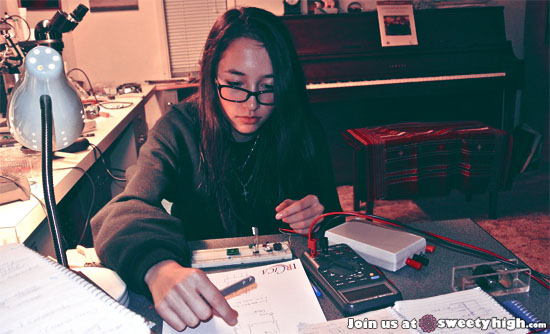
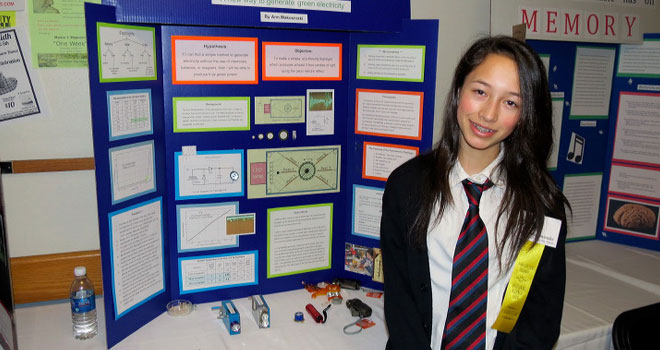
Every year, IT giant Google holds an online competition open to students aged 13-18 from around the globe to come up with new and challenging scientific ideas. And this year, one the winners just happens to hail from my hometown of Victoria, British Columbia. Her name is Ann Makosinki, a 15 year old high school student who invented a way to power a flashlight using only the warmth of your hand.
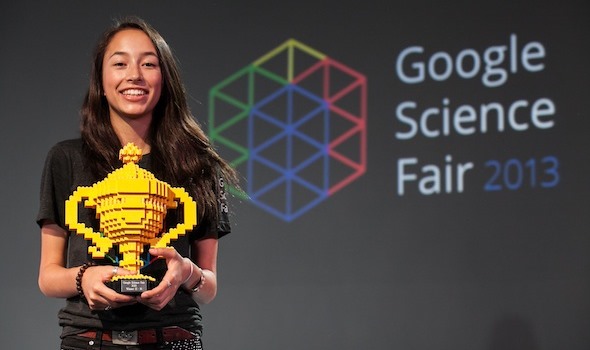
She claimed a trophy made of Lego for the 15-16 age category at an awards gala that was held on Monday, Sept. 23rd. Her prizes were a $25,000 scholarship and a “once-in-a-lifetime experience” from either CERN (the European Organization for Nuclear Research), LEGO or Google. Quite the impressive accomplishment for a 11th grader, but then again, Makosinki has been a scientist at heart ever since she was a little kid.
For starters, when other children were playing with toy cars and dolls, she busied herself with transistors and microcircuits. What’s more, by Grade 6, she began submitting projects to science fairs and began showing an interest in alternative energy. Still, Makosinki was surprised to be getting an award, given her competition. As she said:
I’m in shock, I’m in shock. It’s actually kind of embarrassing because I didn’t even change [before the awards ceremony]. I didn’t even comb my hair or anything. I must have looked like an absolute mess on stage because I didn’t expect to go up at all.
As for the invention itself, it is easy to see why she won. Basically, it is an LED flashlight that relies on the thermoelectric effect to generate electricity when held. This is done through a series of devices that are known as Peltier tiles, which produce electricity when heated on one side and cooled on the other. The tiles are fixed to the outside of the flashlight while the tube itself is hollow.
When held one side of the Peltier tiles are heated by the warmth of the person’s hand, air flowing through the hollow tube helps keep the other side cool. This combination of body heat and air cooling allows enough power to be generated to maintain a steady beam of light for 20 minutes. And all without the need for batteries and the resulting ewaste when they go dead.
Makosinki came up with the idea while researching different forms of alternative energy a few years ago. Already, she had experimented with Peltier tiles for her Grade 7 science fair project. While researching her project, she thought of them again as a way to potentially capture the thermal energy produced by the human body. After doing some calculations, she found that the amount of energy produced by a person’s hand was theoretically sufficient to power an LED light.
However, putting it into practice proved somewhat more difficult. After buying some Peltier tiles on eBay, she tested them and found that while they generated more than enough power, the voltage produced was only a fraction of what she needed. She rectified this problem after doing some further research, where she discovered that the addition of transformers could be used to boost the voltage.
She spent months doing research on the internet, experimenting with different circuits and even building her own transformers, which still didn’t provide enough voltage. In the end, she came across an article on the web about energy harvesting that suggested an affordable circuit that would provide the voltage she needed when used with a recommended transformer. Finally, the circuit worked.
Makosinski admitted there were points in the experiment when she thought it would never work. But as she said:
You just kind of have to keep going. This took quite awhile ’cause I had to do it during the school year as well and I had homework, plays, whatever that I was also doing.
After making it to the Google Science Fair, she and her colleagues spent the day presenting at Google’s headquarters in Mountain View, California. Here, the 15 judges – which included scientists from a variety of fields, science journalists, an astronaut, and a former Google Science Fair winner – witnessed their creations and tried to determine which held the most promise.
The other winners included Viney Kumar, an Australia student who captured the 13-14 age category for an Android app that warns drivers of an approaching emergency vehicle more than a minute in advance, in order to help clear a path for it. And then there was Elif Bilgin of Turkey, a 16-year old who took home the Scientific American Science in Action Prize and the Voter’s Choice Award for inventing a way to make plastic from banana peels.
The Grand Prize for the 17-18 age category went to Eric Chen, a 17 year old student from San Diego who is researching a new kind of anti-flu medicine using a combination of computer modelling and biological studies. He received the top prize of a $50,000 scholarship and a 10-day trip to the Galapagos Islands.
Alas, Makosinki felt the best part of the competition was getting to meet the other finalists in person at last.
It’s just so inspiring to see other people who are kind of like me and kind of want to make a difference in the community not just by talking about it but by actually doing stuff.
What’s next for the young inventor? Personally, I hope Makosinki and her fellow prize winners will be forming their own research group and looking for new and exciting ways to come up with renewable energy, recycling, vaccinations, and electronics. What do you think Makonsinky, Kumar, Bilgin, Chen? That’s what Andraka and his fellow finalists did after winning ISEF 2012, and they seem to be doing pretty good. So… hintedy, hint hint!
And be sure to enjoy this video of Ann Makosinki showing off her invention, courtesy of Technexo:
There’s scarcely a soul among us who hasn’t watched a video on YouTube. But have you ever stuck around long enough to read the comments section? It’s like a leper colony for the mind, a vindication for misanthropes everywhere. And after many years of being at the forefront of rudeness, racism, and generalized dumbassery, the YouTube comment section is getting a clean up.
Whereas the old system worked by placing the latest comments at the top nearest the video, regardless of their relevance or lack of redeeming content. The new system will employ a series of algorithms to determine what each viewer will find most relevant. This includes comments from your friends, from the video creator, and from “popular personalities” (i.e. celebs of one type or another).
But it doesn’t stop there. Currently, since comments are displayed as they come in, making the act of following a conversation difficult at best. But from now on, the site will feature threaded conversations, which is consistent with Google policy, the site’s now owners. As for private conversations, the new platform will be powered by Google+, allowing users the option of deciding who they want their posts and videos to be visible to.
Additionally, there will be a sort of cross-posting between YouTube and Google+. If you post a YouTube video on Google+ and some one comments on it there, the comment will show up on the video over at YouTube, too. Alternatively, they could choose to have their comment only show up on YouTube, or only show up on Google+. There’s a lot more control.
But perhaps most importantly of all, there are new filters that will be in place. As it stands, YouTube commenters enjoy total anonymity, which allows them to post racist, sexist, homophobic and vitriolic comments without fear. And while content creators can choose to allow all or no comments, or manually approve each comment, this is completely impractical for videos that garner millions of views a week.
But now, YouTube is introducing filters that will make it easier. The new filters basically allow content creators to not only be able to assign people to an Approved list or a Blocked list (which will auto-approve or auto-reject comments, respectively), they will be able to add keywords to a Blacklist. This will flag comments that contain those words and send them into a special list which can be reviewed and approved/rejected later.
The threaded comments feature and began to be put into effect a little over a week ago. Filters were made available at the same time for channel pages only, but in the months to come they’ll become available for every individual video, giving content creators and commenters more control over the conversations they participate in. Basically, it will still be YouTube, but with some Facebook-like privacy and content filters.
And while many might deplore these new rules as an example of heavy handed “internet censorship”, there are many more who believe this change is overdue in coming. And given that the control rests with the users, who have the ability to share or be private, and to filter specific kinds of content, the basic spirit of a democratic, open forum remains.
In the early nineties, the internet was greeted with immense optimism and anticipation. Scarcely a week went by without some major personality – Al Gore and Bill Gates come to mind – championing its development, saying it would bring the world together and lead to “the information age”. After just a few years, these predictions were being mocked by just about everyone on the planet who had access.
Yes, despite all that has been made possible by the internet, the heady optimism that was present in those early days seem horribly naive by today’s standards. In addition to making virtually any database accessible to anyone, the world wide web has also enabled child pornographers, hate speech, conspiracy theorists and misinformation like never before.
What’s more, a person’s online presence opens them to new means of identity theft, cyberbullying, and all kinds of trolling and harassment. Who can forget the cases of Amanda Todd or Rethaeh (Heather) Parsons? Two young women who committed suicide due to relentless and disgusting bullying that was able to take place because there simply was no way to stop it all.
And with the ever expanding online presence of children and youths on the internet, and little to no controls to monitor their behavior, there are many campaigns out there that hope to reign in the offenders and protect the users. But there are those who have gone a step further, seeking to put in place comprehensive safeguards so that trollish behavior and hurtful comments can be stopped before it becomes a permanent part of the digital stream.
One such person is California Governor Jerry Brown, who recently signed a bill into law that requires all websites to provide an online “erase button” for anyone under 18 years of age. The stated purpose of the law is to help protect teens from bullying, embarrassment and harm to job and college applications from online posts they later regret. The law, which is designated SB568, was officially passed on Sept. 23rd and will go into effect Jan 1st, 2015.
Common Sense Media, a San Francisco based non-profit organization that advocates child safety and family issues, was a major supporter of the bill. In a recent interview, CEO James Steyer explained the logic behind it and how it will benefit youths:
Kids and teens frequently self-reveal before they self-reflect. In today’s digital age, mistakes can stay with and haunt kids for their entire life. This bill is a big step forward for privacy rights, especially since California has more tech companies than any other state.
The law is not without merit, as a 2012 Kaplan survey conducted on college admissions counselors shows. In that study, nearly a quarter of the counselors interviewed said they checked applicants’ social profiles as part of the admission process. Of those counselors, 35% said what they found – i.e. vulgarities, alcohol consumption, “illegal activities” – negatively affected their applicants’ admissions chances.
But of course, the bill has its share of opponents as well. Of those who voted against it, concerns that the law will burden websites with developing policies for different states appeared to be paramount. Naturally, those who support the bill hope it will spread, thus creating a uniform law that will remove the need to monitor the internet on a state-by-state basis.
At present, major social media sites such as Facebook, Twitter, Instagram and Vine already allow users of any age to delete their posts, photos and comments. California’s “eraser button” law requires that all websites with users in the state follow this policy from now on. And given the presence of Silicon Valley and the fact that California has one of the highest per capita usages of the internet in the country, other states are sure to follow.
The new law also prohibits youth-oriented websites or those that know they have users who are minors from advertising products that are illegal to underage kids, such as guns, alcohol and tobacco. Little wonder then why it was also supported by organizations like Children NOW, Crime Victims United, the Child Abuse Prevention Center and the California Partnership to End Domestic Violence.
In addition to being a legal precedent, this new law represents a culmination of special interests and concerns that have been growing in size and intensity since the internet was first unveiled. And given the recent rise in parental concerns over cyberbullying and teen suicides connected to online harassment, its hardly surprising that something of this nature was passed.
There are certainly no shortages of electronic shows happening this year! It seems that I just finished getting through all the highlights from Touch Taiwan which happened back in August. And then September comes around and I start hearing all about IFA 2013. For those unfamiliar with this consumer electronics exhibition, IFA stands for Internationale Funkausstellung Berlin, which loosely translated means the Berlin Radio Show.
As you can tell from the name, this annual exhibit has some deep roots. Beginning in 1924, the show was intended to gives electronics producers the chance to present their latest products and developments to the general public, as well as showcasing the latest in technology. From radios and cathode-ray display boxes (i.e. television) to personal computers and PDAs, the show has come a long way, and this year’s show promised to be a doozy as well.
Of all those who presented this year, Sony seems to have made the biggest impact. In fact, they very nearly stole the show with their presentation of their new smartphones, cameras and tablets. But it was their new Xperia Z1 smartphone that really garnered attention, given all the fanfare that preceded it. Check out the video by TechRadar:
However, their new Vaio Tap 11 tablet also got quite a bit of fanfare. In addition to a Haswell chip (Core i3, i5 or i7), a six-hour battery, full Windows connectivity, a camera, a stand, 128GB to 512GB of solid-state storage, and a wireless keyboard, the tablet has what is known as Near Field Communications (NFC) which comes standard on smartphones these days.
This technology allows the tablet to communicate with other devices and enable data transfer simply by touching them together or bringing them into close proximity. The wireless keyboard is also attachable to the device via a battery port which allows for constant charging, and the entire thin comes in a very thin package. Check out the video by Engadget:
Then there was the Samsung Galaxy Gear smartwatch, an exhibit which was equally anticipated and proved to be quite entertaining. Initially, the company had announced that their new smartwatch would incorporate flexible technology, which proved to not be the case. Instead, they chose to release a watch that was comparable to Apple’s own smartwatch design.
But as you can see, the end result is still pretty impressive. In addition to telling time, it also has many smartphone-like options, like being able to take pictures, record and play videos, and link to your other devices via Bluetooth. And of course, you can also phone, text, instant message and download all kinds of apps. Check out the hands-on video below:
Toshiba also made a big splash with their exhibit featuring an expanded line of tablets, notebooks and hybrids, as well as Ultra High-Definition TVs. Of note was their M9 design, a next-generation concept that merges the latest in display and networking technology – i.e. the ability to connect to the internet or your laptop, allowing you to stream video, display pictures, and play games on a big ass display!
Check out the video, and my apologies for the fact that this and the next one are in German. There were no English translations:
And then there was their Cloud TV presentation, a form of “smart tv” that merges the best of a laptop to that of a television. Basically, this means that a person can watch video-on-demand, use social utilities, network, and save their files via cloud memory storage, all from their couch using a handheld remote. Its like watching TV, but with all the perks of a laptop computer – one that also has a very big screen!
And then there was the HP Envy Recline, an all-in-one PC that has a hinge that allows the massive touchscreen to pivot over the edge of a desk and into the user’s lap. Clearly, ergonomics and adaptability were what inspired this idea, and many could not tell if it was a brilliant idea or the most enabling invention since the LA-Z-BOY recliner. Still, you have to admit, it looks pretty cool:
Lenovo and Acer also attracted show goers with their new lineup of smartphones, tablets, and notebooks. And countless more came to show off the latest in their wares and pimp out their own versions of the latest and greatest developments. The show ran from September 6th to 11th and there are countless videos, articles and testimonials to still making it to the fore.
For many of the products, release dates are still pending. But all those who attended managed to come away with the understanding that when it comes to computing, networking, gaming, mobile communications, and just plain lazing, the technology is moving by leaps and bounds. Soon enough, we are likely to have flexible technology available in all smart devices, and not just in the displays.
Nanofabricated materials are also likely to create cases that are capable of morphing and changing shape and going from a smartwatch, to a smartphone, to a smart tablet. For more on that, check out this video from Epic Technology, which showcases the most anticipated gadgets for 2014. These include transparent devices, robots, OLED curved TVs, next generation smartphones, the PS4, the Oculus Rift, and of course, Google Glass.
I think you’ll agree, next year’s gadgets are even more impressive than this year’s gadgets. Man, the future is moving fast!
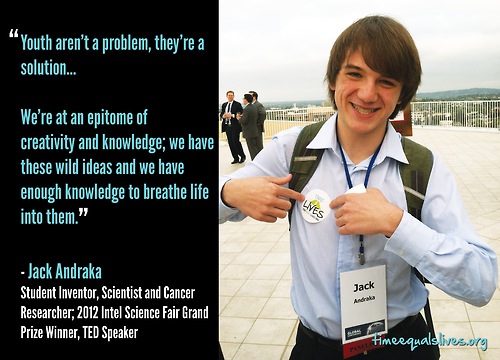
Folks, today I have a rare privilege which I want to share with you. Not that long ago, I reached out to a certain brilliant mind that’s been making waves in the scientific community of late, a young man who – despite his age – has been producing some life saving technologies and leading his own research team. This young man, despite his busy schedule, managed to get back to me quite quickly, and agreed to an interview.
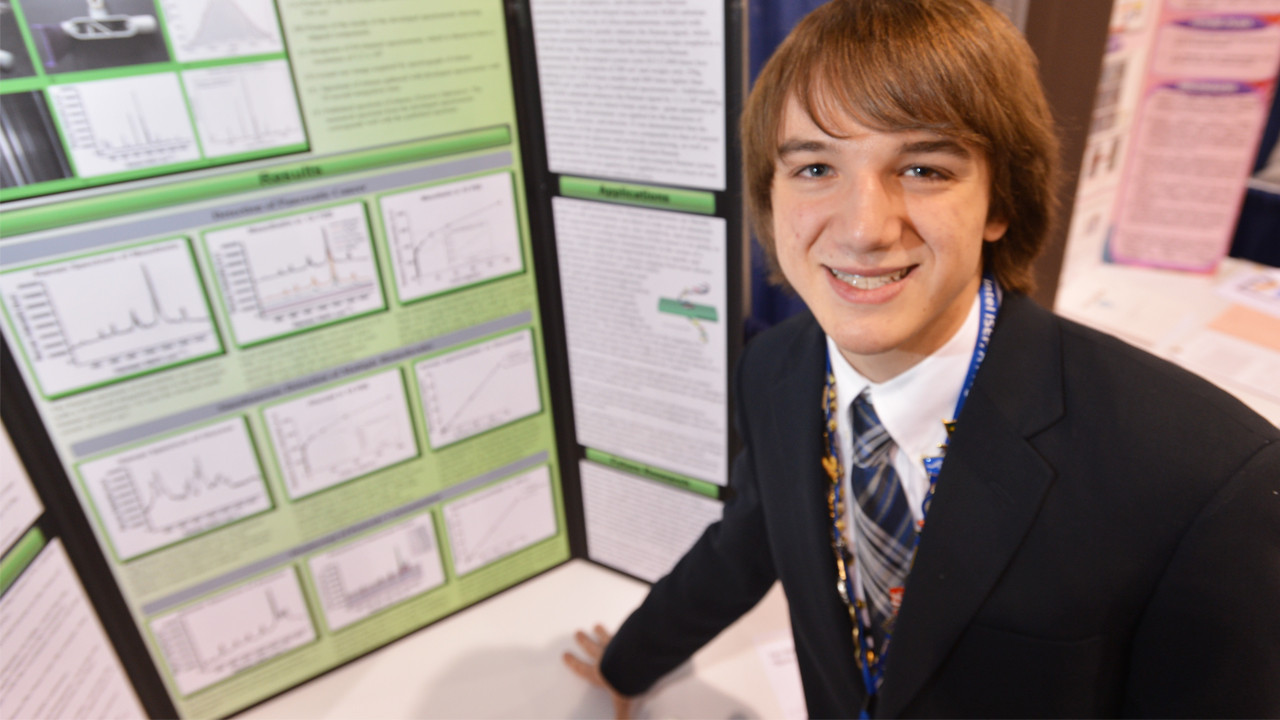
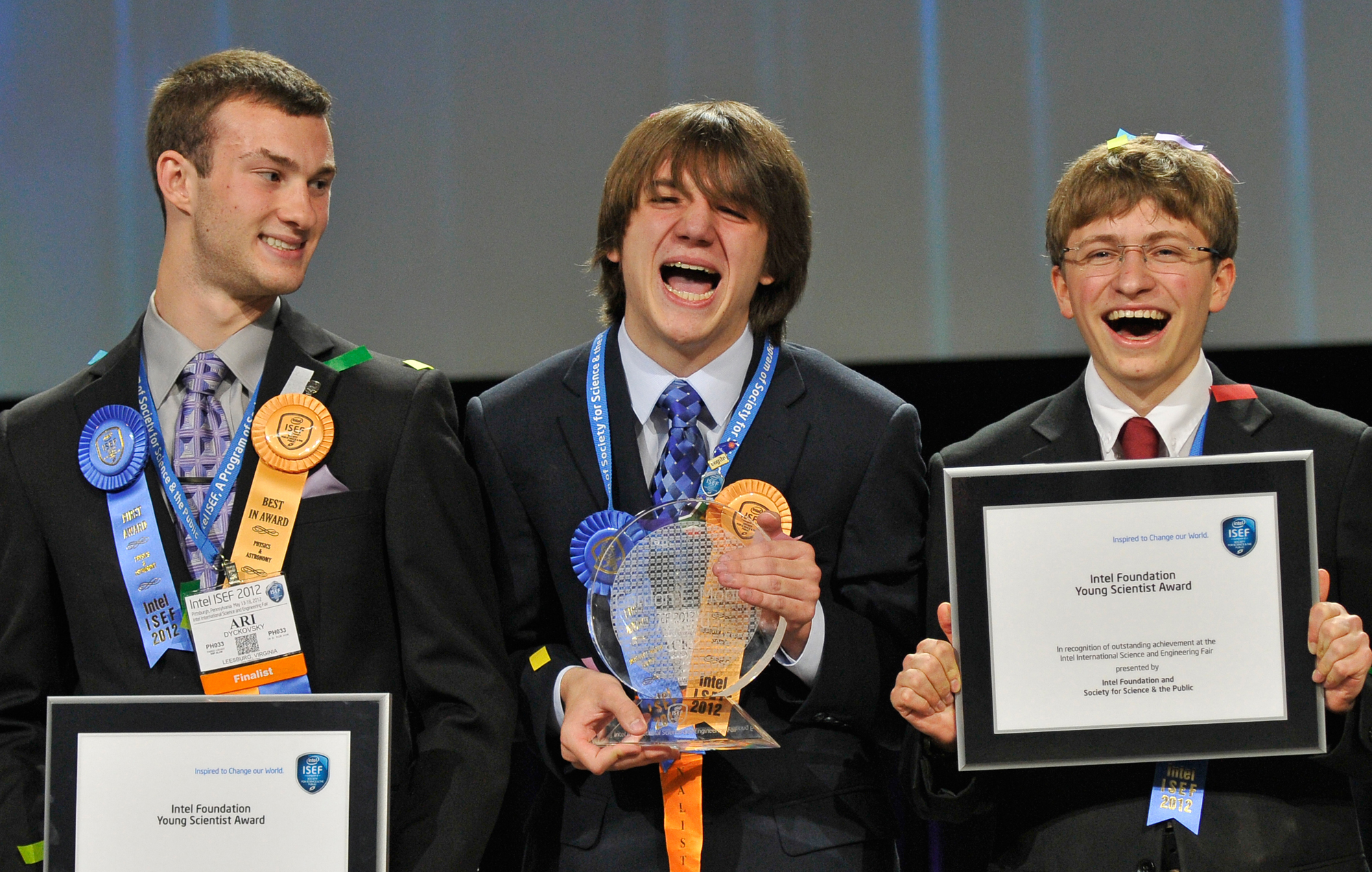
I am of coarse referring to Jack Andraka, a man who’s medical science credentials are already pretty damn impressive. At the age of 16, he developed a litmus test that was capable of detecting pancreatic cancer, one that was 90% accurate, 168 times faster than current tests, and 1/26,000th the cost. For this accomplishment, he won first place at the 2012 Intel International Science and Engineering Fair (ISEF).
Winning at the 2012 ISEF
Afterward, he and the other finalists formed their own research group known as Generation Z, which immediately began working towards the creation of a handheld non-invasive device that could help detect cancer early on. In short, they began working on a tricorder-like device, something for which they hope to collect the Tricorder X PRIZE in the near future.
While this project is ongoing, Andraka presented his own concept for a miniature cancer-detecting device at this year’s ISEF. The device is based on a raman spectrometer, but relies on off-the-shelf components like a laser pointer and an iPod camera to scan tissue for cancer cells. And whereas a raman spectrometer is the size of a small car and can cost upwards of $100,000, his fits in the palm of your hand and costs about $15.
Talking with the Prez
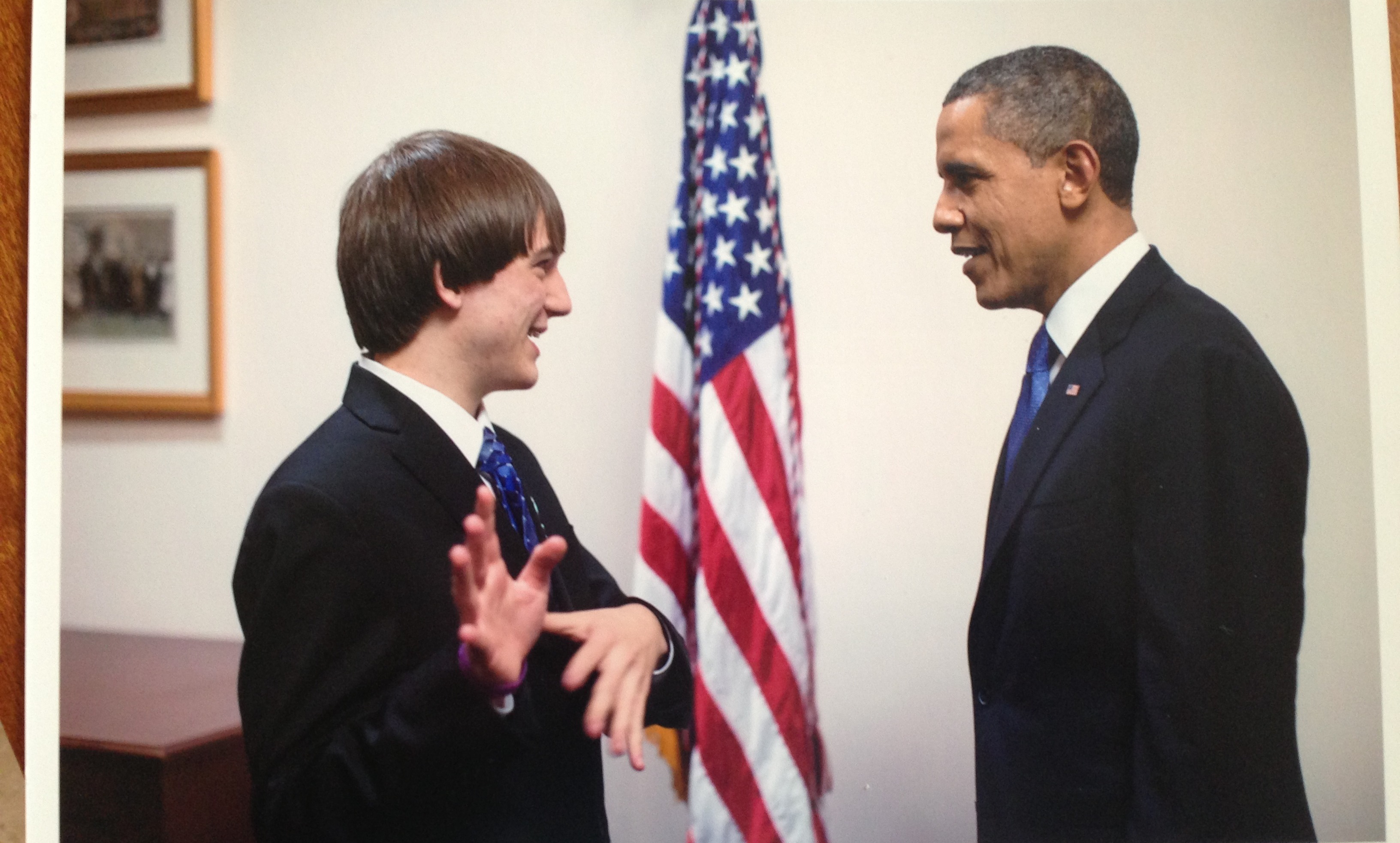
Oh, and I should also mention that Jack got to meet President Obama. When I asked what the experience was like, after admitting to being jealous, he told me that the President “loves to talk about science and asks great questions. [And] he has the softest hands!” Who knew? In any case, here’s what he had to tell me about his inspirations, plans, and predictions for the future.
1. What drew you to science and scientific research in the first place?
I have always enjoyed asking questions and thinking about how and why things behave the way they do. The more I learned about a subject, the more deeply I wanted to explore and that led to even more questions. Even when I was 3 I loved building small dams in streams and experimenting with what would happen if I built the dams a certain way and what changes in water flow would occur.
When I entered 6th grade, science fair was required and was very competitive. I was in a charter school and the science fair was really the highlight of the year. Now I did not only love science, but I was highly motivated to do a really good project!
That’s him, building his dams
2. You’re litmus test for pancreatic cancer was a major breakthrough. How did you come up with the idea for it?
When I was 14 a close family friend who was like an uncle to me passed away from pancreatic cancer. I didn’t even know what a pancreas was so I turned to every teenager’s go-to source of information, Google and Wikipedia, to learn more. What I found shocked me. The 5 year survival rate is just awful, with only about 5.5% of people diagnosed achieving that time period. One reason is that the disease is relatively asymptomatic and thus is often diagnosed when a patient is in an advanced stage of the cancer. The current methods are expensive and still miss a lot of cancers.
I knew there had to be a better way so I started reading and learning as much as I could. One day in Biology class I was half listening to the teacher talk about antibodies while I was reading a really interesting article on carbon nanotubes. Then it hit me: what if I combined what I was reading (single walled carbon nanotubes) with what I was supposed to be listening to (antibodies) and used that mixture to detect pancreatic cancer.
Of course I had a lot of work left to do so I read and read and thought and thought and finally came up with an idea. I would dip coat strips of inexpensive filter paper with a mixture of single walled carbon nanotubes and the antibody to mesothelin, a biomarker for pancreatic cancer. When mesothelin containing samples were applied the antibody would bind with the mesothelin and push the carbon nanotubes apart, changing the strips’ electrical properties, which I could then measure with an ohm meter borrowed from my dad.
Then I realized I needed a lab (my mom is super patient but I don’t think she’d be willing to have cancer research done in her kitchen!). I wrote up a proposal and sent it out to 200 professors working on anything to do with pancreatic research. Then I sat back waiting for the acceptances to roll in.
I received 199 rejections and one maybe, from Dr Maitra of Johns Hopkins School of Medicine. I met with him and he was kind enough to give me a tiny budget and a small space in his lab. I had many many setbacks but after 7 months, I finally created a sensor that could detect mesothelin and thus pancreatic cancer for 3 cents in 5 minutes.
3. What was your favorite thing about the 2012 Intel International Science and Engineering Fair – aside from winning, of course?
My brother had been a finalist at Intel ISEF and I attended as an observer. I was blown away by the number and quality of the projects there and loved talking to the other finalists. It became my dream to attend Intel ISEF as well. My favorite thing about getting to be a finalist was the sense that I was among kids who were as passionate about math and science as I was and who were curious and creative and who wanted to innovate and push their limits. It felt like I had found my new family! People understood each other and shared ideas and it was so exciting and inspiring to be there with them, sharing my ideas as well!
4. What was the inspiration behind you and your colleagues coming together to start “Generation Z”?
I met some other really interesting kids at Intel ISEF who were making huge advances. I am fascinated by creating ways to diagnose diseases and pollutants. We started talking and the subject of the X Prize came up. We thought it would be a fun challenge to try our hand at it! We figure at the very least we will gain valuable experience working on a team project while learning more about what interests us.
5. How did people react to your smartphone-sized cancer detector at this years ISEF?
Of course people came over to see my project because of my success the previous year. This project was not as finished as it could have been because I was so busy traveling and speaking, but it was great to see all my friends and make new ones and explain what I was aiming for.
6. Your plans for a tricorder that will compete in Tricoder X are currently big news. Anything you can tell us about it at this time?
My team is really coming together. Everyone is working on his/her own piece and then we often Skype and discuss what snags we are running up against or what new ideas we are thinking about.
7. When you hear the words “The Future of Medicine”, what comes to mind? What do you think the future holds?
I believe that the future of medicine is advancing so fast because of the internet and now mobile phones. There are so many new and inexpensive diagnostic methods coming out every month. Hopefully the open access movement will allow everyone access to the knowledge they need to innovate by removing the expensive pay walls that lock away journal articles and the important information they contain from people like me who can’t afford them.
Now kids don’t have to depend on the local library to have a book that may be outdated or unavailable. They can turn to the internet to connect with MOOCs (Massive Open Online Courses), professors, forums and major libraries to gain the information they need to innovate.
8. What are your plans for the future?
I plan to finish my last 2 years of high school and then go to college. I’m not sure which college or exactly what major yet but I can’t wait to get there and learn even more among other people as excited about science as I am.
9. Last question: favorite science-fiction/fantasy/zombie or superhero franchises of all time, and why do you like them?
I like the Iron Man movies the best because the hero is an amazing scientist and engineer and his lab is filled with everything he would ever need. I wonder if Elon Musk has a lab like that in his house!!
Yeah, that sounds about right! I’m betting you and Musk will someday be working together, and I can only pray that a robotic exoskeleton is one of the outcomes! And I would be remiss if I didn’t point out that we had a Superhero Challenge here on this site, where we designed our own characters and created a fictional crime-fighting league known as The Revengers! We could use a scientifically-gifted mind in our ranks, just saying…
Thank you for coming by and sharing your time with us Jack! I understood very little of what you said, but I enjoyed hearing about it. I think I speak for us all when I say good luck with all your future endeavors, and may all your research pursuits bear fruit!
When it comes to generational milestones, those of born since the late 70’s often feel like we’re lagging behind previous generations. Unlike the “Greatest Generation” or the “Baby Boomers”, we weren’t around to witness Two World Wars, the Great Depression, the Cuban Missile Crisis, the death of JFK, Neil Armstrong, or the FLQ Crisis. For us, the highlights were things like the development of the PC, the birth of the internet, Kurt Cobain, and of course, 9/11.
But looking ahead, those us of belonging to Generation X, Y, and Millennials might just be around to witness the greatest event in human history to date – a manned mission to Mars! And while NASA is busy planning a mission for 2030, a number of private sources are looking to make a mission happen sooner. One such group is a team of UK scientists working from Imperial College London that are working to mount a a three person mission to Mars.
The planned mission consists of two spacecraft, the first of which is a Martian lander equipped with a heat shield that will send the crew off into Earth’s orbit. The second craft would be a habitat vehicle, which is the craft that the crew would live in during the voyage. The habitat vehicle would consist of three floors, and measure in at around 30 feet (10m) tall and 13 feet (4m) in diameter.
The astronauts would be situated in the lander during takeoff, and would move to the habitat when the dual-craft reaches Earth orbit. Once the astronauts are safely within the habitat, a rocket would shoot the dual-craft off on its journey to Mars, which would take nine months to arrive, less than the approximately 300 days that most projections say it will take.
Once In space, the dual-craft would then split apart but remain connected by a 60 meter (200 foot) tether. Thrusters from both vehicles would then spin them around a central point, creating artificial gravity similar to Earth’s in the habitat. Not only would this help the astronauts feel at home for the better part of a lonely year, but it would also reduce the bone and muscle atrophy that are associated with weightlessness.
The craft would be well-stocked with medicine to ensure that the crew remained in fine health for the nine month transit. Superconducting magnets, as well as water flowing through the shell of the craft, would be employed to help reduce both cosmic and solar radiation. And once the dual-craft reaches Mars, it would tether back together, the crew would move back into the lander, and then detach from the habitat descend to the Martian surface.
This mission would also involve sending a habitat and return vehicle to Mars before the astronauts arrived, so the crew would have shelter upon landing as well as a way to get home. The crew would spend anywhere from two months to two years on Mars, depending on the goals of the mission and the distance between Mars and Earth. On the way back home, the mission would dock with the ISS, then take a craft back to Earth from there.
What’s especially interesting about this proposed mission is that each stage of it has been proven to work in an individual capacity. What’s more, the concept of using water as a form radiation shielding is far more attractive than Inspiration Mars’, which calls for using the astronauts own fecal matter!
Unfortunately, no real timetable or price tags have been proposed for this mission yet. However, considering that every individual step of the mission has been proven to work on its own, the proposed overall journey could work. In the meantime, all us post-Baby Boomers can do is wait and hope we live to see it! I for one am going sick of hearing Boomers talk about where they were when Apollo 11 happened and having nothing comparable to say!
And be sure to enjoy this video of the University College London team discussing the possibilities of a Mars mission in our lifetime:
Oh dear. It seems a milestone was passed this week, one which slipped under my nose once again. Ever since I hit 200,000 views, which seemed like forever ago, the milestones have been fewer and further between. You tend to stop keeping track of noticing when they roll around. But when the stock ticker hits a number with five zeroes behind it, you suddenly find yourself taking notice.
And when I did, I noticed some other important milestones had also slipped by unnoticed. For example, back in March Stories by Williams celebrated its second anniversary. That alone was reason to celebrate, but since that time, the site also surpassed 2000 followers, 5000 comments, and 10,000 likes. Oh yes, and I also passed 1000 posts by a significant margin (1148, as of this posting). Awful lot of number here!
Oh yeah, it was also since the second anniversary – roughly one month later in April – that Whiskey Delta was published and sold over 1300 copies. A special shout out to all those who helped make it possible – Rami, Audrey, Carla (my darling wife-editor), and of course, Mr. Max Brooks himself!
Looking ahead, there’s always plenty more to do. First, I want to publish part II of the zombie-fiction series, Papa Zulu! And of course, there’s a few anthologies to take care, such as Yuva and Flash Forward. And then there’s the ongoing Revengers saga that’s been growing some serious legs of late. And I imagine there will be plenty of science, tech, and pop culture news to share in the meantime…
Recent revelations provided by Edward Snowden have set many people’s teeth on edge. After years of controversy surrounding the use of domestic, warrantless surveillance, things have only gotten worse with the revelation of PRISM and the NSA’s collection of metadata. But as with all things relating to espionage and government secrets, plumbing the depths only seems to reveal greater depths and bigger secrets.
Case in point: the life and times of General Keith Alexander, the undisputed master of America’s cyberwars and intelligence gathering operations. A four-star Army general with active units under his command, he is also a member of the National Security Agency, chief of the Central Security Service, and commander of the US Cyber Command.
When discussing his reasons for going public, Snowden indicated that he was appalled by:
[The] hypocrisy of the U.S. government when it claims that it does not target civilian infrastructure, unlike its adversaries.
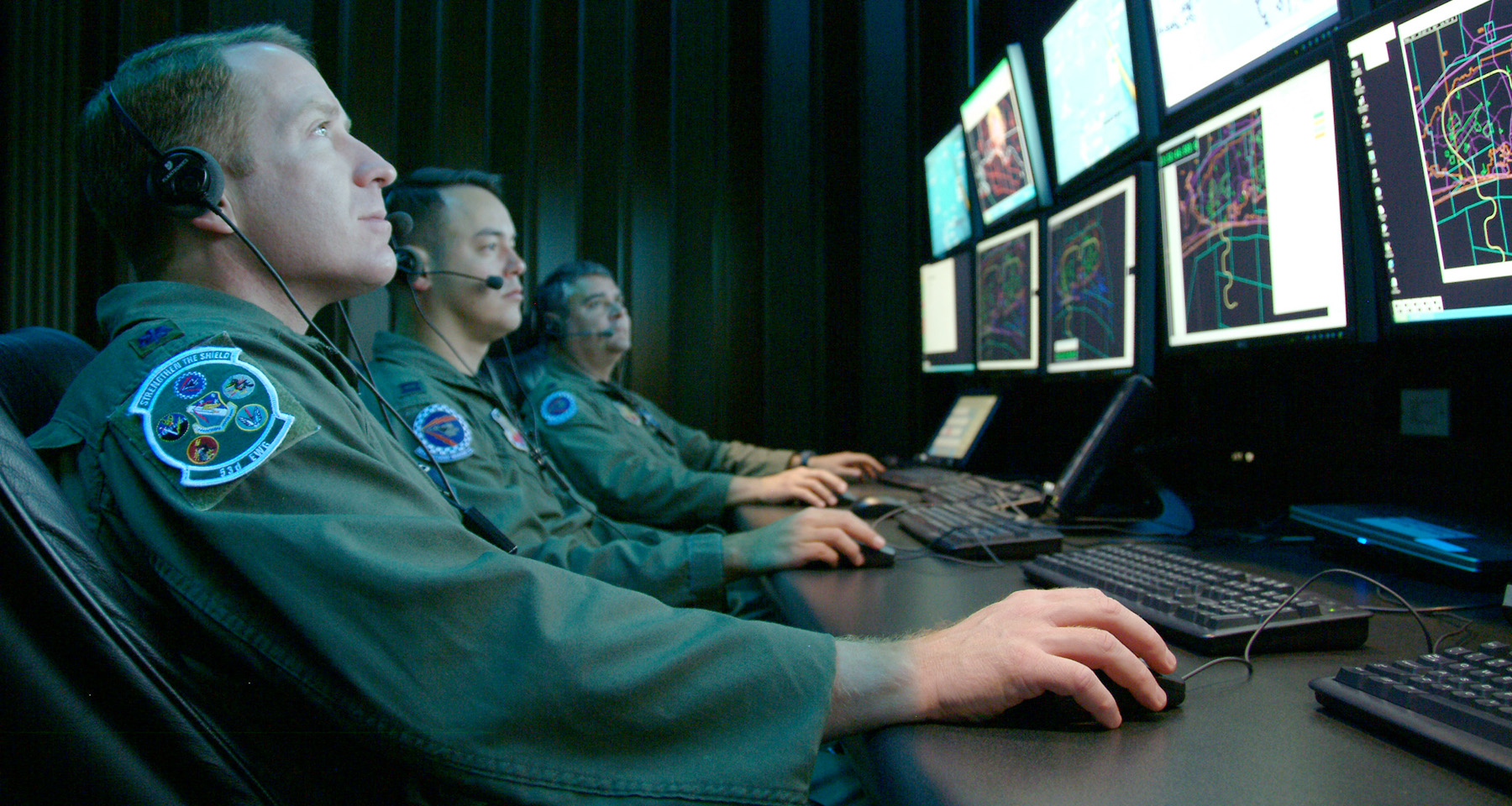
What he was referring to was ongoing accusations by the US government that sources within China – particularly Unit 61398, a hacking force within the PLA that is located in Shanghai – had been stealing terabytes from data from the US since 2006. As it turns out, the US has its own super-secret cyberwarfare division, one which exists as nominally independent from the NSA.
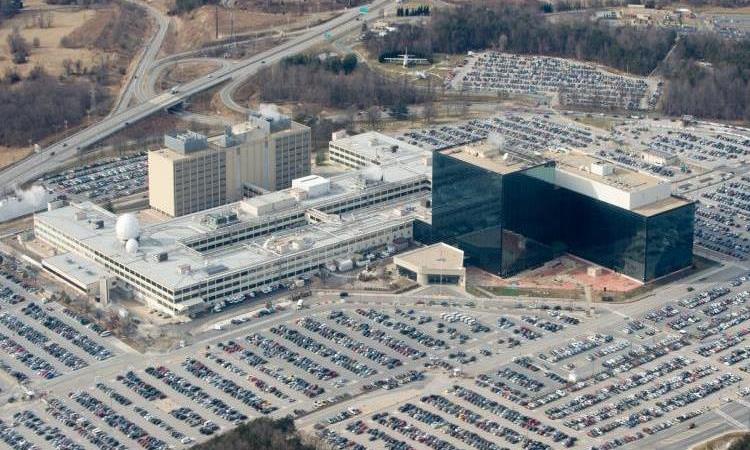
Located inside Fort Meade, Maryland, this top-secret installation is more of a self-contained city. Tens of thousands of people live here, a city of 50 buildings with its own post office, fire department, and police force and is surrounded by electrified fences and heavily armed guards, protected by antitank barriers, monitored by sensitive motion detectors, and watched by rotating cameras.
To block any telltale electromagnetic signals from escaping, the inner walls of the buildings are wrapped in protective copper shielding and the one-way windows are embedded with a fine copper mesh. Keith Alexander is responsible for building this place up for the past eight years, insisting that the US’s inherent vulnerability to digital attacks required that he and those like him assume more authority over the data zipping around the globe.
To hear him tell it, the threat is so paramount that it only makes sense that all power to control the flow of information should be concentrated in as few hands as possible, namely his. In a recent security conference held in Canada, Alexander expressed the threat in the following, cryptic way:
What we see is an increasing level of activity on the networks. I am concerned that this is going to break a threshold where the private sector can no longer handle it and the government is going to have to step in.
If this alone were not reason enough to put people on edge, there are also voices within the NSA who view Alexander as a quintessential larger-than-life personality. One former senior CIA official who agreed to speak on condition of anonymity, claimed:
We jokingly referred to him as Emperor Alexander—with good cause, because whatever Keith wants, Keith gets. We would sit back literally in awe of what he was able to get from Congress, from the White House, and at the expense of everybody else.
In this respect, he is not unlike Herbert Hoover, the overbearing bureaucrat who established the FBI and maintained a stranglehold over the nation’s law enforcement for years, even go so far as to blackmail multiple presidents.
In its tightly-controlled PR, the NSA has focused attention on the threat of cyberattack against the US, particularly against critical infrastructure like power plants and water systems, the susceptibility of the military’s command and control structure, the dependence of the economy on the internet. Defense against these threats is cited as the very reason for the NSA’s ongoing efforts and everything they do towards that end.
But there is a flip side to this equation that is rarely mentioned: which is the offensive capabilities the US military has been developing offensive capabilities. Using so-called cyber-kinetic attacks, Alexander and his forces now have the capability to physically destroy an adversary’s equipment and infrastructure, measures which he claims are crucial to 21st-century warfare as nuclear arms were in the 20th.
Their first attack was launched in the mid-2000s under the name of Stuxnet, a piece of malware that was created by the NSA, CIA and Israeli intelligence. According to Snowden, this virus – the first ever to be designed to destroy physical equipment – was aimed at Iran’s nuclear facility in Natanz. Once unleashed, this worm was able to damage about a thousand centrifuges used to enrich nuclear material.
The success of this sabotage came to light only in June 2010, when the malware spread to outside computers and spotted by independent security researchers. Despite headlines around the globe, officials in Washington have never openly acknowledged that the US was behind the attack. It wasn’t until 2012 that anonymous sources within the Obama administration took credit for it in interviews with The New York Times.
But of course, Stuxnet was only the beginning. Alexander’s agency has recruited thousands of computer experts, hackers, and engineering PhDs to expand US offensive capabilities in the digital realm over the years. And at a time when the CIA and other intelligence agencies are dealing with up to $4.4 billion in budget cuts, the Pentagon has requested $4.7 billion for “cyberspace operations”. In short, more attacks are likely in the works.
As Chris Cooper said in the seminal movie Syriana: “You dig a 6-foot hole, you’ll find three bodies. But you dig 12, and maybe you’ll find 40.” Eventually, you have to wonder if its time to ditch the shovel. The truth is so often an ugly, frightful, shocking and disturbing thing. And personally, I’ve always felt that rather than turn away, we should hold the people who make it so in strong contempt.

 Woohoo! It feels like forever since I reached a milestone and felt the need to celebrate. But that’s to be expected after a few years. At first, they come fast and often due to the fact that everything’s new and exciting. After awhile, they naturally become fewer and further between. But it’s always important to mark these occasions and take the time to give thanks.
 And these connections are extensive, with more than 550,000 fiber optic cables running along the ocean floor that are responsible for transmitting trillions upon trillions of interactions per day. According to the Washington Post, these cables “wrap around the globe to deliver emails, web pages, other electronic communications and phone calls from one continent to another.”
 Given our immense and increasing reliance on the internet for business, personal communications, entertainment and shopping, one would that we as a people would possess at least a passing knowledge of how it works. But as Eric Schmidt, Google’s executive chair, claimed in his book The New Digital Age: “The internet is among the few things humans have built that they don’t truly understand.”
 And just in case this doesn’t provide a clear picture, there are numerous images that have been created by organizations like Telecom Maps and The Fiber Optic Association. These show just how immense, extensive, and crisscrossed the cables that bring us all our emails, videos, blog feeds, and ability to surf are.
















 Stories by Williams