
 As the exploration of Mars goes on, the small army of robotic rovers, satellites and orbiters continue to provide us with information, photographs and discoveries that remind us of how great a mystery the Red Planet truly is. For instance, in the past month, two major stories have been announced concerning the nature of Martian soil, its ancient history, and some of the more exciting moments in it’s exploration.
For example, Curiosity made news as its high resolution camera caught an image of sparks being generated as it zapped a Martian rock. In it’s lifetime, the rover has used its million watt Chemistry and Camera (ChemCam) laser to zap over 600 rock or soil targets as part of its mission. However, this was the first time that the rover team was able to get the arm-mounted Mars Hand Lens Imager (MAHLI) to capture the action as it occurred.
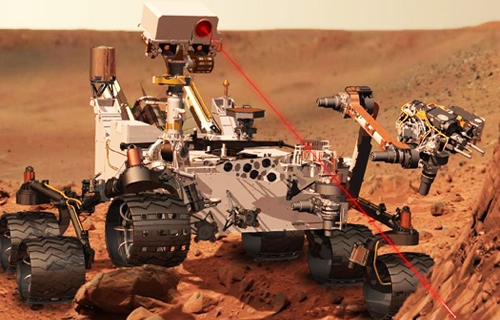 The ChemCam laser is used to determine the composition of Martian rocks and soils at a distance of up to 8 meters (25 feet). By hitting targets with several high-energy pulses, it is able to yield preliminary data for the scientists and engineers back at Earth to help them decide if a target warrants a closer investigation and, in rare cases, sampling and drilling activities.
ChemCam works through a process called laser-induced breakdown spectroscopy. The laser hits a target with pulses to generate sparks, whose spectra provide information about which chemical elements are in the target. Successive laser shots are fired in sequence to gradually blast away thin layers of material. Each shot exposes a slightly deeper layer for examination by the ChemCam spectrometer.
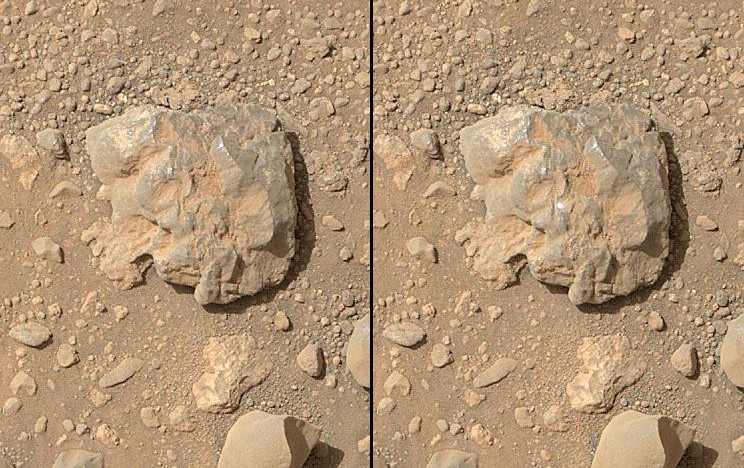 As Curiosity fired deeper into the target rock – named “Nova” – it showed an increasing concentration of aluminum as the sequential laser blasts penetrated through the uninteresting dust on the rock’s surface. Silicon and sodium were also detected. As Sylvestre Maurice, ChemCam’s Deputy Principal Investigator at the Research Institute in Astrophysics and Planetology, said in a statement:
This is so exciting! The ChemCam laser has fired more than 150,000 times on Mars, but this is the first time we see the plasma plume that is created… Each time the laser hits a target, the plasma light is caught and analyzed by ChemCam’s spectrometers. What the new images add is confirmation that the size and shape of the spark are what we anticipated under Martian conditions.
During it’s first year on Mars, Curiosity has already accomplished its primary objective of discovering a habitable zone on Mars that contains the minerals necessary to support microbial life billions of years ago when Mars was wetter and warmer. Currently, the rover is driving swiftly to the base of Mount Sharp at the center of Gale Crater, where it hopes to find more.
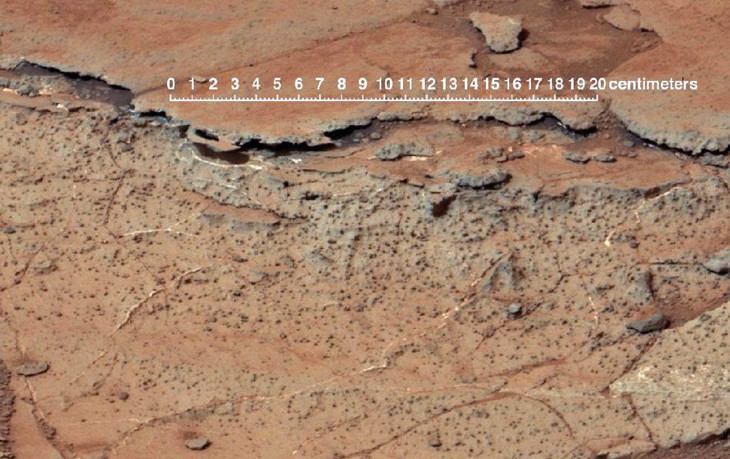 In that same vein, according to new geological information obtained by Curiosty’s images and soil examinations, samples that were pulled out of a crater that is estimated to be some 3.7 billion years old contain more evidence that Mars was once much warmer and wetter. These findings were announced in a recent paper published in the online edition of Geology by University of Oregon geologist Gregory Retallack.
Unlike Earth, the Martian landscape is littered with loose rocks from impacts or layered by catastrophic floods. However, recent images from Curiosity from the Gale Crater reveal Earth-like soil profiles with cracked surfaces lined with sulfate, ellipsoidal hollows and concentrations of sulfate comparable with soils in Antarctica’s McMurdo Dry Valleys and Chile’s Atacama Desert.
 Retallack, the paper’s lone author, studied mineral and chemical data published by researchers closely tied with the Curiosity mission. As a professor of geological sciences and co-director of paleontology research at the UO Museum of Natural and Cultural History, he internationally known as an expert on the recognition of paleosols – ancient fossilized soils contained in rocks.
As he explains in the paper:
The pictures were the first clue, but then all the data really nailed it. The key to this discovery has been the superb chemical and mineral analytical capability of the Curiosity Rover, which is an order of magnitude improvement over earlier generations of rovers. The new data show clear chemical weathering trends, and clay accumulation at the expense of the mineral olivine, as expected in soils on Earth. Phosphorus depletion within the profiles is especially tantalizing, because it attributed to microbial activity on Earth.
 The ancient soils do not prove that Mars once contained life, but they do add to growing evidence that an early, wetter and warmer Mars was more habitable than the planet has been in the past 3 billion years. Surface cracks in the deeply buried soils suggest typical soil clods. Vesicular hollows, or rounded holes, and sulfate concentrations, he said, are both features of desert soils on Earth.
Since Curiosity is currently on its way to Mount Sharp, future missions will be needed to fully explore these features. But as Retallack explained, the parallels with Earth are quite exciting:
None of these features is seen in younger surface soils of Mars. The exploration of Mars, like that of other planetary bodies, commonly turns up unexpected discoveries, but it is equally unexpected to discover such familiar ground.
The newly discovered soils indicate that more benign and habitable soil condition existed on Mars than previously expected. What’s more, their dating to 3.7 billion years ago places them within a transition period when the planet went from an early, benign water cycle to the acidic and arid Mars of today. This is especially important since major changes were taking place on Earth at around the same time.
 Roughly 3.5 billion years ago, life on Earth is believed to have emerged and began diversifying. But some scientists have theorized that potential evidence that might indicate that life existed on Earth earlier may have been destroyed by tectonic activity, which did not occur on Mars. Basically, it may offer some credence to the theory that while flourished on Earth, it originated on Mars.
One person who supports this theory is Steven Benner of the Westheimer Institute of Science and Technology in Florida. In the past, he has speculated that life is more likely to have originated on a soil planet like Mars than a water planet like Earth. In an email interview with Science Daily, Benner wrote that Retallack’s paper:
[S]hows not only soils that might be direct products of an early Martian life, but also the wet-dry cycles that many models require for the emergence of life.
So in addition to shedding light on the mysteries of Mars, Curiosity has also been pivotal in addressing some major questions which only increase the mystery of our own existence. Did life as we know it originate on Mars but flourish on Earth? Are there still some remnants of this microbial “Eden” being preserved deep within the soil and rocks? And could life exist there again some day?
All good questions that will no doubt keep robotic rovers, orbiters, landers, and even manned missions busy for many decades to come! In the meantime, check out the video from NASA’s Jet Propulsion Laboratory of Curiosity’s spark-generating laser blast being caught on tape:
Sources: universetoday.com, sciencedaily.com
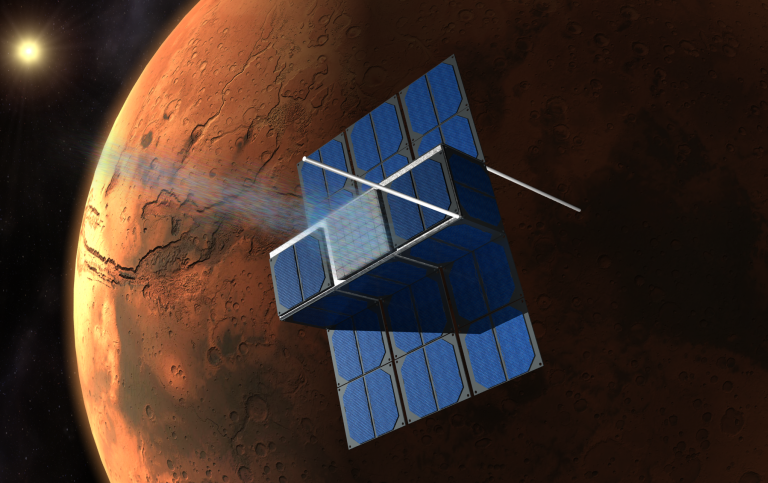

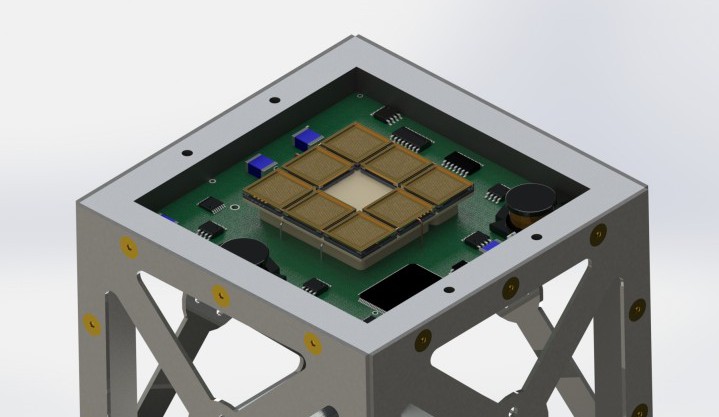
 The technologies being tested on the three spacecraft include delay-tolerant networking for the Deep Space Internet, inflatable antennae, and new interplanetary radiation sensors that will pave the way for future human trips to Mars. But out of all the new technologies being tested, the most exciting is certainly the propulsion system. But the most interesting technology of all will be in the form of its engines.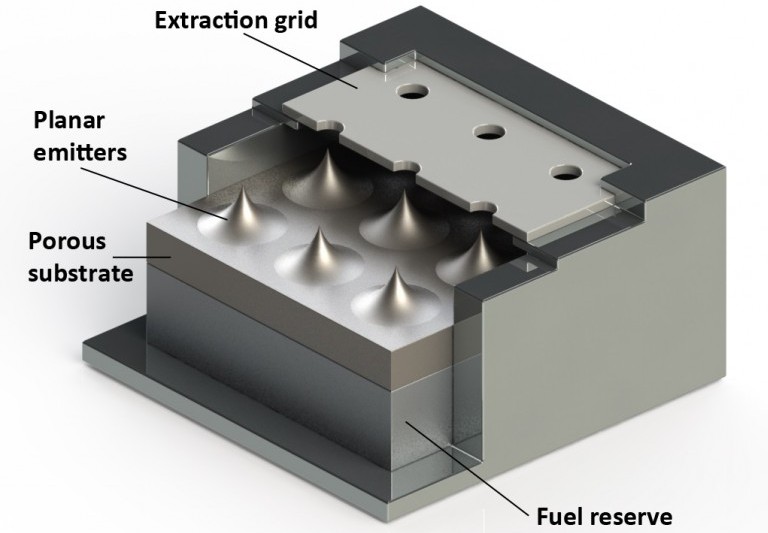
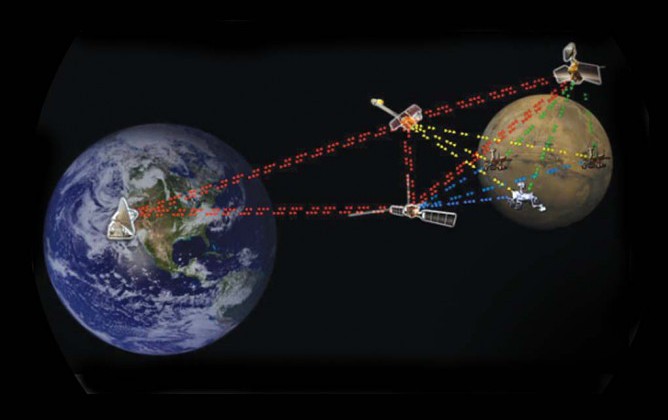
 The mission – called
  The couple’s drive to explore space was born in a giant glass dome near Tuscon, Arizona called Biosphere 2 in the early 90s. For two years (between 1991 and 1993), eight people – including Poynter and MacCallum – lived inside this dome as part of a prototype space colony. The eccentric, privately funded science experiment contained miniature biomes that mimicked Earth’s environments.
 MacCallum blogged about these plans while still living inside the dome, and managed to sign up Lockheed Martin aerospace engineer Grant Anderson as a co-founder, and signed legal papers with Poynter to incorporate Paragon. After Biosphere 2 project, both began working with a group from NASA to test an ecological experiment on the Russian Space Station MIR.
 Originally, Dennis Tito hoped to finance the project entirely independently, using crowd-sourced funds and philanthropy. The original goal was also to get the project off the ground by 2017, when Earth and Mars would align in such a way that a rocket could slingshot to and from Mars in just 501 days. But with further analysis, Tito and Paragon realized they did not have the resources or money to pull off the mission by 2017.
 And MacCallum believes a trip to Mars that would use these life support systems could inspire the next great generation of innovators, much as the Apollo missions inspired the current generation of innovators and astronauts. McCallum turned five on July 20th, 1969 – the day that Apollo 11 landed on the Moon, and credits that historic event for inspiring him to take an interest in space and enter the Biosphere 2 project.
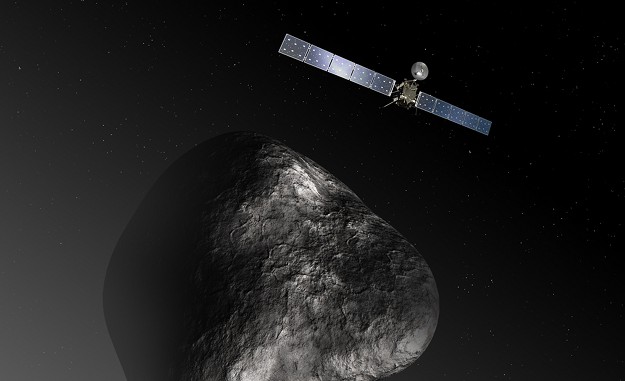 Space exploration is a booming industry these days. Between NASA, the ESA, Roscosmos, the CSA, and the federal space agencies of India and China, there’s just no shortage of exciting missions aimed at improving our understanding of our Solar System or the universe at large. In recent months, two such missions have been making the news; one of which (led by the ESA) is now underway, while the other (belonging to NASA) is fast-approaching.

 Named in honor of the Rosetta Stone – the a basalt slab that helped linguists crack ancient Egyptian – Rosetta is expected to provide the most detailed information about what comets look like up close (as well as inside and out). Similarly, the lander, Philae, is named after the island in the Nile where the stone was discovered. Together, they will help scientists shed light on the early history of our Solar System by examining one of its oldest inhabitants.
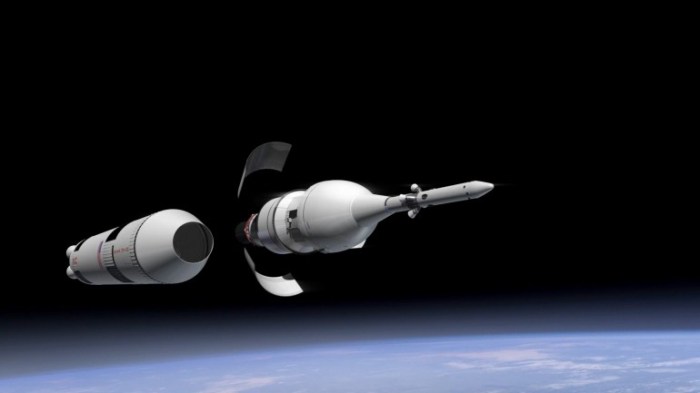
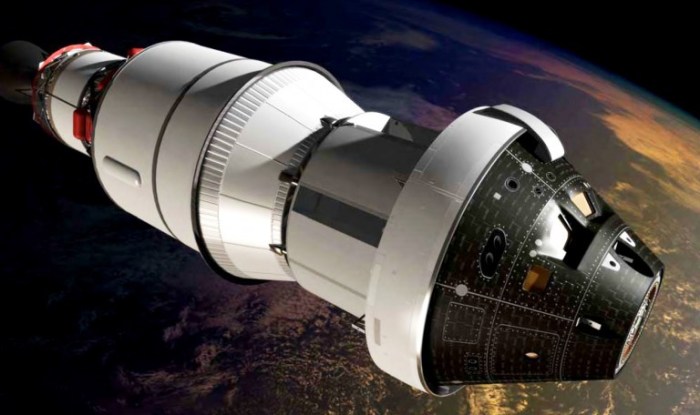 EFT-1 will take the form of an unmanned test flight, with the Orion spacecraft being controlled entirely by a flight control team from NASA’s Kennedy Space Center located in Florida. One vital component to be tested is the Launch Abort System (LAS), which in essence is a fail-safe required to protect astronauts should anything go wrong during the initial launch phase. Designed to encapsulate the crew module in the event of a failure on the launch pad, the LAS thrusters will fire and carry the Orion away from danger.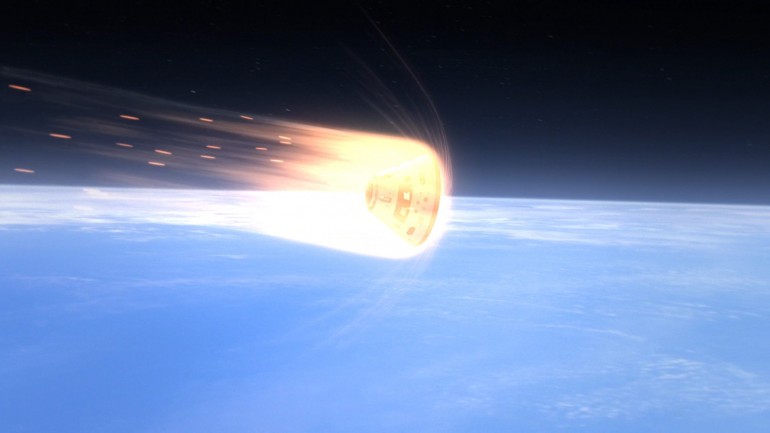
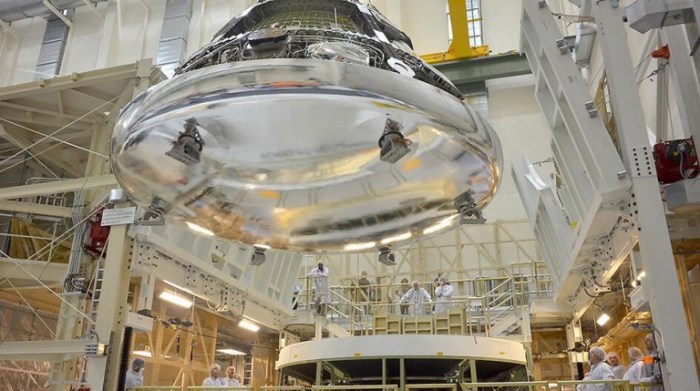 The final aspect of EFT-1 will be the observation of the parachute deployment system. Assuming the LAS has successfully jettisoned from the crew module following launch, the majority of Orion’s stopping power will be provided by the deploying of two drogue parachutes, followed shortly thereafter by three enormous primary parachutes, with the combined effect of slowing the spacecraft to 1/1000th of its initial re-entry speed.
 NASA staff on the ground will be nervously monitoring several key aspects of the proving mission, with the help of 1,200 additional sensors geared towards detecting vibration and temperature stress, while taking detailed measurements of event timing. Furthermore, cameras are set to be mounted aboard Orion to capture the action at key separation points, as well as views out of the windows of the capsule, and a live shot of the parachutes as they deploy (hopefully).


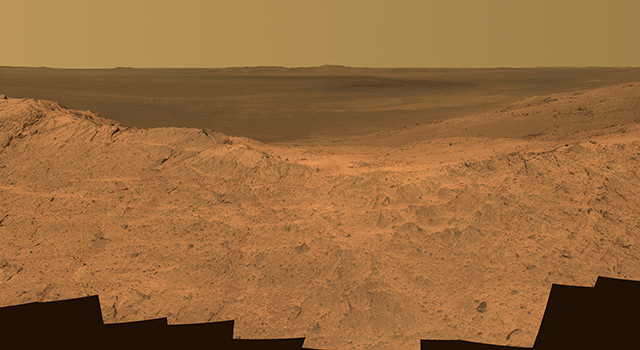 Initial measurements at this site with the element-identifying alpha particle X-ray spectrometer at the end of Opportunity’s arm indicate that bright-toned veins in the rock contain calcium sulfate. Scientists deduce this mineral was deposited as water moved through fractures on Endeavour’s rim. The rover found similar veins of calcium sulfate farther north along the rim while investigating there earlier last month.
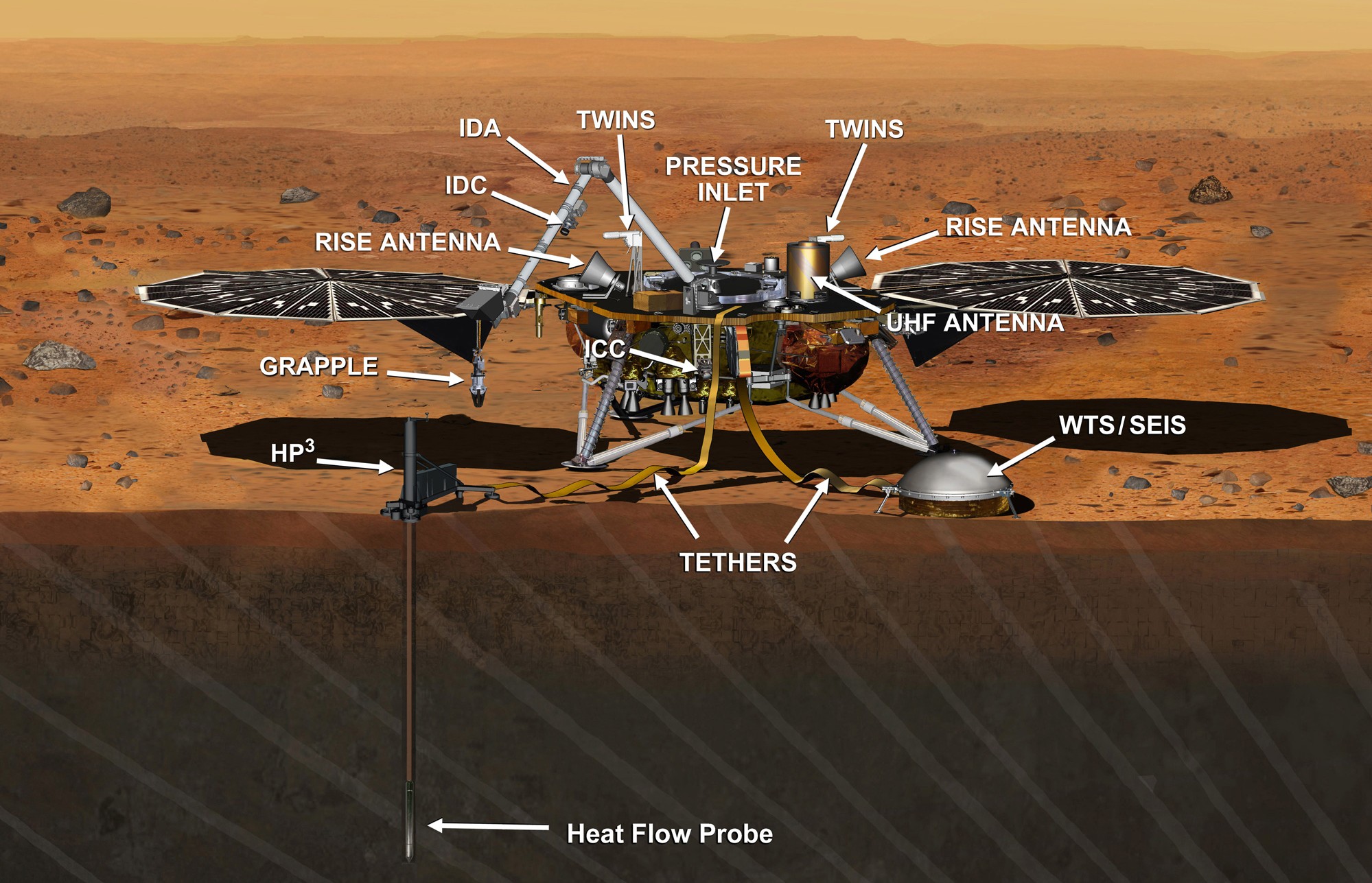
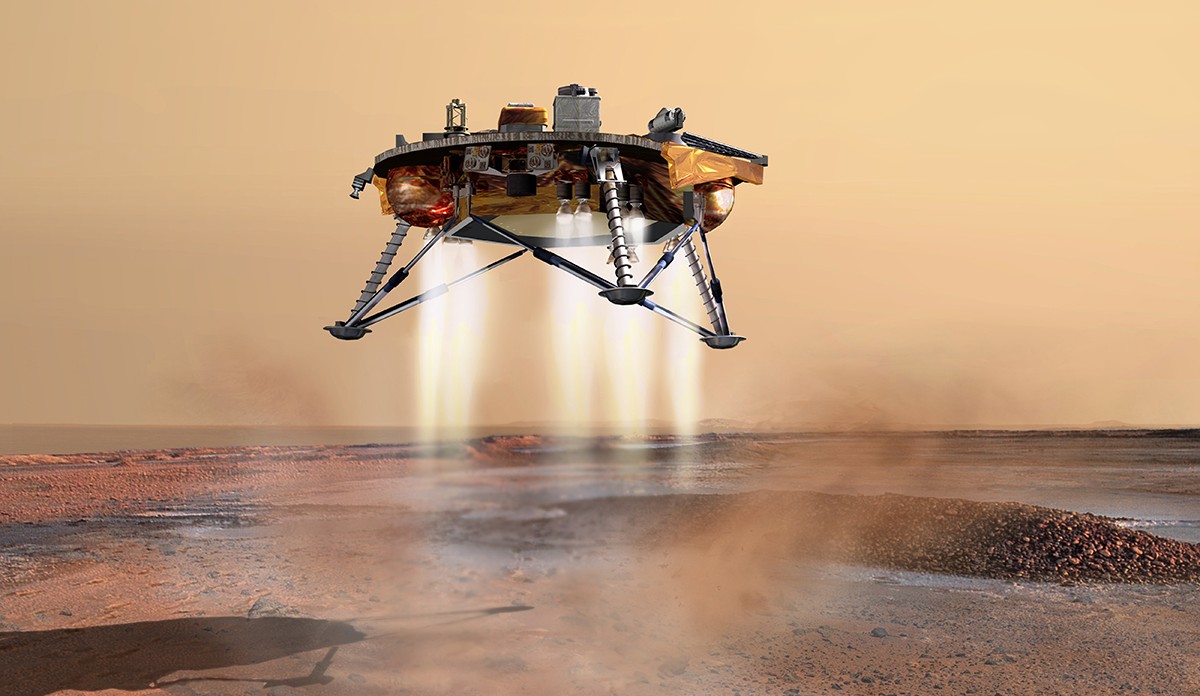

 After the daring new type of landing that was performed with the Curiosity rover, NASA went back to the drawing table to come up with something even better. Their solution: the “Low-Density Supersonic Decelerator”, a saucer-shaped vehicle consisting of an inflating buffer that goes around the ship’s heat shield. It is hopes that this will help future spacecrafts to put on the brakes as they enter Mar’s atmosphere so they can make a soft, controlled landing.


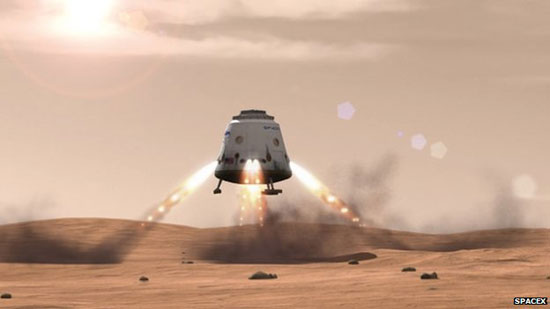 Other notable features include the propellent, which is a pair of non-cryogenic liquids – monomethyl hydrazine for the fuel and nitrogen tetroxide for the oxidizer. These are hypergolic, meaning that they ignite on contact with one another, which helps the SuperDraco to restart multiple times. It’s also built to be deep throttled, and can go from ignition to full throttle in 100 ms. But what really sets the SuperDraco apart is that is has 200 times the power of the Draco engine, which works out to 7,440 kg (16,400 lbs) of thrust.
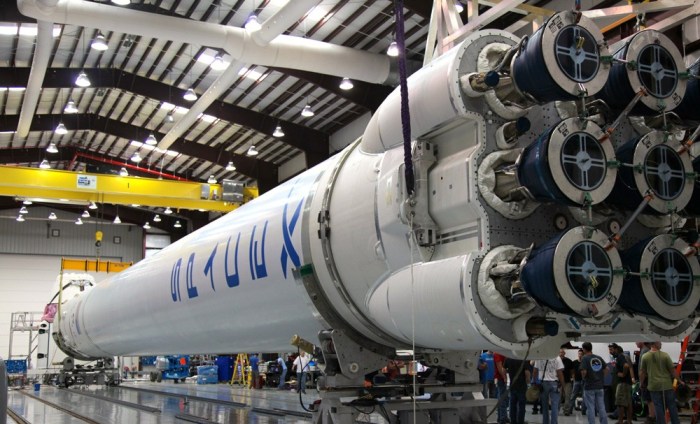 Eight engines firing for five seconds are enough to carry the capsule safely away from the booster with 120,000 lb of axial thrust. In addition, the eight engines also provide a high degree of redundancy should one or more engines fail. But what’s really ambitious about the SuperDraco is that, like the Falcon 9 booster, the Dragon is designed to ultimately return to its spaceport under its own power and land with the precision of a helicopter, and it’s the power and control of the SuperDraco that makes this possible.
 But equally impressive was the unveiling of the Dragon V2 manned space capsule, which took place at a brief media event at SpaceX’s Hawthorne, California headquarters at the end of May. This larger, more powerful version of the reusable Dragon capsule will one day carry astronauts to the International Space Station (ISS) and return to Earth to land under its own power. This latest development brings the company one step closer towards its ultimate goal of a fully reusable manned capsule capable of making a powered landing.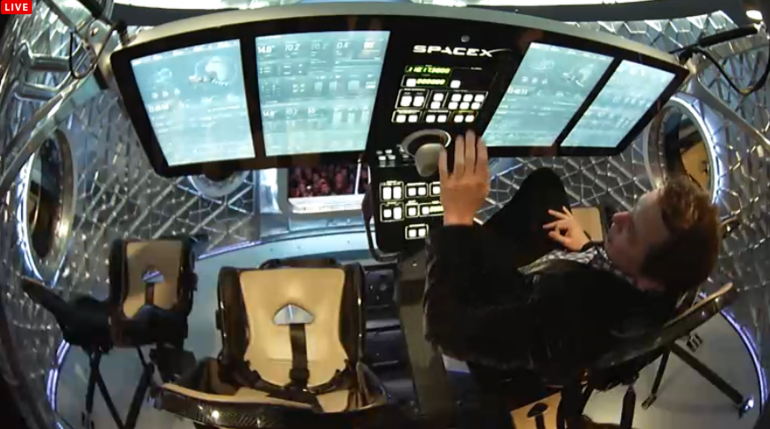



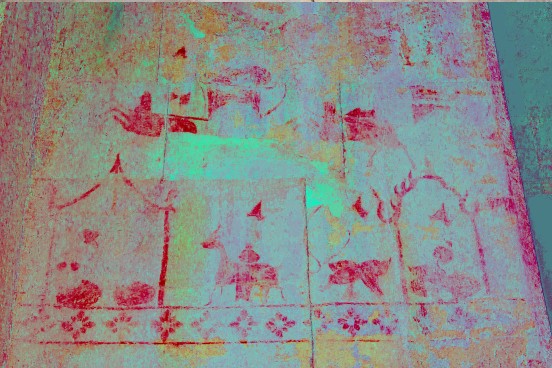
 And though researchers can’t be sure exactly when the paintings were created, Tan speculates that the most elaborate artworks may have been commissioned by Cambodia’s King Ang Chan, who made an effort to restore the temple during his reign between 1528 and 1566. During this time, unfinished carvings were completed and Angkor Wat began its transformation into a Buddhist pilgrimage site, which are confirmed by some of the newly revealed paintings that show Buddhist iconography.


 Stories by Williams