Wanted: Married Couple to go to Mars

tito-mars-mission-conceptSounds like the setup for a sci-fi romantic comedy doesn’t it? But in fact, it’s the basis for a planned Mars mission which is being hosted by space adventurist Dennis Tito. As the head of the non-profit organization known as Inspiration Mars, Tito has long believed that humanity must seize on the opportunity being provided by a new generation of space exploration, with the intention of becoming a truly “multi-planet species”.

The mission will consist of sending two professional crew members –  who will likely be a married couple – on a “fast, free-return” mission, passing within 160 kilometers of Mars before swinging back and safely returning to Earth. The spacecraft will likely be tinier than a small Winnebago recreational vehicle, and will be launched on Jan. 5, 2018 when planet Earth and Mars will be in alignment.

inspiration_marsTo make it happen, Inspiration Mars has signed a Space Act Agreement with NASA – specifically the Ames Research Center (Ames) – to conduct thermal protection system and technology testing and evaluation, as well as tapping into NASA’s knowledge, experience and technologies. Tito emphasized during their initial meeting that his organization was not looking for money, but a partner to help them develop the required technologies.

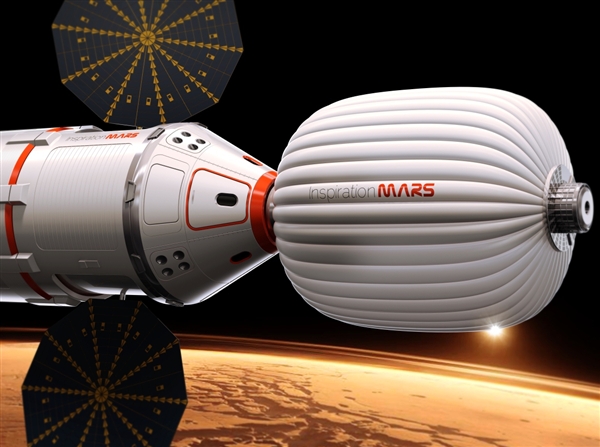
The mission system will consist of a modified capsule launched out of Earth orbit using a single propulsive maneuver to achieve the Mars trajectory. An inflatable habitat module will be deployed after launch and detached prior to re-entry. Closed-loop life support and operational components will be located inside the vehicle, designed for simplicity and “hands-on” maintenance and repair.

Mars_A1_Latest_2014As already stated, the mission is a non-profit venture that is designed to inspire. As Tito himself put it:

“[the mission will engage] the best minds in industry, government and academia to develop and integrate the space flight systems and to design innovative research, education and outreach programs for the mission. This low-cost, collaborative, philanthropic approach to tackling this dynamic challenge will showcase U.S. innovation at its best and benefit all Americans in a variety of ways.”

What’s more, Tito believes that the time is right for this mission, and not only because of the orbital window of opportunity. “Investments in human space exploration technologies and operations by NASA and the space industry are converging at the right time to make this mission achievable,” he said.

The mission will last 501 days, and Tito has emphasized that it will be an American adventure, not an international one. Tito himself plans to fund the next two years of the mission, beyond that it will be funded primarily through private, charitable donations, as well as government partners that can provide expertise, access to infrastructure and other technical assistance. He also believes media rights will be a major part of things, since the mission will be an historic first and ought to be caught on tape!

mars_lifeAnd the reason they wanted a married couple to do the deed is quite simple. Jane Poyter, a member of Inspiration Mars explains:

“Imagine, it’s a really long road trip and you’re jammed into an RV and you can’t get out,” Poynter said. “There’s no microgravity … all you have to eat for over 500 days are 3,000 lbs of dehydrated food that they rehydrate with the same water over and over that will be recycled,” adding that the two crew will need the proven ability to be with each other for the long term.

Makes sense. After all, who but a couple already intimately familiar with each others foibles and used to spending an inordinate amount of time together could make it 501 days without killing each other? And as we all know, taking a trip together is the true test of a relationship’s mettle, especially when its a capsule smaller than an RV with no chance of escape!

And for Tito’s sake, I hope things work out. One thing is for sure, his dream of a public-private relationship to make space travel happen is already taking shape.

In the meantime, be sure to check out the promotional animation, showing the mission and the mechanics of the free return trajectory:

Source: www.universetoday.com, inspirationmars.com
Asteriod Prospecting by 2015

asteroid_beltDeep Space Industries, a private aerospace company, has been making a big splash in the news lately. Alongside SpaceX, they have been pioneering a new age in space exploration, where costs are reduced and private companies are picking up the slack. And in their latest bid to claim a share of space, the company announced plans late in January to begin asteroid prospecting operations by 2015.

For some time, the concept of sending spaceships to mine asteroids and haul ore has been explored as a serious option. Within the asteroid belt that lies between Mars and Jupiter, countless tons of precious metals, carbon, silicates, and basaltic minerals. If humanity could tap a fraction of a fraction of that mineral wealth, it would be able to supply Earth’s manufacturing needs indefinitely, without all the harmful pollutants or run off caused by mining.

asteroid_miningSo to tap this potential goldmine (literally!) known as the Asteroid Belt, DSI plans to launch a fleet of mini spacecraft into solar orbit to identify potential targets near to Earth that would be suitable to mine. Lacking the resources of some of the bigger players in the space rush, DSI’s probes will ride-share on the launch of larger communications satellites and get a discounted delivery to space.

Initially, a group of 25kg (55 pounds) cubesats with the awesome designation “Firefly” will be launched on a journey lasting from two to six months in 2015. Then, in 2016, the 32 kilograms (70 pound) DragonFly spacecraft will begin their two-to-four-year expeditions and return with up to 68 kilograms (150 pounds) of bounty each. Beyond this, DSI has some truly ambitious plans to establish a foundry amongst the asteroids.

asteroid_foundryThat’s another thing about the Belt. Not only is it an incredibly rich source of minerals, its asteroids would make an ideal place for relocating much of Earth’s heavy industry. Automated facilities, anchored to the surface and processing metals and other materials on site would also reduce the burden on Earth’s environment. Not only would there be no air to befoul with emissions, but the processes used would generate no harmful pollutants.

In DSI’s plan, the foundry would use a patent-pending nickel gas process developed by one of DSI’s co-founders, Stephen Covey, known as “sintering”. This is the same process that is being considered by NASA to build a Moon Base in the Shackleton Crater near the Moon’s south pole. Relying on this same technology, automated foundries could turn ore into finished products with little more than microwave radiation and a 3D printer, which could then be shipped back to Earth.

deepspaceindustries-640x353Naturally, DSI will have plenty of competition down the road. The biggest comes from Google-backed Planetary Resources which staked it claim to an asteroid last April. Much like DSI, they hope to be able to mine everything from water to fuel as well as minerals and rare earths. And of course, SpaceX, which has the most impressive track record thus far, is likely to be looking to the Asteroid Belt before long.

And Golden Spike, the company that is promising commercial flight to the Moon by 2020 is sure to not be left behind. And as for Virgin Galactic, well… Richard Branson didn’t get crazy, stinking rich by letting opportunities pass him by. And given the size and scope of the Belt itself, there’s likely to be no shortage of companies trying to stake a claim, and more than enough for everyone.

So get on board ye capitalist prospectors! A new frontier awaits beyond the rim of Mars…

Source: Extremetech.com

Life-Giving Elements Found on Mars!

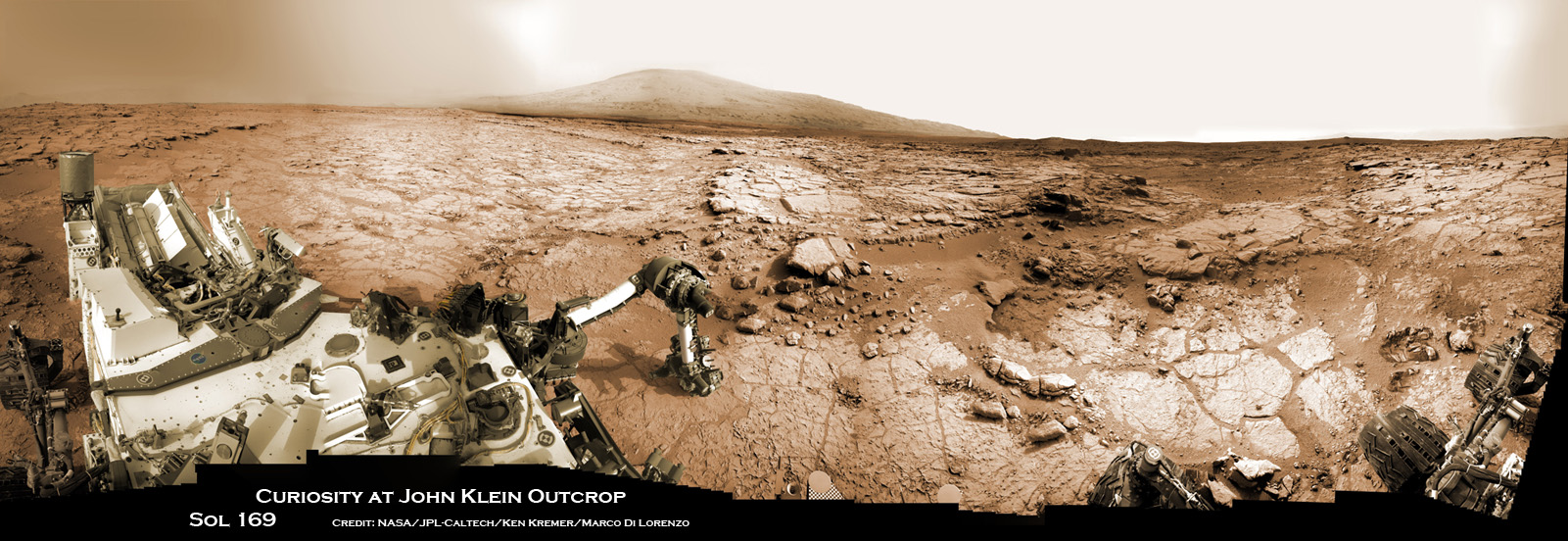
Curiosity_drillingsCuriosity has just finished analyzing the samples collected from its first drilling operation at the John Klein rock formation in Yellowknife Bay. And what it found confirms what scientists have suspected about the Red Planet for some time. Contained within grey the dust collected from the rock’s interior, the rover discovered some of the key chemical ingredients necessary for life to have thrived on early Mars billions of years ago.

After running the two aspirin-sized samples through its two analytical chemistry labs (SAM and CheMin), the Mars Science Laboratory was able to identify the presence of carbon, hydrogen, oxygen, nitrogen, sulfur and phosphorus in the sample – all of which are essential constituents for life as we know it based on organic molecules.

Curiosity_chemWhat’s more, according to David Blake – the principal investigator for the CheMin instrument – a large portion of the sample was made up of clay minerals, which in itself is telling. The combined presence of these basic elements and abundant phyllosilicate clay minerals indicate that the area was once home to a fresh water environment, one where Martian microbes could once have thrived in the distant past.

By confirming this, the Curiosity Rover has officially met one of its most important research goals – proving that all the elements necessary for life to flourish were once present on Mars. And when you consider that the Curiosity team was not expecting to find evidence of phyllosilicate minerals in the Gale Crater, the find was an especial delight. Based on spectral observations conducted from orbit, phyllosilicates were only expected to be found in the lower reaches of Mount Sharp, which is Curiosity’s ultimate destination.

Curiosity-Sol-169_5C1b_Ken-KremerSo what’s next for Curiosity? According to John Grotzinger, the Principal Investigator for the Mars Science Laboratory, Curiosity will remain in the Yellowknife Bay area for several additional weeks or months to fully characterize the area. The rover will also conduct at least one more drilling campaign to try and replicate the results, check for organic molecules and search for new discoveries.

Source: universetoday.com

NASA’s 3D Printed Moon Base

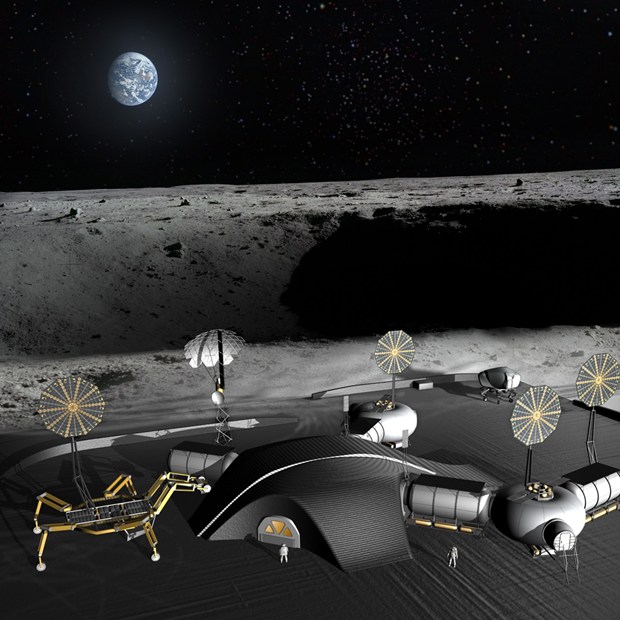
ESA_moonbaseSounds like the title of a funky children’s story, doesn’t it? But in fact, it’s actually part of NASA’s plan for building a Lunar base that could one day support inhabitants and make humanity a truly interplanetary species. My thanks to Raven Lunatick for once again beating me to the punch! While I don’t consider myself the jealous type, knowing that my friends and colleagues are in the know before I am on stuff like this always gets me!

In any case, people may recall that back in January of 2013, the European Space Agency announced that it could be possible to build a Lunar Base using 3D printing technology and moon dust. Teaming up with the architecture firm Foster + Partners, they were able to demonstrate that one could fashion entire structures cheaply and quite easily using only regolith, inflatable frames, and 3D printing technology.

sinterhab2_1And now, it seems that NASA is on board with the idea and is coming up with its own plans for a Lunar base. Much like the ESA’s planned habitat, NASA’s would be located in the Shackleton Crater near the Moon’s south pole, where sunlight (and thus solar energy) is nearly constant due to the Moon’s inclination on the crater’s rim. What’s more, NASA”s plan would also rely on the combination of lunar dust and 3D printing for the sake of construction.

However, the two plans differ in some key respects. For one, NASA’s plan – which goes by the name of SisterHab – is far more ambitious. As a joint research project between space architects Tomas Rousek, Katarina Eriksson and Ondrej Doule and scientists from Nasa’s Jet Propulsion Laboratory (JPL), SinterHab is so-named because it involves sintering lunar dust: heating it up with microwaves to the point where the dust fuses to become a solid, ceramic-like block.

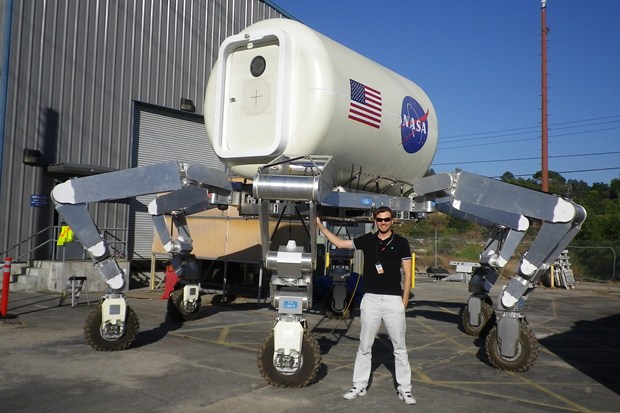
This would mean that bonding agents would not have to be flown to the Moon, which is called for in the ESA’s plan. What’s more, the NASA base would be constructed by a series of giant spider robots designed by JPL Robotics. The prototype version of this mechanical spider is known as the Athlete rover, which despite being a half-size variant of the real thing has already been successfully tested on Earth.

athlete_robotEach one of these robots is human-controlled, has six 8.2m legs with wheels at the end, and comes with a detachable habitable capsule mounted at the top. Each limb has a different function, depending on what the controller is looking to do. For example, it has tools for digging and scooping up soil samples, manipulators for poking around in the soil, and will have a microwave 3D printer mounted on one of the legs for the sake of building the base. It also has 48 3D cameras that stream video to its operator or a remote controlling station.

The immediate advantages to NASA’s plan are pretty clear. Sintering is quite cheap, in terms of power as well as materials, and current estimates claim that an Athlete rover should be able to construct a habitation “bubble” in only two weeks. Another benefit of the process is that astronauts could use it on the surface of the Moon surrounding their base, binding dust and stopping it from clogging their equipment. Moon dust is extremely abrasive, made up of tiny, jagged morcels rather than finely eroded spheres.

sinterhab3Since it was first proposed in 2010 at the International Aeronautical Congress, the concept of SinterHab has been continually refined and updated. In the end, a base built on its specifications will look like a rocky mass of bubbles connected together, with cladding added later. The equilibrium and symmetry afforded in this design not only ensures that grouping will be easy, but will also guarantee the structural integrity and longevity of the structures.

As engineers have known for quite some time, there’s just something about domes and bubble-like structures that were made to last. Ever been to St. Peter’s Basilica in Rome, or the Blue Mosque in Istanbul? Ever looked at a centuries old building with Onion Dome and felt awed by their natural beauty? Well, there’s a  reason they’re still standing! Knowing that we can expect similar beauty and engineering brilliance down the road gives me comfort.

In the meantime, have a gander at the gallery for the proposed SinterHab base, and be sure to check out this video of the Athlete rover in action:

Source: Wired.co.uk, robotics.jpl.nasa.gov

Powered by the Sun: The Future of Solar Energy

Magnificent CME Erupts on the Sun - August 31Researchers continue to work steadily to make the dream of abundant solar energy a reality. And in recent years, a number of ideas and projects have begun to bear fruit. Earlier this year, their was the announcement of a new kind of “peel and stick” solar panel which was quite impressive. Little did I know, this was just the tip of the iceberg.

Since that time, I have come across four very interesting stories that talk about the future of solar power, and I feel the need to share them all! But, not wanting to fill your page with a massive post, I’ve decided to break them down and do a week long segment dedicated to emerging solar technology and its wicked-cool applications. So welcome to the first installment of Powered By The Sun!

spaceX_solararrayThe first story comes to us by way of SpaceX, Deep Space Industries, and other commercial space agencies that are looking to make space-based solar power (SBSP) a reality. For those not familiar with the concept, this involves placing a solar farm in orbit that would then harvest energy from the sun and then beam the resulting electricity back to Earth using microwave- or laser-based wireless power transmission.

Originally described by Isaac Asimov in his short story “Reason”, the concept of an actual space-based solar array was first adopted by NASA in 1974. Since that time, they have been investigating the concept alongside the US Department of Energy as a solution to the problem of meeting Earth’s energy demands, and the cost of establishing a reliable network of arrays here on Earth.

Constructing large arrays on the surface is a prohibitively expensive and inefficient way of gathering power, due largely to weather patterns, seasons, and the day-night cycle which would interfere with reliable solar collection. What’s more, the sunniest parts of the world are quite far from the major centers of demand – i.e. Western Europe, North America, India and East Asia – and at the present time, transmitting energy over that long a distance is virtually impossible.

NASA "Suntower" concept
NASA “Suntower” concept

Compared to that, an orbiting installation like the SBSP would have numerous advantages. Orbiting outside of the Earth’s atmosphere, it would be able to receive about 30% more power from the Sun, would be operational for almost 24 hours per day, and if placed directly above the equator, it wouldn’t be affected by the seasons either. But the biggest benefit of all would be the ability to beam the power directly to whoever needed it.

But of course, cost remains an issue, which is the only reason why NASA hasn’t undertaken to do this already. Over the years, many concepts have been considered over at NASA and other space agencies. But due to the high cost of putting anything in orbit, moving up all the materials required to build a large scale installation was simply not cost effective.

spacex-dragon-capsule-grabbed-by-iss-canadarm-640x424However, that is all set to change. Companies like SpaceX, who have already taken part in commercial space flight (such as the first commercial resupply to the ISS in May of 2012, picture above) are working on finding ways to lower the cost of putting materials and supplies into orbit. Currently, it costs about $20,000 to place a kilogram (2.2lbs) into geostationary orbit (GSO), and about half that for low-Earth orbit (LEO). But SpaceX’s CEO, Elon Musk, has said that he wants to bring the price down to $500 per pound, at which point, things become much more feasible.

And when that happens, there will be no shortage of clients looking to put an SBSP array into orbit. In the wake of the Fukushima accident, the Japanese government announced plans to launch a two-kilometer-wide 1-gigawatt SBSP plant into space. The Russian Space Agency already has a a working 100-kilowatt SBSP prototype, but has not yet announced a launch date. And China, the Earth’s fastest-growing consumer of electricity, plans to put a 100kW SBSP into Low-Earth Orbit by 2025.

space-based-solarpowerMost notably, however, is John Mankins, the CTO of Deep Space Industries and a 25-year NASA vet, who has produced an updated report on the viability of SBSP. His conclusion, in short, is that it should be possible to build a small-scale, pilot solar farm dubbed SPS-ALPHA for $5 billion and a large-scale, multi-kilometer wide power plant for $20 billion. NASA’s funding for SPS-ALPHA dried up last year, but presumably Mankins’ work continues at Deep Space Industries.

Cost and the long-term hazards of having an array in space remain, but considering its long-term importance and the shot in the arm space exploration has received in recent years – i.e. the Curiosity Rover, the proposed L2 Moon outpost, manned missions to Mars by 2030 – we could be looking at the full-scale construction of orbital power plants sometime early in the next decade.

And it won’t be a moment too soon! Considering Earth’s growing population, its escalating impact on the surface, the limits of many proposed alternative fuels, and the fact that we are nowhere near to resolving the problem of Climate Change, space-based solar power may be just what the doctor ordered!

Thanks for reading and stay tuned for the next installment in the Powered By The Sun series!

Source: Extremetech.com

Global Warming Slowed by Volcanoes

Klyuchevskaya Volcano. NASA Goddard Space Flight Center

Global mean temperatures have been rising in recent years, consistent with every projection provided by Climate Change specialists and planetary ecologists. However, it now seems as though the rate of increase is not as bad as it should have been, thanks to a series of small-to-moderate-sized volcanic eruptions that have spewed sunlight-blocking particles high into the atmosphere.

Between 2000 and 2010, the average atmospheric concentration of carbon dioxide rose more from about 370 parts per million to nearly 390. According to Ryan Neely III, an atmospheric scientist at the University of Colorado, Boulder, if that uptick were the only factor driving climate change, the average global temperature would have risen about 0.2°C. But a surge in the concentration of light-scattering particles in the stratosphere countered as much as 25% of that potential temperature increase.

Sanpedropable Volcano as seen from the ISS
San Pedro Volcano, as seen from the ISS

In addition, Neely and his colleagues ran a series of simulations that indicated that human the human contribution of aerosols to the stratosphere – which would have had a counteractive effect to the carbon – was minimal between 2000 and 2010. William Randel, an atmospheric scientist at the National Center for Atmospheric Research in Boulder claimed that the pattern of stratospheric particulate variations during the past decade “shows the fingerprint of volcanoes, with the right episodes showing up at the right time.”

For some time now, researchers and ecologists have known that sulfur dioxide, a major biproduct of volcanic eruptions, has a global cooling effect. Once introduced into the upper atmosphere, this particulate matter blocks out solar radiation and prevents it from being absorbed by the Earth’s soil, water, and plant life. In fact, it was a massive series of eruptions which took place during the Cretaceous–Paleogene Era that is believed to be linked to the extinction of the dinosaurs.

converted PNM fileFor many years, geoengineers have considered releasing sulfur dioxide into the upper atmosphere in order to slow down the process of Climate Change, a measure intended to give Earth’s scientists more time to develop alternative fuels and its people more time to get their act together. However, at this juncture it seems that the planet has obliged us and given us a bit of window, and completely unheeded.

It’s good to know that human agency alone does not determine the course this planet will take. At the same time however, one should not get too enthused and think this means we’re in for a big reprieve. Based on the most recent data, humanity still only has a few decades before the worst begins to happen and our world slowly becomes uninhabitable.

Source: sciencemag.org, Wired.com


NASA’s Cold Fusion Technology

cold_fusionIn 1989, two scientific researchers – Martin Fleischmann and Stanley Pons – announced the achievement of cold fusion. In a press release that garnered massive amounts of publicity, they stating that their experiment, involving a electrified palladium rod placed in a solution of heavy water, had succeeded in absorbing hydrogen and compressing it within the rod to the point that individual atoms began to fuse and helium was formed.

Naturally, other labs began to test their method and found that the same did not happen for them. With time, the experiment was revealed to be the result of a false positive as more and more labs claimed they unable to replicate the results. In the end, their announcement appeared premature and their claims unscientific. Still, the men never retracted their claim and moved their labs overseas.

NASA_coldfusionAnd interestingly enough, the declaration that they had achieved the dream of clean, abundant, cheap energy fueled the public’s imagination. Henceforth, the concept of cold fusion, as they had preached it, was featured in numerous movies and stories, even though it was now believed to be something of a pipe dream. And for some, the idea of the technology never died. Cold fusion remained a scientific dream similar to a Grand Unifying Theory or the elusive Higgs Boson.

One such organization is NASA, who continues work on this science through the development of their low-energy nuclear reaction (LENR) technology. It is their hope that one day the technology will be sophisticated enough to become commercially viable, making cold fusion reactors that could power everything  – from homes, to cars, to planes – a reality.

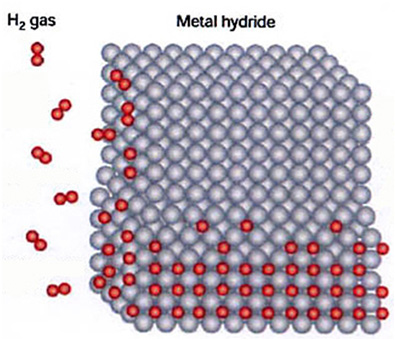
lner-nickel-hydrogen-latticeAnd unlike previous attempts that sought to harness basic fusion, the technology behind the LENR is really quite revolutionary. Rather than rely on strong nuclear forces to meld atoms and produce energy, LENR harnesses the power of weak nuclear force.

This is done by using an oscillating nickel lattice that takes in hydrogen atoms and then exchanges electrons with them. This has the effect of forming slow-moving neutrons which are absorbed, making the nickel unstable. To regain its stability, the nickel strips a neutron of its electron so that it becomes a proton — a reaction that turns the nickel into copper and creates a lot of energy in the process.

The big upside to this process is the fact that it produces zero ionizing radiation and zero radioactive waste, making it the safest and cleanest nuclear process to date. In addition, NASA claims that relying on reactors like these, it would only take 1% of the world’s nickle production to meet the world’s current energy needs, and at a quarter of the cost of dirtier fuels like coal. On top of that, they’ve also indicated that the same process can be done using a carbon lattice instead of nickel, making it even more versatile.

???????????????????????????????So the question remains, why isn’t every household running on a LENR reactor already? Well, two problems. For one, the amount of energy needed to get the ball rolling is quite high. Initially, the LENR requires a 5-30THz frequency burst of energy to make the nickel lattice begin oscillating, which is difficult to efficiently produce.

Second, other labs have experienced a few… uh, accidents… trying to reproduce the process, which included a few explosions and some melted windows. No deaths were reported, mind you, but it does demonstrate that the process can generate a LOT of power if not properly controlled.

Still, other means of generating electricity, such as nuclear fission, have experienced some bumps along the way (i.e. Chernobyl and Three Mile Island) and we still rely on them. And oil and coal are what we’ve come to think of as “dirty means” of generating power, meaning they cause tremendous amounts of pollution or can lead to environmental debacles, such as oil spills. And natural gas can only last so long. So realistically, there may be hope for LENR and cold fusion yet.

Fingers so very crossed! And be sure to check out NASA’s video explaining the process:


Source:
Extremetech.com

More News from Mars… Lots More!

marsIt’s a good thing I’ve come down with a cold and have little to do but sit at my computer. Because in the last week, some very interesting news stories have been piling up that just scream for recognition. And wouldn’t you know it, more than a few have to do with our big red neighbor Mars, that world many human beings will one day think of as home.

The first story comes to us from the Siding Spring Observatory in New South Wales, where noted astronomer Robert McNaught recently sighted an new comet. From his observations, the icy interloper appeared to have originated in the Oort Cloud – a hypothetical cloud surrounding the solar system and containing billions of icy planetesimals that were cast out from our Solar System billions of years ago.

Mars_A1_Latest_2014After news of the discovery was released, the astronomers at the Catalina Sky Survey in Arizona looked back over their observations to find “prerecovery” images of the comet dating back to Dec. 8, 2012. These observations placed the orbital trajectory of the comet – now known as C/2013 A1 – through the orbit of Mars on Oct. 19, 2014. This means, in essence, that this comet could very well strike the Red Planet late next year.

Luckily, NASA’s Jet Propulsion Laboratory has run the calculations and indicated that their close approach data suggests the comet is most likely to make a close pass of the Martian surface. And by close, they mean at roughly 0.0007 AU, or approximately 100,000 kilometers (63,000 miles) from the Martian surface. So in all likelihood, Curiosity and Opportunity will be safe from a serious impact that could turn them into scrap metal!

But of course, predicting its exact trajectory at this time is subject to guess work, and ongoing observations will be needed. No doubt, the predictions will be refined a the next 20 months go by, and we’ll know for sure if this comet plans to miss Mars completely, or slam head-on into the surface at 200,000 km/h (126,000 mph).

Source: news.discover.com, astroblogger.blogspot.ca

Mars_curiosity_drillingThe second bit of news comes to us from the good-ole Curiosity Rover! Roughly four weeks after conducting the first drilling operation into the Martian surface, the Rover ate its first sample of the grey dust that resulted. The delivery of the two aspiring-sized tablets of dust took place on Feb. 22nd and 23rd respectively after the robotic arm delivered them into the rover’s Chemistry and Mineralogy (CheMin) and Sample Analysis at Mars (SAM) laboratories for analysis. Results expected in two weeks!

Among other things, the results from the analysis are expected to give clues as to what the color change between the red surface and the grey interior means. One theory is that it might be related to different oxidations states of iron that could potentially inform us about the habitability of Mars inside the rover’s Gale Crater landing site.

Living-Mars.2At the same time, the Mars Science Laboratory team expects to find further evidence of what life was like in previous geological eras. The Curiosity team believes that the area inside the Gale Crater, known as Yellowknife Bay, experienced repeated exposure to flowing liquid water long ago when Mars was warmer and wetter – and therefore was potentially more hospitable to the possible evolution of life.

The rover will likely remain in the John Klein area for a month or more to obtain a more complete scientific characterization of the area which has seen repeated episodes of flowing water. Eventually, the six-wheeled mega rover will set off on a year long trek to her main destination: the sedimentary layers at the lower reaches of the  5 km (3 mile) high mountain named Mount Sharp.

Source: universetoday.com

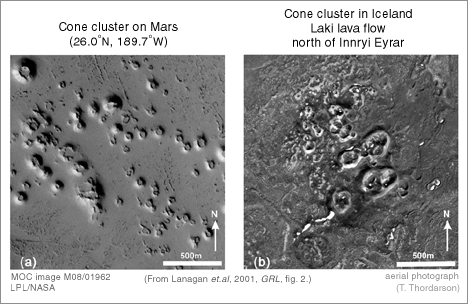
mars_hieroglyphsAnd last, but not least by any stretch of the imagination, is the discovery of “hieroglyphs” on the Martian surface. While they might appear like ancient glyphs to the untrained eye, they are in fact evidence of past subsurface water. The images were caught by the HiRISE camera on the Mars Reconnaissance Orbiter as it passed the surface area known as Amazonis Planitia.

Known as ‘rootless cones,’ these geological features are the result of an explosive interaction of lava with ground ice or water contained within the regolith beneath the flow. Vaporization of the water or ice when the hot lava comes in contact causes an explosive expansion of the water vapor, causing the lava to shoot upward, creating what appears to be a button hole on the surface.

rootlessConesIn the past, Mars scientists have used geological patterns on Earth to make sense of similar ones found on Mars. For example, when the Curiosity Rover discovered veins of hydrated calcium in the rock surface in the Gale Crater, they compared them to similar patterns found in Egypt to determine that they were the result of long-term exposure to water flows. In this case, the rootless cones found in Amazonis Planitia are comparable to those found in Iceland’s Laki Lava Flow (as seen above).

According to Colin Dunas, from the US Geological Survey, the cones are rather large and most likely very old:

“The cones are on the order of a hundred meters across and ten meters high. The age of these specific cones isn’t known. They are on a mid- to late-Amazonian geologic unit, which means that they are young by Martian standards but could be as much as a few hundred million to over a billion years old.”

terraformingOnly time will tell if any subsurface water is still there, and hence usable by future teams of terraformers and settlers. According to Dundas, the odds are not so good of that being the case. Given the surface depth at which the ice was found, not to mention that at the low latitude at which it was found (22 degrees north), shallow ground ice is unstable. Dundas added that since ice stability varies as the obliquity changes, it’s even possible that ice has come and gone repeatedly since the lava erupted.

Too bad. That could have come in really handy for hydroponics, fuel cells, and even restoring surface water to the planet. Guess future generations of Martians will just have to look for their ground and irrigation water elsewhere, huh? Just another challenge of converting the Red Planet to a green one, I guess 😉

Stay tuned for more news Mars. As it stands, there’s plenty to be had! Stick around!

Source: hirise.lpl.arizona.edu, universetoday.com

Eyes in the Sky: The Future of Asteroid Defense

asteroid_beltWith the recent passage of DA14 – an asteroid half as large as a football field and packing the power of a hydrogen bomb – and the rather explosive display that occurred above Russian skies, it’s little wonder then why NASA and other space agencies are publicizing various existing and proposed solutions to our “asteroid problem”.

Granted, there really isn’t much of a threat of an asteroid colliding with the Earth in the foreseeable future. And we also know that the meteor that graced the skies over the Urals was unrelated to the DA14 behemoth. But given that an impact could mean an Extinction Level Event, similar to the Cretaceous-Paleogene event that caused the extinction of the dinosaurs, a little planning doesn’t hurt.

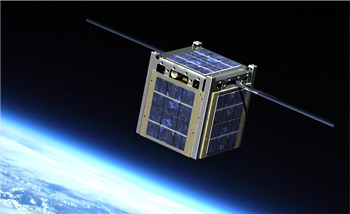
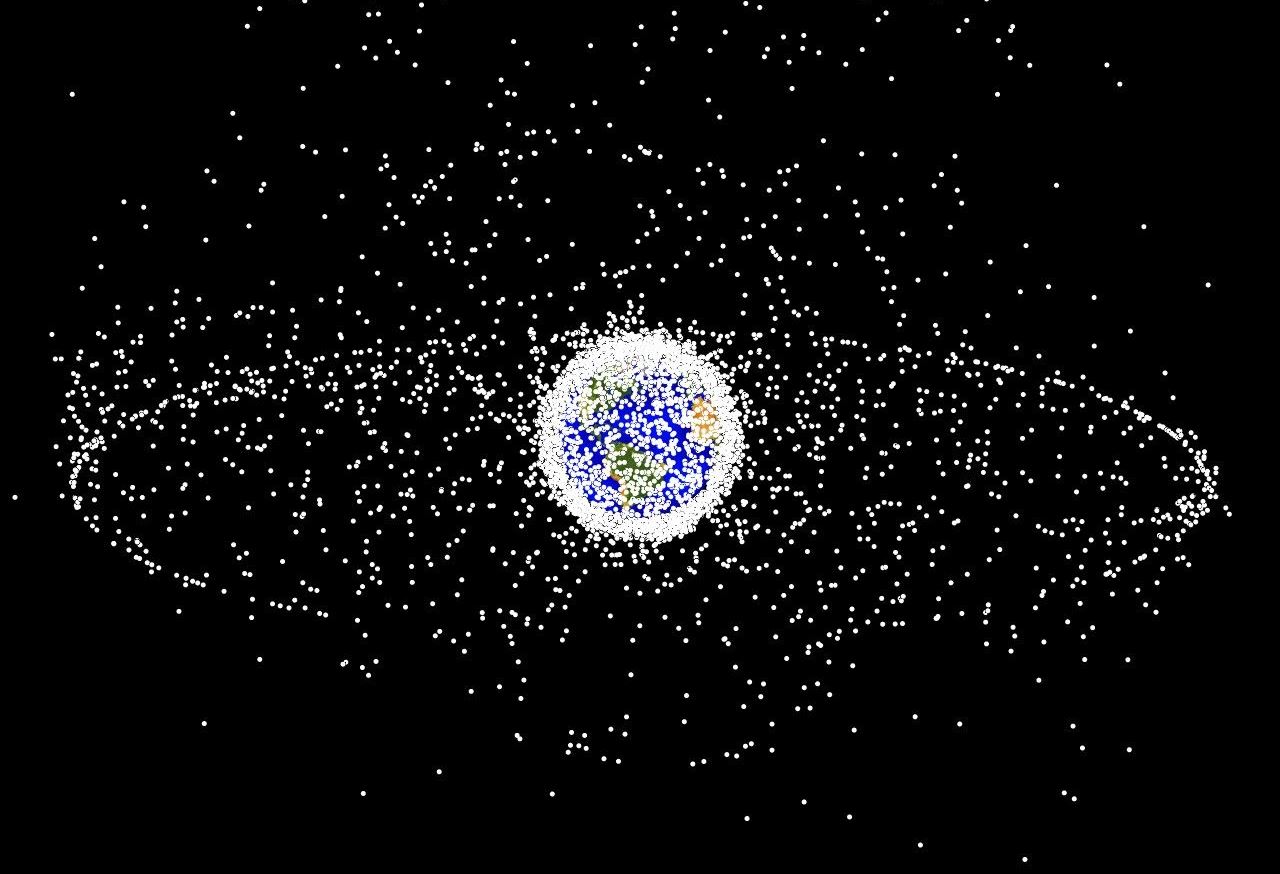
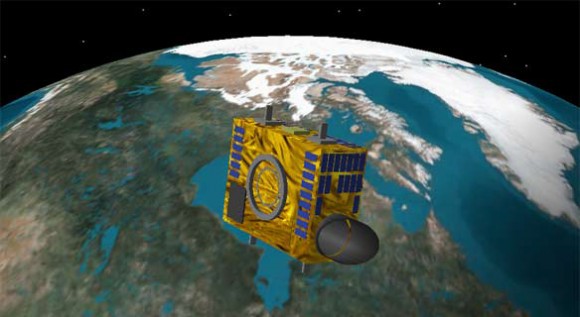
neossat-580x317The first in a series of three existing or proposed designs is the NEOSSat – Short for Near-Earth Object Surveillance Satellite – that was built in Canada and was deployed last week on an Indian rocket with six others. In addition to watching space debris in orbit and tracking their movements, it will also be keeping a sharp eye out for asteroids that may swing by Earth in the future.

AIDA_mission_conceptThen there is the ESA’s proposed Asteroid Impact and Deflection Assessment mission (or AIDA), a group of planetary defense satellites that will are designed to collide with an asteroid, then push it off course. And after two years of planning, research teams from the US and Europe have selected the mission’s target – a so called ‘binary asteroid’ named Didymos – that AIDA will intercept when it passes the Earth by a mere 11 million km in 2022.

The third and final proposed solution is something that sounds ripped from the pages of a science fiction novel. Known as the DE-STAR, or Directed Energy Solar Targeting of Asteroids and exploRation, this satellite is essentially a orbiting laser that would be capable of destroying approaching asteroids 10 times larger than the DA14 and at a distance as far away as the Sun.

NASA_destarProposed by two California scientists – UC Santa Barbara physicist and professor Philip M. Lubin, and Gary B. Hughes, a researcher and professor from California Polytechnic State University – the satellite is designed to harness the power of the sun and convert it into a massive phased array of laser beams that can destroy asteroids that pose a potential threat to Earth. At the same time, it will be capable of changing an asteroid’s orbit – deflecting it away from Earth, or into the Sun.

Feel safer? Well, considering that the odds of Earth getting anytime soon are pretty low, and are likely to fall even farther once we get these rock killers destroyed. Once more, it seems that sane planning and sensible solutions are winning out over doomsday predictions. Good for us!

Robots Meet the Fashion Industry

robot_fashionRobotics has come a long way in recent years. Why, just take a look at NASA’s X1 Robotic exoskeleton, the Robonaut, robotaxis and podcars, the mind-controlled EMT robot suit, Stompy the giant robot, Kenshiro and Roboy, and the 3D printed android. I suppose it was only a matter of time before the world of fashion looked at this burgeoning marketplace and said “me too!”

And here are just some of the first attempts to merge the two worlds: First up there’s the robot mannequin, a means of making window shopping more fun for consumers. Known as the MarionetteBot, this automaton has already made several appearances in shops in Japan and can expected to be making debut appearances across Asia, in North America and the EU soon enough!

Check out the video below to see the robot in action. Designed by the Japanese robotics company United Arrows, the mannequin uses a Kinect to capture and help analyze the movements of a person while a motor moves a total of 16 wires to match the person’s pose. Though it is not yet fast or limber enough to perfectly mimic the moves of a person, the technology shows promise, and has provided many a window-shopper with plenty of entertainment!


And next up, there’s the equally impressive FitBot, a shape-shifting mannequin that is capable of emulating thousands of body types. Designed by the British virtual shopping company Fits.Me, the FitBot is designed to help take some of the guesswork out of online shopping, where a good 25% of purchases are regularly returned because they were apparently the wrong size.

But with the FitBots, along with a virtual fitting room, customers will be able to see right away what the clothes will look like on them. The only downside is you will have to know your exact measurements, because that’s what the software will use to adjust the bot’s body. Click here to visit the company’s website and see how the virtual fitting room works, and be sure to check out there video below:


What does the future hold for the fashion industry and high-tech? Well, already customers are able to see what they look like using Augmented Reality technology displays, and can get pictures thanks to tablet and mobile phone apps that can present them with the image before making a purchase. Not only does it take a lot of the legwork out of the process, its much more sanitary as far as trying on clothes is concerned. And in a world where clothing can be printed on site, it would be downright necessary.

The "magic mirror"
The “magic mirror”

But in the case of online shopping, its likely to take the form of a Kinect device in your computer, which scans your body and lets you know what size to get. How cool/lazy would that be? Oh, and as for those AR displays that put you in the clothes you want? They should come with a disclaimer: Objects in mirror are less attractive than they appear!

Source: en.akihabaranews.com, technabob.com