Episode 75 of SfS – “The Grand Tour: The Legacy of the Voyager Probes” – is Now Live!

Episode 75 of SfS – “The Grand Tour: The Legacy of the Voyager Probes” – is Now Live!

This week’s episode was dedicated to the Voyager 1 and 2 probes, and it was a long time in the making! Launching in 1977, these two probes explored the outer Solar System and accomplished many firsts. This included obtaining the first evidence that Jupiter’s moon, Europa, could have an interior ocean. They also examined Saturn’s rings and got the first close-up look at Saturn’s moon, Titan, and its dense hydrocarbon atmosphere, which led to speculation that liquid methane lakes might exist on its surface.

The Voyager Golden Record. Credit: NASA

While Voyager 2 became the first mission to visit Uranus and Neptune, a feat which has not yet been repeated, Voyager 1 conducted the Pale Blue Dot campaign, obtaining the best-known image of Earth. And, of course, they both carry the Voyager Golden Records, which contain sounds and images of Earth and simple diagrams indicating the location of Earth and the Solar System. These records could be the first interstellar message sent by humanity to another civilization or a time capsule for future generations of humans.

The two probes are now in interstellar space, where they continue to operate and return data on the interstellar medium. Regardless of how much time has passed, the Voyager probes will forever remain iconic and their accomplishments legendary. Check out the episode below:

Where to Listen:

Episode 70 of SfS – The Crisis in Cosmology: What is the Hubble Tension? – is now live!

Episode 70 of SfS – The Crisis in Cosmology: What is the Hubble Tension? – is now live!

This week’s episode deals with a rather pressing matter for astronomers and cosmologists. Shortly after Einstein revealed his Theory of General Relativity in 1916, scientists began pondering how it predicted that the Universe was either expanding or contracting. The debate was settled when Georges Lemaitre and Edwin Hubble confirmed that it was expanding (in 1927 and 1929, respectively). In honor of their accomplishments, the rate at which the cosmos is expanding was named the “Hubble-Lemaitre Constant” (or more commonly, the “Hubble Constant”).

As the field of astronomy expanded and telescopes improved, scientists were able to make distance measurements for objects located farther and farther away. However, these observations were restricted to objects within 4 billion light-years due to the way Earth’s atmosphere distorts light. Depending on the distances involved, astronomers relied on different methods, which came to be known as the “Cosmic Distance Ladder.” In addition to determining the age and size of the Universe, these measurements allowed astronomers to refine their estimates of the Constant.

The Hubble Space Telescope revolutionized astronomy by gradually pushing the boundaries of the “observable Universe” to less than 1 billion years after the Big Bang (13 billion light years!) That’s when scientists noticed some discrepancies. Not only did they learn that the rate of expansion had accelerated over time, but distance measurements to objects located 13 billion light-years away (the earliest galaxies) yielded different values than local measurements. This came to be known as the “Hubble Tension” or the “Crisis in Cosmology.”

While it was hoped that the James Webb Space Telescope would resolve this crisis, its observations have only confirmed that Hubble was right on the money! The crisis endures, and scientists are seeking answers. Is Einstein’s Theory of General Relativity, which is foundational to our cosmological models, wrong? Or are there additional physics/forces at work that we haven’t yet accounted for? Once we know that, we’ll know how just about everything in the Universe works!

Check out the episode below.

Where to Listen:

Episode 69 of SfS – Rendezvousing with an Interstellar Object (with Dr. Alan Stern) – is now live!

Episode 69 of SfS – Rendezvousing with an Interstellar Object (with Dr. Alan Stern) – is now live!

Hello all, it’s been a while, I know. Life has been crazy lately. Luckily, I’ve managed to find the time to podcast again. For this latest episode, I had a conversation with Dr. Alan Stern, an astrophysicist from the Southwest Research Institute (SwRI) and the Principal Investigator of NASA’s New Horizons mission. In a recent paper, Stern and his colleagues performed a concept study for an Interstellar Object Explorer (IOE), a mission that could rendezvous with interstellar objects (ISO).

In 2017, the first-ever ISO detected passed through our system – ‘Oumuamua – leaving astronomers intrigued and baffled. Based on the available data, the object defied classification, leading to some rather exotic explanations! Two years later, a second ISO (2I/Borisov) was detected, which was clearly identified as an interstellar comet. In the near future, the Vera C. Rubin Observatory will become operational and will begin detecting dozens of ISOs a year.

Hence the desire for a spacecraft that could rendezvous with the next ISO that graces us. As Stern and I discuss, an IOE mission could have profound implications for astronomy, cosmology, and astrobiology. Studying ISOs would tell us a great deal about other star systems without actually having to go there. And if just a tiny fraction of those happened to be debris from an extraterrestrial civilization, as Prof. Loeb has suggested, the implications would be astronomical (no pun!)

Check out the links below to hear the entire conversation…

Where to Listen:

Episode 68 of SfS – The STASH Experiment and Hibernation Technology for Space, with Dr. Ryan Sprenger – is now Live!

Episode 68 of SfS – The STASH Experiment and Hibernation Technology for Space, with Dr. Ryan Sprenger – is now Live!

This week, I sat down with Dr. Ryan Sprenger, the Senior Research Physiologist at Fauna Bio Inc., a California-based biotech company specializing in genomics research. Sprenger and his colleagues have developed a new concept for testing hibernation in space, the Studying Torpor in Animals for Space-health in Humans (STASH) experiment. Their concept was selected by NASA’s Innovative Advanced Concepts (NIAC) program for Phase I development this year.

With NASA’s support, Sprenger and his team will develop a technology demonstrator that will be sent to the ISS. Their concept has the potential to revolutionize space exploration by allowing astronauts to enter synthetic hibernation during the long voyage to Mars and beyond. In essence, astronauts could sleep for the duration of long-term spaceflights, reducing the physiological impact of exposure to microgravity and radiation and the psychological impacts of months spent in a cramped spacecraft.

It will also reduce the amount of supplies missions need to bring along and the amount of waste produced. It will also have applications here on Earth, helping to mitigate aging, disease, and genetic disorders. Follow the links below to learn more!
Where to Listen:

Episode 66 of SfS – The Cosmic Philosopher: Konstantin Tsiolkovsky – is Now Live!

Episode 66 of SfS – The Cosmic Philosopher: Konstantin Tsiolkovsky – is Now Live!

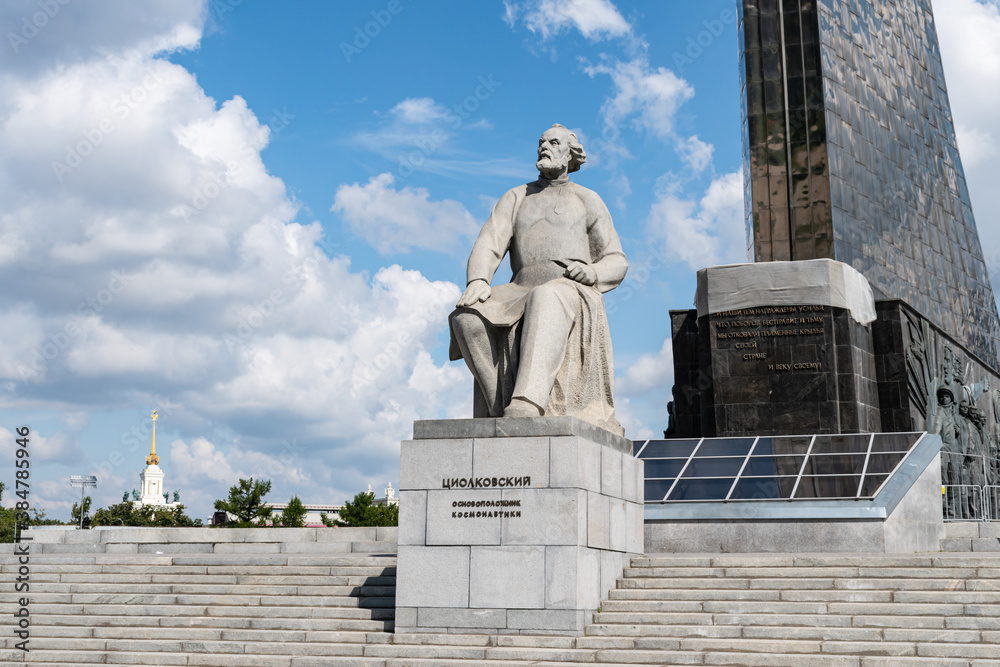
This week’s episode is dedicated to the life, times, and enduring influence of Russian rocket scientist, philosopher, and cosmologist Konstantin Tsiolkovsky (1857-1935). To many, he’s known as the “father of rocketry and astronautics,” whereas others credit him with being one of the “forefathers,” alongside Hermann Julius Oberth, Robert Esnault-Pelterie, and Robert Goddard (namesake of the NASA Goddard Spaceflight Center).

Regardless of titles, Tsiolkovsky’s influence was immeasurable, and his contributions to science are still felt today. His many treatises on spaceflight, his famous “Rocket Equation,” and his designs for rockets and space stations remain foundational to spaceflight. His speculations about the future of humanity in space inspired generations of futurists, rocket scientists, and science fiction writers – in particular, Sergei Korolev and Werner von Braun, the lead Soviet and German-American rocket engineers during the Space Race.

In addition, Tsiolkovsky’s philosophical ideas were groundbreaking and anticipated future developments, such as the Search for Extraterrestrial Intelligence (SETI) and the Fermi Paradox (“Where are all the aliens?”). For those who believe humanity’s future lies in space, Tsiolkovsky was a pioneer and progenitor who was ahead of his time. As he famously said, “Earth is the cradle of humanity, but one cannot remain in the cradle forever.”

Where to Listen:

Episode 65 of SfS – Mars by 2040? Why Must We Wait? – is Now Live!

Episode 65 of SfS – Mars by 2040? Why Must We Wait? – is Now Live!

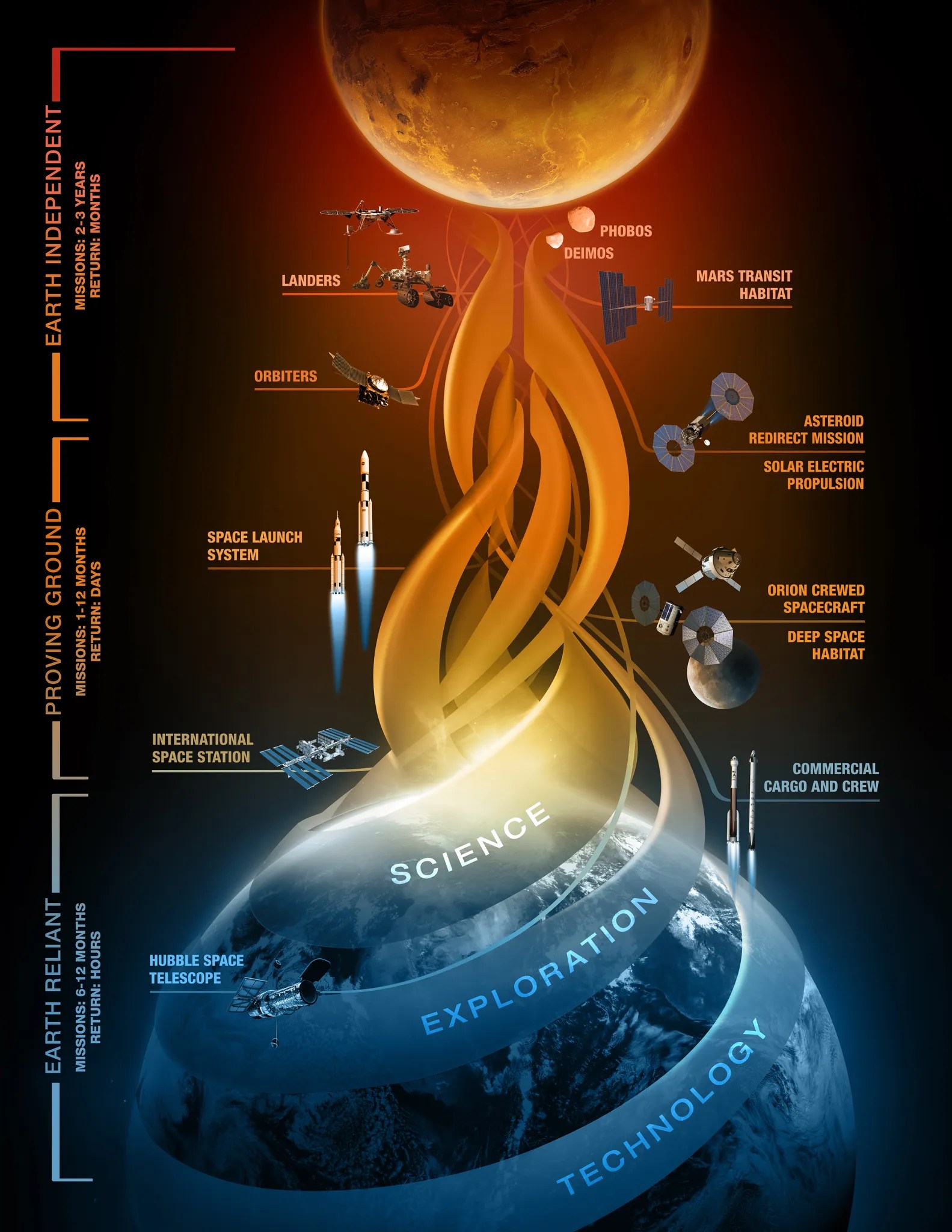
This week was a bit of a treat for me because it allowed me to talk about something that has been unfolding over at NASA for many years. As a science communicator, I have been privileged enough to watch it unfold and have had the opportunity to comment along the way. I am referring to NASA’s long-held plans for sending crewed missions to Mars in the next decade and the many decades’ worth of planning that went into it.

Since 2010, the plan has been to send missions back to the Moon in this decade, build habitats and other infrastructure there, and use it as a testing ground to prepare for Mars. The next step was to send the first crewed mission in 2033, followed by additional missions every 26 months (coinciding with Mars being at its closest to Earth). While there have been doubts for years that NASA could accomplish this goal in that timeline, it was announced this past summer that 2033 won’t happen.

While a flyby mission could occur that year, a crewed mission where astronauts land on the surface is not likely to happen until 2040 – and that would be an ambitious goal. Meanwhile, China is still hoping to make it there by 2033, and SpaceX wants to land there even sooner. But they aren’t in any position to promise that right now since they are dealing with similar challenges and delays. Check out the episode below to learn more about how we got here and what’s likely to follow:

Where to Listen:

Episode 64 of SfS – “The Europa Clipper Mission: A Conversation with Dr. Steve Vance” – is now Live!

Episode 64 of SfS – “The Europa Clipper Mission: A Conversation with Dr. Steve Vance” – is now Live!

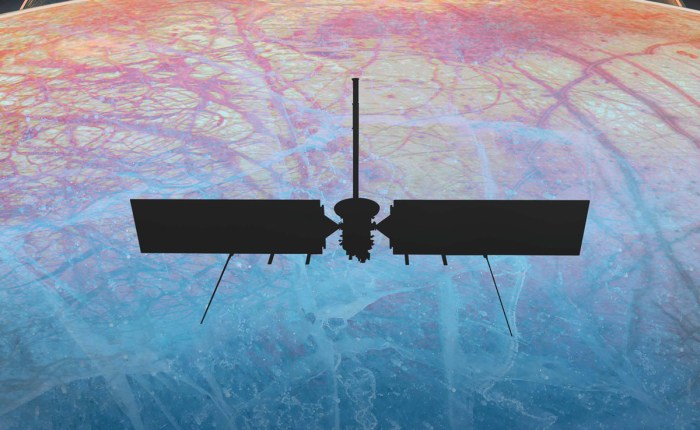
In this week’s episode, I had the good fortune to sit down with NASA scientist and astrobiologist Dr. Steve Vance so we could talk about NASA’s upcoming Europa Clipper mission. This mission, which was decades in the making, will launch this coming October, sending a spacecraft to Jupiter to explore its satellite Europa. Ever since the Voyager probes flew past Jupiter and its moons in 1979, scientists have speculated that there might be an ocean beneath this moon’s icy crust.

The mission will arrive around Jupiter by 2030, where it will begin making flybys of Europa and studying its surface with an advanced suite of instruments. Among its objectives are the characterization of Europa’s surface, investigating surface plume activity, and determining the existence and chemistry of its interior ocean. Another major objective is the search for potential biosignatures, indications that this interior ocean may harbor life!

We got into all of that and a number of other things – including Europa’s depiction in Arthur C. Clarke’s famed Space Odyssey series. As Vance told me during our chat, Clarke played a role in the mission planning, and (contrary to the monoliths told humanity in his stories) we do have permission to “attempt a landing there.”

Where to Listen:

Episode 61 of Stories from Space – A Mars Sample Return Mission – is Now Live!

Episode 61 of Stories from Space – A Mars Sample Return Mission – is Now Live!

This week’s episode is focused on the upcoming Mars Sample Return (MSR) mission, a joint NASA-ESA venture to send a robotic mission to Mars to collect the Perseverance samples. This will constitute the first sample-return mission from Mars, something that scientists have been planning for decades. In 2028, the mission will launch and is expected to return the samples to Earth no sooner than 2033. Unfortunately, due to recent budget cuts, the mission may be delayed or scaled back significantly.

Meanwhile, China is planning its own sample-return mission as part of the Tianwen-3 mission. This mission will launch in 2028 but is scheduled to return by July 2031. As we enter the new Space Race, it is clear that the brass ring is the Red Planet! But regardless of who secures samples from Mars and returns them to Earth first, the scientific returns will be immeasurable. Much like the Moon rocks returned by the Apollo astronauts, scientists will be able to study these samples for generations using the most cutting-edge instruments available.

These studies could finally answer questions that have remained unresolved since the days of the Viking missions. Was there ever life on Mars? Is there life there today (and where can it be found)? When did it go from being a warmer, wetter environment to the freezing, desiccated world we see today? Check out the episode to learn more:

Where to Listen:

Episode 60 of Stories from Space – The Dark Universe – is now Live!

Episode 60 of Stories from Space – The Dark Universe – is now Live!

This week was a bit of a treat for me personally since I got to delve into something really astrophysical and theoretical! To break it down, in 1916, Einstein placed the finishing touches on his Theory of General Relativity (GR), which explained how gravity alters the curvature of spacetime, matter and energy are equivalent, and time and space are one. His theory was confirmed almost immediately, but by the 1950s and 60s, astronomers finally had the telescopes they needed to really test GR!

Ah, but there was a snag! When observing massive galaxies, astronomers noticed that their rotational curves suggested there was a lot more mass out there than what they could see. This led to the speculation that the Universe was filled with a mysterious invisible mass (“Dark Matter”) that interacted with “normal matter” only through gravity. The existence of this mass was needed for GR to be correct, which had been confirmed nine ways from Sunday by this point.

In the 1990s, the Hubble Space Telescope provided the most breathtaking and deep images of the cosmos. The primary mission of this observatory was to test Hubble’s Law – i.e., that the Universe is in a state of expansion. When looking back through space and time upwards of 10 billion light-years (or more), astronomers hit another snag. Essentially, the rate at which the cosmos was expanding (the Hubble Metric) was speeding up over time!

This led to speculation that Einstein’s theory about a force that “held back gravity” – the Cosmological Constant, which he described as the “biggest blunder of his career” – was actually correct. This unknown force, “Dark Energy,” became another mysterious phenomenon scientists needed to include in their cosmological models. To this day, neither has been confirmed directly. But next-generation telescopes are coming that could resolve this mystery.

Where to Listen:

Good News! Stories from Space Picked up by ITSP Magazine!

Good News! Stories from Space Picked up by ITSP Magazine!

This news has been a few months in the making, but with the final preparations underway, I feel like it’s time to announce it! In a few weeks, I will be launching my podcast series – Stories from Space – with the Intersection Of Technology, Cybersecurity, And Society Podcast (ITSP), a highly-respected channel that hosts multiple shows. Each of these is dedicated to exploring the past, the present, and the future of humanity’s relationship with technology and the profound effects it can have on our society.

Continue reading “Good News! Stories from Space Picked up by ITSP Magazine!”