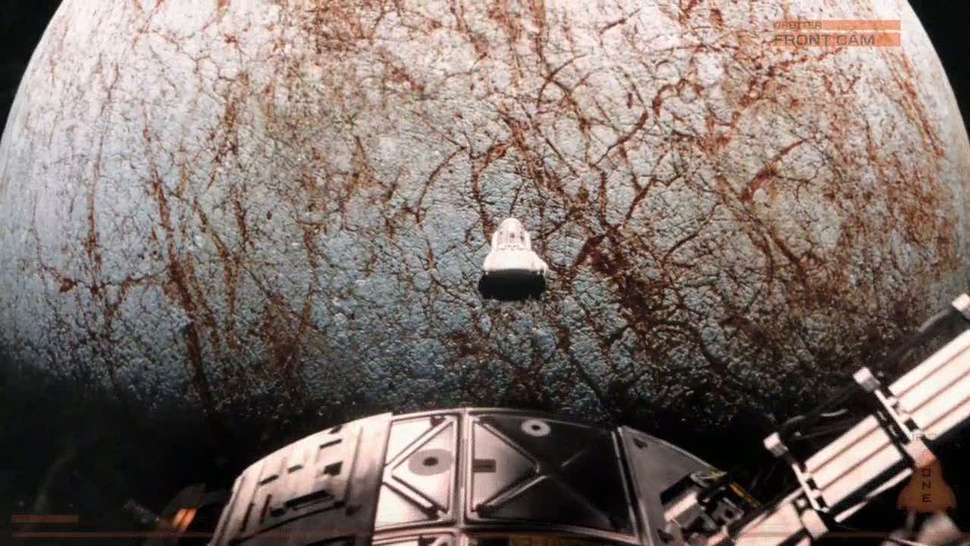
The Jovian moon of Europa remains a mystery that is just dying to be cracked. Although covered in ice, scientists have long understood that tidal forces caused by its proximity to Jupiter have created a warm interior, one which can sustain warm oceans beneath the surface. In the coming years, NASA wants to fly a mission to this planet so we can finally get a look at what, if anything, is lurking beneath that icy crust.
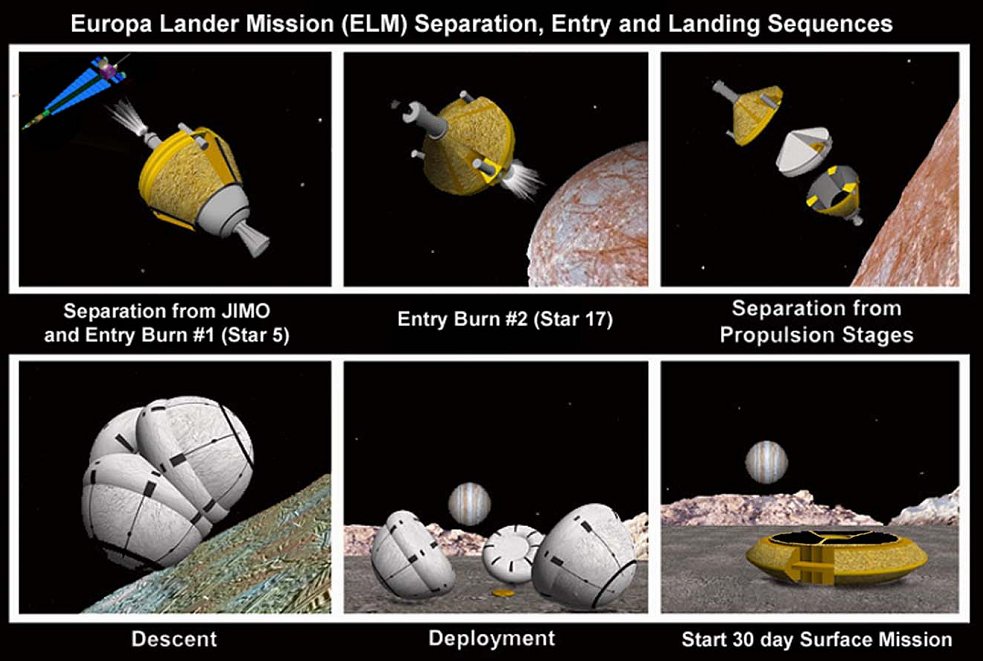
Perhaps emboldened by the success of the Curiosity Rover and the plans for a manned mission to Mars in 2030, NASA has several possible plans for what a Europa mission might look like. If the budget environment proves hospital, then NASA will likely send a satellite that will perform several orbits of the moon, a series of flybys on it, and scout the surface for science and potential landing sites.
Towards this end, they are looking for proposals for science instruments specifically tailored to the task. And within a year’s time, they plan to select 20 from a list of those proposed for the mission. At which point, the selectees will have $25 million to do a more advanced concept study. As John Grunsfeld, associate administrator for NASA’s science mission directorate, stated:
The possibility of life on Europa is a motivating force for scientists and engineers around the world. This solicitation will select instruments which may provide a big leap in our search to answer the question: are we alone in the universe?
The Europa mission is not a guarantee, and it’s unclear just how much money will be allocated to it in the long run. NASA has requested $15 million in fiscal 2015 for the mission, but the mission will naturally be subject to budgetary approvals by Congress. If it passes all obstacles, it would fly sometime in the 2020s, according to information released with the budget earlier this year.
In April, NASA sent out a request for information to interested potential participants on the mission itself, which it plans to cost less than $1 billion (excluding launch costs). Besides its desire to look for landing sites, NASA said the instruments should also be targeted to meet the National Resource Council’s (NRC) Planetary Decadal Survey’s desires for science on Europa.
In NASA’s words, these are what those objectives are:
Characterize the extent of the ocean and its relation to the deeper interior;
Characterize the ice shell and any subsurface water, including their heterogeneity, and the nature of surface-ice-ocean exchange;
Determine global surface, compositions and chemistry, especially as related to habitability;
Understand the formation of surface features, including sites of recent or current activity, identify and characterize candidate sites for future detailed exploration;
Understand Europa’s space environment and interaction with the magnetosphere.
According to the agency, any instrument proposal must meet NASA’s landing scout goal or the NRC goals. The instruments must also be highly protected against the harsh radiation, and meet planetary protection requirements to ensure no extraterrestrial life is contaminated with our own. In essence, this means than any instruments must be safeguarded against carrying bacteria that could play havoc with Europan microbes or (do we dare to dream!) more complex organisms.
Solicitations are due by Oct. 17, so if you’ve got an idea and think it might make the cut, consult the following solicitation page and have a look at what NASA is looking for. Personally, I got nothing. But that’s why they don’t pay me the big bucks! No, like most of humanity, I will simply be sitting back and hoping that a mission to Europa happens within my lifetime, and that it uncovers – to quote Arthur C. Clarke’s 201o: Odyssey Two – “something wonderful”…
This past weekend was the 45th anniversary of the Moon Landing. To mark that occasion, NASA mounted the @ReliveApollo11 twitter campaign, where it recreated every moment of the historic mission by broadcasting updates in “real-time”. In addition to commemorating the greatest moment in space exploration, and one of the greatest moments in history, it also served to draw attention to new efforts that are underway.
Perhaps the greatest of these is one being led by Buzz Aldrin, a living-legend and an ambassador for current and future space missions. For decades now, Aldrin has been acting as a sort of elder statesman lobbying for the exploration of the cosmos. And most recently, he has come out in favor of a mission that is even grander and bolder than the one that saw him set foot on the Moon: putting people on Mars.
It’s no secret that NASA has a manned mission planned for 2030. But with space exploration once again garnering the spotlight – thanks in no small part to commercial space companies like SpaceX and Virgin Galactic – Aldrin is pushing for something even more ambitious. Echoing ideas like Mars One, his plan calls for the colonization of Mars by astronauts who would never return to Earth.
To be sure, the spry 84 year-old has been rather busy in the past few years. After going through a very public divorce with his wife 0f 23 years in January of last year, he spent the past few months conducting a publicity blitz on behalf of the 45th anniversary of Apollo 11. In between all that, he has also made several appearances and done interviews in which he stressed the importance of the Martian colonization project.
A few months ago, Aldrin wrote an op-ed piece for Fast Company about innovation and the need for cooperation to make a new generation of space exploration a reality. During a more recent interview, which took place amidst the ongoing crisis in the Ukraine, he once again stressed the importance of cooperation between the United States, Russia, China, and their respective space programs.
As he told Fast Company in the interview:
I think that any historical migration of human beings to establish a permanent presence on another planet requires cooperation from the world together. That can’t be done by America competing with China… Just getting our people back up there is really expensive! We don’t compete but we can do other things close by with robots, which have improved tremendously over the past 45 years (since Apollo 11). You and I haven’t improved all that much, but robots have. We can work together with other nations in design, construction, and making habitats on both the near side and far side of Mars. Then when we eventually have designs, we’ll have the capacity to actually build them.
Similarly, Aldrin took part in live Google Hangout with Space.com’s managing editor Tariq Malik and executive producer Dave Brody. This took place just eight days before the 25th anniversary of the Landing. During the broadcast, he discussed his experiences as an astronaut, the future of lunar exploration, future missions to Mars and beyond, and even took questions via chatwindow on Google+’s webpage.
At this juncture, its not clear how a colonization mission to Mars would be mounted. While Mars One is certainly interested in the concept, they (much like Inspiration Mars) do not have the necessary funding or all the technical know-how to make things a reality just yet. A possible solution to this could be a partnership program between NASA, the ESA, China, Russia, and other space agencies.
Such ideas did inform Kim Stanley Robinson’s seminal novel Red Mars, where an international crew flew to the Red Planet and established the first human settlement that begins the terraforming process. But if international cooperation proves too difficult, perhaps a collaboration between commercial space agencies and federal ones could work. I can see it now: the Elon Musk Martian Dome; the Richard Branson Habitat; or the Gates colony…
With that in mind, I think we should all issue a prayer for international peace and cooperation! And in the meantime, be sure to check out the video of the Google Hangout below. And if you’re interested in reading up on Aldrin’s ideas for a mission to Mars, check out his book, Mission to Mars: My Vision for Space Exploration, which is was published by National Geographic and is available at Amazon or through his website.
As the exploration of Mars goes on, the small army of robotic rovers, satellites and orbiters continue to provide us with information, photographs and discoveries that remind us of how great a mystery the Red Planet truly is. For instance, in the past month, two major stories have been announced concerning the nature of Martian soil, its ancient history, and some of the more exciting moments in it’s exploration.
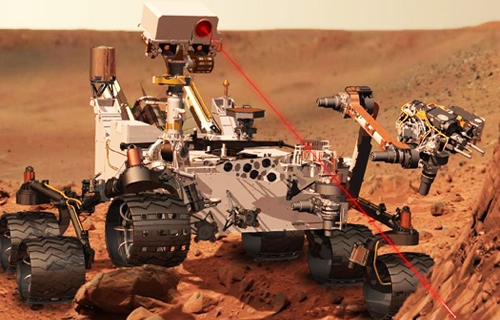
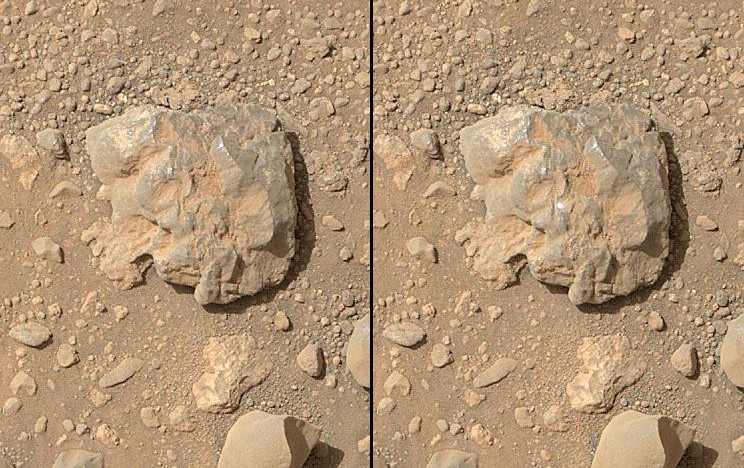
For example, Curiosity made news as its high resolution camera caught an image of sparks being generated as it zapped a Martian rock. In it’s lifetime, the rover has used its million watt Chemistry and Camera (ChemCam) laser to zap over 600 rock or soil targets as part of its mission. However, this was the first time that the rover team was able to get the arm-mounted Mars Hand Lens Imager (MAHLI) to capture the action as it occurred.
The ChemCam laser is used to determine the composition of Martian rocks and soils at a distance of up to 8 meters (25 feet). By hitting targets with several high-energy pulses, it is able to yield preliminary data for the scientists and engineers back at Earth to help them decide if a target warrants a closer investigation and, in rare cases, sampling and drilling activities.
ChemCam works through a process called laser-induced breakdown spectroscopy. The laser hits a target with pulses to generate sparks, whose spectra provide information about which chemical elements are in the target. Successive laser shots are fired in sequence to gradually blast away thin layers of material. Each shot exposes a slightly deeper layer for examination by the ChemCam spectrometer.
As Curiosity fired deeper into the target rock – named “Nova” – it showed an increasing concentration of aluminum as the sequential laser blasts penetrated through the uninteresting dust on the rock’s surface. Silicon and sodium were also detected. As Sylvestre Maurice, ChemCam’s Deputy Principal Investigator at the Research Institute in Astrophysics and Planetology, said in a statement:
This is so exciting! The ChemCam laser has fired more than 150,000 times on Mars, but this is the first time we see the plasma plume that is created… Each time the laser hits a target, the plasma light is caught and analyzed by ChemCam’s spectrometers. What the new images add is confirmation that the size and shape of the spark are what we anticipated under Martian conditions.
During it’s first year on Mars, Curiosity has already accomplished its primary objective of discovering a habitable zone on Mars that contains the minerals necessary to support microbial life billions of years ago when Mars was wetter and warmer. Currently, the rover is driving swiftly to the base of Mount Sharp at the center of Gale Crater, where it hopes to find more.
In that same vein, according to new geological information obtained by Curiosty’s images and soil examinations, samples that were pulled out of a crater that is estimated to be some 3.7 billion years old contain more evidence that Mars was once much warmer and wetter. These findings were announced in a recent paper published in the online edition of Geology by University of Oregon geologist Gregory Retallack.
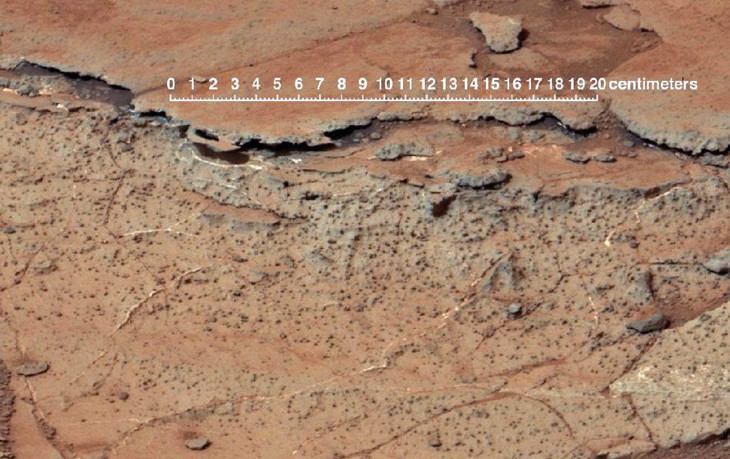
Unlike Earth, the Martian landscape is littered with loose rocks from impacts or layered by catastrophic floods. However, recent images from Curiosity from the Gale Crater reveal Earth-like soil profiles with cracked surfaces lined with sulfate, ellipsoidal hollows and concentrations of sulfate comparable with soils in Antarctica’s McMurdo Dry Valleys and Chile’s Atacama Desert.
Retallack, the paper’s lone author, studied mineral and chemical data published by researchers closely tied with the Curiosity mission. As a professor of geological sciences and co-director of paleontology research at the UO Museum of Natural and Cultural History, he internationally known as an expert on the recognition of paleosols – ancient fossilized soils contained in rocks.
As he explains in the paper:
The pictures were the first clue, but then all the data really nailed it. The key to this discovery has been the superb chemical and mineral analytical capability of the Curiosity Rover, which is an order of magnitude improvement over earlier generations of rovers. The new data show clear chemical weathering trends, and clay accumulation at the expense of the mineral olivine, as expected in soils on Earth. Phosphorus depletion within the profiles is especially tantalizing, because it attributed to microbial activity on Earth.
The ancient soils do not prove that Mars once contained life, but they do add to growing evidence that an early, wetter and warmer Mars was more habitable than the planet has been in the past 3 billion years. Surface cracks in the deeply buried soils suggest typical soil clods. Vesicular hollows, or rounded holes, and sulfate concentrations, he said, are both features of desert soils on Earth.
Since Curiosity is currently on its way to Mount Sharp, future missions will be needed to fully explore these features. But as Retallack explained, the parallels with Earth are quite exciting:
None of these features is seen in younger surface soils of Mars. The exploration of Mars, like that of other planetary bodies, commonly turns up unexpected discoveries, but it is equally unexpected to discover such familiar ground.
The newly discovered soils indicate that more benign and habitable soil condition existed on Mars than previously expected. What’s more, their dating to 3.7 billion years ago places them within a transition period when the planet went from an early, benign water cycle to the acidic and arid Mars of today. This is especially important since major changes were taking place on Earth at around the same time.
Roughly 3.5 billion years ago, life on Earth is believed to have emerged and began diversifying. But some scientists have theorized that potential evidence that might indicate that life existed on Earth earlier may have been destroyed by tectonic activity, which did not occur on Mars. Basically, it may offer some credence to the theory that while flourished on Earth, it originated on Mars.
One person who supports this theory is Steven Benner of the Westheimer Institute of Science and Technology in Florida. In the past, he has speculated that life is more likely to have originated on a soil planet like Mars than a water planet like Earth. In an email interview with Science Daily, Benner wrote that Retallack’s paper:
[S]hows not only soils that might be direct products of an early Martian life, but also the wet-dry cycles that many models require for the emergence of life.
So in addition to shedding light on the mysteries of Mars, Curiosity has also been pivotal in addressing some major questions which only increase the mystery of our own existence. Did life as we know it originate on Mars but flourish on Earth? Are there still some remnants of this microbial “Eden” being preserved deep within the soil and rocks? And could life exist there again some day?
All good questions that will no doubt keep robotic rovers, orbiters, landers, and even manned missions busy for many decades to come! In the meantime, check out the video from NASA’s Jet Propulsion Laboratory of Curiosity’s spark-generating laser blast being caught on tape:
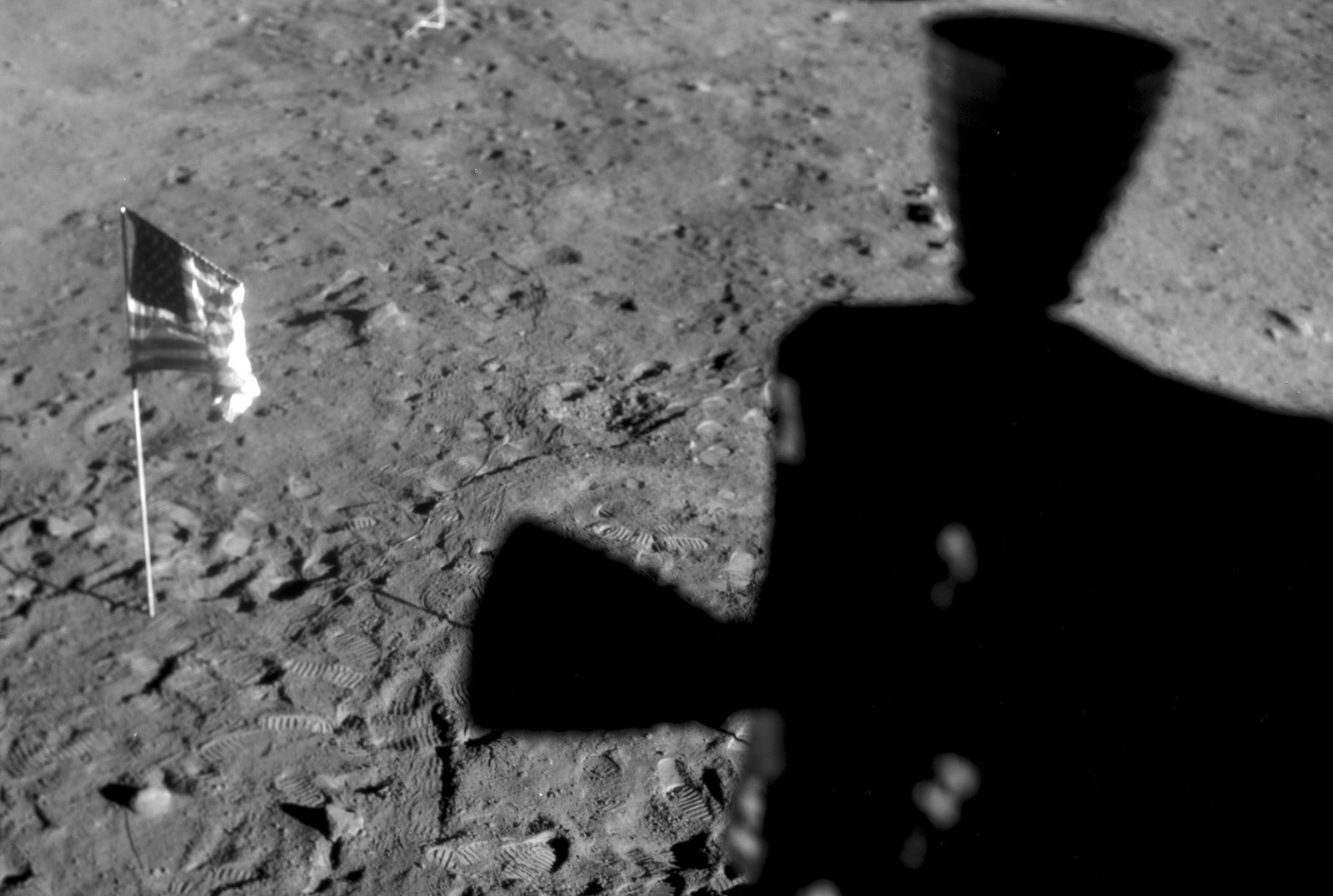
Today, July 20th, marks the 45th anniversary of the first step being taken on the Moon. And even though the coming decades may involve astronauts setting foot on Mars or a nearby asteroid, the Moon landing will forever remain one of humanity’s greatest accomplishments. And the many speeches, footage and images associated with the mission remain firmly rooted in public consciousness.
Born during the closing months of the Eisenhower administration as a follow-up to Project Mercury – which successfully put astronauts into orbit – Project Apollo was conceived when spaceflight was still very much in its infancy. However, it was under President Kennedy that the goal of “landing a man on the Moon and returning him safely to the Earth” by the end of the decade truly began.
And though some within NASA were already doing some preliminary planning for a manned mission to the Moon in the late 1950s, there was no hardware that could see the mission fly, no rockets large enough to launch a manned spacecraft all the way to the Moon, and no provisions for managing a program of that magnitude. The men and women who brought the lunar landing to fruition were forced to invent almost everything as they went along.
And in the nine years between President Kennedy promising America the Moon and Neil Armstrong’s small step, NASA developed an unprecedented amount of technology and know-how that continues to shape the way NASA and other space agencies plan and implement missions today. These include the Saturn V multistage rockets, which are currently being refurbished for a manned mission to Mars by 2030.
Launching on from Cape Kennedy on the morning of July 16th, 1969, the mission sent Commander Neil Armstrong, Command Module Pilot Michael Collins and Lunar Module Pilot Edwin “Buzz” Aldrin into an initial Earth-orbit. Then, just two hours and 44 minutes after launch, another engines burn put Apollo 11 into a translunar orbit. Four days later, the Lunar Module touched down and the three men – with Armstrong in the lead – stepped onto the Lunar surface.
And for those looking to participate in the anniversary, there are several ways you can participate. On Twitter, @ReliveApollo11 from the Smithsonian National Air and Space Museum is reliving the highlights from Apollo 11 mission to the Moon in “real time”. Also, @NASAHistory is tweeting images and events from the mission, and journalist Amy Shira Teitel (@astVintageSpace) is tweeting pictures, facts and quotes from the mission, again in “real time”.
At 7:39 p.m. PDT (10:39 p.m. EDT), when Armstrong opened began the first spacewalk on the Moon, NASA TV will replay the restored footage of Armstrong and Aldrin’s historic steps on the lunar surface. On Monday, July 21 at 7 a.m. PDT (10 a.m. EDT) NASA TV will be broadcasting live from Kennedy Space Center in Florida, where they will be renaming the center’s Operations and Checkout Building in honor of Armstrong, who passed away in 2012.
The renaming ceremony will include NASA Administrator Charles Bolden, Kennedy Center Director Robert Cabana, Apollo 11′s Collins, Aldrin and astronaut Jim Lovell, who was the mission’s back-up commander. International Space Station NASA astronauts Wiseman and Steve Swanson, who is the current station commander, also will take part in the ceremony from their orbiting laboratory 260 miles above Earth.
On Thursday, July 24 at 3 p.m. PDT (6 p.m. EDT), which is the 45th anniversary of Apollo 11′s return to Earth, the agency will host a panel discussion – called NASA’s Next Giant Leap – from Comic-Con International in San Diego. Moderated by actor Seth Green, the panel includes Aldrin, NASA Planetary Science Division Director Jim Green, JPL systems engineer Bobak Ferdowsi, and NASA astronaut Mike Fincke.
In addition to Aldrin recounting his experiences, Fincke and the other NASA staff are slated to talk about the new Orion space capsule and the Space Launch System rocket – both of which will carry humans on America’s next great adventure in space – and what the future holds for space exploration. These will no doubt include talk of the planned missions to an asteroid, Mars, and quite possibly the construction of a settlement on the Moon.
The NASA.gov website will host features, videos, and historic images and audio clips that highlight the Apollo 11 anniversary, as well as the future of human spaceflight. You can find it all by clicking here. And if you don’t have NASA TV on your cable or satellite feeds, you can catch it all online here. Plenty has been happening already, marking the anniversary of the launch and recapturing the mission in “real-time”.
Forty five years later, and Apollo 11 still holds a special place in our collective hears, minds, and culture. One can only hope that the next generation of astronauts prove as equal to the task as those who made the Moon Landing were. And I’m sure that when they do make history, Neil Armstrong (may he rest in peace) will be watching approvingly.
And be sure to check out this video from Spacecraft Films, showing the entire Apollo 11 mission in 100 seconds:
The selfie is an apparent obsession amongst today’s youth, snapping pictures of themselves and posting them to social media. But for just 99 cents, people can send a picture of themselves to the Red Planet as part of the Time Capsule to Mars (TC2M) – a student-led, crowdfunded project that aims to send three CubeSat microsatellites to the planet containing digital messages from tens of millions of people from all around around the world.
The objective of the TC2M – a project of Explore Mars – mission is to inspire people throughout the globe and allow them a personal connection with space exploration in the same spirit of the Apollo missions. The non-profit organization also aims to educate and inspire children by enabling them to upload their media content, track their spacecraft and lander, and participate in the mission via a personalized Mission Control portal over the internet.
With the help and support of NASA, MIT, Stanford University and Deep Space Industries (among others), the student-led team will design, launch, fly and land three CubeSat-based spacecraft on the surface of Mars. The projected cost of the mission, covering everything from design to launch, is $25 million, which TC2M will attempt to raise by way of crowdfunding.
In terms of sending media content, people currently have the option of uploading only images up to 10 MB in size. However, in the coming months, TC2M claims that participants will also be able to upload other types of media such as videos, audio clips and text files. In order to reach as many people as possible, uploads in the developing world will be free of charge for smaller files, underwritten by corporate sponsors.
Emily Briere, a mechanical engineering student who is heading the project, explained their aim thusly:
We hope to inspire and educate young people worldwide by enabling them to personally engage and be part of the mission. The distributed approach to funding and personal engagement will ultimately guarantee our success.
The data will be carried by three identical 13-kg (27-lb) CubeSat spacecraft, each 30 x 40 x 10 cm (12 x 16 x 4 inches) in size. This will be the first time that such spacecraft are used for interplanetary travel, as well as the first time that many of the new technologies are being tested. The data will be stored in a quartz crystal, which is extremely dense and could last for millions of years, hence making it ideal for surviving the hostile conditions on Mars.
The technologies being tested on the three spacecraft include delay-tolerant networking for the Deep Space Internet, inflatable antennae, and new interplanetary radiation sensors that will pave the way for future human trips to Mars. But out of all the new technologies being tested, the most exciting is certainly the propulsion system. But the most interesting technology of all will be in the form of its engines.
The three spacecraft will be propelled by an ion electrospray system (iEPS), a microthruster developed at MIT that is essentially size of a penny (pictured above). Each spacecraft will be powered by 40 thruster pairs, which will generate thrust using an electric field to extract and accelerate ions. The ionic liquid propellant is much more efficient than rocket fuel, and MIT scientists believe a scaled-up version may one day bring humans to Mars.
The choice of employing three separate but identical spacecraft for the mission may be due in part to the fact that so many new technologies are being tested at the same time. To triple the chances of success, Briere has previously said that crowdfunders who want to send their media to Mars will have the option of having the data uploaded on all three spacecraft, for an additional price.
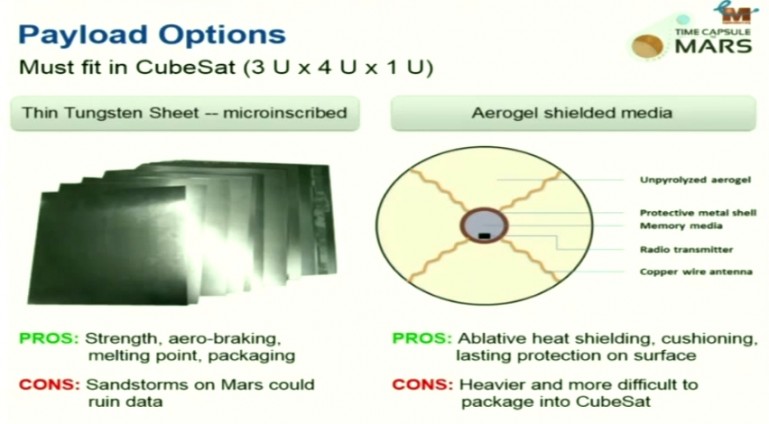
The spacecraft themselves will disintegrate as they traverse the Martian atmosphere. However, the payloads are being designed to aerobrake and land on the surface of Mars while keeping the data intact and preserved uncorrupted on the surface of the planet for a long, long time. As for how they intend to keep it stored until the day that manned missions can retrieve it, there are a few options on the table.
One option that is being considered is to use a microinscribed thin tungsten sheet, which has the advantage of being thin, light and strong, with a high melting point – meaning it won’t disintegrate upon entry – and good aerobraking properties because of its large surface area. However, there are concerns that sandstorms on Mars might damage the data once it has landed.
A second option would be an aerogel-shielded media. A metal ball could encase the data which would be stored in a very light medium, such as a quartz memory. The metal ball would be surrounded with an aerogel that will act as an ablative shield as it enters the atmosphere. And as it gets closer to the surface, the metal ball will act as a cushion for the data as it lands on Mars.
The organizers have only just announced their crowdfunding plans, and expect to reach the very ambitious goal of $25 million before the launch, which is planned for 2017. You can contribute to the mission and upload your own picture by visiting the mission website. And for those interested in possibly contributing, stay tuned to find out how and where you can donate once the crowdfunding campaign is up and running.
So in addition to showcasing new spacecraft, new media technologies, this project is also an attempt to stimulate interest in the new age of space exploration – an age characterized by public access and involvement. It’s also an opportunity to make your mark on the Red Planet, a mark which will someday (if all goes to plan) be uncovered by a new generation of explorers and settlers.
In the meantime, be sure to watch the short promotional video below which describes the mission and its goals:
Jane Poynter and Taber MacCallum are a pretty interesting couple. Like most, they plan trips together to new and exciting destinations. But unlike most, they plan to go to Mars, and they just might see their dream come true. Twenty years ago, they founded the private space company Paragon Space Development Corporation, with the aim of finding the most feasible way to send two people on a round-trip flyby of the Red Planet.
And now, after many years of planning, they may finally get to see it come to fruition. The only problem is, the window for this launch – in 2021 when planet Earth and Mars will be in alignment – is fast approaching. And a number of technical and logistical issues (i.e. how to shield themselves against deadly radiation, how to store their waste, how much food, water, and air to bring) still need to be resolved.
The mission – called Inspiration Mars and spearheaded by millionaire space tourist Dennis Tito – is the most ambitious of Paragon’s many projects. The company is also one of the country’s leading designers of life support systems and body suits for extreme environments, and they are currently developing a vehicle for commercial balloon trips to the stratosphere and technology for private moon landings.
But they have the most grandiose hopes for Mars. They believe that sending the first humans into the orbit of another planet could ignite a 21st century “Apollo moment” that will propel American students back into the sciences and inspire young innovators. Beyond that, and in advance of NASA’s proposed 2030 manned mission to Mars, it might just inspire a full-scale colonization effort.
The couple’s drive to explore space was born in a giant glass dome near Tuscon, Arizona called Biosphere 2 in the early 90s. For two years (between 1991 and 1993), eight people – including Poynter and MacCallum – lived inside this dome as part of a prototype space colony. The eccentric, privately funded science experiment contained miniature biomes that mimicked Earth’s environments.
This included a jungle, desert, marshland, savannah and an ocean all crammed into an area no larger than two and a half football fields. The crew subsisted on a quarter-acre agricultural plot and went about their lives while medical doctors and ecologists observed from outside. All went relatively smoothly until, 16 months into the experiment, crew members began suffering from severe fatigue and sleep apnea.
They discovered that the dome’s oxygen content had substantially dropped and, when one member fell into a state of confusion in which he could not add simple numbers, decided to refill the dome with oxygen, breaking the simulation of space-colony self-sufficiency. The project was deemed a failure by many, with Time Magazine going as far as to name it one of the 100 worst ideas of the century.
But the crew persisted for their full two-year trial and, if nothing else, emerged intimately aware of the mental traumas of prolonged isolation—crucial wisdom for anyone seriously considering traveling to another planet. As Poynter described it, the challenges were numerous and varied:
Some of the easier ones to get your head around are things like depression and mood swings—that’s kind of obvious. Weird things are things like food stealing and hoarding.
The more severe symptoms were similar to the delusions reported by early 20th century explorers who hallucinated while trekking for months through the featureless white expanse of Antarctica. She describes one instance in which she was standing in the sweet potato field about to harvest greens to feed the Biosphere 2 goats when she suddenly felt as if she had stepped through a time machine:
I came out the other side and was embroiled in a very fervent argument with my much older brother. And what was so disconcerting about it was that it really was hallucinatory. It was like I could smell it, feel it. It was very weird.
Six months into Biosphere 2, the couple began to think about life after the experiment and channeled their waning energy into a business plan. They wanted to build on the skills and ecological knowledge they were accruing during the experiment, while also playing off Biosphere 2’s space-oriented goals, and finally landed on building life support systems for an eventual trip to Mars.
MacCallum blogged about these plans while still living inside the dome, and managed to sign up Lockheed Martin aerospace engineer Grant Anderson as a co-founder, and signed legal papers with Poynter to incorporate Paragon. After Biosphere 2 project, both began working with a group from NASA to test an ecological experiment on the Russian Space Station MIR.
Then in December 2012, Paragon teamed up with another commercial space flight company named Golden Spike to build a space suit, thermal control, and life support technologies for commercial trips to the Moon aimed to launch in 2020. In December 2013, they named former astronaut and personal friend Mark Kelly as the director of flight crew operations on World View, an effort to bring tourists on a balloon ride to the middle of the stratosphere by 2016.
In short, Poynter and MacCallum have their fingers in just about every commercial space venture currently on the table outside of SpaceX and Virgin Galactic, of course. Over the past two decades, their company has grown to employ about 70 engineers and scientists and is still growing today. Their focus is on creative teamwork, hoping to foster the kind of innovative spirit needed to make space missions possible.
Still, despite Paragon’s best efforts and accomplishments, many do not believe their ambitions to send a human couple to Mars by the 2020s will pan out. Former NASA astronaut Thomas Jones is one such person, who said in an interview with WIRED that he thinks that humans won’t reach Mars orbit until the 2030s, and will struggle to do so without the financial and infrastructural support of NASA.
Originally, Dennis Tito hoped to finance the project entirely independently, using crowd-sourced funds and philanthropy. The original goal was also to get the project off the ground by 2017, when Earth and Mars would align in such a way that a rocket could slingshot to and from Mars in just 501 days. But with further analysis, Tito and Paragon realized they did not have the resources or money to pull off the mission by 2017.
They identified another planetary alignment in 2021 that would allow for a slightly-longer 580-day trip, but they still doubt they can achieve this without a bit of government support. According to McCallum:
There was really no way that we could find to practically use existing commercial rockets. We were hoping we could pull together a mission using existing hardware, but you just don’t get to go to Mars that easy.
During recent hearings with NASA, Tito explained that he would need roughly $1 billion over the next four or five years to develop the space launch system and other aspects of the mission. NASA was not readily willing to agree to this and they put the issue on hold. But regardless of whether Inspiration Mars is successful in 2021, Jones believes these commercial space efforts will help stir momentum and public interest in space.
All of this would be great for NASA, which is beholden to public opinion and still looking to Congress to allocate the money needed to new infrastructure and fund future missions. Ergo, Paragon’s involvement in an array of different space endeavors that embed space in the American consciousness could improve their chances of getting Inspiration Mars off the ground. Or as he put it:
I think it is going to lead to an explosion of ideas of how we can use space to make a buck, and that’s all to the good. And so if these companies can develop a track record of success, and people have greater confidence that they can personally experience space, then it may become more relevant to our society and country, and then the U.S. may have a broader base of support for funding for NASA.
At the end of last year, the team successfully completed the major components of the life support system for Inspiration Mars and did a full test of all the major systems together in the lab. They recycled urine, made oxygen, and removed carbon dioxide from the system – all the things they would need to do to keep a crew alive for an Inspiration Mars mission.
And MacCallum believes a trip to Mars that would use these life support systems could inspire the next great generation of innovators, much as the Apollo missions inspired the current generation of innovators and astronauts. McCallum turned five on July 20th, 1969 – the day that Apollo 11 landed on the Moon, and credits that historic event for inspiring him to take an interest in space and enter the Biosphere 2 project.
And though they hadn’t originally intended to be the couple that would take part in the Inspiration Mars mission, they have indicated that they would be willing to throw their hats into the ring. After all, they meet the basic requirements for the mission, being a physically fit middle-aged couple, and the Biosphere 2 project lent them some experience living in isolation.
But most important to the couple is the idea of being able to call back to students on Earth and describe the experience. As he described it, watching footage of the Pale Blue Dot drift away and the Red Planet’s drift closer would be the most amazing thing ever for a child to behold:
That would have completely blown my mind as a middle schooler. And we would have 500 days to have these conversations with students all around the world.
Of that, I have little doubt. And even if Inspiration Mars does not get off the ground (metaphorically or literally), it has hardly the only private space venture currently in the works. For example, Elon Musk and his commercial space firm SpaceX has made incredibly progress with the development of the reusable-rocket system. And Mars One, another crowdfunded venture, is still in the works and aiming to send volunteers on a one-way trip by 2024.
No telling how and when the first human beings will walk on the Red Planet. But at this juncture, it seems like a foregone conclusion that not only will it be happening, but within our lifetimes. And while we’re waiting, be sure to check out the Inspiration Mars video below. I can attest to it being quite… inspiring 😉
It’s no secret that the orbital space lanes are clogged with debris. In fact, our upper atmosphere is so clogged with the remains of dead satellites, old rockets, and assorted space garbage, that initiatives are being planned to remedy the situation. The ESA, for example, has the Clean Space Initiative; and the e.DeOrbit mission that aims to send debris-hunting satellites into orbit to clean up the mess.
The aim of this mission is to clean up the important polar orbits between altitudes of 800 to 1,000 km (500 to 625 mil) that face the prospect of becoming unusable due to the increasing buildup of space debris. As part of the plan, the ESA is also investigating the possibility of using space harpoons to capture large items, such as derelict satellites and the upper stages of rockets.
This is just the latest in a series of possible plans to capture debris. In the past, the ESA has revealed that it was looking at capturing space debris in a net, securing it with clamping mechanisms, or grabbing hold of it using robotic arms. However, the latest possibility calls for using capturing debris with a tethered harpoon, which would pierce the debris with a high-energy impact before reeling it in.
Such an approach would not be practical for smaller debris, but is aimed at reeling in uncontrolled multitonne objects that threaten to fragment when colliding with other objects. These sorts of collisions result in debris clouds that would steadily increase in density due to the Kessler syndrome – a scenario in which the density of orbital debris is high enough that collisions generates more debris, increasing the likelihood of further collisions.
The ESA says the space harpoon concept has already undergone initial investigations by Airbus Defense and Space in Stevenage – two aerospace developers based in the UK. The preliminary design incorporates a penetrating tip, a crushable cartridge to help embed it in the target satellite structure, and barbs to keep it sticking in so the satellite can then be reeled in.
The initial tests involved shooting a prototype harpoon into a satellite-like material to assess its penetration, the strength of the harpoon and tether as the target is reeled in, and the potential for the target to fragment, which would result in more debris that could threaten the e.DeOrbit satellite. The ESA now plans to follow up these initial tests by building and testing a prototype version of the harpoon and its ejection system.
The project will examine the harpoon impact, target piercing and the reeling in of objects using computer models and experiments, ultimately leading up to a full hardware demonstration. The space agency has put out the call for bidders to compete for the project contract, and hopes to be sending a working model into orbit by 2021 to conduct some much-needed housecleaning.
Naturally, there are other proposals being considered for debris-hunting. Between the ESA and NASA, there’s also the EPFL’s CleanSpace One debris hunter, and the Universities Space Research Association anti-collision laser concept. And while these remains still very much in the RandD phase, clearing the space lanes is likely to become a central issue once regular missions are mounted to Mars and the outer Solar System.
Quick Note: This is my 1700th post!
Yaaaaaay, happy dance!
Space exploration is a booming industry these days. Between NASA, the ESA, Roscosmos, the CSA, and the federal space agencies of India and China, there’s just no shortage of exciting missions aimed at improving our understanding of our Solar System or the universe at large. In recent months, two such missions have been making the news; one of which (led by the ESA) is now underway, while the other (belonging to NASA) is fast-approaching.
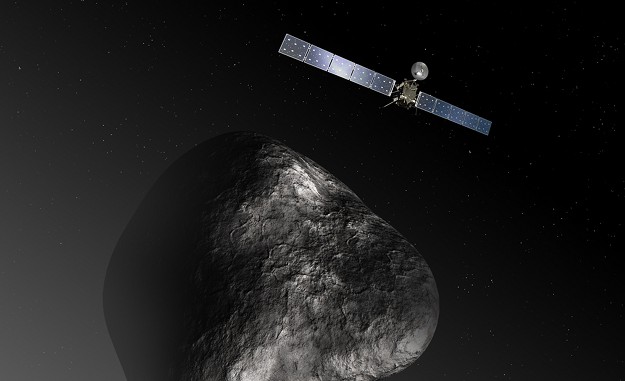
In the first instance, we have the ESA’s Rosetta spacecraft, which is currently on its way to rendezvous with the comet 67P/Churyumov-Gerasimenko at the edge of our Solar System. After awaking from a 957 day hibernation back in January, it has just conducted its first instruments observations. Included in these instruments are three NASA science packages, all of which have started sending science data back to Earth.
Since leaving Earth in March 2004, the Rosetta spacecraft has traveled more than 6 billion km (3.7 billion miles) in an attempt to be the first spacecraft to successfully rendezvous with a comet. It is presently nearing the main asteroid belt between Jupiter and Mars – some 500,000 km (300,000 miles) from its destination. And until August, it will executing a series of 10 orbit correction maneuvers to line it self up to meet with 67P, which will take place on August 6th.
Rosetta will then continue to follow the comet around the Sun as it moves back out toward the orbit of Jupiter. By November of 2014, Rosetta’s mission will then to launch its Philae space probe to the comet, which will provide the first analysis of a comet’s composition by drilling directly into the surface. This will provide scientists with the first-ever interior view of a comet, and provide them with a window in what the early Solar System looked like.
The three NASA instruments include the MIRO, Alice, and IES. The MIRO (or Microwave Instrument for Rosetta Orbiter) comes in two parts – the microwave section and the spectrometer. The first is designed to measure the comet’s surface temperatures to provide information on the mechanisms that cause gas and dust to pull away from it and form the coma and tail. The other part, a spectrometer, will measure the gaseous coma for water, carbon monoxide, ammonia, and methanol.
Alice (not an acronym, just a nickname) is a UV spectrometer designed to determine the gases present in the comet and gauge its history. It will also be used to measure the rate at which the comet releases water, CO and CO2, which will provide details of the composition of the comet’s nucleus. IES (or Ion and Electron Sensor) is one of five plasma analyzing instruments that make up the Rosetta Plasma Consortium (RPC) suite. This instrument will measure the charged particles as the comet draws nearer to the sun and the solar wind increases.
Named in honor of the Rosetta Stone – the a basalt slab that helped linguists crack ancient Egyptian – Rosetta is expected to provide the most detailed information about what comets look like up close (as well as inside and out). Similarly, the lander, Philae, is named after the island in the Nile where the stone was discovered. Together, they will help scientists shed light on the early history of our Solar System by examining one of its oldest inhabitants.
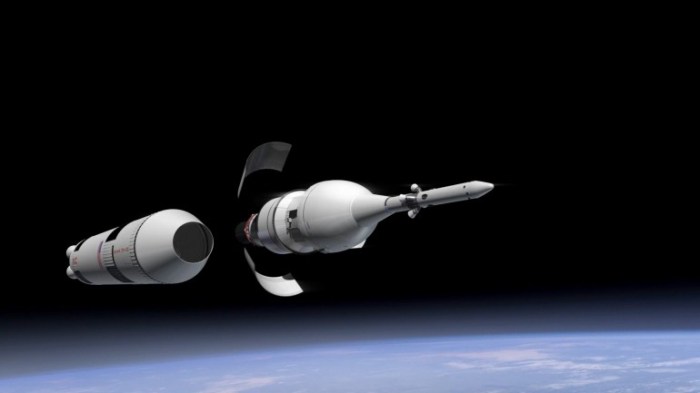
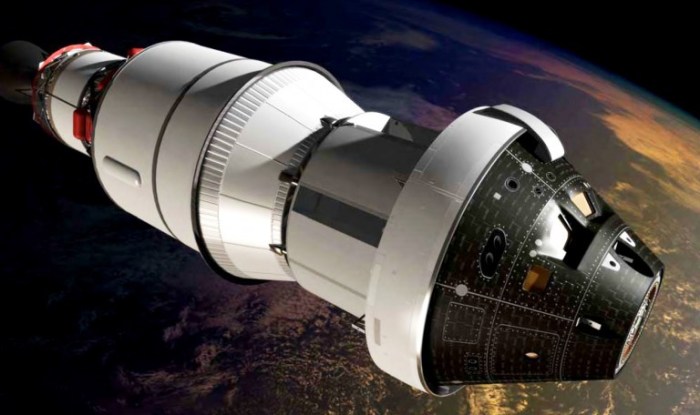
Next up, there’s the next-generation Orion spacecraft, which NASA plans to use to send astronauts to Mars (and beyond) in the not too distant future. And with its launch date (Dec. 4th, 2014) approaching fast, NASA scientists have set out what they hope to learn from its maiden launch. The test flight, dubbed EFT-1 is the first of three proving missions set to trial many of the in-flight systems essential to the success of any manned mission to Mars, or the outer Solar System.
EFT-1 will take the form of an unmanned test flight, with the Orion spacecraft being controlled entirely by a flight control team from NASA’s Kennedy Space Center located in Florida. One vital component to be tested is the Launch Abort System (LAS), which in essence is a fail-safe required to protect astronauts should anything go wrong during the initial launch phase. Designed to encapsulate the crew module in the event of a failure on the launch pad, the LAS thrusters will fire and carry the Orion away from danger.
Orion’s computer systems – which are 400 times faster than those used aboard the space shuttle and have the ability to process 480 million instructions per second- will also be tested throughout the test flight. However, they must also demonstrate the ability to survive the radiation and extreme cold of deep space followed by the fiery conditions of re-entry, specifically in the context of prolonged human exposure to this dangerous form of energy.
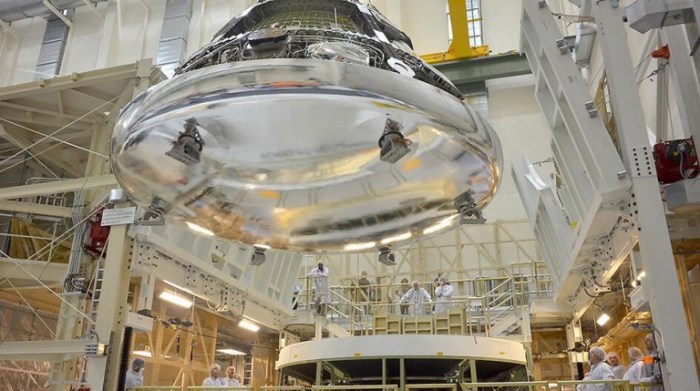
Whilst all systems aboard Orion will be put through extreme conditions during EFT-1, none are tested as stringently as those required for re-entry. The entire proving mission is designed around duplicating the kind of pressures that a potential manned mission to Mars will have to endure on its return to Earth, and so naturally the results of the performance of these systems will be the most eagerly anticipated by NASA scientists waiting impatiently in the Kennedy Space Center.
Hence the Orion’s heat shield, a new design comprised of a 41mm (1.6-inch) thick slab of Avcoat ablator, the same material that protected the crew of Apollo-era missions. As re-entry is expected to exceed speeds of 32,187 km/h (20,000 mph), this shield must protect the crew from temperatures of around 2,204 ºC (4,000 ºF). Upon contact with the atmosphere, the heat shield is designed to slowly degrade, drawing the intense heat of re-entry away from the crew module in the process.
The final aspect of EFT-1 will be the observation of the parachute deployment system. Assuming the LAS has successfully jettisoned from the crew module following launch, the majority of Orion’s stopping power will be provided by the deploying of two drogue parachutes, followed shortly thereafter by three enormous primary parachutes, with the combined effect of slowing the spacecraft to 1/1000th of its initial re-entry speed.
Previous testing of the parachute deployment system has proven that the Orion spacecraft could safely land under only one parachute. However, these tests could not simulate the extremes that the system will have to endure during EFT-1 prior to deployment. The Orion spacecraft, once recovered from the Pacific Ocean, is set to be used for further testing of the ascent abort system in 2018. Data collected from EFT-1 will be invaluable in informing future testing, moving towards a crewed Orion mission some time in 2021.
NASA staff on the ground will be nervously monitoring several key aspects of the proving mission, with the help of 1,200 additional sensors geared towards detecting vibration and temperature stress, while taking detailed measurements of event timing. Furthermore, cameras are set to be mounted aboard Orion to capture the action at key separation points, as well as views out of the windows of the capsule, and a live shot of the parachutes as they deploy (hopefully).
The launch promises to be a historic occasion, representing a significant milestone on mankind’s journey to Mars. Orion, the product of more than 50 years of experience, will be the first human-rated spacecraft to be constructed in over 30 years. The Orion will be launch is expected to last four hours and 25 minute, during which time a Delta-2 Heavy rocket will bring it to an altitude of 5,794 km (3,600 miles) with the objective of creating intense re-entry pressures caused by a return from a deep space mission.
And be sure to check out this animation of the Orion Exploration Flight Test-1:
After ten years in service (when it wasn’t supposed to last longer than nine months), one would think that left for the Opportunity rover to do. And yet, Opportunity is still hard at work, thanks in no small part to its solar panels being their cleanest in years. In its latest research stint, NASA’s decade-old Mars Exploration Rover Opportunity is inspecting a section of crater-rim ridgeline chosen as a priority target due to evidence of a water-related mineral.
Orbital observations of the site by another NASA spacecraft – the Mars Reconnaissance Orbiter (MRO) – found a spectrum with the signature of aluminum bound to oxygen and hydrogen. Researchers regard that signature as a marker for a mineral called montmorillonite, which is in a class of clay minerals (called smectites) that forms when basalt is altered under wet and slightly acidic conditions. The exposure of it extends about 240 meters (800 feet) north to south on the western rim of Endeavour Crater.
The detection was made possible using the MRO’s Compact Reconnaissance Imaging Spectrometer for Mars (CRISM) combined with rover observations some 3 kms (2 miles) north on the crater’s western rim. Rocks exposed there contain evidence for an iron-bearing smectite – called nontronite – as well as for montmorillonite. That site yielded evidence for an ancient environment with water that would have been well-suited for use by microbes, evidence that could boost our understanding of what Mars looked like billions of years ago.
Opportunity reached the northern end of the montmorillonite-bearing exposure last month – a high point known as “Pillinger Point.” Opportunity’s international science team chose that informal name in honor of Colin Pillinger (1943-2014), the British principal investigator for the Beagle 2 project, which attempted to set a research lander on Mars a few weeks before Opportunity landed there in January of 2004.
Opportunity Principal Investigator Steve Squyres, of Cornell University, had this to say about Pillinger:
Colin and his team were trying to get to Mars at the same time that we were, and in some ways they faced even greater challenges than we did. Our team has always had enormous respect for the energy and enthusiasm with which Colin Pillinger undertook the Beagle 2 mission. He will be missed.
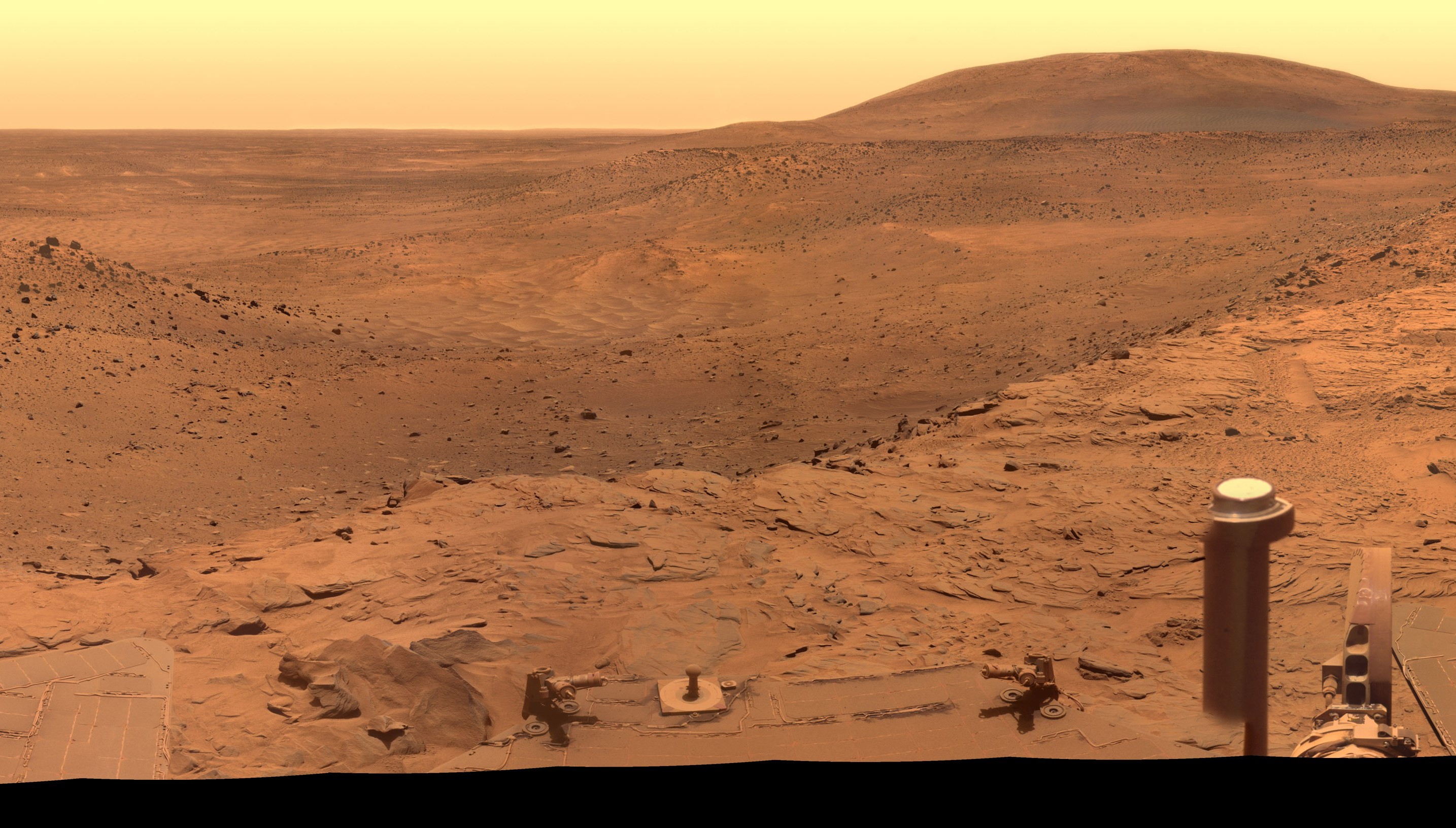
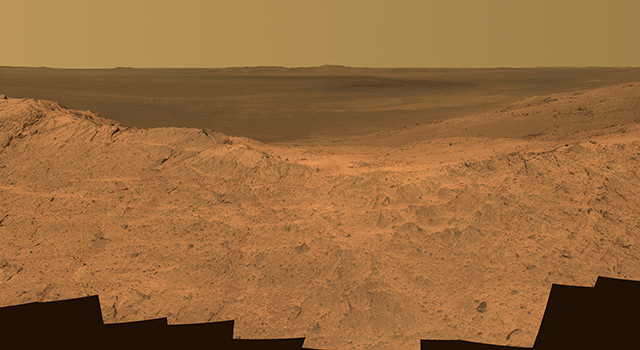
Though selected as a science destination, Pillinger Point also offers a scenic vista from atop the western rim of Endeavour Crater, which is about 22 kms (14 miles) in diameter. The picture below shows a section of a color shot taken by Opportunity’s panoramic camera (Pancam) upon arrival. A full-size view of this picture can be seen by going to NASA’s Jet Propulsion Laboratory Mars Exploration Rovers webpage.
Initial measurements at this site with the element-identifying alpha particle X-ray spectrometer at the end of Opportunity’s arm indicate that bright-toned veins in the rock contain calcium sulfate. Scientists deduce this mineral was deposited as water moved through fractures on Endeavour’s rim. The rover found similar veins of calcium sulfate farther north along the rim while investigating there earlier last month.
As Opportunity investigated this site and other sites farther south along the rim, the rover had more energy than usual. This was due to the solar cells being in rare form, says Opportunity Project Manager John Callas of NASA’s Jet Propulsion Laboratory:
The solar panels have not been this clean since the first year of the mission. It’s amazing, when you consider that accumulation of dust on the solar panels was originally expected to cause the end of the mission in less than a year. Now it’s as if we’d been a ship out at sea for 10 years and just picked up new provisions at a port of call, topping off our supplies.
Both Opportunity and its rover twin, Spirit, benefited from sporadic dust-cleaning events in past years. However, on the ridge that Opportunity has been navigating since late 2013, winds have removed dust more steadily, day by day, than either rover has experienced elsewhere. The rover’s signs of aging – including a stiff shoulder joint and occasional losses of data – have not grown more troublesome in the past year, and no new symptoms have appeared.
JPL’s Jennifer Herman, power-subsystem engineer added:
It’s easy to forget that Opportunity is in the middle of a Martian winter right now. Because of the clean solar arrays, clear skies and favorable tilt, there is more energy for operations now than there was any time during the previous three Martian summers. Opportunity is now able to pull scientific all-nighters for three nights in a row — something she hasn’t had the energy to do in years.
During Opportunity’s first decade on Mars and the 2004-2010 career of Spirit, NASA’s Mars Exploration Rover Project yielded a range of findings about wet environmental conditions on ancient Mars – some very acidic, others milder and more conducive to supporting life. These findings have since been supplemented and confirmed by findings by the Curiosity Rover, which hopes to find plenty of clues as to the nature of possible life on Mars when it reaches Mount Sharp later this summer.
The cosmic hunt for dark matter has been turning up some interesting clues of late. And during the month of June, two key hints came along that might provide answers; specifically simulations that look at the “local Universe” from the Big Bang to the present day and recent studies involving galaxy clusters. In both cases, the observations made point towards the existence of Dark Matter – the mysterious substance believed to make up 85 per cent of the mass of the Universe.
In the former case, the clues are the result of new supercomputer simulations that show the evolution of our “local Universe” from the Big Bang to the present day. Physicists at Durham University, who are leading the research, say their simulations could improve understanding of dark matter due to the fact that they believe that clumps of the mysterious substance – or halos – emerged from the early Universe, trapping intergalactic gas and thereby becoming the birthplaces of galaxies.
Cosmological theory predicts that our own cosmic neighborhood should be teeming with millions of small halos, but only a few dozen small galaxies have been observed around the Milky Way. Professor Carlos Frenk, Director of Durham University’s Institute for Computational Cosmology, said:
I’ve been losing sleep over this for the last 30 years… Dark matter is the key to everything we know about galaxies, but we still don’t know its exact nature. Understanding how galaxies formed holds the key to the dark matter mystery… We know there can’t be a galaxy in every halo. The question is: ‘Why not?’.
The Durham researchers believe their simulations answer this question, showing how and why millions of halos around our galaxy and neighboring Andromeda failed to produce galaxies. They say the gas that would have made the galaxy was sterilized by the heat from the first stars that formed in the Universe and was prevented from cooling and turning into stars. However, a few halos managed to bypass this cosmic furnace by growing early and fast enough to hold on to their gas and eventually form galaxies.
The findings were presented at the Royal Astronomical Society’s National Astronomy Meeting in Portsmouth on Thursday, June 26. The work was funded by the UK’s Science and Technology Facilities Council (STFC) and the European Research Council. Professor Frenk, who received the Royal Astronomical Society’s top award, the Gold Medal for Astronomy, added:
We have learned that most dark matter halos are quite different from the ‘chosen few’ that are lit up by starlight. Thanks to our simulations we know that if our theories of dark matter are correct then the Universe around us should be full of halos that failed to make a galaxy. Perhaps astronomers will one day figure out a way to find them.
Lead researcher Dr Till Sawala, in the Institute for Computational Cosmology, at Durham University, said the research was the first to simulate the evolution of our “Local Group” of galaxies, including the Milky Way, Andromeda, their satellites and several isolated small galaxies, in its entirety. Dr Sawala said:
What we’ve seen in our simulations is a cosmic own goal. We already knew that the first generation of stars emitted intense radiation, heating intergalactic gas to temperatures hotter than the surface of the sun. After that, the gas is so hot that further star formation gets a lot more difficult, leaving halos with little chance to form galaxies. We were able to show that the cosmic heating was not simply a lottery with a few lucky winners. Instead, it was a rigorous selection process and only halos that grew fast enough were fit for galaxy formation.
The close-up look at the Local Group is part of the larger EAGLE project currently being undertaken by cosmologists at Durham University and the University of Leiden in the Netherlands. EAGLE is one of the first attempts to simulate from the beginning the formation of galaxies in a representative volume of the Universe. By peering into the virtual Universe, the researchers find galaxies that look remarkably like our own, surrounded by countless dark matter halos, only a small fraction of which contain galaxies.
The research is part of a program being conducted by the Virgo Consortium for supercomputer simulations, an international collaboration led by Durham University with partners in the UK, Germany, Holland, China and Canada. The new results on the Local Group involve, in addition to Durham University researchers, collaborators in the Universities of Victoria (Canada), Leiden (Holland), Antwerp (Belgium) and the Max Planck Institute for Astrophysics (Germany).
In the latter case, astronomers using ESA and NASA high-energy observatories have discovered another possible hint by studying galaxy clusters, the largest cosmic assemblies of matter bound together by gravity. Galaxy clusters not only contain hundreds of galaxies, but also a huge amount of hot gas filling the space between them. The gas is mainly hydrogen and, at over 10 million degrees celsius, is hot enough to emit X-rays. Traces of other elements contribute additional X-ray ‘lines’ at specific wavelengths.
Examining observations by ESA’s XMM-Newton and NASA’s Chandra spaceborne telescopes of these characteristic lines in 73 galaxy clusters, astronomers stumbled on an intriguing faint line at a wavelength where none had been seen before. The astronomers suggest that the emission may be created by the decay of an exotic type of subatomic particle known as a ‘sterile neutrino’, which is predicted but not yet detected.
Ordinary neutrinos are very low-mass particles that interact only rarely with matter via the so-called weak nuclear force as well as via gravity. Sterile neutrinos are thought to interact with ordinary matter through gravity alone, making them a possible candidate as dark matter. As Dr Esra Bulbul – from the Harvard-Smithsonian Center for Astrophysics in Cambridge, Massachusetts, USA, and lead author of the paper discussing the results – put it:
If this strange signal had been caused by a known element present in the gas, it should have left other signals in the X-ray light at other well-known wavelengths, but none of these were recorded. So we had to look for an explanation beyond the realm of known, ordinary matter… If the interpretation of our new observations is correct, at least part of the dark matter in galaxy clusters could consist of sterile neutrinos.
The surveyed galaxy clusters lie at a wide range of distances, from more than a hundred million light-years to a few billion light-years away. The mysterious, faint signal was found by combining multiple observations of the clusters, as well as in an individual image of the Perseus cluster, a massive structure in our cosmic neighborhood.
The implications of this discovery may be far-reaching, but the researchers are being cautious. Further observations with XMM-Newton, Chandra and other high-energy telescopes of more clusters are needed before the connection to dark matter can be confirmed. Norbert Schartel, ESA’s XMM-Newton Project Scientist, commented:
The discovery of these curious X-rays was possible thanks to the large XMM-Newton archive, and to the observatory’s ability to collect lots of X-rays at different wavelengths, leading to this previously undiscovered line. It would be extremely exciting to confirm that XMM-Newton helped us find the first direct sign of dark matter. We aren’t quite there yet, but we’re certainly going to learn a lot about the content of our bizarre Universe while getting there.
Much like the Higgs Boson, the existence of Dark Matter was first theorized as a way of explaining how the universe appears to have mass that we cannot see. But by looking at indirect evidence, such as the gravitational influence it has on the movements and appearance of other objects in the Universe, scientists hope to one day confirm its existence. Beyond that, there is the mystery of “Dark Energy”, the hypothetical form of energy that permeates all of space and is believed to be behind accelerations in the expansion of the universe.
As with the discovery of the Higgs Boson and the Standard Model of particle physics, detecting these two invisible forces will at last confirm that the Big Bang and Cosmological theory are scientific fact – and not just working theories. When that happens, the dream of humanity finally being able to understand the universe (at both the atomic and macro level) may finally become a reality!

 The Jovian moon of Europa remains a mystery that is just dying to be cracked. Although covered in ice, scientists have long understood that tidal forces caused by its proximity to Jupiter have created a warm interior, one which can sustain warm oceans beneath the surface. In the coming years, NASA wants to fly a mission to this planet so we can finally get a look at what, if anything, is lurking beneath that icy crust.
 Towards this end, they are looking for proposals for science instruments specifically tailored to the task. And within a year’s time, they plan to select 20 from a list of those proposed for the mission. At which point, the selectees will have $25 million to do a more advanced concept study. As John Grunsfeld, associate administrator for NASA’s science mission directorate, stated:
 In April, NASA sent out a request for information to interested potential participants on the mission itself, which it plans to cost less than $1 billion (excluding launch costs). Besides its desire to look for landing sites, NASA said the instruments should also be targeted to meet the National Resource Council’s (NRC) Planetary Decadal Survey’s desires for science on Europa.
 According to the agency, any instrument proposal must meet NASA’s landing scout goal or the NRC goals. The instruments must also be highly protected against the harsh radiation, and meet planetary protection requirements to ensure no extraterrestrial life is contaminated with our own. In essence, this means than any instruments must be safeguarded against carrying bacteria that could play havoc with Europan microbes or (do we dare to dream!) more complex organisms.



 Such ideas did inform Kim Stanley Robinson’s seminal novel Red Mars, where an international crew flew to the Red Planet and established the first human settlement that begins the terraforming process. But if international cooperation proves too difficult, perhaps a collaboration between commercial space agencies and federal ones could work. I can see it now: the Elon Musk Martian Dome; the Richard Branson Habitat; or the Gates colony…





 The NASA.gov website will host features, videos, and historic images and audio clips that highlight the Apollo 11 anniversary, as well as the future of human spaceflight. You can find it all by clicking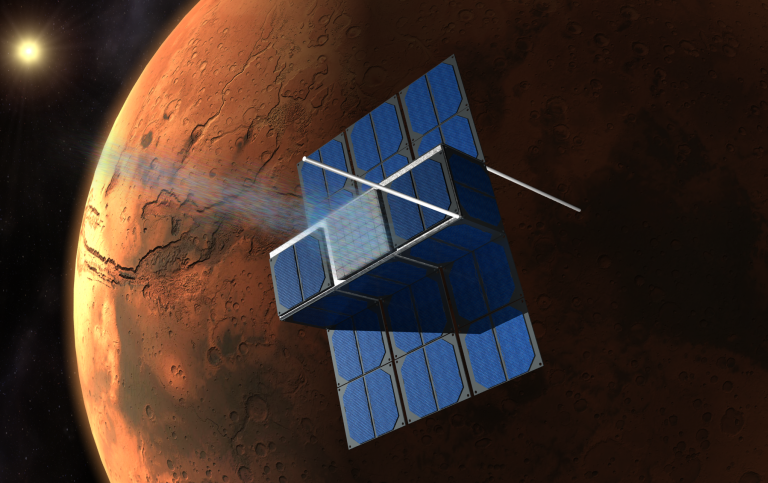

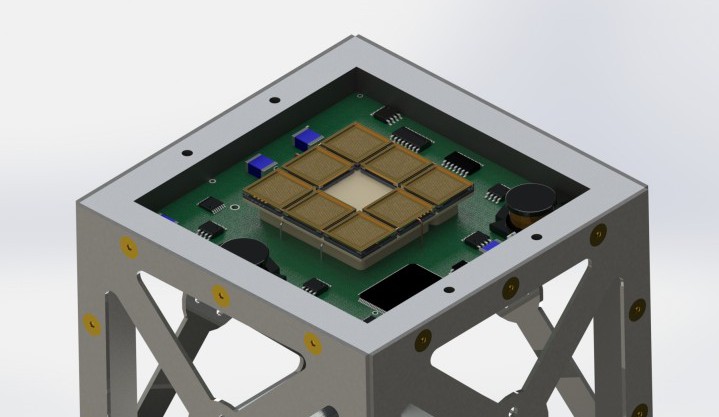
 The technologies being tested on the three spacecraft include delay-tolerant networking for the Deep Space Internet, inflatable antennae, and new interplanetary radiation sensors that will pave the way for future human trips to Mars. But out of all the new technologies being tested, the most exciting is certainly the propulsion system. But the most interesting technology of all will be in the form of its engines.

 The mission – called
  The couple’s drive to explore space was born in a giant glass dome near Tuscon, Arizona called Biosphere 2 in the early 90s. For two years (between 1991 and 1993), eight people – including Poynter and MacCallum – lived inside this dome as part of a prototype space colony. The eccentric, privately funded science experiment contained miniature biomes that mimicked Earth’s environments.
 MacCallum blogged about these plans while still living inside the dome, and managed to sign up Lockheed Martin aerospace engineer Grant Anderson as a co-founder, and signed legal papers with Poynter to incorporate Paragon. After Biosphere 2 project, both began working with a group from NASA to test an ecological experiment on the Russian Space Station MIR.
 Originally, Dennis Tito hoped to finance the project entirely independently, using crowd-sourced funds and philanthropy. The original goal was also to get the project off the ground by 2017, when Earth and Mars would align in such a way that a rocket could slingshot to and from Mars in just 501 days. But with further analysis, Tito and Paragon realized they did not have the resources or money to pull off the mission by 2017.
 And MacCallum believes a trip to Mars that would use these life support systems could inspire the next great generation of innovators, much as the Apollo missions inspired the current generation of innovators and astronauts. McCallum turned five on July 20th, 1969 – the day that Apollo 11 landed on the Moon, and credits that historic event for inspiring him to take an interest in space and enter the Biosphere 2 project.

 This is just the latest in a series of possible plans to capture debris. In the past, the ESA has revealed that it was looking at capturing space debris in a net, securing it with clamping mechanisms, or grabbing hold of it using robotic arms. However, the latest possibility calls for using capturing debris with a tethered harpoon, which would pierce the debris with a high-energy impact before reeling it in.
 The ESA says the space harpoon concept has already undergone initial investigations by Airbus Defense and Space in Stevenage – two aerospace developers based in the UK. The preliminary design incorporates a penetrating tip, a crushable cartridge to help embed it in the target satellite structure, and barbs to keep it sticking in so the satellite can then be reeled in.
 Space exploration is a booming industry these days. Between NASA, the ESA, Roscosmos, the CSA, and the federal space agencies of India and China, there’s just no shortage of exciting missions aimed at improving our understanding of our Solar System or the universe at large. In recent months, two such missions have been making the news; one of which (led by the ESA) is now underway, while the other (belonging to NASA) is fast-approaching.

 Named in honor of the Rosetta Stone – the a basalt slab that helped linguists crack ancient Egyptian – Rosetta is expected to provide the most detailed information about what comets look like up close (as well as inside and out). Similarly, the lander, Philae, is named after the island in the Nile where the stone was discovered. Together, they will help scientists shed light on the early history of our Solar System by examining one of its oldest inhabitants.
 EFT-1 will take the form of an unmanned test flight, with the Orion spacecraft being controlled entirely by a flight control team from NASA’s Kennedy Space Center located in Florida. One vital component to be tested is the Launch Abort System (LAS), which in essence is a fail-safe required to protect astronauts should anything go wrong during the initial launch phase. Designed to encapsulate the crew module in the event of a failure on the launch pad, the LAS thrusters will fire and carry the Orion away from danger.
 The final aspect of EFT-1 will be the observation of the parachute deployment system. Assuming the LAS has successfully jettisoned from the crew module following launch, the majority of Orion’s stopping power will be provided by the deploying of two drogue parachutes, followed shortly thereafter by three enormous primary parachutes, with the combined effect of slowing the spacecraft to 1/1000th of its initial re-entry speed.
 NASA staff on the ground will be nervously monitoring several key aspects of the proving mission, with the help of 1,200 additional sensors geared towards detecting vibration and temperature stress, while taking detailed measurements of event timing. Furthermore, cameras are set to be mounted aboard Orion to capture the action at key separation points, as well as views out of the windows of the capsule, and a live shot of the parachutes as they deploy (hopefully).


 Initial measurements at this site with the element-identifying alpha particle X-ray spectrometer at the end of Opportunity’s arm indicate that bright-toned veins in the rock contain calcium sulfate. Scientists deduce this mineral was deposited as water moved through fractures on Endeavour’s rim. The rover found similar veins of calcium sulfate farther north along the rim while investigating there earlier last month.

 The findings were presented at the Royal Astronomical Society’s National Astronomy Meeting in Portsmouth on Thursday, June 26. The work was funded by the UK’s Science and Technology Facilities Council (STFC) and the European Research Council. Professor Frenk, who received the Royal Astronomical Society’s top award, the Gold Medal for Astronomy, added:
 Ordinary neutrinos are very low-mass particles that interact only rarely with matter via the so-called weak nuclear force as well as via gravity. Sterile neutrinos are thought to interact with ordinary matter through gravity alone, making them a possible candidate as dark matter. As Dr Esra Bulbul – from the Harvard-Smithsonian Center for Astrophysics in Cambridge, Massachusetts, USA, and lead author of the paper discussing the results – put it:
 Stories by Williams