Episode 105 – Megastructures (Part II) – is now live!

Episode 105 – Megastructures (Part II) – is now live!

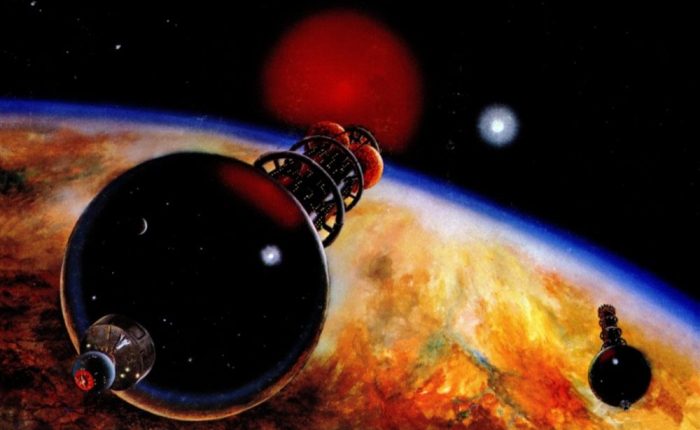
This week’s episode is the second installment in my series about megastructures. In the previous installment, we took a look at the Dyson Sphere, the concept that started it all, as well as variations like the Niven Ring and Matrioshka Brain. As promised, this episode examines some of the more exotic concepts for Dyson structures that could allow an advanced species to harness the power of its star. This includes the Alderson Disk and the Shkadov Thruster (pictured above and below).

Neil Blevins
Neil Blevins

These are all examples of megastructures that a Type II civilization (on the Kardashev Scale) could conceivably create. In part III, I hope to delve into proposed concepts that a Type I+ civilization could create someday (and that includes humanity). Some examples include a Space Elevator, an O’Neill Cylinder, a Stanford Torus, a Clarke Band, and more. As always, I will be referencing the artwork of Neil Blevins (and others) to illustrate what these fascinating concepts could look like. Follow the links below to learn more.

Where to Listen:

Episode 83 of Stories from Space – China’s Space Program – is now Live!

Episode 83 of Stories from Space – China’s Space Program – is now Live!

This week’s episode was dedicated to one of the fastest-growing space programs in the world. I’m talking about the China National Space Agency (CNSA), which has made several big strides in recent years. Like all major space programs, China’s was conceived amid the Cold War and was related to the development of nuclear weapons. A further incentive was provided when the Soviets and the U.S. began sending satellites and crewed missions to space.

Progress was slow during the latter half of the 20th century due in large part to the chaos caused by the Cultural Revolution (1966-1976). By the 1990s, with the Tiananmen Square Massacre and the collapse of the Soviet Union, the Chinese Communist Party instituted many reforms to ensure its survival. By the 2000s, this extended to its space program, and many bold programs were launched. This included a crewed space program, a robotic exploration program, and plans for a series of space stations.

This culminated in the deployment of the Tiangong modular space station (aka. Tiangong 3), several crewed missions to Low Earth Orbit (LEO), the Chang’e missions reaching the Moon, and the first Chinese mission to Mars (Tianwen-1). In the near future, China plans to create a permanent base in the Moon’s south pole region – the International Lunar Research Station (ILRS). In the coming decades, they also plan to send crewed missions to Mars.

Follow the links below to learn more…

Where to Listen:

Episode 55 – “The Firstborn Hypothesis” – is now Live!

Episode 55 – “The Firstborn Hypothesis” – is now Live!

This week, I decided it was time to get back into the Fermi Paradox! This time, I addressed the Firstborn Hypothesis, the notion that humanity may be the first advanced civilization to emerge in our Galaxy. Much like the Brief Window Hypothesis, I’m not sure it’s an official proposal. In fact, I’m pretty sure I assigned a name to a general idea that has been raised many times over the years and is considered one of the more obvious resolutions.

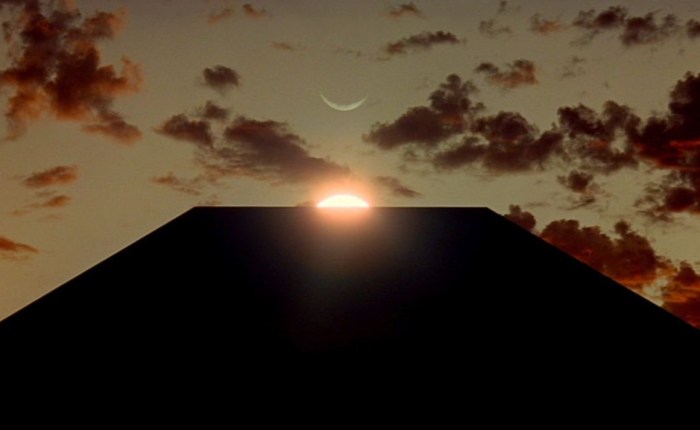
The name itself was inspired by Arthur C. Clarke’s 2001: A Space Odyssey. In this series, “Firstborn” is the name of the advanced species that was the first civilization to emerge in our galaxy. These were the aliens that created the monoliths and tampered with human evolution in the distant past, and are contemplating whether they made a mistake (and need to correct it) in the present. If true, then humanity has a pretty massive responsibility before it! Tune in to hear more:

Where to Listen:

Episode 53 – The Drake Equation – is now Live!

Episode 53 – The Drake Equation – is now Live!

For this week’s episode, I addressed one of the most important and well-known theories in the Search for Extraterrestrial Intelligence (SETI). It’s known as the Drake Equation, a thought experiment proposed by famed astronomer and SETI researcher Dr. Frank Drake. Drake presented this equation during the first SETI meeting in 1961, held at the Green Bank Observatory in West Virginia and attended by some of the most influential scientists of the day (including Carl Sagan). As Drake later said about his famous equation:

“As I planned the meeting, I realized a few day[s] ahead of time we needed an agenda. And so I wrote down all the things you needed to know to predict how hard it’s going to be to detect extraterrestrial life. And looking at them it became pretty evident that if you multiplied all these together, you got a number, N, which is the number of detectable civilizations in our galaxy.”

The equation basically states that the number of intelligent species we can communicate within our galaxy (N) can be determined by multiplying the average rate of star formation in our galaxy (R*) by the number of stars that have planetary systems (fp), the number of planets that are habitable (ne), the fraction of habitable planets where life will emerge (fl), the fraction of those where intelligent life will emerge (fi), the fraction of those that will develop transmission technologies that are detectable from space (fc), and the average longevity of civilizations (L).

To this day, the equation remains foundational to SETI and is comparable only to the Fermi Paradox and the Kardashev Scale. Dr. Frank Drake passed away on September 2nd, 2022, at the age of 92. He is one of many luminaries to pass on in recent years, like Stephen Hawking (2018) and Freeman Dyson (2020), and he will be missed!

Where to Listen:

Episode 52 – Going Interstellar: Generation Ships! – is now Live!

Episode 52 – Going Interstellar: Generation Ships! – is now Live!

This week’s episode focuses on a time-honored proposal for interstellar travel. Known as a Generation Ship (or Interstellar Ark, Arkship, etc.), the concept envisions a massive starship that can accommodate multiple generations of crews as they travel to nearby stars. The basic philosophy is that if you can’t go fast enough to get there within a single lifetime, then pack for the long haul! But of course, there are lots of considerations that need to be addressed in advance.

A lot can happen on a multi-generational interstellar voyage, which is why Generation Ships are a wonderful setting for science fiction stories! These include Robert A. Heinlein’s Orphans of the Sky, Poul Anderson’s Tau Zero, Arthur C. Clarke’s Rendezvous with Rama, Ursula K. LeGuin’s Paradises Lost, Kim Stanley’s Robinson’s Aurora, and something I’m currently working on (titled Traverse). Check out the episode below…

Where to Listen:

Episode 51 – The Relativity Revolution: The Life and Times of Albert Einstein – Part II – is now live!

Episode 51 – The Relativity Revolution: The Life and Times of Albert Einstein – Part II – is now live!

In Part I, we looked at the early life and education of Einstein and the steps that would eventually lead him to his groundbreaking theory of Relativity. In this second installment, we examine the implications of his theories, his later contributions to the sciences, and the years he spent in exile due to the rise of Nazi Germany. And, of course, there’s his enduring legacy, which includes theories like Dark Matter, Dark Energy, and the most predominantly accepted cosmological model that is still in use to this day.

Here’s where you can check it out…

Where to Listen:

Episode 49 – “Where is Everybody?” Our Interstellar Future with Prof. Avi Loeb – is now live!

Episode 49 – “Where is Everybody?” Our Interstellar Future with Prof. Avi Loeb – is now live!

This week I sat down with Israeli-American theoretical physicist Professor Avi Loeb, the Frank B. Baird Jr. Professor of Science at Harvard University, the longest-serving Chair of the Department of Astronomy, the founder of Harvard’s Black Hole Initiative (BHI), and director of the Institute for Theory and Computation (ITC) at the Harvard-Smithsonian Center for Astrophysics. He is also the founder of the Galileo Project, a public project dedicated to the investigation of Unidentified Aerial Phenomena (UAP), and the Chairman of the Advisory Committee of Breakthrough Starshot.

A few years ago, Prof. Loeb became the focus of international attention when he suggested that the interstellar object ‘Oumuamua might be an extraterrestrial probe. With the release of the “UFO File” in 2021 by the Office of the Director of National Intelligence (ODNI), Loeb and many of his colleagues launched Project Galileo to assist with the transition where UAP studies are now the subject of open scientific research rather than a clandestine affair overseen by government agencies. We touched on all these topics during our conversation. Check it out below!

Where to Listen:

The Best Astronomy Podcasts for 2023

The Best Astronomy Podcasts for 2023

I have to this, this was a complete surprise and I didn’t even realize anyone was keeping track. And yet, my friend and colleague James Maynard brought this bit of news to my attention. The list comes from PlayPodcast.net, a site that that offers free listening for hundreds of podcasts and (apparently) ranks them according to various categories. For this list, they ranked the best astronomy podcasts this year.

Guess who made the list?

I’m not sure if this represents their own assessment or based on reviews, but I’ll take it. Also, note that The Cosmic Companion is the podcast of my buddy James. I invite you to check it out seeing as how he has some very cool stories, is a NASA alumni, and interviews some very interesting people (scientists, researchers, astronauts, etc.).

Stories from Space is now Live!

Stories from Space is now Live!

It’s officially Launch Day! My podcast series, Stories from Space, just released its first episode. The topic, “We’re Going Back to the Moon!” talks about Artemis and related programs that will send astronauts back to the lunar surface with the long-term goal of establishing a sustained human presence on the Moon. Mostly, the episode addresses the question: why did it take us over fifty years to go back?

Answering a question like that takes about half an hour (or the length of a podcast episode). You can check it out at the Stories from Space homepage (https://www.itspmagazine.com/stories-from-space), or just click on the play button below. The episode is also available for streaming on Spotify and Apple

Good News! Stories from Space Picked up by ITSP Magazine!

Good News! Stories from Space Picked up by ITSP Magazine!

This news has been a few months in the making, but with the final preparations underway, I feel like it’s time to announce it! In a few weeks, I will be launching my podcast series – Stories from Space – with the Intersection Of Technology, Cybersecurity, And Society Podcast (ITSP), a highly-respected channel that hosts multiple shows. Each of these is dedicated to exploring the past, the present, and the future of humanity’s relationship with technology and the profound effects it can have on our society.

Continue reading “Good News! Stories from Space Picked up by ITSP Magazine!”