Some good news on the publishing front. My latest novel, the Jovian Manifesto (the second installment in the Formist Series), is back from the editor and I’m now making corrections. Once that’s done, it’s back to the publisher for another run-through, and then it will be ready for publication. While I can’t give a precise date, a realistic estimate at this point places the release date early this summer. And I’ve already seen some sample artwork, and it looks awesome!
And while I don’t want to spoil anything, I can say that the second book has plenty of action scenes! One thing I worried about in book one was that it had a rather slow buildup. Of course, that’s a consequence of having a story with multiple settings and an intricate plot. Nevertheless, I wanted there to be more action scenes in the second and third books, and ensure that they occurred throughout.
Credit: NASA
Suffice it to say, there are a few combat scenes that involve powered exosuits, some exotic locations, and the aforementioned space combat. Writing these scenes was admittedly a bit of a challenge, since its kind of hard to predict what combat would look like where super-advanced technology is involved. In a society where anything can be synthesized and manufactured at the atomic level, what kinds of weapons, armor and ships would be possible?
In other news, The Cronian Incident is still getting reviews. At this moment, it has accrued 12 reviews on Amazon (with an average rating of 4.7 out of 5 stars) and 16 on Goodreads – with an average rating of 4.0 out of 5 stars. Hopefully, the second book will do just as well.
Yes, after a good six months of planning, plotting, writing, rewriting, and worrying about deadlines, The Jovian Manifesto is finally done! And by that I mean I’ve finished writing the manuscript and the process of editing and polishing is about to begin. I’m also expecting some artwork in the coming weeks so there are plenty of surprises ahead!
In addition to being the sequel to The Cronian Incident (released in September of 2017), The Jovian Manifesto is the second book in the Formist Series. So based on the release date of the first book and assuming I can get all the edits done by the end of this month, that would make this the second books that I’ve written in the past six months. Would now be a good time to take a wee break? I hope so!
Here’s the preamble that I’ve been saving for the release:
“Months have passed since the incident on Titan. For Emile and the Formists, life is returning to normal now that their enemies have been dealt with. Or so they thought. On the Jovian world of Europa, a mysterious document has been released that threatens to reveal everything. The Jovian Manifesto, as it’s called, has the Outer Worlds up in arms and the Inner Worlds fearing a civil war. The Solar System is on the verge of ignition, and all that is needed is a spark.”
As I stated in a previous post, this sequel will feature a whole new bunch of characters and locations. In fact, all of the new leading characters in this novel are women, which surprised me even. I did want to move away from male primary characters since the first book was a little heavy on them. But even I was a bit surprised when someone pointed this out to me.
As with The Cronian Incident, my publisher will be the venerated UK-based company known as Castrum Press!
I’d also like to take this opportunity to say congrats to my friend and fellow writer, Rami Ungar! Rami recently signed a contract with Castrum Press to write horror and suspense (his specialty). Thanks to Castrum’s pro-active approach to recruitment, I was able to set up a meet between him and Rami, and the two hit it off! Good luck to the both of us, Rami! Busy times ahead 🙂
Follow the link below to see my interview with It’s Write Now, a book-sharing site that is committed to sharing Kindle ebooks to promote new authors. It was the single-longest interview I’ve ever done, but that was no problem. Lots of interesting questions that really made me ponder and dig deep!
Incidentally, they are also giving away free copies of The Cronian Incident for a limited time. If you’re looking for a hard SF read, get your free copy while you can!
Check out the link below to see my latest interview for The Cronian Incident. This one took place with the good folks at SciFy Shenanigans. This is the author website of JR Handley, a husband and wife writing team that specializes in military science fiction. Be sure to check out their interview antics, and have a look at their novels while you’re there. It’s a pretty bad-ass site!
Just to let people know, the release date for The Cronian Incident is no longer September 15th. The book will now be available to the public (paperback and ebook) on Saturday, September 2nd. That’s this Saturday, so in just two more days!
For reasons which will be become clear in a moment, I am not feeling very wordy today. So I shall keep this plain and put it into a series of bullet points, all with exclamation marks:
The manuscript is complete!
Sent it to the publisher last week!
They’re about half-way through and said they like it!
Hmmm. Okay, maybe I need to go with the wordier version!
After 18 months, I have finally finished the manuscript to The Cronian Incident. And after about a week, they wrote to me to tell me that they were half done and they were enjoying it. Naturally, they were sure to note that there were some flaws and some things that needed fixing, but nothing major. In other words, it will need polishing, but they see no reason NOT to publish it at this time! 🙂
This moment has certainly been a long time in coming! And in all honesty, I felt kind of deflated once I had written the last sentence to the last chapter. I was happy and knew that the significance of being done would probably hit me soon enough. But at the time, it was like climbing a steep hill and getting to the top, only to realize how tired I was and how far I still needed to walk to get back to the car!
Ah well. Like I said, I am sure I will hit me it eventually. And in the meantime, I’ve been encouraged and relieved to know that the publisher didn’t think it was pure crap! Because believe me, when you’re heavily invested in the creation of something, you really worry that others might not like it! And that is perhaps what made completing the manuscript so very difficult and time-consuming. It was not just me feeling like, “man, I need to finish this!” There was also the feeling of, “but what if this doesn’t work out? What if this is no good? Have I wasted all this time? Will I have to start over?”
In the meantime, all I can do is wait and stay cautiously optimistic. The publisher has told me that they anticipate finishing the book by sometime next week; at which point, I imagine we’ll start talking about edits and contracts, etc. Getting close, people! Fingers crossed!
First off, let me apologize for not announcing this sooner. But as with all good things, I didn’t want to announce anything prematurely or risk jinxing it. To put it simply, I have been approached by a publisher about my current work in progress – The Cronian Incident. And while nothing has been put in writing just yet, if all goes well, it will be part of Space Dock’s 2017 publishing catalog – which is the sci-fi subsidiary for a UK publisher.
To start at the beginning, back in October, this publisher sent me a message via Facebook. It seemed that we were part of the same writer’s group, and he had heard me going on about The Cronian Incident and all the ideas I was exploring to create it. Apparently, this is something lots of publishers do these days, which is rely on social media to look for aspiring authors.
Anyhoo, I replied to him that I would be interested, and that the manuscript (though not yet complete) was coming along nicely. Over the course of the next few weeks, we did the usual back and forth. He explained what they were looking for and asked me about my long-term plans, I told him about the overall story and how I hoped to write sequels to it.
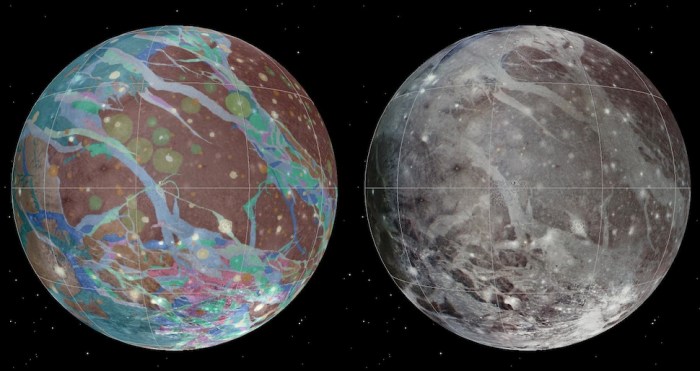
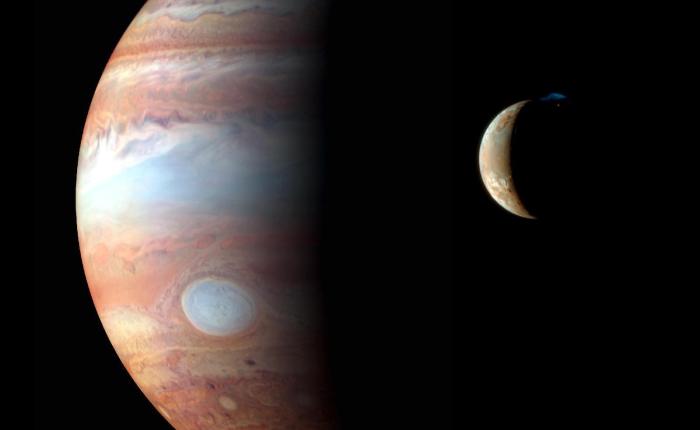
Jupiter’s larger (Galilean) moons, Callisot, Europa, Io and Ganymede. Credit: NASA
He then asked me to send the first four chapters to see if it had promise. Here too, I learned something valuable. These days, its the first four chapters (not five, not three) that make-or-break many online sales. You see, people using Amazon are able to download these as a sample and will base their decision to buy the whole book depending on whether or not it’s grabbed their interest.
So the first notes the publisher gave me was that he liked the idea, but also stressed that the beginning needed “a hook”. There was little in the first four chapters of my original draft to introduce the overall plot, they said, and things kind of built slowly. So I revised it, added a prologue that contains the “inciting event” of the story (a kidnapping) and sent it back. This met with his approval, and he sent it on to one of his editors for a second look.
And just a few days ago, they got back to me again. Once again, I got some kudos on the story, but more concerns that things take too long to develop. However, this time around, it was more in the form of a suggestion. I took this to be a good sign, but of course I took the suggestion seriously. These people know what readers are likely to buy, so I’m not about to disregard their recommendations.
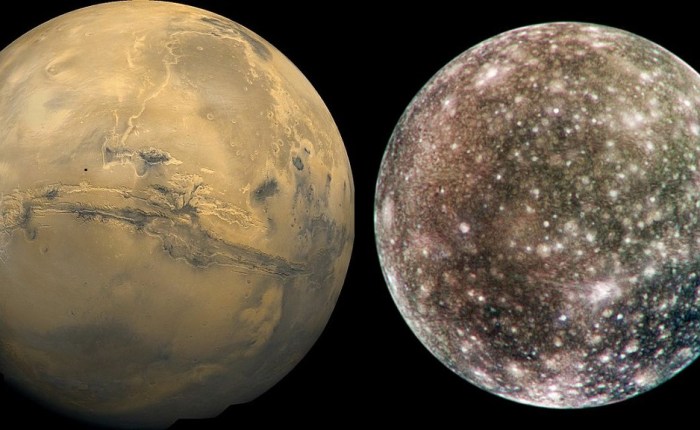
Terrafomed Mars, one of the focal points of the story. Credit: ittiz
So I’m doing a second round of edits now, and working to complete the novel so its ready for the 2017 publishing season. At this point, I’m over 70,000 words into the story, and I imagine there’s about ten more chapters to go. At this rate, I can estimate that the final product will be probably be about 100,000 words (though that is likely to come down after all the editing is finished).
And like I said, nothing has been signed yet so nothing is written in stone. But so far, I’m pretty enthused about how things are going. It’s taken me over ten years to actually get to the point where a publisher was interested in my work and contacted me. In the meantime, feel free to join me in being cautiously optimistic!
Hello, everyone. As usual, I feel obliged to share some good news of the milestone-hitting variety. As the title makes abundantly clear, I’ve completed the third part in my upcoming novel, The Cronian Incident. Yes, thanks to my somewhat less than tireless efforts over the course of the past few months,this story is now three-fourths complete, and officially stands at thirty chapters and 60,000 words in length. And it’s been quite the ride so far.
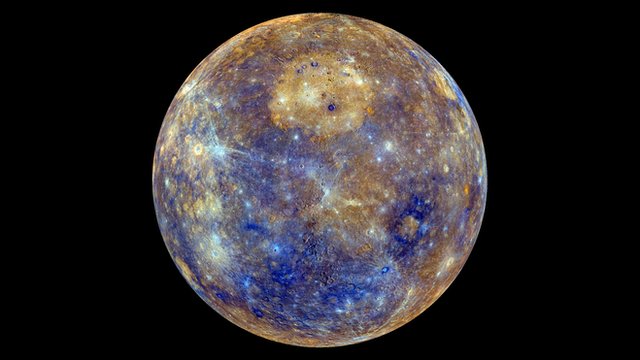
Since I stopped daydreaming about (and bothering people with) this idea and began putting words to paper, I have managed to bang out the better part of a story that involves our Solar System in the late 23rd century, colonization, terraforming, and the future of humanity. And in the course of this, I’ve had to create and detail settings for Mercury, Mars, and the Jovian moon Callisto, and fill in bits of pieces on culture, history and other assorted aspects of background to boot.
Much of this has to do with setting the tone of the late 23rd century. The way I see it, humanity has passed through two major cataclysms at this point, both of which took place in the 21st century. The first was the Climate Crisis, where all over the world, economies began to collapse as drought, crop failure, and warfare led to the displacement of millions of people.
Color-enhanced map of Mercury. Credit: NASA/JPL
The second occurred shortly thereafter, when all around the world, the technological progress that has been building up since the Paleolithic exploded in a quantum leap of learning and accelerated change. Within decades, the Climate Crises began to abate, and a new world characterized by runaway change began to take over. And at about the same time, a renewed Space Age set in as humans began to migrate to the Moon, to Mars, and beyond.
And after about a century and a half of all that, the human race has now colonized the majority of the Solar System. Between Mercury, Venus, the Moon, Mars, the Asteroid Belt, Jupiter’s moons, Saturn’s moons, and of course, Earth and its millions of orbital habitats, the human race now stands at a hefty 15 billion. And across this vast interplanetary dominion, a massive economy has taken root that is beyond scarcity and want.
But there are no shortages of intrigue thanks to the forces that have shaped this new age. While the inner Solar System is populated by people who have embraced the Singularity, transhumanism, posthumanism, and runaway progress, the outer Solar System has become a new home for people looking to escape this pace of life and maintain a simpler existence. And in time, the disappearance of one person will force everyone – be they in the inner or outer worlds – to sit up and take notice.
Jupiter’s larger (Galilean) moons, Callisot, Europa, Io and Ganymede. Credit: NASA
I tell you, it’s been tiring process, getting this far. And at one point, I did declare that I had OD’d on writing about setting and world building. I mean, how can you dedicate 20,000 words to detailing a place, making it as vivid as possible for the reader, and then just switch to another? Screw plot necessity, it’s like abandoning an idea half-way! And I still have the all important one – the Cronian moon Titan – to cover.
But I’d be lying if I said that it hasn’t also been fun and that it wouldn’t be so tiring if I weren’t’ completely emotionally invested in it. And (spoiler alert!) that is where things should be the most interesting. As is usually the case, Part I through III of this four-part story have been all about establishing character, background, a sense of space and place, and introducing the various elements that drive the plot.
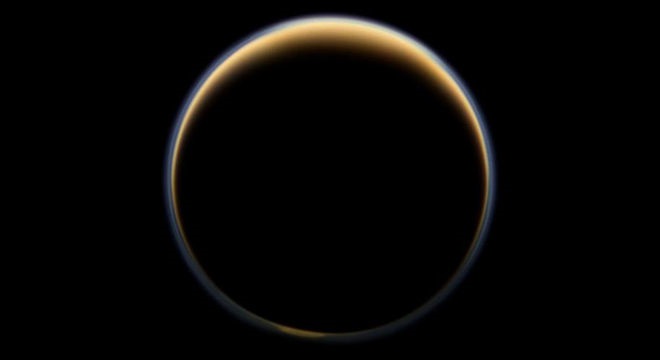
But in Part IV, I will not only get to write about a particularly intriguing place – Titan; capital city Huygens; dense nitrogen-methane atmosphere; principle industries, methane and ammonia harvesting; principle activities, sailing on methane lakes and gliding in low-g, cruising for action in its Yellow Light District and political dissent – but I’ll also be getting into the real heart of the plot, the mystery of the disappearing Dr. Lee!
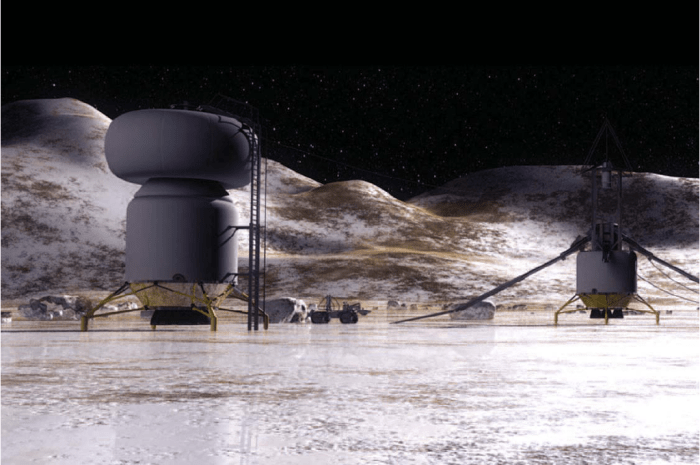
A possible base on the surface of Callisto. Credit: NASA
In the coming months, I hope to have part IV, fully edited, and in a position to be published. While it remains unclear just what form that will take – the old submission to a publishing house route, or via an independent publisher – I know that some really amazing friends and colleagues will be there to cheer it on. Hell, some of them actually read this blog, for some reason. So if you’re reading this now, then I thank you for sticking with me thus far! 🙂
According to the Science Fiction and Fantasy Writers of America, a work needs to be over 40,000 words long to be classified as a “novel”. This is just one standard, but right now, it’s an important one as far as I am concerned. Why? Two reasons: one, its what the SFSWA uses to classify books when considering them for a Nebula Award. Since science fiction is my chosen genre, I got to think these people know what they are talking about.
Second, and perhaps more importantly, it is because my WIP, The Cronian Incident, just passed this milestone. At present, the novel is 22 chapters and just over 43,000 words in length. And I’m only about halfway done! Problem is, this is where I begin to feel the crunch with most novels. Halfway is a bad point to be in when you’re me, because you’re feeling the weight of all that you’ve created so far, and are really aching to get to the finish line!
In the meantime, I am busy exploring the various aspects of Part III of the book, otherwise known as “Jovians”. In this part, the story’s MC, Jeremiah Ward, has traveled to the Jovian moon of Callisto (the fourth large moon of Jupiter) to meet his associate in the investigation. It is also here that he meets an old contact of his from his police-work days, and tries to learn more about the people he is working for.
One of the things that makes this challenging is that I spent the past few months developing characters and the settings of two different worlds. The story began on Mercury, moved to Mars, and now, its in orbit around Jupiter. From the surface of a cratered, hostile world, to a space elevator in orbit of Mars, and now to a frozen moon around a gas giant. Gah! I think I’ve officially OD’d on setting!
Artist’s impression of a possible base on the surface of Callisto. Credit: NASA
But I shall persevere. I’ve put too much into this idea to abandon it halfway, and this is one novel that I am determined to see through to completion! So – and I apologize in advance for this – expect to hear me blab a lot about it in the weeks and months to come. And you can bet I will be blabbing non-stop about it once its finished. Thanks to all those who are still paying attention 🙂
Welcome back Maria Ramos! Today, she would like to talk to you all about another aspect of the science fiction landscape – a lesser-known subgenre known as “cli-fi”. Embracing dystopian narratives and speculative fiction that looks at the future through the lens of environmentalism and climate change, cli-fi is very similar to other sub-genres of science fiction. In the end, its all about cautionary tales and agitating for change. But I’ll let her explain it, as she’s better at this sort of thing!
Dystopian fiction has always provided a means of commenting on and critiquing the political and social statuses of the eras they were created in. From George Orwell’s 1984 and Animal Farm to the more recent P.D. James’ The Children of Men and Kazuo Ishiguro’s Never Let Me Go, the fiction changed with the prevalent issues of the times, from the cold war and communism to concerns over reproductive rights. Throughout the genre the fear of too much government control over some or all aspects of our lives has remained a central theme. More recently, focuses have turned to nature and the negative effect that humanity has on the environment.
While existing for decades, the recent upsurge in dystopian fiction has taken a turn into the newly coined sub genre of “cli-fi” or climate change fiction, which depicts current and very valid concerns over environmental, overpopulation, and global warming issues. Much of this fiction also targets a young adult audience. Perhaps this is to encourage the next generation of scientists and technology experts to work with the current generation in seeking solutions for our environmental issues. Such problems include a steady increase of the amount of carbon dioxide in our atmosphere since 2007, creating what the National Oceanic and Atmospheric Administration (NOAA) has reported are the highest levels in 650,000 years. Some cli-fi books even tackle this very issue head on.
Two of the best-known examples of young adult cli-fi are The Hunger Games trilogy and The Maze Runner trilogy, both with blockbuster movie counterparts. In each of these, the characters live in a world depleted of natural resources because of some sort of man-made, or at least man-assisted, environmental disaster. While The Hunger Games doesn’t provide the specifics of what caused the world to become Panem, it’s clear that a central government controls the limited resources that are left while the general population struggles. While criticized for ignoring such issues as racial tensions, it nonetheless ticks the boxes of government excess leading to suffering for the general populace.
In The Maze Runner, the cause for the world’s destruction is more specifically attributed to solar flares, which devastated the majority of the planet and left the few survivors destitute. Further government meddling then caused many of those survivors to degenerate into a crazed and animalistic existence in which they tear each other apart. While neither of these trilogies, nor many of the other works of cli-fi, provide solid solutions for fixing the world once it’s gotten to the post-apocalyptic point of the stories, they remind us that consequences will remain devastating if we do nothing now.
The term “cli-fi” is popularly attributed to Dan Bloom in 2008, but nonetheless can define works of fiction created as early as the mid-20th century. Before there was such a term, authors such as J.G. Ballard were producing works of fiction describing a post-apocalyptic world caused by the effects of global warming, works such The Wind from Nowhere in 1961, The Drowning World in 1962, and The Burning World in 1964. Describing different worlds ravaged by hurricane-force winds, melting polar ice caps, and worldwide drought, respectively, such works provide early warning of the ravaging effects of global warming if left unchecked.
More recent examples that existed before 2008 include the first novel of Margaret Atwood’s MaddAddam trilogy, Oryx and Crake, written in 2003. Set closer to the present, this trilogy delves into the possible detrimental effects of biotechnology on both the environment and on the human inhabitants of the planet. It also takes aim at multinational corporations that ignore and/or deny their role in global warming and environmental disasters, alluding to real issues faced by today’s environmentalists worldwide. Other examples of more adult-oriented dystopian novels that address the possibility of environmental catastrophes include The Road, the excellent post-oil-crisis novel The Windup Girl, and The Children of Men.
Whether the rise in recent works of cli-fi is having any effect on our actions toward being more environmentally responsible or not, artists and writers have always found ways to provide commentary through entertainment. In the case of saving our planet, any means of getting the message across is welcome and necessary.










 Stories by Williams