Transhumans by 2030?

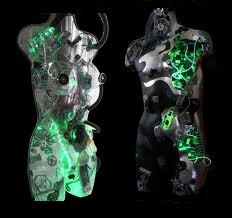
transhumanismThe issue of transhumanism, the rise of a new type of humanity characterized by man-machine interface and augmented intelligence, is being debated quite fervently in some circles right now. But it seems that groups other than Futurists and speculative fiction writers are joining the discussion. Recently, the National Intelligence Council, a US policy think-tank, released a 140 page report that outlined major trends and technological developments we should expect in the next 20 years.

The report, entitled “Global Trends 2030: Alternative Worlds”, predicted several trends which are likely to come true in the near future. Amongst them is the end of U.S. global dominance, the rising power of individuals against states, a growing middle class that will increasingly challenge governments, and ongoing shortages in water, food and energy. However, predictions were also made concerning a future where humans have been significantly modified by various technologies, what is often referred to as the dawn of the Transhuman Era.

how-nanotechnology-could-reengineer-usIntrinsic to this new era is the invention of implants, prosthetics, and powered exoskeletons which will become regular fixtures of human life. These will go beyond merely correcting for physical disabilities or injury, to the point where average humans are enhanced and become more productive. 2030 is key year here, because it is by this point that the authors predict that prosthetics will exceed organics, and people will begin getting them installed in order to augment themselves.

In addition, life extension therapies and medical advances which will be used predominantly by the elderly will become a means for otherwise healthy people to prolong their lives and maintain health and vitality for longer periods of time. Brain implants are expected to become a reality as well, ostensibly to allow people to have brain-controlled prosthetics, but also for the sake of enhanced memory and augmented thinking.

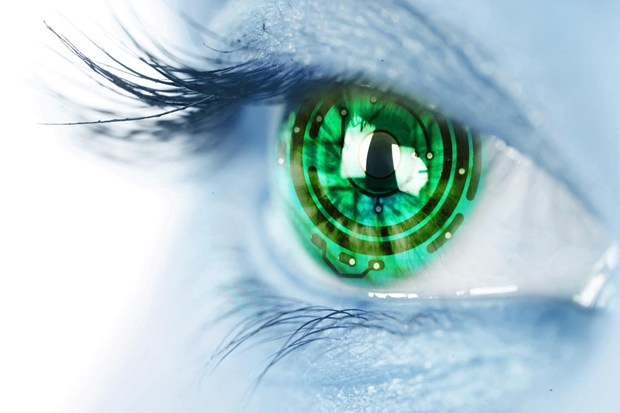
bionic_handAnd of course, bionics are an important factor in all this. Already, researchers have achieved breakthroughs with bionic limbs, but retinal attachments, artificial eyes, and even fully-functioning organs are expected before 2030. On top of that, improvements in drugs, such as neuropharmaceuticals – drugs that enhance memory, attention, speed of thought – and implants which assist in their delivery are expected to be making the rounds.
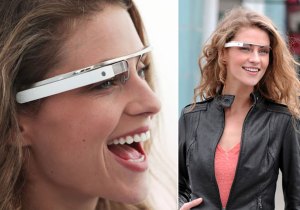
google_glassesFinally, there is the matter of virtual and augmented reality systems, which are already becoming a reality thanks to things like Project Glass and recent innovations in PDAs. As the report notes: “Augmented reality systems can provide enhanced experiences of real-world situations. Combined with advances in robotics, avatars could provide feedback in the form of sensors providing touch and smell as well as aural and visual information to the operator.”

However, the big issue, according to the report, is cost and security. Most of these technologies will be not affordable to all people, especially for the first few years of their existence. This could result in a two-tiered society where the well-to-do live longer, healthier and have a competitive advantage over “organics”, people of lesser means who are identifiable by their lack of enhancements. Also, developers will need to be on their guard against hackers who might attempt to subvert or infect these devices with tailor-made viruses.

Naturally, the importance of maintaining uniform scientific progress was stressed, and the need for a regulatory framework is certainly needed. What the CSER recently recommended is certainly worth keeping in mind here, which was to ensure that some kind of regulatory framework be put in place before all of this becomes a reality. What’s more, public education is certainly necessary, so that the current and next generation of human beings knows what to expect and how to go about making informed choices therein.

To see the full report and learn more about the NIC, follow the link below:

National Intelligence Council: Who We Are

Source: IO9.com
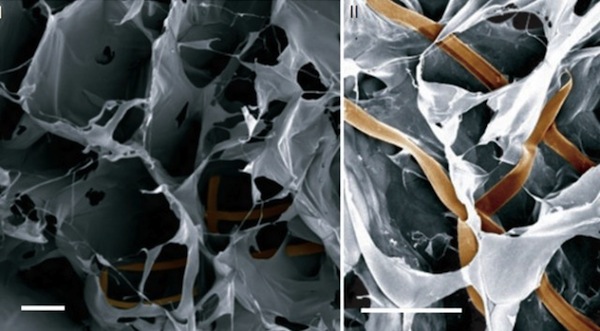
The Future is Here: Cyborg Flesh!

My thanks to Futurist Foresight for turning me onto this article. I would have reblogged, but it was just easier to follow the links and post on my own. You may recall some weeks back when the news hit the airwaves, about how researchers at Caltech developed the medusoid, a cybernetic jellyfish that was capable of mimicking the behavior of the original. Well, it turns out bioengineers at Harvard University have gone a step a further.

Merging the neurons, muscle cells, and blood vessels of various rats with nanowires and transistors that can monitor bioelectric impulses, these researchers were able to create the world’s first hybrid living/electronic cells. Much like the medusiod, the cells were controlled through electrical impulses, which allowed them to function like normal cells, except controlled via a computerized interface.

In time, they anticipate that this will lead to the development of nanotechnology that will allow them to make subtle changes in a person’s biochemistry. More than that, they could become the basis of tiny medical machines, such as microscopic pacemakers, or as microcircuits for prosthetics and silicate implants. On top of all that, this research is a big step along the road to the development of nanorobots, machines so tiny that they alter or maintain a person’s health at a cellular level.

“It allows one to effectively blur the boundary between electronic, inorganic systems and organic, biological ones,” said Charles Lieber, the team leader in an interview with New Scientist. And he’s absolutely right. With developments such as these and the boundaries they are pushing, human-machine interface, implant technology, robotic prosthetics and upgrades, and even the merging of our minds with computers could all be on the horizon. For some, this will mean the arrival of the long awaited Homo Superior, the new age man. For others, its a chance to tremble at the specter of a cybernetic future!

Both are fine choices, whatever floats your boat 😉

The Future of Computing

digital_sentienceLook what you started, Nicolla 😉 After talking, at length, about the history of computing a few days ago, I got to thinking about the one aspect of the whole issue that I happened to leave out. Namely, the future of computing, with all the cool developments that we are likely to see in the next few decades or centuries.

Much of that came up in the course of my research, but unfortunately, after thirteen or so examples about the history of computing, I was far too tired and burnt to get into the future of it as well. And so, I carry on today, with a brief (I promise!) list of developments that we are likely to see before the century is out… give or take. Here they are:

Chemical Computer:
Here we have a rather novel idea for the future of hardware. Otherwise known as a reaction-diffusion or “gooware” computer, this concept calls for the creation of a semi-solid chemical “soup” where data is represented by varying concentrations of chemicals and computations are performed by naturally occurring chemical reactions.

Based on the Belousov-Zhabotinsky reaction, a chemical experiment which demonstrated that wave phenomena can indeed take place in chemical reactions, contradicting the theory of thermodynamics which states that entropy will only increase in a closed system. By contrast, the BZ experiments showed that cyclic effects can take place without breaking the laws of nature.

Amongst theoretical models, it remains a top contender for future use for the simple reason that it is far less limiting that current microprocessors. Whereas the latter only allows the flow of data in one direction at a time, a chemical computer theoretically allows for the movement of data in all directions, all dimensions, both away and against each other.

For obvious reasons, the concept is still very much in the experimental stage and no working models have been proposed at this time.

DNA Computing:
Yet another example of an unconventional computer design, one which uses biochemistry and molecular biology, rather than silicon-based hardware, in order to conduct computations. Originally proposed by Leonard Adleman of the University of Southern Calfornia in 1994, Adleman was able to demonstrate how DNA could be used to conduct multiple calculations at once.

Much like chemical computing, the potential here is to be able to build a machine that is not restricted as conventional machines are. In addition to being able to compute in multiple dimensions and directions, the DNA basis of the machine means it could be merged with other organic technology, possibly even a fully-organic AI (a la the 12 Cylon models).

While progress in this area remains modest thus far, Turing complete models have been constructed, the most notable of which is the model crated by the Weizmann Institute of Science in Rehovot, Israel in 2002. Here, researchers unveiled a programmable molecular computing machine composed of enzymes and DNA molecules instead of silicon microchips which would theoretically be capable of diagnosing cancer in a cell and releasing anti-cancer drugs.

Nanocomputers:
In keeping with the tradition of making computers smaller and smaller, scientists have proposed that the next generation of computers should measure only a few nanometers in size. That’s 1×10⁻⁹ meters for those who mathematically inclined. As part of the growing field of nanotechnology, the application is still largely theoretical and dependent on further advancements. Nevertheless, the process is a highly feasible one with many potential benefits.

Here, as with many of these other concepts, the plan is simple. By further miniaturizing the components, a computer could be shrunk to the size of a chip and implanted anywhere on a human body (i.e. “Wetware” or silicate implants). This will ensure maximum portability, and coupled with a wireless interface device (see Google Glasses or VR Contact Lenses) could be accessed at any time in any place.

Optical Computers:
Compared to the previous two examples, this proposed computer is quite straightforward, even if it radically advanced. While today’s computer rely on the movement of electrons in and out of transistors to do logic, an optical computer relies on the movement of photons.

The immediate advantage of this is clear; given that photons are much faster than electrons, computers equipped with optical components would be able to process information of significantly greater speeds. In addition, researchers contend that this can be done with less energy, making optical computing a potential green technology.

Currently, creating optical computers is just a matter of replacing electronic components with optical ones, which requires an optical transistor, which are composed of non-linear crystals. Such materials exist and experiments are already underway. However, there remains controversy as to whether the proposed benefits will pay off, or be comparable to other technologies (such as semiconductors). Only time will tell…

Quantum Computers:
And last, and perhaps most revolutionary of all, is the concept of quantum computing – a device which will rely on the use of quantum mechanical phenomena to performs operations. Unlike digital computers, which require that data to be encoded into binary digits (aka. bits), quantum computation utilizes quantum properties to represent data and perform calculations.

The field of quantum computing was first introduced by Richard Feynman in 1982 and represented the latest advancements in field theory. Much like chemical and DNA-based computer designs, the theoretical quantum computer also has the ability to conduct multiple computations at the same time, mainly because it would have the ability to be in more than one state simultaneously.

The concept remains highly theoretical, but a number of experiments have been conducted in which quantum computational operations were executed on a very small number of qubits (quantum bits). Both practical and theoretical research continues, and many national government and military funding agencies support quantum computing research to develop quantum computers for both civilian and national security purposes, such as cryptanalysis.

Wearable Computers:
Last, and most feasible, is the wearable computer, which has already been developed for commercial use. Essentially, these are a class of miniature electronic devices that are worn on the bearer’s person, either under or on top of clothing. A popular version of this concept is the wrist mounted option, where the computer is worn like a watch.

The purposes and advantages of this type of computer are obvious, especially where applications that require more complex computational support than hardware coded logics can provide. Another advantage is the constant interactions between user and computer, as it is augmented into all other functions of the user’s daily life. In many ways, it acts as a prosthesis, being an extension of the users mind and body.

Pretty cool, huh? And to think that these and possibly other concepts could be feasible within our own lifetimes. Given the current rate of progress in all thing’s high-tech, we could be looking at fully-integrated computer implants, biological computers and AI’s with biomechanical brains. Wouldn’t that be both amazing and potentially frightening!