Birth of an Idea: Seedlings

alien-worldHey all! Hope this holidays season finds you warm, cozy, and surrounded by loved ones. And I thought I might take this opportunity to talk about an idea I’ve been working on. While I’m still searching for a proper title, the one I’ve got right now is Seedlings. This represents an idea which has been germinated in my mind for some time, ever since I saw a comprehensive map of the Solar System and learned just how many potentially habitable worlds there are out there.

Whenever we talk of colonization, planting the seed (you see where the title comes from now, yes?) of humanity on distant worlds, we tend to think of exoplanets. In other words, we generally predict that humanity will live on worlds beyond our Solar System, if and when such things ever become reality. Sure, allowances are made for Mars, and maybe Ganymede, in these scenarios, but we don’t seem to think of all the other moons we have in our Solar System.

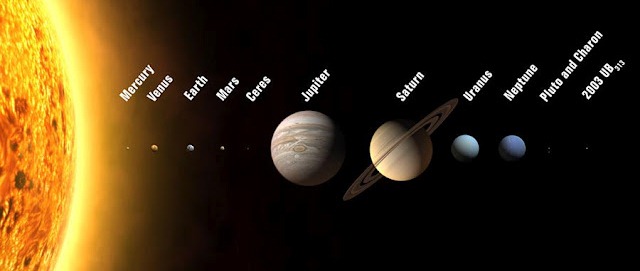
solar_systemFor instance, did you know that in addition to our system’s 11 planets and planetoids, there are 166 moons in our Solar System, the majority of which (66) orbit Jupiter? And granted, while many are tiny little balls of rock that few people would ever want to live on, by my count, that still leaves 12 candidates for living. Especially when you consider that most have their own sources of water, even if it is in solid form.

And that’s where I began with the premise for Seedlings. The way I see it, in the distant future, humanity would expand to fill every corner of the Solar System before moving on to other stars. And in true human fashion, we would become divided along various geographic and ideological lines. In my story, its people’s attitudes towards technology that are central to this divide, with people falling into either the Seedling or Chartrist category.

nanomachineryThe Seedlings inhabit the Inner Solar System and are dedicated to embracing the accelerating nature of technology. As experts in nanotech and biotech, they establish new colonies by planting Seeds, tiny cultures of microscopic, programmed bacteria that convert the landscape into whatever they wish. Having converted Venus, Mars, and the Jovian satellites into livable worlds, they now enjoy an extremely advanced and high standard of living.

The Chartrists, on the other hand, are people committed to limiting the invasive and prescriptive nature technology has over our lives. They were formed at some point in the 21st century, when the Technological Singularity loomed, and signed a Charter whereby they swore not to embrace augmentation and nanotechnology beyond a certain point. While still technically advanced, they are limited compared to their Seedling cousins.
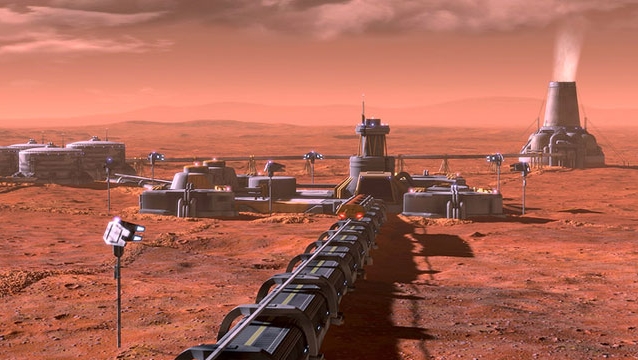
terraforming-mars2With life on Earth, Mars and Venus (colonized at this time) becoming increasingly complicated, the Chartrists began colonizing in the outer Solar System. Though they colonized around Jupiter, the Jovians eventualy became Seedling territory, leaving just the Saturnalian and Uranian moons for the Chartrists to colonize, with a small string of neutral planets lying in between.

While no open conflicts have ever taken place between the two sides, a sort of detente has settled in after many generations. The Solar System is now glutted by humans, and new frontiers are needed for expansion. Whereas the Seedlings have been sending missions to all suns within 20 light-years from Sol, many are looking to the Outer Solar System as a possible venue for expansion.
exoplanets1At the same time, the Chartrists see the Seedling expansion as a terrible threat to their ongoing way of life, and some are planning for an eventual conflict. How will this all play out? Well, I can tell you it will involve a lot of action and some serious social commentary! Anyway, here is the breakdown of the Solar Colonies, who owns them, and what they are dedicated to:

Inner Solar Colonies:
The home of the Seedlings, the most advanced and heavily populated worlds in the Solar System. Life here is characterized by rapid progress and augmentation through nanotechnology and biotechnology. Socially, they are ruled by a system of distributed power, or democratic anarchy, where all citizens are merged into the decision making process through neural networking.

Mercury: source of energy for the entire inner solar system
Venus: major agricultural center, leader in biomaterial construction
Earth: birthplace of humanity, administrative center
Mars: major population center, transit hub between inner colonies and Middle worlds

Middle Worlds:
A loose organization of worlds beyond Mars, including the Jovian and Saturnalian satellites. Those closest to the Sun are affiliated with the Seedlings, the outer ones the Chartrists, and with some undeclared in the middle. Life on these worlds is mixed, with the Jovian satellites boasting advanced technology, augmentation, and major industries supplying the Inner Colonies. The Saturnalian worlds are divided, with the neutral planets boasting a high level of technical advancement and servicing people on all sides. The two Chartrist moons are characterized by more traditional settlements, with thriving industry and a commitment to simpler living.

Ceres: commercial nexus of the Asteroid Belt, source of materials for solar system (S)
Europa: oceanic planet, major resort and luxury living locale (S)
Ganymede: terraforming operation, agricultural world (S)
Io: major source of energy for the Middle World (N)
Calisto: mining operations, ice, water, minerals (N)
Titan: major population center, transit point to inner colonies (N)
Tethys: oceanic world, shallow seas, major tourist destination (N)
Dione: major mining colony to outer colonies (C)
Rhea: agricultural center for outer colonies (C)

Outer Solar Colonies:
The Neptunian moons of the outer Solar System are exclusively populated by Chartrist populations, people committed to a simpler way of life and dedicated to ensuring that augmentation and rapid progress are limited. Settlements on these worlds boast a fair degree of technical advancement, but are significantly outmatched by the Seedlings. They also boast a fair degree of industry and remain tied to the Inner and Middle Worlds through the export of raw materials and the import of technical devices.

Miranda: small ice planet, source of water (C)
Ariel: agricultural world, small biomaterial industry and carbon manufacturing (C)
Umbriel: agricultural world, small biomaterial industry and carbon manufacturing (C)
Titania: agricultural world, small biomaterial industry and carbon manufacturing (C)
Oberon: agricultural world, small biomaterial industry and carbon manufacturing (C)
Triton: source of elemental nitrogen, water, chaotic landscape (C)

Cassini, MESSENGER, and MOM: A Space Probe Odyssey

Cassini_Saturn_Orbit_InsertionIt had has been a big month in the field of space probes and satellites. Whether they are in orbit around Mercury, on their way to Mars, or floating in the outer Solar System, there’s been no shortage of news and inspirational footage to be had. And it is a testament to the age we live in, where space news is accessible and can instantly be shared with millions of people around the world.

First up, there’s the recent release of Cassini’s magnificent image of Saturn’s rings shining in all their glory. Back in July, Cassini got a good look back at Earth from about 1.5 billion kilometers (932 million miles) away. Known as
“The Day The Earth Smiled”, NASA has spent the past few months cobbling together this picture from numerous shots taken during Cassini’s circuitous orbit around Saturn.

cassini-jupiter-annotatedCassini has always been able to take impressive pictures in Earth’s general direction, but this picture was special since it used the enormous bulk of Saturn to block the usually confounding brightness of the Sun. Cassini, which was launched to survey the outer planets in 1997, captured an absolutely incredible image of both the Earth as a pale blue dot, and of Saturn as a striking, luminous apparition.

As part of NASA’s latest awareness campaign, which tried to get everyday citizens to smile at the sky for the first posed interplanetary photo most of us have ever experienced, the photo captured the halo effect that makes our sixth planet look truly breathtaking. In the annotated version (pictured above), you can also see Venus, Mars, and some of Saturn’s moons.


Next up, there’s the MESSENGER probe, which managed to capture these impressive new videos of Mercury’s surface. As part of the NASA Advisory Council (NAC) ride-along imaging campaign, these videos were captured using the Mercury Dual Imaging System (MDIS). Even though the original high-res images were captured four seconds apart, these videos have been sped up to a rate of 15 images per second.


The views in each video are around 144-178 km (90-110 miles) across. The large crater visible in the beginning of the second video is the 191-km (118-mile) wide Schubert basin. In related news, there are new maps of Mercury available on the US Geological Survey website! Thanks to MESSENGER we now have the entirety of the first planet from the Sun imaged and mapped.

MESSENGER launched from Cape Canaveral Air Force Station back in August of 2004 and established orbit around Mercury on March 18th, 2011. It was the first man-made spacecraft ever to do so, and has provided the most comprehensive mapping of Mercury to date, not to mention evidence of ice, organic molecules, and detailed conditions on the surface.

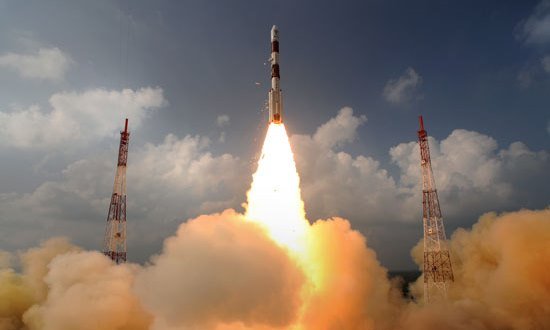
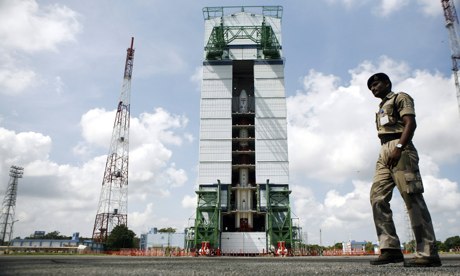
India_Mars_Orbiter1And last, but not least, there was the recent launch of the Indian Space Research Organization’s (ISRO) new Mars Orbiter Mission (aka. MOM). The launch took place on Tuesday, November 5th from the Indian space port located on a small island in the Bay of Bengal. As the nation’s first attempt to reach the Red Planet, the aim of the $70 million mission goes beyond mere research.

In addition to gathering information that might indicate if life has ever existed or could exist on Mars, the mission is also meant to showcase India’s growing prowess in the field of space and to jump ahead of its regional rival (China) in the big interplanetary march. As Pallava Bagla, one of India’s best known science commentators, put it:

In the last century the space race meant the US against the Soviets. In the 21st century it means India against China. There is a lot of national pride involved in this.

India Mars probeIn addition, there has been quite a bit of speculation that the missionw as designed to stimulate national pride in the midst of an ongoing economic crisis. In recent years, a plunging currency, ailing economy and the state’s seeming inability to deliver basic services have led many Indians to question whether their nation is quite as close to becoming a global superpower as it seemed in the last decade.

MOM is expected to arrive in the vicinity of Mars on September 24th, 2014 where it will assume an elliptical orbit around the planet and begin conducting atmospheric surveys. If all continues to goes well, India will the elite club of only four nations that have launched probes which successfully investigated the Red Planet from orbit or the surface – following the Soviet Union, the United States and the European Space Agency (ESA).

India_Mars_Orbiter2MOM was also the first of two new Mars orbiter science probes that left Earth and began heading for Mars this November. The second was NASA’s $671 million MAVEN orbiter, which launched on November 18th atop an Atlas V rocket from Cape Canaveral in Florida. MAVEN is slated to arrive just two days before MOM, and research efforts will be coordinated between the two agencies.

Much like MAVEN, MOM’s goal is to study the Martian atmosphere , unlock the mysteries of its current state and determine how, why and when the atmosphere and liquid water were lost – and how this transformed Mars climate into its cold, desiccated state it is in today. In addition to aiding our scientific understanding of the world, it may help us to transform the planet into a liveable environment once again.

For many people, these developments are an indication of things to come. If humanity ever intends to become an interplanetary species, an expanding knowledge of our Solar System is an absolute prerequisite. And in many respects, making other planets our home may be the only way we can survive as a species, given our current rate of population growth and consumption.

Sources: extremetech.com, nasa.gov, universetoday.com, planetarynames.wr.usgs.gov, theguardian.com, www.isro.org

News from Space: First Earth-Sized Exoplanet Found!

kepler78bFor the past three and a half years, the Kepler space telescope has been hurtling through space and searching the Milky Way for signs of of other planets orbiting distant stars. In that time, Kepler has identified many Earth-like exoplanets, many of which reside within our own stellar neighborhood. However, it has found only one planet in recent months that is Earth-sized.

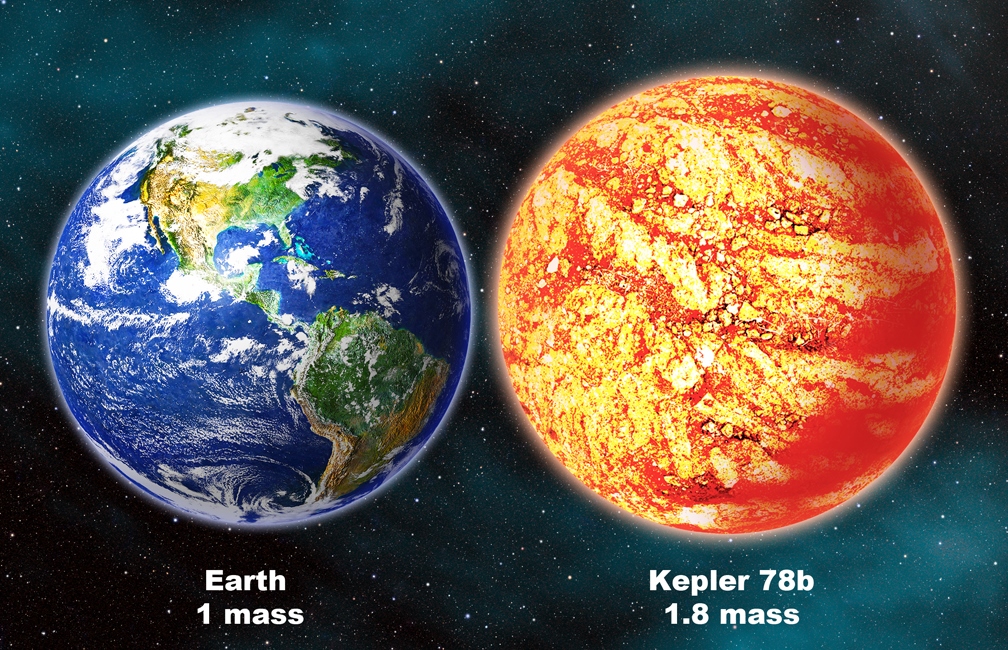
That planet is known as Kepler-78b, the existence of of which was recently verified by NASA scientists at Cape Canaveral. Of all the planets discovered beyond our Solar System, this one is both rocky in composition and weighs in at roughly 1.2 times Earth’s mass. Beyond that, however, the similarities between this planet and our own end.

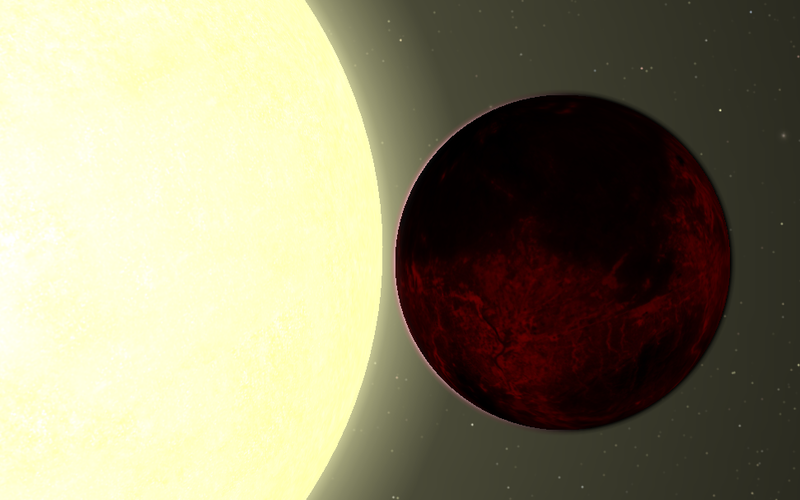
kepler78b2In addition to having an orbital period of 8.5 hours, the planet also rotates around its parent star at a distance of about 1.5 million kilometers (approx. 93205 miles). Basically, this means that Kepler-78b is thirty to forty-five times closer to its Sun than Mercury is to ours, and experiences a full year in under nine days. This makes Kepler 78b an extremely hostile environment, unsuitable for life as we know it.

Andrew Howard, of the University of Hawaii at Manoa’s Institute for Astronomy and the lead author on one of two papers published in Nature magazine about the discovery of the new planet, said in recent webcast:

We’ve been hearing about the sungrazing Comet ISON that will go very close to the Sun next month. Comet ISON will approach the Sun about the same distance that Kepler-78b orbits its star, so this planet spends its entire life as a sungrazer.

Kepler78b1A handful of planets the size or mass of Earth have been discovered, but Kepler-78b is the first to have both a measured mass and size. At 1.2 times the size of Earth with a diameter of 14,800 km (9,200 miles), astronomers say it has a density similar to Earth’s, which suggests an Earth-like composition of iron and rock. Its star is slightly smaller and less massive than the sun and is located about 400 light-years from Earth in the constellation Cygnus.

Verification of the planet’s existence and characteristics was made by two independent research teams that used ground-based telescopes for follow-up observations. The team led by Howard used the W. M. Keck Observatory atop Mauna Kea in Hawaii. The other team led by Francesco Pepe from the University of Geneva, Switzerland, did their ground-based work at the Roque de los Muchachos Observatory on La Palma in the Canary Islands.

exoplanet_hotAnd while the discovery is exciting, the close proximity of Kepler-78b to its star poses a challenge to theorists. According to current theories of planet formation, it couldn’t have formed so close to its star, nor could it have moved there. Given that its star would have surely been larger when the system was in formation, Kepler-78b’s orbit would have put in inside the swollen star. Hence, the planet’s existence is an enigma.

To make matters worse, Kepler-78b is a doomed world. Gravitational tides will continue to pull Kepler-78b even closer to its star, and eventually it will move so close that the star’s gravity will rip the world apart. Theorists predict that the planet will vanish within three billion years. And while this may sounds like an eternity to us, in astronomical terms it represents a life cut short.

Source: universetoday.com, nature.com

News From Space: The Weird Atmospheres of Titan and Io

alien-worldStudying the known universe is always interesting, mainly because you never know what you’re going to find. And just when you think you’ve got something figured out – like a moon in orbit around one of the Solar Systems more distant planet’s – you learn that it can still find ways to surprise you. And interestingly enough, a few surprises have occurred back to back in recent weeks which are making scientists rethink their assumptions about these moons.

The first came from Io, Jupiter’s innermost moon and the most volcanically active body in the Solar System. All told, the surface has over 400 volcanic regions, roughly 100 mountains – some of which are taller than Mount Everest – and extensive lava flows and floodplains of liquid rock that pass between them. All of this has lead to the formation of Io’s atmosphere, which is basically a thin layer of toxic fumes.

Io_mapGiven its distance from Earth, it has been difficult to get a good reading on what the atmosphere is made up of. However, scientists believe that it is primarily composed of sulfur dioxide (SO2), with smaller concentrations of sulfur monoxide (SO), sodium chloride (NaCl), and atomic sulfur and oxygen. Various models predict other molecules as well, but which have not been observed yet.

However, recently a team of astronomers from institutions across the US, France, and Sweden, set out to better constrain Io’s atmosphere. Back in September they detected the second-most abundant isotope of sulfur (34-S) and tentatively detected potassium chloride (KCl). Expected, but undetected, were molecules like potassium chloride (KCl), silicone monoxide (SiO), disulfur monoxide (S2O), and other isotopes of sulfur.

Io_surfaceBut more impressive was the team’s tentative of potassium chloride (KCl), which is believed to be part of the plasma torus that Io projects around Jupiter. For some time now, astronomers and scientists have been postulating that Io’s volcanic eruptions produce this ring of plasma, which includes molecular potassium. By detecting this, the international team effectively found the “missing link” between Io and this feature of Saturn.

Another find was the team’s detection of the sulfur 34-S, an isotope which had previously never been observed.  Sulfur 32-S had been detected before, but the ratio between the 34-S and 32-S was twice that of what scientists believed was possible in the Solar System. A fraction this high has only been reported once before in a distant quasar – which was in fact an early galaxy consisting of an intensely luminous core powered by a huge black hole.

These observations were made using the Atacama Pathfinder Experiment (APEX) antenna – a radio telescope located in northern Chile. This dish is a prototype antenna for the Atacama Large Millimeter Array (ALMA). And while Io is certainly an extreme example, it will likely help terrestrial scientists characterize volcanism in general – providing a better understanding of it here on Earth as well as outside the Solar System.

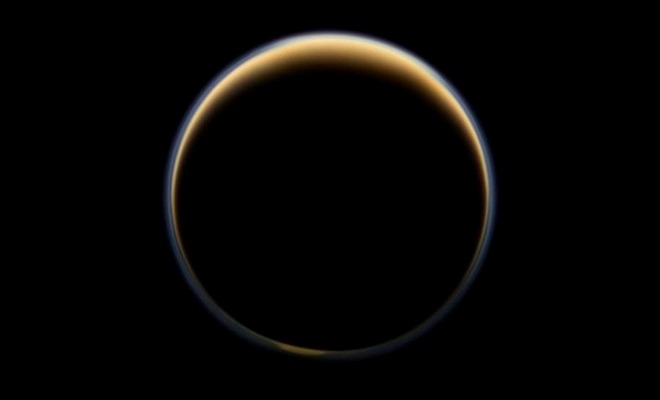
TitanThe second big discovery was announced just yesterday, and comes from NASA’s Cassini space probe. In its latest find investigating Saturn’s largest moon, Cassini made the first off-world detection of the molecule known as propelyne. This simple organic compound is a byproduct of oil refining and fossil fuel extraction, and is one of the most important starting molecules in the production of plastics.

The molecules were detected while Cassini used its infrared spectrometer to stare into the hydrocarbon haze that is Titan’s atmosphere. The discovery wasn’t too surprising, as Titan is full of many different types of hydrocarbons including methane and propane. But spotting propylene has thus far eluded scientists. What’s more, this is the first time that the molecule has been spotted anywhere outside of Earth.

titan_cassiniThese finding highlight the alien chemistry of Saturn’s giant moon. Titan has moisture and an atmosphere, much like our own, except that its rains are made of hydrocarbons and its seas composed of ethane. Scientists have long wanted to explore this world with a boat-like rover, but given the current budget environment, that’s a distant prospect. Still, sales of propylene on Earth are estimated at $90 billion annually.

While no one is going to be mounting a collection mission to Titan anytime soon, it does offer some possibilities for future missions. These include colonization, where atmospheric propylene could be used to compose settlements made of plastic. And when it comes to terraforming, knowing the exact chemical makeup of the atmosphere will go a long way towards finding a way to make it breathable and warm.

And in the meantime, be sure to enjoy this video about Cassini’s latest discovery. With the government shutdown in effect, NASA’s resources remain offline. So we should consider ourselves lucky that the news broke before today and hope like hell they get things up and running again soon!


Sources: universetoday.com, wired.com

Timeline of the Future…

hyperspace4I love to study this thing we call “the future”, and began to do so as a hobby the day I made the decision to become a sci-fi writer. And if there’s anything I’ve learned, its that the future is an intangible thing, a slippery beast we try to catch by the tail at any given moment that is constantly receding before us. And when predict it, we are saying more about the time in which we are living than anything that has yet to occur.

As William Gibson famously said: “…science fiction was always about the period in which it was written.” At every juncture in our history, what we perceive as being the future changes based on what’s going on at the time. And always, people love to bring up what has been predicted in the past and either fault or reward the authors for either “getting it right” or missing the mark.

BrightFutureThis would probably leave many people wondering what the point of it all is. Why not just wait and let the future tend to itself? Because it’s fun, that’s why! And as a science fiction writer, its an indispensable exercise. Hell, I’d argue its absolutely essential to society as a whole. As a friend of one once said, “science fiction is more of a vehicle than a genre.” The point is to make observations about society, life, history, and the rest.

And sometimes, just sometimes, predictive writers get it right. And lately, I’ve been inspired by sources like Future Timeline to take a look at the kinds of predictions I began making when I started writing and revising them. Not only have times changed and forced me to revise my own predictions, but my research into what makes humanity tick and what we’re up to has come a long way.

So here’s my own prediction tree, looking at the next few centuries and whats likely to happen…

21st Century:

2013-2050:

  • Ongoing recession in world economy, the United States ceases to be the greatest economic power
  • China, India, Russia and Brazil boast highest rates of growth despite continued rates of poverty
  • Oil prices spike due to disappearance of peak oil and costs of extracting tar sands
  • Solar power, wind, tidal power growing in use, slowly replacing fossil fuel and coal
  • First arcologies finished in China, Japan, Russia, India and the United States

arcology_lillypad

  • Humanity begins colonizing the Moon and mounts manned mission to Mars
  • Settlements constructed using native soil and 3D printing/sintering technology
  • NASA tows asteroid to near Earth and begins studies, leading to plans for asteroid mining
  • Population grows to 9 billion, with over 6 living in major cities across the all five continents
  • Climate Change leading to extensive drought and famine, as well as coastal storms, flooding and fires
  • Cybernetics, nanotech and biotech leading to the elimination of disabilities
  • 3D Construction and Computer-Assisted Design create inexpensive housing in developing world

europa_report

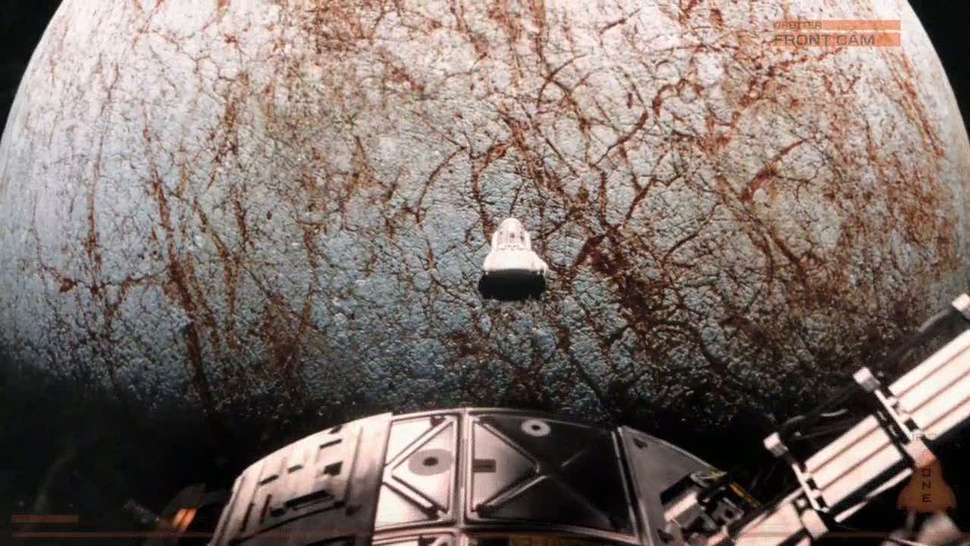
  • First exploratory mission to Europa mounted, discovers proof of basic life forms under the surface ice
  • Rome ordains first openly homosexual priests, an extremely controversial move that splits the church
  • First semi-sentient, Turing compatible AI’s are produced and put into service
  • Thin, transparent, flexible medical patches leading to age of “digital medicine”
  • Religious orders formed opposed to “augmentation”, “transhumanism” and androids
  • First true quantum computers roll off the assembly line

quantum-teleportation-star-trails-canary-islands-1-640x353

  • Creation of the worldwide quantum internet underway
  • Quantum cryptography leads to increased security, spamming and hacking begins to drop
  • Flexible, transparent smartphones, PDAs and tablets become the norm
  • Fully immersive VR environments now available for recreational, commercial and educational use
  • Carbon dioxide in the upper atmosphere passes 600 ppm, efforts to curb emissions are redoubled
  • ISS is retired, replaced by multiple space stations servicing space shuttles and commercial firms
  • World’s first orbital colony created with a population of 400 people

2050-2100:

  • Global economy enters “Second Renaissance” as AI, nanomachinery, quantum computing, and clean energy lead to explosion in construction and development
  • Commercial space travel become a major growth industry with regular trips to the Moon
  • Implant technology removes the need for digital devices, technology now embeddable
  • Medical implants leading to elimination of neurological disorders and injuries
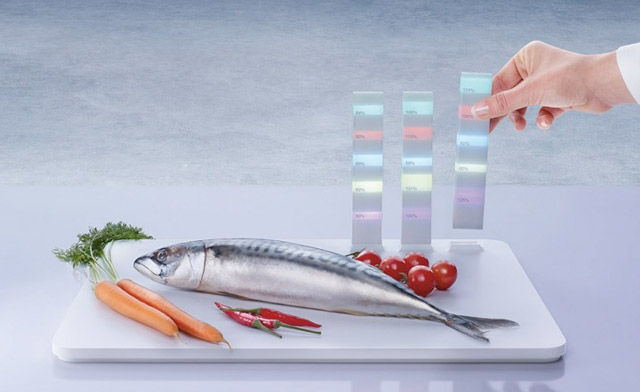
  • Synthetic food becoming the rage, 3D printers offering balanced nutrition with sustainability

3dfood2

  • Canada, Russia, Argentina, and Brazil become leading exporters of foodstuffs, fresh water and natural gas
  • Colonies on the Moon and Mars expand, new settlement missions plotted to Ganymede, Europa, Oberon and Titan
  • Quantum internet expanding into space with quantum satellites, allowing off-world connectivity to worldwide web
  • Self-sufficient buildings with water recycling, carbon capture and clean energy becomes the norm in all major cities
  • Second and third generation “Martians” and “Loonies” are born, giving rise to colonial identity

asteroid_foundry

  • Asteroid Belt becomes greatest source of minerals, robotic foundries use sintering to create manufactured products
  • Europe experiences record number of cold winters due to disruption of the Gulf Stream
  • Missions mounted to extra-Solar systems using telexploration probes and space penetrators
  • Average life expectancy now exceeds 100, healthy children expected to live to 120 years of age
  • NASA, ESA, CNSA, RFSA, and ISRO begin mounting missions to exoplanets using robot ships and antimatter engines
  • Private missions to exoplanets with cryogenically frozen volunteers and crowdfunded spaceships

daedalus_starship_630px

  • Severe refugee crises take place in South America, Southern Europe and South-East Asia
  • Militarized borders and sea lanes trigger multiple humanitarian crises
  • India and Pakistan go to war over Indus River as food shortages mount
  • China clamps down on separatists in western provinces of Xinjian and Tibet to protect source of the Yangtze and Yellow River
  • Biotechnology begins to grow, firms using bacteria to assemble structural materials

geminoid

  • Fully sentient AIs created and integrated into all aspects of life
  • Traditionalist communities form, people seeking to disconnect from modern world and eschew enhancement
  • Digital constructs become available, making neurological downloads available
  • Nanotech research leading to machinery and materials assembled at the atomic level
  • Traditional classrooms giving way to “virtual classrooms”, on-demand education by AI instructors
  • Medical science, augmentation, pharmaceuticals and uploads lead to the first generation of human “Immortals”

space_debris

  • Orbital colonies gives way to Orbital Nexus, with hundreds of habitats being established
  • Global population surpasses 12 billion despite widespread famine and displacement
  • Solar, wind, tidal, and fusion power replace oil and coal as the dominant power source worldwide
  • Census data shows half of world residents now have implants or augmentation of some kind
  • Research into the Alcubierre Drive begins to bear experimental results

alcubierre-warp-drive-overview22nd Century:

2100-2150:

  • Climate Change and global population begin to level off
  • First “Neural Collective” created, volunteers upload their thought patterns into matrix with others
  • Transhumanism becomes established religion, espousing the concept of transcendence
  • Widespread use of implants and augmentation leads to creation of new underclass called “organics”
  • Solar power industry in the Middle East and North Africa leading to growth in local economies
  • Biotech leads to growth of “glucose economy”, South American and Sub-Saharan economies leading in manufacture of biomaterials
  • Population in Solar Colonies and Orbital Nexus reaches 100,000 and continues to grow

asteroid_belt1

  • Off-world industry continues to grow as Asteroid Belt and colonies provide the majority of Earth’s mineral needs
  • Famine now widespread on all five continents, internalized food production in urban spaces continues
  • UN gives way to UNE, United Nations of Earth, which has near-universal representation
  • First test of Alcubierre FTL Drive successful, missions to neighboring systems planned
  • Tensions begin to mount in Solar Colonies as pressure mounts to produce more agricultural goods
  • Extinction rate of wild animals begins to drop off, efforts at ecological restoration continue
  • First attempts to creating world religion are mounted, met with limited success

networked_minds

  • Governments in most developed countries transitioning to “democratic anarchy”
  • Political process and involvement becoming digitized as representation becomes obsolete
  • “Super-sentience” emerges as people merge their neural patterns with each other or AIs
  • Law reformed to recognize neural constructs and AIs as individuals, entitled to legal rights
  • Biotech research merges with AI and nanotech to create first organic buildings with integrated intelligence

2150-2200:

  • Majority of the world’s population live in arcologies and self-sufficient environments
  • Census reveals over three quarters of world lives with implants or augmentation of some kind
  • Population of Orbital Nexus, off-world settlements surpasses 1 million
  • First traditionalist mission goes into space, seeking world insulated from rapid change and development
  • Labor tensions and off-world riots lead to creation of Solar policing force with mandate to “keep the peace”

Vladivostok-class_Frigate

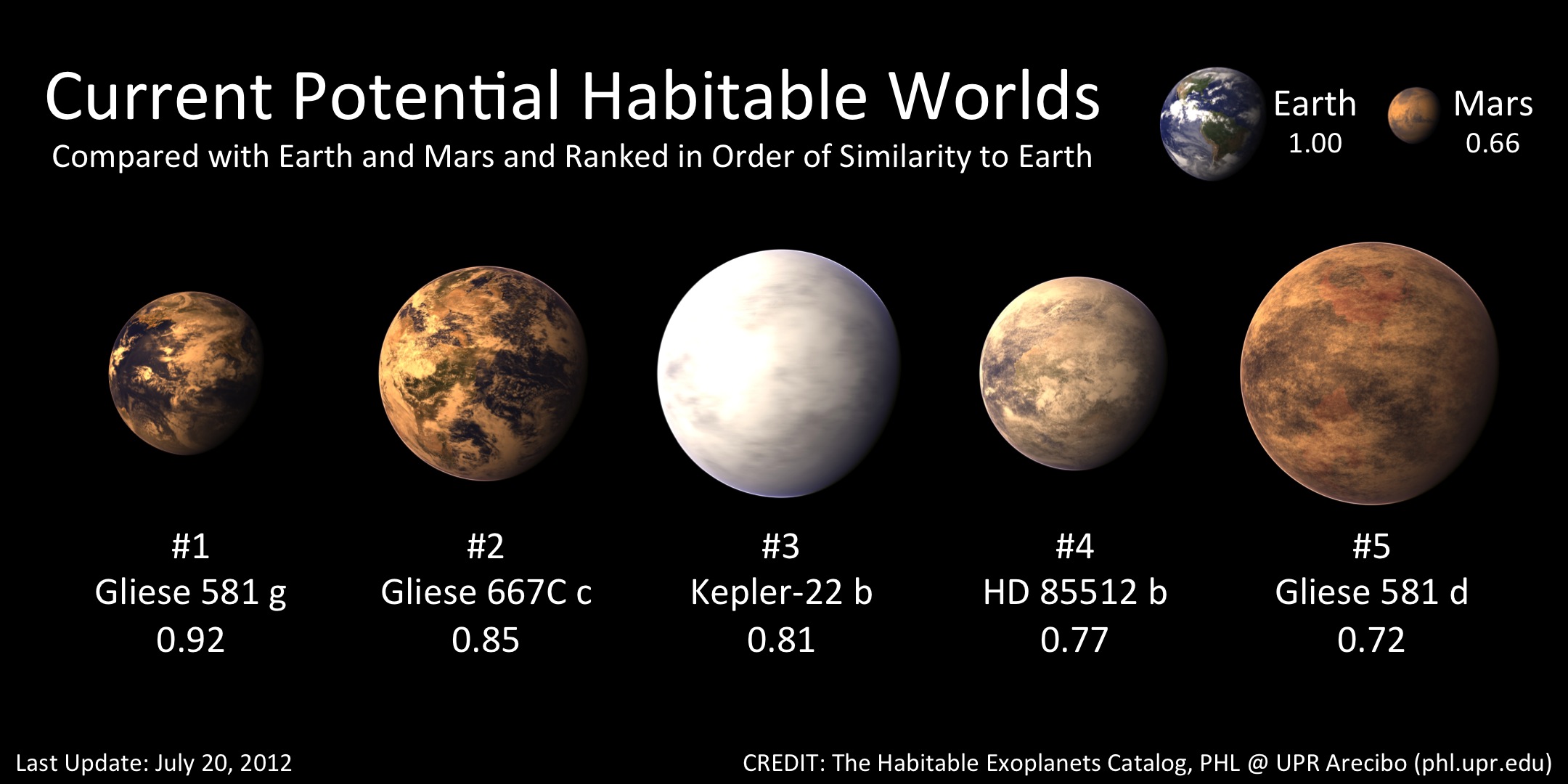
  • First mission to extra=Solar planets arrive, robots begin surveying surface of Gliese 581 g, Gliese 667C c, HD 85512 b, HD 40307 g, Gliese 163 c, Tau Ceti e, Tau Ceti f
  • Deep space missions planned and executed with Alcubierre Drive to distant worlds
  • 1st Wave using relativistic engines and 2nd Wave using Alcubierre Drives meet up and begin colonizing exoplanets
  • Neighboring star systems within 25 light years begin to be explored
  • Terraforming begins on Mars, Venus and Europa using programmed strains of bacteria, nanobots, robots and satellites
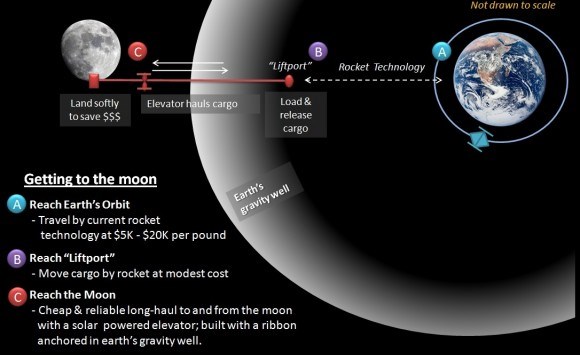
  • Space Elevator and Slingatron built on the Moon, used to transport people to space and send goods to the surface

space_elevator_lunar1

  • Earth’s ecology begins to recover
  • Natural species are reintroduced through cloning and habitat recovery
  • Last reported famine on record, food production begins to move beyond urban farms
  • Colonies within 50 light years are established on Gliese 163 c, Gliese 581 g, Gliese 667C c, HD 85512 b, HD 40307 g, Tau Ceti e, Tau Ceti f
  • Off-world population reaches 5 million and continues to grow
  • Tensions between Earth and Solar Colonies continue, lead to demands for interplanetary governing body
  • Living, breathing cities become the norm on all settled worlds, entire communities build of integrated organic materials run by AIs and maintained by programmed DNA and machinery

self-aware-colony

23rd Century and Beyond:

Who the hell knows?

*Note: Predictions and dates are subject to revision based on ongoing developments and the author’s imagination. Not to be taken literally, and definitely open to input and suggestions.

News From Space: Eyes on Europa

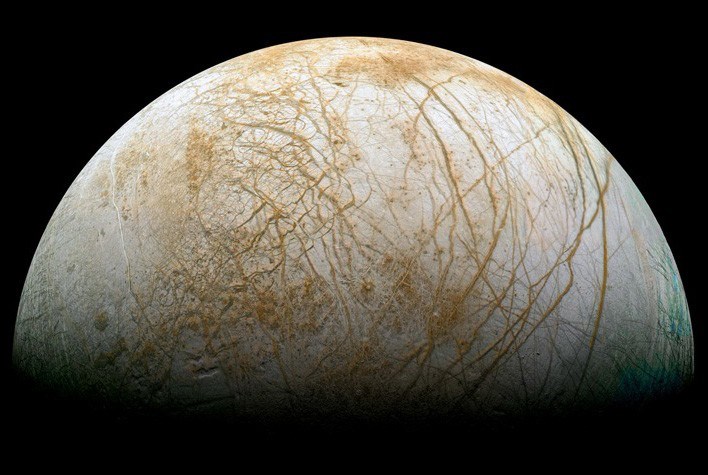
europa-landerIt’s one of Jupiter’s four largest moons, named the Jovians by the famed astronomer – Galileo Galilee – who first discovered them. And from all outward appearances, the moon is an icy, inhospitable place, with surface temperatures never reaching above -160º C (-256º F). Yet, beneath that frozen outer shell is believed to be a liquid, saltwater ocean, one that draws warmth from its orbit around Jupiter.

If this should indeed be the case, then Europa would be about the best candidate for extraterrestrial life in the Solar System, albeit in microbial form. For decades now, NASA has been working under that assumption and preparing for the day that it might be able to send an expedition or probe to confirm it. And it now seems that that day may be on the horizon.

europa-lander-2According to NASA, this would likely take the form of a robot lander. Much like Curiosity, Opportunity, and other robotic research vehicles, it would packed with a variety of sensors and analytical equipment. But of course, the nature of that equipment would be specifically tailored to answer a series of unknowns pertaining to Europa itself.

Overall, the lander would have three priorities: discover the makeup of minerals and organic matter present on the moon; examine the geophysics of the ice and the ocean underneath; and determine how the geology looks (and therefore how it might have evolved) at a human scale on the surface. Basically, it would all boil down to looking at chemistry, water and energy – in other words, the conditions necessary for life.

And though NASA has not announced any official dates, it has begun to speak of the idea an indication of intent. A new article by NASA scientists published in the peer-reviewed journal Astrobiology entitled Science Potential from a Europa Lander set out their research goals in more detail, and speculated how they might be practically achieved.

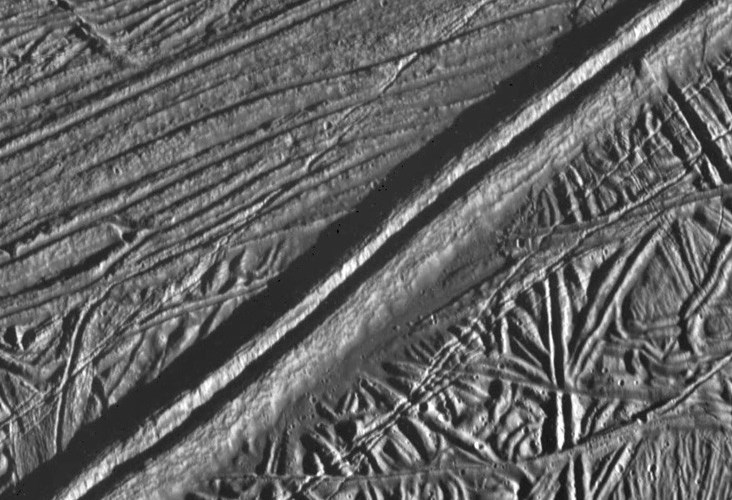
europa-lander-4One area of focus would be Europa’s distinctive linear surface cracks which are believed to be the result of tidal forces. Europa’s eccentric orbit about Jupiter causes very high tides when the moon passes closest to the gas giant, so it is thought that this process would generate the heat necessary for simple life to survive. NASA thinks the cracks could contain biological makers, molecules indicating the presence of organic life, which have come from the ocean.

But of course, plotting a mission is not as simple as simply launching a robot into space. To ensure that such a mission would maximize returns requires that a “scientifically optimized” landing site be identified, and to do that, Europa’s surface must be thoroughly surveilled. Thus far, the little we know and think about Europa is based on a handful of flybys by Voyager 2 in the 70s and the Galileo probe in the 90s.

europa-lander-3Lead author Robert Pappalardo of NASA’s Jet Propulsion Laboratory summed up the situation as follows:

There is still a lot of preparation that is needed before we could land on Europa, but studies like these will help us focus on the technologies required to get us there, and on the data needed to help us scout out possible landing locations. Europa is the most likely place in our solar system beyond Earth to have life today, and a landed mission would be the best way to search for signs of life.

At the present time, NASA’s exploratory itinerary is quite packed. In addition to wanting to tow an asteroid closer to Earth to study it, launching two more rovers to Mars, constructing a settlement on the far side of the Moon, and conducting a manned mission to Mars, it’s safe to say that a robot lander on Europa won’t be happening for some time.

converted PNM fileBut of course, the plans are in place and moving forward with every passing year. NASA is certainly not going to pass up a chance to examine one of the Solar Systems best candidates for extra-terrestrial life, and we can certainly expect more deep-space probes to be launched once Cassini is finished shooting pictures of Saturn.

I am willing to bet good money that any future probe sent into the outer reaches of the Solar System will be tasked with taking high-resolution photos of Europa as part of its mission. And from that, we can certainly expect NASA, the ESA, and even the Chinese, Russians and Indians to start talking turkey within our lifetimes.

What do you think? 2035 seem like a safe bet for a Europa lander mission?

Source: gizmag.com

News from SpaceX: More Tests and the Coming Launch

spaceX_elonmuskElon Musk just can’t get enough of the spotlight lately! But that’s the price you pay for being a billionaire, innovator, genius-type person! And barely a week after announcing his idea for the Hyperloop high-speed train, it now seems that SpaceX is once again making the news, thanks to its latest test of the Grasshopper reusable rocket system as well as their planned launch of the Falcon Heavy rocket.

For those unfamiliar with the Grasshopper, this is a proposed reusable rocket system that Musk and SpaceX created with the hopes of bringing the costs associated with space launches down considerably. Since September 2012, the rocket has been put through successive tests, reaching higher and higher altitudes and safely making it back to the ground.

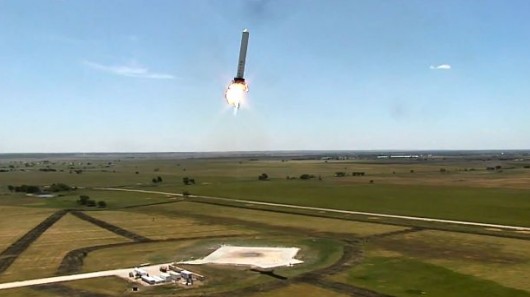
grasshopper_lateraldivertIn this latest test, the rocket successfully performed a “lateral divert test”. In all previous tests, the rocket lifted off vertically from a launch pad and then used its Merlin-1D engine to ease itself back down to the pad. However, in actual launch situations, the rocket wont simply be traveling up and down. When it comes time to land, a considerable amount of lateral steering will be necessary to line it back up with the launch site.

This is what the test, which took place on Tuesday, August 13th, amounted to. It began with the Grasshopper reaching its previously-achieved altitude of 250 meters, but then continued with the rocket moving an additional 100 m (328 ft) to one side. It was subsequently still able to land safely back at the center of the launch pad, compensating for its lateral diversion.

According to SpaceX: “The test demonstrated the vehicle’s ability to perform more aggressive steering maneuvers than have been attempted in previous flights.” What’s more, it places the company that much closer to the realization of a truly reusable rocket system, something which will drastically cut costs for future space missions.

And of course, they were sure to catch the entire test on video:


But equally important for this rising company that seeks to privatize space travel was the announcement that they have are moving ahead with plans to launch their Falcon Heavy rocket system by late 2013 or early 2014. At present, the Falcon is the most power rocket system in the world, overshadowed only by the now retired – but soon to be reserviced – Saturn V booster that put the Apollo astronauts into space and on the Moon.

spaceX-falcon9As Musk himself said of the rocket:

Falcon Heavy will carry more payload to orbit or escape velocity than any vehicle in history, apart from the Saturn V moon rocket, which was decommissioned after the Apollo program. This opens a new world of capability for both government and commercial space missions.

Fully loaded, the Falcon Heavy will be able to carry payloads of 53 metric tons (117,000 pounds or 53,070 kg) into orbit, and is made up of two engine stages. The first stage consists of a Falcon 9 rocket, with a nine-engine cores, followed by two additional nine-engine cores attached to either side. In addition, the Merlin engines have been upgraded to handle the additional weight, and are being tested at SpaceX’s facility in McGregor, Texas.

flacon-heavy-3At liftoff the 69.2m (227 ft) long Falcon Heavy will generate 3.8 million pounds of thrust, which is equivalent to the thrust of fifteen Boeing 747’s taking off at the same time. SpaceX claims that this gives the Falcon Heavy more than twice the performance of the next most powerful vehicle – the Delta IV Heavy operated by the Boeing-Lockheed Martin joint venture United Launch Alliance.

SpaceX also says that with more than twice the payload of the Delta IV but at one third the cost, the Falcon Heavy sets a new world record in terms of economy at approximately US$1,000 per pound to orbit. This is in keeping with Musk’s promise to bring the associated costs of space travel and exploration down, hopefully one day to his goal of $500 per pound.


spaceX_solararrayWith the ability to carry satellites or interplanetary spacecraft to orbit, SpaceX is offering the Falcon Heavy on the commercial market for US$80–$125 million, which compares to the $435 million per launch the U.S. Air Force has budgeted for four launches in 2012. So in effect, Musk’s company is offering a money-saving alternative to both the public and private sector.

For those fascinated by the long-term potential of space travel, this is certainly exciting news. By cutting the costs of placing satellites, supplies and people in orbit, many things are being made feasible that were previously impossible. This includes conducting more research in orbit, the ability to create space-based solar arrays (a very cool solution to our current power problems and the limitations of Earth-based solar power) and perhaps even begin work on a Moon settlement.

solar_system1Beyond that, there are the growing possibilities of commercial space travel, space tourism, and even setting our sights father afield with manned missions to the Moon, prospecting missions to the asteroid belt, and surveying probes to Jupiter’s Moons and to the very edge of the Solar System. Possibly even beyond…

Exciting times we live in, when the impossible is slowly becoming possible!

Sources: gizmag.com, (2), spacex.com


News From Space: Penetrators to Explore Space

space_penetrator1As space exploration goes, we can do quite a bit within our own Solar System. We can land people on the Moon, rovers on Mars, and put satellites in orbit around the inner and outer planets. We even have the means of placing astronauts on Mars, presumably. But the cost are still prohibitively high, and when it comes to reaching distant celestial bodies, we remain pretty powerless.

Hence the new “space penetrator” program being contemplated by the European Space Agency. Basically, this amounts to a space missile that is fired in the direction of a celestial body, and which delivers a payload of sensors and equipment upon arrival on the surface. Classified as a “hard lander”, this program has been under development for ten years and offers many advantages over the standard soft lander.

space_penetratorFor starters, a soft lander not only has to slow down before landing (which requires rockets and a payload of fuel), but has to be built to land rather than just crash into the ground. And if a soft lander wants to collect subsurface samples or conduct readings, it requires additional equipment to drill and scoop. By contrast, a penetrator can simply smash through a planet’s surface layer, and requires no additional fuel or landing gears.

Of course, a space penetrator also comes with its share of issues, like ensuring that its payload survives the hard landing. This requires that a special spring mechanism be included in the outer shell that cushions the payload from impact. This “suspension system” is made out of Torlon polymer, which is able to provide a 2mm gap of insulation during a high deceleration. A retrorocket will be employed in order to soften the blow a bit as well.

space_penetrator2In order to rest the impact, the designers who built the steel penetrator fired it directly into a 10-ton block of ice. The missile traveled at 340m/s, just under the speed of sound, and turned the block into powder. But the penetrator’s casing and internal instruments remained intact and functional. Thanks to onboard sensors, the test impact will provide the developers of the missile, Rapid Space Technologies, with more information.

The space penetrator is intended to do more than just collect subsurface soil samples. Once in use, it will also help look for alien life by busting through icy surfaces, such as on Jupiter’s famous moon Europa. For years, scientists have suspected that the planet may support aquatic life beneath its icy surface. With the help of radio signals, the on-board sensors could send information up to an orbiting satellite, which could in turn relay that information back to Earth.

converted PNM fileThe European Space Agency has funded the project, but has not yet decided if it would ultimately use the space penetrator. Currently, the system isn’t designed to be launched from Earth, but rather a satellite or spaceship. There’s no telling if it will be used anytime soon, but it does present scientists and astronomers with an viable option for future interstellar exploration.

And there is huge potential as far as the exploration of Europa is concerned. Ever since it was postulated that subsurface oceans exist there – ones that are warm enough to support life – the Jovian moon has served as a source of inspiration for astronomers and science fiction writers alike. I for one am interested to see what resides underneath all that ice, provided we don’t disturb it too much!

And of course, there’s a video of the space penetrator test taking place. Check it out:


Sources:
extremetech.com, bbc.co.uk

News From Space: MAVEN’s “Time-Machine” for Mars

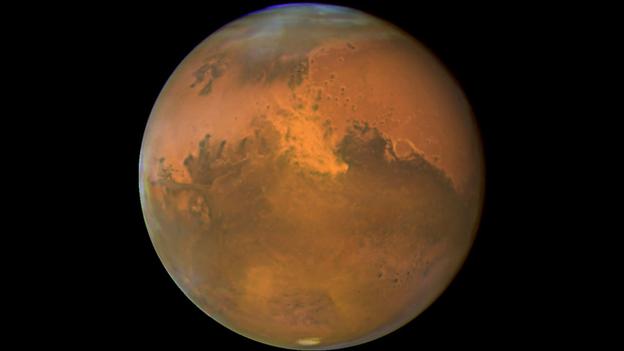
marsYes, the name is a bit of a attention-getter, but when you come to understand the purpose behind Lockheed Martin’s new spacecraft, the description does appear to be quite apt. It’s known as MAVEN, which stands for Mars Atmosphere and Volatile EvolutioN, and it is currently being produced in Lockheed Martin’s Martin Space Systems facility in Denver, Colorado.

People may recall how earlier this year, MAVEN was mentioned as part of the “Going to Mars” campaign. A project that is being organized by the University of Colorado at Boulder’s Laboratory for Atmospheric and Space Physics (CU/LASP), the Martian orbiter will be carrying a DVD featuring the names of everyone who applies, as well as three specially-selected haikus.

However, it is MAVEN’s larger mission which is now the focus of much interest. Later this year, NASA will be launching the orbiter to Mars for the sake of examine the atmosphere and answering some burning questions that remain about the planet. Thanks to evidence provided by Curiosity, Opportunity, and other missions, scientists now know that the Martian surface once boasted conditions suitable for life, including liquid water.

maven_orbitHence, Maven’s ultimate purpose, which will be will to orbit the planet and examine whether the atmosphere could also have provided life support. Scientists working on the Maven mission want to understand what this atmosphere was like, and the processes that led to its destruction. As Guy Beutelschies, Maven Programme Manager at Lockheed Martin, put it:

What we know from our missions looking at the surface of Mars is that there used to be water there. We can see the outlines of ancient rivers, the shorelines of ancient oceans. But water can’t exist there now – the atmosphere is too thin and too dry, any water would just evaporate or freeze. 

So the big question is what happened to Mars’ atmosphere? Short of being able to travel back in time into the Martian past, how would anyone go about tackling these questions with a mission today? Beutelshcies explained it as follows:

[The atmosphere] used to be thicker, warmer, wetter, now it’s thin and dry. How did we get there? In a sense we are building a little bit of a time machine. What we’re doing is understanding the processes.

maven_atmosphereJust last week, evidence provided by the Curiosity rover supports the theory that Mars may have lost most of its atmosphere billions of years ago. Still, scientists remain skeptical that Mars once had an atmosphere comparable to that of Earth. Today, that atmosphere is roughly one-hundredth the thickness of Earth’s, made up mostly of carbon dioxide and a tiny fraction of water vapor. What little remains is being stripped away by the solar wind.

And unlike Earth, Mars does not have a magnetosphere to protect its atmosphere from being blown away – at least not anymore. Such a fragile, thin band around is now unlikely to support any sort of life, as far as we know. But the atmosphere in the past must have been more substantial to allow the formation of rivers, lakes and oceans.

mars_sunsetBruce Jakosky, the Principal Investigator for Maven who is based at the University of Colorado’s CU/LASP lab in Boulder, claims:

We think that Mars used to have a magnetic field. We see places on the surface that retain some remnant magnetism, they were imprinted when they formed with whatever magnetism was there. We think that some four billion years ago, when the magnetic field turned off, that turn-off of the magnetic field allowed [for the] turn-on of the stripping by the solar wind.

To investigate the processes taking place today, Maven will dip into the Martian upper atmosphere with each orbit, measuring the particles, sampling gases, monitoring the magnetic field and solar wind. Whereas the rovers have looked at the atmosphere from the ground up, MAVEN will look at it from the top down. At this point, both are needed to put together a picture of what’s controlling the Mars environment.

maven_atmo1As well as filling in the blanks about Mars’ depleted atmosphere, Maven will also provide clues to the habitability of other planets beyond the solar system. As Jakosky said, the research conducted will have far-reaching implication for our understanding:

In trying to understand the distribution of life throughout the Universe, this is a really important indicator. Understanding the environmental conditions that allow [life] to exist, or don’t allow it to exist, is key to being able to extrapolate elsewhere.

What’s more, understanding what happened to Mars will provide some key insight into the history of our Solar System, and how it went from being a star with two planets that had oceans and atmospheres to just one. Knowing why things continued to operate on Earth, while on Mars they went horribly wrong, is likely to be quite the eye-opener, and make us all thankful we evolved here on Earth.

Source: bbc.com


News From Mars: Curiosity and Opportunity On the Move

marsMars has been quite the source of news in recent weeks. And perhaps its the fact that I got to witness some truly interesting astronomical phenomena yesterday – i.e. Sunspots through a telescope – but all of them seem to have caught my attention at once. And given their importance to the ongoing exploration of Mars and our Solar System, I would be remiss if I didn’t pass them on.

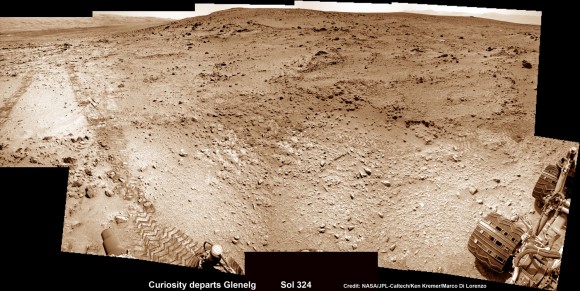
The first bit of news began late last month, when the High Resolution Imaging Science Experiment (HiRISE) camera on the Mars Reconnaissance Orbiter snapped this image of the Curiosity rover as it made its way through the “Glenelg” area of Gale Crater. The rover appeared as a little more than a blueish dot in the picture, but much more visible was the rover’s tracks.

curiosity_hirise_tracks This unique photo was made possible thanks to a little maneuvering and a some serious alignment. Basically, the folks working at the Mars Science Laboratory were able to bring the Mars Reconnaissance Orbiter (MRO) into position between the Sun and curiosity, bringing the Sun, MRO, and the rover on the surface were in a near-perfect alignment.

HiRISE principal investigator Alfred McEwen addressed the photos on the HiRISE website and explained how it was all made possible:

The rover tracks stand out clearly in this view, extending west to the landing site where two bright, relatively blue spots indicate where MSL’s landing jets cleared off the redder surface dust. When HiRISE captured this view, the Mars Reconnaissance Orbiter was rolled for an eastward-looking angle rather than straight downward. The afternoon sun illuminated the scene from the western sky, so the lighting was nearly behind the camera. Specifically, the angle from sun to orbiter to rover was just 5.47 degrees.

Curiosity has since moved on and is now heading towards the large mound in Gale Crater officially named Aeolis Mons (aka. Mount Sharp).

curiosity_roadmapWhich brings us to the second news item in this week’s Mars bulletin. It seems that since July 4th, after finishing up a seven months survey in Yellowknife Bay, Curiosity has achieved a long-distance driving record as it made its way to Mount Sharp. This took place on Saturday July 21st (Sol 340), when Curiosity drove a distance of 100.3 meters (109.7 yards) in a single day.

To give you some perspective, that’s the length of a football field (at least in the US), a distance that is without equal since she first landed inside the Gale Crater nearly a year ago. The previous record for a one-day drive was about half a football field – 49 meters (54 yards) – and was achieved on Sept. 26, 2012 (Sol 50), roughly seven weeks after Curiosity made its tense, nail-biting landing.

Curiosity-departs-Glenelg-Sol-324_2a_Ken-Kremer--580x291Paolo Bellutta, a rover planner at NASA’s Jet Propulsion Laboratory, Pasadena, Calif, explained what made the feat possible in a statement:

What enabled us to drive so far on Sol 340 was starting at a high point and also having Mastcam images giving us the size of rocks so we could be sure they were not hazards. We could see for quite a distance, but there was an area straight ahead that was not clearly visible, so we had to find a path around that area.

A combination of increased experience by the rover’s engineers and a series of intermediate software upgrades have also played a key role in getting Curiosity on its way to the 5.5 kilometer (3.4 mile) high Mount Sharp. This is expected to improve even more as soon as new driving software called autonomous navigation (or autonav) finishes development and is incorporated.

mountsharp_galecraterFollowing another lengthy drive of 62.4 meters (68.2 yards) on Wednesday, July 23 (Sol 342), the mission’s total driving distance  stands at 1.23 kilometers (0.81 mile) so far. But Mount Sharp still lies about another 8 km (5 miles) away at this point, so we can be expect to be hearing plenty from the rover between now and when it arrives.

For the record, it has already been discovered that the mountain contains vast caches of minerals that could potentially support a habitable environment. So when Curiosity arrives, we can expect another string of exciting finds!

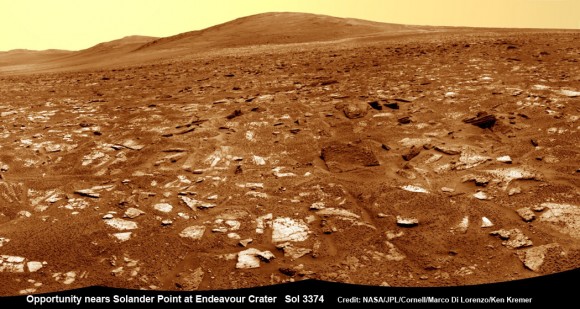
Opportunity-nears-Solander-Point-Sol-3374-N1-crop_Ken-Kremer-580x309And it is this subject of mountain goals which brings me to the last, but by no means least, of the Martian updates. While Curiosity has been making its way towards Mt. Sharp to conduct research on potentially habitable environments, Opportunity is just days away from reaching Solander Point, another Martian mountain which NASA seeks to learn more about.

This comes on the heels of the rover’s ten year, ongoing mission that was only ever expected to last ninety days. According to an update from Ray Arvidson earlier today, the mission’s deputy principal scientific investigator from Washington University in St. Louis, the rover is now just 180 meters away from the new mountain.

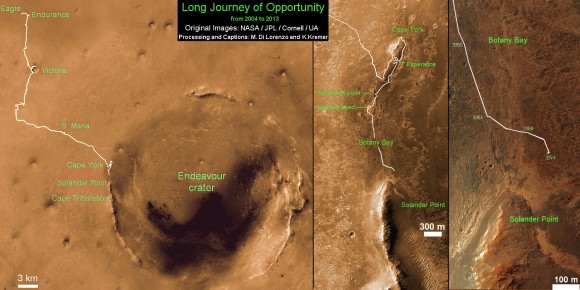
opportunity_roadmapAs NASA had previously stated, Solander Point represents ‘something completely different’ for the rover, being the first mountain it will ever climb. What’s more, the mountains mineral wealth may possess the key chemical ingredients necessary to sustain Martian life forms, and the area exhibits signatures related to water flow.

In many ways, you could say Solander Point represents a chance for the Mars Science Laboratory to find the elusive “organic molecules” they’ve been searching for since Curiosity first landed. And if it’s the veteran rover that finds the first hard evidence of their existence, it would be quite the feather in the Opportunity team’s cap.

opportunity_bdayBut before moving onto the first leg of ascent, Arvidson explained that the rover will be making a brief pause in its current location to conduce some exciting experiments. Thanks to observations made of the area by the Mars Reconnaissance Orbiter with its CRISM instrument (Compact Reconnaissance Imaging Spectrometers for Mars), the rover will be conducting some on-the-spot analysis to see if there is indeed evidence of water.

This past spring, Opportunity made the historic discovery of clay minerals and a habitable environment on a low hill called Cape York, the rover’s prior stop along the rim of Endeavour Crater. Solander was selected as the robot’s next destination because it also offers a goldmine of scientific data. Another reason was because its north facing slopes will be a boon to Opportunity’s solar wings, ensuring it more power before Martian winter sets in.

opportunity_missionmapBut since Opportunity is currently sitting on a healthy supply of power and has some time before the onset of her 6th Martian winter, the team decided to take a small detour to the southeast and spend several days exploring the area for more evidence of water-bearing minerals.

If successful, this will be yet another accomplishment for the rover during its long tenure of service to NASA. Today marks the 3380th day of continuous service for the rover – aka. Sol 3380 – a mission which has resulted in numerous scientific finds, over 182,000 images, and a driving distance of roughly 38 kilometers (23.6 miles). This, as already mentioned, puts Opportunity in the top spot for the longest distance traveled on another planet.

Yes, it seems that the Red Planet is certainly doing all it can to keep explorers and scientists intrigued. No telling what we might learn between now and the point when manned missions take place, and human astronauts are able to see the surface and study its mysteries close up. Personally, I’m hoping for signs of existing supplies of water, not to mention those tricky organic molecules. If settlement and terraforming are ever to take place, we need to know we’ve got something to work with!

Sources: universetoday.com, (2) , (3), nasa.gov, space.com