News from Mars: Another (Planned) Mission!

mars-mission1When it comes to generational milestones, those of born since the late 70’s often feel like we’re lagging behind previous generations. Unlike the “Greatest Generation” or the “Baby Boomers”, we weren’t around to witness Two World Wars, the Great Depression, the Cuban Missile Crisis, the death of JFK, Neil Armstrong, or the FLQ Crisis. For us, the highlights were things like the development of the PC, the birth of the internet, Kurt Cobain, and of course, 9/11.

But looking ahead, those us of belonging to Generation X, Y, and Millennials might just be around to witness the greatest event in human history to date – a manned mission to Mars! And while NASA is busy planning a mission for 2030, a number of private sources are looking to make a mission happen sooner. One such group is a team of UK scientists working from Imperial College London that are working to mount a a three person mission to Mars.

mission-to-marsThe planned mission consists of two spacecraft, the first of which is a Martian lander equipped with a heat shield that will send the crew off into Earth’s orbit. The second craft would be a habitat vehicle, which is the craft that the crew would live in during the voyage. The habitat vehicle would consist of three floors, and measure in at around 30 feet (10m) tall and 13 feet (4m) in diameter.

The astronauts would be situated in the lander during takeoff, and would move to the habitat when the dual-craft reaches Earth orbit. Once the astronauts are safely within the habitat, a rocket would shoot the dual-craft off on its journey to Mars, which would take nine months to arrive, less than the approximately 300 days that most projections say it will take.

Mars_landerOnce In space, the dual-craft would then split apart but remain connected by a 60 meter (200 foot) tether. Thrusters from both vehicles would then spin them around a central point, creating artificial gravity similar to Earth’s in the habitat. Not only would this help the astronauts feel at home for the better part of a lonely year, but it would also reduce the bone and muscle atrophy that are associated with weightlessness.

The craft would be well-stocked with medicine to ensure that the crew remained in fine health for the nine month transit. Superconducting magnets, as well as water flowing through the shell of the craft, would be employed to help reduce both cosmic and solar radiation. And once the dual-craft reaches Mars, it would tether back together, the crew would move back into the lander, and then detach from the habitat descend to the Martian surface.

Mars-mission-2This mission would also involve sending a habitat and return vehicle to Mars before the astronauts arrived, so the crew would have shelter upon landing as well as a way to get home. The crew would spend anywhere from two months to two years on Mars, depending on the goals of the mission and the distance between Mars and Earth. On the way back home, the mission would dock with the ISS, then take a craft back to Earth from there.

What’s especially interesting about this proposed mission is that each stage of it has been proven to work in an individual capacity. What’s more, the concept of using water as a form radiation shielding is far more attractive than Inspiration Mars’, which calls for using the astronauts own fecal matter!

Unfortunately, no real timetable or price tags have been proposed for this mission yet. However, considering that every individual step of the mission has been proven to work on its own, the proposed overall journey could work. In the meantime, all us post-Baby Boomers can do is wait and hope we live to see it! I for one am going sick of hearing Boomers talk about where they were when Apollo 11 happened and having nothing comparable to say!

And be sure to enjoy this video of the University College London team discussing the possibilities of a Mars mission in our lifetime:


Sources:
bbc.co.uk, extremetech.com

New Movie Trailer: Europa Report

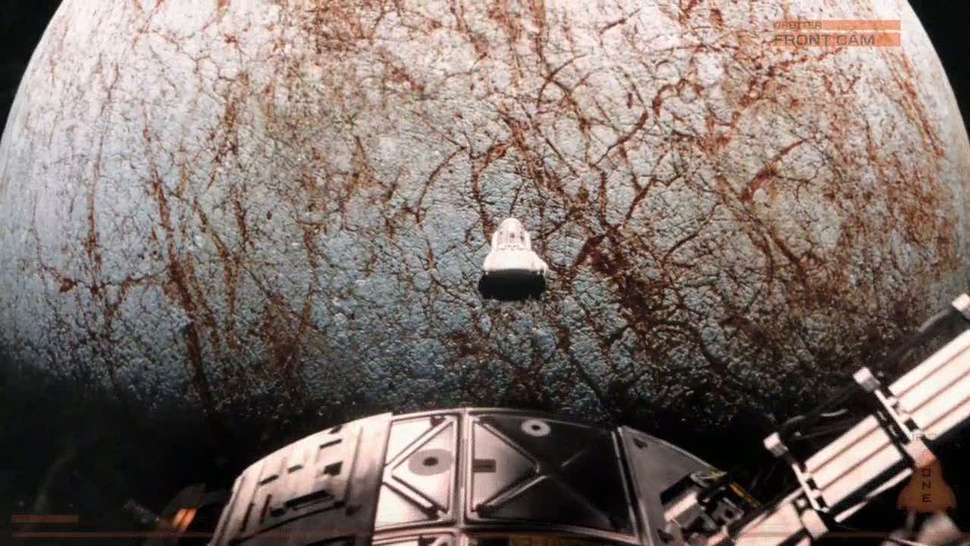
europa_reportOrdinarily, I like to show movie previews before the movie has been released. This time around, I’m a little behind the curve. But my thanks to Rami for bringing this movie to my attention, since it seems like just the thing for us sci-fi geeks and buffs. It’s called the Europa Report, a near-future speculative science fiction film that follows in the vein of the 2001: A Space Odyssey and the Blair Witch Project.

Taking place in 2061, the story follows a group of astronauts who are sent on a private venture to Jupiter’s moon of Europa to investigate it for signs of life. Naturally, things go wrong, lives are lost, and the footage of their mission becomes the basis of a “report” that people back at Earth pour over, hoping to find some answers to the mystery of what happened.

The film was officially released just under two weeks ago, on August 2nd, and has received some pretty kick-ass reviews. Over at space.com, they claimed the movie was “One of the most thrilling and realistic depictions of space exploration since Moon or 2001: A Space Odyssey”, while IO9’s Annalee Newitz wrote of the film:

The representations of Jupiter and Europa in this film come directly from real satellite imagery gathered by NASA, and the journey to Europa itself is both realistic and gorgeous. There’s a lesson here about how dramatic tension and brilliant concept design, even on an indie budget, can create a sense of wonder rivaling that of a VFX blockbuster. And the payoff at the end is electrifying.

Hot damn, that’s a good endorsement! As for me, and I imagine Rami, I plan to see it and offer a review of my own! A movie like this couldn’t be more timely. Already, long-term plans are being made to send a lander or a space penetrator to Europa to have a gander at what lies beneath its icy veil. And I look forward to the day when the reality of that planet and all the speculative fiction can get together and compare notes!

Source: IO9.com

News from SpaceX: More Tests and the Coming Launch

spaceX_elonmuskElon Musk just can’t get enough of the spotlight lately! But that’s the price you pay for being a billionaire, innovator, genius-type person! And barely a week after announcing his idea for the Hyperloop high-speed train, it now seems that SpaceX is once again making the news, thanks to its latest test of the Grasshopper reusable rocket system as well as their planned launch of the Falcon Heavy rocket.

For those unfamiliar with the Grasshopper, this is a proposed reusable rocket system that Musk and SpaceX created with the hopes of bringing the costs associated with space launches down considerably. Since September 2012, the rocket has been put through successive tests, reaching higher and higher altitudes and safely making it back to the ground.

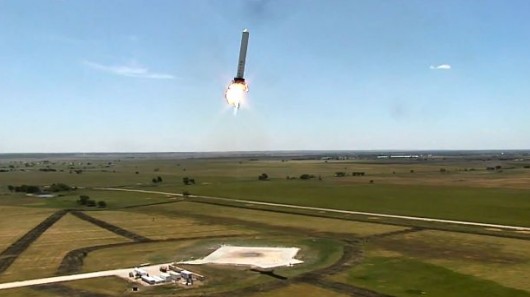
grasshopper_lateraldivertIn this latest test, the rocket successfully performed a “lateral divert test”. In all previous tests, the rocket lifted off vertically from a launch pad and then used its Merlin-1D engine to ease itself back down to the pad. However, in actual launch situations, the rocket wont simply be traveling up and down. When it comes time to land, a considerable amount of lateral steering will be necessary to line it back up with the launch site.

This is what the test, which took place on Tuesday, August 13th, amounted to. It began with the Grasshopper reaching its previously-achieved altitude of 250 meters, but then continued with the rocket moving an additional 100 m (328 ft) to one side. It was subsequently still able to land safely back at the center of the launch pad, compensating for its lateral diversion.

According to SpaceX: “The test demonstrated the vehicle’s ability to perform more aggressive steering maneuvers than have been attempted in previous flights.” What’s more, it places the company that much closer to the realization of a truly reusable rocket system, something which will drastically cut costs for future space missions.

And of course, they were sure to catch the entire test on video:


But equally important for this rising company that seeks to privatize space travel was the announcement that they have are moving ahead with plans to launch their Falcon Heavy rocket system by late 2013 or early 2014. At present, the Falcon is the most power rocket system in the world, overshadowed only by the now retired – but soon to be reserviced – Saturn V booster that put the Apollo astronauts into space and on the Moon.

spaceX-falcon9As Musk himself said of the rocket:

Falcon Heavy will carry more payload to orbit or escape velocity than any vehicle in history, apart from the Saturn V moon rocket, which was decommissioned after the Apollo program. This opens a new world of capability for both government and commercial space missions.

Fully loaded, the Falcon Heavy will be able to carry payloads of 53 metric tons (117,000 pounds or 53,070 kg) into orbit, and is made up of two engine stages. The first stage consists of a Falcon 9 rocket, with a nine-engine cores, followed by two additional nine-engine cores attached to either side. In addition, the Merlin engines have been upgraded to handle the additional weight, and are being tested at SpaceX’s facility in McGregor, Texas.

flacon-heavy-3At liftoff the 69.2m (227 ft) long Falcon Heavy will generate 3.8 million pounds of thrust, which is equivalent to the thrust of fifteen Boeing 747’s taking off at the same time. SpaceX claims that this gives the Falcon Heavy more than twice the performance of the next most powerful vehicle – the Delta IV Heavy operated by the Boeing-Lockheed Martin joint venture United Launch Alliance.

SpaceX also says that with more than twice the payload of the Delta IV but at one third the cost, the Falcon Heavy sets a new world record in terms of economy at approximately US$1,000 per pound to orbit. This is in keeping with Musk’s promise to bring the associated costs of space travel and exploration down, hopefully one day to his goal of $500 per pound.


spaceX_solararrayWith the ability to carry satellites or interplanetary spacecraft to orbit, SpaceX is offering the Falcon Heavy on the commercial market for US$80–$125 million, which compares to the $435 million per launch the U.S. Air Force has budgeted for four launches in 2012. So in effect, Musk’s company is offering a money-saving alternative to both the public and private sector.

For those fascinated by the long-term potential of space travel, this is certainly exciting news. By cutting the costs of placing satellites, supplies and people in orbit, many things are being made feasible that were previously impossible. This includes conducting more research in orbit, the ability to create space-based solar arrays (a very cool solution to our current power problems and the limitations of Earth-based solar power) and perhaps even begin work on a Moon settlement.

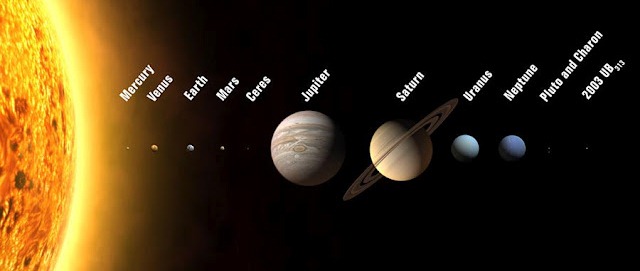
solar_system1Beyond that, there are the growing possibilities of commercial space travel, space tourism, and even setting our sights father afield with manned missions to the Moon, prospecting missions to the asteroid belt, and surveying probes to Jupiter’s Moons and to the very edge of the Solar System. Possibly even beyond…

Exciting times we live in, when the impossible is slowly becoming possible!

Sources: gizmag.com, (2), spacex.com


Want to See Your Home from the ISS?

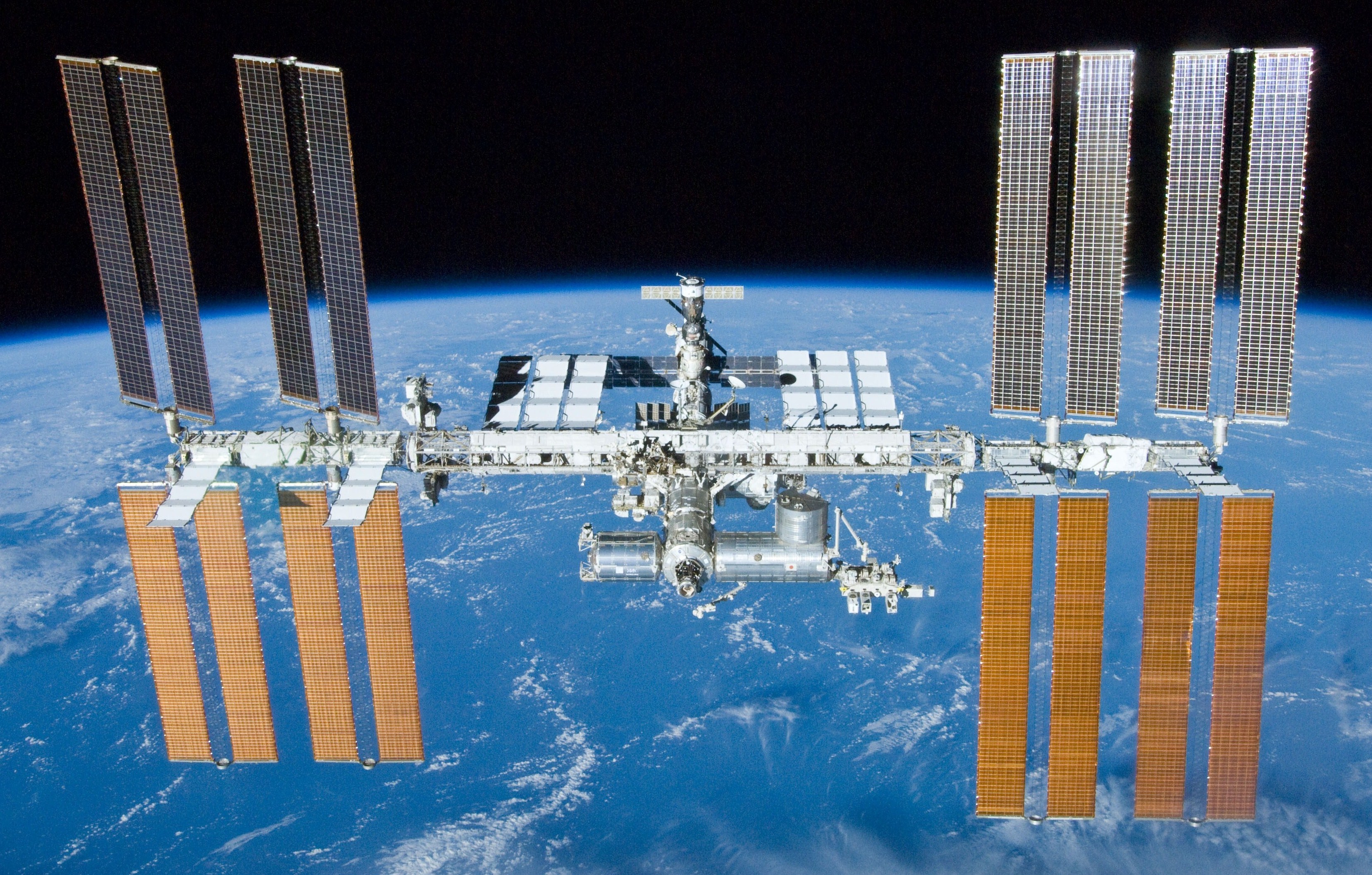
ISSA Vancouver-based company recently announced that it would be streaming images from the ISS to Earth, giving people a rare glimpse of what astronauts in orbit see on a daily basis. In an age where space travel is becoming increasingly public, thanks in part to social media, it now appears that at least one company want to get in on the ground floor of making space more accessible.

Scott Larson, CEO of Urthecast (get it?), said in a recent interview with CBC’s Curt Petrovich how his company is making this happen. This past Sunday, Urthecast launched a platform to the space station aboard the unmanned Russian Progress M-20M spacecraft as part of a delivery of 2.4 tonnes of supplies – including food, water, fuel and scientific equipment.

urthecaste.gifThis platform will soon be attached to the outside of the station and augmented with two HD cameras that will allow people to see things on Earth as small as one meter wide. One will be fixed will take a continuous video panorama of Earth 50 kilometers wide as the space station orbits Earth while the other will be a pointable one that customers will be able to aim at a particular spot on Earth, for a price.

These cameras will be launched aboard a different Progress flight on Nov. 20 and attached to the platform upon arrival. Though Urthecast has not specified what kind of fees will be involved for those looking to download pics of Earth, it has claimed that it intends to sell the video to corporations, governments and non-governmental organizations such as the United Nations for a wide range of need.

urthecaste_cameraHowever, these customers will not include the military since the apparatus will be on the International Space Station, which by law can only be used for “peaceful purposes”. Canadian law also requires the company to shut off the cameras as they pass over sensitive targets, if requested to do so by the federal government. Nevertheless, at least some investors are confident the company will make money of this idea. Since it first went public last month, Urthecast has raised some $46 million.

As part of what the company calls the “world’s first near-live HD video feed of Earth”, their cameras are expected to cover the planet between the latitudes of 51 degrees north (covering northern Canada, Russia and Scandinavia) and 51 degrees south (the southern tip of Chile and Argentina, South Africa and Australia). Once captured, the images will be downloaded to ground stations on Earth and be made available just a few hours later.

earth-from-ISSSo, between the accuracy of the cameras and the range they have to survey the planet, people will be able to capture images of their homes, neighborhoods, and even people that are accurate to a single meter. My advice? Get a portable device, lie down in your driveway, and then punch in your coordinates. And be sure to wave for a long time, so that when you download your images, you can see you waving back at yourself!

In the meantime, check out this video produced by Urthecast, and be sure to check out the company’s website to see how you can get in on this.

Sources: cbc.ca, extremetech.com, urthecast.com

News from Space: Dream Chaser Begins Testing

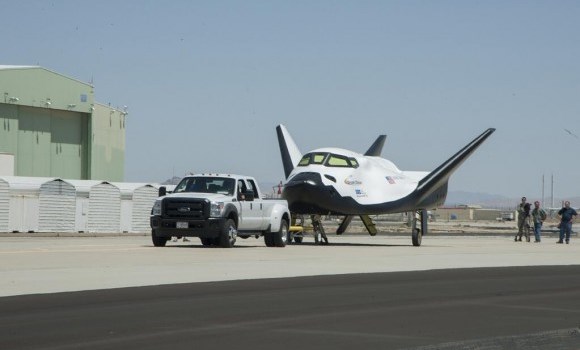
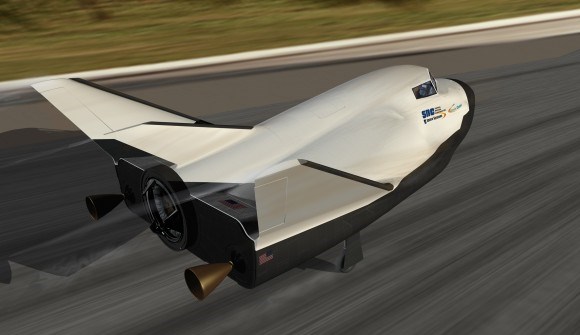
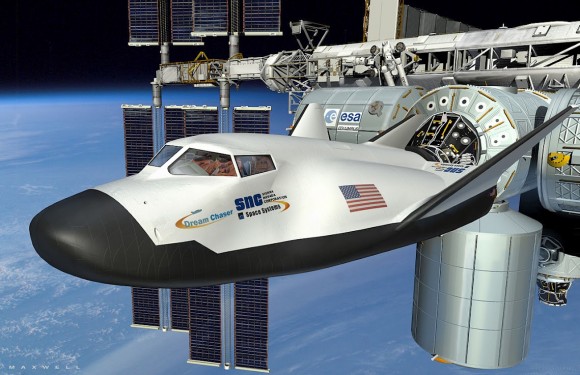
dream_chaserEver since their Space Shuttle program was forcibly shut down in 2011, NASA has been forced to look to the private sector to restore their ability to put human beings into orbit from American soil. This consists of providing the seed money needed for companies to develop a new race of “space taxis”.  One such program is the Dream Chaser, a reusable shuttle that will fly astronauts into low Earth orbit (LEO) and to the International Space Station (ISS).

Much like a standard Space Shuttle, the Dream Chaser is designed to launch atop a United Launch Alliance Atlas V rocket and land on a shuttle landing facility. And after lengthy periods of research and development, the Dream Chaser is now moving forward with a series of ground tests at NASA’s Dryden Flight Research Center in California that will soon lead to dramatic aerial flight tests throughout 2013.

dream-chaser-testThis consisted of putting the shuttle together and then conducting a series of what’s known as “Pathfinding tow tests” on Dryden’s concrete runway. The purpose here is to validate the performance of the vehicles’ nose skid, brakes, tires and other systems to prove that it can safely land an astronaut crew after surviving the searing re-entry from Earth orbit. For the initial ground tests, the ship was pulled by a tow truck at 16 and 32 km/h (10 to 20 mph).

Later this month, the next leg of the test will consist of towing it up to speeds of 64 to 95 km and hour (40 to 60 mph). The next phases of testing will take place later this year in the form of airborne captive carry tests, where an Erickson Skycrane helicopter will fly the fuselage around to see how it holds up. Approach and Landing Tests (ALT) will follow to check the aerodynamic handling, which will consist of atmospheric drop tests in autonomous free flight mode.

dream-chaser-test1In an interview with Universe Today, Marc Sirangelo – Sierra Nevada Corp. vice president and SNC Space Systems chairman – spoke on record about the shuttle and where it is in terms of development:

It’s not outfitted for orbital flight. It is outfitted for atmospheric flight tests. The best analogy is it’s very similar to what NASA did in the shuttle program with the Enterprise, creating a vehicle that would allow it to do significant flights whose design then would filter into the final vehicle for orbital flight.

In short, the Dream Chaser has a long way to go, but the program shows great promise. And as already noted, they are not the only ones benefiting from this public-private agreement that seeks to develop commercial vehicles for the sake of kick starting space travel.

dream-chaser-dockedOther companies include Boeing and SpaceX, companies that were also awarded contracts under NASA’s Commercial Crew Integrated Capability Initiative, or CCiCap. All three have their own commercial vehicles under development, such as the Boeing CST-100, SpaceX’s Dragon, which are similarly designed to bring a crew of up to 7 astronauts to the ISS and docking with it for up to 6 months.

Dream_Chaser_launchBut of course, everything depends on NASA’s approved budget, which seems headed for steep cuts in excess of a billion dollars if a Republican dominated US House has its way.This is the third contract in NASA’s Phase 1 CCiCap contracts, who’s combined value is about $1.1 Billion and runs through March 2014. Phase 2 contract awards will eventually lead to actual flight units after a down selection to one or more of the companies. The first orbital flight test of the Dream Chaser is not expected before 2016 and could be further delayed if NASA’s commercial crew budget is again slashed by the Congress – as was done in the past few years.

But as William Gerstenmaier – NASA’s associate administrator for human exploration and operations in Washington – indicated in a statement, the larger goal here is one of repatriation. As it stands, US astronauts are totally dependent on Russia’s Soyuz capsule for rides to the ISS, which costs upwards of $70 million a trip. NASA hopes to change that by rekindling the “good old days” of space travel:

NASA centers around the country paved the way for 50 years of American human spaceflight, and they’re actively working with our partners to test innovative commercial space systems that will continue to ensure American leadership in exploration and discovery.

And I for one wish NASA luck. Lord knows thirty-years of post-Cold War budget cutbacks hasn’t been easy on them. And hitching rides into space above Cold War era rockets is not the best way of getting your astronauts into space either!

In the meantime, check out this concept video of the Dream Chaser in action, courtesy of the Sierra Nevada Corporation:


Source:
universetoday.com

Bad News From Space!

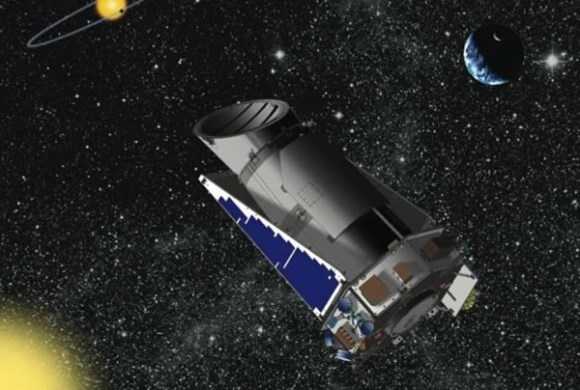
Kepler-telescope-580x448Between the Mars rovers, deep space probes, and long-term plans to mine asteroids and colonize Earth’s neighbors, there’s just no shortage of news from space these days. Unfortunately, not all of it is good. For instance, NASA recently announced that the Kepler space telescope, which was launched back in 2009 for the purpose of identifying Earth-like exoplanets, is suffering from malfunctions and may be broken down.

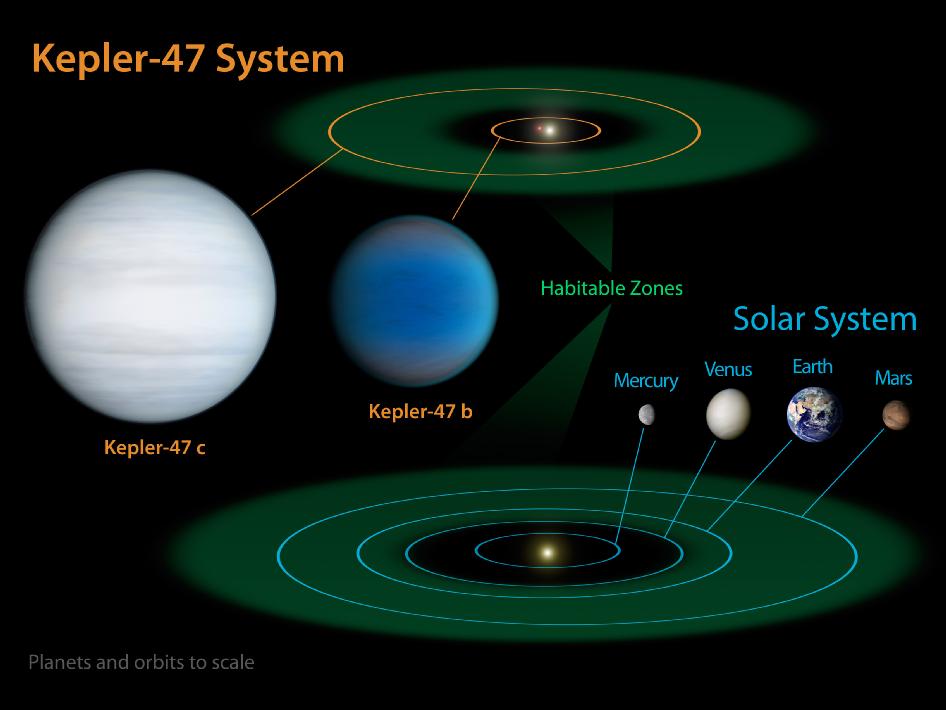
And in the course of its operational history, it did manage to identify a number of exoplanets that existed within the habitable zones of their parent stars. In fact, it had found a total of 2,740 candidate exoplanets spread across 2,046 stars systems, and a confirmed total of 132 that have the potential to support life. Unfortunately, during the early month of April during its weekly communication, NASA  found that the space observatory was in safe mode, a sign that something was amiss.

keplerAfter looking into the problem, they realized that it had lost its ability to precisely point toward stars because one of the reaction wheels – devices which enable the spacecraft to aim in different directions without firing thrusters – had failed. This was especially bad since last year an different wheel failed, meaning it only had two wheels remaining. The probe needs at least three working in order to properly aim itself, but now that seems impossible.

But the Kepler team said there are still possibilities of keeping the spacecraft in working order, or perhaps even finding other opportunities for different scientific pursuits. Either way, the team is not ready to throw in the towel on the telescope. And since NASA already approved to keep the mission going through 2016, a lot is still riding on it remaining functional.

Charles Sobeck, the Kepler deputy project manager, addressed the team’s efforts to get the telescope working again during their daily briefing earlier in May:

Initially, they did see some movement on the wheel but it quickly went back to zero speed, indicative of internal failure on the wheel. Our next step is to see what we can do to reduce the fuel consumption, as we would like to extend the fuel reserve as long as we can.

In terms of the malfunctioning wheel, he indicated that there are a few things they can still do to get it working again. One possibility is “jigging it” or running it in reverse.

We can try jiggling it, like you’d do with any wheel here on Earth, commanding it to move back and forth, so we can try to bring the wheel back in service. Or perhaps since wheel #2 hasn’t been turned on for eight months, it may come back if we turn it on. It will take us awhile to come up with a plan.

Sobeck also explained they are currently using thrusters to stabilize the spacecraft, and in its current mode, the onboard fuel will last for several months. But they hope to soon put the spacecraft into what is called a “Point Rest State” – a loosely-pointed, thruster-controlled state that minimizes fuels usage while providing a continuous X-band communication downlink. This ought to keep the fuel consumption down to the point where the telescope could keep going for several more years.

kepler47.jpgWhat’s more, the team also indicated that there is still terabytes of information gathered by the probe that has yet to be sifted through. They estimate that it will take at least two years for them to process it all and determine what other exoplanets exist nearby in our galaxy. And as Paul Hertz – NASA’s astrophysics director – put it, with the work it has already performed, Kepler has essentially carried out its task:

We’ll continue to analyze the data to get the science that Kepler was designed to do. Even though Kepler is in trouble, it has collected all the data necessary to answer its scientific objectives. Kepler is not the last exoplanet mission, but the first. It has been a great start to our path of exoplanet exploration.

In the end, its too soon to say if Kepler is deep in space (literally), or just experiencing a lull while her technicians get her back on track. And even if this does prove to be the end of her, the many thousands of planet she managed to identify during her years of service will certainly prove useful to humanity as we begin to set our sights on interstellar exploration and, God willing, colonization. And I imagine more than a few will bare the proud name of Kepler, in honor of her namesake and the telescope itself!

Sources: universetoday.com, Wired.com

Preventing the Apocalypse: NASA’s Asteroid Lasso Mission

asteroid_lasso

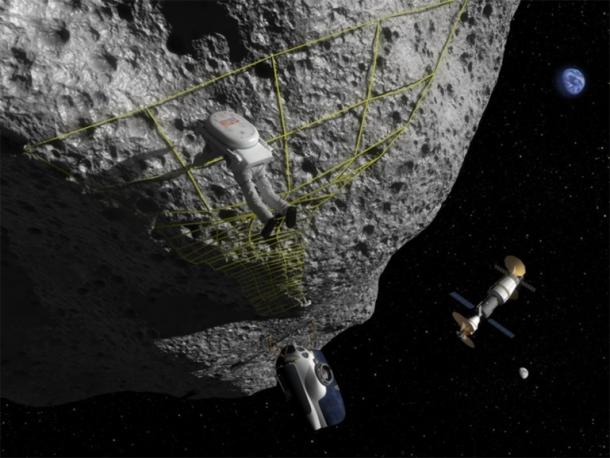
Shortly after that large meteor hit Russia, President Obama and NASA administrator Charles Bolden both announced that work would begin on a series of asteroid tracking technologies that would ensure that more severe Earth collisions would be prevented. Earlier this month, Bolden spoke at the Mars Summit in Washington, D.C. and said that a robotic spacecraft mission is currently being planned with this goal in mind.

The plan calls to mind such films as Armageddon and Deep Impact, but differs in that it involves lassoing an asteroid instead of detonating a small nuke inside it. The ultimate goal here is to tow an asteroid out of the path of Earth, but then to deposit it in orbit so that it can be visited by astronauts. These astronauts will then collect samples and conduct research that could one day assist in a mission to Mars or save Earth from a catastrophic collision.

Asteroid-Toutatis

This is in keeping with the Obama administrations’ pledge of putting a man on a near-Earth asteroid by 2025 and a manned mission to Mars by 2030. It’s also in the same vein as NASA’s plan to catch and deposit an asteroid around the Moon, an idea that was proposed back in January of this year as part of the agencies plan to establish an outpost at Lagrange Point 2 early in the next decade.

And even though NASA has expressed that the massive 22 million ton asteroid Apophis will not impact planet Earth in 2036, it didn’t rule out that other, smaller rocks could possibly reach us in that time. Capturing them and towing them to where they could be safely deposited in orbit would present many opportunities, not the least of which could be commercial.

asteroid_foundry

For example, asteroid prospecting is slated to begin in 2015, with companies like SpaceX and Deep Space Industries leading the charge. Once property rights are assigned to various celestial bodies, these and other companies hope to send missions out to mine them and establish automated 3D manufacturing facilities, places that use “sintering” to process ore into metal and other materials that can then be shipped back.

NASA’s science mission directorate associate administrator John Grunsfeld also spoke about the importance of the lasso mission at the Human to Mars Summit on Monday. Above all else, he emphasized the importance of using the knowledge and skills gained from the research to achieve the long-term goal of survival:

We have a pretty good theory that single-planet species don’t survive. We don’t want to test it, but we have some evidence of that happening 65 million years ago [when an asteroid killed much of Earth’s life]. That will happen again someday … we want to have the capability [to leave the planet] in case of the threat of large scale destruction on Earth.

Yeah, its a rocky universe. And if we intend to survive in it, we had best learn how to deflect, capture and destroy any that come our way and get too close. And of course, we need to learn how to harness their endless supply of minerals and trace elements.

asteroid_belt1Source: news.cnet.com

Neil Armstrong’s EKG Available for Auction

apollo17

The video of Neil Armstrong taking man’s first step onto the Moon is perhaps the most iconic pieces of footage humanity has ever produced. To Armstrong, seeing the Earth shining back at him must have been the most gorgeous, awe-inspiring sight ever. But to the crews manning Mission Control, Armstrong’s electrocardiogram reading was what they were looking at the moment he set his foot down.

And though we will never be able to see things from Armstrong’s perspective, you can see what Mission Control saw during those seminal moments. The six-inch strip of readout is going up for auction at the RR Auction site, and for the starting price of $200 you can own this piece of history. The strip comes in a presentation frame along with an Armstrong autopen signature and various mission patches.

apollo_ekg

RR Auction has a tremendous stash of space-related memorabilia going up for bid. Many of the pieces are autographs from luminaries of the space program, but the Armstrong EKG isn’t the only unusual piece on offer. There is also a Constant Wear Garment from 1968 that was issued to Buzz Aldrin. This garment is kind of like a space onesie designed to be worn under the in-flight coveralls.

Other interesting lots include a set of Challenger Spacelab screws, a Space Shuttle commemorative Pepsi can, a flown heat shield fragment from Apollo 8, and a chunk of seat fabric from Apollo 13. Bidding starts on May 16 for the EKG reading along with the other space items. The opening bid for the EKG is $200, but the last time an Armstrong EKG went up for action back in 2004, bidding ended at $12,500.

Apollo_11

As the description on the EKG reads:

After the landing, this EKG report was saved by the Manager of Medical Administration for the Space Center. It was cut up into five pieces; four were presented to the attending physicians on the medical team.

And interestingly enough, the EKG indicates that Armstrong was very calm as he gazed at Earth from the Moon. But then again, how could such a sight not inspire feelings of deep serenity? And it only seems fitting that even in death, Armstrong continues to impress, amaze and exert a strong influence.

Apollo_11_bootprint

Source: news.cnet.com

News From Space: SpaceShipTwo Completes First Test Flight!

spaceshiptwo_flightWell, technically this news come from the lower atmosphere, but seeing as how the ultimate purpose is to get into space, I think it qualifies. Earlier this week, Virgin Galactic made history when it’s aerospace carrier, SpaceShipTwo, conducted its first powered test flight and broke the sound barrier. As the latest in a long series of successful flights, it shouldn’t be too long before Virgin Galactic conducts its maiden flight and flies actual passengers into low orbit.

The test flight took place on Monday as the plane took off from the Mojave Air and Space Port in southern California, not far from where the Bell X-1 piloted by the then Capt. Chuck Yeager first broke the sound barrier in 1947. This latest test comes on the heels of the SS2’s first glide test with its rocket engine on board, which it conducted back in December of 2012, and its first glide flight in 2010.

spaceshiptwoThe flight began after the SS2 was carried to a ceiling of 14,300 meters (47,000 feet) by its mothership, WhiteKnightTwo, where it was then released at 7:48 a.m. PDT. Shortly thereafter, pilots Mark Stucky and Mike Alsbury ignited the rocket engine and accelerated to a speed of Mach 1.2 as they climbed to over 17,000 meters (55,000 feet). According to Virgin Galactic, the rocket burn lasted 16 seconds, and demonstrated the efficacy of their engine design.

Granted, in order to get into the realm of the sub-orbital, the engine will have to make longer burns, most likely in the vicinity of 80 or 90 seconds. SS2’s predecessor, SpaceShipOne, had to run its engine this long in order to break the 100 kilometer (328,000 feet) back in 2004, when it reached what the international community holds as the accepted altitude for reaching the soft edge of space.

spaceshiponeIt’s has been over eight years since Virgin Galactic’s space tourism program began, and though progress has come slower than planned, Branson was nevertheless enthusiastic about the flight test and expressed his feelings on his blog after the flight:

It marks the moment when we put together two key elements of our spaceflight system – the spacecraft and its rocket motor, which have both been tested extensively by themselves over several years. And start the phase of testing that will demonstrate our vehicle’s ability to go to space (hopefully later this year).

More than 500 people have signed up for sub-orbital rides aboard the six passenger SpaceShipTwo once it becomes operational. Those who go will have the chance to float weightlessly for a few minutes while enjoying the spectacular view of the edge of space. Tickets go for $200,000 a pop, quite the price tag for a plane flight. But in return, those who go will get to experience something only astronauts have ever had the pleasure of.

Richard Branson has said all along that he plans on being on the maiden voyage, something he reiterated after the test flight was done:

Like our hundreds of customers from around the world, my children and I cannot wait to get on board this fantastic vehicle for our own trip to space and am delighted that today’s milestone brings that day much closer.

Check out the video of the SpaceShipTwo conducting its first engine test below:


Zodiac

????????????

Zodiacal light, the kind that takes millions of years to come

What revelations will it share, which are already so old?

The edge of the universe, the boundary of creation

Pulsing with the same power that once beget it all.

How can it be, when a billion are swirled into one,

And a billion more circle each other ad infinitum,

That I can think myself the paragon of creation?

But a billion billion voices still seem to cry out with one voice,

To letting me know how small and insignificant I truly am

And at the same time, so very rare and precious.

But more than this, how very much I am not alone.