News From Space…X!

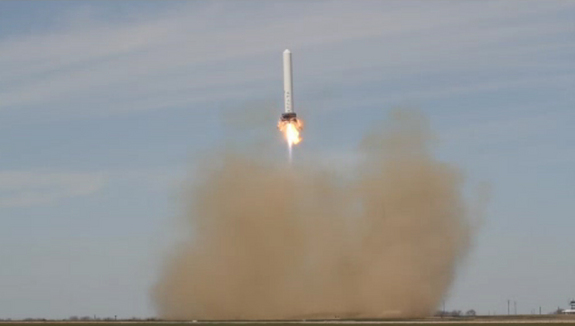
spaceX_elonmuskForgive the pun, but it was just too easy! Yes, SpaceX is once again making news with its Grasshopper reusable rocket system, which set the record for highest altitude ascended. On its sixth jump, which took place on June 14th, the rocket made it to a height of 325 meters (1066 feet) above the Earth and remained airborne for a minute and 8 seconds.

With each jump and new record set, Grasshopper and its inventors are bringing the age of affordable, commercial space flight that much closer. Seeing as how the goal is to send a rocket into orbit it and bring it back in one piece, this latest milestone might sound modest. But a quick look at each successive jump clearly shows that the Vertical Takeoff Vertical Landing (VTVL) rocket is making serious progress, and in a short stretch of time.

spacex_grasshopperConsider the first jump which took place in September of 2012, where the rocket reached a height of 1.8 meters (6 feet) and remained aloft for three seconds. Sounds pretty meager, no? But less than two months later, the rocket was able to remain in the air for 8 seconds and reached a height of 5.4 meters (17.7 feet).

On its third run, performed in December of 2012, the rocket got 40 meters (131 feet) into the air, remained there for 29 seconds, and happened to be the first test flight where a cowboy mannequin was strapped to the rocket. On the fourth and fifth try, which were performed in March and April of this year, the rocket reached a height of 80 and then 250 meters (262 and 820 feet), remaining airborne for 34 and then 61 seconds.

Grasshopper-rocketThis not only confirms that the rocket’s progress is exponential when it comes to height, but that its thrust-to-weight ratio has been improving vastly. Another big milestone here was the fact that for the first time, the rocket made use of its full navigation sensor suite with the F9-R closed loop control flight algorithms.

In previous tests, the rocket relied on other rocket sensors which were not as accurate, but this time around, SpaceX was directly controlling the rocket based on these new sensor readings, a move which has increased the level of accuracy in sensing the distance between Grasshopper and the ground.

To quote Nietzsche: “He who would learn to fly one day must first learn to stand and walk.” At this rate, averaging for the total rate of increase, I’d say the Grasshopper should be reaching Low-Earth Orbit (2000 km above sea level) by its 11th or 12th jump. And using the same figures, I figure the jump will be taking place sometime in May 2014. Somebody ought to be organizing a pool!

Source: IO9.com, SpaceX.com

NASA’s Vision: Robots to Help Mine Asteroids

asteroid_mining_robotIn a recent study, NASA shared a vision that sounds like something out of a science fiction novel. Basically, the plan calls for the creation of robots that could be sent to a nearby asteroid, assemble itself, and then begin mining the asteroid itself. The scientists behind this study say that not only will this be possible within a few generations of robotics, but will also pay for itself – a major concern when it comes to space travel.

A couple of factors are pointing to this, according to the researchers. One, private industry is willing and able to get involved, as attested to by Golden Spike, SpaceX and Planetary Resources. Second, advances in technologies such as 3-D printing are making off-world work more feasible, which can be seen with plans to manufacture a Moon base and “sintering”.

asteroidsBut also, humanity’s surveys of space resources – namely those located in the asteroid belt – have revealed that the elements needed to make rubber, plastic and alloys needed for machinery are there in abundance. NASA proposes that a robotic flotilla could mine these nearby space rocks, process the goods, and then ship them back to Earth.

Best of all, the pods being sent out would save on weight (and hence costs) by procuring all the resources and constructing the robots there. They caution the technology won’t be ready tomorrow, and more surveys will need to be done of nearby asteroids to figure out where to go next. There is, however, enough progress to see building blocks. As the agency stated in their research report:

Advances in robotics and additive manufacturing have become game-changing for the prospects of space industry. It has become feasible to bootstrap a self-sustaining, self-expanding industry at reasonably low cost…

asteroid_belt1Phil Metzger, a senior research physicist at NASA’s Kennedy Space Center, who led the study, went on to explain how the process is multi-tiered and would encompass several generations of progress:

Robots and machines would just make the metal and propellants for starters… The first generation of robots makes the second generation of hardware, except the comparatively lightweight electronics and motors that have to be sent up from Earth. It doesn’t matter how much the large structures weigh because you didn’t have to launch it.

A computer model in the study showed that in six generations of robotics, these machines will be able to construct themselves and operate without any need of materials from Earth.

asteroid_foundryAt least two startups are likely to be on board with this optimistic appraisal. For example, Deep Space Industries and Planetary, both commercial space companies, have proposed asteroid mining ideas within the past year. And since then, Planetary Resources has also unveiled other projects such as a public space telescope, in part for surveying work and the sake of prospecting asteroids.

And this latest research report just takes thing a step farther. In addition to setting up autonomous 3D manufacturing operations on asteroids, these operations would be capable of setting themselves up and potentially upgrading themselves as time went on. And in the meantime, we could look forward to a growing and increasingly complex supply of manufactured products here on Earth.

Source: universetoday.com

News From Mars: Revelations on Radiation

mars_astronauts1As the projected date for a manned mission to the Red Planet approaches, the Mars Science Laboratory and Curiosity team continue to conduct vital research into what a human team of explorers can expect to find. Unfortunately, earlier last month, that research led to a discouraging announcement which may force NASA and a number of private companies to rethink their plans for manned missions.

Earlier in May, a number of scientists, NASA officials, private space company representatives and other members of the spaceflight community gathered in Washington D.C. for a three day meeting known as the Humans to Mars (H2M) conference. Hosted by the spaceflight advocacy group Explore Mars, the attendees met to discuss all the challenges that a 2030 manned mission would likely encounter.

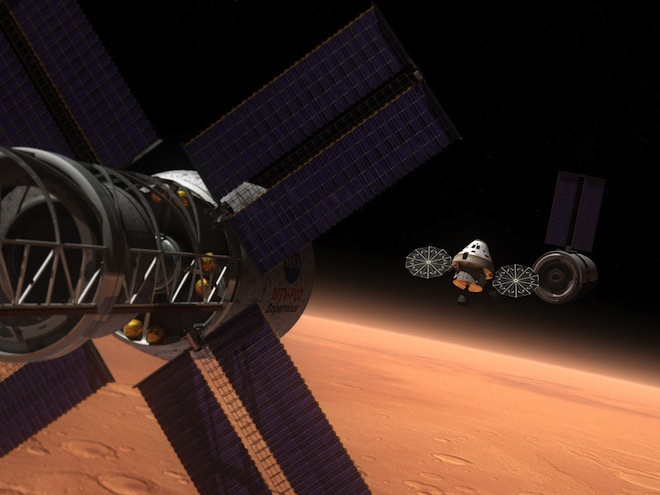
mars_astronautsFor starters, the human race currently lacks the technology to get people to Mars and back. An interplanetary mission of that scale would likely be one of the most expensive and difficult engineering challenges of the 21st century. Currently, we don’t have the means to properly store enough fuel to make the trip, or a vehicle capable of landing people on the Martian surface. Last, and most importantly, we aren’t entirely sure that a ship will keep the astronauts alive long enough to get there.

This last issue was raised thanks to a recent confirmation made by the Curiosity rover, which finished calculating the number of high-energy particles that struck it during its eight month journey to Mars. Based on this data, NASA says that a human traveling to and from Mars could well be exposed to a radiation dose that is beyond current safety limits.

NASAsolar_radiationThis was performed with the rover’s Radiation Assessment Detector (RAD) instrument, which switched on inside as the cruise vessel began its 253-day, 560-million-km journey. The particles of concern fall into two categories – those that are accelerated away from our Sun and galactic cosmic rays (GCRs) – those that arrive at high velocity from outside of the Solar System. This latter category is especially dangerous since they impart a lot of energy when they strike the human body, can cause damage to DNA and are hard to shield against.

What’s more, this calculation does not even include time spent on the planet’s surface. Although Curiosity has already determined that planetary levels were within human tolerances, the combined dosage would surely lead to a fatal case of cancer for any career astronaut looking to take part in an “Ares Mission”. Cary Zeitlin from the Southwest Research Institute in Boulder, Colorado, and colleagues reported the Curiosity findings in the latest edition of Science magazine.

They claim that engineers will have to give careful consideration to the type of shielding that will need to be built into a Mars-bound crew ship. However, they concede that for some of the most damaging radiation particles, there may be little that can be done, beyond delivering them to Mars as quickly as possible. This presents an even greater challenge, which calls for the development of something better than existing propulsion technology. Using chemical propellants, Curiosity made the trip in eight months.

spaceX_elonmusk However, the good news is that at this juncture, nothing is technologically impossible about a manned Mars mission. It’s just a matter of determining what the priorities are and putting the time and money into developing the necessary tools. Right now NASA, other space agencies, and private companies are working to bring Mars within reach. And with time and further developments, who knows what will be possible by the time the 2020’s roll around?

Some alternatives include plasma and nuclear thermal rockets, which are in development and could bring the journey time down to a number of weeks. What’s more, SpaceX and other agencies are working on cheaper deliver systems, such as the grasshopper reusable rocket, to make sending ships into space that much more affordable. In addition, concepts for improving radiation shielding – like Inspiration Mars’ idea of using human waste – are being considered to cut down on the irradiation factor.

So despite the concerns, it seems that we are still on track for a Mars mission in 2030. And even if there are delays in the implementation, it seems as though a manned mission is just a matter of time at this point. Red Planet, here we come!

Sources: bbc.co.uk, wired.com

The Arkyd 100: Crowdfunding Space Exploraiton

ARKYD-in-SpacePlanetary Resources made quite the impression last year when they announced their plans to begin prospecting near-Earth asteroids with in the intention of mining them in the near future. Alongside such companies as SpaceX and Golden Spike, they are part of a constellations of private interests looking to establish commercial space travel and tourism. But their latest proposal goes a step further, bringing crowdfunding and the realm of space exploration together.

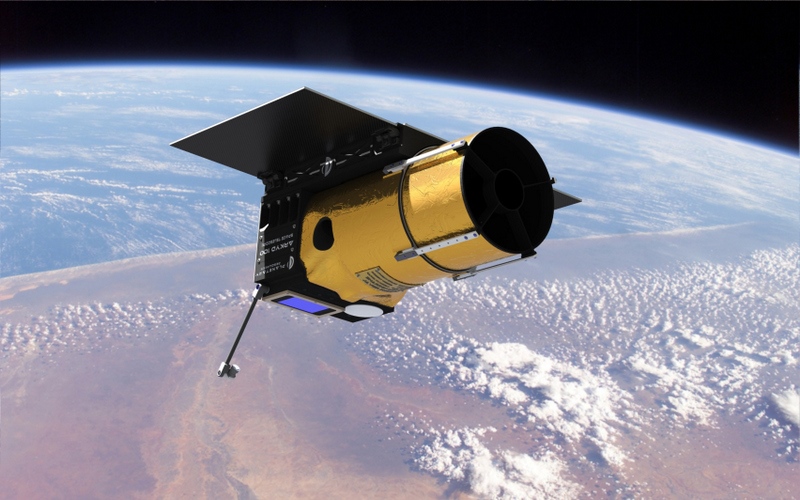
That’s the idea behind a Kickstarter campaign that the company began to raise money for a crowdfunded space telescope. Known as the Arkyd 100, the company claims that this new telescope will provide unprecedented public access to space and place the most advanced exploration technology into the hands of students, scientists and a new generation of citizen explorers.

asteroid_miningTo make their campaign successful, they need to raise $1 million in Kickstarter pledges by the end of June 2013. Once the telescope is up and running, it will allow them to better map the asteroid belt, thus assisting them in finding the rocks they want to mine for precious metals and trace elements. And with public financial backers making it happen, anyone pledging money will be able to own a piece of the prospector!

During a webcast on May 28th to announce the Kickstarter campaign, Chris Lewicki, President and Chief Engineer for Planetary Resources, gave a rundown on the details of the telescope. And interestingly enough, the Planetary Resources’ technical team that designed it also worked on every recent U.S. Mars lander and rover. So if you do choose to invest, you will do so with the knowledge that the same people who helped build the Opportunity and Curiosity rovers are behind this project. If that doesn’t inspire investor confidence, I don’t know what will!

ARKYD-Space-SelfieA wide array of scientists, space enthusiasts and even Bill Nye the Science Guy have voiced their support for Planetary Resources’ new public space telescope. And those who invest will have the chance of recouping certain rewards, depending on how much they choose to pledge. Those pledging the minimum donation of $25 will receive the “Your Face in Space” benefit, where you will have you picture placed on the Arkyd and receive a picture of said photo the telescope with Earth in the background. Higher pledges will provide access to the telescope for students and researchers worldwide.

After less than 2 hours into their campaign, Planetary Resources had raised over $100,000. And as of this article’s writing, just one day shy of a week, the campaign has reached $710,945 of their $1 million goal, and they still have 27 days left. I guess people want a piece of this project. And who can blame them, since it is a scientific and historic first!

Check out the promotional video for the Arkyd and Planetary Resources below. To make a donation or get information about the Kickstarter campaign, visit the campaign page here.


Source:
universetoday.com

Preventing the Apocalypse: NASA’s Asteroid Lasso Mission

asteroid_lasso

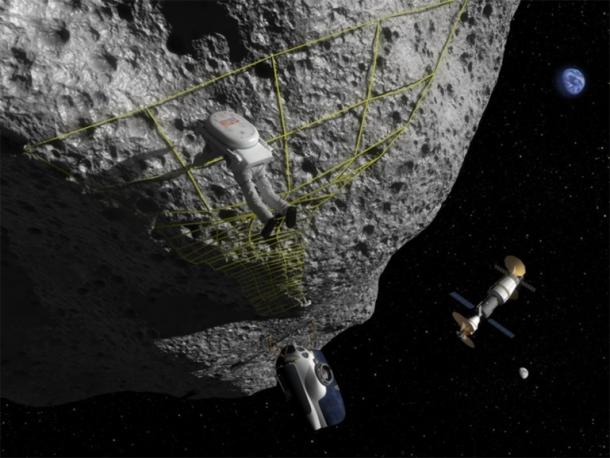
Shortly after that large meteor hit Russia, President Obama and NASA administrator Charles Bolden both announced that work would begin on a series of asteroid tracking technologies that would ensure that more severe Earth collisions would be prevented. Earlier this month, Bolden spoke at the Mars Summit in Washington, D.C. and said that a robotic spacecraft mission is currently being planned with this goal in mind.

The plan calls to mind such films as Armageddon and Deep Impact, but differs in that it involves lassoing an asteroid instead of detonating a small nuke inside it. The ultimate goal here is to tow an asteroid out of the path of Earth, but then to deposit it in orbit so that it can be visited by astronauts. These astronauts will then collect samples and conduct research that could one day assist in a mission to Mars or save Earth from a catastrophic collision.

Asteroid-Toutatis

This is in keeping with the Obama administrations’ pledge of putting a man on a near-Earth asteroid by 2025 and a manned mission to Mars by 2030. It’s also in the same vein as NASA’s plan to catch and deposit an asteroid around the Moon, an idea that was proposed back in January of this year as part of the agencies plan to establish an outpost at Lagrange Point 2 early in the next decade.

And even though NASA has expressed that the massive 22 million ton asteroid Apophis will not impact planet Earth in 2036, it didn’t rule out that other, smaller rocks could possibly reach us in that time. Capturing them and towing them to where they could be safely deposited in orbit would present many opportunities, not the least of which could be commercial.

asteroid_foundry

For example, asteroid prospecting is slated to begin in 2015, with companies like SpaceX and Deep Space Industries leading the charge. Once property rights are assigned to various celestial bodies, these and other companies hope to send missions out to mine them and establish automated 3D manufacturing facilities, places that use “sintering” to process ore into metal and other materials that can then be shipped back.

NASA’s science mission directorate associate administrator John Grunsfeld also spoke about the importance of the lasso mission at the Human to Mars Summit on Monday. Above all else, he emphasized the importance of using the knowledge and skills gained from the research to achieve the long-term goal of survival:

We have a pretty good theory that single-planet species don’t survive. We don’t want to test it, but we have some evidence of that happening 65 million years ago [when an asteroid killed much of Earth’s life]. That will happen again someday … we want to have the capability [to leave the planet] in case of the threat of large scale destruction on Earth.

Yeah, its a rocky universe. And if we intend to survive in it, we had best learn how to deflect, capture and destroy any that come our way and get too close. And of course, we need to learn how to harness their endless supply of minerals and trace elements.

asteroid_belt1Source: news.cnet.com

News From Space: SpaceXs Reusable “Grasshopper” Rocket

spaceX_elonmuskThe concept of commercial spaceflight has been growing considerably in recent years. Basically, the idea is that it would be private aerospace companies that would responsible for ferrying people to and from space and putting commercial satellites in orbit, thus leaving space agencies free to conduct more crucial research and deep space exploration missions.

Intrinsic to this dream is the creation of a cheaper, reusable rocket system, something that can be deployed, landed, and redeployed. This will not only save the companies responsible for this new age of space travel billions of dollars, it will make a whole series of projects possible – like Space-Based Solar Power (SBSP) arrays, commercial trips to the Moon, and bigger, more elaborate space stations in orbit.

spacex_grasshopperAnd that’s precisely what SpaceX founder Elon Musk is working on with his “Grasshopper” rocket system. Designed to be reusable, the company has been running the Grasshopper through an ongoing series of tests to make sure it can take off, achieve orbit, and then successfully return to the Earth and land in one piece. In the latest test, the Grasshopper achieved its highest flight yet – reaching 80 meters (263 feet) – before sticking its landing.

The flight took place on March 7th, and it was the fourth of its kind to be conducted at the SpaceX’s rocket development facility in McGregor, Texas. And though the flight was unmanned, the crews placed a dummy dressed like Johnny Cash into the side, which might explain why the footage of the test featured the song “Ring of Fire” in the background.

spacex-grasshopper-highest-leapWhile this achievement might seem modest to some, its necessary to keep in mind that this is a very new concept. In addition, with each successive flight, the altitudes achieved have increased exponentially. In its first test flight in September of last year, the Grasshopper reached a height of only 2.5 meters (8.2 feet). In the two following tests in November and December, the rocket reached a height of 5.4 meters (17.7 feet) and 40 meters (131 feet) respectively.

With this latest flight, SpaceX believes it is getting close to their goal of a reusable rocket and its ultimate goal of making space travel cheaper and easier. Upon completion of this latest test, the company had positive things to say about the new rocket system:

With Grasshopper, SpaceX engineers are testing the technology that would enable a launched rocket to land intact, rather than burning up upon reentry to the Earth’s atmosphere.

Who knows? Given a few more tests, they might just be able to break atmo and land successfully. Then, all SpaceX has to do is sit back and watch their stock price jump by about a million points. At which time, I’m thinking missions will pour in for the deployment of just about any bit of space gear imaginable! Welcome to the era of renewed space exploration, my friends!

And be sure to check out this video of the Grasshopper makings its most recent jump!

Source: space.com

Asteriod Prospecting by 2015

asteroid_beltDeep Space Industries, a private aerospace company, has been making a big splash in the news lately. Alongside SpaceX, they have been pioneering a new age in space exploration, where costs are reduced and private companies are picking up the slack. And in their latest bid to claim a share of space, the company announced plans late in January to begin asteroid prospecting operations by 2015.

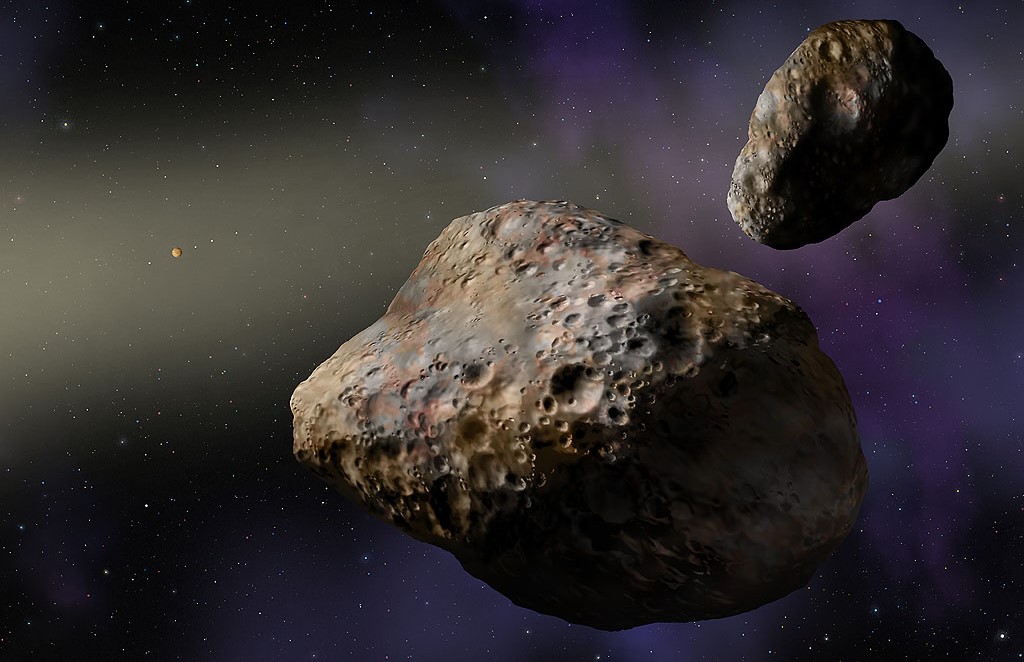
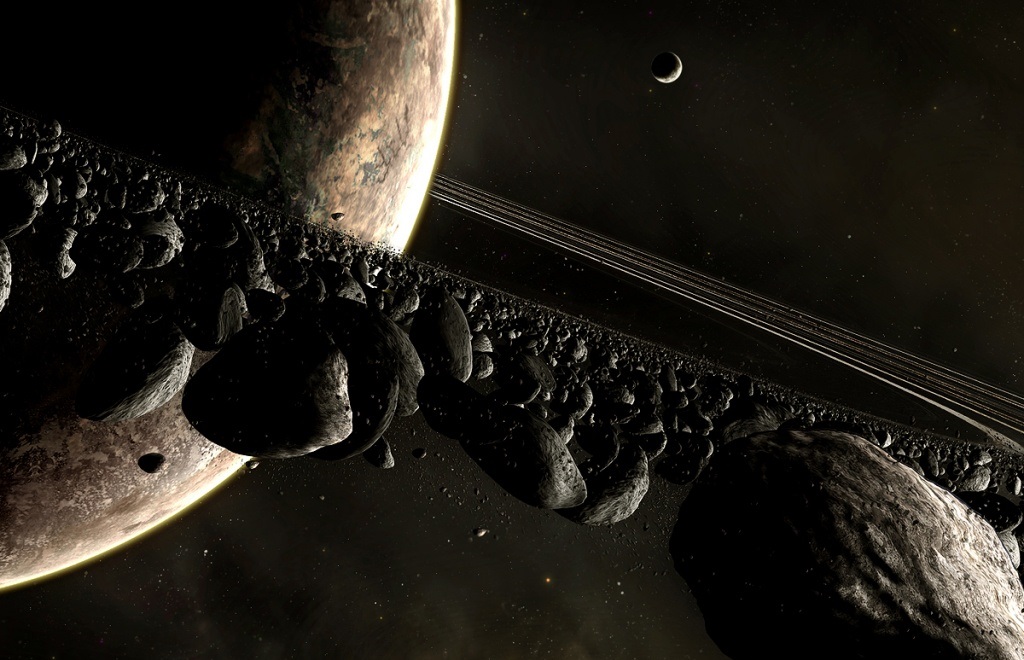
For some time, the concept of sending spaceships to mine asteroids and haul ore has been explored as a serious option. Within the asteroid belt that lies between Mars and Jupiter, countless tons of precious metals, carbon, silicates, and basaltic minerals. If humanity could tap a fraction of a fraction of that mineral wealth, it would be able to supply Earth’s manufacturing needs indefinitely, without all the harmful pollutants or run off caused by mining.

asteroid_miningSo to tap this potential goldmine (literally!) known as the Asteroid Belt, DSI plans to launch a fleet of mini spacecraft into solar orbit to identify potential targets near to Earth that would be suitable to mine. Lacking the resources of some of the bigger players in the space rush, DSI’s probes will ride-share on the launch of larger communications satellites and get a discounted delivery to space.

Initially, a group of 25kg (55 pounds) cubesats with the awesome designation “Firefly” will be launched on a journey lasting from two to six months in 2015. Then, in 2016, the 32 kilograms (70 pound) DragonFly spacecraft will begin their two-to-four-year expeditions and return with up to 68 kilograms (150 pounds) of bounty each. Beyond this, DSI has some truly ambitious plans to establish a foundry amongst the asteroids.

asteroid_foundryThat’s another thing about the Belt. Not only is it an incredibly rich source of minerals, its asteroids would make an ideal place for relocating much of Earth’s heavy industry. Automated facilities, anchored to the surface and processing metals and other materials on site would also reduce the burden on Earth’s environment. Not only would there be no air to befoul with emissions, but the processes used would generate no harmful pollutants.

In DSI’s plan, the foundry would use a patent-pending nickel gas process developed by one of DSI’s co-founders, Stephen Covey, known as “sintering”. This is the same process that is being considered by NASA to build a Moon Base in the Shackleton Crater near the Moon’s south pole. Relying on this same technology, automated foundries could turn ore into finished products with little more than microwave radiation and a 3D printer, which could then be shipped back to Earth.

deepspaceindustries-640x353Naturally, DSI will have plenty of competition down the road. The biggest comes from Google-backed Planetary Resources which staked it claim to an asteroid last April. Much like DSI, they hope to be able to mine everything from water to fuel as well as minerals and rare earths. And of course, SpaceX, which has the most impressive track record thus far, is likely to be looking to the Asteroid Belt before long.

And Golden Spike, the company that is promising commercial flight to the Moon by 2020 is sure to not be left behind. And as for Virgin Galactic, well… Richard Branson didn’t get crazy, stinking rich by letting opportunities pass him by. And given the size and scope of the Belt itself, there’s likely to be no shortage of companies trying to stake a claim, and more than enough for everyone.

So get on board ye capitalist prospectors! A new frontier awaits beyond the rim of Mars…

Source: Extremetech.com

Powered by the Sun: The Future of Solar Energy

Magnificent CME Erupts on the Sun - August 31Researchers continue to work steadily to make the dream of abundant solar energy a reality. And in recent years, a number of ideas and projects have begun to bear fruit. Earlier this year, their was the announcement of a new kind of “peel and stick” solar panel which was quite impressive. Little did I know, this was just the tip of the iceberg.

Since that time, I have come across four very interesting stories that talk about the future of solar power, and I feel the need to share them all! But, not wanting to fill your page with a massive post, I’ve decided to break them down and do a week long segment dedicated to emerging solar technology and its wicked-cool applications. So welcome to the first installment of Powered By The Sun!

spaceX_solararrayThe first story comes to us by way of SpaceX, Deep Space Industries, and other commercial space agencies that are looking to make space-based solar power (SBSP) a reality. For those not familiar with the concept, this involves placing a solar farm in orbit that would then harvest energy from the sun and then beam the resulting electricity back to Earth using microwave- or laser-based wireless power transmission.

Originally described by Isaac Asimov in his short story “Reason”, the concept of an actual space-based solar array was first adopted by NASA in 1974. Since that time, they have been investigating the concept alongside the US Department of Energy as a solution to the problem of meeting Earth’s energy demands, and the cost of establishing a reliable network of arrays here on Earth.

Constructing large arrays on the surface is a prohibitively expensive and inefficient way of gathering power, due largely to weather patterns, seasons, and the day-night cycle which would interfere with reliable solar collection. What’s more, the sunniest parts of the world are quite far from the major centers of demand – i.e. Western Europe, North America, India and East Asia – and at the present time, transmitting energy over that long a distance is virtually impossible.

NASA "Suntower" concept
NASA “Suntower” concept

Compared to that, an orbiting installation like the SBSP would have numerous advantages. Orbiting outside of the Earth’s atmosphere, it would be able to receive about 30% more power from the Sun, would be operational for almost 24 hours per day, and if placed directly above the equator, it wouldn’t be affected by the seasons either. But the biggest benefit of all would be the ability to beam the power directly to whoever needed it.

But of course, cost remains an issue, which is the only reason why NASA hasn’t undertaken to do this already. Over the years, many concepts have been considered over at NASA and other space agencies. But due to the high cost of putting anything in orbit, moving up all the materials required to build a large scale installation was simply not cost effective.

spacex-dragon-capsule-grabbed-by-iss-canadarm-640x424However, that is all set to change. Companies like SpaceX, who have already taken part in commercial space flight (such as the first commercial resupply to the ISS in May of 2012, picture above) are working on finding ways to lower the cost of putting materials and supplies into orbit. Currently, it costs about $20,000 to place a kilogram (2.2lbs) into geostationary orbit (GSO), and about half that for low-Earth orbit (LEO). But SpaceX’s CEO, Elon Musk, has said that he wants to bring the price down to $500 per pound, at which point, things become much more feasible.

And when that happens, there will be no shortage of clients looking to put an SBSP array into orbit. In the wake of the Fukushima accident, the Japanese government announced plans to launch a two-kilometer-wide 1-gigawatt SBSP plant into space. The Russian Space Agency already has a a working 100-kilowatt SBSP prototype, but has not yet announced a launch date. And China, the Earth’s fastest-growing consumer of electricity, plans to put a 100kW SBSP into Low-Earth Orbit by 2025.

space-based-solarpowerMost notably, however, is John Mankins, the CTO of Deep Space Industries and a 25-year NASA vet, who has produced an updated report on the viability of SBSP. His conclusion, in short, is that it should be possible to build a small-scale, pilot solar farm dubbed SPS-ALPHA for $5 billion and a large-scale, multi-kilometer wide power plant for $20 billion. NASA’s funding for SPS-ALPHA dried up last year, but presumably Mankins’ work continues at Deep Space Industries.

Cost and the long-term hazards of having an array in space remain, but considering its long-term importance and the shot in the arm space exploration has received in recent years – i.e. the Curiosity Rover, the proposed L2 Moon outpost, manned missions to Mars by 2030 – we could be looking at the full-scale construction of orbital power plants sometime early in the next decade.

And it won’t be a moment too soon! Considering Earth’s growing population, its escalating impact on the surface, the limits of many proposed alternative fuels, and the fact that we are nowhere near to resolving the problem of Climate Change, space-based solar power may be just what the doctor ordered!

Thanks for reading and stay tuned for the next installment in the Powered By The Sun series!

Source: Extremetech.com

More Plans to Colonize Mars!

mars_lifeFolks may recognize the name SpaceX, the private aerospace company that in May of last year launched a module into space to resupply  the International Space Station. An historic occasion, that was the first time a private spacecraft has has ever docked with the ISS, and signaled a growing trend in the development in commercial space travel. Well, it seems that the company’s founder has more ambitious plans now.

Yes, in a bid to make sure his company is not left behind in any future space endeavors, CEO and billionaire Elon Musk has announced plans to colonize the Red Planet with a population of 80,000. The announcement came back in November at the Royal Aeronautical Society in London, where Musk appeared to receive the Society’s gold medal for helping to advance the commercial space industry.

The first phase of the program, which is contingent on the development of reusable rocket that can take off and land vertically, would start off modestly with only a handful of explorers leaving Earth at a time. To make it happen, SpaceX has already started to work on their next-generation reusable Falcon 9 rocket, known as “Grasshopper”. This rocket has already made two short flights, including one in which it reached a height of 2 meters (6 feet), and another in which it leaped to a height of  5.4 meters (17.7 feet). Small beginnings, as they say!

The projected cost for each colonist looking to make the trip would be roughly $500,000. In short, those who are not rich or extremely adventurous need not apply! What’s more, he estimated that the entire program would cost about $36 billion, an inevitable expense to set up the initial infrastructure and transport. But once that is done, he believes enough people will be interested and find it within their means that the venture will pay for itself.

In an interview with Space.com, Musk’s vision for sending people to Mars was described as follows:

“Accompanying the founders of the new Mars colony would be large amounts of equipment, including machines to produce fertilizer, methane and oxygen from Mars’ atmospheric nitrogen and carbon dioxide and the planet’s subsurface water ice.

“The Red Planet pioneers would also take construction materials to build transparent domes, which when pressurized with Mars’ atmospheric CO2 could grow Earth crops in Martian soil. As the Mars colony became more self sufficient, the big rocket would start to transport more people and fewer supplies and equipment.”

So save your pennies and prepare for the day when tickets go on sale! Hard to say exactly when that will be, but chances are, it will be either feasible or abandoned by 2030. That’s when NASA plans to mount manned missions to the Red Planet. And like I said, men like Musk don’t want to be left behind!

Source: space.com