Star Wars VII, What’s it Going to Be?

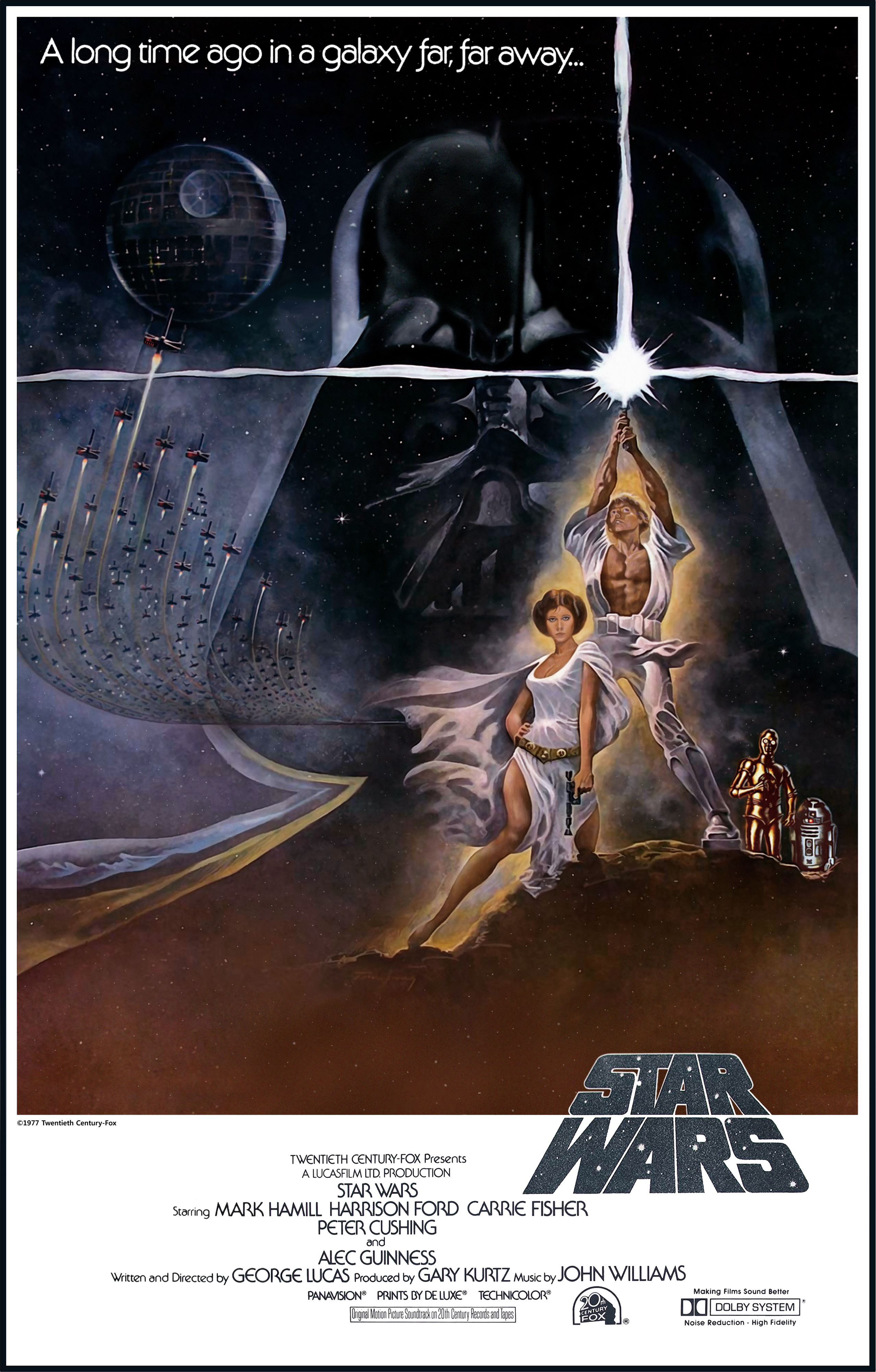
The news that Disney has purchased LucasArts for a cool 4 billion has certainly been making the rounds of late! Even more interesting is the release that they will be releasing the sequel trilogy sometime in 2015. This news has once again fueled a great deal of speculation as to what direction the new movies will take. Regardless of who is at the helm, it is generally agreed that there are only so many story arcs that the new movies could take…

The following list comes from AMOG‘s (Alpha Male Of the Group) online magazine, courtesy of Keith Veronese. The list is pretty comprehensive, and covers all the likely candidates for potential sequel and spinoff story lines. And lets face it, with the course of the prequels took, we all would like something new to rehabilitate the series! And with Lucas no longer at the helm, we all might just get what we want!

Immediate Pick-Up:
The first possible story arc for the new trilogy would be to pick up where the last movie left off. As it stood, the Empire was dealt a significant blow, but was far from finished. Granted, the Death Star was destroyed and both the Emperor and Darth Vader were dead, but the majority of the Imperial Fleet was still intact, as was its infrastructure and network of allied planets. As evil and rotten as it was, the Empire still commanded a great deal of loyalty and support within the Core Worlds, and the Rebel Alliance was likely to have its hands full dealing with all of them.

The benefits of this story are pretty clear. It’s a blank canvass in terms of plot, into which a new generation of writers can hurl all kinds of ideas. In addition, it’s a chance to bring back the old gang for another run, albeit with new actors and actresses.

The Thrawn Trilogy:
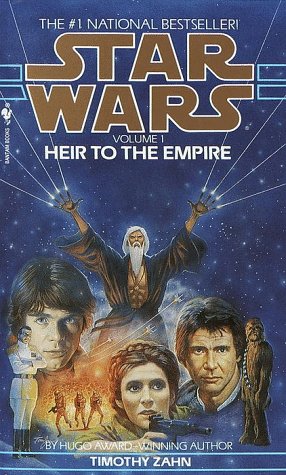
Written by noted sci-fi author Timothy Zhan, the Thrawn Trilogy are perhaps the most famous novelization in the franchise. Set five years after events in Return of the Jedi, the trilogy centers on the enigmatic character of Grand Admiral Thrawn, the last of the Empire’s senior officers who has assumed control of the Imperial fleet. Intrinsic to these plans are a lost fleet that disappeared prior to the Clone Wars, a secret cache of cloning vats the Emperor established during his reign, and an insane Jedi Master living on a remote world.

Meanwhile, Senator Leia Organa Solo (that’s right, they tied the knot!) is pregnant and expecting twins. While she has become a member of the New Republic government, Han has continued in his role as a fleet General and is using his old contacts in the smuggling world to try and drum up shipping for the new government. His efforts bring him into contact with a group of privateers who will one day go from being self-interested sorts to the same kind of heroes Han had become.

And finally, there are the adventures of Luke, who is drawn to Jedi Master C’boath and seeks to learn from him. However, they quickly become enemies as Luke realizes he is insane and seeks to capture Leia’s twins for his own purposes. He also comes into contact with Mara Jade, a Force-sensitive woman who once served the Emperor. She plans to kill Luke, but circumstances have thrown them to work together and cooperate.

Needless to say, this would be a good story arc for the series, and would be convenient since it’s already been written in full. All the old characters are reprized and fleshed out, and some new, decidedly Star Wars-esque characters are also introduced. And given that much time has passed since the originals, it would be a good opportunity for some new actors to tackle the roles of all our favorites. I’m sure Disney would be willing to spring for some cameos from the original cast as well!

Darth Vader Spinoff:
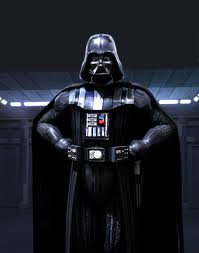
True, we got more than enough of his origin story with the prequel trilogy, but there’s still plenty of room for Darth Vader to grow! In fact, there is a twenty year gap between the prequels and the original movies, during which time Vader essentially did his best work. This included hunting down the remaining Jedi, rooting out dissent and resistance to the Emperor’s rule, and just generally cementing his reputation as an evil cybernetic menace!

The benefits here are pretty obvious, at least as far as a single movie are concerned. Plenty of lightsaber fights, stalking from planet to planet looking for Jedi, and lots of that creepy respirator and James Earl Jones-esque dialogue. However, it might be difficult to maintain a three-movie story arc from this. But that might not be a problem, given the next option:

Boba Fett Spinoff:
Boba Fett is arguably the most popular member of the supporting cast, and there are plenty who believe that he deserves his own moment in the spotlight. And after the prequels gave him a passing intro, there might be some merit to giving him a more complete origin story. Imagine Boba Fett as a young man, going about the known universe and establishing himself as the most notorious bounty hunter.

Aside from being action-packed and full of plenty of the seedier stuff of Star Wars, this film could be paired with a Vader movie as a potential second installment. And perhaps a third could be opened involving Obi-Wan, focusing on his adventures as he travelled from place to place on Tatooine, hoping to stay off the Empire’s radar while keeping an eye on Luke.

The Sith Wars:
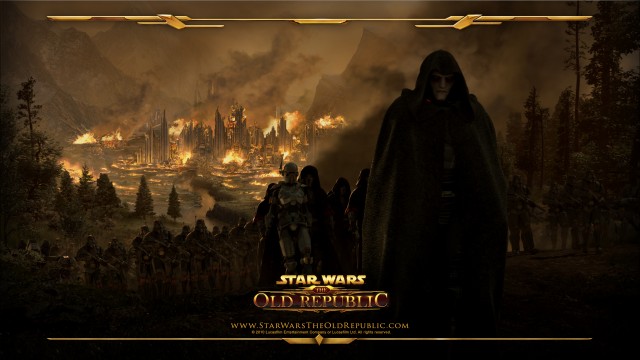
Finally, there is an area of the franchise which has become rather popular of late, and that is the rather fertile period in the Star Wars timeline known as the Sith Wars. What began with the Knights Of The Old Republic series has now evolved into a MMOG with Star Wars: The Old Republic. And even though the reception was not as extreme as LucasArts might have hoped, the stage has certainly been set for a possible second prequel series.

Taking place thousands of years before the events in the first Star Wars trilogy, the Sith Wars chronicles the titanic war which took place between the Old Republic and the Sith Empire. And although there have been several installments in the franchise that carry the name “Sith War”, the expanded universe now claims that the greatest confrontation took place 3681 years before the fall of the Old Republic and lasted until 3653. This war was in turn the result of over 1300 years of preparations and buildup by the Sith, who never forgot the crushing defeat they had suffered at the hands of the Republic during the Great Hyperspace War.

The benefits of this story are also quite obvious. In addition to being a very established story arc, there are plenty of interesting characters, developments and battles in this period which, if properly developed, would result in cinematic gold! What’s more, people do enjoy origins stories which are well told, and after the mixed reviews of the last prequels, a deep-origins story could be just the thing to rehabilitate the franchise. And it’s got all the right elements; Jedi, Sith, lightsaber fights, and a titanic war between good and evil, similar in tone to the war between the Rebel Alliance and the Empire.

What’s more, this story will have no sense of duty to suffer from. Unlike episodes I, II, and III which were burdened by having to explain where all the original characters came from, how Anakin fell to the Dark Side and how the Empire came to be, a Sith War trilogy would be able to tell a story where the details are not entirely pre-written. What’s more, the massive war does not suffer from the ambiguity or the Clone Wars, which seemed like little more than background for the prequels main focus – which was the fall of Anakin Skywalker. This time around, we’d be able to see lots of fighting and not be distracting by a whining Hayden Kristensen complaining about how much his life sucks!

____

So what’s it going to be? Personally, my money is on options two and five. Having read the Thrawn Trilogy and thoroughly enjoyed it, I would certainly pay money to see it adapted to the big screen. At the same time, I’m itching to see some of that Sith War swashbuckling and fleet battles! Man, tough choice, and the studio hasn’t even announced what they might be planning yet…

Star Wars: The Old Republic trailer

As far as the gaming world is concerned, this trailer is old news! But, it’s news to me, and I thought it was pretty darned cool. Not sure how I missed it, since during 2010 I felt I was pretty up on all the news surrounding SWTOR, the third installment in the Knights Of The Old Republic  (or KOTOR, for short) video-game series. Guess not. And of course, when fan reviews began to pour in saying that the game was not all it was cracked up to be, I kind of lost interest.

However, news is beginning to circulate that the KOTOR franchise might actually be the basis for the next Star Wars trilogy. I kid you not, not only is LucasArts deep into deals with Disney to produce the next three installments, there’s also a great deal of speculation as to whether or not they will be sequels or further prequels. But more on that soon enough. Right now, enjoy this video. It’s like Star Wars meets 300 with some Matrix for good measure!

Batman: Nightwing Short

There’s something to be said about short fan videos. Oftentimes, they are of low-quality and really don’t boast a lot of thought or creativity. But every so often, you get something of real value. Star Wars fans have been treated to some rather appealing videos over the years where fans, using their own imaging and rendering software, produced videos of lightsaber fights that weren’t half bad. And more recently, I came across this video which is the first in a proposed series of Batman shorts that were inspired by the original comics.

This one is entitled Batman: Nightwing and follows the exploits of Dick Grayson, the original Robin who went on to become his own superhero after leaving Batman’s side. Here we see him being called in to deal with the Red Hood, a villain in that emerged relatively recently in the franchise who turned about to be Jason Todd, the second Robin. For those who are unfamiliar with the comics, this is the Robin who was murdered by the Joker and then was resurrected, and returned to Gotham as a villain.

Personally, I like the video because it takes two characters who are important in their own right, but rarely the focus in the franchise, and squares them off against each other. There’s also a sense of generational conflict since we basically have the original Robin and his successor fighting, the one who went independent fighting the one who went bad. It just feels appropriate and significant, don’t you think?

The producer, Danny Shepherd, indicated that this video would become part of a series, and that was when it reached its first 100,000 hits. Now, it’s hovering at just over 540,000! Yeah, I’m thinking there’s going to be a sequel or two 😉 Check out the video:

Arcology in Popular Culture

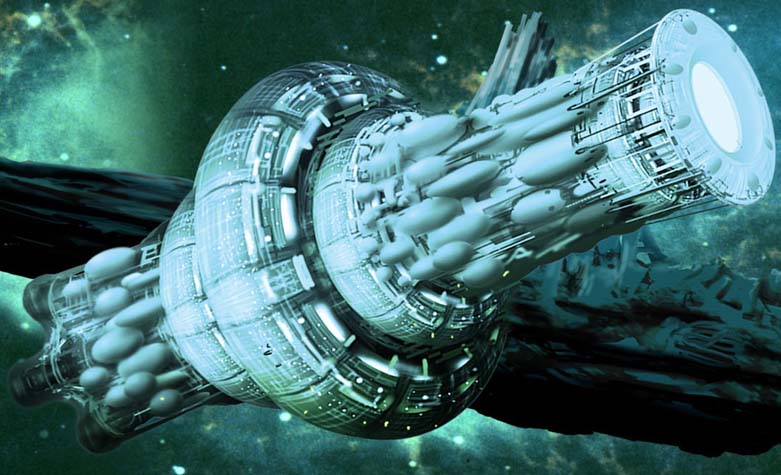
arcologyHello and good evening. Welcome to the third and final installment in my Arcology series, addressing the use of the concept in various popular culture sci-fi franchises. After researching the term and learning all about Paolo Soleri and the concept he created, I’ve come to see that his vision of future cities where the needs of ten of thousands of inhabitants could be met in sustainable ways helped to inspire the a great deal of speculative fiction.

Here are just a few examples that I can recall or have been able to find…

Chi-Town:
Many years ago, some friends of mine came to me with a new RPG by the name of RIFTS. A sort of sci-fi/fantasy crossover, the game was set in a post-apocalyptic world where inter-dimensional gateways, known as “Rifts” had led demons, monsters and mythical creatures into our universe, where they began wreaking havoc. After many years, several new nations emerged, the most powerful of which were the Coalition States, a dictatorship dedicated to fighting the invasion and reestablishing order.

The seat of this government is a large arcological city known as Chi-Town, which was built on the ruins of Old Chicago (hence the name). A self-contained city, the structure is somewhere between a pyramid and a rectangle in terms of shape. And of course, its hierarchical structure mirrors the social divisions at work within. The lower levels are the most densely populated, have the most indigents, and experience the most crime, while the upper levels are more spacious, opulent, and well-maintained.

In addition to being a fortress city and a safe haven for human beings in the ruins of the United States, Chi-Town is also a fitting example of an arcology. Within its walls, all things, including water, air, food and energy, are providing by internal systems and subject to recycling and treatment. Again, the issue of quality is dependent on where someone finds themselves within the structure, but the principle is still the same. In a world that has been devastated and rendered inhospitable, the response was to create a mega-structure that could both shield and provide for its many, many inhabitants.

Coruscant:
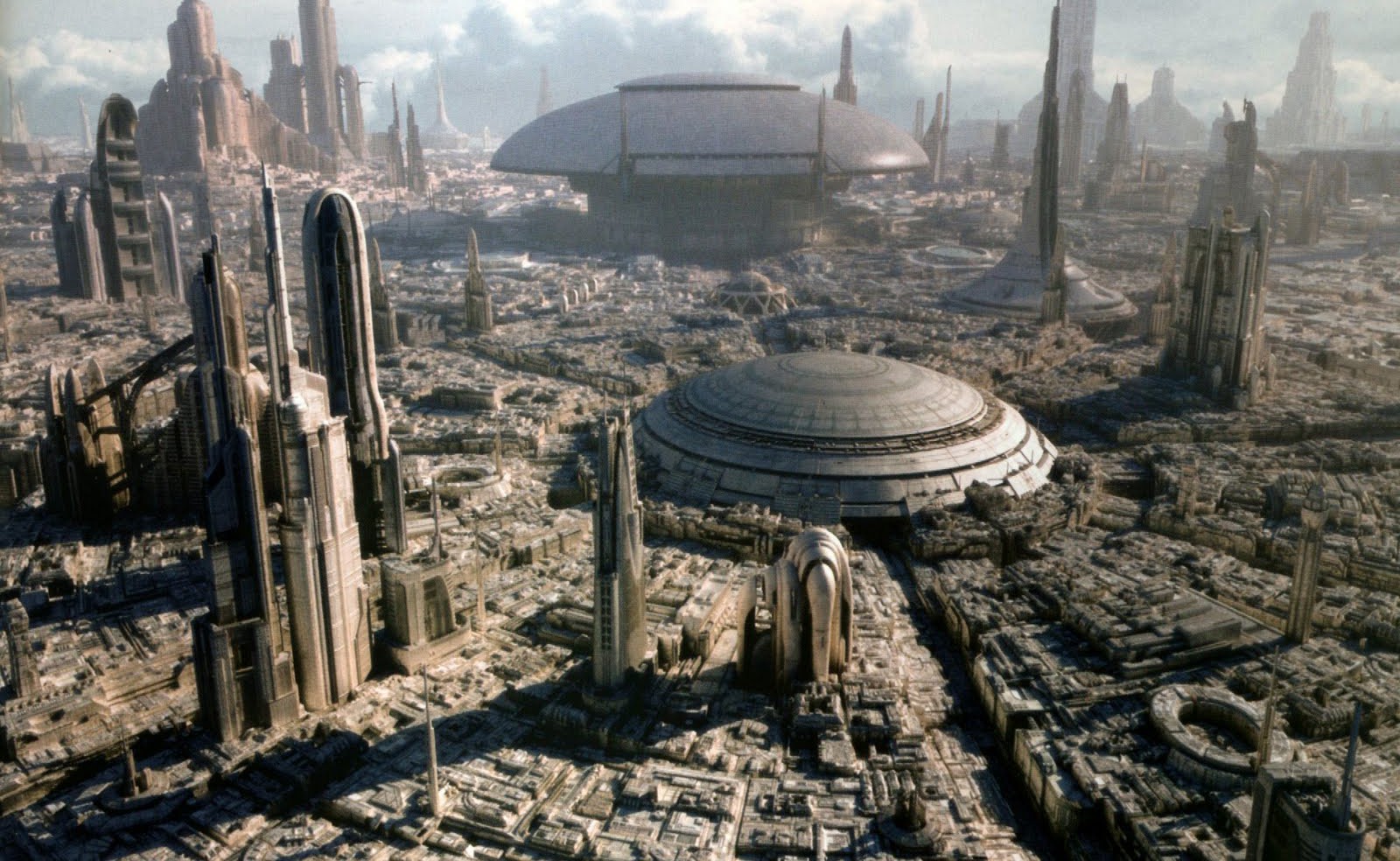
coruscantFans of the Star Wars franchise are certainly familiar with this planet-encompassing city, even before it was featured in the prequel trilogy. As the capitol of the Old Republic, Empire and New Republic, respectively, it has a very long history of habitation, and a very sizable population! As a result, its architects and engineers had to get very creative with the use of space on this planet, and several massive buildings were the result.

In truth, Coruscant was not so much a single city as thousands upon thousands of interconnected arcologies that ran across its surface. These various mega structures measured roughly a kilometer in height, dwarfing even the nearby mountain chains, and housed hundreds of thousands of residents each. In addition, the need to feed and provide for the staggering number of inhabitants required that every structure come equipped with a massive network for recycling water, waste and food.

Officially divided into megablocks and levels, every section of the city had its own means for providing food, water, and manufactured goods. This in turn required the presence of internal systems for processing air, drinking water, food waste, human waste, and industrial waste from its manufacturing warrens. In addition, in the sub-city where natural light did not reach, holograms and artificial lights were also built in to the environment to provide its inhabitants with illumination. In addition, it is also indicated in a number of sources that agricultural operations were housed in various sections and relied on recycled water and either artificial or filtered light.

Though food and waste still required a great deal of shipping and processing, which resulted in a staggering amount of transport traffic, much of the cities needs were taken care of by means of these internal measures. This ensured that the roughly three trillion inhabitants of the planet would never become wholly dependent on outside sources of food and goods, as well as ensuring that pollution and harmful waste wouldn’t accumulate to disastrous levels.

Habitats:
In the works of Peter F. Hamilton, particularly the Night’s Dawn Trilogy, much attention is given to the kinds of futuristic living spaces humanity will someday occupy. For starters, there is planet Earth in this future setting, which is so overrun by human beings that all cities have evolved to become self-contained arcologies. On top of that, there are what’s known as “Habitats”, floating megacities which exist out amongst the stars.

One of the most notable of these is Eden, the first ever habitat to be created, and in orbit around Jupiter. As the closest thing to a capitol in the Edenic culture, it was built using Bitek – aka. Biotechnology – which resulted in a living structure that was psychically linked to its inhabitant through a process known as affinity.

Here, as with other Habitats, the structures are massive, measuring several kilometers in length and width. In addition, each is entirely self-supporting, providing food, water, electricity and artificial gravity to its inhabitants. The latter is created through the rotation of the whole structure around its axis, while a central light tube which runs the length of the station provides light. Food and water are produced via biological processes and are recycled to ensure minimal waste, which in turn is also processed and converted for later use. In addition, interstellar material is frequently intercepted by the habitat and converting into any and all goods which its people require.

Ultimately, the only thing a habitat needs is a supply of external matter which it will use to grow and mature during its formative cycle, and an external power supply to maintain its functions. This is last necessity is provided by a series of external conductor cables which grow on the outer hull of the structure where they are positioned to pick up charges. Due to the rotation, these cables then cross the electromagnetic flux of the nearby gas giant and thus produce electrical energy. All is provided and nothing goes to waste. A true future city!

Urban Monads:
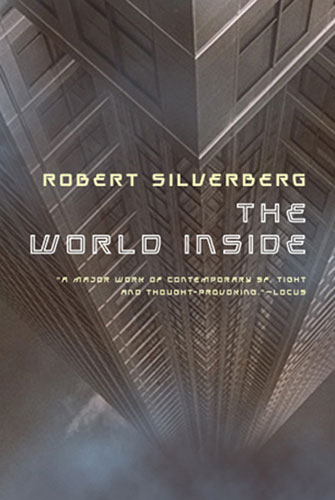
The setting of Robert Silverberg’s fictional study in overpopulation, The World Inside occurs almost entirely within the hyperstructure known as Urban Monad 116. As the name implies, this massive, three-kilometer high city tower is but one of many on the planet, which have become necessary now that war, disease and starvation have been eliminated, but people still continue to procreate without restriction. During the telling of the story, which takes place in 2381, the total population has reached 75 billion.

Much attention is given in the novel to how urban monads (or “Urbmons”) are arranged and meet the needs of their 800,000 respective inhabitants. For starters, groups of these skyscrapers are arranged in “constellations” so that one’s shadow does not fall upon another. Each Urbmon is divided into 25 self-contained “cities” with 40 floors each, in ascending order of status, with administrators occupying the highest level with population and production centers sequestered below.

In order to see to the needs of this rapidly expanding population, all arable land not currently occupied by Urbmons is dedicated to agriculture. However, within the Urbmon communities,  resource management still counts for a lot, with all foods and goods being held in common and the people expected to share them. Beyond that, however, sustainability is not exactly the name of the game, as the right to engage in free expressions and sex and reproduction are considered the highest forms of activity.

Hence, Silverberg’s Monads break a few of the basic rules of arcology, but the basic premise is still there. Designed to house a rapidly expanding population that threatens to overpower the Earth, Urbmons take advantage of the concepts of megastructures and 3-D planning to ensure that every living soul is housed and provided for. Now if they could just stop reproducing so much, they’d be in business!

Tyrell Corp Building:
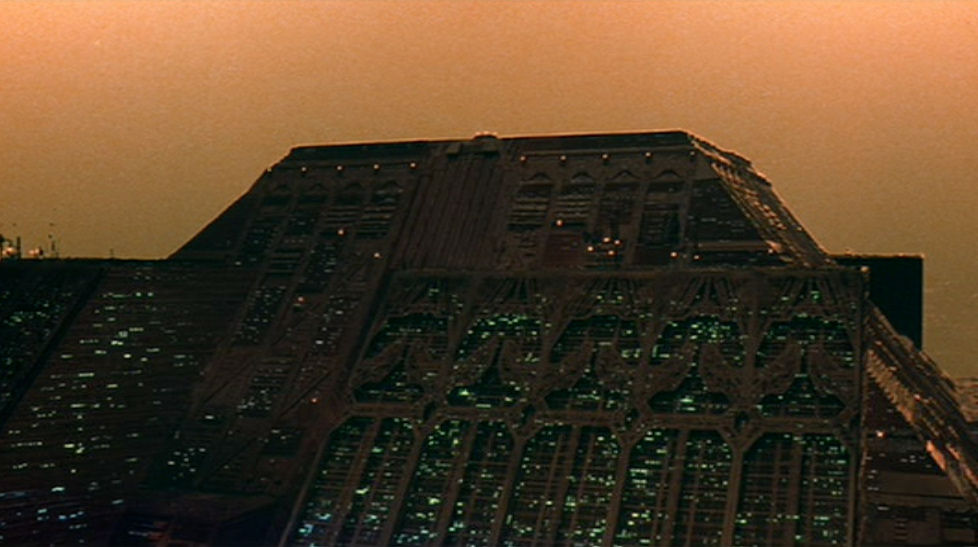
Though not specified as an arcology in the strictest sense, I couldn’t possibly make this list without including the infamous Tyrell Corp building. I mean just look at the thing. Imposing, Gothic, and very, very big! And let’s not forget highly symbolic, as the design, size and scale of the thing was meant to evoke the feeling of awesome power that the corporation held.

Though not much is made clear of what life inside the building is like, it was clear that it was made up of many, many levels and sections, each of which fulfilled a different purpose. At ground level, the building was protected by automated systems which “fried” one of the story’s Nexus 6’s when they tried to break in. Farther up are various industrial areas that are dedicated to the production of the company’s Replicants, as well as office spaces and administrative areas. Another Replicant was detected in one of these sections, right before it shot the man who had detected it – Detective/Blade Runner Holden.

At the apex of the building is the living area for Tyrell and Rachel, the experimental Nexus unit that was modeled on his niece. This level is accessible only by elevator which runs along the outer edge of the building, and can only be accessed by authorized personnel. Here, Tyrell lives amidst opulent surroundings, vast marble floors, stone columns, and even an aviary for his pet owl. Although it is not explicitly said, it appears that Tyrell spends all of his time here, never venturing to the outside city or to another domicile. Hence, we can only assume that all of his needs are seen to here, even if everything he consumes is flown in and all the waste produced is shipped out.

Mega-City One:
judge-dredd-megacity-oneThe setting of the Judge Dredd franchise, Mega-City One is essentially a massive urban sprawl which stretches from the Quebec-Windsor City corridor to the peninsula of Florida in the south, growing out of the Northeast Megalopolis to occupy Southern Ontario the entire Eastern Seaboard. And in addition to stretching so very far and wide, this city is also made up of arcologies in order to see to the needs of its roughly 800 million inhabitants.

These arcologies come in the form of huge apartment blocks which house roughly 50,000 people each. Within each block, citizens are attended to by automated systems which recycle everything, waste, water, and even food. As for manufactured products and consumer goods, these too are largely created in industrial warrens that housed within specific blocks.

This system of every need being handled by automated systems and machines was designed to ensure that the survivors of the nuclear holocaust (aka. The Apocalypse War) would be tended to. However, it had the unwanted side-effect of also leading to rampant unemployment and listlessness amongst the population. This is one of the main reasons why Mega-City One is awash in petty criminals and organized crime syndicates. This, in turn, is what led to the creation of the Judicial System and its army of Street Judges.

Trantor:
Perhaps the first example of a ecumenopolis appearing in fiction, Trantor went on to become a source of inspiration for many science fiction franchises. And according to Asimov, it represented what he believed would be the end result of industrialization and human technology, which was an encapsulated population living in cities that spanned entire planets.

Consisting of buildings that reached deep into the ground and reached several kilometers above sea level, Trantor was home to roughly 45 billion people at the height of the Empire. It’s overall population density was 232 per km², and just about every human being was dedicated to the administration of the Empire or the needs of its population. Though by the time of Foundation, most of the population’s needs were met by importing food and basic necessities from every major planet in the region.

However, according to Prelude to Foundation, Trantor’s basic food needs were once fulfilled by the planet’s vast system of subterranean microorganism farms. Here, yeast and algae were produced as basic nutrients, which were then processed with artificial flavors to create palatable food sources. These farms were tended to entirely by automated robots, but their eventual destruction during an uprising forced the planet to turn to external sources

The Sprawl:
Also known as the Boston-Atlanta-Metropolitan-Axis (or BAMA for short), this mega-city is the setting for the majority of William Gibson’s Sprawl Trilogy. Encompassing the classic cyberpunk tales of Neuromancer, Count Zero, and Mona Lisa Overdrive, the concept of arcology is raised on numerous occasions in reference to the massive apartment blocks that make up the city.

On such building is Barrytown, an arcology in the projects which is the setting for much of the second novel. Throughout the novel, it is indicated that the people here generate their own food, such as the catfish farms that exist near the top of the building. Trees are also grown on specific levels to generate oxygen which is then fed into the building’s air recirculation system. And finally, mentions are made that there are air turbines on the roof of many project buildings which generate electricity for the inhabitants.

Being such a massive, futuristic city, the Sprawl features many such structures, all of which are described as giant skyscrapers that house tens of thousands of people within their tall frames. And ultimately these are all contained beneath the a series of geodesic domes which encapsulate the city and generate peculiar weather patterns consistent with micro-climates. In this way, the BAMA itself is one massive structure, containing hundreds of millions of people under a single roof.

Zion:
The last remaining free city that humanity could still call home, Zion was not a megastructure per se, but nevertheless fit the definition of an arcology to a tee. An underground habitat that was home to roughly 250,000 men, women and children, Zion was the picture perfect representation of a self-contained living space that handled all the needs of its inhabitants internally.

As Councilman Hamann intimated in Matrix Reloaded as he and Neo walked along the Life0-Support Level, all of Zion’s needs are attended to by machines. These provide power, heat, water, and are constantly recirculating and recycling them.  Meanwhile, food seems to be either grown in special hydroponic areas, or synthesized in bio facilities dedicated to that purpose.

In terms of its internal layout, Zion is ovoid in structure and consists of many levels, each with its specific purpose. At the apex rests the Dock, where Zion’s army of hovercrafts are stationed and automated defenses protect against intruders. Beneath that are the Gathering Spaces, where new arrivals who have not yet been assigned permanent quarters are temporarily housed.

The middle section is entirely dedicated to habitation, made up of family quarters, and the Council Chambers which houses Zion’s ruling council. The lower levels consist of the Meeting Hall, Life-Support Level, and Geo-Thermal Generation, where the cities power and heat are supplied from. At the very bottom lies the Temple, a large cavern where religious gatherings are held and people gather to hold celebrations and mourn the dead. This area also serves as a last defensive position in the event that the automated defenses were destroyed and the Dock overrun. This of course became the case in Matrix: Revolutions when the machines attacked Zion and nearly destroyed it.

___

What did I tell ya? Clearly, the idea has made the rounds since Soleri’s time. And in all likelihood, we are sure to see the concept popping up more and more as the problems of overpopulation and environmental impact become more acutely felt. There are some who might express disgust and even fear at the idea of living an encapsulated existence, but given the growing need for sustainability and places to put people, will we really have a choice? One can only hope!

Favorite Cult Classics (Part The First)

It might be that I’m feeling nostalgic, or it might be that since my wife and I sprung for Netflix, I’ve been finding my way back to several of my favorite old movies. Hard to say exactly. All I know for sure is, I want to talk about the cult classic movies that I like best. You know what I’m talking about! Those rare gems, those diamonds in the rough, the movies that few seem to know about, but those who do always seem to love.

Yes, THOSE movies! Sure, we’ve all seen plenty of big hits, but these movies are the ones that occupy a special place in our hearts. Perhaps it’s because they are not so widely known, like the Star Wars’ and and Indiana Jones‘ of our time. Perhaps it’s because they didn’t get the recognition or the money they deserved, at least in their own time. Or it could be that they were simply the kind of things that got better with time.

In any case, I’ve compiled a list of my top 10 favorite cult classics, movies which I saw during my childhood, teen years and even in my twenties, and keep coming back too. Some were adventurous, some were funny, some were downright cheesy. But all have two things in common: One, none of them are known beyond a select group of appreciators, at least in this country. And two, those who like them, like them a lot! Check out the list below and see if you agree, and feel free to tell me your own favorites as well. I know we all got em!

Akira:
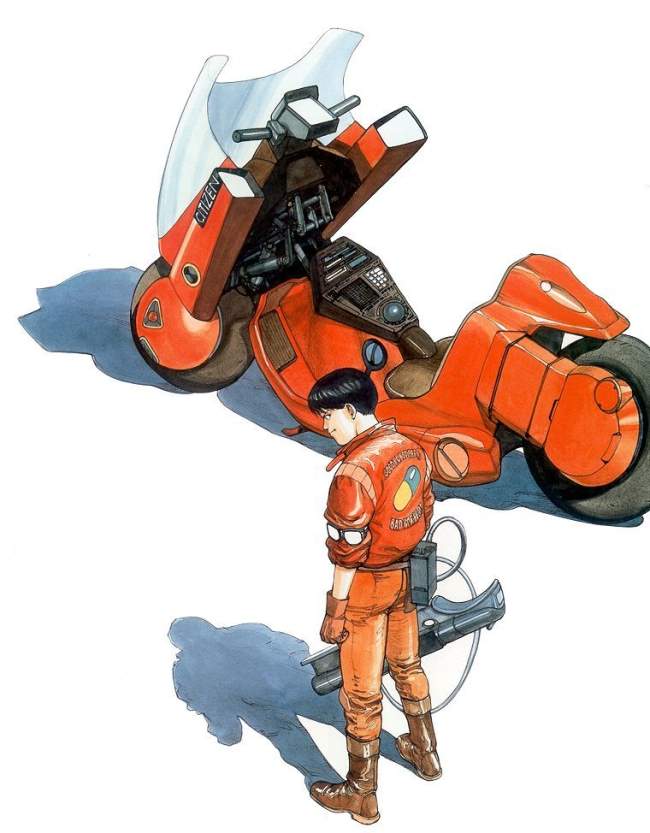
One of the greatest animes I have ever seen, and with a very poignant and intriguing story to boot, Akira starts this list off right! The movie adapted several volumes of manga to screen, and did so in such a way that didn’t skimp on either story or detail. Even shortened, the plot still manages to convey the sense of awe and dread of atomic war, revolution, and evolutionary cataclysm. And the fact that the bulk of it is told from the point of view of disillusioned orphans who are all part of a bier gang only heightens the sense on confusion and angst of little people being thrown into situations far greater than they can handle.

And then there was the quality of the movie itself. Having seen this movie several times now and different versions thereof, I can tell you that no matter what the format, every single frame was animated in such a way as to be saturated. And not with digital effects, mind you, but with hand-drawn animations that really manage to capture the post apocalyptic and cyberpunk feel of Katsuhiro Otomo’s original graphic novel.

All in all, I consider this movie to be compatible in many respects to 2001: A Space Odyssey in that they both deal with grandiose of questions of existence, biological evolution, and both managed to blow my mind! And having first been exposed to both of them in my teen years, they are partly responsible for kindling my love of science fiction.

Army of Darkness:
Here’s a movie I kept being told to see, but did not get around to seeing until I was in university. And truth be told, it took me two viewings to really get the appeal of it. After that, it grew on me until I finally found myself thinking it hilarious, and quoting from it whenever I could. “Come get some!” “Groovy!” “This be my BOOMSTICK!” and “Good? Bad? I’m the one with the gun!” All classic lines!

Yeah, this movie is definitely filed in the guilty pleasure section, the space reserved for movies that are deliberately cheesy, over the top, and have a robust sense of humor about themselves. It’s also one of the many that gave Sam Raimi (director of the Spiderman trilogy) his start, and established Bruce Campbell (who appeared in all three) as a gifted ham actor.

Taking the position that decapitations and flesh-eating demons can be funny, this movie tells the story of a blue-collar, rough and tumble, one-liner spouting man named Ash who’s been sent back in time to fight an army of the undead. Automatically, hijinks ensue as he tries to convince people he’s not a demon himself, but instead chooses to establish who’s boss by demonstrating the power of his chainsaw and “boomstick” (aka. his sawed-off double-barrel shotgun).

But predictably, this anti-hero rises to the challenge and becomes a real hero, and does so with as little grace as possible! And of course, there’s a love story as well, which is similarly graceless thanks to Ash’s lowbrow romantic sensibilities. Nothing is left untouched by the ham and cheese! And all throughout, the gun fights, duels, and confrontations with creepy, evil forces are hilarious, made possible by Campbell’s hammy acting, facial expressions, one-liners and some wonderfully bad cinematography. Think Xena: Warrior Princess, but with guns and foul language!

Blade Runner:
Another personal favorite, and one which I wish I had come to know sooner. But lucky for me I was still a teen when I saw this movie, hence I can say that I saw it while still in my formative years. And today, years later, I still find myself appreciating it and loving it as one can only love a cult hit. It’s just that kind of movie which you can enjoy over and over again, finding new things to notice and appreciate each time.

And once again, my appreciation for this movie is due to two undeniable aspects. On the one hand, Ridley Scott created a very rich and detailed setting, a Los Angeles of the 21st century dominated by megastructures, urban sprawl, pollution and polarized wealth. It was the picture perfect setting of cyberpunk, combining high-tech and low-life.

On the other hand, there was the story. Loosely adapted from PKD’s Do Androids Dream of Electric Sheep?, this version of a future differed greatly in that the artificial humans, the antagonists of the original story, were about the only sympathetic characters in the story. The result was not a cautionary tale on the dangers of creating life in our own image as much as a commentary about the line between the artificial and the real.

The question it asked was: if you overcome all boundaries, if machines possess memory, feelings and a fear of death, is there anything at all to separate them from the rest of us? Will their lives be worth any less than ours, and what will it even mean to be alive?

Conan The Barbarian:
Here’s a movie which has appeared in some friends “guilty pleasure” list, usually next to Predator, Commando and other Anrie classics. But I am here today to tell you it really doesn’t belong. Unlike many 80’s Arnie movies that were so bad, they were good, this movie had some genuine quality and depth to it.

Examples? Well, for starters, this movie was a faithful adaptation of Robert E. Howard’s original concept, Conan the Cimmerian, which was first published in 1932. This franchise, which went through countless adaptations over the ensuing decades, wove real history and myth together with fantasy to create a tale of a bronze age adventurer who traveled across the ancient world, seeking fortune and glory.

One can see this in the movie as well. To create the setting and the various people that make up the universe, imagery, mythology and even names were borrowed from various real sources. For example, the Cimmerians (Conan’s people) were inspired by Celtic and Norse sources. The followers of Thulsa Doom, black-clad warriors from the East, were meant to resemble the Huns, the Goths, and other Eastern invaders. There are also several scenes showing a warlike people meant to resemble the Mongol Hoards, and much of the setting was made to resemble ancient cities of lore – Babylon, Jerusalem, Antioch, et al.

Add to all this some pretty damn good writing and good storytelling, and you can see why this movie has remained enduringly popular with many people over the years. Arnie excelled as the stone-faced barbarian of few words, but who made them count when he chose to spoke. James Earl Jones was exceptional as the amoral, Nietzschean warlord Thulsa Doom, and the production value was surprisingly good for a low-budget flick.

Serenity:
Yeah, I get the feeling everybody knows what I’m talking about with this one! After losing the wonderful show in the midst of its first season, every fan of Firefly was pleased to know that Joss Whedon would be making a full length movie. And personally, I th0ught he did a pretty good job with it too!

Picking up where the show left off, we are reunited with our favorite characters as they continue to work freelance jobs and try to stay one step ahead of the law and the expanding Alliance. From the outset, it is clear that things are getting desperate, as the jobs are proving more risky, and the Reavers are moving in from the Outer Rim. At the same time, a new threat has been thrown in in the form of an Alliance agent known only as the “Operative”, who has made it his business to bring River in at any cost.

And I personally loved how all these threads came together in a singular way, showing how the Reavers, River’s condition, and the Alliance’s ultimate agenda were all connected. Not only was it a tight and entertaining plot that captured the same sense of loss and desperation as the show, it also gave a sense of closure to the series, which ended before its time.

Yes, for myself and many fans, this movie is a way of commemorating a truly great show and idea that faltered because of insensitive boobs couldn’t see the value in it. But that seemed thematically consistent with the series itself, which was all about rebels in a hopeless fight against an evil empire. Take a lesson from this Fox Network, sooner or late,r the bad guys lose!

___

For brevity’s sake and the fact that I’m a busy man, I’ve decided to divide this list in half. Stay tuned for entries six through ten, coming up tomorrow! Happy Thanksgiving y’all!

The Legged Squad Support System

Ever since man began killing man in an organized fashion – i.e. the rise of armies –  political and military leaders have struggled with the problem of how to keep them supplied. As Napoleon himself stated in the early 19th century, “An army marches on its stomach”. Since his time, things have not improved drastically. Even with the advent of the steam train, trucks and airplanes, a fully-loaded soldier must still carry upwards of 90 lbs of equipment on their backs. Not an easy task, especially when marching through particularly hot, wet, or rugged terrain.

Well it just so happens that DARPA and the United States Marine Corps might be in possession of something that can help real soon. A few years back, they awarded a contract to an engineering firm named Boston Dynamics to develop a prototype for Darpa’s Legged Squad Support System (LS3). This system calls for a walking quadruped robot that will augment squads by being able to carry equipment autonomously over the kinds of complex terrain where traditional tactical vehicles can’t go.

The walker will reportedly be able to carry a payload of 40o pounds over as much as 20 miles and provide 24 hours of self-sustained capability. In addition, it requires no drivers or remote controllers, since it will be fitted with remote sensors that will allow it to follow the team leader, and a GPS so it can travel to predesignated coordinates. Already, the prototype LS3 has taken its first steps, and the USMC hopes to have some in the field sometime this decade.

One has to wonder… is the beginning of AT-AT walkers and other Star Wars stuff? If so, then I’m thinking we might just be seeing some prototypes for hover cars and lightsabers very soon. Like many fanboys, I was a little kid when the originals came out. Now, like them, I’m in my thirties and thinking I’ve waited long enough! Check out the video below to see the LS3 in action:

Religion in Sci-Fi

Since its inception as a literary genre, religion has played an important role in science fiction. Whether it took the form of informing the author’s own beliefs, or was delivered as part of their particular brand of social commentary, no work of sci-fi has ever been bereft of spirituality.Even self-professed atheists and materialists had something to say about religion, the soul and the concept of the divine, even if it was merely to deny its existence.

And so, I thought it might make for an interesting conceptual post to see exactly what some of history’s greats believed and how they worked it into their body of literature. As always, I can’t include everybody, but I sure as hell can include anyone who’s books I’ve read and beliefs I’ve come to know. And where ignorance presides, I shall attempt to illuminate myself on the subject. Okay, here goes!

Alastair Reynolds:
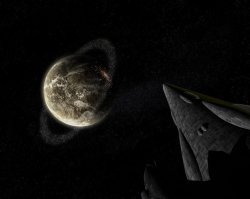
Despite being a relative newby to the field of sci-fi authors, Reynolds has established a reputation for hard science and grand ideas with his novels. And while not much information exists on his overall beliefs, be they religious or secular, many indications found their way into his books that would suggest he carries a rather ambiguous view of spirituality.

Within the Revelation Space universe, where most of his writing takes place, there are many mentions of a biotechnological weapon known as the “Indoctrination Virus”. This is an invasive program which essentially converts an individual to any number of sectarian ideologies by permeating their consciousness with visions of God, the Cross, or other religious iconography.

In Chasm City, these viruses are shown to be quite common on the world of Sky’s Edge, where religious sects use them to convert people to the official faith of the planet that claims Sky Haussmann was a prophet who was unfairly crucified for his actions. In Absolution Gap, they also form the basis of a society that populates an alien world known as Hela. Here, a theocratic state was built around a man named Quaiche, who while near death watched the moon’s gas giant disappear for a fraction of a second.

Unsure if this was the result of a strain he carries, he created a mobile community that travels the surface of the planet and watches the gas giant at all times using mirrors and reclining beds, so that they are looking heavenward at all times. Over the years, this community grew and expanded and became a mobile city, with each “believer” taking on transfusions of his blood so they could contract the the strain that converted him and allowed him to witness all that he did.

While this would indicate that Reynolds holds a somewhat dim view of religion, he leaves plenty of room for the opposite take. All throughout his works, the idea of preserving one’s humanity in a universe permeated by post-mortal, post-human, cybernetic beings remains a constant. In addition, as things get increasingly dark and the destruction of our race seems imminent, individual gestures of humanity are seem as capable of redeeming and even saving humanity as a species.

In fact, the names of the original trilogy allude to this: Revelation Space, Redemption Ark, Absolution Gap. Like with everything else in his books, Reynold’s seems to prefer to take a sort of middling approach, showing humanity as an ambiguous species rather than an inherently noble one or foul one. Religion, since it is a decidedly human practice, can only be seen as ambiguous as well.

Arthur C. Clarke:
At once a great futurist and technologist, Clarke was nevertheless a man who claimed to be endlessly fascinated with the concept of God and transcendence. When interviews on the subjects of his beliefs, he claimed that he was “fascinated by the concept of God.” During another interview, he claimed that he believed that “Any path to knowledge is a path to God—or Reality, whichever word one prefers to use.”

However, these views came to change over time, leading many to wonder what the beliefs of this famed author really were. At once disenchanted with organized religion, he often found himself subscribing to various alternative beliefs systems. At other times, he insisting he was an atheist, and nearing the end of his life, even went so far as to say that he did not want religious ceremonies of any kind at his funeral.

Nowhere were these paradoxical views made more clear than in his work. For example, in 2001: A Space Odyssey, the theme of transcendence, of growing to the point of becoming god-like, is central. Early hominid’s evolution into humanity is seen as the direct result of tampering by higher forces, aliens which are so ancient and evolved that they are virtually indistinguishable from gods. Throughout the series, human beings get a taste of this as they merge with the alien intelligence, becoming masters of their own universe and godlike themselves.

In the last book of the series – 3001: Final Odyssey, which Clarke wrote shortly before his death – Clarke describes a future where the Church goes the way of Soviet Communism. Theorizing that in the 21st century a reformist Pope would emerge who would choose to follow a similar policy as Gorbachev (“Glasnost”) and open the Vatican archives, Clarke felt that Christianity would die a natural death and have to be replaced by something else altogether. Thereafter, a sort of universal faith built around an open concept of God (called Deus) was created. By 3001, when the story is taking place, people look back at Christianity as a primitive necessity, but one which became useless by the modern age.

So, in a way, Clarke was like many Futurists and thoroughgoing empiricists, in that he deplored religion for its excesses and abuses, but seemed open to the idea of a cosmic creator at times in his life. And, when pressed, he would say that his personal pursuit for truth and ultimate reality was identical to the search for a search God, even if it went by a different name.

Frank Herbert:
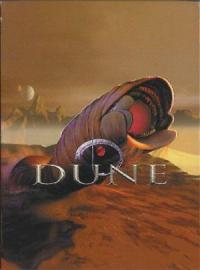
Frank Herbert is known for being the man who taught people how to take science fiction seriously all over again. One of the reasons he was so successful in this regard was because of the way he worked the central role played by religion on human culture and consciousness into every book he ever wrote. Whether it was the Lazarus Effect, the Jesus Incident, or the seminal Dune, which addresses the danger of prophecies and messiahs, Frank clearly believed that the divine was something humanity was not destined to outgrow.

And nowhere was this made more clear than in the Dune saga. In the very first novel, it is established that humanity lives in a galaxy-spanning empire, and that the codes governing technological progress are the result of a “jihad” which took place thousands of years ago. This war was waged against thinking machines and all other forms of machinery that threatened to usurp humanity’s sense of identity and creativity, resulting in the religious proscription “Thou shalt not make a machine in the likeness of a human mind.”

Several millennium later, the Bene Gesserit Sisterhood, a quasi-religious matriarchal society, are conspiring to create a messianic figure in the form of the Kwisatz Haderach. The name itself derives from the Hebrew term “Kefitzat Haderech” (literally: “The Way’s Jump”), a Kabbalic term related to teleportation. However, in this case, the name refers to the individual’s absolute prescience, the ability to jump through time in their mind’s eye. In preparation for the arrival of this being, they have been using their missionaries to spread messiah legends all over the known universe, hoping that people will respond to the arrival of their superbeing as if he were a messianic figure.

When the main character, Paul Atreides – the product of Bene Gesserit’s breeding program – arrives on the planet Arrakis, where his family is betrayed and killed, he and his mother become refugees amongst the native Fremen. They are one such people who have been prepped for his arrival, and wonder if he is in fact the one who will set them free. In order to survive, Paul takes on this role and begins to lead the Fremen as a religious leader. All along, he contends with the fear that in so doing, he will be unleashing forces he cannot control, a price which seems too high just to ensure that he and his mother survive and avenge themselves on their betrayers.

However, in the end, he comes to see that this is necessary. His prescience and inner awareness reveal to him that his concepts of morality are short-sighted, failing to take into account the need for renewal through conflict and war. And in the end, this is exactly what happens.By assuming the role of the Kwisatz Haderach, and the Fremen’s Mahdi, he defeats the Emperor and the Harkonnens and becomes the Emperor of the known universe. A series of crusades followers as his followers go out into the universe to subdue all rebellion to his rule and spread their new faith. Arrakis not only becomes the seat of power, but the spiritual capital of the universe, with people coming far and wide to see their new ruler and prophet.

As the series continues, Paul chooses to sacrifice himself in order to put an end to the cult of worship that has come of his actions. He wanders off into the desert, leaving his sister Alia to rule as Regent. As his children come of age, his son, Leto II, realizes the follies of his father and must make a similar choice as he did. Granted, assuming the role of a God is fraught with peril, but in order to truly awaken humanity from its sleep and prepare it for the future, he must go all the way and become a living God. Thus, he merges with the Sandworm, achieving a sort of quasi-immortality and invincibility.

After 3500 of absolute rule, he conspires in a plot to destroy himself and dies, leaving a huge, terrible, but ultimately noble legacy that people spend the next 1500 years combing through. When they come to the point of realizing what Leto II was preparing them for, they come to see the wisdom in his three and half millennia of tyranny. By becoming a living God, by manipulating the universe through his absolute prescience, he was preparing humanity for the day when they would be able to live without Gods. Like the Bene Gesserit, who became his chosen after the fact, he was conspiring to create “mature humanity”, a race of people who could work out their fates moment by moment and not be slaved to prophecies or messiahs.

As you can see, the commentary ran very deep. At once, Herbert seemed to be saying that humanity would never outlive the need for religion, but at the same time, that our survival might someday require us to break our dependency on it. Much like his critique on rational thought, democracy and all other forms of ideology, he seemed to be suggesting that the path to true wisdom and independence lay in cultivating a holistic awareness, one which viewed the universe not through a single lens, but as a multifaceted whole, and which was really nothing more than a projection of ourselves.

For those seeking clarity, that’s about as clear as it gets. As Herbert made very clear through the collection of his works, religion was something that he was very fascinated with, especially the more esoteric and mystical sects – such as Kaballah, Sufism, Zen Buddhism and the like. This was appropriate since he was never a man who gave answers easily, preferring to reflect on the mystery rather than trying to contain it with imperfect thoughts. Leto II said something very similar to this towards the end of God Emperor of Dune; as he lay dying he cautions Duncan and Siona against attempts to dispel the mystery, since all he ever tried to do was increase it. I interpreted this to be a testament of Frank’s own beliefs, which still inspire me to this day!

Gene Roddenberry:
For years, I often found myself wondering what Roddenberry’s take on organized religion, spirituality, and the divine were. Like most things pertaining to Star Trek, he seemed to prefer taking the open and inclusive approach, ruling nothing out, but not endorsing anything too strongly either. Whenever religion entered into the storyline, it seemed to take the form of an alien race who’s social structure was meant to resemble something out of Earth’s past. As always, their was a point to be made, namely how bad things used to be!

Behind the scenes, however, Roddenberry was a little more open about his stance. According to various pieces of biographical info, he considered himself a humanist and agnostic, and wanted to create a show where none of his characters had any religious beliefs. If anything, the people of the future were pure rationalists who viewed religion as something more primitive, even if they didn’t openly say so.

However, this did not prevent the subject of religion from coming up throughout the series. In the original, the crew discovers planets where religious practices are done that resemble something out of Earth’s past. In the episode “Bread and Circuses”, they arrive on a planet that resembles ancient Rome, complete with gladiatorial fights, Pro-Consuls, and a growing religion which worships the “Son”, aka. a Jesus-like figure. This last element is apparently on the rise, and is advocating peace and an end to the cultures violent ways. In “Who Mourns Adonais”, the crew are taken captive by a powerful alien that claims to be Apollo, and who was in fact the true inspiration for the Greek god. After neutralizing him and escaping from the planet, Apollo laments that the universe has outgrown the need for gods.

In the newer series, several similar stories are told. In the season one episode entitled “Justice”, they come Edenic world where the people live a seemingly free and happy existence. However, it is soon revealed that their penal code involves death for the most minor of infractions, one which was handed down by “God”. This being is essentially an alien presence that lives in orbit and watches over the people. When the Enterprise tries to rescue Wesley, who is condemned to die, the being interferes. Picard gains its acquiescence by stating “there can be no justice in absolutes”, and they leave. In a third season episode entitled “Who Watches the Watchers”, Picard becomes a deity to the people of a primitive world when the crew saves one of their inhabitants from death. In an effort to avoid tampering with their culture, he lands and convinces him of his mortality, and explains that progress, not divine power, is the basis of their advanced nature.

These are but a few examples, but they do indicate a general trend. Whereas Roddenberry assiduously avoided proselytizing his own beliefs in the series, he was sure to indicate the ill effects religion can have on culture. In just about every instance, it is seen as the source of intolerance, injustice, irrationality, and crimes against humanity and nature. But of course, the various crews of the Enterprise and Starfleet do not interfere where they can help it, for this is seen as something that all species must pass through on the road to realizing their true potential.

George Lucas:
Whereas many singers of space opera and science fiction provided various commentaries on religion in their works, Lucas was somewhat unique in that he worked his directly into the plot. Much like everything else in his stories, no direct lines are established with the world of today, or its institutions. Instead, he chose to create a universe that was entirely fictional and fantastic, with its own beliefs, conflicts, institutions and political entities. But of course, the commentary on today was still evident, after a fashion.

In the Star Wars universe,religion (if it could be called that) revolves around “The Force”. As Obi-Wan described it in the original movie “It is an energy field created by all living things. It surrounds us and penetrates us. It binds the galaxy together.” In Empire, Yoda goes a step farther when he says “Life creates it, makes it grow. Its energy surrounds us and binds us. Luminous beings are we, not this crude matter.”Sounds rather pantheistic, doesn’t it? The idea that all life emits an essence, and that the fate of all living things is bound together in a sort of interdependency.

What’s more, the way the Force was governed by a Light Side and a Dark Side; here Lucas appeared to be relying on some decidely Judea-Christian elements. Luke’s father, for example, is a picture perfect representation of The Fall, a Faustian man who sold his soul for power and avarice. The way he and the Emperor continually try to turn Luke by dangling its benefits under his nose is further evidence of this. And in the end, the way Darth Vader is redeemed, and how he is willing to sacrifice himself to save his son, calls to mind the crucifixion.

In the prequels, things got even more blatant. Whereas Anakin was seen as a sort of Lucifer in the originals, here he became the prodigal son. Conceived by the “Will of the Force”, i.e. an immaculate conception, he was seen by Qui Gonn as “The Chosen One” who’s arrival was foretold in prophecy. The Jedi Council feared him, which is not dissimilar to how the Pharisees and Sanhedrin reacted to the presence of Jesus (according to Scripture). And of course, the way Anakin’s potential and powers became a source of temptation for him, this too was a call-back to the Lucifer angle from the first films.

All of this was in keeping with Lucas’ fascination with cultural mythos and legends. Many times over, Lucas was rather deliberate in the way he worked cultural references – either visually or allegorically – into his stories. The lightsaber fights and Jedi ethos were derived from medieval Europe and Japan, the architecture and many of the costumes called to mind ancient Greece, Rome and Byzantium, the setting and gun fights were regularly taken from Old Westerns, and the Imperial getup and rise to power of the Emperor were made to resemble Nazi Germany.

However, Lucas also dispelled much of the mystery and pseudo-religious and spiritual quality of his work by introducing the concept of the “midi-chlorians”. This is something I cannot skip, since it produced a hell of a lot of angst from the fan community and confounded much of what he said in the original films. Whereas the Force was seen as a mystic and ethereal thing in the originals, in the prequels, Lucas sought to explain the nature of it by ascribing it to microscopic bacteria which are present in all living things.

Perhaps he thought it would be cool to explain just how this semi-spiritual power worked, in empirical terms. In that, he failed miserably! Not only did this deprive his franchise of something truly mysterious and mystical, it also did not advance the “science” of the Force one inch. Within this explanation, the Force is still a power which resides in all living things, its just these microscopic bacteria which seem to allow people to interact with it. Like most fans, I see this as something superfluous which we were all better off without!

H.G. Wells:
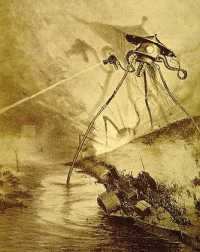
Prior to men like Herbert and the “Big Three” (Asimov, Clarke, and Robert A. Heinlein), Wells was the master of science fiction. Since his time, during which he published a staggering amount of novels, short-stories and essays, his influence and commentaries have had immense influence. And when it came to matters of faith and the divine, Well’s was similarly influential, being one of the first sci-fi writers to espouse a sort of “elemental Christian” belief, or a sort of non-denominational acceptance for religion.

These beliefs he outlined in his non-fiction work entitled God the Invisible King, where he professed a belief in a personal and intimate God that did not draw on any particular belief system. He defined this in more specific terms later in the work,  aligning himself with a “renascent or modern religion … neither atheist nor Buddhist nor Mohammedan nor Christian … [that] he has found growing up in himself”.

When it came to traditional religions, however, Wells was clearly of the belief that they had served their purpose, but were not meant to endure. In The Shape of Things to Come, he envisioned the creation of a global state (similar to Zamyatin’s “One State” and Huxley’s “World State”), where scientific progress was emphasized and all religions suppressed. This he saw as intrinsic to mankind’s progress towards a modern utopia, based on reason and enlightenment and the end of war.

In War of the Worlds, a similar interpretation is made. In this apocalyptic novel, one of the main characters is a clergyman who interprets the invasion of the Martians as divine retribution. However, this only seems to illustrate his mentally instability, and his rantings about “the end of the world” are ultimately what lead to his death at the hands of the aliens. Seen in this light, the clergyman could be interpreted as a symbol of mankind’s primitive past, something which is necessarily culled in the wake of the invasion my a far more advanced force. And, as some are quick to point out, the Martians are ultimately defeated by biology (i.e. microscopic germs) rather than any form of intervention from on high.

Isaac Asimov:
Much like his “Big Three” colleague Clarke, Asimov was a committed rationalist, atheist and humanist. Though he was born to Jewish parents who observed the faith, he did not practice Judaism and did not espouse a particular belief in God. Nevertheless, he continued to identify himself as a Jew throughout his life. In addition, as he would demonstrate throughout his writings, he was not averse to religious convictions in others, and was even willing to write on the subject of religion for the sake of philosophical and historical education.

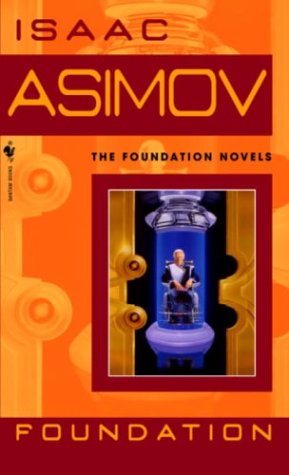
His writings were indicative of this, particularly in the Foundation and I, Robot series. In the former, Asimov shows how the Foundation scientists use religion in order to achieve a degree of influential amongst the less-advanced kingdoms that border their world, in effect becoming a sort of technological priesthood. This works to their advantage when the regent of Anacreon attempts to invade Terminus and ends up with a full-scale coup on his hands.

In the Robot series, Asimov includes a very interesting chapter entitled “Reason”, in which a robot comes to invent its own religion. Named QT1 (aka. “Cutie”) this robot possesses high-reasoning capabilities and runs a space station that provides power to Earth. It concludes that the stars, space, and the planets don’t really exist, and that the power source of the ship is in fact God and the source of its creation.

Naturally, the humans who arrive on the station attempt to reason with Cutie, but to no avail. It has managed to convert the other robots, and maintains the place in good order as a sort of temple. However, the human engineers conclude that since its beliefs do not conflict with the smooth running of the facility, that they should not attempt to counterman it’s belief system.

What’s more, in a later story entitled “Escape!” Asimov presents readers with a view of the afterlife. After developing a spaceship that incorporates an FTL engine (known as the hyperspatial drive), a crew of humans take it into space and perform a successful jump. For a few seconds, they experience odd and disturbing visions before returning safely home. They realize that the jump causes people to cease exist, effectively dying, which is a violation of the Three Laws, hence why previous AI’s were incapable of completing the drive.

Taken together, these sources would seem to illustrate that Asimov was a man who saw the uses of religion, and was even fascinated by it at times, but did not have much of a use for it. But as long as it was not abused or impinged upon the rights or beliefs of others, he was willing to let sleeping dogs lie.

Philip K. Dick:
Naturally, every crowd of great artists has its oddball, and that’s where PKD comes in! In addition to being a heavy user of drugs and a fan of altered mental states, he also had some rather weird ideas when it came to religion. These were in part the result of a series of religious experiences he underwent which began for him in 1974 while recovering from dental surgery. They were also an expresion of his gnostic beliefs, which held that God is a higher intelligence which the human mind can make contact with, given the right circumstances.

Of Dick’s hallucinations, the first incident apparently occurred when a beautiful Christian woman made a delivery to his door and he was mesmerized by the light reflecting off of her fish pendant, which he claimed imparted wisdom and clairvoyance. Thereafter, Dick began to experience numerous hallucinations, and began to rule out medication as a cause. Initially, they took the form of geometric patterns, but began to include visions of Jesus and ancient Rome as well. Dick documented and discussed these experiences and how they shaped his views on faith in a private journal, which was later published as The Exegesis of Philip K. Dick.

As he stated in his journal, he began to feel that his hallucinations were the result of a greater mind making contact with his own, which he referred to as the “transcendentally rational mind”, “Zebra”, “God” and “VALIS” (vast active living intelligence system). Much of these experiences would provide the inspiration for his VALIS Trilogy, a series that deals with the concept of visions, our notions of God and transcendent beings.

In addition, many of Dick’s hallucinations took on a decidedly Judea-Christian character. For instance, at one point he became convinced that he was living two parallel lives; one as himself, and another as “Thomas” – a Christian persecuted by Romans in the 1st century AD. At another point, Dick felt that he had been taken over by the spirit of the prophet Elijah. These experiences would lead him to adapt certain Biblical elements into his work, a prime example being a chapter in Flow My Tears, the Policeman Said, which bore a striking resemblance to the a story from the Biblical Book of Acts, which Dick claimed to never have read.

All of this is a testament to the rather profound (and possibly nuts!) mind of PKD and his fascination with all things divine and spiritual. Though not a man of faith in the traditional sense, he was very much a part of the counter-culture in his day and experimented with drugs and alternative religious beliefs quite freely. And while most of his ideas were dismissed as outlandish and the result of drug abuse, there were many (Robert A Heinlein included) who saw past that to the creative and rather gifted artistic soul within. It is therefore considered a tragedy that PKD died in relative obscurity, having never witnessed how much of an impact and influence he would have on science fiction and modern literature.

Ray Bradbury:
Next up, we have the late great Ray Bradbury, a science fiction writer for whom all literature was of immense import. This included the Bible, the Tanakh, the Koran, and just about any other religious text ever written by man. What’s more, many of his works contain passages which would seem to indicate that Bradbury held religion in high esteem, and even believed it to be compatible (or at least not mutually exclusive) with science.

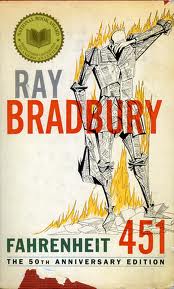
For example, in his seminal novel Fahrenheit 451, one of the most precious volumes being protected by the character of Faber, a former English professor, is the Bible itself. When Montag confronts him and begins ripping the pages out of it, Faber tells him that it is one of the last remaining copies in the world that actually contains God’s words, instead of the newer versions which contain product placements.

As the story progresses and World War III finally comes, Montag joins Faber and a community of exiles, all of whom are responsible for “becoming a book” by memorizing it. In this way, they hope to preserve whatever literature they can until such a time as civilization and the art of writing re-emerges. Montag is charged with memorizing the Book of Ecclesiastes, and joins the exiles on their journey.

In the Martian Chronicles, Bradbury is even more clear on his stance vis a vis religion. In the short story “-And the Moon Be Still as Bright”, the Fourth Expedition arrives on Mars to find that the majority of the Martians have died from chickenpox. A disillusioned character named Jeff Spender then spends much time in the alien ruins and comes to praise the Martians for how their culture combined religion and science.

Humanity’s big mistake, according to Spender, was in praising science at the expense of religion, which he seemed to suggest was responsible for modern man’s sense of displacement. Or has Spender put it: “That’s the mistake we made when Darwin showed up. We embraced him and Huxley and Freud, all smiles. And then we discovered that Darwin and our religions didn’t mix. Or at least we didn’t think they did. We were fools. We tried to budge Darwin and Huxley and Freud. They wouldn’t move very well. So, like idiots, we tried knocking down religion.”

In short, Bradbury saw humanity as lost, largely because of it deification of reason at the expense of faith. However, he did not appear to be advocating any particular religion, or even religion over science. When it came right down to it, he seemed to be of the opinion that faith was important to life, an outlet for creativity and inspiration, and needed to be preserved, along with everything else.

Robert A. Heinlein:
As yet another member of the “Big Three”, Heinlein’s own religious view bear a striking resemblance to those of his contemporaries. Much like Clarke and Asimov, he was a committed rationalist and humanist, and varied from outright atheism to merely rejecting the current state of human religion. According to various sources, this began when he first encountered Darwin’s Origin of the Species at the age of 13, which convinced him to eschew his Baptist roots.

These can be summed up in a statement made by Maureen, one of his characters in To Sail Beyond the Sunset, when she said that the purpose of metaphysics was to ask the question why, but not to answer. When one passed beyond the realm of questions and got into answer, they were firmly in religious territory. Naturally, the character of Maureen preferred the former, as the latter led to intolerance, chauvinism, and persecution.

In Stranger In A Strange Land, one of the most famous science fiction novels of all time, plenty of time is dedicated to the main character’s (the Martian Smith) experiences with religion. After becoming disillusioned with humanity’s existing institutions, he decides to create a new faith known as the “Church of All Worlds”. This new faith was based on universal acceptance and blended elements of paganism, revivalism, and psychic training. In short, it was an attempt to predate major religions by reintroducing ancient rites, nature worship, and the recognition of the divine in all things.

What’s more, Stranger’s challenge to just about every contemporary more, which included monogamy, fear of death, money, and conventional morality could only be seen by religious authorities as an indictment of traditional values. In that respect, they were right. Heinlein plotted out the entire novel in the early fifties, but did begin writing it for a full decade. He would later of say of this, “I had been in no hurry to finish it, as that story could not be published commercially until the public mores changed. I could see them changing and it turned out that I had timed it right.”

But just in case his work did not suffice, Heinlein expressed his opinions quite clearly in the book entitled Notebooks of Lazarus Long (named after one of his recurring characters): “History does not record anywhere at any time a religion that has any rational basis. Religion is a crutch for people not strong enough to stand up to the unknown without help. But, like dandruff, most people do have a religion and spend time and money on it and seem to derive considerable pleasure from fiddling with it.” These and other quotes illustrated his issues with religion, which included their irreconcilable nature with reason, their inherent contradictions, and the ludicrous things done in their names.

Summary:
And that’s what the masters had to say on the subject, at least those that I chose to include. As you can plainly see, their opinions ran the gambit from outright condemnation of religion (but not necessarily of faith) to believing that religion had it’s place alongside science as an equally worthy form of expression. And of course, there were those who fell somewhere in the middle, either seeing religion as an ambiguous thing or something that humanity would not outgrow – at least not for the foreseeable future. Strangely, none of them seemed to think that religion trumped science… I wonder why 😉

Sexy Star Wars Costumes!

droid_costumesCame upon these entirely by accident. I love living in an age when geekiness and sexiness come together so nicely! Observe the following sexy takes on classic Star Wars characters. They are pretty hot, in the right hands of course!

Sexy C3P0:
This one I found as part of a Star Wars burlesque show. Dancers come out dressed as various characters with a sexy twist… and then proceed to get naked! Here we have a sexy twist on the effeminate, whiny, and possibly homosexual robot known as C3P0. Other pictures in this series featured another dancer in the argubaly less attractive R2D2 costume, hence why I selected this one on its own. Personally, I think ol’ “Goldenrod” looks a lot better this way 😉


Sexy Darth Vader:
This costume appeared as part of a Comic Con search. This is where most sexy twists on traditional Star Wars costumes are to be found. It’s a testament to geek culture and the versatility of science fiction that more and more women are coming to these things and dressing so lovely!

Sexy Death Star:
Here we have another entry that made its appearance during Comic Con season! And it’s a rather interesting take on the space station which is no moon, isn’t it? For all intents and purposes, it’s a bustier which opens up into a Death Star skirt. And check out the hair pin. An actual Tie Interceptor. Wow, this woman has it all covered. Beauty, brains, and a true geeks appreciation of Star Wars!

Sexy Jedi:
No idea where this one came from, but who the hell cares? It works, and on a number of levels. More and more, sexy, ass-kicking women are making their mark in the world in sci-fi. And there are few things more sexy than a Jedi woman in skin-tight leather and tall boots, weilding a lightsaber over the bodies of dead Stormtroopers! If Luke knew Jedi like this, he would have never wasted so much time with a little green man on Dagobah!

Sexy Leia:
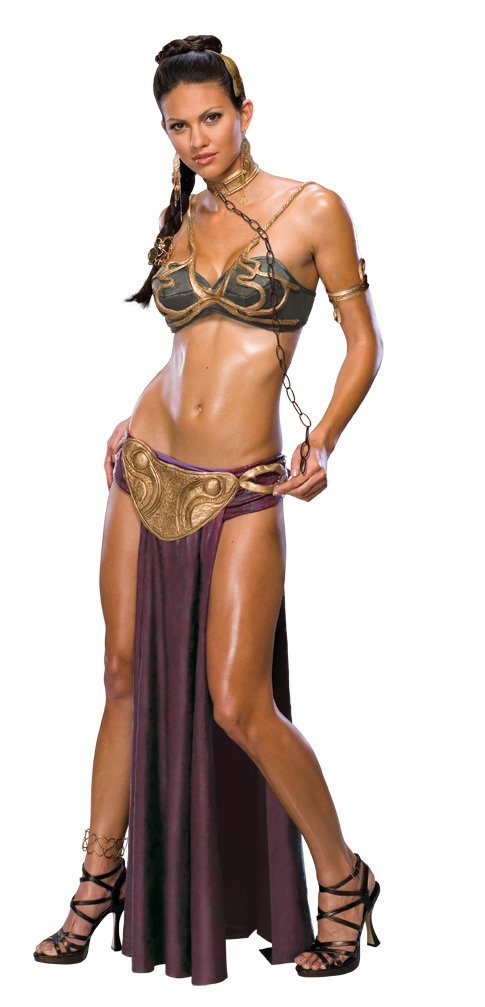
Next up, there’s the sexy Leia costume. Unlike the others, this aint no sexy variant on an original theme, it’s the original costume! If there’s a heterosexual man who was born before 1980 and tells you he hasn’t fantasized about this outfit at some point in his life, he is either lying or dead! And here is an especially sexy take on the slave outfit. Sure, technically Leia was asked to wear this as part of mean plan by Jabbah to degrade the proud warrior, but in truth, she knew how much her fans would appreciate it and donned it for our sakes. And I speak for us all when I say we were REALLY thankful 😉

Sexy Stormtrooper:
Last, but not least, we have one of many sexy female Stormtrooper outfits that have made the rounds over the years. This one does not come from any Comic Con footage, however. No, this one is a professionally posed shot performed with a model and a factory spec costume. Ergonomic, sleek, and pretty easy on the eyes huh? Minus the exposed midriff, this costume could signal an end of the Empire’s highly sexist “men only policy” in their Stormtrooper outfits!

Addendum: Sexy Miss Chewbacca
Somehow I forgot this one, and granted the name sounds a little suspect and weird, but one look at this outfit will dispel any notions that a Wookie can’t be sexy. Check out the strategically placed furry bits that make us this outfit! Of course it would come as a belly shirt and mini skirt, right? But hey, Wookie fur don’t come cheap (sidenote: no Wookies were harmed in the making of this costume). Yes, one sight of this outfit would make even Chewie say “Wraaaaaarrrrr! Wump-wump! Wooh!” (translation: Whooooa! That’s hot!)

A Tribute To Sidekicks

Hey all! Today, I thought I’d cover a topic I’ve been thinking about for some time. Over the few years that I’ve been writing now, something has been missing from this site. I’d payed tributes to franchises, novels, series, movies, heroes, and even robots. But not once have I acknowledged the critical supporting characters who have provided comic relief and made the lives of the heroes that much easier over the years.

And so I present the following list of the top 13 sidekicks from the field of sci-fi, at least the ones that I know of and/or care to acknowledge. Not  a lucky number I know, but I couldn’t bring myself to exclude any of the people here. They are hardly alone in being faithful companions, comedic foils or much needed helpers, but they are the people that I feel capture the full range of side-kick abilities and personalities. Hope you enjoy, and as always, suggestions are welcome, just in case I decide to make further installments.

Abraham Whistler:
This first sidekick comes to us from the Blade franchise where he serves the vampire hunter as mentor, weapons maker, and surrogate father figure. This last aspect is especially important, since it forms the basis of his relationship with Blade. Whereas Blade never had a family, Whistler was robbed of his. Both blame vampires for this travesty, and therefore make the perfect team. Whereas Blade provides the muscle and the daring, Whistler makes the weapons and is the voice of reason.

According to his bio, as provided by the both the Marvel Universe and the movie adaptation, Abraham became a hunter after his family was murdered by a vampire. It was in the course of hunting one evening that he came upon  a teen-aged Blade who was in the midst of preying on a homeless person. After realizing that Blade was a half-vampire (aka. a dhampir), he chose to spare his life and began training him to become a hunter himself.

Like the bad-ass vampire hunter he helped create, Whistler is a man of few words who seems pretty rough around the edges. But, also like Blade, underneath that gruff exterior beats the heart of a man who still seems to care. While he’ll often advise Blade against sticking his neck out or taking unnecessary risks, in the end he’s still willing to go the extra mile to help those in need.

Bender:
From a distance, Bender might seem like a wise-cracking, alcoholic, kleptomaniac robot, but once you get to know him… well, you pretty much realize that’s who is! On top of that, he seems to have a moribund fascination with killing all humans, a theory he has occasionally attempted to put into practice!

However, it would be wrong to say Bender’s a superficial kind of guy. In addition to being terrified of can openers and secretly wanting to be a country-western singer, he’s also shown himself to be pretty sensitive at times. When Fry moved out of their apartment, he went on a Bender of non-drinking, which for him is a very bad thing!

On top of all that, he’s also come through on numerous occasions to save Fry and the crew of Planet Express. Never without complaint, of course, but still. I guess you could say Bender is an exercise in contradiction. An automaton designed to bend girders who excels at not making human lives any easier!

Chewbacca:
Here’s the hairy side-kick who taught us the immutable lesson about living in the Star Wars universe. When you’re in a jam, it’s always good to have a Wookie in your corner! And of the universe’s many Wookies, Chewbacca is probably the best. In addition to being delightfully shaggy, he’s very strong, fiercely loyal, and mechanically inclined. Not a bad guy to have around!

Intrinsic to Chewie’s relationship with Han is the concept of the Wookie life-debt. At some point in the unspecified past, Han came to Chewies aid by freeing him from an Imperial slave-labor camp. As a result, Chewie is bound to Han for life. This is something Chewbacca takes very seriously, as any attempt to put Han is danger is usually met with a severe beatdown! When Han’s family expanded, after marrying Leia later in the franchise, Chewie’s life debt extended to them as well.

Chewie’s past also shows through when it comes to his attitude about restraints. When Luke tried to put some on him, even though it was part of ruse, he didn’t react too well! Beyond that, not much is known, like whether or not he has family back on Kashyyk or elsewhere in the Galaxy. But then again, Chewie doesn’t talk about this stuff. Like most Wookies, he doesn’t talk about himself much, preferring to express himself in a series of warbled utterances or loud growls.

Gabrielle:
The next entry on this list is the faithful, staff-twirling sidekick from the Xena: Warrior Princess franchise. Gabrielle, a former farm girl turned warrior companion, became the model of friendship and loyalty for countless girls and young women all over the world. In addition, numerous Lesbian rights advocates saw her and Xena as examples of the kind of love and dedication that can exist between two women. Whether or not they had this kind of relationship is a matter of speculation; the point is, they did love each other, regardless of whether it was platonic or romantic.

Gabrielle’s story as Xena’s sidekick began in small Greek village after she and her sister were taken as slaves. After being rescued by Xena, Gabrielle wanted to become just like her, in part because she was impressed by her fighting skills but also because she didn’t want to end up in an arranged marriage. The two women became friends and enjoyed countless adventures over the course of their many years together.

As time went on, Gabrielle evolved from being a young, naive girl who stood in Xena’s shadow to being a fully-fledged warrior. Her choice weapon was the staff, but in time, she also incorporated kicking and acrobatic abilities. Eventually, she became a heroine in her own right and was even replaced by the klutzy Joxer as the dependent sidekick.

Harley Quinn:
Here we have an interesting side-kick, one who exemplifies dedication and diabolical intent. A one-time psychiatrist who was brought in to assess Gotham’s criminal mastermind, Dr. Harleen Quinzel soon found herself sympathizing and even becoming enamored with the Joker and helped him escape from custody. Once her involvement was made clear, she fled herself, changing her name to Harley Quinn and becoming the Joker’s full-time assistant.

Making her debut in the Batman animated series, she was quickly incorporated into the DC Comics series. Ever since, she has made numerous appearances in the graphic novels, spin-off shows, and video games. Unlike the Joker’s usual henchmen, she has staying power and the ability to live to fight another day much “Mr. J” himself, as she affectionately calls him.

Though her affection and attachment to the Joker is the picture of obsessive and unhealthy behavior, it is precisely because of this that her loyalty and commitment shines through. No matter what nefarious schemes the Joker gets up to or who he hurts, she sticks by him and always has his back covered!

Kaylee:
Next up, there’s the spunky, charming, cheerful and mechanically inclined engineer of the Serenity! Yes, in the Firefly universe – a universe permeated by thugs, freelancers, mercenaries and privateers – Kaylee is a breath of fresh air and a spot of sunshine. Not what you’d expect in a ship’s mechanic, but that’s an undeniable part of her charm! When it comes right down to it, she is as much at home in coveralls and machine grease as she is in a pretty dress and a parasol.

According to the series, Captain Mal first met Kaylee during a chance encounter when his previous mechanic brought her to the engine room for a little sumthin’ sumthin’! After realizing that she had more talent in her pinky finger than the other dude had in his entire frame, her promptly hired her! Since then, neither Mal nor Kaylee has ever looked back.

On top of all that, Kaylee is quite the romantic. All series long, she held an obvious torch for Dr. Simon Tam, River Tam’s protective brother and the ship’s doctor. Although her early attempts to facilitate a hook-up failed, she later learned that he held the same feelings, but denied them because he was too focused on protective his sister. In the end, they got together, a fitting and happy ending for this pretty ray of sunshine!

R2D2 and C3P0:
Yes, they are technically not a single side-kick, but they come as a pair so I shall not deal with them separately. And when it comes right down it, they really don’t work well on their own since they’re essentially comedic foils for each other. Together, they are the comic relief and workhorse of the Star Wars universe.

Making their debut at the very beginning of the original trilogy, R2 and 3P0 captured people’s hearts as the unlikely duo on whose shoulder’s the fate of the universe rested. Whereas R2 was an astrometric droid, a rolling Swiss Army knife with a stubborn attitude and endless gumption, 3P0 was a prissy, effeminate translator who specialized in protocol and etiquette. Together, they were the robotic odd of the universe!

As time went on, the two bonded and became totally inseparable. In addition, no matter where the main characters took them, they both seemed to always be indispensable. R2 opened doors, interfaced with machines and disabled traps, while 3P0 talked to the natives and advised the group on the safest course of action. While they frequently fought and lobbed insults at each other, their affection for each other was clear. When R2 was damaged during the Battle of Yavin, 3P0 selflessly offered his own components to help fix him. As the franchise expanded after the original trilogy, they even got their own animated show, aptly named Droids.

Robin:
Where would Batman be without his trusty side-kick, Robin, “the Boy Wonder”? Probably dead, to be frank. Yes, this sprightly acrobat has been their for Bruce Wayne on many occasions, pulling his chestnuts out of the fire and taking down the villains who were about to get the best of him. And yet, Batman has gone through several Robins over the years. Only one died, and was even resurrected. But still, that’s a high turnover rate!

The first Robin was known as Dick Grayson, an 8 year old who’s parents were murdered by mobsters, prompting  Bruce Wayne to take him under his wing and teaching him the ways of vengeance and justice. After taking down the man responsible, Batman and Robin went on to have many adventures together until Dick eventually went independent and became Nightwing.

He was replaced by Jason Todd, a young man with a similar backstory. Like Grayson, he was an acrobat who’s family was murdered. But in Todd’s case, he reacted to this trauma by becoming a hard-nosed street kid who stole to survive. After catching him in the act of trying to steal his tires, Batman began to train Todd as his new Robin. Unfortunately, this side-kicks life ended tragically when the Joker killed him and his birth mother with a bomb.  He was resurrected as the Red Hood shortly thereafter, but never reprized the role of Robin.

Thereafter, a string of Robins came and went, but in each case, their basic role and characteristics remained the same. Whereas Batman was always the tall, strapping and bulky hero, Robin was always smaller, faster and slighter of build. And whereas Batman was always the quite, ultra-serious brooding type, Robin could be counted on to tell a joke and crack a joke.

Roger:
Some people might disagree with my choice to include Roger on this list, as he is as much an independent character as a side-kick. However, I’ve been looking for an excuse to write about Roger on this site and this seems like the perfect one! Also known by various personas he’s assumed over the years, Roger is the alien from American Dad that lives in the Smith’s attic, coming down every so often to take part in family affairs and hijinks.

From a passing glance, Roger might seem like a drug-addled, alcoholic sociopath. But there’s a reason for that! In addition to being an avid wine guzzler, coke head, pill-popper, and pansexual weirdo, he’s also reputedly the one who invented disco, the drug ecstasy, Jar Jar Binks, and the man go got the Captain of the Exxon Valdez drunk! Aside from all that, he’s spent the majority of his life avoiding government agents and impersonating colorful men and women.

In fact, Roger is so in love with impersonating other people that fashion montages have become a recurring part of his existence. And while he can certainly impersonate men well enough, his preferred aliases tend to be women. This is in keeping with Roger’s pansexual identity, which seems to involve gender confusion, bi-curiosity, and a total lack of boundaries. In fact, when in women’s constume, it wouldn’t be an exaggeration to say he’s a bit of a tramp!

Many years back, Roger came into the Smith household after saving Stan’s life in Area 51. Since that time, they have had a dynamic not unlike Han and Chewie, where obligation gave way to lasting friendship. Years later, Roger is considered a fully-fledged member of the Smith family, despite his ruinous activities and the high cost of keeping him entertained and under wraps!

Saul Tigh:
Okay, this guy might not be the perfect side-kick, but he’s definitely a rich and interesting character. On the one hand, he’s lived a rather rough and gruff life as a man, participating in the First Cylon War, going through a divorce, then developing a recurring drinking problem. On the other, he was a freaking Cylon and didn’t even know it! So yeah, maybe not the best guy to have in your corner, but he does have his upsides!

According to the relaunch series, Saul Tigh met William Adama in a bar a few years after the First Cylon War. After bailing him out of a close shave with several angry men, the two became fast friends and bonded over their shared experiences. Many years later, when Adama became commander of the Galactica, Saul was appointed as his XO. When the Second War began, he and everyone else were forced back into action.

In time, he became reunited with his estranged wife, a manipulative woman who also turned out to be one of the “Final Five” Cylons. Over the next few years, he maintained his position as XO, continued to have a rocky relationship with her, and never quite shook his drinking problem. In fact, it seemed that whenever times were tough, Saul would turn to the bottle.

Nevertheless, through it all, Saul remained a committed and loyal officer, one could be counted on to whatever what was necessary when the pressure was on. During Cylon offensive, when the Galactica was hit by a tactical nuke, he stepped up and made some tough calls which may have prevented the destruction of the ship. When Adama was shot by Boomer, herself a Cylon sleeper, he stepped into the Captain’s shoes and did his best to keep the fleet together. And when New Caprica became occupied by Cylon forces, Saul led a human resistance that kept up the fight against the occupation until Adama and Apollo could liberate the planet.

All in all, Saul was complicated. He was gruff, short, and had absolutely no patience for people he didn’t approve of. He could also be violent sometimes and was definitely a problem drinker! But he had a good heart and somehow managed to stay sane through it all, even after he learned that he was a Cylon. In truth, a lot of people would probably be dead were it not for this man, which is probably one of the reasons that Adama kept him around. That and the fact that, like Saul, Adama too was a fiercely loyal man.

Samwise Gamgee:
When it comes to dedication, selflessness, and versatility, Samwise Gamgee definitely takes the cake! The noble, stalwart and immensely loyal friend to Frodo Baggins, Sam was the very reason the quest to destroy the One Ring succeeded. Though a bit of a simpleton, his levelheadedness and stout heart were a constant source of strength and support for the Ringbearer. Hell, had it not been for his tireless help, cooking, and ability to come through in a pinch, Frodo would have been dead for sure!

Ostensibly employed as Frodo’s gardener, Samwise became involved in the quest to destroy the One Ring after Gandalf caught him eavesdropping on their little conversation. Before parting company with them, Gandalf instructed him never to let Frodo out of his sight. Sam took these instructions very literally, and thereafter did not leave Frodo alone for one minute! After setting off together, it was Sam who made sure they always had food and their spirits were high.

When Gollum entered their party, Sam never once stopped warning Frodo about him. Though Frodo seemed to think that Gollum had a role to pay or could be redeemed somehow, Sam remained committed to the belief that he was evil and untrustworthy. In the end, he was proven right, but then again, Frodo was in a way too… whatever, it’s complicated!

Towards the end of their quest, when things became truly difficult, Sam came through like never before. When Frodo was paralyzed by Shelob and taken captive by Orcs, Sam risked everything to rescue him, charging headlong into Minas Morgul and kicking the crap out of every Orc that stood in his way. And when Frodo finally faltered under the weight of the One Ring, Sam carried him up the Mountain to the Cracks of Doom.

Through it all, Sam never once complained or considered leaving Frodo’s side. Naturally, some speculate this was because the two were more than just friends. Lousy gossip mongers! But in truth, Sam was just that committed to those he considered friends and what he considered to be right. These are qualities he passed along to his thirteen children after he and Rose Cotton got married. Wow, loyal, friendly, and fertile too! Samwise has got it all!

Wedge Antilles:
When it comes to side-kicks, Wedge has some of the best characteristics of all. He’s loyal. He’s reliable. And best of all, he never dies! In addition, Wedge (who’s name alone makes him cool) is also one of the best pilots in the Rebel Fleet and the co-founder of Rogue Squadron (along with Luke Skywalker). Throughout the original Star Wars trilogy and the expanded universe, Wedge has always been there in his trusty X-wing and other attack craft, providing much needed support and kicking Imperial ass!

His impressive resume includes an assault on the First Death Star, where as a junior officer in Rogue Squad, he provided cover for Luke as he launched the torpedoes that would destroy the terrifying space station. When Imperial Forces attacked Echo Base on planet Hoth, he was there in a speeder and scored a major victory by being the first to take down an AT-AT walker with a tow cable. And finally, he played a major role by helping to lead Rebel Forces to a decisive victory in the battle of Endor.

Because of all this, Wedge gained the reputation of being the greatest pilot in the Galaxy. As the sole survivor of both Death Star runs, he was given command of Rogue Squadron before being promoted to General and given command of an entire fleet. Throughout it all, Wedge never once lost his soft-spoken and humble attitude. It just goes to show you, nice guys really can kick ass!

Zoe Washburne:
And last, but definitely, DEFINITELY not least, there Zoe, the heroine of the Firefly universe. As a veteran soldier, freelance butt-kicker, executive officer, and loving wife, she’s got the whole package, at least when it comes to science fiction heroines. A good woman to settle down with and to have aboard your ship, guarding your precious cargo and your ass. No wonder Mal trusts her with his life, and Wash loves her so!

Having served in the War of Unification as a Browncoat, Zoe served under Mal when he was a Sergeant in the Independents Army. In the end, they were the only two to survive the battle, which bonded them for life. Afterward, she took a job as his XO aboard the Serenity and never looked back. Of all the other crewmembers, she was the only one who routinely referred to Mal as “sir” and obeyed his orders. However, that didn’t stop her from expressing concern over his decisions and letting him know when she thought they were totally stupid!

In the course of her service as XO, she met Wash, the ship’s pilot, and the two fell in love. They got married shortly thereafter, and even talked about settling down and having children (something their lifestyle wasn’t exactly conducive too). Due to her close relationship with Mal, Wash was often jealous of then, which at times caused friction. However, Wash soon realized that his concerns were for naught, as it became clear to him that the loyalty she had towards her commander did not conflict with her love of him.

In short, she’s the kind of woman a man would want as a friend, a sidekick, and a lover. Though tough as nails and the kind of no-nonsense lay who’d kick your ass if you messed with her or her crew, she could still be tender and make her man feel like a man. Wink, wink, nudge, nudge! Know what I mean? Just don’t tell her I said that, she’d kick my ass!

Summary:
So, having looked into all these personalities, I think it’s fair to say that I have some inkling of what makes a decent sidekick tick. In short, I think the following characteristics, alone or in combination, are what add up to a good supporting character, one which the hero is likely to want to keep around.

  1. Loyalty: This, above all, seems to be what makes a sidekick both desirable and endearing to audiences. As heroes undergo their trials and tribulations, they need someone who will stick with them, keeping them on the straight and narrow and making sure they don’t succumb to temptation or their enemies machinations.
  2. Levelheadedness: As the saying goes, “It’s always a true friend who will tell you what you need to hear, even when you don’t want to hear it”. And when it comes to sidekicks, this is not only desirable, its a job requirement. When the heroes life is on the line, the last thing they need is an ego stroke or to be let down easy. And frankly, the view really is better from the cheap seats!
  3. Sense of Humor: And remember, it’s important to keep things light. Whenever the pressure is on, danger is all around, and the tension is palatable, a good wisecrack or a little slapstick is usually in good order. Just refrain from poop jokes or overtly juvenile humor (look at you, Jar Jar!) And if were talking comedy instead of action and drama, the sidekick should be especially comedic! Their antics should inspire hysterical laughter from time to time, even if it’s a little in bad taste 😉
  4. Mad Skills: Remember, just because the hero is the focal point of the story doesn’t mean that you can’t steal the show every once in awhile. In fact, said skillz can pay the billz! And by that I mean a skilled sidekick can come in extremely handy to a hero from time to time. After all, if you’re constantly requiring rescuing, the hero will very quickly grow tired of you and find someone to replace to you! It also doesn’t hurt to have a gimmick, a weapon or characteristic that sets you apart. For example, if the hero is a big, He-Man/Amazon kind of hero, go small and wiry. If they are a smaller, wisecracking personality who relies on their wits more than their physique, be the muscly, enforcer type. It’s also good to carry your own unique brand of weapons. They set you apart and diversify your killing power!

That’s all I got for now. Like I said before, I’m open to suggestions for other candidates. If I can assemble enough, I’ll be sure to do a second installment. Otherwise, expect more of the usual posts dedicated to franchises, concepts, technology, and the latest in science fiction!

How Return of the Jedi Should Have Ended

Remember HISHE and how they deconstructed Prometheus and the The Dark Knight Rises? Well, turns out they did  a number on Lucas’ baby too. I plan to search their archives and find every single video dedicated to the prequels! In the meantime, enjoy this video. Got to admit, it does raise some pretty good points 🙂