News From Space: Plants on the Moon by 2015!

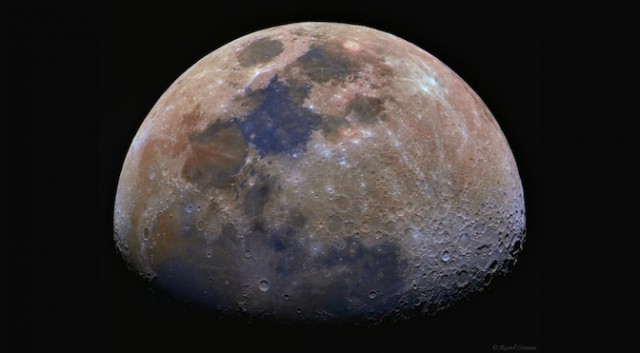
moon_plantsThe moon remains the focal point of much of our space-related goals for the near future. In addition to China recently landing its Jade Rabbit probe, the more ambitious plans of NASA and the ESA involve building a settlement there in the near future. But of course, these and other plans to turn the moon into a new frontier from humanity are marred by the fact the environment is not habitable.

Luckily, NASA plans to change that, starting with growing plants on the lunar surface. And while this might seem like a long way away from building sealed domes and mounting full-scale terraforming, it is a big step in that direction. Aside from the obvious life support that vegetation would provide – air, food, and water – it would also provide another integral aspect to a habitable lunar environment.

moonexpressPlants react to aspects of a harsh environment similarly to humans, as their genetic material can be damaged by radiation. A relatively safe way to test long-term lunar exposure is to send plants there and monitor their health. Rather than making the trip and dropping the plants off itself, NASA plans to use commercial spaceflight as the vehicle by which the plants will be sent up to the moon.

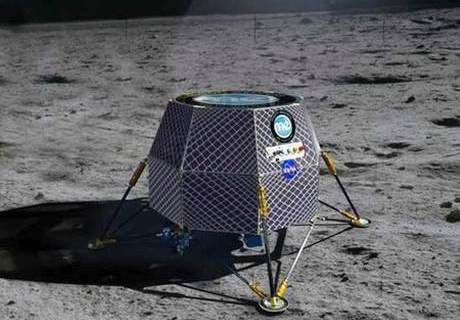
And that’s where Google comes in, NASA’s proposed partner for this venture. Using the Moon Express, a small, lightweight craft (about 1 kilogram or 2 pounds) that will act as a self-sustaining habitat for the vegetation, NASA will deliver these plants to the moon by 2015. This lunar lander is part of the Google Lunar X Prize, a competition to create a robotic spacecraft that can fly to and land on the moon.

ESA_moonbaseOnce the lander arrives on the moon, water will be added to the basil, turnip, and Arabidopsis (a small flowering plant) seeds kept in the habitat, then monitored for five to ten days and compared to control groups germinating back on Earth. NASA will also monitor the actual habitat itself, looking toward its scalability since the small habitat isn’t large enough to support human life.

Currently, the chamber can support 10 basil seeds, 10 turnip seeds, and around 100 Arabidopsis seeds. It also holds the bit of water that initiates the germination process, and uses the natural sunlight that reaches the moon to support the plant life. In order to study the quality of the plant growth and movement, the habitat will take images and beam them back home.

3dprinted_moon_base1If NASA doesn’t run into any unexpected bumps, its long-term plans include attempting to grow a more diverse array of plants, longer growth periods, and reproduction experiments. The longer the experiments, the more we’ll learn about the long-term effects of a lunar environment on Earth plants, which will tell us much of what we need to know if we ever plan on building true settlements there in the future.

Sources: extremetech.com, nasa.gov

News From Space: The Weird Atmospheres of Titan and Io

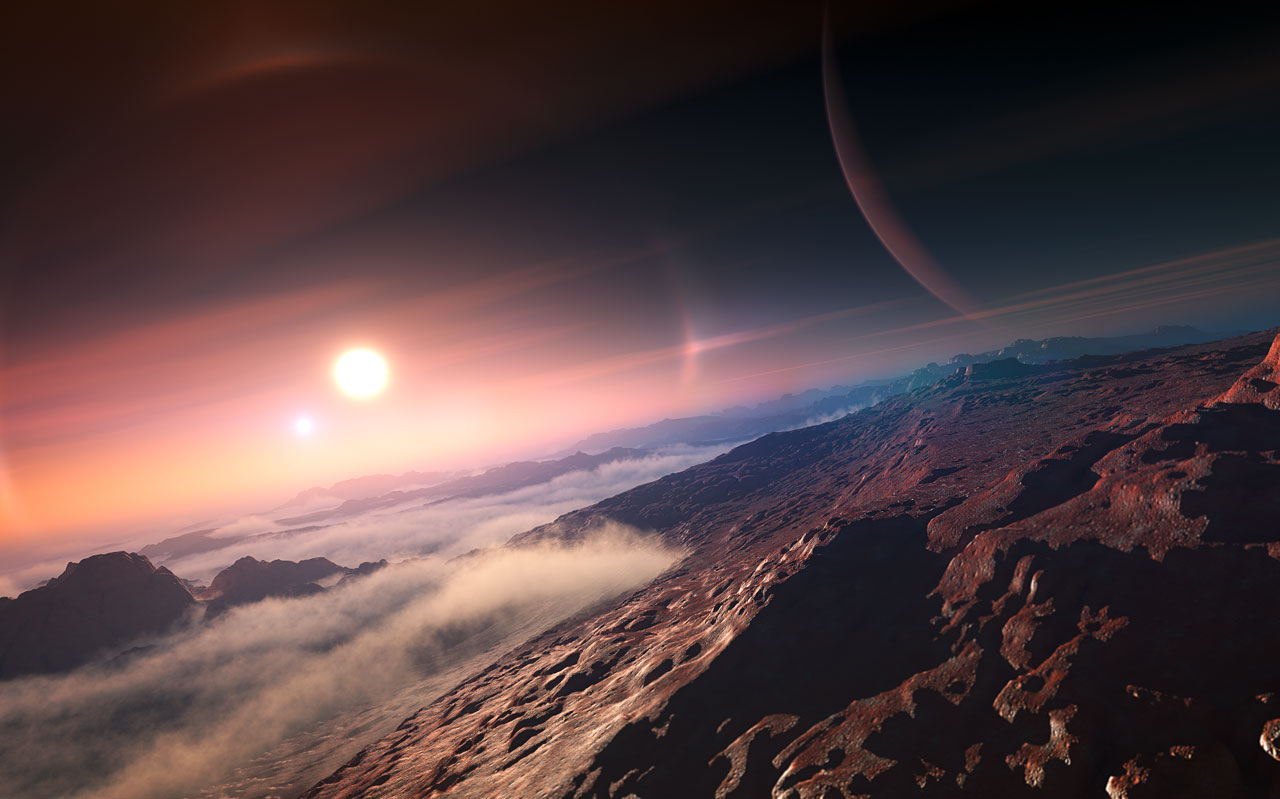
alien-worldStudying the known universe is always interesting, mainly because you never know what you’re going to find. And just when you think you’ve got something figured out – like a moon in orbit around one of the Solar Systems more distant planet’s – you learn that it can still find ways to surprise you. And interestingly enough, a few surprises have occurred back to back in recent weeks which are making scientists rethink their assumptions about these moons.

The first came from Io, Jupiter’s innermost moon and the most volcanically active body in the Solar System. All told, the surface has over 400 volcanic regions, roughly 100 mountains – some of which are taller than Mount Everest – and extensive lava flows and floodplains of liquid rock that pass between them. All of this has lead to the formation of Io’s atmosphere, which is basically a thin layer of toxic fumes.

Io_mapGiven its distance from Earth, it has been difficult to get a good reading on what the atmosphere is made up of. However, scientists believe that it is primarily composed of sulfur dioxide (SO2), with smaller concentrations of sulfur monoxide (SO), sodium chloride (NaCl), and atomic sulfur and oxygen. Various models predict other molecules as well, but which have not been observed yet.

However, recently a team of astronomers from institutions across the US, France, and Sweden, set out to better constrain Io’s atmosphere. Back in September they detected the second-most abundant isotope of sulfur (34-S) and tentatively detected potassium chloride (KCl). Expected, but undetected, were molecules like potassium chloride (KCl), silicone monoxide (SiO), disulfur monoxide (S2O), and other isotopes of sulfur.

Io_surfaceBut more impressive was the team’s tentative of potassium chloride (KCl), which is believed to be part of the plasma torus that Io projects around Jupiter. For some time now, astronomers and scientists have been postulating that Io’s volcanic eruptions produce this ring of plasma, which includes molecular potassium. By detecting this, the international team effectively found the “missing link” between Io and this feature of Saturn.

Another find was the team’s detection of the sulfur 34-S, an isotope which had previously never been observed.  Sulfur 32-S had been detected before, but the ratio between the 34-S and 32-S was twice that of what scientists believed was possible in the Solar System. A fraction this high has only been reported once before in a distant quasar – which was in fact an early galaxy consisting of an intensely luminous core powered by a huge black hole.

These observations were made using the Atacama Pathfinder Experiment (APEX) antenna – a radio telescope located in northern Chile. This dish is a prototype antenna for the Atacama Large Millimeter Array (ALMA). And while Io is certainly an extreme example, it will likely help terrestrial scientists characterize volcanism in general – providing a better understanding of it here on Earth as well as outside the Solar System.

TitanThe second big discovery was announced just yesterday, and comes from NASA’s Cassini space probe. In its latest find investigating Saturn’s largest moon, Cassini made the first off-world detection of the molecule known as propelyne. This simple organic compound is a byproduct of oil refining and fossil fuel extraction, and is one of the most important starting molecules in the production of plastics.

The molecules were detected while Cassini used its infrared spectrometer to stare into the hydrocarbon haze that is Titan’s atmosphere. The discovery wasn’t too surprising, as Titan is full of many different types of hydrocarbons including methane and propane. But spotting propylene has thus far eluded scientists. What’s more, this is the first time that the molecule has been spotted anywhere outside of Earth.

titan_cassiniThese finding highlight the alien chemistry of Saturn’s giant moon. Titan has moisture and an atmosphere, much like our own, except that its rains are made of hydrocarbons and its seas composed of ethane. Scientists have long wanted to explore this world with a boat-like rover, but given the current budget environment, that’s a distant prospect. Still, sales of propylene on Earth are estimated at $90 billion annually.

While no one is going to be mounting a collection mission to Titan anytime soon, it does offer some possibilities for future missions. These include colonization, where atmospheric propylene could be used to compose settlements made of plastic. And when it comes to terraforming, knowing the exact chemical makeup of the atmosphere will go a long way towards finding a way to make it breathable and warm.

And in the meantime, be sure to enjoy this video about Cassini’s latest discovery. With the government shutdown in effect, NASA’s resources remain offline. So we should consider ourselves lucky that the news broke before today and hope like hell they get things up and running again soon!


Sources: universetoday.com, wired.com

News from Space: Curiosity Finds Water!

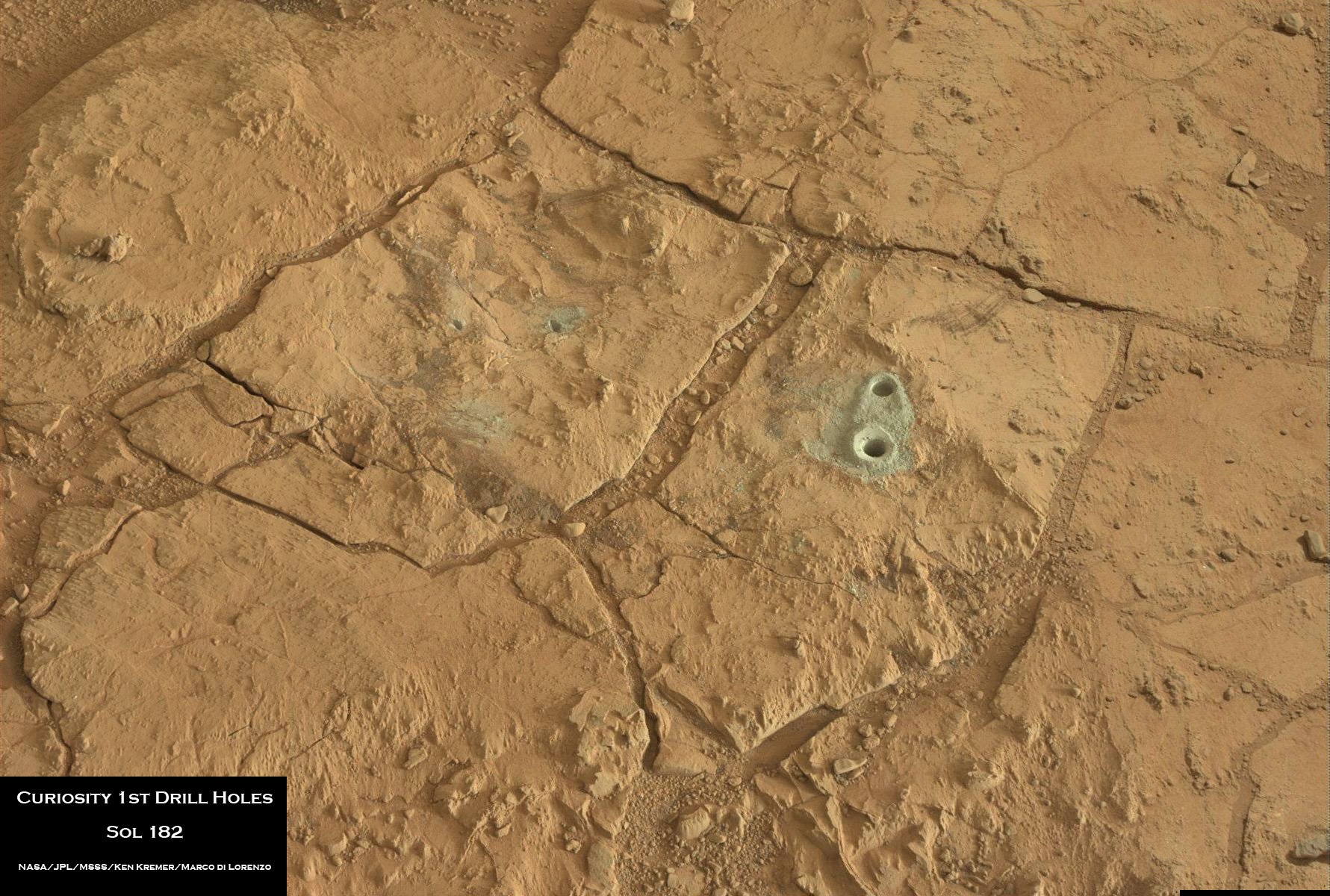
curiosity_drillsGood news (and bad) from the Red Planet! According to NASA, an examination of the fine-grained soil particles extracted by Curiosity, scientists have concluded that roughly 2 percent of Martian surface soil is made up of water. Though they did not find any traces of organic particles, this latest find confirms that water not only used to exist on the surface of the planet, but can still be found within.

These results bode well for future manned missions to Mars, wherein astronauts could mine the soil for water and study it to advance their understanding of Mars’ history. The findings, which were published today in the journal Science are part of a five-paper segment that began back in August of 2012 and is dedicated to Curiosity’s ongoing mission.

curiosity_drilling2Laurie Leshin, dean of the School Science at Rensselaer Polytechnic Institute and lead author of the paper, said in a NASA press release:

One of the most exciting results from this very first solid sample ingested by Curiosity is the high percentage of water in the soil.

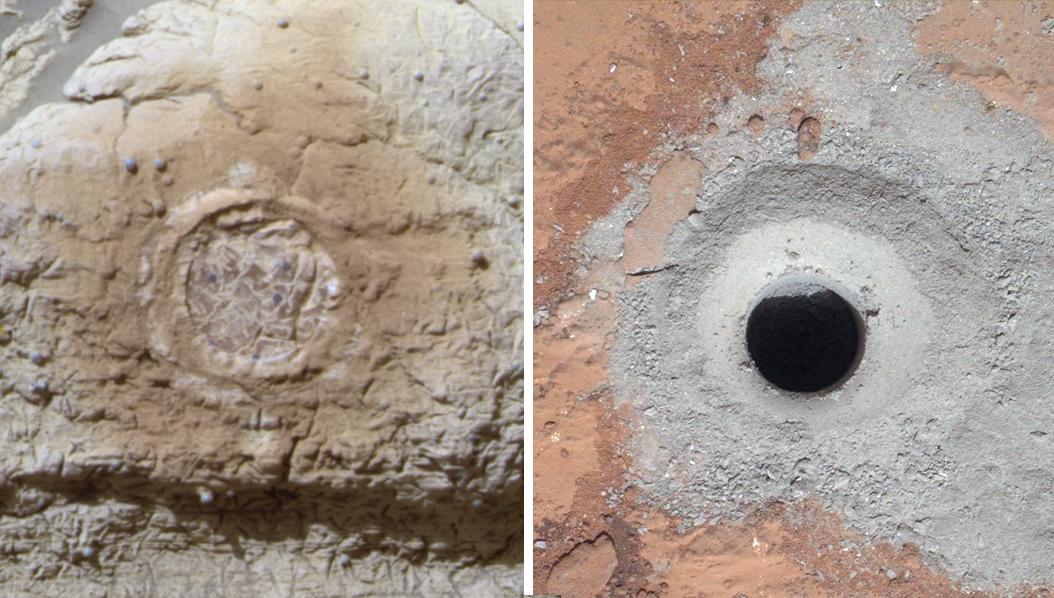
These tests were conducted using the rover’s Sample Analysis at Mars (SAM), a collection of instruments that includes a gas chromatograph, a mass spectrometer, and a tunable laser spectrometer. The first soil samples were collected back in February when the rover used its drill tool for the first time and created a series of holes that were a little over 6 centimeters (2.5 inches) deep and collected the fine dust that resulted.

SAM_NASAOnce placed into the SAM assembly, the samples were heated to 835 degrees Celsius (1,535 degrees Fahrenheit). The gases that were released – which included significant portions of carbon dioxide, oxygen, and sulfur compounds – were then analyzed. The Mars Science Laboratory (MSL) also noticed that quantities of gaseous carbonite were found, which would suggests the presence of water in the Martian soil.

These positive findings were quite welcome, especially in light of the disheartening news last week that Curiosity has yet to crack the methane mystery. Back in 2003, scientists observed methane plumes coming from the planet, a strong indicator of microbial life, which sent scientific and professional interest in finding life on the red planet soaring.

Since that time, no traces of methane have been found, and it was hoped that Curiosity would finally locate it. However, the lack of methane thus far indicates that the rover has little chance of finding existing microbial life on the planet. But the existence of water in such great quantities in the surface soil brings scientists one step closer to piecing together the planet’s past potential for harboring life.

Curiosity_drillingsPaul Mahaffy, a lead investigator for SAM at NASA’s Goddard Space Flight Center, had this to say:

This work not only demonstrates that SAM is working beautifully on Mars, but also shows how SAM fits into Curiosity’s powerful and comprehensive suite of scientific instruments… By combining analyses of water and other volatiles from SAM with mineralogical, chemical, and geological data from Curiosity’s other instruments, we have the most comprehensive information ever obtained on Martian surface fines. These data greatly advance our understanding surface processes and the action of water on Mars.

Given the renewed interest of late in manned missions to Mars – from nonprofit organizations like Mars One, privatized transportation companies like SpaceX, and the unofficial plans to mount a manned mission to Mars by 2030 by NASA – these findings are reassuring. In addition to providing fuel for hydrogen fuel cells for a return craft, subsurface water will be a boon for settlers and terraformers down the road.

mars-one-brian-versteegLeshin confirmed a cubic foot of soil, as opposed to the tiny sample Curiosity analyzed, could yield nearly 2 pints of condensation when heated. So volunteers who are planning on signing up with Mars One, pack your buckets and stoves and be prepared to do a lot of condensing! And perhaps we can expect “moisture farms” to become the norm on a colonized Mars of the future.

Source: news.cnet.com

New Space: “Sail Rover” to Explore Mercury

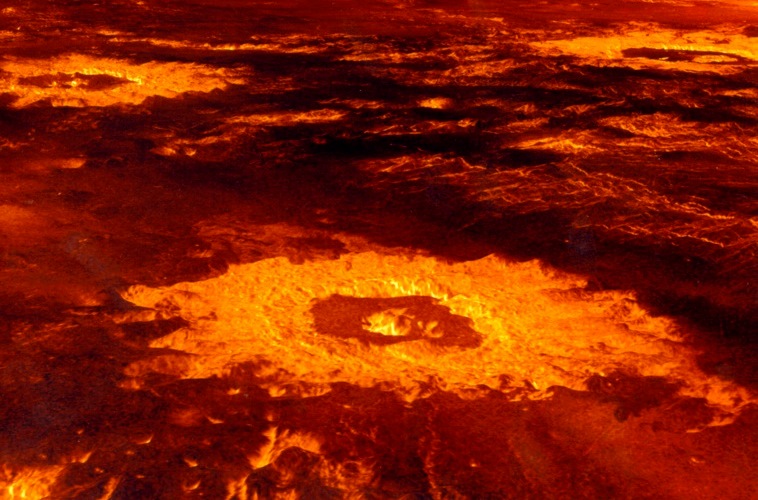
zephyr-580x435In addition to their ongoing plans to explore Mars for signs of life, the Jovian moon of Europa, and tow an asteroid closer to Earth, NASA also has plans to explore the surface of Venus. For decades, scientists have been yearning to get a closer look at this world’s pockmarked surface, but the volcanic activity, clouds of sulfuric acid and extreme heat are not exactly favorable to robotic rovers.

But according to NASA’s Innovative Advanced Concepts program, a windsailing rover could be just the means through which the hellish surface environment could be surveyed. This rover, nicknamed Zephyr, would use the high speeds and hot temperatures of Venus to its advantage, deploying a sail after entering the atmosphere and sailing to the ground.

mercury_surfaceThe rover would not be able to move around the surface, but would have electronics inside that are able to withstand the temperatures of 450 degrees Celsius (840 degrees Fahrenheit). Whenever the science team wanted to move some distance, however, they would deploy another sail that could use the wind to transport it across the surface. But mainly, the rover would remain on the ground conducting surface analysis.

Geoffrey Landis, who is with NASA’s Glenn Research Center and a part of the project to develop Zephyr, has long been an advocate of exploring Venus. This has included using solar powered airplane to explore the atmosphere, and colonizing the planet with floating cities. On the subject of Zephyr, he stated that:

A sail rover would be extraordinary for Venus. The sail has only two moving parts-just to set the sail and set the steering position-and that doesn’t require a lot of power. There’s no power required to actually drive. The fundamental elements of a rover for Venus are not beyond the bounds of physics. We could survive the furnace of Venus if we can come up with an innovative concept for a rover that can move on extremely low power levels.

venus_terraformedIn addition to providing volumes of information on the planet’s, exploring the surface of Venus could yield some interesting clues as to how it came to look like something out of Dante’s Inferno. It has been suggested that at one time, Venus may have boasted an atmosphere and surface water similar to Earth’s, but was transformed into a toxic nightmare thanks to a runaway Greenhouse Effect.

Studying how this came to happen would go a long way to helping scientists understand Climate Change here on Earth, and as well as give them the chance to test out possible solutions. And of course, any working solutions might go a long way towards terraforming Venus itself, which is something many scientists are currently advocating since it might be cheaper and less time consuming than transforming Mars.

Then again, if the resources and budget are there, there’s no reason why we can’t try to retool both for human settlement. After all, we might not have much a choice in the coming centuries. Human beings aren’t exactly known for their slow population growth or conservation skills!

Source: universetoday.com

Space Elevators!

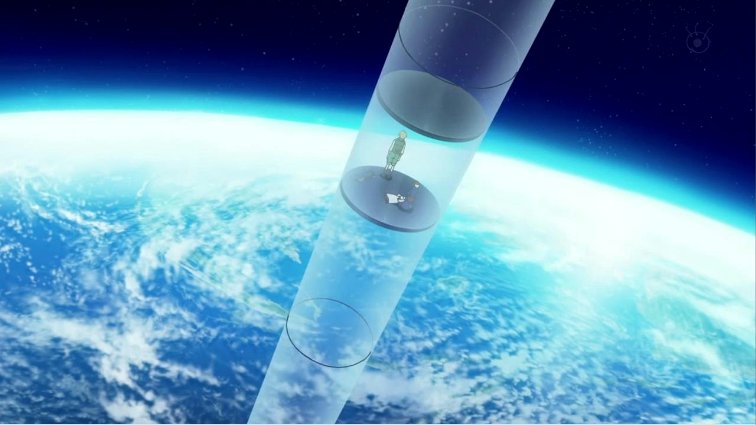
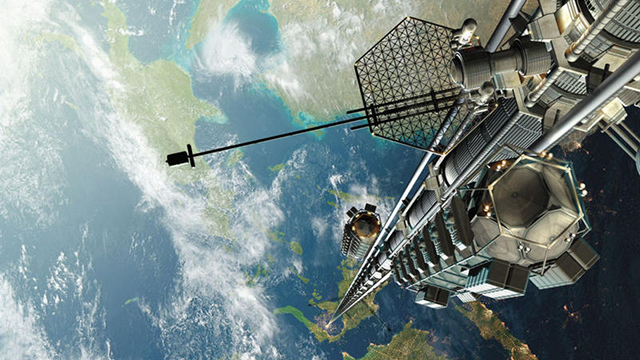
space_elevatorWhen it comes to classic and hard science fiction, there are few concepts more inspired, more audacious, and more cool than the Space Elevator. Consisting of a cable (or tether) attached the Earth near the equator and a station in geosynchronous orbit, a structure of this kind would allow us to put objects, supplies and even people into orbit without the need for rockets and space ships.

And perhaps I am a bit biased, seeing as how one of the writer’s featured in the Yuva anthology happens to have written a story that features one – Goran Zidar, whose story “Terraformers” includes an orbital colony that is tethered to the planet by a “Needle”. But I’ve found the concept fascinating for as long as I have known about it, and feel like its time for a conceptual post that deals with this most awesome of concepts!

Here goes…

History:
The first recorded example of the space elevator concept appeared in 1895 when Russian scientist Konstantin Tsiolkovsky was inspired by the Eiffel Tower in Paris. He considered a similar tower that extended from the ground into geostationary orbit (GSO) in space. Objects traveling into orbit would attain orbital velocity as they rode up the tower, and an object released at the tower’s top would also have the velocity necessary to remain in orbit.

space_elevator1However, his concept called for a compression structure, which was unfeasible given that no material existed that had enough compressive strength to support its own weight under such conditions. In 1959, another Russian scientist named Yuri N. Artsutanov suggested a more feasible proposal, a tensile structure which used a geostationary satellite as the base from which to deploy the structure downward.

By using a counterweight, a cable would be lowered from geostationary orbit to the surface of Earth, while the counterweight was extended from the satellite away from Earth, keeping the cable constantly over the same spot on the surface of the Earth. He also proposed tapering the cable thickness so that the stress in the cable was constant. This gives a thinner cable at ground level that becomes thicker up towards the GSO.

space_elevator_liftIn 1966, Isaacs, Vine, Bradner and Bachus, four American engineers, reinvented the concept under the name “Sky-Hook”. In 1975, the concept was reinvented again by Jerome Pearson, whose model extended the distance of the counterweight to 144,000 km (90,000 miles) out, roughly half the distance to the Moon. However, these studies were also marred by the fact that no known material possessed the tensile strength required.

By the turn of the century, however, the concept was revitalized thanks to the development of carbon nanotubes. Believing that the high strength of these materials might make an orbital skyhook feasible, engineer David Smitherman of NASA put together a workshop at the Marshall Space Flight Center and invited many scientists and engineers to participate. Their findings were published in an article titled “Space Elevators: An Advanced Earth-Space Infrastructure for the New Millennium”.

carbon-nanotubeAnother American scientist, Bradley C. Edwards, also suggested using nanotubes to create a 100,000 km (62,000 mile) paper-thin cable that would be shaped like a ribbon instead of circular. This, he claimed, would make the tether more resistant to impacts from meteoroids.  The NASA Institute for Advanced Concepts began supporting Edwards’ work, allowing him to expand on it and plan how it would work in detail.

In Fiction:
arthurcclarke_fountains-of-paradiseIn 1979, the concept of the Space Elevator was introduced to the reading public thanks to the simultaneous publications of Arthur C. Clarke’s The Fountains of Paradise (1979) and Charles Sheffield’s The Web Between the Worlds. In the former, engineers construct a space elevator on top of a mountain peak in the fictional island country of Taprobane, which was loosely based on Clarke’s new home in Sri Lanka, albeit moved south to the Equator.

In an interesting and fact-based twist, the purpose for building the elevator on Earth is to demonstrate that it can be done on Mars. Ultimately, the protagonist of the story (Dr Vannevar Morgan) is motivated by his desire to help a Mars-based consortium to develop the elevator on Mars as part of a massive terraforming project, something which has been proposed in real life.

Sheffield- The Web Between the WorldsSimiliarly, in Sheffield’s Web, which was his first novel, we see a world famous engineer who has created extensive bridge networks all over the world using graphite cable. In hoping to achieve the unachievable dream, he begins work on a space elevator code named the “Beanstalk”. This brings him into an alliance with a corrupt tycoon who wants to make rockets obsolete, and intrigue ensues…

Three years later, Robert A. Heinlein’s novel Friday features a space elevator known as the “Nairobi Beanstalk”. In Heinlein’s vision, the world of the future is heavily Balkanized, and people exist in thousands of tiny nation states and orbital colonies which are connected to Earth via the Beanstalk, which as the name suggests, is located in equatorial Africa.

ksr_redmarsIn 1993, Kim Stanley Robinson released Red Mars, a sci-fi classic that remains a quintessential novel on the subject of Mars colonization. In the novel, the Martian colonists build a space elevator that allows them to bring additional colonists to the surface, as well as transport natural resources that were mined planetside into orbit where they can be ferried back to Earth.

In 1999, Sid Meier’s, creator of the famed Civilization gaming series, released the sci-fi based Sid Meier’s Alpha Centauri that deals with the colonization of the planet “Chiron” in the Alpha Centauri system. In the course of the turn-based strategy game, players are encouraged to construct special projects as a way of gaining bonuses and building up their faction’s power.

One such project is the Space Elevator, which requires that the faction building first research the technology “super tensile solids” so they have the means of building a super-tensile tether. Once built, it confers bonuses for space-based unit production, allows orbital drop units to be deployed over the entire planet, increases production rates for satellites, and removes the need for aerospace facilities. spaceelevator_alpha_centauriIn David Gerrold’s 2000 novel, Jumping Off The Planet, we are again confronted with an equatorial space elevator, this time in Ecuador where the device is once again known as the “beanstalk”. The story focuses on a family excursion which is eventually revealed to be a child-custody kidnapping. In addition to this futuristic take on domestic issues, Gerrold also examined some of the industrial applications of a mature elevator technology.


Chasm_City_coverIn 2001, Alastair Reynolds, a hard sci-fi author and creator of the Revelation Space series, released Chasm City, which acted as a sort of interquel between the first and second books in the main trilogy. At the opening of the novel, the story takes place on Sky’s Edge, a distant world where settlers travel to and from ships in orbit using a space elevator that connects to the planetary capitol on the surface.

And in 2011, author Joan Slonczewski presented a biological twist on the concept with her novel The Highest Frontier. Here, she depicts a college student who ascends a space elevator that uses a tether constructed from self-healing cables of anthrax bacilli. The engineered bacteria can regrow the cables when severed by space debris, thus turning the whole concept of tensile solids on its head.

Attempts to Build a Space Elevator:
Since the onset of the 21st century, several attempts have been made to design, fund, and create a space elevator before the end of this century. To speed the development process, proponents of the concept have created several competitions to develop the relevant technologies. These include the Elevator: 2010 and Robogames Space Elevator Ribbon Climbing, annual competitions seeking to design climbers, tethers and power-beaming systems.

space_elevator_nasaIn March of 2005, NASA announced its own incentive program, known as the Centennial Challenges program, which has since merged the Spaceward Foundation and upped the total value of their cash prizes to US$400,000. In that same year, the LiftPort Group began producing carbon nanotubes for industrial use, with the goal of using their profits as capital for the construction of a 100,000 km (62,000 mi) space elevator.

In 2008, the Japanese firm known as the Space Elevator Association, chaired by Shuichi Ono, announced plans to build a Space Elevator for the projected price tag of a trillion yen ($8 billion). Though the cost is substantially low, Ono and his peers claimed that Japan’s role as a leader in the field engineering could resolve the technical issues at the price they quoted.
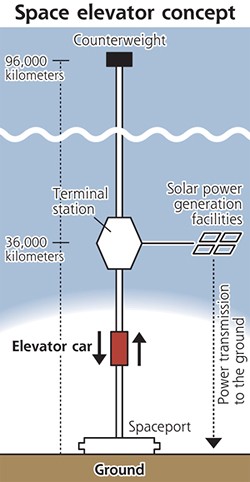
obayashi-2In 2011, Google was reported to be working on plans for a space elevator at its secretive Google X Lab location. Since then, Google has stated that it is not working on a space elevator. But in that same year, the first European Space Elevator Challenge (EuSEC) to establish a climber structure took place in August.

And in 2012, the Obayashi Corporation of Japan announced that in 38 years it could build a space elevator using carbon nanotube technology. Their detailed plan called for a 96,000 long tether, supported by a counterweight, that could hold a 30-passenger climber that would travel 200 km/h, reaching the GSO after a 7.5 day trip. However, no cost estimates, finance plans, or other specifics were made at this point.

space-elevator-schematics-largeDespite these efforts, the problems of building are still marred by several technical issues that have yet to be resolved. These include the problems of tensile strength, dangerous vibrations along the tether line, climbers creating wobble, dangers posed by satellites and meteoroids, and the fact that such a structure would be vulnerable to a terrorist or military attack.

Other Possibilities:
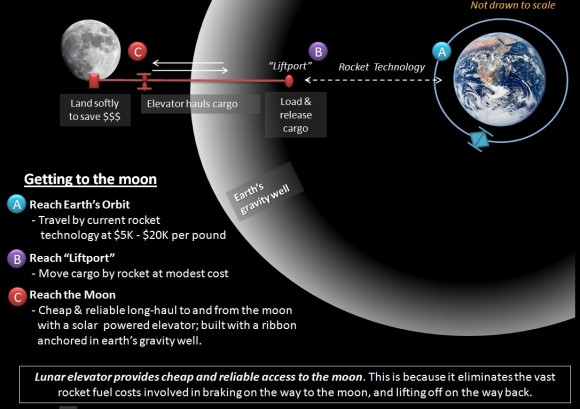
Though we may never be able to resolve the problems of building a space elevator on Earth, scientists are agreed that one could be made on other planets, particularly the Moon. This idea was first devised by Jerome Pearson, one of the concepts many original proponents, who proposed a smaller elevator that would be anchored by Earth’s gravity field.
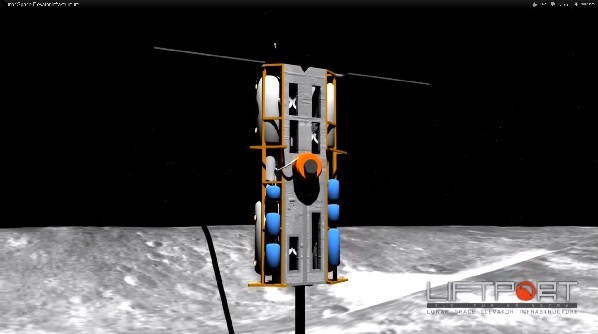
LiftPort1This is a necessity since the Moon does not rotate and could therefore not maintain tension along a tether. But in this scenario, the cable would be run from the moon and out through the L1 Lagrangian point. Once there, it would be dangled down into Earth’s gravity field where it would be held taught by Earth gravity and a large counterweight attached to its end.

Since the Moon is a far different environment than planet Earth, it presents numerous advantages when building a space elevator. For starters, there’s the strength of the materials needed, which would be significantly less, thus resolving a major technical issue. In addition, the Moon’s lower gravity would mean a diminished weight of the materials being shipped and of the structure itself.
space_elevator_lunarAs Pearson explained:

[T]o lift a thousand tons per day off the lunar surface, it would take less than 100,000 tons of elevator to do it — which means it pays back its own mass in just 100 days, or somewhere between three and four times its own mass per year — which is not a bad rate of return… You don’t need nanotubes and very, very high strength materials. But the higher the strength, the more of the ratio you can get for hauling stuff on the moon.

In fact, LiftPort is already deep into developing a “Lunar Elevator”. Plans to build one by 2020 were announced back in 2010, and since that time, the company launched a Kickstarter campaign to get the funding necessary to conduct tests that will get them closer to this goal. These consisting of sending a tethered robot 2km from the surface to conduct stress and telemetry tests.

Ultimately, the company estimates that a Lunar Elevator could be made at the cost of $800 million, which is substantially less than a “Terran Elevator” would cost. Similarly, it is likely that any manned missions to Mars, which will include eventual settlement and plans to terraform, will involve a Martian elevator, possibly named the “Ares Elevator”.

Much like SpaceX’s attempts to resolve the costs of sending rockets into space, the concept of a space elevator is another means of reducing the cost of sending things into orbit. As time goes on and technology improves, and humanity finds itself in other terrestrial environments where resources need to be exported into space, we can expect that elevators that pierce the sky will become possible.

In the meantime, we can always dream…

space_elevator_conceptSources: en.wikepedia.org, gizmag.com, io9.com, forbes.com, universetoday.com, futuretimeline.com

100,000 People Want to Go to Mars, And Not Come Back

MarsOneEver since they announced their plan to establish a colony on Mars by 2022, Mars One has been flooded by applicants eager to set foot on a new planet and make it their home. In fact, according to a recent story by CNN Tech, over 100,000 people have volunteered for the mission, knowing full well that it would be a one-way trip and their stay on the Red Planet would be permanent.

Anyone who is 18 years of age or older can apply, and the fee runs anywhere from $15 to $38, depending on your nationality and the gross domestic product of your country. Ultimately, only 40 people will be selected this year, and only two couples will be sent ahead with the first mission. This mission is slated to leave by September of 2022 and land on Mars by April of 2023, with another group of four to be sent two years later.

Mars_landerThe applicants can all be seen simply be going to their website, where each person has created a profile and can be voted on. According to Bas Lansdorp, co-founder and CEO of Mars One, only those who have completed the registration process can be seen here:

There is also a very large number of people who are still working on their profile, so either they have decided not to pay the application fee, or they are still making their video or they’re still filling out the questionnaire or their resume. So the people that you can see online are only the ones that have finished and who have set their profiles as public.

In terms of what the selectees will do once the project is up and running, the website offers a basic rundown. First, the volunteer astronauts will undergo a required eight-year training in a secluded location, where they will learn how to repair habitat structures, grow vegetables in confined spaces and address “both routine and serious medical issues such as dental upkeep, muscle tears and bone fractures.”

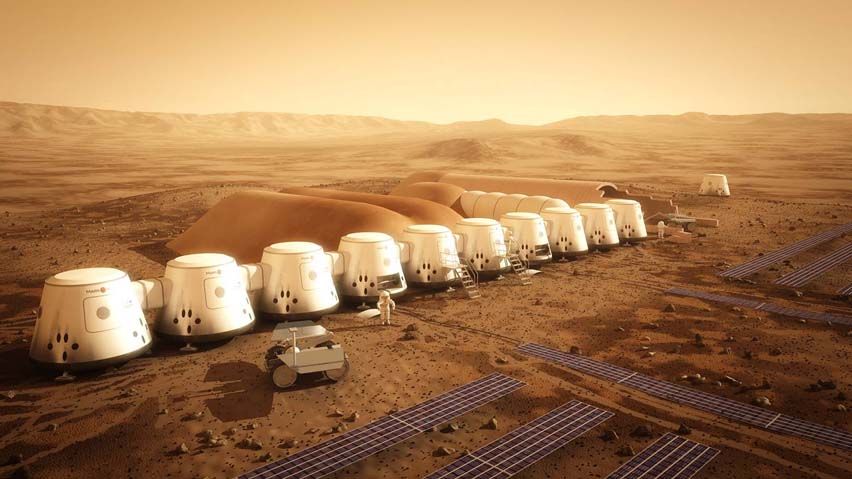
mars-one-brian-versteegIn terms of how settlement will occur, the plan is to send a series of Mars One landers equipped with up to 2500 kg (5,500 pounds) of food, solar panels and supplies each. After eight missions, more than 44,000 pounds of supplies and 40 people will have arrived and the capsules themselves will be formed into the settler’s habitat.

Two things Earth won’t be sending is water and oxygen, since the settlers will be manufacturing these themselves. According to Lansdrop, these will be manufactured on Mars:

We will evaporate it and condense it back into its liquid state. From the water we can make hydrogen and oxygen, and we will use the oxygen for a breathing atmosphere inside the habitat. This will be prepared by the rovers autonomously before the humans arrive.

mars_astronautsNaturally, a good many details, such as where the $6 billion dollars for the first mission are going to come from, whether or not the technology truly exists to create a self-sustaining colony on Mars, and whether the people going up will be able to survive for extended periods of time until new waves arrive and new settlements are opened up.

In addition, there are experts who say that the risks are too high given the distance and exposure to radiation involved. A round-trip journey to Mars could expose astronauts to the maximum amount of radiation allowed in a career under current NASA standards. While Mars One does not negate this issue, they have yet to indicate how they intend to keep their astronauts shielded from the harmful cosmic rays.

mars_astronauts1However, this has not deterred some 30,000 Americans and over 100,000 people worldwide from signing on. What’s more, Lansdrop has said repeatedly that the project will be funded by sponsors and media that will pay for broadcasting rights of shows and movies documenting everything from the astronauts’ training on Earth to their deployment and colonization of Mars.

Basically, they intend for the entire process to be a worldwide media event, a massive reality TV show, with the necessary advances and funding worked out as time goes on. Right now, all they are looking for is volunteers so that corporate and media sponsors understand just how serious this is and that the willingness to go is there. No telling if that will be enough, but it is a start.
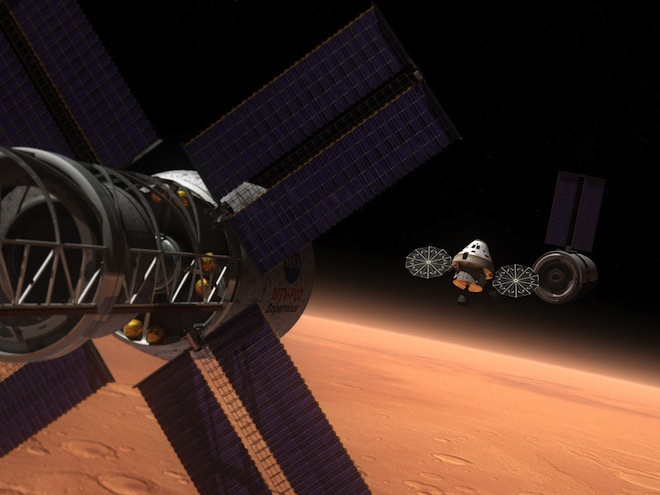
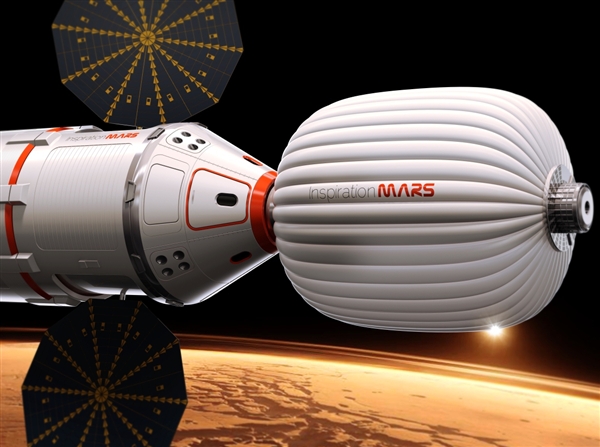
tito-mars-mission-conceptWhat’s more, Mars One is not alone in trying to make a trip to the Red Planet a reality. The Inspiration Mars Foundation is another such private venture, which is seeking to send a couple on a 501-day, round-trip journey aboard a space craft that will take then to Mars and back in 2018 without ever touching down on the surface.

Here too, the issue of funding, the technology involved, and the problem of radiation shielding are all being considered and ironed out in an ongoing manner, with some rather interesting possibilities being considered (such as using human feces and waste plumbing to shield the astronauts from radiation!)

spacecraft_marsUltimately, it seems that certain private ventures are not willing to wait for NASA’s planned 2030 excursion to Mars before general settlement and terraforming can begin. And though it may prove unfeasibly by the time frames being proposed, the excitement and desire to make things happen sooner than projected are understandable.
And as Lansdorp explains, much of the project has to do with telling a story, perhaps the greatest ever told:

What we want to do is tell the story to the world. When humans go to Mars, when they settle on Mars and build a new Earth, a new planet. This is one of the most exciting things that ever happened, and we want to share the story with the entire world.

For the full CNN story, plus video of the interview with the Mars Society, follow the link below:

http://www.cnn.com/video/data/2.0/video/world/2013/04/22/w1-mission-to-mars-willett.cnn.html

And be sure to check out Mars One promotional video:


Sources:
cnn.com, mars-one.com, applicants.mars-one.com

News From Mars: Curiosity and Opportunity On the Move

marsMars has been quite the source of news in recent weeks. And perhaps its the fact that I got to witness some truly interesting astronomical phenomena yesterday – i.e. Sunspots through a telescope – but all of them seem to have caught my attention at once. And given their importance to the ongoing exploration of Mars and our Solar System, I would be remiss if I didn’t pass them on.

The first bit of news began late last month, when the High Resolution Imaging Science Experiment (HiRISE) camera on the Mars Reconnaissance Orbiter snapped this image of the Curiosity rover as it made its way through the “Glenelg” area of Gale Crater. The rover appeared as a little more than a blueish dot in the picture, but much more visible was the rover’s tracks.

curiosity_hirise_tracks This unique photo was made possible thanks to a little maneuvering and a some serious alignment. Basically, the folks working at the Mars Science Laboratory were able to bring the Mars Reconnaissance Orbiter (MRO) into position between the Sun and curiosity, bringing the Sun, MRO, and the rover on the surface were in a near-perfect alignment.

HiRISE principal investigator Alfred McEwen addressed the photos on the HiRISE website and explained how it was all made possible:

The rover tracks stand out clearly in this view, extending west to the landing site where two bright, relatively blue spots indicate where MSL’s landing jets cleared off the redder surface dust. When HiRISE captured this view, the Mars Reconnaissance Orbiter was rolled for an eastward-looking angle rather than straight downward. The afternoon sun illuminated the scene from the western sky, so the lighting was nearly behind the camera. Specifically, the angle from sun to orbiter to rover was just 5.47 degrees.

Curiosity has since moved on and is now heading towards the large mound in Gale Crater officially named Aeolis Mons (aka. Mount Sharp).

curiosity_roadmapWhich brings us to the second news item in this week’s Mars bulletin. It seems that since July 4th, after finishing up a seven months survey in Yellowknife Bay, Curiosity has achieved a long-distance driving record as it made its way to Mount Sharp. This took place on Saturday July 21st (Sol 340), when Curiosity drove a distance of 100.3 meters (109.7 yards) in a single day.

To give you some perspective, that’s the length of a football field (at least in the US), a distance that is without equal since she first landed inside the Gale Crater nearly a year ago. The previous record for a one-day drive was about half a football field – 49 meters (54 yards) – and was achieved on Sept. 26, 2012 (Sol 50), roughly seven weeks after Curiosity made its tense, nail-biting landing.

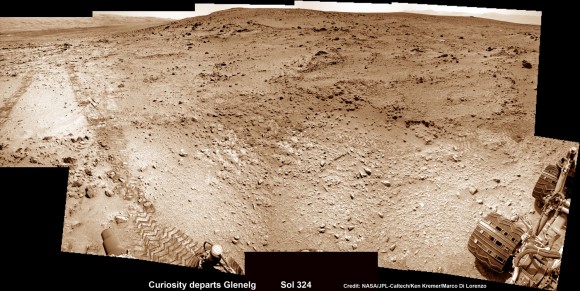
Curiosity-departs-Glenelg-Sol-324_2a_Ken-Kremer--580x291Paolo Bellutta, a rover planner at NASA’s Jet Propulsion Laboratory, Pasadena, Calif, explained what made the feat possible in a statement:

What enabled us to drive so far on Sol 340 was starting at a high point and also having Mastcam images giving us the size of rocks so we could be sure they were not hazards. We could see for quite a distance, but there was an area straight ahead that was not clearly visible, so we had to find a path around that area.

A combination of increased experience by the rover’s engineers and a series of intermediate software upgrades have also played a key role in getting Curiosity on its way to the 5.5 kilometer (3.4 mile) high Mount Sharp. This is expected to improve even more as soon as new driving software called autonomous navigation (or autonav) finishes development and is incorporated.

mountsharp_galecraterFollowing another lengthy drive of 62.4 meters (68.2 yards) on Wednesday, July 23 (Sol 342), the mission’s total driving distance  stands at 1.23 kilometers (0.81 mile) so far. But Mount Sharp still lies about another 8 km (5 miles) away at this point, so we can be expect to be hearing plenty from the rover between now and when it arrives.

For the record, it has already been discovered that the mountain contains vast caches of minerals that could potentially support a habitable environment. So when Curiosity arrives, we can expect another string of exciting finds!

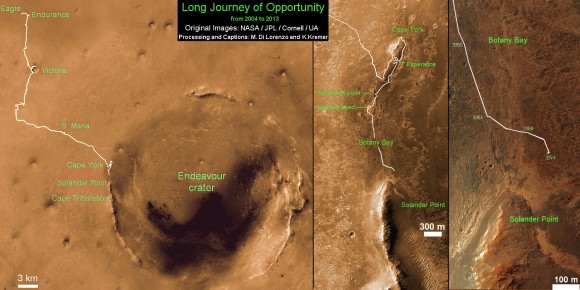
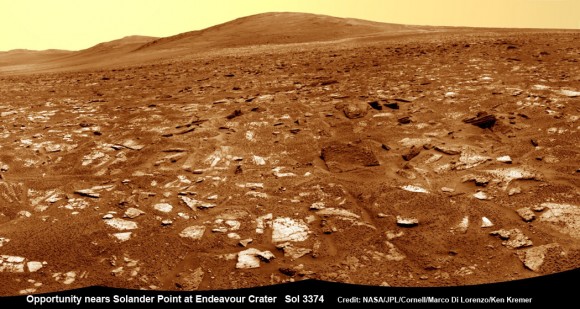
Opportunity-nears-Solander-Point-Sol-3374-N1-crop_Ken-Kremer-580x309And it is this subject of mountain goals which brings me to the last, but by no means least, of the Martian updates. While Curiosity has been making its way towards Mt. Sharp to conduct research on potentially habitable environments, Opportunity is just days away from reaching Solander Point, another Martian mountain which NASA seeks to learn more about.

This comes on the heels of the rover’s ten year, ongoing mission that was only ever expected to last ninety days. According to an update from Ray Arvidson earlier today, the mission’s deputy principal scientific investigator from Washington University in St. Louis, the rover is now just 180 meters away from the new mountain.

opportunity_roadmapAs NASA had previously stated, Solander Point represents ‘something completely different’ for the rover, being the first mountain it will ever climb. What’s more, the mountains mineral wealth may possess the key chemical ingredients necessary to sustain Martian life forms, and the area exhibits signatures related to water flow.

In many ways, you could say Solander Point represents a chance for the Mars Science Laboratory to find the elusive “organic molecules” they’ve been searching for since Curiosity first landed. And if it’s the veteran rover that finds the first hard evidence of their existence, it would be quite the feather in the Opportunity team’s cap.

opportunity_bdayBut before moving onto the first leg of ascent, Arvidson explained that the rover will be making a brief pause in its current location to conduce some exciting experiments. Thanks to observations made of the area by the Mars Reconnaissance Orbiter with its CRISM instrument (Compact Reconnaissance Imaging Spectrometers for Mars), the rover will be conducting some on-the-spot analysis to see if there is indeed evidence of water.

This past spring, Opportunity made the historic discovery of clay minerals and a habitable environment on a low hill called Cape York, the rover’s prior stop along the rim of Endeavour Crater. Solander was selected as the robot’s next destination because it also offers a goldmine of scientific data. Another reason was because its north facing slopes will be a boon to Opportunity’s solar wings, ensuring it more power before Martian winter sets in.

opportunity_missionmapBut since Opportunity is currently sitting on a healthy supply of power and has some time before the onset of her 6th Martian winter, the team decided to take a small detour to the southeast and spend several days exploring the area for more evidence of water-bearing minerals.

If successful, this will be yet another accomplishment for the rover during its long tenure of service to NASA. Today marks the 3380th day of continuous service for the rover – aka. Sol 3380 – a mission which has resulted in numerous scientific finds, over 182,000 images, and a driving distance of roughly 38 kilometers (23.6 miles). This, as already mentioned, puts Opportunity in the top spot for the longest distance traveled on another planet.

Yes, it seems that the Red Planet is certainly doing all it can to keep explorers and scientists intrigued. No telling what we might learn between now and the point when manned missions take place, and human astronauts are able to see the surface and study its mysteries close up. Personally, I’m hoping for signs of existing supplies of water, not to mention those tricky organic molecules. If settlement and terraforming are ever to take place, we need to know we’ve got something to work with!

Sources: universetoday.com, (2) , (3), nasa.gov, space.com

News from Mars: Evidence of Falling Snow

Mars-snow-header-640x353Ever since astronomers first looked up at Mars, they discerned features that few could accurately identify. For many years, speculations about irrigation, canals, and a Martian civilization abounded, firing people’s imaginations and fiction. It was not until more recently, with the deployment of the Viking probe, that Mars’ surface features have come to be seen for what they are.

Thanks several more probes, and the tireless work of rover such as Opptorunity and Curiosity, scientists have been able to amass evidence and get a first hand look at the surface. Nevertheless, they are still hard-pressed to explain everything that they’ve seen. And while much evidence exists that rivers and lakes once dotted the landscape, other geological features exist which don’t fit that model.

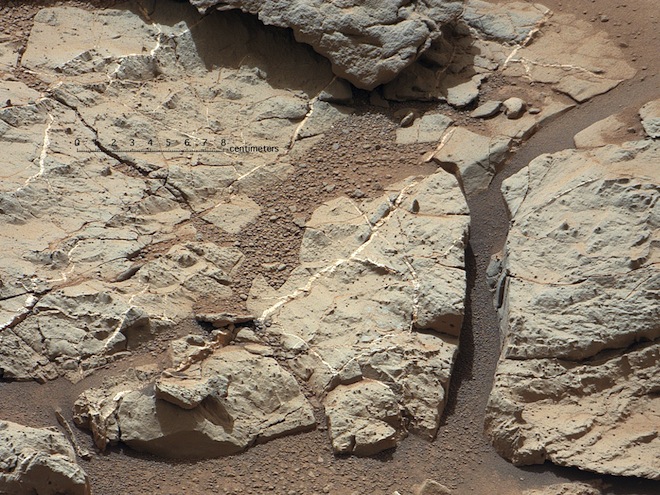
curiosity_rocksHowever, a recent report from Brown University has presented evidence that snowfall may be one answer. It has long been known that ice exists at the polar caps, but actual snowfall is a very specific meteorological feature, one that has serious implications for early Martian conditions. This is just another indication that Mars hosted an environment that was very much like Earths.

And this is not the first time that snow on Mars has been suggested. In 2008, NASA announced having detected snow falling from Martian clouds, but it was entirely vaporized before reaching the ground. The Brown researchers claim that snowfall in the past, and buildup on the surface leading to melting and runoff, could have created many of the tributary networks observed near tall mountain-ranges.

mars_atmoTo back this claim up, the team used a computer simulation from the Laboratoire de Météorologie Dynamique called the Mars global circulation model (GCM). This model compiles evidence about the early composition of the red planet’s atmosphere to predict global circulation patterns. And since other models predict that Mars was quite cold, the program indicated the highest probability of snowfall over the densest valley systems.

Lead researcher Kat Scanlon also relied on her background in orographic studies (science for “studying mountains”) in Hawaii to arrive at this hypothesis. This includes how tall mountains lead to divergent weather patterns on either side, with warm, wet conditions one and cold, dry ones on the other. NASA’s Curiosity rover also was intrinsic, thanks to recent information that might explain why Mars no longer displays this kind of behavior.

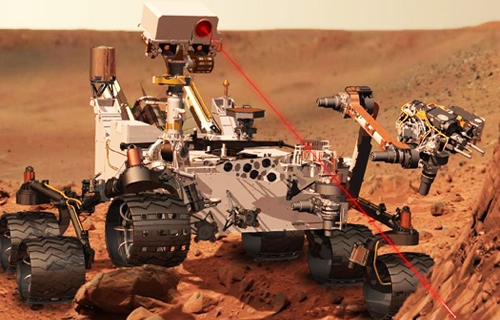
Curiosity-Laser-BeamIn short, Curiosity determined that the planet is losing its atmosphere. It has taken detailed assays of the current atmosphere, which is almost entirely carbon dioxide and about 0.6% the pressure of Earth’s at sea-level. More notably, it has used its ability to laser-blast solid samples and analyze the resulting vapor to determine that Mars has an unusually high ratio of heavy to light isotopes — most importantly of deuterium to hydrogen.

The main explanation for this is atmospheric loss, since light isotopes will escape slightly more quickly than heavy. Over billions of years, this can lead to non-standard isotope levels the show a loss of atmosphere. One major theory that might explain this loss say that about 4.2 million years ago Mars collided with an object about the size of Pluto. An impact from this body would have caused a huge expulsion of atmosphere, followed by a slow, continued loss from then on.

All of this plays into the larger question of life on Mars. Is there, or was there, ever life? Most likely, there was, as all the elements – water, atmosphere, clay minerals – appear to have been there at one time. And while scientists might still stumble upon a Lake Vostok-like reserve of microbial life under the surface, it seems most likely that Mars most fertile days is behind it.

However, that doesn’t mean that it can’t once again host life-sustaining conditions. And with some tweaking, of the ecological engineering – aka. terraforming – variety, it could once again.

Living-Mars.2Source: extremetech.com

News from Mars: Oxygen-Rich Atmosphere

marsEver since the Opportunity and Curiosity Rovers began their research stint on the red planet, evidence has been pouring in that indicates that the planet once supported life. And now, by examining the compositions of Martian meteorites found on Earth and data provided by the Mars rovers, Scientists from the Department of Earth Sciences at the University of Oxford have determined that the planet once boasted an oxygen-rich atmosphere.

The key determinant was the fact that the Martian surface rocks were five times richer in nickel than the meteorites found on Earth, a find which cast doubt on whether the meteorites were typical volcanic products. Whilst it is possible that the geological composition of Mars varies immensely from region to region, the team believes that it is more likely that the differences arise through a process known as subduction – in which material is recycled into the interior.

mars_oxygenThe scientists suggest that the Martian surface was oxidized very early in the history of the planet and that, through subduction, this oxygen-rich material was drawn into the shallow interior and recycled back to the surface during eruptions 4 billion years ago. The meteorites, by contrast, are much younger volcanic rocks that emerged from deeper within the planet and so were less influenced by this process.

As Professor Bernard Wood, the senior author of a study that appeared in Nature magazine, put it:

What we have shown is that both meteorites and surface volcanic rocks are consistent with similar origins in the deep interior of Mars but that the surface rocks come from a more oxygen-rich environment, probably caused by recycling of oxygen-rich materials into the interior. This result is surprising because while the meteorites are geologically young, around 180 million to 1.4 billion years old, the Spirit rover was analyzing a very old part of Mars, more than 3.7 billion years old.

In addition to evidence that Mars once had a sizable amount of surface water, in the form of rivers and lakes, this latest study demonstrates that Mars was once very much like Earth. In all likelihood, it would have been home to countless forms of bacteria, single-celled organisms, and possibly larger creatures as well. But being at the edge of our Sun’s habitable zone, it was unable to maintain the conditions for life to thrive.

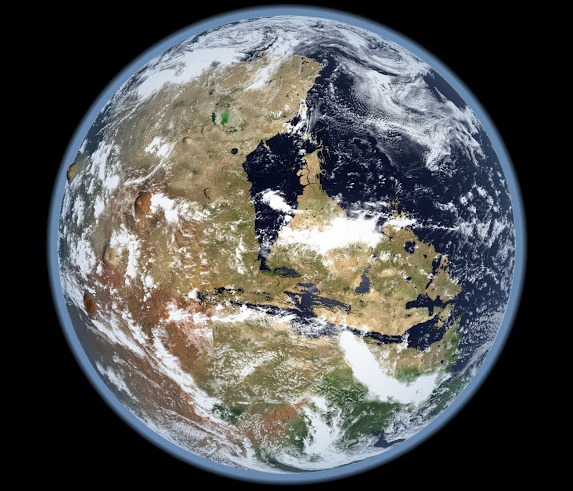
terraforming-hswmarsSad news, but encouraging when it comes to the prospect of making Mars able to sustain life again. And in the coming years and decades, that’s precisely what a number of space agencies, private companies and citizens want to do. And if these plans are to succeed long term, the planet will have to be converted into something that can independently support life.

In short, the colonization of Mars requires that the planet become something akin to its old self.

Source: sci-news.com

More News from Mars… Lots More!

marsIt’s a good thing I’ve come down with a cold and have little to do but sit at my computer. Because in the last week, some very interesting news stories have been piling up that just scream for recognition. And wouldn’t you know it, more than a few have to do with our big red neighbor Mars, that world many human beings will one day think of as home.

The first story comes to us from the Siding Spring Observatory in New South Wales, where noted astronomer Robert McNaught recently sighted an new comet. From his observations, the icy interloper appeared to have originated in the Oort Cloud – a hypothetical cloud surrounding the solar system and containing billions of icy planetesimals that were cast out from our Solar System billions of years ago.

Mars_A1_Latest_2014After news of the discovery was released, the astronomers at the Catalina Sky Survey in Arizona looked back over their observations to find “prerecovery” images of the comet dating back to Dec. 8, 2012. These observations placed the orbital trajectory of the comet – now known as C/2013 A1 – through the orbit of Mars on Oct. 19, 2014. This means, in essence, that this comet could very well strike the Red Planet late next year.

Luckily, NASA’s Jet Propulsion Laboratory has run the calculations and indicated that their close approach data suggests the comet is most likely to make a close pass of the Martian surface. And by close, they mean at roughly 0.0007 AU, or approximately 100,000 kilometers (63,000 miles) from the Martian surface. So in all likelihood, Curiosity and Opportunity will be safe from a serious impact that could turn them into scrap metal!

But of course, predicting its exact trajectory at this time is subject to guess work, and ongoing observations will be needed. No doubt, the predictions will be refined a the next 20 months go by, and we’ll know for sure if this comet plans to miss Mars completely, or slam head-on into the surface at 200,000 km/h (126,000 mph).

Source: news.discover.com, astroblogger.blogspot.ca

Mars_curiosity_drillingThe second bit of news comes to us from the good-ole Curiosity Rover! Roughly four weeks after conducting the first drilling operation into the Martian surface, the Rover ate its first sample of the grey dust that resulted. The delivery of the two aspiring-sized tablets of dust took place on Feb. 22nd and 23rd respectively after the robotic arm delivered them into the rover’s Chemistry and Mineralogy (CheMin) and Sample Analysis at Mars (SAM) laboratories for analysis. Results expected in two weeks!

Among other things, the results from the analysis are expected to give clues as to what the color change between the red surface and the grey interior means. One theory is that it might be related to different oxidations states of iron that could potentially inform us about the habitability of Mars inside the rover’s Gale Crater landing site.

Living-Mars.2At the same time, the Mars Science Laboratory team expects to find further evidence of what life was like in previous geological eras. The Curiosity team believes that the area inside the Gale Crater, known as Yellowknife Bay, experienced repeated exposure to flowing liquid water long ago when Mars was warmer and wetter – and therefore was potentially more hospitable to the possible evolution of life.

The rover will likely remain in the John Klein area for a month or more to obtain a more complete scientific characterization of the area which has seen repeated episodes of flowing water. Eventually, the six-wheeled mega rover will set off on a year long trek to her main destination: the sedimentary layers at the lower reaches of the  5 km (3 mile) high mountain named Mount Sharp.

Source: universetoday.com

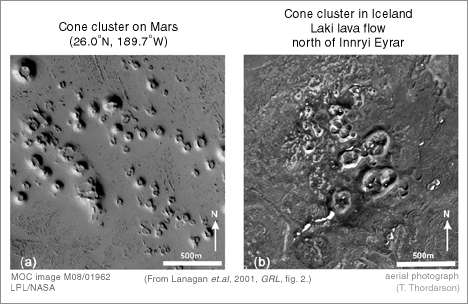
mars_hieroglyphsAnd last, but not least by any stretch of the imagination, is the discovery of “hieroglyphs” on the Martian surface. While they might appear like ancient glyphs to the untrained eye, they are in fact evidence of past subsurface water. The images were caught by the HiRISE camera on the Mars Reconnaissance Orbiter as it passed the surface area known as Amazonis Planitia.

Known as ‘rootless cones,’ these geological features are the result of an explosive interaction of lava with ground ice or water contained within the regolith beneath the flow. Vaporization of the water or ice when the hot lava comes in contact causes an explosive expansion of the water vapor, causing the lava to shoot upward, creating what appears to be a button hole on the surface.

rootlessConesIn the past, Mars scientists have used geological patterns on Earth to make sense of similar ones found on Mars. For example, when the Curiosity Rover discovered veins of hydrated calcium in the rock surface in the Gale Crater, they compared them to similar patterns found in Egypt to determine that they were the result of long-term exposure to water flows. In this case, the rootless cones found in Amazonis Planitia are comparable to those found in Iceland’s Laki Lava Flow (as seen above).

According to Colin Dunas, from the US Geological Survey, the cones are rather large and most likely very old:

“The cones are on the order of a hundred meters across and ten meters high. The age of these specific cones isn’t known. They are on a mid- to late-Amazonian geologic unit, which means that they are young by Martian standards but could be as much as a few hundred million to over a billion years old.”

terraformingOnly time will tell if any subsurface water is still there, and hence usable by future teams of terraformers and settlers. According to Dundas, the odds are not so good of that being the case. Given the surface depth at which the ice was found, not to mention that at the low latitude at which it was found (22 degrees north), shallow ground ice is unstable. Dundas added that since ice stability varies as the obliquity changes, it’s even possible that ice has come and gone repeatedly since the lava erupted.

Too bad. That could have come in really handy for hydroponics, fuel cells, and even restoring surface water to the planet. Guess future generations of Martians will just have to look for their ground and irrigation water elsewhere, huh? Just another challenge of converting the Red Planet to a green one, I guess 😉

Stay tuned for more news Mars. As it stands, there’s plenty to be had! Stick around!

Source: hirise.lpl.arizona.edu, universetoday.com