Tweeting Aliens: The Lone Signal Array

gliese-581-eIn what could be called a case of serious repurposing – beating swords into plowshares and so forth – or something out of science-fiction, a crowdfunded project has sought to turn a Cold War era dish into a deep-space communications array. This array will send messages to that’s relatively near to us, and potentially inhabited. And assuming anything sufficiently advanced lives there, we could be talking to them soon enough.

dishantennaThe project is known as Lone Signal, a crowdfunded effort to send a continuous stream of messages to the folks at Gliese 526, a red dwarf star 17.6 light-years away in the constellation of Bootes (aka Wolf 498). And the dish with which they intend to do this is known as the Jamesburg Earth Station, a nuke-proof satellite relay station in California that dates from the 1960s and even helped broadcast images of Neil Armstrong on the moon.

Long Signal, it should be noted, is the brainchild of The Blue Marble Space Institute of Science, non-profit virtual research institute that networks scientists from across the globe and multiple disciplines for the purpose of expanding the boundaries of knowledge, science and astronomy and promoting an open dialogue on the subject of exploration and settlement.Towards this end, they arranged for a 30-year lease on the Cold War-era dish (for a cool $3 million) and set up a project that will allow participants who contribute money to send a personalized message into space.

exoplanetsUltimately, they plan to direct two beams at Gliese 526: a continuous wave with fundamental physics laws and basic information about Earth, and another consisting of crowdsourced greetings. The project is open to anyone and a series of initial short message (the equivalent of a 144-character tweet) will be available free of charge. Subsequent messages, images, and longer greetings, however, will cost money (about $1 for four texts) that will help the project fund itself.

The project’s website also lets participants track their messages and share them via social media, dedicate messages to others, and view signal stats. In an interview with Universe Today, Lone Signal co-founder Pierre Fabre, told people:

Our scientific goals are to discover sentient beings outside of our solar system. But an important part of this project is to get people to look beyond themselves and their differences by thinking about what they would say to a different civilization. Lone Signal will allow people to do that.

Indeed. Nothing like the prospect of facing another life form, a potential space invader even, to make people forget about all their petty bickering!

Gliese_581_-_2010As our knowledge of the universe expands, we are becoming aware of the existence of more and more exoplanets. Many of these exist within the Habitable Zones of their parent star, which means two things. On the one hand, they may be candidates for potential settlement in the future. On the other, they may already be home to sentient life. If said life is sufficiently advanced, its entirely possible they could be looking back at us.

For some time, the human race has been contemplating First Contact with potential extra-terrestrial life, which was the very purpose behind the creation of NASA’s SETI (Search for Extra-Terrestrial Intelligence) program in 1961. The Pioneer space probes were another attempt at making contact, both of which carried small metal plaques identifying their time and place of origin for the benefit of any other spacefarers that might find them in the distant future.
SETIFollowing in that tradition, Voyager 1 and 2 space probes contained even more ambitious messages, otherwise known as the Golden Record. These phonograph records – two 12-inch gold-plated copper disks – contained both sounds and images selected to portray the diversity of life and culture on Earth that would give any civilization that found them a good idea of what the people of Earth were capable of.

The contents of the records were selected for NASA by a committee chaired by Carl Sagan of Cornell University, and consisted of 115 images and a variety of natural sounds – surf, wind, thunder, birds, whales, and other animals. To this they added musical selections from different cultures and eras, and spoken greetings from Earth-people in fifty-five languages, and printed messages from then-President Carter and U.N. Secretary General Waldheim.

golden_record_cover_smIn this respect, Lone Signal represents the latest step in promoting contact and communication with other life forms. And in keeping with the trend of modern space exploration, it is being opened to the public via crowdfunding and personalized messages. But unlike SETI, which lost its government funding in 1995 and had to turn to private supporters, crowdfunded space exploration is something directly accessible by all citizens, not just corporate financiers.

Update: The Lone Signal project is now operational and on 9:00 PM EDT Monday, June 17 at a press event in New York, the team announced the transmission of the first interstellar message. The message was sent by none other than Ray Kurzweil, noted Futurist and science guru. That message was then read during his welcome talk to the Singularity University class of 2013, from the Computer History Museum in Mountain View, California:

Greetings to Gliese 526 from Singularity University. As you receive this, our computers have made us smarter, the better to understand you and the wisdom of the universe.

What he means by this is that by the time the message is recieved – roughly 18 years from now, assuming it ever is – humanity is likely to have taken the first steps towards merging our brains with computers via biotech, artificial intelligence, or other means of computer-assisted brain augmentation. At least, that’s what guys like Kurzweil hope for.

Other “alpha beamers” — including Dan Aykroyd, Alicia Keys, and Jason Silva — also sent beams Monday night. And for the time being, anyone can send a “crowdsourced” 144-character beam and pic. Better get on it before they start charging. If texting and phone rates are any indication, the price is likely to go up as the plan improves!

And be sure to enjoy this promotional video from Lone Signal:


And also check out this time-lapse video of the Jamesburg Earth Station in operation:

Sources: cnet.news.com, universetoday.com, voyager.jpl.nasa.gov, bmsis.org, kurzweil.net

News From Space: Opportunity Hits New Record!

opportunityWith the Curiosity Rover blazing a trail across Mars to find evidence of what the planet once looked like, people often forget about it’s venerable predecessor – the Opportunity Rover. Luckily, Opportunity recently broke a record that put it back in the public eye and into the history books. After nine years into what was initially meant to be a 90 day mission, Opportunity smashed yet another space milestone this week by establishing a new distance driving record.

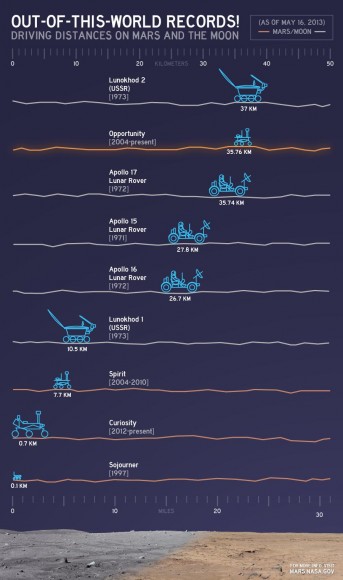
On Thursday, May 16, the Opportunity rover drove another 80 meters (263 feet) on the Martian surface, bringing her total odometry since landing on the 24th of January, 2004 to 35.760 kilometers (22.220 miles). This effectively put her ahead of the 40 year old driving record set by the Apollo 17 astronauts Eugene Cernan and Harrison Schmitt back in December of 1972.

Apollo_17_lunar-rover-577x580On that mission, Cernan and Schmitt performed America’s final lunar landing mission and drove their Lunar Roving Vehicle (LRV-3) a total of 35.744 kilometers (22.210 miles) over the course of three days on the moon’s surface at the Taurus-Littrow lunar valley. And interestingly enough, Cernan was a very good sport about his record being broken. In a statement made at NASA’s Goddard Space Flight Center in Greenbelt, Md, he said:

The record we established with a roving vehicle was made to be broken, and I’m excited and proud to be able to pass the torch to Opportunity.

And since Opportunity still has plenty of juice left, it is now eying the ‘Solar System World Record’ for driving distance on another world, a record that is currently held by the Soviet Union’s remote-controlled Lunokhod 2 rover. In 1973, Lunokhod 2 traveled 37 kilometers (23 miles) on the surface of Earth’s nearest neighbor. With Opportunity setting course for her next crater rim destination, named “Solander Point”, she is likely to overtake Lunokhod 2’s record in short order!

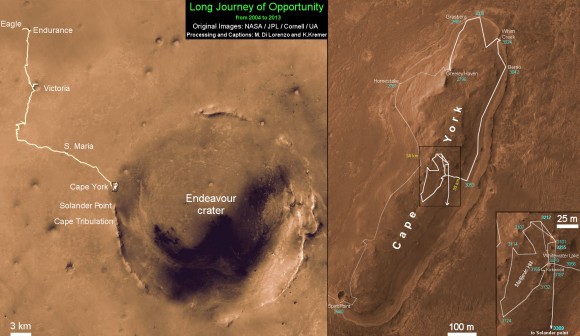
Opportunity-Route-Map_Sol-3309_Ken-Kremer-580x336Thereafter, Opportunity will rack up ever more distance as the rover continues driving further south to a spot called “Cape Tribulation”. This point is believed to hold caches of clay minerals that formed eons ego when liquid water flowed across this region of the Red Planet. In so doing, Opportunity will not only establish a new record that will last for years to come, it will also be obtaining data that will assist in Curiosity’s own efforts to determine what life was like on Mars in the past.

Far greater than this record-breaking news is the fact that Opportunity has lasted so far beyond her design lifetime, 37 times longer in fact than her initial 3 month “warranty”.

And be sure to check out the full list of record holders for “out-of-this-world” driving, below:

out-of-this-world_recordsSources: universetoday.com, news.cnet.com

NASA Engine Will Take Us To The Moon (And Beyond)

NASA_Moon1For almost a year now, NASA has been discussing plans which will eventually culminate in a return to the Moon. Initially, such plans were kept under wraps just in case NASA found itself in a budget environment that did not favor renewed space exploration. But since the 2012 election, and the re-election of President Obama, NASA publicly announced its plans, confident that the budget voted on in 2010 (which included lucrative funding for them) would continue.

And now, NASA has been unveiling the tools that will take us there and beyond in the coming years. Far from simply shooting for the Moon for the first time in decades, NASA’s plans also include manned missions to Mars, and exploratory missions which will take it out to Jupiter and the outer Solar System. And since they are thinking big, its clear some budget-friendly and powerful tools will be needed for the job.

jx-2rocketAbove, we have the latest. It’s called the JX-2, a liquid-fuel cryogenic rocket engine is the modernized version of the J-2, the engine that NASA used in the late-’60s and early-’70s to thrust humans beyond low Earth orbit. With the conclusion of the Apollo program, these babies fell into disuse. But with the upgrades made to these new versions, NASA hopes to send people back to the Moon, and a few places beyond.

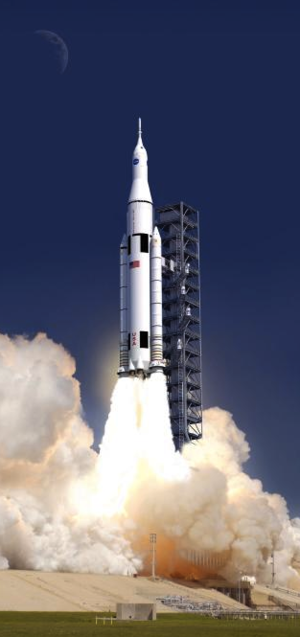
Of course, there are other noted improvements in NASA’s arsenal that will also come into play. For starters, the J-2 was part of the general assembly of the Saturn V rocket, the mainstay of the space agency’s fleet at the time. In the years to come, NASA will be deploying its new Space Launch System (SLS) and the Orion Multi-Purpose Crew Vehicle (MPCV).

NASA_marsThe SLS is NASA’s next-generation rocket, a larger, souped-up version of the Saturn V’s that took the Apollo teams into space and men like Neil Armstrong to the Moon. According to NASA spokesmen, the SLS rocket will “incorporate technological investments” and “proven hardware” from previous space exploration programs.” Essentially, this means that projects which have been shelved and retired have been updated and incorporated to create a rocket that can do the job of sending men into deep space again.

The Orion MPCV, on the other hand, is the module that will sit atop the SLS, carrying its crew compliment and delivering them to their destination once the rocket has put them into space and disassembled itself. Announced back in September of 2011, the SLS and MPCV constitute the largest and most powerful space rocket system ever built by a space agency.

No date has been given as to when the SLS and MPCV will be sent into space, courtesy of the new JX-2 rocket engine. But NASA claims there will be a launch sometime next year. As for the Moon, well, we’re waiting on that too, but it’s clear that with Mars slated for 2030, a manned mission to the Moon is sure to happen before this decade is out.

In the meantime, check out the infographic on the new rocket system below, and keep your eyes on the skies! We’re going back, and this time, we mean to stay!

nasa-spaceship-mpcv-orion-capsule-comparison-apollo-shuttle-infographic-110525b-02

Sources: IO9.com, (2), Space.com

Mercury Mapped for the First Time

mercury_mapMercury is the smallest planet in the Solar System and has the closest proximity to our sun. As a result, it’s one of the most neglected when it comes to scientific study. While Mars, Venus, Jupiter and Saturn have been probed and photographed in exquisite detail during the space age, the closest planet to the Sun has had to make do with a few flybys from the Mariner 10 spacecraft in the early 1970s.

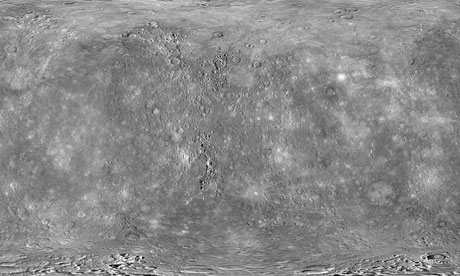
However, that is now changing thanks to NASA’s Messenger spacecraft. In addition to confirming the existence of ice and organic molecules back in November, the probe has also transmitted thousands of images of the planet over the past year. These have allowed NASA personnel to construct the first high-resolution maps of the planet, its own high-resolution maps, down to the scale of kilometers.

Global Map Of Mercury From Messenger.According to David Blewett, a scientist at the Applied Physics Laboratory at Johns Hopkins University and part of the Messenger team, part of the reason it has taken more than 30 years to revisit the planet since the Mariner 10 flybys was because a lack of public interest. Messenger, he claims, has changed all that. Speaking ahead of a briefing on Friday at the annual meeting of the American Association for the Advancement of Science in Boston, Blewett had this say:

“Messenger has revealed Mercury to be a fascinating, dynamic and complex world. We know now that it is an oddball planet. It’s the smallest of the eight planets but has the highest density. The interior structure is different than the other planets. The geologic surface is different to the moon and Mars. The surface composition is enigmatic because … it consists of rock types that we don’t have much experience with. It has a global, Earth-like magnetic field, Venus and Mars do not.”

messenger_mercuryThe new global map is an enhanced image that shows the different compositions of rocks on the surface of Mercury by color-coding them. The more orange areas are volcanic plains while the make-up of the rocks in the deep blue areas is unknown. Though Messenger was able to detect an abundance of individual elements on Mercury’s surface – including iron, titanium, sulphur and potassium – without rock samples to study, scientists cannot determine the exact compounds or minerals in which those elements are arranged.

But the biggest surprise came on the surface, where there was an abundance of relatively volatile elements such as potassium and sulphur was seen to be very high. Most of the models for the formation of Mercury predict that these elements should have evaporated away during the planet’s formation. So in addition to learning more about its surface features, scientists are now presented with the opportunity to study and learn more about the planet’s early history as well.

But of course, much of that information and research are going to have to wait for future generations of Rovers. These are likely to be similar in nature to Curiosity, in that they are remote controlled, networked robots with internal labs. But unlike those currently combing the Red Planet, these ones will have to be able to withstand surface temperatures in excess of 400 C and some dangerous surface activity. Hard to know exactly when NASA will be rolling any of those out, but the simplest answer is, not too bloody soon!

Check out the video of Mercury’s new color map as it rotates to show its fully-detailed surface. And FYI, this bit of breaking news has become my 900th post! Woohoo!

Source: gaurdian.co.uk

NASA Sends Mona Lisa to the Moon!

moonIn an effort to demonstrate how laser communications work, and perhaps just to show off a little, a team of NASA engineers shot an image of the Mona Lisa to the moon by piggybacking it on laser pulses. The transmission occurred back in mid-January, and took place between NASA’s Goddard Space Flight Center here on Earth and the Lunar Reconnaissance Orbiter (LRO) some 386,000 km (240,000 miles) away. In addition to showcases how NASA regularly communicated with the orbiter, it also presented a possible means of communicating with a future moon colony.

On any given day, scientists at the Goddard Space Flight Center use what is known as the Next Generation Satellite Laser Ranging Station to track the LRO’s position. Expanding on this, the staff reprogrammed the laser to send the massive work of art in the form of as massive JPEG file. This involved chopping the picture into a 152×200 pixel array, with each pixel assigned a gray-scale value and beamed up one at a time. All told, the process took some time, with image transmission speed clocked at about 300 bits per second.

mona_lisa_laserIt then fell to LOLO, the LRO’s Lunar Orbiter Laser Altimeter, to put the Mona Lisa back together based on the arrival times of the pixel data. All the while, LOLA continued to pursue its primary mission of mapping out the lunar terrain. The image was then beamed back to Earth via the LRO’s radio telemetry system, with only minor errors caused by turbulence in the atmosphere.

MIT’s David Smith, head of LOLA, had this to say about the event in a release:

“This is the first time anyone has achieved one-way laser communication at planetary distances. In the near future, this type of simple laser communication might serve as a backup for the radio communication that satellites use. In the more distant future, it may allow communication at higher data rates than present radio links can provide.”

According to NASA, the success of the demonstration could pave the way for lasers to be used for satellite communication, particularly with its Lunar Atmosphere and Dust Environment Explorer (LADEE) mission, which is set to launch this year.

No telling how DaVinci might react to the news of his classic portrait breaching the heavens and being beamed into space. However, given the man’s obvious love of his work and fascination with all things metaphysical and scientific, I think he would have been very happy. Perhaps if his enigmatic masterpiece were to be send into the cosmos as part of the search for extra-terrestrial life too. But that’s another day and another mission!

And be sure to check out the video below from the Goddard SFC explaining the process, courtesy of NASA:

Source: news.cnet.com

In Remembrance of Columbia

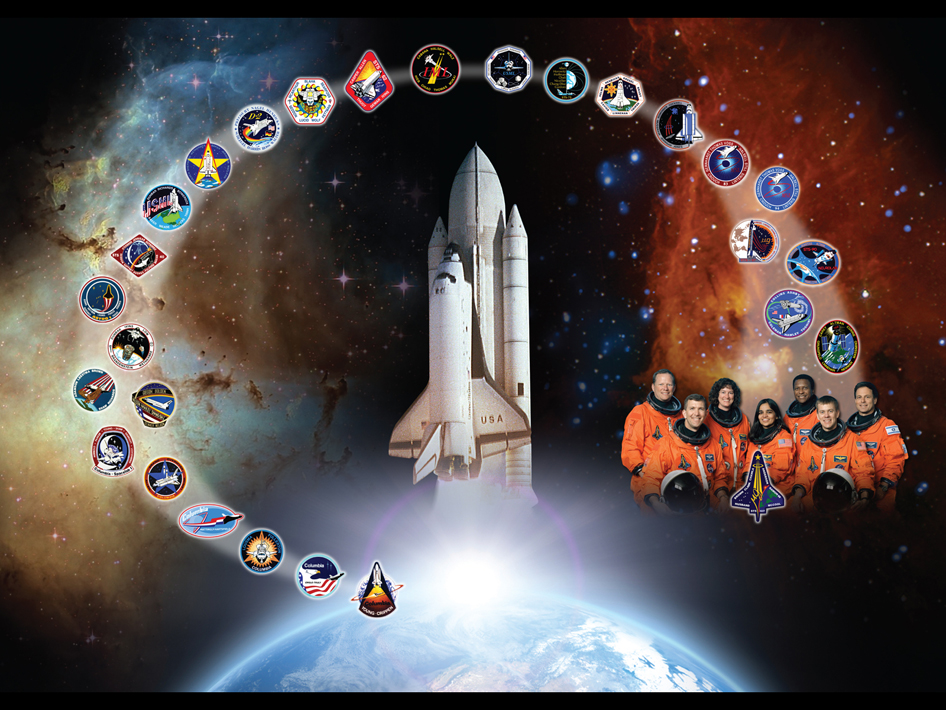
The STS-107 crew includes, from the left, Mission Specialist David Brown, Commander Rick Husband, Mission Specialists Laurel Clark, Kalpana Chawla and Michael Anderson, Pilot William McCool and Payload Specialist Ilan Ramon. (NASA photo)

Just two days ago, the tenth anniversary of the shuttle Columbia disaster came to pass. On that day, the pilots who lost their lives, as well as those who died on the Challenger and Apollo 1 missions, were commemorated at a special wreath-laying ceremony at the Arlington National Cemetery in Virginia. It is a somber day, when people all over the world come together to commemorate those brave souls who died in the name of advancing exploration.

The disaster took place on Feb. 1st 2003, roughly sixteen days after the shuttle departed from Earth to conduct microgravity experiments. During re-entry, contact was lost with the shuttle as the orbiter suffered a catastrophic failure due to a breach that had opened in one of the shuttle’s wings. This had occurred during launch when a piece of foam fell from the external tank during launch.

columbia_arlingtonThe seven person crew of the STS-107 Columbia, which included Rick D. Husband, William C. McCool, David Brown, Laurel Blair Salton Clark, Michael P. Anderson, Ilan Ramon, and Kalpana Chawla, died just 15 minutes before they were meant to touch down at Kennedy Space Center. Addressing the nation, then-President Bush said, “mankind is led into the darkness beyond our world by the inspiration of discovery and the longing to understand. Our journey into space will go on.”

On Feb. 1st, President Obama and Charles Bolden, Administrator for NASA, also marked the occasion with somber words of remembrance. The former emphasized the ongoing important of space exploration and its inherent risks:

“The exploration of space represents one of the most challenging endeavors we undertake as a Nation. Whether it’s landing a 1-ton rover on Mars, building a space telescope 100 times more powerful than the Hubble, or preparing to send humans beyond the Moon, it’s imperative America continues to lead the world in reaching for the stars while giving us a better understanding of our home planet.”

Bolden expressed similar sentiments, calling to mind other tragedies and drawing attention to the lessons learned from the disaster:

“After the tragedy of Columbia, we not only returned to flight, we established policies and procedures to make our human spaceflight program safer than ever. Exploration will never be without risk, but we continue to work to ensure that when humans travel to space, nothing has been left undone to make them as safe as possible.”

Naturally, I hope he’s right about that. As we embark on an era of renewed exploration – to the Moon, to Mars, and even beyond – there will plenty of risk incurred and only a few people bold and intrepid enough to risk their lives to see it done. Much like veterans who died in the name of peace, we should never forget those explorers who died in the name of advancing humanity’s knowledge, awareness, and understanding of the universe.

Rest In Peace you brave souls!

columbia_memorial

Sources: Universetoday.com, history.nasa.gov, nasa.gov

NASA Considers Catching Asteroids

CometNASA is apparently considering playing a little catch and release with some giant rocks. Basically, they want to capture an asteroid and deposit in orbit around the Moon by the early 2020s. The announcement of this new plan was made earlier this month, and left many wondering if this has anything to do with the Obama administration’s long term plans for establishing an outpost on the dark side of the moon or sending a manned mission to a near-Earth asteroid.

This makes sense, since if NASA were to place an asteroid in orbit around the Moon, a crewed space craft could practice engaging with it without needing to move beyond the range of a rescue mission. What’s more, such a body would come in handy as a potential stopover base for spaceships looking to refuel and resupply before setting off on deeper space missions – particularly to Mars.

NASA_moonWhat’s more, capturing a near Earth asteroid and bringing it in orbit of the Moon is a safer, cheaper way to perform manned landings on object in the asteroid belt. The nearest proposed target is a space rock named 1999 AO10, an asteroid which is roughly a year’s trip away. Traveling to this body would expose astronauts to long-term radiation since they would be beyond Earth’s protective magnetic field, and would also take them beyond the reach of any possible rescue.

Researchers with the Keck Institute for Space Studies in California have confirmed that NASA is mulling over the plan to build a robotic spacecraft for just such a purpose. They also confirmed that the project would take six to ten years and would involve the launching of a slow-moving spacecraft propelled by solar-heated ions on an Atlas V rocket. After locating and studying the target asteroid, the robot would catch it in a bag measuring about 10 by 15 meters and bring it back towards the moon.

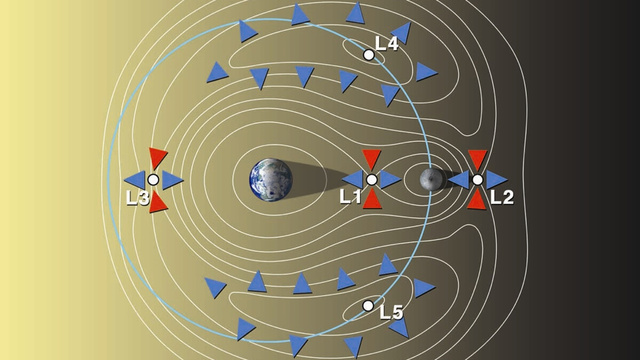
Altogether, the mission would take 6 to 10 years, and cost about 2.6 billion. If successful, it may cut costs when it comes time to place a base in orbit at Lagrange Point 2 – on the dark side of the moon – or when missions to Mars start heating up by 2030. Yes, at this point, I’m thinking the people at NASA are thanking their lucky stars (no pun!) that Obama was reelected back in November. Always good to have powerful friends, especially when they can sign multi-billion dollar checks!

Source: Wired.com, newscientist.com

NASA Makes Appearance at 2013 Inauguration

2013_inaugural_nasaThe 2013 Inaugural Parade on January 21st – my birthday, fyi – was quite the sight to see. In addition to the President and First Lady, many floats, and thousands of onlookers, the good folks at NASA also made an appearance. Specifically, two floats featuring the Orion deep space capsule and the Curiosity Rover were part of the parade, passing in front of the White House and the official reviewing stand while President Obama, VP Joe Biden, their families and numerous dignitaries smiling and waving.

The life-sized models were greeted with plenty of fanfare and fair weather as they floated near the front of the procession, and it is estimated that over a million people were on hand to witness the event. NASA was the only federal agency to be asked to take part in the inaugural parade, which goes to show you how important the administration considers their efforts. But given all that NASA has accomplished as of late, that should come as no small surprise.

In the few short months since it landed, Curiosity has uncovered very compelling evidence that water once flowed on Mars, and the Orion capsule is expect to take astronauts back to the moon and father into space than ever before. What’s more, the Obama administration has already granted the funding for NASA to go ahead with its plans to establish an outpost on the Moon in the next few years, as well as a manned mission to the Mars by 2030. In short, NASA and the Obama administration are pretty tight; and if you ask me, both are stronger for it!

Check out the video below of the procession, or go to NASA Flickr page for more photos of the inaugural parade.


Source:
Universe Today.com

Terraforming in Pop Culture

Welcome back to the wonderful world (pun!) of Terraforming. In my last post on the subject, I came to see that it emerged in fiction in the early 20th century as part of our growing awareness of the universe and humanity’s place within it. As western civilization grew and came to encompass the entire world through exploration, conquest and colonization, human scientists simultaneously discovered that our universe was much larger than previously thought, and began to postulate that life could exist on other planets.

In short, while our world grew smaller, the universe grew much, much larger. With no more nooks  or corners left to explore and conquer, we began to set our sights to the heavens for the next frontier. It’s such a fertile topic, but I shan’t get into it here. If I start waxing philosophical on all the thought that goes into exploring new worlds, we’ll be here forever.

Onto to the subject for today, which is terraforming in popular culture! As you can guess, there are quite a few instances of this taking place, and for good reason. Wherever science fiction and exoplanets have shown up in pop-culture, the concept terraforming was sure to follow. In some cases, this constituted a mere mention, but in others, detailed descriptions were given. Here is a list of just a few examples that I could find:

Aliens:
Central to the plot of Aliens was the fact that LV-426, the planet where the Nostromo and its crew encountered the Xenomorph in the first movie, had become a settler colony. As the executive at Weyland Yutani told Ripley, it was what they referred to as a “Shake and Bake Colony”, where terraformers were sent on ahead to run the atmospheric processors and make the planet suitable for human use. This was all in keeping with WY’s motto of “Building Better Worlds”. Pshaw!

Shortly after they arrive on LV-426, Ripley and the compliment of Colonial Marines determined that the colonists had been moved into the atmospheric processor, specifically to its lower levels where the air was hot and humid. Apparently, these conditions were favorable to the Xenomorph hatchlings, which began to use the colonists as hosts to breed”Chestbusters”.

After their disastrous confrontation in the hive, the atmospheric processor suffered a rupture to its coolant systems, which meant that the entire thing would go thermonuclear in just a few hours. After being all but eradicated in their first encounter with the Xenomorph and losing their only transport back to the ship, this served to add further urgency to the plot. And in the end, it was the destruction of the atmospheric processor which ensured that the Xenomorph colony was destroyed and all traces of them (with the exception of the Queen) wiped out.

Cowboy Bebop:
Set in the not-too-distant future, this anime from from the late nineties was set in a universe where humanity lived throughout the Solar System. This was made possible due to the discovery of hyperspace gates; however, due to the explosion of one near the Moon, Earth found itself being bombarded by meteorites which devastated large sections of the planet. As a result, much of the human race had to relocate to the Inner Planets, the Asteroid Belt, and the moons of Jupiter.

Many episodes of the show take place on the planets of Venus, Mars, Ganymede, Io, Callisto, and Titan, where terraforming has rendered them partially of fully habitable. Though the concept is treated as a sort of given, some degree of explanation is given as to how it took place and the varying degrees of success that resulted. In the case of Mars and Venus, the terraforming was so successful that Mars became the new hub of human civilization and Venus a major population center.

With this background firmly in place, the series plot arc – which involves a motley group of bounty hunters patrolling the system Space Western style – is then able to unfold. Though the show last only 26 episodes, it did achieve a cult following and a level of influence, similar to Joss Wedon’s Firefly (another Space Western that died prematurely).

Firefly:
Speak of the devil, or in this case, a show that made good use of the concept of terraforming. Intrinsic to the plot of this show, so much so that they opened every episode by referring to it, is the fact that in this future, the human race was forced to relocate to a new star system after Earth had been “used up”. Arriving at the “White Star”, they found dozens of planets and hundreds of moons around the system’s central sun and its many dwarf suns. These planets were then terraformed, a process which took generations, and began populated them soon after.

Another fact which is central to the story is the fact that while the central worlds were terraformed successfully and boasted large, advanced populations, the outer planets were poorly terraformed, leading to dry, desolate worlds that became havens for crime and backwards populations. Though life was show to be difficult in these colonies, they were also the only places where people can still enjoy a life free of the repressive Alliance regime.

But more importantly, this back story gave Joss Whedon an excuse for the look and feel of his acclaimed Space Western! It also played perfectly into the show’s historical narrative, where the expanding Alliance represented the closing of the American frontier and the death of a way of life. For not only were the First Nations and their culture being sacrificed in the name of “Manifest Destiny”, a great deal of the American Dream of an open frontier was as well.

Red Planet:
Set in 2056 AD, the plot of this film centers around ongoing terraforming efforts on Mars. Faced with the dual problems of overpopulation and pollution, NASA and other space agencies begin sending automated probes to Mars that contain atmosphere-producing algae. These probes have been seeding Mars for twenty years as the first stage in a terraforming effort that will make the planet suitable for human settlement. When the oxygen production is inexplicably reduced, a crew is sent to investigate so that the  terraforming efforts can be put back on track.

When the mission arrives, and endures numerous disasters,they eventually discover that the introduction of Earth algae has stirred up the native Martian life. This consists of nematodes that have come to the surface to feed on the algae, emitting oxygen in return. This, they realize, has changed the parameters of the original project, but leaving it otherwise intact.

Star Trek II and III:
What is generally hailed by fans as the best movie of the franchise (Wrath of Khan) opens up with a rather unusual take on terraforming. In fact, the plot of both the second and third movie revolve around a project known as Genesis, a means of instantaneously transforming a planet from a lifeless husk into a habitable M-class planet.

In Wrath of Khan, things begin when the starship Reliant, while searching for a lifeless planet in the Ceti Alpha system, is taken over by Khan Noonien Soong and his band of genetically-modified people. Having learned of their mission, Khan becomes obsessed with finding the Genesis device so that he can restore the desolate landscape of Ceti Alpha V, presumably with the intention of resurrecting his dead wife.

In the end, Kirk and the Enterprise disable his ship inside a nebula, prompting Khan to set the Genesis device to self-destruct in the hopes of taking Kirk with him. With their warp drive non-functional, the Enterprise could not escape, prompting Spock to sacrifice himself in order to bring the engines back online. Though he dies from radiation poisoning, the ENterprise escapes as the Genesis device detonates, which has the effect of turning the nebula itself into an M-Class planet.

At the very end of the movie, Spock’s body is placed inside a torpedo casing and fired into orbit around Genesis. After landing on the surface, the “Genesis wave” heals Spock’s body and he is reborn. This, as all fans of the franchise know, was the basis for the third movie where Kirk and the Enterprise come back to Genesis to retrieve him. In the course of doing so, the Genesis plant is examined in more detail and the effects of the project. Ultimately, though the device was capable of creating life out of lifeless, it proved unstable and resulted in the total collapse of the planet created.

Total Recall:
The film adaptation of Philip K Dick’s “We can Remember it for You Wholesale” differed from the source material in many key ways. For example, in addition to the central theme of memory and the dividing line between real and artificial, there was also an extensive backstory involving Mars. Ultimately, the character of Quad (played by Arnold Schwarzenegger) learns that he is drawn to Mars because that is where he is from, and his false identity implanted because of something he witnessed there.

In the end, it is revealed that this secret has to do with an ancient alien device that lies at the heart of the planet, a device which has the power to terraform Mars into a habitable world. Apparently, this involved some super-heated coils that, when activated, would plunge into the planet’s watery core, evaporating them and filling Mars’ atmosphere with water vapor. When Quad activated the device, it had the effect of creating breathable atmosphere within a matter of minutes.

Not the most realistic depiction of terraforming, but it did have it’s upsides. For one, it took advantage of contemporary scientific theories that stated that Mars might have underground sources of water and ice. Second, it incorporated speculation of how these could be used to eventually create oxygen-creating plants on the surface and hence, an atmosphere. Last, it worked into the plot in that the villain, Coohagen, knew that if Mars had a natural atmosphere, it would destroy the basis of his power (controlling the air supply).