
 The US Army’s most iconic helicopter is about to go autonomous for the first time. In their ongoing drive to reduce troops and costs, they are now letting their five-ton helicopter carry out autonomous expeditionary and resupply operations. This began last month when the defense contractor Sikorsky Aircraft, the company that produces the UH-60 Black Hawk – demonstrated the hover and flight capability in an “optionally piloted” version of their craft for the first time.
Sikorsky has been working on the project since 2007 and convinced the Army’s research department to bankroll further development last year. As Chris Van Buiten, Sikorsky’s vice president of Technology and Innovation, said of the demonstration:
Imagine a vehicle that can double the productivity of the Black Hawk in Iraq and Afghanistan by flying with, at times, a single pilot instead of two, decreasing the workload, decreasing the risk, and at times when the mission is really dull and really dangerous, go it all the way to fully unmanned.
 The Optionally Piloted Black Hawk (OPBH) operates under Sikorsky’s Manned/Unmanned Resupply Aerial Lifter (MURAL) program, which couples the company’s advanced Matrix aviation software with its man-portable Ground Control Station (GCS) technology. Matrix, introduced a year ago, gives rotary and fixed-wing vertical take-off and landing (VTOL) aircraft a high level of system intelligence to complete missions with little human oversight.
Mark Miller, Sikorsky’s vice-president of Research and Engineering, explained in a statement:
The autonomous Black Hawk helicopter provides the commander with the flexibility to determine crewed or un-crewed operations, increasing sorties while maintaining crew rest requirements. This allows the crew to focus on the more ‘sensitive’ operations, and leaves the critical resupply missions for autonomous operations without increasing fleet size or mix.
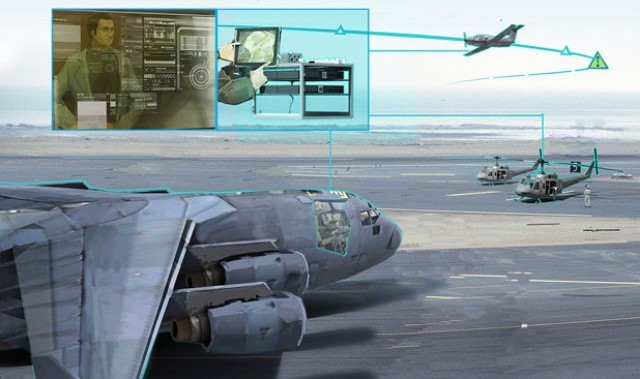 The Optionally Piloted Black Hawk fits into the larger trend of the military finding technological ways of reducing troop numbers. While it can be controlled from a ground control station, it can also make crucial flying decisions without any human input, relying solely on its ‘Matrix’ proprietary artificial intelligence technology. Under the guidance of these systems, it can fly a fully autonomous cargo mission and can operate both ways: unmanned or piloted by a human.
And this is just one of many attempts by military contractors and defense agencies to bring remote and autonomous control to more classes of aerial vehicles. Earlier last month, DARPA announced a new program called Aircrew Labor In-Cockpit Automation System (ALIAS), the purpose of which is to develop a portable, drop-in autopilot to reduce the number of crew members on board, making a single pilot a “mission supervisor.”
 Military aircraft have grown increasingly complex over the past few decades, and automated systems have also evolved to the point that some aircraft can’t be flown without them. However, the complex controls and interfaces require intensive training to master and can still overwhelm even experienced flight crews in emergency situations. In addition, many aircraft, especially older ones, require large crews to handle the workload.
According to DARPA, avionics upgrades can help alleviate this problem, but only at a cost of tens of millions of dollars per aircraft type, which makes such a solution slow to implement. This is where the ALIAS program comes in: instead of retrofitting planes with a bespoke automated system, DARPA wants to develop a tailorable, drop‐in, removable kit that takes up the slack and reduces the size of the crew by drawing on both existing work in automated systems and newer developments in unmanned aerial vehicles (UAVs).
 DARPA says that it wants ALIAS to not only be capable of executing a complete mission from takeoff to landing, but also handle emergencies. It would do this through the use of autonomous capabilities that can be programmed for particular missions, as well as constantly monitoring the aircraft’s systems. But according to DARPA, the development of the ALIAS system will require advances in three key areas.
First, because ALIAS will require working with a wide variety of aircraft while controlling their systems, it will need to be portable and confined to the cockpit. Second, the system will need to use existing information about aircraft, procedures, and flight mechanics. And third, ALIAS will need a simple, intuitive, touch and voice interface because the ultimate goal is to turn the pilot into a mission-level supervisor while ALIAS handles the second-to-second flying.
 At the moment, DARPA is seeking participants to conduct interdisciplinary research aimed at a series of technology demonstrations from ground-based prototypes, to proof of concept, to controlling an entire flight with responses to simulated emergency situations. As Daniel Patt, DARPA program manager, put it:
Our goal is to design and develop a full-time automated assistant that could be rapidly adapted to help operate diverse aircraft through an easy-to-use operator interface. These capabilities could help transform the role of pilot from a systems operator to a mission supervisor directing intermeshed, trusted, reliable systems at a high level.
Given time and the rapid advance of robotics and autonomous systems, we are likely just a decade away from aircraft being controlled by sentient or semi-sentient systems. Alongside killer robots (assuming they are not preemptively made illegal), UAVs, and autonomous hovercraft, it is entirely possible wars will be fought entirely by machines. At which point, the very definition of war will change. And in the meantime, check out this video of the history of unmanned flight:
Sources: wired.com, motherboard.vice.com, gizmag.com, darpa.mil

 As Michael Moeller, the acting head of the U.N.’s European headquarters in Geneva, told diplomats at the start of the four-day gathering:
 These included representatives from the International Committee for the Red Cross (ICRC), Human Rights Watch (HRW), the International Committee for Robot Arms Control (ICRAC), Article 36, the Campaign to Stop Killer Robots, Mines Action Canada, PAX, the Women’s International League for Peace and Freedom, and many others. As the guardians of the Geneva Conventions on warfare, the Red Cross’ presence was expected and certainly noted.
 While some may think this meeting on future weapons systems is a result of science fiction or scare mongering, the brute fact that the first multilateral meeting on this matter is under the banner of the UN, and the CCW in particular, shows the importance, relevance and danger of these weapons systems in reality. Given the controversy over the existing uses of the drone technology and the growth in autonomous systems, the fact that an international conference was held to discuss it came as no surprise.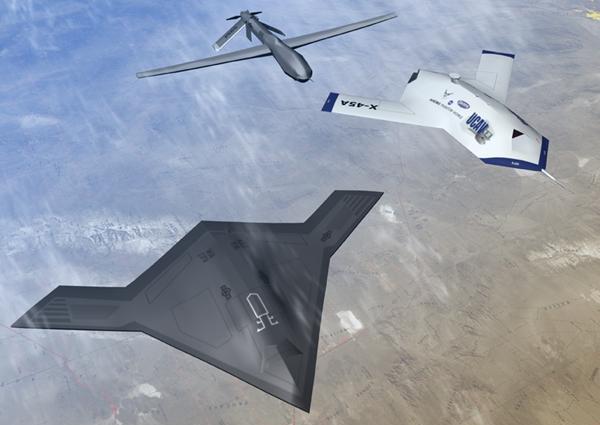
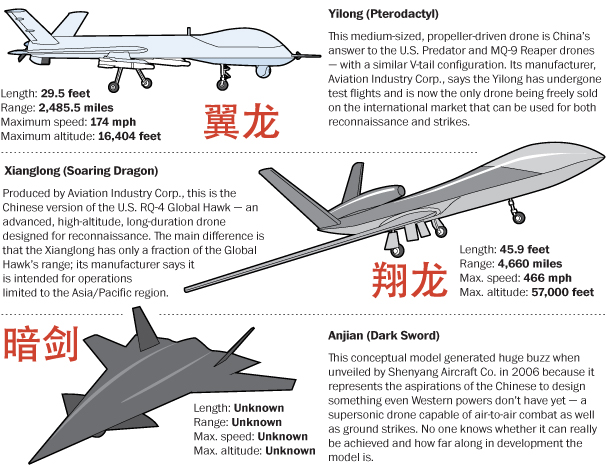
 The include the Marten’s Clause, which is part of the preamble to the 1899 Hague (II) Convention on Laws and Customs of War on Land. Many states and civil society delegates raised this potential avenue, thereby challenging some of the experts’ opinions that the Marten’s Clause would be insufficient as a source of law for a ban. The clause states that:
 I can only hope that once the issue becomes a full-blow reality, some sort of framework is in place to address it. Otherwise, we could be looking at a lot more of these guys in our future! 😉

 However, TechCrunch reports that Facebook would launch 11,000 Solara 60 drones. Their coverage would begin with Africa, and then spread out from there. There’s no word on how fast these connections might be, nor how much such a connection would cost per user. Perhaps more importantly, there’s also no word on how Facebook intends to connect these 11,000 satellites to the internet, though it is obvious that Facebook would need to build a series of ground stations.























 Stories by Williams