Episode 109 of Stories from Space is Live!

Episode 109 of Stories from Space is Live!

In this latest episode, I discuss the Standard Model of Cosmology, how scientists arrived at it, and how recent discoveries are causing some to question whether or not it is correct. To break it down, it is known as the Lambda Cold Dark Matter (ΛCDM) model, which basically combines the following theories.

  • The Big Bang: The theory that the Universe expanded from an initial state in which all matter was in hot, dense state (c’mon, you know the tune!) Evidence for this theory includes the Cosmic Microwave Background (CMB), the abundance of light elements (hydrogen, helium, etc.), the large-scale structure of the Universe, and cosmic expansion (see below).
  • Special Relativity: Einstein’s famous theory (E=mc2) that asserts that matter and energy are equivalent and how space and time are part of a four-dimensional framework in which the speed of light is constant and cannot be exceeded.
  • General Relativity: The extended generalized version of Einstein’s famous theory, which asserts that mass alters the curvature of spacetime.
  • Dark Matter: The theory that the majority of matter in the Universe is made up of a mysterious mass that doesn’t interact with normal matter in visible light.
  • Cosmological Constant: Also known as the Hubble-Lemaitre Constant (colloquially referred to as “Dark Energy”), wherein 68% of the cosmos is made up of energy that counteracts the force of gravity.

Over the past 120 years, these theories have come together to create the ΛCDM model of the Universe. For decades, scientists have been hoping to get a look at the very early Universe (less than 1 billion years after the Big Bang) to test this theory. When Webb finally provided the first observations of this period in cosmic history, what astronomers saw challenged many of the assumptions inherent in this model. Check out the episode below to learn more…

Where to Listen:

Boltzmann’s Brainchild

Boltzmann’s Brainchild

His head was hurting. His mouth was dry. His entire body felt uninspired and feeble. He felt much the same a short while ago when he left the dinner table. How long ago was that? What time was it?

He’d left his watch upstairs and hadn’t the capacity to find a clock right now. But a quick pass by the hall window confirmed that the Sun was coming up. They were firmly in the AM, and he was forced to accept that it was no longer the previous evening.

No appreciation for time! Why was that?

Continue reading “Boltzmann’s Brainchild”

Episode 91 of Stories from Space is Now Live!

Episode 91 of Stories from Space is Now Live!

Hello folks! This week’s episode is dedicated to my friend, Kim Bannerman Pigott, who suggested it. She, too, is a creative person, as is her husband, Shaun. Between the two of them, they do literature, art, and music; they do it all! I encourage everyone to check out their website, Fox&Bee Studio. The topic of this episode is “Are Wormholes Possible?” As any fan of science fiction knows, wormholes are regularly featured in the genre, be it novels, shows, movies, or video games.

Some examples include Carl Sagan’s Contact, Star Trek, Battlestar Galactica, Babylon 5, Event Horizon, Farscape, the Wing Commander franchise, the Descent: Freespace franchise, and many more. The concept often goes by different names (FTL, jump points, jump nodes, etc.), but the idea remains the same. Pass through a wormhole (natural or artificial), and you end up a few, or few thousand, light-years away.

Like warp or hyperspace, they are a key element in the world-building process, facilitating the kind of travel that would allow for First Contact, inter-species interaction, exploring new worlds, and the emergence of new branches of humanity. In most cases, franchises tend to steer away from the science and avoid any complicated or inaccurate explanations. However, sometimes authors and producers dip their toes in and attempt to rationalize them (not very well, in my experience).

But what does the science say? As it turns out, there is a basis in theoretical physics for wormholes that goes back over a century. Check out the links below to learn more…

Where to Listen:

Episode 72 of SfS – The Gift of Gravitational Lensing (with Dr. Slava Turyshev) – is now Live!

Episode 72 of SfS – The Gift of Gravitational Lensing (with Dr. Slava Turyshev) – is now Live!

This week, my guest was Russian-American physicist Dr. Slava Turyshev, a Senior Research Scientist, Technologist, and Project Manager at NASA’s Jet Propulsion Laboratory. Dr. Turyshev has spent years studying the phenomenon known as gravitational lenses, a consequence of General Relativity, where massive objects amplify and alter the path of light from more distant objects. Astronomers have used this phenomenon to study objects that would otherwise be very difficult to see, including some of the farthest galaxies in the Universe.

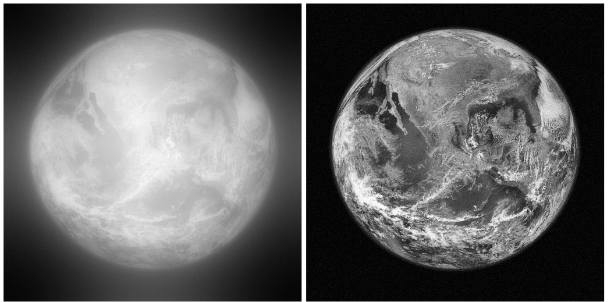
In recent years, Turyshev has published numerous studies advocating for a space telescope that would travel to the focal region of our Sun’s Gravitational Lens (SGL). Once there, it could conduct the most detailed astronomical studies ever, which includes taking extremely high-resolution images of exoplanets. In fact, astronomers predict that an SGL telescope could take pictures of exoplanets that would have the same resolution as images of Earth taken from high orbit (see below).

Toth H. & Turyshev, S.G.

Not only that, but Turyshev predicts that gravitational lenses could also be used for communications from one star system to another. These ideas could lead to an “interstellar internet,” which could be how advanced civilizations keep in touch in our galaxy. Perhaps this is why we haven’t found evidence of any extraterrestrial civilizations: they are routing all their calls through a gravitational lens network, and we aren’t hooked up to it yet!

Where to Listen:

Episode 70 of SfS – The Crisis in Cosmology: What is the Hubble Tension? – is now live!

Episode 70 of SfS – The Crisis in Cosmology: What is the Hubble Tension? – is now live!

This week’s episode deals with a rather pressing matter for astronomers and cosmologists. Shortly after Einstein revealed his Theory of General Relativity in 1916, scientists began pondering how it predicted that the Universe was either expanding or contracting. The debate was settled when Georges Lemaitre and Edwin Hubble confirmed that it was expanding (in 1927 and 1929, respectively). In honor of their accomplishments, the rate at which the cosmos is expanding was named the “Hubble-Lemaitre Constant” (or more commonly, the “Hubble Constant”).

As the field of astronomy expanded and telescopes improved, scientists were able to make distance measurements for objects located farther and farther away. However, these observations were restricted to objects within 4 billion light-years due to the way Earth’s atmosphere distorts light. Depending on the distances involved, astronomers relied on different methods, which came to be known as the “Cosmic Distance Ladder.” In addition to determining the age and size of the Universe, these measurements allowed astronomers to refine their estimates of the Constant.

The Hubble Space Telescope revolutionized astronomy by gradually pushing the boundaries of the “observable Universe” to less than 1 billion years after the Big Bang (13 billion light years!) That’s when scientists noticed some discrepancies. Not only did they learn that the rate of expansion had accelerated over time, but distance measurements to objects located 13 billion light-years away (the earliest galaxies) yielded different values than local measurements. This came to be known as the “Hubble Tension” or the “Crisis in Cosmology.”

While it was hoped that the James Webb Space Telescope would resolve this crisis, its observations have only confirmed that Hubble was right on the money! The crisis endures, and scientists are seeking answers. Is Einstein’s Theory of General Relativity, which is foundational to our cosmological models, wrong? Or are there additional physics/forces at work that we haven’t yet accounted for? Once we know that, we’ll know how just about everything in the Universe works!

Check out the episode below.

Where to Listen:

News from Space: “Life” Molecules Detected in Space!

SagitariusB2The secret to the creation to life in our universe appears to be seeding – the proper elements in the right mix in the right places to form the right kind of molecules. Only then can these molecules evolve chemically into more and more complex structures, thus following a general pathway toward biology. The pathway for life as we know it starts with carbon, but one which is specific organized and structured.

Recently, a team of astronomers  at the ALMA Observatory reported the discovery of this very element while probing distant galaxies. What they found was not just interstellar carbon, but a form of carbon with a branched structure. The discovery was made in the gaseous-star forming region known as Sagittarius B2 – a giant molecular cloud of gas and dust that is located about 390 light years from the center of the Milky Way.

radio-wave-dishesSimple carbon chains aren’t particularly unusual in the cosmos, but complex carbon is a different matter. It is what the researchers, based at Cornell University and the Max Planck Institute, describe as finding a molecular needle in a cosmic haystack. The actual molecule in question is isopropyl cyanide, and it was discerned thanks to the miracle known as radio astronomy.

Within clouds of interstellar dust and gas, elements find themselves shielded from the harsh radiation of open space and are, thus, free to form into more complex arrangements. These molecules don’t just sit there, but instead move around within their cloud-homes and bump into each other. The result of this activity are radio signals which can be detected light-years away – in this case, by radio telescopes here on Earth.

MaxPlanckIns_radiowavepulseEvery molecule has a different radio signal, so it’s possible to pick apart the contents of interstellar junk by examining a cloud’s frequency spectra. NASA, via the Ames Research Center, even maintains a radio-emission frequency database to aid in the tracking of polycyclic aromatic hydrocarbons, a form of molecule thought to contain much of the universe’s carbon stockpiles.

The branching carbon structure of isopropyle cyanide is of particular interest because it’s thought that this arrangement is a step on the way to the production of amino acids, the building blocks of proteins, and hence organic life. The discovery gives weight to the increasingly popular notion that life, or at least many of the key steps leading toward life, actually occurs off-planet.

alien-worldLife on Earth may have been well on its way while the planet was still just space dust waiting to come together into our rock-home. What’s more, the molecules discovered by the ALMA team probably aren’t alone.  As the authors, led by astronomer Arnaud Belloche, wrote:

[Isopropyle cyanide’s] detection therefore bodes well for the presence in the [interstellar medium] (ISM) of amino acids, for which such side-chain structure is a key characteristic… This detection suggests that branched carbon-chain molecules may be generally abundant in the [interstellar medium].

The discovery follows a general progression in recent years adding more and more life-ingredients to our picture of the ISM. A 2011 study revealed that complex organic matter should be created in large volumes from stars, while a 2012 report study found that conditions within the ISM are uniquely suited to the creation of increasingly complex molecules, “step[s] along the path toward amino acids and nucleotides, the raw materials of proteins and DNA, respectively.”

sugar-in-space-molecules_58724_990x742Also in 2012, astronomers working for ALMA found basic sugar molecules hanging out in the gas cloud around IRAS 16293-2422 – a young star located some 400 light-years from Earth. The particular form, glycoaldehyde, is thought to be a key component of the reaction behind the creation of DNA. Indeed, more and more, the universe is looking less and less like a harsh environment in which life must struggle to emerge, to a life factory.

Source: motherboard.vice.com

Universe Today: Are Intelligent Civilizations Doomed?

Gaia_galaxyMy friend over at Universe Today, Fraser Cain, has been busy of late! In his latest podcast, he asks an all-important question that addresses the worrisome questions arising out of the Fermi Paradox. For those unfamiliar with this, the paradox states that given the age of the universe, the sheer number of stars and planets, and the statistical likelihood of some of the supporting life, how has humanity failed to find any indications of intelligent life elsewhere?

It’s a good question, and raised some frightening possibilities. First off, humanity may be alone in the universe, which is frightening enough prospect given its sheer size. Nothing worse than being on a massive playground and knowing you only have but yourself to play with. A second possibility is that extra-terrestrial life does exist, but has taken great pains to avoid being contacting us. An insulting, if understandable, proposition.

alien-worldThird, it could be that humanity alone has achieved the level of technical development necessary to send out and receive radio transmissions or construct satellites. That too is troubling, since it would means that despite the age of the universe, it took this long for an technologically advanced species to emerge, and that there are no species out there that we can learn from or look up to.

The fourth, and arguably most frightening possibility, is the Great Filter theory – that all intelligent life is doomed to destroy itself, and we haven’t heard from any others because they are all dead. This concept has been explored by numerous science fiction authors – such as Stephen Baxter (Manifold: Space), Alastair Reynolds (the Revelation Space universe) and Charles Stross (Accelerand0) – all of whom employ a different variation and answer.

kardashev_scaleAs explored by these and other authors, the biggest suggestions are that either civilizations will eventually create weapons or some kind of programmed matter which will destroy – such as nuclear weapons, planet busters, killer robots, or nanotech that goes haywire (aka. “grey goo”). A second possibility is that all species eventually undergo a technological/existential singularity where they shed their bodies and live out their lives in a simulated existence.

A third is that intelligent civilizations fell into a “success trap”, outgrowing their resources and their capacity to support their numbers, or simply ruined their planetary environment before they could get out into the universe. As usual, Fraser gives a great rundown on all of this, explaining the Fermi Paradox is, the statistical likelihood of life existing elsewhere, and what likely scenarios could explain why humanity has yet to find any proof of other civilizations.

Are Intelligent Civilizations Doomed:


And be sure to check out the podcast that deals strictly with the Fermi Paradox, from roughly a year ago:

The Fermi Paradox Explained:

News From Space: Alpha Centauri’s “Superhabitable” World

alpha_centauri_newsScientists and astronomers have learned a great deal about the universe in recent years, thanks to craft like the Kepler space probe and the recently launched Gaian space observatory. As these and other instruments look out into the universe and uncover stars and exoplanets, it not only lets us expand our knowledge of the universe, but gives us a chance to reflect upon the meaning of this thing we call “habitability”.

Basically, our notions of what constitutes a habitable environment are shaped by our own. Since Earth is a life-sustaining environment from which we originated, we tend to think that conditions on another life-giving planet would have to be similar. However, scientists René Heller and John Armstrong contend that there might be a planet even more suitable in this galaxy, and in the neighboring system of Alpha Centauri B.
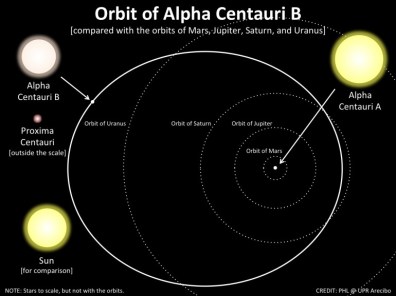
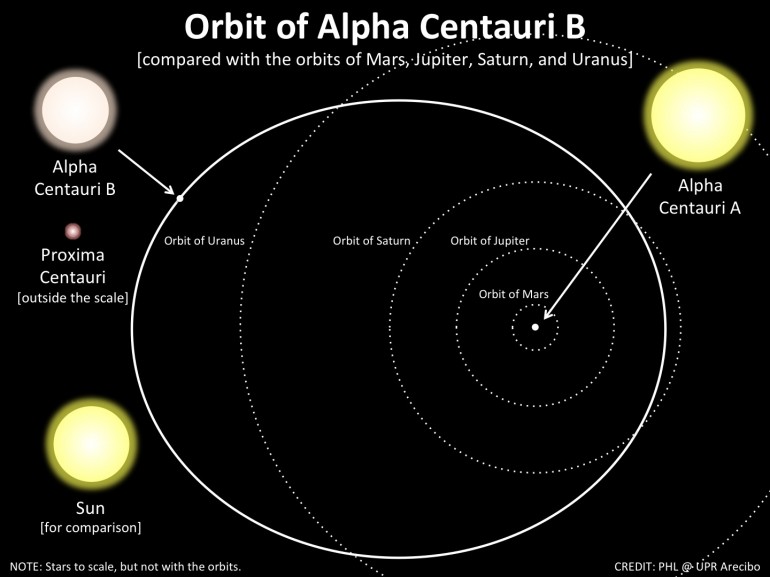
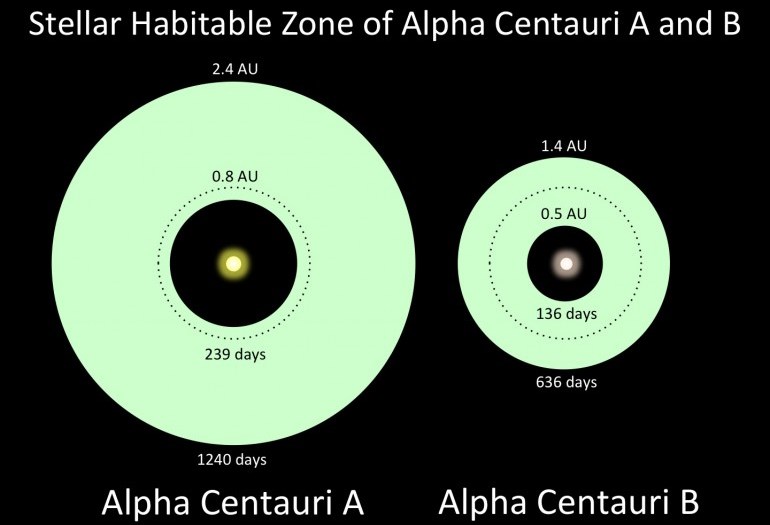
alpha_centauriBb1For those unfamiliar, Alpha Centauri A/B is a triple star system some 4.3 light years away from Earth, making it the closest star system to Earth. The nice thing about having a hypothetical “superhabitable” planet in this system is that it makes it a lot easier to indulge in a bit of a thought experiment, and will make it that much more easy to observe and examine.

According to the arguments put forward by Heller, of the Department of Physics and Astronomy, McMaster University, Hamilton; and Armstrong, of the Department of Physics, Weber State University in Ogden, this planet may be even more suitable for supporting life than our own. It all comes down to meeting the particulars, and maybe even exceeding them.

habitable_sunsFor example, a habitable planet needs the right kind sun – one that has existed and remained stable for a long time. If the sun in question is too large, then it will have a very short life; and if it’s too small, it might last a long time. But the planet will have to be very close to stay warm and that can cause all sorts of problems, such as a tidally locked planet with one side constantly facing the sun.

Our own sun is a G2-type star, which means it has been alive and stable for roughly 4.6 billion years. However, K-type dwarfs, which are smaller than the Sun, have lives longer than the age of the universe. Alpha Centauri B is specifically a K1V-type star that fits the bill with an estimated age of between 4.85 and 8.9 billion years, and is already known to have an Earth-like planet called Alpha Centauri B b.

alpha_centauriBb2As to the superhabitable planet, assuming it exists, it will be located somewhere between 0.5 and 1.4 astronomical units (46 – 130 million mi, 75 – 209 million km) from Alpha Centauri B. All things being equal, it will have a circular orbit 1. 85 AU (276 million km / 172 million miles) away, which would place it in the middle of the star’s habitable zone.

Also, for a planet to sustain life it has to be geologically active, meaning it has to have a rotating molten core to generate a magnetic field to ward off cosmic radiation and protect the atmosphere from being stripped away by solar winds. A slightly more massive planet with more gravity means more tectonic activity, so a better magnetic field and a more stable climate.

 

PlutoHowever, the most striking difference between the superhabitable world and Earth would be that the former would lack our continents and deep oceans – both of which can be hostile to life. Instead, Heller and Armstrong see a world with less water than ours, which would help to avoid both a runaway greenhouse effect and a snowball planet that an overabundance of water can trigger.

Our superhabitable planet might not even be in the habitable zone. It could be a moon of some giant planet further away. Jupiter’s moon Io is a volcanic hellhole due to tidal heating, but a larger moon that Heller and Armstrong call a “Super Europa” in the right orbit around a gas giant could heat enough to support life even if it’s technically outside the star’s habitable zone.


alien-worldAccording to Heller and Armstrong, this world would look significantly different from our own. It would be an older world, larger and more rugged, and would provide more places for life to exist. What water there was would be evenly scattered across the surface in the form of lakes and small, shallow seas. And, it would also be slightly more massive, which would mean more gravity.

This way, the shallow waters would hold much larger populations of more diverse life than is found on Earth, while the temperatures would be more moderated. However, it would be a warmer world than Earth, which also makes for more diversity and potentially more oxygen, which the higher gravity would help with by allowing the planet to better retain its atmosphere.

panspermia1Another point made by Heller and Armstrong is that there may be more than one habitable planet in the Alpha Centauri B system. Cosmic bombardments early in the history of the Solar System is how the Earth got its water and minerals. If life had already emerged on one planet in the early history of the Alpha Centauri B system, then the bombardment might have spread it to other worlds.

But of course, this is all theoretical. Such a planet may or may not exist, and may or may not have triggered the emergence of life on other worlds within the system. But what is exciting about it is just how plausible its existence may prove to be, and how easy it will be to verify once we can get some space probes between here and there.

Just imagine the sheer awesomeness of being able to see it, the images of a super-sized Earth-moon beamed back across light years, letting us know that there is indeed life on worlds besides our own. Now imagine being able to study that life and learning that our conceptions of this too have been limited. What a time that will be! I hope we all live to see it…


Sources: gizmag.com, universetoday.com

Remembering the Shuttle Challenger Disaster

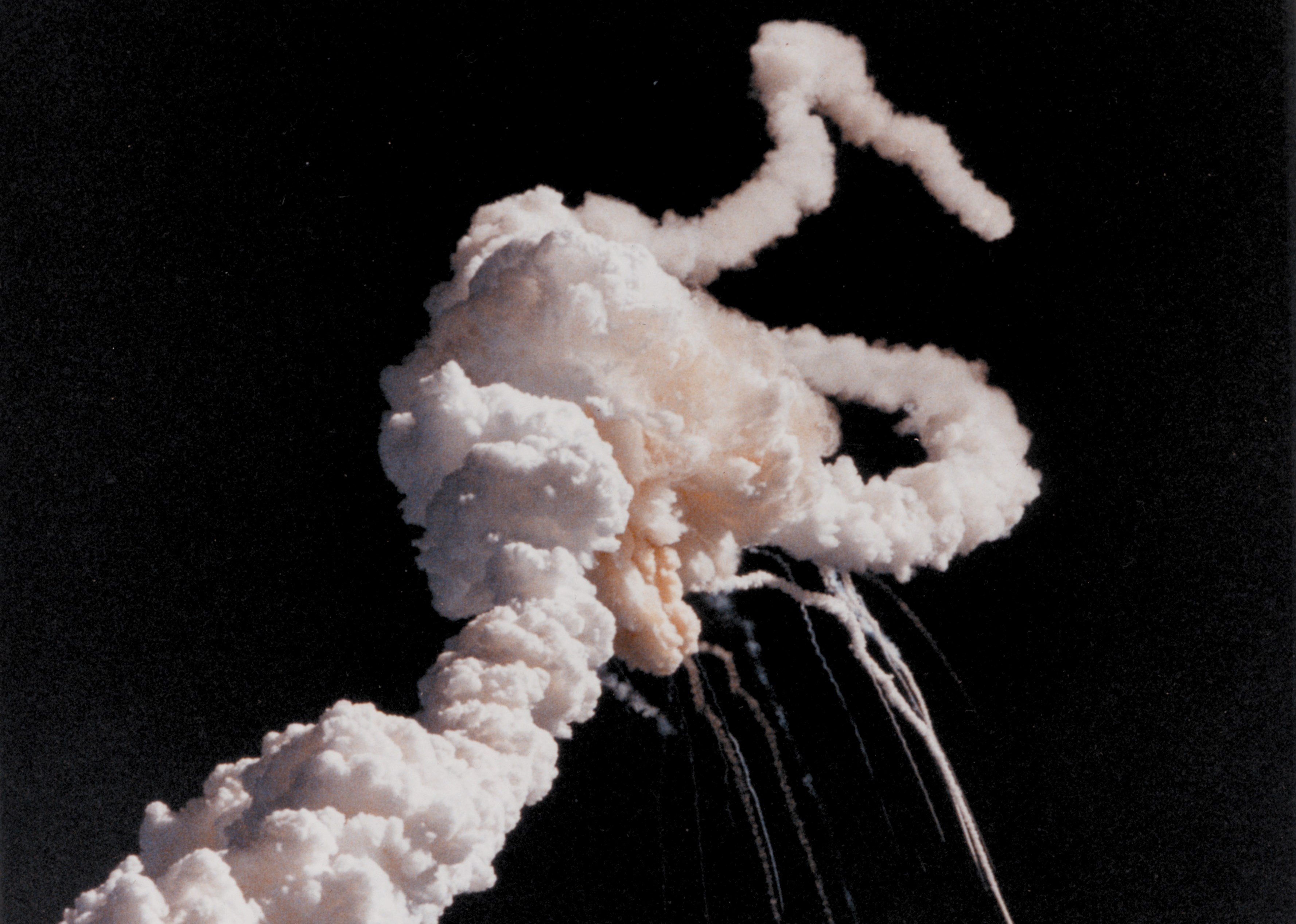
Challenger_explosionToday marks the 28th anniversary of the Shuttle Challenger Disaster, an incident which has lived on in the memories of people around the world and to many, signaled the end of an era. The shuttle’s explosion, which took place at 11:39:13 am EST on January 28th, 1986, occurred just 73 seconds into flight after it took off from Cape Canaveral on the Florida coast.

According to investigators, the accident occurred when the O-ring seal in the shuttle’s solid rocket booster failed during liftoff, which allowed pressurized hot gas from within the solid rocket motor to reach the outside. This malfunction led to the separation of the right-hand solid rocket booster’s aft attachment and the structural failure of the external tank.

Challenger_flight_51-l_crewThe fallen crew members included NASA astronauts Greg Jarvis, Ronald McNair, Ellison Onizuka, Judith Resnik, Michael J. Smith and Dick Scobee, as well as school teacher Christa McAuliffe. It was because of McAuliffe’s presence on the shuttle –  as the first member of the Teacher in Space Project – that roughly 17 percent of Americans were tuned to their TVs during the time of the accident and witnessed the tragedy.

The disaster resulted in a 32-month hiatus in the shuttle program and the formation of the Rogers Commission, a presidential commission charged with investigating the accident. It revealed, amongst other things, that NASA’s organizational culture was in part responsible for the disaster. In short, NASA managers had known that the O-Rings in the Solid Rocket Booster (SRB) design contained a fatal flaw, one which was overlooked.

???????????????????????????????????????????????????????????????????????????????????????????????????????????????????????????????????????????????????????????????????????????????The investigation also revealed that engineers at Morton Thiokol, the manufacturer of the rocket boosters, had warned them prior to the launch of the flaw. One such engineer was Roger Boisjoly, who realized that a shuttle launch in the cold weather that Florida was experiencing would pose a grave danger. As he had indicated, the rockets weren’t designed to launch safely in weather below 40 degrees Fahrenheit.

NASA officials at the time rejected Boisjoly’s warning, saying that he was acting on a gut feeling rather than science. Boisjoly told The Times in an interview in 2003 that NASA tried to blacklist him from the industry, and  went so far as to argue that some NASA officials should be indicted for manslaughter charges, and the agency should be abolished.

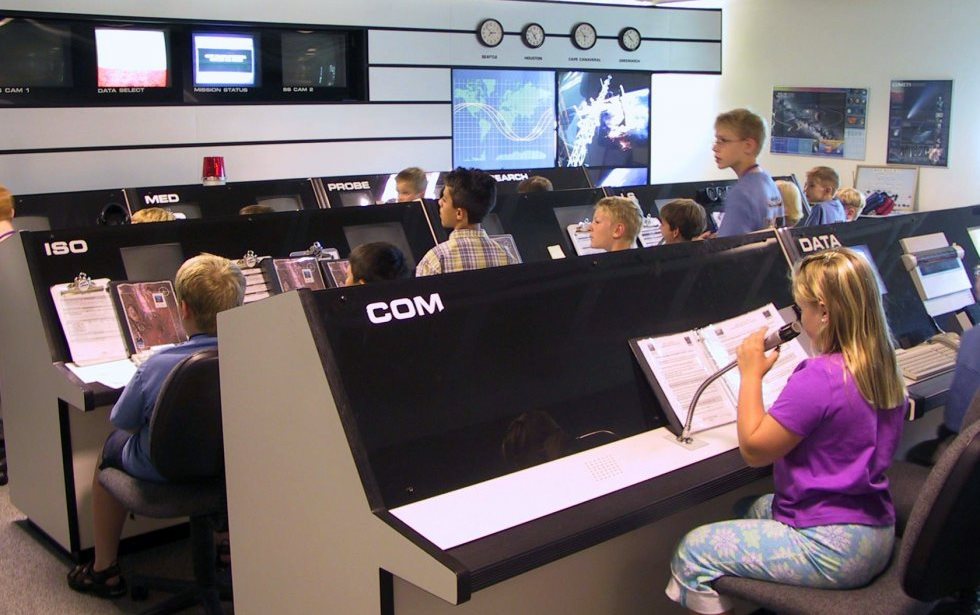
Challenger_learning_centerThere are many memorials to the fallen crew, but one of the most cited in education is the 40 Challenger Learning Centers that are located in the United States, Canada, United Kingdom and South Korea. The network was founded by June Scobee Rogers (the widow of commander Scobee) and includes participation from other Challenger family members.

According to their website, their goal is to:

[G]ive students the chance to become astronauts and engineers and solve real-world problems as they share the thrill of discovery on missions through the Solar System.

As a result of the disaster, the Air Force decided to cancel its plans to use the Shuttle for classified military satellite launches from Vandenberg Air Force Base in California, deciding to use the Titan IV instead. Media coverage of the accident was also extensive, with one study indicating that 85 percent of Americans had heard the news within an hour of the accident.

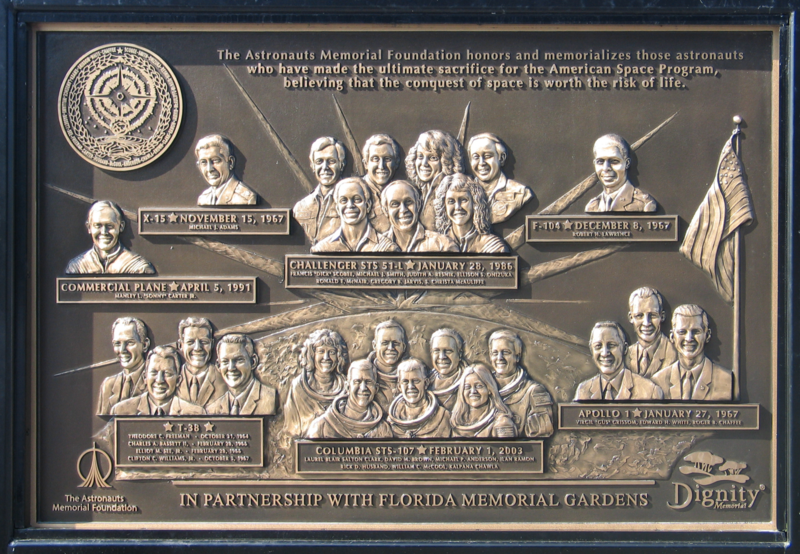
astronaut_memorial_foundationChallenger’s anniversary comes in a week that includes other tragic anniversaries, including the Apollo 1 pad fire that occurred on Jan. 27th, 1967 and claimed the lives of three astronauts’ lives; the Columbia shuttle breakup that happened on Feb. 1st, 2003 and killed seven. Many other astronauts have died in training accidents, and their names are listed at the Astronaut Memorial Foundation.

The disaster has also been used as a case study in many discussions of engineering safety and workplace ethics. And it serves as a constant reminder of the bravery of those who choose to go into space for the sake of advancing science and our understanding of the cosmos. It’s also a reminder that the only safeguard against tragic accidents is eternal vigilance!

Let us all hope and pray no such incidents happen as we embark on a renewed age of space exploration and discovery!

Looking for Dark Matter: The DarkSide-50 Project

darkmatter1If 2013 will go down in history as the year the Higgs Boson was discovered, then 2014 may very well be known as the year dark matter was first detected. Much like the Higgs Boson, our understanding of the universe rests upon the definitive existence of this mysterious entity, which alongside “dark energy” is believed to make up the vast majority of the cosmos.

Before 2014 rolled around, the Large Underground Xenon experiment (LUX) – located near the town of Lead in South Dakota – was seen as the best candidate for finding it. However, since that time, attention has also been directed towards the DarkSide-50 Experiment located deep underground in the Gran Sasso mountain, the highest peak in the Appennines chain in central Italy.

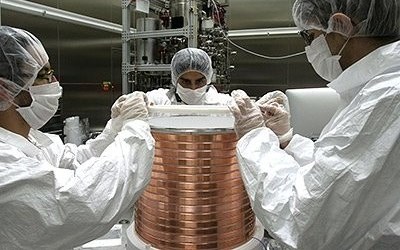
darkside-50This project is an international collaboration between Italian, French, Polish, Ukrainian, Russian, and Chinese institutions, as well as 17 American universities, which aims to pin down dark matter particles. The project team spent last summer assembling their detector, a grocery bag-sized device that contains liquid argon, cooled to a temperature of -186° C (-302.8° F), where it is in a liquid state.

According to the researchers, the active, Teflon-coated part of the detector holds 50 kg (110 lb) of argon, which provides the 50 in the experiment’s name. Rows of photodetectors line the top and bottom of the device, while copper coils collect the stripped electrons to help determine the location of collisions between dark matter and visible matter.

darkside-50-0The research team, as well as many other scientists, believe that a particle known as a WIMP (weakly interacting massive particle) is the prime candidate for dark matter. WIMP particles have little interaction with their surroundings, so the researchers are hoping to catch one of these particles in the act of drifting aloof. They also believe that these particles can be detected when one of them collides with the nucleus of an atom, such as argon.

By cramming the chamber of their detector with argon atoms, the team increases their chance of seeing a collision. The recoil from these collisions can be seen in a short-lived trail of light, which can then be detected using the chamber’s photodetectors. To ensure that background events are not interfering, the facility is located deep underground to minimize background radiation.

darkmatterTo aid in filtering out background events even further, the detector sits within a steel sphere that is suspended on stilts and filled with 26,500 liters (7000 gallons) of a fluid called scintillator. This sphere in turn sits inside a three-story-high cylindrical tank filled with 946,350 liters (250,000) of ultrapure water. These different chambers help the researchers differentiate WIMP particles from neutrons and cosmic-ray muons.

Since autumn of 2013, the DarkSide-50 project has been active and busy collecting data. And it is one of about three dozen detectors in the world that is currently on the hunt for dark matter, which leads many physicists to believe that elusive dark matter particles will be discovered in the next decade. When that happens, scientists will finally be able to account for 31.7% of the universe’s mass, as opposed to the paltry 4.9% that is visible to us now.

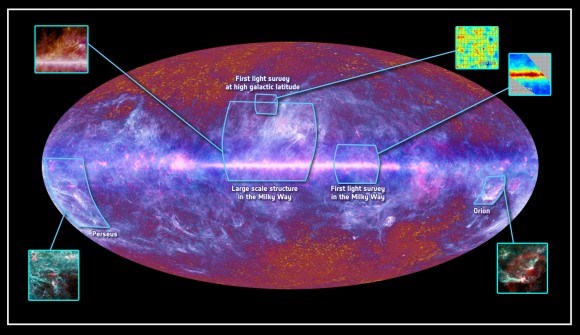
planck-attnotated-580x372Now if we could only account for all the “dark energy” out there – which is believed to make up the other 68.3% of the universe’s mass – then we’d really be in business! And while we’re waiting, feel free to check out this documentary video about the DarkSide-50 Experiment and the hunt for dark matter, courtesy of Princeton University:

Sources: gizmag.com, princeton.edu