Remembrance Day 2013

lest-we-forgetIt goes by many names the world over. In Canada, Britain and Australia, we call it Remembrance Day. In the United States, it’s called by Veteran’s Day. In New Zealand, France, Belgium and Serbia, it’s known as Armistice Day. And to the Polish, it’s Independence Day since the end of World War I was also the occasion when their country achieved statehood.

Interestingly enough, the war that it originally commemorates also goes by many names. To those who fought in it, it was the Great War, but also the “War to end all wars”, as no one who lived through it could fathom that any nation would ever go to war again. And to those who have went to war again just 27 years later, it would come to be known as World War I or the First World War.

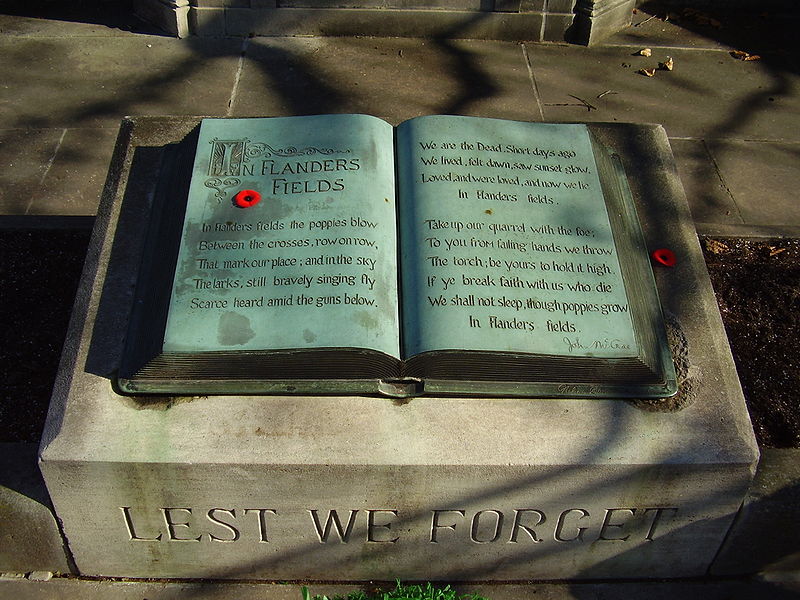
remembrance-day-poemRegardless of the name, November 11 is a day when people the world over come together to mark one of the worst periods in our history, celebrate those who made the ultimate sacrifice, and reflect upon the terrible lessons that were learned. And while it is easy to look upon the world and imagine that we’ve learned nothing, I choose to believe otherwise.

When the world went to war in August of 1914, the news was greeted with general elation for those involved. In Berlin, Paris and London, crowds emerged to celebrate the fact that their nations were mobilizing against their enemies. In Canada, people readily volunteered to serve overseas and “fight the Hun”. The propaganda mills of every nation were running overtime, stoking the fervor of war, claiming rightness, and that God was on their side.

Royal_Irish_Rifles_ration_party_Somme_July_1916Four years later, few retained these romantic notions of war. Those who survived the carnage were known as “The Lost Generation”, and those born after the war entered into a world struggling to leave the memory behind and get back to normal. When war was once again declared in 1939, few were enthused, and the general attitude was one o fear.

In fact, part of the reason “Appeasement” – the strategy of giving in to Hitler’s demands, or accommodating Japanese and Italian expansion in Africa and East Asia – was permitted was because no one wanted a repeat of the last war. Even in the Axis nations of Germany, Japan, and Italy, the general public entered the war only reluctantly, convinced they had no choice and fearful for how it might turn out.

Berlin-1945_croppedSix years, 70 million lives, 1600 cities, and several attempted genocides later, the victorious nations of the world once again came together with the common goal of lasting world peace, human rights and economic development. This was embodied in the Universal Declaration of Human Rights, the International Court of Justice, the International Monetary Fund and World Bank Group.
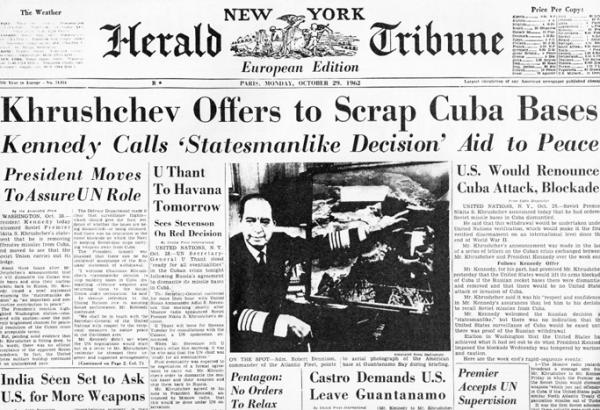
Despite the prevailing mood that a new “Cold War” was already brewing between east and west, the word’s “Never Again” were spoken by people on all sides. After two World Wars and the near total-destruction of many nations, it was understood that the world would not be able to endure a third. Somehow, and despite the arms race of the latter of the half of the 20th century, peace would endure.

Cuban-missile-crisis-photo-from-Oct-29-1962Lucky for all of us, the Cold War ended some two decades ago and the specter of World War III with it. While many wars took place during the intervening period and there were a few close calls (The Cuban Missile Crisis being foremost), a nuclear crisis was continually avoided because all sides understood that no one would emerge the victor.
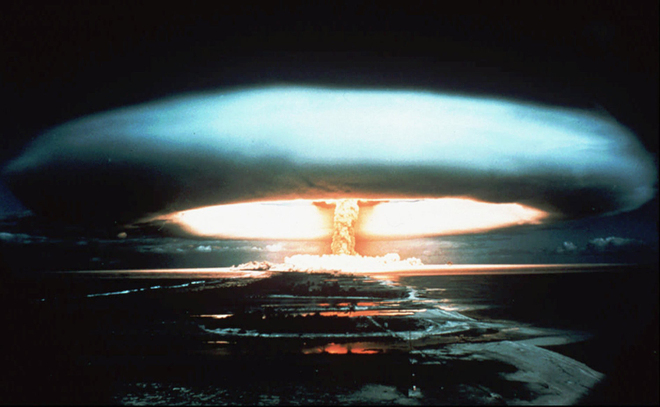
Today, wars still rage in the underdeveloped regions of the world and even amongst the so-called “developed” nations – the rational ranging from fighting extremism to trying to foster nation building. Nevertheless, I can’t help but look back today and think that those who died and sacrificed so much taught us something invaluable and enduring.

nuclear1Sure, the Great War did not end all wars, nor did those that followed it. But with every mistake, with every new sacrifice, with every new conflict, surely we have learned something. Were it not for the UN and the spirit multilateralism the prevailed after the Second World War, World War III may have been unavoidable, and might still be a possibility.

And while there were still wars between proxy nations during the Cold War, Korea and Vietnam taught us the futility of political conflicts, a lesson which helped end the Iraq War sooner and with less loss of life than would have otherwise been possible. These sentiments have since been applied to the war in Afghanistan and the drone wars, two more unpopular campaigns that are sure to end in the near future as well.

holocaustWhat’s more, the genocide of the Jewish, Roma and Slavic peoples all across Europe taught us the evils of ethnic cleansing and man’s capacity for hate, lessons which have helped us confront and combat genocide in former Yugoslavia, Rwanda, Darfur, East Timor and elsewhere. They have also forced us to contemplate genocides which have taken place on our soil, in Australia, Canada, the US and Latin America.

To look at the state of the world today, it is easy to grow cynical and say that we’ve learned nothing. But when you consider that fact that we no longer live in a world where total war is seen as glorious, where two superpowers are aiming nuclear-tipped missiles at each other, and where aggression and genocide are actively ignored or accommodated, you begin to appreciate what we have and who made it possible.

Vimy RidgeBut most importantly of all, to say we’ve learned nothing is to disrespect those who made the ultimate sacrifice, not to mention those who came home forever changed and scarred. For these veterans, servicemen and women, and people who risked life and limb to ensure that war would bring peace, that people would remain free, and that greater evils would not be allowed to prevail, saying “it was all in vain” renders what they did for the rest of us meaningless.
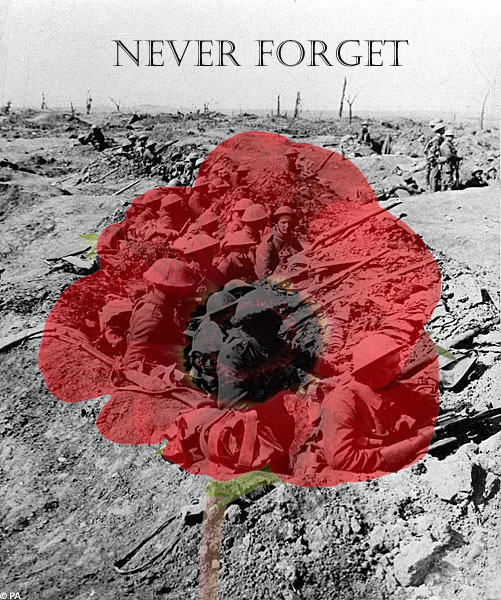
With that in mind, I’m very happy to announce that next year, in April of 2014, my family and I will be visiting Europe to witness the Centennial of World War I. While we’re there, we will be visiting the grave sites of those who died overseas, several battlefield from the First and Second World War, and will bear witness to one of the greatest historic events in our lifetimes.

My father made the trip once before and remarked with awe how to people over there, the wars are not something that are commemorated once a year, but on a regular basis. But next year, it is expected to be especially poignant as people from all over the globe converge on Flanders to pay their respects. I expect it to be very eye-opening, and you can expect to be hearing about it the moment I get back!

A sober and reflective Remembrance Day to you all. Peace.

remembrance_day___poppy_day_by_daliscar

News from Mars: Another (Planned) Mission!

mars-mission1When it comes to generational milestones, those of born since the late 70’s often feel like we’re lagging behind previous generations. Unlike the “Greatest Generation” or the “Baby Boomers”, we weren’t around to witness Two World Wars, the Great Depression, the Cuban Missile Crisis, the death of JFK, Neil Armstrong, or the FLQ Crisis. For us, the highlights were things like the development of the PC, the birth of the internet, Kurt Cobain, and of course, 9/11.

But looking ahead, those us of belonging to Generation X, Y, and Millennials might just be around to witness the greatest event in human history to date – a manned mission to Mars! And while NASA is busy planning a mission for 2030, a number of private sources are looking to make a mission happen sooner. One such group is a team of UK scientists working from Imperial College London that are working to mount a a three person mission to Mars.

mission-to-marsThe planned mission consists of two spacecraft, the first of which is a Martian lander equipped with a heat shield that will send the crew off into Earth’s orbit. The second craft would be a habitat vehicle, which is the craft that the crew would live in during the voyage. The habitat vehicle would consist of three floors, and measure in at around 30 feet (10m) tall and 13 feet (4m) in diameter.

The astronauts would be situated in the lander during takeoff, and would move to the habitat when the dual-craft reaches Earth orbit. Once the astronauts are safely within the habitat, a rocket would shoot the dual-craft off on its journey to Mars, which would take nine months to arrive, less than the approximately 300 days that most projections say it will take.

Mars_landerOnce In space, the dual-craft would then split apart but remain connected by a 60 meter (200 foot) tether. Thrusters from both vehicles would then spin them around a central point, creating artificial gravity similar to Earth’s in the habitat. Not only would this help the astronauts feel at home for the better part of a lonely year, but it would also reduce the bone and muscle atrophy that are associated with weightlessness.

The craft would be well-stocked with medicine to ensure that the crew remained in fine health for the nine month transit. Superconducting magnets, as well as water flowing through the shell of the craft, would be employed to help reduce both cosmic and solar radiation. And once the dual-craft reaches Mars, it would tether back together, the crew would move back into the lander, and then detach from the habitat descend to the Martian surface.

Mars-mission-2This mission would also involve sending a habitat and return vehicle to Mars before the astronauts arrived, so the crew would have shelter upon landing as well as a way to get home. The crew would spend anywhere from two months to two years on Mars, depending on the goals of the mission and the distance between Mars and Earth. On the way back home, the mission would dock with the ISS, then take a craft back to Earth from there.

What’s especially interesting about this proposed mission is that each stage of it has been proven to work in an individual capacity. What’s more, the concept of using water as a form radiation shielding is far more attractive than Inspiration Mars’, which calls for using the astronauts own fecal matter!

Unfortunately, no real timetable or price tags have been proposed for this mission yet. However, considering that every individual step of the mission has been proven to work on its own, the proposed overall journey could work. In the meantime, all us post-Baby Boomers can do is wait and hope we live to see it! I for one am going sick of hearing Boomers talk about where they were when Apollo 11 happened and having nothing comparable to say!

And be sure to enjoy this video of the University College London team discussing the possibilities of a Mars mission in our lifetime:


Sources:
bbc.co.uk, extremetech.com

Climate Crisis: City Farms

dragonfly-vertical-farm-for-a-future-new-york-1Hello again, folks. As you all know, this summer has brought some rather dire news on the climate front as unpredictable weather patterns have led to flooding in many parts of the world. And as climatological researchers and scientists have predicted, this is just the tip of the iceberg, as rising global temperatures will lead to melted icecaps, higher sea levels, severe droughts, wildfires and coastal storms.

But as I always like to point out, there are solutions to these problems, or at least ways to mediate them. Given the central role played by overpopulation and urban sprawl in climate change, many of these proposed solutions have to do with finding new ways to house, feed, and provide from future generations – ones which emphasize sustainability and clean energy.

city_farmsWhen it comes to feeding future generations of people, the question of what will be on the menu and where it comes from are paramount. In recent decades, massive crop failures, protracted droughts, and numerous food-borne disease outbreaks caused by microbes such as salmonella, E. coli, toxoplasma and listeria have forced people to contemplate where their food comes from and how it is produced.

The proposed solution is to rethink farming, moving out of the old paradigm of farming the lands around human settlements and moving them inside. These city-based agricultural projects include rooftop gardens, rooftop greenhouses, planting beds, empty lots as farmland, and vertical farms that occupy tall buildings and abandoned warehouses. Collectively, these examples show the validity of growing food in the city. Not only could be they be carried out efficiently, but they could also operate without the pollution associated with outdoor farming.

city_farms1In truth, the concept is not entirely new, as “victory gardens” or other variants have been a means of producing agricultural goods whenever national farms found themselves overburdened. These were all the rage in Britain, Canada, the US and Germany during World War I and II when naval blockades and military demand forced people to plant their own vegetables in their backyards.

In addition, after the collapse of the Soviet Union, Cuba found itself in a serious agricultural crisis. As a result, they turned to a vast network of ‘organoponicos’ – growing food for city dwellers in spare plots. These miniature agricultural operations not only staved off starvation and malnutrition during times of shortages, but became a model for sustainable local efforts that are currently being used around the world.

city_farms2For example, in Wilcox, Arizona, their is the EuroFresh Farms indoor-operation – a 318 acres (1.3 square km) of one-storey-high hydroponic greenhouses that supplies fresh tomatoes and cucumbers.  Similarly, the FarmedHere operation in Bedford Park, Illinois consists of a 8,360 square meter (90,000 square foot) empty warehouse that is several storeys tall that produces tilapia, a variety of leafy green vegetables, and several value-added products.

And in Sweden, the company known as Plantagon is building a vertical farm in the city of Linkoping, and has partnered with a Chinese company to research similar methods for the state of China. In addition, limited forms of vertical farming also exist in Japan, Korea, Singapore, the United States, and Canada, with new farms being planned for a number of cities in the United States.

city_farms4As always, technological innovation is assisting in the process. This includes such things as grow lights that have replaced expensive fluorescent fixtures with light-emitting diodes that can be adapted to emit light spectra tailored for growing green plants. In addition to costing less to run, their yields are demonstrably higher, especially where leafy greens and tomatoes are concerned.

Another concept which is being embraced is aquaculture – indoor fish hatcheries – which could provide meat protein to go with all these vegetables. Such operations include Hazorea Acquatics, a koi farming operation, as well as the carp and mullet farm pictured below, both of which are located in Israel . Similar operations are popping up in the US, Netherlands, Denmark, Scotland and Canada, where barramundi, sturgeon, tilapia, eels, catfish, trout and salmon are being raised.

city_farms5Looking to the long-run, urban agriculture has the potential to become so pervasive within our cities that by the year 2050 they may be able to provide its citizens with up to 50% of the food they consume. In doing so, ecosystems that were fragmented in favor of farmland could be allowed to regain most of their ecological functions, forests could recover, and the impact on the environment would very beneficial, for the planet as well as humanity.

In addition to ensuring that the greatest consumers of CO2 – trees and other flora – could re-advance on the landscape, allowing natural spaces to recover from the damages of agriculture would also bring countless species back from the brink of extinction. Loss of habitat is one of the chief causes of wildlife becoming endangered, and farm runoff is one of the greatest factors effecting our rivers and fish stocks.

Combined with water treatment and recycling that also happens on-site, solar, wind and peizoelectric power, and carbon capture that can turn CO2 into biofuel, skyscrapers and urban environments may very well advance to become at the forefront of the sustainability, environmental and clean energy movement. What was once the problem would thus become the solution. Truly innovative…

Source: bbc.com/future

Vimy

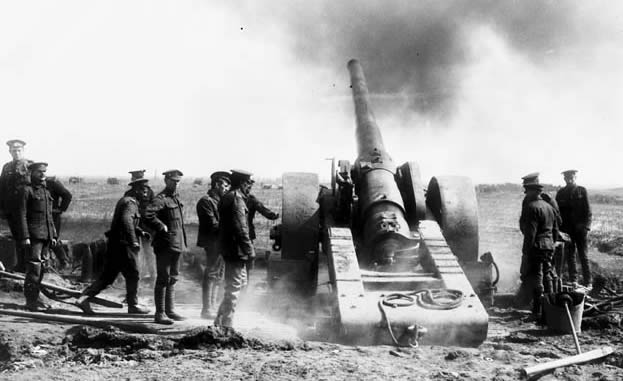
battle_of_vimy_ridge_field_gun_firingThey were all looking to the far horizon, to the ridge line that extended above and far into the distance. Without the benefit of trees and foliage, they could see the slope of the earth in gruesome detail. Nothing but mud, rocks, and stunted trees. And the final resting place of half a million men…

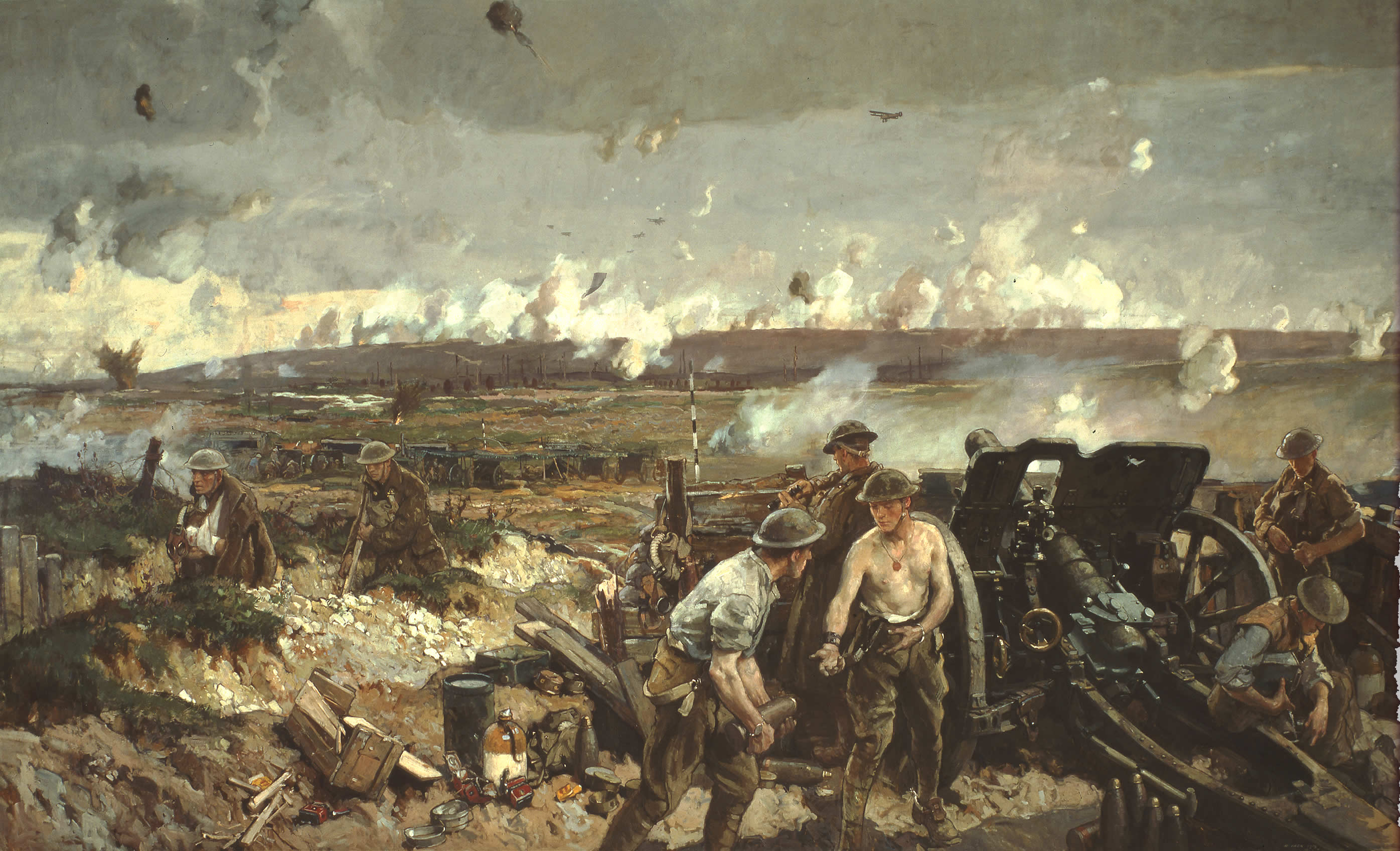
They were all watching it as the arty turned the field into a morass of craters and muddy holes. A fine mist had been on the field that morning, an icy rain that portended a long, hard day. But the screaming shells were doing their best to change that. With every burst, smoke and flame broke out along the high ground, the rain winking it out almost instantaneously, only to be followed up by another. It was like watching a macabre light show, or a wicked lightning storm. Except this one raged within the earth, kicking up soil and vaporizing bodies.

Yes, they all looked and watched the display. But Lieutenant Vincent Ross, he was looking at his men. The many fresh faces that made up 1st platoon, washed and ready for their big adventure.  He watched them wince when a big one hit, and rock from side to side and the shock made the earth rumble beneath their feet.

“No one had done what we are about to do today…” he said between bursts. “Many have tried already and failed, but we have something they do not… We are prepared… We are well equipped and ready… But most importantly of all, we have something to prove! Men of the Dominion… we are about to show the Hun over there what we’re made of, and those Brits across the Channel how its done!”

The soldiers let out a general hoot of approval. He basked in it for a second, knowing that he had only so much time before the preparatory bombardment ended and they would be moving up. That’s when the fun would begin, and the only moment of silence he could expect before the day ended. Hence, it would be the only chance he would get to remind his men of their duties, which were numerous.

And just like that, the pounding stopped. He looked to his men again and saw them looking at him. It was time. This was what it all came down to. A handful of men in a trench, their weapons at the ready and their mission on their minds. When the day ended, they would either be digging in, or someone else would be digging their graves.

“Alright men, this is it! We are the first wave in this assault. We move as soon as the creeping barrage starts, and we don’t stop until that ridge is in our hands. First Platoon leads the way, followed by Second, Third, and the balance of First Battalion. Be sure not to bunch up or get ahead of yourselves; otherwise, you will be stepping into the arty lines line of fire! And remember, once we secure the ridge, the battle will be just beginning. The Hun will try to take it from us, so once we have it, we will have to fight like hell to hold it!”

The men conducted their last minute rituals as they listened. Some kissed the crucifixes they had hung around their necks, others lit up a last cigarette, and others took the chance to do one last check of their weapons and ammo.

“I don’t need to remind you, people are counting on you. The Corps is counting on you, the General is counting on you. But most importantly, your nation is counting on you! Remember, your NCOs are your ticket to staying alive. Each and every one of them knows the lay of this land like the back of their hand.” He reaching into his uniform, he pulled out his field map and began pointing to the designated spots. “Squad leaders, remember your objectives, remember the timetable. Stick to these, keep your men in mind, and we will all make it home!”

Another roaring hoot went up from the men. Their voices slowly began to die down just as the first wave from the creeping barrage began to land a few hundred feet away.

“There it is!” He said over the roar of the incoming shells. “Wait for the first wave to clear, then we advance!”

Remembering Vimy Ridge

The_Battle_of_Vimy_RidgeHello all! Today has been rather a busy one, and show’s no signs of slowing down just yet! In spite of that, I would be remiss if I did not take the time to acknowledge the rather special anniversary which falls on this day, of which some people may not be aware. You see, today is the 96th anniversary of the Battle of Vimy Ridge, a major event in my nation’s history and a defining moment for all Canadians.

Though many people outside of Canada may not know much about it, the Battle of Vimy Ridge was one of the most significant battles of World War I and a key moment in Canada’s history. Taking place between April 9th and 14th of 1917, it was not only a Canadian-led offensive, it was also the only Allied offensive victory in the war to date. And just as importantly, we in Canada consider it a defining moment in our history, when our country ceased being a colony and became a nation.

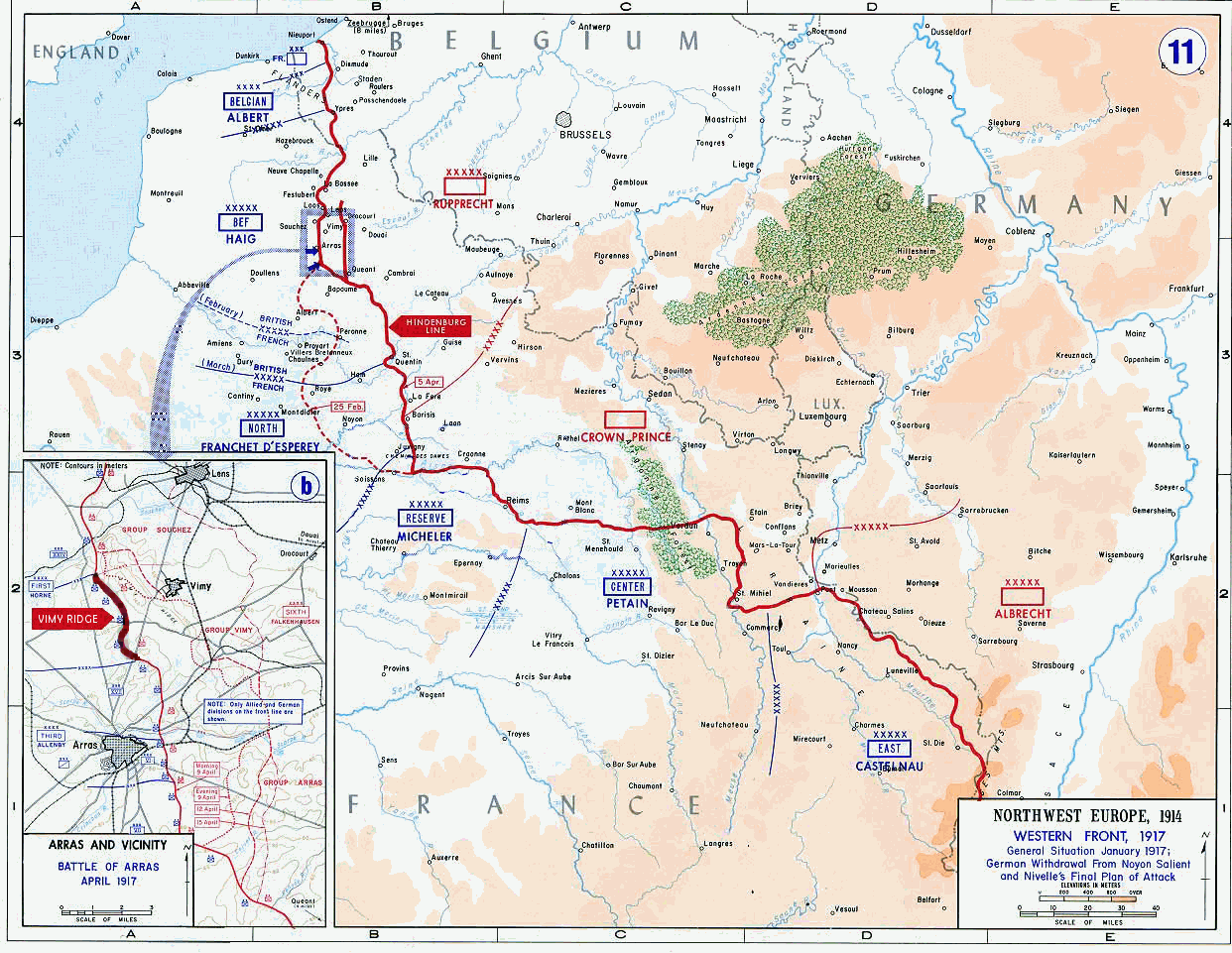
Battle_of_Arras_-_Vimy_Ridge_mapSurprising then that it is often considered a footnote to the larger campaign known as the Battle of Arras or the Nivelle Offensive, one of many disastrous offensives fought by the Allied armies during the war. Like all offensives of its kind, the purpose of the assault in the north-eastern region of France was to break the stalemate that had existened between the Allied and German lines since 1915.

It was believed that if this could be achieved, the numerically inferior German forces would finally be beaten and the war ended. And after so many bloody battles and worsening situations on home front – with shortages setting in and morale running short – the allies were desperate for their big breakthrough. Relying on armies fielded by the French, British, and all her dominions – Newfoundland, New Zealand, and Canada – the attack would take place in several key sectors along the Western Front.

vimy-ridge-875While the French struck at German positions along the Chemin des Dames ridge, and the British and most of the Dominion armies struck at positions around the town of Arras, the Canadian Corps – led by General Arthur Currie – was to take the highground known as Vimy Ridge. Despite promises of a speedy battle after a massive bombardment, the French made little gains against the dug-in defenders and lost almost 200,000 men. The British fared slightly better, achieving some gains but at the high cost of 158,000 men.

Only the Canadians achieved their objectives completely and promptly, taking the Ridge in just three days and with acceptable losses. Of the five divisions totaling nearly 170,000 men, only 3,598 were killed with another 7000 wounded. On the other side, the Germans – who were well dug-in and defending an elevated position – suffered at least as many killed and wounded, plus an additional four thousand captured. This was made ever more impressive considering that the French and British, during a previous attempt to take the Ridge, had lost a good 150,000 men.

vimy2

This was unprecedented for a World War I battle, and earned the Canadian Corps the status of elite “Shock Troops”. For the remainder of the war, Arthur Currie and the soldiers under his command would be the ones who were seen as being able to “get things done”. During the battle of Passchendale, a brutal, bloody, muddy offensive, the Canadians were called in to accomplish the offensive after the British efforts faltered. During the final 100 days of the war, when the German lines were collapsing, the Canadians led the way for every single push.

And yet, all of this was made possible due to one simple thing: sound planning. As the first offensive action that Canadian commanders were able to plan on their own, they took advantage of some rather novel ideas and technologies to overcome the problems of trench warfare. These included the rather revolutionary concept of using triangulation and wind measurements to determine the position of enemy artillery, and destroy them ahead of time.

battle_of_vimy_ridge_field_gun_firingCreeping barrages were also planned to give the advancing troops continuous fire support, rather than simply laying down a barrage and then stopping it before the infantry began to march. This tactic had already been proven ineffective, as the Germans simply dug in deeper to avoid preemptive barrages and also had time to emerge from their dugouts once the shells stopped falling to shoot at the advancing troops. By timing the artillery with the advance, any Germans brave enough to fire on the Canadian Corp risked being blown to pieces.

But most importantly, the planned offensive had been meticulously planned for month. Spotters mapped out 80 percent of the Ridge in advance, full-scale replicas of the terrain were built to rehearse unit tactics, and individual officers were assigned maps and time tables. All of this was a break from conventional philosophy, which held that troops did not need to be familiar with the grand strategy and should march as one.

Model_reproduction_of_German_linesThough many a military “expert” of the time found much of this suspect, they admitted dubiously that the Canadians’ plan couldn’t be any worse than the British tactics at the Somme, which cost the lives of 623,907 troops, 24,000 of which were Canadian. As such, the Canadian Corps got the go ahead. For weeks, Canadian and British artillery began pounding the German positions in preparation for the assault. Then on April 9th, an Easter Monday morning amidst rain and freezing cold, the Canadian Corps struck.

By the end of the first day, they had accomplished most of their objectives, but fighting and consolidation would continue for another four days and Canadians mopped up the German positions and took prisoners. When the dust had settled, the valour of the troops, the originality of the plan, and the success where larger, more established armies had failed all contributed to a new nation’s pride. The battle was hailed as the first allied success of the long war, achieved mostly due to the innovation of using a creeping, continuous massive artillery barrage to protect squads of advancing troops. Both sides used the tactic in future battles.

Vimy RidgeToday, the Canadian National Vimy Memorial stands as a proud reminder of what Canadians accomplished at Vimy and throughout the war. As a young nation, nominally independent but still very much tied to the British Crown, we had done what others could not and earned a reputation as stalwart soldiers and faithful allies that is still acknowledged to this day. The monument, as well as many of the wartime features of the Ridge, are maintained by an army of committed volunteers and government assistance.

And I for one very much look forward to visiting it in the spring of 2014, when the centennial of World War I is being marked all over Europe, and legions of Canadians and other nationals descend on Flanders and Northern France in order to pay their respects. In addition to the many monuments which mark the landscape, it is a testament to the futility of war, but also a symbol of a nation born in fire.

Today, it is especially important that we remember what happened not only at Vimy, but all over Europe and the world at large during those fateful years. Since the last living veteran of World War I, a British man named Florence Green, died on February 4th 2012 at the aged of 110, there is no one left who experienced that terrible war directly. And as we near the 100 year marker of the Great War and the battle that defined Canada as a nation, I hope and pray the lessons will not be forgotten! They simply cannot afford to be repeated…

Remembrance Day 2012

On this day, at the 11th hour on the 11th month, we pause to remember all those who died in war. We pause to acknowledge the sacrifice of the many for the many more, who died defending freedom and this thing we call civilization from fear, oppression, genocide, hopelessness, brutality, and the scourge of war itself. And, as we have done several times now, my wife and I chose to honor the veterans by going down to the Legislature in Victoria, BC. There, massive crowds come to watch the parade, see the wreaths being laid, hear the speeches, and listen to the 21 gun salute.

And let me tell you, it was cold and rainy this year! But still, thousands of people still came out to pay their respects and show their support for the current generation of veterans and military personnel who are here at home or deployed overseas. As I’m sure most people know, Remembrance Day began as a way of commemorating those who died in the Great War, a somber anniversary that was made to coincide with Armistice Day. After four years of horror and endless conflict, the combatants agreed that the 11th hour of the 11th day of the 11th month would mark the end of hostilities.

Since that time, it has grown to commemorate those who have died in any war, as a tribute to the terrible lessons learned in World War I, but have since come to be repeated, either through necessity or the frailty of humanity, many times since. Known as Remembrance Day in the United Kingdom, Canada and Australia, Veteran’s Day in the US, and Armistice Day in New Zealand, France and Serbia; for much of the world it is simply a day to reflect on the greatest sacrifices, worst mistakes, and terrible horrors to ever be witnessed by history.

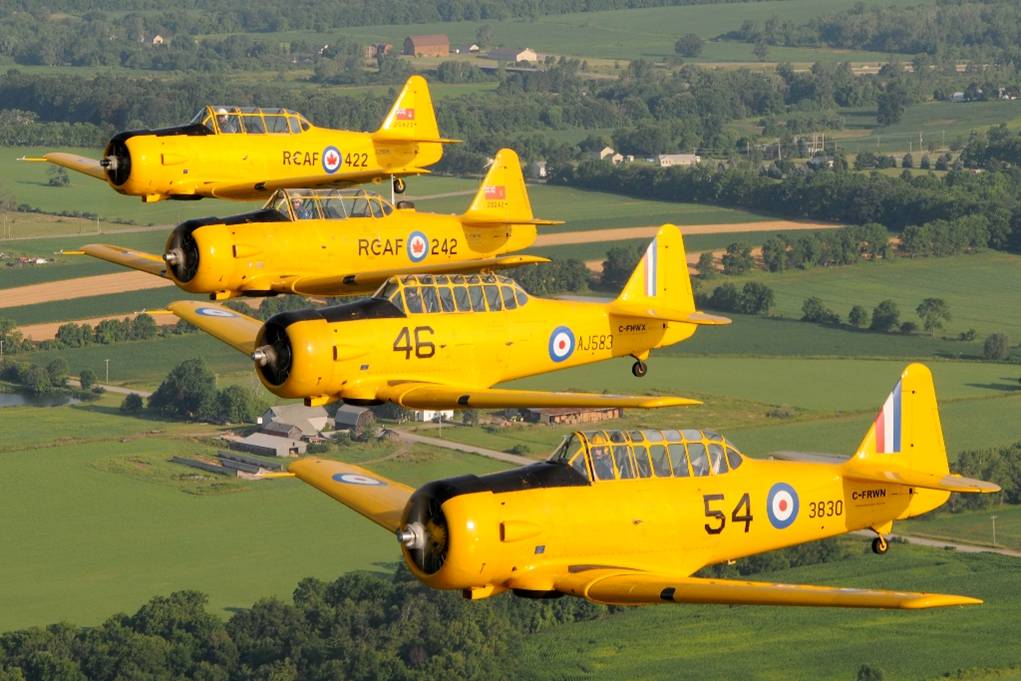
To mark the occasion, I thought I would take the time to honor two veterans who are very near and dear to my heart. They are my grandfathers, both of whom I’m named after: Grandpa Matthew Vincent Williams and Grandpa Stewart Beverley Wilson. Both men were pilots with the Royal Canadian Air Force, flying out of bases on Canadian soil, patrolling our coasts, and training pilots and instructors how to fight.

Stewart Beverley Wilson: Born in 1922, my maternal grandfather became a pilot and flight instructor who then went on to be a instructor of flight instructors while serving at CFB (Canadian Forces Base) Trenton in Southern Ontario. He was in his 20’s for the course of his service, barely a man himself, and was responsible for teaching other young men to train other pilots how to fly. He was part of the Commonwealth Air Training Program, a vast air training program in Canada designed to ensure that Britain and the Commonwealth had enough pilots to defend the skies during the Battle of Britain, and then to take part in the Allied air offensive for the rest of the war. Afterwards, he and his family settled in Brantford, but he continued to serve as a flight instructor.

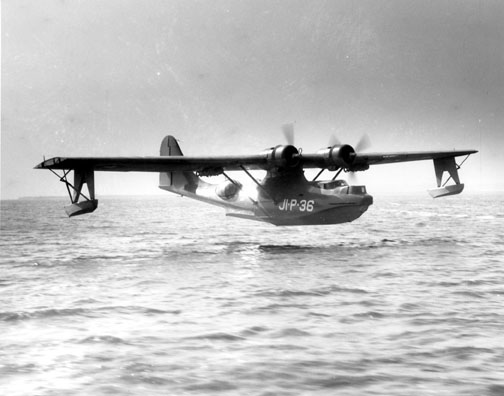
Matthew Vincent Williams: Born in 1912, my paternal grandfather enlisted in the RCAF with the hopes of becoming a pilot. However, due to his eyesight, he was instead trained as a gunner and navigator. Stationed in British Columbia, in part because he had recently become a father (one of my uncles). His tour took him to Jericho Beach in Vancouver, as part of the Western Air Command where he flew personnel in and out of the city and Vancouver Island. During the course of the war, his aircraft – a PBY Canso – sunk a Japanese submarine off the coast with depth charges while on patrol. Though he hoped of settling in the west, he returned to Ontario in Aug of 1945 to take care of his mother and settled into Hamilton. He remained in the Glider Program for many years before retiring.

Thank you all and wishing you a sober, reflective and peaceful Remembrance Day/Veteran’s Day/Armistice Day, wherever you may be. Let us hope that with every conflict and every act of sacrifice since the Great War ended, that we’ve learned something about the futility of war and the needless nature of aggression and conflict. And here’s to the day when we can settle our differences without bloodshed or violence.

Lest We Forget

The 70th Anniversary of the Dieppe Raid

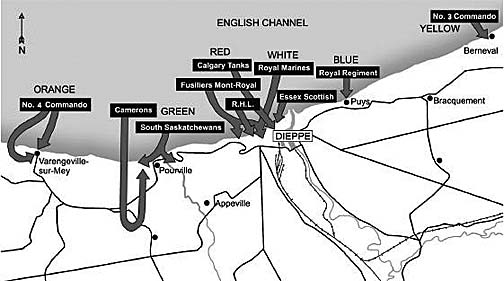
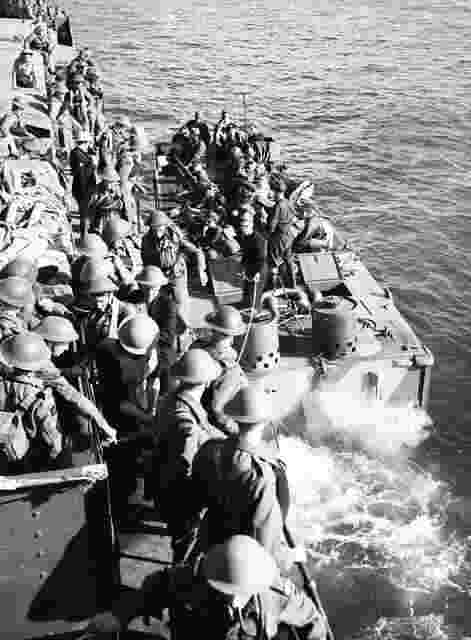
Here in Canada, few historical events from World War II inspire as much anger, sadness, and remembrance than the anniversary of the Dieppe Raid. It was 70 years ago today that Canadian Forces, in what was to be the first offensive of the war, attacked the European coastline near the small French town of Dieppe. The raid, as it was classified, was a total failure, resulting in 913 dead, almost 3000 captured, and countless more wounded. Out of the nearly 5000 men who went in, less than half made it home.

Earlier today, I read some articles that spoke of the surviving veterans, the youngest of whom is 90, as they arrived at Dieppe to take part in the commemorative ceremonies.

Countless French people welcomed them by hanging Canadian flags from their balconies and volunteering to show them about town. For the locals, honoring the veterans who fell while trying to liberate their town has become a way of life, similar to the Belgian people of Ypres and the Dutch who honor how Canadian forces liberated their country in 1944.

Naturally, when these veterans tell their stories again to reporters or the many who wabted to hear them, they conveyed some rather mixed emotions. There were moments of anger and pride intermixed with a general tone of lament, and in that respect, they are joined by all Canadians who remember. Even now, 70 years later, there is still ample speculation about the Dieppe raid.

Taking place in 1942, during the height of the war when the Allies were still on the losing end, the planned raid on Dieppe represented the culmination of many hopes, fears, and political considerations. For over a year, Soviet leader Joseph Stalin had been asking – in fact, pleading – with the Allies for a Second Front in Europe that would take pressure off the Russian forces. Ever since the Germans moved into his country roughly a year before, Russians were dying by the millions and the Red Army was struggling to hold them back.

At the same time, the Allies had been contemplating plans for the liberation of France ever since it had been overrun two years earlier. For the British and French, the memories of the summer of 1940, beginning with the invasion of Belgium, the outflanking maneuver through the Ardennes Forest, the fall of Paris and the evacuation of Dunkirk, were still phantoms they wanted to dispel. With Germany pushed out of France, the Allies would have a major ally back in the fight and put an end to Germany’s expansion, which had continued unabated since the war began.

And last, the Canadian Armed Forces were desperate to get into battle, hoping to demonstrate some of the same zeal that had popularized their forces in World War I. And with the US finally entering the war on the Allied side, there was an added push to score a victory before the Yanks got in and claimed all the glory 😉 A commando-style raid against a section of the Atlantic Wall seemed like just the thing to bolster morale and show the world that the Canadian Expeditionary Force was still a force to be feared!

Ultimately, the raid was a failure for numerous reasons, all of which proved intrinsic to helping the Allies draft Operation Overlord – the invasion of Normandy – roughly two years later. First off, the raid had little support to speak of. Aside from the 5000 men and tanks heading onto the coastline, their were very ships ships and aircraft standing by to blast German positions and take on the coastal defenses.

Second, the planners did not take into account the challenging terrain along the beaches. Rather than being sandy shores, they were composed of tiny little rocks which played havoc with tank treads, making them virtually useless. As a result, the Canadian soldiers found themselves running into German machine guns and mortar positions with no cover or support.
Third, the plan was changed over and over again so that less and less forces would be committed to the fold. This led many to question whether the raid would even have enough men or firepower to achieve their mission. However, Allied planners dismissed these objections by emphasizing that the attackers would have the element of surprise. That was not the case though, since Allied Command had been publicizing the attack for some time before it happened.

In short, the mission was the perfect recipe for failure, leading some to speculate that that had been the goal all along. With Stalin pleading for a Second Front and the Allies unable to convince him that they were not ready, some claimed that Dieppe was meant to fail as a way of illustrating their point.

In addition, new evidence is being brought to light that suggests that the raid was a diversion for a covert operation that involved commandos attacking the secret German naval headquarters in the town in order to capture a working model Germany’s new four-rotor Enigma machine and their most recent code books. At the head of this operation, so the argument runs, was Mr. Ian Fleming himself, the man who would later create James Bond.

A very interesting interpretation, and which explains quite clearly why the raid was so publicized. In keeping with Allied counterintelligence plays, it was customary to let the Germans know exactly what they were doing in the hopes that they would chomp at the bit and not realize it was a feint to cover their true aims.

What’s more, if this latter interpretation should prove to be true, it would mean that politics and incompetence was not the reason for the Dieppe Raid. Instead, it would have been a vital intelligence mission which went wrong for a number of reasons. However, this still would not change the fact that the operational planning suffered from the fact that the raid failed to take into accounts some key problems. Nor would it change the outcome.

In any case, some good did come out of the operation. Four months after the raid, the Allies managed to crack the 4-wheel Enigma code and went back to winning the intelligence war. In addition, Soviet Forces began to defeat the Germans on all fronts and initiated the slow process of pushing them back into their old stomping grounds. And in the Mediterrenean and North Africa, the German Navy and Afrika Corps began to get their asses kicked.

But most importantly of all was the operation that would succeed where Dieppe had failed. Taking on June 6th of 1944 in the Normandy region of France, Operation Overlord was the largest invasion in history, and several key factors had been adapted from the Dieppe Raid. In addition to committing all kinds of men, materiel, ships, and planes to a cohesive, multi-phased invasion plan, the Allies also conducted a vast counter-intelligence operation well in advance to trick the Germans into thinking that their real invasion force would be coming in the Pas de Calais region.

So today, like all good Canadians, I wish to honor the veterans who are currently overseas, receiving their well-deserved honors and recounting the historic Dieppe Raid that they took part in so many years later. I’d also like to salute those soldiers who are no longer with us, many of whom were wounded, captured and forced to spend the rest of the war in army hospitals and German POW camps. And I would especially like to pay tribute to those who didn’t make it back, who died on those rocky shores as the result of either politics and ineptitude, or desperation and intrigue.

Even after 70 years, surely we must be learning something from all this…

Remembering 1812

Once in a while I like to break from sci-fi to honor major political developments or anniversaries. And since I missed out on honoring those who participated in D-Day on June 6th, I refuse to let this one pass without comment as well. As many are no doubt aware, it’s the 200th anniversary of the War of 1812, and in many countries, this occasion is being marked and commemorated. For many people in many nations, not just the historians among us, this war was extremely significant.

But what is most interesting is how it is remembered differently. For Canadians, 1812 was a decisive moment in which the country came together to repel a foreign invasion and declare its nationhood in the face of annexation. For Americans, it is remembered as a largely defensive affair in which a second British attempt at invasion was repulsed. For the the British, it was a largely colonial affair that was designed to distract them from the war on the Continent with Napoleon. And for the First Nations of Canada and the US, it was seen a loss which led to further annexation and loss of sovereignty.

And that’s just the Anglo-American perspective. If we were to set our sights a little farther abroad, we’d notice that people in Russia, Germany, and France also have thoughts of their own to share. For France, 1812 was a major setback in the larger affair known as the Napoleonic Wars. For this stout general/dictator from Sardinia, it was the beginning of the end for his rule and his empire. The Russians accordingly saw it as a great victory against a foreign invader, one which they would exploit in future wars to bolster morale. And for Germany, being forced to fight in Napoleon’s “Grand Armee” was a catalyzing event that helped to rouse national sentiment, ultimately leading to German unification in 1871.

Interesting how history can be relative, isn’t it, depending on who you ask and what their perspective is? But thanks to my own historical studies, I’ve learned much about this war, and can say that they all reflect a certain aspect of truth. In the end, all points of view and how we choose to remember the war tell us much of our national experience of it and confirm that the war was a very large affair that was experienced differently all around the world. I shall be brief, since the real historians are the ones you should be listening to. I just want to offer my humble two cents 😉

The American Perspective:
In the course of studying American history, I was interested to see just how the War of 1812 was treated. It was no secret to me that the popular American conception is that they won the war – here in Canada we say the exact same thing. But what I did find objectionable was the rather glaring ommissions that seemed to pervade the history textbooks on the subject.

For example, so many of the battles which took place on Canadian soil were not mentioned, the focus being on the battles America won and which happened for the most part on their own soil. These included the Battles of Plattsburgh, Chesapeake Bay, Washington DC, and especially New Orleans.

And yet, the best explanations I have heard for this come from American historians themselves. As one put it, “Americans, when they chose to remember the war at all, focus on the last year of the war when the battles were defensive in nature”. This, he claimed, is what gives rise to the illusion that America was fighting a defensive war which allowed them to think of it as a victory.

Another historian, who was also a General in the US Army, claimed that it is only in West Point Academy that a full and comprehensive treatment of 1812 is available in the US. Here, he claims, officers in training are taught that 1812 is a perfect example of what NOT to do in a war, namely go to war with overconfidence, an underfunded and staffed army, and a divided country.

And yet another claims that 1812 is America’s first “forgotten war”, beating Vietnam by over a century and a half. I especially liked this take on it since I’m a real proponent of how history repeats itself, just in different settings with different particulars. Seen in this context, 1812 was a less than stellar affair which quickly became overshadowed by the Revolutionary War and the Civil War, both of which were decisive for America and had a far greater impact on their history and development as a nation.

The First Nation Perspective:
Compared to the other perspectives, this one is by far the most sobering and real. In fact, one could characterize it by saying that this is a case where people were invited to a war, made a big difference, and then were shut out in the cold to be forgotten while the other combatants came to terms and all had their own victory parties. Disgusting really, but it teaches us something about how history frequently screws people over.

For the Cree Nation and the many nations that encompassed the Great Lakes Region, the war began long before 1812. Prior to this, American encroachment led many nations in the Ohio valley to begin to organize and militarize for the sake of defense. Seeing opportunity and common cause in this, the British began arming these nations and making alliances with them, knowing that any invasion northward would effect all. At the forefront of all this was a committed individual named Tecumseh, a Cree leader who was responsible for much of the cultural revival that was setting in and saw potential in an alliance with the British.

When war was declared, Tecumseh and his bands of fighters proved to be the decisive factor in several battles, not the least of which was at Fort Michigan, where they came upon the garrison by way of the river and took the fort with barely any casualties or shots being fired. In time, the collaboration between Brock (the British Commander) and Tecumseh led Brock to give him his overcoat as a personal gift. However, in keeping with his cultural traditions, Tecumseh conferred the honor onto a more senior warrior in his army. Brock was not offended.

During the American invasion of Upper Canada, the Mohawk nation also proved decisive. At the attack on Fitzgibbon, Mohawk warriors mounted a surprise attack on the unsuspecting American army and forced the surrender of over 500 troops. They had been tipped off by a young woman named Laura Secorde, a nurse who had been privy to the American plans while tending to wounded soldiers on Canadian soil.

In just about every subsequent battle on Canadian soil, Cree, Mohawk and Iroquois warriors were intrinsic to the fight. In fact, it would be no exaggeration to say that the presence of these seasoned warriors was often the difference between victory and defeat. Facing overwhelming numbers, the Angl0-Canadian forces were often bolstered by the fact that American troops were frightened of Native warriors, having been subjected to stories about their fearsome, bloodthirsty nature for so long.

Unfortunately, the war ended for the Cree Nation and Tecumseh during the Battle of Moraviantown (aka. the Battle of the Thames)i n southern Ontario. After the defeat of British naval forces on Lake Erie, British forces were ordered to pull back to where they could be reinforced and resupplied.

However, Tecumseh objected and voted instead to hold the line against the advancing American armies. Though he died and his forces were defeated at Moraviantown, this battle stalled the American forces long enough to give the British and Canadian forces time to regroup. As a result, the Americans were defeated at Lundy’s Lane six months later and the last invasion of Canadian soil was stopped.

The Canadian Perspective:
As I already stated, from the Canadian point of view, 1812 was a decisive war that saw the country come together to repel a foreign invader. This perspective does gloss over the fact that there were divisions between Upper and Lower Canada, that victory was owed in large part to its Native allies, and that Canada was still nominally a colonial possession of the British Empire. However, the perspective still holds true, as Canadian militia were the cornerstone of the small garrison of British regulars. In fact, Brock chose to dress all of his militia in the same red coats as his regulars in order to give the illusion that he had a larger force. This in turn would play a major role in ensuring the cohesion and organization of his forces in the battles to come.

And to top it off, Canadian forces did succeed in overcoming the odds against a much larger American invasion force. Whether it was the assaults on American border forts in Michigan and along the Great Lakes or defensive actions in Ontario and Quebec, Canadian forces managed to acheive an almost unbroken string of victories.

These included the Battles of Queenstown Heights, where the American forces that had crossed Lake Ontario and set fire to York (modern day Toronto) were defeated. The Battles of Chrysler’s Farm and Chateauguay were also decisive victories which forced the American forces to abandon their St. Lawrence campaign, the planned invasion of Quebec. And finally, Lundy’s Lane, though not a decisive victory, was seen as the final battle in which the invaders were stopped.

All of these experiences served to galvanize national sentiment and helped to inspired demands for reform which would culminate in the Rebellions of 1837. This is especially ironic seeing as how American planners believed that the Upper Canada Loyalists would welcome an American invasion and see it as a chance to throw off British rule. Instead, it inspired Canadians to reject union with the United States and demand a measure of independence on our own terms.

The British Perspective:
And last, but not least, we have what Merry Ol’ England thought of the whole affair. Far from seeing it as a mere diversion, the British were actually quite invested in what took place on North American soil, even if they did see it as a distraction from Napoleon’s invasion of Russia.

For many years, Britain had been locked in a state of cold war with the US, monitoring the frontier with wary anxiety and taking every opportunity to bolster its defenses, either by supplying Native allies or making sure their were garrisons in Upper and Lower Canada and fleets on the Great Lakes.

Though these were by no means comparable to American forces, they did indicate how seriously the British took the prospect of an American invasion. And in the end, Britain felt pretty good about it’s conduct during the war. Their vaunted General Brock, though he died in the line of duty, organized a stalwart defense of the colonies while the British Navy harassed and assaulted many American ports. Though eventually these invasion attempts were rebuffed, they did meet with some success.

While Brock and Tecumseh managed to seize a series of key forts in the Great Lakes region and burned Detroit to the ground – in retaliation for the burning of York – they managed to set upon Washington DC and burned it to the ground. This is something which is commemorated extensively on the American side, particularly how a portrait of George Washington was saved before the old White House was set ablaze.

But of course, the defeated attempts at invasion did not go unnoticed either. Whether it was at Plattsburgh, Baltimore or the disastrous assault on New Orleans, it was clear that the war would end with American territorial sovereignty more or less intact. As a result, Britain would walk away from the war undefeated, but without much to show for it.

But of course, that was ultimately the goal in North America, to repulse the American invasion while at the same time ensuring that Napoleon’s defeat on the continent was assured. With the signing of the Treaty of Ghent in 1814, and the war with France now over, Britain breathed a temporary sigh of relief. This would end with Napoleon’s return from Elba, but that too would be resolved with the Battle of Waterloo a year later. For the British, as well as the Americans, 1812 would fade into obscurity, something to be remembered mainly by historians and not popular consciousness.

Final Thoughts:
Well, that’s my limited appraisal of the war. For the full scoop, you really need to check in with the historical recreationists, especially those who maintain the border forts along the Great Lakes region. For example, if you’re in Kingston, best check out Fort Henry. I remember going there as a preteen and thinking just how awesome the whole affair was. Not only do they dress in period costume and tell you much about the history of the fort, they also conduct actual musket and cannon drills just to keep things interesting and authentic.

Also, be sure to do your own research on this and other “forgotten wars” of history. It’s often because they were so instructive that they are allowed to fade into obscurity, mainly because people would like to forget what happened. However, that is how lessons are avoided and convenient lies allowed to permeate. Those familiar with World War I and the legend of the “Stab in the back” will know what I mean by that! Had people not been in such a hurry to forget the carnage and pretend that the war was just a big misunderstanding, or that Germany had been betrayed and not defeated, World War II could very well have been avoided.

And for those veterans who fought in the Vietnam War, as well as those returning from Iraq and Afghanistan (two “forgotten wars” in the making), the lessons of a forgotten war cannot be allowed to go unlearned again. In fact, one could argue that if 1812 were taught in full in schools and academic institutions other than West Point throughout the country, wars like Vietnam and Iraq could have been avoided. When one reads of how men like Jefferson said taking Canada would be “a mere matter of marching”, slogans like “domino effect” and “we’ll be welcomed as liberators” suddenly ring very hollow!

In short, there’s a reason history is full of repeats. All too often, it seems that only a select few are able to discern the patterns and realize that this sort of thing has been done before, usually with disastrous consequences. And my father – who recently visited Europe as part of commemorative trip – would tell you, some people do remembrance right! In Belgium, especially in the town of Ypres, commemorative ceremonies are an almost everyday occurrence. Those who died in the defense of the country and the events which devastated it are solemnly remembered on a regular basis, not just once a year. One would get the impression that these things are important to them!

Okay, that’s enough out of me. Happy anniversary War of 1812. You accomplished much, remind us of much, and really deserve to be honored, regardless of the fact that you fell between the War of Independence and during the Napoleonic Wars. I tell ya, those wars are such attention hogs! In any case, I look forward to 2014 too, when the end of World War I will be commemorated the world over, but especially in Flanders where the people will holding all kinds of celebrations to mark the centennial of the end of the Great War. My wife and I plan to be in attendance. I know my folks will be front row center!

Good day and peace be with you, friends!

Alternate Histories…

When it comes to science fiction, alternate histories are a special kind of sub-genre. They explore the what ifs of history, challenge our notions of inevitability, and open up whole worlds based on what could have been. They are a source of fantasy and speculation on the one hand, offering the reader a chance to explore endless possibilities, and realism on the other, showing how a drastically different world can be entirely plausible.

Some might ask why this sort of thing would be considered sci-fi at all. Why not simply file it under the heading of historical fiction next to all those recreations or Dan Brown novels (Ha! Take that, Brown!)? Well, the answer is that, like time travel novels, there is a scientific basis for this kind of story. I’m sure everyone’s familiar with the Multiverse or Alternate Universes hypothesis. In essence, these theories arise out of quantum mechanics as well as pure fantasy, positing that there may be an unlimited number of alternate universes in which all possible realities have been realized.

So really, creating a world where things unfolded differently from our own is not only fun and creative, its also a relatively scientific approach. Who’s to say that this world doesn’t exist somewhere out there, in a different dimension of the universe as a separate quantum reality? Hell, there may very well be countless such realities paralleling our own. And imagining how and why things unfolded differently in any one of them is what makes them fun!

All that being said, let me get into some prime examples of Alternate History and what was good about them. For starters, the classic tale by Philip K. Dick and the world where the Allies LOST the Second World War.

Man In The High Castle:
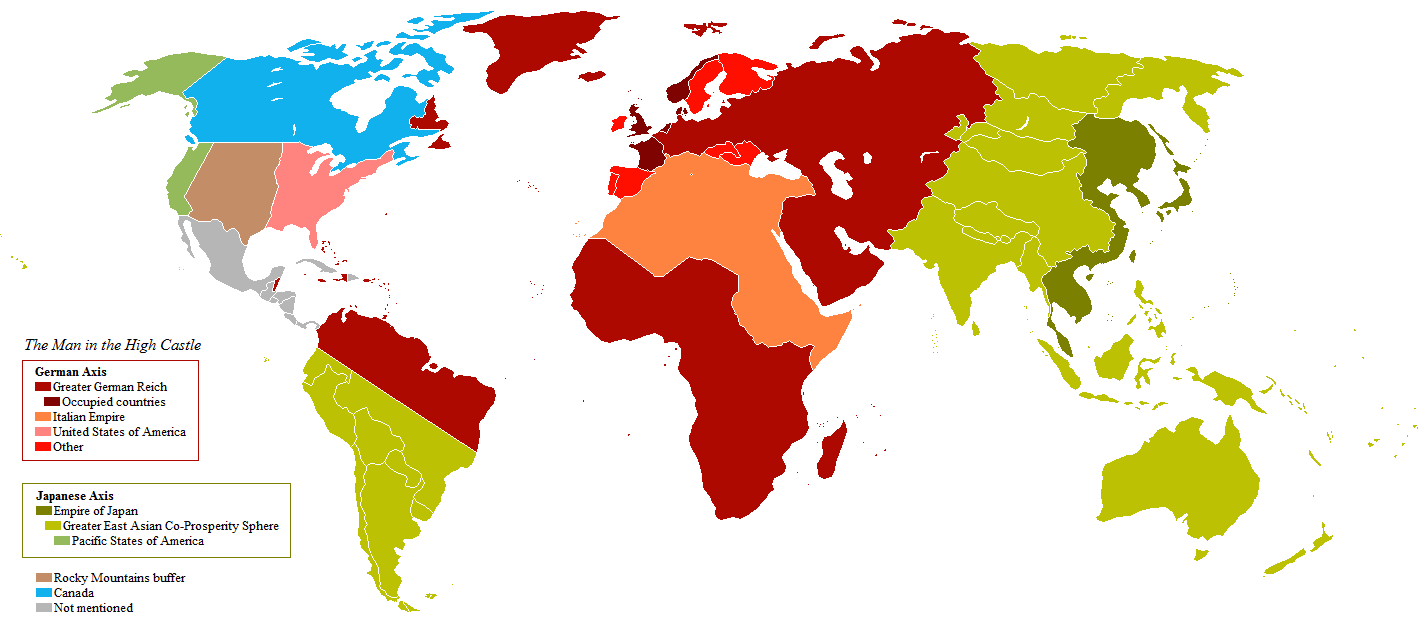
This story takes place in the US during the 1960’s where a different kind of Cold War is brewing between two superpowers. But unlike the world that WE know, in this world those superpowers are Japan and Germany. After losing the Second World War, the US was divided between these two powers, a loose federation of Midwestern states is currently unoccupied between them, and Jews, Africans and other “undesirables” have all but been exterminated. The rest of the world is similarly divided, falling into either the Greater German Reich, the Japanese Empire, the Greater East Asia Co-Prosperity Sphere, or the Italian Empire.

Man In The High Castle, Map

The reasons for this are made clear throughout. For one, the assassination attempt of FDR by Giuseppe Zangara’s in 1933 was successful. As a result, the US experienced a weak string of governments led by FDR’s VP John Nance Garner and then Republican John W. Bricker. Without FDR’s leadership, America never recovered from the Great Depression and was unable to offer military assistance to Britain and Russia or defend itself against Japan when WWII broke out. As a result, the Axis powers won and the US itself was conquered and divided by 1948.

In the world which resulted, the Mediterranean has also been drained, Africa has been sterilized through the worst manifestation of the Reich’s human experiments, and the Reich is sending people to the Moon and further into space. Technology has advanced quicker within the Reich, but at a tremendous cost in human terms, and the resulting impact on the Reich’s culture is evident everywhere. Madness and mass murder have become a permanent part of their psychology, which is part of the reason why they are planning on war again. The Japanese sphere is much more peaceful and phlegmatic by comparison, but technologically less advanced. In any coming conflict, they will be at a disadvantage and they know it!

Enter into this world a series of characters who represent the various facets of society. There’s the Japanese Trade missioner in San Francisco, Nobusuke Tagomi, Mr. Baynes, a Captain in Reich Naval Counter-Intelligence who poses as a Swedish Industrialist, Frank Frink, a secret Jew who is trying to start a jewelry business with his partner, Wyndam-Mason, an industrialist and the former boss of Frink, Robert Childan, an American antiquities dealer who sells his wares to Japanese customers who are interested in owning examples of pre-war Americana, and Juliana Frink, a Judo instructor and Frank’s ex-wife.

In the course of the story, we find that Baynes is traveling to San Francisco to meet with Tagomi, ostensibly as part of a trade mission, but really to deliver a warning. Germany is gearing up for war with Japan and plans on using nukes! Mason introduces the subject of the book known as The Grasshopper Lies Heavy, an alternate history that deals with the subject of how WWII could have been won. Frink and his partner begin manufacturing jewelry in the hopes of selling it through Childan, who does good business with antiquities but finds that innovative new things are not appealing to his Japanese customer base. And finally, we see that Juliana, after hooking up with a Reich secret agent, is traveling to middle America to find the author of Grasshopper, a man known by his signature – “Man In The High Castle”. The Reich wants this man dead, for obvious reasons.

By books end, Juliana kills the German agent once she discovers his identity and finds the man for herself. She learns that, in spite of the mystery surrounding him, he is actually a perfectly normal man who was inspired to create something groundbreaking. His inspiration for the book apparently came from the Oracle, an aspect of the I Ching which people use to ordain the future (and which plays a central role in this story). How he applies the Oracle to past events is never fully explained, but the point is clear. By book’s end Juliana realizes that they are living in the wrong reality. Germany and Japan were meant to have lost the war and the history was meant to unfold differently.

While difficult to follow at times, mainly because of the sort of stream of consciousness way PKD writes, this book was fascinating and is the perfect example of an alternate history. The plot device of the book, itself an alternate history, illustrates beautifully how history unfolded differently in this alternate universe and spares the reader from having to read through an intro that explains how it all happened. And aside from some debatable scenarios, like the draining of the Mediterranean, most of what goes on in it seems highly plausible.

Fatherland:
Another example of an alternate history in which the Axis once again won World War II, but did not conquer the New World. In addition to being a novel, it was a adapted into a TV movie starring Rutger Hauer, Miranda Richardson and Peter Vaughan. The author, Robert Harris, has done many works of historical fiction, including Enigma (also adapted into a movie), the Roman historical novel of Pompeii, and a trilogy centered on Cicero (Imperium, Lustra, and Conspirata). And though Fatherland does resemble Man in the High Castle in many respects, it is arguably more realistic and novel in its approach.

The story opens in the Greater German Reich in 1965 after a murder has taken place. Investigating this murder is Xavier March (played by Rutger Hauer in the movie), an investigator working for the Kriminalpolizei (Kripo). The victim is a high-ranking Nazi named Josef Bühler, and his death was meant to look like an accident. As he investigates further, he finds that Bühler’s death is linked to several deaths of high-ranking Nazis who lived through the war. In each case, their deaths are made to look like accidents.

At the same time, Charlotte “Charlie” Maguire, an American journalist, has come to the Reich to witness Adolf Hitler’s 75th birthday. This event is also being used by the Reich to heal the rift between the US and Germany, as there has been a state of detente between the two since Second World War. While in Germany, she is slipped a package from a stranger containing details about Bühler and begins looking into it herself. In time, March and Maguire meet up and begin exchanging information, hoping to discover the truth behind all the deaths.

In time, they come to uncover that the deaths are part of a cover-up conspiracy whereby the planners of the Holocaust are being eliminated one by one. This is being done in preparation for the meeting between Hitler and Josheph P. Kennedy (the president of the US in this story), basically to ensure that Germany’s crimes don’t get in the way of a new alliance. When the Gestapo get wind of their discovery, March is arrested and tortured, but Maquire escapes and heads for Switzerland with the proof they’ve found.

March is eventually freed with the help of the chief of Kripo, but quickly realizes his rescue was staged so he might lead them to Macquire. He instead heads for Auschwitz, which has been dismantled since the war, looking for some indication of what went on there. He soon finds bricks in the undergrowth, indicating the existence of old structures. Satisfied that it was real, he pulls out his gun and prepares for the inevitable.

The story not only does a good job of postulating what would have happened had Germany won the war (i.e. the Holocaust would have been covered up and disavowed by later generations in order to protect Germany’s reputation), but also on how this victory came to be. In addition to Reinhard Heydrich (the chief of Reich security during WWII) surviving his assassination attempt in 1942, the Germans also learned that the British had cracked their Enigma codes and changed them, thus being able to successfully cut off Britain with their U-boa ts and starve it into submission by ’44. In the East, the Germans also manage to defeat the Russians in the Caucasus in 42′, thus securing the Baku oil fields, cutting off Moscow from supply and finishing them off by 43′.

With victory in Europe complete, they then begin testing their own nuclear weapons and developing “V-3” intercontinental rockets by 46′. However, the US wins in the Pacific and drops their own nukes on Japan, ending the war there and leading to a state of Cold War between the US and Germany. Thus, in this alternate world, it is the US and Germany that are the global, nuclear superpowers rather than the US and USSR. The story also ends on a cliffhanger note, leaving the reader to wonder if war breaks out between the US and Germany and whether or not the main characters survive.

However, not all alternate histories revolve around WWII or even recent events. Some go much farther back in time, tackling pivotal events like the “discovery” of the New World, or the fall of Rome, or, in the case of Harry Turtledove, the outcome of the American Civil War. This is an especially good example of alternate history because of its apparent plausibility.

Guns of the South:
In this story, historian Harry Turtledove explores the very real possibility of what would have happened had the South won the war. It involves some South African ultra-nationalists (Afrikaner Weerstandsbeweging) traveling back in time to supply Robert E Lee’s army with AK-47’s and nitroglycerine tablets (to treat Lee’s heart condition), thus ensuring a Southern victory at Gettysburg and in the 1864 campaign. The motives for this aid are made clear in the course of the story when Lee finally questions the helpful men who’s accents and technology they find strange and intriguing.

In essence, the leader of the time travelers (known as the AWB, the anglicized version of which is “America Will Break”) tells Lee that in 2014, where they have come from, white supremacy has not endured and that in South Africa by their time, blacks have eclipsed whites as the dominant power. They feel that the only way white supremacy will survive is if the American South won the Civil War, thus ensuring that it would have a home in the US in the future. Lee accepts their help, and the Confederates eventually win the Civil War and the Union, England and France are forced to recognize the CSA.

What follows this is not only intriguing but highly plausible. Lee becomes president of the new south and abolishes slavery, in keeping with his views and the reality of the post-war situation. Not only is slavery untenable from a moral standpoint in his view, Lee knows that forcing former slaves to return to the plantations will only lead to violence and spur on black guerrillas who are now operating throughout the Confederacy. At his inauguration however, men from the AWB attempt to kill him with Uzis and end up murdering his wife, VP and several dignitaries. Lee then seizes their HQ and finds many more things from the future (like lightbulbs and books about the marginalization of racism in the future). He then successfully uses these books to convince his congressmen that slavery is obsolete and must be condemned. Abolition is thus passed in the South without incident.

The story ends with the Union, angered by British recognition and support of the South, invading Canada. Also, Lee is made aware of the fact that they are developing their own version of the AK-47 in case of future war. However, he remains convinced that the CSA will maintain its technological advantage, and will in time catch up with the North in terms of industry and be able to defend itself if worse comes to worse.

Having completed this one volume, Turtledove went on to create ELEVEN more books in the series, drawing out this alternate history thread and creating a very plausible timeline in the end. To sum it succinctly, the US enjoys mostly peaceful relations with the CSA for about fifty years, but angry over England and France’s support of the CSA, aligns itself with the new power in Europe at the end of the end of the 19th century – The German Empire! As the alliances take shape in the early 20th century, it’s Germany, Austria-Hungary and the USA versus Britain, France, Russia and the CSA. Neat huh? One can see without much effort how this will shake things up!

In the US too, politics change as the Republican Party is blamed for losing the war. It disappears and Lincoln, himself despised, ends up joining the Socialist Party, the only rival to the Democrats. With America and Germany as allies, cultural changes occur as well, such as fine mustaches becoming all the rage. This is in reference to Kaiser Wilhelm who was renowned for having a bushy soup strainer on his upper lip!

But its the wars where the real change occurs. When World War I comes around, America is immediately involved and the stalemate of trench warfare is seen running across the Mississippi river and also between Canada – part of the British empire – and the northern US. The black former slaves of the Confederacy, freed by President Robert E. Lee in the 1880s but then left to rot, rise in a Communist-backed revolt in 1915 but are ruthlessly crushed. In the end, the US army conquers Canada in 1917 with the use of tanks and breaks through the Confederate lines in Kentucky and Virginia. Russia is similarly brought out of the war by a revolution in this timeline, but not a Communist one. The US navy then turns its attention to Britain and puts up a blockage with starves it into submission. The USA and Germany have won the war.

Also similar to real history, the victorious powers impose harsh peace terms on the losers, complete with territorial losses, “war guilt” clauses, reparations, and disarmament. Politics thus become radicalised in the defeated powers – Britain, France and the Confederacy – and fascist parties gain control in all of them. The Second World War then arrives on schedule after a demagogue who is voted in in the CSA who resembles Hitler, though his hatred is aimed not at Jews but at blacks. The war opens with a Confederate blitzkrieg into Ohio that almost cuts the US in half, but in time, the weight of numbers begins to swing the balance the other way. Much like in the real WWII, the death camps run by the Freedom Party to exterminate the South’s blacks continue to run full blast, even as their armies are in full retreat.

Both sides are also racing for nuclear weapons, and some are used in the end – but Germany and the USA have more of them than Britain and the CSA, so the victors in the First World War win once again. And this time, the Confederacy is fully occupied and formally abolished. The United States is reunited after generations of disunity, but a genuine reunification will not come for many generations, if at all.

Thus, while some small changes in historical events led to some rather cataclysmic changes in Turtledove’s story, things pretty much meet up with real history in the end and come to resemble the world as we know it today. Russia is not Communist, and the Cold War of the post-WWII era is markedly different, but the general outlines are the same. So in a way, his story is just like PKD’s and Harris’ in that things diverge in the beginning but come back to what we, the readers, interpret as the normal course of history in the end. Hmmm, one might construe that their is a point in all this, a lesson if you will. And in that, they’d be right!

The Lesson of Alternate History(?):
This humble narrator would suggest that if there is a lesson to be learned from Alternate Histories, it is that the force of history is a powerful, weighty thing and that while small changes can have a big impact, the general pattern reasserts itself before too long. At least, that is what the authors in question appear to be saying. In PKD’s Castle, the story ends with the character of Juliana Frink realizing that Germany and Japan lost the war and that the author of the alternate history book wrote it for just that reason. Fatherland ends with every indication that the Holocaust will be revealed and that the US and Germany will remain enemies. And Turtledove’s Guns of the South, though it takes about half a billion words to get there, ends with WWI and II playing out pretty much the same as they did in real life.

But as I’m sure someone wise might have said (might have just been me!), books tell us far more about the author than the subject. It could be that history is a chaotic arbitrary process and the idea that it will meet up with us or overcome obstacles that are artificially put in place is an illusion. For all we know, causation and inevitability are things we impose based on a false consciousness, that we believe we are where we are meant to be because we have to. That idea is often explored in alternate history as well, where the characters believe that their own timelines are the “right” one and that if tampering took place, it was for ill. However, the stories always seem to end with things going back to the way they were meant to be. Everyone’s happy, or at least, a sense of balance is restored.

Either way, it tells us much about ourselves, doesn’t it? We are creatures who like to tamper with things, who like to ask “what if” and experiment with the natural order. But in the end, we also depend on that order and want to know that it will unfold as its meant to. Whether its an illusion or its real, its one of the many things without which, we would be lost!

Sidenote: Shameless plug, but it so happens I wrote some articles on the subjects of the multiverse and alternate universes. They are available at Universe Today.com, here are the links:

Multiverse Theory
Altnernate Universe