The Fence: A Revenger Mission Update

revengers_stolen-goodsThe following is a field report from Team One, the ones responsible for infiltrating the city’s underground market of precious artwork and artifacts. As part of our larger effort to crack the Tyrene Code, these members of our league were dispatched with a special purpose. First, they were tasked with finding Arthur Goehner and determining if anyone has tried to fence the Tyrene painting since the theft took place. Failing that, they were to extract whatever information Goehner knew about who might have stolen the painting in the first place.

Goehner is a man notorious for moving goods that do not belong to him or his associates. According to rumor, he comes from a long line of men who specialize in this profession, his father having been a Swiss national with strong ties to the Nazi movement before and during World War II. I was sure to our heroes know that they did not need to be gentle when handling Goehner. Men like him have a way of escaping justice and I had the feeling a little thumping was just what he needed!

Needless to say, what they found was something different than I think any of us anticipated. As point on the mission, Judgement was responsible for reigning the bastard in. He was backed by Bonfire and Freedom Fighter, and the three made quite a team this time around. Here’s how it happened:

*                    *                    *

The Craigflower Hill shipping district was quiet, on the outside anyway. Underneath it all, there was lot of ugly stuff, things that few could truly sense. In one corner, someone was considering killing his father for the insurance money. In another, a woman just saw her husband with another woman. She was getting ready to smash his car while he was still in the throws of adulterous passion.

Judgement sat still and took it all in on top of the area’s tallest warehouse, looking like a freaky gargoyle. He breathed in the night air as he breathed in its twisted energy, absorbing all the hate, anger despair. It was his power source, which he would soon send back at the people who made the city what it was. A disgusting hellhole, the place ripe for a little cleansing!

“Any sign of our target?” asked Bonfire.

“Not yet,” replied Judgement, trying to feel out their quarry. His energy was particular, the kind that only those used to thieving, conniving and lying for a living could generate. “But keep the home fires burning.”

Bonfire laughed and snapped his fingers, producing a small flames between them. The flicker momentarily lit up the smallest section of the roof, making Judgement a little worried they’d be seen. But he knew there was no sense in telling Bonfire off. The man was a live wire, an untamed flame. You couldn’t tell him anything!

Overhead, the faintest sound of air being cut by a fast moving object could be heard. For anyone below, they would not think twice. Just another passenger jet or trainer taking off the from the airport. But Judgement knew better. The sound of the subsonic object announced the arrival of the third and final member of their team.

“She’s here,” he said. “Be ready.”

“What’s the target’s name again?”

“Goehner,” Judgement said with just a touch of bitterness. “Arthur Goehner. People around here call him Art.” He tried not to chuckle at the irony in that. “You remember the plan from before?”

Bonfire hummed and affirmative and began reciting it. “I got the north end, lady Freedom takes the south. We start moving up stealthily, but if things go awry, we try to flush them up the middle towards you.”

“The others we let go. It’s Art we focus on.” Judgement nodded. Everything was set. It was time. “Let’s move.”

Bonfire left the roof first. Dropping down to the side alley, he began making the circuitous route that would take him to the storage facility at the north end. As he moved, Judgement could hear the streaks overhead that indicated Freedom was coming about and moving to the south end. That left only him, sliding down the roof to the muddy ground below.

Kneeling low, he stretched out with his sense again. There was plenty, to be sure. Greed, hostility, and a plethora of other assorted things that filled him with bile but gave him strength. He looked for the one he knew could only be Goehner. For him, greed was an especially powerful motivator, one unrestrained by dignity or other moral considerations.

He found the signature he was looking for before long. He could practically smell the trail it left, to the point of drowning out all those around him. He began moving slowly, keeping low and slow in case he came across a passerby. Until they found their target, there couldn’t risk anyone seeing them and making a racket.

Moving into a small alcove, Judgement looked onto the dock and spied the large cargo carrier that was moored alongside a series of tugs and . The ship had seen better days, its sides coated with rust and the upper hull turning a mottled shade of grey. He spied the number on the side, thirteen painted in large red letters. And the tail end, a Panamanian flag fluttered in the evening breeze.

“I’ve got him,” he said into the earpiece. “Warehouse, thirteen, big red letters on the front door.”

“I’m coming in,” said Freedom Fighter.

“On my way,” replied Bonfire.

Spotting the rail nearest him, Judgement jumped over the edge and grabbed hold of a lattice below. With careful ease, he swooped under the deck until he was directly beside the ship, able to sense the many people inside. He took a second to draw in more energy, and then made his move.

His feet struck the deck with a loud clang. Many faces turned to look at him and were tossed before they could utter a thing. First two, then three more; men in wool caps carrying small arms, Goehner’s hired thugs who protect his trading ship.

Someone else on the top deck looks down just in time and got a word off before he too was taken down.

“Freaks!” is the word he yells, followed by a loud bellow as he hits the rail stomach-first and falls over. Feet can be heard inside the ship as everywhere, Goehner’s men scramble and run. Their reputation is beginning to precede them.

The sound of more clanks against the deck signal the arrival of Freedom Fighter and Bonfire. Judgement turns to see them, as they currently drawing a great deal of attention to themselves. She had her sword drawn, burning brightly in the night. And Bonfire’s hands were ablaze with angry intent.

“Making friends?” Freedom asked.

Judgement shrugged. “Sounds like they know me. Called us freaks.”

“Here come more…” said Bonfire.

Judgement looked back in time to see the new arrivals, the ones with the heavier firepower. He smiled and looked to his comrades.

“Bonfire? Distraction play, please?”

“With pleasure,” he replied, spotting the rain barrels that lined the deck. Too bad they weren’t filled with fuel, he thought. But no one was that stupid. In a flash, he sent two streams of fire past the gunmen. They turned to cover their eyes, and were rewarded when plumes of superheated vapor went up in all directions, scalding whatever flesh they had exposed.

“Freedom! Ass-kick play!”

Together, they moved swiftly, smacking down every one who remained standing. Freedom’s blade flew, cutting down any arm that was raised against her, while Judgement relied on his fists or a simple kinetic shove to send him targets over the rail.

When it was all over, just a few shocked and awed bodies remained on deck, the rest either in the water or out to sea.

“We clear?” asked Freedom.

“Think so,” Bonfire reported, his hands still holding a small burning ball of light between them.

Judgement looked around for someone who still seemed cognizant enough to talk. With a simple kinetic lift, he raised the man up and waited for him to notice. His fear was intoxicating, forcing a smile on Judgement’s face.

“So friend… how do you want to leave here tonight? Alive and well, or in the back of an ambulance?”

“Wha-what do you want?” he cried.

“Goehner. Where is he?”

The man’s eyes look involuntarily behind him, to the door at the base of the ship’s superstructure. With all the bodies coming to greet them, they hadn’t noticed it was hanging open.

“Below decks?” The man emitted something that sounded between a squeak and whine. “Don’t show us, we’ll show ourselves.”

The man screamed as he was hurled across the deck and over the rail, splashing in the water below.

On their way down, they passed several groups of huddled, wailing people. All exuded fear, their faces contorted in dark looks illuminated by the lower decks faint lighting. Most kept low, afraid to look up as the “Freaks” crossed their paths. Some thought to run the second Judgement and his comrades cleared a doorway. Perhaps they had heard stories. He was just happy that they were making themselves scarce, lowering the chance of an unfortunate accident.

They found him in the rear, huddling in a room filled with all kinds of objets d’arts, sculptures and artifacts. He seemed to be trying to hide under them, and had made an impressive cover using some counterfeit silk blankets and a large framed painting. He looked like a homeless man taking shelter under a lean-to, or a kid in an improvised fort. In any case, he began to struggle when he saw them entering, his back to the wall and feet pushing futilely against the deck.

“Hello Goehner,” said Judgement, eating his fear and growing stronger for it. “We need to talk.”

“I-I- swear… I didn’t know she was…”

“Stow it, you coward! I have no interest in your other various crimes. I want to know if you know anything about a stolen painting.”

Judgement felt a tapping on his shoulder. He turned left to see Freedom standing by his shoulder, her face twisted in a sarcastic grin.

“I’ll think you’ll have to be more specific than that dear. He deals in those.”

“In this alone…” Bonfire added, shaking his head. They weren’t wrong, and Judgement did notice the many framed pieces and canvases that were crowded in this room alone. He sighed and raised his hands.

“Alright, Mr. Goehner. We need to know if you heard anything about a specific painting. One that was created by the late Mike Tyrene. Ring a bell?”

Goehner struggled for breath and wiped the sweat from his face. He nodded frantically.

“Good. Let’s talk.”

What follows is a bit ugly and a bit brutal. Clearly, Judgement doesn’t have a soft spot for men who’s father’s participated in grand theft and genocide. Luckily, from the after-action reports issued by him and his colleagues painted a pretty clear picture of what they learned. It seems Goehner did hear about the stolen painting, but was confused when no one approached him to make a deal. As the lone fence capable of moving precious artwork in the city, he would be the one to approach if they were looking to sell.

After a few days, he decided to put out feelers and find out who might have been involved. What he learned was inconsistent, but several of his inquiries came back saying that a team of men had pulled off the heist, real professionals who penetrated the museum’s security without leaving any forensic evidence. One inquiry turned up a name. The Alchemist. Apparently, the thieves left a calling card after lifting the painting. Some criminals just can’t resist!

From this, we can deduce two things. One, whoever we are dealing with is serious and committed, and has a certain predilection for children’s stories. And two, since they haven’t tried to sell the painting, they must know about the code it contains and are interested in cracking it. Good thing we have one of the three painting, and I expect we’ll have the other very soon. Now all we have to do is secure the other and find out exactly what it is this code is all about!

Oh, and I should report that Arthur Goehner is alive and recovering in Mount Sinai hospital. Authorities report he suffered multiple injuries when they found him, and that he faces multiple charges for grand theft, facilitation and trafficking in precious stolen items. I think it’s safe to say ol’ “Art” has retired!

Alchemy Symbols by sgtfarris


The Anniversary of Pearl Harbor

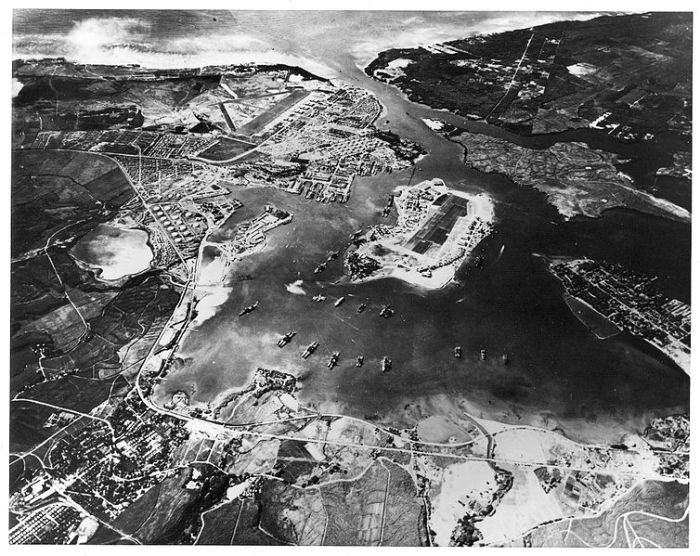
Aerial photo of Pearl Harbor, Oct. 1941

Hello fellow bloggers and blogger-followers! As you know, there are times I like to break with my usual subject matter to mark an important anniversary. Not always are these dates which accord with major scientific breakthrough or accomplishments. Sometimes, they are just about the anniversary’s of major historic events that are important to us for any number of reason. And today people all over the world, including several friends and family members of mine, stop to remember the events of Dec. 7th, 1941 – the day of the attack on Pearl Harbor.

Given the importance of this anniversary for so many people, not to mention the sheer historical importance of it, I couldn’t possibly let the day go by without saying something. And though I managed to acknowledge the 70th anniversary of Dieppe and the 100th anniversary of the War of 1812 this year, I neglected to say anything on the subject of the 68th anniversary of D-Day and never got over it! So in an attempt to not let another chance to pay my respects and acknowledge a major turning point in history pass me by, here are my thoughts on this somber anniversary. Please feel free to share your own…

_____

“Yesterday, December 7th, 1941, a date which live in infamy, the United States was suddenly and deliberately by naval and air forces by the Empire of Japan.”

These historic words by President Franklin D. Roosevelt, which were part of his famous “Day of Infamy” speech, came just one day after Japanese forces struck at Pearl Harbor, signalling the entrance of the US into the Second World War and a major turning point in history. In addition to 2,402 souls that died and the 1,282 that were wounded, the attack forever altered American’s perceptions of themselves.

USS Arizona, burning after the attack

Until the end of 1941, most US citizens lived with the notion that their nation could remain uninvolved in the global conflict which was happening overseas. As Hitler overran Europe and the Japanese occupied much of China, Southeast Asia, and the Pacific Ocean, the majority of citizens remained committed to non-involvement, citing the state of their economy or the fact that America wasn’t “prepared for another war” as reasons to stay out of the fighting.

B-29 assembly line
B-29 assembly line

All of that changed on Dec. 7th. For the first time, all people in the US, not just FDR and a hand full of analysts, came to understand that neutrality was not, and perhaps never was, an option. Some seven million men volunteered for military service within days, and American industry was fired up to produce all the tanks, aircraft, ships and munitions that would be needed to take on the Japanese Empire and the Axis Powers. Within three and a half years, total victory was won, though not without incredible sacrifice.

Little wonder then why this day is considered so important to historians and common people alike. Not only was it a tragic day, characterized by shock, loss and fear, it also was a day which led to one of the greatest national efforts ever seen, which in turn led to a victory that remains unparalleled in the annals of history. As just about every historian would say, Pearl Harbor “galvanized” the US and turned it from a semi-isolationist country that was still recovering from the Great Depression to a superpower which helped destroy Hitler, Fascism, and win the greatest and worst war in the history of civilization.

FDR delivering "Infamy" speech before Congress, Dec. 8th, 1941
FDR delivering “Infamy” speech before Congress, Dec. 8th, 1941

However, while the history books claim that it was Pearl Harbor which galvanized the US and erased its isolationist tendencies, FDR’s historic speech had a great deal of influence as well. When news of the attack first reached the public, the mood was one of shock, fear, and uncertainty. For years now, Americans had been fearing the specter of war and now that it was upon them, no one knew how to react or what would happen next.

But when people tuned in to listen to their President speak on the following day, they heard a stalwart man praising the efforts of US personnel and calling the citizenry to stand together against an evil power that was threatening not only them, but the entire world. Knowing that a man like FDR was at the helm, the same man who had seen them  through the worst of the Depression and was famous for uttering the words “You have nothing to fear but fear itself” was as much responsible for this turnaround as the attack itself.

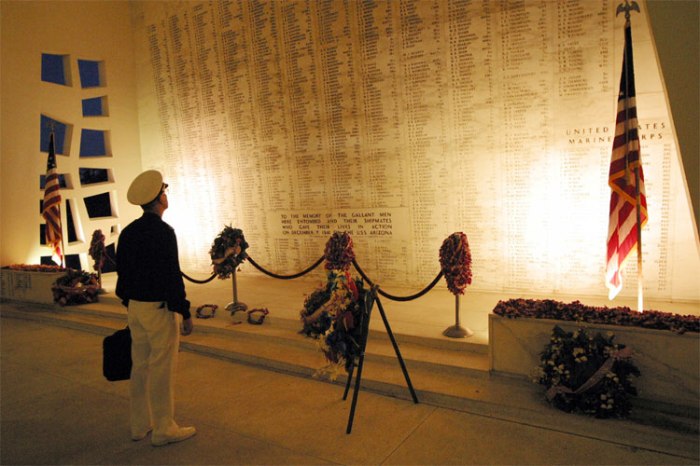
USS Arizona Memorial, Peal Harbor
USS Arizona Memorial, Pearl Harbor

Years later, the significance and the true nature of this event are still the subject for debate. Since the initial days after the attack itself, there were some who speculated that the attack had been allowed to take place in order to achieve US involvement in the war. In fact, nine inquiries were conducted between the years of 1941 and 1946. However, due to secrecy and clearance concerns, especially where the issue of cryptography was concerned, the full details of the attack were not made clear to the public until 1992.

Reaction to the report was mixed. The findings seemed to emphasize that a combination of secrecy, a lack of inter-departmental communication, and an underestimating the Japanese forces capabilities and intentions prevented US forces from stopping the attack. However, some have claimed that these findings did not go far enough to probe the possibility that an attack was known of in advance and was allowed to take place, mainly for political reasons.

USS Arizona Memorial, interior

Much like with 9/11, it seemed that there were many questions and grey areas that were likely to give rise to speculation. When all is said and done though, hindsight is always capable of making it seem that their is intent and continuity to events, when in fact all things happen on an ad hoc basis and no one can see the outcome. In the end – and in this historians opinion – those who died on Dec 7th were victims of human error and the capacity for senseless violence.

To all those who perished at Pearl Harbor on that fateful day, to all those who died as a result of World War II and all wars previous and since; I think I speak for everyone when I say rest to peace on this day.

Remembrance Day 2012

On this day, at the 11th hour on the 11th month, we pause to remember all those who died in war. We pause to acknowledge the sacrifice of the many for the many more, who died defending freedom and this thing we call civilization from fear, oppression, genocide, hopelessness, brutality, and the scourge of war itself. And, as we have done several times now, my wife and I chose to honor the veterans by going down to the Legislature in Victoria, BC. There, massive crowds come to watch the parade, see the wreaths being laid, hear the speeches, and listen to the 21 gun salute.

And let me tell you, it was cold and rainy this year! But still, thousands of people still came out to pay their respects and show their support for the current generation of veterans and military personnel who are here at home or deployed overseas. As I’m sure most people know, Remembrance Day began as a way of commemorating those who died in the Great War, a somber anniversary that was made to coincide with Armistice Day. After four years of horror and endless conflict, the combatants agreed that the 11th hour of the 11th day of the 11th month would mark the end of hostilities.

Since that time, it has grown to commemorate those who have died in any war, as a tribute to the terrible lessons learned in World War I, but have since come to be repeated, either through necessity or the frailty of humanity, many times since. Known as Remembrance Day in the United Kingdom, Canada and Australia, Veteran’s Day in the US, and Armistice Day in New Zealand, France and Serbia; for much of the world it is simply a day to reflect on the greatest sacrifices, worst mistakes, and terrible horrors to ever be witnessed by history.

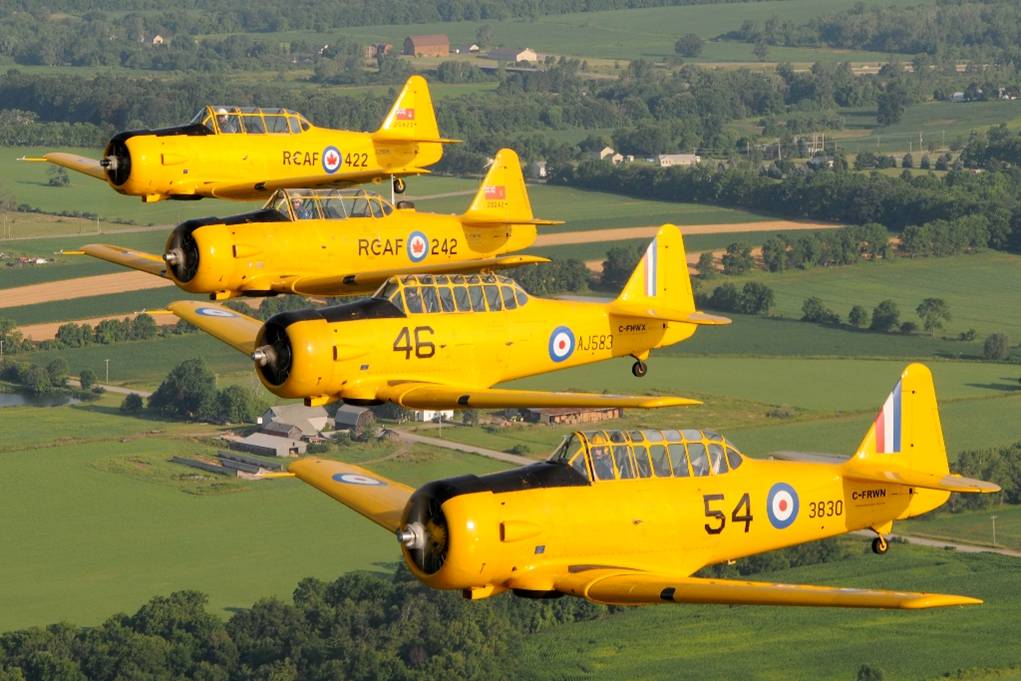
To mark the occasion, I thought I would take the time to honor two veterans who are very near and dear to my heart. They are my grandfathers, both of whom I’m named after: Grandpa Matthew Vincent Williams and Grandpa Stewart Beverley Wilson. Both men were pilots with the Royal Canadian Air Force, flying out of bases on Canadian soil, patrolling our coasts, and training pilots and instructors how to fight.

Stewart Beverley Wilson: Born in 1922, my maternal grandfather became a pilot and flight instructor who then went on to be a instructor of flight instructors while serving at CFB (Canadian Forces Base) Trenton in Southern Ontario. He was in his 20’s for the course of his service, barely a man himself, and was responsible for teaching other young men to train other pilots how to fly. He was part of the Commonwealth Air Training Program, a vast air training program in Canada designed to ensure that Britain and the Commonwealth had enough pilots to defend the skies during the Battle of Britain, and then to take part in the Allied air offensive for the rest of the war. Afterwards, he and his family settled in Brantford, but he continued to serve as a flight instructor.

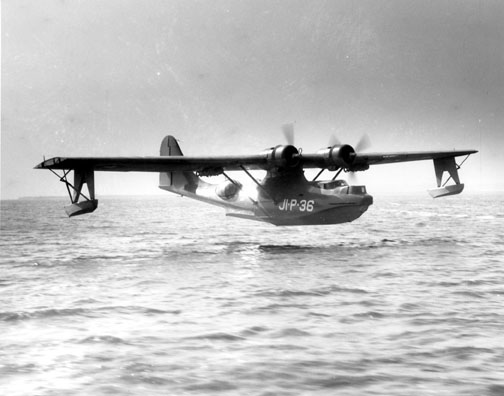
Matthew Vincent Williams: Born in 1912, my paternal grandfather enlisted in the RCAF with the hopes of becoming a pilot. However, due to his eyesight, he was instead trained as a gunner and navigator. Stationed in British Columbia, in part because he had recently become a father (one of my uncles). His tour took him to Jericho Beach in Vancouver, as part of the Western Air Command where he flew personnel in and out of the city and Vancouver Island. During the course of the war, his aircraft – a PBY Canso – sunk a Japanese submarine off the coast with depth charges while on patrol. Though he hoped of settling in the west, he returned to Ontario in Aug of 1945 to take care of his mother and settled into Hamilton. He remained in the Glider Program for many years before retiring.

Thank you all and wishing you a sober, reflective and peaceful Remembrance Day/Veteran’s Day/Armistice Day, wherever you may be. Let us hope that with every conflict and every act of sacrifice since the Great War ended, that we’ve learned something about the futility of war and the needless nature of aggression and conflict. And here’s to the day when we can settle our differences without bloodshed or violence.

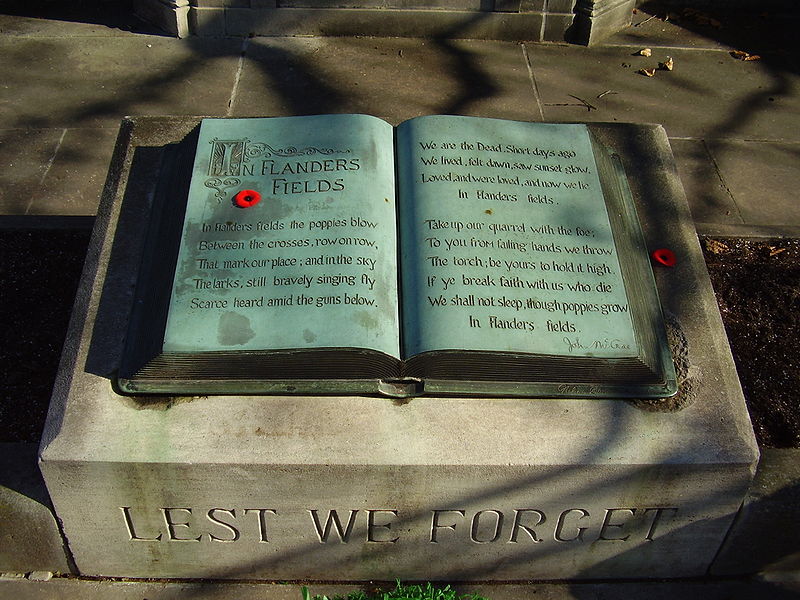
Lest We Forget

Relaunching an Idea: Red Sky At Night

Many months ago, I was struck by an idea. It is one which has been percolating in my mind for some time, but never really occurred to me as a reason to write. But then, I began to get into the whole “Alternate History” sub-genre of science fiction, examining such works as The Man In The High Castle, Fatherland, The Guns Of The South, and A Rebel In Time. It made me think that there was a good precedent for this kind of idea, and room for expansion.

But first, let me explain what I was thinking. Ever since University I’ve been fascinated by Russian history, particularly the interwar years. It was at this time that the most auspicious achievements and crimes took place in the former Soviet Union, after the death of Lenin and the ascent to power of Joseph Stalin, one of history’s greatest monsters.

Shortly thereafter, Russia became involved in World War II, during which time another monster – Adolf Hitler – committed unspeakable crimes against the Russian people. Over twenty six million people died on the Eastern Front, most of them civilians who had already witnessed such terrible suffering at the hands of their own dictator. In addition, many were victims of Soviet wartime oppression, killed by Stalin for the crime of not fighting hard enough or attempting to find liberation from their Nazi invaders.

From the point of view of Soviet propaganda, the years between 41 and 45 were portrayed as a the “Great Patriotic War”, a heroic struggle for the defense of the Motherland. In some respects this was true, but mainly it was a war between two nations being led by very petty and cynical men, with countless good and innocent souls caught in between. Those Germans who died in the East did so because of a fool’s dream of Lebensraum and racial purity, whereas the Russians who died did so in the defense of their families from both the invaders and the reprisals of NKVD officers.

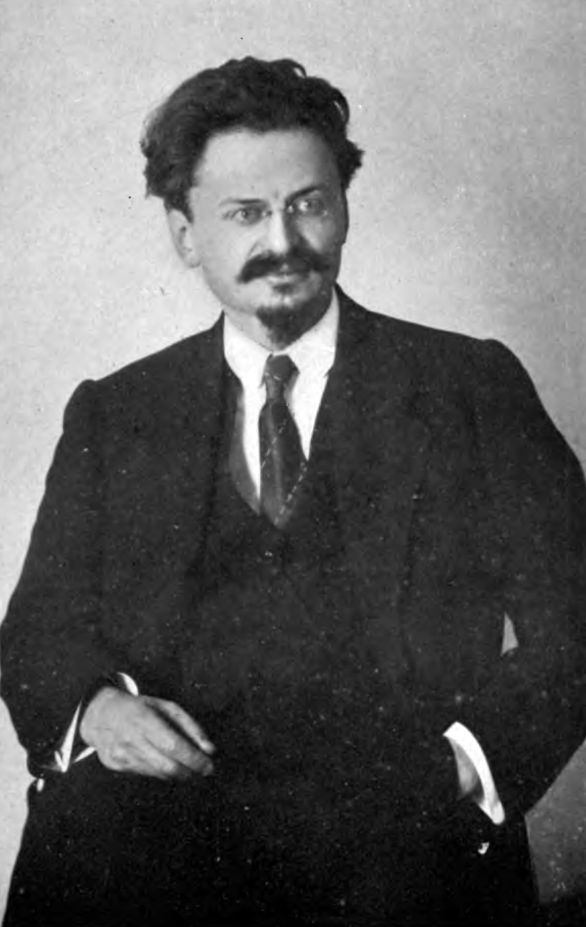
Reading of all this, I often wondered, what if Leon Trotsky, Lenin’s intended successor, had led Russia during the interwar years? What if he had won the leadership race, instead of the scheming Stalin, and became the man to lead Russia against the Nazi invaders? Would things have worked out differently? Would Russia have still stood and ground up the Nazis, but in a way that didn’t lead to the death of so many millions of innocent Russians. The question is not a new one. In fact, historians have been pondering it for some time, and the entire question hinges on a single event.

This is where the concept of my own alternate history came in. In my story, a single event happens differently, thus giving rise to an alternate history. At the 13th Party Congress in Russia 1924, Trotsky had an historic opportunity. Lenin, before his death, had published his “Last Will And Testament” where, amongst other things, he singled out Stalin as a rude and ruthless character who should never be allowed to come to power. During the years following Lenin’s death, Trotsky was seen as the natural successor, which made him the natural rival of Stalin and his followers.

During the 12th Party Congress, Stalin’s allies helped suppress news of the Testament, but by the 13th, Trotsky was in possession of it and could released it, causing irreparable harm to Stalin’s reputation. Why he did not, and instead chose to make a conciliatory speech calling for unity, is something which historians have debated ever since. In so doing, he essentially guaranteed Stalin’s rise to power and his own exile, which culminated in his murder in Mexico some years later.

Red Sky At Night:
This is the basis of my idea. Instead of asking for reconciliation, Trotsky released Lenin’s Testament to the Party and asked for Stalin’s removal. He was successful, which guaranteed that it was he who would become the new leader of Soviet Russia and its chief planner during the interwar years. As a result, Stalin’s crash industrialization programs (aka. the Five Year Plans) were never launched.

Instead, he maintained Lenin’s New Economic Policy (NEP) and even appointed Bukharin (whom Stalin murdered) to oversee reform and expansion of state-owned industry. This led to a degree of slow recovery for the Soviet economy and improved the lot of its farmers and small private enterprises. And when the Great Depression hit in 1929, Russia would still spared the worst ravages of it while similarly showing signs of growth.

What’s more, Trotsky maintained close ties to foreign communist movements, rather than focusing so heavily on matters at home. As a result, in 1933 when the Nazis demanded a non-confidence vote against the Social Democratic Party, Trotsky ordered the KDP (Communist Party of Germany) to stand shoulder to shoulder with the Social Democrats, a move which did not alter the Nazi seizure of power, but which ensured that they were aligned with the anti-Nazi movement from early on.

In China, rather than advising Mao to go along with the Nationalist government (which turned on them) Trotsky advised that Mao and his cadres remain committed to resisting Japanese invasion and not trusting in Chiang Kai Shek. This prevented the massacre of Chinese Communists, which came in handy when the Sino-Japanese war began in 1937.

When the Spanish Civil War began, Trotsky and the Comintern became the most vocal and committed supporters of the Loyalists, sending them weapons, advisers, volunteers and funds. Much as in our own timeline, this had the effect of making the Soviets look like the chief supporters of anti-fascism, but since the effort didn’t suffer from Stalin’s paranoia and cynicism, the efforts were much more effective and popular. And thanks to Trotsky’s focus on foreign affairs, Commissar Maxim Litvinov, the champion of Collective Security, received the support he needed when he made his pitches to the League of Nations.

But most importantly of all, no purges or Great Terror took place during the late 30’s, which had the effect of undermining Russia’s efforts abroad, embarrassing Russia politically, decimating the Soviet officer corps, and devastating Russia’s agriculture. Russia therefore was in a much better position to coordinate alliances with the Czechs, the French, and rally public opinion towards ensuring that the Nazis were contained rather than appeased.

However, things really came down to the 1938 Sudetenland Crisis. For years, the Russians had been railing against coming to an accommodation with Hitler, largely for their own purposes. However, when Hitler demanded that Prime Minister Benes of Czechoslovakia cede the Sudetenland under threat of war, things finally came together for them. Facing harsh public opinion, Prime Minister Neville Chamberlain found that he had little support for his policy of appeasement. French, Czech and League opinion were similarly opposed to any deal with Hitler, having been empowered by Russia’s example. As a result, instead of demanding that Benes give Hitler what he wanted, England and France instead demanded that Poland and Romania agree to allow Russian troops to pass their territory to mobilize against Germany, should the need arise.

These efforts did not materialize, but the appearance of unity on behalf of the League gave Hitler pause. His Generals advised that he back down, facing the likely prospect of war on all fronts, and Hitler was forced to concede. Afterward, Germany suffered from renewed economic problems, and Hitler lost virtually all support. The Nazis fell from power, World War II did not happen, the Holocaust never occurred, and the post-war division of the world between two superpowers not happen.

In the East, Japan found itself trapped as the League closed in to issue economic sanctions and demand that it withdraw from China. Soon, the Japanese Imperial government fell as well, and the threat of war was neutralized. In Italy and Spain, Mussolini and Franco remained in power, but were sure to behave themselves and even rejoined the League of Nations. And of course, Mao and his cadres did not seize power in the immediate post-war years, but instead came to an accommodation with the Nationalists, forming a powerful bloc within the government.

However, there was a downside to all of this as well. For starters, the economic boom caused by the war did not happen. Instead, the global economy recovered slowly throughout the 1940’s and 50’s. What’s more, the accommodation that took place between Russia and mainland Europe after the war, which saw the election of Social Democratic parties in every country and the de-radicalizing of Soviet power at home, caused a rift to form between the Anglo-American world and Eurasia. By 1950, fearing socialist revolution at home, England and America withdrew from the League and formed their own bloc, the Anglo-American Alliance.

Towards the end of the 1950’s, relations began to worsen, as the Alliance condemned what they saw as attempts at subversion in their own sphere while the League condemned the persecution of dissidents and revolutionaries. Both sides became retrenched and a new arms race began, the League and the Alliance scrambling to recruit the best and brightest minds to help them create new and better weapons. By the end of the 1950’s, scientists on both sides of the Atlantic were close to creating the first atomic weapons.

This is where the story opens. It’s 1963, twenty-five years since the Sudetenland Crisis took place, and the world is putting aside its difference to mark the occasion. East and West are coming together in a series of festivals, diplomatic summits, and tourist expos. However, behind the happy veneer of entente, the usual preparations for war continue. And in time, a series of events will trigger a crisis that could very well lead to another war. Much like in 1914, the world is sitting on a powder keg, and all that’s needed for another Great War to take place is for someone to provide the spark.

This idea got back-benched with my coming to join Writer’s Worth and all our anthology work, but I want to pick it back up. Much like Fascio Ardens (that’s its new title), I’m in the mood to write some genuine alternate history. It requires some staggering research to make these kinds of speculative works seem authentic and plausible, but I want to make it work. Call me crazy, especially since I’ve got it in my head to tackle two separate ideas. But as my grandpa used to say, “Lord hates a coward!”

The Birth of an Idea: Fascis Ardens!

Inspiration is a funny, fickle thing! As I’m sure anyone who’s ever attempted to write knows, ideas seem to come when you least expect them. On the one hand, a person can go months without coming up with an original idea. And then, just like that, inspiration can strike suddenly and without warning. You find yourself not only coming up with an idea, but the concept for a full-length novel!

That’s what happened to me this weekend. Myself and my wife were preparing to head up island to see her family. I was contemplating books that deal with the concept of alternate history, and how ones that deal with alternate outcomes to World War II and the Civil War seem to be especially popular. In the former case, you have The Man In the High Castle by Philip K Dick and Fatherland by Robert Harris, two seminal novels that address what would have happened had Germany won the war.

In the latter case, you have stories like A Rebel In Time by Harry Harrison and The Guns of the South by Harry Turtledove, which merge time travel and alternate history to examine what would have happened if The South had won the Civil War.

In both novels, the plot revolves around a single or group of White Supremacists who use a time machine to bring modern guns to the Confederate Army. This allows the South to prevail, which they hope will prevent the rise of the Civil Rights movement, the end of Apartheid, and other equality movements.

That’s when it hit me! Why the heck hasn’t anyone done an alternate history story where White Supremacists go back in time to make sure Germany won the Second World War? Sounds like something that ought to have been done by now; but to my knowledge, no one’s tackled it yet. I got to thinking long and hard about it, about the plot, characters and potential twists. Eventually, I had what I felt was the bare bones of an idea. It varies slightly from the premise I just mentioned, but in ways I think work! I plan to call it…

Fascio
For those familiar with the Fascist movement of the 20th century, the concept of the Fascio is probably a familiar one. This was basically just a bundle of sticks with an axe tied on that was set afire at public gatherings. The ritual dates back to Ancient Rome, where the burning of these ceremonial bundles was meant to symbolize lighting the way to the future. Italian Fascists, under Mussolini, especially loved this ancient ritual, which they used to draw a connection to the past as much as to point to the future. Like all Fascist rituals, it was an inherent contradiction, more regressive than progressive in nature. But hey, the Fascists didn’t do logic…

Plot:
The story opens in 2050, where the world is reeling from the worst ravages of climate change and Fascist parties are once again taking hold of Europe and North America in response to numerous humanitarian crises. Two young history enthusiasts, believing that the worst is coming, decide to take advantage of an experimental new technology: Time Travel!

Using a machine they gain access to, the duo plan to travel back in time to Germany in 1920, where they plan to find a despondent young military officer named Hitler. Using futuristic technology, they plan to kill him without leaving a trace, and return to the future where things are surely to be much better.

Unfortunately, the time machine sends them to 1941 by accident. Unsure that they will be able to use the machine again in the future, they resolve to kill Hitler during the height of World War II, before he can enact the Final Solution and invade Russia. Relying on their knowledge of history and advanced technology, they manage to kill Hitler at his headquarters weeks before the Battle of Britain was to end and Operation Barbarossa (the invasion of Russia) began. After making a hasty retreat, they jump in the return module and set course of the future.

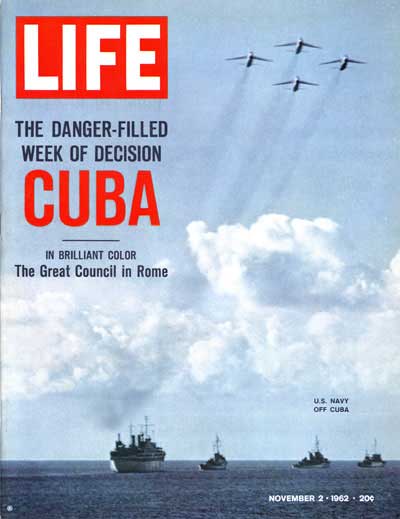
However, once again the machine drops them off in the wrong year. Rather than traveling 109 years into the future, they arrive in 1962, at roughly the same time as the Cuban Missile Crisis from their own timeline, and find a world starkly different than the one they read about in history books. Rather than finding a world dominated by the two superpowers of the United States and the Soviet Union, two different but equally menacing empires are in place. On the one side, there’s the Pan-American Alliance, led by the US, and on the other, the Axis Forces.

After combing through some records at the local library, they learn the terrible truth: assassinated Hitler in 1941, rather than ending the Second Word War, led Germany to victory. Without Hitler’s questionable and erratic leadership, Germany avoided making several mistakes which were directly attributable to him. For one, Germany did not give up the Battle of Britain a few weeks shy of victory. By choosing to maintain their operations against the RAF and its coastal airfields, they eventually overcame Britain’s air defenses. This allowed them to come to a cease fire agreement which took Britain out of the war.

Then, in 1942, they invaded Russia and were successful in capturing Moscow, Leningrad and Stalingrad, all within the space of a year. This led to the creation of Germania, an Empire which reached from Northern France to the Ural Mountains. In the Mediterranean, Italy became the dominant power, with possessions in the Balkans and all across North Africa. The US still went to war with Japan in the Pacific, where they were victorious, but in Europe, the Nazis and their Fascist allies were never defeated.

Thus the world was divided into two major power blocs. The US, Canada, Mexico and all of South America joined together and maintained alliances with India, Japan, China and Australia to safeguard against expansion into Asia and the Pacific. Germany, Italy, and their subservient allies came together to dominant Eurasia and set their eyes on the Middle East, Africa, and further East. Both sides developed nuclear weapons, and by 1960, tensions had reached an all-time breaking point.

Hence, the two historians bear witness to a different “Missile Crisis”, which still takes place in 1962, but was between the Axis and Allies, and actually took place. When the bombs begin to fall, they die, since the future they left is now erased from existence. In their last few moments, they realize the folly of tampering with timelines. Such things are just too complicated for people to handle!

And I was thinking about a possible epilogue chapter where the two main characters meet each other in the alternate future they have now created. The world they live in is a post-apocalyptic landscape, roughly ninety years since World War III, where life is hard and people live by a new form or “Iron Rule” – the rule of survival at all costs. Not sure, we’ll see…

So that’s my latest idea, a time traveling alternate future addressing World War II and the rise of neo-fascism in today’s world. I humbly submit to my followers for their approval. So tell me, what do you think?

The 70th Anniversary of the Dieppe Raid

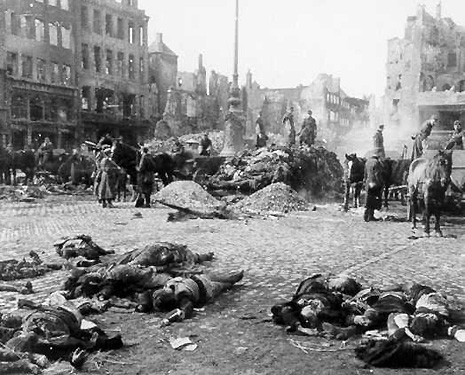
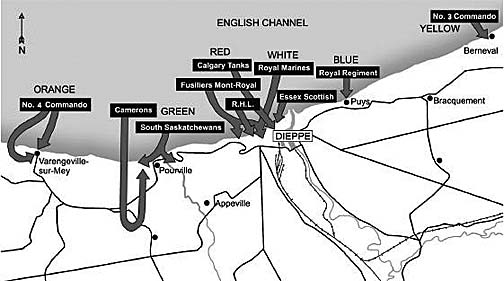
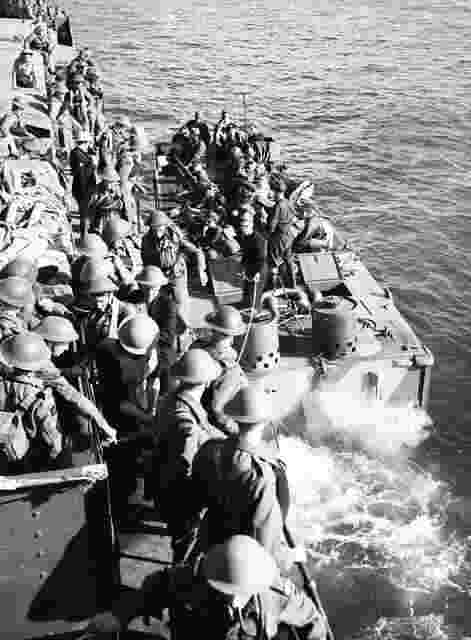
Here in Canada, few historical events from World War II inspire as much anger, sadness, and remembrance than the anniversary of the Dieppe Raid. It was 70 years ago today that Canadian Forces, in what was to be the first offensive of the war, attacked the European coastline near the small French town of Dieppe. The raid, as it was classified, was a total failure, resulting in 913 dead, almost 3000 captured, and countless more wounded. Out of the nearly 5000 men who went in, less than half made it home.

Earlier today, I read some articles that spoke of the surviving veterans, the youngest of whom is 90, as they arrived at Dieppe to take part in the commemorative ceremonies.

Countless French people welcomed them by hanging Canadian flags from their balconies and volunteering to show them about town. For the locals, honoring the veterans who fell while trying to liberate their town has become a way of life, similar to the Belgian people of Ypres and the Dutch who honor how Canadian forces liberated their country in 1944.

Naturally, when these veterans tell their stories again to reporters or the many who wabted to hear them, they conveyed some rather mixed emotions. There were moments of anger and pride intermixed with a general tone of lament, and in that respect, they are joined by all Canadians who remember. Even now, 70 years later, there is still ample speculation about the Dieppe raid.

Taking place in 1942, during the height of the war when the Allies were still on the losing end, the planned raid on Dieppe represented the culmination of many hopes, fears, and political considerations. For over a year, Soviet leader Joseph Stalin had been asking – in fact, pleading – with the Allies for a Second Front in Europe that would take pressure off the Russian forces. Ever since the Germans moved into his country roughly a year before, Russians were dying by the millions and the Red Army was struggling to hold them back.

At the same time, the Allies had been contemplating plans for the liberation of France ever since it had been overrun two years earlier. For the British and French, the memories of the summer of 1940, beginning with the invasion of Belgium, the outflanking maneuver through the Ardennes Forest, the fall of Paris and the evacuation of Dunkirk, were still phantoms they wanted to dispel. With Germany pushed out of France, the Allies would have a major ally back in the fight and put an end to Germany’s expansion, which had continued unabated since the war began.

And last, the Canadian Armed Forces were desperate to get into battle, hoping to demonstrate some of the same zeal that had popularized their forces in World War I. And with the US finally entering the war on the Allied side, there was an added push to score a victory before the Yanks got in and claimed all the glory 😉 A commando-style raid against a section of the Atlantic Wall seemed like just the thing to bolster morale and show the world that the Canadian Expeditionary Force was still a force to be feared!

Ultimately, the raid was a failure for numerous reasons, all of which proved intrinsic to helping the Allies draft Operation Overlord – the invasion of Normandy – roughly two years later. First off, the raid had little support to speak of. Aside from the 5000 men and tanks heading onto the coastline, their were very ships ships and aircraft standing by to blast German positions and take on the coastal defenses.

Second, the planners did not take into account the challenging terrain along the beaches. Rather than being sandy shores, they were composed of tiny little rocks which played havoc with tank treads, making them virtually useless. As a result, the Canadian soldiers found themselves running into German machine guns and mortar positions with no cover or support.

Third, the plan was changed over and over again so that less and less forces would be committed to the fold. This led many to question whether the raid would even have enough men or firepower to achieve their mission. However, Allied planners dismissed these objections by emphasizing that the attackers would have the element of surprise. That was not the case though, since Allied Command had been publicizing the attack for some time before it happened.

In short, the mission was the perfect recipe for failure, leading some to speculate that that had been the goal all along. With Stalin pleading for a Second Front and the Allies unable to convince him that they were not ready, some claimed that Dieppe was meant to fail as a way of illustrating their point.

In addition, new evidence is being brought to light that suggests that the raid was a diversion for a covert operation that involved commandos attacking the secret German naval headquarters in the town in order to capture a working model Germany’s new four-rotor Enigma machine and their most recent code books. At the head of this operation, so the argument runs, was Mr. Ian Fleming himself, the man who would later create James Bond.

A very interesting interpretation, and which explains quite clearly why the raid was so publicized. In keeping with Allied counterintelligence plays, it was customary to let the Germans know exactly what they were doing in the hopes that they would chomp at the bit and not realize it was a feint to cover their true aims.

What’s more, if this latter interpretation should prove to be true, it would mean that politics and incompetence was not the reason for the Dieppe Raid. Instead, it would have been a vital intelligence mission which went wrong for a number of reasons. However, this still would not change the fact that the operational planning suffered from the fact that the raid failed to take into accounts some key problems. Nor would it change the outcome.

In any case, some good did come out of the operation. Four months after the raid, the Allies managed to crack the 4-wheel Enigma code and went back to winning the intelligence war. In addition, Soviet Forces began to defeat the Germans on all fronts and initiated the slow process of pushing them back into their old stomping grounds. And in the Mediterrenean and North Africa, the German Navy and Afrika Corps began to get their asses kicked.

But most importantly of all was the operation that would succeed where Dieppe had failed. Taking on June 6th of 1944 in the Normandy region of France, Operation Overlord was the largest invasion in history, and several key factors had been adapted from the Dieppe Raid. In addition to committing all kinds of men, materiel, ships, and planes to a cohesive, multi-phased invasion plan, the Allies also conducted a vast counter-intelligence operation well in advance to trick the Germans into thinking that their real invasion force would be coming in the Pas de Calais region.

So today, like all good Canadians, I wish to honor the veterans who are currently overseas, receiving their well-deserved honors and recounting the historic Dieppe Raid that they took part in so many years later. I’d also like to salute those soldiers who are no longer with us, many of whom were wounded, captured and forced to spend the rest of the war in army hospitals and German POW camps. And I would especially like to pay tribute to those who didn’t make it back, who died on those rocky shores as the result of either politics and ineptitude, or desperation and intrigue.

Even after 70 years, surely we must be learning something from all this…

A Tribute to Alan Turing

Wouldn’t you know it? Today marks what would have been Alan Turing’s 100th birthday. This man was not only immensely influential in the development of computer science and cryptanalysis, he is also considered the father of Artificial Intelligence. In fact, words like “algorithm” and “computation” are traced to him, as was the development of the “Turing machine” concept which has helped computer scientists to understand the limits of mechanical computation.

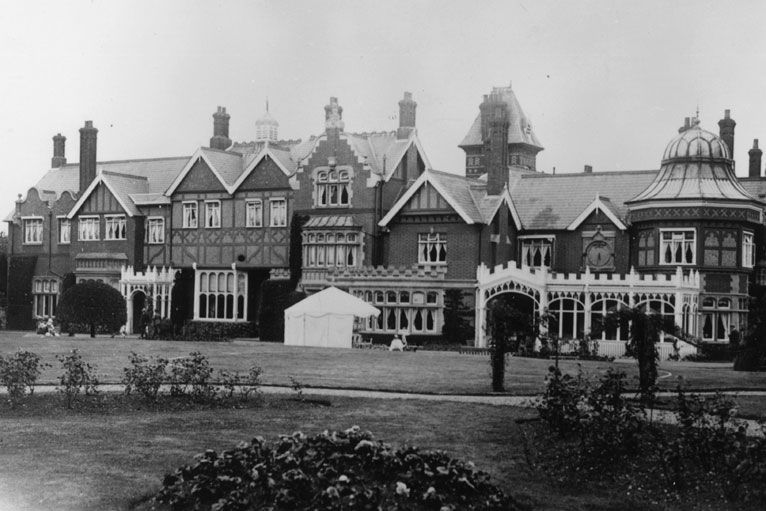
However, his reputation goes far beyond the field of computer science. During World War II, he worked at the Government Code and Cypher School (GCCS) at Bletchley Park, Britain’s codebreaking centre. For a time, he was acting head up Hut 8, the section responsible for breaking the Enigma Code, Germany’s wartime cypher which they used to encrypt all their communications. Were it not for this achievement, the Allies may very well have lost the war.

Especially in the Atlantic, where German U-boats were causing extensive losses in Allied shipping, Turing’s work proved to be the different between victory and defeat. By knowing the disposition and orders of the German fleet, crucial shipments of food, raw material, weapons and troops were able to make it across the Atlantic and keep Britain in the war. Eventually, the broken codes would also help the Allied navy to hunt down and eviscerate Germany’s fleet of subs.

After the war, he worked at the National Physical Laboratory in London, where he created one of the first designs for a stored-program computer, the ACE (Automatic Computing Engine). He named this in honor of Charles Babbage’s Difference Engine, a mathematical machine built a century before. This machine was the culmination of theoretical work which began in the mid 30’s and his experiences at Bletchley Park.

In 1948, he joined the Computing Laboratory at Manchester University, where he assisted fellow mathematician and codebreaker Max Newman in the development of the Manchester computers. Their work would eventually yield the world’s first stored-program computer, the world’s first computer to use transistors, and what was the world’s fastest computer at the time of its inauguration (in 1962).

He then switched for a time to emergent and theoretical field of mathematical biology, a science which was concerned with the mathematical representation, treatment and modeling of biological processes, using a variety of applied mathematical techniques and tools. This field has numerous applications in medicine, biology, and the proposed field of biotechnology. As always, the man was on the cutting edge!

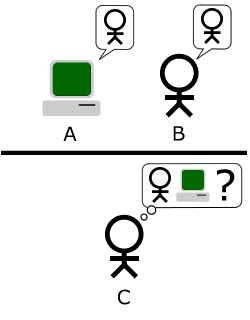
In terms of Artificial Intelligence, Turing proposed that it might be possible one day to create a machine that was capable of replicating the same processes as the human mind. The “Turing Test” was a proposed way of testing this hypothesis, whereby a human test subject and computer would both be subjected to the same questions in a blind test. If the person administering the test could not differentiate between the answers that came from a person or a machine, then the machine could be accurately deemed as an “artificial intelligence”.

Tragically, his life ended in 1954, just weeks shy of his 42nd birthday. This was all due to the fact that Turing was gay and did not try to conceal this about himself. In 1952, after years of service with the British government, he was tried as a criminal for “indecency”, homesexuality being considered a crime at the time. In exchange for no jail time, he agreed to submit to female hormone treatment, which is tantamount to “chemical castration”. After a year of enduring this treatment, he committed suicide by ingesting cyanide.

In 2009, Prime Minister Gordon Brown issued a formal apology on behalf of the British government for “the appalling way he was treated”. Between his wartime contributions and ongoing influence in the field of computer science, mathematics, and the emerging fields of biotechnology, and artificial intelligence, Turing has left a lasting legacy. For example, at King’s College in Cambridge, the computer room is named after him in honor of his achievements and that fact that he was a student there in 1931 and a Fellow in 1935.

In Manchester, where Turing spent much of his life, many tributes have been in his honor. In 1994, a stretch of the Manchester city intermediate ring road was named “Alan Turing Way” while a bridge carrying this road was widened and renamed the Alan Turing Bridge. In 2001, a statue of Turing was unveiled in Sackville Park, which commemorates his work towards the end of his life. The statue shows Turing sitting on a bench, strategically located between the University of Manchester and the Canal Street gay village.

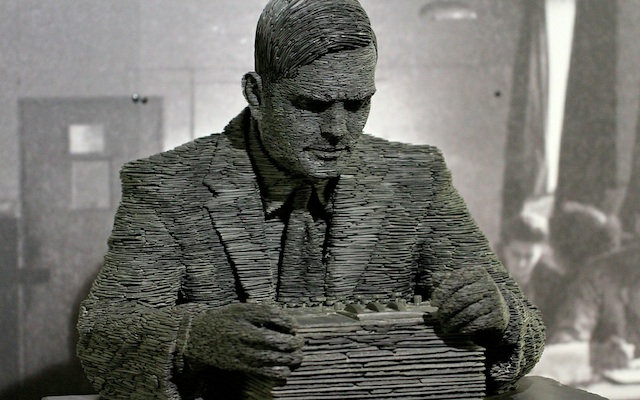
The commemorative plaque reads ‘Founder of Computer Science’ as it would appear if encoded by an Enigma machine: ‘IEKYF ROMSI ADXUO KVKZC GUBJ’. Another statue of Turing was unveiled in Bletchley Park in 2007, made out of approximately half a million pieces slate and showing the young Turing studying an Enigma machine. A commemorative English Heritage blue plaque was also mounted outside the house where Turing grew up in Wilmslow, Cheshire.

In literature, Turing’s name and persona have made several appearances. The 1986 play, Breaking the Code, was about Turing’s life, went from London’s West End to Broadway and won three Tony Awards. The 1996, the BBC television network produced a series on his life, starring Derek Jacobi in the leading role. In 2010, actor/playwright Jade Esteban Estrada portrayed Turing in the solo musical, ICONS: The Lesbian and Gay History of the World, Vol. 4. And, my personal favorite, he was featured heavily in Neal Stephenson’s 1999 novel Cryptonomicon.

Rest in peace Alan Turning. Like many geniuses, you were ahead of your time and destroyed by the very people you helped to educate and protect. I hope Galileo, Socrates, Oppenheimer and Tupac are there to keep you company! You have a lot to discuss, I’m sure 😉

Remembering 1812

Once in a while I like to break from sci-fi to honor major political developments or anniversaries. And since I missed out on honoring those who participated in D-Day on June 6th, I refuse to let this one pass without comment as well. As many are no doubt aware, it’s the 200th anniversary of the War of 1812, and in many countries, this occasion is being marked and commemorated. For many people in many nations, not just the historians among us, this war was extremely significant.

But what is most interesting is how it is remembered differently. For Canadians, 1812 was a decisive moment in which the country came together to repel a foreign invasion and declare its nationhood in the face of annexation. For Americans, it is remembered as a largely defensive affair in which a second British attempt at invasion was repulsed. For the the British, it was a largely colonial affair that was designed to distract them from the war on the Continent with Napoleon. And for the First Nations of Canada and the US, it was seen a loss which led to further annexation and loss of sovereignty.

And that’s just the Anglo-American perspective. If we were to set our sights a little farther abroad, we’d notice that people in Russia, Germany, and France also have thoughts of their own to share. For France, 1812 was a major setback in the larger affair known as the Napoleonic Wars. For this stout general/dictator from Sardinia, it was the beginning of the end for his rule and his empire. The Russians accordingly saw it as a great victory against a foreign invader, one which they would exploit in future wars to bolster morale. And for Germany, being forced to fight in Napoleon’s “Grand Armee” was a catalyzing event that helped to rouse national sentiment, ultimately leading to German unification in 1871.

Interesting how history can be relative, isn’t it, depending on who you ask and what their perspective is? But thanks to my own historical studies, I’ve learned much about this war, and can say that they all reflect a certain aspect of truth. In the end, all points of view and how we choose to remember the war tell us much of our national experience of it and confirm that the war was a very large affair that was experienced differently all around the world. I shall be brief, since the real historians are the ones you should be listening to. I just want to offer my humble two cents 😉

The American Perspective:
In the course of studying American history, I was interested to see just how the War of 1812 was treated. It was no secret to me that the popular American conception is that they won the war – here in Canada we say the exact same thing. But what I did find objectionable was the rather glaring ommissions that seemed to pervade the history textbooks on the subject.

For example, so many of the battles which took place on Canadian soil were not mentioned, the focus being on the battles America won and which happened for the most part on their own soil. These included the Battles of Plattsburgh, Chesapeake Bay, Washington DC, and especially New Orleans.

And yet, the best explanations I have heard for this come from American historians themselves. As one put it, “Americans, when they chose to remember the war at all, focus on the last year of the war when the battles were defensive in nature”. This, he claimed, is what gives rise to the illusion that America was fighting a defensive war which allowed them to think of it as a victory.

Another historian, who was also a General in the US Army, claimed that it is only in West Point Academy that a full and comprehensive treatment of 1812 is available in the US. Here, he claims, officers in training are taught that 1812 is a perfect example of what NOT to do in a war, namely go to war with overconfidence, an underfunded and staffed army, and a divided country.

And yet another claims that 1812 is America’s first “forgotten war”, beating Vietnam by over a century and a half. I especially liked this take on it since I’m a real proponent of how history repeats itself, just in different settings with different particulars. Seen in this context, 1812 was a less than stellar affair which quickly became overshadowed by the Revolutionary War and the Civil War, both of which were decisive for America and had a far greater impact on their history and development as a nation.

The First Nation Perspective:
Compared to the other perspectives, this one is by far the most sobering and real. In fact, one could characterize it by saying that this is a case where people were invited to a war, made a big difference, and then were shut out in the cold to be forgotten while the other combatants came to terms and all had their own victory parties. Disgusting really, but it teaches us something about how history frequently screws people over.

For the Cree Nation and the many nations that encompassed the Great Lakes Region, the war began long before 1812. Prior to this, American encroachment led many nations in the Ohio valley to begin to organize and militarize for the sake of defense. Seeing opportunity and common cause in this, the British began arming these nations and making alliances with them, knowing that any invasion northward would effect all. At the forefront of all this was a committed individual named Tecumseh, a Cree leader who was responsible for much of the cultural revival that was setting in and saw potential in an alliance with the British.

When war was declared, Tecumseh and his bands of fighters proved to be the decisive factor in several battles, not the least of which was at Fort Michigan, where they came upon the garrison by way of the river and took the fort with barely any casualties or shots being fired. In time, the collaboration between Brock (the British Commander) and Tecumseh led Brock to give him his overcoat as a personal gift. However, in keeping with his cultural traditions, Tecumseh conferred the honor onto a more senior warrior in his army. Brock was not offended.

During the American invasion of Upper Canada, the Mohawk nation also proved decisive. At the attack on Fitzgibbon, Mohawk warriors mounted a surprise attack on the unsuspecting American army and forced the surrender of over 500 troops. They had been tipped off by a young woman named Laura Secorde, a nurse who had been privy to the American plans while tending to wounded soldiers on Canadian soil.

In just about every subsequent battle on Canadian soil, Cree, Mohawk and Iroquois warriors were intrinsic to the fight. In fact, it would be no exaggeration to say that the presence of these seasoned warriors was often the difference between victory and defeat. Facing overwhelming numbers, the Angl0-Canadian forces were often bolstered by the fact that American troops were frightened of Native warriors, having been subjected to stories about their fearsome, bloodthirsty nature for so long.

Unfortunately, the war ended for the Cree Nation and Tecumseh during the Battle of Moraviantown (aka. the Battle of the Thames)i n southern Ontario. After the defeat of British naval forces on Lake Erie, British forces were ordered to pull back to where they could be reinforced and resupplied.

However, Tecumseh objected and voted instead to hold the line against the advancing American armies. Though he died and his forces were defeated at Moraviantown, this battle stalled the American forces long enough to give the British and Canadian forces time to regroup. As a result, the Americans were defeated at Lundy’s Lane six months later and the last invasion of Canadian soil was stopped.

The Canadian Perspective:
As I already stated, from the Canadian point of view, 1812 was a decisive war that saw the country come together to repel a foreign invader. This perspective does gloss over the fact that there were divisions between Upper and Lower Canada, that victory was owed in large part to its Native allies, and that Canada was still nominally a colonial possession of the British Empire. However, the perspective still holds true, as Canadian militia were the cornerstone of the small garrison of British regulars. In fact, Brock chose to dress all of his militia in the same red coats as his regulars in order to give the illusion that he had a larger force. This in turn would play a major role in ensuring the cohesion and organization of his forces in the battles to come.

And to top it off, Canadian forces did succeed in overcoming the odds against a much larger American invasion force. Whether it was the assaults on American border forts in Michigan and along the Great Lakes or defensive actions in Ontario and Quebec, Canadian forces managed to acheive an almost unbroken string of victories.

These included the Battles of Queenstown Heights, where the American forces that had crossed Lake Ontario and set fire to York (modern day Toronto) were defeated. The Battles of Chrysler’s Farm and Chateauguay were also decisive victories which forced the American forces to abandon their St. Lawrence campaign, the planned invasion of Quebec. And finally, Lundy’s Lane, though not a decisive victory, was seen as the final battle in which the invaders were stopped.

All of these experiences served to galvanize national sentiment and helped to inspired demands for reform which would culminate in the Rebellions of 1837. This is especially ironic seeing as how American planners believed that the Upper Canada Loyalists would welcome an American invasion and see it as a chance to throw off British rule. Instead, it inspired Canadians to reject union with the United States and demand a measure of independence on our own terms.

The British Perspective:
And last, but not least, we have what Merry Ol’ England thought of the whole affair. Far from seeing it as a mere diversion, the British were actually quite invested in what took place on North American soil, even if they did see it as a distraction from Napoleon’s invasion of Russia.

For many years, Britain had been locked in a state of cold war with the US, monitoring the frontier with wary anxiety and taking every opportunity to bolster its defenses, either by supplying Native allies or making sure their were garrisons in Upper and Lower Canada and fleets on the Great Lakes.

Though these were by no means comparable to American forces, they did indicate how seriously the British took the prospect of an American invasion. And in the end, Britain felt pretty good about it’s conduct during the war. Their vaunted General Brock, though he died in the line of duty, organized a stalwart defense of the colonies while the British Navy harassed and assaulted many American ports. Though eventually these invasion attempts were rebuffed, they did meet with some success.

While Brock and Tecumseh managed to seize a series of key forts in the Great Lakes region and burned Detroit to the ground – in retaliation for the burning of York – they managed to set upon Washington DC and burned it to the ground. This is something which is commemorated extensively on the American side, particularly how a portrait of George Washington was saved before the old White House was set ablaze.

But of course, the defeated attempts at invasion did not go unnoticed either. Whether it was at Plattsburgh, Baltimore or the disastrous assault on New Orleans, it was clear that the war would end with American territorial sovereignty more or less intact. As a result, Britain would walk away from the war undefeated, but without much to show for it.

But of course, that was ultimately the goal in North America, to repulse the American invasion while at the same time ensuring that Napoleon’s defeat on the continent was assured. With the signing of the Treaty of Ghent in 1814, and the war with France now over, Britain breathed a temporary sigh of relief. This would end with Napoleon’s return from Elba, but that too would be resolved with the Battle of Waterloo a year later. For the British, as well as the Americans, 1812 would fade into obscurity, something to be remembered mainly by historians and not popular consciousness.

Final Thoughts:
Well, that’s my limited appraisal of the war. For the full scoop, you really need to check in with the historical recreationists, especially those who maintain the border forts along the Great Lakes region. For example, if you’re in Kingston, best check out Fort Henry. I remember going there as a preteen and thinking just how awesome the whole affair was. Not only do they dress in period costume and tell you much about the history of the fort, they also conduct actual musket and cannon drills just to keep things interesting and authentic.

Also, be sure to do your own research on this and other “forgotten wars” of history. It’s often because they were so instructive that they are allowed to fade into obscurity, mainly because people would like to forget what happened. However, that is how lessons are avoided and convenient lies allowed to permeate. Those familiar with World War I and the legend of the “Stab in the back” will know what I mean by that! Had people not been in such a hurry to forget the carnage and pretend that the war was just a big misunderstanding, or that Germany had been betrayed and not defeated, World War II could very well have been avoided.

And for those veterans who fought in the Vietnam War, as well as those returning from Iraq and Afghanistan (two “forgotten wars” in the making), the lessons of a forgotten war cannot be allowed to go unlearned again. In fact, one could argue that if 1812 were taught in full in schools and academic institutions other than West Point throughout the country, wars like Vietnam and Iraq could have been avoided. When one reads of how men like Jefferson said taking Canada would be “a mere matter of marching”, slogans like “domino effect” and “we’ll be welcomed as liberators” suddenly ring very hollow!

In short, there’s a reason history is full of repeats. All too often, it seems that only a select few are able to discern the patterns and realize that this sort of thing has been done before, usually with disastrous consequences. And my father – who recently visited Europe as part of commemorative trip – would tell you, some people do remembrance right! In Belgium, especially in the town of Ypres, commemorative ceremonies are an almost everyday occurrence. Those who died in the defense of the country and the events which devastated it are solemnly remembered on a regular basis, not just once a year. One would get the impression that these things are important to them!

Okay, that’s enough out of me. Happy anniversary War of 1812. You accomplished much, remind us of much, and really deserve to be honored, regardless of the fact that you fell between the War of Independence and during the Napoleonic Wars. I tell ya, those wars are such attention hogs! In any case, I look forward to 2014 too, when the end of World War I will be commemorated the world over, but especially in Flanders where the people will holding all kinds of celebrations to mark the centennial of the end of the Great War. My wife and I plan to be in attendance. I know my folks will be front row center!

Good day and peace be with you, friends!

Cryptonomicon

Having covered Snow Crash and Diamond Age awhile back, I thought it was time to move on to the third installment in my Neal Stephenson series. Today, for consideration, the historic techno-thriller Cryptonomicon! This story took me close to a year to read, in part due to interruptions, but also because the book is pretty freaking dense! However, the read was not only enjoyable and informative, it was also pretty poignant. As a historian and a sci-fi buff, there was plenty there for me to enjoy and learn from. And for those who enjoy techno-thrillers and dissertations on mathematics, this book is also a page turner! Little wonder then why this novel was dubbed the “ultimate geek novel”.

The name is derived from H.P. Lovecraft’s Necronomicon, a fictitious book that has been referenced numerous times in western literature and pop culture. The name is indicative of the book’s main theme, cryptology, as well as the unofficial manual used by cryptologists during and after World War II. In addition to featuring fictionalized versions of real events, it is also chock-full of fictionalized personalities drawn from history. They include Alan Turing, Albert Einstein, Douglas MacArthur, Winston Churchill, Isoroku Yamamoto, Karl Dönitz, and Ronald Reagan, as well as some highly technical and detailed descriptions of modern cryptography and information security, with discussions of prime numbers, modular arithmetic, and Van Eck phreaking.

Unlike his other novels, Cryptonomicon was much more akin to historical fiction and techno-thriller than actual sci-fi, mainly because its narratives take place in the past and present day. However, this is a bit of an arbitrary designation. As most fans of science fiction know, a story need not take place in the future in order to explore the kinds of themes common to the genre. And really, all science fiction is actually about the time period in which it is written, and actively draws on the past to create a picture of the future. So putting aside the question of where it falls in the literary spectrum for now, allow me to delve into this bad boy and what was good about it!

Synopsis:
The story contains four intertwining plotlines, three of which are set in the Second World War, and a fourth which takes in the late 90’s. The first follows the exploits of a man named Bobby Shaftoe, a decorated Marine who has just survived the battle of Gaudacanal and is being transferred to the OSS’s counterintelligence division. The second follows Lawrence Pritchard Waterhouse, a mathematician and cryptologist working for the joint American and British cryptology unit 2702. This work involves breaking German codes and leads him to several interesting encounters with famous people. including Albert Einstein and Alan Turing. The third involves a Japanese man named Goto Dengo, an Imperial Army officer and a mining engineer who becomes involved in a a secret Axis project to bury looted gold in the Philippines. The fourth and final perspective which takes place in the 90’s centers on Randy Lawrence Waterhouse, an expert programmer working for an IT company (Epiphyte) that is been doing business in the Philippines.

As the story develops, we see Shaftoe become marooned in Finland where he meets up with some unlikely compatriots. The first is a Catholic priest and physician named Enoch Root, who is attached to 2702, while the second is a Kriegsmarine Captain named Günter Bischoff, who is the commanding officer of an experimental rocket-propelled U-Boat. We learn that an alliance has formed between these individuals, mainly because Bischoff, who became marooned in Finland with the rest of them, has learned that the Kriegsmarine has been given the task of smuggling gold to Japan in order to buy their continued cooperation in the war. He and the others decide to work together to get their hands on some, and soon find themselves back in the Philippines. Before the war, Shaftoe had a sweetheart there named Glory, who he has not seen since the Japanese invaded, and whom he is eager to get back to.

Meanwhile, Waterhouse is bounced around the globe in his efforts to break the Axis’ codes. First, he is sent to a fictional island in the English Channel known as Qwghlm (pronounced ???). On this island, the people wear incredibly thick wool sweaters and speak a language that is loosely related to Gaelic, and incredibly hard to understand. He is then sent off to Brisbane, Australia, to work on breaking the Japanese’s codes. While there, he finds a community of Qwghlmians, who he learns are serving as operators for the British. Whereas the US had their “Wind Talkers”, Navaho signal officers who used their native languages to confuse Japanese listeners, the British had Qwghlmians. Here, he falls in love with, and eventually marries, a young woman named Mary cCmndhd.

At the same time, Goto Dengo is nearly drowned when his troop ship is sunk in the South Pacific. He narrowly survives and drifts to an island where he is forced to survive amidst squalor, decay, and a group of Japanese soldiers who are pillaging and raping amongst the natives. In time, he is found by his fellow officers and is sent to the Philippines where he is put to work on the construction of a series of underground caverns. The purpose of these caves is to store the vast amounts of looted gold which is being shipped from Germany since the Germans are now losing the war and fear being overrun. After many years, the caves are completed and the Americans invade, during which time Dengo is reunited with Shaftoe. Having reenlisted with the Marines, Bobby was sent ahead to organize the resistance, and has learned that he has a son. After convincing Dengo to surrender and defect, he heads off for what turns out to be his final mission. Meanwhile, the sub carrying Gunter Bischoff and a hoarded supply of gold runs aground in the Philippines and the crew drown.

Fast forward to 1997, we come to meet Lawrence Waterhouse as he begins his work in the Philippines. Ostensibly, this involves selling Pinoy-grams to migrant Filipinos, a sort of fiber-optic communication system that allows migrants to speak with family instantaneously. However, he soon learns that his friend and CEO of Epiphyte, Avi Halaby, is interested in using this stream of capital to fund the building of a data haven in the nearby (and fictional) island of Kinakuta. At this point, his job description changes to surveying the laying of the underwater fiber optic cables that will run from the Philippines to Kinakuta, a job which leads him to enlists the help of a Vietnam veteran and mariner named Douglas MacArthur Shaftoe and his daughter, America “Amy” Shaftoe. These people, we quickly learn, are the son and granddaughter of Bobby Shaftoe. In addition, on the island of Kinakuta, the company that is contracted to build the underground facility that will house the haven is run by a Japanese man named Goto Furudenendu, who just happens to be the son of Goto Dengo.

Over time, there plans to create a haven free of repression and scrutiny comes under fire from various quarters. At this point, Amy and Doug begin to help Lawrence and his company find an alternative source of revenue – a hidden cache of gold rumored to be at the bottom of a Philippine harbor. They find the gold and have the money they need, but in the course of it, they also uncover the plot involving detachment 2702, the Japanese, the Nazis, and an unbreakable code named Arethusa. This discovery makes them more enemies, people who want the gold for themselves, or just revenge, and things start to get dicey! However, through this they also get to meet an aged Goto Dengo, CEO of the construction company and man who buried the gold. He agrees to show them where the cache is hidden so that it can be repatriated; and with his help, they find it, Randy and Amy get together, the haven is built, and just about everyone lives happily ever after!

Strengths:
From the description alone, I’m thinking people will assume that this story was dense, well-conceived and came together quite nicely. And they would be right!  One thing that is immediately clear about it is how well Stephenson weaves past and present together to create a grand narrative that is chock-full of suspense, intrigue and history. This last element is especially prevalent. I can’t tell you how many historical cameos made it into the novel. Through the character of Randy Waterhouse, Albert Einstein and Alan Turing make an appearance. Through his German counterpart, Rudy von Hacklheber, Hermann Goering makes several. Gunter Bischoff, though he never meets Karl Doenitz in the story, repeatedly references him since it he whom he is blackmailing and gets all his orders from! And through Bobby Shaftoe and Goto Dengo, Douglas MacArthur and Isoroku Yamamoto are also woven into the story.

In addition, the way he brings past and present together is done masterfully through his main characters, all of whom are apparently related. Lawrence Waterhouse is the son of Randy Waterhouse and Mary cCmndhd, Doug and Amy are the and granddaughter of Bobby Shaftoe respectively, and Furudenendu is the son of Goto. Hell, even Lawrence ex-girlfriend ends up shacking up with the son of a character in the story! In this way, the sense of connection between past and present is made more clear, as is the sense that destiny or some kind of long-term plan is being fulfilled. The evolution between cryptology and modern computing, how one grew out of the other, is also made abundantly clear.

Weaknesses:
As more than one critic observed, this book tends to appeal to the techno geeks in the crowd. In fact, that aspect of the novel can be quite oppressive at times. In several parts, the descriptions of mathematical concepts as they apply to various things (even the everyday), can go on and on and on. Two examples come to mind: the equation Randy comes up with to describe the rotation of a bicycle wheel, and the section where Lawrence and his peers are conducting some Van-Eck phreaking email surveillance. I mean really, page after page after page of inane detail! I got that the intent was to be comical in the sheer geekiness of it all, but for the non-geeky, the only way to survive these sections was to skip ahead or just keep reading and pray there was a point in there somewhere. Other than that, the sheer length of the book can feel somewhat stifling, which is why it took me a few months to finish it.

However, this book goes far beyond the mere technical. History buffs, fans of sci-fi and people who just plain like a good, complex and interwoven story will find something to enjoy here. Not only was it a good read, it previewed Stephenson’s ability to combine historical fiction and sci-fi, something he would reprise with the Baroque Cycle trilogy and the more recent Mongoliad, all of which I have yet to read! However, one thing at a time. I have yet to finish Anathem, and I’ve been eyeing Readme with keen interest lately…

Sickness, more Alternate History, and some coming reviews…

Sickness, more Alternate History, and some coming reviews…

I hate being sick! Whenever the seasons change for me, I tend to come down with one of those colds that comes on hard and takes forever to leave. Well, this Fall season has been a double whammy, seems I’ve gotten sick twice in the last four weeks, which has meant a month of convalescing I could totally do without! But at least its given me time to ponder future writing projects.

For starters, I had an idea for an alternate history novel of my own. Its been something I’ve been interested in of late, as my reviews of Man in the High Castle, Fatherland and Guns of the South will attest. Reviewing Rabbletown by Mr. Attwood also gave me another push; somehow reading other people’s work always inspires me to write more of my own. And if there’s one thing I learned from reading other works of historical fiction, it is that there are two basic trends to every story.

1. History diverges due to key events happening just a little bit differently.
2. Ultimately, things converge again and familiar patterns reassert themselves.

Or, to put it mathematically, H = (Ce + Ha) / Env, where H is history, Ce is the Confluence of Events, Ha is human agency and Env is environmental (i.e. external) mitigating factors. Alteration of one (i.e. human agency) is what allows for divergence, but in the end, the other factors assert themselves and balance is restored. Okay, I totally made that up and it was unbelievably geeky! But also kinda cool, right? Ah whatever, my idea:

Red Sky At Night:

A working title, but one which was suggested to me by the maestra of title work (hi Katrina!) And given the title, one might suspect that Communism and/or Communists are the focus. They would be right! My story deals with a question that I’ve been pondering for a long time and with all the fiction I’ve read of late, stuff that deals with similar questions and “what ifs”, I began to turn it into an idea. In short, my story is based on the question of what would have happened had Leon Trotsky come to be leader of the Soviet Union instead of Stalin?

To be fair, this question has been asked by generations of historians and communists alike, particularly the latter group who wanted to distance themselves from Stalin after the full weight of his crimes and megalomania had been exposed. But for historians, the question is more academic, motivating by genuine interest instead of personal beliefs. Overall, they are simply interested in whether or not Trotsky would have been any gentler, or the course of Soviet history any different, had he been in charge.

But first, a little preamble. You see, it is one of the great questions of history why Trotsky did not disavow Stalin when he had the chance. Before his death, Vladimir Ilyich Ilyanov (aka. Lenin) wrote in his “Final Will and Testament” that Stalin was a rude, ruthless man who should never be allowed to have power. Trotsky was seen as the natural successor, and this Will could have shattered Stalin’s support. Stalin’s allies helped him to prevent the Will from being revealed at the 12th Party Congress; however, at the 13th, Trotsky could have revealed it to the Party and done irreperable harm to Stalin’s reputation. Instead, he made conciliatory speech that was intended to heal the rift between himself and Stalin’s followers.

However, this did not prevent Trotsky from being ejected from the Party, put into exile and murdered some years later. So the question of why – why DIDN’T Trotsky denounce Stalin when he had the chance? – has never been successfully answered. We can assume any number of things, but it is at this point irrelevant. The real question, as far as my idea is concerned, is what would have happened had he gone through with it? And that’s where things get fun… if you’re a history geek anyway!

For one, Trotsky wouldn’t have launched Stalin’s crash industrialization programs (aka. the Five Year Plans) in the later 20’s. In all likelihood, he would have continued Lenin’s New Economic Policy (NEP, which allowed for a degree of privatization) and when the big economic crisis loomed, have appointed Bukharin to deal with it (as opposed to purging him as Stalin did). This would have led to the slow recovery of the Soviet economy, and when the Great Depression hit in 1929, Russia would have continued to be spared the worst ravages of it while similarly showing signs of growth.

In addition, the Communists in China would not have been cut off as they had been by Stalin in the 1920’s. Chiang Kai-shek would have continued to fight them, but there would have been no massacre, meaning the Chinese communists would have been stronger and in a better position to dictate terms to Chiang when the Japanese invaded in the late 20’s. As a result, the Japanese army would have encountered stiffer, unified resistance as it fought its way south years later.

Similarly, in Europe, when the Nazi’s come to power in 33, Trotsky would have thrown his country’s support behind the German Social Democrats and would have committed the Comintern (Communist International Organization) to fighting Hitler once he seized power. Over the course of the next few years, during the re-militarizing of the Rhineland, the Anschluss, the Spanish Civil War, and the Sudenten crisis, Russia would have been the most outspoken advocate for resistance.

This had the effect of inspiring people from other nations, particularly France, England and Czechoslovakia, into doing the same, often in defiance of their own governments who sought accommodation. Combined with the fact that Russia’s heavily regulated economy had avoided the scourges of the Depression, these acts of support would convince many foreign nationals of the need to stand with Russia. And without Stalin’s own paranoia and megalomania to discredit and embarrass the Soviet Union and its supporters, these efforts were far more successful.

Finally, after years of advocating Collective Security through the United Nations, Trotsky’s Foreign Commissar – Maxim Litvinov – saw his efforts to create an anti-fascist alliance comes together. During the Sudeten Crisis of 38, Hitler found himself being resisted on all sides. France declared that it would mobilize to help the Czechs since Russia was promising the same. Britain, fearing a Communist victory in the next election, mobilized to pressure Poland and Romania to come to a right of passage agreement with Russia, rather than pressuring Czech president Benes to concede the Sudetenland to Germany. As a result, Hitler was overruled by his own commanders and forced to stand down.

Hilter was unable to recover from this political setback, and when Germany similarly suffered an economic recession a year later, his support dwindled further. By the end of 1939, he found himself ousted from power and the SPD was restored. Mussolini and Franco, one-time allies of Hitler’s, were also brought to heal, the Italian dictator going as far as to relinquish his countries control of Abyssinia (Ethiopia) and remove all his troops from the Balkans. In Asia, Japan also found itself without a friend and was forced to withdraw from the Chinese mainland. Europe and the world celebrated as it seemed that the aggressors had been contained and another world war had been averted.

But this jubilant mood did not last long. Without World War II and the post-war reconstruction to stimulate the economies of the western nations, the Depression continued for several more years. The post-war population boom similarly did not take place. Instead, Europe and the Anglosphere witnessed slow recovery as nations on the continent resorted to increasingly socialist measures to address their economic woes and closer trade ties were established with Russia. Russia, now enjoying cordial ties to most European nations, similarly began to open its economy and its borders to foreign investment and tourism. By the late 40’s, most economies had pulled out of the Depression through a combination of social programs and regulated trade.

This had the added effect of creating a rift between the Continent and Britain, a country that prided itself on its free markets and traditional liberal approach. As socialism began to take root from Lisbon to Vladivostok, Britain sought new alliances to protect its way of life. They found it in the US, which was once again experiencing a Red Scare and cracking down on communists, labor leaders and protesters. Together, they created a secret alliance to protect their mutual interests and continued to eye the Continent with suspicion.

Relations were further strained when in the 1950’s, India began to demand independence. Without the threat of Hitler, the British government had never come to an agreement with Ghandi for the sake of independence. What’s more, agitation on behalf of Europe’s new socialist organizations became a constant source of irritation. Though France was loath to give up its own Empire, pressure from the League and its own populace was mounting. In time, France gave up trying to work with Britain to find a common solution, began disbanding its own empire and urged Britain to do the same. Britain refused and held on to its possessions, but by the early 60’s, virtually every French speaking colony was free and joined the League of Nations.

Which brings me to the opening of my story. It is the early 60’s, the world is divided between two major blocs – the League of Nations and the Anglo-American Alliance – and in between are dozens of nations that are either neutral or part of one or the others sphere of influence. Relations between the two sides are strained as competition for markets, alliances and weapons have reached a tipping point, and some are beginning to fear the possibility of open war. Within this talk of war are even more frightening rumors that both sides are researching advanced technologies – rockets, jet engines, super computers, and even (God forbid!) atomic weapons…

So as you can see, history unfolded quite differently due to the presence of one man instead of another. However, in time, the familiar patterns reasserted themselves. While World War II did not take place from 39-45, it does appear on the horizon by 1960. While there was no Cold War to speak of after 45′ between two nuclear-armed superpowers, a state of detente exists between two similar global powers by the late 50’s with the prospect of a nuclear war by the early 60’s.

That’s all I got for now. More to follow just as soon as Data Miners is complete and my others ideas have panned out. That’s the fun thing about alternate histories though isn’t it? Since they have to do with past events, no one can ever accuse you of not being “current”, right? Who knows? If its successful, I might even write a sequel, Red Sky At Morning, about the aftermath. Thank you honey (my wife) for THAT title idea!

Coming Reviews:

On top of that, tackling “McDune” franchise in a more comprehensive way inspired me to do a more in-depth review of both the Legends and Hunters/Sandworms of Dune series. I’ve shellacked the latter ones before, but I’d like nothing better than giving them a good, specific thrashing! Fans of the elder Herbert, unite and hear me shellack! So, in the coming weeks, I hope to do a review of Hunters, the Machine Crusade, and possibly the Battle of Corrin and Sandworms as well. And since I’m almost finished with the A Song of Fire and Ice series (i.e. Game of Thrones, etc) I might publish some thoughts on them too. Can’t wait for season two of the miniseries! Go Starks! Screw the Lannisters!

P.S. for those who don’t know, Katrina runs a fun and fascinating website named Were You Wondering? She even lets me contribute for some reason… Here’s the link:
wereyouwondering.com

And don’t forget to support Wikipedia! Free flow of information! Fight the power!
Support Wikipedia