New “Man of Steel” Trailer!

Behold! In the wake of this years’ Comic Con, it seems that trailer fever has struck. I, being a geek and hence unimmune to such strains of fever, am making it a point to post the updates. Here’s the most recent trailer from the upcoming Superman relaunch “Man of Steel”, which was first announced at Comic Con during preview night.

In this updated preview, we get a glimpse of the new Clark Kent (Henry Cavill), his father (played by Kevin Costner), and a scene of him with his Superman cape breaking the sound barrier. And of course its all done to a sort of “set the scene” narrative which establishes the coming of age nature of the movie, much like the “with great power comes great responsibility” speech Peter Parker’s uncle gave him in Spiderman.

Aside from that, this preview is pretty damn spares. Clearly, the studio is taking the eye drop approach, releasing tiny little clips to tease and taunt the audience into demanding more. By comparison, Robocop – another relaunch which first previewed at Comic Con – appears to be taking the Prometheus approach: doing mock ads and context pieces in order to establish background. Personally, I like the latter approach better. It promises that there will be debt to the franchise and more than just a bildungsroman about a central hero.

Astronomers Confirms The Existence of Habitable Exoplanets!

Wow! It’s fun and amazing when things line up like this. According to IO9, astronomers have confirmed that there are two exoplanets that may be habitable, which will come in handy when the human race begins looking for new planets to colonize. Officially, these planets are known as Gliese 581 g and c, which orbit a star system located roughly 20 light years from Earth.

Can you say coincidence? By now, just about everyone who reads my blog knows that myself and a group of writers are hard at work producing an anthology about the colonization of a distant world in the not-too-distant future. Well guess where it’s set? Gliese 581-freaking-g! That’s where! Yes, in the course of researching realistic locations for our story, Mr. Goran Zidar suggested we use this star system seeing as how it is known to have a system of planets.

After doing our due diligence, we learned that two planets are deemed habitable by human standards, Gliese 581 g and c. And of the two, g is the prime candidate for settlement, being the closest in mass, surface temperature and gravity to Earth. Yes, with a little terraforming, this planet could be hosting a settled population withing a few generations.

I love it when fiction and real life come together like this! Granted, this “news” isn’t exactly new. In fact, Gliese has been in on astronomers radar for quite some time, and has been dubbed “Zarmina” by scientists. But it’s new to us. And frankly, I like our choice of name better. Yeah, Yuva sounds so much more palatable than Zarmina, doesn’t it? I think so…

Dark Knight Rises is here… and stirring up controversy!

Well, it’s official! The Dark Knight Rises has hit the theaters, and audiences seem unanimously stoked! In less than 12 hours, the Twitter-sphere, blogosphere, and Rotten Tomatoes have been cluttered with people pouring in to sing the movie’s praises. And yet, more interesting is the controversy which seems to be taking root once again. Much like last time, those who have deigned to give the movie a critical review have caused an uproar, in many cases from fans who haven’t even seen the movie yet.

That is apparently what happened shortly before the release of The Dark Knight. At that time, a critic for New York Magazine expressed some negative opinions for the movie, especially with regards to its plot twists. This unleashed a flood of hate mail and online anger towards the critic, on behalf of franchise fans who, as already noted, hadn’t even seen the movie. This time around, the controversy is much the same. Having viewed the midnight premier, critic Marshall Fine posted a review on Rotten Tomatoes that attracted so much hate mail, his website crashed.

Since that time, the review has moved from Rotten Tomatoes, mainly so Fine can get his server running again, but tempers continue to boil. This prompted Matt Atchity, the editor-in-chief of Rotten Tomatoes, to order that the site’s comments feature be disabled for The Dark Knight Rises. He also published an open letter pleading for people to be civil on the issue. But of course, it’s not all the fault of the fanboys. It seems that, again, like last time, trolls have been doing what they do best (i.e. trolling) and inserting links to bogus reviews which are even more harsh just to stir up the shark tank.

And even Christopher Nolan chose to weigh in on the kerfuffle, saying that the fanboys are within their rights to criticize the critic. Sure they are, so long as they understand that freedom of speech cuts both ways. At least he didn’t go to Jacksonian lengths to silence the critic, calling on fanboys to get the person fired. Yes, shortly after a New York Times critic slammed the Avengers, Samuel L. Jackson responded by denouncing him on Twitter. Not good… not good.

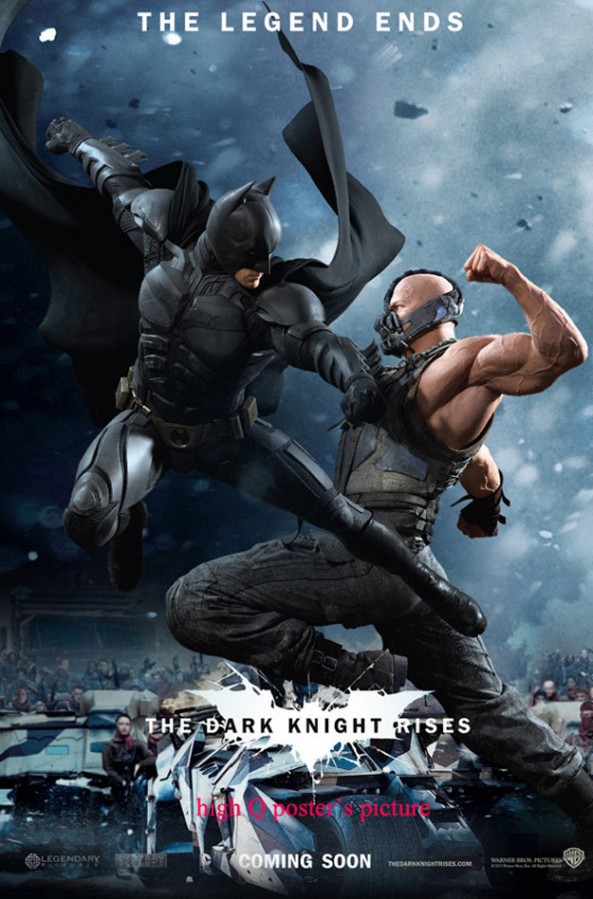
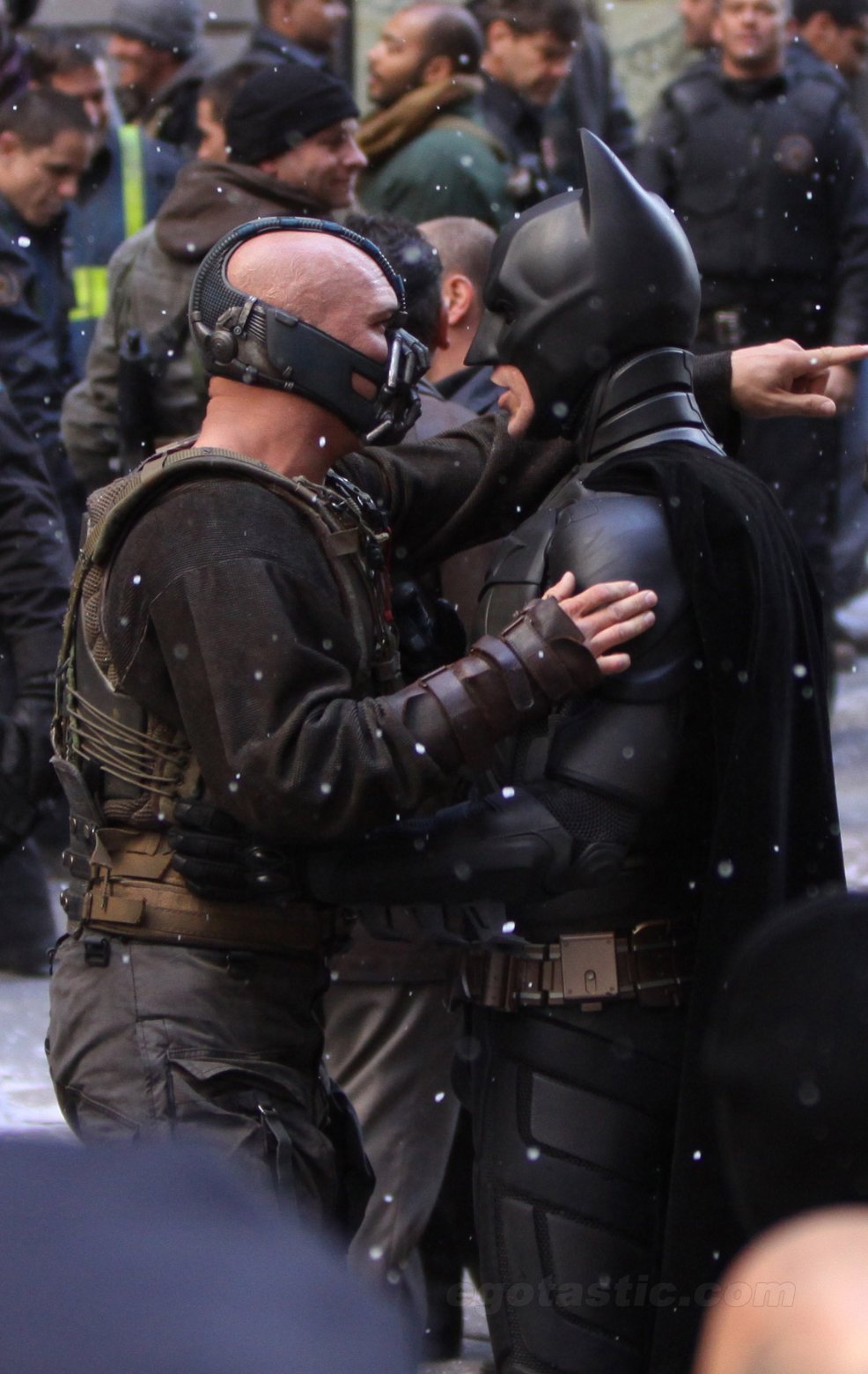
I for one look forward to seeing this movie, and not letting one bad review throw off my opinion of it or get me all worked up. Hell, even the last movie had its faults, but that didn’t take away from it being an awesome and memorable movie, especially where Heath’s portrayal was concerned. And if behind-the-scenes photos of Batman and Bane have taught us anything, it’s that even mortal enemies can kiss and make up! Seriously, check out these photos. Tell me that aint the perfect example of a heartwarming bromance!

Update: In the course of writing this, I read about a terrible tragedy in Aurora, Colorado, where a gunman broke into a theater and shot up the premier of The Dark Knight Rises, killing 15 people and wounding at least 50. The man is in custody and police indicated he tried to booby trap his apartment too. What kind of psycho lunatic is this weirdo?!

Luckily, he’s out of circulation for good and will have nothing but bad food, cold showers, whoopings and cavity searches to look forward to for the rest of his unnatural life. You know, events like this make me think we need REAL crime-fighting superheroes out there!

Starship Troopers: Invasion!

Fans of Starship Troopers must be sharing a collective “yahoo!” somewhere. It seems that Casper Van Diem – the actor who starred as Johnny Rico in the original movie and its horrid third installment – has decided to produce the fourth installment in the series. Like the second and third movies – both of which sucked hard ass! – this one will be straight to DVD.

But unlike the other two, this one will be an animated CGI feature, calling to mind the short-lived but decidedly unsucky animated series Roughnecks: The Starship Trooper Chronicles. The movie is schedules for release on August 28th, 2012, and in anticipation of this occasion, the studio has released a full-length, bad-ass trailer!

And judging from this little preview, this installment looks pretty good, combining the best elements from the original movie with a hardcore Halo feel! According to the studio, this movie takes place many years after the original, with all the characters from that movie (except for Dizzy Flores who died) reprising their roles. Carmen Ibanez is now Captain of her own battleships, Carl Jenkins is now Minister of Paranormal Warfare, and Johnny Rico is a general who comes out of retirement to command the Roughnecks for one last mission!

In fact, this sort of thing could be just what’s needed to help reboot the series. In spite of an adaptation that was big on flashy and low on substance, two sequels that were so atrocious they aren’t worth getting to, and an animated series that was terribly short on gore, this franchise actually has some potential. Bring on the bugs and automatic weapons fire!

Via Blastr.com

The Future is Here: Aerographite!

According to a recent story on CBC.ca, a new material has been developed which is the currently renowned for being the lightest material in the world. Known as Aerographite, the material is composed of carbon and weighs roughly one-seventy-fifth that of Styrofoam.

Created by researchers working at the Technical University of Hamburg-Harburg (TUHH) and Christian-Albrechts University of Kiel, this material is also said to be flexible, stable, water resistant, and a good conductor of electricity. It might sound like no big deal, but ultra-light substances that are composed of basic elements are things which were predicted to accompany the development of nanotechnology.

You see, at the micro level aerographite resembles a network of porous carbon tubes (pictured at right), which calls to mind the concept of the carbon nanotube. Much like the Buckminsterfullerene, this microscopic structure is predicted to be the mainstay of construction someday, just as soon as we can create nanomachines capable of erecting buildings!

And just think of it, diamonds are essentially carbon that has been layered and then super-compressed to become a near-indestructible material. If you have the ability to assemble tiny atomic structures made out of carbon, you can essentially create not only create diamonds, but also objects that are both extremely light and highly resilient. And just so you know, the researchers who produced aerographite have indicated that it can be compressed without damage.

Okay, it’s not exactly a technological revolution, but it is a step in that direction. Yep, soon enough we’ll be able to erect buildings simply by dumping some grey goo on the ground and watching a building sprout up. And unlike our current edifices of concrete, steel and glass, will be composed of different configurations of carbon and other primary elements. They will be stronger, lighter, able to endure indefinitely, maybe even capable of upgrades!


Of Terraforming

Several scientific subjects have piqued my interest as of late, particularly the ones that relate to the colonization of other planets. And there are plenty of good reasons for this. First off, NASA has been talking at length about a possible Mars mission which will be begin in 2030. Second, the topic is central to the novel my group and I are writing. And third, because it’s what I do. I’m a geek, dammit! Do I really need any other reason?

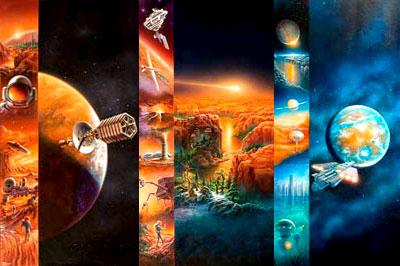
So in honor of this fertile and increasingly relevant topic, I thought I’d dedicate a post to the science of terraforming and its depiction in popular culture. Like the majority of your more radical ideas, the concept first appeared around the turn of the 20th century. As part of the larger trend of exploring planetary colonization, several historical developments contributed to this phenomena.

Foremost amongst them was the closure of the American frontier by 1900 and the partitioning of Africa in 1905. With the “Age of Discovery” officially over, scientists and dreamers began to look farther abroad for the next place to move to. Refinements in the fields of metallurgy, chemistry, and astronomy also contributed to the idea that planets like the Moon, Mars, Venus, Europa, Ganymede, and even other star systems, could be colonized.

And thanks to the advent of the Space Race, the Apollo missions, and Eco-engineering in the latter half of the 20th century, scientists have begun to take a serious look at terraforming, particularly in regards to Mars. While the practicality, feasibility and affordability are all still being debated, the very fact that there is a serious scientific debate would seem to indicate that it may very well be done someday.

And so, here is a list of science fiction novels from the last century that have explored the idea of terraforming. Once again, I hope you enjoy reading about them as much as I enjoyed researching them, and incorporating some of what they taught me!

Last and First Men:
This future history by Olaf Stapledon, released in 1930, is the first time that the terraforming of Venus is made in fiction. This was only a fragment of the larger story, which focuses on human evolution over the course of two billions years. Nevertheless, the move to Venus is an intrinsic part of the story involving the “Fifth Men”, who are forced to relocate after Earth becoming uninhabitable.

This occurs only after humanity pushes the local inhabitants to extinction after a protracted war. Afterward, they begin the process of transforming Venus to meet their needs. Like all early accounts, the description was hampered by the fact that knowledge of Venus was highly inaccurate. For example, Stapledon’s account has Venus covered in oceans, rather than the pits of sulfuric acid which are now known to be there.

Farmer in the Sky:
Here we have Robert A. Heinlein’s 1950 story which focuses on a family which has moved to Ganymede, which is in the process of being terraformed. Earth is overcrowded in this day and age, and farming colonies are being established in Jupiter’s moon to help provide much needed food supplies.

The process of creating the new farms is explained in some detail. For example, the topsoil is created from scratch by pulverizing boulders and lava flows, and seeding the resulting dust with carefully formulated organic material. Pressurized housing is erected to ensure that new arrivals are able to adjust, since the atmosphere is not fully breathable. And Ganymede is shielded from Jupiter’s intense radiation by a massive heat shield.

Hints are even given that establish that Ganymede once boasted an indigenous civilization, or was at least visited by one in the past. This includes a working land vehicle that has many legs, essentially a large metal centipede.

The Sands of Mars:
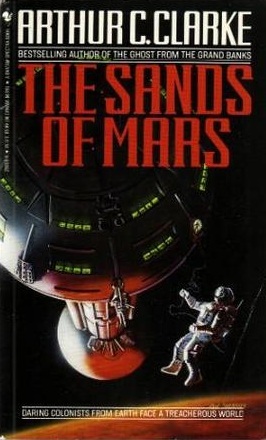
Next we have Arthur C. Clarke’s 1951 novel, which happened to be his first published work. And curiously enough, it is written from the point of view of a famous science fiction author. A case of art imitating life, or art as wish fulfillment? In any case, the setting is a research facility on Mars, which is in the process of terraforming so it will be able to become a self-sufficient colony.

Based on Clarke’s descriptions, this terraforming process (known as “Project Dawn”) involves some rather curious steps. The first is the ignition of the moon Phobos so that it will become a second “sun” for Mars. It will burn for at least one thousand years and the extra heat, combined with the mass production of the oxygen-generating plants, will eventually make the Martian atmosphere breathable for humans.

In many respects, this served as a preview for the plot of 2001: A Space Odyssey and it’s sequel 2010: Odyssey Two (see below).

The Martian Way:
In keeping with the tradition of sci-fi greats, this next novel was written by Isaac Asimov and first published in 1952. The story is told from the point of view of Scavengers, Mars-born humans who spend their time scouring space for the spent lower stages of spacecraft. This sort of lifestyle, making do with less and toughing things out, is known as the “Martian Way”.

At this point, Mars is still very much dependent on Earth for water shipments, which are used for fuel as well as consumption. Life takes a turn for a worse when an ambitious Earth politician decides to cut of the “Wasters”. In response, the protagonists come up with an ambitious plan, to fly to Saturn’s Rings and tow back an asteroid made of pure ice.

The trip is difficult and takes many months, but the Martian Scavengers manage to snag an asteroid that will supply two hundred years worth of water. This, they begin to use to transform the ecology of Mars, and turn the tables on the Earth government.

The Psychotechnic League:
Written by Poul Anderson over the course of two decades, the Psychotechnic League refers to a series of novels and short stories that are set in the same universe. Of all these stories, two in particular deal with the terraforming of Solar Planets. In “The Big Rain”, Venus is being terraformed, a process of planetary engineering that takes several centuries to complete.

In “The Snows of Ganymede”, the focus shifts to the Jovian moon where scientists are able convert the planet to the point where it experiences seasons similar to Earth. This, in addition to Mars, Venus and several other Solar Planets, all come together in time to form the Solar Union. Because of Anderson’s realistic description, the term “big rain” became associated with scientific terraforming models.

The Space Odyssey Series:
Arthur C. Clarke’s series, which began with the novelization of the classic film 2001: A Space Odyssey, revolves around the terraforming of Europa by a super advanced race. Known as the Firstborn, these aliens use the Monoliths to travel throughout the universe to foster the development of sentient life. Millions of years after fostering the development of high-order primates on Earth, they shifted their focus to Europa, Jupiter’s ice moon.

Much as in “Sands of Mars”, the process involved the creation of a “second sun”, this time involving Jupiter. In the first novel, the story ends with David Bowman, the only astronaut to survive an exploratory mission to Jupiter after their ships AI (the HAL 9000) malfunction and kills the crew.
When he arrives, he discovers a Monolith in orbit around Europa and disappears without a trace shortly thereafter.

In 2010: Odyssey Two, a second mission is mounted to determine the whereabouts of the first. When the joint US-Soviet mission arrives at Europa, they come to realize that the planet is showing signs of life. They also learn that the Monoliths are in the process of turning Jupiter into a sun so that Europa’s icy surface will evaporate and form an atmosphere, allowing all the life contained underneath to emerge and grow.

In the subsequent novels, Europa is revisited after its transformation is complete. Although sentient life does not appear to be possible, the planet does boast an atmosphere and vast oceans, which teem with sluggish sulfur-based lifeforms. In the end, after the Monoliths are convinced that humanity deserves a reprieve, and they land on Europe to commence building peaceful relations with the Europan life forms.

Mars Trilogy:
We finish with the most recent and profound example of all, the Mars Trilogy by Kim Stanley Robertason. The trilogy’s three works – Red Mars, Green Mars, Blue Mars – all focus on the ongoing efforts to transform Mars from an arid, hostile world with barely any atmosphere to a lush, hospitable planet capable of supporting human life.

The first novel deals with the initial colonization effort, which begins with the crew of the Ares, a ship carrying 100 scientists drawn predominantly from the US and the Soviet Union. Upon arriving, the crew builds the first settlement, known as Underhill, as well as colonies on the hollowed out asteroid-moon of Phobos.

After debating what is to be done with Mars, whether to turn it “Green” or leave it “Red”, the United Nations Organization Mars Authority (UNOMA) eventually opts for the “Green” option and terraforming begins. This process involves the drilling of “moholes” in the surface to release subsurface heat to thicken the atmosphere and the detonation of nuclear devices deep in the sub-surface permafrost to release water.

Green Mars, which begins 50 years after events in the first novel, during the dawn of the 22nd century. At this point in time, the Martian landscape is evolving thanks to the expansion of plant life, hence the name. The process is stimulated though the use of continent-sized orbital mirrors which focus sunlight to and away from various sectors of the planet, to melting the northern polar ice cap, and digging moholes deep enough to form volcanoes.

In the third and final installment, Blue Mars, long-term terraforming has created atmospheric pressure and temperature conditions that allow for the presence of liquid water on the planet’s surface, forming rivers and seas. This all takes place over the course of the following century, long after Earth has flooded and revolutions have displaced corporate control of the planet. Because of this, Mars has become the principle planet of the Solar System.

Summary:
Terraforming efforts have come a long way in fiction, and hopefully some day soon they will be realizable. Even though the concept remains highly speculative at this point, all proposed efforts are currently focused on Mars. In all ways that count, Mars has everything we would need to make it suitable for human habitation. This includes water, in the presence of the frozen ice caps and possibly underground rivers, and high concentrations of carbon and oxygen in the form of CO2, nitrogen, and gravity to keep the atmosphere anchored.

And most importantly of all, Mars’ atmosphere closely resembles that of Earth several billions of years ago. In time, due to the development of photosynthetic bacteria, enough oxygen was produced to allow for the development of animals. Though the careful introduction of similar bacteria and plants to Mars surface, humans could speed that process along and eventually create a breathable atmosphere. This, in turn, will allow for the creation of an ozone layer and weather patterns. Combined with the melting of the polar ice and underground aquifers, this will lead to surface water in the form of rivers, streams and oceans.

Anthology Sample: “Swan Song”


Hello all. There’s plenty of things happening on the Anthology front! More authors, more contributions, and more final drafts being produced. As it happens, our good contributor and friend here, Melanie Edmonds, has just finished work on her story “Swan Song”. This is the third installment in Part II of the anthology, which deals with the final mission of the Colony Ships.

The story takes place roughly 100 years after Planetfall is made, when the Avincenna, Taftazani, and Kashani delivered the first wave of colonists to Yuva. Those who crewed them have lived a comparatively empty existence ever since, being unable to live planetside due to the intense gravity and finding little else of value to do since.

Edmonds take us into the world of these people and inside the ships as they perform their final duty to the colony and embrace their destiny. Here is the first section of the story, fresh from the digital press!

They say there is a swan that is silent for its whole life. It grows and loves and does all the swan-like things, but it does not utter a sound. Then, the moment before it dies, it opens its throat, and not even the vacuum of space can swallow the beauty of its song.

*          *          *          *

[The image broadcast across the Yuva networks is dominated by the great globe of her sun, Gliese 581. Nearing the glow, three shapes track slowly and majestically. Their silhouettes are familiar, for they are the great colony ships.]

[Transmission Voiceover]

“It has been ten years since we arrived here. Ten years since we slowed our ships and woke our children. Ten years since we put a stake in this planet and said, ‘this is our new home’. This is Yuva.”

*          *          *          *

Avicenna, Bridge
Gliese 581 – 20 minutes

“Final corrections made. We’re on approach vector.” Pilot Gnana Tanaq slid her hands off the controls. This is the last time I’ll do this, she thought. “Inertia will carry us in, now.”

The first time she touched the console, her hands were smooth and soft, barely out of puberty. Now, sixty-four years later, they were wrinkled and worn, though they still curled around the grips easily. Just as she had worn shiny spots into the plastic, so the grips had worn her hands into control-friendly curves. Pilots’ claws, some people called them. She bore hers proudly.

Behind her, she felt Jackson sigh and loosen his grip on his console. “So, that’s it, then.”

“Yup.”

“How long?”

Gnana glanced down at the readouts scrolling before her. “Not long. Twenty minutes, maybe, depending on how quickly the gravity pulls us in.” She turned her chair so she could see him. “You’re the navigator, though.”

Jackson didn’t even bother to check his readings. He shrugged. “Sounds right.”

She smiled at him, dark skin crinkling around her eyes. “I know, I know: it goes against everything you believe in to navigate purposefully into something.”

He wrinkled his nose and his moustache twitched. “I keep wanting to tell you to alter course. Can’t help it.”

Gnana laughed softly, but there was no real humour in it. The forward viewports were unshuttered and Gliese 581 filled the entire window. Its orange glow lit the Bridge as if it was already on fire.

With a sigh, she unclipped the tether that held her to the chair and pushed over to where Jackson floated. She covered his hand with hers and his head dipped slightly in acknowledgement. The sunlight was turning his hair red, like it had been years ago. Gnana used to joke that he was the whitest man she’d ever met, so pale he wasn’t even freckled. Like her, he’d spent his whole life in space behind radiation shielding; his skin had never felt the real touch of a sun. Another twenty minutes would change that.

She turned her attention forward. It was hard to look at the Bridge now; it wasn’t the home she had known anymore. She had expected memories to crowd in here, but instead, all she saw was gaps. The holes where missing stations once were: communications, cryonics, long-range sensors. The stripped-down environmental console and the bare patches of decking where chairs used to be; the only one remaining was hers, because the pilot still needed it for this final journey. Even navigation was stripped down.

This room used to be busy with bodies, full of shifting console displays and the shadows of the crew. Now, it was just her and Jackson.

Gnana glanced sideways and saw Jackson frowning. “Still angry that he chose not to come?” She didn’t have to say who she meant; he knew.

Jackson’s expression scrunched down. “His place is here.”

“It was his choice.” Gnana’s tone was non-committal; in truth, she wasn’t sure what she thought about the captain’s decision.

Three days ago, she had agreed with Jackson: the captain was a coward who refused the honourable path. They had all known this was a likely end to this journey when they signed on, but he had chosen to stay on the orbital platforms, training the colonists in… she wasn’t even sure what.

Then, the night before they departed on their final voyage, she had seen the captain at a bar. It was the only time in her life she had ever seen him drunk, and it wasn’t pretty. He had slurred goodbye to her and hugged her – hugged her – and she had seen it in his eyes. It tore him up to deny his duty but he wasn’t ready to stand on his ship and sail into the sun for the last time; there was still living left for him to do.

She couldn’t begrudge him that. He was younger than the other captains, though his time commanding the Avicenna meant he would never be able to step foot on the planet below. The toll of space on bones and organs meant the gravity would kill him, slowly and painfully. But he could have a life on the orbital platforms, maybe even lead the colonial effort the way he had led the ship.

She had considered staying too, but the only position open for her was as a shuttle pilot. It wasn’t anything like flying the Avicenna, though, and even a short atmospheric stay caused her pain. The last time, she’d had a bone-deep ache for two weeks afterwards, making her hands shake so badly that she couldn’t fly at all.

Besides, she was tired. This was her last flight, and it seemed fitting to her that it was with her baby, her ship, the machine that spoke to her through her hands on its controls.

With a sigh, she lifted her gaze to the sun burning before them.

“Look on the bright side,” she said to Jackson without looking. “Maybe you’ll finally get a tan.”

And that’s from Part II of the novel, so suffice it to say, we’re making headway! Stay tuned for more!


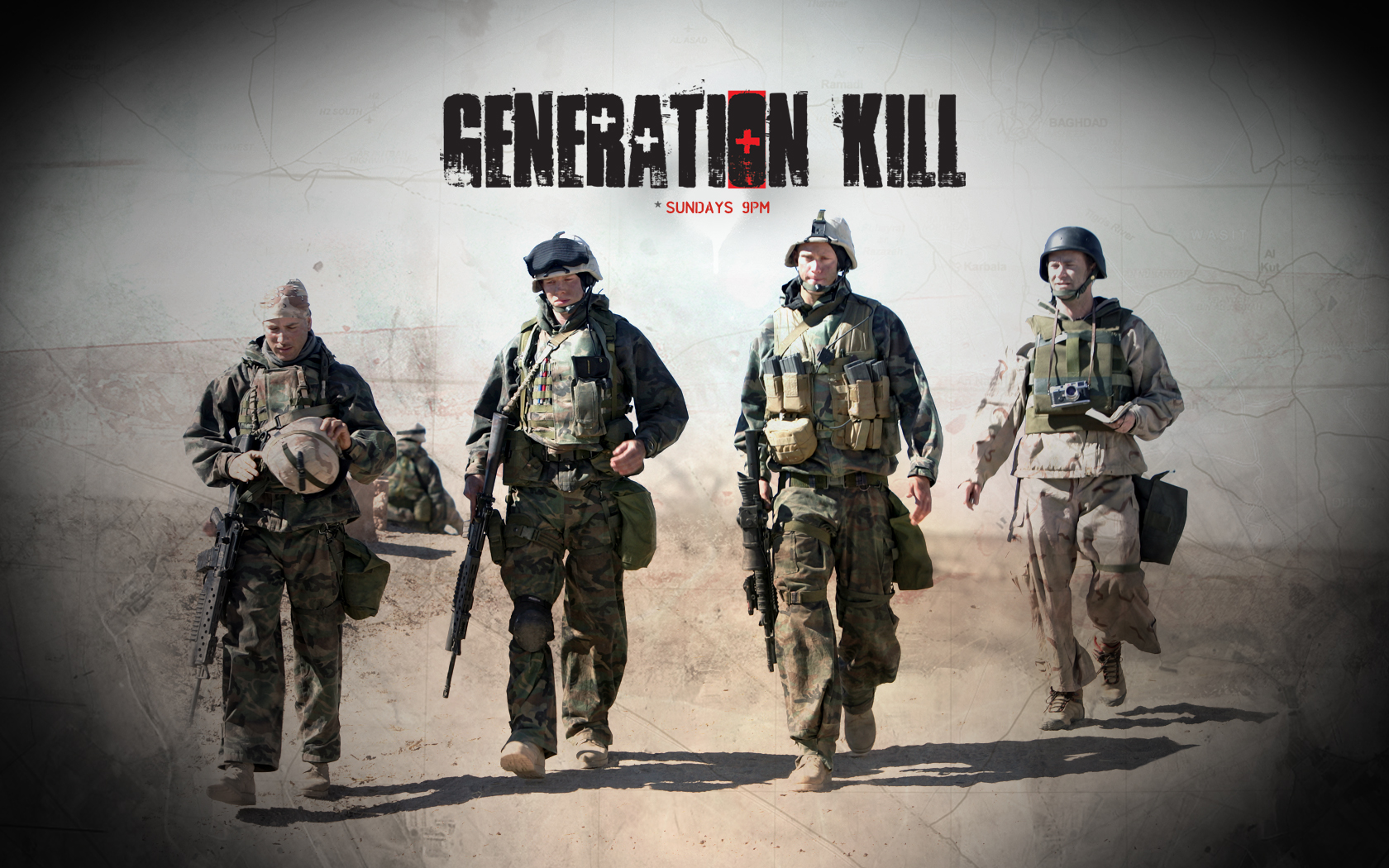
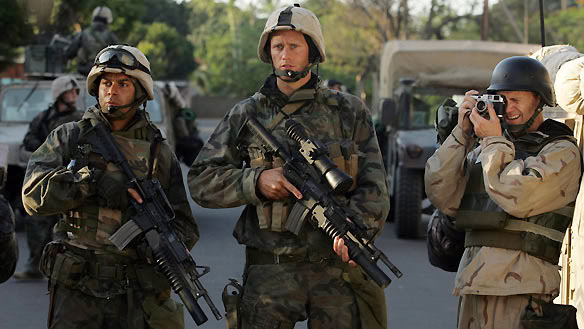
Generation Kill

Hey all. Today I’m stepping outside the box to cover a review in honor of a friend of mine. Master Seaman Chris Jenkins, who recently moved across the country and won’t be in our neck of the woods for the next three years. Ah, that’s going to be rough. Luckily, there’s still this thing known as the internet and the communications it allows for.

And like I earlier, I still owe him this review and I hope it finds him in good spirits when he gets to the other side of the country. And since I loved this series myself, I’m willing to step outside the confines of sci-fi to honor it. It was downright awesome, and historically relevant. So here goes…

Background:
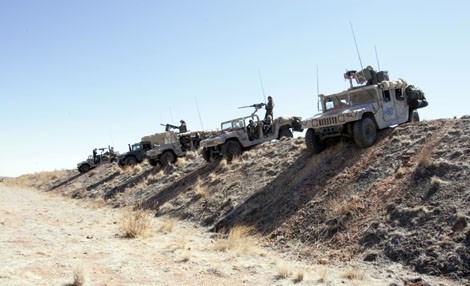
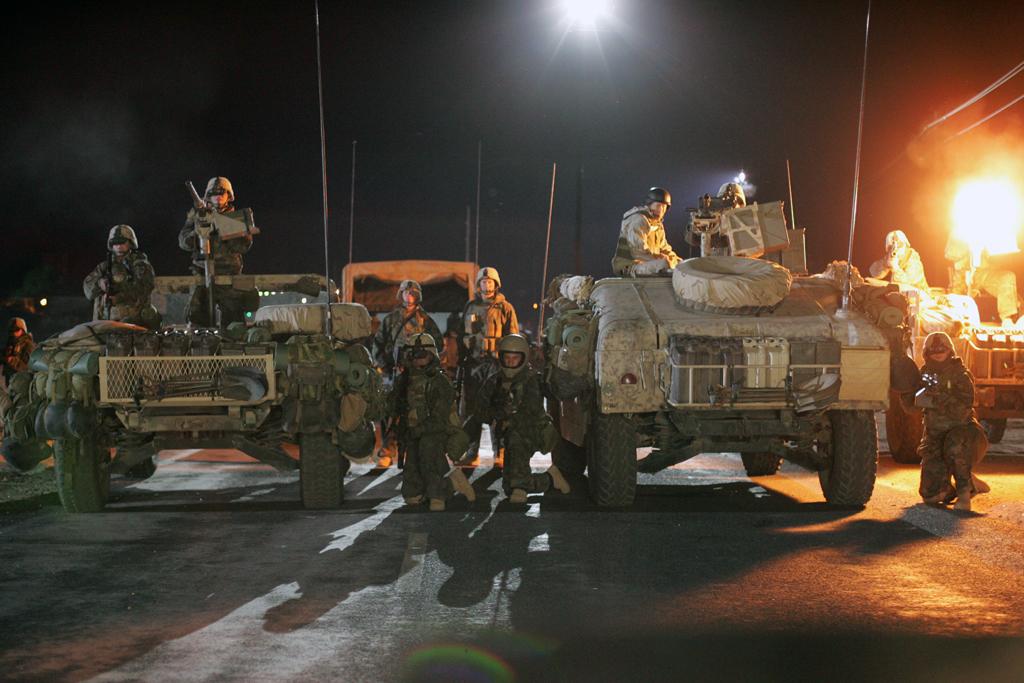
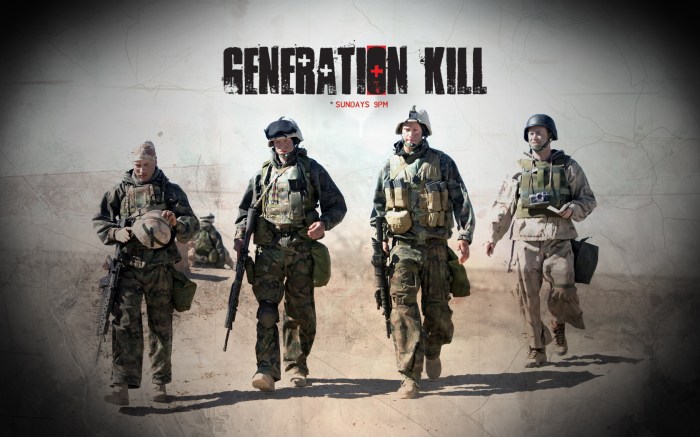
For those who don’t know, Generation Kill was an HBO miniseries adapted from the book of the same name. Said book was the result of reporter Evan Wright’s own experiences as an embedded reporter with the 1st Marine Reconnaissance Battalion during the 2003 Invasion of Iraq. In the course of his time with them, he had a first hand view of the invasion and all the problems that resulted.

And therein lies the real value of this miniseries. Whereas many people who witnessed the invasion, particularly in the US, seemed to think that the initial phase of the war was a success, that problems didn’t arise until after the occupation began, this series and the book that inspired it shows that the problems that would come to consume Iraq were there from day one. These included lawlessness, incompetence on behalf of the civilian planners, civilian deaths, insurgency, and the glaring gap between the reality of the situation on the ground and how it was being portrayed by politicians and media.

Plot Synopsis:
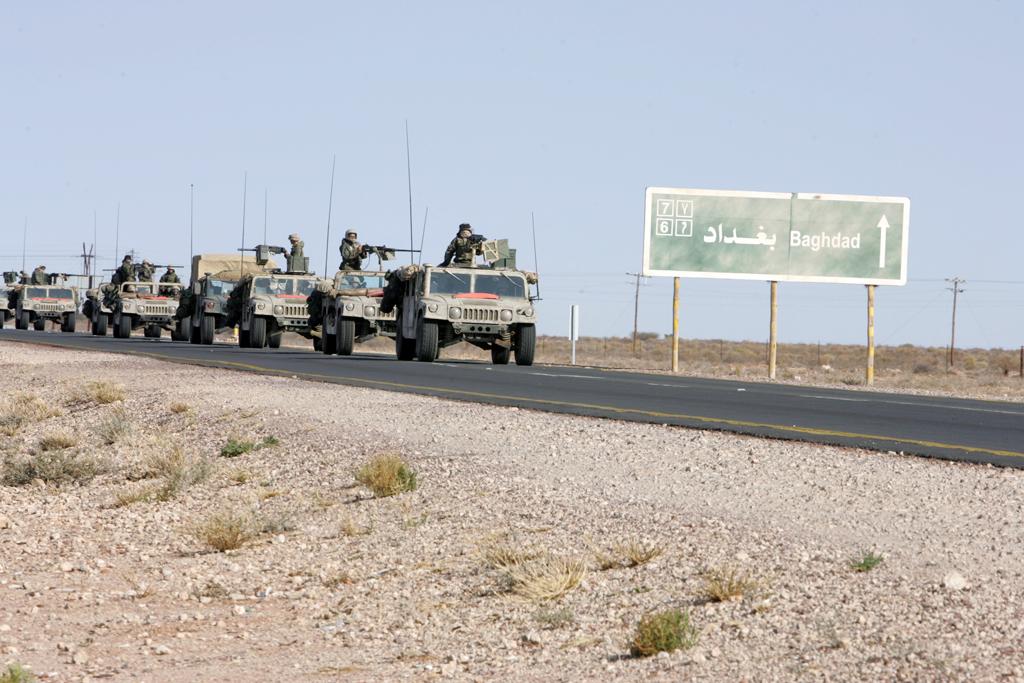
The story, which begins with the invasion and culminates in the arrival and settlement of 1st Recon around Baghdad, is told through seven episodes. Each one catalogs a different phase in the war effort, showing events from multiple points of view of those who fought with Bravo Company, the Company which led the way during the invasion.

Episode 1: “Get Some”
The episode opens with the 1st Recon Battalion, Bravo Company, conducting training drills inside Kuwait outside of Camp Mathilda. The embedded reporter from Rolling Stone magazine, Evan Wright (Lee Tergesen), arrives at camp and is given to 2nd Platoon where he receives a frosty welcome. Considering him a member of the “left-wing liberal media” they don’t have much love for him, until they learn he used to write for Hustler magazine!

He quickly makes the acquaintance of the men of Bravo company whom he will be riding with in the lead Humvee. This includes Sgt. Brad “Iceman” Colbert (Alexander Skarsgard, Erik on True Blood), Cpl. Josh Ray Person (James Ransone), and relative FNG Lance Cpl. Harold James Trombley (Billy Lush). Throughout the first episode, we also get to meet many other “characters” of interest.

These includes Lt. Col. Stephen Ferrando (Chance Kelly), who was given the nickname ‘Godfather’ because throat surgery has left him with a harsh, whispery voice. Then there’s Lt. Nathaniel Fick (Stark Sands), the levelheaded commander of 2nd Platoon; Cpt. Craig ‘Encino Man’ Schwetje (Brian Patrick Wade), the well-meaning but incompetent commander of Bravo Company; Dave ‘Captain America’ McGraw (Eric Nenninger), the edgy and unstable commander of 3rd platoon; and Sgt. Rodolfo ‘Rudy’ Reyes, aka. “Fruity-Rudy” (played by himself), the metrosexual Marine who acts as the glue of Bravo Company.

Significance: This episode familiarizes the viewer with several realities that Marines in the 1st Recon had to deal with. The first and most obvious is shortages, which the Marines are constantly told to make do with. The second is the fact that much of Bravo Company’s own officers are inept, enforcing pointless rules instead of focusing on troop morale or making sure they have the right kinds of equipment.

Episode 2: “The Cradle of Civilization”
The invasion is now underway and 1st Recon is sent to An Nasiriyah where the invasion has stalled. Bravo Company begins to lead the way through the town and is given orders to fire on anyone they deem a threat. They encounter minimal gunfire until Cpt. McGraw, using a captured AK, opens fire on civilian cars for no apparent reason. They continue to press forward north into Mesopotamia, “The Cradle of Civilization”.

After taking a wrong turn, Bravo company rushes onward to reach to its next objective outside the town of Al Gharraf by nightfall. In the dark, Bravo company comes under fire by a group of armed Iraqis and takes them down without difficulty. They score their first kills and survive their baptism by fire, and Bravo company celebrates before moving on.

Significance: This episode is the first time that 1st Recon experiences combat and the first time that Cpt. McGraw commits a stupid act in the line of duty. His confiscating of an AK and firing randomly is a constant source of irritation as time goes on, but nothing is ever done about it. In addition, this episode, specifically the layout of the town, the bridge and the operation into the town, was the inspiration for COD: Modern Warfare 2, much like how scenes from Enemy at the Gates inspired Call of Duty 1 and 2 and COD: World at War.

Episode 3: “Screwby”
After surviving their first engagement, Bravo presses forward. When they reach a roadside hamlet, the company look on in disbelief as a regimental combat team arrives and obliterates the hamlet and its inhabitants, none of whom appeared to be armed. Shortly thereafter, Bravo heads north to the town of Ar Rifa, where Captain Schwetje orders a “danger close” artillery barrage on the settlement. Lt. Fick intervenes to try to prevent the unwarranted barrage, but to no avail. Once again, civilians are killed due to incompetence of senior officers.

Eager once more to press ahead, “Godfather” orders 1st Recon to push ahead another 40 km and capture an airstrip being controlled by Iraqi Republican Guard unit that is apparently equipped with tanks. Once again, Cpt. MgCraw begins to undermine morale by making all kinds of panicky statements, namely that they are going to die if they go up against the tanks. Also, in order to reach the airfield, they are forced to leave behind their supply trucks behind.

Once again, Bravo Company is given permission to open fire on anything that moves. In the lead Humvee, Cpl. Tromblay opens fire on people running along the roadside and severely injures a small boy. The Company secures the airfield, which appears to be abandoned, and then insists that command medevac the boy to a nearby base. Command is hesitant, but eventually agrees, and both Sgt. Colbert and Cpl. Tromblay are to told to expect consequences for the incident.

Significance: In this episode, we get a solid glimpse of how civilian deaths in Iraq are being swept under the rug and written off as justifiable. The soldiers are beginning to feel the weight of this and cracks begin to show in their morale and resolve. After both engagements, in the hamlet and Ar Rifa, they tell each other to put it out of their minds and move on, knowing that there isn’t much they can do about it.

Episode 4: “Combat Jack”
1st Recon reaches the airfield and encounters minimal resistance, the Republican Guard unit having already evacuated and left their tanks behind. This puts 1st Recon ahead of the rest of the American invasion, which is seen as something favorable to command. However, they soon learn that by leaving their supply trucks behind, that Iraqis have captured and looted them. Amongst the supplies was most of Bravo Company’s rations and an American flag, which means they are now down to one meal a day.

Alpha Company is then tasked with a different mission: to recover the body of a captured Marine who was murdered in Ah Shatra. The mission takes a turn when when CIA agents show up and declare that a special army of Iraqi Freedom Fighters will take the town for the sake of their propaganda campaign. However, the army deserts the next day after an artillery barrage fails to clear the town of the enemy. Meanwhile, Bravo company continues clearing hamlets along the northern route and sets up a roadblock outside of Al Hayy. The rules of engagement here are unclear, and Bravo ends up destroying a large truck and killing all passengers, uncertain if it even posed a threat.

Significance: Three major developments happen in this episode, all of which demonstrate a considerable amount about the unfolding war. First, it becomes clear to the Marines that their officers are making all the wrong calls, but as long as they continue to be successful, command will keep making them. The operation outside of Al Hayy shows just how important propaganda efforts are to the war effort, namely maintaining the illusion that the Iraqis welcome the invasion as liberation. And last, we get a first glimpse of how the Marines will have problems acting as police in the streets, mainly because they are not trained for the role.

Episode 5: “A Burning Dog”
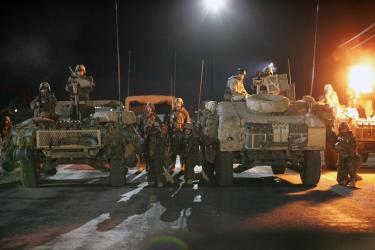
1st Recon finally gets some solid intel from the locals, which says that there is an ambush waiting for them up ahead. The ambush is attacked by some LAV’s, and Bravo is ordered to cross the bridge at night. However, they hit a snag along the way and the convoy gets stuck, just as a group of fresh ambushees show up to attack them. Schwetje once again shows his incompetence by being unable to resolve the situation, and Cpt. McGraw once again panics and begins screaming over the open radio. Things are only resolved when Rudy intervenes and inspires Cpt Schwetje to think outside the box.

By morning, Bravo company learns that they are not soldiers, but militiamen, many of whom came from Syria and farther abroad. On passports recovered from the bodies, it says that their reason for coming to Iraq was “Jihad”. Bravo continues north to Al Muwafaqiyah, where they are tasked with setting up another roadblock and with destroying the Republican Guard outpost, which, unfortunately, is in the town’s only school. Despite Colbert’s orders to hold their fire unless its absolutely necessary, Bravo has another incident at the road block and a small child is killed.

Significance: This episode is especially significant because it shows how the roots of the insurgency began long before the war ended. Whereas Captain Schwetje thinks this is proof of what Bush said about their being terrorists in Iraq, the others see from their passports that the “Jihadis” didn’t enter Iraq until the day after the US declared war. Already, the invasion is beginning to have consequences that no one seemed to plan for, particularly in how it is involving people from outside Iraq. What’s more, the mounting civilian deaths is forcing the Marines to question the war and what their role in it really is.

Episode 6: “Stay Frosty”
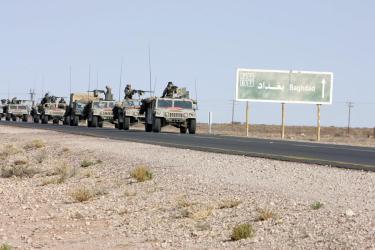
Outside of Al Kut, Cpt. McGraw nearly kills a prisoner with his bayonet after his Company defeats a small group of armed Iraqis. His men are becoming more disillusioned in his command, and Sgt. Eric Kocher (Owain Yeoman) of 3rd platoon learns that he is being held accountable for the incident. Afterward, McGraw’s men refuse to allow him to anywhere near prisoners, for fear that he will attempt to stab them again. In addition, 1st Recon learns that Godfather’s counterpart in the Regimental Combat Team is being relieved of command despite his success. Apparently, command is reigning people in due to problems with deaths and insubordination.

Problems also begin to arise between Captain Schwetje and Lt. Fick because of their earlier disagreements after he hearsof this. Schwetje’s NCO, Gunnery Sgt. Ray Griego (David Barrera), suggest to him that command is alluding to Fick’s own insubordination when they spoke of insubordination, and begins spreading rumors about Fick behind his back. While Fick is told not to question Schwetje orders again, Fick demands that Schwetje also reign in Greigo for his unprofessional and insubordinate behavior towards himself.

Shortly thereafter, 1st Recon is tasked with escorting Iraqi civilians fleeing from Baghdad down the highway, a mission which makes them feel humane amidst all the slaughter. Colbert is confronted by an Iraqi woman who speaks perfect English and challenges him on the nature of the war, which he appears to take to heart. Unfortunately, while attempting to peacefully force cars coming the opposite direction turn back, another Iraqi is killed, this time an old man.

Significance: The immediate value in this episode is in how it shows how the wrong people are being blamed for failures while those who continue to screw up remain in positions of authority. We also get to see how the war is being perceived by the Iraqis, which is put into words by the female student who challenges Colbert on the road from Baghdad. And last, the incident involving the old man shows once again how civilians are being killed because combat soldiers are being assigned police duties, again as the result of bad planning. And last, but not least, it is indicated that the troops are now within reach of Baghdad, which they hope will end the war and all the stupidity and craziness they have been forced to endure.

Episode 7: “Bomb in the Garden”
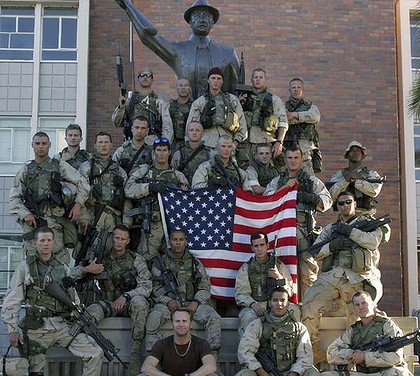
1st Recon finally reaches Baghdad and is treated to some rest and reprieve in an abandoned cigarette factory. However, the rest doesn’t last long as they are called upon to mount patrols into the city and deal with shortages, looting and sporadic sniper fire.

Having only one translator, they are limited in what they can do and realize the problems the residents are face are entirely beyond their abilities. This is complicated further by constantly changing orders, a lack of necessary supplies, unruly locals and cultural misunderstandings. The situation only gets worse and the city continues to descend into anarchy.

1st Recon is soon relocated to a soccer stadium away from the action. At their new digs, the tensions that have been simmering for weeks finally boil over during a friendly football game. Wright conducts his last interview with Godfather where he learns that McGraw is not going to be punished for two near-stabbings.

He then says goodbye to the men of 2nd Platoon being carried off by helicopter, an event which seems tearful after all they’ve seen together. One of the Marines begins to show the movie he’s put together from the footage he’s shot over the course of the war. While the men initially enjoy watching it, they slowly begin to lose interest and drift away, thanks to all the bad memories it evokes.

Significance: This episode is the most significant of all because of how it showcases the reality of life in Baghdad during and immediately after the war. Contrary to public perceptions, the chaos and violence were almost immediate, and it was abundantly clear that the military hierarchy had no idea what to do about it. this, above all else in the show, highlights the lack of planning on behalf of the Bush administration and the Pentagon before the war began. Faced with victory, the soldiers were completely unprepared for the situation they faced as soon as the shooting was over.

Of equal significance are the scenes at the soccer stadium, where everyone seems burnt out and angry despite the fact that the war is now over. No one is in the mood to celebrate; in fact, everyone seems itching for a fight for someone specific. During the pick-up game, Schwetje is punched in the face by one of his men, and Cpl. Person attacks Rudy for no apparent reason. During his final interview with Lt. Col. “Godfather” Ferrando, Wright learns that there will be no consequences for any of the officers who screwed up along the way, highlighting the lack of accountability that runs like a vein through the show.

And finally, the scene where the Marines watch the video – this is the only scene in the miniseries that is accompanied by background music. Not a word is said, and yet the mood and the point are conveyed so clearly. The war is done, they have won, and yet everyone feels terribly bitter and angry. All that we need to know about the Iraq War is said in this one scene, with the men who fought in it preferring not to see the replay because it reminds them of everything they want to forget.

Summary:
As if it wasn’t clear already, I LOVED THIS MINISERIES! The tone, the pacing, the subtle way things are conveyed, the gritty and realistic nature of it all. It captured the essence of war, and was so much better because you watch it knowing that it all happened. Some might say that since it is being told from one man’s point of view, it would reflect his own particular biases and perspective. However, the series is shot from multiple points of view and reflects the very in-depth interview process which Wright conducted before releasing the book.

This comes through immediately in the show, where Wright appears to be little more than a background figure until the very last few minutes of the last episodes. And even then, the focus shifts back to the troops, where it always was during the course of the series. This diversity of perspectives gives the show a very broad and varied feel and let’s the viewer become acquainted with all that is going on, which is essential given the nature of the show.

Even people who don’t like war movies will find something to enjoy here. It is historic, it is personal, it is human and it is real. The characters are very rich, and the series has absolutely no shortage of keen dialogue. Cpl. Josh Ray Person has to be the funniest man in the series, and the antics of the men in the first Humvee, where Wright was embedded, were priceless. Several discussions which still stick out in my mind include when the grunts learn that Wright once worked for Hustler, the many times “Iceman” Colbert calls Person a “Whiskey Tango” (phonetic alphabet for White Trash), and the discussion concerning the nature of “November Juliet” (you’ll have to watch the series to learn the meaning of that one!)

Above all, what makes this story so effective is that it is a first-hand account of the events that took place in 2003, told by a member of the same media that helped to sell the war to the American public. Defying the conventional view that the war was an act of liberation that was embraced by the Iraqis, and only went bad long after major combat operations ended, the series shows that this was an operation doomed from the get-go. All the problems that would later come to haunt the “rebuilding phase” – basic shortages, cultural misunderstandings, insurgents, civilian deaths, failure to plan, shifting orders, and negligence in dealing with rioters and insurgents – were all there from day one.

For many years after the invasion, the American people were left in constant state of confusion and controversy as an intransigent administration and hand-picked military spokespeople tried to spin the situation, refused to accept responsibility for the failures, and insisted the situation was salvageable. It was only with time that they came to realize that the truth was always there, happening on the front lines, and that it was kept from them for political reasons. The situation had not changed, only their perception of it.

Well, that’s all I got to say about Generation Kill. I hope you enjoyed reading this review as much as I enjoyed watching the miniseries. And if you’re reading this Chris, I hope you especially enjoyed reading it. It got a little wordy there, I know. I’m known for that but this time, I really tried to keep it to 50, 000 words or less 😉

The Martian Menu

A recent article on CBC tells us something interesting about the Red Planet. It seems that the good folks at NASA’s Advanced Food Technology Project are planning a menu that astronauts will be taking with them to Mars. It’s all part of a planned mission that will be taking place in 2030, involving six to eight astronauts with an expected duration of six months.

This is no easy feat, but it’s further complicated by the fact that once there, the astronauts will not be able to be resupplied at regular intervals. Yes, unlike the ISS, they can’t just send shuttled loaded with freeze dried food. Luckily, NASA knows that Mars low gravity means that once there, astronauts will be able to prepare their own food. Things things like chopping vegetables and boiling water with a pressure cooker are possible there, unlike in a zero-g environment.

So in addition to planning a travel menu, NASA is planning on equipping the mission with the means to create a “Martian greenhouse” upon their arrival. This would include a variety of fruits and vegetables — from carrots to bell peppers — kept in a hydroponic solution, meaning they would be planted in mineral-laced water instead of soil. The astronauts would care for their garden and then use those ingredients, combined with others, such as nuts and spices brought from Earth, to prepare their meals.

Not bad. And an improvement over a space menu for one simple reason. Zero-g has an effect on taste and smell. Yes, zero gravity seems to impair these things, making food taste bland. So a spicy red pepper sauce and a chili and oil sauce, when eaten in space, are pretty much paste. Not cool…

This research is an important step in ushering in the age of colonization. Much like the recent surveys which discovered of water on the moon, and tested its gravity and for minerals, it’s the sort of nuts and bolts planning that will one day go into real mission planning. First the Moon, then Mars, then Ganymede, Europa, Ceres, Titan and Oberon. All bodies with gravity that could be settled in the not-too-distant future, and that’s just within our solar system! Given the time, resources and technology, the universe really is the limit!