The Future is Here: The Hyundai E4U Eggmobile

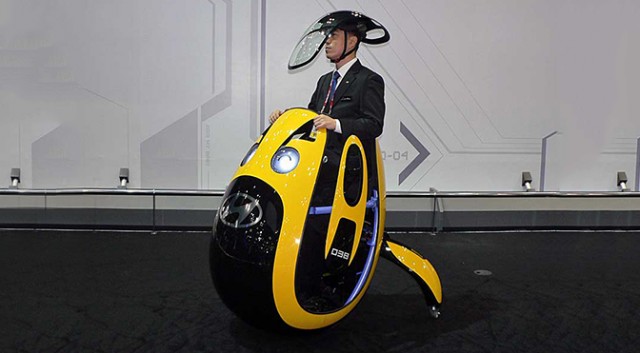
hyundai-e4u-640x353As the world’s cities continue to grow, and air quality and Climate Change continue to worsen, people will need to find cleaner and more effective ways of getting from point A to point B. One option which is being widely considered is personal transit: vehicles that are smaller, smarter, convenient, and more energy-efficient than automobiles. That’s the concept behind the Hyundai E4U Eggmobile, a personal vehicle that merges the convenience of a bicycle with a car.

Another important aspect of the Hyundai concept vehicle is to create a personal transport that will succeed where Mopeds, scooters, and Segways have failed. Though these vehicles are all perfectly good means of getting around, they have not made much of a dent in most major cities, which are still clogged with cars and have public transit that is choked by daily armies of commuters.

hyundai_e4u-640x592The Eggmobile debuted at the Seoul Motor Show this year, where Hyundai was amongst many other automobile makers that were presenting ideas for personal mobility vehicles (PMV). Amongst its advantages is the ability to maneuver in any direction, even though its motor only moves in one. This is made possible by the “semisphere” that the Eggmobile uses, which unlike conventional tires, can rotate in all directions.

When the top of the semisphere is touching and vertically aligned to the ground, the vehicle moves by rotating the semisphere horizontally. Meanwhile, the two rear-mounted training wheels prevent it from spinning uncontrollably. In order to move the vehicle in any direction without hindrance from the training wheels, the E4U simply tilts, much in the same way a helicopter works by tilting its rotors.
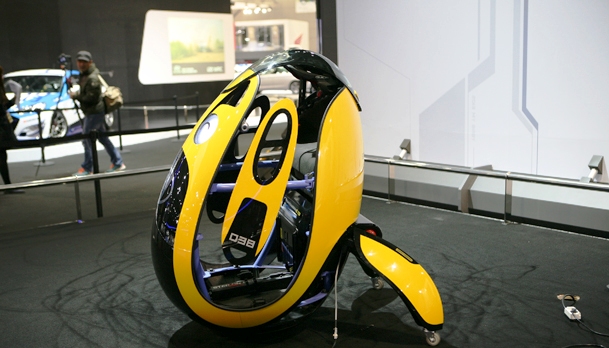
hyundia_e4UThe driver, meanwhile, propels the vehicle with their feet, inclining them this way or that in order to generate propulsion. The severity of the tilt determines how fast the vehicle is to go. If this sounds a bit complicated, that’s because it is. At the Motor Show, the demonstration model only moved at a walking pace and the early reports say controlling one will take some getting used to.

What’s more, Hyundai has not yet released the crucial info on what kind of fuel the Eggmobile uses. However, odds are good it is either powered by a clean burning fuel or electricity. Only time will tell. The same holds true of when Hyundai plans to release it, or whether they truly intend to spearhead a fleet of PMVs with this particular mobile. However, given the time and money they invested in this concept, it’s hard to imagine they only pulled it for a single auto show.

Sources: Extremetech.com, news.cnet.com

 

Vimy

battle_of_vimy_ridge_field_gun_firingThey were all looking to the far horizon, to the ridge line that extended above and far into the distance. Without the benefit of trees and foliage, they could see the slope of the earth in gruesome detail. Nothing but mud, rocks, and stunted trees. And the final resting place of half a million men…

They were all watching it as the arty turned the field into a morass of craters and muddy holes. A fine mist had been on the field that morning, an icy rain that portended a long, hard day. But the screaming shells were doing their best to change that. With every burst, smoke and flame broke out along the high ground, the rain winking it out almost instantaneously, only to be followed up by another. It was like watching a macabre light show, or a wicked lightning storm. Except this one raged within the earth, kicking up soil and vaporizing bodies.

Yes, they all looked and watched the display. But Lieutenant Vincent Ross, he was looking at his men. The many fresh faces that made up 1st platoon, washed and ready for their big adventure.  He watched them wince when a big one hit, and rock from side to side and the shock made the earth rumble beneath their feet.

“No one had done what we are about to do today…” he said between bursts. “Many have tried already and failed, but we have something they do not… We are prepared… We are well equipped and ready… But most importantly of all, we have something to prove! Men of the Dominion… we are about to show the Hun over there what we’re made of, and those Brits across the Channel how its done!”

The soldiers let out a general hoot of approval. He basked in it for a second, knowing that he had only so much time before the preparatory bombardment ended and they would be moving up. That’s when the fun would begin, and the only moment of silence he could expect before the day ended. Hence, it would be the only chance he would get to remind his men of their duties, which were numerous.

And just like that, the pounding stopped. He looked to his men again and saw them looking at him. It was time. This was what it all came down to. A handful of men in a trench, their weapons at the ready and their mission on their minds. When the day ended, they would either be digging in, or someone else would be digging their graves.

“Alright men, this is it! We are the first wave in this assault. We move as soon as the creeping barrage starts, and we don’t stop until that ridge is in our hands. First Platoon leads the way, followed by Second, Third, and the balance of First Battalion. Be sure not to bunch up or get ahead of yourselves; otherwise, you will be stepping into the arty lines line of fire! And remember, once we secure the ridge, the battle will be just beginning. The Hun will try to take it from us, so once we have it, we will have to fight like hell to hold it!”

The men conducted their last minute rituals as they listened. Some kissed the crucifixes they had hung around their necks, others lit up a last cigarette, and others took the chance to do one last check of their weapons and ammo.

“I don’t need to remind you, people are counting on you. The Corps is counting on you, the General is counting on you. But most importantly, your nation is counting on you! Remember, your NCOs are your ticket to staying alive. Each and every one of them knows the lay of this land like the back of their hand.” He reaching into his uniform, he pulled out his field map and began pointing to the designated spots. “Squad leaders, remember your objectives, remember the timetable. Stick to these, keep your men in mind, and we will all make it home!”

Another roaring hoot went up from the men. Their voices slowly began to die down just as the first wave from the creeping barrage began to land a few hundred feet away.

“There it is!” He said over the roar of the incoming shells. “Wait for the first wave to clear, then we advance!”

Drone Wars: Hiding Your Home from a UAV

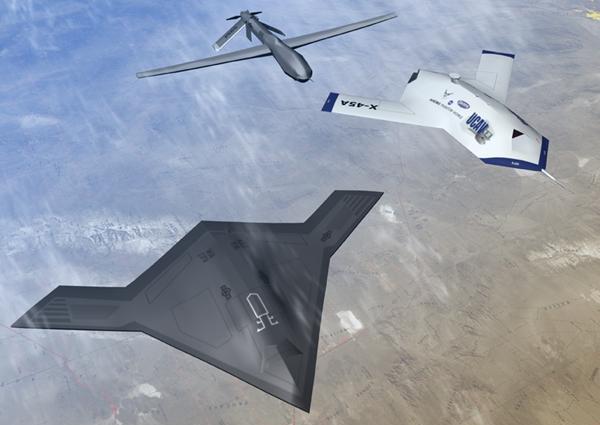
(U.S. Air Force photo/Staff Sgt. Brian Ferguson)(Released)In a world increasingly permeated by surveillance systems, especially ones that are airborne and remotely operated, it was only a matter of time before some struck back. Much like Steve Mann’s concept of sousveillance – using camera devices and wearable computers to help people spy back against “Big Brother” – it seems that there are individuals out there looking for ways to help the common people avoid UAV detection.

In this case, the individual is Tim Faucett, CEO of APlus Mobile. When his company is not manufacturing mobile computer units that manage robots and UAVs for clients like the U.S. Navy and Lockheed Martin, they are contemplating ways to shield us from the technology they help create. Might seem a bit ironic, but looking to the future, Faucett and his colleagues are concerned about people other than government and military having access to the technology.

drone_target_1Alongside the FAA, which estimates that there could be tens of thousands of unmanned aircrafts circling overhead by the end of this decade, Faucett believes the future will be permeated by privately-owned unmanned aerial vehicles:

There are going to be private drones, there’s going to be commercial drones. Everybody’s going to have access to a drone. And people are going to have good intentions with them, and people are going to have bad intentions with them.

An interesting idea, and not one the public has fully considered yet. Most concerns vis a vis UAVs and their unlawful use are targeted at the governments who use them, mainly with the intention of “combating terrorism” overseas. But to Faucett, the real threat comes from our neighbors and private groups, people who are harder to discern, identify and fight than a monolithic organization.

drone-laser-targeting_620x374In keeping with this mindset, a few weeks ago, his startup Domestic Drone Countermeasures filed its first of what he said would be nine patents for a system that will detect and disable drones before they have the chance to film their targets. Few details have been made available yet as to what these systems involve, mainly because it’s new and Faucett hopes to keep the cat in the bag until its time to unveil.

Still, some details have managed to trickle out, such as Faucett’s own reference to a system that includes software and sensors that will be able to identify nearby UAVs based on their electromagnetic signature, alert the owner of the system, and then “neutralize the drone’s capability to see you with its camera.” But Faucett was also sure to emphasize the non-military nature of all this, responding to rumors that his company is developing some sort of weaponry:

We don’t interfere with the drones navigation in any way. We don’t jam anything. We don’t intercept anything … This is non-combative. That’s really important. We’ve taken great pains to design systems that aren’t going to get shut down or be outlawed or become illegal. … We’ve taken the combat elements out so [the former military technology] can’t be viewed as unlawful.

???????????????????In fact, the new system may actually be capable of doing something creative and comical, should anyone attempt to spy on you. And all without causing harm to the camera that’s attempting to see you :

The camera just won’t be able to look at you. Actually, at some point, we can show the operator at the other end a little movie or something.

So try to misuse a UAV, and you may end with an eye full of porn bombs, or several hours of Desperate Housewives, playing on a loop. Take that, nosy neighbor! You too, Big Brother!

Faucett says his team of three full-time engineers and several part-time staffers should be able to bring the system to market in a matter of months. It’ll be scalable to suit the needs of someone who just wants their home protected, ranging from a home owner who some added security, to larger property owners or institutional clients. You might say, spying will become the new type of Cold War, with government, security and surveillance companies all engaged in a game of one-upmanship.

And as usual, I sense an idea for a novel… Patent Pending!

Source: fastcoexist.com


Selling Yourself: The Future of Advertising

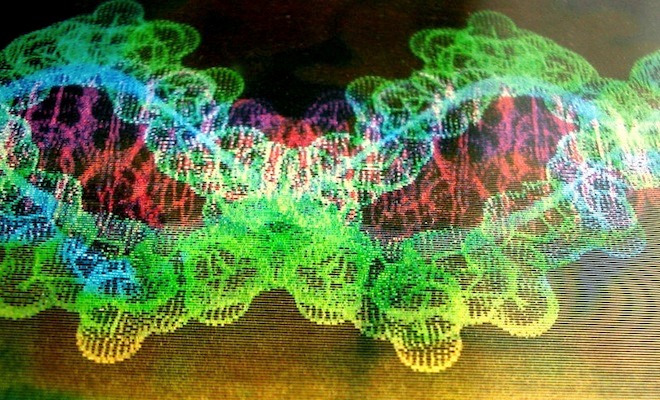
DNA-1If you thought your world was already permeated enough by adspace, hang on to your hat! According to =researchers and geneticists, the age of genetic-based advertising is right around the corner, and is likely to be even more profitable than internet, television, radio or billboard ads ever were! Yes, in this brave new future, selling yourself will take on literal dimensions, with people signing over their genetic information and tailoring what ads they receive based on that very same thing.

Call it another unintended consequence of the Human Genome Project and ENCODE, which the latter of which recently finished cataloging the function of every part of the human genome. Or it could just be a case of advertising and the commercial industry making inroads, following the path traced by researchers and scientists in the hopes of finding the next place to saturate with ads.

dna_selfassemblyRegardless, geneticist Michael Schatz of the Cold Spring Harbor Laboratory sums up the possibility as follows:

Today, it’s such a niche market, but there’s tremendous growth opportunities there. In the endgame, it’s certain [genetics is] going to become one of the factors that big retailers would consider, but I think that’s pretty far off.

But as it turns out, it may not be as far off as he thinks. Already, a Minneapolis-based startup named Miinome is building a platform that will help consumers control what offers they get from retailers based on their genetic makeup, and to possibly cash in on the value of their DNA by selling the data back to marketers and researchers.

Through an open API, Miinome plans to collect genetic and environmental data mined from social networks like Twitter, Facebook and LinkedIn and run that through their proprietary algorithm to come up with a profile of you that’s richer than anything that exists on the internet today. Then, they will be able to infer what environmental factors and personal traits are likely to cause you concern, or gives rise to special needs.

dna-computingThese could something along the work-related stress and the problems associated with it – i.e. weight gain, hair loss, erectile dysfunction, etc. – and then recommend ads that would help the person address these. If a person so chooses to broadcast this kind of information to Miinome’s business partners, they could show you very targeted ads for weight loss supplements, hair care products, boner pills and anything else you might want.

The company, which is launching in closed beta this spring, will essentially be a repository and brokerage firm for your genetic information that will allow its members to choose what academic institutions, pharmaceutical companies or marketing firms can take a peek at which of their genes. Miinome, which boasts geneticist George Church and Autodesk’s Andrew Hessel as advisers, will essentially make money every time one of your traits is accessed by companies.

DNA-molecule2Whether you are for or against such an idea, you have to admit, it’s a pretty shrewd and sound business plan. In a company statement, Miinome CEO Paul Saarinen put forth the following mission statement:

We believe we can make your genetic information useful every day, not just when you’re sick. We’re the first member-controlled, portable human genomics marketplace.

Well, that’s one way to look at it. Another way would be to say that this is yet another invasion of people’s privacy, reaching beyond cookies and web-surfing habits to find a truly effective and intrusive way to spam them. Naturally, Saarinen also pointed out that everything will be opt-in and Miinome business partners won’t be able to get their hands on raw genetic data.

Still, one can expect privacy and human rights advocates to have something to say about this real soon!

 Source: Wired.com

New Drones Art Campaign

UAVsOver at deviantART, a constant source of inspired art for me, there’s an interest new campaign designed to raise awareness and stimulate debate on a rather controversial issue. I am referring, as the topic line would suggest, to the use of drones and UAV’s and all that it entails.

As one of the greatest concerns facing developed nations today, not to mention the developing world where they are being increasingly used, this campaign is not only timely and relevant, but an intriguing display of artwork motivated by social conscience. In short, it asks the question: how is this debate reflected in art and what will future generations think of it?

looking for a hole, by arcas art

Inspired by similar projects which are taking place around the world, the purpose of the campaign is to draw attention to the fact that were are living in a world increasingly characterized by surveillance and killing machines. Or as technognotic puts it:

Drones have become the white hot center of debate for a multitude of deeply consequential concerns for the entire Earth Sphere. No matter the digital end point or theatre of conversation, whether it be politics, war, privacy, pop culture, or the rise of machines – Drones or UAV’s (unmanned aerial vehicles) are the current catalyst du jour in any number of flashpoint discussions…

Even more interesting is the tone of inevitability of outcome. Core discussion seems to focus on a coming drone-filled sky and how we might govern our selves accordingly as this fact becomes a reality… Is this the dark side of human creativity and inquisitiveness that will ultimately one day spell our doom or the first signs of a coming technological Utopia.

galaxy saga - white gryphon, by ukitakumuki
galaxy saga – white gryphon, by ukitakumuki

In addition, the campaign features the thoughtful essay of the same name by Jason Boog (deviantART handle istickboy), who takes a look at how killing machines and drones have been explored through art and popular culture. Beginning with a short romp through history, identifying the first “drone” to ever be used, he goes on to examine how several generations of artists chose to portray them and their use.

Things culminate in the modern age, where spending on drone development and humanitarian concerns have culminated to make this a truly global and auspicious concern. With remote-controlled drones giving way to autonomous models and UAV’s being used for domestic surveillance, there’s no telling where things could go.

mysterious journals, by sundragon83

On the one hand, a concerned and mobilized public could place limits and controls on them, or counter using their own form of “sousveillance” (public counter-surveillance). On the other hand, we could be headed for a police state here privacy is non-existent and robots decide who lives and who dies – maybe entirely on their own!

As you can certainly imagine, when I first learned of this campaign I could tell that it was right up my alley. Being such an obsessive geek for all things technological and how innovation and progress affect us, I knew I had to post about it. And as you can certainly tell from the samples posted here, the artwork is pretty damn badass!

I would recommend checking it out for the aesthetic appeal alone. Knowing you’re taking part in a campaign dedicated to public awareness is just a big bonus!

For more information, and to take a gander at some galleries, visit the campaign at techgnotic.deviantart.com.

Big News (Updated)!

zombie_gore1Hey all, just thought I’d share a rather interesting and positive bit of news that came to my attention recently. Not more than two weeks ago, I put Whiskey Delta up for public consumption in both paperback and Kindle format. This would be the zombie apocalypse novel that Rami was able to get Max Brooks to mention while he was speaking at Ohio State University doing a talk.

Well, whether it was because Mr. Brooks gave it a mention, or just the inherent appeal zombie fiction seems to have, or a combination thereof, sales have been taking off! In fact, in the last two days, it has sold just over 200 copies! For most writers, that’s a drop in the bucket, but for an aspiring dude like me, it’s a veritable salesquake!

Thanks to all who have taken a chance on this piece of indie fiction. Rest assured, its encouraging and makes me think that Pappa Zulu, the sequel to this first installment, just might be worth publishing too! Who knows, it might force me to buckle down and get to work on the third installment as well, aka. Alpha Mike.

Update: Some reviews have come in, and the new is… generally good!

1: Whiskey Delta (Five Stars):
This was an excellant book from start to finish. I will be looking for other offerings from this author. He knows how to tell a good story, properly his characters and keep a reader riveted.

2: Almost There (Two Stars):
This book started out great but the spelling and gramatical errors really handicapped the book. Charachters change names several times through the book and the military lingo is never completely explained,and at times is very incorrect. There are no gunnery sergeants in the Army or the Air Force. This book has great promise but suffers from terrible editing. The story is great it just needs a little work.

So what I’m hearing is great work, need editing. Huh, tell me about it! My weakness always has been the process which needs to begin after the creative process ends. Well, some would say editing is part of that process, and an intrinsic one at that. But to me, editing and promotions have always been like the clean up and bookkeeping tasks that the artist retreats from in horror. So I either need to change my attitude, or get an editor! But dang, they cost money…

Still, that’s an average of three and half stars after two reviews. I gotta think that’s not bad. And not to be petty or vengeful but did you notice the unfavorable reviews was itself full of spelling errors. Just saying…

The Future is Here: The Autonomous Robotic Jellyfish!

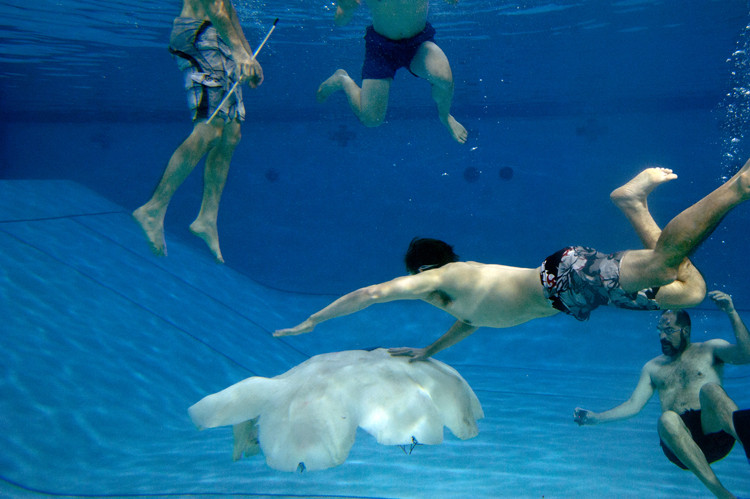
Matt Russiello submerges the RoboJelly. Remember the Medusoid, that creepy robot jellyfish creature that debuted in July of 2012? Well, it seems that Virginia Tech was working on their own, with help from the military. Yes, whereas the medusoid was a project in organic-synthetic interfacing, a collaborative effort between Harvard University and Caltech researchers, this one is the result of ongoing work by the United States Navy.

After years of working on their own model for a robot jellyfish, they unveiled the fruits of that labor earlier this month. Named Cyro – a contraction of robot and Cyanea capillata (the species name for the lion’s mane jellyfish) – this 170 pound biomimetic machine looks and act like a jellyfish, but is in fact an autonomous robot.

cyro1And much the Medusoid and Robojelly – Cyro’s hand-sized predecessor – this second-generation model utilizes what is called “Bio-Inspired Shape memory Alloy Composites (BISMAC)” in order to mimic the motions of the real thing. This consists of a
layer of smart materials (aka. shape memory alloy) that is soft and shaped in such a way to maximize deformation and propulsion.

Underneath this layer of composite material are a number of actuators (i.e. robotic arms) that control the movements of the Cyro. These in turn are mounted on a central body that contains enough hardware to allow the robot to communicate, gather information, and make decisions. What’s more, the developers envisage a fleet of networked Cyros, conducting surveillance and research and sharing the results with each other.

cyro2And as the video below explains, this robot jellyfish is likely to have numerous applications. These included environmental monitoring, cleaning up oil spills, or conducting military surveillance. Of course, it seems pretty obvious what the primary use of the Cyro is going to be, given that the ONR and the U.S. Naval Undersea Warfare Center are responsible for funding it!

No telling how Human Right Watch will react to this, though. How safe would you feel, knowing that the next time you’re snorkeling, swimming or ocean kayaking that a perfectly innocent looking Man-of-War could be spying on you? Check out the video of the Cyro being tested below:


Sources:
fastcoexist.com, emdl.mse.vt.edu

The KLM “Claim You Place in Space” Winner Is…

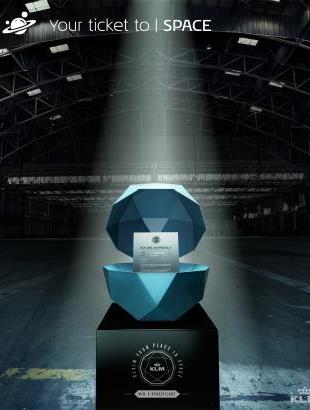
space-trip-klmWe have a winner in the KLM “Claim your place in space” contest. Just two hours ago, the company announced the winner on their webesite and twitter feed. And it turns out the winner is… not me, dangit! But congratulations are in order to Pedro of Brazil, who won the contest by being closest to the ticket. So it seems he will be the one to fly aboard the SXC Lynx Spacecraft when it makes its maiden passenger flight!

For those who are unaware or don’t recall, the KLM giveaway was a social media promotional contest, where a special team deployed an orbital balloon from the Nevada desert and people were able to vote online as to where it would end up. This consisted of selecting a altitude where the balloon would finally burst (up to 40 km above sea level) and how far it would drift from where it took off from.

KLM_ticketWith his estimate of 31.0 km, a drift distance of 79.8 km and a drift direction of 26 degrees, Pedro was closest to where the balloon actually ended up – with an estimate of 14.7 km above sea level. Myself, I bet it would make it as high as 39.0 km, which seemed to place me in with the majority. In fact, judging from the winning ticket, it seemed no one bettered it would make it less than 31 km, which it didn’t make by half. Boy, were we off!

So good luck Pedro as the Lynx takes you into low orbit and achieve zero gravity. I am… so happy for you, you rotten bastard! All I can say is, you better write about it in excruciating detail and take plenty of cool pics, because I plan to write about it!


Source: space.klm.com

The Future is Here: Self-Healing Concrete!

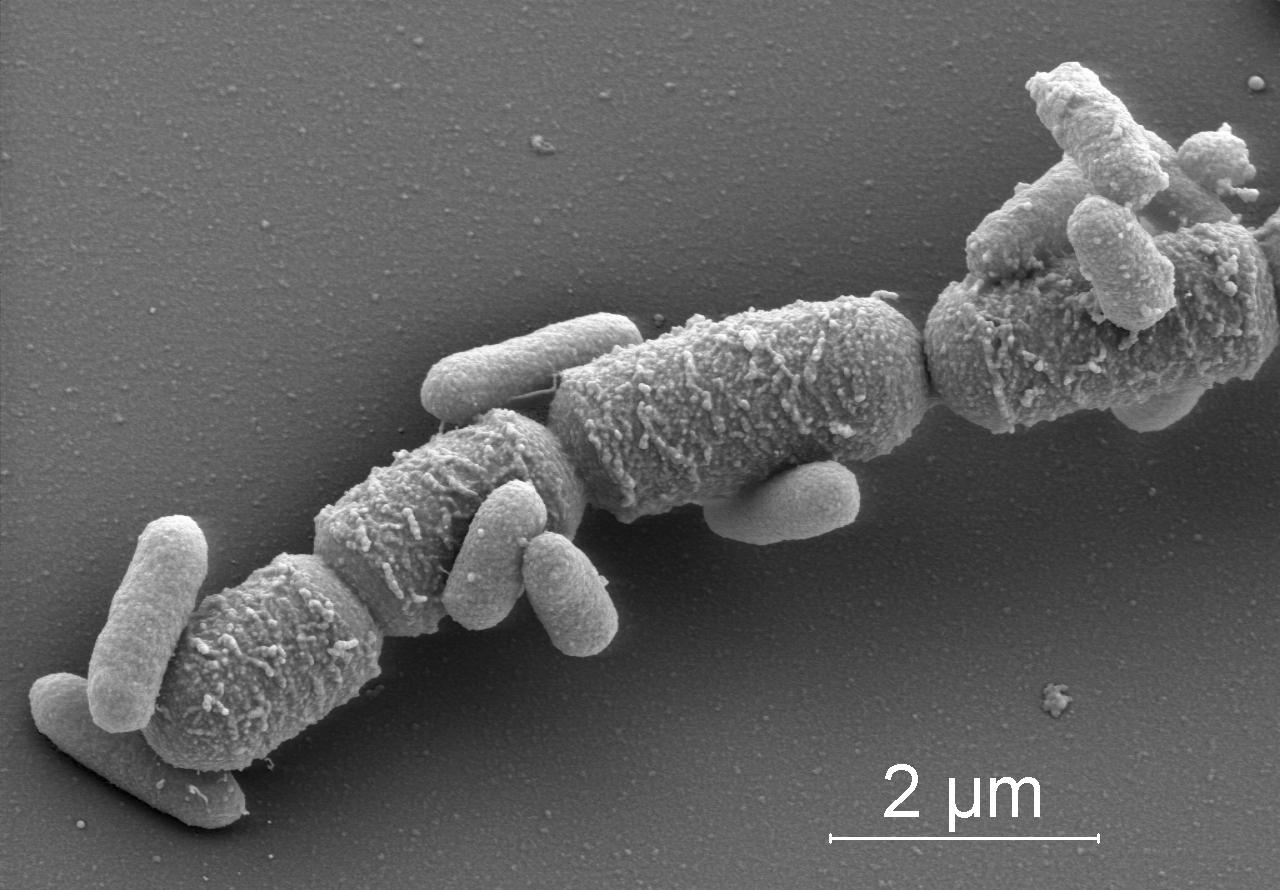
concreteBack in 2009, the US suffered a rather serious embarrassment as the American Society of Civil Engineers gave its national infrastructure a grade ‘D’. To make matters worse, they claimed that getting that grade up to a ‘B’ standard would require roughly $2.2 trillion worth of investment. So, any technology that might make repairing bridges, roads, and buildings easier, and perhaps cheaper, has been welcomed with open arms.

And this might just be a topical solution, not to mention a very impressive sign of things to come. Led by Chan-Moon Chung, a professor of chemistry at Yonsei University in South Korea, researchers have come up with a protective coating for concrete that seals up cracks when exposed to sunlight. Not only would this save billions in infrastructure costs, it would address a central problem civil engineers have always faced.

MODEL5_plus 1..1For starters, concrete is a strong and resilient substance, but a brittle one as well. Tiny fractures appear quite easily over time, and exposure to wind and rain cause these to expand. This new substance addresses that through the polymer microcapsules it contains, which melt when exposed to the sun and fill these in. What’s more, Chung says the agent is relatively inexpensive, and won’t freeze in winter.

And his is not the only proposed solution for a new “smart concrete” system. A team from the Delft University of Technology, in the Netherlands, has developed a living “bio-concrete”, which used a mixture that is impregnated with a bacteria called Bacillus megaterium to produce a crack-filling mineral, called calcite (calcium carbonate). And similar research is being conducted at Northumbria University and the University of Michigan. megaterium

But all of this may take a backseat to Michelle Pelletier of the University of Rhode Island who, along with URI Chemical Engineering Professor Arijit Rose, began work on a self-healing concrete back in 2010. In her specialized concrete matrix, micro-encapsulated sodium silicate is embedded and used as the healing agent, rather than a method that generates silicate.

When cracks form, these silicate capsules rupture and react with calcium hydroxide, which is already present in the concrete. These come together to form a calcium-silica-hydrate gel that heals the cracks and blocks the concrete’s pores, all in the space of about a week. According to Pelletier, this method is more cost-effective than the proposed calcium carbonate solutions and does not require an environmental trigger like sunlight or moisture, just pressure.

smart_concreteThe benefits of these new concepts for “smart concrete” present many benefits. Not only are they likely to save money in maintenance costs for cities everywhere, concrete can be infused with these repairing gels and manufactures cheaply. This puts them in contrast with other proposed “smart-materials”, which offer the possibility of being self-repairing but cost an arm and a leg to produce.

Sources: fastcoexist.com, gizmag.com, pubs.acs.org


The Boston Manhunt: A Victory for Technology?

boston-marathon-bombing-suspects-2013It was announced yesterday that after an intense manhunt, a prolonged shootout, and the death of an MIT police officer, that the second and final suspect in the Boston bombing was finally captured. Identified as Tamerlan and Dzhokhar A. Tsarnaev, the eldest brother was killed during the shoot out in Watertown and the latter who was captured while in hiding under an overtunred boat in a nearby residence.

Naturally, there are still many questions about the two brothers when it comes to their motives and whether or not they had any help in the commission of this crime. But in the meantime, one can’t help but acknowledge the swiftness with which the suspects were identified and the case resolved. Considering the fact that the police had no leads and no one had come forward to take credit, the fact that the men responsible were captured and killed within four days is nothing short of astounding.

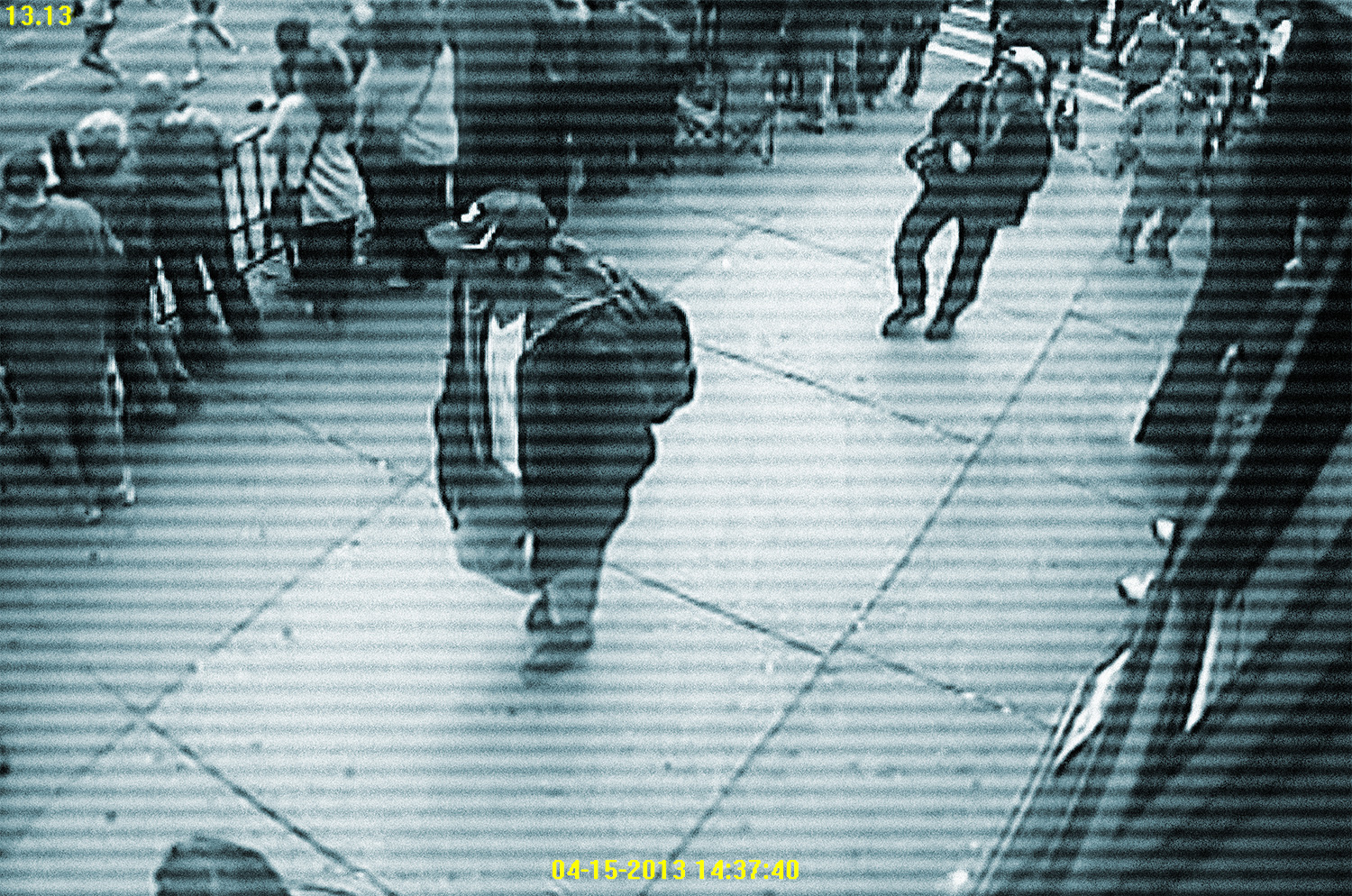
boston-marathon-bombing2So compared to past instances of terrorist acts – where the incident took place in a mass gathering and the perpetrators were mixed in with the crowd – what was different here? For one, the sheer amount of information that was provided by people who were on the scene. From torrents of photography to cell-tower information to locals’ memories, the police, FBI, and other investigators opened their investigation to spectator surveillance in a way like never before.

And in return, they received a mountain of data, which surprisingly proved quite helpful. Between the images submitted to the police from those who took pictures and video with their smartphones, PDAs and video cameras, and tips provided via Twitter and other social media, the police were quickly able to determine who the likely suspects were and how the bombing took place. After making their findings public, the suspects then fled, and committed the monumentally stupid mistake of drawing attention to themselves.

boston_bombing_manhuntAll this represented a modern twist on the age-old policy where law enforcement agencies consider the public’s eyes and ears as the crucial investigative asset. Just like with all cases, authorities opened their inquiry to account for what people saw and heard. The only real difference was that this time around, the Internet rapidly compressed the time it took for tips to arrive and get analyzed.

Mike Rolince, a retired FBI special agent who set up Boston’s first Joint Terrorism Task Force, recalls a time in the 90’s when the FBI was much more reticent about accepting information from the public and local police:

If law enforcement didn’t share any information — [as with bombers] Terry Nichols, Ted Kaczynski — if your intel is shared with no one, that is the consummate investigative challenge.

However, he acknowledges that things have since changed:

The great advantage here is the number of cameras out there. Without the cameras, I don’t know where we are.

boston-marathon-bombing-watertownBut of course, those cameras went way beyond the surveillance cameras that were in place downtown. They included every mobile camera in the hands of every person who happened to bring one. All of the information thus provided allowed the FBI and local police to turn a crime scene trampled by thousands and no leads into a solid case against two suspects and an active manhunt that led to their death and capture in four days time.

This was a victory for not only modern technology but the very democratic powers it is making possible. Much like crowdsourcing, crowdfunding, DIY research and biohacking, public surveillance is something which could very well turn the tables on terrorism. It could also go a long way to undermining fears about a surveillance-based Big Brother state, ushering in instead an era of public-government cooperation that provides for the common good.

Might sound a bit utopian, but it is a first and represents a big victory for all those who were fighting on the side of good in the midst of a heinous act of evil.

Source: Wired.com