Ending Cancer: “Canary” and Microscopic Velcro

cancer_cellEnding terminal illness is one of the hallmarks of the 21st century, with advances being made all the time. In recent years, efforts have been particularly focused on findings treatments and cures for the two greatest plagues of the past 100 years – HIV and cancer. But whereas HIV is one of the most infectious diseases to ever be observed, cancer is by far the greater killer. In 2008 alone, approximately 12.7 million cancers were diagnosed (excluding non-invasive cancers) and 7.6 million people died of cancer worldwide.

Little wonder then why so much time and energy is dedicated to ending it; and in recent years, a number of these initiatives have begun to bear fruit. One such initiative comes from the Mayo Clinic, where researchers claim they have developed a new type of software that can help classify cancerous lung nodules noninvasively, thus saving lives and health care costs.

lung-cancer-treatmentIt’s called Computer-aided Nodule Assessment and Risk Yield, or Canary, and a pilot study of the software recently appeared in the April issue of the Journal of Thoracic Oncology. According to the article, Canary uses data from high-resolution CT images of a common type of cancerous nodule in the lung and then matches them, pixel for pixel, to one of nine unique radiological exemplars. In this way, the software is able to make detailed comparisons and then determine whether or not the scans indicate the presence of cancer.

In the pilot study, Canary was able to classify lesions as either aggressive or indolent with high sensitivity, as compared to microscopic analyses of the lesions after being surgically removed and analyzed by lung pathologists. More importantly, it was able to do so without the need for internal surgery to allow a doctor to make a visual examination. This not only ensures that a patient could receive and early (and accurate) diagnosis from a simple CT scan, but also saves a great deal of money by making surgery unnecessary.

velcroAs they say, early detection is key. But where preventative medicine fails, effective treatments need to be available. And that’s where a new invention, inspired by Velcro comes into play. Created by researchers at UCLA, the process is essentially a refined method of capturing and analyzing rogue cancer cells using a Velcro-like technology that works on the nanoscale. It’s called NanoVelcro, and it can detect, isolate, and analyze single cancer cells from a patient’s blood.

Researchers have long recognized that circulating tumor cells play an important role in spreading cancer to other parts of the body. When the cells can be analyzed and identified early, they can offer clues to how the disease may progress in an individual patient, and how to best tailor a personalized cancer treatment. The UCLA team developed the NanoVelcro chip (see above) to do just that, trap individual cancer cells for analysis so that early, non-invasive diagnosis can take place.

NanoVelcro-deviceThe treatment begins with a patient’s blood being pumped in through the NanoVelcro Chip, where tiny hairs protruding from the cancer cells stick to the nanofiber structures on the device’s surface. Then, the scientists selectively cut out the cancer cells using laser microdissection and subject the isolated and purified cancer cells to single cell sequencing. This last step reveals mutations in the genetic material of the cells and may help doctors personalize therapies to the patient’s unique form of cancer.

The UCLA researchers say this technology may function as a liquid biopsy. Instead of removing tissue samples through a needle inserted into a solid tumor, the cancer cells can be analyzed directly from the blood stream, making analysis quicker and easier. They claim this is especially important in cancers like prostate, where biopsies are extremely difficult because the disease often spreads to bone, where the availability of the tissue is low. In addition, the technology lets doctors look at free-floating cancer cells earlier than they’d have access to a biopsy site.

Already, the chip is being tested in prostate cancer, according to research published in the journal Advanced Materials in late March. The process is also being tested by Swiss researchers to remove heavy metals from water, using nanomaterials to cling to and remove impurities like mercury and heavy metals. So in addition to assisting in the war on cancer, this new technology showcases the possibilities of nantechnology and the progress being made in that field.

Sources: news.cnet.com, fastcoexist.com

News From Space: Enceladus, the Jet-Powered Moon

enceladusThe Cassini Space Probe is at it again, providing the people of Earth with rare glimpses of Saturn and its moons. And with this latest picturesque capture, revealed by NASA, the ESA and ASI back in April, we got to see the moon of Enceladus as it sprayed icy vapor off into space. For some time, scientists have known about the large collection of geysers located at the moon’s south pole. But thanks to Cassini, this was the first time that it was caught (beautifully) on film.

First discovered by Cassini in 2005, scientists have been trying to learn more about how these plumes of water behave, what they are made of and – most importantly – where they are coming from. The working theory is that Enceladus has a liquid subsurface ocean, and pressure from the rock and ice layers above combined with heat from within force the water up through surface cracks near the moon’s south pole.

Saturn_with_aurorasWhen this water reaches the surface it instantly freezes, sending plumes of water vapor, icy particles, and organic compounds hundreds of kilometers out into space. Cassini has flown through the spray several times now, and instruments have detected that aside from water and organic material, there is salt in the icy particles.

Facing_Enceladus_largeTests run on samples that were captured indicate that the salinity is the same as that of Earth’s oceans. These findings, combined with the presence of organic compounds, indicate that Enceladus may be one of the best candidates in the Solar System for finding life.

Much like Europa, the life would be contained within the planet’s outer crust. But as we all know, life comes in many, many forms. Not all of it needs to be surface-dweling in nature, and an atmosphere need not exist either. Granted, these are essential for life to thrive, but not necessarily exist.

What’s more, this could come in handy if manned missions to Cassini ever do take place. Water is key to making hydrogen fuel, and could come in might handy if ever people set down and feel the need to terraform the place. Of course, they might want to make sure they aren’t depriving subterranean organisms of their livelihood first. Don’t want another Avatar situation on our hands!

Source: universetoday.com

Eyes on the Sky: The X-51A Goes Hypersonic!

x-51aWhen it comes to high-tech flight, hypersonic is the undisputed way of the future. Not only is it the next logical step in the long chain from the Wright Brothers to supersonic flight (which humanity achieved in 1947), it is sort of a prerequisite in order for commercial space travel to take place. And on May 1st, the US Air Force tested its latest concept vehicle for going hypersonic, known as the X-51A Waverider.

The test took place at Edwards Air Force Base in California, when a B-52H Stratofortress carried the scramjet to a height of 15,000 meters (50,000 feet) and then released it. A solid rocket booster then kicked in and brought the X-51A to a speed of Mach 4.8 in just 26 seconds. The solid rocket booster then separated and the X-51A’s air-breathing supersonic combustion ramjet – or scramjet – engine pushed it up the rest of the way to Mach 5.1 and up to an altitude of 18,300 meters (60,000 feet).

x-51a_specsFour minutes later, its fuel supply was spent and the scramjet nosed down, finally crashing (as planned) into the Pacific Ocean. The previous air speed record for manned flight is just under Mach 3, making this a rather large leap forward. In addition, in just over six minutes, the scramjet traveled over 425 kilometers (264 miles), making it the longest air-breathing hypersonic flight ever.

In addition to being record-breaking, it also tested out an important concept which may soon get more of us here on Earth into orbit. Considering the cost of sending a single rocket into space, concepts for a reusable space craft that could break the Earth’s gravitational pull, fly itself into high-earth orbit, and then land again have been under review for some time. All that was missing was an engine that could accomplish the kind’s of speeds needed without relying on criminally-fuel efficient rockets.

skylon-orbit-reaction-enginesNeedless to say, this is a difficult task, since maintaining airspeed above mach 2 is a serious challenge. This is due to the fact that at these speeds, its very difficult for jet engines to continue to intake air. What makes the X-51A special is the fact that it has no moving parts. Whereas scramjets of the past used hydrogen fuel which would be injected into a combustion chamber and mixed with incoming air, the X-51A differs in that it uses a hydrocarbon fuel as sort of a pilot light, effectively“lighting a match in a hurricane.”

This apparently makes more sense logistically, and therefore could allow the technology to be applied on a broader scale. As it stands, this test involved the last of four X-51As to be constructed, the previous tests having taken place between 2004 and 2012. No plans exist for the construction of future X-51A vehicles, perhaps because the program cost a staggering $300 million. Nevertheless, Air Force officials indicated that the Waverider has left a valuable legacy.

And certainly think so! Not only has the Waverider established a new air speed record, and set a hypersonic distance record, it has also taken an important step as far as the next generation of space flight is concerned. In time, and perhaps in conjunction with rocket boosters, we could be seeing commercial spacecraft capable of breaking the atmosphere very soon.

Think of it, aerospace flights making deliveries to the ISS, and perhaps even beyond… Also, check out the video of the X-51A below making it’s historic, record-breaking flight:


Sources:
singularityhub.com, space.com

Powered By The Sun: Visualizing Swanson’s Law

solar_power1For decades, solar power has been dogged by two undeniable problems that have prevented it from replacing fossil fuels as our primary means of energy. The first has to do the cost of producing and installing solar cells, which until recently remained punitively. The second has to do with efficiency, in that conventional photovoltaic cells remained inefficient as far as most cost per watt analyses went. But thanks to a series of developments, solar power has been beating the odds on both fronts and coming down in price.

However, to most people, it was unclear exactly how far it had come down in price. And thanks to a story recently published in The Economist, which comes complete with a helpful infographic, we are now able to see firsthand the progress that’s been made. To call it astounding would be an understatement; and for the keen observer, a certain pattern is certainly discernible.

PPTMooresLawaiIt’s known as the “Swanson Effect” (or Swanson’s Law), a theory that suggests that the cost of the photovoltaic cells needed to generate solar power falls by 20% with each doubling of global manufacturing capacity. Named after Richard Swanson, the founder of the major American solar-cell manufacturer named SunPower, this law is basically an imitation of Moore’s Law, which states that every 18 months or so, the size of transistors (and also their cost) halves.

What this means, in effect, is that in solar-rich areas of the world, solar power can now compete with gas and coal without the need for clean energy subsidies. As it stands, solar energy still accounts for only  a quarter of a percent of the planet’s electricity needs. But when you consider that this represents a 86% increase over last year and prices shall continue to drop, you begin to see a very trend in the making.

What this really means is that within a few decades time, alternative energy won’t be so alternative anymore. Alongside such growth made in wind power, tidal harnesses, and piezoelectric bacterias and kinetic energy generators, fossil fuels, natural gas and coal will soon be the “alternatives” to cheap, abundant and renewable energy. Combined with advances being made in carbon capture and electric/hydrogen fuel cell technology, perhaps all will arrive in time to stave off environmental collapse!

Check out the infographic below and let the good news of the “Swanson Effect” inspire you!:

swanson_effectSource: theeconomist.com

New Podcast Series: Space Stations!

star_trek_space_stationMy good buddy, Fraser Cain, a co-inventor and publisher over at Universe Today, has just unveiled a new podcast series which I strongly recommend to anyone who loves space, science, and fiction pertaining to them. Those who follow this site may recognize the name, as Universe Today just happens to be my go-to source for all things space related. From the Curiosity Rover and the Cassini Probe to the mysteries of life on Earth and the universe at large, these guys can be trusted to be in the know!

I even had the honor of writing articles to them for about a year and a half, and I credit this experience with honing my ability to take hard science, gain a basic understanding of it, and then convey it to a general audience in an understandable fashion. Yes, before I worked for these guys, I was truly a geek-in-waiting, someone who didn’t know their quasars from their quarks. Now… well, I’m a little better!

In any case, the podcast series is called Space Stations, and comprises four episodes that take a look at man-made structures in space, beginning with Salyut and Skylab – the earliest Soviet and American attempts to put a manned station into orbit – and then moving onto Russia’s Mir space station, the International Space Station (ISS), and then taking a look at what the future holds for humans living and working in space.

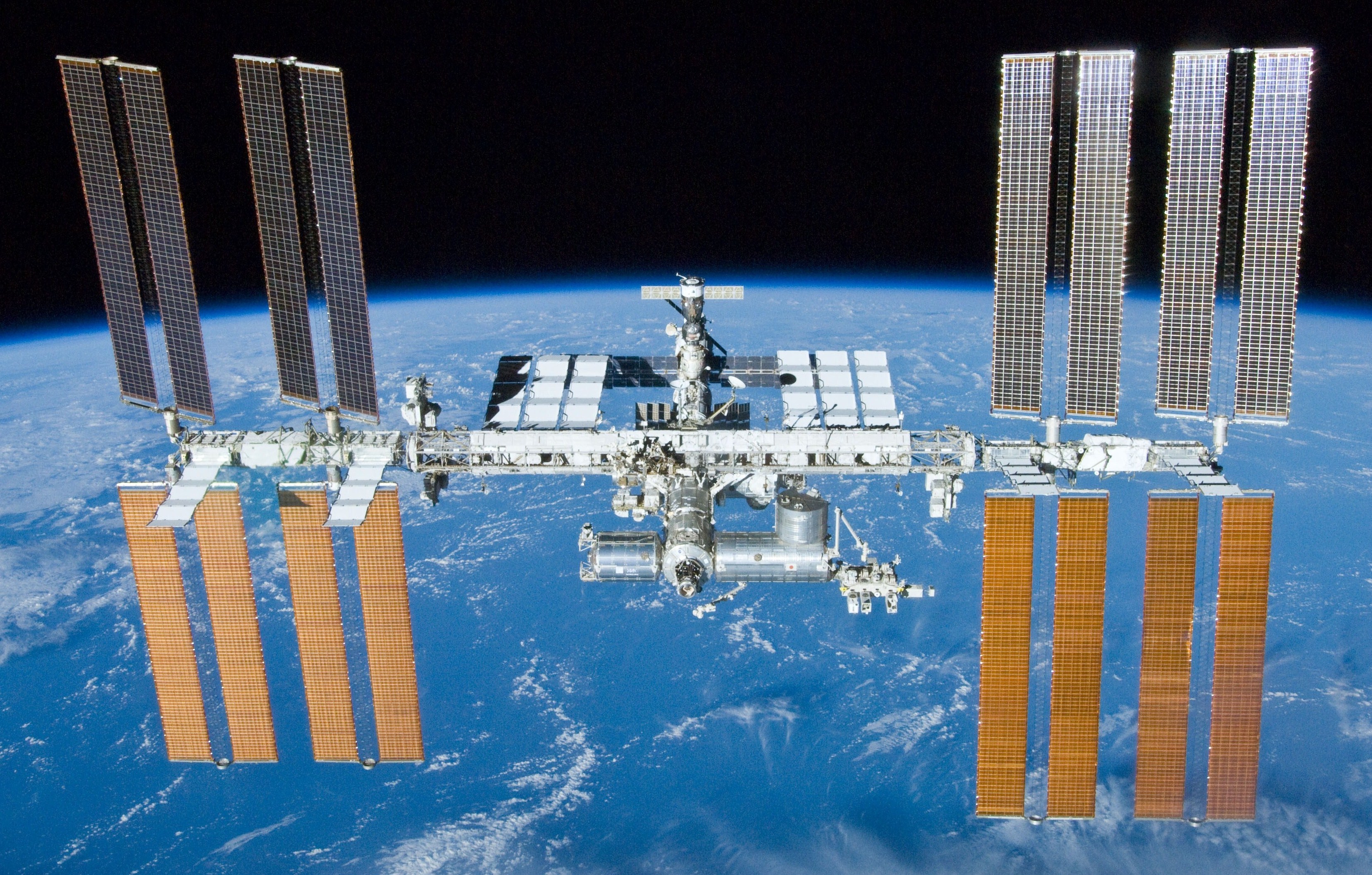
ISSYou can check out the series at their website here, or just head on over to Astronomy Cast, the site for Universe Today‘s podcasts, and start listening willy-nilly. Me, my favorite is the fourth and final episode which takes a look at the future of space stations, and anyone claiming to know the first thing about me will not wonder why! I mean, c’mon, future of space, what’s not to love about that???

And of course, you can check out their voluminous archives, which contain podcasts on subjects ranging from Aliens to Physics, Astronomy to Planetary Science, and the history of space flight to current missions and the future of space exploration. I can promise you that if you’re the kind of person who finds the science jokes in The Big Bang Theory hilarious, you will feel like a kid in a candy store!

Trivia Question: Where does the name Universe Today come from? If you answer this question (no Googling!) you will have my enduring respect forever!

Sources: universetoday.com, astronomycast.com

Barely Political’s Star Trek Parody

Star-Trek-universeHere we have the hilarious satire group that produces musical parodies under the name “The Key of Awesome”, back for more with a parody of Star Trek. Most likely made in honor of the honor of the successful relaunch of the franchise, here we see Spock and a lady Vulcan subordinate come together for Pon Farr. And of course, its all done to the tune of a particular slow jam, with hilarious results!

I have yet to see Into Darkness, but I’m lobbying hard to accomplish this that weekend. How can I be expected to do reviews and keep up with the latest in pop culture and science fiction if I don’t occasionally get out to see a vastly overpriced relaunch??? Enjoy the video:

Game of Thrones – Season 3 Episode 9

Game-of-Thrones-Season-3-game-of-thrones-33779424-1600-1200Wow… This week’s episode of Game of Thrones certainly made the waves and shocked the pants off of numerous fans. One episode shy of the season finale, and the episode writers decided to reveal one of the bloodiest scenes from the series. All I can say is wow! My condolences to the fans who didn’t see this one coming. I wish I could have warned you, but you know how spoilers are! And I thought it best if you saw it for yourself.

Lord know I too was wondering how they would go about presenting the “Red Wedding”, a climactic part of the third book. And wouldn’t you know it, it just happened to be the bloodiest scene to date for the miniseries. Fitting, seeing as how its description was nothing short of brutal and shocking in the original novel. And much like with Ned Stark’s death, it left fans aghast and traumatized…

But of course, Robb’s death wasn’t the only highlight of the episode, and there is still plenty more bloody goodness to be had. So for those who are having second thoughts about watching after this episodes horrific twist for the Starks, I can only insist that you stick with it. Bad people will die too before its all over…

The Rains of Castamere:

got3_rainsThe episode opens with Robb and his bannerman arrived at the Twins to meet with Lord Walder Frey. After trotting out his daughters to recieve Robb’s apology, he inspects Talisa Maegyr and makes some extremely vulgar comments. Meanwhile, Edmure Tully is sure to keep a close eye on the Frey girls, as he knows that he is betrothed to one of them. However, their initial meet and greet ends before he can, and the date for the wedding set!

On the night of, as Robb’s camp is liquored and fed outside, Frey introduces his daughter to Edmure, who is pleasantly surprised. They say their vows, are joined in the sight of the Seven, and the festivities commence. Dinner is served, the wine flows in abundance, and the band plays merrily while everyone dances and carries on. A toast is made by Walder, and the bedding ceremony is called for!

got3_rains5Over in Yunkai, Daenerys’ and her captains, which now includes Daario Naharis, prepare to invade the city. He suggests using a rear gate that is frequented by his men when seeking ladies of the night. Volunteering to lead Grey Worm and Ser Mormont inside, he plots to open the gates from within and let the Unsullied inside to sack the city before its defenders realize they are under attack.

Moving at night, Daario is true to his word and enters the back gate, kills the guards, and leads Grey Worm and Selmy inside. They are attacked by several more guards once inside, and hope seems lost… Many hours later, Selmy, Grey Worm and Daario return to Daenerys, claiming victory and presenting her with the Harpy flag of the city. Yunkai is now hers to rule and the slaves are set free!

got3_rains2Not far away, John and the Wildling party led by Tormund come upon a horse-breeders farm. Finding one man there alone, they plot to kill the man and take the horses, but John insists they leave the old man alive. He is ignored, but managed to alert the man’s horses before they get the drop on him, and the old man escapes. His other horses are taken and several of the Wildlings go after him.

Just south of the Wall, Bran and his companions find their way to “The Gift”. land that was entrusted to the Night’s Watch by Brandon the Builder. Finding an abandoned windmill, they decide to take shelter for the night and wait out a storm. They notice the horse breeder riding by, and have the perfect spot to watch as he is overtaken by the Wildlings. Hodor’s yelling begins to give them away to the Wildling party. He is stopped only when Bran uses his “skinchanging” technique to invade his skin and take command of him.

got3_rains1When John and the rest catch up with them, John is told to kill the old man as a test of loyalty. John is unable, and Ygritte steps in and kills him with an arrow. Tormund orders John dead and begins fighting with them, and is saved by the intervention of Bran and Rickon’s direwolves, whom Bran managed to take control of with his skills again. However, Orell manages to get his hawk to deal some gashes on John, and he rides away injured, leaving Ygritte behind.

In the windmill, Bran says his goodbyes to Osha and Rickon. After saying yet again that she won’t go beyond the Wall, Bran tells her that she need not come. And Rickon he insists needs to stay behind, due to the dangers they are likely to face. He leaves them then, ordering them to head to House Umber’s holdings. Since they are the bannermen of the Starks, he knows they will keep him safe.

got3_rains6In the Riverlands, Arya and Ser Sandor “The Hound” learn of the wedding as they get closer to the Twins. They arrive just in time to find that the outside of the castle grounds is littered with tents and men, Robb’s entire host which has been billeted there for the evening and is raucously partying. Inside, Edmure and his new wife are taken from the hall to be bedded, and things quickly turn bad!

The band, which until now was providing joyous music, begins playing “The Rains of Castamere” and the doors are shut. They then produce crossbows and lets loose on Robb and his bannermen.Talisa is stabbed to death in her stomach, killing their unborn child, and Robb is hit by several bolts.

Outside, Sandor comes up to the gate and is refused entrance. Sensing a chance to escape, Arya jumps from Sandor’s cart and tries to flee, making her way to the nearest table with Stark bannermen. However, she comes upon them just in time to see Frey’s men begin killing them and to watch Robb’s direwolf get killed. She is narrowly saved when Sandor, having come back for her, hits her over the head and carries her away…

Catelyn tries to take Walder’s wife hostage, but succumbs to grief when Roose Bolton returns to finish Robb with a stab to the heart. She cuts the wife’s throat, and then has her own cut by one of Frey’s men. The episode ends with her bleeding from the neck and collapsing to the floor, her face stricken with grief…

got3_rains4

Summary:
Like I said… wow. Having read the books, I was somewhat prepared for the event, but that didn’t make it any easier to watch. Not only did they convey the “Red Wedding” in all its horror, they even upped the ante by adding an extra horrorific. In the novels, you see, Talisa was not at the wedding, and was therefore not amongst the victims. Which meant that no one stuck a blade in her belly and murdered her unborn child. That was truly horrible and bloody, and makes me want to see Walder’s head smashed with a rock!

But that would be nothing new. Both the Freys and the Boltons are scum and deserve to die in terrible ways. Guess we’ll all just to have to wait to see that one take place. And in the meantime, like I said, there’s several more not-so-horrific things which need to happen. And some comments I want to make on this episode…

Aside from the bloody resolution to the Stark’s campaign to avenge Lord Eddard Stark and establish a “King in the North” (which I still think sucked!), there was Robb’s journey north and John’s all-important escape from the Wildlings. After being lost to his brothers for so long, he is now free to return to them, and knows the Wildlings plan of attack. And said attack is coming soon!

In addition, Daenery’s private little empire now accounts for Yunkai and her power is growing. Now, only the port city of Mereen remains, with its vast array of ships and slaves to be freed. And of course, there’s plenty of intrigue still to be had in King’s Landing, where – as is the them for the end of this season – another wedding is about to commence. And believe me when I tell you, it too is going to have its share of surprises!

And this week, I’ve decided not to be so nitpicky. If there’s one thing I’ve noticed, its that the show has a way of taking changes and steering them back into the fold. For example, Roose’s Bolton earlier betrayal of letting Jaime go now makes sense in the context of his betrayal at the wedding, which was true to the novel. In addition, having Talisa around for much of the show now, and having her at the wedding, made for a much more emotionally-involved spectacle when she died.

And sure, the part involving Daenerys’ forces infiltrating Yunkai, that too happened differently in the book. You see, in the novel, Selmy had been in disguise prior to this point and his the true identity had just been revealed. At the same time, she learned that Mormont was originally involved in the plot to poison her after she married Drogo. Incensed, she sent both men into the city using the sewers and managed to take it from the inside. Here, they changed that, but I would imagine they’ll steer things back soon enough.

And Catelyn did not take Walder’s wife hostage in the book, but rather his “simple” son, who due to Walder’s cruel and inhumane nature proved to be a lousy hostage. But that mattered little in the face that performance. Her anguish was palatable as her son died and she sliced the poor girl’s throat out of anger and grief, only to then die herself and look almost indifferent about it.

And David Bradley was just so believable as the miserable and loathsome Walder, I almost forgot how much I hated him as he watched everyone die. The only downside was how it overshadowed everything else in this episode, including John Snow abandoning the Wildlings, which included the woman he loves, and who loves him…

But who could expect anything to compare to that bloody, awful wedding? Though heartrending and horrible to behold, I respect the hell out of the actors and writers for how they conveyed it. The subtle addition of “The Rains of Castamere”, where no one said that it was playing, they merely trusted the audience to make the connection, was quite brilliant. And we already know from last episode the significance of this song that tells of a great House falling due to its ambition.

Like I said, there’s plenty more to behold, and its all coming in the season finale. Trust me, traumatized fans. You’ll want to keep watching!

The Future of Cities and Urban Planning

future-city-1With the development of vertical farms, carbon capture technology, clean energy and arcologies, the future of city life and urban planning is likely to be much different than it does today. Using current trends, there are a number of people who are determined to gain some understanding of what that might look like. One such group is Arup, a design and engineering firm that produced a mockup that visualizes what urban environments will look like in 2050.

Based on the world as it is today, certain facts about the future seem relatively certain. For starters, three-quarters of the population will live in cities, or 6.75 billion of the projected 9 billion global total. In addition, everyone will have grown up with the Internet, and its successors, and city residents will have access to less natural resources than they do today, making regeneration and efficiency more of a priority.

Add to this several emerging technologies, and our urban environments are likely to look something like the building mockup below. As you can see, it has its own energy systems (“micro-wind,” “solar PV paint,” and “algae facade” for producing biofuels). There is an integrated layer for meat, poultry, fish, and vegetable farming, a “building membrane” that converts CO2 to oxygen, heat recovery surfaces, materials that phase change and repair themselves, integration with the rest of the city, and much more.

future_urban_planning

Most futuristic of all is the fact that the structure is completely modular and designed to be shifted about (by robots, of course). The building has three layer types, with different life-spans. At the bottom is a permanent layer – with a 10 to 20-year lifespan – which includes the “facade and primary fit-out walls, finishes, or on-floor mechanical plant” – and a third layer that can incorporate rapid changes, such as new IT equipment.

As Arup’s Josef Hargrave described the building when unveiling the design:

[A]ble to make informed and calculated decisions based on their surrounding environment… [a] living and breathing [structure] able to support the cities and people of tomorrow.

In short, the building is designed with personal needs in mind, based on information gleamed from a person’s behaviors, stated preferences, and even genetic information.

aircleaning_skyscraper3But what is even more interesting is how these buildings will be constructed. As countless developments are made in the field of robotics, biotechnology and nanotechnology, both the materials used and the processes involved are likely to be radically different. The rigid construction that we are used to is likely to give way to buildings which are far more flexible, adaptive, and – best of all – built by robots, drones, tiny machines and bacteria cultures.

Once again, this change is due mainly to the pressures that are being placed on urban environments, and not just technological advances. As our world becomes even more densely populated, greater proportions of people live in urban environments, and resources become more constrained, the way we build our cities must offer optimum efficiency with minimal impact.

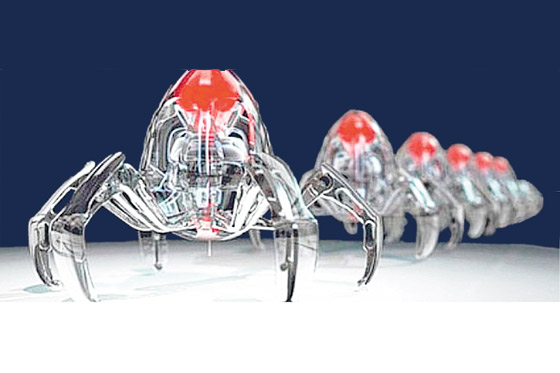
nanomachineryTowards this end, innovations in additive manufacturing, synthetic biology, swarm robotics, and architecture suggest a future scenario when buildings may be designed using libraries of biological templates and constructed with biosynthetic materials able to sense and adapt to their conditions.

What this means is that cities could be grown, or assembled at the atomic level, forming buildings that are either living creatures themselves, or composed of self-replicated machines that can adapt and change as needed. Might sound like science fiction, but countless firms and labs are working towards this very thing every day.

It has already been demonstrated that single cells are capable of being programmed to carry out computational operations, and that DNA strains are capable of being arranged to carry out specialized functions. Given the rapid progress in the field of biotech and biomimetics (technology that imitates biology), a future where the built environment imitates organic life seems just around the corner.

biofabrication For example, at Harvard there is a biotech research outfit known as Robobees that is working on a concept known as “programming group dynamics”. Like corals, beehives, and termite colonies, there’s a scalar effect gained from coordinating large numbers of simple agents to perform complex goals. Towards this end, Robobees has been working towards the creation of robotic insects that exhibit the swarming behaviors of bees.

Mike Rubenstein leads another Harvard lab, known as Kilobot, which is dedicated to creating a “low cost scalable robot system for demonstrating collective behaviors.” His lab, along with the work of researcher’s like Nancy Lynch at MIT, are laying the frameworks for asynchronous distributed networks and multi-agent coordination, aka swarm robotics, that would also be capable of erecting large structures thanks to centralized, hive-mind programming.

nanorobot1

In addition to MIT, Caltech, and various academic research departments, there are also scores of private firms and DIY labs looking to make things happen. For example, the companies Autodesk Research and Organovo recently announced a partnership where they will be combining their resources – modelling the microscopic organic world and building bioprinters – to begin biofabricating everything from drugs to nanomachines.

And then there are outfits like the Columbia Living Architecture Lab, a group that explores ways to integrate biology into architecture. Their recent work investigates bacterial manufacturing, the genetic modification of bacteria to create durable materials. Envisioning a future where bacterial colonies are designed to print novel materials at scale, they see buildings wrapped in seamless, responsive, bio-electronic envelopes.

ESA_moonbaseAnd let’s not forget 3D printing, a possibility which is being explored by NASA and the European Space Agency as the means to create a settlement on the Moon. In the case of the ESA, they have partnered with roboticist Enrico Dini, who created a 3-D printer large enough to print houses from sand. Using his concept, the ESA hopes to do the same thing using regolith – aka. moon dust – to build structures on Earth’s only satellite.

All of these projects are brewing in university and corporate labs, but it’s likely that there are far more of them sprouting in DIY labs and skunkworks all across the globe. And in the end, each of them is dedicated to the efficiency of natural systems, and their realization through biomimetic technology. And given that the future is likely to be characterized by resources shortages, environmental degradation and the need for security, it is likely to assume that all of these areas of study are likely to produce some very interesting scenarios.

As I’ve said many times before, the future is likely to be a very interesting place, thanks to the convergence of both Climate Change and technological change. With so many advances promising a future of post-scarcity, post-mortality, a means of production and a level of control over our environment which is nothing short of mind-boggling – and a history of environmental degradation and resource depletion that promises shortages, scarcity, and some frightening prospects – our living spaces are likely to change drastically.

The 21st century is going to be a very interesting time, people. Let’s just hope we make it out alive!

Sources: fastcoexist.com, (2)

Judgement Day Update: The Robotic Bartender and DARPA’s Latest Hand

robot_bartenderRobots have come a long way in recent years, haven’t they? From their humble beginnings, servicing human beings with menial tasks and replacing humans on the assembly line, they now appear poised to take over other, more complex tasks as well. Between private companies and DARPA-developed concepts, it seems like just a matter of time before a fully-functioning machine is capable of performing all our work for us.

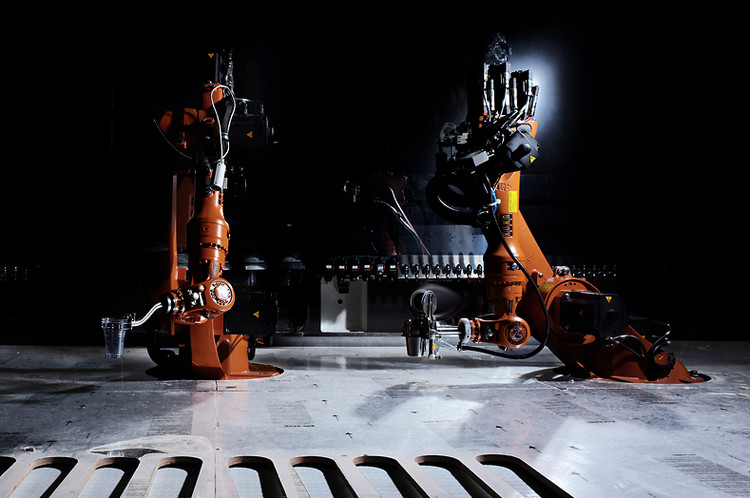
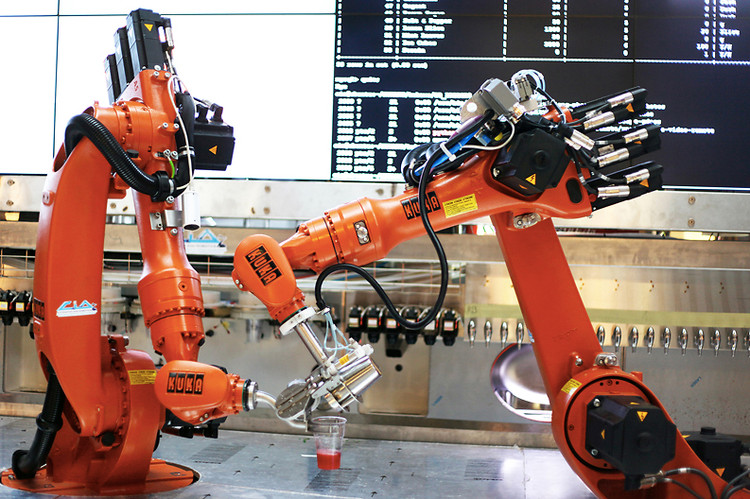
One such task-mastering robot was featured at the Milan Design Week this year, an event where fashion tales center stage. It’s known as the Makr Shakr, a set of robotic arms that are capable of mixing drinks, slicing fruit, and capable of making millions of different recipes. The result of a collaborative effort between MIT SENSEable City Lab and Carlo Ratti Associati, an Italian architecture firm, this robot is apparently able to match wits with any human bartender.

robot_bartender1While at the Milan Design Week, the three robotic arms put on quite the show, demonstrating their abilities to a crowd of wowed spectators. According to the website, this technology is not just a bar aid, but part of a larger movement in robotics:

Makr Shakr aims to show the ‘Third Industrial Revolution’ paradigm through the simple process design-make-enjoy, and in just the time needed to prepare a new cocktail.

In a press release, the company described the process. It begins with the user downloading an app to create their order to the smartphone as well as peruse the recipes that other users have come up with. They then communicate the order to the Makr Shakr and “[the] cocktail is then crafted by three robotic arms, whose movements reproduce every action of a barman–from the shaking of a Martini to the muddling of a Mojito, and even the thin slicing of a lemon garnish.”

robot_bartender2Inspired by the ballerina Roberto Bolle, whose “movements were filmed and used as input for the programming of the Makr Shakr robots”, the arms appear most graceful when they do their work. In addition, the design system monitors exactly how much booze each patron is consuming, which, in theory, could let the robot-bartenders know when it’s time to cut off designers who have thrown back a few too many.

Check out the video of the Makr Shakr in action:


Another major breakthrough comes, yet again, from DARPA. For years now, they have been working with numerous companies and design and research firms in order to create truly ambulatory and dextrous robot limbs. In some cases, as with the Legged Squad Support System (LS3), this involves creating a machine that can carry supplies and keep up with troops. In others, this involves the creation of robotic hands and limbs to help wounded veterans recover and lead normal lives again.

And you may recall earlier this year when DARPA unveiled a cheap design for a robotic hand that was able to use tools and perform complex tasks (like changing a tire). More recently, it showcased a design for a three-fingered robot, designed in conjunction with the firm iRobot – the makers of the robotic 3D printer – and with support from Harvard and Yale, that is capable of unlocking and opening doors. Kind of scary really…

DARPA_robot

The arm is the latest to come out of the Autonomous Robotic Manipulation (ARM) program, a program designed to create robots that are no longer expensive, cumbersome, and dependent on human operators. Using a Kinect to zero in on the object’s location before moving in to grab the item, the arm is capable of picking up thin objects lying flat, like a laminated card or key. In addition, the hand’s three-finger configuration is versatile, strong, and therefore capable of handling objects of varying size and complexity.

When put to the test (as shown in the video below), the hand was able to pick up a metal key, insert it into a lock, and open a door without any assistance. Naturally, a human operator is still required at this stage, but the use of a Kinect sensor to identify objects shows a degree of autonomous capability, and the software behind its programming is still in the early development phase.

And while the hand isn’t exactly cheap by everyday standards, the production cost has been dramatically reduced. Hands fabricated in batches of 1,000 or more can be produced for $3,000 per unit, which is substantially less than the current cost of $50,000 per unit for similar technology. And as usual, DARPA has its eye on future development, creating hands that would be used in hazardous situations – such as diffusing IEDs on the battlefield – as well as civilian and post-combat applications (i.e. prosthetics).

And of course, there’s a video for the ARM in action as well. Check it out, and then decide for yourself if you need to be scared yet:


Sources:
fastcoexist.com, singularityhub.com
, makrshakr.com

The Arkyd 100: Crowdfunding Space Exploraiton

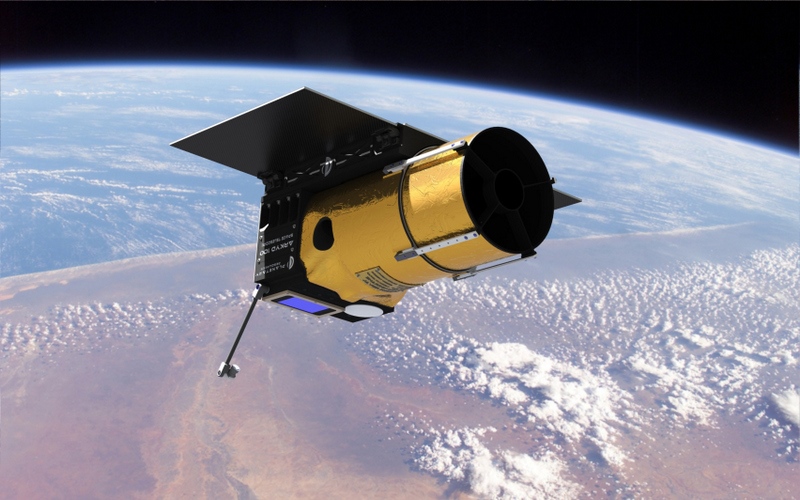
ARKYD-in-SpacePlanetary Resources made quite the impression last year when they announced their plans to begin prospecting near-Earth asteroids with in the intention of mining them in the near future. Alongside such companies as SpaceX and Golden Spike, they are part of a constellations of private interests looking to establish commercial space travel and tourism. But their latest proposal goes a step further, bringing crowdfunding and the realm of space exploration together.

That’s the idea behind a Kickstarter campaign that the company began to raise money for a crowdfunded space telescope. Known as the Arkyd 100, the company claims that this new telescope will provide unprecedented public access to space and place the most advanced exploration technology into the hands of students, scientists and a new generation of citizen explorers.

asteroid_miningTo make their campaign successful, they need to raise $1 million in Kickstarter pledges by the end of June 2013. Once the telescope is up and running, it will allow them to better map the asteroid belt, thus assisting them in finding the rocks they want to mine for precious metals and trace elements. And with public financial backers making it happen, anyone pledging money will be able to own a piece of the prospector!

During a webcast on May 28th to announce the Kickstarter campaign, Chris Lewicki, President and Chief Engineer for Planetary Resources, gave a rundown on the details of the telescope. And interestingly enough, the Planetary Resources’ technical team that designed it also worked on every recent U.S. Mars lander and rover. So if you do choose to invest, you will do so with the knowledge that the same people who helped build the Opportunity and Curiosity rovers are behind this project. If that doesn’t inspire investor confidence, I don’t know what will!

ARKYD-Space-SelfieA wide array of scientists, space enthusiasts and even Bill Nye the Science Guy have voiced their support for Planetary Resources’ new public space telescope. And those who invest will have the chance of recouping certain rewards, depending on how much they choose to pledge. Those pledging the minimum donation of $25 will receive the “Your Face in Space” benefit, where you will have you picture placed on the Arkyd and receive a picture of said photo the telescope with Earth in the background. Higher pledges will provide access to the telescope for students and researchers worldwide.

After less than 2 hours into their campaign, Planetary Resources had raised over $100,000. And as of this article’s writing, just one day shy of a week, the campaign has reached $710,945 of their $1 million goal, and they still have 27 days left. I guess people want a piece of this project. And who can blame them, since it is a scientific and historic first!

Check out the promotional video for the Arkyd and Planetary Resources below. To make a donation or get information about the Kickstarter campaign, visit the campaign page here.


Source:
universetoday.com