How to Ninja Proof a House

ninjahomeinvasionFrom the good people who brought you “How to zombie-proof a house” comes the latest in sensible real-estate planning. This time round, it is how you go about protecting your home from ninja intrusion. Using a full-page infographic with multiple panels, which you can check out here, all the countermeasures you will need to know are listed.

Combining ancient know-how with modern technology, these counter-measures include:

  • Squeaky floors
  • Security cameras
  • Fire suppression systems
  • Maze-like hallways
  • Powerful ventilation
  • High-tech locks
  • Facial recognition software
  • Smart floors
  • Gravel Yards
  • Steel walls and ceilings
  • Tall and curved outer walls

ninja.jpgWhat impresses me about all of this, aside from the time and thought dedicated to it, is how well it merges knowledge from feudal Japan with modern home defense systems. For example, feudal barons who feared assassination during Japan’s Sengoku (or “Warring States”) Period would have rooms in their fortress built with long wooden panels that would ensure they would squeak when stepped on. These were often combined with trap doors to ensure that anyone skilled enough to slip inside would find themselves in a jam quickly!

Gravel yards placed at intervals throughout their estates and round, vertical walls were also popular tricks to ensure easier detection and to give ninjas a harder time of getting inside. And of course, narrow, winding hallways also ensured that a single or group of infiltrators would have a harder time finding their way and could be ambushed when they came around a corner.

Cyber Ninja Artart, alphacoders.com

Combining all this with the latest in alarm systems, biometric locks, facial recognitions software, security cameras, environmental controls and fire sprinklers, you’ve got a pretty handy arsenal with which to fight off skilled assassins and masters of stealth. And  let’s face it, modern ninjas have no doubt updated their repertoire to take advantage of the latest in tech as well, which would most likely include night vision, thermal imaging, flashbangs, airgun grappling hooks, and possibly even knock-out gas.

Were ninjas to become a credible threat to our safety and well-being, this is undoubtedly the kind of database we would want to consult. And as we all know, ninjas are cool! When zombies go the way of vampires and witches, aka. become somewhat of a tired cliche, I’m sure these guys will be in line to become the next big craze!

Ninja Games

The Hillywood Show: Twilight Breaking Dawn Part 2

hillywood showPeople may remember these folks from their musical parody of The Hobbit, where Gandalf and the drawves show up at Bilbo’s house to the tune of “Shots” by LMFAO. Well they’re back, this time with a much needed spoof of the latest Twilight debacle, set to the tune of Gangnam Style.

I think you’ll agree, the production values and costume work in this spoof are downright marvelous! I’m not sure who they have playing Edward here, but the words Dead Ringer came to mind a few times! And Hillary Hindi, I swear, just BECOMES Bella, only she has a much greater range and can do more than just stand there and look sardonically unimpressed!

And let’s not forget the dance choreography. I’m sure the Gangnam people demanded royalties, given the close approximation between this spoof and their weird-ass video.

But of course, I would be remiss if I didn’t point out that the ever-talented sisters, Hilly & Hannah Hindi, have chosen to shed the dwarf and hobbit garb in favor of vampire outfits and colored contacts in this video. Much more becoming than all that facial and foot hair, I tell ya 😉

Enjoy the show…

The Future is Here: The (Super) Supercapacitor

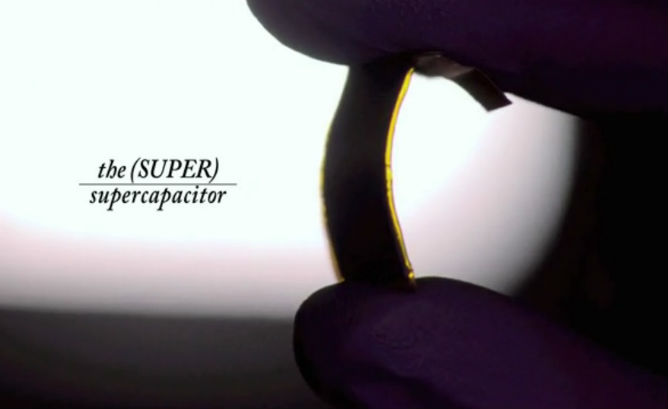
supercapacitor_movieLast year, researchers at UCLA made a fantastic, albeit accidental, when a team of scientists led by chemist Richard Kaner devised an efficient method for producing high-quality sheets of graphene. This supermaterial, which won its developers the 2010 Nobel Prize in Physics, is a carbon material that is known for its incredible strength and flexibility, which is why it is already being considered for use in electronic devices, solar cells, transparent electrodes, and just about every other futuristic high-tech application.

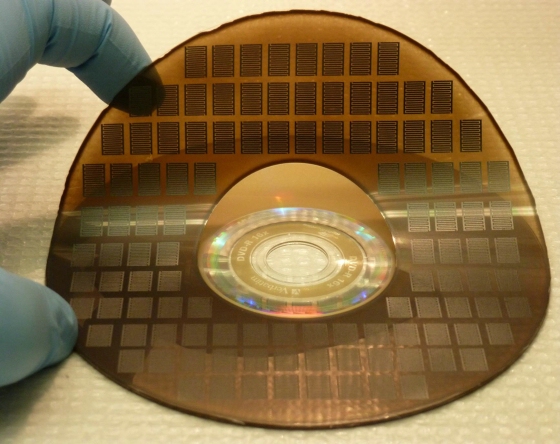
Given the fact that the previous method of producing graphene sheets (peeling it with scotch tape) was not practical, the development of the new production process was already good news. However, something even more impressive happened when Maher El-Kady, a researcher in Kaner’s lab, wired a small square of their high quality carbon sheets to a lightbulb.

supercapacitor1After showing it to Dr. Kaner, the team quickly realized they had stumbled onto a supercapacitor material – a high-storage battery that also boasts a very fast recharge rate – that boasted a greater energy storage capacity than anything currently on the market. Naturally, their imaginations were fired, and their discovery has been spreading like wildfire through the engineering and scientific community.

The immediate benefit of batteries that use this new material are obvious. Imagine if you will having a PDA, tablet, or other mobile device that can be charged within a matter of seconds instead of hours. With batteries so quick to charge and able to store an abundant supply of volts, watts, or amperes, the entire market of consumer electronics would be revolutionized.

electric_carBut looking ahead, even greater applications become clear. Imagine electric cars that only need a few minute to recharge, thus making the gasoline engine all but obsolete. And graphene-based batteries could be making an impact when it comes to the even greater issue of energy storage with regards to solar and other renewable energy sources.

In the year since they made their discovery, the researchers report that El-Kady’s original fabrication process can be made even more efficient. The original process involved placing a solution of graphite oxide on a plastic surface and then subjecting it to lasers to oxigenate and turn the solution into graphene. A year ago, the team could produce only a few sheets at a time, but now have a scalable method which could very quickly lead to manufacturing and wide-scale technological implementation.

solar_array1As it stands, an electric car with a recharge rate of a few minutes is still several years away. But Dr. Kaner and his team expect that graphene supercapacitors batteries will be finding their way into the consumer world much sooner than anyone originally expected.  According to Kaner, his lab is already courting partners in industry, so keep your eyes pealed!

Combined with the new technologies of lithium-ion and nanofabricated batteries, we could be looking at a possible solution to the worlds energy problem right here. What’s more, it could be the solution that makes solar, wind, and other renewable sources of energy feasible, efficient, and profitable enough that they will finally supplant fossil fuels and coal as the main source of energy production worldwide.

Only time will tell… And be sure to check out the video of Dr. Kaner and El-Kady showing off the process that led to this discovery:


Source: IO9.com

2013, As Imagined By 1988

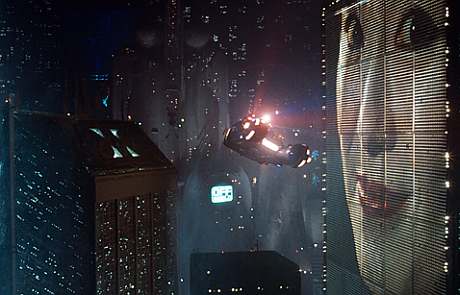
bladerunnerTwenty-five years ago, Los Angeles magazine envisioned what the world would look like in the current decade. And unlike Blade Runner, they avoided the cool but standard science fiction allegories – like massive billboards, flying cars and sentient robots – and went straight for the things that seemed entirely possible by contemporary standards.

The cover story of the magazine’s April 3, 1988 edition showed a futuristic downtown L.A. crisscrossed with electrically charged, multi-tiered freeways permeated by self-driving cars. The article itself then imagined a day in the life of the fictional Morrow family of the L.A. suburb Granada Hills, as “profiled” by the magazine in 2013 by science fiction writer Nicole Yorkin.

LAtimes_2013aIronically, the magazine did not envision that it would one day go out of business, or that print media would one day be lurching towards extinction. Nevertheless, the fictional article and the world it detailed were interesting reading. Little wonder then why, earlier this month, the LA Times along with an engineering class at USC, revisited the archives to assess what it predicted correctly versus incorrectly.

Together, pro­fess­or Jerry Lock­en­our and his class made a list of the hits and misses, and what they found paints a very interesting picture of how we predict the future and how its realization so often differs from what we expect. Of the major predictions to be found in LA of the 2013, as well as in the lives of the Morrow family (get it?), here is what they got right:

Smart-Houses:
smart-house_vCe6I_25016In the article, the Morrows are said to begin every morning when their “Smart House” automatically turns on. This consists of all the appliances activating and preparing them breakfast, and no doubt turning on all the environmental controls and opening the shades to get the temperature and ambient lighting just right.

While this isn’t the norm for the American family yet, the past few years have proved a turning point for home devices hooking up with the Internet, to become more programmable and serve our daily needs. And plans are well under way to find a means of networking them all together so they function as one “smart” unit.

Self-Driving Cars:
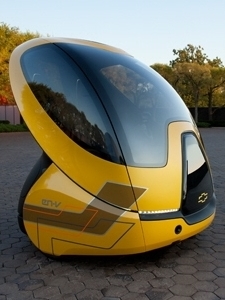
chevy_env_croppedThe writers of the article predicted that by 2013, cars would come standard with computers that control most of the settings, along with GPS systems for navigation. They also predict self-driving cars, which Google and Chevy are busy working on. In addition to using clean, alternative energy sources, these cars are expected to be able t0 self-drive, much in the same way a pilot puts their plane on auto-pilot. Drivers will also be able to summon the cars to their location, connect wirelessly to the internet, and download apps and updates to keep their software current.

But of course, they got a few things wrong as well. Here they are, the blots on their predictive record:

Homeprinted newspapers:
news_appThe article also predicts that each morning the Morrows would begin their day with a freshly printed newspaper, as rendered by their laser-jet printer. These would be tailor-made, automatically selecting the latest news feeds that would be of most interest to them. What this failed to anticipate was the rise in e-media and the decline of printed media, though hardly anyone would fault them for this. While news has certainly gotten more personal, the use of tablets, ereaders and smartphones is the way the majority of people now read their selected news.

Robot servants and pets:
kenshiro_smallIn what must have seemed like a realistic prediction, but which now comes across as a sci-fi cliche, the Morrows’ home was also supposed to come equipped with a robotic servant that had a southern accent. The family’s son was also greeted every morning by a robot dog that would come to play with him. While we are certainly not there yet, the concept of anthropomorphic robot assistants is becoming more real every day. Consider, for example, the Kenshiro robot (pictured at right), the 3D printed android, or the proposed Roboy, the Swiss-made robotic child. With all of these in the works, a robotic servant or pet doesn’t seem so far-fetched does it?

Summary:
Between these four major predictions and which came to be true, we can see that the future is not such an easy thing to predict. In addition to always being in motion, and subject to acceleration, slowing and sudden changes, the size and shape of it can be very difficult to pin down. No one can say for sure what will be realized and when, or if any of the things we currently take for granted will even be here tomorrow.

Alpha Moon Base at http://www.smallartworks.ca

For instance, during the 1960’s and 70’s, it was common practice for futurists and scientists to anticipate that the space race, which had culminated with humans setting foot on the moon in 1969, would continue into the future, and that humanity would be seeing manned outposts on the moon by and commercial space flight by 1999. No one at the time could foresee that a more restrictive budget environment, plus numerous disasters and a thawing of the Cold War, would slow things down in that respect.

In addition, most predictions that took place before the 1980’s completely failed to predict the massive revolution caused by miniaturization and the explosion in digital technology. Many futurist outlooks at the time predicted the rise in AI, but took it for granted that computers would still be the size of a desk and require entire rooms dedicated to their processors. The idea of a computer that could fit on top of a desk, let alone on your lap or in the palm of your hand, must have seemed farfetched.

CyberspaceWhat’s more, few could predict the rise of the internet before the late 1980’s, or what the realization of “cyberspace” would even look like. Whereas writer’s like William Gibson not only predicted but coined the term, he and others seemed to think that interfacing with it would be a matter of cool neon-graphics and avatars, not the clean, page and site sort of interface which it came to be.

And even he failed to predict the rise of such things as email, online shopping, social media and the million other ways the internet is tailored to suit the average person and their daily needs. When it comes right down to it, it is not a dangerous domain permeated by freelance hacker “jockeys” and mega-corporations with their hostile counter-intrusion viruses (aka. Black ICE). Nor is it the social utopia promoting open dialogue and learning that men like Bill Gates and Al Gore predicted it would be in the 1990’s. If anything, it is an libertarian economic and social forum that is more democratic and anarchistic than anyone could have ever predicted.

But of course, that’s just one of many predictions that came about that altered how we see things to come. As a whole, the entire thing has come to be known for being full of shocks and surprises, as well as some familiar faces. In short, the future is an open sea, and there’s no telling which way the winds will blow, or what ships will make it to port ahead of others. All we can do is wait and see, and hopefully trust in our abilities to make good decisions along the way. And of course, the occasional retrospective and issue congratulations for the things we managed to get right doesn’t hurt either!

Sources: factcoexist.com, LATimes.com

News From Space: MESSENGER and Mercury

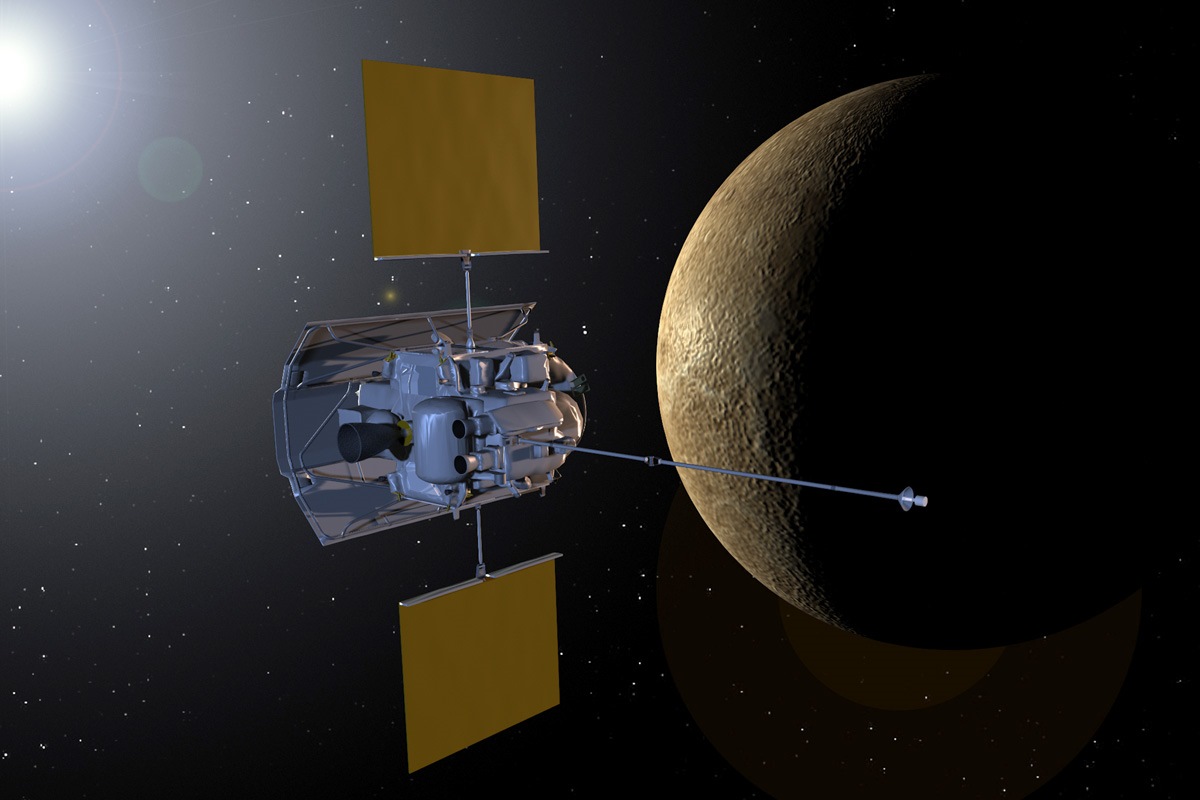
messengerWith Curiosity’s ongoing research and manned missions being planned for Mars by 2030, it seems that the other planets of the Solar System are being sadly neglected these days. Thankfully, the MESSENGER spacecraft, which has been conducting flyby’s of Mercury since 2008 and orbiting it since 2011, is there to remind us of just how interesting and amazing the planet closest to our sun truly is.

And in recent weeks, there has been a conjunction of interesting news stories about Earth’s scorched and pockmarked cousin. The first came in March 22nd when it was revealed that of the many, many pictures taken by the satellite (over 150,000 and counting), some captured a different side of Mercury, one which isn’t so rugged and scorched.

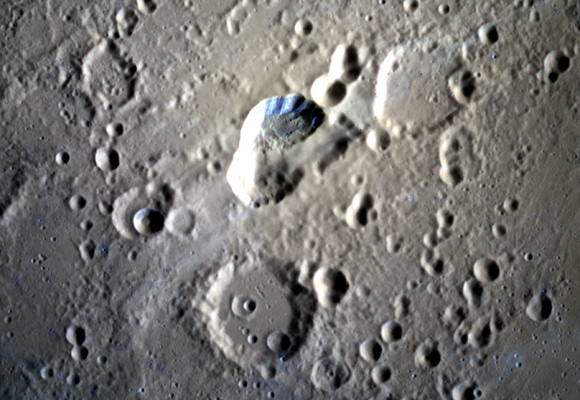
Messenger_smooth1The pictures in question were of a natural depression located northeast of the Rachmaninoff basin, where the walls, floor and upper surfaces appear to be smooth and irregularly shaped. What’s more, the  velvety texture observed is the result of widespread layering of fine particles. Scientists at NASA deduced from this that, unlike many features on Mercury’s  ancient surface, this rimless depression wasn’t caused by an impact from above but rather explosively escaping lava from below.

In short, the depression was caused by an explosive volcanic event, which left a hole in the surface roughly 36 km (22 miles) across at its widest. It is surrounded by a smooth blanket of high-reflectance material, explosively ejected volcanic particles from a pyroclastic eruption, that spread over the surface like snow. And thanks to Mercury’s lack of atmosphere, the event was perfectly preserved.

Messenger_smooth2

Other similar vents have been found on Mercury before, like the heart-shaped depression observed in the Caloris basin (seen above). Here too, the smooth, bright surface material was a telltale sign of a volcanic outburst, as were the rimless, irregular shapes of the vents. However, this is the first time such a surface feature has been captured in such high-definition.

And then just three days later, on March 25th to be exact, Mercury began to experience its greatest elongation from the Sun for the year of 2013. In astronomy, this refers to the angle between the Sun and the planet, with Earth as the reference point. When a planet is at its greatest elongation, it is farthest from the Sun as viewed from Earth, so its view is also best at that point.

Mercury_31-03-13_0630What this means is that for the remainder of the month, Mercury will be in prime position to be observed in the night sky, for anyone living in the Northern Hemisphere that is. Given its position relative to the Sun and us, the best time to observe it would be during hours of dusk when the stars are still visible. And, in a twist which that may hold cosmic significance for some, people are advised to pay special attention during the morning of Easter Day, when the shining “star” will be most visible low in the dawn sky.

And then just three days ago, a very interesting announcement was made. It seems that with MESSENGERS ongoing surveys of the Hermian surface, nine new craters have been identified and are being given names. On March 26th, the International Astronomical Union (IAU) approved the proposed names, which were selected in honor of deceased writers, artists and musicians following the convention established by the IAU for naming features on the innermost world.

crater_names

The announcement came after MESSENGER put the finishing touches on mapping the surface of Mercury earlier this month. A good majority of these features were established at Mercury’s southern polar region, one of the last areas of the planet to be mapped by the satellite. And after a submission and review process, the IAU decided on the following names of the new craters:

Donelaitis, named after 18th century Lithuanian poet Kristijonas Donelaitis, author of The Seasons and other tales and fables.

Petofi, named after 19th century Hungarian poet Sandor Petofi, who wrote Nemzeti dal which inspired the Hungarian Revolution of 1848.

Roerich, named after early 20th century Russian philosopher and artist Nicholas Roerich, who created the Roerich Pact of 1935 which asserted the neutrality of scientific, cultural and educational institutions during time of war.

Hurley, named after the 20th century Australian photographer James Francis Hurley, who traveled to Antarctica and served with Australian forces in both World Wars.

Lovecraft, named after 20th century American author H.P. Lovecraft, a pioneer in horror, fantasy and science fiction.

Alver, named after 20th century Estonian author Betti Alver who wrote the 1927 novel Mistress in the Wind.

Flaiano, named after 20th century Italian novelist and screenwriter Ennio Flaiano who was a pioneer Italian cinema and contemporary of Federico Fellini.

Pahinui, named after mid-20th century Hawaiian musician Charles Phillip Kahahawai Pahinui, influential slack-key guitar player and part of the “Hawaiian Renaissance” of island culture in the 1970’s.

L’Engle, named after American author Madeleine L’Engle, who wrote the young adult novels An Acceptable Time, A Swiftly Tilting Planet & A Wind in the Door. L’Engle passed away in 2007.

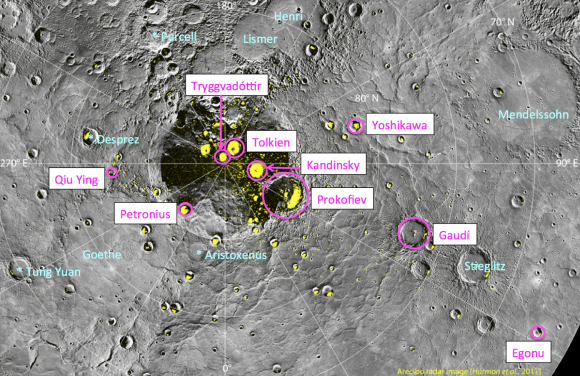
Crater_names_August2012-580x376The campaign to name Mercury’s surface features has been ongoing since MESSENGER performed its first flyby in January of 2008. Some may recall that in August of last year, a similar process took place for the nine craters identified on Mercury’s North Pole. Of these, the names of similarly great literary, artistic and scientific contributors were selected, not the least of which was Mr. J RR Tolkien himself, author of Lord of the Rings and The Hobbit!

It’s no secret that the MESSENGER spacecraft has been a boon for scientists. Not only has it allowed for the complete mapping of the planet Mercury and provided an endless stream of high resolution photos for scientists to pour over, it has also contributed to a greater understanding of what our Solar System looked like when it was still in early formation.

Given all this, it is somewhat sad that MESSENGER is due to stand down at the end of the month, and that the next mission to Mercury won’t be until 2022 with the planned arrival of the joint ESA/JAXA BepiColombo mission. But of course, we can expect plenty of revelations and stories to emerge from all the scientific data collected on this latest trip. And I’m sure Mars will be more than willing to provide ample entertainment until 2022 comes to pass!

While we’re waiting, be sure to check out this informative video of MESSENGER’s contributions over the past few years:

Source: universetoday.com, (2), (3)

News From Space: SpaceXs Reusable “Grasshopper” Rocket

spaceX_elonmuskThe concept of commercial spaceflight has been growing considerably in recent years. Basically, the idea is that it would be private aerospace companies that would responsible for ferrying people to and from space and putting commercial satellites in orbit, thus leaving space agencies free to conduct more crucial research and deep space exploration missions.

Intrinsic to this dream is the creation of a cheaper, reusable rocket system, something that can be deployed, landed, and redeployed. This will not only save the companies responsible for this new age of space travel billions of dollars, it will make a whole series of projects possible – like Space-Based Solar Power (SBSP) arrays, commercial trips to the Moon, and bigger, more elaborate space stations in orbit.

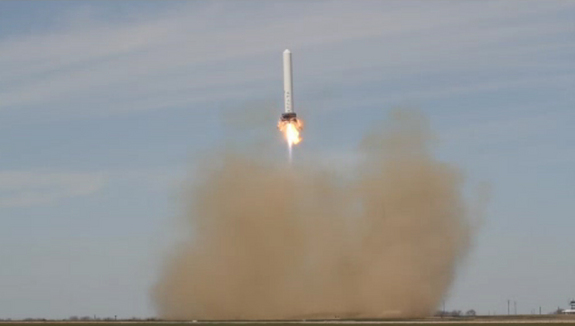
spacex_grasshopperAnd that’s precisely what SpaceX founder Elon Musk is working on with his “Grasshopper” rocket system. Designed to be reusable, the company has been running the Grasshopper through an ongoing series of tests to make sure it can take off, achieve orbit, and then successfully return to the Earth and land in one piece. In the latest test, the Grasshopper achieved its highest flight yet – reaching 80 meters (263 feet) – before sticking its landing.

The flight took place on March 7th, and it was the fourth of its kind to be conducted at the SpaceX’s rocket development facility in McGregor, Texas. And though the flight was unmanned, the crews placed a dummy dressed like Johnny Cash into the side, which might explain why the footage of the test featured the song “Ring of Fire” in the background.

spacex-grasshopper-highest-leapWhile this achievement might seem modest to some, its necessary to keep in mind that this is a very new concept. In addition, with each successive flight, the altitudes achieved have increased exponentially. In its first test flight in September of last year, the Grasshopper reached a height of only 2.5 meters (8.2 feet). In the two following tests in November and December, the rocket reached a height of 5.4 meters (17.7 feet) and 40 meters (131 feet) respectively.

With this latest flight, SpaceX believes it is getting close to their goal of a reusable rocket and its ultimate goal of making space travel cheaper and easier. Upon completion of this latest test, the company had positive things to say about the new rocket system:

With Grasshopper, SpaceX engineers are testing the technology that would enable a launched rocket to land intact, rather than burning up upon reentry to the Earth’s atmosphere.

Who knows? Given a few more tests, they might just be able to break atmo and land successfully. Then, all SpaceX has to do is sit back and watch their stock price jump by about a million points. At which time, I’m thinking missions will pour in for the deployment of just about any bit of space gear imaginable! Welcome to the era of renewed space exploration, my friends!

And be sure to check out this video of the Grasshopper makings its most recent jump!

Source: space.com

Powered By the Sun: The Solar Island

solar4As Climate Change becomes an ever increasing problem, nations are turning to alternative technologies and geological engineering to offset the effects. This means significant investments being made in technologies such as solar cells and other clean energies. However, the question of where to put all the resulting arrays is one which cannot be overlooked. Since we are trying to save the environment, it doesn’t exactly make sense to clear more tracts of land to make room for them.

Already, there is a land rush to build more solar power plants all around the world. In the U.S., the Department of Interior is currently processing leases for roughly 1.8 million acres in the West alone. Globally, solar photovoltaic (PV) capacity has been doubling annually, with another 16 gigawatts of power added just in 2010. At this rate, and considering how much space is needed to set up the average array, we could run out of room real fast!

solar_islandAnd yet, the one thing that accounts for the majority of the planet’s surface area has been sadly neglected up until this point. I am of course referring to the oceans, lakes, reservoirs, retention ponds, and all other natural or unnatural bodies of water. As they account for over three-quarters of the planet’s real estate, they are quickly being targeted as the new frontier for floating solar power plants, with companies and locations being considered from India to Europe, to Napa Valley.

One of the more ambitious plans comes to us from Switzerland, will a proposed array will be built on Lake Neuchâtel later this year. As a collaborative effort between the solar developer Nolaris and the Swiss energy company Viteos, the proposed floating array will be the first of three set upon the lake. Each island will measure some 25 meters in diameter, be built from plastic and steel, and support 100 photovoltaic cells that will rotate with the sun.

solar_island1What’s more, this is just one of several ideas under consideration. Other companies pursuing this concept are favoring floating pontoons with individual photovoltaic assemblies on the water’s surface. In this case, concentrating lenses will focus the sunlight on a solar cell while a simple motor, light sensors, and software rotate the cells to maximize power generation. In tropical climes, where many pilot projects are being considered and storms are quite common, the entire array will be able to submerge as the winds rise.

In other places, where land is particularly expensive, floating solar may even come to rival its land-based counterpart. In Australia, for example, a company named Sunengy is pushing the concept of “Liquid Solar Array” technology, which they claim will be able to match the power output of a typical hydroelectric dam and cover less than 10% of the reservoir’s surface. They are currently teaming up with the Indian giant Tata Power to build India’s first floating solar power plant, and estimate that if India used just 1% of its 11,500 square kilometers of captured water it could generate the equivalent of 15 large coal-fired power stations.

As the saying goes, necessity is the mother of invention. And as it stands, planet Earth needs energy, and needs to generate it in such a way that won’t mess up the environment any further or usher in the scourge of Climate Change. When the survival of our planet and our species is at stake, you can expect people to get very inventive. Very, very inventive!

Source: factcoexist.com

The Walking Dead – Season 3 Episode 15

WD3_posterWelcome back to the Walking Dead, zombie fans! As anyone who has been following the series knows, we are now down to the last two episodes of the season. Next Sundays episode promises to be the climax of the prison versus Woodbury chapter of this story, and it just happens to coincide with the premiere of Game of Thrones Season 3. Wow… busy weekend. At least for those of us who review these shows at any rate!

But of course, this week’s episode was the curtain raiser for the finale, showcasing Rick and the prison camps contemplate averting war at the same time as they prepare for it.

The Sorrowful Life:
WD3_sorrowfulThe episodes opens inside the prison, where they are preparing for the eventual attack while Rick discusses handing Michonne over with Daryl and Hershel. After agreeing that it is a tough call, he talks it over with Merle, who seems to think that Rick doesn’t have the spine to go through with it. Daryl also speaks with him and raises the issue about fitting in with the prison folk, but Merle believes his only place there is as a potential “bad guy”.

Putting this philosophy into practice, he leads Michonne down into an uncleared cell block where they find Walkers. After letting her take out a few, he hits her in the back of the head, binds her, and begins escorting her to Woodbury. Rick meets up with Daryl to let him know he’s decided against handing Michonne over, but tells him he can’t find her or Merle. Daryl volunteers to go look for them and leave Rick behind in case they are attacked.

wd3_sorrowful2Merle and Michonne walk together, during which time she is able to talk to Merle about all he’s done. They walk until they reach a motel where Merle tries to hotwire a car. Unfortunately, his efforts trigger the car alarm which attracts Walkers. Michonne manages to creatively defend herself, despite being bound, and Merle cuts her free and drives off with her in the hijacked car.

As they drive together, Michonne and Merle continue to talk and she tries to convince him to go back. Finally, Merle stops the car and tells her he can’t. He agrees to let her go, but tells her he has something he has to do on his own. Clearly, he’s decided to settle things on his own and save his brother, and find some redemption for himself by killing the Governor instead of handing him Michonne.

WD3_sorrowful1On her way back to the prison, Michonne crosses paths with Daryl and tells him that Merle let her go. Daryl takes off in pursuit while down the road, while father away, Merle draws as many Walkers to his vehicle as he can and drives towards the meeting place where the Governor and Rick first talked about coming to terms. Caesar and the Governor’s men are already there and begin deploying to deal with all the Walkers.

Merle takes up a position inside a building and begins sniping them off in the confusion, but a Walker interferes with him taking a shot at the Governor and he is exposed. He’s then taken by the Governor’s men and gets into it with the Governor himself. After getting two of his fingers bitten off and a broken arm, a defeated Merle tells the Governor “I aint gonna beg you!” The Governor simply replies “No!”, draws his gun, and then shoots him.

Wd3_sorrowful4Back at the prison, Glenn decides he wants to marry Maggie before the worst comes to pass. He secures Hershel’s blessing, and after taking two fingers off a Walker, procures a ring. Before a general counsel session called by Rick, he asks her and she agrees. They then sit with the rest while Rick tells everyone the truth of about his meeting with the Governor and how he was willing to sacrifice one of them for the sake of peace.

In the course of it, he lets them know that he doesn’t believe they can function as a dictatorship after all, that no can be sacrificed for the greater good since they are all that very thing. He leaves it with them to decide what they want to do, whether they want to run or stay and fight. He returns to the wall to stand watch and is just in time to see Michonne coming back.

Daryl comes to the meeting place and finds Walkers preying on the bodies of all those who died in the firefight. He is heartbroken when he finds his brother who is now amongst the former. After a short fight, he manages to get him to the ground and puts his brother out of his misery…wd3_sorrowful5

Summary:
Well, this episode was good for a number of reasons. Naturally, I expected it to provide some pacing before the final showdown, but they managed to go beyond that and provided some adrenaline and commentary as well. Basically, the entire episode revolved around the idea of terrible purpose, how in a crazy world, people have to sometimes do things that are ugly and unpleasant for the sake of the preserving lives and the greater good.

Much of that came down to Merle choosing to do what he always does – i.e. look out for number one and use the greater good as an excuse. But he turned that around when he realized that instead of sacrificing Michonne to save Rick and the prison camp, which included his brother, he could sacrifice himself. Ultimately, he fulfilled his role as the necessary bad guy, but did so in a way that showed that he wasn’t so bad.

And I liked that about this episode. Ever since his introduction in the first season, Merle stood as the ugly, uncouth, redneck, racist SOB who only ever looked out for number one. While that worked just fine for him, it was known to get others in trouble. Particularly his brother,  who stood in contrast as the redeemable son who could do great things, if only he could get free of his brother’s influence.

So in a way, this was a fitting sendoff for him. Not only did he die trying to do some good for once, it fell to the “good brother” to show him some mercy and put him down after he turned. It also showcased the Governor’s madness and cruelty that he wasn’t willing to shoot Merle in the head and keep him from coming back. By administering the fatal gunshot to his body, he ensured that Merle would live on as a hideous creature, the ultimate punishment for his disloyalty.

And finally, there was the significance of everything Rick decided in this episode. After realizing he couldn’t hand over Michonne, he went a step further and told the camp that he couldn’t be calling the shots anymore. This puts him at odds with the Governor who controls Woodbury as a defacto dictator, appearing as a benevolent father figure to most but showing his true colors to those closest to him. He even said as much when he claimed “I’m not your governor”.

Basically, after declaring that their group was no longer a democracy after they left the farm, this reversal now sets them as the ideological opponents to the Governor and his town of willing supplicants. So this impending fight is not just about survival and competition, it’s also about philosophies of leadership and governance in the post-apocalyptic age.

And yes, there was the side plot involving Maggie and Glenn getting married, which was nice, if somewhat diversionary. It was poignant to see how and why that happened, since as Glenn said, he wanted to have something beautiful before the worse came to pass. And Michonne, always the ass-kicker, was pretty damn awesome in this episode. Even thought she was bound and being used as barter, she managed to keep a cool head, talked a lot of sense, turned Merle around, and even killed some Walkers in some very cool ways. Seriously, the way she decapitated that one with just the string of wire? Shazam!!!

Which now brings things us to the end of all the build up and sets the stage for episode 16 and the season finale. Personally, I hope Rick and the others decide not to make a run for it and get out before the Governor and his people attack, because that would blatantly contradict what took place in the comic book. Without giving away any spoilers, let me just say that this chapter is meant to end in blood, anger, and terrible pain! After all the changes they’ve made so far, is it too much to hope for a little loyalty now?


Powered by the Sun: The Ion Cannon Solar Panel

solar5Hello and welcome back to my ongoing series of PBTS, dedicated to all the advancements being made in solar power. Today’s entry is an interesting one, and not just because it involves an ion cannon… well sort of! It comes to us courtesy of Twin Creeks, a solar power startup that has come up with a revolutionary way to generate photovoltaic cells that are half the price of those currently found on the market.

For many decades, solar power has been held back due to the fact that the cost has been prohibitive compared to fossil fuels and coal. By offering yet another way of cutting the cost of their production, Twin Creeks is bringing this clean alternative one step closer to realization. Ah, but here’s the real kicker: turns out that this revolutionary process involves a hydrogen ion particle accelerator!

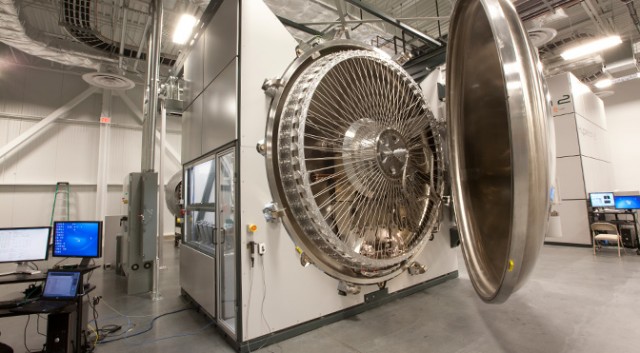
hyperion-particle-accelerator1-640x353As has been mentioned in this series before, conventional solar cells are made from slicing 200-micrometer-thick (0.2mm) sections of silicon wafer from a large block. Then electrodes are added, a sheet of protective glass is placed on top, and they are placed in the sun to generate electricity. But of course, this approach has two serious drawbacks. One, a great deal of silicon is wasted in the production process. Two, the panels would if they were thinner than 200 micrometers, but silicon is brittle and prone to cracking if it’s too thin.

And this is where Twin Creeks ion cannon, aka. Hyperion, comes into play. It’s starts with a series of 3-millimeter-thick silicon wafers being placed around the outside edge of the big, spoked wheel (see above). The particle accelerator then bombards these wafers with hydrogen ions and, with exacting control of the voltage of the accelerator, the hydrogen ions accumulate precisely 20 micrometers from the surface of each wafer.

twin-creeks-hyperion-wafer-ii-flexibleA robotic arm then transports the wafers to a furnace where the ions expand into hydrogen gas, which cause the 20-micrometer-thick layer to shear off. A metal backing is applied to make it less fragile as well as highly flexible (as seen on the right). The remaining silicon wafer is taken back to the particle accelerator for another dose of ions. At a tenth of the thickness and with considerably less wastage, it’s easy to see how Twin Creeks can halve the cost of solar cells.

This process has been considered before, but the cost of a particle accelerator has always been too high. However, Twin Creeks got around this by building their own, one which is apparently “10 times more powerful” (100mA at 1 MeV) than anything on the market today. Because of this, they are able to guarantee a product that is half the cost of solar cells currently coming out of China. At that price, solar power truly begins to encroach on standard, fossil-fuel power.

But, of course, there still needs to be some development made on producing solar cells that can store energy overnight. Weather strictures, such as the ability to generate electricity only when its sunny out, remains another stumbling block that must be overcome. Luckily, it seems that there are some irons in that fire as well, such as research into lithium-ion and nanofabricated batteries. But that’s another story and another post altogether 😉

Stay tuned for more sun-powered hope for the future!

Source: Extremetech.com