Stories from Space is now Live!

Stories from Space is now Live!

It’s officially Launch Day! My podcast series, Stories from Space, just released its first episode. The topic, “We’re Going Back to the Moon!” talks about Artemis and related programs that will send astronauts back to the lunar surface with the long-term goal of establishing a sustained human presence on the Moon. Mostly, the episode addresses the question: why did it take us over fifty years to go back?

Answering a question like that takes about half an hour (or the length of a podcast episode). You can check it out at the Stories from Space homepage (https://www.itspmagazine.com/stories-from-space), or just click on the play button below. The episode is also available for streaming on Spotify and Apple

Good News: Teaching a Summer Course at the Kepler Space Institute!

Good News: Teaching a Summer Course at the Kepler Space Institute!

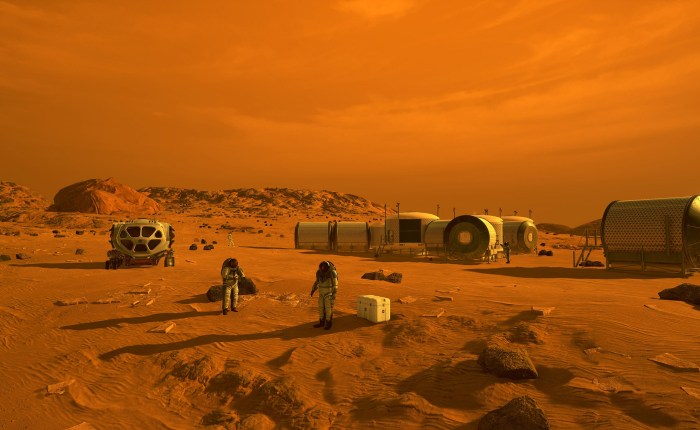
The course consists of six lessons (2 hours each) that explore humanity’s fascination and understanding of the Red Planet, culminating with two questions: One, how has our knowledge and understanding evolved over time? Two, can human beings thrive (not just survive) there someday? Considering that humans Mars have been exploring Mars for more than sixty years, and been looking up at the Red Planet since time immemorial, there’s a fair bit to unpack there.

https://ksiedu.com/the-exploration-and-potential-settlement-of-mars/#

Continue reading “Good News: Teaching a Summer Course at the Kepler Space Institute!”

Good News! Stories from Space Picked up by ITSP Magazine!

Good News! Stories from Space Picked up by ITSP Magazine!

This news has been a few months in the making, but with the final preparations underway, I feel like it’s time to announce it! In a few weeks, I will be launching my podcast series – Stories from Space – with the Intersection Of Technology, Cybersecurity, And Society Podcast (ITSP), a highly-respected channel that hosts multiple shows. Each of these is dedicated to exploring the past, the present, and the future of humanity’s relationship with technology and the profound effects it can have on our society.

Continue reading “Good News! Stories from Space Picked up by ITSP Magazine!”

Episode Seven: Von Neumann Probes!

In 1948, famed astrophysicist John von Neumann spoke of machines that could consume normal matter and replicate themselves endlessly. Years later, the idea became the basis of “Von Neumann Probes,” self-replicating machines that explore the Universe for other life forms. Could our Universe be teeming with extraterrestrial versions of these probes right now?

Stories from Space is Now Available on Apple Podcasts and Spotify!

Stories from Space is Now Available on Apple Podcasts and Spotify!

Good news! My podcast series, Stories from Space, is now available on iTunes and Spotify! These are the audio podcasts, not to be confused with the video series (of the same name) that is available on Youtube.

You can access all these episodes via Apple Podcasts, or click on the bar below to listen on Spotify:

Episode Six: The Berserker Hypothesis

Episode Six: The Berserker Hypothesis

Could it be that the reason we are confronted by the “Great Silence” is that advanced civilizations are being wiped out? This is the essence of the Berserker Hypothesis, inspired by science fiction, but rooted in scientific theory. It combines the concept of von Neuman Probes, nanotechnology, and the idea that the greatest threat to advanced life is itself!

Episode 5: The Search for Signatures

Episode 5: The Search for Signatures

In the search for life and intelligence beyond Earth, astronomers look for telltale “signatures.” These include the chemical elements that we associate with life as we know it and its biological functions (“biosignatures), and indications of technological activity (“technosignatures”) as we would recognize it. At present, the search for signatures is limited by two factors: the limits of our instrumentation, and the limits of our frame of reference.

Episode 4: The Planetarium Hypothesis

Episode 4: The Planetarium Hypothesis

Is it possible that humanity hasn’t heard from advanced extraterrestrials because they have us trapped in some grand simulation? Or perhaps they have enclosed our region of space and are simulating an empty Universe. This is known as the Planetarium Hypothesis, originally proposed by scientist and science fiction author Stephen Baxter in 2001. While this possibility is likely unprovable, it has an internal logic that is hard to ignore. If you were a super-advanced extraterrestrial intelligence, isn’t this what you’d do?

Episode 3: The Transcension Hypothesis

Episode 3: The Transcension Hypothesis

Is it possible that we haven’t heard from any advanced alien civilizations because they’ve “transcended” – i.e., achieved a state of existence so advanced that we can no longer perceive them? This is the essence of the Transcenion Hypothesis, first proposed by John Smart in a 2002 paper, titled “Answering the Fermi Paradox: Exploring the Mechanisms of Universal Transcension.”

Podcast Episode 2: The Kardashev Scale!

Podcast Episode 2: The Kardashev Scale!

In this episode, I discuss one of the most well-known concepts in the Search For Extraterrestrial Intelligence – the Kardashev Scale. Named for famed Soviet-Russian astrophysicist Nikolai Kardashev, who died in 2019, this three-level classification system was introduced in his seminal study, “Transmission of Information by Extraterrestrial Civilizations,” published in 1964. The Scale characterizes extraterrestrial civilizations based on the amount of energy they can harness, ranging from the energy of an entire planet to a star system or a galaxy.

In the almost sixty years since it was first proposed, many additions, variations, and articulations have been added to the Scale. Combined with related ideas, like Dyson Structures (or “Megastructures), the Scale has had significant implications for the Search for Extra-Terrestrial Intelligence (SETI) and is considered foundational to the field of study.

Enjoy! Audio:

And with video: