The Future is Here: Silk Brain Implant to Treat Epilespy

silk_implantsSilk implants are becoming the way of the future as far as brain implants are concerned, due to their paradoxically high resiliency and ability to dissolve. By combining them with nanoelectric circuits or drugs, scientists are exploring several possible applications, ranging from communications devices to control prosthetics and machines to medicinal devices that could treat disabilities and mental illnesses.

And according to a recent study released by the National Institutes of Health, treating epilepsy is just the latest application. According to the study, when administered to a series of epileptic rats, the treatment led to the rats experiencing far fewer seizures. What’s more, this new treatment represents something entirely new in terms of treatment of neurological disorder.

brain_chipFor starters, Rebecca L. Williams-Karneskyand and her colleagues used the silk implants for a timed-release therapy in rats experiencing epileptic seizures. Working on the theory that people with epilepsy suffer from a low level of adenosine – a chemical that the brain releases naturally to suppress seizures (and also perhaps movement during sleep) – they soaked the silk implants before implanting them.

Those rats who recieved the silk brain implants still had seizures, but their numbers were reduced fourfold. The implant released the chemical for ten days before they completely dissolved. And with time and testing, the treatment could very easily be made available for humans. According to the study’s co-author, Detlev Boison:

Clinical applications could be the prevention of epilepsy following head trauma or the prevention of seizures that often — in about 50 percent of patients — follow conventional epilepsy surgery. In this case, adenosine-releasing silk might be placed into the resection cavity in order to prevent future seizures.

brainscanBetween the timed release of drugs and nanoelectric circuits that improve neuroelasticity, recall and relaxation, brain implants are coming a long way. At one time, they were the province of cyberpunk science fiction. But thanks to ongoing research and development, they are quickly jumping from the page and becoming a reality.

Though they currently remain confined to medical tests and laboratories, experts agree that it will be just a few years time before they are commercially available. By sometime in the coming decade, medimachines and neural implants will probably become a mainstay, and neurological disorders a fully treatable phenomena.

Sources: io9.com, nih.gov

News From Space: Penetrators to Explore Space

space_penetrator1As space exploration goes, we can do quite a bit within our own Solar System. We can land people on the Moon, rovers on Mars, and put satellites in orbit around the inner and outer planets. We even have the means of placing astronauts on Mars, presumably. But the cost are still prohibitively high, and when it comes to reaching distant celestial bodies, we remain pretty powerless.

Hence the new “space penetrator” program being contemplated by the European Space Agency. Basically, this amounts to a space missile that is fired in the direction of a celestial body, and which delivers a payload of sensors and equipment upon arrival on the surface. Classified as a “hard lander”, this program has been under development for ten years and offers many advantages over the standard soft lander.

space_penetratorFor starters, a soft lander not only has to slow down before landing (which requires rockets and a payload of fuel), but has to be built to land rather than just crash into the ground. And if a soft lander wants to collect subsurface samples or conduct readings, it requires additional equipment to drill and scoop. By contrast, a penetrator can simply smash through a planet’s surface layer, and requires no additional fuel or landing gears.

Of course, a space penetrator also comes with its share of issues, like ensuring that its payload survives the hard landing. This requires that a special spring mechanism be included in the outer shell that cushions the payload from impact. This “suspension system” is made out of Torlon polymer, which is able to provide a 2mm gap of insulation during a high deceleration. A retrorocket will be employed in order to soften the blow a bit as well.

space_penetrator2In order to rest the impact, the designers who built the steel penetrator fired it directly into a 10-ton block of ice. The missile traveled at 340m/s, just under the speed of sound, and turned the block into powder. But the penetrator’s casing and internal instruments remained intact and functional. Thanks to onboard sensors, the test impact will provide the developers of the missile, Rapid Space Technologies, with more information.

The space penetrator is intended to do more than just collect subsurface soil samples. Once in use, it will also help look for alien life by busting through icy surfaces, such as on Jupiter’s famous moon Europa. For years, scientists have suspected that the planet may support aquatic life beneath its icy surface. With the help of radio signals, the on-board sensors could send information up to an orbiting satellite, which could in turn relay that information back to Earth.

converted PNM fileThe European Space Agency has funded the project, but has not yet decided if it would ultimately use the space penetrator. Currently, the system isn’t designed to be launched from Earth, but rather a satellite or spaceship. There’s no telling if it will be used anytime soon, but it does present scientists and astronomers with an viable option for future interstellar exploration.

And there is huge potential as far as the exploration of Europa is concerned. Ever since it was postulated that subsurface oceans exist there – ones that are warm enough to support life – the Jovian moon has served as a source of inspiration for astronomers and science fiction writers alike. I for one am interested to see what resides underneath all that ice, provided we don’t disturb it too much!

And of course, there’s a video of the space penetrator test taking place. Check it out:


Sources:
extremetech.com, bbc.co.uk

George Takei’s Proposal for the 2014 Winter Olympics

Sochi-2014-Olympic-StadiumThe build-up towards the Sochi Winter Games has been fraught with controversy, thanks to Russia’s recent passage of numerous laws which amount to persecution of its resident gay population. As a result of this, numerous pro-GLBT groups from around the world have proposed various boycotts. Like most issues involving human rights and sanctions, it is a sticky one without much in the way of clear solutions.

But first, some background on the issue seems needed. Though homosexuality was decriminalized after the fall of the Soviet Union in1991, more recent laws passed by numerous states, and now being advocated federally by Vladimir Putin, have led to concerns and criticisms that the country is slouching towards extreme social conservatism again.

russia-gay-law-olympics.siThese include the recent ban on “homosexual propaganda” that has been passed in numerous regions and is being proposed by Putin’s allies in the country’s federal Parliament. This law would effectively make it illegal for gay people to express themselves publicly, which would include admitting to being gay, or demanding equality or reform for same-sex couples at home or abroad. In effect, it would criminalize the act of being openly gay.

To make matters worse, this legislative ban has been linked to an upsurge in homophobia that led to a dozen murders and an unspecified number of assaults last year. Though obtaining accurate numbers is difficult, since victims are afraid to come forward, next of kin are reluctant to admit homophobia was a cause, and enforcement of hate crime laws remains tentative.

russia-gay-law-crackdownThis has led many people worldwide to propose boycotts against Russia, ranging from Russian vodka, to the Sochi Olympics themselves. However, there are those who are quick to point out that such a boycott would only punish the athletes who have worked very hard to get to the Olympics, and really won’t help the Russian gay community at all.

What’s more, if human rights issues are a reason to boycott the Olympics, what are we to think of Beijing hosting the 2008 Summer Games? In addition to its ongoing occupation of Tibet, China maintains a human rights record that is deplorable by most standards, and actively deprives its citizens of numerous human rights on a daily basis. But no boycotts were mounted there, leading some to conclude that one here would be unfair.

Luckily, George Takei has offered a possible way out of this dilemma: let Vancouver host the 2014 Winter Games. At the website for Allegiance: A New American Musical, which stars the openly gay actor and activist, he posted an appeal to people all over the world to not boycott the games, but instead to demand that they be moved to another venue.

George TakeiTitled “It’s Time to Move the Olympics”, Takei cites Russia’s Sports Minister recent confirmation that the country intends to enforce these new laws against visiting LGBT athletes, trainers and fans. This means that anyone attending the Olympics could be arrested, fined and deported for the simple act of waving a rainbow flag. Because of this, he says that it’s time for the IOC to reconsider Sochi as a location.

Instead, Takei and others believe that the games should be moved to Vancouver since “all of the facilities are still in good condition, so this would likely be the easiest of possible alternatives.” In addition to sending a clear message about human rights, the games could proceed and the athletes would not be penalized. People who are interested in signing the petition can do so by clicking here.

And as someone who witnessed the 2010 games firsthand, thought they were awesome, and saw how we came away from it all with plenty of debt, I can certainly see the value in this. We already have the structures, and would love another infusion of tourist dollars and international attention. Despite whatever logistical and financial considerations that will need to be ironed out in the meantime, I’d say it’s a win-win situation.

sochi-2014-takeiSidenote: According to Reuters, Russia has since denied that the “homosexual propaganda laws” will be enforced during the games. In a statement made by Igor Ananskikh, the head of the Russian Duma Committee on physical training, sports and youth, he claimed that:

The Olympics is a major international event. Our task is to be as politically correct and tolerant as we can be. That’s why we made the decision not to raise this issue during the Games.

This contradicts a statement made by Russian Sports Minister Vitaly Mutko, who said previously that no concessions would be made to foreign athletes and visitors to the Sochi Olympics:

No one is forbidding an athlete with non-traditional sexual orientation from coming to Sochi, but if he goes onto the street and starts propagandizing it, then of course he will be held accountable.

So the official story at this point is that Russia will NOT be enforcing its anti-GLBT laws to visiting athetes. No doubt, this overruling was the result of political pressure, as the Duma does not want to see Russia deprived of hosting a major international event for any reason. As years of languishing in obscurity Russia, much like China, can be counted on to jealously guard its newfound sense of status and grab any opportunity it can to advance it.

vancouver-2010-olympics-opening-ceremonyNo telling how this will work out. But in the meantime, I’m hoping Vancouver gets to host the Winter Games twice in a row! That would be some kind of record, and considering all the golds Canada took home last time, I imagine we’d be in good spirits!

Sources: allegiancemusical.com, rt.com, amnesty.org

100,000 People Want to Go to Mars, And Not Come Back

MarsOneEver since they announced their plan to establish a colony on Mars by 2022, Mars One has been flooded by applicants eager to set foot on a new planet and make it their home. In fact, according to a recent story by CNN Tech, over 100,000 people have volunteered for the mission, knowing full well that it would be a one-way trip and their stay on the Red Planet would be permanent.

Anyone who is 18 years of age or older can apply, and the fee runs anywhere from $15 to $38, depending on your nationality and the gross domestic product of your country. Ultimately, only 40 people will be selected this year, and only two couples will be sent ahead with the first mission. This mission is slated to leave by September of 2022 and land on Mars by April of 2023, with another group of four to be sent two years later.

Mars_landerThe applicants can all be seen simply be going to their website, where each person has created a profile and can be voted on. According to Bas Lansdorp, co-founder and CEO of Mars One, only those who have completed the registration process can be seen here:

There is also a very large number of people who are still working on their profile, so either they have decided not to pay the application fee, or they are still making their video or they’re still filling out the questionnaire or their resume. So the people that you can see online are only the ones that have finished and who have set their profiles as public.

In terms of what the selectees will do once the project is up and running, the website offers a basic rundown. First, the volunteer astronauts will undergo a required eight-year training in a secluded location, where they will learn how to repair habitat structures, grow vegetables in confined spaces and address “both routine and serious medical issues such as dental upkeep, muscle tears and bone fractures.”

mars-one-brian-versteegIn terms of how settlement will occur, the plan is to send a series of Mars One landers equipped with up to 2500 kg (5,500 pounds) of food, solar panels and supplies each. After eight missions, more than 44,000 pounds of supplies and 40 people will have arrived and the capsules themselves will be formed into the settler’s habitat.

Two things Earth won’t be sending is water and oxygen, since the settlers will be manufacturing these themselves. According to Lansdrop, these will be manufactured on Mars:

We will evaporate it and condense it back into its liquid state. From the water we can make hydrogen and oxygen, and we will use the oxygen for a breathing atmosphere inside the habitat. This will be prepared by the rovers autonomously before the humans arrive.

mars_astronautsNaturally, a good many details, such as where the $6 billion dollars for the first mission are going to come from, whether or not the technology truly exists to create a self-sustaining colony on Mars, and whether the people going up will be able to survive for extended periods of time until new waves arrive and new settlements are opened up.

In addition, there are experts who say that the risks are too high given the distance and exposure to radiation involved. A round-trip journey to Mars could expose astronauts to the maximum amount of radiation allowed in a career under current NASA standards. While Mars One does not negate this issue, they have yet to indicate how they intend to keep their astronauts shielded from the harmful cosmic rays.

mars_astronauts1However, this has not deterred some 30,000 Americans and over 100,000 people worldwide from signing on. What’s more, Lansdrop has said repeatedly that the project will be funded by sponsors and media that will pay for broadcasting rights of shows and movies documenting everything from the astronauts’ training on Earth to their deployment and colonization of Mars.

Basically, they intend for the entire process to be a worldwide media event, a massive reality TV show, with the necessary advances and funding worked out as time goes on. Right now, all they are looking for is volunteers so that corporate and media sponsors understand just how serious this is and that the willingness to go is there. No telling if that will be enough, but it is a start.

tito-mars-mission-conceptWhat’s more, Mars One is not alone in trying to make a trip to the Red Planet a reality. The Inspiration Mars Foundation is another such private venture, which is seeking to send a couple on a 501-day, round-trip journey aboard a space craft that will take then to Mars and back in 2018 without ever touching down on the surface.

Here too, the issue of funding, the technology involved, and the problem of radiation shielding are all being considered and ironed out in an ongoing manner, with some rather interesting possibilities being considered (such as using human feces and waste plumbing to shield the astronauts from radiation!)

spacecraft_marsUltimately, it seems that certain private ventures are not willing to wait for NASA’s planned 2030 excursion to Mars before general settlement and terraforming can begin. And though it may prove unfeasibly by the time frames being proposed, the excitement and desire to make things happen sooner than projected are understandable.

And as Lansdorp explains, much of the project has to do with telling a story, perhaps the greatest ever told:

What we want to do is tell the story to the world. When humans go to Mars, when they settle on Mars and build a new Earth, a new planet. This is one of the most exciting things that ever happened, and we want to share the story with the entire world.

For the full CNN story, plus video of the interview with the Mars Society, follow the link below:

http://www.cnn.com/video/data/2.0/video/world/2013/04/22/w1-mission-to-mars-willett.cnn.html

And be sure to check out Mars One promotional video:


Sources:
cnn.com, mars-one.com, applicants.mars-one.com

Isaac Asimov’s Second Foundation – A Review

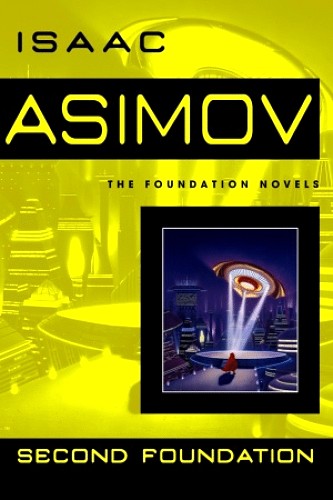
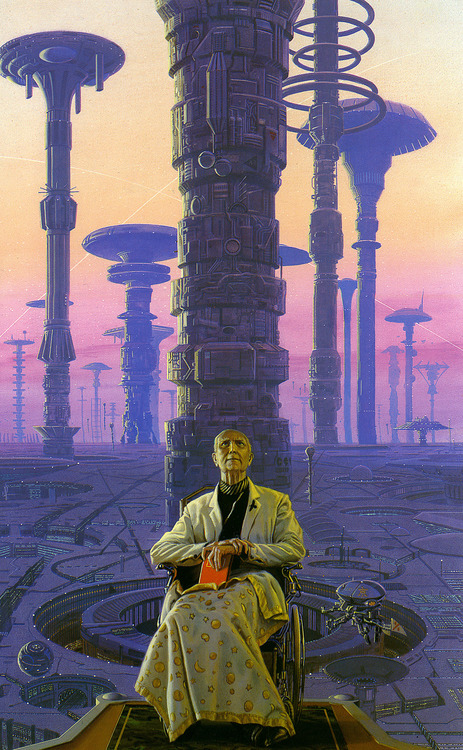
foundation_coversAt long last – after a year of reading it in small snippets between reading, writing and editing – I finally completed Second Foundation. As the third novel published in the Foundation series, it effectively ended the series, though it was followed up by two sequels and several prequels that expanded on the universe further.

However, given that it would be roughly 30 years until Asimov produced another Foundation novel and pressure from the fan community (and a hefty advance from the publisher) were the only reasons for it, many fans come to see Second Foundation as the final installment in what was effectively a trilogy.

I am one such person. And now that I’ve finished Second Foundation, I feel that the series is complete. And I’m rather dying to do a review, seeing as how the books been with me so long and it’s been months since I reviewed an actual novel. On top of all that, its taken me so long to finish this series that I feel a little embarrassed. Thank God the international society of sci-fi geeks doesn’t actually exist, or they’d kick me out for sure!

Sidenote: Before I begin, note the cover art that is featured at the top there. Over the years, many different covers have been produced, and the current cover for Second Foundation is the one you see below. However, I wanted to feature these ones since they give such a wonderful representation to the original trilogy.

In the first, you see Seldon sitting in front of the Imperial City of Trantor in the days before its decline. In the second, you see the Mule playing his instrument, sitting before a Trantor that lies in ruins. In the third and final, you see Arkady Darrel standing on a Trantor that has reverted to its natural state centuries later, the aged ruins lying well off in the distance. Once you read the full trilogy, you can see just how picture-perfect these representations are.

Plot Synopsis:
second-foundationMuch like Foundation and Empire, the book is divided into two parts, with the first dealing with the Mule’s ongoing search for the Second Foundation. This part opens a few years after the Mule’s trip to Trantor, during which time, his identity was revealed and his attempts to find the answer in the Imperial library were narrowly foiled.

Now in charge of a vast empire centered on the world of Kalgan, he sets out again, sending his fleet in all directions to locate and destroy this last challenge to his power. Knowing the a confrontation is inevitable, the executive council of the Second Foundation meets and decides to allow the Mule to find them, “in a sense”.

The search begins when Bail Channis, an officer recruited by the Mule because he exhibits an “unconventional mind”. He is sent out with Han Pritcher, an officer the Mule knows to be loyal but fears has been ineffective due to his own influence over the man. Together, they travel to the remote world of Rossem where, following clues left behind by Seldon (that the Second Foundation is at “Star’s End”), Channis believes they are hiding.

foundation_muleWhen they arrive, they find a backward, agrarian world where the locals are hospitable, but very little appears to be happening. Suspecting a trap and that Channis is in fact a Second Foundation agent, the Mule travels in secret to Rossem and reveals himself, thinking he has caught Channis and the Second Foundation off guard. However, he quickly realizes it is he who has stepped into a trap when the First Speaker emerges to save Channis.

The two do battle but in the end, the First Speaker emerges victorious by altering the Mules psyche, which prompts him to return to Kalgan and live out the rest of his days as a benevolent ruler. The story ends with another interlude in which the Executive Council celebrates their victory and now plots to get the Foundation back on track.

Part II takes place sixty years later, and fifty-five years after the death of the Mule by natural causes. The members of the First Foundation, led by Dr. Darrel, are now aware that the Second Foundation is out there and secretly discuss how they are exerting influence over their world. This is demonstrated by conducting electroneurology scans, which shows that key members of government have had their minds altered.

second_foundation_warMeanwhile, the Foundation is also embroiled in an ongoing conflict with the new ruler of Kalgan, who wants to reclaim the glory of the Mule by reconquering the Foundation and subjugating it to his will. Their fleet meets with early success and managed to cordon off Foundation space, but their fortunes soon change when the Foundation fleet surrounds them in a major battle.

In the midst of the war, the Foundation decides to send an emissary – Homir Munn, a noted Mule memorabilia collector – to Kalgan to investigate what the Mule learned about the Second Foundation in his final years. Darrel’s daughter, Arkady, sneaks aboard his ship to accompany him, since she is fascinated by the subject of the Second Foundation and Seldon’s plan, and because she is tired of being kept out of the loop by her father.

secondfoundation_arkadyIn the end, Munn is taken prisoner and interrogated by the Kalganian commander, but gives up nothing beyond stating that his purpose was to find clues to the location of the Second Foundation. Arkady is forced to flee, and on the advice of the Commander’s mistress, heads for the spaceport and flies with a family back to Trantor. To her surprise, she realizes that the mistress is a member of the Second Foundation, and that they are manipulating things on Kalgan.

From Trantor, she sends her father a message and tells him the Second Foundation are on Terminus. Once again going by clues left behind by Seldon, that the Second Foundation was at “the other end of the Galaxy”, she tells him that a circle has no end. Ergo, she concludes that they must have been on Terminus all along, where they could monitor the Foundation and Seldon’s Plan up close. In the midst of this, the Foundation fleet outflanks the Kalganians and wins the war.

With the war over and the Foundation victorious. Munn then returns to Terminus and tells them the Second Foundation could not exist. Darrel rightly then reveals that he has suspected all along that Munn has been manipulated by the Second Foundation, and conducts a brain scan to prove it. He then reveals that his work has yielded a telepathic jamming device, which they then turn on.

foundation_seldonThe 50 or so Second Foundation agents that are on Terminus are thus revealed and arrested. Reasoning that they are now neutralized, and with the war over,  the Foundation is now free to expand and build the Second Empire. However, in a final twist, another interlude takes place where the First Speaker is conversing with a student, where it is revealed that everything has proceeded by their design.

After neutralizing the Mule, the Second Foundation knew that Seldon’s plan was hanging by a thread, hence they manipulated things to ensure that it would proceed on track again. This included pushes the Kalganians into war with them, and then seeing to their defeat, and letting the Foundations find some of their agents and presume to have neutralized with them. It’s also revealed that they had a hand in grooming Arkady Darrel, and that Trantor is the real home, with Star’s End being a veiled reference to the old Imperial saying “all road’s lead to Trantor”.

Summary:
I can honstly say that after many years of stalling and waiting, finishing the original trilogy was quite the relief. And for the most part, I enjoyed the third installment in the original three-act play. However, there were some weaknesses that did not go unnoticed, and some of Asimov’s little idiosyncrasies which I’ve come to expect over the years.

For example, the first story is somewhat dry. Rather than there being any real intrigue and action, the entire section consists of a sort of final, half-hearted act made up of mind games. This certainly feels like the case when during the final chapter, where both Channis and Pritchard, followed by the Mule and the First Speaker, are embroiled in a type of mind war. It’s a constant case of “I got you”, “no, I got you!” kind of thing.

foundationAnd this is how the Mule is defeated and the greatest threat to Seldon’s Plan is neutralized. After being portrayed in the second book as the one factor that Seldon did not plan for, a titanic force that was overwhelming the Foundation and its armies, his ultimate demise seemed rather undramatic. Granted, this was something that needed to be secretive and behind-the-scenes, but it felt it rushed and kind of forced.

The second story is much better, containing plenty of intrigue, action, and crisis. And the story flowed quite nicely, beginning at a time when the Foundation feels secure in itself, but a small band of specialists understand that this is not the case, and then culminating in a war and a big reveal. And here, the twists serve a better purpose, showing how the Foundation thinks they’ve neutralized the threat, never to learn that they’ve been helpfully misled.

foundation_forwardBut once again, there was a sense of things being forced and rushed. Towards the end, people are once again revealing that they knew things all along, were better prepared than they had any right to be, and could solve everything with the push of a button or a last minute decision. This time around, its the First and the Second Foundations involved in a case of strategic and mental Jiujitsu, and it feels like there’s a few too many reversals.

However, that doesn’t detract much from the ending, which feels like a good completion to the series. After establishing the Foundation in the first book and showing to the progression of Seldon’s Plan, to throwing it into disarray in book two, by this final act, it now appears that the Plan is fully restored and all the principal actors have done their part.

hari_seldonAnd as the book states by quoting the Encyclopedia Galactica, the war between Kalgan and the Foundation would be the last major conflict before the rise of the Second Empire. Ergo, it would smooth sailing from here on in. As I said already, Asimov claimed that the remainder of the series was motivated by pressure from fans and the publisher, so I tend to think of these three books as the series in its entirety. And I think the way he ended it here was effective and satisfying. No need for sequels or prequels beyond this point!

So if you haven’t read this series yet, I recommend you get on it. While it may have some flaws and apparent idiosyncrasies, it remains a classic of science fiction and one of the most brilliantly original series available. Hence why I felt I needed to read it, and why you should too. Especially if you consider yourself any kind of sci-fi fan or geek!

Elder Scrolls IV – Oblivion: A Video Game Review

elder-scrolls-iv-oblivion-oblivion-logoIt’s been awhile since I did any video game reviews, and since my purchase of Elder Scrolls V: Skyrim, I’ve been to do one. But before I could cover the latest fantasy installment from Bethesda studios, I figured I should build up to it. After all, its predecessor was a big hit with me in its time, and I got countless hours of gaming enjoyment from it for many years before I retired it.

Such is the nature of these games, they are the gift to yourself that keeps on giving! In any case, Oblivion was the first Elder Scrolls that I ever played. Prior to it, I didn’t even know about the series and didn’t have the slightest idea of what it was about. My thanks to my friend Doug for introducing me to this, and others like it!

Background:
As the fourth game in the series, Oblivion takes place within the fantasy universe known as Tamriel. In previous games, players were introduced to several different provinces in the realm, and were treated to snippets of the ongoing history behind it all. It would be no exaggeration at all to say that universe is as vast as anything envisioned by Tolkien or Martin, and was most likely inspired by one or both.

tamriel_mapThe realm of Tamriel is made up of nine provinces – Cyrodiil, Morrowind, High Rock, the Summerset Isles, Hammerfell, Black Marsh, Skyrim, Valenwood, and Elsweyr. Each serves as the home of a specific faction in the series, such as the Dunmer (Dark Elves) of Morrowind, Orsimer (Orcs) in High Rock, Altmer (High Elves) in the Summerset Isles, Argonians (reptile people) in Black Marsh, Bosmer (Wood Elves) in Valenwood, and Khajit (feline people) in Elsweyr.

There are also several factions of “Men”, which include the Bretons of High Rock, the Redguards of Hammerfell, the Nords of Skyrim, and the Imperials of Cyrodil. At some point in the series’ history, the Mede Empire was formed by uniting the provinces of Men with the Khajit, Argonians and Orcs, either through conquest or alliances, and the Imperial City established as the administrative center of Cyrodil.
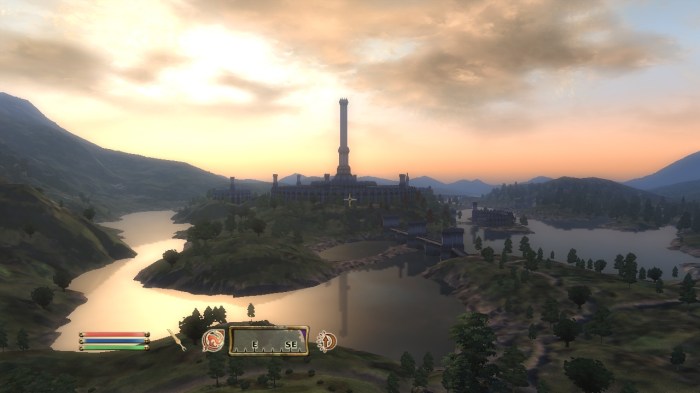
The-Elder-Scrolls-OblivionBeyond the Mede Empire, which is made up of Cyrodiil, Morrowind, High Rock and Skyrim, there lies the recently-independent Hammerfell. In addition, there is the competing and often hostile Aldmeri Dominion (comprised of the other four provinces) which is ruled over by the Altmer (High Elves).

At one time, it is indicated, High Elves ruled over much of Tamriel as the Ayleids, an empire which has since fallen into ruin. Another extinct civilization is the Dwemer, a highly-advanced society of Dwarves who were masters of machinery and automation, and who apparently knew much of the Elder Scrolls. Throughout the various games, these civilizations ruins provide all kinds of treasures and the keys to ancient mysteries.

elder_scrolls_racesWithin the realm, the established religion is the worship of The Nine (echoes of the Seven in GOT), gods that represent various virtues and powers. But of course, other faiths exist as well, such as the Nords faith involving dragons, mythical beasts which are apparently extinct at this point. But the other major faith is the worship of the Daedra, gods of “First Causes” that predate the Nine and are both good and evil.

The Daedra and their intervention serve as a major motivating force in the game, contributing to both the main storyline and missions of lesser import. At many points in the series, the coming of a Daedra lord to the mortal realm is the main plot line of the story, usually as a fulfillment of some major and ancient prophecy.
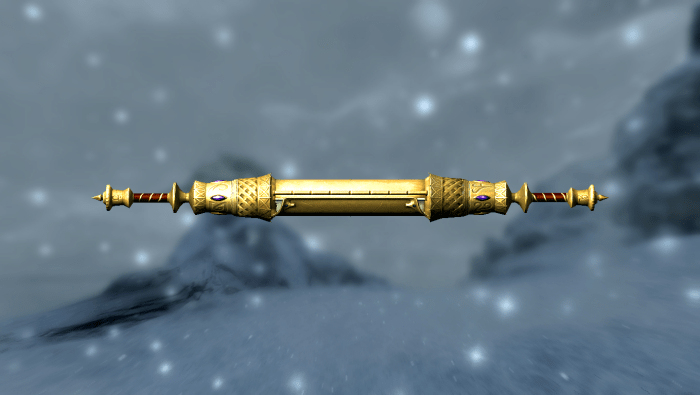
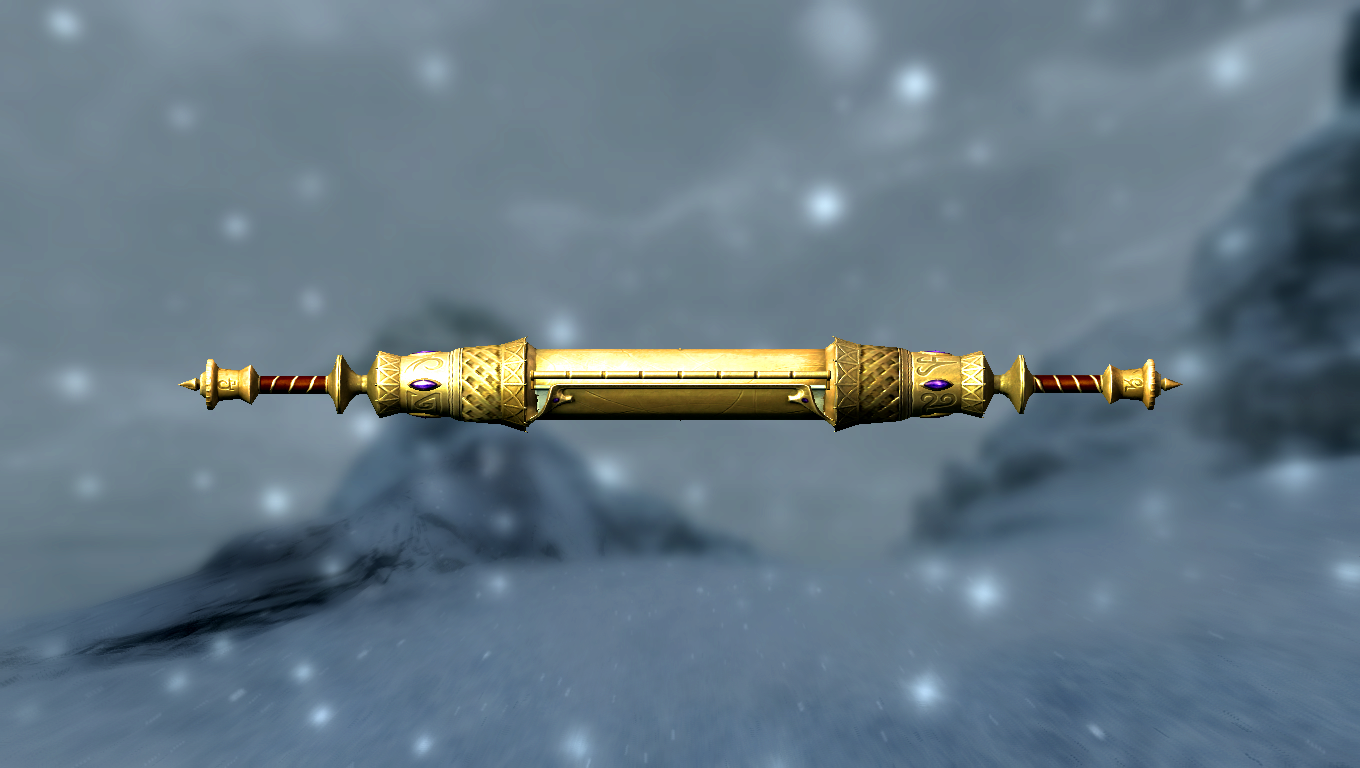
elder_scrollAt the center of it all however, are the Elder Scrolls themselves. These are rarely ever featured in the game, but serve as a plot framing device, where the events in the game “were foretold in the Elder Scrolls,” basically. These objects, which were apparently forged by the gods themselves, contain incredible power and are often incomprehensible to mortals.

Game Summary:
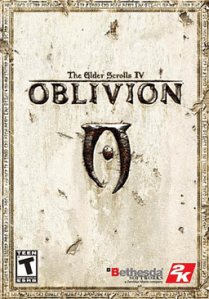
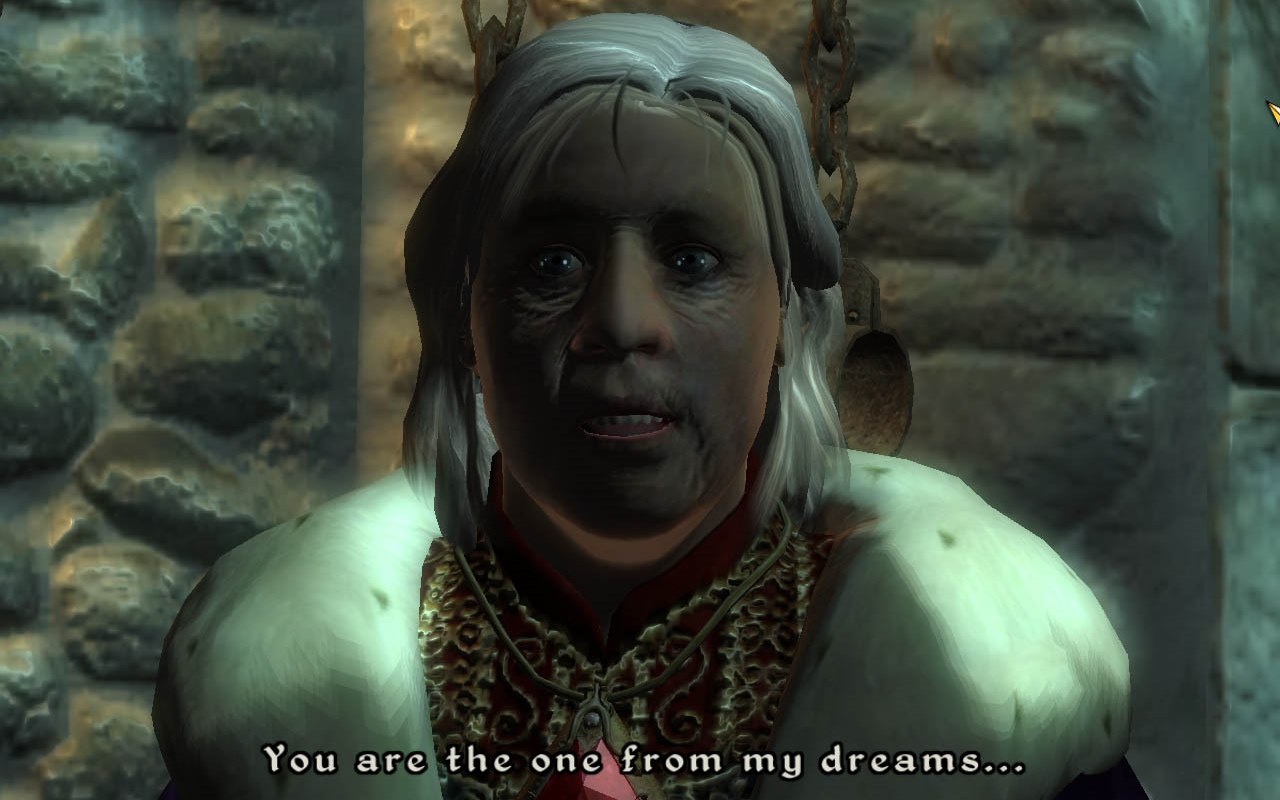
The_Elder_Scrolls_IV_Oblivion_coverThe story opens with an intro movie showing the last Emperor, Uriel Septim (voiced by Patrick Stewart), talking about how since the dawn of time, the Tamriel has been shut off from Oblivion – the hellish realm where the Daedra rule. However, he is haunted by dreams that the gates are about to open again, fulfilling an ancient prophecy that also foretold of the death of the Septim dynasty.

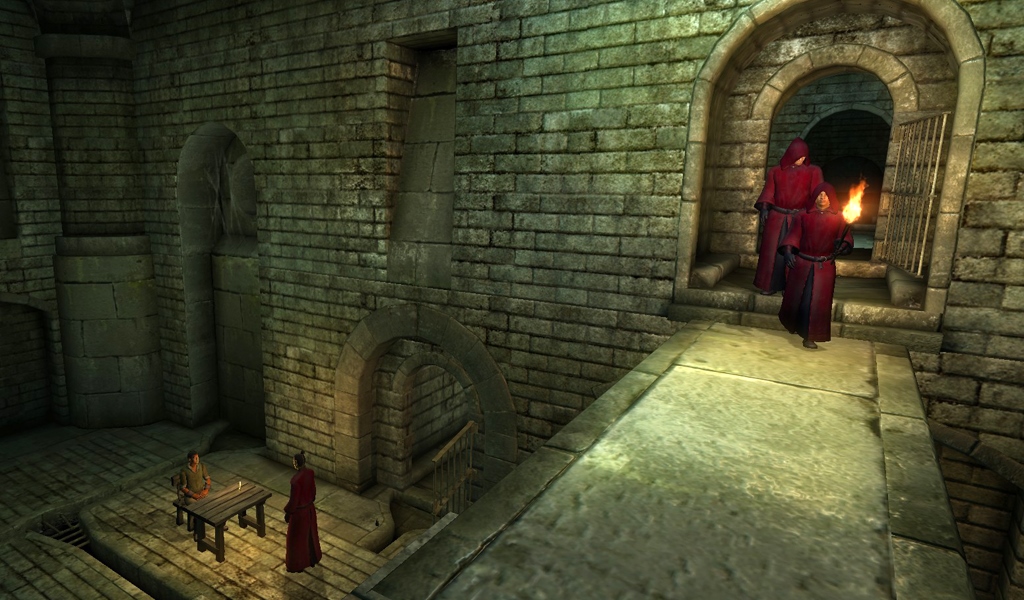
The game then begins with character selection, where you are required to specify your race, gender, class, etc., before things proceed. Once that is complete, you find yourself in the Imperial City dungeons, having been imprisoned for reasons you don’t fully understand. Believing the guards are coming for you, you are then surprised to see members of the Blades – the royal guard/secret police of the Empire – come to your cell with the Emperor himself.

You then overhear them saying that the royal heirs have been murdered, and they are apparently looking to smuggle the Emperor out through a secret tunnel that runs underneath the dungeons. You cell, which was supposed to be vacant, holds an entrance. After telling you to stand back, the Blades let the Emperor in, and he spots you and tells you he has seen you in his nightmares. After this introduction, he asks you to come with them.

Elder_Scrolls-Oblivion_urielIn the tunnels, you are beset by a number of agents that belong to a sect known as the Mythic Dawn. You are also able to learn from Uriel what is going on. He says that the Dragon Fires, a holy beacon which keep the planes of Oblivion and Tamriel separate, have gone out. They need to be relighted if Tamriel is to survive, but agents are pouring over the city trying to kill him and his sons.

Thus, the Blades are trying to get him to safety. After defeating the last of the Dawn agents in the tunnel, the Blades take off down a separate tunnel and leave you behind. However, you are able to follow them indirectly by passing through a series of side tunnels that are occupied by Goblins. This gives you a chance to collect gear and bolster your skills, and eventually you rejoin the main party.

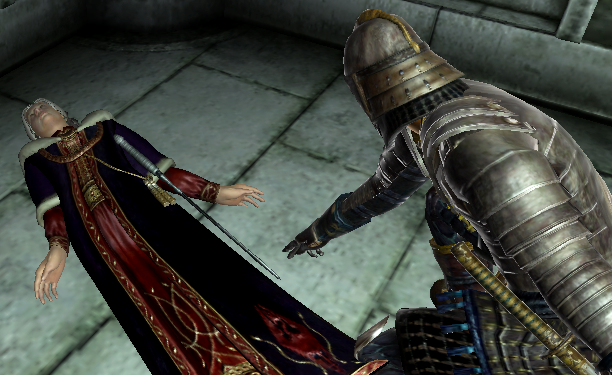
You are soon cornered, at which point Uriel hands you the Amulet of Kings, the very thing that keeps the doors between Tamriel and Oblivion shut and can only be worn by someone of the Septim line. He tells you that their is one remaining heir, orders you to take the Amulet to a man named Joffrey who knows where to find him, and that only you and he can “close shut the doors of Oblivion”.

Uriel_Septim_VII_deathThe Emperor is then killed, and you are forced to find your way out of the sewers with the Amulet in hand. Once you’re out, you find yourself just outside the Imperial City and must then travel to Weynon Priory in the west. Inside, you meet Jauffre, a monk who is also a member of the Blades, and tell him what happened. He reveals that the secret heir alluded to by Uriel is a man named Martin who is serves at the Temple in Kvatch.

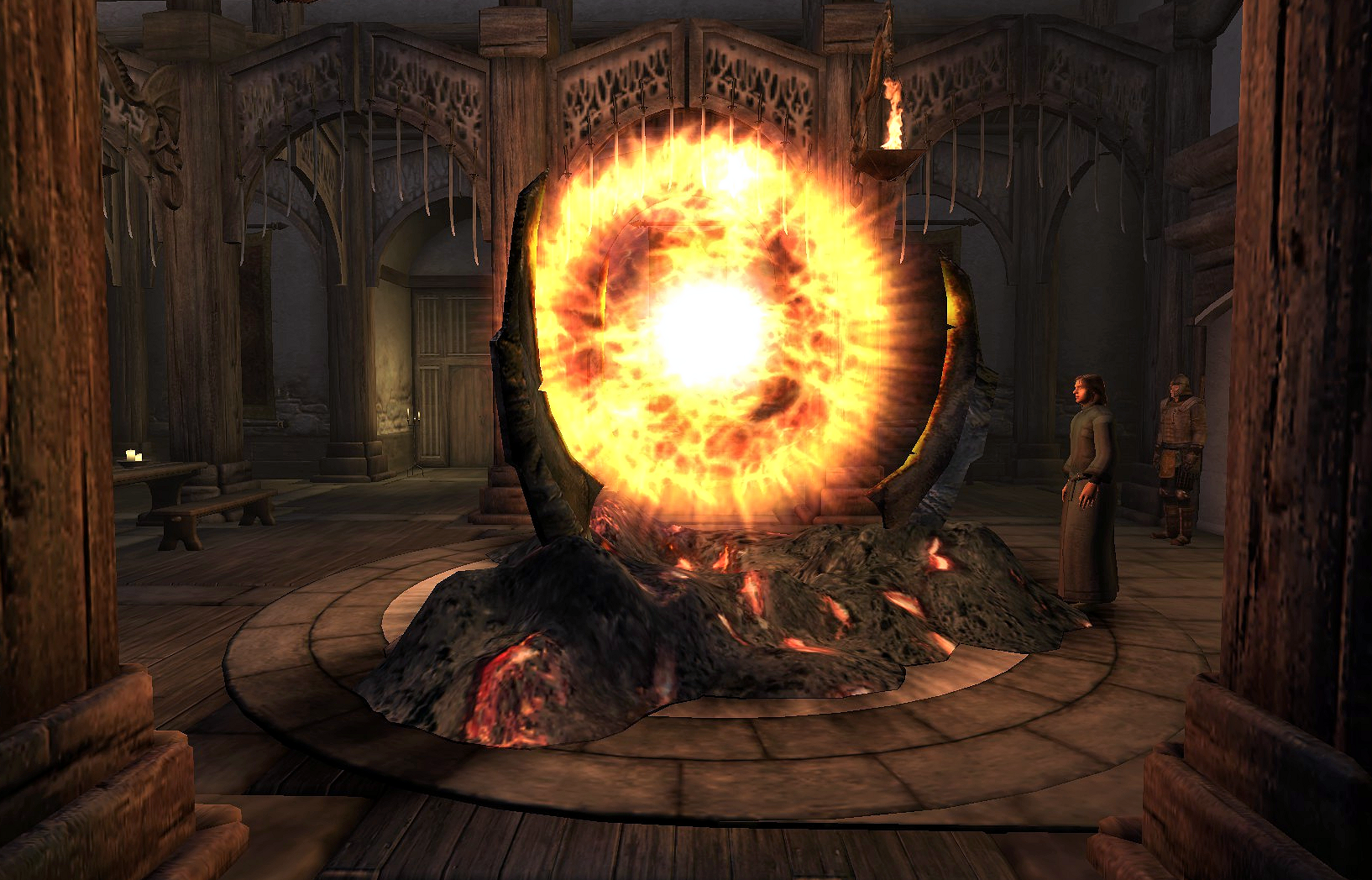
Ergo, that’s where your headed next. But when you arrive, you find the city is in ruins, with a refugee camp at the base of the hill and the guards camped beyond the gates and trying to hold the line against an open Oblivion gate. The guard captain tells you that a patrol was lost inside, and he and his men cannot retake the city so long as it is open. Battling through the hellish environment against Scamps, you find the last remaining patrol soldier and make it to the tower where you remove the Sigil Stone, thus collapsing the gate.

Oblivion-Gate_kvatchBack outside, you and the guards enter the city gates and begin retaking the place from the Daedra. After clearing the front courtyard, you find Martin (voiced by Sean Bean) inside the Temple with a group of refugees. You tell him your story, and his secret, and he agrees to come with you as soon as the city is clear and the refugees can be evacuated. Fighting your way further, you clear out the rest of the city and the main castle, where you find the Lord dead.

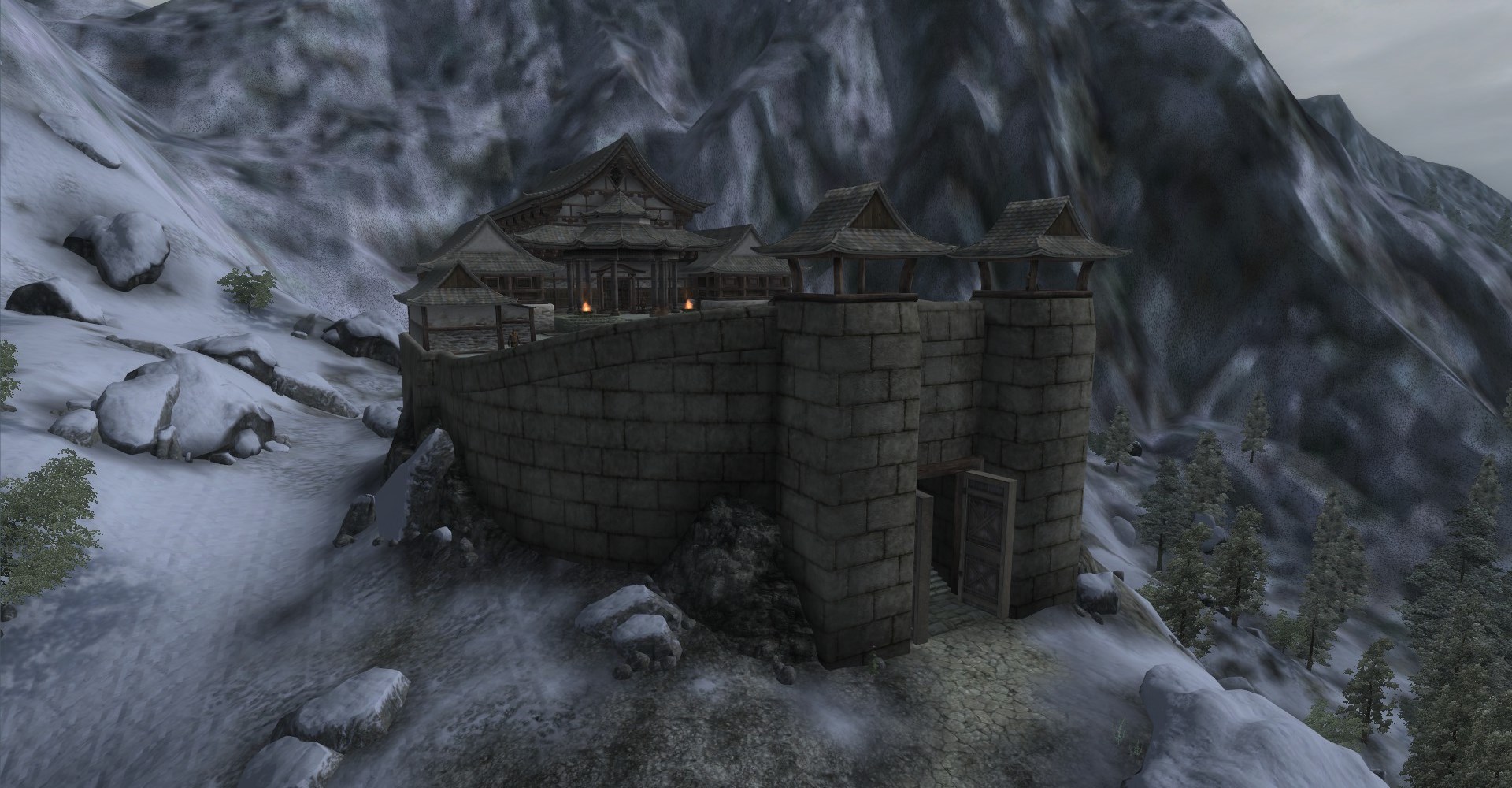
With Martin, you report back to Weynon Priory, which is under attack. Between you two and Jauffre, you manage to kill the enemy, but discover that they have stolen the Amulet of Kings. Once again, it appears the enemy are one step ahead. But with Martin alive, the three of you report to Cloud Ruler Temple, the Blade Stronghold in the north of Cyrodil, where Martin will be safe.
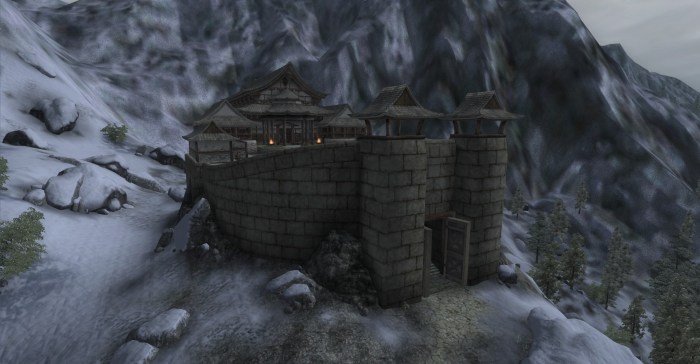
Oblivion_Cloud_Ruler_TempleOnce there, he takes charge of the Blades and you are given the option of joining them. With that complete, you are told to report to the nearby town of Bruma where enemy spies have been spotted. Once you kill them, you discover one of them is a resident in the town and search their house. Upon finding a letter, you learn they are part of a cult known as the Mythic Dawn who worship the Daedra lord of Mehrunes Dagon, Lord of Destruction.

Their plan is to open the gate of Oblivion so Dagon can reclaim Tamriel, and they intend to kill the Septim line since it is their blood that has been keeping the gate closed for ages. Intrinsic to this is opening a major gate outside of Bruma, destroying Cloud Ruler Temple, and now killing Martin. They are led by a Dark Elf named Mankor Camoran, a mage who has apparently been alive for centuries.
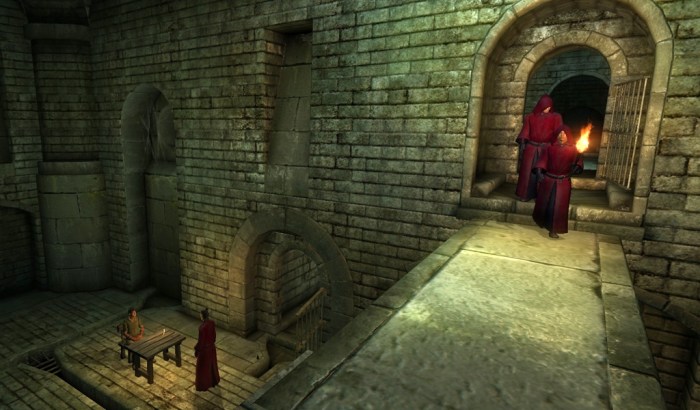
oblivion_pathofdawnYour next mission is to the Imperial City where you meet Baurus, one of the agents that was there when the Emperor was killed. He tells you that the enemy’s lair is somewhere in Tamriel and you must find it. The key appears to lie in Mankor Camoran’s volumes known as The Commentaries on the Mysterium Xarxes – a series of books about a tome of ancient power.

Already, you have found two while searching the spy’s house in Bruma, and the third is apparently on special order at the city’s book store. Meeting with the man who ordered it, you compel him to cooperate and hand it over. He tells you he had a date to meet with Mythic Dawn representatives to get a copy of the fourth and final volume.

Posing as this man, Baurus meets with Camoran’s son and daughter while you keep watch. His cover is blown when their escorts spot you and you are forced to fight it out. After killing them, you manage to retrieve the fourth and final copy and go to the Mage’s Guild and ask them for help discerning its clues. You realize that a secret message is inside the book that tells you to go to the city’s cemetery at noon when the sun will be above the White-Gold tower.

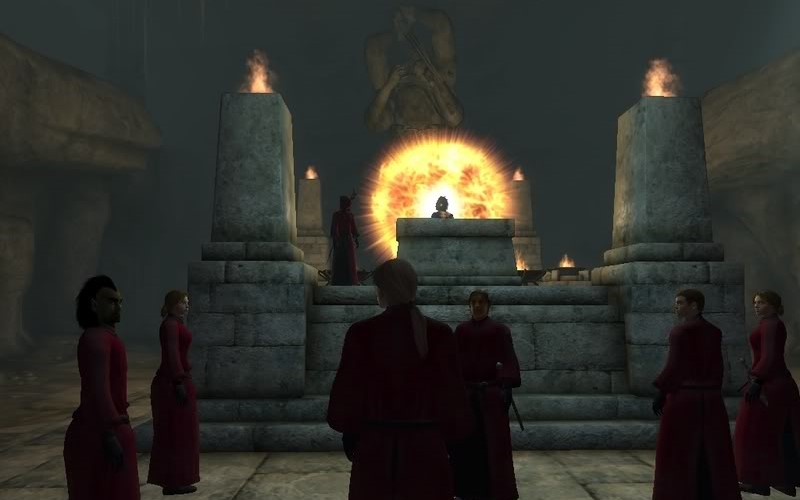
oblivion_mythicdawnWhen you do this, you see a map on the mausoleum wall that shows you the location of the Mythic Dawn’s lair. After arriving there, posing as another applicant, you come to see Mankor Cameron himself, who is wearing the Amulet of Kings. After giving his people a speech, he opens a portal to “Paradise” and leaves, taking the Amulet with him. Grabbing the Mysterium Xarxes, which he left behind, you fight your way out of the cave and head back to Cloud Ruler Temple.

Once there, Martin tells you that he may be able to open the portal to Camoran’s Paradise so you can retrieve the Amulet finally. He begins reading the Xarxes to discern what he would need to do this. In the meantime, you are told to report to Bruma where another gate has opened. Alongside the city guards, you go in and shut it again, but know that this is a temporary victory.

Given that the Dawn’s long-term plan is to open a major gate outside of the city and lay waste to Bruma and Cloud Ruler Temple, you know that time is limited. You are thus given two main missions. The first is to collect the items needed to open the gate to Camoran’s Paradise, the second is to go to every other city in Cyrodil and convince the local lord to free up soldiers to send to the defense of Bruma.

oblivion_cyrodil_mapThe first mission requires you to go to several locations, securing a Daedric artifact, the blood of Tiber Septim (the first Septim Emperor), and an Ayleid crystal. The second requires you to travel to all the major cities – Anvil, Chorrol, Skingrad, Cheydinhal, Bravil and Leyawiin – and close the gates outside of these cities. This gives you a chance to see each town and learn of their particular makeup and issues, as well as pick up additional side-missions.

With all of this complete, Martin tells you that there is only one other thing that he needs – a major Sigil Stone. This requires that you allow the Mythic Dawn to open a major portal outside of Bruma, and for the soldiers to hold the line while you go in and grab hold of the stone. A major battle ensues, and you are forced to grab the stone before the Daedra are able to bring out a massive siege engine and lay waste to Bruma, as they did Kvatch.
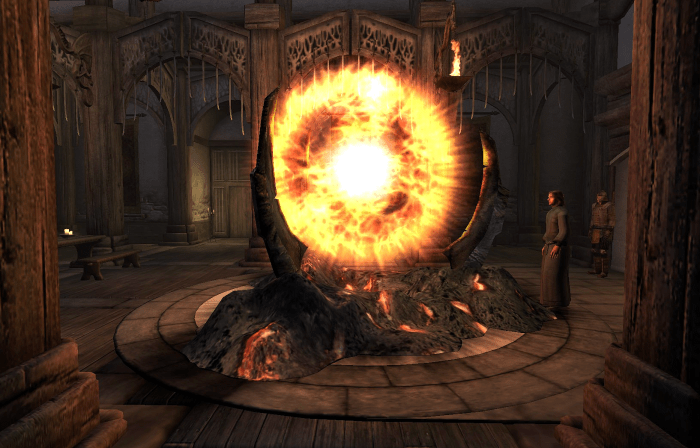
oblivion_paradiseWith the final item secured, Martin opens the portal to Camoran’s paradise inside the Temple, and you go through. Once there, you see a Edenic like environment, where Camoran’s followers live, but are forced to endure constant death as Daedric creatures hunt them and they are resurrected. They tell you how to make your way to Camoran’s seat of power – Palace Carac Agaialor.

Once there, you confront Camoran’s and his two children – Ruma and Raven – and do battle. Once they are killed, you retrieve the Amulet, and Paradise collapses. You are returned to Cloud Ruler Temple where Martin takes the Amulet, as Emperor, and you plan to return to the Imperial City to light the Dragon Fires and seal the gates between Tamriel and Oblivion once and for all.

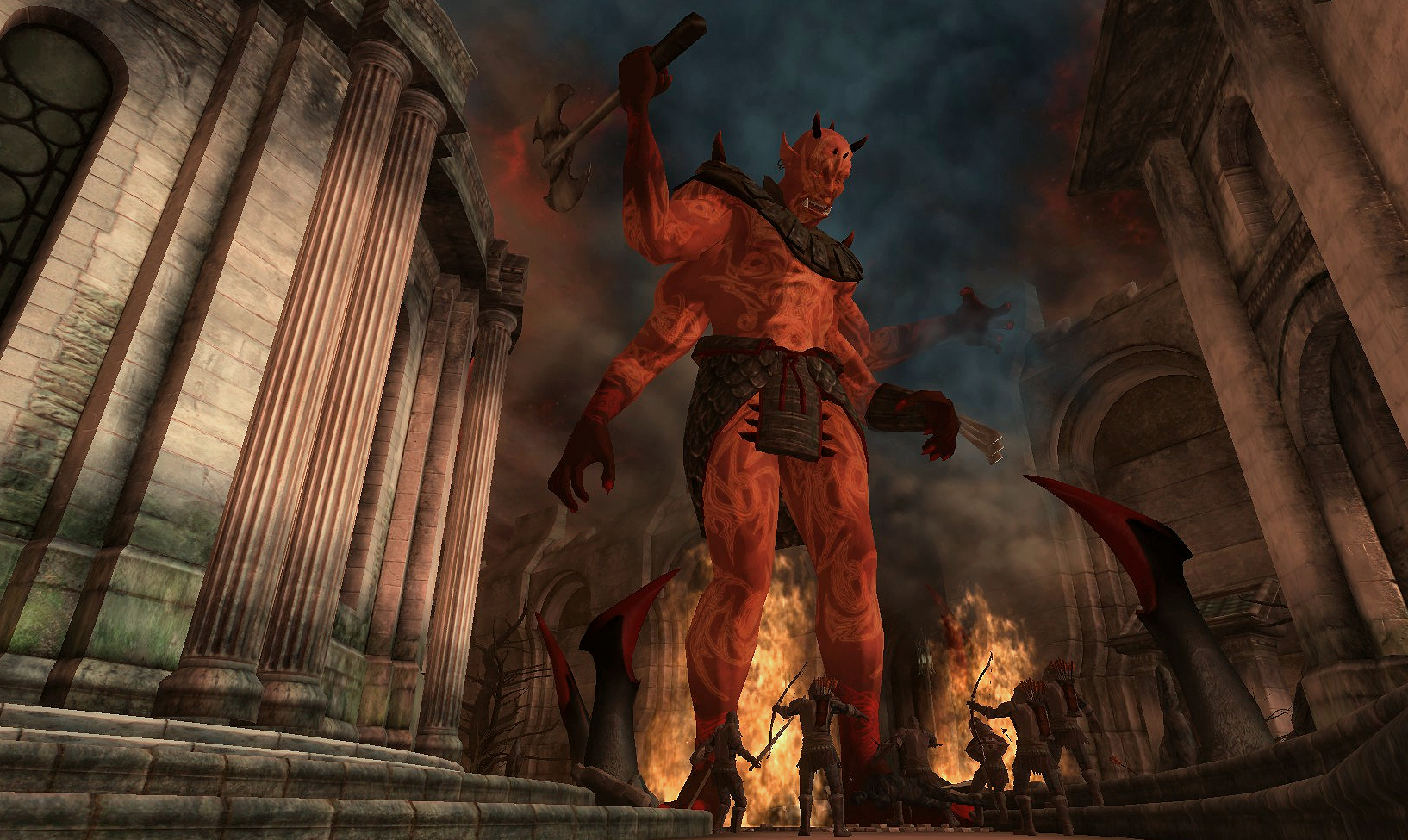
oblivion_mehrunes_dagonAt the palace, you are greeted by High Chancellor Ocato – leader of the Elder Council – but the meeting is cut short when the guards announce the city is under attack. It seems that Oblivion gates are opening all over the city and Daedra are pouring through. With no time to lose, you head for the Temple District so Martin can light the fires, but once there, you see Mehrunes Dagon, who has passed into your world, laying waste to the district.

Martin believes all hope is lost, but a last minute suggestion from you that the Amulet might be able to help gives him an idea. Asking you to escort him inside the temple, which is dangerous considering it involves getting around Dagon’s massive figure, he goes to the center and breaks the Amulet, combining the kings and dragon’s blood with his own. He then transforms into a massive avatar Akatosh, the principle diety of the Nine, and does battle with Dagon.
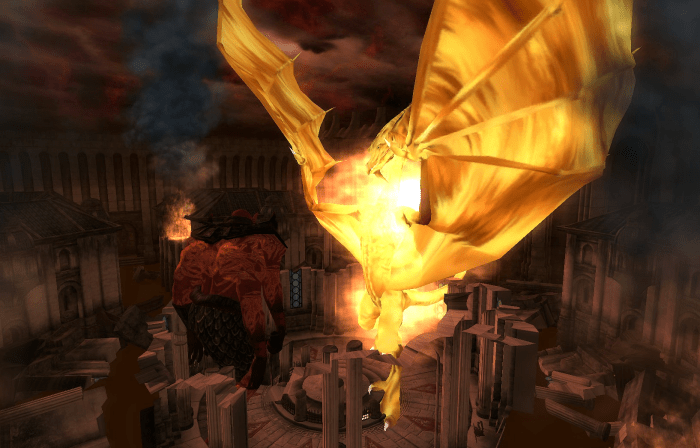
oblivion_Martin_Mehrunes_DagonDagon was defeated after the avatar of Akatosh – a massive fiery dragon – chomped his neck and sent him back to Oblivion. The avatar then turned into stone, signalling that it too had departed Tamriel and Martin was now dead. However, his sacrifice had won the day, and permanently sealed the doors between Oblivion and Tamriel shut forever. The Oblivion Crisis, as it would come to be known, was over, and a new age begun

Having taken part in the final battle and see the victory of Imperial forces over the Daedra, you are named Champion of Cyrodil and given a special suit of Dragon Armor. In addition to being named Hero of Kvatch and Hero of Bruma, you now hold a rank reserved for a very select few. With the game now over, you are free to roam and pick up any additional quests.

Additional Quests:
Outside of the Oblivion Crisis, gamers have the option of participating in numerous quests, most of which revolve around joining a Guild. These include the Fighters Guild, the Mages Guild, the Thieves Guild, and the Dark Brotherhood (an assassin’s guild). Membership in each allows you to go on additional quests, earn ranks, rewards, learn new abilities, and take part in other adventures.

Oblivion_Fighters_GuildThe Fighter Guild quest culminates in you taking on a rival mercenary organization – the Blackwood Company – when it becomes revealed that they are abusing a narcotic known as Hist Sap that makes them bloodthirsty and unpredictable. The Mages Guild quest culminates in your facing a group of Necromancers led by the “Worm KIng”, an evil mage determined to destroy the Imperial Mages.

Joining the Thieves Guild makes you an agent of the Gray Fox, a recurring figure in the game, who provides protection for all of Cyrodil’s beggars and uses them as his eyes and ears. After participating in a number of lucrative thefts, you meet the Gray Fox and assist him in his scheme to recover his lost identity – Count of Anvil. As payment, you get to keep his magic cowl, the very thing that deprived him of it in the first place.
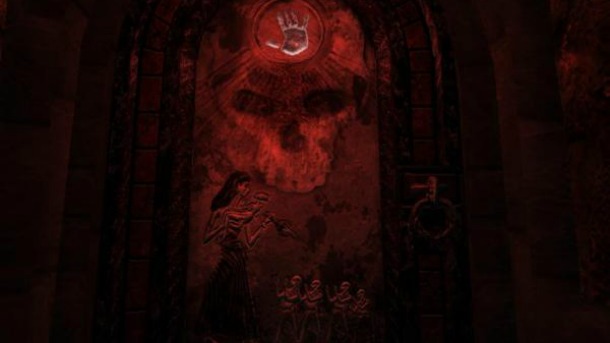
oblivion_dark_brotherhoodFinally, the Dark Brotherhood is an order that you can join the moment you murder someone in cold blood. A visitor then comes to you while you sleep and extends an invitation. Once you join, you are given the task of assassinating anyone who been named in a Black Sacrament – a dark ritual that marks people for death. In time, you have the option of becoming a vampire, and gain the favor of the Night Mother – their patron goddess.

And of course, there are many, many side missions where you have the option of performing tasks for various Daedra. Depending on the lord in question, these can be beneficial, harmful, or just plain mischievous, and all lead to certain benefits and rewards. And of course, there are plenty of missions to be had simply by adventuring around and helping people out.

Add-Ons:
There are also additional quests which I have played – Knights of the Nine, The Shivering Isles – but I really didn’t like them too much. In the case of Knights, you are tasked with resurrecting the order of the Knights of the Nine, collect sacred weapons, armor, and artifacts, and fight against an Aylied deity that is returning to Tamriel.
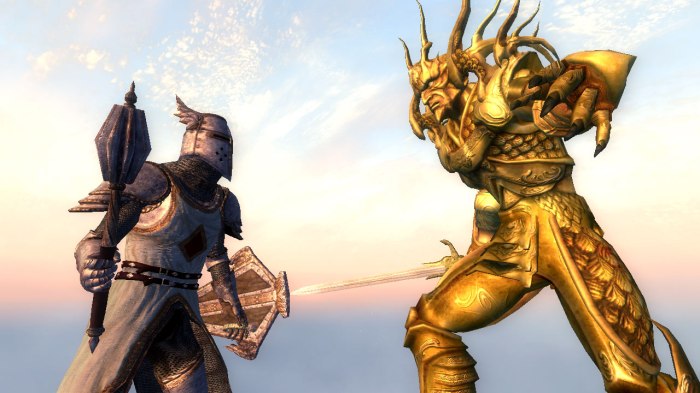
Oblivion_knights7However, the production value on this game was really not as goo as the main one, and the storyline seemed awful… Christiany. I mean really, the armor and finery you wear make you look exactly like a Crusader, and by the time you are finished with the main campaign, yet another quest involving a resurrected evil seems tired and played out.

In the case of the Shivering Isles, the storyline is a bit more weird, and much more psychedelic. Here, you enter into the realm of the Daedric lord Sheogorath – Prince of Madness and ruler of the Shivering Islesto battle with him and become the new master of the Isles. Here too, found the production values weak, the quest kind of pointless, and the story and setting really odd.
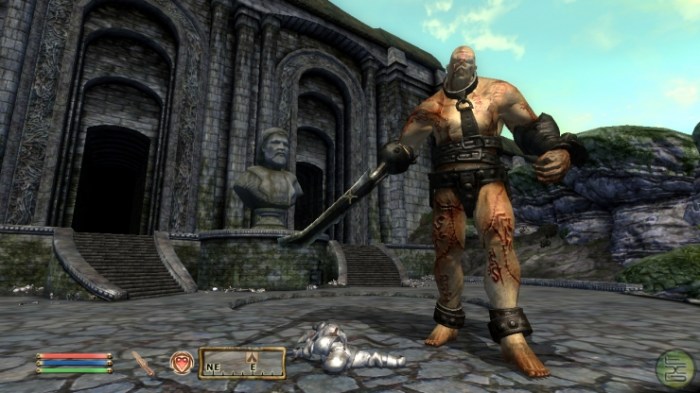
oblivion_shiveringMy advice, stick to the main quests and save your money when it comes to these expansion packs. Sure, curiosity might get the better of you, but why pay extra when what’s added is not up to snuff?

Summary:
I guess it goes without saying that this game is incredibly dense and detailed. And of course, the back story is lengthy and intricate, but as long as you do your due diligence, it’s not that hard to follow. And though it does have its fair share of fantasy cliches, it’s a very inspired piece of work with plenty of historical and cultural allusions.

Many times over, I was reminded of LOTR and other prominent genres, and combined with the depth and density of it, it was little wonder why I got so many hours of enjoyment out of it. Between all the spells, weapons, abilities, upgrades, and opportunities to learn about the Elder Scrolls universe, its a truly immersive and entertaining game.

Between the main quest, secondary quests, and the hundreds – if not thousands – of additional quests, it really seems like the game has enough material to keep going indefinitely. But eventually, you are likely to map out every corner of Cyrodil, obtain the very best items, and get to the point where no enemy can possibly best you. And chances are, you’ll lose interest before then anyway, so it all works out.

And it was my experience with this game that led me to finally get around to buying The Elder Scrolls V: Skyrim not that long ago. Here too, I’ve received endless hours and enjoyment, and will be reviewing it soon enough!

News From Space: 3D Printer Bound for ISS!

made-in-space-3d-printerThe International Space Station has plans to bring a 3D printer on board by 2014. And yesterday, the model in question – the startup’s Made in Space engineering model – passed an important milestone on its way into orbit. This consisted of a battery of tests at NASA’s Marshall Space Flight Center in Huntsville, Ala., which confirmed that the machine can survive the rigors of launch and function in space.

Michael Snyder, director of research and development at Made in Space, said in a statement that:

This developmental testing was vital to the design of our flight-unit printer. We’ve engaged in a fast-paced mission starting in early 2013 to produce hardware that NASA would qualify for launch and installation to the ISS in 2014. The fact that we’ve been able to pass another milestone in an abbreviated time frame is extremely exciting.

For some time, NASA has had its eye on additive manufacturing (aka. 3D printing) as a means of making space travel cheaper and more efficient. In addition to the development a 3D pizza maker and food printing, NASA also hopes to equip future ships and stations with their own printer so crews can generate spare parts and components, rather than having to mount costly resupply missions.

3DpizzaMade in Space and NASA Marsall hope to jump-start this vision with their “3D Printing in Zero Gravity” experiment (3D Print for short) which  aims to launch the first-ever 3D printer to the space station in August 2014. But before that can happen, the machine must pass some more rigorous tests. The first occurred several months ago when three prototype versions of Made in Space’s printer passed a series of microgravity tests during parabolic airplane flights.

This flight test, known colloquially as the “vomit comet”, demonstrated that the prototypes could indeed handle working in microgravity environments. The more recent tests at Marshall, performed with the company’s Engineering Test Unit (ETU), ensured that the printer can survive the vibrational stresses of launch and deal with electromagnetic interference, among other issues.

3d-printer-microgravity-flight-testData from these tests will inform the critical design review of the flight unit prototype, a big step toward clearing the machine for launch toward the space station. According to Made in Space officials, the final review process is slated for the 15th of August. Niki Werkheiser, 3D Print project manager in Marshall’s Technology Development and Transfer Office, also said in a statement that:

The successful results received from the ETU testing at [Marshall] reinforces our confidence that Made in Space, Inc. has developed the robust design required to successfully print in space. We are excited to have successfully completed yet another key step toward meeting the extensive ISS flight certification process.

If all goes well, it won’t be long before the crew of the ISS is able to regularly print out all the replacement parts they need. Given time, they might even solve the problem of what to do when freeze-dried food won’t cut it and you absolutely must have a slice of pizza!

Source: space.com

Climate Crisis: NASA’s Projected Changes

NASA_global_warming_predAs the world’s foremost space agency, NASA has been at the forefront of climate research for many decades. Their contributions to this field of science has helped to shape our understanding of the planet’s past and has led to our current understanding of the Greenhouse Effect, Global Warming, and Climate Change. As a result, they are committed to educating the public about what’s in store for our blue planet in the near future.

Below are two videos that were recently released by NASA’s Goddard Space Flight Center. Both briefly, but succinctly, provide visualizations of what an average temperature increase of up to 5.5 Celsius (8 degrees Fahrenheit) and the resulting effect on weather patterns would look like, which is expected to happen by the end of the 21st century.

These visualizations – which highlight computer model projections from the draft National Climate Assessment – show how average temperatures and precipitation patterns could change across the U.S. in the coming decades under two different scenarios. As you can see, both predict significant warming and drying as a result of increased concentrations of CO2 in the upper atmosphere.

Projected Temperature Change by 2100:


Projected Precipitation Change by 2100:


The visualizations, which combine the results from 15 global climate models, present projections of temperature and precipitation changes from 2000 to 2100 compared to the historical average from 1970 -1999. They were produced by the Scientific Visualization Studio at NASA’s Goddard Space Flight Center, Greenbelt, Md., in collaboration with NOAA’s National Climatic Data Center and the Cooperative Institute for Climate and Satellites, both in Asheville, N.C.

Speaking on the subject of these videos, Allison Leidner, Ph.D. – a scientist who coordinates NASA’s involvement in the National Climate Assessment – said:

These visualizations communicate a picture of the impacts of climate change in a way that words do not. When I look at the scenarios for future temperature and precipitation, I really see how dramatically our nation’s climate could change.

But of course, these visualizations only tell part of the story. Far from this being a geographically restricted phenomena, residents inside the US are likely to be less severely hit than those people living in Sub-Saharan Africa, the Mediterranean, the Middle East, Central Asia, India and East Asia, where the problems of flooding, water loss, famine and drought area already common.

Add to this flooding coastlines, invasive parasites and diseases, militarized borders, potential skirmishes over dwindling resources, and a refugee crisis the likes of which the world has never seen, and you get a pretty good idea of why this issue matters as much as it does. The next century is going to be an interesting time. Here’s hoping we survive it!

Source: nasa.gov

Happy Anniversary Curiosity!

curiosity_sol-177-1Two days ago, the Mars Rover known as Curiosity celebrated a full year of being on the Red Planet. And what better way for it to celebrate than to revel in the scientific discoveries the rover has made? In addition to providing NASA scientists with years worth of valuable data, these groundbreaking finds have also demonstrated that Mars could once have supported past life – thereby accomplishing her primary science goal.

And it appears that the best is yet come, with the rover speeding off towards Mount Sharp – the 5.5 km (3.4 mile) high mountain dominating the center of the Gale Crater – which is the rover’s primary destination of the mission. This mountain is believed to contain vast caches of minerals that could potentially support a habitable environment, thus making it a veritable gold mine of scientific data!

curiosity-anniversary-1To take stock of everything Curiosity has accomplished, some numbers need to be tallied. In the course of the past year, Curiosity has transmitted over 190 gigabits of data, captured more than 71,000 images, fired over 75,000 laser shots to investigate the composition of rocks and soil, and drilled into two rocks for sample analysis by the SAM & CheMin labs housed in her belly.

On top of all that, the rover passed the 1 mile (1.6 km) driving mark on August 1st. Granted, Mount Sharp (aka. Aeolis Mons) is still 8 km (5 miles) away and the trip is expected to take a full year. But the rover has had little problems negotiated the terrain at this point, and the potential for finding microbial life on the mountain is likely to make the extended trip worthwhile.

curiosity-anniversary-20But even that doesn’t do the rover’s year of accomplishments and firsts justice. To really take stock of them all, one must consult the long-form list of milestones Curiosity gave us. Here they are, in order of occurrence from landing to the the long trek to Mount Sharp that began last month:

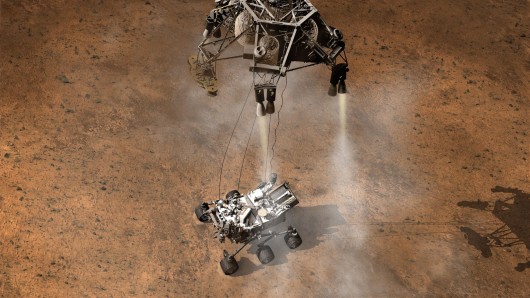
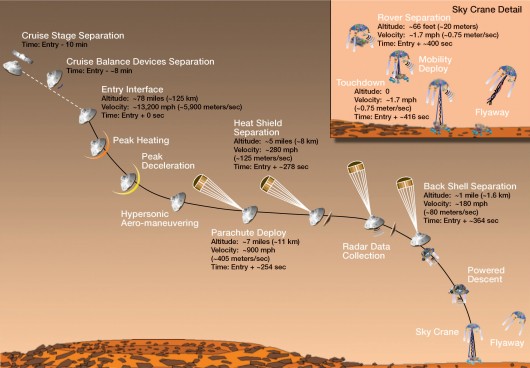
1. The Landing: Curiosity’s entrance to Mars was something truly new and revolutionary. For starters, the distance between Earth and Mars at the time of her arrival was so great that the spacecraft had to make an entirely autonomous landing with mission control acting as a bystander on a 13-minute delay. This led to quite a bit a tension at Mission Control! In addition, Curiosity was protected by a revolutionary heat shield that also acted as a lifting body that allowed the craft to steer itself as it slowed down in the atmosphere. After the aeroshell and heat shield were jettisoned, the rover was lowered by a skycrane, which is a rocket-propelled frame with a winch that dropped Curiosity to the surface.

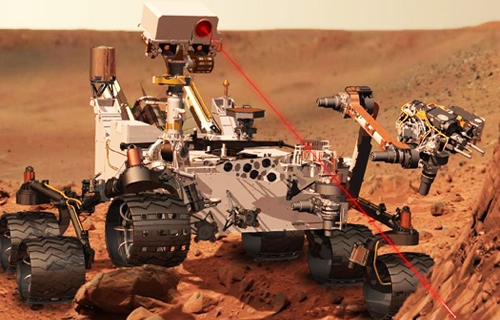
2. First Laser Test: Though Curiosity underwent many tests during the first three weeks after its landing, by far the most dramatic was the one involving its laser. This single megawatt laser, which was designed to vaporize solid rock and study the resultant plasma with its ChemCab system, is the first of its kind to be used on another planet. The first shot was just a test, but once Curiosity was on the move, it would be used for serious geological studies.Curiosity-Laser-Beam3. First Drive: Granted, Curiosity’s first drive test was more of a parking maneuver, where the rover moved a mere 4.57 m (15 ft), turned 120 degrees and then reversed about 2.4 m (8 feet). This brought it a total of about 6  m (20 ft) from its landing site – now named Bradbury Landing after the late author Ray Bradbury. Still, it was the first test of the rover’s drive system, which is essentially a scaled-up version of the one used by the Sojourn and Opportunity rovers. This consists of six 50 cm (20-in) titanium-spoked aluminum wheels, each with its own electric motor and traction cleats to deal with rough terrain.

4. Streams Human Voice: On August 28, 2012, Curiosity accomplished another historical first when it streamed a human voice from the planet Mars back to Earth across 267 million km (168 million miles). It was a 500 kilobyte audio file containing a prerecorded message of congratulations for the engineers behind Curiosity from NASA administrator Charles Bolden, and demonstrated the challenges of sending radio beams from Earth to distant machines using satellite relays.

curiosity-anniversary-45. Writes a Message: Demonstrating that it can send messages back to Earth through other means than its radio transmitter, the Curiosity’s treads leave indentations in the ground that spell out JPL (Jet Propulsion Lab) in Morse Code for all to see. Apparently, this is not so much a gimmick as a means of keeping track how many times the wheels make a full revolution, thus acting as an odometer rather than a message system.

6. Flexing the Arm: Curiosity’s robotic arm and the tools it wield are part of what make it so popular. But before it could be put to work, it had to tested extensively, which began on August 30th. The tools sported by this 1.88 m (6.2-ft) 33.11kg (73 lb) arm include a drill for boring into rocks and collecting powdered samples, an Alpha Particle X-ray Spectrometer (APXS), a scooping hand called the Collection and Handling for In-Situ Martian Rock Analysis (CHIMRA), the Mars Hand Lens Imager (MAHLI), and the Dust Removal Tool (DRT).

curiosity-alluvialplain7. Discovery of Ancient Stream Bed: Curiosity’s main mission is to seek out areas where life may have once or could still exist. Therefore, the discovery in September of rocky outcroppings that are the remains of an ancient stream bed consisting of water-worn gravel that was washed down from the rim of Gale Crater, was a major achievement. It meant that there was a time when Mars was once a much wetter place, and increases the chances that it once harbored life, and perhaps still does.

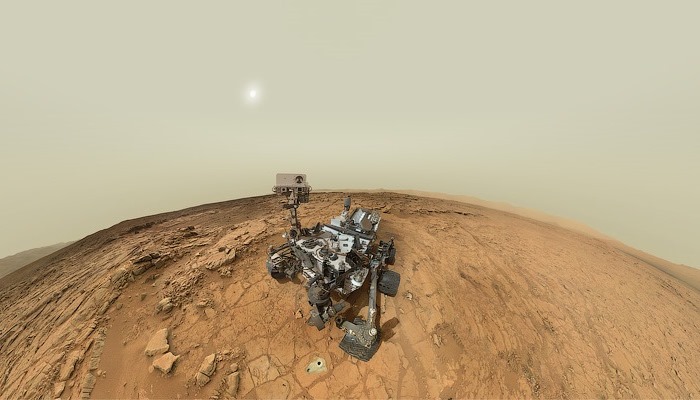
8. First Drilling: In February, Curiosity conducted the first robot drill on another planet. Whereas previous rovers have had to settle for samples obtained by scooping and scraping, Curiosity’s drill is capable of rotational and percussive drilling to get beneath the surface. This is good, considering that the intense UV radiation and highly reactive chemicals on the surface of Mars means that finding signs of life requires digging beneath the surface to the protected interior of rock formations.Curiosity_drillings9. Panoramic Self Portrait: If Curiosity has demonstrated one skill over and over, it is the ability to take pictures. This is due to the 17 cameras it has on board, ranging from the black and white navigation cameras to the high-resolution color imagers in the mast. In the first week of February, Curiosity used its Mars Hand Lens Imager to take 130 high-resolution images, which were assembled into a 360⁰ panorama that included a portrait of itself. This was just one of several panoramic shots that Curiosity sent back to Earth, which were not only breathtakingly beautiful, but also provided scientists with a degree of clarity and context that it often lacking from images from unmanned probes. In addition, these self-portraits allow engineers to keep an eye on Curiosity’s physical condition.

10. Long Trek: And last, but not least, on July 4th, Curiosity began a long journey that took it out of the sedimentary outcrop called “Shaler” at Glenelg and began the journey to Mount Sharp which will take up to a year. On July 17, Curiosity passed the one-kilometer mark from Bradbury Landing in its travels, and has now gone more than a mile. Granted, this is still a long way from the breaking the long-distance record, currently held by Opportunity, but it’s a very good start.

curiosity_roadmapSuch was Curiosity’s first 365 days on Mars, in a nutshell. As it enters into its second year, it is expected to make many more finds, ones which are potentially “Earthshaking”, no doubt! What’s more, the findings of the last year have had an emboldening effect on NASA, which recently announced that it would be going ahead with additional missions to Mars.

These include the InSight lander, a robotic craft which will conduct interior studies of the planet that is expected to launch by 2016, and a 2020 rover mission that has yet to be named. In addition, the MAVEN (Mars Atmosphere and Volatile Evolution) orbiter as just arrived intact at the Kennedy Space Center and will be blasting off to the Red Planet on Nov. 18 from the Florida Space Coast atop an Atlas V rocket.

maven_orbitThese missions constitute a major addition to NASA’s ongoing study of Mars and assessing its past, present and future habitability. Between rovers on the ground, interior studies of the surface, and atmospheric surveys conducted by MAVEN and other orbiters, scientists are likely to have a very clear picture as to what happened to Mars atmosphere and climate by the time manned missions begin in 2030.
 

Stay tuned for more discoveries as Curiosity begins its second year of deployment. Chances are, this year’s milestones and finds will make this past years look like an appetizer or a warm-up act. That’s my hope, at any rate. But considering what lies ahead of it, Curiosity is sure to deliver!

In the meantime, enjoy some of these videos provided by NASA. The first shows Curiosity’s SAM instrument singing “happy birthday” to the rover (though perhaps humming would be a more accurate word):


And check out this NASA video that sums up the rover’s first year in just two minutes:

Epic Rap Battles of History – Sci-Fi Edition

epic_rap_battlesRound two for Epic Rap Battles! This time around, I figured I should do a compilation of all their best sci-fi battles, arranged in alphabetical order. These include Batman vs. Sherlock Holmes, Darth Vader vs. Hitler (1 and 2), Doc Brown vs. Doctor Who, and finishes off with the classic Master Chief vs. Leonidas.

Enjoy!

Batman vs. Sherlock Holmes:


Darth Vader vs. Hitler:


Darth Vader vs. Hitler 2:


Doc Brown vs. Doctor Who:


Master Chief vs. Leonidas: