
 When IBM’s artificial intelligence program – named Watson – won Jeopardy in 2011, it was a major boon for the industry. However, far from showing that it was Turing-compatible, Watson was merely processing information that it had been programmed to know. But now, IBM is pushing the software forward in the hopes that the machine will be able to answer the really tough questions – i.e. the ones that have no answer and require educated guesses.
This is part of IBMs attempts to turn Watson into a new line of business and make it useful in a wide range of industries that are dealing lately with an overwhelming amount of data. At an event in New York at the end of August, IBM showed off the ways some of its early customers are using the Watson “Discovery Advisor” in research, development, and innovation, especially in the realm of biotech and life sciences.
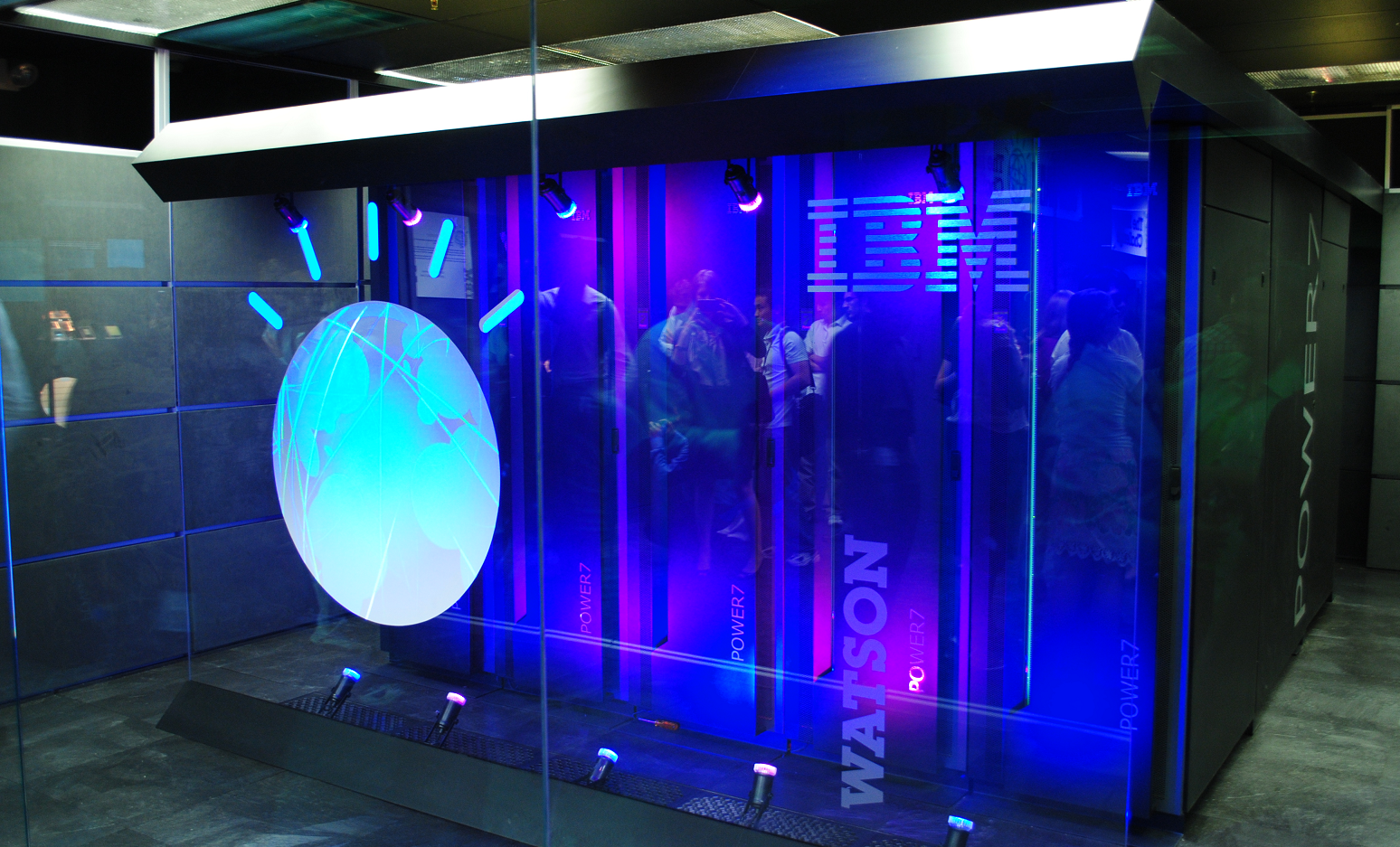 Watson’s aim is to speed up discoveries by teams of researchers by, for example, scanning and interpreting millions of scientific books, articles, and data points–far more than any person’s brain could analyze–and generating new hypothesis or leads that might be fruitful to investigate. As John Gordon, the vice-president of IBM’s Watson group, put it, it’s all about giving researchers “smarter hunches”:
It’s not giving answers that people know anymore, it’s pointing people in directions that they should investigate. We’re talking about a computing system that inspires people.
Scientists at the Baylor College of Medicine and IBM Research have already used Watson to discover new pathways to cancer therapies, which they reported in a study presented at an academic conference late last month. Watson looked closely at 70,000 scientific articles on a protein, called p53, that’s involved in more than half of all cancers, and picked out 6 different proteins that it felt were good candidates for new drugs and therapies.
 Drug companies, too, which are struggling today to develop new commercial drugs, are some of the earliest users of Watsons predictive capabilities. Sanofi is using Watson to look through the research literature and its own data to find new uses for its existing drugs on the market. And Johnson & Johnson has developed a system that analyzes clinical studies to compare the efficacy and safety of different treatments.
Soledad Cepeda, Johnson & Johnson’s director of epidemiology, used the example of back pain, for which there are 27 treatments studied in more than 3,000 clinical trials. As she explained:
[Analyzing this] is slow, it’s tedious, it’s expensive, and it’s prone to errors. Now imagine we can teach Watson to do that for us. So instead of six months, Watson can do it in minutes.
 Johnson & Johnson has been working to train Watson to read each study, put it in context, and pick out how many patients dropped out of the study or trial due to side effects or ineffective results. If Watson can give researchers all of this comparative data, rather than them combing through thousands of papers, it would allow researchers to come up with better questions to ask and directions to explore.
But of course, this is not always an easy things for Watson to do and requires setup and new skills for it to learn. For example, in Johnson & Johnson’s work, in the studies Watson was analyzing, authors often reported the key data in the form of flow diagrams. So Soledad and her team had to first teach Watson to correctly read flow diagrams of varying levels of complexity and design.
 So far, Watson’s earliest discovery applications have been in the field of biomedical research. But the company hopes it will prove useful in a wide array of fields where the data available to analyze is growing faster than even the world’s top experts are capable of comprehending – such as law enforcement and finance. Whether it’s determining whodunnit, or predicting market trends in the next quarter, Watson could prove very helpful in tackling the task of big-data crunching.
To illustrate the potential for law enforcement, Roberto Villasenor, chief of police for the city of Tucson, Arizona, spoke at the event and detailed an open case of a young child who went missing from her home. Over two years of investigating, the police have generated 15,000 pages of lab reports, records, and warrants, 25,00 pages of interviews, 4,000 pages of transcribed wiretaps, and much other data.
 His department has already worked with IBM on software that integrates different police databases to make it easier for investigators to make connections between disparate data sources. But he hopes systems like Watson will eventually go further and be capable of aiding investigators in combing through data, making subtle connections, and generating new leads in difficult cases.
However, the most public demonstration of Watson’s new abilities thus far has been in the form of “Chef Watson”. IBM has put Watson to the task of learning how to cook and then creating creative tasty and unexpected new recipes. It debuted this capability at a food truck at SxSW this year, but has also been working with the Institute of Culinary Education and Bon Appetit magazine to refine and stretch Watson’s cooking skills.
 Bon Appetit is now beta testing a consumer app that allows readers to input an ingredient and desires and have Watson generate suggested recipes. It held a Watson recipe contest this summer–the winner of the “best use of Watson as a creative discovery tool” was a “Roasted tomato and mozzarella tart” recipe. Cooking isn’t like curing cancer or solving crimes, but to IBM it’s most about getting the public excited about its advances.
As IBM senior vice president Mike Rhodin said:
Much the same way that Jeopardy helped people understand systems that can answer questions using natural language, Chef Watson is a way for us to understand how these new systems can be used in our everyday lives.
And that’s the real aim here, long-term, which is adapting computer-learning into our daily lives. And given time, we may have access to AIs that can do the difficult and mind-numbing task of sifting through gigabytes, terabytes and even petabytes of information in order to find answers to tough questions, discern the patterns, and come up with solutions. One can only hope they don’t use that information for evil and try to destroy us!
Knowledge is power, after all…
Sources: fastcoexist.com, bcm.edu
 The explosion in computing and personal devices in recent years has led to a world where we are constantly surrounded by displays. Whether they belong to personal computers, laptops, smartphones, LCDs, PDAs, or MP3 players, there is no shortage to the amount of screens we can consult. In turn, this proliferation has led computer scientists and engineers to address a number of imperfections these displays have.
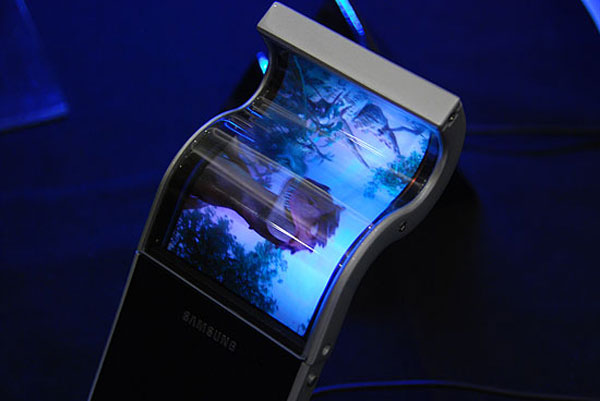 The first examples of this concept were rolled out at the 2011 Consumer Electronics Show, where Samsung unveiled its revolutionary new
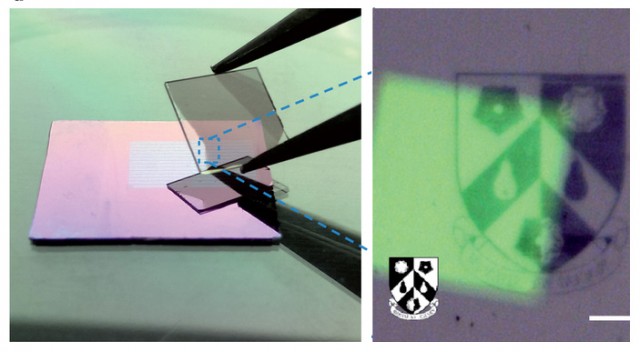
 To make the new displays, the research team – led by Harish Bhaskaran, a nanoscale manufacturing expert from Oxford University – used a 35-year-old machine developed by the semiconductor industry. They then laid down three layers that were a few nanometers thick of conducting glass, GST, and another layer of conducting glass. Then they used current from the tip of an atomic force microscope to draw pictures on the surface.
 Turning this technology into products will require years of labor and hundreds of millions of dollars. Nevertheless, Bhaskaran and his colleagues are optimistic. The electronics industry has lots of experience with all the components, so there are plenty of well-known tricks to try to improve this first draft. And they are hardly alone in their efforts to bring flexible displays to market.
 As In-Byung Kang, Senior Vice President and Head of the R&D Center at LG Display, explained:

 As Butow explained, it’s all about taking the next step in the development of the internet as we know it:
 More experienced women are encouraged to teach classes, and the Academy already boasts a variety of events, ranging from hackathons, makerfests, code getaways and study tours. The team is already organising the very first study tour, hoping to take Australian women to visit global startup hotspots such as Silicon Valley and Tel Aviv. And though women are the focus, men are welcome too, as long as they attend with a girl geek and are willing to lend a helping hand.
 This tool, which was created in 1994, instructs search engines and other automated bots to avoid crawling certain pages or directories of a website. The industry has done a remarkable job staying true to the simple text file in the two decades since; Google, Bing, and Yahoo still obey its directives. The changes they uploaded read like this, just in case you’re planning on adding your name to the “disallow” list:
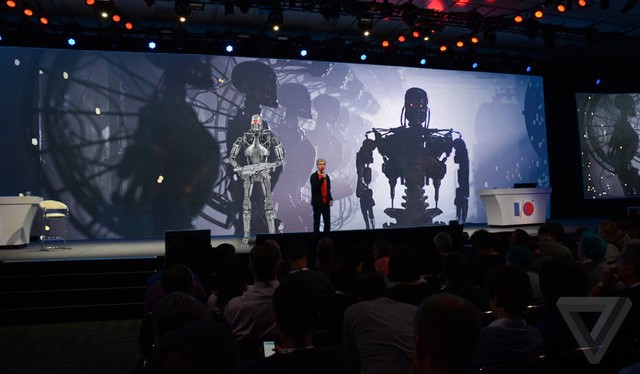
 Basically, as Google’s senior VP of technical infrastructure Urs Hölze spoke about their cloud platform, the unidentified man stood up and began screaming “You all work for a totalitarian company that builds machines that kill people!” As you can see from the video below, Hölze did his best to take the interruptions in stride and continued with the presentation. The protestor was later escorted out by security.

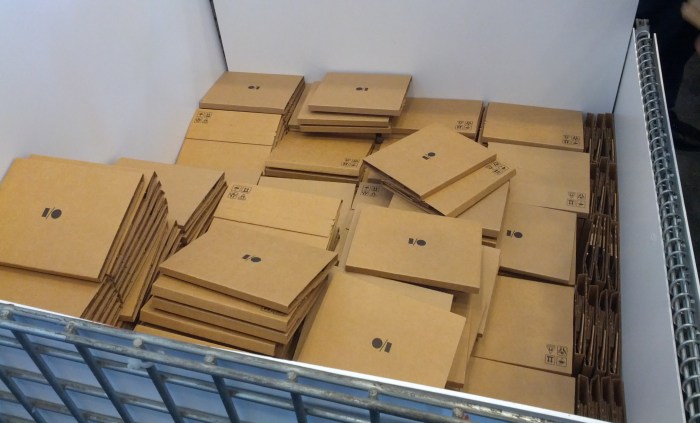 You can use household materials to build one, and a rubber band to hold your smartphone in place on the front of the device. Assembly instructions, plans and links for where to source the needed parts (like lenses) — as well as an SDK — are available on the project’s website. Google hopes that by making the tech inexpensive (unlike offerings from, say, Oculus), developers will be able to make VR apps that hit a wider audience.
 Meanwhile, Google has created some great demos within the Cardboard app, showcasing the kind of experiences people can expect moving forward. Right now, the Cardboard app features simple demonstrations: Google Earth, Street View, Windy Day, and more. But it’s just a small taste of what’s possible. And anyone willing to put some time into putting together their own cardboard headset can get involved. Never before has virtual reality been so accessible, or cheap.
 As Google said a related press release:

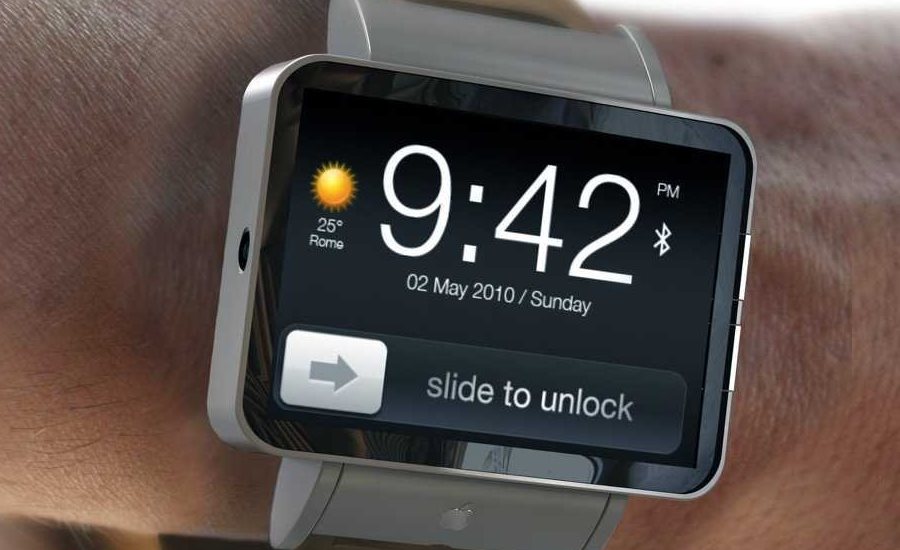

 Android Wear takes much of the functionality of Google Now – an intelligent personal assistant – and uses the smartwatch as a home for receiving notifications and context-based information. For the sake of travel, Android Wear will push relevant flight, weather and other information directly to the watch, where the user can tap and swipe their way through it and use embedded prompts and voice control to take further actions, like dictating a note with reminders to pack rain gear.
 Google officials also claimed at I/O that the same interface being Android Wear will be behind their new Android Auto and TV, two other integrated services that allow users to interface with their car and television via a mobile device. So don’t be surprised if you see someone unlocking or starting their car by talking into their watch in the near future. The first Android Wear watches – the Samsung Gear Live and the LG G Watch – are available to pre-order and the round-face Motorola Moto 360 is expected to come out later this summer.


 And in addition to building computer brains, Google itself is also in the business of extending human life. This project, called Calico, hopes to slow the process of natural aging, a related though different goal than extending life expectancy with treatment for disease. Though of course, the term “immortality” is perhaps a bit of misnomer, hence why it is amended with the word “clinical”. While the natural effects of aging are something that can be addressed, there will still be countless ways to die.
 Earlier this month, Computex 2014 wrapped up in Taipei. And while this trade show may not have all the glitz and glamor of its counterpart in Vegas (aka. the Consumer Electronics Show), it is still an important launch pad for new IT products slated for release during the second half of the year. Compared to other venues, the Taiwanese event is more formal, more business-oriented, and for those people who love to tinker with their PCs.
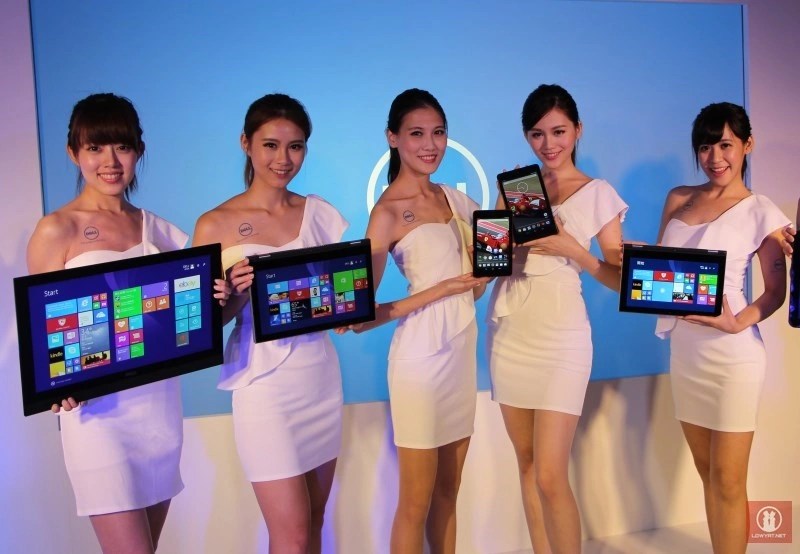 For example, big name brands like Asus typically use the event to launch a wide range of products. This year, this included such items as the super-slim Asus Book Chi and the multi-mode Book V, which like their other products, have demonstrated that the company has a flair for innovation that easily rivals the big western and Korean names. In addition, Intel has been a long stalwart at Computex, premiered its fanless reference design tablet that runs on the Llama Mountain chipset.
 And then there was the Asus wireless storage, a gadget that looks like an air freshener, but is actually a wireless storage device that can be paired with a smartphone using near-field communication (NFC) technology – essentially being able to transfer info simply by bringing a device into near-proximity with it. And as always, there were plenty of cameras, display headsets, mobile devices, and wearables. This last aspect was particularly ever-present, in the form of look-alike big-name wearables.
 In his keynote speech, Microsoft’s Nick Parker talked about the age of ubiquitous computing, and the “devices we carry on us, as opposed to with us.” What this means is, we may very well be entering a PC-less age, where computing is embedded in devices of increasingly diminished size. Eventually, it could even be miniaturized to the point where it is stitched into our clothing as accessed through contacts, never mind glasses or headsets!
 When it comes to the future, it is clear that the concept of the “Internet of Things” holds sway. This idea – which states that all objects will someday be identifiable thanks to a virtual representations on the internet – is at the center of a great deal of innovation that drives our modern economy. Be it wearables, wireless, augmented reality, voice or image recognition, that which helps us combine the real with the virtual are on the grow.
 As Ambarish Mitra, the head of Blippar stated, AR is already gaining traction among consumers thanks to some of the world’s biggest industrial players recognizing the shift to visually mediated lifestyles. Examples include IKEA’s interactive catalog, Heinz’s AR recipe booklet or Amazon’s recent integration of the Flow AR technology into its primary shopping app. As this trend continues, we will need a Wikipedia-like database for 3-D objects that will be available to us anytime, anywhere.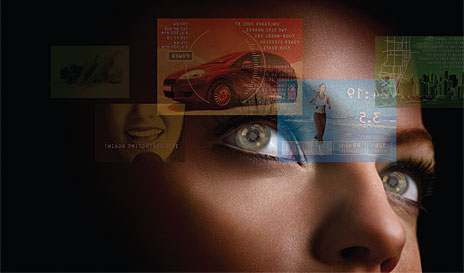
 For better or for worse, wearable designs of consumer electronics have come to reflect a new understanding in the past few years. Basically, they have come to be extensions of our senses, much as Marshall McCluhan wrote in his 1964 book Understanding Media: The Extensions of Man. Google Glass is representative of this revolutionary change, a step in the direction of users interacting with the environment around them through technology.
 Augmented reality has already proven itself to be a multi-million dollar industry – with 60 million users and around half a billion dollars in global revenues in 2013 alone. It’s expected to exceed $1 billion annually by 2015, and combined with a Google-Glass type device, this AR could eventually allow individuals to build vast libraries of data that will be the foundation for finding any 3-D object in the physical world.
 This past week, the Electronic Entertainment Expo (commonly referred to as E3) kicked off. This annual trade fair , which is presented by the Entertainment Software Association (ESA), is used by video game publishers, accessory manufacturers, and members of the computing industry to present their upcoming games and game-related merchandise. The festivities wrapped up this Friday, and was the source of some controversy and much speculation.
 Nowhere was this more clear than with Nintendo, which was the source of quite a bit of buzz when the Expo began. But it was evident that games – particularly for the Wii U – were not going to materialize until 2015. The company got a jump on the next-generation console battle by launching its Wii U in late 2012, a year ahead of Sony and Microsoft, but poor sales have led to big game developers largely abandoning it.
 The companies have some respective big guns in the works, such as Halo 5: Guardians and Uncharted 4: A Thief’s End, but they’re also scheduled for release in 2015. However, with the brisk sales of the Xbox One and PlayStation 4 consoles, both companies have the luxury of taking their time with big games. Nintendo is not so fortunate, since the jump they made with the Wii U leaves them with a big gap that they aren’t apparently filling.
 The software giant bumbled the Xbox One launch last year and alienated many gamers, mainly by focusing on TV and entertainment content instead of gaming and tying several unpopular policies to the console, which included restrictions on used games. The company eventually relented, but the Xbox One still came bundled with the voice- and motion-sensing Kinect peripheral and a price tag that was $100 higher than Sony’s rival PlayStation 4.
 That was certainly the focus for Microsoft at E3. TV features weren’t even mentioned during the company’s one-and-a-half-hour press conference on Monday, with Microsoft instead talking up more than 20 upcoming games. As Mike Nichols, corporate vice-president of Xbox and studios marketing, said in an interview:
 But this new virtual reality headset, which was recently bought by Facebook for $2 billion, was undeniably the hottest thing on the show floor. And the demo booth, where people got to try it on and take it for a run, was booked solid throughout the expo. Sony also wowed attendees with demos of its own VR headset, Project Morpheus. And while the PlayStation maker’s effort isn’t as far along in development as the Oculus Rift, it does work and adds legitimacy to the VR field.
 Legendary Japanese creator Hideo Kojima also had to defend the torture scenes in his upcoming Metal Gear Solid V: The Phantom Pain, starring Canadian actor Kiefer Sutherland (man loves torture!), which upset some viewers. Kojima said he felt the graphic scenes were necessary to explain the main character’s motivations, and that games will never be taken seriously as culture if they can’t deal with sensitive subjects.
 If one were to draw any conclusions from this year’s E3, it would undoubtedly be that times are both changing and staying the same. From console gaming garnering less and less of the gamers market, to the second coming of virtual reality, it seems that there is a shift in technology which may or may not be good for the current captains of industry. At the same time, competition and trying to maintain a large share of the market continues, with Sony, Microsoft and Nintendo at the forefront.
 Stories by Williams