What if you heard that there was such a thing as a 500 Megawatt reactor that was clean, safe, cheap, and made to order? Well, considering that 500 MWs is the close to the annual output of a dirty coal power station, you might think it sounded too good to be true. But that’s the nature of technological innovations and revolutions, which the nuclear industry has been in dire need of in recent years.
While it is true that the widespread use of nuclear energy could see to humanity’s needs through to the indefinite future, the cost of assembling and maintaining so many facilities is highly prohibitive. What’s more, in the wake of the Fukushima disaster, nuclear power has suffered a severe image problem, spurred on by lobbyists from other industries who insist that their products are safer and cheaper to maintain, and not prone to meltdowns!
As a result of all this, the stage now seems set for a major breakthrough, and researchers at MIT and Transatomic’s own Russ Wilcox seems to be stepping up to provide it. Last year, Wilcox said in an interview with Forbes that it was “a fabulous time to do a leapfrog move”. Sounded like a bold statement at the time, but recently, Transatomic went a step further and claimed it was mobilizing its capital to make the leap happen.
Basically, the plan calls for the creation of a new breed of nuclear reactor, one which is miniaturized and still produces a significant amount of mega-wattage. Such efforts have been mounted in the past, mainly in response to the fact that scaling reactors upwards has never resulted in increased production. In each case, however, the resulting output was quite small, usually on the order of 200 MW.
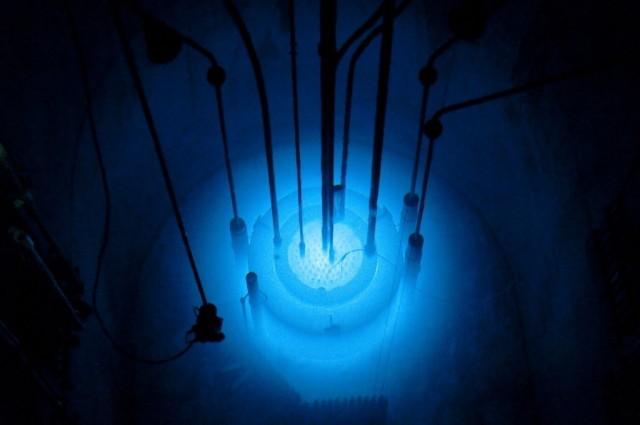
Enter into this the Transatomic’s Molten Salt Reactor (MSR), a design that is capable of producing half the power of a large-scale reactor, but in a much smaller package. In addition, MSRs possess a number of advantages, not the least of which are safety and cost. For starters, they rely on coolants like flouride or chloride salts instead of light or heavy water, which negates the need to pressurize the system and instantly reduces the dangers associated with super-heated, pressurized liquids.
What’s more, having the fuel-coolant mixture at a reasonable pressure also allows the mixture to expand, which ensures that if overheating does take place, the medium will simply expand to the point that the fuel atoms too far apart to continue a nuclear reaction. This is what is called a “passive safety system”, one that kicks in automatically and does not require a full-scale shutdown in the event that something goes wrong.
Last, but not least, is the addition of the so-called freeze plug – an actively cooled barrier that melts in the event of a power failure, leading all nuclear material to automatically drain into a reinforced holding tank. These reactors are “walk away safe,” meaning that in the event of a power failure, accident, or general strike, the worst that could happen is a loss of service. In a post-Fukushima industry such disaster-proof measures simply must be the future of nuclear power.
Then, there is the costs factor. Transatomic claims their reactor will be capable of pumping out 500 megawatts for a total initial cost of about $1.7 billion, compared to 1000 megawatts for an estimated $7 billion. That’s about half the cost per megawatt, and the new reactor would also be small enough to be built in a central factory and then shipped to its destination, rather than requiring a multi-year construction project to build the plant and reactor on site.
The project has raised $1 million dollars of investment so far, and Transatomic appears to be putting all their eggs in this one basket. Their researchers also claim their design is production-ready and they are just waiting for orders to come in. And given the current energy crisis, it’s not likely to be long before government and industry comes knocking!
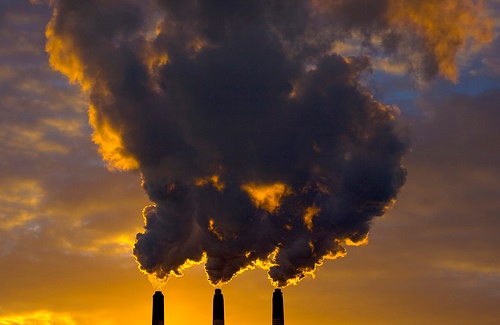
It’s no secret that humanity, like all terrestrial organisms, has a symbiotic relationship with the Earth’s environment. And whereas the fortunes of entire civilizations and species once depended upon the natural warming and cooling cycle, for the past few centuries, human agency has an increasingly deterministic effect on this cycle. In fact, since the beginning of the Industrial Revolution, just 250 years ago, human industry increased the levels of carbon dioxide in the atmosphere by more than 40 percent.
And now, it seems that humanity has reached a rather ignominious and worrisome milestone. Working at the Mauna Loa Observatory, an atmospheric research facility, scientists announced Friday that for the first time in millions of years, the level of the carbon dioxide in the atmosphere had reached 400 parts per million on average over the course of a full 24-hour day. The last time there were these kinds of CO2 levels was approximately 3 million years ago, and that has many worried.
For some time now, climatological scientists have warned of the dangers of reaching this limit, mainly because of the ecological effects it would have. The Kyoto Protocol, an attempt during the late-90s to curb fossil fuel emissions on behalf of the industrialized nations of world, specifically set this concentration as a target that was not to be surpassed. However, with nations such as Canada, the US and China expressing criticism or pulling out entirely, it was clear for some time that this target would not be met.
And as mentioned already, the planet has not seen these kind of CO2 levels since the Pliocene Era, a time of warmer temperatures, less polar ice, and sea levels as much as 60 to 80 feet higher than current levels. If conditions of this nature are permitted to return, the human race could be looking at some very serious problems in the near future.
For starters, much of the world’s population and heavy industry is built along coastlines. With sea levels reaching an additional 60-80 feet, several million people will be displaced over the course of the next few decades. What’s worse, inland areas that have river systems connected to the sea are likely to experience severe flooding, leading to more displacement and property damage.
Those areas that find themselves far from the coast are likely to experience the opposite effects, increased heat and dryness due to increased temperatures and the loss of cloud cover and precipitation. This in turn will result in widespread drought, wildfires, and a downturn in food production. And let’s not forget that rising temperatures also mean the spread of disease and parasites, ones that are typically confined to the tropical areas of the world.
If any of this is starting to sound familiar, it’s because that is precisely what has been happening for the past few decades, and with increasing frequency. Record hot summers, food shortages in several parts of the world, flooding, wildfires, hurricanes, the West Nile Virus, Avian Bird Flu, Swine Flu, SARS, rising sea levels – these are all symptoms of a world where increasing output of Greenhouse Gases mean increasing temperatures and ecological effects.
But of course, before anyone feels like the situation is hopeless, this news does come with a silver lining. For one, the confirmation that we have now reached 400 ppm is likely to spur governments into greater action. Clearly, our current means are not working for us, and cannot be counted on to see us into the future. What’s more, a number of clean energy concerns are well under way, providing us with viable and cost effective alternatives.
The growth in solar energy in just the last few years has been staggering, and carbon capture technology has been growing by leaps and bounds. What’s more, upstarts and clean energy labs no longer need government support, though public pressure has yeilded several positive returns in that area. Even so, crowd-funding is ensuring that growth and innovation that would not be possible a few years ago is now happening, so we can expect the current rate of progress to continue here as well.
And of course, geoengineering remains a viable possibility for buying our planet some time. In addition to clean energy (putting less CO2 in the air), and carbon capture (removing the CO2 there), there are also a number of possibilities for Global Dimming – the opposite of Global Warming – to slow down the process of transformation until we can get our act together. These include evaporating oceanic water to lower sea levels and ensure more cloud cover, triggering algae blooms to metabolize more CO2, and dumping sulfur dioxide (SO2) in the air to combat the warming effect.
But in the end, nothing short of serious and immediate changes will ensure that decades and centuries from now, the ecological balance – upon which all species depend – is maintained. Regardless of whether you think of humanity as the masters or the children of this planet, it’s clear we’ve done a pretty shitty job in both capacities! It’s time for a change, or the greatest natural resource in our corner of the universe, Earth itself, is likely to die out!
This years Boston Marathon was the site of a terrible tragedy, as runners reaching the finish line were met with the worst terrorist attack on American soil since September 11th took place. Not only was this gruesome attack an injustice of immense proportions, it also overshadowed an important story that took place overseas, one which also involved a marathon and a potential breakthrough for renewable energy.
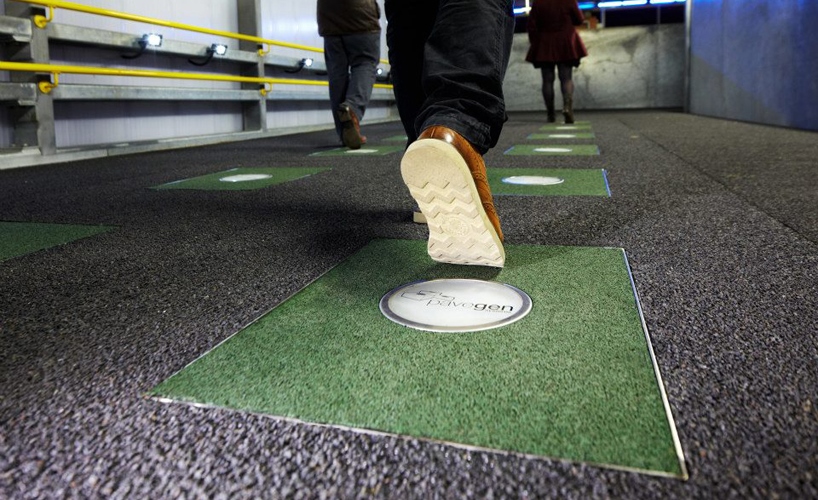
Here, the runners and spectators who waited at the finish line were also privy to something unexpected. But in this case, it involved a series of rubber panels which turned the runners steps into actual electricity. Known as Pavegen, a material invented by 27 year-old Laurence Kemball Cook and composed of recycled tires, this demonstration was the largest test to date of the experimental technology. And though the results were modest, they do present a frightening amount of potential for clean, renewable energy.
Essentially, a single step on a Pavegen pad is said to generate up to 8 watts of electricity per second. Based on that, and at a speed of one step a second, it would take a single pedestrian 40 minutes to charge a smartphone. However, a small army of pedestrians could generate considerably more – say for example, 50,000+ people taking part in a marathon.
Here too, the results fell short of their intended goal. Schneider Electric – who commissioned the project – held a contest on Facebook and said if they generated over 7 kilowatt-hours of energy, they would make a donation to Habitat for Humanity. As it turned out, all those runners generated more like two-thirds of that: 4.7 kilowatt-hours. Still, the potential is there.
Already the Simon Langton Grammar School for Boys in Kent, England, has contracted with Pavegen to become the site of the first permanent installation of the material. And as the video below demonstrates, it has the ability to at least generate enough power to keep the lights on in a building where hundreds of people take thousands of steps daily.
Given time and some improvement in the yield of the pads, this technology could very well take its place alongside solar, wind, and other renewable sources of power that will bring electricity to the cities of the future. Imagine it if you will, entire sidewalks composed of electricity-generating material, turning every step its pedestrians take into clean energy. I for one think that’s the stuff of bona fide science fiction story (it’s mine, you can’t have it!).
And be sure to check out this promotional video from Pavegen who filmed their floor at work in Simon Langton:
When it comes to addressing Climate Change, scientists have known for some time that changing our habits is no longer enough to meet the challenge. In addition to adopting cleaner fuels and alternative energy, carbon capture – removing carbon dioxide gas from the air – will have to become an active part of our future habits. In addition to geoengineering processes, such as introducing sulfur dioxide into the upper atmosphere, carbon capturing technologies will likely need to be built into our very habitats.
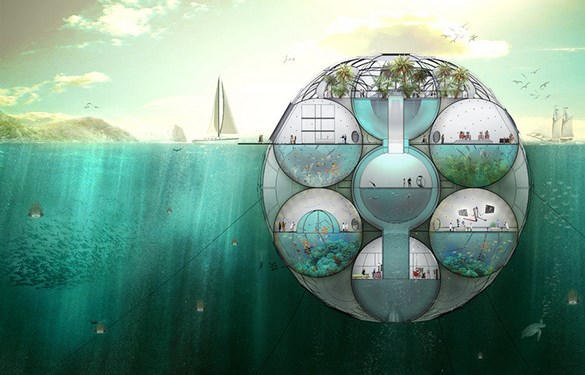
And that’s where the Bloom comes in, an artificial coastline habitat that will also generate carbon-consuming phytoplankton. In a world characterized by rising ocean tides, shrinking coast lines, changing climates, and extreme weather, a water-based living space that can address the source of the problem seems like an ideal solution. In addition to being waterborne, the Bloom is hurricane proof, semi-submersible, and even consumes pollution.
Designed by the French firm Sitbon, these structures are a proposal for a research station moored to the seabed with a system of cables and would both house researchers and grow carbon-dioxide absorbing phytoplankton. While it’s more of an experiment than a vision for what housing looks like in the future, their goal is to install them in the Indian Ocean as part of an attempt to monitor tsunamis and absorb carbon dioxide.
Alongside skyscrapers that utilize vertical agriculture, carbon-capturing artificial trees, and buildings that have their own solar cells and windmills, this concept is part of a growing field of designs that seeks to incorporate clean technology with modern living. In addition, for those familiar with the concept of an Arcology, this concept also calls to mind such ideas as the Lillypad City.
In this case and others like it, the idea is building sustainable habitats that will take advantage of rising sea levels and coastlines, rather than add to the problem by proposing more urban sprawl farther inland. As the creators wrote in a recent press statement:
Bloom wishes to be a sustainable answer for rising waters by decreasing our carbon footprint while learning to live in accordance with our seas. Every factory would have its own bloom allowing it to absorb the CO2 that it created.
And even if it doesn’t pan out, funding for the design and its related technologies will lead to innovation in the wider field of sustainable architecture and clean energy. And who knows? Might make some really awesome seaborne property!
The year of 2013 has proven to be an exciting time for solar power. Not only are developments being made to bring down the cost of solar cell production, as well as improve their yield and storage. A number of solar powered applications are also being produced which demonstrate just how versatile solar energy can be. And strangely enough, a good deal of them appear to have wings.
The first is the Solar Impulse, a solar powered plane that began conducting a cross-country promotional flight before taking off for a trip around the world. Officially launched back in 2003, this brainchild of Bertrand Piccard – grandson of the legendary balloon aviator Auguste Piccard – just a few years after he himself completing a round-the-world balloon flight. It was in the course of making this flight that Piccard realized just how dependent the world still is on fossil fuel, and sought to create a plane that needed no fuel whatsoever.
Building on concepts like NASA’s Helios Prototype – another solar electric-powered flying wing designed to operate at high altitudes for long periods of time – Piccard and his colleague André Borschberg (a pilot and engineer) managed to create a prototype by 2009. They received financing and technology from a number of private companies, including Deutsche Bank, Omega SA, Solvay, Schindler, Bayer MaterialScience, and Toyota.
Naturally, the development of the prototype has been having an effect across a wide range of industries, and those who participated in making it a reality are reaping the benefits. Already the materials used in the creation in the airframe are being considered for use in refrigerators, and the lithium-ion batteries used in the second craft are expected to power everything from cell phones to cars in coming years.
Already, the plane has made numerous flights. The first flight took place on July 7th-8th, 2010 and lasted 26 hours, including nearly nine hours of night flying. In 2012, Piccard and Borschberg conducted successful solar flights from Switzerland to Spain and Morocco. The cross-country flight began on May 1st, with the first leg starting in San Fransisco and concluding in Pheonix to significant fanfare.
The flight is expected to last several more weeks and involve numerous stops before concluding in New York. The worldwide flight using the 2nd version of the craft, originally slated for 2014, is expected to take place in 2015. Those looking to keep track of the “Across America” mission can do so on their website. During the next legs of the flight, Piccard will be making landings in Dallas, St. Louis, Washington D.C., and New York.
Ultimately, flying the plane is still a very challenging feet. The airframe is extremely light, which means it is sensitive to turbulence and wind. That means it needs to take off and land in calm weather, and the plane can’t fly at all through big thunderstorms. And as Piccard himself notes:
If you fly it like a normal airplane you overcontrol, you cannot steer and land. You need to learn how to be extremely careful, make little moves with the control, and wait until a reaction comes. You have to anticipate enormously, and it’s not very stable, so you need to fly with the rudders.
But ultimately, the goal is not to create a fleet of solar-powered planes. As Piccard himself noted, the goal here is to stimulate “innovation for clean technology and energy”. Alas, there are some benefits to this plane that no other aviator can brag about. For one, the plane can theoretically fly forever since its fuel is provided by the sun and its batteries have demonstrated the ability to keep it going at night.
As Piccard described it: “It’s a feeling of freedom.” I can imagine!
Welcome everyone to my first special-request piece! As some of you who read this blog regularly may know, I was recently done a solid by a friend who brought the existence of my latest book (Whiskey Delta) to the attention of Max Brooks, Mr. World War Z man himself! Because of this, I told him he was entitled to favor, redeemable whenever he saw fit. Especially if the favor he did me allowed me to make it big!
Much to my surprise, he called it in early. Yes, instead of waiting for me to become a success and demanding 50 grand and pony, he asked that I do a tribute piece in honor of Israeli Independence Day, one that acknowledges the collective scientific, medical and technological achievements of this nation.
So hang tight. Not the easiest thing in the world to sum up an entire nation’s contributions in several fields, but I shall try. And for the sake of convenience, I broke them down into alphabetical order. So to my Israeli readers and those with family in the Levant, Shalom Aleichem, and here we go!
Aerospace: When it comes to space-based research, aviation and aeronautics, Israel has made many contributions and is distinguished as one of the few nations outside of the – outside of the major space players – that is able to build and launch its own communications, navigation and observation satellites. This is performed through the Israel Aerospace Industries(IAI), Israel’s largest military engineering company, in cooperation with the Israel Space Agency, which was created in 1982.
What’s more, Technion, the Israeli Institute of Technology, is home to the Asher Space Research Institute (ASRI), which is unique in Israel as a university-based center of space research. In 1998, the Institute built and launched its own satellite – known as the Gerwin-II TechSAT – in July 1998 to provide communications, remote sensing and research services for the nation’s scientists.
Israel’s first ever satellite, Ofeq-1, was built and launched using the locally-built Shavit launch vehicle on September 19, 1988. Over the course of its operational history, Ofeq-1 has made important contributions in a number of areas in space research, including laser communication, research into embryo development and osteoporosis in space, pollution monitoring, and mapping geology, soil and vegetation in semi-arid environments.
AMOS-1 and AMOS-2, which were launched in 1996 and 2003 respectively. AMOS-1 is a geostationary satellite that also has the honor of being Israel’s first commercial communications satellite, built primarily for direct-to-home television broadcasting, TV distribution and VSAT services. AMOS-2, which belongs to the Spacecom Satellite Communications company, provides satellite telecommuncations services to countries in Europe, the Middle East and Africa.
Additional space-based projects include the TAUVEX telescope, the VENUS microsatellite, and the MEIDEX (Mediterranean – Israel Dust Experiment), which were produced and launched in collaboration the Indian Space Research Organizations (ISRO), France’s CNES, and NASA, repsectively. In addition to conducting research on background UV radiation, these satellites are also responsible for monitoring vegetation and the distribution and physical properties of atmospheric desert dust over the a large segment of the globe.
Ilan Ramon, Israel’s first astronaut, was also a member of the crew that died aboard the Space Shuttle Columbia. Ramon was selected as the missions Payload Specialist and trained at the Johnson Space Center in Houston, Texas, from 1998 until 2003. Among other experiments, Ramon was responsible for the MEIDEX project in which he took pictures of atmospheric aerosol (dust) in the Mediterranean. His death was seen as a national tragedy and mourned by people all over the world.
According to the Thomson Reuters agency, in a 2009 poll, Israel was ranked 2nd among the 20 top countries in space sciences.
Alternative Fuel and Clean Energy: When it comes to developing alternative sources of energy, Israel is a leader in innovation and research. In fact – and due in no small part to its lack of conventional energy resources – Israel has become the world’s largest per capita user of solar power, with 90% of Israeli homes use solar energy for hot water, the highest per capita in the world.
Much of this research is performed by the Ben-Gurion National Solar Energy Center, a part of the Ben-Gurion University of the Negev (in Beersheba). Pictured above is the Ben-Gurion parabolic solar power dish, the largest of its kind in the world. In addition, the Weizman Institute of Science, in central Israel, is dedicated to research and development in the field of solar technology and recently developed a high-efficiency receiver to collect concentrated sunlight, which will enhance the use of solar energy in industry as well.
Outside of solar, Israel is also heavily invested in the fields of wind energy, electric cars, and waste management. For example, Israel is one of the few nations in the world that has a nationwide network of recharching stations to facilitate the charging and exchange of car batteries. Denmark and Australia have studied the infrastructure and plan to implement similar measures in their respective countries. In 2010, Technion also established the Grand Technion Energy Program (GTEP), a multidisciplinary task-force that is dedicated to alternative fuels, renewable energy sources, energy storage and conversion, and energy conservation.
Private companies also play a role in development, such as the Arrow Ecology company’s development of the ArrowBio process, which takes trash directly from collection trucks and separates organic from inorganic materials. The system is capable of sorting huge volumes of solid waste (150 tons a day), salvaging recyclables, and turning the rest into biogas and rich agricultural compost. The system has proven so successful in the Tel-Aviv area that it has been adopted in California, Australia, Greece, Mexico, and the United Kingdom.
Health and Medicine: Israel also boasts an advanced infrastructure of medical and paramedical research and bioengineering facilities. In terms of scientific publications, studies in the fields of biotechnology, biomedical, and clinical research account for over half of the country’s scientific papers, and the industrial sector has used this extensive knowledge to develop pharmaceuticals, medical equipment and treatment therapies.
In terms of stem cell research, Israel has led the world in the publications of research papers, patents and studies per capita since the year 2000. The first steps in the development of stem cell studies occurred in Israel, with research in this field dating back to studies of bone marrow stem cells in the early 1960s. In 2011, Israeli scientist Inbar Friedrich Ben-Nun led a team which produced the first stem cells from endangered species, a breakthrough that could save animals in danger of extinction.
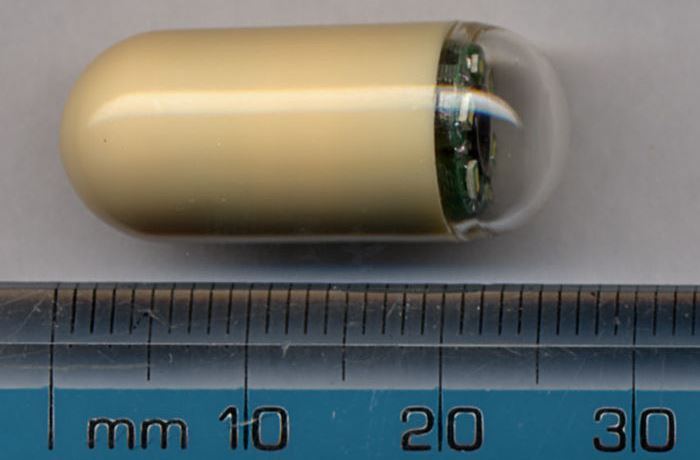
Numerous sophisticated medical advancements for both diagnostic and treatment purposes has been developed in Israel and marketed worldwide, such as computer tomography (CT) scanners, magnetic resonance imaging (MRI) systems, ultrasound scanners, nuclear medical cameras, and surgical lasers. Other innovations include a device to reduce both benign and malignant swellings of the prostate gland and a miniature camera encased in a swallowable capsule used to diagnose gastrointestinal disease.
Israel is also a leading developer of prosthetics and powered exoskeletons, technologies designed to restore mobility to amputees and people born without full ambulatory ability. Examples include the SmartHand, a robotic prosthetic hand developed through collaboration between Israeli and European scientists. ReWalk is another famous example, a powered set of legs that help paraplegics and those suffering from partial paralysis to achieve bipedal motion again.
Science and Tech: In addition, Israeli universities are among 100 top world universities in mathematics (Hebrew University, TAU and Technion), physics (TAU, Hebrew University and Weizmann Institute of Science), chemistry (Technion and Weizmann Institute of Science), computer science (Weizmann Institute of Science, Technion, Hebrew University, TAU and BIU) and economics (Hebrew University and TAU).
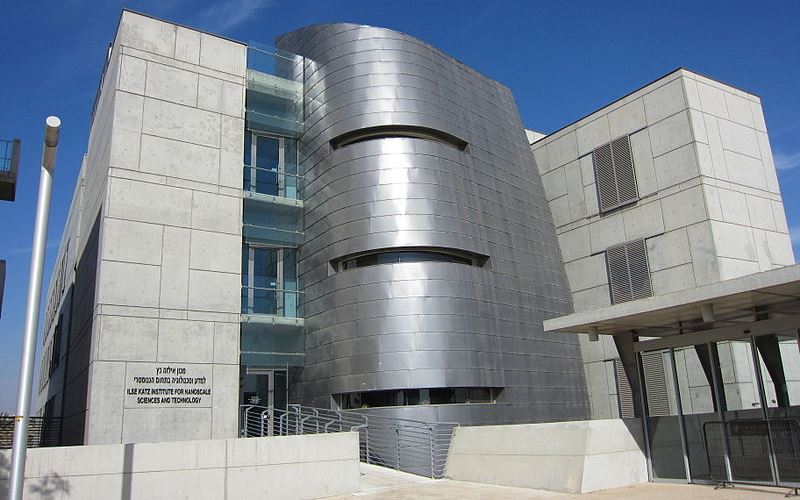
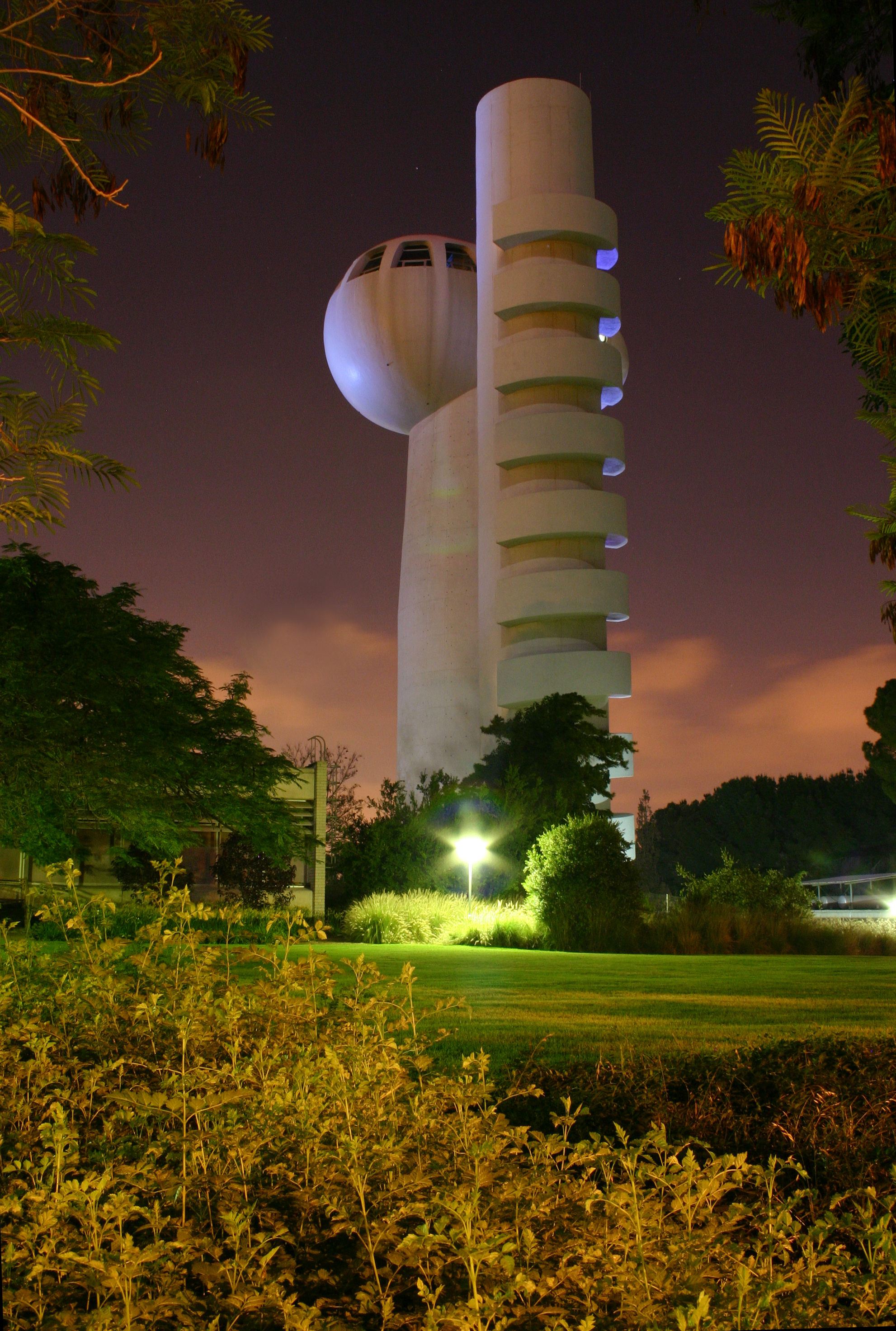
Ilse Katz Institute for Nanoscale Science and Technology – Ben-Gurion University
Israel is also home to some of the most prestigious and advanced scientific research institutions in the world. These include the Bar-Ilan University, Ben-Gurion University of the Negev, the University of Haifa, Hebrew University of Jerusalem, the Technion – Israel Institute of Technology, Tel Aviv University and the Weizmann Institute of Science, Rehovot, the Volcani Institute of Agricultural Research in Beit Dagan, the Israel Institute for Biological Research and the Soreq Nuclear Research Center.
Israel has also produced many Noble Prize Laureates over the years, four of whom won the Nobel Prize for Chemistry. These include Avram Hershko and Aaron Ciechanover of the Technion, two of three researchers who were responsible for the discovery ubiquitin-mediated protein degradation in 2004. In 2009, Ada Yonath of the Weizmann Institute of Science was one of the winners for studies of the structure and function of the ribosome. In 2011, Dan Shechtman of the Technion was awarded the prize for the discovery of quasicrystals.
Koffler Accelerator – Weizman Institute of Science
In the social sciences, the Nobel Prize for Economics was awarded to Daniel Kahneman in 2002, and to Robert Aumann of the Hebrew University in 2005. Additionally, the 1958 Medicine laureate, Joshua Lederberg, was born to Israeli Jewish parents, and 2004 Physics laureate, David Gross, grew up partly in Israel, where he obtained his undergraduate degree.
In 2007, the United Nations General Assembly’s Economic and Financial Committee adopted an Israeli-sponsored draft resolution that called on developed countries to make their knowledge and know-how accessible to the developing world as part of the UN campaign to eradicate hunger and dire poverty by 2015. The initiative is an outgrowth of Israel’s many years of contributing its know-how to developing nations, especially Africa, in the spheres of agriculture, fighting desertification, rural development, irrigation, medical development, computers and the empowerment of women.
Water Treatment: And last, but certainly not least, Israel is a leader in water technology, due again to its geography and dependence and lack of resources. Every year, Israel hosts the Water Technology Exhibition and Conference (WaTec) that attracts thousands of people from across the world and showcases examples of innovation and development designed to combat water loss and increase efficiency.
Drip irrigation, a substantial agricultural modernization, was one such developed which comes from in Israel and saved countless liters of farm water a year. Many desalination and recycling processes have also emerged out of Israel, which has an abundance of salt water (such as in the Dead Sea and Mediterranean), but few large sources of freshwater. The Ashkelon seawater reverse osmosis (SWRO) plant, the largest in the world, was voted ‘Desalination Plant of the Year’ in the Global Water Awards in 2006.
In 2011, Israel’s water technology industry was worth around $2 billion a year with annual exports of products and services in the tens of millions of dollars. The International Water Association has also cited Israel as one of the leaders in innovative methods to reduce “nonrevenue water,” (i.e., water lost in the system before reaching the customer). By the end of 2013, 85 percent of the country’s water consumption will be from reverse osmosis, and as a result of innovations in this field, Israel is set to become a net exporter in the coming years.
Summary:
It’s hard to sum up the accomplishments of an entire nation, even one as young and as geographically confined as Israel. But I sincerely hope this offering has done some justice to the breadth and width of Israel’s scientific achievements. Having looked though the many fields and accomplishments that have been made, I have noticed two key features which seem to account for their level of success:
Necessity: It’s no secret that Israel has had a turbulent history since the foundation of the modern nation in 1948. Due to the ongoing nature of conflict with its neighbors and the need to build armaments when they were not always available, Israel was forced to establish numerous industries and key bits of infrastructure to produce them. This has had the predictable effect of spilling over and inspiring developments in the civilian branches of commerce and development as well. What’s more, Israel’s location in a very arid and dry region of the world with few natural resources to speak of have also demanded a great deal of creativity and specialized resource management. This in turn has led to pioneering work in the fields of energy, sustainable development and agricultural practices which are becoming more and more precious as Climate Change, population growth, hunger and drought effect more and more of the world.
Investment: Israel is also a nation that invests heavily in its people and infrastructure. Originally established along strongly socialist principles, Israel has since abandoned many of its establishment era practices – such as kibbutz and equality of pay – in favor of a regulated free market with subsidized education and health care for all. This has led to a successive wave of generations that are strong, educated, and committed to innovation and development. And with competition and collaboration abroad, not to mention high demand for innovation, this has gone to good use.
And with that, I shall take my leave and wish my Israeli readers at home and abroad a happy belated Independence Day! May peace and understanding be upon you and us all as we walk together into the future. Shalom Aleichem!
With every passing year, interest in solar power has been growing by leaps and bounds. Given the impacts of Climate Change, widespread droughts, tropical storms, wildfires and increasing global temperatures, this should not come as a surprise. But an equally important factor in the adoption of clean energy alternatives has to do with improvements that are being made which will make it more efficient, accessible, and appealing to power companies and consumers.
Three such recent developments come to us from Standford, MIT, and the Neils Bohr Institute, respectively; where researchers have announced new ways using nanoprocesses to boost the yield of individual solar cells. In addition to cutting costs associated with production, installation, and storage, increasing the overall electrical yield of solar cells is a major step towards their full-scale implementation.
First, there’s MIT’s new concept for a solar cell, which uses nanowires to massively boost the efficiency of quantum dot photovoltaic cells. Quantum dots – which are basically nano-sized crystals of a semiconducting material – are already being considered as an alternative to conventional silicon cells, since they are cheaper and easier to produce.
However, until recently they have been a letdown in the efficiency department, lagging significantly behind their silicon counterparts. By merging zinc oxide nanowires into the design of their quantum dot photovoltaic cells, the MIT researchers were able to boost the current produced by 50%, and overall efficiency by 5%. Ultimately, their goal is to get that up to 10%, since that is considered to be the threshold for commercial adoption.
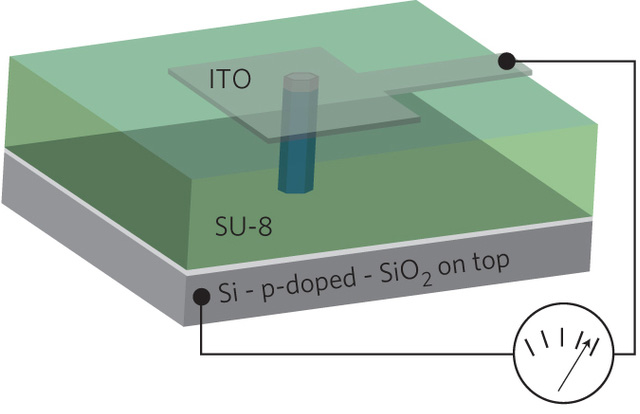
Meanwhile, researchers at the Niels Bohr Institute in Denmark and EPFL in Switzerland announced that they have built solar cells out of single nanowires. In this case, the process involved growing gallium-arsenide (GaAs) wires on a silicon substrate, and then completing the circuit with a transparent indium tin oxide electrode, which are currently employed in the creation of photovoltaic cells and LEDs on the market today.
Prior to these development, nanowires were being researched mainly in conjunction with computer chips as a possible replacement for silicon. But thanks to the combined work of these researchers, we may very well be looking at solar cells which are not only hair-thin (as with the kind being developed by Penn State University) but microscopically thin. And much like the research at the University of Oslo involving the use of microbeads, this too will mean the creation of ultra-thin solar cells that have a massive energy density – 180 mA/cm2, versus ~40 mA/cm2 for crystalline silicon PVs.
And last, but not least, there was the announcement from Stanford University of a revolutionary new type of solar cell that has doubled the efficiency of traditional photovoltaic cells. This new device uses a process called photon-enhanced thermionic emission (PETE) that allows for the absorption of not only light, but heat. This combination makes this new type of cell the equivalent of a turbocharged solar panel!
In conventional cells, photons strike a semiconductor (usually silicon), creating electricity by knocking electrons loose from their parent atoms. The PETE process, on the other hand, uses the gallium arsenide wafer on top gather as much sunlight as possible, creating a lot of excited electrons using the photovoltaic effect. The underside, which is composed of nanoantennae, emits these photoexcited electrons across a vacuum to the anode with gathers them and turns them into an electrical current.
Beneath the anode is a of heat pipe that collects any leftover heat which could be used elsewhere. One of the easiest applications of PETE would be in concentrating solar power plants, where thousands of mirrors concentrate light on a central vat of boiling water, which drives a steam turbine. By concentrating the light on PETE devices instead, Stanford estimates that their power output could increase by 50%, bringing the cost of solar power generation down into the range of fossil fuels.
Though there are still kinks in their design – the cell has a very low 2% rate of energy efficient thus far – the researchers at Stanford are making improvements which are increasing its efficiency exponentially. And although their planned upgrades should lead to a solar cell capable of operating in extremely hot environments, they stress that the goal here is to build one that is capable of gathering power in non-desert environments, such as Spaced-Based solar arrays.
Combined with improved production methods, storage capacities, and plans to mount solar arrays in a variety of new places (such as on artificial islands), we could be looking at the wholesale adoption of solar power within a few years time. Every day, it seems, new methods are being unveiled that will allow Solar to supplant fossil fuels as the best, cheapest and most efficient means of energy production. If all goes as planned, all this could be coming just in time to save the planet, fingers crossed!
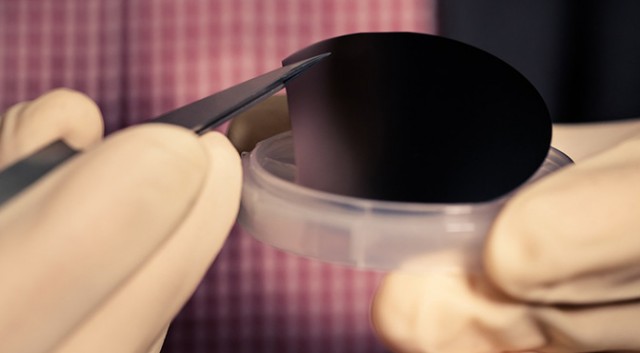
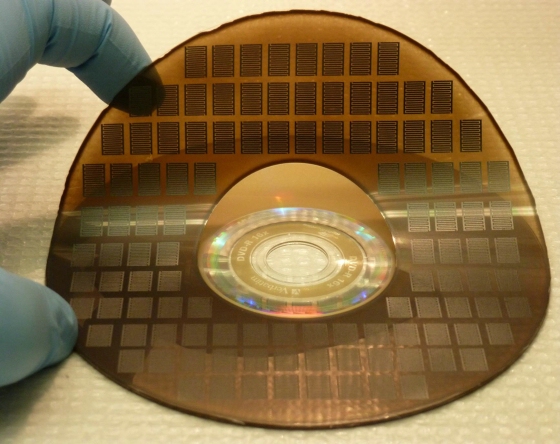
Last year, researchers at UCLA made a fantastic, albeit accidental, when a team of scientists led by chemist Richard Kaner devised an efficient method for producing high-quality sheets of graphene. This supermaterial, which won its developers the 2010 Nobel Prize in Physics, is a carbon material that is known for its incredible strength and flexibility, which is why it is already being considered for use in electronic devices, solar cells, transparent electrodes, and just about every other futuristic high-tech application.
Given the fact that the previous method of producing graphene sheets (peeling it with scotch tape) was not practical, the development of the new production process was already good news. However, something even more impressive happened when Maher El-Kady, a researcher in Kaner’s lab, wired a small square of their high quality carbon sheets to a lightbulb.
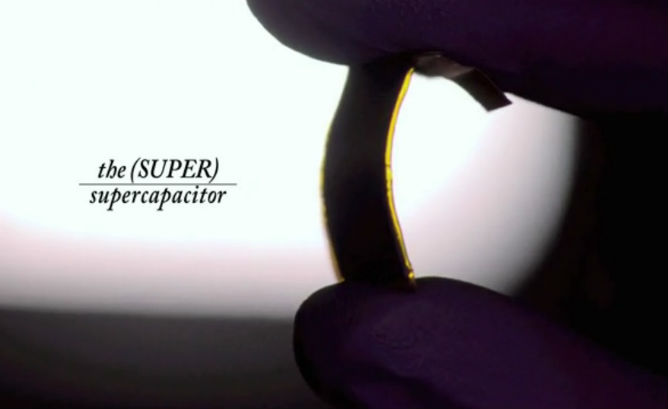
After showing it to Dr. Kaner, the team quickly realized they had stumbled onto a supercapacitor material – a high-storage battery that also boasts a very fast recharge rate – that boasted a greater energy storage capacity than anything currently on the market. Naturally, their imaginations were fired, and their discovery has been spreading like wildfire through the engineering and scientific community.
The immediate benefit of batteries that use this new material are obvious. Imagine if you will having a PDA, tablet, or other mobile device that can be charged within a matter of seconds instead of hours. With batteries so quick to charge and able to store an abundant supply of volts, watts, or amperes, the entire market of consumer electronics would be revolutionized.
But looking ahead, even greater applications become clear. Imagine electric cars that only need a few minute to recharge, thus making the gasoline engine all but obsolete. And graphene-based batteries could be making an impact when it comes to the even greater issue of energy storage with regards to solar and other renewable energy sources.
In the year since they made their discovery, the researchers report that El-Kady’s original fabrication process can be made even more efficient. The original process involved placing a solution of graphite oxide on a plastic surface and then subjecting it to lasers to oxigenate and turn the solution into graphene. A year ago, the team could produce only a few sheets at a time, but now have a scalable method which could very quickly lead to manufacturing and wide-scale technological implementation.
As it stands, an electric car with a recharge rate of a few minutes is still several years away. But Dr. Kaner and his team expect that graphene supercapacitors batteries will be finding their way into the consumer world much sooner than anyone originally expected. According to Kaner, his lab is already courting partners in industry, so keep your eyes pealed!
Combined with the new technologies of lithium-ion and nanofabricated batteries, we could be looking at a possible solution to the worlds energy problem right here. What’s more, it could be the solution that makes solar, wind, and other renewable sources of energy feasible, efficient, and profitable enough that they will finally supplant fossil fuels and coal as the main source of energy production worldwide.
Only time will tell… And be sure to check out the video of Dr. Kaner and El-Kady showing off the process that led to this discovery:




















 Stories by Williams