The Future is Here: Lab-Grown Burgers!

labmeat1Artificially-created meat has long been the dream of futurists and researchers, a means of solving world hunger and improving health at the same time. Efforts to create it using 3D printing are coming along, but another research firm has offered a different approach – in vitro grown meat. And at the same time, this lab-grown alternative offers consumers the chance to improve their health by eating something more nutritionally balanced.

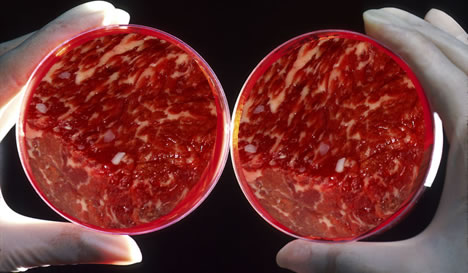
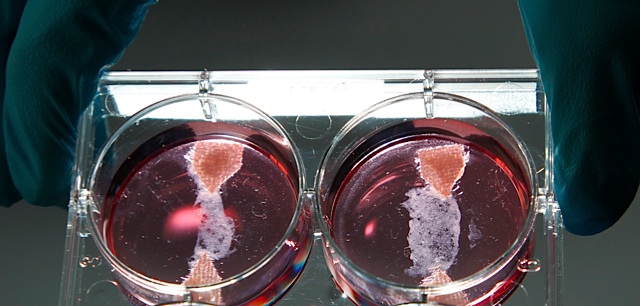
The breakthrough comes to us from a group of researchers led by Mark Post, a Vascular Physiology professor at the University of Maastricht in the Netherlands. To make the burger, he and his team began with a kind of stem cell called a myosatellite cell that is taken from a cow’s neck. These cells are then placed in growth medium that the researchers have formulated to allow them to grow and divide. The resulting cells are grown into 20,000 strips of muscle tissue which are assembled into beef.

labmeat0This is an encouraging development for a number of reasons. First of all, a 2011 joint-research study between the University of Oxford, University of Amsterdam, and a number of environmental research organizations, cultured meat required up to 45 percent less energy and up to 96 percent less water to produce, generated up to 96 percent less greenhouse gases and, without animal herds of flocks to tend to, requires 99 percent less land.

Second, Post’s recipe for a lab-grown beef burger contains no fat, compared to its rather fatty organic  counterpart. And while fat is responsible for giving a burger much of its taste, Post insists that his recipe tastes “tastes reasonably good.” In the coming weeks Post plans on cooking his burger at an event in London where participants will try the in vitro meat – adding salt and pepper to taste.

labmeatHowever, the process is not completely devoid of reliance on actual cows. As already mentioned, the original stem cells that make the process possible have to come from a living cow. In addition, the muscle cells were grown in fetal calf serum, a necessity at this point since the process is still in its infancy. It’s hoped that in the future the burger can be produced without any material of animal origin.

And of course, the technology needs to become way more scalable before it can be considered viable. For example, between the cost of extracting the fetal cow tissue and turning it into meat in a lab, a single burger took roughly $325,000 to produce. But ultimately, this feat was all about pushing the boundaries and challenging notions of what is possible.

3d_meat In addition, as technology improves and the process is refined, costs will come down. And as Post said in an interview, the point of developing this process was to demonstrate that it can be done:

Let’s make a proof of concept, and change the discussion from ‘this is never going to work’ to, ‘well, we actually showed that it works, but now we need to get funding and work on it.’

While it may be several more years before in vitro burgers replace old fashioned farmed burgers, but the feat is a delicious victory for environmentalists and scientists alike in search for alternate ways to feed the world’s addiction to meat.

Funny, all this talk of lab-grown meat is giving me a sense of deja vu. Didn’t somebody write a story about this exact kind of thing not that long ago? Oh yeah… it was me! Well that’s just great, now I got to sue J.J. Abrams and the University of Maastricht? Lord, why do you torment me so?

Sources: singularityhub.com, pubs.acs.org

The Future is Here: The Electric Hover-Bike!

flyingbikeInventors Chris Malloy and Mark DeRoche turned quite a few heads back in 2012 when they displayed their hoverbike prototypes to the world. But, you know how it is with cool, new ideas. Its only a matter of time before  it catches on and others are coming up with their own versions of it. And that’s exactly what happened at Prague convention center this week, where a design firm unveiled their own concept of the hoverbike.

The design firms goes by the name of Design Your Dreams Flying Bike, an amalgamation of three Czech engineering firms who joined together to fulfill a shared childhood dream. Last June, the firm shared their design specs for the electric bike which would be capable of vertical takeoff and hover-flight. And less than a year later, their efforts have resulted in something functional, and very, very cool!

flyingbike_conceptGranted, the prototype isn’t quite as sleek and sophisticated as the original drawings themselves. But the project is still in the early phases, and already it has shown that the concept works. Using six horizontally mounted propellers, the 220-pound electric bike was able to lift itself into the air while an engineer on the ground controlled it with a handheld remote.

According to Milan Duchek of Design Your Dreams, the prototype will fly remotely with a dummy on the seat for now, but a version that can be piloted by a human will be ready this fall. In addition, the design team said that the final product should be as easy to maneuver as a regular bicycle, but will also have the ability to fly for between three and five minutes, using solely electric power. It will include “foolproof” stability control for takeoff and landing, and a fly-by-wire system that isn’t susceptible to outside interference.

speeder_bike1 Though the prototype bike looks like a homemade version of something out of Star Wars, the designers told the press that their inspiration came from two Czech works of science fiction: a series of books by Jaroslav Foglar about a boy with a flying bicycle, and a 1966 Karel Zeman film based on a Jules Verne novel.

Bad news though: even when the flying bike is complete, it won’t be available for commercial use. According to the engineers who built it, the purpose of the project was to bring a flying bike to fruition to see if the technology would work. Or as DYD engineer Ales Kobylik said:

Our main motivation in working on the project was neither profit nor commercial interest, but the fulfillment of our boyish dreams.

Hard to argue with that kind of logic. But for those who absolutely must own one, early indications put the cost of the prototype in the low five-figures – say, anywhere from $10,000 to $30,000. Make the team an offer, we’ll see what they have to say 😉 In the meantime, check out this video of the hoverbike performing a demonstration in Prague:


Sources:
wired.com, (2)


Glowing Plants and the Future of Gene Patenting

DNA-1Synthetic biology – also known as biohacking – is an emerging and controversial scientific field that uses gene-writing software to compile DNA sequences. And thanks to a recent ruling handed down by the US Supreme Court, it is a process which is now entirely legal. All told, the potential applications of synthetic biology are largely useful, leading to lifesaving cures, or altered crops that survive in any environment.

However, there are numerous potential (and potentially harmful) commercial applications that could emerge from this as well. One such advancement comes from a DIY synthetic biology lab known as Glowing Plant, one that specializes in synthetic bio hacking. Basically, the project was one of many that emerged out of Singularity University – a research institute dedicated future technologies today.

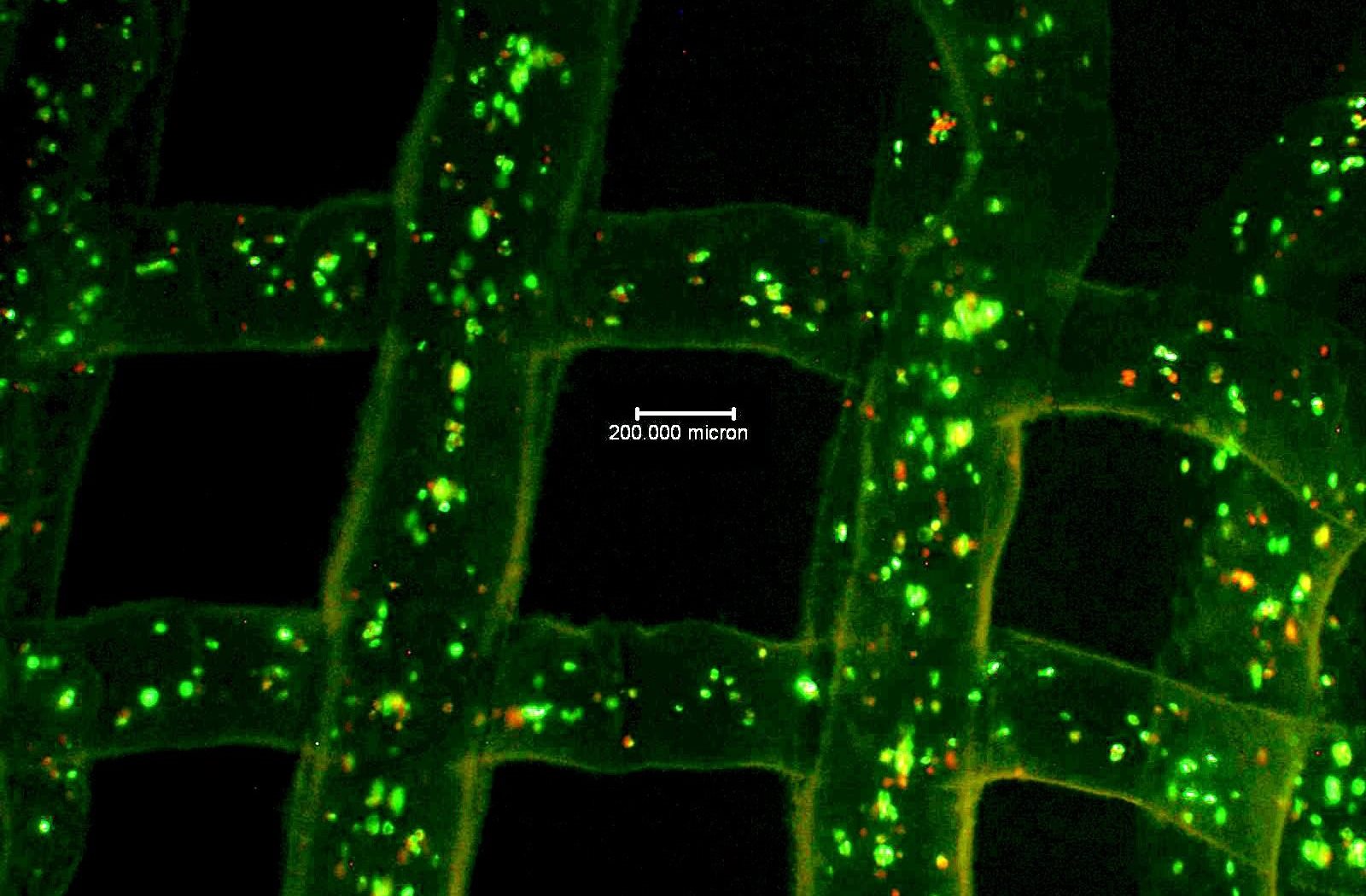
glowing_plantsGlowing Plant was  originally created to show the power of DIY synthetic biology, and has since sets its sights on developing a species of glowing house plant for consumers. To fund their goal, they opened up a Kickstarter campaign – the first of its kind – with the goal of $65,000. Based on research from the University of Cambridge and the State University of New York, the Glowing Plants campaign promised backers that they would receive seeds to grow their own glowing Arabidopsis plants at home.

glowing_plants2Glowing Plant also announced that if the campaign reaches its $400,000 stretch goal, glowing rose plants will also become available. As of the publication of this article, they passed that goal with a whopping $484,013 from a total of 8,433 backers. It seems there are no shortage of people out there who want to get their hands on a glowing house plant.

But Glowing Plant, the laboratory behind the project, has no intention of stopping there. As Antony Evans, co-founder of the project explained:

We wanted to test the idea of whether there is demand for synthetic biology projects. People are fundamentally excited and enthusiastic about synthetic biology.

Given the thousands of people backing the project, I’d say he’s right! But rest assured, Evans and his team have no intention of stopping there. The ultimate goal is to create larger species of glowing plants.

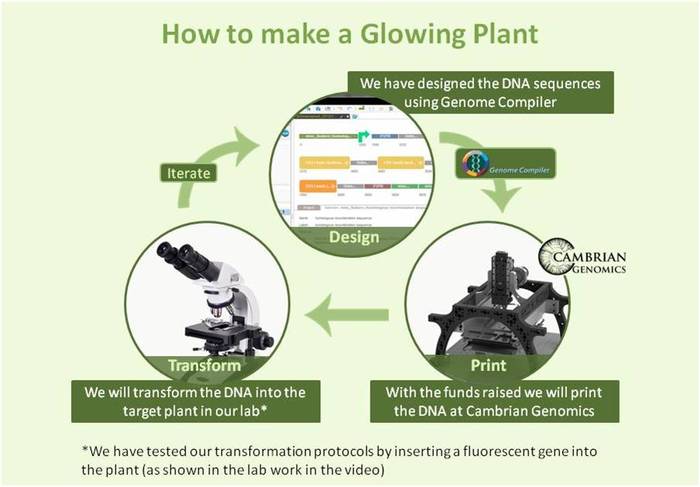
glowing_plants1The method used to achieve this is really quite interesting. It starts with the team downloading the luciferase-lucifern genes – the firefly DNA that allows them to glow – into a Genome Compiler, and then rewiring the DNA so that the proteins can be read by plants. The DNA sequences are then sent off to DNA printing company Cambrian Genomics, which has developed a relatively low-cost laser printing system. Those sequences are printed, put on a little spot of paper, and mailed back to the team.

After that, the team relies on one of two methods to transmit the firefly DNA into the Arabidopsis’ themselves. One way is to use a bacteria solution that is capable of injecting its own DNA into plants and rewriting theirs, which then causes the altered plants to germinate seeds of the new glowing strain. The other involves gold nano-particles coated with a DNA construct that are then fired at the plant cells, which are then absorbed into the plant chromosomes and alters their DNA.

NanoparticlesThis second method was devised to do an end run around specific Department of Agriculture regulations that govern the use of viruses or other pathogens to modify DNA. Though technically legal, the process has attracted resistance from environmental groups and the scientific community, fearing that the DNA of these altered plants will get into the natural gene pool with unknown consequences.

In fact, an anti-synthetic biology group called ECT has emerged in response to this and other such projects – and is centered in my old hometown of Ottawa! They have countered Glowing Plant’s Kickstarter campaign (which is now closed) with a fundraising drive of their own, entitled “Kickstopper”. In addition, the group has started a campaign on Avaaz.org to force the Supreme Court to reconsider the ruling that allows this sort of bioengineering to take place.

At present, their fundraising campaign has raised a total of  $1,701 from 58 backers – rougly 9% of its overall goal of $20,000 – and their Avaaz campaign has collected some 13,000 signatures. With 36 days left, there is no telling if they’re efforts will succeed in forcing a legal injunction on Glowing Plant, or if this is the first of many synthetic biology products that will make it to the market through private research and crowdfunding.

A fascinating time we live in, and potentially frightening…

Sources: fastcoexist.com, (2), kickstarter.com, glowingplant.com

The Future of Cities and Urban Planning

future-city-1With the development of vertical farms, carbon capture technology, clean energy and arcologies, the future of city life and urban planning is likely to be much different than it does today. Using current trends, there are a number of people who are determined to gain some understanding of what that might look like. One such group is Arup, a design and engineering firm that produced a mockup that visualizes what urban environments will look like in 2050.

Based on the world as it is today, certain facts about the future seem relatively certain. For starters, three-quarters of the population will live in cities, or 6.75 billion of the projected 9 billion global total. In addition, everyone will have grown up with the Internet, and its successors, and city residents will have access to less natural resources than they do today, making regeneration and efficiency more of a priority.

Add to this several emerging technologies, and our urban environments are likely to look something like the building mockup below. As you can see, it has its own energy systems (“micro-wind,” “solar PV paint,” and “algae facade” for producing biofuels). There is an integrated layer for meat, poultry, fish, and vegetable farming, a “building membrane” that converts CO2 to oxygen, heat recovery surfaces, materials that phase change and repair themselves, integration with the rest of the city, and much more.

future_urban_planning

Most futuristic of all is the fact that the structure is completely modular and designed to be shifted about (by robots, of course). The building has three layer types, with different life-spans. At the bottom is a permanent layer – with a 10 to 20-year lifespan – which includes the “facade and primary fit-out walls, finishes, or on-floor mechanical plant” – and a third layer that can incorporate rapid changes, such as new IT equipment.

As Arup’s Josef Hargrave described the building when unveiling the design:

[A]ble to make informed and calculated decisions based on their surrounding environment… [a] living and breathing [structure] able to support the cities and people of tomorrow.

In short, the building is designed with personal needs in mind, based on information gleamed from a person’s behaviors, stated preferences, and even genetic information.

aircleaning_skyscraper3But what is even more interesting is how these buildings will be constructed. As countless developments are made in the field of robotics, biotechnology and nanotechnology, both the materials used and the processes involved are likely to be radically different. The rigid construction that we are used to is likely to give way to buildings which are far more flexible, adaptive, and – best of all – built by robots, drones, tiny machines and bacteria cultures.

Once again, this change is due mainly to the pressures that are being placed on urban environments, and not just technological advances. As our world becomes even more densely populated, greater proportions of people live in urban environments, and resources become more constrained, the way we build our cities must offer optimum efficiency with minimal impact.

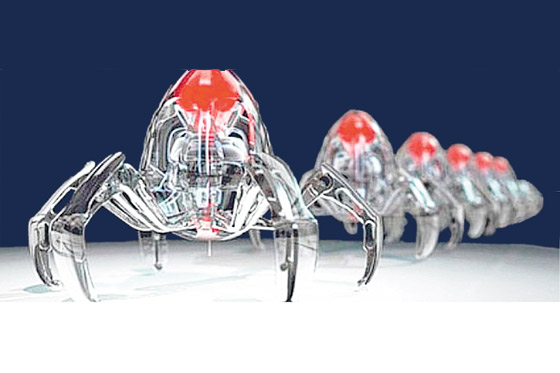
nanomachineryTowards this end, innovations in additive manufacturing, synthetic biology, swarm robotics, and architecture suggest a future scenario when buildings may be designed using libraries of biological templates and constructed with biosynthetic materials able to sense and adapt to their conditions.

What this means is that cities could be grown, or assembled at the atomic level, forming buildings that are either living creatures themselves, or composed of self-replicated machines that can adapt and change as needed. Might sound like science fiction, but countless firms and labs are working towards this very thing every day.

It has already been demonstrated that single cells are capable of being programmed to carry out computational operations, and that DNA strains are capable of being arranged to carry out specialized functions. Given the rapid progress in the field of biotech and biomimetics (technology that imitates biology), a future where the built environment imitates organic life seems just around the corner.

biofabrication For example, at Harvard there is a biotech research outfit known as Robobees that is working on a concept known as “programming group dynamics”. Like corals, beehives, and termite colonies, there’s a scalar effect gained from coordinating large numbers of simple agents to perform complex goals. Towards this end, Robobees has been working towards the creation of robotic insects that exhibit the swarming behaviors of bees.

Mike Rubenstein leads another Harvard lab, known as Kilobot, which is dedicated to creating a “low cost scalable robot system for demonstrating collective behaviors.” His lab, along with the work of researcher’s like Nancy Lynch at MIT, are laying the frameworks for asynchronous distributed networks and multi-agent coordination, aka swarm robotics, that would also be capable of erecting large structures thanks to centralized, hive-mind programming.

nanorobot1

In addition to MIT, Caltech, and various academic research departments, there are also scores of private firms and DIY labs looking to make things happen. For example, the companies Autodesk Research and Organovo recently announced a partnership where they will be combining their resources – modelling the microscopic organic world and building bioprinters – to begin biofabricating everything from drugs to nanomachines.

And then there are outfits like the Columbia Living Architecture Lab, a group that explores ways to integrate biology into architecture. Their recent work investigates bacterial manufacturing, the genetic modification of bacteria to create durable materials. Envisioning a future where bacterial colonies are designed to print novel materials at scale, they see buildings wrapped in seamless, responsive, bio-electronic envelopes.

ESA_moonbaseAnd let’s not forget 3D printing, a possibility which is being explored by NASA and the European Space Agency as the means to create a settlement on the Moon. In the case of the ESA, they have partnered with roboticist Enrico Dini, who created a 3-D printer large enough to print houses from sand. Using his concept, the ESA hopes to do the same thing using regolith – aka. moon dust – to build structures on Earth’s only satellite.

All of these projects are brewing in university and corporate labs, but it’s likely that there are far more of them sprouting in DIY labs and skunkworks all across the globe. And in the end, each of them is dedicated to the efficiency of natural systems, and their realization through biomimetic technology. And given that the future is likely to be characterized by resources shortages, environmental degradation and the need for security, it is likely to assume that all of these areas of study are likely to produce some very interesting scenarios.

As I’ve said many times before, the future is likely to be a very interesting place, thanks to the convergence of both Climate Change and technological change. With so many advances promising a future of post-scarcity, post-mortality, a means of production and a level of control over our environment which is nothing short of mind-boggling – and a history of environmental degradation and resource depletion that promises shortages, scarcity, and some frightening prospects – our living spaces are likely to change drastically.

The 21st century is going to be a very interesting time, people. Let’s just hope we make it out alive!

Sources: fastcoexist.com, (2)

The Future is Here: The Anti-Gravity 3D Printer

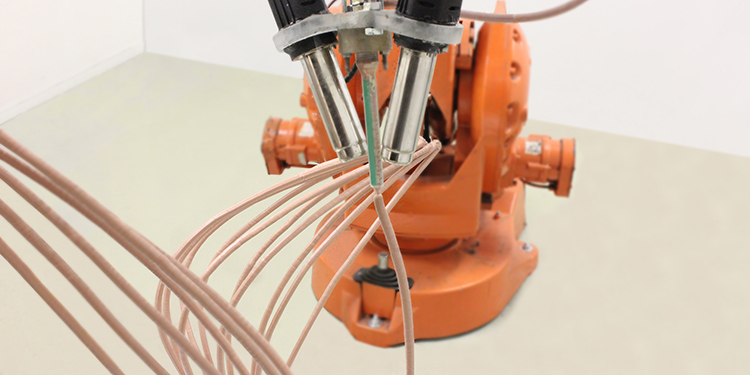
anti-grav3d2Three-dimensional printing is without a doubt one of the greatest growth industries of the 21st century. And yet, surprisingly enough, there are those who seem to think that there is room for improvement when it comes to current concepts and designs. Two such individuals are Petr Novikov and Saša Jokic, a group of architecture students who recently began interning at the Joris Laarman Lab in Amsterdam. While there, they came up with a revolutionary method for 3D printing that reboots the concept!

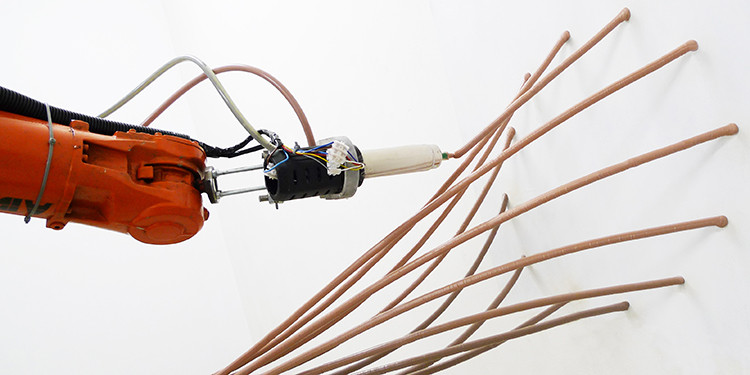
It’s called Mataerial, a new and patented process where polymers are squeezed from a nozzle similar to how bakers squeeze icing from a tube to frost a cake, except there’s a robot involved. Ultimately, their concept was based on the fact that all conventional printing works with layers, which they considered grossly inefficient. Not only do such methods require the presence of a support structure, they also take additional time, materials, and increase the risk of damage if the object is removed from its support structure.

anti-grav3d1As Novikov explains:

The material that comes out of the nozzle is still kind of viscous–It’s not a liquid already but its not a solid material, so what we wanted to do is make it solid the same exact moment it comes out of the nozzle. And that’s the hardest part. Because if it solidifies before it comes out of the nozzle, then its going to make a clog… but if it solidifies after it leaves the nozzle, than its going to be weak and fall down.

The key was to find two liquid polymers that, when mixed, quickly harden, which allows for mid-air solidification. They’re calling the resulting method “Anti-Gravity Object Modeling,” since the material’s just-in-time solidification eschews the need for any sort of support structure. The new method is exciting for a number of reasons. The first is scale, in that this method could be adapted for manufacturing large and well as small scale objects easily.

anti-grav3dDepending on the size of nozzle used, the technology could be used to print materials and objects that are on the scale of millimeters (like components for consumer electronics), 3D models (the kinds that are printed by standard professional printers), or larger objects such as furniture or even parts used in large-scale architectural construction. Basically, anything from the tiniest object to the largest structure could be created by robots equipped with specialized nozzles and Mataerial printers.

But perhaps most exciting is the possibility that this new method would be able to print objects in low or even zero gravity. Given NASA’s recent interest in building a Moon base using 3D printing, such a process could come in mighty useful. Already, the technology known as “sintering” has been considered for the purposes of building a Lunar settlement, but given its “anti-gravity” application, the Mataerial process just might have a shot at winning some lucrative contracts.

In fact, Navikov indicates that they considered the possibility and put it to the test. As he indicated: “We did an investigation and we are pretty sure that this could be used as 3-D printer in zero gravity.” Did you get that NASA? Anyway to make this technology work with regolith? Regardless, it sure could be useful here on planet Earth!

Source: fastcoexist.com

The Future of Medicine: The Spleen-On-A-Chip

spleen_on_a_chipSepsis, a full-body inflammatory state caused by infection, is a notorious killer, being both deadly and difficult to treat. As it stands, doctors use broad-spectrum antibiotics that have only a limited chance of success, and a misdiagnosis can cost a patient vital time. For military personnel serving overseas, where conditions are difficult and medical treatment not always readily available, it is a particular problem.

Hence why DARPA has been keen on finding new treatment options and contracted the Wyss Institute at Harvard University to the tune of $9.25 million to find it for them. Their solution: the “Spleen-on-a-Chip” – a blood-cleaning device that acts much like a kidney dialysis machine. Blood goes out through one vein, and back through another, but the real key is the magnetic nano-beads coated in a protein that binds to bacteria, fungi, parasites, and some toxins.

bloodstreamWith these impurities coated in microscopic metal beats, the blood then flows through micro-channels in the device where a magnet pulls the pathogens free, leaving the blood clean. The technique also takes out dead pathogens (killed by antibiotics) that can also cause inflammations, if there are enough of them. In this way, it not only removes the cause of sepsis, but one of the common side-effects of conventional treatment.

Don Ingber, director of Wyss Institute for Biologically Inspired Engineering at Harvard, described the benefits of their Spleen-on-a-chip:

The idea with this therapy is that you could use it right away without knowing the type of infection. You can remove pathogens and infections without triggering that whole cascade that gets worse and worse.

Since it mimics the effects of a real spleen, many have taken to calling it a “biospleen”, indicating that it is a genuine biomimetic  device. At the present time, Ingber and his associates are testing it on rats, with the hope of expanding their trials to larger animals, like pigs. But given the limits of their funding, Ingder estimates that it will be a good five years before  a serviceable model is available to the public.

blood_vialsBy that time, however, the biospleen may be just one of several organs-on-a-chip available for purchase. The Wyss Institute is hardly alone in developing biomimetics, and their spleen is just on of many devices they are working on. Ingber and his associates are currently working on the lung-on-a-chip and a gut-on-a-chip, devices that are able to oxygenate blood and process food into useable energy.

These latter devices will come in very handy for people with emphysema or other respiratory diseases, and people suffering from digestive problems or stomach cancer. And while larger aim, says Ingber, is to raise the effectiveness of drug testing and improve understanding of how the body reacts to disease, the potential is far more astounding. Within a few decades, we may be capable of getting our hands on machines that can compensate for any kind of limitation imposed by disease or our biology.

It’s a biomimetic future, people – technology imitating biology for the sake of creating enhanced biology.

Source: fastcoexist.com

The Future is Here: Cellular Computers!

dnacomputingComputing has come so far in such a relatively short space of time. Beginning with comparatively basic models, which relied on arrangements of analogue circuits (such as capacitors and resistors), scientists were able to perform complex calculations, crack impenetrable cyphers, and even know how and where to deploy counter-measures against incoming missiles. And as we all know, sometimes you have to look back to the fundamentals if you want to move any farther ahead.

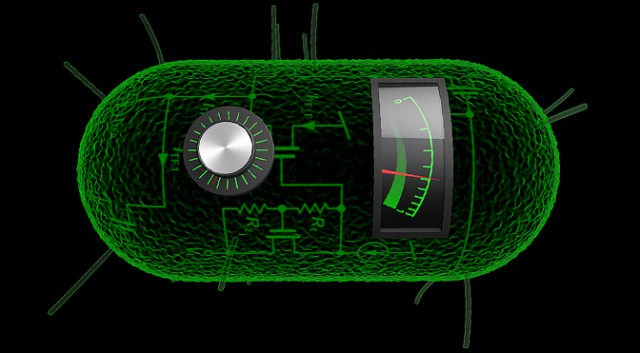
And that’s precisely what researchers at MIT have done with their latest innovation: an analog computer that works inside a living cell! A massive step towards a future where machinery and biology are one and the same, these “cellular computers” were not only able to perform arithmetic, but also more complex functions like taking logarithms, square roots, and even do power law scaling.

biological-analog-computers-in-cells-640x353This news comes on the heels of researchers at Stanford who were able to create a biological transistor inside a cell. Relying on DNA and RNA to create a “transcriptors”, the Standford researchers were able to create a biological logic gate, and all on the microscopic scale. When combined the sorts of digital and analog circuits common to computing, this research could lead to powerful sensing and control platforms built on very small scales.

And like many recent innovations and developments made within the world of computing and biotechnology, the possibilities that this offers are startling and awesome. For one, all cells work with a certain biological clock, which regulates growth, circadian rhythms, aging, and numerous biological process. Thus far, the researchers in question have been hosting their biological computers in bacterial cells. But if they were to develop analogous circuits that operate in mammalian cells, these functions might be brought into better use.

DNA-molecule2What this means is that we could be very well seeing the beginning of biology that is enhanced and augmented by the addition of technology on the cellular level. And not in the sense of tiny machines or implants, things made of silicon and minerals that would regulate our blood flow, administer drugs or monitor or vitals. No, in this case, we would be talking about machines that are composed of self-regulating DNA and RNA and work in the same way our organic tissues do.

On top of that, we would be able to create things like flash drives and computation software from living tissue, cramming thousands of terabytes of into into a few cells worth of genetic material. Human beings would no longer need smartphones, PDAs or tablets, since they would be able to carry all the information they would ever need in their body. And the ability to do this could very well lead to the creation of AI’s that are not build, but grown, making them virtually indistinguishable from humans.

caprica_6And you know what that means, don’t you? The line between biological and artificial would truly begin to dissolve, Voight-Kampff and genetic tests might have to become mandatory, and we could all be looking at robots that look something like this…

Man the future is awesome and scary!

Sources: Extremetech.com, (2)

The Future is Here: Self-Healing Computer Chips

computer_chipIt’s one of the cornerstones of the coming technological revolution: machinery that can assemble, upgrade, and/or fix itself without the need for regular maintenance. Such devices would forever put an end to the hassles of repairing computers, replacing components, or having to buy new machines when something vital broke down. And thanks to researchers at Caltech, we now have a microchip that accomplish one of these feats: namely, fix itself.

The chip is the work of Ali Hajimiri and a group of Caltech researchers who have managed to create an integrated circuit that, after taking severe damage, can reconfigure itself in such a way where it can still remain functional. This is made possible thanks to a secondary processor that jumps into action when parts of the chip fail or become compromised. The chip is also able to tweak itself on the fly, and can be programmed to focus more on saving energy or performance speed.

computer_chip2In addition, the chip contains 100,000 transistors, as well as various sensors that give it the ability to monitor the unit’s overall health. Overall, the microchip is comparable to a power amplifier as well as a microprocessor, the kind of circuit that processes signal transmissions, such as those found in mobile phones, as well as carrying out complex functions. This combined nature is what gives it this self-monitoring ability and ensures that it can keep working where other chips would simply stop.

To test the self-healing, self-monitoring attributes of their design, Hajimiri and his team blasted the chip with a laser, effectively destroying half its transistors. It only took the microchip a handful of milliseconds to deal with the loss and move on, which is an impressive feat by any standard. On top of that, the team found that a chip that wasn’t blasted by lasers was able to increase its efficiency by reducing its power consumption by half.

healingchipGranted, the chip can only fix itself if the secondary processor and at least some of the parts remain intact, but the abilities to self-monitor and tweak itself are still of monumental importance. Not only can the chip monitor itself in order to provide the best possible performance, it can also ensure that it will continue to provide a proper output of data if some of the parts do break down.

Looking ahead, Hajimiri has indicated that the technology behind this self-healing circuit can be applied to any other kind of circuit. This is especially good news for people with portable computers, laptops and other devices who have watched them break down because of a hard bump. Not only would this save consumers a significant amount of money on repairs, replacement, and data recovery, it is pointing the way towards a future where embedded repair systems are the norm.

And who knows? Someday, when nanomachines and self-assembling structures are the norm, we can look forward to devices that can be totally smashed, crushed and shattered, but will still manage to come back together and keep working. Hmm, all this talk of secondary circuits and self-repairing robots. I can’t help but get the feeling we’ve seen this somewhere before…

t1000-ressurect_3135628_GIFSoup.com

Sources: Extremetech.com, inhabitat.com

The Future is Here: Passthoughts Replace Passwords

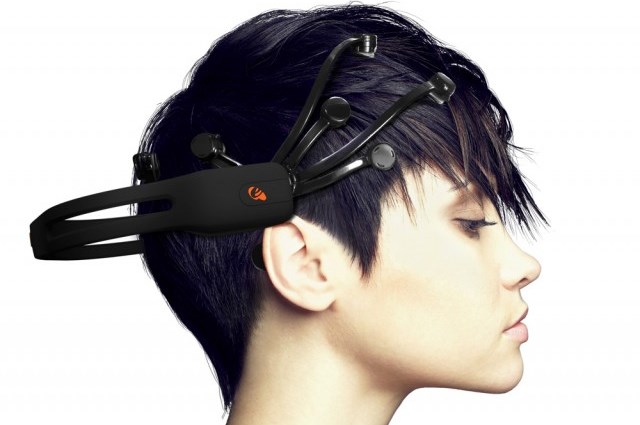
tcdsYou’ve heard of the Muse Headband, or perhaps the Neurosky Mindwave; devices that measure your brainwaves? Well as it happens, researchers at UC Berkley are using the technology to pioneer and new and revolutionary concept: passthoughts! Whereas accessing your computer, tablet or smartphone now is a matter of typing passwords on a (sometimes terribly small) keyboard, in the future it could be as easy as putting on a band and thinking.

Basically, the concept calls for the use of a mind-reading headband as a biometric identifier. Much like a person’s DNA or the blood vessels in their retina are specific to that individual, brainwaves also seem to be unique and can be used to identify them. An especially useful fact, if you want to log into a computer or otherwise prove your identity. Unlike passwords, credit card info or social security numbers, brainwaves cannot be stolen or faked… yet!


neurosky
To do this, the Berkeley researchers used a $100 commercial EEG (electroencephalogram), in this case the Neurosky. This device resembles a Bluetooth headset, with the slight difference of it having a single electrode that rests on your forehead and measures your brainwaves. These are then transmitted via a Bluetooth to a nearby computer. Much like a clinical EEG, the system has an error rate of less than 1%, but requires a single electrode instead of between 32 and 256.

To develop the brain-biometric process, participants were asked to complete seven different tasks with the EEG equipped. Three of the tasks were generic, requiring the participants to focus on breathing in and out, imagine moving their finger up and down, and listening for an audio tone. The other four tasks required participants to focus on an individual/personalized secret, such as singing a song of their choice, or performing a repetitive action.

brainwavesWhile performing these tasks, their brainwaves were monitored for heuristic patterns. And as it turns out, all seven tasks — even just sitting there and focusing on your own breathing — provided enough information to authenticate the subjects identity. So when it comes right down to it, this means of identifying oneself works effectively, and eliminates the need for passwords and could provide another layer of identity protection. All for the onetime price of $100.

But of course, there are some issues. For one, the bulk and unaesthetic nature of the EEG and the accuracy of the system, but these are both remediable. As it stands, no one would really want to wear a Neurosky EEG in public, but if the electrode were concealable – say, within a Bluetooth headset – this wouldn’t be a problem. As it stand, accuracy is the far more important issue. While a 99% accuracy rate is good, it is not good enough for serious and possibly security-based applications.

?????????????????But looking forward, it is not hard to imagine that the accuracy of the system will increase, as EEG hardware and biometric algorithms improve in quality. It is also very easy to imagine smartphones that can identify their users through their brainwaves, provided they are wearing a Bluetooth headset with an EEG equipped. In addition, computers that come equipped with headbands so people can log in and start working simply by sitting down and issuing the proper thoughts.

Thinking truly long-term, its not hard to imagine that the headband itself will be done away with in favor of a wireless EEG implanted underneath the skin. Much in the same way that these are allowing people to control robotic limbs, they may also allow us to log into computers, type documents, surf the net, and play video games with just our thoughts. Move over Xbox Connect! Here comes Xbox Thinx (patent pending!)

my_future_office_by_ishmakey-d3l9n3t

Source: Extremetech.com

The Future is Here: Using 3D Printing and DNA to Recreate Faces

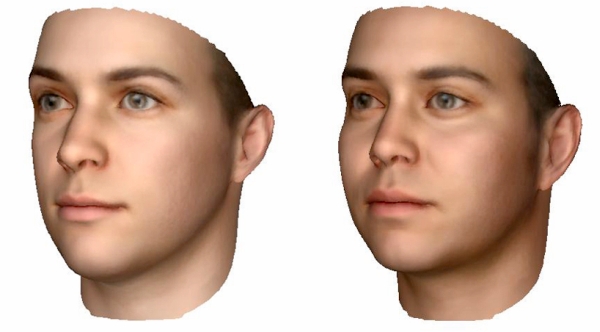
strangervisions-1In what is either one of the most novel or frightening stories involving 3D printing and genetic research, it seems that an artist named Heather Dewey-Hagborg has been using the technology to recreate the faces of litterbugs. This may sound like something out of a dystopian novel – using a high-tech scenario to identify perpetrators of tiny crimes – but in fact, it is the basis of her latest art project.

It’s known as Stranger Visions, a series of 3D printed portraits based on DNA samples taken from objects found on the streets of Brooklyn. Using samples of discarded gum and litter collected from the streets, a her work with a DIY biology lab in Brooklyn called Genspace – where she met a number of biologists who taught her everything she now knows about molecular biology and DNA – she was able to reconstruct what the strangers looked like and then printed the phenotypes out as a series of 3D portraits.

According to Dewey-Hagborg, the inspiration for this project came to her while waiting for a therapy session, when she noticed a framed print on the wall that contained a small hair inside the cracked glass. After wondering who the hair belonged to, and what the person looked like, she became keenly aware of the genetic trail left by every person in their daily life, and began to question what physical characteristics could be identified through the DNA left behind on a piece of gum or cigarette butt.

strangervisions-3In a recent interview, Dewey-Hagborg explained the rather interesting and technical process behind her art:

So I extract the DNA in the lab and then I amplify certain regions of it using a technique called PCR – Polymerase Chain Reaction. This allows me to study certain regions of the genome that tend to vary person to person, what are called SNPs or Single Nucleotide Polymorphisms.

I send the results of my PCR reactions off to a lab for sequencing and what I get back are basically text files filled with sequences of As, Ts, Cs, and Gs, the nucleotides that compose DNA. I align these using a bioinformatics program and determine what allele is present for a particular SNP on each sample.

strangervisions-5

Then I feed this information into a custom computer program I wrote which takes all these values which code for physical genetic traits and parameterizes a 3d model of a face to represent them. For example gender, ancestry, eye color, hair color, freckles, lighter or darker skin, and certain facial features like nose width and distance between eyes are some of the features I am in the process of studying.

I add some finishing touches to the model in 3d software and then export it for printing on a 3d printer. I use a Zcorp printer which prints in full color using a powder type material, kind of like sand and glue.

The resulting portraits are bizarre approximations of anonymous people who unknowingly left their genetic material on a random city street. Naturally, there are plenty of people who wonder how accurate her approximations are. Well, according to Dewey-Hagborg, the portraits bear a “family resemblance” to the subject, and at this time, no person has never recognized themselves in any of her exhibitions. Yet…

strangervisions-4And of course, there are limitations with this sort of phenotype-DNA identification. For starters, it is virtually impossible to determine the age of a person from their DNA alone. In addition, facial features like scars and hair growth cannot be gauged, so Dewey-Hagborg casts each portrait as if the person were around 25 years of age.

And yet, I cannot help but feel that there is some awesome and terrible potential in what Dewey-Hagborg has created here. While her artistic vision had to do with the subject of identity and anonymity in our society, there is potential here for something truly advanced and invasive. Already it has been considered that DNA identification could be the way of the future, where everyone’s identity is kept in a massive database that can either be used to track them or eliminate as suspects in criminal cases.

But in cases where the person’s DNA is not yet on file, police would no longer need to rely on sketch artists to identify potential perps. Instead, they could just reconstruct their appearances based on a single strand of DNA, and use existing software to correct for age, hair color, facial hair, scars, etc, and then share the resulting images with the public via a public database or press releases.

strangervisions-2And as Dewey-Hagborg’s own project shows, the potential for public exposure and identification is huge. With a sophisticated enough process and a quick turnover rate, cities could identity entire armies of litterbugs, polluters, petty criminals and even more dangerous offenders, like pedophiles and stalkers, and publicly shame them by posting their faces for all to see.

But of course, I am forced to acknowledge that Dewey-Hagborg conducted this entire project using a DIY genetics lab and through her own ardent collection process. Whereas some would see here an opportunity for Big Brother to mess with our lives, others would see further potential for a democratic, open process where local communities are able to take genetics and identification into their own hands.

Like I said, the implications and potential being shown here are both awesome and scary!

Source: thisiscolossal.com