Move over coin-powered rocket ship! A Japanese company has just produced a robotics mecha suit for kids. It’s known as the Kid’s Walker Cyclops, a bright green robot that measures 2 meters (6’9″) tall, a meter (3’6″) wide, weighs in at a cool 750 pounds, and runs off rechargeable batteries. And most cool of all, it comes with two appendages: one a grappling claw and the other a drill, most likely for intimidating your enemies!
And much like the Kuratos robot that was unveiled at the Wonder Festival in Tokyo by Suidobashi Heavy Industry in July of last year, this machine does not walk, but glides along on foot-mounted wheels. This lends it the appearance of shuffling along as the driver moves it forward. It can also rotate in place, and has a range of movement for its arms.
Naturally, this design doesn’t come cheap. The manufacturers, Sakakibara Machinery Works, are selling it for nearly ¥2m (about $20,500), but it is apparently available for rent as well. Good thing too, since just about every kid I know will want to take a ride for their birthday! The only downside is that the time will come to give it back, a tear-filled and tantrum-ridden moment no doubt.
This is actually Sakakibara’s second mecha design, coming on the heels of their Landwalker robot, an armless mecha that comes equipped with some seriously badass air cushion ball guns! That machine sells for a much heftier ¥37,800,000 (about $387,500), measures 3.35 meters (11 feet) and weighs a full metric ton. And apparently, they offer boxing robots that actually fight each other too. Take that, Rock em Sock em Robots!
Good to know that every day, we get close to something out of Battletech or Macross Plus! And as they say, its never too early to educate our kids on how the use of battle mechas. Someday, we might all have to know how to use one…
And of course, there’s a video of a child operating the Kid’s Walker Cyclops. Take a gander:
Scientists have been looking at optics for some time as a means of enhancing the usual means of data processing. In terms of computing, it means that using optical components – which use photons rather than electrons to transmit information – could lead to computers that can run exponentially faster than those that use traditional electronics. But a group of German scientists have taken that a step farther, proposing an internet that runs on the same principles.
Using conventional LED bulbs in a laboratory setting, researchers at the Fraunhofer Henrich Hertz Institute (HHI) in Germany successfully transmitted data at 3Gbps using conventional. In a real-world setting, the same system was capable of transmitting data at rate of 500Mbps, roughly a dozen to hundreds of times what a conventional WiFi network is capable of transmitting.
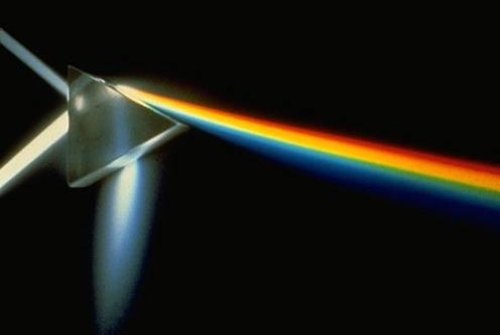
The concept of visible light communications (VLC), or LiFi as it is sometimes known, has received a lot of attention in recent years, mostly due to the growing prevalence of LED technology. Much like other solid-state electronics, LEDs can be controlled as any other electronic component can. By extension, a VLC network can be created along the same lines as a WiFi one, using terahertz radiation (light) instead of microwaves and an LED bulb instead of an oscillating a WiFi transmitter, and photodetectors instead of antennas.
Compared to WiFi, the LiFi concept comes with a slew of advantages. First of all, it can turn any LED lamp into a network connection, and since it operates at such high frequencies, is well beyond the range of the current regulatory licensing framework. For the same reason, LiFi can be used in areas where extensive RF (radio-frequency) interference is common, such as on airplanes, in airports and hospitals. The Fraunhofer researchers even claim that VLC improves privacy, since the signal is directed from one box to another and not made up waves that can be easily picked up on by a third party.
But of course, there is still much research and development that needs to be done. As it stands, the Fraunhoer research is limited in terms of how much information can be sent and how much distance it can travel. In order to compete with conventional WiFi, a system that uses optics to transmit information will have to be able to demonstrate the ability to pack a significant amount of bandwidth into a signal that can reach in excess of 100 m.
Nevertheless, there are numerous startups that are making headway, and many more researchers who are adapting optical components for computers as we speak. As a result, it shouldn’t be long before signs like this are appearing everywhere in your neighborhood…
It’s a strange thing when military planners and environmentalists find themselves seeing to eye to eye. And yet, the latest crop of proposals being considered by the Pentagon to replace their aging vehicles includes a design for a hybrid tank. Designed to replace the venerable M2 Bradley Infantry Fighting Vehicle, the GFV (Ground Fighting Vehicle) is a gas-electric hybrid that will save the army on gas and reduce their impact on the environment.
In truth, the GFV is but one of several clean energy alternatives that is being considered by the Pentagon. As far as they are concerned, the next-generation of military hardware will need to take advantage of advances made in solar, electric, hybrid and other technologies. But of course, this is not motivated out of a desire to save the environment, but to save on fuel costs.
With peak oil supplies diminishing worldwide and the only remaining sources confined to geopolitcally unstable regions, the current high-cost of gasoline is only likely to get worse in the near future. What’s more, the Pentagon and every other army in the developed world understands the dangers of Climate Change, with most scenarios taking into account dwindling fuel supplies and wars being fought for what little will be left. Little wonder then why they would consider cutting their consumption!
As for the GFV, the design calls for a large, highly modifiable ground combat vehicle that grew out of years of military and defense contractor studies. Designed by BAE Systems, the engine is the result of collaboration with a number of firms who helped adapt the design of a civilian hybrid gas-electric engine. Compared to competing designs, it presents a number of advantages.
If BAE’s proposal is adopted by the military, the Defense Department is expected to save approximately 20% on its fuel costs, compared to an alternate GCV vehicle design that uses traditional propulsion. Additional advantages include the ability to switch to pure electric mode for short periods of time, the elimination of significant heat traces from the battlefield, and the ability to operate more quietly at night.
In a recent interview, BAE Systems’ Mark Signorelli further indicated the advantages of the design:
There are also 40% fewer moving parts with higher reliability, requiring less maintenance and decreasing vehicle lifetime cost. Vehicle acceleration, handling and dash speed are improved even over fuel hungry turbine systems. Finally, the system’s ability to provide large amounts of electrical power accommodates the integration of future communications and weapons technology for the next 30 to 40 years.
What’s more, the GFV is capable of undergoing extensive modification, which is a strength in and of itself. With just a few added accessories, the vehicle can work as a tank, hence why it is named a Ground Fighting Vehicle (GFV) and not an Infantry Fighting Vehicle (IFV), which is specifically designed to transport and defend infantry.
The vehicle can also be augmented with electric armor, jammers, and experimental energy weapons thanks to the in-vehicle electric power source. Most of these weapons are currently being developed by the military and are expected to be making the rounds in the not-too-distant future. As such, BAE also stressed that their vehicles could be operational for decades to come without becoming obsolete.
So telling when the decision will be made, thanks to the vagaries of politics and the military-industrial complex. However, the scuttlebutt indicates that the odds of the BAE design being adopted are good, and the company spokespeople indicated that the first GFV’s could be rolling off the line by 2020 and fielded by 2022. I guess Prius owners will have new reasons to brag!
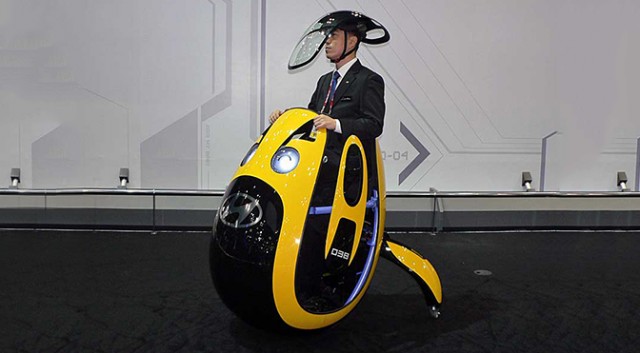
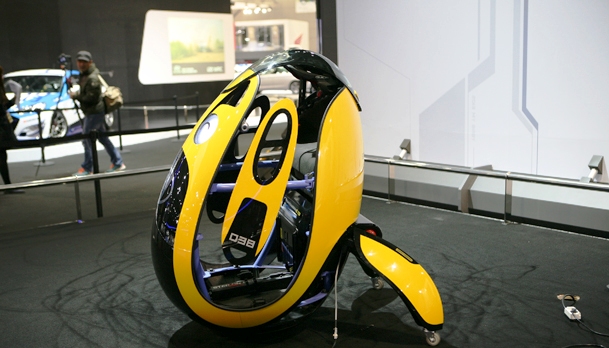
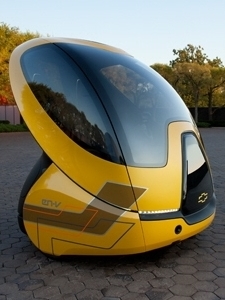
As the world’s cities continue to grow, and air quality and Climate Change continue to worsen, people will need to find cleaner and more effective ways of getting from point A to point B. One option which is being widely considered is personal transit: vehicles that are smaller, smarter, convenient, and more energy-efficient than automobiles. That’s the concept behind the Hyundai E4U Eggmobile, a personal vehicle that merges the convenience of a bicycle with a car.
Another important aspect of the Hyundai concept vehicle is to create a personal transport that will succeed where Mopeds, scooters, and Segways have failed. Though these vehicles are all perfectly good means of getting around, they have not made much of a dent in most major cities, which are still clogged with cars and have public transit that is choked by daily armies of commuters.
The Eggmobile debuted at the Seoul Motor Show this year, where Hyundai was amongst many other automobile makers that were presenting ideas for personal mobility vehicles (PMV). Amongst its advantages is the ability to maneuver in any direction, even though its motor only moves in one. This is made possible by the “semisphere” that the Eggmobile uses, which unlike conventional tires, can rotate in all directions.
When the top of the semisphere is touching and vertically aligned to the ground, the vehicle moves by rotating the semisphere horizontally. Meanwhile, the two rear-mounted training wheels prevent it from spinning uncontrollably. In order to move the vehicle in any direction without hindrance from the training wheels, the E4U simply tilts, much in the same way a helicopter works by tilting its rotors.
The driver, meanwhile, propels the vehicle with their feet, inclining them this way or that in order to generate propulsion. The severity of the tilt determines how fast the vehicle is to go. If this sounds a bit complicated, that’s because it is. At the Motor Show, the demonstration model only moved at a walking pace and the early reports say controlling one will take some getting used to.
What’s more, Hyundai has not yet released the crucial info on what kind of fuel the Eggmobile uses. However, odds are good it is either powered by a clean burning fuel or electricity. Only time will tell. The same holds true of when Hyundai plans to release it, or whether they truly intend to spearhead a fleet of PMVs with this particular mobile. However, given the time and money they invested in this concept, it’s hard to imagine they only pulled it for a single auto show.
Back in 2009, the US suffered a rather serious embarrassment as the American Society of Civil Engineers gave its national infrastructure a grade ‘D’. To make matters worse, they claimed that getting that grade up to a ‘B’ standard would require roughly $2.2 trillion worth of investment. So, any technology that might make repairing bridges, roads, and buildings easier, and perhaps cheaper, has been welcomed with open arms.
And this might just be a topical solution, not to mention a very impressive sign of things to come. Led by Chan-Moon Chung, a professor of chemistry at Yonsei University in South Korea, researchers have come up with a protective coating for concrete that seals up cracks when exposed to sunlight. Not only would this save billions in infrastructure costs, it would address a central problem civil engineers have always faced.
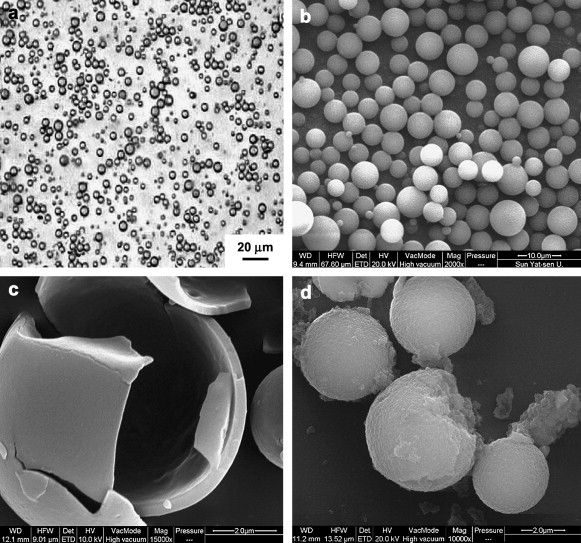
For starters, concrete is a strong and resilient substance, but a brittle one as well. Tiny fractures appear quite easily over time, and exposure to wind and rain cause these to expand. This new substance addresses that through the polymer microcapsules it contains, which melt when exposed to the sun and fill these in. What’s more, Chung says the agent is relatively inexpensive, and won’t freeze in winter.
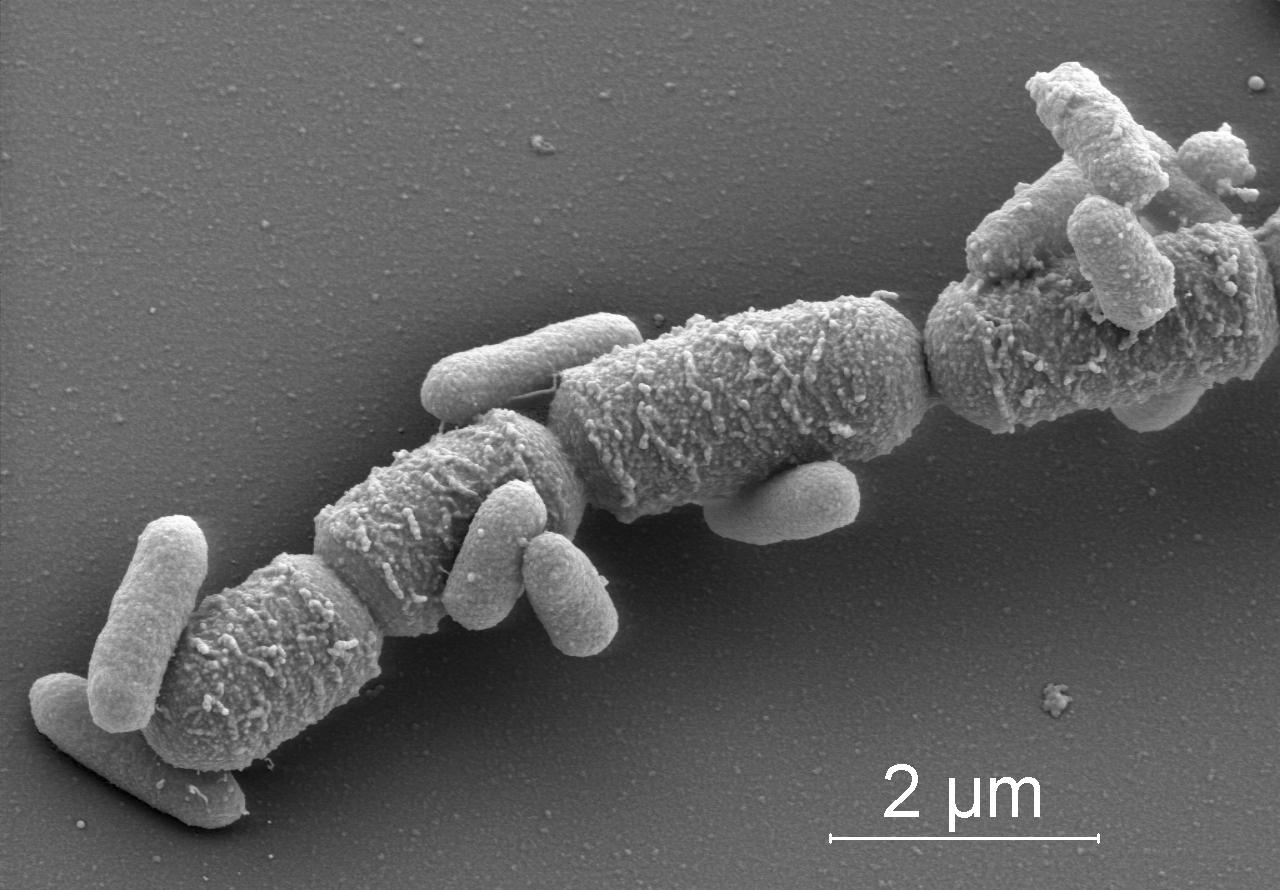
And his is not the only proposed solution for a new “smart concrete” system. A team from the Delft University of Technology, in the Netherlands, has developed a living “bio-concrete”, which used a mixture that is impregnated with a bacteria called Bacillus megaterium to produce a crack-filling mineral, called calcite (calcium carbonate). And similar research is being conducted at Northumbria University and the University of Michigan.
But all of this may take a backseat to Michelle Pelletier of the University of Rhode Island who, along with URI Chemical Engineering Professor Arijit Rose, began work on a self-healing concrete back in 2010. In her specialized concrete matrix, micro-encapsulated sodium silicate is embedded and used as the healing agent, rather than a method that generates silicate.
When cracks form, these silicate capsules rupture and react with calcium hydroxide, which is already present in the concrete. These come together to form a calcium-silica-hydrate gel that heals the cracks and blocks the concrete’s pores, all in the space of about a week. According to Pelletier, this method is more cost-effective than the proposed calcium carbonate solutions and does not require an environmental trigger like sunlight or moisture, just pressure.
The benefits of these new concepts for “smart concrete” present many benefits. Not only are they likely to save money in maintenance costs for cities everywhere, concrete can be infused with these repairing gels and manufactures cheaply. This puts them in contrast with other proposed “smart-materials”, which offer the possibility of being self-repairing but cost an arm and a leg to produce.
When it comes to the future of transportation, it is clear that clean energy, automated systems and robot cars will all figure pretty prominently in the mix. But how will this effect our system of roadways and travel infrastructure? This is a question that is often raised whenever futuristic concepts for cars and transportation are showcased. Clearly, they deserve to be modernized as well, with something cleaner and smarter taking their place.
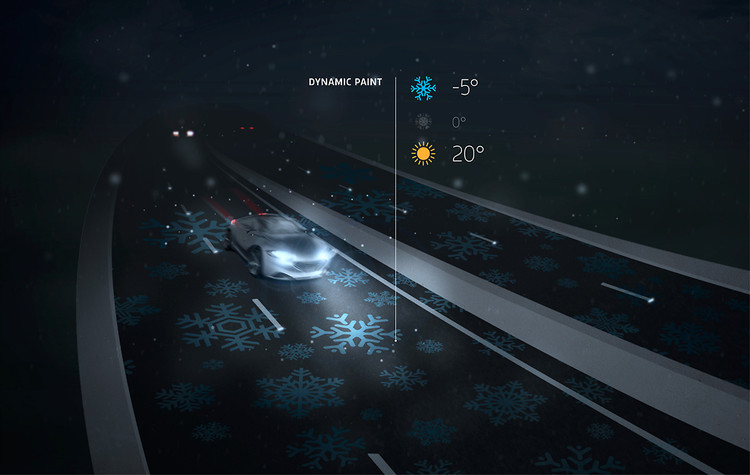
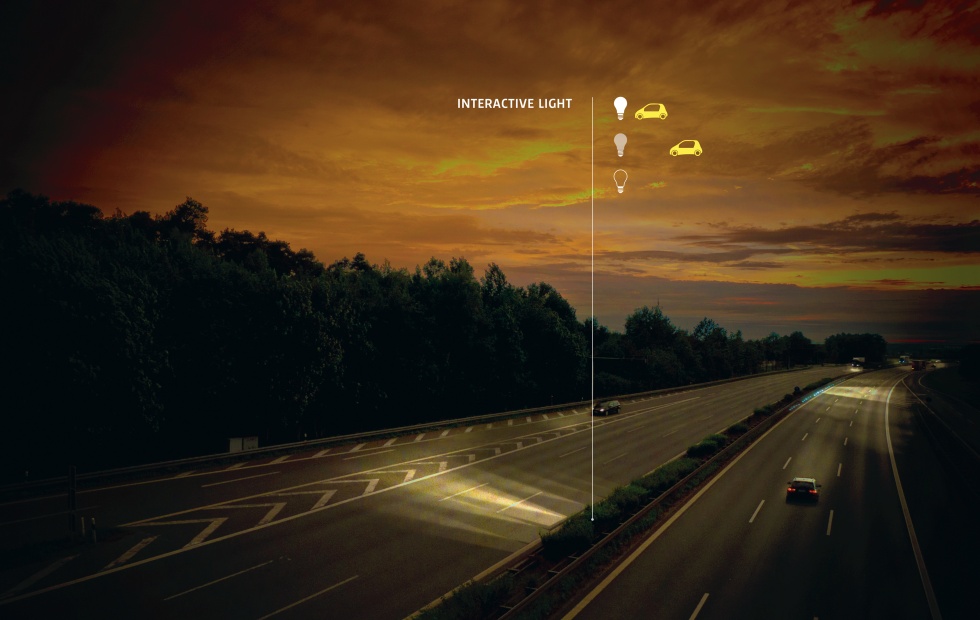
So argues Dutch design firm Studio Roosegaarde, whose ‘smart highway’ concept is set to be unveiled in the Netherlands in 2013. The design involves motion sensors that detect oncoming vehicles and light the way for them, then shut down to reduce energy consumption. Lane markings will use glow-in-the-dark paint to minimize the need for lighting, and another temperature-sensitive paint will be used to show ice warnings when the surface is unusually cold.
The highway also established for priority lanes that will accommodate electrical cars. Studio Roosegard hopes that these will one day l feature induction loops buried beneath the tarmac, which will allow electric car owners to literally charge their cars as they drive. While this concept is not-yet cost effective, the motion sensors and luminescent lane markers will be field tested next year along a 200 meter section of road.
The addition of these features along major highways is expected to reduce incidents of accidents, as well as save energy costs by reducing the reliance on streetlights. In addition, the road markings are expected to have longer-term applications, such as being integrated into a robot vehicle’s intelligent monitoring systems. As automated systems and internal computers become more common, smart highways and smart cars are likely to become integrated through their shared systems.
Sustainable architecture advocate Rachel Armstrong sees all this as becoming part of a future where highways are truly multifunctional:
Not only will they light the way, but they will update geo-databases, informing us of traffic accidents, for example.
What’s more, drivers may even have the option of extricating themselves from the driving process and allowing a “self-drive” or autopilot feature to take over, where the vehicle will link up to the highways own navigation charts and find the optimal route to a destination. And, hold on to your hats, this could also become part of a national “drive safe” campaign, where driver’s are required to turn on the autodrive feature if they are past the legal blood-alcohol limit.
In short, smart highways are a proposal that only embraces clean energy and seeks to increase road safety, but seeks to integrate our roadways with emerging transportation technology. It will be very interesting to see what comes of this, especially when you consider the appeal of light rail and self-driving pod cars. For all we know, the future could consist of entirely automated transportation where no one drives anymore and traffic accidents are a thing of the past.
Nice, but think of the damage to the entertainment industry. With driving a thing of the past, what’s to become of car chases? Won’t someone please think of the car chases! Ah well, check out this video of the concept below:
With every passing year, interest in solar power has been growing by leaps and bounds. Given the impacts of Climate Change, widespread droughts, tropical storms, wildfires and increasing global temperatures, this should not come as a surprise. But an equally important factor in the adoption of clean energy alternatives has to do with improvements that are being made which will make it more efficient, accessible, and appealing to power companies and consumers.
Three such recent developments come to us from Standford, MIT, and the Neils Bohr Institute, respectively; where researchers have announced new ways using nanoprocesses to boost the yield of individual solar cells. In addition to cutting costs associated with production, installation, and storage, increasing the overall electrical yield of solar cells is a major step towards their full-scale implementation.
First, there’s MIT’s new concept for a solar cell, which uses nanowires to massively boost the efficiency of quantum dot photovoltaic cells. Quantum dots – which are basically nano-sized crystals of a semiconducting material – are already being considered as an alternative to conventional silicon cells, since they are cheaper and easier to produce.
However, until recently they have been a letdown in the efficiency department, lagging significantly behind their silicon counterparts. By merging zinc oxide nanowires into the design of their quantum dot photovoltaic cells, the MIT researchers were able to boost the current produced by 50%, and overall efficiency by 5%. Ultimately, their goal is to get that up to 10%, since that is considered to be the threshold for commercial adoption.
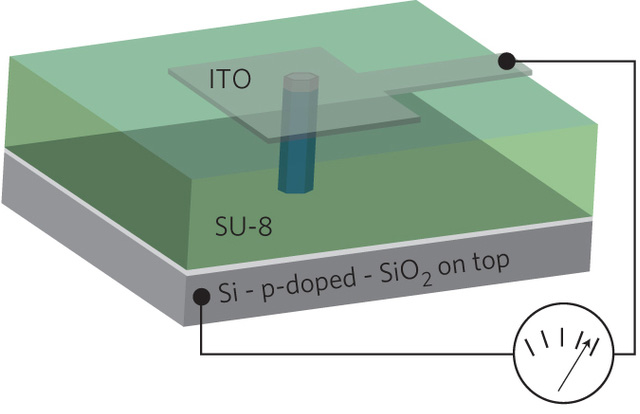
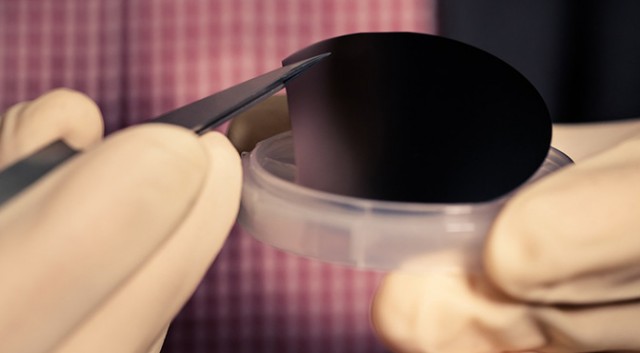
Meanwhile, researchers at the Niels Bohr Institute in Denmark and EPFL in Switzerland announced that they have built solar cells out of single nanowires. In this case, the process involved growing gallium-arsenide (GaAs) wires on a silicon substrate, and then completing the circuit with a transparent indium tin oxide electrode, which are currently employed in the creation of photovoltaic cells and LEDs on the market today.
Prior to these development, nanowires were being researched mainly in conjunction with computer chips as a possible replacement for silicon. But thanks to the combined work of these researchers, we may very well be looking at solar cells which are not only hair-thin (as with the kind being developed by Penn State University) but microscopically thin. And much like the research at the University of Oslo involving the use of microbeads, this too will mean the creation of ultra-thin solar cells that have a massive energy density – 180 mA/cm2, versus ~40 mA/cm2 for crystalline silicon PVs.
And last, but not least, there was the announcement from Stanford University of a revolutionary new type of solar cell that has doubled the efficiency of traditional photovoltaic cells. This new device uses a process called photon-enhanced thermionic emission (PETE) that allows for the absorption of not only light, but heat. This combination makes this new type of cell the equivalent of a turbocharged solar panel!
In conventional cells, photons strike a semiconductor (usually silicon), creating electricity by knocking electrons loose from their parent atoms. The PETE process, on the other hand, uses the gallium arsenide wafer on top gather as much sunlight as possible, creating a lot of excited electrons using the photovoltaic effect. The underside, which is composed of nanoantennae, emits these photoexcited electrons across a vacuum to the anode with gathers them and turns them into an electrical current.
Beneath the anode is a of heat pipe that collects any leftover heat which could be used elsewhere. One of the easiest applications of PETE would be in concentrating solar power plants, where thousands of mirrors concentrate light on a central vat of boiling water, which drives a steam turbine. By concentrating the light on PETE devices instead, Stanford estimates that their power output could increase by 50%, bringing the cost of solar power generation down into the range of fossil fuels.
Though there are still kinks in their design – the cell has a very low 2% rate of energy efficient thus far – the researchers at Stanford are making improvements which are increasing its efficiency exponentially. And although their planned upgrades should lead to a solar cell capable of operating in extremely hot environments, they stress that the goal here is to build one that is capable of gathering power in non-desert environments, such as Spaced-Based solar arrays.
Combined with improved production methods, storage capacities, and plans to mount solar arrays in a variety of new places (such as on artificial islands), we could be looking at the wholesale adoption of solar power within a few years time. Every day, it seems, new methods are being unveiled that will allow Solar to supplant fossil fuels as the best, cheapest and most efficient means of energy production. If all goes as planned, all this could be coming just in time to save the planet, fingers crossed!
Air pollution has always been a problem in urban centers. But with the massive industrialization and urban expansion taking place in some of the most heavily populated regions of the world (China and India being foremost), the issue of how to deal with increasing emissions is especially important. And more and more, researchers and environmentalists are considering options that hits air pollution where it lives.
Two such individuals are Danny Mui and Benjamin Sahagun, a pair of architects who have devised a rather novel concept for dealing with the thick layers of carbon dioxide pollution that are so common to major urban centers. In essence, it is a pair of buildings that scrub CO2 emissions from the air, and thus marries the concept of Carbon Capture technology to urban planning.
Dubbed the CO2ngress Gateway Towers, the concept involves two crooked buildings that are outfitted with a filtration system. This system then feeds the captured CO2 to algae grown in the building which then converts into biofuels for use in vehicles. In this respect, it is not unlike the artificial tree concept designed by Klaus Lackner, director of the Lenfest Center for Sustainable Energy at Columbia University.
Much like these “trees”, the carbon capture technology involves using a entirely natural process to absorb CO2 from the air and then combine it with water, thus causing a chemical reaction that results in a fossil fuel precursor which can easily be converted. This fuel can then be consumed as gasoline or ethanol, thus giving people the ability to keep burning fossil fuels while they research cleaner, more sustainable sources of fuel.
Ultimately, the idea here is not to offer a be-all, end-all solution to the problem, but rather to buy the human race time to clean up its act. And by ensuring that carbon capture technology is available in large urban dwellings, they are looking to ensure that one of the many symptoms of urban sprawl – i.e. large urban dwellings – are part of the solution.
Said Mui and Sahagun on the Council on Tall Buildings and Urban Habitat (CTBUH) website:
The scrubbers are the first step in a process that generates fuel for a fleet of eco-friendly cars for building residents. The system raises public awareness of air pollution and its impact on the health of Chicagoans.
Aside from the scrubbers, the buildings boast some other impressive features to cut down on urban annoyances. These include the “double skin facade”- two layers of windows – that can cut down on outside traffic noise. In addition, the spaces on either side of the buildings’ central elevator core can be used as outdoor terraces for residents.
Apparently, Mui and Sahagun worked on the project while students at the Illinois Institute of Technology, where it earned them an honorable mention in the 2012 CTBUH student competition. According to Mui, they created the structure after the semester ended, but there are no immediate plans to build it.
However, given the growing interest in arcologies and urban structures that reduce our impact on the environment, it is likely to garner serious interest very soon. Especially in China, where air pollution is so severe that it causes up to 750,000 deaths from respiratory illness a year and cities are still growing, buildings like this one could easily become the stone that kills two birds.
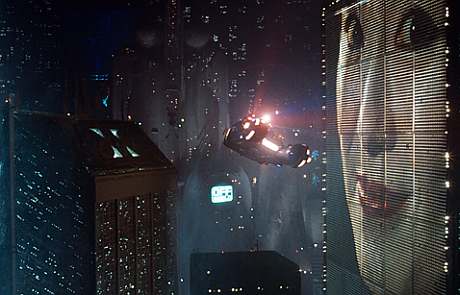
Twenty-five years ago, Los Angeles magazine envisioned what the world would look like in the current decade. And unlike Blade Runner, they avoided the cool but standard science fiction allegories – like massive billboards, flying cars and sentient robots – and went straight for the things that seemed entirely possible by contemporary standards.
The cover story of the magazine’s April 3, 1988 edition showed a futuristic downtown L.A. crisscrossed with electrically charged, multi-tiered freeways permeated by self-driving cars. The article itself then imagined a day in the life of the fictional Morrow family of the L.A. suburb Granada Hills, as “profiled” by the magazine in 2013 by science fiction writer Nicole Yorkin.
Ironically, the magazine did not envision that it would one day go out of business, or that print media would one day be lurching towards extinction. Nevertheless, the fictional article and the world it detailed were interesting reading. Little wonder then why, earlier this month, the LA Times along with an engineering class at USC, revisited the archives to assess what it predicted correctly versus incorrectly.
Together, professor Jerry Lockenour and his class made a list of the hits and misses, and what they found paints a very interesting picture of how we predict the future and how its realization so often differs from what we expect. Of the major predictions to be found in LA of the 2013, as well as in the lives of the Morrow family (get it?), here is what they got right:
Smart-Houses: In the article, the Morrows are said to begin every morning when their “Smart House” automatically turns on. This consists of all the appliances activating and preparing them breakfast, and no doubt turning on all the environmental controls and opening the shades to get the temperature and ambient lighting just right.
While this isn’t the norm for the American family yet, the past few years have proved a turning point for home devices hooking up with the Internet, to become more programmable and serve our daily needs. And plans are well under way to find a means of networking them all together so they function as one “smart” unit.
Self-Driving Cars: The writers of the article predicted that by 2013, cars would come standard with computers that control most of the settings, along with GPS systems for navigation. They also predict self-driving cars, which Google and Chevy are busy working on. In addition to using clean, alternative energy sources, these cars are expected to be able t0 self-drive, much in the same way a pilot puts their plane on auto-pilot. Drivers will also be able to summon the cars to their location, connect wirelessly to the internet, and download apps and updates to keep their software current.
But of course, they got a few things wrong as well. Here they are, the blots on their predictive record:
Homeprinted newspapers: The article also predicts that each morning the Morrows would begin their day with a freshly printed newspaper, as rendered by their laser-jet printer. These would be tailor-made, automatically selecting the latest news feeds that would be of most interest to them. What this failed to anticipate was the rise in e-media and the decline of printed media, though hardly anyone would fault them for this. While news has certainly gotten more personal, the use of tablets, ereaders and smartphones is the way the majority of people now read their selected news.
Robot servants and pets: In what must have seemed like a realistic prediction, but which now comes across as a sci-fi cliche, the Morrows’ home was also supposed to come equipped with a robotic servant that had a southern accent. The family’s son was also greeted every morning by a robot dog that would come to play with him. While we are certainly not there yet, the concept of anthropomorphic robot assistants is becoming more real every day. Consider, for example, the Kenshiro robot (pictured at right), the 3D printed android, or the proposed Roboy, the Swiss-made robotic child. With all of these in the works, a robotic servant or pet doesn’t seem so far-fetched does it?
Summary:
Between these four major predictions and which came to be true, we can see that the future is not such an easy thing to predict. In addition to always being in motion, and subject to acceleration, slowing and sudden changes, the size and shape of it can be very difficult to pin down. No one can say for sure what will be realized and when, or if any of the things we currently take for granted will even be here tomorrow.
For instance, during the 1960’s and 70’s, it was common practice for futurists and scientists to anticipate that the space race, which had culminated with humans setting foot on the moon in 1969, would continue into the future, and that humanity would be seeing manned outposts on the moon by and commercial space flight by 1999. No one at the time could foresee that a more restrictive budget environment, plus numerous disasters and a thawing of the Cold War, would slow things down in that respect.
In addition, most predictions that took place before the 1980’s completely failed to predict the massive revolution caused by miniaturization and the explosion in digital technology. Many futurist outlooks at the time predicted the rise in AI, but took it for granted that computers would still be the size of a desk and require entire rooms dedicated to their processors. The idea of a computer that could fit on top of a desk, let alone on your lap or in the palm of your hand, must have seemed farfetched.
What’s more, few could predict the rise of the internet before the late 1980’s, or what the realization of “cyberspace” would even look like. Whereas writer’s like William Gibson not only predicted but coined the term, he and others seemed to think that interfacing with it would be a matter of cool neon-graphics and avatars, not the clean, page and site sort of interface which it came to be.
And even he failed to predict the rise of such things as email, online shopping, social media and the million other ways the internet is tailored to suit the average person and their daily needs. When it comes right down to it, it is not a dangerous domain permeated by freelance hacker “jockeys” and mega-corporations with their hostile counter-intrusion viruses (aka. Black ICE). Nor is it the social utopia promoting open dialogue and learning that men like Bill Gates and Al Gore predicted it would be in the 1990’s. If anything, it is an libertarian economic and social forum that is more democratic and anarchistic than anyone could have ever predicted.
But of course, that’s just one of many predictions that came about that altered how we see things to come. As a whole, the entire thing has come to be known for being full of shocks and surprises, as well as some familiar faces. In short, the future is an open sea, and there’s no telling which way the winds will blow, or what ships will make it to port ahead of others. All we can do is wait and see, and hopefully trust in our abilities to make good decisions along the way. And of course, the occasional retrospective and issue congratulations for the things we managed to get right doesn’t hurt either!
Hello and welcome back to my ongoing series of PBTS, dedicated to all the advancements being made in solar power. Today’s entry is an interesting one, and not just because it involves an ion cannon… well sort of! It comes to us courtesy of Twin Creeks, a solar power startup that has come up with a revolutionary way to generate photovoltaic cells that are half the price of those currently found on the market.
For many decades, solar power has been held back due to the fact that the cost has been prohibitive compared to fossil fuels and coal. By offering yet another way of cutting the cost of their production, Twin Creeks is bringing this clean alternative one step closer to realization. Ah, but here’s the real kicker: turns out that this revolutionary process involves a hydrogen ion particle accelerator!
As has been mentioned in this series before, conventional solar cells are made from slicing 200-micrometer-thick (0.2mm) sections of silicon wafer from a large block. Then electrodes are added, a sheet of protective glass is placed on top, and they are placed in the sun to generate electricity. But of course, this approach has two serious drawbacks. One, a great deal of silicon is wasted in the production process. Two, the panels would if they were thinner than 200 micrometers, but silicon is brittle and prone to cracking if it’s too thin.
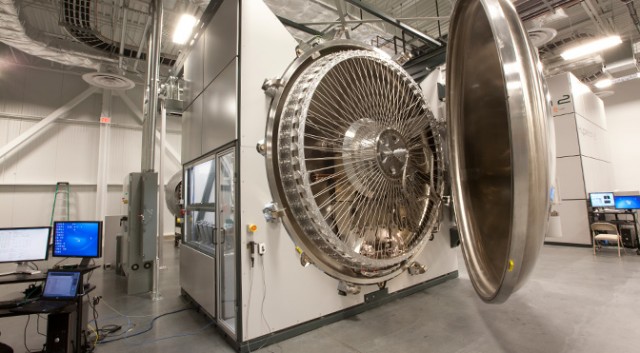
And this is where Twin Creeks ion cannon, aka. Hyperion, comes into play. It’s starts with a series of 3-millimeter-thick silicon wafers being placed around the outside edge of the big, spoked wheel (see above). The particle accelerator then bombards these wafers with hydrogen ions and, with exacting control of the voltage of the accelerator, the hydrogen ions accumulate precisely 20 micrometers from the surface of each wafer.
A robotic arm then transports the wafers to a furnace where the ions expand into hydrogen gas, which cause the 20-micrometer-thick layer to shear off. A metal backing is applied to make it less fragile as well as highly flexible (as seen on the right). The remaining silicon wafer is taken back to the particle accelerator for another dose of ions. At a tenth of the thickness and with considerably less wastage, it’s easy to see how Twin Creeks can halve the cost of solar cells.
This process has been considered before, but the cost of a particle accelerator has always been too high. However, Twin Creeks got around this by building their own, one which is apparently “10 times more powerful” (100mA at 1 MeV) than anything on the market today. Because of this, they are able to guarantee a product that is half the cost of solar cells currently coming out of China. At that price, solar power truly begins to encroach on standard, fossil-fuel power.
But, of course, there still needs to be some development made on producing solar cells that can store energy overnight. Weather strictures, such as the ability to generate electricity only when its sunny out, remains another stumbling block that must be overcome. Luckily, it seems that there are some irons in that fire as well, such as research into lithium-ion and nanofabricated batteries. But that’s another story and another post altogether 😉
Stay tuned for more sun-powered hope for the future!

 Move over coin-powered rocket ship! A Japanese company has just produced a robotics mecha suit for kids. It’s known as the Kid’s Walker Cyclops, a bright green robot that measures 2 meters (6’9″) tall, a meter (3’6″) wide, weighs in at a cool 750 pounds, and runs off rechargeable batteries. And most cool of all, it comes with two appendages: one a grappling claw and the other a drill, most likely for intimidating your enemies!
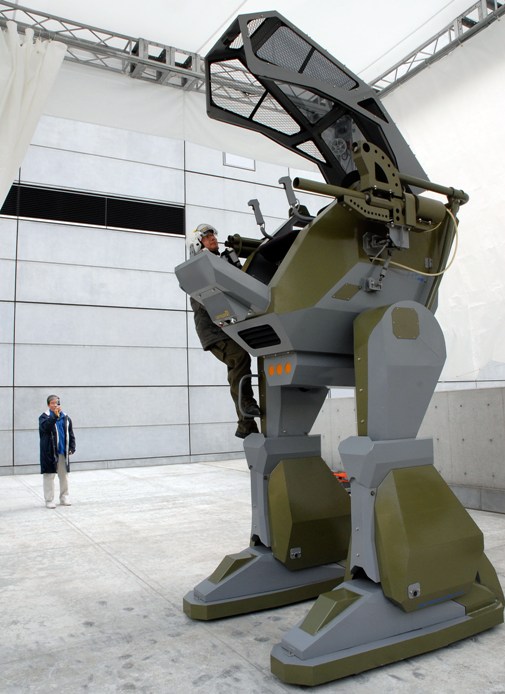 This is actually Sakakibara’s second mecha design, coming on the heels of their Landwalker robot, an armless mecha that comes equipped with some seriously badass air cushion ball guns! That machine sells for a much heftier ¥37,800,000 (about $387,500), measures 3.35 meters (11 feet) and weighs a full metric ton. And apparently, they offer boxing robots that actually fight each other too. Take that, Rock em Sock em Robots!























 Stories by Williams