The Milli-Motein: A “Real-Life Transfomer”?

DNA-molecule2It seems that the line which separates the biological world from the synthetic is growing fainter all the time. Just consider advancements made in the past year alone: In January, researchers at MIT created the world’s first medimachine. Then in September, researchers announced the development of an electronic implant that can dissolve completely inside your body, followed shortly thereafter by the creation of the first bionic hand. And then in November, amputee Zak Vawter climbed America’s tallest skyscraper with the world’s first neurally controlled prosthetic leg.

Now, researchers inspired by structural biochemistry are working to design shapeshifting robots that could, in theory, assume almost any form imaginable. That’s the idea behind MIT’s latest invention, the Milli-Motein: a highly adaptable, infinitely scalable machine that can assume almost any shape imaginable. MIT media labs describes the device as both the robotic equivalent of a Swiss Army Knife, and a “real-life transformer”.

milli-moteinBut, like many inventions these days, the inspiration comes from organic biology, specifically the protein structure. The building block of all life, proteins can assume an untold number of shapes to fulfill an organism’s various functions, and are the universal workforce to all of life. By combining that concept with the world of robotics, the MIT research team hopes to create a new breed of robot that can assume any shape to perform multiple functions, and the Milli-Motein is just the beginning.

According to research lead Neil Gershenfeld, this device represents the latest advance in what he describes as the “Digital Fabrication Revolution”. As he put it: “Digital fabrication will allow individuals to design and produce tangible objects on demand, wherever and whenever they need them.” Also known as “programmable matter” – or “smartmatter” – products made from this kind of material could not only change their shapes, but become new things altogether.

Naturally, this is a small step in that direction, but the eventual goal is nothing short of revolutionary. I can envision a future where people will actually line up to buy the new Acme “handy-dandy micro-helper”, a device which can convert from a screwdriver to a HDMI cord, a tablet, a fannypack, or a pair of shoes. Whatever you need, the micro-helper has you covered! Hey, that’d be a good slogan. I should start investigating patents now, don’t want Kurzweil and all those futurists making money off of this instead of me!

Check out the video below for footage of the Milli-Motein in action, and a brief description of the principles involved:

Source: IO9.com, MIT.edu

More Future Phones

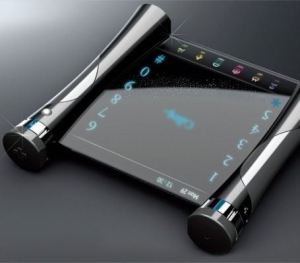
Paper-Thin-Pamphlet-Smartphone-Concept-2The last decade has seen some real interesting developments in the field of digital technology and telecommunications. Perhaps too interesting! When one considers the kind of over-saturation  that has taken place with smartphones in recent years, not to mention the cavalcade of proposed concepts that are expected to take the field in the next few, one could get the impression that were moving too fast.

But that’s the nature of technological progress, it’s an iterative process that’s subject to acceleration. And of course, just because we’re being bombarded with countless proposals doesn’t mean they are all going to come true.  But what is clear is that the smartphones of the next generation are going to have a few things in common.

For example, flexible concepts are likely to be all the rage, as are touchscreens which have become the current mainstay. In addition, the phones are likely to be miniaturized even farther, some to the point of being paper thin and even collapsible. Transparencies are also a common concept, as are holographics and the ability to morph into other shapes.

In the end, its an open sea, and people will be free to pitch any and all combinations of these basic ideas. And there’s no telling which one’s will catch on and which one’s won’t. But one thing is clear. The end results are likely to be mighty cool and are sure to complicate our lives much, much more! And here are just some of the proposed concepts that are we likely to be seeing in the next few years…

Cobalto:
cobalto_phoneMac Funamizu’s “Cobalto” has taken the cell phone concept way into the future, with an almost all-glass design. The phone would feature 3D imaging that could make Google Maps even more useful, as demonstrated here.

Dial:
dial_phoneJung Dae Hoon’s “Dial” concept takes the rotary phone of the ‘good ol’ days’ and combines it with mobile technology and modern jewelry sensibilities.


Kambala:

kambalaA pop-up phone! Ilshat Garipov’s “Kambala” is a fascinating concept that features a center piece that can pop out to fit into your ear, making it an earphone. In theory, it will also have the ability to match your skin tone, rendering it almost invisible.

The Leaf:
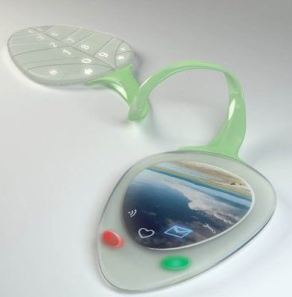
leaf_phoneAnastasia Zharkova’s organic “Leaf Phone” melds aesthetic creativity with functionality. The winding stem of the leaves could be wrapped around a user’s arm, wrist, neck, or other body part.

Mobile Script:
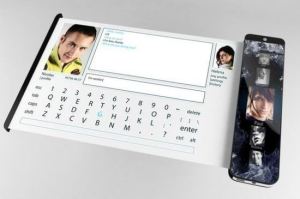
mobile_scriptAleksander Mukomelov’s “Mobile Script” phone starts with a stylish and sleek small screen, then reveals a larger touchscreen hidden within the phone’s body to meet all of your media device needs.

Morph:
morph_phoneNokia’s “Morph” phone uses nanotechnology to create a flexible body and transparent screen that can be molded to whatever shape is the most convenient for its user. The nanotech could even clean itself.

Packet:
packet_phoneEmir Rifat’s “Packet” phone won first place at the Istanbul Design Week 2007. The tiny phone starts off at 5 cm square, then folds out as needed for different functions.

Pebble:
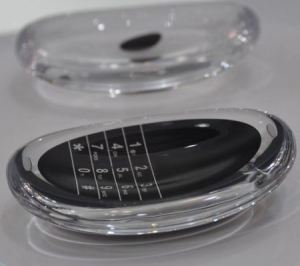
pebble_phoneAt first glance, this entrant into Fujitsu’s cell phone design contest looks like an ordinary paperweight. Actually, it’s a cleverly disguised phone. As the picture shows, the small black dot can be transformed into a keypad, media panel or web browser depending on what corner of the plastic handset you drag it to.

Sticker Phone:
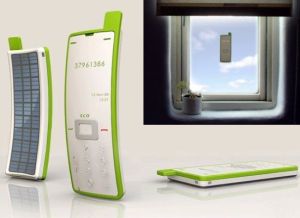
sticker_phoneLiu Hsiang-Ling’s “Sticker Phone” has a solar panel on the back of the phone and a curved surface that will allow it to stick to a window via suction to charge. Plus, you won’t lose your phone somewhere on your desk.

Visual Sound:
visual_soundSuhyun Kim’s stylish “Visual Sound” voice-to-text concept phone for deaf people is a huge step from current systems like teletypewriters.

Window Phone:
window_phoneDesigned by Seunghan Song, this “window phone” concept will reflect current weather conditions on the screen. To input text, you just blow on the screen to switch modes, then write with your finger as a stylus.

Source: Huffington Post.com

Transhumans by 2030?

transhumanismThe issue of transhumanism, the rise of a new type of humanity characterized by man-machine interface and augmented intelligence, is being debated quite fervently in some circles right now. But it seems that groups other than Futurists and speculative fiction writers are joining the discussion. Recently, the National Intelligence Council, a US policy think-tank, released a 140 page report that outlined major trends and technological developments we should expect in the next 20 years.

The report, entitled “Global Trends 2030: Alternative Worlds”, predicted several trends which are likely to come true in the near future. Amongst them is the end of U.S. global dominance, the rising power of individuals against states, a growing middle class that will increasingly challenge governments, and ongoing shortages in water, food and energy. However, predictions were also made concerning a future where humans have been significantly modified by various technologies, what is often referred to as the dawn of the Transhuman Era.

how-nanotechnology-could-reengineer-usIntrinsic to this new era is the invention of implants, prosthetics, and powered exoskeletons which will become regular fixtures of human life. These will go beyond merely correcting for physical disabilities or injury, to the point where average humans are enhanced and become more productive. 2030 is key year here, because it is by this point that the authors predict that prosthetics will exceed organics, and people will begin getting them installed in order to augment themselves.

In addition, life extension therapies and medical advances which will be used predominantly by the elderly will become a means for otherwise healthy people to prolong their lives and maintain health and vitality for longer periods of time. Brain implants are expected to become a reality as well, ostensibly to allow people to have brain-controlled prosthetics, but also for the sake of enhanced memory and augmented thinking.

bionic_handAnd of course, bionics are an important factor in all this. Already, researchers have achieved breakthroughs with bionic limbs, but retinal attachments, artificial eyes, and even fully-functioning organs are expected before 2030. On top of that, improvements in drugs, such as neuropharmaceuticals – drugs that enhance memory, attention, speed of thought – and implants which assist in their delivery are expected to be making the rounds.

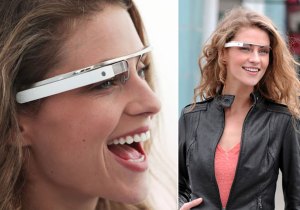
google_glassesFinally, there is the matter of virtual and augmented reality systems, which are already becoming a reality thanks to things like Project Glass and recent innovations in PDAs. As the report notes: “Augmented reality systems can provide enhanced experiences of real-world situations. Combined with advances in robotics, avatars could provide feedback in the form of sensors providing touch and smell as well as aural and visual information to the operator.”

However, the big issue, according to the report, is cost and security. Most of these technologies will be not affordable to all people, especially for the first few years of their existence. This could result in a two-tiered society where the well-to-do live longer, healthier and have a competitive advantage over “organics”, people of lesser means who are identifiable by their lack of enhancements. Also, developers will need to be on their guard against hackers who might attempt to subvert or infect these devices with tailor-made viruses.

Naturally, the importance of maintaining uniform scientific progress was stressed, and the need for a regulatory framework is certainly needed. What the CSER recently recommended is certainly worth keeping in mind here, which was to ensure that some kind of regulatory framework be put in place before all of this becomes a reality. What’s more, public education is certainly necessary, so that the current and next generation of human beings knows what to expect and how to go about making informed choices therein.

To see the full report and learn more about the NIC, follow the link below:

National Intelligence Council: Who We Are

Source: IO9.com

The Future is Here: The Roll Out Laptop!

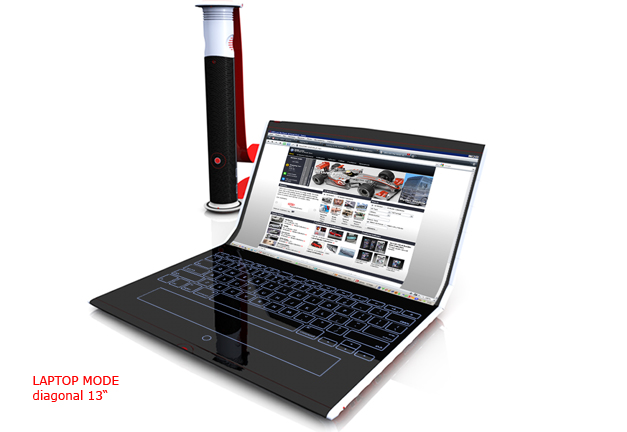
rolltop1 Presenting the Rolltop laptop, a proposed next-generation portable computer that is made to look and act like a scroll. As a concept, this idea was first started in 2009 by the people of Rolltop, a team of researchers, IT developers and business administrators. By combining recent advancements in the field of OLED-Display and multi-touchscreen technology, the plan was to create a flexible computer that would combine the utility of a laptop computer with the weight of a mini notebook.

In addition, it can be switched from a laptop with 13 inch diagonal screen to a 17 inch graphics tablet. Or, stand it up against its rear-mounted support arm and use it as a primary monitor. When rolled up, it measures a mere 8.3 in width and 28 centimeters in length, and has a carrying strap which allows it to be carried around like a small case. When unrolled, the laptop is separated from a central core which contains the battery, power plug-in, and loudspeaker.

rolltopInitially, the project was merely a proposal by the Rolltop team to demonstrate their vision and ideas. However, due to the overwhelming response from the technical and consumer community, they set to work on making it happen. As it stands, the device is still in the planning and development phase, but Rolltop has everything it needs to make it a reality. Well almost… The technology exists, the concept is feasible; all that’s needed is a little more time and investment capital.

In the meantime, check out this promotional video of the Rolltop at work. And if you’re really keen, click on this link to get to the company website to pledge a donation.

The Future is Here: The HIV-Preventing, Contraceptive-Delivering, Dissolving Condom

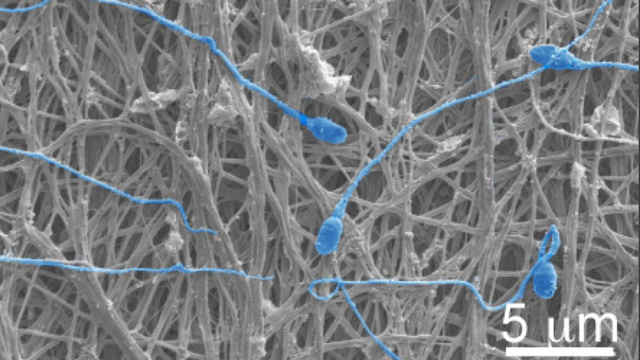
condomDoesn’t that sound like a tall order? A nanofabricated condom that delivers an anti-HIV drug, prevents pregnancy, then disappears so as not to create waste. Did I say tall order, or something out of a dream? Hard to say. The point is, its could soon be reality thanks to researchers at the University of Washington who just published a paper in describing how they’ll use “electrospinning” to create next-generation female condoms made from specially customized nano-fibers.

For those unfamiliar with the terminology, electrospinning is a process where an electrical charge is used to draw very fine fibers (typically on the micro or nano scale) from a liquid. Using this method, the UofW researchers hope to weave an ultra-thin series of cloth-like fibers and medicine together to create female condoms that will boast all the necessary protection and contraceptives to make recreational sex perfectly safe. And the rate of disolution, which can be engineered to take place in a matter of minutes, hours or days, ensures that women don’t need to remove it after sex is had.

According to their abstract, the new condom is based in the field of “Multipurpose prevention technologies (MPTs)”, a relatively new concept that seeks to “simultaneously prevent sexually transmitted infections (STIs) and unintended pregnancy”. Given the current rate of population growth and the ongoing epidemic of HIV/AIDS and other STI’s, this new field is considered to be a possible answer to a growing global health concern. What’s more, they claim that “combining chemical and physical barriers offers the greatest potential to design effective MPTs, but integrating both functional modalities into a single device has been challenging.”

The abstract also goes on to describe the process that they will be relying on and the results:

“Using FDA-approved polymers, we fabricated nanofiber meshes with tunable fiber size and controlled degradation kinetics that facilitate simultaneous release of multiple agents against HIV-1, HSV-2, and sperm. We observed that drug-loaded meshes inhibited HIV-1 infection in vitro and physically obstructed sperm penetration. Furthermore, we report on a previously unknown activity of glycerol monolaurate (GML) to potently inhibit sperm motility and viability.”

Despite the challenges in the process, the results thus far have been encouraging, and even garnered the attention of Bill and Melinda Gates. Apparently, their Foundation has pledged a research grant of one million dollars to develop the technology which will make these condoms possible. I don’t know about you, but I feel safer!

Source: IO9.com

The Future is Here: Paper-Thin Smartphones!

paperthin_smartphoneAt last years Consumer Electronics show, the AMOLED flexible display concept was a huge hit. AMOLED – which stands for active-matrix organic light-emitting diode – is new a display technology that utilizes both organic compounds and an active matrix to form electroluminescent material and address pixels. But what is truly awesome about it is how it allows for displays that are both and flexible.

In the wake of that show, many developers have been presenting some cutting edge technologies and concepts that are still in development, but which build on the technology and are expected to be available within a few years time. One such concept comes from a collaborative group composed of researchers from Queens University’s Human Media Lab and the Motivational Environments Research Group from Arizona State. Their concept: the PaperPhone!

Like the Nokia Kinetic concept, a user is able to control through a series of bending and flexing gestures. The device’s internal circuit memorizes these gestures and responds accordingly whenever they are repeated. Ergo, if you register that earmarking is the command for making a call, the paper-thin phone will bring up a call prompt whenever you bend the corner. In addition, mp3’s will be available on the device, and presumably, internet access.

Paper-Thin-Pamphlet-Smartphone-Concept-2In addition to its ultra-thin profile, flexible nature and smartphone functions, this proposed design represents a growing trend in personal digital devices, which is towards the organic. In terms of design, interface and assembly, the eventual goal is devices that will be indistinguishable from organics. This could take the form of machinery composed of entirely out of “smart” DNA – aka. programmable biological cells –  hybrid devices that utilize organic compounds, and even machinery assembled by DNA structures.

Sure, this may seem like a long way from that eventual, lofty goal, but its certainly a step in that direction. And if technology can and will be manufactured with organic materials, there’s even a chance it could be used as biowaste when we’re done with them. Maybe even compost, assuming they can break down into soil-enriching organic compounds.

Keep your eyes open for more breakthroughs, they are sure to be coming soon. And while you’re at it, check out of the video of the PaperPhone in action!

Skylon: The Future of Commercial Aerospace Flight?

skylonBehold the Skylon! The Mach 5 hypersonic aerospace ship that is the future of commercial flight. Well, that’s the hope anyway, and if a British company known as Reaction Engines Limited get’s its way, it very well could be…

For some time now, hypersonic commercial flight has been batted around as an idea. And with billionaire Richard Branson promising commercial space flight to the world, it seemed like only a matter of time before aerospace flights became the norm. As it turns out, we may be closer than anyone previously thought, thanks to a heralded breakthrough by Reaction Engines.

In a recent statement, the British company claimed they have made “the biggest breakthrough in aerospace propulsion technology since the invention of the jet engine.” In the past, hypersonic flight has been hampered by the problem of propulsion, since at speeds beyond Mach 2, a jet engine has trouble getting the oxygen needed for combustion. Attempts to remedy this have already been made, such as with the SR-71 Blackbird which managed to reach speeds in excess of Mach 3. But for high-altitude and aerospace craft, where Mach 5 and above are essential, the problem remains, as does the issue of the amount of heat generated.

Reaction Engines claims it has solved the problem with a design that could allow a vehicle to take off, reach orbit using a combination of an air-breathing engine and rocket, then return to Earth. The secret is cooling the air as it enters the hypersonic SABRE engine. The air-breathing engine will accelerate a vehicle to about Mach 5.5, according to the company, after which a liquid oxygen tank will supply a rocket engine for the portion of the flight in space. But unlike current space vehicles, there will only be one stage involved for the entire flight thanks to the boost from the SABRE design.

In the same press release, RE claims the “pre-cooler technology is designed to cool the incoming airstream from over 1,000 Celsius to minus 150 Celsius in less than 1/100th of a second, without blocking with frost.” The company further claims to have conducting 100 test runs of the new engine’s cooling system and believes they can begin production of a prototype by 2015. The European Space Agency also says it has evaluated the design and is in negotiations to support further development.

To put it in terms every jetsetter and international traveler can understand, their proposed aerospace craft – known as the Skylon – will allow a passenger to enjoy breakfast in New York City and then lunch in Tokyo. And with a few years and plenty of investment, not just from the ESA, but NASA and the RSA as well, Skylons could be ferrying people all over the world in a matter of hours.

Source: Wired.com

The Future is Here: The Health Monitoring Patch

In recent years, there have been quite a few exciting developments in the field of medicine, which have included such things as medical implants which can deliver drugs, and even tiny medimachines which can navigate the human bloodstream. But as it turns out, flexible skin-mounted electronic patches might also be the way of the future.

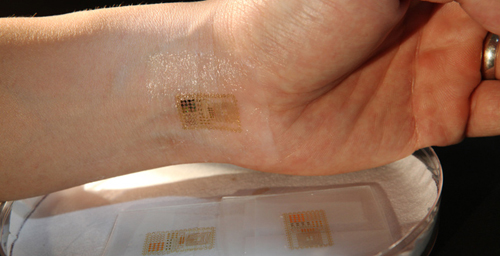
Much like a temporary tattoo, these devices will be slapped on a patient’s skin and be able to monitor their vitals and attend to their medical needs remotely, sending information to either a portable computer, server, or even their doctor’s office. Combined with a specialized implant that delivers drugs, we could be looking at a future where truly hands-free medical technology is available.

Such a concept was unveiled a little over a year ago at the University of Illinois, where researchers were working to develop what they called the “smart skin” patch. Paper thin, flexible, and virtually transparent, the device platform includes electronic components, medical diagnostics, communications, and human-machine interfacing on a patch so thin and durable it can be mounted to skin much like a temporary tattoo.

According to John A. Rogers, an engineering professor at Illinois University, his team “threw everything in our bag of tricks onto that platform”, including LEDs, transistors, wireless antennas, sensors, and conductive coils and solar cells, just to demonstrate that it could work. The current design features such as EEG and EMG sensors that track nerves and muscles, something that tends to be limited to a lab given the number of electrodes and wires involved. And the patch itself, mounted on a thin sheet of water-soluble plastic before being laminated to skin with water, can be applied not only like a temporary tattoo, but even on top of a temporary tattoo to help conceal it.

But the real accomplishment here, according to engineering professor Yonghang Huang, whose group was charged with mechanics and materials questions, is the blurring of electronics and biology. “All established forms of electronics are hard, rigid,” he said. “Biology is soft, elastic. It’s two different worlds. This is a way to truly integrate them.” The next step for Rogers and his team is commercialization, which they are already trying to do through his own device company, mc10. The researchers hope to soon add Wi-Fi capability in subsequent models, giving it the ability to communicate with remote servers and computers.

Naturally, the issue of privacy is a concern. If a patient’s medical information is being broadcast by a remote device, will it therefore be obtainable by hackers or third parties who might be interested? And if your medical information is being broadcast directly to a doctor’s office, might this be a potential basis for “Big Brother” bio-monitoring. But like with all medical technology, these devices won’t be available to patients without prior consent, in an attempt to ensure patient rights.

And for people who are suffering from life-threatening or degenerative conditions, it could mean the difference between life and death. Just think of it, terminally-ill patients, seniors or individuals with severe allergies are given this patch. The moment they begin to have a reaction, heart attack, or some other brush with death, EMT’s are notified without the need for calling 911.

But of course, the technology is still in it’s infancy and we can expect any such issues to be debated as it nears completion. In the meantime, it is exciting news just to see how far and fast the field of biotechnology has come in recent years!

Source: news.cnet.com

“A Day Made of Glass”: The Future of Touchscreens

Earlier this week, I came across some interesting news regarding the creation of flexible, paper-thin displays. Known as AMOLED technology, companies like Samsung, Sony, Nokia, and other communication giants were all working towards the development of digital devices that would be controlled through manipulation and not touch. In addition, they would thinner and lighter than any and all previous digital devices, and virtually immune to destruction.

Well it seems that touch screens are not to be outdone yet. In the midst of all the fanfare about the future of communications and information technology, a company by the name of Corning had its own vision of things to come. In their world, display screens can and will be built into panes of what they call “Gorilla Glass”. These panes could be the screen on your next smartphone, or the window in your bathroom, the panels in your car, on a wall in the street, or the basis of portable computing.

Just imagine, information kiosks on the street made out of large panels of illuminated glass, tablets that are less than a centimeter thick and completely transparent, and a handheld mirror that can also receive text messages, email and incoming calls. Much like flexible displays, this sounds like something out of a truly awesome science fiction novel, or a somewhat awesome Hollywood approximation thereof.

For some time, speculative writers have predicted that the future of computing will lie in “smart surfaces” and “smart materials” that are composed of computers and displays so tiny, that any flat surface can be made into a dynamic display device or interface. Once again, it seems that reality is catching up to fiction, and not a moment too soon either! I don’t know about you, but it’s nice to learn about technological innovation that doesn’t evoke feelings of dystopia or apocalypticism.

Check out the video below to see what Corning has in mind and how they will likely effect future generations and how they interact with their everyday environment:

Future Timeline

This has been sitting in my box of ideas for quite some time, a website that produces videos dedicated to predicting future trends. Awhile back, I came across it while searching on the subject of the Technological Singularity, and was pretty intrigued by what I saw. Not only was this website dedicated to predicting major technological developments in the near future, the ones that would culminate in the Singularity, but was even considering humanity’s prospects as a species in the far, far future. After taking a look around I thought to myself: “truly, this is the stuff of speculative science-fiction.”

To get a breakdown of what the makers of this site predict, check out the videos posted below, as compiled by HayenMill at Youtube. A self-professed amateur historian and futurist, HayenMill took the liberty of combining the Future Timeline predictions, year by year, covering the three decades that will take us from the beginning of 2010 to 2040, by which time all the current trends of the world will reach a full, fevered pitch. These include the problems of overpopulation, climate change, the shift of economic power from the US to Asia, and the growth of information, medical, and bio technology, as well as the development of AI and commercial spaceflight.

Check them out, and for a more detailed breakdown of future events, go to futuretimeline.net. Trust me when I say that the group’s predictions range far and wide, but which are also highly detailed, at least when pertaining to this century! You can take me at my word when I say that I will be doing my best to incorporate as many of these ideas as possible into my own writing!