The Future is Here: Smarty Rings

smarty-ringsOkay, its not exactly here yet, but the implications of this idea could be a game changer. It’s known as the Smarty Ring, a crowdfunded idea being advertised on Indiegogo by a group of inventors in Chennai, India. And at its core is a waterproof, stainless steel band that will feature an LED screen and connect to your phone via Bluetooth 4.0 wireless technology.

For some time now, the Chennai-based group has been the source of some controversy, due mainly to the fact that they have no working prototypes of the ring, but also because they have not identified themselves beyond giving their location. They also freely admit that the photos of the Smarty Ring on Indiegogo and on their website are photoshopped.

smarty-rings1Surprisingly, this has not prevented them from being able to mount their campaign to raise money for its development. While the crowdfunding site Kickstarter has rules requiring creators to be clear about the state of a project’s development and show a prototype “demonstrating the product’s current functionality,” Indiegogo has no such rules.

However, this has not stopped their campaign – which officially closed at 11:00 am ET on Dec.11th, 2013 – from raising a total of $299,349 from their original goal of $40,000. Numerous blueprints of what the watch would look like, including detailed images of its electronics, are also available on their campaign page. What’s more, the group is still taking advanced orders and offering discount pricing to anyone who orders one before Dec.30th.

smarty-rings3Also, the group has become much less clandestine since the campaign closed. In response to questions, group spokesperson Karthik said the project was founded by Chennai-based mechatronics engineer Ashok Kumar, and that their team of inventors includes electronic and computer engineers with experience in robotics and nanotechnology.

Ultimately, the goal of the project was to create a high-tech gadget that would also double as “high-end fashion jewelry,” according to an email to CBC News from the team’s marketing director, Karthik, who did not give his last name. The group also claims on their website that the average smartphone user checks their phone every six minutes, and promises to make that unnecessary, saving time and the battery life of the smartphone.

smarty-rings4According to the The Smarty Ring’s site, the features are to include:

  • A clock with stop watch, timer and alarm
  • Notifications of calls, text and email messages, and social networking updates from services such as Facebook, Twitter, and Skype
  • Phone controls that let users accept or reject incoming calls, make outgoing calls to preset numbers, and control music or the phone’s camera
  • A phone tracking feature that beeps when your phone gets more than nine meters away from you
  • The ring charges wirelessly and its creators guarantee 24 hours of battery life

The Smarty Ring team says the retail price for the device will be $275, but backers and people who preorder before Dec.30th will be able to get one at the reduced price of $175. They estimate that delivery will begin sometime in April of 2014. They are also offering cheaper versions that include only the tracking feature or the clock and tracking features.
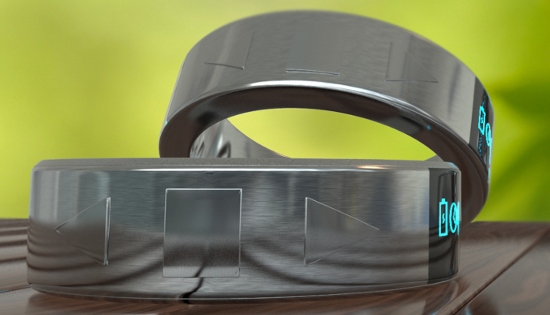
smarty-rings5Needless to say, if this is a scam, it is clearly a well-thought out and elaborate one. Not only is the idea of a smart ring that can connect wirelessly to other devices and do the job of a smartphone entirely within the bounds of current and developing technology, its a very cool idea. But if it is in fact real, its realization could mean a new wave of innovation and design for the smart devices market.

Currently, designers and developers are working towards the creation of smartwatches, smartphones, tablets and phablets that are not only smaller and much thinner, but also flexible and transparent. An even smaller device, such as a ring or bracelet, that can do the same job but be far more ergonomic, may be just what the market ordered!

And in the meantime, be sure to enjoy this promotional video from the Smarty Ring website. And be sure to check out their website and determine for yourself if they are liars, inventors, or just plain dreamers:


Sources:
cbc.ca, indiegogo.com

The Future is Here: BCI Stroke Rehabilitation

stroketherapybciIn recent years, rehabilitative systems have been developed that can allow stroke victims to move animated images of their paralyzed limbs, or to activate robotic devices that guide their limbs through the desired movements. Slowly, we are entering an age where machines can turn thoughts into ambulatory ability, allowing people who suffer from paralysis to lead more fuller lives.

But scientists at the University of Wisconsin-Madison have taken it a step further with a device that acts as an intermediary between the brain and a non-responsive hand, receiving signals from the one and transmitting them to the other. Known as the Closed-Loop Neural Activity-Triggered Stroke Rehabilitation Device, it consists of two established technologies.

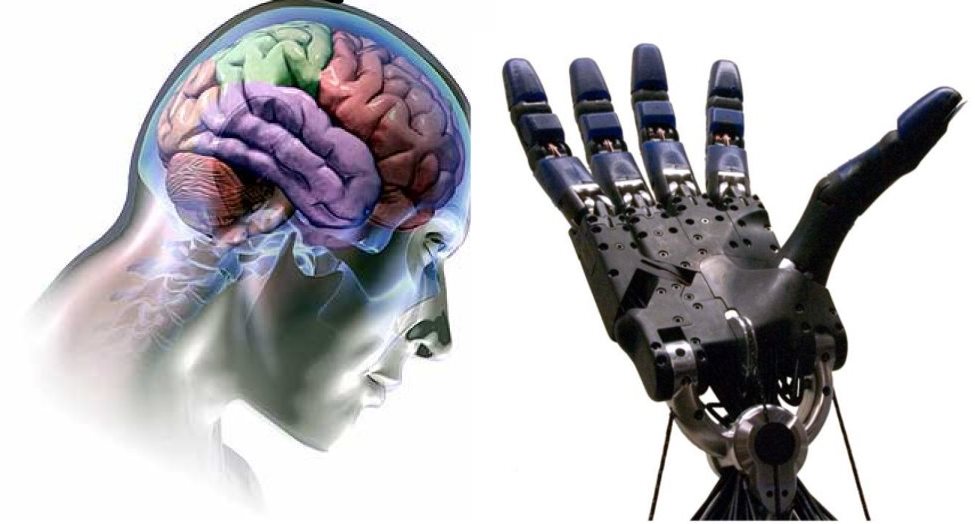
brain-computer-interfaceThe first of those is a brain control interface (BCI), which interprets electrical signals from the brain and uses them to control an external device. In the past, this has been used to control robotic limbs, usually to assist people dealing with paralysis. But in this case, it activates a functional electrical stimulation (FES) system that’s attached to the paralyzed hand.

Basically, when a patient thinks of tapping their fingers, the BCI reads and recognizes those signals. The computer then passes these signals along to the FES, and it causes the hand to move as desired. The idea is that by repeatedly moving their hand in this fashion, patients will rebuild the neural pathways that previously allowed them to do so unaided.

stroketherapybci-1To test the device, Dr. Vivek Prabhakaran and Dr. Justin Williams, brought together eight stroke patients – all of whom had lost at least partial use of one hand. Over the course of 9 to 15 sessions over a period of three to six weeks, each session lasting from two to three hours, they conducted clinical trials with their machine and recorded the results.

This was conducted using a functional magnetic resonance imaging (fMRI) and diffusion tensor imaging (DTI) device. By scanning the patient’s brains before, during and after the trials, they were able to determine that the sessions resulted in a reorganization of the parts of the brain involved in motor function, while the DTI showed a strengthening of fibers in the white matter area of the brain.

brain-computer-interface1Although there was some variation depending on the severity of each person’s stroke, the overall effect ws that patients experienced an improvement in motor function, and reported an improvement in their ability to perform daily activities. Looking long-term, Dr. Vivek Prabhakaran said that:

Our hope is that this device not only shortens rehabilitation time for stroke patients, but also that it brings a higher level of recovery than is achievable with the current standard of care.

Up until recently, the idea of using electrostimulus to send signals directly from the brain to the limbs, bypassing spinal injuries or other impediments to ambulatory ability, has been considered the province of science fiction. However, ongoing research and testing has been pushing the limits of what is possible with this technology.

Using our minds to control machinery is certainly an impressive feat, but using our minds to control machinery to restore or expand our abilities to control our own bodies. Not only is that impressive, its potentially revolutionary, and portends of an age where there is no such thing as permanent injuries or loss of ability anymore.

Sources: gizmodo.com, rsna.org

Your Reputation: The Currency of the Future

reputation_marketingNot too long ago, I did something I haven’t done in a long time and wrote a conceptual post, one which dealt with the concept of the “Internet of Things” and where its leading us. In that spirit, and in the hopes of tackling another concept which has been intriguing me of late, I wanted to delve into this thing known as Reputation Marketing, also known as the Trust Economy.

Here too, the concept has been batted around of late, and even addressed in a Ted Talks lecture (see below). And much like the Internet of Things, it addresses a growing trend that is the result of the digital revolution and everything we do online. To break it down succinctly, Reputation Marketing states that as more and more of our activities are quantified online, our behavior will become commodified, and our actions will become the new currency.

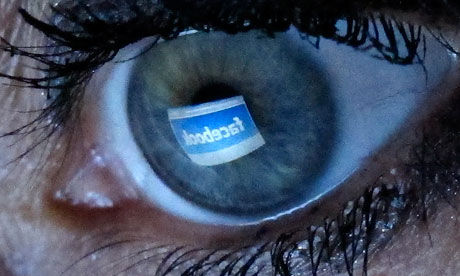
Facebook Reece ElliottAt the heart of this trend is such things as social media, online shopping, and online reviews. With everything from used goods, furniture, clothing and cars to accommodations up for review, people are turning to web-based recommendations like never before. In fact, a 2012 study done by Neilsen Media Research suggested that 70% of all consumers trust online reviews,  which are now second only to personal recommendations.

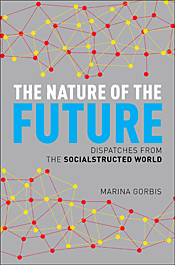
For some, this represents a positive development, since it means we are moving away from the depersonalized world of institutional production toward a new economy built on social connections and rewards. One such person is Marina Gorbis, who explores the development of what she calls socialstructing in her book The Nature Of The Future: Dispatches From The Socialstructed World. 

NatureOfTheFuture_cover_sml_01In Gorbis’ view, in addition to new opportunities, socialstructing will present new challenges as well. For one, there will be exciting opportunities to create new kinds of social organizations – systems for producing not merely goods but also meaning, purpose, and greater good. But at the same time, there is a possibility that this form of creation will bring new inequities, and new opportunities for abuse.

But at the same time, Gorbis was sure to point out the potential negative consequences. In the same way that one acquires friends on Facebook, or followers on Twitter, people in the near future could be able to hoard social connections for the sake of money, fame, or social standing. Basically, we need to understand the potential disadvantages of socialstructing if we are to minimize the potential pitfalls.

future_money_bitcoinOne such development she points to as an example is the rise of social currencies, such as Paypal, Bitcoin, and others. These operate much differently than regular currencies, as they are intended to facilitate social flows that often operate not on market principles but on intrinsic motivations to belong, to be respected, or to gain emotional support. But once these connections and flows begin to be measured, they may acquire a value of their own.

Basically, if we begin to value these currencies, motivations will arise (not necessarily altruistic ones) to acquire them. So instead of turning market transactions into social flows, we might be turning social interactions into market commodities. In the words of sociologist Chase, we would be applying ontic measurements to ontological phenomena. Or as she puts it in her book:

We created social technologies. Our next task is to create social organizations: systems for creating not merely goods but also meaning, purpose, and greater good. Can we imagine a society of “private wealth holders whose main objective is to lead good lives, not to turn their wealth into capital?” asks political economist Robert Skidelsky. Or better yet, might they turn their wealth into a different kind of capital—social, emotional, or spiritual? Our technologies are giving us an unprecedented opportunity to do so.

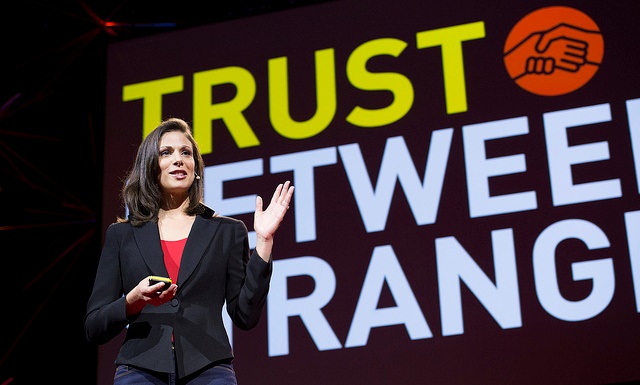
botsman-tedAnother person who sees this as a positive development is Rachel Botsman – consultant, author, former director at the William J. Clinton Foundation, and founder of the Collaborative Lab. In her ongoing series of lectures, consultations, and her book What’s Mine Is Yours: The Rise of Collaborative Consumption, she addresses the transformative power collaboration will have, giving rise to such things as “reputation capital” and the “reputation economy”.

In her 2012 Ted Talks lecture she explained how there’s been an explosion of collaborative consumption in recent years. This has embraced everything from the web-powered sharing of cars, to apartments, and even skills. In short, people are realizing the power of technology to enable the sharing and exchange of assets, skills and spaces in ways and on a scale that was never before possible.

collaborative_consumptionBut the real magic behind collaborative consumption, she explained, isn’t in the inventory or the money. It’s in using technology to build trust between strangers, something which is rarely available in the current industrialized, commodities market. Whereas this top-down economic model relies on depersonalized methods like brand name recognition and advertising to encourage consumption, this new model is far more open and democratic.

It is for this reason, and because of the potential it has for empowerment, that Botsman is such an advocate of this emerging trend. In addition to offering opportunities for micro-entrepreneurs , it also provides people with the chance to make human connections and rediscover a “humanness” that has been lost along the way. By engaging in marketplaces that are built on personal relationships, as opposed to “empty transactions”, people are able to reconnect.

future_moneyThe irony in this, as she states, is that this emerging trend is actually taking us back to old market principles which were thought to have been abandoned with modern industrial economy. Much like how Envisioning Technology predicted with their recent infographic, The Future of Money, this decentralizing, distributed trend has more in common with bartering and shopping at the local agora.

Basically, these behaviors – which predate all the rationalization and vertical/horizontal integration that’s been taking place the industrial revolution – are hardwired into us, but are being updated to take place in the “Facebook age”. Through connections enables by internet access and a worldwide network of optic cables, we are able to circumvent the impersonal economic structures of the 20th century and build something that is more akin to our needs.

future_money2Or, as Botsman summarized it in her article with Wired UK:

Imagine a world where banks take into account your online reputation alongside traditional credit ratings to determine your loan; where headhunters hire you based on the expertise you’ve demonstrated on online forums such as Quora… where traditional business cards are replaced by profiles of your digital trustworthiness, updated in real-time. Where reputation data becomes the window into how we behave, what motivates us, how our peers view us and ultimately whether we can or can’t be trusted…

Another potential irony is the fact that although online shopping does allow people to avoid face-to-face interactions at their local store, it also draws customers to businesses that they may not have otherwise heard about. What’s more, online reviews of local businesses are becoming a boon to entrepreneurs, expanding on the traditional power of written reviews and word of mouth.

And at the risk of making a shameless plug, this all puts me in mind of a short story I wrote back in April, as part of the April 2013 A to Z Challenge. It was called Repute, and deals with a young executive in charge of hiring new talent, in part based on what I referred to as their Reputation Index Placement (RIP), which was basically a tabulation of their digital presence. Like I said, the concept has been on mind for some time!

And of course, be sure to check out Botsman full lecture below:


Sources:
fastcoexist.com, wired.co.uk, ted.com
, envisioning.io

The Future of Transit: Parking Chargers and Charging Ramps

electric-highway-mainWhen it comes to the future of transportation and urban planning, some rather interesting proposals have been tabled in the past few years. In all cases, the challenge for researchers and scientists is to find ways to address future population and urban growth – ensuring that people can get about quickly and efficiently – while also finding cleaner and more efficient ways to power it all.

As it stands, the developed and developing world’s system of highways, mass transit, and emission-producing vehicles is unsustainable. And the global population projected to reach 9 billion by 2050, with just over 6 billion living in major cities, more of the same is just not feasible. As a result, any ideas for future transit and urban living need to find that crucial balance between meeting our basic needs and doing so in a way that will diminish our carbon footprint.

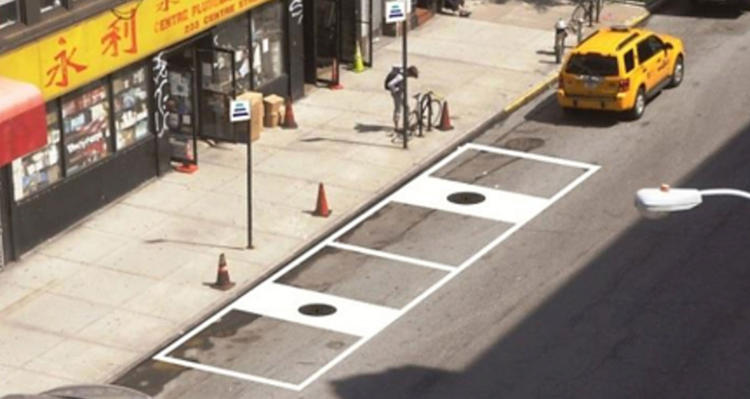
hevo_powerOne such idea comes to us from New York City, where a small company known as HEVO Power has gotten the greenlight to study the possibility of charging parked electric vehicles through the street. Based on the vision of Jeremy McCool, a veteran who pledged to reduce the US’s reliance on foreign fuel while fighting in Iraq, the long-term aim of his plan calls for roadways that charge electric cars as they drive.

Development began after McCool received a $25,000 grant from the Department of Veterans Affairs and put it towards the creation of an EV charging prototype that could be embedded in city streets. Designed to looked like a manhole cover, this charging device runs a type of electromagnetic wireless charging technology proposed by researchers Marian Kazimierczuk of Wright State University and professor Dariusz Czarkowski of NYU’s Polytechnic Institute.

hevo_manholeThe charge consists of two coils – one connected to the grid in the manhole cover, and the other on the electric vehicle. When the car runs over the manhole, the coils conduct a “handshake,” and the manhole delivers a charge on that frequency to the car. Though HEVO has yet to test the device in the real world, they are teamed up with NYU-Poly to develop the technology, and have already proven that it is safe for living things with the help of NYU’s medical labs.

So far, McCool says his company has commitments from seven different companies to develop a series of delivery fleets that run on this technology. These include PepsiCo, Walgreens, and City Harvest, who have signed on to develop a pilot program in New York. By creating regular pick-up and drop-off points (“green loading zones”) in front of stores, these fleets would be able to travel greater distances without having to go out of their way to reach a charging station.

electric_carIn order to test the chargers in New York City in early 2014, HEVO has applied for a $250,000 grant from the New York State Energy Research and Development Authority. The organization has already granted a feasibility study for the green loading zones. According to McCool, Glasgow’s Economic Development Corps is also exploring the idea of the technology in Scotland.

But looking ahead, McCool and his company have more ambitious plans than just a series of green loading zones. Already, HEVO is developing a proof of concept to place these kinds of chargers along major highways:

The concept is simple. There is a way to provide wireless charging in an HOV lane. That’s a small strip at every yard or so that has another wireless charging plate, so as you go down the street you’re collecting a charge. One wireless charging highway.

However, this is just a first step, and a major infrastructure project will still be needed to demonstrate that the technology truly does have what it takes to offset fossil fuel burning cars and hybrids. However, the technology has proven promising and with further development and investment, a larger-scale of adoption and testing is likely to take place.

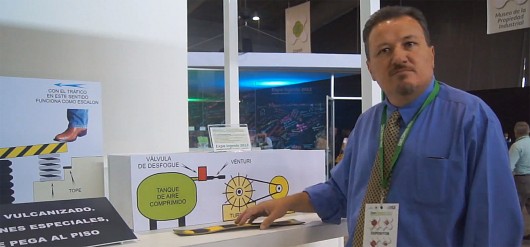
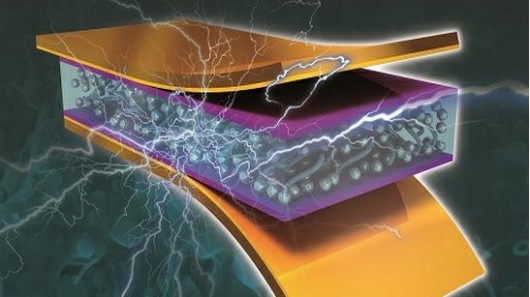
roadelectricityAnother interesting idea comes to us from Mexico, where a developer has come up with a rather ingenious idea that could turn mass transit into a source of electricity. The developer’s name is Héctor Ricardo Macías Hernández, and his proposal for a piezoelectric highway could be just the thing to compliment and augment an electric highway that keeps cars charged as they drive.

For years, researchers and developers have been looking for ways to turn kinetic energy – such as foot traffic or car traffic – into electricity. However, these efforts have been marred by the costs associated with the technology, which are simply too high for many developing nations to implement. That is what makes Hernández concept so ingenious, in that it is both affordable and effective.

roadelectricity-0In Macías Hernández’ system, small ramps made from a tough, tire-like polymer are embedded in the road, protruding 5 cm (2 inches) above the surface. When cars drive over them, the ramps are temporarily pushed down. When this happens, air is forced through a bellows that’s attached to the underside of the ramp, travels through a hose, and then is compressed in a storage tank. The stored compressed air is ultimately fed into a turbine, generating electricity.

In this respect, Hernández’s concept does not rely on piezoelectric materials that are expensive to manufacture and hence, not cost effective when dealing with long stretches of road. By relying on simple materials and good old fashioned ingenuity, his design could provide cheap electricity for the developing world by simply turning automobile traffic – something very plentiful in places like Mexico City – into cheap power.

piezoelectric_nanogeneratorMacías Hernández points out, however, that in lower-traffic areas, multiple ramps placed along the length of the road could be used to generate more electricity from each individual vehicle. He adds that the technology could also be used with pedestrian foot-traffic. The system is currently still in development, with the support of the Mexican Institute of Industrial Property, and will likely take several years before becoming a reality.

Exciting times these are, when the possibility of running an advanced, industrial economy cleanly may actually be feasible, and affordable. But such is the promise of the 21st century, a time when the dreams of the past several decades may finally be coming to fruition. And just in time to avert some of our more dystopian, apocalyptic scenarios!

Well, one can always hope, can’t one?

Sources: fastcoexist.com, gizmag.com

Ted Talks: The Age of the Industrial Internet

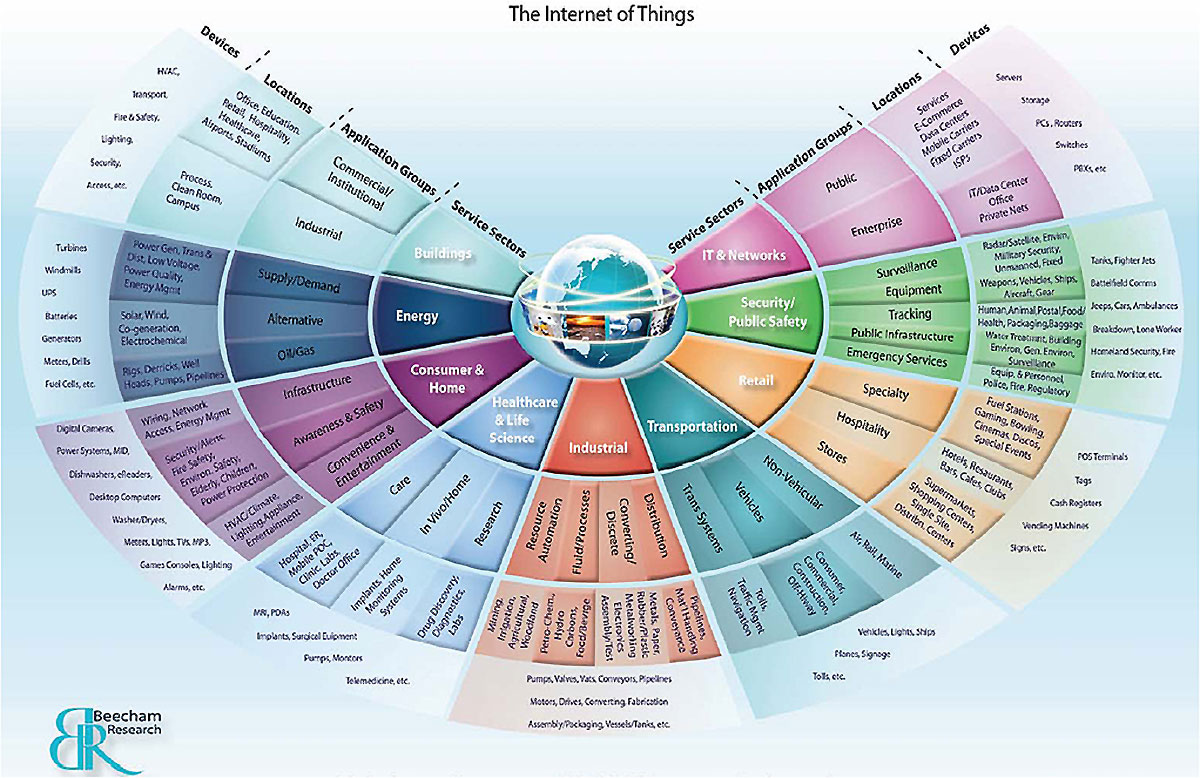
Tedtalks_marco_internetofthingsI came across another interesting and fascinating TED Talk recently. In this lecture, famed economist Marco Annunziata spoke about a rather popular subject – “The Internet of Things”, and how it is shaping our society. This term is thrown around a lot lately, and it refers to a growing phenomenon in our world where uniquely identifiable objects are connected to virtual representations in an Internet-like structure.

Basically, the concept postulates that if all objects and people in daily life were equipped with identifiers, they could be managed and inventoried by computers. By equipping all objects in the world with minuscule machine-readable identifiers, daily life could be transformed. How this is likely to look is the subject of Annunziata’s talk, beginning with the past two hundred years and the two major waves of innovation humanity went through.

Internet_of_ThingsThe first came with the Industrial Revolution (ca. 1760-1903), which permanently altered our lives with factories, machinery, railways, electricity, air travel, etc. The second wave came with the Internet Revolution (ca. 1980 – 2000), which has once again changed our lives permanently with computing power, data networks, and unprecedented access to information and communication.

Now, in the modern era, we are entering into a new phase of innovation, one which he refers to as the “Industrial Internet”. Judging by current research and marketing trends, this wave is characterized by intelligent machines, advanced analytics, and the creativity of people at work. It is a marriage of minds and machines, and once again, our lives will be permanently altered by it.

internet_of_things_beechamIn the course of the twelve minute lecture, Annunziata explains how the emergence of machines that can see, feel, sense and react will lead to an age where the technology we depend upon will operate with far greater efficiently. Naturally, there are many who would suspect that this all boils down to AIs doing the thinking for us, but in fact, it’s much more complicated than that.

Think of a world where we would be able to network and communicate with all of our devices – not just our smartphones or computers, but everything from our car keys to our cars and home appliances. By all things being marked and represented in a virtual internet-like environment, we could communicate with or remotely check on things that are halfway across the world.

Think of the implications! As someone who is currently very fascinated with how the world will look in the not-too-distant future, and how people will interact with it, I can tell you this stuff is science fiction gold! Check it out and be sure to follow the link at the bottom of the page to comment.


Source:
ted.com

The Future of Fusion: 1-MW Cold Fusion Plant Now Available!

fusion_energyIt’s actually here: the world’s first fusion power plant that is capable of generated a single megawatt of power and is available for pre-order. It’s known as the E-Cat 1MW Plant, which comes in a standard shipping container and uses low-energy nuclear reactions (LENR) – a process, often known as cold fusion, that fuses nickel and hydrogen into copper – to produce energy 100,000 times more efficiently than combustion.

E-Cat, or Energy Catalyzer, is a technology (and company of the same name) developed by Andrea Rossi – an Italian scientist who claims he’s finally harnessed cold fusion. For just $1.5 million, people can pre-order an E-Cat and expect delivery by early 2014. With this news, many are wondering if the age of cold fusion, where clean, abundant energy is readily available, is finally upon us.

E.Cat1Cold fusion, as the name implies, is like normal fusion, but instead of producing fast neutrons and ionizing radiation that decimates everything in its path, cold fusion’s Low-Energy Nuclear Reactions (LENR) produce very slow, safe neutrons. Where normal fusion requires massive, expensive containment systems, it sounds like E-Cat’s cold fusion can be safely contained inside a simple, pressurized vessel.

And while normal fusion power is generated by fusing hydrogen atoms, cold fusion fuses nickel and hydrogen into copper, by way of some kind of special catalyst. Despite the rudimentary setup, though, cold fusion still has the massive power and energy density intrinsic to atomic fusion. In short, it produces far more energy than conventional chemical reactions – such as burning fossil fuels. The only challenge is, the massive amounts of power that are usually required to initiate the reaction.

e.cat2According to E-Cat, each of its cold fusion reactors measures 20x20x1 centimeters (7.8×7.8×0.39 inches) and you stack these individual reactors together in parallel to create a thermal plant. The E-Cat 1MW Plant consists of 106 of these units rammed into a standard shipping container. Based on the specs provided by Rossi, the fuel costs works out to be $1 per megawatt-hour, which is utterly insane. Coal power is around $100 per megawatt-hour.

But before anyone gets too excited about the commercialization of cold fusion, it should be noted that Rossi is still being incredibly opaque about how his cold fusion tech actually works. The data sheet for the 1MW Plant shares one interesting tidbit: Despite producing 1MW of power, the plant requires a constant 200 kilowatts of input power — presumably to sustain the reaction.

E.Cat5_-1030x858The spec sheet also says that the fuel (specially treated nickel and hydrogen gas) needs to be recharged every two years. One of the science community’ biggest sticking points about Rossi’s cold fusion devices is that he hasn’t proven that his LENR is self-sustaining. Despite a huge amount of output energy, the device still needs to be connected to the mains.

What’s more, due to a lack of published papers, and thus peer review, and a dearth of protective patents, the scientific community in general remains very wary of Rossi’s claims. And of course, we should all remember that this is not the first time that researchers have proclaimed victory in the race to make cold fusion happen. Whenever the words “cold fusion” are raised in conjunction, the case of the Fleischmann–Pons experiment immediately springs to mind.

NASA_coldfusionFor those who remember, this case involved an experiment made in 1989 where two researchers claimed to have achieved cold fusion using palladium rods and heavy water. Initially, the scientific community treated the news with exciteent and interest, but after numerous labs were unable to reproduce their experiment, and a number of false positives were reported, their claims were officially debunked and they relocated their lab to avoid any further controversy.

At the same time, however, one must remember that some significant changes have happened in the past three decades. For one, NASA’s LENR facility has been working on producing cold fusion reactions for some time using an oscillating nickel lattice and hydrogen atoms. Then there was the recent milestone produced by the National Ignition Facility in California, which produced the first fusion reaction using lasers that produced more energy than it required.

Who’s to say if this is the real deal? All that is known is that between this most recent claim, and ongoing experiments conducted by NASA and other research organizations to make LENR cold fusion happen, a revolution in clean energy is set to happen, and will most likely happen within our lifetimes.

Addendum: Just been informed by WordPress that this is my 1400th post! Woot-woot!

Sources: extremetech.com, ecat.com

Climate Crisis: Illustrative Video of Impending Disaster

IPCC2012_vid3Recently, the United Nation’s Intergovernmental Panel on Climate Change released its 2012 report, which contained some rather stark observations and conclusions. In addition to reconfirming what the 2007 report said about the anthropogenic effects of CO2 emissions, the report also tackled speculation about the role of Solar Forcing and Cosmic Rays in Global Warming, as well as why warming has been proceeding slower than previously expected.

In the end, the report concluded that certain natural factors, such as the influence of the Sun and Cosmic Rays in “seeding clouds”, were diminishing, and thus have a negative effect on the overall warming situation. In spite of that, global temperatures continue to increase, due to the fact that humanity’s output of greenhouse gases (particularly CO2) has not slowed down one bit in recent years.

IPCC2012_vidThe report also goes on to explain detailed scenarios of what we can expect in the coming decades, in extreme and extensive detail. However, for those who have neither the time, patience, or technical knowledge that wade through the report, a helpful video has been provided. Courtesy of Globaia,this four minute video sums up the facts about Climate Change and how it is likely to impact Earth’s many inhabitants, human and otherwise.

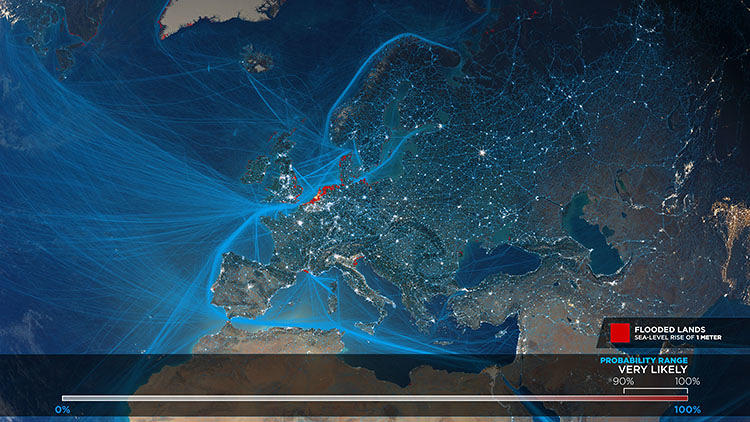
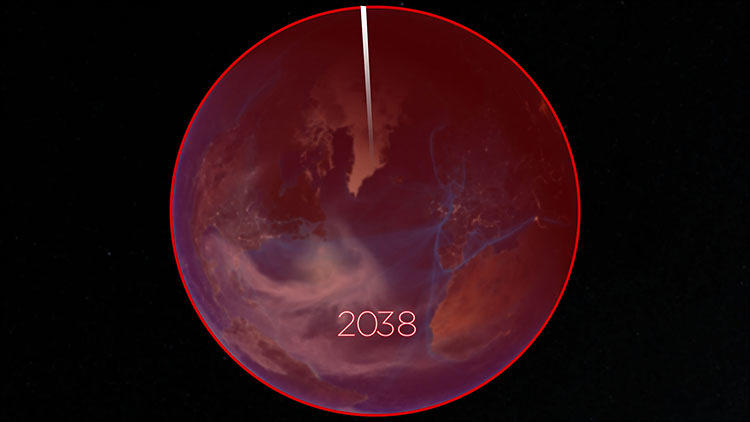
Needless to say, the facts are grim. By 2050, if humans remain on their current path, global temperatures will rise more than two degrees Celsius above what it’s been for most of human history. By 2100, it might even climb four degrees. The IPCC report, and this video, confirm what we’ve been hearing everywhere. Arctic sea ice is disappearing, sea levels are rising, storms are getting more destructive, and the full extent of change is not even fully known.

IPCC2012_vid6As the organization that put together this data visualization along with other scientists, Globaia says that it created this video as a call to action for policymakers. Felix Pharand-Deschenes, who founded the Canadian nonprofit company and animated the video, claims that:

If we are convinced of the seriousness of the situation, then political actions and technological fixes will result,” says  “But we have to change our minds first. This is the reason why we try to translate our terrestrial presence and impacts into images–along with the physical limits of our collective actions.

But of course, there’s still hope. As Pharand-Deschenes went on to say, if we can summon up a “war effort,” and work together the way World War II-era citizens did, we could still manage to the social systems that are largely responsible for the problem. This includes everything from transportation and energy to how we grow our food, enough to stay below a two degree rise.

IPCC2012_vid5Of course, this is no small task. But as I love to remind all my readers, research and efforts are happening every day that is making this a reality. Not only is solar, wind and tidal power moving along by leaps and bounds, becoming profitable as well as affordable, we are making great strides in terms of Carbon Capture technology, alternative fuels, and eco-friendly living that are expected to play a huge role in the coming decades.

And though it is often not considered, the progress being made in space flight and exploration also play a role in saving the planet. By looking to make the process of sending ships and satellites into space cheaper, concepts like Space-Based Solar Power (SBSP) can become a reality, one which will meet humanity’s immense power demands in a way that is never marred by weather or locality.

IPCC2012_vid4Combined with sintering and 3-D printing, asteroid prospecting and mining could become a reality too in a few decades time. Currently, it is estimated that just a few of the larger rocks beyond the orbit of Mars would be enough to meet Earth’s mineral needs indefinitely. By shifting our manufacturing and mining efforts offworld with the help of automated robot spacecraft and factories, we would be generating far less in the way of a carbon footprint here on Earth.

But of course, the question of “will it be enough” is a burning one. Some scientists say that an increase of even two degrees Celsius is more than Earth’s creatures can actually handle. But most agree that we need to act immediately to prepare for the future, and that one of the things standing in the way of action is the fact that the problem seems so abstract. Luckily, informational videos like this one present the problem is clear and concise terms.

ipcc2012_vid1The IPCC reports that we only have 125 billion tons of CO2 left to burn before reaching the tipping point, and at current rates, that could happen in just over two decades. Will we have a fully renewable-powered, zero-carbon world by then? Who knows? The point is, if we can get such a task underway by then, things may get worse before they get better, but they will improve in the end. Compared to the prospect of extinction, that seems like a bargain!

In the meantime, check out the video – courtesy of Globaia and the International Geosphere-Biosphere Programme (IGBP) – and try to enjoy it despite its gloomy predictions. I assure you, it is well worth it!


Source:
fastcoexist.com


The Future is Here: The DARPA/BD Wildcat!

BD_atlasrobotThe robotics company of Boston Dynamics has been doing some pretty impressive things with robots lately. Just last year, they unveiled the Cheetah, the robotics company set a new land speed record with their four-footed robot named Cheetah. As part of DARPA’s Maximum Mobility and Manipulation program, the robotic feline demonstrated the ability to run at a speed of 45.06 km/h (28 mph).

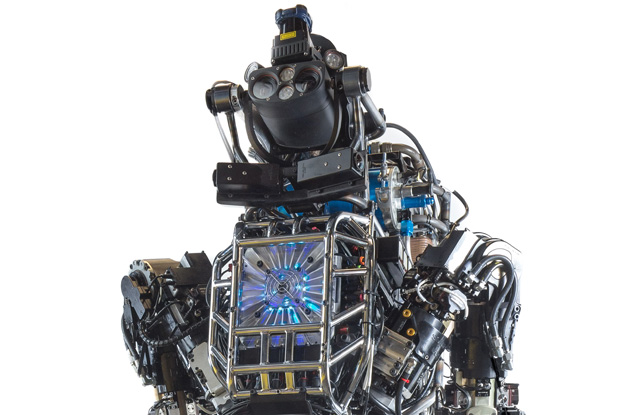
And in July of this year, they impressed and frightened the world again with the unveiling of their ATLAS robot – a anthropomorphic machine. This robot took part in the DARPA Robotics Challenge program. capable of walking across multiple terrains, and demonstrated its ability to walk across multiple types of terrain, use tools, and survey its environment with a series of head-mounted sensors.

Atlas_robotAnd now, they’ve unveiled an entirely new breed of robot, one that is capable of running fast on any kind of terrain. It’s known as the WildCat, a four-legged machine that builds on the world of the Legged Squad Support System (LS3) that seeks to create a robot that can support military units in the field, carrying their heavy equipment and supplies over rugged terrain and be operated by remote.

So far, not much is known about the robot’s full capabilities and or when it is expected to be delivered. However, in a video that was released in early October, Boston Dynamics showed the most recent field test of the robot to give people a taste of what it looks like in action. In the video, the robot demonstrated a top speed of about 25 km/h (16 mph) on flat terrain using both bounding and galloping gaits.

Cheetah-robotFollowing in the footsteps of its four-legged and two-legged progeny, the WildCat represents a coming era of biomimetic machinery that seeks to accomplish impressive physical feats by imitating biology. Whereas the Atlas is designed to be capable of doing anything the human form can – traversing difficult terrain, surveying and inspecting, and using complex tools – the Cheetah, LS3, and WildCat draw their inspiration from nature’s best hunters and speed runners.

Just think of it: a race of machines that can climb rocky outcroppings with the sure-footedness of a mountain goat, run as fast as a cheetah, stalk like a lion, bound like an antelope, and swing like a monkey. When it comes right down to it, the human form is inferior in most, if not all, of these respects to our mammalian brethren. Far better that we imitate them instead of ourselves when seeking to create the perfect helpers.

LS3-AlphaDog6reducedIn the end, it demonstrates that anthropomorphism isn’t the only source of drive when it comes to developing scary and potential doomsday-bating robots! And in the meantime, be sure to enjoy these videos of these various impressive, scary, and very cool robots in action:

WildCat:


Cheetah:


Atlas:


Source:
universetoday.com, bostondynamics.com

The Future of Money

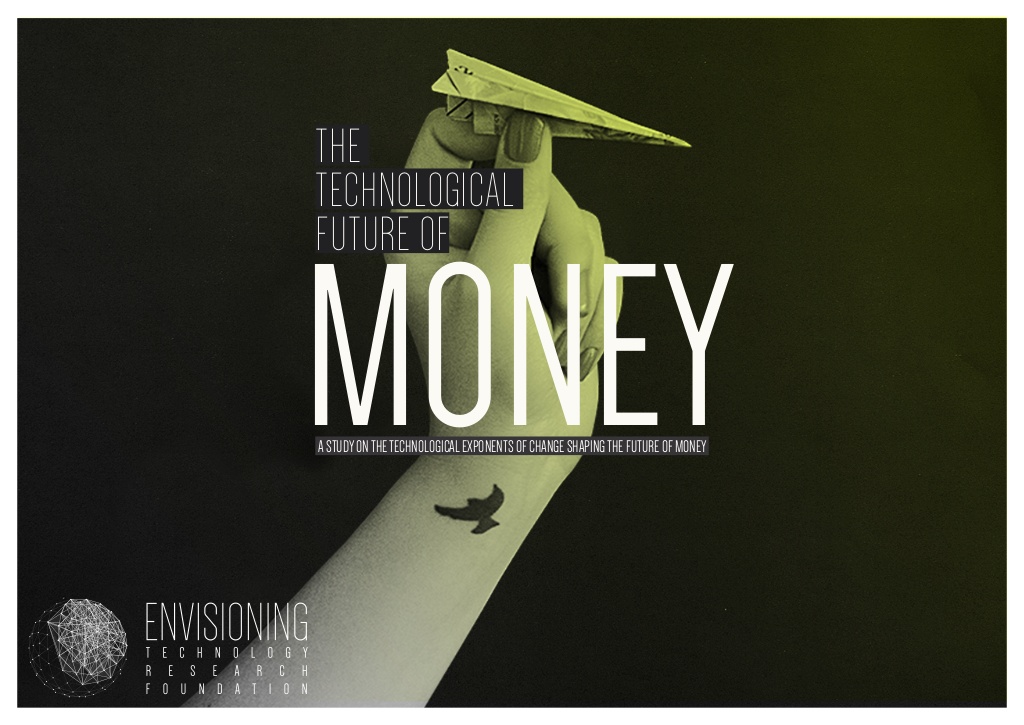
future_money4The good people over at Envisioning Technology – the independent research organization based on Brazil – have produced yet another intriguing infographic. As some of you may recall, whenever ET has released a new inforgraphic, I’ve been right there to post about it. So far, they have produced graphics addressing the future of Technology, Education, Health, and Finance.

There latest graphic is similarly significant and addresses the future of something that concerns and effects us all: money. Entitled “The Past, Present and Future of Money”, this graph looks at the trends affecting the buying, selling and investment patterns of people over time, contrasting three trends that are interwoven and have moved between centralized, decentralized, and distributed monetary systems.

future_money1In this scenario, centralized tendencies refer to networks where the nodes are connected through dense centers (aka. urban environments), which rely on hierarchically structures institutions (i.e. banks) and require legal tender (physical money). This sort of system relies on an ordered distribution of power, one that generally favor the connected few, and which emerged with the advent of modern industrial civilization.

Decentralized tendencies are those which are based on networks where nodes connect in clusters, that have irregular distributions of power, and favor the selected individual. As the graph shows, these types of networks predate centralized networks, taking the form of bartering and commodities in earliest times, but which have emerged yet again in the modern era and are predicted to continue to grow.

PrintExamples of current and future trends here include crowdsourcing, crowdfunding, banking APIs (Application Programming Interfaces), microfinance, and collaborative consumptions – where access is developed so that consumers can lend, swap, barter, share, and gift products. Whereas this model predates centralized tendencies, it is once again emerging with decentralizing potential of digital technology and open-source databases.

In the third and final method, one which is emerging, is the distributed network of money. These are networks where nodes connect independently, where power is distributed horizontally, and which favor the entire network. This trend began as a result of global real-time communications (i.e. the internet, satellite communications, etc.), and which are expected to expand.

future_money2Combining the concepts of attention economies, digital currencies, peer-to-peer communications, and digital wallets, the essence of this final stage is a network economy that is controlled by individuals, not financial institutions or corporations. In addition, currencies are based shared belief in their value, transactions occur between individuals, and physical currencies are replaced by digital ones.

Other trends that are incorporated and cross-referenced into this infographic include global population versus the number of people per capita who have online access. As it stands, less than half the world’s 7 billion people currently have access to the internet, and are hence able to take part in the decentralizing and distributed trends affecting money. However, the infographic predicts that by 2063, nearly 90% of the world’s 10 billion people will be online.

future_money_bitcoinLike many predictions that I’ve come to know and respect, this latest infographic from ET gives us a glimpse of a future where a Distributed model of politics, economics and technological development – otherwise known as Democratic Anarchy – will be the norm. It’s an exciting possibility, and places history in a new and interesting light. In short, it makes one reconsider the possibility that true socialism might exist.

While this was crudely predicted by Karl Marx, the basic concept is quite intriguing when considered in the context of current trends. What’s more, subsequent thinkers – Max Weber, Proudhon, Gramsci and George Orwell – refined and expressed the principle more eloquently. Nowhere was this more apparent than in the Goldstein Manifesto in 1984, where Orwell addressed how the process of industrial civilization was making class distinction virtually unnecessary.

the_future_of_money_timelineSource: envisioning.io/money/

The Future is Here: 4-D Printing

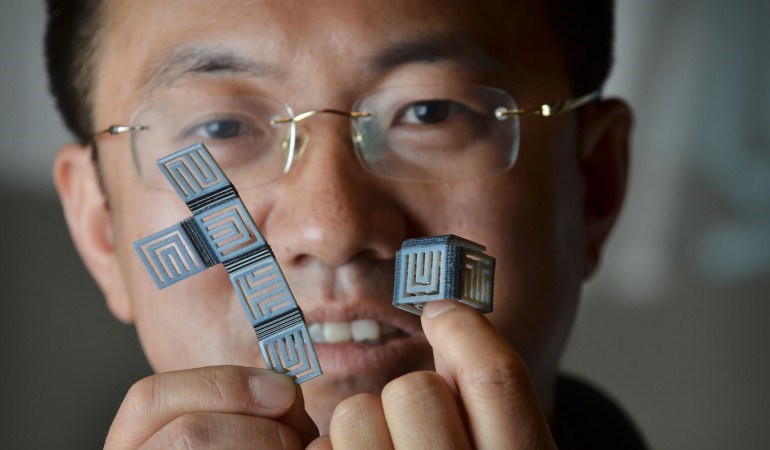
4dprintingmaterial3-D printing has already triggered a revolution in manufacturing by allowing people to determine the length, width and depth of an object that they want to create. But thanks to research being conducted at the University of Colorado, Boulder, a fourth dimension can now be included – time. Might sounds like science fiction, until you realize that the new manufacturing process will make it possible to print objects that change their shape at a given time.

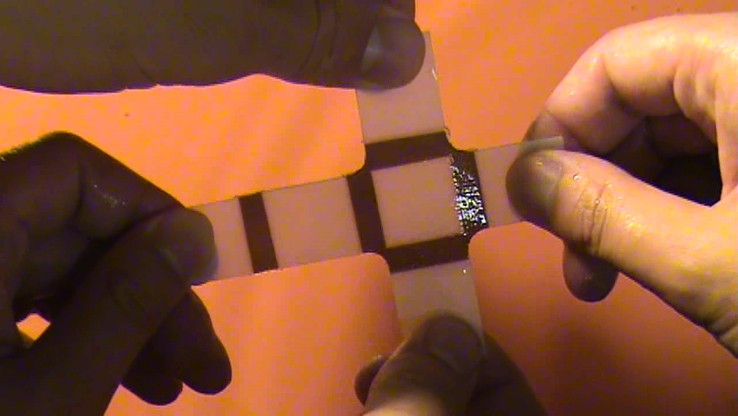
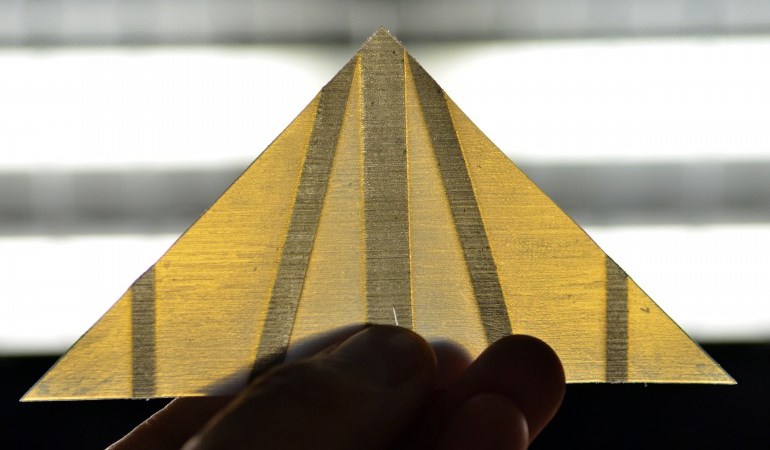
Led by Prof. H. Jerry Qi, the scientific team have developed a “4D printing” process in which shape-memory polymer fibers are deposited in key areas of a composite material item as it’s being printed. By carefully controlling factors such as the location and orientation of the fibers, those areas of the item will fold, stretch, curl or twist in a predictable fashion when exposed to a stimulus such as water, heat or mechanical pressure.

4dprintingmaterial1The concept was proposed earlier this year by MIT’s Skylar Tibbits, who used his own 4D printing process to create a variety of small self-assembling objects. Martin L. Dunn of the Singapore University of Technology and Design, who collaborated with Qi on the latest research, explained the process:

We advanced this concept by creating composite materials that can morph into several different, complicated shapes based on a different physical mechanism.

This means that one 4D-printed object could change shape in different ways, depending on the type of stimulus to which it was exposed. That functionality could make it possible to print a photovoltaic panel in a flat shape, expose it to water to cause it to fold up for shipping, and then expose it to heat to make it fold out to yet another shape that’s optimal for catching sunlight.

4dprintingmaterial2This principle may sound familiar, as it is the basis of such sci-fi concepts as polymorphic alloys or objects. It’s also the idea behind the Milli-Motein, the shape-shifting machine invented by MITs Media Labs late last year. But ultimately, it all comes back to organic biology, using structural biochemistry and the protein cell as a blueprint to create machinery made of “smart” materials.

The building block of all life, proteins can assume an untold number of shapes to fulfill an organism’s various functions, and are the universal workforce to all of life. By combining that concept with the world of robotics and manufactured products, we could be embarking upon an era of matter and products that can assume different shapes as needed and on command.

papertab-touchAnd if these materials can be scaled to the microscopic level, and equipped with tiny computers, the range of functions they will be able to do will truly stagger the mind. Imagine furniture made from materials that can automatically respond to changes in pressure and weight distribution. Or paper that is capable of absorbing your pencil scratches and then storing it in its memory, or calling up image displays like a laptop computer?

And let’s not forget how intrinsic this is to the field of nanotechnology. Smarter, more independent materials that can change shape and respond to changes in their environment, mainly so they can handle different tasks, is all part of the Fabrication Revolution that is expected to explode this century. Here’s hoping I’m alive to see it all. Sheldon Cooper isn’t the only one waiting on the Technological Singularity!

Source: gizmag.com