News from Space: Coming Comet Flyby of Mars

Mars_comet_flybyEarth’s neighbor is once again making the news, but not for the usual reasons. Rather than groundbreaking discoveries or updates being provided by the small army of rovers or satellites, the NASA has now got its eyes firmly fixed on the Red Planet because of an incoming comet. And in the coming months, NASA is taking every precaution to make sure its orbiting spacecraft are out of the way.

Known as C/2013 A1 Siding Spring, the comet’s icy nucleus is predicted to flyby Mars on Oct. 19th, and will miss the planet by just 132,000 km (82,000 miles). That’s 17 times closer than the closest recorded Earth-approaching comet, Lexell’s Comet, which skittered by our world in 1770. And while this is certainly a record-breaking event, no one is concerned about it damaging anything on the Martian surface.

Mars_comet_sidingspringIn fact, it the dust particles embedded in the comet’s vaporizing ice that concerns NASA planners. As dust spreads into a broad tail that could potentially brush Mars’ upper atmosphere, it could also play havoc with or even strike an orbiter. While tiny particles are hardly a hazard on their own, when they are traveling at 56 km (35 miles) per second relative to a spacecraft, a single impact could spell disaster.

Rich Zurek, chief scientist for the Mars Exploration Program at NASA’s Jet Propulsion Laboratory in Pasadena, California, explains:

Three expert teams have modeled this comet for NASA and provided forecasts for its flyby of Mars. The hazard is not an impact of the comet nucleus, but the trail of debris coming from it. Using constraints provided by Earth-based observations, the modeling results indicate that the hazard is not as great as first anticipated. Mars will be right at the edge of the debris cloud, so it might encounter some of the particles — or it might not.

mars-comet-NASAHence why NASA is looking to get its hardware out of the way. The agency currently operates the Mars Reconnaissance Orbiter (MRO) and Mars Odyssey spacecraft with a third orbiter, MAVEN, currently on its way to the planet and expected to settle into orbit a month before the comet flyby. Teams operating the orbiters plan to have all spacecraft positioned on the opposite side of Mars when the comet is most likely to pass by.

Already, mission planners tweaked MRO’s orbit on July 2 to move it toward a safe position with a second maneuver to follow on August 27. A similar adjustment is planned for Mars Odyssey on August 5 and October 9 for the Mars Atmosphere and Volatile Evolution (MAVEN) probe. The time of greatest risk to the spacecraft is brief – about 20 minutes – when the widest part of the comet’s tail passes closest to the planet.

MARS-COMET-surfaceAs for the rovers on the surface, there really isn’t much to worry about there. Similar to what happens with meteor showers here on Earth, Mars’ atmosphere is thick enough that cometary dust particles will incinerate before they reach the surface. And its expected that rover cameras may be used to photograph the comet before the flyby and to capture meteors during the comet’s closest approach.

Despite concerns about dust, NASA knows a good opportunity when it sees one. In the days before and after the flyby, all three orbiters will conduct studies on the comet. According to a recent NASA press release, instruments on MRO and Odyssey will examine the nucleus, coma and tail and possible effects on the Martian atmosphere:

Odyssey will study thermal and spectral properties of the comet’s coma and tail. MRO will monitor Mars’ atmosphere for possible temperature increases and cloud formation, as well as changes in electron density at high altitudes and MAVEN will study gases coming off the comet’s nucleus as it’s warmed by the sun. The team anticipates this event will yield detailed views of the comet’s nucleus and potentially reveal its rotation rate and surface features.

This is Comet Siding Spring’s first trip to the inner solar system, so we can expect plenty of news and updates as it passes Mars. And the icy vapor and dust it leaves behind, which has been in a state of deep freeze since the time the planets were formed, will make for some pretty interest research as well! And be sure to check out this Solar System Scope simulation of the comet’s path as it makes it way through our Solar System past Mars.

Source: universetoday.com, solarsystemscope.com

The Future is Here: Flexible, Paper Thin Ultra-HD Screens

amoledThe explosion in computing and personal devices in recent years has led to a world where we are constantly surrounded by displays. Whether they belong to personal computers, laptops, smartphones, LCDs, PDAs, or MP3 players, there is no shortage to the amount of screens we can consult. In turn, this proliferation has led computer scientists and engineers to address a number of imperfections these displays have.

For instance, some of these displays don’t work in direct sunlight or are subject to glare. Others are horridly energy-inefficient and will drain their battery life very quickly. Some don’t have high-definition, rich color, and can’t display true black color. Just about all of them are rigid, and all can be broken given a solid enough impact. Luckily, a new age of flexible, ultra-HD screens are on the way that promise to resolve all of this.

amoled-display-3The first examples of this concept were rolled out at the 2011 Consumer Electronics Show, where Samsung unveiled its revolutionary new AMOLED display on a number of devices. This was followed up in September of 2012 when Nokia unveiled its Kinetic Device at the World Nokia Conference in London. Both devices showcased displays that could bend and flex, and were followed by concept videos produced by electronic giants Sony, 3M and Microsoft.

Since that time, numerous strides have been taken to improve on the technology before it hits the open market. In research published earlier this month in Nature, scientists describe what may be the first steps toward creating a new type of ultrathin, superfast, low-power, high-resolution, flexible color screen. If successful, these displays could combine some of the best features of current display technologies.

ultra-thin-displayThe new displays work with familiar materials, including the metal alloy already used to store data on some CDs and DVDs. The key property of these materials is that they can exist in two states – when warmed by heat, light, or electricity, they switch from one state to the other. Scientists call them phase-change materials (PCMs); and as Alex Kolobov, a researcher at Japan’s Nanoelectronics Research Institute who was not involved in the new work, explains:

It is really fascinating that phase-change materials, now widely used in optical and nonvolatile electronic memory devices, found a potentially new application in display technology.

A PCM display would work similar to the electronic paper used in products like Amazon’s Kindle reader. Both are made by sandwiching a material that has two states, one lighter and one darker, in between layers of transparent conductors. The inner material is a viscous black oil filled with tiny white titanium balls. To make a pixel black or white, a current is run through a tiny area of the glass to either pull the reflective balls to the front, or cause them to recede.

gst-phase-change-nanopixel-display-640x352In a PCM display, the inner material is a substance made of silicon’s heavier cousins: germanium, antimony, and tellurium. The two states of this material (known as GST) are actually two different phases of matter: one an ordered crystal and the other a disordered glass. To switch between them, current pulses are used to melt a tiny column, and either cooled gently to make the crystal or rapidly to make the glass.

This cycle can be done remarkably quickly, more than 1 million times per second. That speed could be a big advantage in consumer products. While scrolling on a Kindle can be terribly slow because the screen only refreshes once per second, the refresh rate on a PCM display would be fast enough to play movies, stream videos, and perform all the tasks people routinely do with their devices.

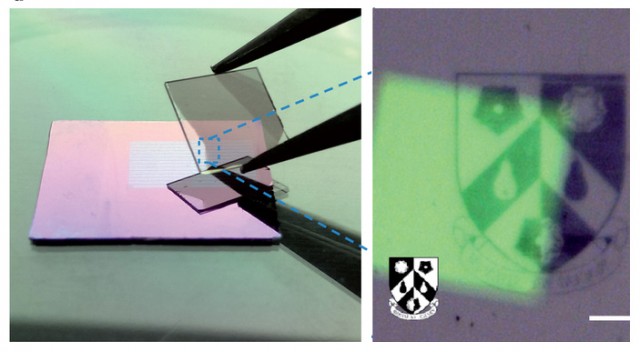
https://i0.wp.com/www.extremetech.com/wp-content/uploads/2014/07/nanopixelspr.jpgTo make the new displays, the research team – led by Harish Bhaskaran, a nanoscale manufacturing expert from Oxford University – used a 35-year-old machine developed by the semiconductor industry. They then laid down three layers that were a few nanometers thick of conducting glass, GST, and another layer of conducting glass. Then they used current from the tip of an atomic force microscope to draw pictures on the surface.

These images included everything from a Japanese print of a tidal wave to fleas and antique cars – each one smaller than the width of a human hair. With this sort of flexible, ultra-high resolution screen, a PCM display could be made into everything from a bendable laptop and personal device to a programmable contact lens — like Apple’s Retina Display, except that it would actually fit on your retina.

https://i0.wp.com/images.gizmag.com/gallery_lrg/lg-display-oled-2.jpgTurning this technology into products will require years of labor and hundreds of millions of dollars. Nevertheless, Bhaskaran and his colleagues are optimistic. The electronics industry has lots of experience with all the components, so there are plenty of well-known tricks to try to improve this first draft. And they are hardly alone in their efforts to bring flexible displays to market.

For instance, LG unveiled their new line of flexible OLED TVs at CES earlier this year. Now, they are taking things a step further with the unveiling of two new 18-inch OLED panels, the first of which is a transparent display, while the second can be rolled up. Although both fall short of the 77-inch flexible TV on show at CES, the company says the new panels prove that it has the technology to bring rollable TVs with screens in excess of 50 inches to market in the future.

lg-display-oledUnlike their 77-inch flexible TV that has a fairly limited range of changeable curvature, LG Display’s latest flexible OLED panel can be rolled up into a cylinder with a radius of 3 cm (1.18 in) without the function of the 1,200 x 810 pixel display being affected. This is made possible though the use of a high molecular substance-based polyimide film to create the backplane, rather than conventional plastic .

The transparent OLED panel, on the other hand, was created using LG Display’s transparent pixel design technology. With transmittance of 30 percent, the company says the panel is superior to existing transparent LCD panels that generally achieve around 10 to 15 percent transmittance. LG Display claims to have also reduced the haze of the panel, caused by circuit devices and film components, to just 2 percent.

https://i0.wp.com/images.gizmag.com/gallery_lrg/lg-display-oled-1.jpgAs In-Byung Kang, Senior Vice President and Head of the R&D Center at LG Display, explained:
LG Display pioneered the OLED TV market and is now leading the next-generation applied OLED technology. We are confident that by 2017, we will successfully develop an Ultra HD flexible and transparent OLED panel of more than 60 inches, which will have transmittance of more than 40 percent and a curvature radius of 100R, thereby leading the future display market.

Granted, it will be still be a few years and several hundred million dollars before such displays become the norm for computers and all other devices. However, the progress that is being made is quite impressive and with all the electronics megagiants committed to making it happen, an age where computing and communications are truly portable and much more survivable is likely just around the corner.

Sources: wired.com, gizmag.com, extremetech.com

News from Space: NASA taking Suggestions on Europa

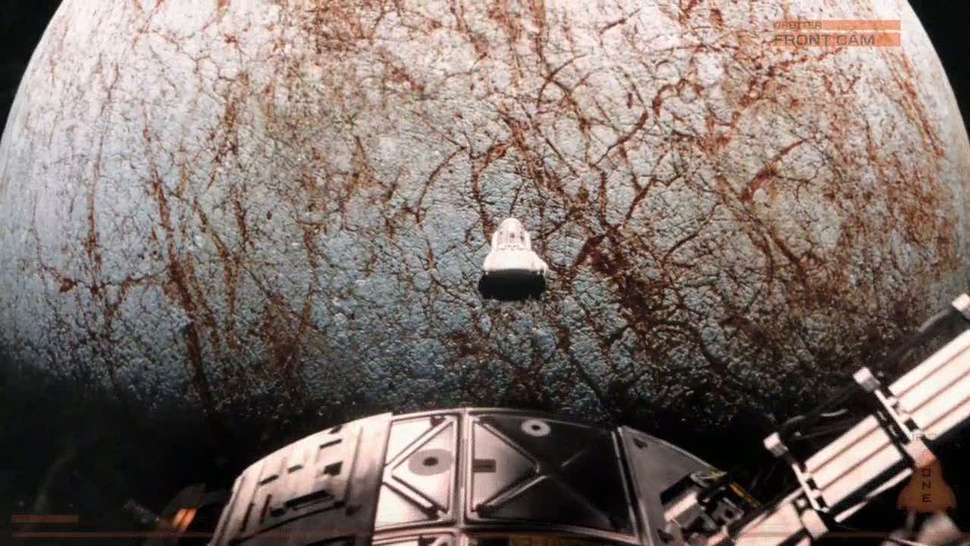
europa_image_0The Jovian moon of Europa remains a mystery that is just dying to be cracked. Although covered in ice, scientists have long understood that tidal forces caused by its proximity to Jupiter have created a warm interior, one which can sustain warm oceans beneath the surface. In the coming years, NASA wants to fly a mission to this planet so we can finally get a look at what, if anything, is lurking beneath that icy crust.

Perhaps emboldened by the success of the Curiosity Rover and the plans for a manned mission to Mars in 2030, NASA has several possible plans for what a Europa mission might look like. If the budget environment proves hospital, then NASA will likely send a satellite that will perform several orbits of the moon, a series of flybys on it, and scout the surface for science and potential landing sites.

europa_reportTowards this end, they are looking for proposals for science instruments specifically tailored to the task. And within a year’s time, they plan to select 20 from a list of those proposed for the mission. At which point, the selectees will have $25 million to do a more advanced concept study. As John Grunsfeld, associate administrator for NASA’s science mission directorate, stated:

The possibility of life on Europa is a motivating force for scientists and engineers around the world. This solicitation will select instruments which may provide a big leap in our search to answer the question: are we alone in the universe?

The Europa mission is not a guarantee, and it’s unclear just how much money will be allocated to it in the long run. NASA has requested $15 million in fiscal 2015 for the mission, but the mission will naturally be subject to budgetary approvals by Congress. If it passes all obstacles, it would fly sometime in the 2020s, according to information released with the budget earlier this year.

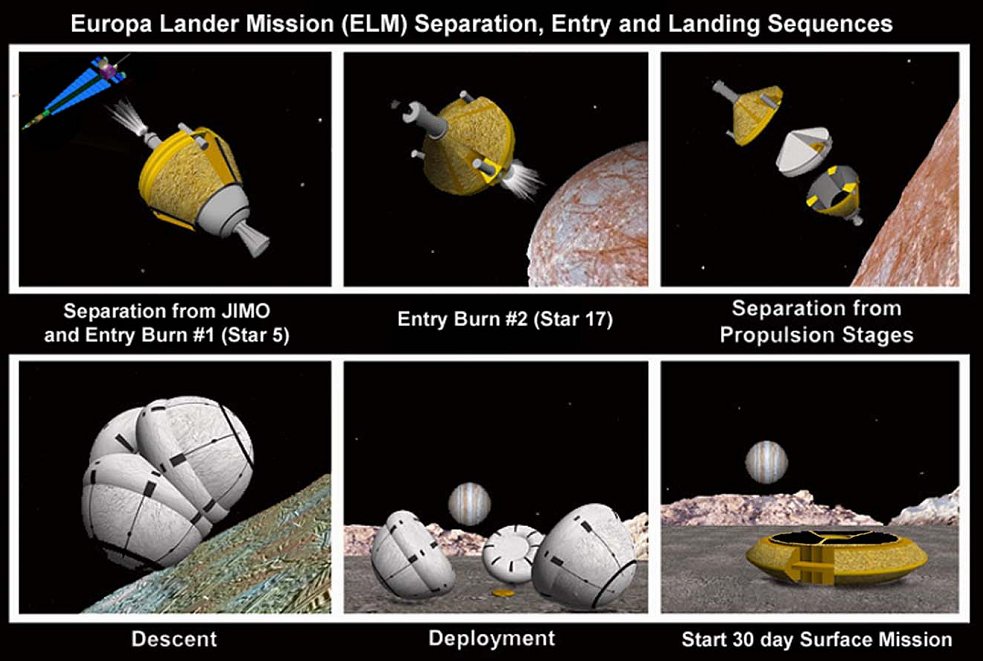
europa-lander-2In April, NASA sent out a request for information to interested potential participants on the mission itself, which it plans to cost less than $1 billion (excluding launch costs). Besides its desire to look for landing sites, NASA said the instruments should also be targeted to meet the National Resource Council’s (NRC) Planetary Decadal Survey’s desires for science on Europa.

In NASA’s words, these are what those objectives are:

  • Characterize the extent of the ocean and its relation to the deeper interior;
  • Characterize the ice shell and any subsurface water, including their heterogeneity, and the nature of surface-ice-ocean exchange;
  • Determine global surface, compositions and chemistry, especially as related to habitability;
  • Understand the formation of surface features, including sites of recent or current activity, identify and characterize candidate sites for future detailed exploration;
  • Understand Europa’s space environment and interaction with the magnetosphere.

JIMO_Europa_Lander_MissionAccording to the agency, any instrument proposal must meet NASA’s landing scout goal or the NRC goals. The instruments must also be highly protected against the harsh radiation, and meet planetary protection requirements to ensure no extraterrestrial life is contaminated with our own. In essence, this means than any instruments must be safeguarded against carrying bacteria that could play havoc with Europan microbes or (do we dare to dream!) more complex organisms.

Solicitations are due by Oct. 17, so if you’ve got an idea and think it might make the cut, consult the following solicitation page and have a look at what NASA is looking for. Personally, I got nothing. But that’s why they don’t pay me the big bucks! No, like most of humanity, I will simply be sitting back and hoping that a mission to Europa happens within my lifetime, and that it uncovers – to quote Arthur C. Clarke’s 201o: Odyssey Two – “something wonderful”…

Source: universetoday.com, nspires.nasaprs.com

Climate Crisis: The DOE’s Massive CC Operation

CC_PlantUntil such a time exists that clean, renewable energy can provide sustainable energy for cheaper than gas or coal, we can expect that producing energy will continue to generate a carbon footprint. However, the energy industry has been been touting the benefits of carbon capture and sequestration (CCS), which they claim can make traditionally dirty forms of energy much cleaner.

Thus far, few of the project have worked out as planned. But now, the US Department of Energy has started construction on a CSS project using proven technology that will be the largest system in existence. All the action is happening at a coal-fired power plant near Houston where – with the help of NRG Energy and JX Nippon – the DOE hopes to build a carbon capture system that can put 90% of the CO2 output of coal back into the ground where it can’t affect the climate.

CC_operationThe Petra Nova refit was originally going to be a modest DOE project that would retain 60 megawatts of energy generation, but the extra engineering muscle from NRG Energy and JX Nippon boosted the plan dramatically. Petra Nova will now be built with the intention of capturing the carbon output from 240 megawatts. The whole idea of carbon capture is to get the energy out of fossil fuels like coal and oil without releasing the carbon at the same time.

By taking carbon out of the ground and putting it in the atmosphere, the overwhelming majority of scientists believe we are causing global temperatures to increase. Putting the carbon back underground removes it from the atmosphere and maintains the environmental balance we currently enjoy. However, carbon sequestration might need to expand beyond new energy production.

PFTBA-greenhouse-gas-has-greater-global-warming-potential-than-CO2Petra Nova will be using a scaled-up version of smaller amine-based CO2 CC systems. In these, CO2 is routed into a chamber where an amine-based solvent absorbs the gas. The resulting carbon-rich solution isl then sent through another chamber where low pressure steam is used to break the bond holding the carbon in solution so it can be captured while the solvent is reused.

The last step in any CCS system is to get the carbon back underground, but the Petra Nova is doing that in an unusual way. Instead of simply pumping it down in any old place, it will be transmitted via pipeline to the West Ranch oil field about 130 km (80 miles) away. There, it will be used for so-called “enhanced oil recovery”, which means it will be pumped into an oil reservoir deep underground to push previously unreachable oil closer to the surface.

The carbon dioxide does end up underground at the end of the day, but the hydrocarbon fuel cycle keeps on churning with increased oil output from the field. Naturally, the amount of carbon released by oil recovered from the West Ranch oil field will be far greater than what is recovered by this one power plant. Still, the Petra Nova project is a good way to subsidize the development of carbon capture tech until such time as it’s installed in all suitable facilities.

Source: extremetech.com

The Future of Housing: Casa Futebol Concept

casa_futebol_brazilIt’s no secret that Brazil’s decision to host the 2014 World Cup was the source of controversy. With roughly $4 billion spent on renovating and constructing the stadiums needed to host the international event, many wondered why that money could not have been spent addressing other infrastructure concerns – such as providing housing and utilities for its many impoverished citizens.

However, drawing inspiration from the social issues plaguing much of the publicity around the event, a pair of French architects have developed a proposal to re-invent the structures as complexes for low-cost housing. While most of the stadiums constructed for the World Cup will continue to host football matches, Brazil’s local teams stand to draw a fraction of the crowds that attended the event, doing little to assuage concerns of wasted resources.

casa_futebol_brazil-1Other buildings, such as the Arena da Amazonia, face a less certain future. Located in the jungle city of Manaus, the 44,500 seat stadium is perhaps the most contentious of Brazil’s World Cup creations. A local judge proposed converting it into a center for temporary detainees to tackle the city’s overflowing prisons, though this was met with fervent opposition from government officials.

The proposal by Axel de Stampa and Sylvain Macaux is perhaps the most ambitious. Dubbed Casa Futebol, it involves transforming each of the 12 World Cup Stadiums into affordable housing for Brazil’s poor and displaced. As Stampa explained in an interview with Gizmag:

The project covers 12 Brazilian stadiums. There are actually six stadiums where we can colonize the exterior facade. Five of these have an exterior structure composed of concrete and metal columns separated by seven or eight meters (23 to 26 ft). We just have to insert pre-fabricated housing using the existing structures.

casa_futebol_brazil-2The remaining stadiums would see housing modules that are 105 m2 (1,130 ft2) fitted to the interior at the expense of rows of seating, the only difference between these and those receiving exterior additions being the installation process. Conscious of Brazil’s adoration for the world game, the proposal would see the stadiums altered slightly, but continue to host matches with profits going towards ongoing maintenance and construction of the housing.

The project is based on modular pre-fabricated houses. So the only thing that changes is the implantation of the houses… We think that the concept is achievable in all 12 stadiums. You just have to take up some seating and reduce their capacity a little bit.

The team guesses that if converted, the stadiums could each house between 1,500 and 2,000 people per building, and a total of approximately 20,000 across the entire project. This bold proposal for Brazil’s stadiums forms part of a year-long architecture project called 1 week 1 project, where the pair endeavor to produce spontaneous architecture projects every week for one year.

casa_futebol_brazil-4While they don’t have current plans to take the Casa Futebol beyond the concept stage, it is hoped that the project can inspire more socially-conscious approaches to problems of this kind. Combined with 3-D printed housing and other prefab housing projects, this kind of re-purposing of existing infrastructure is a way of addressing the problem of slums, something which goes far beyond the developing world.

Source: gizmag.com


The End of HIV: Two Men Cleared After Marrow Transplant

hiv-virus-cuFor decades, bone marrow transplants have been used for the treatment of cancer, particularly lymphoma, leukemia, and multiple myeloma. However, after three years of receiving transplants, two Australian men who were previously diagnosed with HIV have shown no signs of the AIDS virus. Moreover, one of the patient’s is the first recorded case of clearing the virus without the presence of a rare anti-HIV gene in the donor marrow.

The two patients, a 53-year-old and 47-year-old male, were diagnosed with leukaemia and lymphoma respectively at St Vincent’s Hospital in Sydney, Australia, which has been working in partnership with the University of New South Wales’ Kirby Institute. To date, there have been several reported cases of patients cleared of HIV that were related to bone marrow transplants, but this is something new entirely.

HIV_virusTimothy Ray Brown, a US citizen, was treated in 2007/8 for leukaemia with transplanted stem cells from a donor with the CCR5 delta32 mutation – which is resistant to HIV – and was reported clear of the virus. Afterward, Brown stopped taking his antiretroviral medication and remained HIV-free. In 2012, two other US patients were treated with marrow that did not contain the mutation and initially tested clear. But when they ceased taking antiretroviral medication, the virus returned.

The Australian lymphoma patient, treated in 2010, did receive one transplant of bone marrow that contained one of two copies of a gene that is possibly resistant to HIV. However, the leukaemia patient, treated in 2011, received donor marrow with no resistive gene. Both patients remain on antiretroviral medication as a precaution, since the virus may be in remission rather than completely cured.

021204-N-0696M-180The next step is to figure out why the body responds to a bone marrow transplant in a way that makes the virus retreat. One possible explanation is that the body’s immune response to the foreign cells of the transplant causes it to fight harder against HIV. This is because, while bone marrow transplant seems to be the most effective means of clearing the AIDS virus to date, it is not an acceptable risk for patients whose lives aren’t already endangered by bone cancer.

As Professor David Cooper, the study’s senior author and the director of the UNSW Kirby Institute, explained:

We’re so pleased that both patients are doing reasonably well years after the treatment for their cancers and remain free of both the original cancer and the HIV virus… The procedure itself has an up to 10 percent mortality rate. But you take that risk in someone with leukemia or lymphoma because they’re going to die without it, and the transplantation will result in cure. For someone with HIV, you would certainly not transplant them when they have an almost normal life span with standard antiretroviral therapy.

We still don’t know why these patients have undetectable viral loads. One theory is that the induction therapy helps to destroy the cells in which the virus is hiding and that any remaining infected cells are destroyed by the patient’s new immune system.. We need more research to establish why and how bone marrow transplantation clears the virus. We also want to explore the predictors of sustained viral clearance and how this might be able to be exploited without the need for bone marrow transplantation.

The team will be presenting their research 19 July 2014 at the 20th International AIDS Conference in Melbourne, Australia. There, they will be amongst such high-profile speakers as former President Bill Clinton, UNAIDS Executive Director Michel Sidibé and artist and activist Sir Bob Geldof, as well as thousands of the world’s top AIDS researchers, community leaders, people living with HIV and policy-makers at AIDS 2014.

Source: cnet.com, aids2014.com

Buzz Aldrin: Let’s Go to Mars!

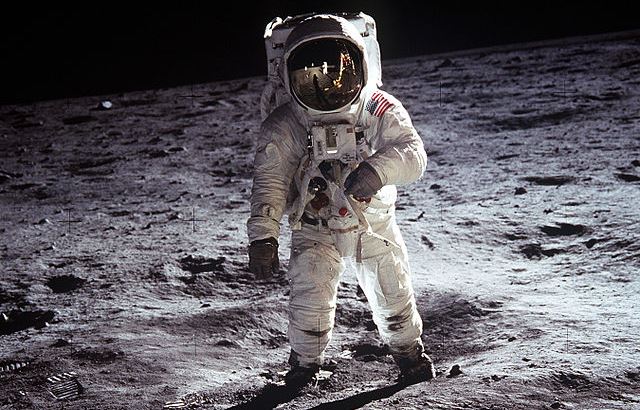
Apollo11_Aldrin1This past weekend was the 45th anniversary of the Moon Landing. To mark that occasion, NASA mounted the @ReliveApollo11 twitter campaign, where it recreated every moment of the historic mission by broadcasting updates in “real-time”. In addition to commemorating the greatest moment in space exploration, and one of the greatest moments in history, it also served to draw attention to new efforts that are underway.

Perhaps the greatest of these is one being led by Buzz Aldrin, a living-legend and an ambassador for current and future space missions. For decades now, Aldrin has been acting as a sort of elder statesman lobbying for the exploration of the cosmos. And most recently, he has come out in favor of a mission that is even grander and bolder than the one that saw him set foot on the Moon: putting people on Mars.

mars_spaceXmissionIt’s no secret that NASA has a manned mission planned for 2030. But with space exploration once again garnering the spotlight – thanks in no small part to commercial space companies like SpaceX and Virgin Galactic – Aldrin is pushing for something even more ambitious. Echoing ideas like Mars One, his plan calls for the colonization of Mars by astronauts who would never return to Earth.

To be sure, the spry 84 year-old has been rather busy in the past few years. After going through a very public divorce with his wife 0f 23 years in January of last year, he spent the past few months conducting a publicity blitz on behalf of the 45th anniversary of Apollo 11. In between all that, he has also made several appearances and done interviews in which he stressed the importance of the Martian colonization project.

Mars_OneA few months ago, Aldrin wrote an op-ed piece for Fast Company about innovation and the need for cooperation to make a new generation of space exploration a reality. During a more recent interview, which took place amidst the ongoing crisis in the Ukraine, he once again stressed the importance of cooperation between the United States, Russia, China, and their respective space programs.

As he told Fast Company in the interview:

I think that any historical migration of human beings to establish a permanent presence on another planet requires cooperation from the world together. That can’t be done by America competing with China… Just getting our people back up there is really expensive! We don’t compete but we can do other things close by with robots, which have improved tremendously over the past 45 years (since Apollo 11). You and I haven’t improved all that much, but robots have. We can work together with other nations in design, construction, and making habitats on both the near side and far side of Mars. Then when we eventually have designs, we’ll have the capacity to actually build them.

SLS_launchSimilarly, Aldrin took part in live Google Hangout with Space.com’s managing editor Tariq Malik and executive producer Dave Brody. This took place just eight days before the 25th anniversary of the Landing. During the broadcast, he discussed his experiences as an astronaut, the future of lunar exploration, future missions to Mars and beyond, and even took questions via chatwindow on Google+’s webpage.

At this juncture, its not clear how a colonization mission to Mars would be mounted. While Mars One is certainly interested in the concept, they (much like Inspiration Mars) do not have the necessary funding or all the technical know-how to make things a reality just yet. A possible solution to this could be a partnership program between NASA, the ESA, China, Russia, and other space agencies.

terraformingSuch ideas did inform Kim Stanley Robinson’s seminal novel Red Mars, where an international crew flew to the Red Planet and established the first human settlement that begins the terraforming process. But if international cooperation proves too difficult, perhaps a collaboration between commercial space agencies and federal ones could work. I can see it now: the Elon Musk Martian Dome; the Richard Branson Habitat; or the Gates colony…

With that in mind, I think we should all issue a prayer for international peace and cooperation! And in the meantime, be sure to check out the video of the Google Hangout below. And if you’re interested in reading up on Aldrin’s ideas for a mission to Mars, check out his book, Mission to Mars: My Vision for Space Exploration, which is was published by National Geographic and is available at Amazon or through his website.


Sources:
fastcompany.com, buzzaldrin.com, space.com

The Future is Here: Glucose-Monitoring Contact Lenses

google-novartis-alcon-smart-contact-lens-0Earlier this year, Google announced that it was developing a contact lens that would be capable of monitoring blood glucose levels. By monitoring a person’s glucose levels through their tears, and sending that information to a smartphone, the device promised to do away with tests that require regular blood samples and pinpricks. And now, a partnership has been announced between that will help see this project through to completion.

Alcon, the eye care division of Novartis – a Swiss multinational pharmaceutical company – recently joined Google’s project to commercialize “smart contact lens” technology. The project, which came out of the Google X blue-sky innovation arm of the company, aimed to utilize a “tiny wireless chip and miniaturized glucose sensor that are embedded between two layers of soft contact lens material,” in order to detect glucose levels present in tears.

google-novartis-alcon-smart-contact-lensAt the time of the initial announcement in January, Google said its prototypes were able to take one glucose reading per second and that they was investigating ways for the device to act as an early warning system for the wearer should glucose levels become abnormal. All that was needed was a partner with the infrastructure and experience in the medical industry to see the prototypes put into production.

Under the terms of the new agreement, Google will license the technology to Alcon “for all ocular medical uses” and the two companies will collaborate to develop the lens and bring it to market. Novartis says that it sees Google’s advances in the miniaturization of electronics as complementary to its own expertise in pharmaceuticals and medical device. No doubt, the company also sees this as an opportunity to get in on the new trend of digitized, personalized medicine.

future_medicineAs Novartis said in a recent press release:

The agreement marries Google’s expertise in miniaturized electronics, low power chip design and microfabrication with Alcon’s expertise in physiology and visual performance of the eye, clinical development and evaluation, as well as commercialization of contact and intraocular lenses.

The transaction remains subject to anti-trust approvals, but assuming it goes through, Alcon hopes it will help to accelerate its product innovation. And with that, diabetics can look forward to yet another innovative device that simplifies the blood monitoring process and offers better early warning detection that can help reduce the risk of heart disease, stroke, kidney failure, foot ulcers, loss of vision, and coma.

Sources: gizmag.com, novartis.com

Encoding Equality: Girl Geek Academy

girlgeekWhen it comes to the gaming industry, there appears to be something of a glass ceiling. According to a developer satisfaction survey that was released last month from the International Game Developers Association, only 22 percent of people working in the gaming industry are women. And while this presents a twofold increase from five years ago (11.5%), it’s proportionally low considering that women make up some 48% of the gaming community.

This disparity is pretty common across software, app development, and tech startups (even though startups led by women produce 12 per cent higher returns). The logical next step would be to encourage more women to enter these fields. This is where Girl Geek Academy comes in, an initiative aimed at teaching women the skills they need to start their own ventures – everything from coding classes to mentoring programs from successful start-ups.

girlgeek_dinnerAnd there’s definitely demand for it, according to co-founder, programmer and senior digital strategist Tammy Butow:

We have seen over the years that female-focused groups have helped increase the number of women attending technology events and learning technology skills. Over the last few years I have run Girl Geek Dinners Melbourne – in January 2013 we had 350 members – and we then ran a series of tech workshops to teach skills such as HTML, CSS and JS…

Girl Geek Dinners Melbourne now has over 1000 members. [Fellow co-founder] April [Staines] and I also ran Australia’s first all-female hackathon She Hacks in Melbourne. She Hacks sold out in one week, a few weeks later we also ran Australia’s first Startup Weekend Women event and that sold out too.

After running these workshops and discovering just how many women were interested in learning these skills, Butow and her associates decided to widen their scope. This they did by opening up a series of classes and programs for women of all ages (above the age of 18) and skill levels with a target of achieving a total of one million women building apps and learning to create startups by the year 2025.

girlgeek_acadAs Butow explained, it’s all about taking the next step in the development of the internet as we know it:

The internet we know now was primarily built by men. We are interested in finding out what women would like to create. At the Startup Weekend Women event we recently ran, there were several teams that created apps focusing on flexible work opportunities for women. This was a very clear theme for the weekend. We had several women in attendance who were expecting children or had small children; they are interested in using technology to solve the problems they are experiencing.

Partnered with Google, Aduro and 99Designs, the Academy offers a number of classes – either as face-to-face workshops, or via Google Hangouts and Aduro. The two-hour classes include learning different programming languages, such as JavaScript and Ruby, down to the basics of founding a startup, such as a public speaking class and how to manage your finances.

https://i0.wp.com/klausandfritz.com/wp-content/uploads/2014/07/GGAcademyLaunch-19.jpgMore experienced women are encouraged to teach classes, and the Academy already boasts a variety of events, ranging from hackathons, makerfests, code getaways and study tours. The team is already organising the very first study tour, hoping to take Australian women to visit global startup hotspots such as Silicon Valley and Tel Aviv. And though women are the focus, men are welcome too, as long as they attend with a girl geek and are willing to lend a helping hand.

The first class took place on July 15th in Richmond, Victoria. For the price of AU$35, people got a healthy dinner and a seminar that focused on the very first issue relating to development: how to pitch an idea. For an additional AU$10, people were able to get tickets for the Google Hangout. For those interested in getting in on events held in the next 12 months, they can look them up on the Girl Geek Academy website.

Personally, I think this is a great initiative with a noble purpose. Despite great strides being made by women in all walks of professional life, certain industries remain tougher than others to crack. By creating an organization and atmosphere that fosters support, guidance and welcomes contribution, the gaming industry is likely to see a lot more women on the supply side in coming years.

the_evolution_by_pedro_croft-d5qxi09-600x259Perhaps then we can look forward to more positive representations of women in games, yes?

Sources: cnet.com, girlgeekacademy.com

News from Space: Latest Tests and New Players

Apollo11_earthIn the new age of space travel and exploration, commercial space companies are not only boasting immense growth and innovation, but are reaching out to fill niche markets as well. In addition to launchers that can send orbiters and payloads into space, there are also new breeds of commercial satellites, new engines, and a slew of other concepts that promise to make the industry more promising and cost effective.

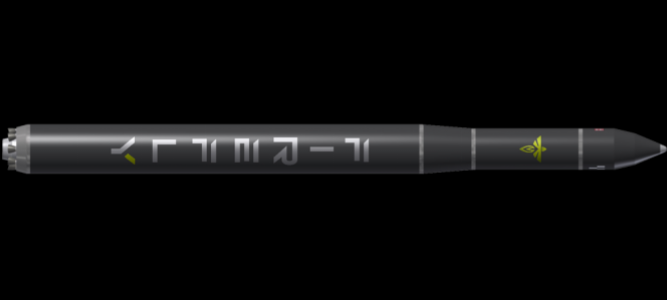
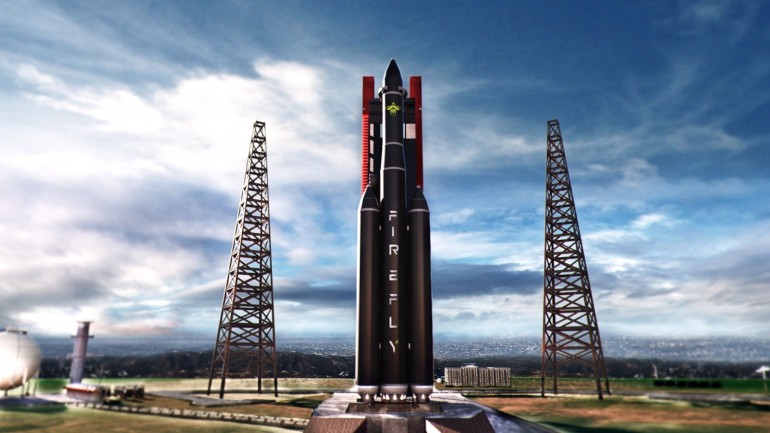
A case in point is the small satellite launch company Firefly Space Systems, which recently unveiled its planned Alpha launcher. Aimed at the small satellite launch market, it’s designed to launch satellites into low-Earth orbit (LEO) and Sun-synchronous orbits for broadband communication using an unconventional aerospike engine, it is also the first orbital launcher to use methane as fuel.

firefly-alphaThe Firefly Alpha is a specialized design to launch light satellites at low cost into low Earth Designed to carry payloads of up to 400 kg (880 lb), the Alpha features carbon composite construction and uses the same basic design for both of its two stages to keep down costs and simplify assembly. Methane was chosen because it’s cheap, plentiful, clean-burning and (unlike more conventional fuels) self-pressurizing, so it doesn’t require a second pressurization system.

But the really interesting thing about the two-stage rocket assembly is that the base of the engine is ringed with rocket burners rather than the usual cluster of rocket engines. That’s because, while the second stage uses conventional rocket engines, the first stage uses a more exotic plug-cluster aerospike engine that puts out some 400.3 kN (or 40,800 kg/90,000 lb)  of thrust.

firefly-alpha-4Aerospike engines have been under development since the 1960s, but until now they’ve never gotten past the design phase. The idea behind them is that rockets with conventional bell-shaped nozzles are extremely efficient, but only at a particular altitude. Since rockets are generally used to make things go up, this means that an engine that works best at sea level will become less and less efficient as it rises.

The plug aerospike is basically a bell-shaped rocket nozzle that’s been cut in half, then stretched to form a ring with the half-nozzle forming the profile of a plug. This means that the open side of the rocket engine is replaced with the air around it. As the rocket fires, the air pressure keeps the hot gases confined on that side, and as the craft rises, the change in air pressure alters the shape of the “nozzle;” keeping the engine working efficiently.

firefly-alpha-2The result of this arrangement is a lighter rocket engine that works well across a range of altitudes. Because the second stage operates in a near vacuum, it uses conventional rocket nozzles. As Firefly CEO Thomas Markusic put it:

What used to cost hundreds of millions of dollars is rapidly becoming available in the single digit millions. We are offering small satellite customers the launch they need for a fraction of that, around US$8 or 9 million – the lowest cost in the world. It’s far cheaper than the alternatives, without the headaches of a multi manifest launch.

Meanwhile, SpaceX has been making headlines with its latest rounds of launches and tests. About a week ago, the company successfully launched six ORBCOMM advanced telecommunications satellites into orbit to upgrade the speed and capacity of their existing data relay network. The launch from Cape Canaveral Air Force Station in Florida had been delayed or scrubbed several times since the original launch date in May due to varying problems.

spacex_rocketHowever, the launch went off without a hitch on Monday, July 14th, and ORBCOMM reports that all six satellites have been successfully deployed in orbit. SpaceX also used this launch opportunity to try and test the reusability of the Falcon 9′s first stage and its landing system while splashing down in the ocean. However, the booster did not survive the splashdown.

SpaceX CEO Elon Musk tweeted about the event, saying that the:

Rocket booster reentry, landing burn & leg deploy were good, but lost hull integrity right after splashdown (aka kaboom)… Detailed review of rocket telemetry needed to tell if due to initial splashdown or subsequent tip over and body slam.

SpaceX wanted to test the “flyback” ability to the rocket, slowing down the descent of the rocket with thrusters and deploying the landing legs for future launches so the first stage can be re-used. These tests have the booster “landing” in the ocean. The previous test of the landing system was successful, but the choppy seas destroyed the stage and prevented recovery. Today’s “kaboom” makes recovery of even pieces of this booster unlikely.

sceenshot-falcon9-580x281This is certainly not good news for a company who’s proposal for a reusable rocket system promises to cut costs exponentially and make a whole range of things possible. However, the company is extremely close to making this a full-fledged reality. The take-off, descent, and landing have all been done successfully; but at present, recovery still remains elusive.

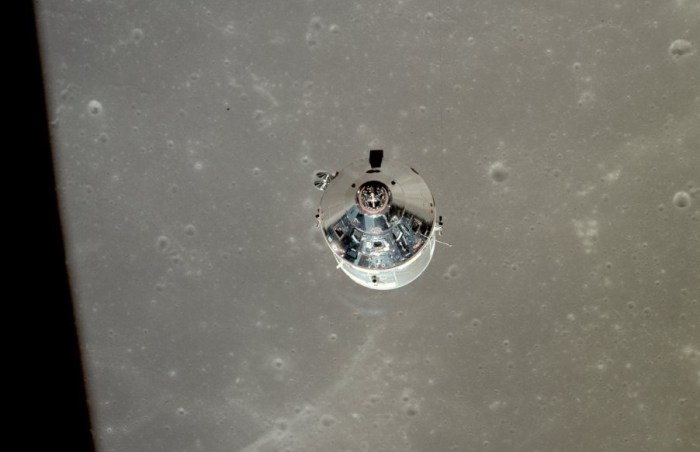
But such is the nature of space flight. What begins with conceptions, planning, research and development inevitably ends with trial and error. And much like with the Mercury and Apollo program, those involved have to keep on trying until they get it right. Speaking of which, today marks the 45th anniversary of Apollo 11 reaching the Moon. You can keep track of the updates that recreate the mission in “real-time” over @ReliveApollo11.

As of the writing of this article, the Lunar module is beginning it’s descent to the Moon’s surface. Stay tuned for the historic spacewalk!

apollo11_descent

Sources: universetoday.com, gizmag.com