In a hilarious appearance on “Last Week Tonight” – John Oliver’s HBO show – guest Stephen Hawking spoke about some rather interesting concepts. Among these were the concepts of “imaginary time” and, more interestingly, artificial intelligence. And much to the surprise of Oliver, and perhaps more than a few viewers, Hawking’s was not too keen on the idea of the latter. In fact, his predictions were just a tad bit dire.
Of course, this is not the first time Oliver had a scientific authority on his show, as demonstrated by his recent episode which dealt with Climate Change and featured guest speaker Bill Nye “The Science Guy”. When asked about the concept of imaginary time, Hawking explained it as follows:
Imaginary time is like another direction in space. It’s the one bit of my work science fiction writers haven’t used.
In sum, imaginary time has something to do with time that runs in a different direction to the time that guides the universe and ravages us on a daily basis. And according to Hawking, the reason why sci-fi writers haven’t built stories around imaginary time is apparently due to the fact that “They don’t understand it”. As for artificial intelligence, Hawking replied without any sugar-coating:
Artificial intelligence could be a real danger in the not too distant future. [For your average robot could simply] design improvements to itself and outsmart us all.
Oliver, channeling his inner 9-year-old, asked: “But why should I not be excited about fighting a robot?” Hawking offered a very scientific response: “You would lose.” And in that respect, he was absolutely right. One of the greatest concerns with AI, for better or for worse, is the fact that a superior intelligence, left alone to its own devices, would find ways to produce better and better machines without human oversight or intervention.
At worst, this could lead to the machines concluding that humanity is no longer necessary. At best, it would lead to an earthly utopia where machines address all our worries. But in all likelihood, it will lead to a future where the pace of technological change will impossible to predict. As history has repeatedly shown, technological change brings with it all kinds of social and political upheaval. If it becomes a runaway effect, humanity will find it impossible to keep up.
Keeping things light, Oliver began to worry that Hawking wasn’t talking to him at all. Instead, this could be a computer spouting wisdoms. To which, Hawking replied: “You’re an idiot.” Oliver also wondered whether, given that there may be many parallel universes, there might be one where he is smarter than Hawking. “Yes,” replied the physicist. “And also a universe where you’re funny.”
Well at least robots won’t have the jump on us when it comes to being irreverent. At least… not right away! Check out the video of the interview below:
Brainwaves can now be used to control an impressive number of things these days: prosthetics, computers, quadroptors, and even cars. But recent research released by the Technische Universität München (TUM) in Germany indicates that they might also be used to flying an aircraft. Using a simple EEG cap that read their brainwaves, a team of researchers demonstrated that thoughts alone could navigate a plane.
Using seven people for the sake of their experiment, the research team hooked them all up to a cap containing dozens of electroencephalography (EEG) electrodes. They then sat them down in a flight simulator and told them to steer the plane using their thoughts alone. The cap read the electrical signals from their brains and an algorithm then translated those signals into computer commands.
According to the researchers, the accuracy with which the test subjects stayed on course was what was truly impressive. Not to mention the fact that the study participants weren’t all pilots and had varying levels of flight experience, with one having no experience at all. And yet, of the seven participants, all performed well enough to satisfy some of the criteria for getting a pilot’s license. Several of the subjects also managed to land their planes under poor visibility.
The research was part of an EU-funded program called ” Brainflight.” As Tim Fricke, an aerospace engineer who heads the project at TUM, explained:
A long-term vision of the project is to make flying accessible to more people. With brain control, flying, in itself, could become easier. This would reduce the work load of pilots and thereby increase safety. In addition, pilots would have more freedom of movement to manage other manual tasks in the cockpit.
With this successful test under their belts, the TU München scientists are focusing in particular on the question of how planes can provide feedback to their “mind pilots”. Ordinarily, pilots feel resistance in steering and must exert significant force when they are pushing their aircraft to its limits, and hence rely upon to gauge the state of their flight. This is missing with mind control, and must be addressed before any such system can be adapted to a real plane.
In many ways, I am reminded of the recent breakthroughs being made in mind-controlled prosthetics. After succeeding in creating prosthetic devices that could convert nerve impulses into controls, the next step became creating devices that could stimulate nerves in order to provide sensory feedback. Following this same developmental path, mind-controlled flight could become viable within a few years time.
Mind-controlled machinery, sensory feedback… what does this sound like to you?
It’s official: all of Tesla’s electric car technology is now available for anyone to use. Yes, after hinting that he might be willing to do so last weekend, Musk announced this week that his companies patents are now open source. In a blog post on the Tesla website, Musk explained his reasoning. Initially, Musk wrote, Tesla created patents because of a concern that large car companies would copy the company’s electric vehicle technology and squash the smaller start-up.
This was certainly reasonable, as auto giants like General Motors, Toyota, and Volkswagon have far more capital and a much larger share of the market than his start-up did. But in time, Musk demonstrated that there was a viable market for affortable, clean-running vehicles. This arsenal of patents appeared to many to be the only barrier between the larger companies crushing his start-up before it became a viable competitor.
But that turned out to be an unnecessary worry, as carmakers have by and large decided to downplay the viability and relevance of EV technology while continuing to focus on gasoline-powered vehicles. At this point, he thinks that opening things up to other developers will speed up electric car development. And after all, there’s something to be said about competition driving innovation.
As Musk stated on his blog:
Given that annual new vehicle production is approaching 100 million per year and the global fleet is approximately 2 billion cars, it is impossible for Tesla to build electric cars fast enough to address the carbon crisis. By the same token, it means the market is enormous. Our true competition is not the small trickle of non-Tesla electric cars being produced, but rather the enormous flood of gasoline cars pouring out of the world’s factories every day…
We believe that Tesla, other companies making electric cars, and the world would all benefit from a common, rapidly-evolving technology platform.
And the move should come as no surprise. As the Hyperloop demonstrated, Musk is not above making grandiose gestures and allowing others to run with ideas he knows will be profitable. And as Musk himself pointed in a webcast made after the announcement, his sister-company SpaceX – which deals with the development of reusable space transports – has virtually no patents.
In addition, Musk stated that he thinks patents are a “weak thing” for companies. He also suggested that opening up patents for Tesla’s supercharging technology (which essentially allows for super-fast EV charging) could help create a common industry platform. But regardless of Musk’s own take on things, one thing remains clear: Tesla Motors needs competitors, and it needs them now.
As it stands, auto emissions account for a large and growing share of greenhouse gas emissions. For decades now, the technology has been in development and the principles have all been known. However, whether it has been due to denial, intransigence, complacency, or all of the above, no major moves have been made to effect a transition in the auto industry towards non-fossil fuel-using cars.
Many would cite the lack of infrastructure that is in place to support the wide scale use of electronic cars. But major cities and even entire nations are making changes in that direction with the adoption of electric vehicle networks. These include regular stations along the Trans Canada Highway, the Chargepoint grid in Melbourne to Brisbane, Germany’s many major city networks, and the US’s city and statewide EV charging stations.
Also, as the technology is adopted and developed further, the incentive to expand electric vehicle networks farther will be a no brainer. And given the fact that we no longer live in a peak oil economy, any moves towards fossil fuel-free transportation should be seen as an absolutely necessary one.
This past week, the Electronic Entertainment Expo (commonly referred to as E3) kicked off. This annual trade fair , which is presented by the Entertainment Software Association (ESA), is used by video game publishers, accessory manufacturers, and members of the computing industry to present their upcoming games and game-related merchandise. The festivities wrapped up this Friday, and was the source of some controversy and much speculation.
For starters, the annual show opened amidst concerns that the dent caused by Massively Multilayer Online Role Playing Games (MMORPGs) and online gaming communities would start to show. And this did seem to be the case. While the annual Los Angeles show normally sets up the expectations for the rest of the year in video games – and that certainly did happen – but E3 2014 was mainly about clearing the runway for next year.
Nowhere was this more clear than with Nintendo, which was the source of quite a bit of buzz when the Expo began. But it was evident that games – particularly for the Wii U – were not going to materialize until 2015. The company got a jump on the next-generation console battle by launching its Wii U in late 2012, a year ahead of Sony and Microsoft, but poor sales have led to big game developers largely abandoning it.
And while the company did announce a number of new games – including an open-world Legend of Zelda; the new Mario game that allows players to create custom levels, called Mario Maker; and Splatoon, where teams of players shoot coloured ink at each other – none are scheduled for release until next year. That dearth of blockbusters for the rest of 2014 is mirrored at Microsoft and Sony, which are also light on heavyweight first-party titles for the rest of this year.
The companies have some respective big guns in the works, such as Halo 5: Guardians and Uncharted 4: A Thief’s End, but they’re also scheduled for release in 2015. However, with the brisk sales of the Xbox One and PlayStation 4 consoles, both companies have the luxury of taking their time with big games. Nintendo is not so fortunate, since the jump they made with the Wii U leaves them with a big gap that they aren’t apparently filling.
Nintendo’s comparatively under-powered Wii U, in contrast, will look even less capable than its rivals as time passes, meaning it can’t afford to wait much longer to get compelling titles to market, especially as financial losses mount. Even long-time Nintendo supporters such as Ubisoft aren’t exactly sure of what to make of the Wii U’s future. The other big question heading into E3 was whether Microsoft could regain its mojo.
The software giant bumbled the Xbox One launch last year and alienated many gamers, mainly by focusing on TV and entertainment content instead of gaming and tying several unpopular policies to the console, which included restrictions on used games. The company eventually relented, but the Xbox One still came bundled with the voice- and motion-sensing Kinect peripheral and a price tag that was $100 higher than Sony’s rival PlayStation 4.
The result is that while the Xbox One has sold faster than the Xbox 360 at five million units so far, it has still moved two million fewer units than the PS4. Changes began to happen in March when Microsoft executive Phil Spencer, known as a champion of games, took over the Xbox operation and wasted no time in stressing that the console is mainly about gaming, and made the Kinect optional – thus lowering the Xbox One’s price to match the PS4.
That was certainly the focus for Microsoft at E3. TV features weren’t even mentioned during the company’s one-and-a-half-hour press conference on Monday, with Microsoft instead talking up more than 20 upcoming games. As Mike Nichols, corporate vice-president of Xbox and studios marketing, said in an interview:
We didn’t even talk about all the platform improvements to improve the all-out gaming experience that we’ve made or will be making. We wanted to shine a light on the games.
Another big topic that generated talk at the show was virtual reality, as this year’s E3 featured demonstrations of the Oculus Rift VR headset and Sony’s Project Morpheus. The latter has been the source of attention in recent years, with many commentators claiming that it has effectively restored interest in VR gaming. Though popular for a brief period in the mid 90’s, interest quickly waned as bulky equipment and unintuitive controls led to it being abandoned.
But this new virtual reality headset, which was recently bought by Facebook for $2 billion, was undeniably the hottest thing on the show floor. And the demo booth, where people got to try it on and take it for a run, was booked solid throughout the expo. Sony also wowed attendees with demos of its own VR headset, Project Morpheus. And while the PlayStation maker’s effort isn’t as far along in development as the Oculus Rift, it does work and adds legitimacy to the VR field.
And as already noted, the expo also had its share of controversy. For starters, Ubisoft stuck its proverbial foot in its mouth when a developer from its Montreal studio admitted that plans for a female protagonist in the upcoming Assassin’s Creed: Unity had been scrapped because it would supposedly have been “too much work”. This lead to a serious fleecing by internet commentators who called the company sexist for its remarks.
Legendary Japanese creator Hideo Kojima also had to defend the torture scenes in his upcoming Metal Gear Solid V: The Phantom Pain, starring Canadian actor Kiefer Sutherland (man loves torture!), which upset some viewers. Kojima said he felt the graphic scenes were necessary to explain the main character’s motivations, and that games will never be taken seriously as culture if they can’t deal with sensitive subjects.
And among the usual crop of violent shoot-‘em-up titles, previews of Electronic Arts upcoming Battlefield: Hardline hint that the game is likely to stir up its share of controversy when it’s released this fall. The game puts players in the shoes of cops and robbers as they blow each other away in the virtual streets of Los Angeles. Military shooters are one thing, but killing police will undoubtedly rankle some feathers in the real world.
If one were to draw any conclusions from this year’s E3, it would undoubtedly be that times are both changing and staying the same. From console gaming garnering less and less of the gamers market, to the second coming of virtual reality, it seems that there is a shift in technology which may or may not be good for the current captains of industry. At the same time, competition and trying to maintain a large share of the market continues, with Sony, Microsoft and Nintendo at the forefront.
But in the end, arguably the most buzz was focused upon the trailers for the much-anticipated game releases. These included the trailers for Batman: Arkham Knight, Call of Duty: Advanced Warfare, Farcry 4, Sid Meier’s Civilization: Beyond Earth, and the aforementioned Metal Gear Solid V: The Phantom Pain, and Assassins Creed Unity. Be sure to check these out below:
This past Thursday, the 2014 FIFA World Cup got underway. And all over the world, fans were glued to their television sets to watch the opening kickoff and the opening match between Croatia and Brazil. Unfortunately, astronauts Reid Wiseman, Steve Swanson, and Alexander Gerst – all of whom are serious “futbol” fans – were all stuck on board the ISS several hundred kilometers away.
But this didn’t stop them from channeling their excitement into a video that shows just how awesome “futbol” would be if played in space. The video was released a day before the games got started, and features all kinds of cool things like slow-motion bicycle kicks and other moves that athletes have a much harder time doing under normal conditions where gravity remains a constant.
And of course, Wiseman, Swanson and Gerst were sure to wish the teams and fans well in the competition before getting on with their own match. Not only is the resulting video fun thing to watch, it is also a fine representation of the age we live in, where social media and high-speed communications allow everyone – even astronauts – the ability to instantly communicate with the world.
And the video sharing was made all the more easy thanks to the addition of the new Optical Payload for Lasercom Science (OPALS), a laser communications system that allows for speedier transfer of much larger information packages. And be sure to check out the video below:
The 2014 FIFA World Cup made history when it opened in Sao Paolo this week when a 29-year-old paraplegic man named Juliano Pinto kicked a soccer ball with the aid of a robotic exoskeleton. It was the first time a mind-controlled prosthetic was used in a sporting event, and represented the culmination of months worth of planning and years worth of technical development.
The exoskeleton was created with the help of over 150 researchers led by neuroscientist Dr. Miguel Nicolelis of Duke University, who’s collaborative effort was called the Walk Again Project. As Pinto successfully made the kick off with the exoskeleton, the Walk Again Project scientists stood by, watching and smiling proudly inside the Corinthians Arena. And the resulting buzz did not go unnoticed.
Immediately after the kick, Nicolelis tweeted about the groundbreaking event, saying simply: “We did it!” The moment was monumental considering that only a few of months ago, Nicolelis was excited just to have people talking about the idea of a mind-controlled exoskeleton being tested in such a grand fashion. As he said in an interview with Grandland after the event:
Despite all of the difficulties of the project, it has already succeeded. You go to Sao Paulo today, or you go to Rio, people are talking about this demo more than they are talking about football, which is unbelievably impossible in Brazil.
Dr. Gordon Cheng, a team member and the lead robotics engineer of the Technical University of Munich, explained how the exoskeleton works in an interview with BBC News:
The basic idea is that we are recording from the brain and then that signal is being translated into commands for the robot to start moving.
The result of many years of development, the mind-controlled exoskeleton represents a breakthrough in restoring ambulatory ability to those who have suffered a loss of motion due to injury. Using metal braces that were tested on monkeys, the exoskeleton relies on a series of wireless electrodes attached to the head that collect brainwaves, which then signal the suit to move. The braces are also stabilized by gyroscopes and powered by a battery carried by the kicker in a backpack.
Originally, a teenage paraplegic was expected to make the kick off. However, after a rigorous selection process that lasted many months, the 29 year-old Pinto was selected. And in performing the kickoff, he participated in an event designed to galvanize the imagination of millions of people around the world. It’s a new age of technology, friends, where disability is no longer a permanent thing,.
And in the meantime, enjoy this video of the event:
Friday the 13th may be a time for worry for the more superstitiously inclined. But for those who turned out to gaze at the night sky in the wee hours of the morning, it was also a chance to see something truly rare and beautiful. It’s what’s known as a “honey moon”, and one which won’t happen again in our lifetime.
Basically, a honey moon is something that happens during the summer solstice when the sun’s path across the sky at its highest during this month and the moon at its lowest, which keeps the lunar orb close to the horizon and makes it appear more amber than other full moons this year.
The amber colors are due to the scattering of longer wavelengths of light by dust and pollution in our atmosphere. As astronomer Raminder Signh Samra of the H.R. MacMillian Space Centre in Vancouver said:
It is a similar phenomenon as seen at sunset, when sunlight is scattered towards the red end of the spectrum, making the sun’s disk appear orange-red to the naked-eye.
The most spectacular part of the honey moon begins hours before midnight, due to an illusion by which the moon appears larger to sky-watchers when it’s near the horizon than when it hangs high in the sky. It reached it’s full phase last night at 12:13 am EDT, at least for those of us living in North America.
Scientists are not entirely sure what accounts for this optical illusion of a larger moon near the horizon, but they suspect it has something to do with the human mind trying to make sense of the moon’s proximity to more familiar objects like mountains, trees and houses in the foreground.
The monthly full moon always looks like a big disk, but because its orbit around the Earth is egg-shaped, there are times when the moon it is at its shortest distance from Earth (called perigee), some 362,065 km (224,976 miles) away. This month the perigee just happened to coincide with the full phase.
Hence why it may have made it appear unusually large to some keen-eyed sky-watchers. As Samra explained:
The moon illusion should be more prominent during this full moon as it will graze closer to the horizon than at any other time of the year. This will make the moon appear more amber than other full moons of the year.
A full moon coinciding on Friday the 13th is not all that uncommon, occurring every three or so years. But having the combination of a honey moon and Friday the 13th is rare, last occurring on June 13, 1919. As for the next, we’ll have to wait until June 13, 2098, for the next one.
In short, stellar events like this one – where’s there’s a perfect conjunction between the occult and the night sky – only happen once every 80 or 90 years. So if you missed last night’s and are sad about it… Well, the good news is they are doing great things in medicine these days!
And if guys like Kurzweil are to be believed, clinical Immortality is just a few decades away. Until next time, be sure to keep your eyes to the heavens. Some interesting things happen there, apparently!
3-D printing is pushing the boundaries of manufacturing all the time, expanding its repertoire to include more and more in the way of manufactured products and even organic materials. Amongst the many possibilities this offers, arguably the most impressive are those that fall into the categories of synthetic food and replacement organs. In this vein, two major breakthroughs took place last month, with the first-time unveiling of both 3-D printed hybrid fruit and blood vessels.
The first comes from a Dovetailed, UK-based design company which presented its 3-D food printer on Saturday, May 24th, at the Tech Food Hack event in Cambridge. Although details on how it works are still a bit sparse, it is said to utilize a technique known as “spherification” – a molecular gastronomy technique in which liquids are shaped into tiny spheres – and then combined with spheres of different flavors into a fruit shape.
According to a report on 3DPrint, the process likely involves combining fruit puree or juice with sodium alginate and then dripping the mixture into a bowl of cold calcium chloride. This causes the droplets to form into tiny caviar-like spheres, which could subsequently be mixed with spheres derived from other fruits. The blended spheres could then be pressed, extruded or otherwise formed into fruit-like shapes for consumption.
The designers claim that the machine is capable of 3D-printing existing types of fruit such as apples or pears, or user-invented combined fruits, within seconds. They add that the taste, texture, size and shape of those fruits can all be customized. As Vaiva Kalnikaitė, creative director and founder of Dovetailed, explained:
Our 3D fruit printer will open up new possibilities not only to professional chefs but also to our home kitchens – allowing us to enhance and expand our dining experiences… We have been thinking of making this for a while. It’s such an exciting time for us as an innovation lab. Our 3D fruit printer will open up new possibilities not only to professional chefs but also to our home kitchens, allowing us to enhance and expand our dining experiences. We have re-invented the concept of fresh fruit on demand.
And though the idea of 3-D printed fruit might seem unnerving to some (the name “Frankenfruit” is certainly predicative of that), it is an elegant solution of what to do in an age where fresh fruit and produce are likely to become increasingly rare for many. With the effects of Climate Change (which included increased rates of drought and crop failure) expected to intensify in the coming decades, millions of people around the world will have to look elsewhere to satisfy their nutritional needs.
As we rethink the very nature of food, solutions that can provide us sustenance and make it look the real thing are likely to be the ones that get adopted. A video of the printing in action is show below:
Meanwhile, in the field of bioprinting, researchers have experienced another breakthrough that may revolution the field of medicine. When it comes to replacing vital parts of a person’s anatomy, finding replacement blood vessels and arteries can be just as daunting as finding sources of replacement organs, limbs, skin, or any other biological material. And thanks to the recent efforts of a team from Brigham and Women’s Hospital (BWH) in Boston, MA, it may now be possible to fabricate these using a bioprinting technique.
The study was published online late last month in Lab on a Chip. The study’s senior author, Ali Khademhosseini – PhD, biomedical engineer, and director of the BWH Biomaterials Innovation Research Center – explained the challenge and their goal as follows:
Engineers have made incredible strides in making complex artificial tissues such as those of the heart, liver and lungs. However, creating artificial blood vessels remains a critical challenge in tissue engineering. We’ve attempted to address this challenge by offering a unique strategy for vascularization of hydrogel constructs that combine advances in 3D bioprinting technology and biomaterials.
The researchers first used a 3D bioprinter to make an agarose (naturally derived sugar-based molecule) fiber template to serve as the mold for the blood vessels. They then covered the mold with a gelatin-like substance called hydrogel, forming a cast over the mold which was then reinforced via photocrosslinks. Khademhosseini and his team were able to construct microchannel networks exhibiting various architectural features – in other words, complex channels with interior layouts similar to organic blood vessels.
They were also able to successfully embed these functional and perfusable microchannels inside a wide range of commonly used hydrogels, such as methacrylated gelatin or polyethylene glycol-based hydrogels. In the former case, the cell-laden gelatin was used to show how their fabricated vascular networks functioned to improve mass transport, cellular viability and cellular differentiation. Moreover, successful formation of endothelial monolayers within the fabricated channels was achieved.
According to Khademhosseini, this development is right up there with the possibility of individually-tailored replacement organs or skin:
In the future, 3D printing technology may be used to develop transplantable tissues customized to each patient’s needs or be used outside the body to develop drugs that are safe and effective.
Taken as a whole, the strides being made in all fields of additive manufacturing – from printed metal products, robotic parts, and housing, to synthetic foods and biomaterials – all add up to a future where just about anything can be manufactured, and in a way that is remarkably more efficient and advanced than current methods allow.
In recent years, the International Space Station has become more and more media savvy, thanks to the efforts of astronauts to connect with Earthbound audiences via social media and Youtube. However, the communications setup, which until now relied on 1960’s vintage radio-wave transmissions, was a little outdated for this task. However, that has since changed with the addition of the Optical Payload for Lasercom Science (OPALS) laser communication system.
Developed by NASA’s Jet Propulsion Laboratory (JPL) in Pasadena, California, OPALS is designed to test the effectiveness of lasers as a higher-bandwidth substitute for radio waves and deal with substantially larger information packages. As Matt Abrahamson, OPALS mission manager at NASA’s Jet Propulsion Laboratory, said in a recent video statement:
We collect an enormous amount of data out in space, and we need to get it all to the ground. This is an alternative that’s much faster than our traditional radio waves that we use to communicate back down to the ground.
The OPALS laser communication system was delivered to the ISS on April 20 by a SpaceX unmanned Dragon space freighter and is currently undergoing a 90-day test. For this test, the crew used the OPALS to transmit the “Hello, World” video from the ISS to a ground station on Earth. This was no simple task, since the station orbits Earth at an altitude of about 418 km (260 mi) at travels at a speed of 28,000 km/h (17,500 mph). The result is that the target is sliding across the laser’s field of view at an incredibly fast rate.
According to Bogdan Oaida, the OPALS systems engineer at JPL, this task was pretty unprecedented:
It’s like trying to use a laser to point to an area that’s the diameter of a human hair from 20-to-30 feet away while moving at half-a-foot per second. It’s all about the pointing.
However, the test went off without a hitch, with the 37 second-long video taking 3.5 seconds to transmit – much faster than previous downlink methods. Abrahamson said that the video, which is a lively montage of various communication methods, got its title as an homage to the first message output by standard computer programs.
The OPALS system sought out and locked onto a laser beacon from the Optical Communications Telescope Laboratory ground station at the Table Mountain Observatory in Wrightwood, California. It then transmitted its own 2.5-watt, 1,550-nanometer laser and modulated it to send the video at a peak rate of 50 megabits per second. According to NASA, OPALS transmitted the video in 3.5 seconds instead of the 10 minutes that conventional radio would have required.
Needless to say, the astronauts who contribute to the ISS’s ongoing research programs are pretty stoked about getting this upgrade. With a system that is capable of transmitting exponentially more information at a faster rate, they will now be able to communicate with the ground more easily and efficiently. Not only that, but educational videos produced in orbit will be much easier to send. What’s more, the ISS will have a much easier time communicating with deep space missions in the future.
This puts the ISS in a good position to oversea future missions to Mars, Europa, the Asteroid Belt, and far, far beyond! As Abrahamson put it in the course of the video statement:
It’s incredible to see this magnificent beam of light arriving from our tiny payload on the space station. We look forward to experimenting with OPALS over the coming months in hopes that our findings will lead to optical communications capabilities for future deep space exploration missions.
And in the meantime, check out the video from NASA’s Jet Propulsion Laboratory, showing the “Hello World” video and explaining the groundbreaking implications of the new system:
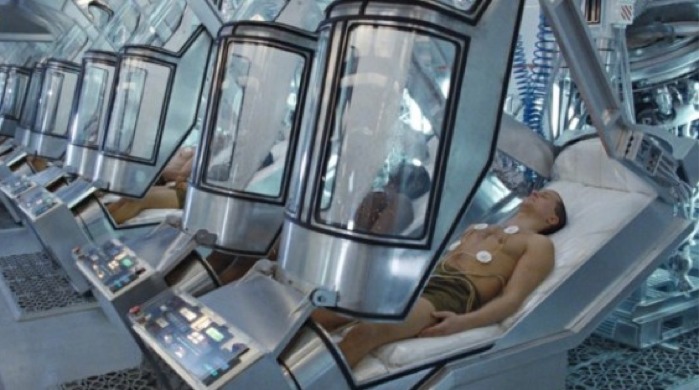
We’ve all heard about it, read about it, and seen it in the movies. Suspended Animation. The ability to put someone in a tank and chill them to the point where their heart rate, breathing, and metabolism are reduced to an absolute minimum, preserving their life or prolonging it artificially. It’s a common science fiction concept, but could such a technique ever be made feasible? That is what a team of researchers from UPMC Presbyterian Hospital in Pittsburgh, with FDA approval, are attempting to answer.
The purpose of this research is to see if suspended animation can deliver on its main promise – namely, keeping a patient alive long enough to receive life-saving treatment or surgery. Oftentimes with disease and traumatic injuries, the difference between life and death is a simple matter of timing. And for those patients who simply cannot be helped with the current level of technology and pharmacology, it is also a race against time, trying to stay alive long enough to see science catch up with the illness.
This Emergency Preservation and Resuscitation (EPR) technique isn’t quite as extreme as what we’ve come to know from science fiction franchises. Instead of reducing a patient’s temperature to near-freezing levels, it involves reducing body temperature to 10 degrees Celsius (50 degrees Fahrenheit) by inserting a cannula into the aorta and flushing cold saline into the system. This will slow the blood flow, which will prevent the body from bleeding out and slow other biological processes as well.
So far, the result have been pretty subdued – with the EPR state of induced hypothermia only being sustainable for about two hours. While this isn’t as dramatic as some may have expected, that could easily provide enough time for surgeons to perform emergency lifesaving surgery. Trauma patients who suffer cardiac arrest have a 7% chance of survival, and administering this technique could have some very real and amazing implications.
This technique was first tested by Peter Rhee in 2000 using 40 pigs, the results of which were published in 2006. After inflicting a lethal wound to simulate real-world trauma scenarios, the pigs were cooled down so the surgeons could operate then resuscitate them. While all of the control pigs died, the surgeons were able to save 90% of the pigs who had undergone suspension. None of the surviving pigs were reported to have sustained cognitive or physical impairment either.
And as per usual, animal testing is followed by human trials to see if success can be replicated. Due to the extremely time-sensitive and dire nature of the injuries of the test subjects, the FDA has declared that the surgeons will not require informed consent. As a precaution, the team took out advertisements to inform the public of the upcoming study, and even set up a website that would allow people to opt out, if desired. As of yet, nobody has opted out.
The plan for testing this process is for the team to the technique on 10 trauma patients whose injuries would be otherwise fatal. That group will be compared against 10 other patients who are not able to undergo EPR, due to the surgical team not being available. After the first increments of 10 EPR and 10 control patients, the technique will be analyzed and refined until enough data points have been collected which will allow them to analyze the efficacy of suspending life in this manner.
Should things work out, we can expect to see EPR becoming a regular part of modern medicine. And with further refinements, it may even be possible to place people in suspended animation for longer (or even indefinite) periods of time. If not, then I guess it will be just become one more of those many, many sci-fi fantasies that (like a patients in a story) will be put away until such time as the technology catches up to the fantasy.

 In a hilarious appearance on “Last Week Tonight” – John Oliver’s HBO show – guest Stephen Hawking spoke about some rather interesting concepts. Among these were the concepts of “imaginary time” and, more interestingly, artificial intelligence. And much to the surprise of Oliver, and perhaps more than a few viewers, Hawking’s was not too keen on the idea of the latter. In fact, his predictions were just a tad bit dire.
 In sum, imaginary time has something to do with time that runs in a different direction to the time that guides the universe and ravages us on a daily basis. And according to Hawking, the reason why sci-fi writers haven’t built stories around imaginary time is apparently due to the fact that “They don’t understand it”. As for artificial intelligence, Hawking replied without any sugar-coating:
 At worst, this could lead to the machines concluding that humanity is no longer necessary. At best, it would lead to an earthly utopia where machines address all our worries. But in all likelihood, it will lead to a future where the pace of technological change will impossible to predict. As history has repeatedly shown, technological change brings with it all kinds of social and political upheaval. If it becomes a runaway effect, humanity will find it impossible to keep up.
 Brainwaves can now be used to control an impressive number of things these days: prosthetics, computers, quadroptors, and even cars. But recent research released by the Technische Universität München (TUM) in Germany indicates that they might also be used to flying an aircraft. Using a simple EEG cap that read their brainwaves, a team of researchers demonstrated that thoughts alone could navigate a plane.
 According to the researchers, the accuracy with which the test subjects stayed on course was what was truly impressive. Not to mention the fact that the study participants weren’t all pilots and had varying levels of flight experience, with one having no experience at all. And yet, of the seven participants, all performed well enough to satisfy some of the criteria for getting a pilot’s license. Several of the subjects also managed to land their planes under poor visibility.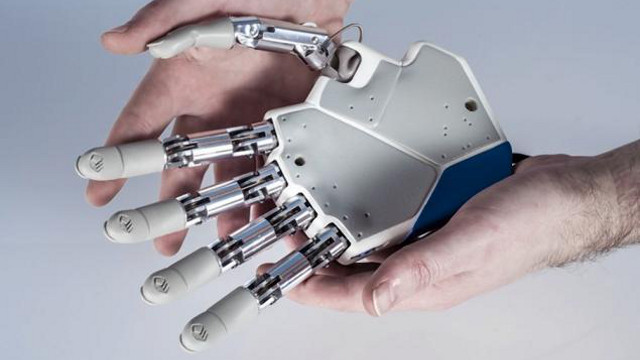
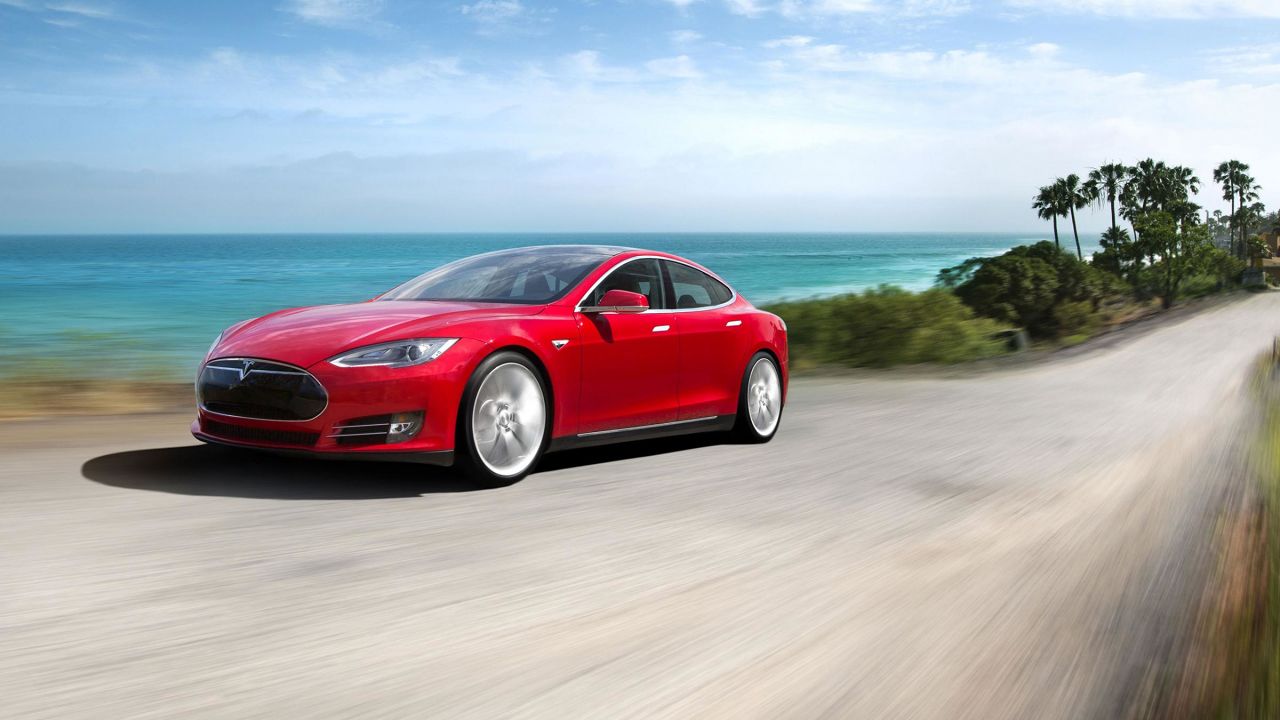 It’s official: all of Tesla’s electric car technology is now available for anyone to use. Yes, after hinting that he might be willing to do so last weekend, Musk announced this week that his companies patents are now open source. In a blog post on the Tesla website, Musk explained his reasoning. Initially, Musk wrote, Tesla created patents because of a concern that large car companies would copy the company’s electric vehicle technology and squash the smaller start-up.
 But that turned out to be an unnecessary worry, as carmakers have by and large decided to downplay the viability and relevance of EV technology while continuing to focus on gasoline-powered vehicles. At this point, he thinks that opening things up to other developers will speed up electric car development. And after all, there’s something to be said about competition driving innovation.
 And the move should come as no surprise. As the Hyperloop demonstrated, Musk is not above making grandiose gestures and allowing others to run with ideas he knows will be profitable. And as Musk himself pointed in a webcast made after the announcement, his sister-company SpaceX – which deals with the development of reusable space transports – has virtually no patents.
 As it stands, auto emissions account for a large and growing share of greenhouse gas emissions. For decades now, the technology has been in development and the principles have all been known. However, whether it has been due to denial, intransigence, complacency, or all of the above, no major moves have been made to effect a transition in the auto industry towards non-fossil fuel-using cars.
 This past week, the Electronic Entertainment Expo (commonly referred to as E3) kicked off. This annual trade fair , which is presented by the Entertainment Software Association (ESA), is used by video game publishers, accessory manufacturers, and members of the computing industry to present their upcoming games and game-related merchandise. The festivities wrapped up this Friday, and was the source of some controversy and much speculation.
 Nowhere was this more clear than with Nintendo, which was the source of quite a bit of buzz when the Expo began. But it was evident that games – particularly for the Wii U – were not going to materialize until 2015. The company got a jump on the next-generation console battle by launching its Wii U in late 2012, a year ahead of Sony and Microsoft, but poor sales have led to big game developers largely abandoning it.
 The companies have some respective big guns in the works, such as Halo 5: Guardians and Uncharted 4: A Thief’s End, but they’re also scheduled for release in 2015. However, with the brisk sales of the Xbox One and PlayStation 4 consoles, both companies have the luxury of taking their time with big games. Nintendo is not so fortunate, since the jump they made with the Wii U leaves them with a big gap that they aren’t apparently filling.
 The software giant bumbled the Xbox One launch last year and alienated many gamers, mainly by focusing on TV and entertainment content instead of gaming and tying several unpopular policies to the console, which included restrictions on used games. The company eventually relented, but the Xbox One still came bundled with the voice- and motion-sensing Kinect peripheral and a price tag that was $100 higher than Sony’s rival PlayStation 4.
 That was certainly the focus for Microsoft at E3. TV features weren’t even mentioned during the company’s one-and-a-half-hour press conference on Monday, with Microsoft instead talking up more than 20 upcoming games. As Mike Nichols, corporate vice-president of Xbox and studios marketing, said in an interview:
 But this new virtual reality headset, which was recently bought by Facebook for $2 billion, was undeniably the hottest thing on the show floor. And the demo booth, where people got to try it on and take it for a run, was booked solid throughout the expo. Sony also wowed attendees with demos of its own VR headset, Project Morpheus. And while the PlayStation maker’s effort isn’t as far along in development as the Oculus Rift, it does work and adds legitimacy to the VR field.
 Legendary Japanese creator Hideo Kojima also had to defend the torture scenes in his upcoming Metal Gear Solid V: The Phantom Pain, starring Canadian actor Kiefer Sutherland (man loves torture!), which upset some viewers. Kojima said he felt the graphic scenes were necessary to explain the main character’s motivations, and that games will never be taken seriously as culture if they can’t deal with sensitive subjects.
 If one were to draw any conclusions from this year’s E3, it would undoubtedly be that times are both changing and staying the same. From console gaming garnering less and less of the gamers market, to the second coming of virtual reality, it seems that there is a shift in technology which may or may not be good for the current captains of industry. At the same time, competition and trying to maintain a large share of the market continues, with Sony, Microsoft and Nintendo at the forefront.
 This past Thursday, the 2014 FIFA World Cup got underway. And all over the world, fans were glued to their television sets to watch the opening kickoff and the opening match between Croatia and Brazil. Unfortunately, astronauts Reid Wiseman, Steve Swanson, and Alexander Gerst – all of whom are serious “futbol” fans – were all stuck on board the ISS several hundred kilometers away.
 And of course, Wiseman, Swanson and Gerst were sure to wish the teams and fans well in the competition before getting on with their own match. Not only is the resulting video fun thing to watch, it is also a fine representation of the age we live in, where social media and high-speed communications allow everyone – even astronauts – the ability to instantly communicate with the world.
 The 2014 FIFA World Cup made history when it opened in Sao Paolo this week when a 29-year-old paraplegic man named Juliano Pinto kicked a soccer ball with the aid of a robotic exoskeleton. It was the first time a mind-controlled prosthetic was used in a sporting event, and represented the culmination of months worth of planning and years worth of technical development.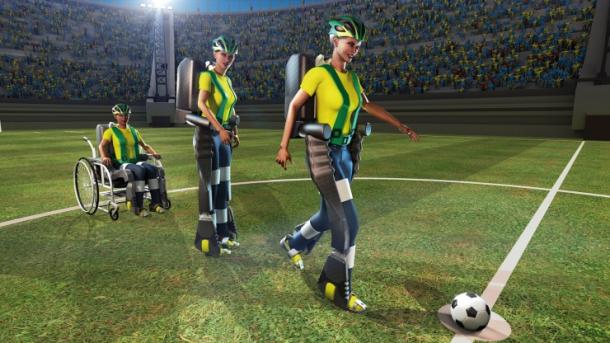
 The result of many years of development, the mind-controlled exoskeleton represents a breakthrough in restoring ambulatory ability to those who have suffered a loss of motion due to injury. Using metal braces that were tested on monkeys, the exoskeleton relies on a series of wireless electrodes attached to the head that collect brainwaves, which then signal the suit to move. The braces are also stabilized by gyroscopes and powered by a battery carried by the kicker in a backpack.
 The amber colors are due to the scattering of longer wavelengths of light by dust and pollution in our atmosphere. As astronomer Raminder Signh Samra of the H.R. MacMillian Space Centre in Vancouver said:
 Scientists are not entirely sure what accounts for this optical illusion of a larger moon near the horizon, but they suspect it has something to do with the human mind trying to make sense of the moon’s proximity to more familiar objects like mountains, trees and houses in the foreground.
 Hence why it may have made it appear unusually large to some keen-eyed sky-watchers. As Samra explained:

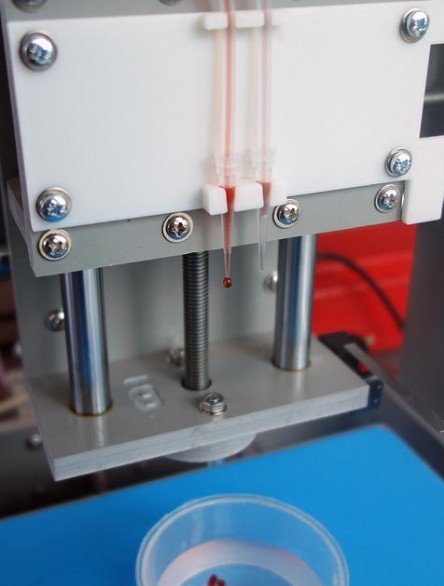
 The study was published online late last month in Lab on a Chip. The study’s senior author, Ali Khademhosseini – PhD, biomedical engineer, and director of the BWH Biomaterials Innovation Research Center – explained the challenge and their goal as follows:
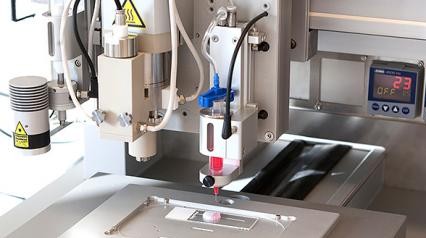 They were also able to successfully embed these functional and perfusable microchannels inside a wide range of commonly used hydrogels, such as methacrylated gelatin or polyethylene glycol-based hydrogels. In the former case, the cell-laden gelatin was used to show how their fabricated vascular networks functioned to improve mass transport, cellular viability and cellular differentiation. Moreover, successful formation of endothelial monolayers within the fabricated channels was achieved.
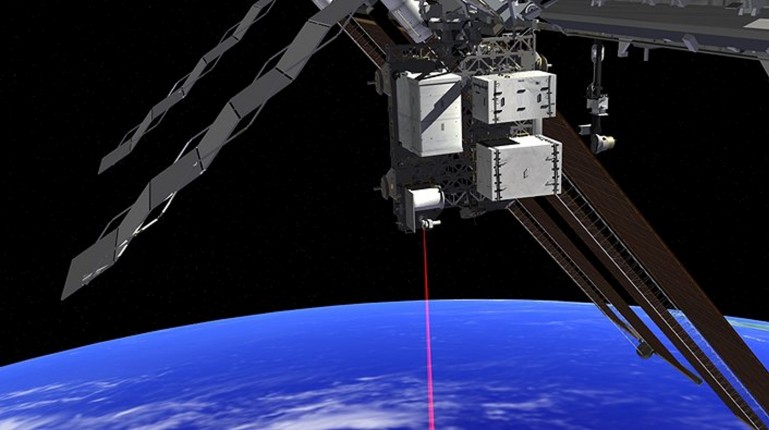
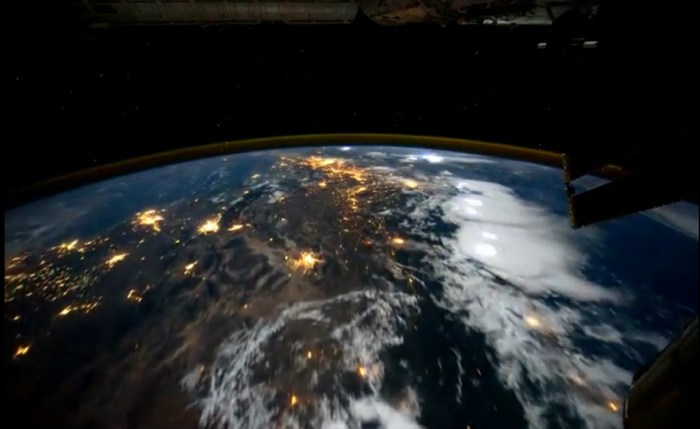 The OPALS system sought out and locked onto a laser beacon from the Optical Communications Telescope Laboratory ground station at the Table Mountain Observatory in Wrightwood, California. It then transmitted its own 2.5-watt, 1,550-nanometer laser and modulated it to send the video at a peak rate of 50 megabits per second. According to NASA, OPALS transmitted the video in 3.5 seconds instead of the 10 minutes that conventional radio would have required.



 Stories by Williams