According to a recent study in Nature Biotechnology, a significant leap has been made towards the curing of blindness. Using stem cells, researchers at the Moorfields Eye Hospital and University College London claim that the part of the eye which actually detects light can be repaired. An animal study revealed that it could be done, and human trials are now a realistic prospect.
Experts described it as a “significant breakthrough” and “huge leap” forward, and for good reason. In the past, stem cell research has shown that the photoreceptors in the eye that degrade over time can be kept healthy and alive longer. But this latest trial shows that the light-sensing cells themselves can be replaced, raising the prospect of reversing blindness.
The Moorfields research team used a new technique for building retinas in the laboratory, collecting thousands of stem cells, which were primed to transform into photoreceptors, and injecting them into the eyes of blind mice. The study showed that these cells could hook up with the existing architecture of the eye and begin to function.
However, with ongoing trials, the results remain limited. Of the 200,000 or so stem cells injected into the eyes of the blind mice, only about 1,000 cells actually hooked up with the rest of the eye. Still, the margin for success and the fact that they were able to rehabilitate receptors thought to be dead was quite the accomplishment.
As lead researcher Prof. Robin Ali told the BBC News website:
This is a real proof of concept that photoreceptors can be transplanted from an embryonic stem cells source and it give us a route map to now do this in humans. That’s why we’re so excited, five years is a now a realistic aim for starting a clinical trial.
The eye remains one of the most advanced fields of stem cell research, with clinical trials aiming to correct macular degeneration, astigmatism, and other degenerative and inherited traits. And compared to other fields, like neurological disorders and impairments, it is a relatively simple one. Hence, much less cells would also be needed to make a difference, as opposed to other organs, like a failing liver or kidney.
Whereas reversing something like dementia requires stem cells to hook up and repair far more cells across the brain, light sensing cells are easier to deal with, since they only have to pass their electrical message to one or more cells. What’s more, the immune system is relatively weak in the eye, which means the chances for stem cell rejection.
As Chris Mason, a Professor from the University College London, told the BBC:
I think they have made a major step forward here, but the efficiency is still too low for clinical uses. At the moment the numbers of tiny and it will take quite a bit of work to get the numbers up and then the next question is ‘Can you do it in man?’ But I think it is a significant breakthrough which may lead to cell therapies and will give a much expanded knowledge on how to cure blindness.
In short, the results are encouraging and human trials could begin within five years. And given the likelihood for success, blindness could very become a thing of the past within a decade or so.
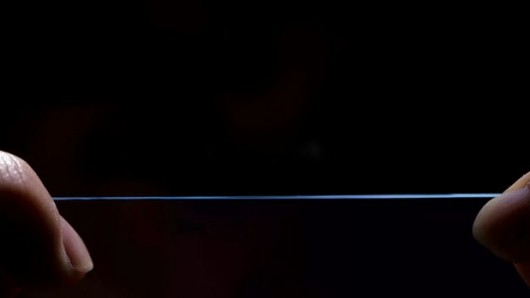
For years, scientists and researchers have been looking for a way to reproduce the strength of spider silk in the form of a synthetic material. As an organic material, spider silk is tougher than kevlar, strong as steel, lighter than carbon fiber, and can be stretched 40 percent beyond its original length without breaking. Any material that can boast the same characteristics and be massed produced would be worth its weight in gold!
Recently, a Japanese startup named Spiber has announced that it has found a way to produce the silk synthetically. Over the next two years, they intend to step up mass production and created everything from surgical materials and auto arts to bulletproof vests. And thanks to recent developments in nanoelectronics, its usages could also include soluble electronic implants, artificial blood levels and ligaments, and even antibacterial sutures.
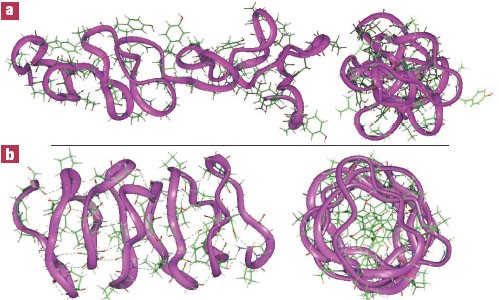
Spider silk’s amazing properties are due to a protein named fibroin. In nature, proteins act as natural catalyst for most chemical reactions inside a cell and help bind cells together into tissues. Naturally, the process for creating a complex sequence of aminoacids that make up fibroin are very hard to reproduce inside a lab. Hence why scientists have been turning to genetic engineering in recent years to make it happen.
In Spiber’s case, this consisted of decoding the gene responsible for the production of fibroin in spiders and then bioengineering bacteria with recombinant DNA to produce the protein, which they then spin into their artificial silk. Using their new process, they claim to be able to engineer a new type of silk in as little as 10 days, and have already created 250 prototypes with characteristics to suit specific applications.
They begin this process by tweaking the aminoacid sequences and gene arrangements using computer models to create artificial proteins that seek to maximize strength, flexibility and thermal stability in the final product. Then, they synthesize a fibroin-producing gene modified to produce that specific molecule.
Microbe cultures are then modified with the fibroin gene to produce the candidate molecule, which is turned into a fine powder and then spun. These bacteria feed on sugar, salt and other micronutrients and can reproduce in just 20 minutes. In fact, a single gram of the protein produces about 5.6 miles (9 km) of artificial silk.
As part of the patent process, Spiber has named the artificial protein derived from fibroin QMONOS, from the Japanese word for spider. The substance can be turned into fiber, film, gel, sponge, powder, and nanofiber form, giving it the ability to suit a number of different applications – everything from clothing and manufacturing to nanomedicine.
Spibers says it is building a trial manufacturing research plant, aiming to produce 100 kg (220 lb) of QMONOS fiber per month by November. The pilot plant will be ready by 2015, by which time the company aims to produce 10 metric tons (22,000 lb) of silk per year.
At the recent TedX talk in Tokyo, company founder Kazuhide Sekiyama unveiled Spiber’s new process by showcasing a dress made of their synthetic silk. It’s shiny blue sheen was quite dazzling and looks admittedly futuristic. Still, company spokesperson Shinya Murata admitted that it was made strictly for show and nobody tried it on.
Murata also suggested that their specialized slik could be valuable in moving toward a post-fossil-fuel future:
We use no petroleum in the production process of Qmonos. But, we know that we need to think about the use of petroleum to produce nutrient source for bacteria, electric power, etc…
Overall, Sekyama lauded the material’s strength and flexibility before the TedX audience, and claimed it could revolutionize everything from wind turbines to medical devices. All that’s needed is some more time to further manipulate the amino acid sequence to create an even lighter, stronger product. Given the expanding use for silks and its impeccable applicability, I’d say he’s correct in that belief.
In the meantime, check out the video from the TedX talk:
All across North and Sub-Saharan Africa, desertification threatens farm land, pastures, townships and even cities, triggering food and water shortages and threatening wildlife. But in a startling twist, it now seems that this ecological phenomena is threatening an iconic movie set, one which science fictions fans should instantly recognize.
Yes, in the deserts of Tunisia, the town of Mos Espa is about to be reclaimed by the desert. This set was first constructed by George Lucas and his crews to act as the skyline for Tatooine in Star Wars Episode I: The Phantom Menace. Serving as the fictional home of Anakin Skywalker, it was here that Qui-Gon Jinn and Padme first met the cloyingly sweet blonde kid that would one day become the most evil man in the universe
And in a new study, lead by Ralph Lorenz of John Hopkins University, researchers have found that sand dunes are swiftly encroaching on the old Star Wars set and threatening to consume it. Since Mos Espa was first constructed in 1997, some sixteen years ago, Lorenz and his researchers have calculated that the sand dunes have moved a total of 130 meters.
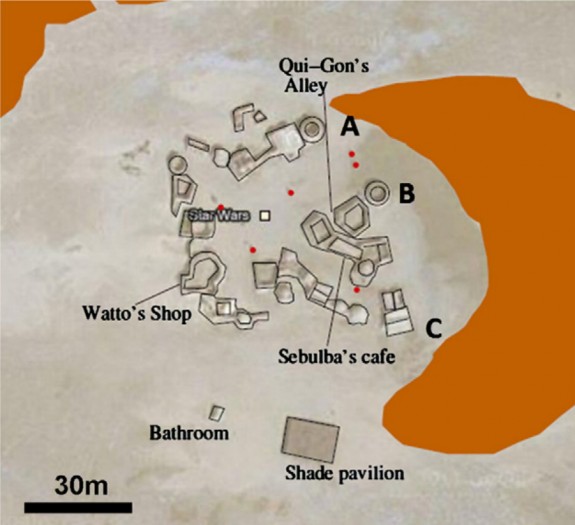
Note the satellite images to the left, which display the Mos Espa set in 2004 and 2009 as seen from Google Earth. Between the two, one can see how the large dune wall to the right of the compound is weakened over time, and dust and sand blowing in from the desert is able to make its way into the town proper.
You can also see how the buildings are harder to make out in the 2009 image, a result of them being slowly covered by airborne sand. In time, this will reach the point where the huts are no longer visible, and will likely collapse under the weight of the desert.
The aim of this study, far from inciting Star Wars fandom to mount a campaign, was to track the progress of desertification in the Maghreb nation. One of the benefits of the Mos Espa construction, as far as Lorenz and his geomorphologists were concerned, was that it gave them a steady frame of reference. Since their interest is in understanding how sand dunes move, the Star Wars set gave them a good way to see changes in dune location.
Mos Espa layout
The report outlined the likely consequences of the approaching dunes, and what they would mean for future generations of Tatooine-tourists:
Should the barchan that forms the focus of this paper overrun the Mos Espa set, many buildings will be temporarily buried.
Their rather flimsy construction will mean roofs will likely collapse, degrading the attraction of the site when the dune moves on. This has already been seen at a smaller film set (‘Repro Haddada’…sometimes referred to online as the ‘slave quarters’)
…This structure was overrun by a barchan around 2004, and has been substantially demolished, although it is still an object of pilgrimage by Star Wars fans, who also admire the barchans a few hundred meters to the south, which are prominent in several scenes of the movie.
They were also sure to point out that even if Mos Espa survives the swiftly advancing dune, the town is still likely doomed, as other patches of desert are encroaching from other directions as well:
In the long run, Mos Espa is still threatened: the large barchan (big enough to totally submerge the site) looms about 500 m to the east. In fact this dune is often driven over en route to the Mos Espa site, reportedly by ~80% of the visiting vehicles. Although the imminent threatening barchan and other effects may degrade the site on this timescale anyway, at the observed migration rate of ~6 m/yr, this large barchan will begin overrunning the site in about 80 years.
Sad news for fandom and sci-fi geeks. But I guess it just goes to show you, nothing lasts forever. But more importantly, it demonstrates one of the principle issues of Climate Change and the planets rapidly-changing ecology. So perhaps this will have the positive effect of making more people sit up and notice, and maybe even mobilize a few to action.
After Climate Change is an issue that effects, and threatens, us all. And against enemies like world hunger, displacement, drought, famine, and flooding, we need all the help we can get! So at the risk of sounding cliche, let me just say: May the Force be with us!
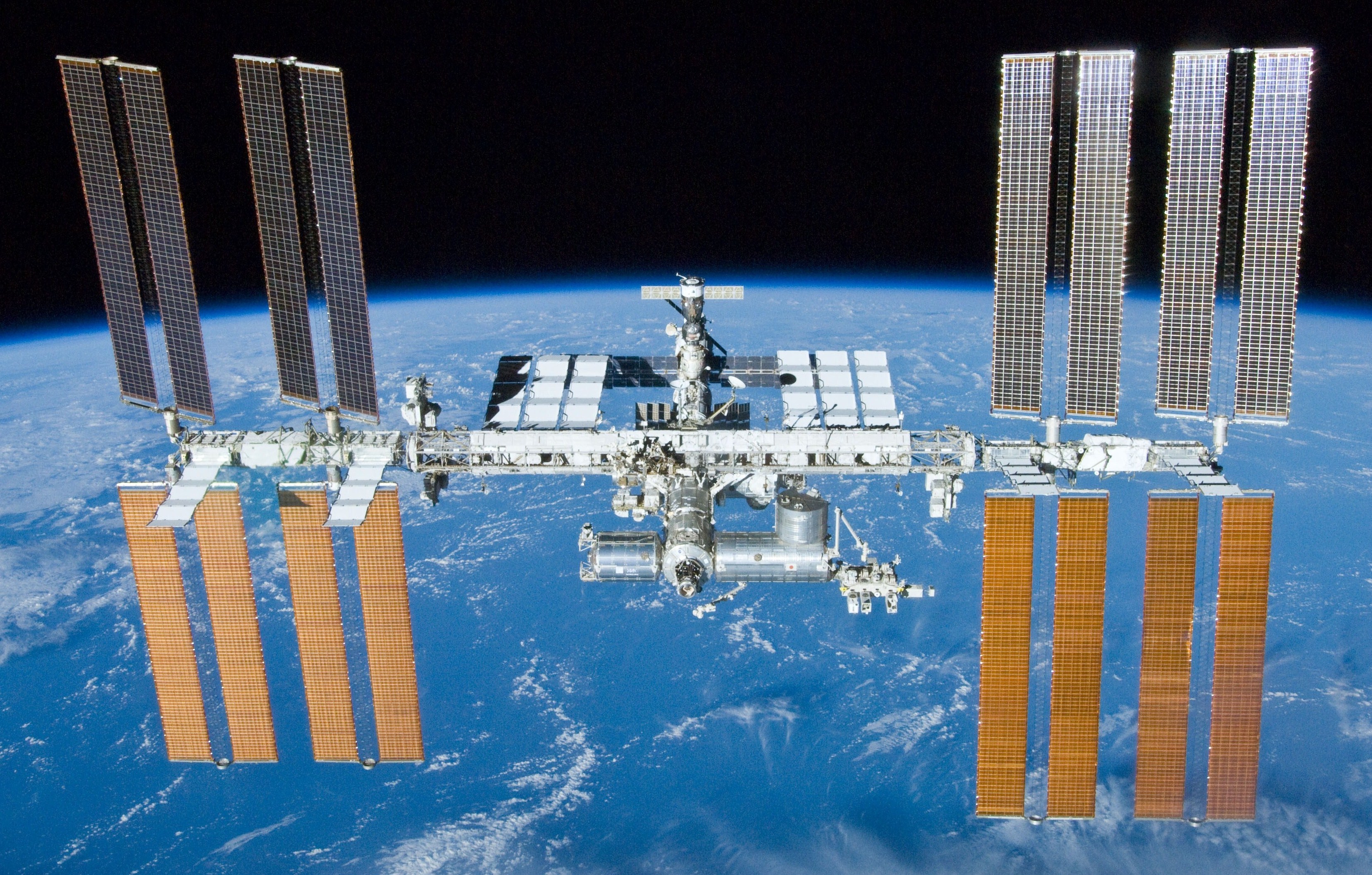
A Vancouver-based company recently announced that it would be streaming images from the ISS to Earth, giving people a rare glimpse of what astronauts in orbit see on a daily basis. In an age where space travel is becoming increasingly public, thanks in part to social media, it now appears that at least one company want to get in on the ground floor of making space more accessible.
Scott Larson, CEO of Urthecast (get it?), said in a recent interview with CBC’s Curt Petrovich how his company is making this happen. This past Sunday, Urthecast launched a platform to the space station aboard the unmanned Russian Progress M-20M spacecraft as part of a delivery of 2.4 tonnes of supplies – including food, water, fuel and scientific equipment.
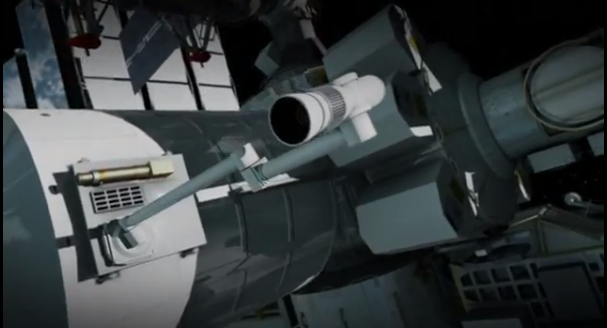
This platform will soon be attached to the outside of the station and augmented with two HD cameras that will allow people to see things on Earth as small as one meter wide. One will be fixed will take a continuous video panorama of Earth 50 kilometers wide as the space station orbits Earth while the other will be a pointable one that customers will be able to aim at a particular spot on Earth, for a price.
These cameras will be launched aboard a different Progress flight on Nov. 20 and attached to the platform upon arrival. Though Urthecast has not specified what kind of fees will be involved for those looking to download pics of Earth, it has claimed that it intends to sell the video to corporations, governments and non-governmental organizations such as the United Nations for a wide range of need.
However, these customers will not include the military since the apparatus will be on the International Space Station, which by law can only be used for “peaceful purposes”. Canadian law also requires the company to shut off the cameras as they pass over sensitive targets, if requested to do so by the federal government. Nevertheless, at least some investors are confident the company will make money of this idea. Since it first went public last month, Urthecast has raised some $46 million.
As part of what the company calls the “world’s first near-live HD video feed of Earth”, their cameras are expected to cover the planet between the latitudes of 51 degrees north (covering northern Canada, Russia and Scandinavia) and 51 degrees south (the southern tip of Chile and Argentina, South Africa and Australia). Once captured, the images will be downloaded to ground stations on Earth and be made available just a few hours later.
So, between the accuracy of the cameras and the range they have to survey the planet, people will be able to capture images of their homes, neighborhoods, and even people that are accurate to a single meter. My advice? Get a portable device, lie down in your driveway, and then punch in your coordinates. And be sure to wave for a long time, so that when you download your images, you can see you waving back at yourself!
In the meantime, check out this video produced by Urthecast, and be sure to check out the company’s website to see how you can get in on this.
Olympic athletes competing for the gold at the 2014 Sochi Winter Games can expect something truly out of this world if they win. According to media reports, the Russian government is planning on using pieces of the Chelyabinsk meteor that broke up over the remote community in the Urals during February of this year.
Scarcely anyone could forget that incident, where a 17 meter (55 foot) meteor entered the Earth’s atmosphere and caused an airburst that damaged buildings, caused 1600 injuries and frightened every living thing in the region. As astronomers collecting fragments and calculating the orbit of the fireball, the incident directed attention towards the need to monitor space rocks that could threaten the Earth.
And it now seems that the Russian government wants to turn that frightening and eye-opening incident into something positive and celebratory. Alexei Betekhtin, the Minister of Culture of the Chelyabinsk Region, had this to say on the subject:
We will hand out our medals to all the athletes who will win gold on that day, because both the meteorite strike and the Olympic Games are the global events.
Using the shards collected by the various scientific expeditions who’s job it was to recover and study the meteor, they have fashioned seven sets of gold medals. The reported sports that will receive these medals include:
Women’s 1,000 meter and men’s 1,500 meter short track
Men’s skeleton
Women’s cross-country skiing relay
Men’s K-125 ski jump
Men’s 1,500 meter speed skating
Women’s super giant slalom
Each one will feature a small chunk of the meteor contained within the gold frame. And it goes without saying that this is an historic first. To date, no single Olympic games has ever sought to include stellar material in any of their medals. Perhaps this is a sign of the times, where global and interstellar events come together so publicly.
No telling as to whether or not this decision was at all influenced by the negative publicity Russia has been getting for its anti-gay legislation in the lead up to the Olympics. Between people being jailed for joining gay advocacy groups and the government’s refusal to prosecute hate crimes committed against homosexuals, there are those who are arguing for a boycott of the Russian Olympics.
But controversy is hardly a new thing when it comes to the Olympics, especially where the human rights records of host nations are involved. For those old enough to remember, the US boycotted the Moscow Olympics in 1980 to protest the Soviet invasion of Afghanistan. Four years later, the Soviets retaliated in kind by boycotting the Olympics being held in Los Angeles.
And of course, one has to remember that Beijing hosted the Summer Games back in 2008, and if human rights were ever a reason to boycott the games, this would have been a prime opportunity to stand on principle. Personally, I think the Russian government needs to get its head out of its ass and join the post-Medieval era, but I suppose political pressure will have to come from sources other than the Olympic committee.
The extent and depth of the NSA’s snooping has been the subject of much scrutiny and controversy of late. And it seems that the more we come to learn about the issue, the worse it gets. In addition to the extensive access the NSA seems to have to our personal data, there’s also the staggering amount of power that is being concentrated in so fe hands, coupled with a serious lack of oversight. Worse yet, it appears the NSA is showing no signs of slowing down.
Just two months ago, the Army Corps of engineers began breaking ground on a new supercomputing facility in Fort Meade, Maryland – the center of the NSA’s cyber operations. Known as the High Performance Computing Center-2, this $860 million data center will span more than 600,000 square feet of space, including 70,000 square feet of technical space. The center is expected to be completed in 2016.
But worse yet is the fact that this is not the only center being built, nor it is even the largest. In addition to the Fort Meade facility, the NSA is also building a massive data center in Utah, a project that will feature up to 1 million square feet of facilities and cost a hefty $1.5 billion. The computers alone will take over 100,000 square feet and the facility will require its own electrical substation to power all the air conditions required.
In truth, the Fort Meade location is only necessary because of the planned facility being built in Utah. Once it is up and running, the NSA will need a separate location where analysts can look over the growing amounts of processed information and material, and in turn make reports and provide recommendations for policy-makers.
Of course, the purpose of these facilities go beyond the mere analysis and storage of information. In addition, the Utah Data Center will also employ new code-breaking capabilities. Given the extent to which modern, high-value information is encrypted – everything from commerce to diplomacy to personal information – the center will be employing the latest code-cracking tools developed by the NSA.
Naturally, the NSA’s tightly-controlled PR department has stated that the purpose of these centers is to protect national security networks and provide U.S. authorities with intelligence and warnings about cyber threats, as part of the Comprehensive National Cybersecurity Initiative (CNCI). However, this has done little to allay fears, and seems like the same song being played on repeat.
As always, the NSA’s stated objective do not address the growing awareness that the NSA has and continues to conduct cyber attacks in foreign countries. As Snowden’s testimony and recent revelations about the US super-secret Cyber Command revealed, American agencies have been conducting far more than just defensive operations in recent years.
All of these efforts began in earnest during the 1990’s and expanded greatly after September 11th, 2001. Much of this has had to do with the staggering increase in the amount of data being transmitted and shared on a daily basis, and not just the issue of terrorism. But what is disturbing is the near-total removal of oversight that began after 9/11 and has continued unabated ever since.
Despite promises that the era of warrantless surveillance was at an end, all attempts to resolve the issue have become marred by what is meant by “electronic surveillance”. In the meantime, the NSA continues to enjoy some rather broad freedoms to monitor and process the information we transmit. And as those abilities continue to grow, we can only hold our breaths and pray they mean it when they say “innocent people need not be worried”.
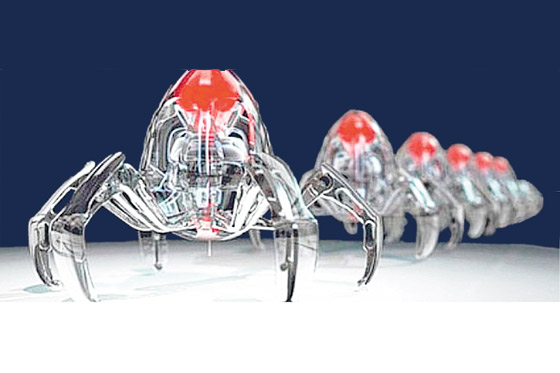
Nanotechnology has long been the dream of researchers, scientists and futurists alike, and for obvious reasons. If machinery were small enough so as to be microscopic, or so small that it could only be measured on the atomic level, just about anything would be possible. These include constructing buildings and products from the atomic level up, with would revolutionize manufacturing as we know it.
In addition, microscopic computers, smart cells and materials, and electronics so infinitesimally small that they could be merged with living tissues would all be within our grasp. And it seems that at least once a month, universities, research labs, and even independent skunkworks are unveiling new and exciting steps that are bringing us ever closer to this goal.
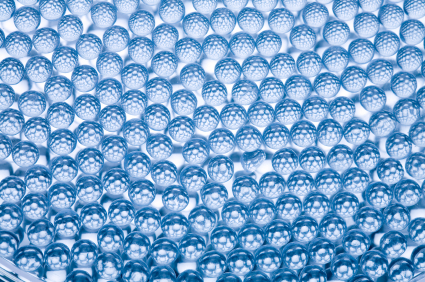
Close-up of a smart sponge
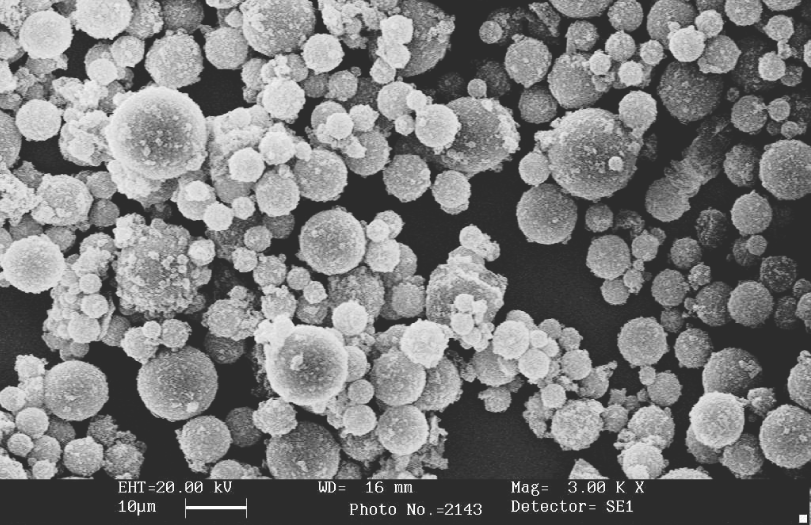
Once such breakthrough comes from the University of North Carolina at Chapel Hill, where biomedical scientists and engineers have joined forces to create the “smart sponge”. A spherical object that is microscopic — just 250 micrometers across, and could be made as small as 0.1 micrometers – these new sponges are similar to nanoparticles, in that they are intended to be the next-generation of delivery vehicles for medication.
Each sponge is mainly composed of a polymer called chitosan, something which is not naturally occurring, but can be produced easily from the chitin in crustacean shells. The long polysaccharide chains of chitosan form a matrix in which tiny porous nanocapsules are embedded, and which can be designed to respond to the presence of some external compound – be it an enzyme, blood sugar, or a chemical trigger.
So far, the researchers tested the smart sponges with insulin, so the nanocapsules in this case contained glucose oxidase. As the level of glucose in a diabetic patient’s blood increases, it would trigger the nanocapsules in the smart sponge begin releasing hydrogen ions which impart a positive charge to the chitosan strands. This in turn causes them to spread apart and begin to slowly release insulin into the blood.
The process is also self-limiting: as glucose levels in the blood come down after the release of insulin, the nanocapsules deactivate and the positive charge dissipates. Without all those hydrogen ions in the way, the chitosan can come back together to keep the remaining insulin inside. The chitosan is eventually degraded and absorbed by the body, so there are no long-term health effects.
One the chief benefits of this kind of system, much like with nanoparticles, is that it delivers medication when its needed, to where its needed, and in amounts that are appropriate to the patient’s needs. So far, the team has had success treating diabetes in rats, but plans to expand their treatment to treating humans, and branching out to treat other types of disease.
Cancer is a prime candidate, and the University team believes it can be treated without an activation system of any kind. Tumors are naturally highly acidic environments, which means a lot of free hydrogen ions. And since that’s what the diabetic smart sponge produces as a trigger anyway, it can be filled with small amounts of chemotherapy drugs that would automatically be released in areas with cancer cells.
Another exciting breakthrough comes from University of California at Berkeley, where medical researchers are working towards tiny, implantable sensors . As all medical researchers know, the key to understanding and treating neurological problems is to gather real-time and in-depth information on the subject’s brain. Unfortunately, things like MRIs and positron emission tomography (PET) aren’t exactly portable and are expensive to run.
Implantable devices are fast becoming a solution to this problem, offering real-time data that comes directly from the source and can be accessed wirelessly at any time. So far, this has taken the form of temporary medical tattoos or tiny sensors which are intended to be implanted in the bloodstreams. However, what the researchers at UofC are proposing something much more radical.
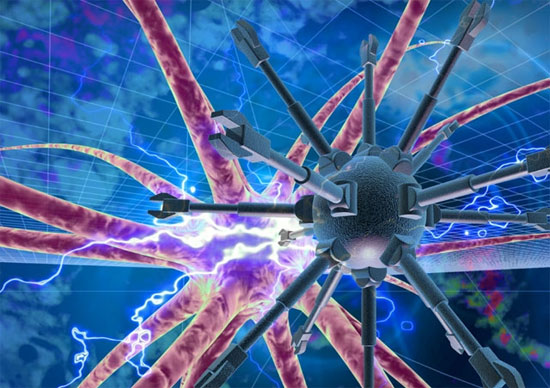
In a recent research paper, they proposed a design for a new kind of implantable sensor – an intelligent dust that can infiltrate the brain, record data, and communicate with the outside world. The preliminary design was undertaken by Berkeley’s Dongjin Seo and colleagues, who described a network of tiny sensors – each package being no more than 100 micrometers – in diameter. Hence the term they used: “neural dust”.
The smart particles would all contain a very small CMOS sensor capable of measuring electrical activity in nearby neurons. The researchers also envision a system where each particle is powered by a piezoelectric material rather than tiny batteries. The particles would communicate data to an external device via ultrasound waves, and the entire package would also be coated in a polymer, thus making it bio-neutral.
But of course, the dust would need to be complimented by some other implantable devices. These would likely include a larger subdural transceiver that would send the ultrasound waves to the dust and pick up the return signal. The internal transceiver would also be wirelessly connected to an external device on the scalp that contains data processing hardware, a long range transmitter, storage, and a battery.
The benefits of this kind of system are again obvious. In addition to acting like an MRI running in your brain all the time, it would allow for real-time monitoring of neurological activity for the purposes of research and medical monitoring. The researchers also see this technology as a way to enable brain-machine interfaces, something which would go far beyond current methods. Who knows? It might even enable a form of machine-based telepathy in time.
Sounds like science fiction, and it still is. Many issues need to be worked out before something of this nature would be possible or commercially available. For one, more powerful antennae would need to be designed on the microscopic scale in order for the smart dust particles to be able to send and receive ultrasound waves.
Increasing the efficiency of transceivers and piezoelectric materials will also be a necessity to provide the dust with power, otherwise they could cause a build-up of excess heat in the user’s neurons, with dire effects! But most importantly of all, researchers need to find a safe and effective way to deliver the tiny sensors to the brain.
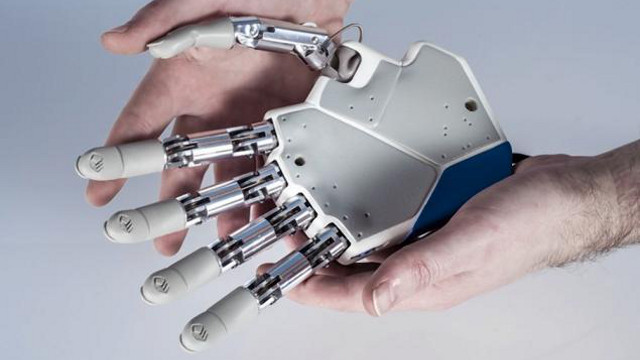
And last, but certainly not least, nanotechnology might be offering improvements in the field of prosthetics as well. In recent years, scientists have made enormous breakthroughs in the field of robotic and bionic limbs, restoring ambulatory mobility to accident victims, the disabled, and combat veterans. But even more impressive are the current efforts to restore sensation as well.
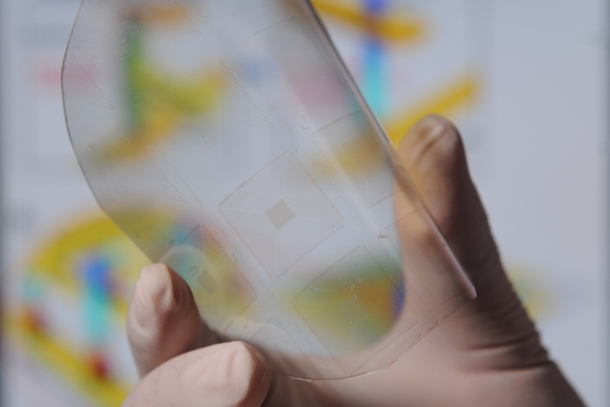
One method, which is being explored by the Technion-Israel Institute of Technology in Israel, involves incorporating gold nanoparticles and a substrate made of polyethylene terephthalate (PET) – the plastic used in bottles of soft drinks. Between these two materials, they were able to make an ultra-sensitive film that would be capable of transmitting electrical signals to the user, simulating the sensation of touch.
Basically, the gold-polyester nanomaterial experiences changes in conductivity as it is bent, providing an extremely sensitive measure of physical force. Tests conducted on the material showed that it was able to sense pressures ranging from tens of milligrams to tens of grams, which is ten times more sensitive than any sensors being build today.
Even better, the film maintained its sensory resolution after many “bending cycles”, meaning it showed consistent results and would give users a long term of use. Unlike many useful materials that can only really be used under laboratory conditions, this film can operate at very low voltages, meaning that it could be manufactured cheaply and actually be useful in real-world situations.
In their research paper, lead researcher Hossam Haick described the sensors as “flowers, where the center of the flower is the gold or metal nanoparticle and the petals are the monolayer of organic ligands that generally protect it.” The paper also states that in addition to providing pressure information (touch), the sensors in their prototype were also able to sense temperature and humidity.
But of course, a great deal of calibration of the technology is still needed, so that each user’s brain is able to interpret the electronic signals being received from the artificial skin correctly. But this is standard procedure with next-generation prosthetic devices, ones which rely on two-way electronic signals to provide control signals and feedback.
And these are just some examples of how nanotechnology is seeking to improve and enhance our world. When it comes to sensory and mobility, it offers solutions to not only remedy health problems or limitations, but also to enhance natural abilities. But the long-term possibilities go beyond this by many orders of magnitude.
As a cornerstone to the post-singularity world being envisioned by futurists, nanotech offers solutions to everything from health and manufacturing to space exploration and clinical immortality. And as part of an ongoing trend in miniaturization, it presents the possibility of building devices and products that are even tinier and more sophisticated than we can currently imagine.
It’s always interesting how science works by scale, isn’t it? In addition to dreaming large – looking to build structures that are bigger, taller, and more elaborate – we are also looking inward, hoping to grab matter at its most basic level. In this way, we will not only be able to plant our feet anywhere in the universe, but manipulate it on the tiniest of levels.
As always, the future is a paradox, filling people with both awe and fear at the same time.
Mars has been quite the source of news in recent weeks. And perhaps its the fact that I got to witness some truly interesting astronomical phenomena yesterday – i.e. Sunspots through a telescope – but all of them seem to have caught my attention at once. And given their importance to the ongoing exploration of Mars and our Solar System, I would be remiss if I didn’t pass them on.
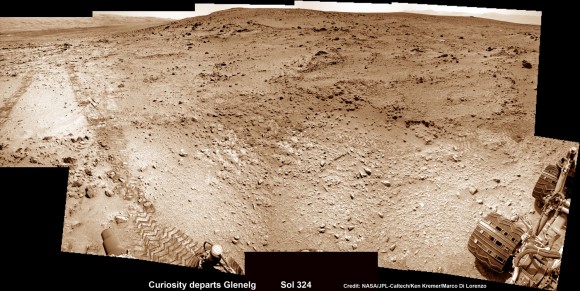
The first bit of news began late last month, when the High Resolution Imaging Science Experiment (HiRISE) camera on the Mars Reconnaissance Orbiter snapped this image of the Curiosity rover as it made its way through the “Glenelg” area of Gale Crater. The rover appeared as a little more than a blueish dot in the picture, but much more visible was the rover’s tracks.
This unique photo was made possible thanks to a little maneuvering and a some serious alignment. Basically, the folks working at the Mars Science Laboratory were able to bring the Mars Reconnaissance Orbiter (MRO) into position between the Sun and curiosity, bringing the Sun, MRO, and the rover on the surface were in a near-perfect alignment.
HiRISE principal investigator Alfred McEwen addressed the photos on the HiRISE website and explained how it was all made possible:
The rover tracks stand out clearly in this view, extending west to the landing site where two bright, relatively blue spots indicate where MSL’s landing jets cleared off the redder surface dust. When HiRISE captured this view, the Mars Reconnaissance Orbiter was rolled for an eastward-looking angle rather than straight downward. The afternoon sun illuminated the scene from the western sky, so the lighting was nearly behind the camera. Specifically, the angle from sun to orbiter to rover was just 5.47 degrees.
Curiosity has since moved on and is now heading towards the large mound in Gale Crater officially named Aeolis Mons (aka. Mount Sharp).
Which brings us to the second news item in this week’s Mars bulletin. It seems that since July 4th, after finishing up a seven months survey in Yellowknife Bay, Curiosity has achieved a long-distance driving record as it made its way to Mount Sharp. This took place on Saturday July 21st (Sol 340), when Curiosity drove a distance of 100.3 meters (109.7 yards) in a single day.
To give you some perspective, that’s the length of a football field (at least in the US), a distance that is without equal since she first landed inside the Gale Crater nearly a year ago. The previous record for a one-day drive was about half a football field – 49 meters (54 yards) – and was achieved on Sept. 26, 2012 (Sol 50), roughly seven weeks after Curiosity made its tense, nail-biting landing.
Paolo Bellutta, a rover planner at NASA’s Jet Propulsion Laboratory, Pasadena, Calif, explained what made the feat possible in a statement:
What enabled us to drive so far on Sol 340 was starting at a high point and also having Mastcam images giving us the size of rocks so we could be sure they were not hazards. We could see for quite a distance, but there was an area straight ahead that was not clearly visible, so we had to find a path around that area.
A combination of increased experience by the rover’s engineers and a series of intermediate software upgrades have also played a key role in getting Curiosity on its way to the 5.5 kilometer (3.4 mile) high Mount Sharp. This is expected to improve even more as soon as new driving software called autonomous navigation (or autonav) finishes development and is incorporated.
Following another lengthy drive of 62.4 meters (68.2 yards) on Wednesday, July 23 (Sol 342), the mission’s total driving distance stands at 1.23 kilometers (0.81 mile) so far. But Mount Sharp still lies about another 8 km (5 miles) away at this point, so we can be expect to be hearing plenty from the rover between now and when it arrives.
For the record, it has already been discovered that the mountain contains vast caches of minerals that could potentially support a habitable environment. So when Curiosity arrives, we can expect another string of exciting finds!
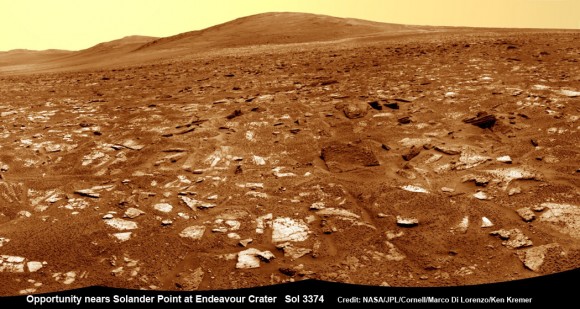
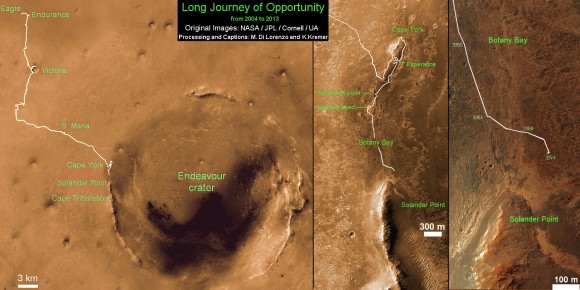
And it is this subject of mountain goals which brings me to the last, but by no means least, of the Martian updates. While Curiosity has been making its way towards Mt. Sharp to conduct research on potentially habitable environments, Opportunity is just days away from reaching Solander Point, another Martian mountain which NASA seeks to learn more about.
This comes on the heels of the rover’s ten year, ongoing mission that was only ever expected to last ninety days. According to an update from Ray Arvidson earlier today, the mission’s deputy principal scientific investigator from Washington University in St. Louis, the rover is now just 180 meters away from the new mountain.
As NASA had previously stated, Solander Point represents ‘something completely different’ for the rover, being the first mountain it will ever climb. What’s more, the mountains mineral wealth may possess the key chemical ingredients necessary to sustain Martian life forms, and the area exhibits signatures related to water flow.
In many ways, you could say Solander Point represents a chance for the Mars Science Laboratory to find the elusive “organic molecules” they’ve been searching for since Curiosity first landed. And if it’s the veteran rover that finds the first hard evidence of their existence, it would be quite the feather in the Opportunity team’s cap.
But before moving onto the first leg of ascent, Arvidson explained that the rover will be making a brief pause in its current location to conduce some exciting experiments. Thanks to observations made of the area by the Mars Reconnaissance Orbiter with its CRISM instrument (Compact Reconnaissance Imaging Spectrometers for Mars), the rover will be conducting some on-the-spot analysis to see if there is indeed evidence of water.
This past spring, Opportunity made the historic discovery of clay minerals and a habitable environment on a low hill called Cape York, the rover’s prior stop along the rim of Endeavour Crater. Solander was selected as the robot’s next destination because it also offers a goldmine of scientific data. Another reason was because its north facing slopes will be a boon to Opportunity’s solar wings, ensuring it more power before Martian winter sets in.
But since Opportunity is currently sitting on a healthy supply of power and has some time before the onset of her 6th Martian winter, the team decided to take a small detour to the southeast and spend several days exploring the area for more evidence of water-bearing minerals.
If successful, this will be yet another accomplishment for the rover during its long tenure of service to NASA. Today marks the 3380th day of continuous service for the rover – aka. Sol 3380 – a mission which has resulted in numerous scientific finds, over 182,000 images, and a driving distance of roughly 38 kilometers (23.6 miles). This, as already mentioned, puts Opportunity in the top spot for the longest distance traveled on another planet.
Yes, it seems that the Red Planet is certainly doing all it can to keep explorers and scientists intrigued. No telling what we might learn between now and the point when manned missions take place, and human astronauts are able to see the surface and study its mysteries close up. Personally, I’m hoping for signs of existing supplies of water, not to mention those tricky organic molecules. If settlement and terraforming are ever to take place, we need to know we’ve got something to work with!
For those who follow my site, or just pay attention to a reliable news source, you may recall that NASA announced an opportunity to take part in a long-range photo op. REALLY long range. A few weeks ago, in an attempt to raise awareness about Jupiter and space exploration, NASA announced that the Cassini Space Probe would be rounding Saturn and snapping photos of a distant Earth.
The worldwide “Wave at Saturn” campaign encouraged people to look up at the skies as the probe took its shots. Junior astronomers were also encouraged to watch with their telescopes to see if they could spot the distant satellite performing its route around the massive, ringed planet. This marked the first time that NASA was able to give the people of Earth advanced warning about a space photo op, and the turnout was impressive.
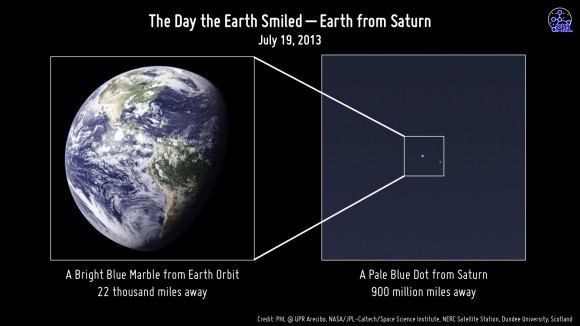
Granted, North America and part of the Atlantic Ocean were the only illuminated parts of Earth at the time, but NASA claims that more than 20,000 people came out to wave at Saturn and post pictures of themselves online. Given the enormous distance involved, Earth itself appeared only 1.5 pixels wide in the photos. So congratulations if you got in the picture, but don’t expect to be able to see you face.
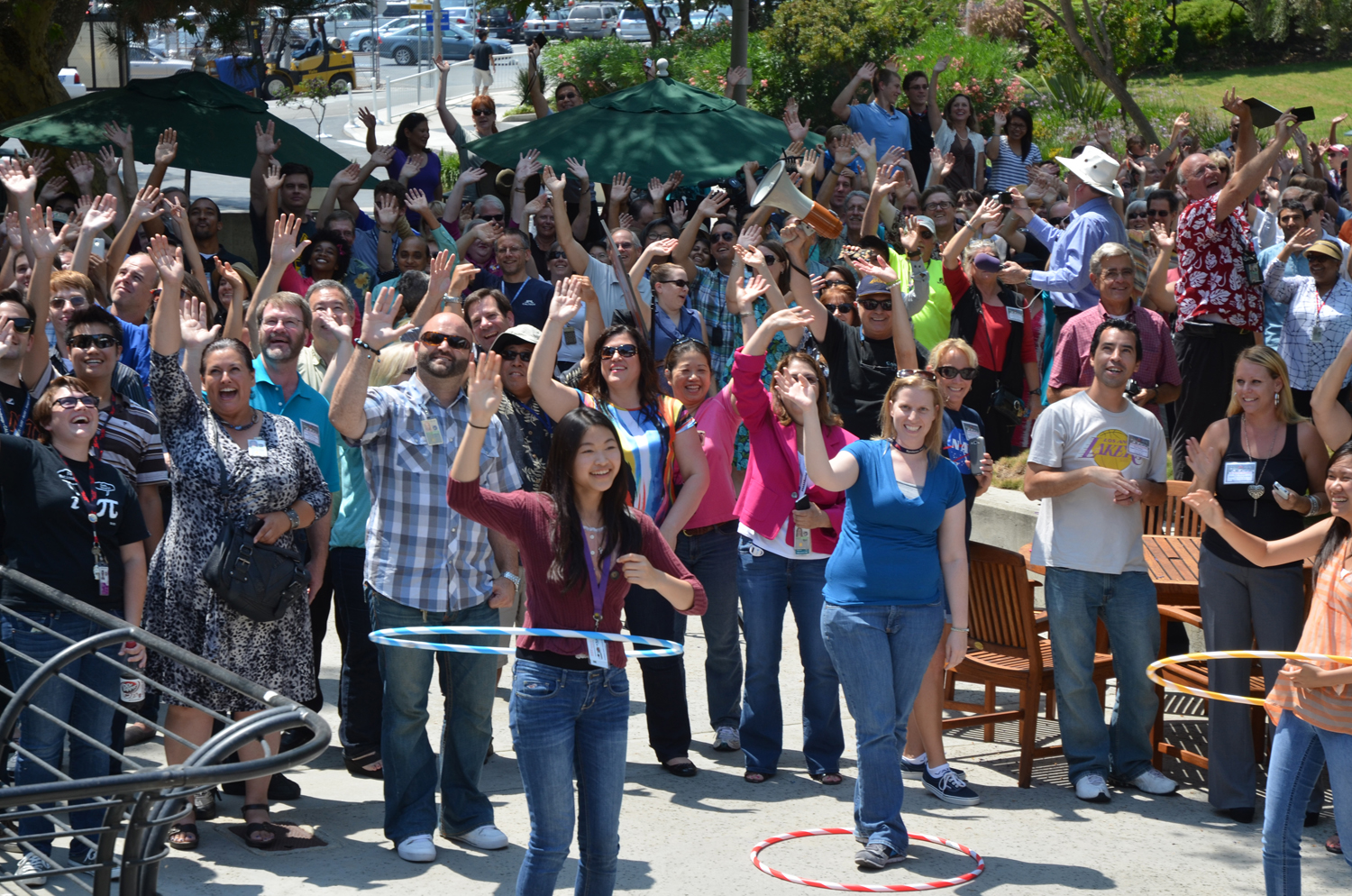
Not to be left out, members of NASA’s Jet Propulsion Laboratory in Pasadena gathered outside of the facility to wave at Cassini on July 19th as it rounded the Saturnalian system and snapped shots of North America. Camping out on the front lawn, researchers and scientists set up a pavilion for the afternoon and enjoyed some outdoor fun until the moment arrived to wave at the heavens.
After being beamed back to Earth from 1.5 billion km away (over a billion miles), NASA science teams got right to work processing the many photos shot by Cassini so they could create individual color composites and a panoramic view of the ‘pale blue dot’ of Earth as well as the entire Saturnalian system. And as you can see from the image posted at the beginning of this article, the first color composite was pretty damn spectacular!
Cassini took a total of 323 images using different spectral filters. The snapshots it took of Earth happened between 2:27 and 2:42 p.m. PDT on Friday, July 19 from a distance of about 1.44 billion kilometers (898 million miles). The images show the Earth and the Moon as dots barely about a pixel wide but do reveal the ‘pale blue dot’ that is home to all of humanity and our whitish colored neighbor.
Distant views of the Earth from robotic space probes, especially from the outer reaches of our Solar System, are few and far between, and are therefore events for space and astronomy enthusiasts and everyone else to savor. The last time Cassini took mosaic pictures of Saturn and Earth was back in 2006, and those were pretty spectacular too. But on this occasion, the benefits went beyond stunning photographs.
Linda Spilker, Cassini project scientist of NASA’s Jet Propulsion Laboratory, explained:
One of the most exciting Cassini events in 2013 will be the unusual opportunity on July 19 to image the whole Saturn system as it is backlit by the sun. With Saturn covering the harsh light of the sun, we will be gathering unique ring science and also catching a glimpse of our very own home planet.
Coincidentally, the first humans (Neil Armstrong and Buzz Aldrin) set foot on the Moon 44 years ago nearly to the day of Cassini’s new images on July 20, 1969. In short, this occasion reminds us that not only do we live in a very vast universe, but that we are part of a very proud and ongoing tradition of exploration.
Today, I achieved a personal first and got to see an astronomical phenomena that few people will. While attending an open house event at my local Aviation Museum, I managed to meet up with a man who had set up a stargazing station and was showcasing some serious equipment. After waiting my turn, I got to peer through his special telescope with a sun filter. And what I saw, as the title would suggest, was something truly amazing – sunspots!
As some may know, sunspots have remained something of a mystery to astronomers and philosophers until the Scientific Revolution of the 16th century. It was at this time that Galileo observed them using his own telescope, which he did by projecting the image onto sheets of paper and recording the imperfections in the light.
The discovery was important in helping to disprove the prevailing theory that the Earth was at the center of the universe – aka. the Geocentric theory. Up until this time, European philosophers were living under the impression that the Sun, like all celestial bodies that were believed to orbit the Earth, was a perfect sphere. By showing it to be riddled with imperfections, Galileo placed an additional nail in the philosophical basis of this idea.
This in turn helped pave the way for the acceptance of Copernicus’ theory of a Heliocentric universe. As with his observations that Jupiter had its own set of moons, that the Moon itself did not have a polished crystalline surface, and that Copernicus’ theory resolved numerous logical inconsistencies in the other model, Galileo helped to establish the field of truly scientific astronomy.
Today, I learned that observing sunspots continues to be a difficult thing, since direct observation with a telescope is impossible without sun filter. Not only that, but many people mistake high-magnification for high-power, which in turn leads to images that are not of the best quality. And observing them can by difficult since they go through cycles.
As the kind host of the solar observation explained, and this NASA graph shows, sunspot activity goes through a cycle that repeats every eleven years. As we are currently at the edge of a peek in the cycle, its prime time to get a look at sunspots in the sky. The last time anyone could get a good look was in 2001, and the next opportunity won’t come until 2023.
So I feel pretty privileged, both as a geeky, space-enthusiast and a regular person. If you know someone who has access to a telescope with a solar filter, or just happen to live near an observatory that conducts tours, get out there and spot those surface imperfections. I’m not exaggerating when I say its a rare treat!

 According to a recent study in Nature Biotechnology, a significant leap has been made towards the curing of blindness. Using stem cells, researchers at the Moorfields Eye Hospital and University College London claim that the part of the eye which actually detects light can be repaired. An animal study revealed that it could be done, and human trials are now a realistic prospect.
 However, with ongoing trials, the results remain limited. Of the 200,000 or so stem cells injected into the eyes of the blind mice, only about 1,000 cells actually hooked up with the rest of the eye. Still, the margin for success and the fact that they were able to rehabilitate receptors thought to be dead was quite the accomplishment.
 Whereas reversing something like dementia requires stem cells to hook up and repair far more cells across the brain, light sensing cells are easier to deal with, since they only have to pass their electrical message to one or more cells. What’s more, the immune system is relatively weak in the eye, which means the chances for stem cell rejection.