Latest Articles Over At Universe Today!

center_universe2As the title would suggest, my third and fourth articles have just been published over at Universe Today. First off, let me assure people that I plan to post a link to UT in the near future so I don’t feel the need to do this every time a new article comes out. But since this is still a new experience to me, I naturally feel the need to share whenever a new one is published.

The first of the two, which was published on Monday, deals with a recent determination made about the source of the Moon’s water. This is based on research conducted by scientists over at the National Museum of Natural History in Paris. Back in 2009, India’s Chandrayaa-1 probe conducted a near-infrared survey of the Moon during a flyby that showed signs of surface water.

moon_waterAfter years of speculation that claimed that the surface water – which exists strictly in icy form – was deposited there by meteors and comets, the National Museum team concluded that its actually formed by solar wind interacting with oxygen in the Moon’s surface dust. Quite the odd little occurrence; but then again, even Mercury appears to have icy spots on it’s molten surface.

www.universetoday.com/115215/water-on-the-moon-was-blown-in-by-solar-wind/

The second is about a recent collaboration between NASA and SpaceX. While the latter was testing their Falcon 9 rockets, NASA filmed the performance using Infrared cameras. The information gleamed from this is helping SpaceX to develop their reusable rocket, but will also help NASA to figure out how they will land habitats and heavy equipment on the surface of Mars.

NASA_thermal1Sort of a win-win scenario, one that shows how the public and private sector are working together like never before to make the future of space exploration happen. And it’s another indication of just how serious NASA and its partners are in making a mission to Mars a reality.

www.universetoday.com/115408/how-nasa-and-spacex-are-working-together-to-land-on-mars/

Feel free to check them out, and stay tuned for the next subject of interest: Dark Matter Emanating From The Sun!

Bad New from Mars: First Colonists Doomed!

Mars_exploreWith the exploration of Mars continuing apace and a manned missions looming, there has been an explosion of interest in the idea of one day settling the planet. As the non-profit organization known as Mars One can attest, many people are  interested in becoming part of a mission to colonize the Red Planet. In fact, when they first went public, some 200,000 people signed on to become part of the experience.

The fact that the trip would be one-way and that the  plans for getting them there did not yet exist was not an deterrent. But if a recent study from MIT is to be believed, those who choose to go will and have the experience televised will be in for a rather harsh experience. According to a feasibility study produced by researchers at the Institute, the plan has potentially deadly and astronomically expensive flaws.

mars_revelationspaceAfter analyzing the Mars One mission plan, the MIT research group found that the first astronaut would suffocate after 68 days. The other astronauts would die from a combination of starvation, dehydration, or incineration in an oxygen-rich atmosphere. The analysis also concludes that 15 Falcon Heavy launches – costing around $4.5 billion – would be needed to support the first four Mars One crew.

The technology underpinning the mission is rather nebulous; and indeed, that’s where the aerospace researchers at MIT find a number of potentially catastrophic faults. While the technology to set up a colony on Mars does technically exist, most of it is at a very low technology readiness level (TRL) and untested in a Mars-like environment. And the prediction that things will be worked out with time and crowdfunding does not appear to be sufficient.

Mars_one2Mars One will rely heavily on life support and in-situ resource utilization (ISRU) – squeezing water from Martian soil and oxygen from the atmosphere. But these technologies are still a long way off large-scale, industrial use by a nascent human colony on Mars. NASA’s next Mars rover will have an ISRU unit that will make oxygen from the Red Planet’s atmosphere of CO2 – but that rover isn’t scheduled to launch until 2020, just two years before the planned launch of Mars One.

Originally, Mars One’s sign-up list included some 200,000 candidates. That number has now been whittled down to 705 – a fairly even mix of men and women from all over the world, but mostly the US. Several teams of four astronauts (two men, two women) will now be assembled, and training will begin. The current plan is to send a SpaceX Falcon Heavy rocket carrying the first team of four to Mars in 2022 – just eight years from now. 

spaceX-falcon9The whole thing will be televised as a reality TV show, an instrinsic part of the plan since much of the funding is expected to come from media sponsors and advertisers. In the interim, a number of precursor missions – supplies, life-support units, living units, and supply units – will be sent to Mars ahead of the human colonizers. More colonists will be sent fairly rapidly thereafter, with 20 settlers expected by 2033.

The new feasibility study was led by Sydney Do, a PhD candidate at the Massachusetts Institute of Technology who has done similar studies on other space missions. Do and his team ran a computer simulation based on publicly available information about the Mars One plan and the kinds of technologies it would rely on. The researchers entered data about the crew’s age, weight and activities to find out how much food, oxygen and water they would need.

Mars_GreenhouseThey took into account information from Mars One, such as its plan that “food from Earth will only serve as emergency rations” and the astronauts will mainly eat fresh food they grow themselves. The simulation monitored conditions in the Mars One habitat over 26 months – the amount of time between spaceships from Earth that would resupply them – or until the death of a crew member, whichever came first.

The results of their study were presented in a paper at the International Astronomic Union conference in Toronto last month. They suggest that serious changes would need to be made to the plan, which would either call for the astronauts to grow all their plants in a unit isolated from the astronauts’ living space to prevent pressure buildup in the habitats, or import all food from Earth instead of growing it on Mars.

mars_one2The researchers recommend the latter, as importing all the necessary food along with the first wave of colonists (not including the costs of development, operations, communications, and power systems) would cost $4.5 billion and require 15 Falcon 9 Heavy Rockets to transport it. Comparatively, flying all the equipment needed for the astronauts to grow their own food indefinitely which cost roughly $6.3 billion.

On top of all that, Do and his research staff have concluded that the project will not be sustainable financially. While Mars One says each subsequent manned mission will cost $4 billion, Do’s study found that each mission would cost more than the one before, due to the increasing number of spare parts and other supplies needed to support an increasing number of people.

mars_roverNaturally, Mars One replied that they are not deterred by the study. CEO and co-founder Bas Landorp – who helped develop the mission design – said the plan was based on the company’s own studies and feedback from engineers at aerospace companies that make space systems, such as Paragon Space Development and Lockheed Martin. He added that he and his people are “very confident that our budgets, timelines and requirements are feasible”.

In any case, the study does not claim that the plan is bogus, just that it may be overreaching slightly. It’s not unreasonable to think that Mars One could get people to Mars, but the prospects for gradually building a self-sustaining colony is a bit farfetched right now. Clearly, more time is needed to further develop the requisite technologies and study the Martian environment before we start sending people to live there.
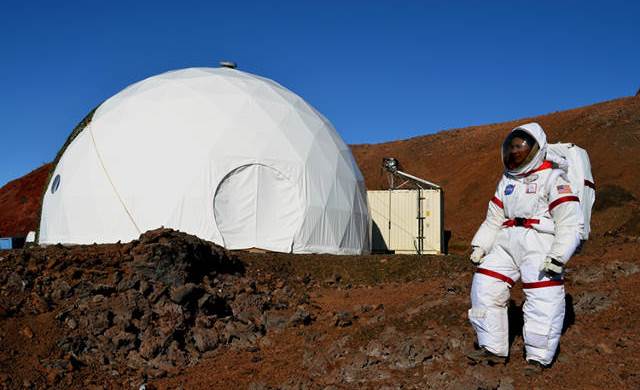
Mars_simulationOh well, people can dream can’t they? But the research and development are taking place. And at this point, it’s a foregone conclusion that a manned mission to Mars will be happening, along with additional robot missions. These will help lay the groundwork for eventual settlement. It’s only a question of when that could happen…

Sources: cbc.ca, extremetech.com, web.mit.edu

The Future is Here: Light-Bending Invisibility Cloaks!

predator-invisibilityInvisibility cloaks are fast becoming a reality. That is to say, they are moving out of the realm of science fiction and the theoretical and into the realm of science fact. However, issues remain when it comes to developing this technology for real-world applications. Outside of adaptive camouflage that merely allow objects to blend into the background, true invisibility cloaks suffer from the problem of angles.
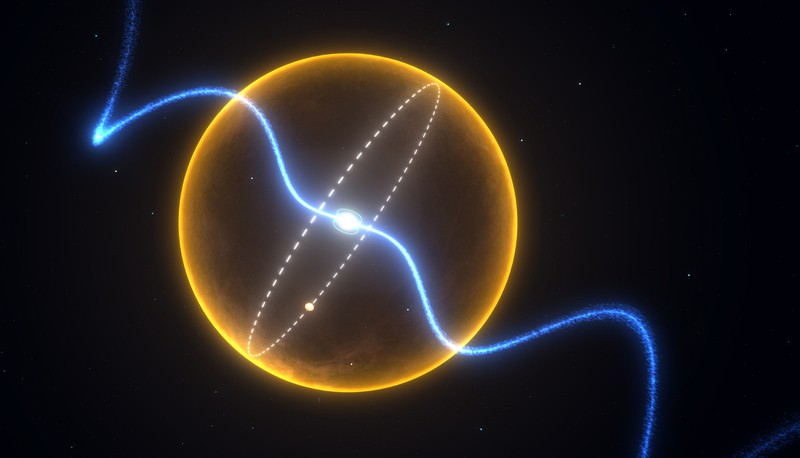
To break it down, invisibility cloaks are based on the scientific principle of bending light around an object, thereby rendering it invisible to sight. The problem with every device based on this principle built to date is that it only worked if both the viewer and whatever was cloaked remained still. This, of course, is not entirely practical since it means that a cloaked object would only be invisible from one angle.

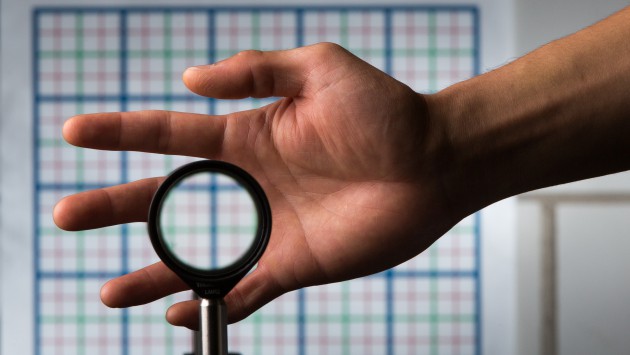
invisibility_cloakHowever, the latest effort to create a true cloak – developed at the University of Rochester – not only overcomes some of the limitations of previous devices, but relies on inexpensive, readily available materials in a novel configuration. For the first time ever, researchers have made a cloaking device that works multidirectionally in three dimensions and uses no specialized equipment, but four standard lenses.

As well as at least partially solving the viewpoint problem, the Rochester cloak also leaves the background undisturbed, without any warping, as has appeared in other devices. As Joseph Choi, a professor of physics at Rochester University John Howell, explained:

There’ve been many high tech approaches to cloaking and the basic idea behind these is to take light and have it pass around something as if it isn’t there, often using high-tech or exotic materials. This is the first device that we know of that can do three-dimensional, continuously multidirectional cloaking, which works for transmitting rays in the visible spectrum.

invis_cloak_rochIn order to both cloak an object and leave the background undisturbed, the researchers determined the lens type and power needed, as well as the precise distance to separate the four lenses. To test their device, the off-the-shelf lenses were placed at such a distance from each other so as to allow the light to act in specific ways – first focusing it down to a fine point through one lens, then again through the next, and then repeated.

This bends the light so that an object in the ring-shaped cloaking field is not visible to a person peering through the array. To be sure, they placed the object being viewed through the lenses in front of a grid background, and then shifted the viewing angle. In all cases, with the grid background appeared perfectly normal, with no discontinuity appearing behind the cloaked object.

invisibility_cloak1Their simple configuration improves on other cloaking devices, but it’s not perfect. As Choi explained, the the cloak bends light and sends it through the center of the device, so the “on-axis region cannot be blocked or cloaked.” This means that the cloaked region is shaped like a doughnut. In addition, the cloak has edge effects, but these can be reduced by using larger lenses, and the team has some more complicated designs to address the other issues.

For the time being, the technology isn’t exactly workable as far as Predator-style invisibility cloaks are concerned. However, Howell and Choi had some more benign applications in mind, such as allowing surgeons to operate without their view being obstructed by their own hands. Also, such a device could be used to allow truck drivers or even regular commuters see through their vehicle’s blind spots.

And, because the setup is so simple, anyone can grab some lenses and give it a try. You can find instructions for doing so on the Rochester University website, and a paper describing the research on arXiv. And of course, the University of Rochester was sure to provide a video of the cloak being tested out. Check it out below:


Sources:
cnet.com, arxiv.org, rochester.edu

News from Space: We’re Going to Mars!

marsAs part of their desire to once again conduct launches into space from US soil, NASA recently awarded commercial space contracts worth $6.8 billion to Boeing and SpaceX. But beyond restoring indigenous spaceflight capability, NASA’s long-term aim is clearly getting a manned mission to Mars by 2030. And in assigning the necessary money to the companies and visionaries willing to help make it happen, they just might succeed.

As per the agreement, Boeing will receive $4.2 billion to finance the completion of the CST-100 spacecraft, and for up to six launches. Meanwhile, SpaceX is receiving $2.6 billion for its manned Dragon V2 capsule, and for up to six launches. NASA expressed excitement its collaboration with both companies, as it frees the agency up for bigger projects — such the development of its own Space Launch System (SLS).

elon-musk-on-mars-curiosity-self-640x353One person who is sure to be excited about all this is Elon Musk, SpaceX founder, CEO, and  private space visionary. With this big infusion of cash, he has apparently decided that it’s time to bring his plans for Mars forward. Ever since 2007, Musk has indicated a desire to see his company mount a manned mission to Mars, and now he may finally have the resources and clout to make it happen.

These plans include flying astronauts to Mars by 2026, almost a decade before NASA thinks it will. By late 2012, he even spoke about building a Mars Colony with a population in the tens of thousands, most likely established sometime during the 2020’s. As of this past year, he has also revealed details about a Mars Colonial Transporter (MCT), an interplanetary taxi that would be capable of ferrying 100 people at a time to the surface.

Fan art concept of the MCT
Fan concept art of the MCT

And then in February of this year, SpaceX began developing the MCT’s engines. Known as the Raptor, this new breed of large engine reportedly has six times the thrust of the Merlin engines that power the second stage of the Falcon 9 rocket. Now that the company has the financial resources to dream big, perhaps the MCT might move from the development stage to prototype creation.

And there is certainly no shortage of desire when it comes to sending people to the Red Planet. Together with Mars Society president Robert Zubrin, and Mars One co-founder Bas Lansdorp, crowdfunded organizations are also on board for a manned mission. The case for settling it, which Musk himself endorses, is a good one – namely, that planting the seed of humanity on other worlds is the best way to ensure its survival. 

Earth_Mars_ComparisonAnd as Musk has stated many times now, a manned mission Mars is the reason there is a SpaceX. Back in 2001, while perusing NASA’s website, he was perturbed to find that the space agency had nothing in the way of plans for a mission to Mars. And the best time to go is probably in about 15 or 20 years, since Mars will be at its closes to Earth by then – some 58 million kilometers (36 million miles).

During this window of opportunity, the travel time between Earth and Mars will be measured in terms of months rather than years. This makes it the opportune time to send the first wave of manned spacecraft, be they two-way missions involving research crews, or one-way missions involving permanent settlers. Surprisingly, there’s no shortage of people willing to volunteer for the latter.

Mars_one1When Mars One posted its signup list for their proposed mission (which is slated for 2025), they quickly drew over 200,000 applicants. And this was in spite of the fact that the most pertinent details, like how they are going to get them there, remained unresolved. Inspiration Mars, which seeks to send a couple on a round trip to Mars by 2021, is similarly receiving plenty of interest despite that they are still years away from figuring out all the angles.

In short, there is no shortage of people or companies eager to send a crewed spaceship to Mars, and federal agencies aren’t the only ones with the resources to dream big anymore. And it seems that the technology is keeping pace with interest and providing the means. With the necessary funding now secured, at least for the time being, it looks like the dream may finally be within our grasp.

Though it has yet to become a reality, it looks like the first Martians will actually come from Earth.

Sources: extremetech.com, (2)sploid.gizmodo.com, mars.nasa.gov

The Future of Firearms: Legally Homemade Metal Guns

Metal-Gun-640x353Ever since 3-D printing became a commercially available service, Defense Distributed has sought to use the technology to create firearms. And in their latest act of circumventing the law, the online, open-source, libertarian group has created another means of building homemade firearms. But unlike the Liberator – their previous single shot incarnation – this one doesn’t involve making guns from 3-D printed plastic.

The group’s latest invention is known as the Ghost Gunner – a small, computer numerical control (CNC) milling machine that they used to create an aluminum lower receiver for an AR-15 rifle. This device, which costs about $1200, allows people with no gunsmith training to assemble a working assault rifle at home with no licensing or serial number. And for the moment, it’s completely legal.

metal-gun-inline22The Ghost Gunner itself is a small box that measures about one foot on each side and contains an Arduino controller and a custom-designed spindle that holds a steel carbide drill bit. It works like any other CNC machine – the drill spins up and moves in three dimensions to carve items out of blocks of metal. However, this machine is specifically intended to make an AR-15 lower receiver.

That’s the part of a gun that connects the stock, barrel, and magazine – and the part that’s regulated by the ATF and assigned a serial number. Selling it without a license is illegal, but making it yourself is perfectly fine. An untraceable gun built without a serial number is often called a “ghost gun” by gun control advocates. Hence why Defense Distributed chose to appropriate the term, to deliberately generate controversy.

Cody-Wilson-Defense-Distributed-Wiki-Weapon-3-d-printed-gunThis is just the latest example of Defense Distributed pushing the bounds of home manufacturing technology to make a point. Cody Wilson, the group’s founder, is an openly radical, libertarian who has repeatedly stated that mass shootings and gun-related violence are simply the price people pay for freedom. In addition, his group has openly stated that they would not allow tragedies like the Sandy Hook Elementary School shooting deter them.

Manufacturing homemade weapons has always been his way of showing that technology can evade regulations, thus making the state obsolete. The group’s previous weapons – the 3D-printed Liberator gun – was more of a political statement. The gun itself was neither effective or practical; but then again, it wasn’t meant to be. This proof-of-concept weapon was simply meant to show that a new era of manufacturing is upon us.

liberatorThe Liberator itself is prone to failure and usually only manages a few poorly aimed shots before breaking down. In designing a cheap CNC machine specifically to make gun parts, Defense Distributed is delivering a viable weapon at a fraction of the cost of other CNC machines (which cost many thousands of dollars). If you can make a lower receiver, all the other parts can be ordered online cheaply and legally.


The Ghost Gunner is capable of making anything that fits in the build envelope, which accounts for several gun parts that go into assembling a working assault weapon or handgun. The only requirement is the parts be created with Defense Distributed’s Physibles Development SDK (pDev) and distributed as a .dd file. In that respect, it’s not much different than any number of 3D printers.

3dmetalgun-640x353Once again, Defense Distributed has proven that, for better or worse, we live in an entirely new era of manufacturing. In the past, a person needed considerable training if they wanted to make their own firearm. Nowadays, one needs only the right kind of hardware, software, and access to the necessary files. And as always seems to be the case in the digital age, the law is miles behind the curve.

One can expect the law will be upon Defense Distributed once again and place a ban on their Ghost Gunner. However, it goes without saying that Wilson and his colleagues will simply try again some other way and the fight between regulators and home manufactures will continue. But regardless of the issue of firearms, this is an indication of the age we now live in, where distributed systems are making for some rather interesting and fearful possibilities.


Source: extremetech.com

The Future is Here: Fabric Circuit Boards

fabric_circuitboard1Chances are that almost every piece of electronics handled by someone today is some sort of printed circuit board (PCB). PCBs are an essential part of modern technology, but as technology improves and moves into the realm of the wearable and the flexible, their rigid and flat design is being reconsidered. In addition to looking for more flexible materials, there’s also a desire to break the 2-dimensional mold.

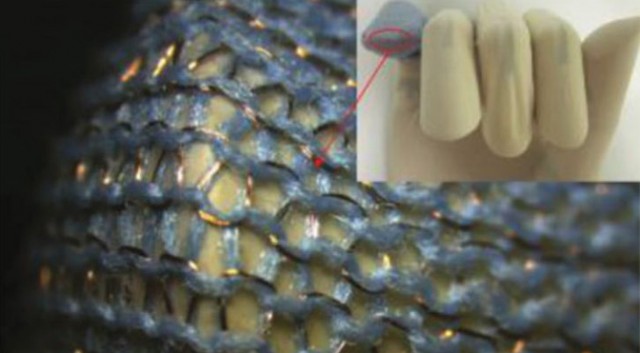
That’s precisely what researchers at the Hong Kong Polytechnic University were thinking of. Using a revolutionary, never-before-seen concept known as computerized knitting technology, they developed a new line of fabric circuit boards (FCBs).  To make them, lead scientists Qiao Li and Xiao Ming Tao at HKPU relied a combination of conductive fibrous metal materials and traditional fabric.

fabric_circuitboardWithin the FCB, the wires are the equivalent of the circuits on a regular board, and the fabric acts as the mounting material that keeps everything in the right orientation and insulates different circuits. The finished FCBs can contain 3D circuits that are resistant to bending, stretching, and washing. To test this, Li and Ming subjected the boards to repeated stretching and folding, and found they were functional to about 1 million cycles.

The washing test was a little less successful with six of 30 samples experiencing mild damage after 30 washes, but that’s not bad when you consider a single wash cycle would probably kill your average PCB. Oddly enough, Li and Ming also wanted to test how the fabric stood up to bullets, and placed one inside a bulletproof vest. After several shots, the fabric boards continued to work without difficulty.

wearable_computingGarments made of FCBs could also to connect devices that are mounted on different parts of the body, like small solar panels on your back or shoulders to charge your devices. The FBC garment could then route that power into a battery pack or directly to your pocket where your phone charges wirelessly. Another potential use case would be biometric sensors that are built into your clothing instead of a device like a smartwatch or fitness band.

According to the team, the basic FCB design is ready for use. The fabric samples made as part of the study are reportedly rather comfortable and the circuits should be sturdy enough to outlast the fabric component of the garment as well. However, the success of FCBs will likely come down to cost. Right now, the Samsung S Shirt costs $199 with purchase of a smartphone and requires a two-year AT&T contract. Not quite cost-effective just yet!

Augmented_Reality_Contact_lensStill, what this amounts to is the possibility a future where “wearable computing” is taken quite literally. Beyond smart watches, smart rings, smart glasses, and portable computers, there could also be the option for “smart clothes”. In short, people may very well be able to wear their computer on their person and carry it with them wherever they go. Smartphones, contacts or glasses could then be worn to sync up and act as displays.

I can’t help but feel that this is all starting to sound familiar. Yep, echoes of Vinge’s Rainbow’s End right there! And in the meantime, be sure to check out this video from New Scientist that gives a first-hand look at the fabric circuit board:


Sources:
extremetech.com, ecouterre.com
, newscientist.com

First Article Published at Universe Today!

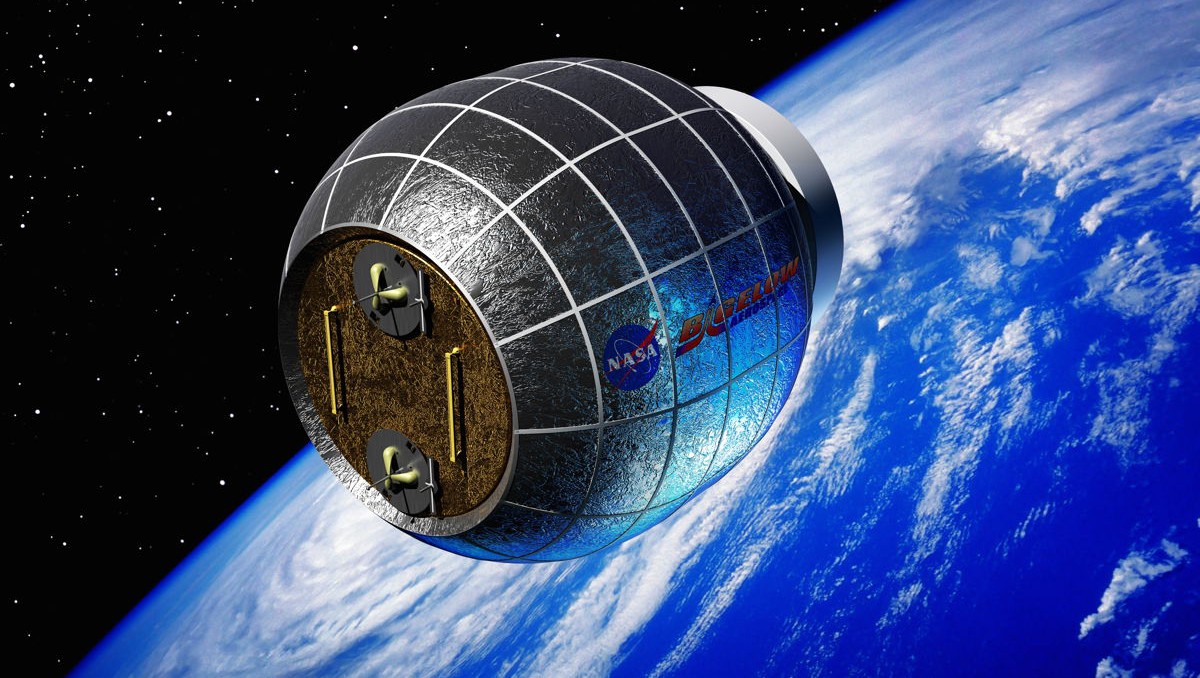
bigelow-expandable-activity-moduleHey all! Just wanted to let people know, my first article for Universe Today just went public. The subject of the article was the Bigelow Expandable Activity Module, a new type of space habitat that is being shipped to the ISS next year. Researching and writing the article itself was not unusual for me. It’s pretty much what I do here every single day. However, the real fun came in speaking to NASA and Bigelow Aerospace themselves via phone and email.

Interviewing the people behind big ideas and technological innovation is something a humble blogger like myself doesn’t get to do!  While I’ve really enjoyed talking to luminaries like Andraka and Makosinski in the past, this was a first for me. Looking forward to doing more of it in the near future!

In any case, follow the link below to check it out and don’t forget to comment and Like us on Facebook… no pressure 😉

www.universetoday.com

News from Space: “Life” Molecules Detected in Space!

SagitariusB2The secret to the creation to life in our universe appears to be seeding – the proper elements in the right mix in the right places to form the right kind of molecules. Only then can these molecules evolve chemically into more and more complex structures, thus following a general pathway toward biology. The pathway for life as we know it starts with carbon, but one which is specific organized and structured.

Recently, a team of astronomers  at the ALMA Observatory reported the discovery of this very element while probing distant galaxies. What they found was not just interstellar carbon, but a form of carbon with a branched structure. The discovery was made in the gaseous-star forming region known as Sagittarius B2 – a giant molecular cloud of gas and dust that is located about 390 light years from the center of the Milky Way.

radio-wave-dishesSimple carbon chains aren’t particularly unusual in the cosmos, but complex carbon is a different matter. It is what the researchers, based at Cornell University and the Max Planck Institute, describe as finding a molecular needle in a cosmic haystack. The actual molecule in question is isopropyl cyanide, and it was discerned thanks to the miracle known as radio astronomy.

Within clouds of interstellar dust and gas, elements find themselves shielded from the harsh radiation of open space and are, thus, free to form into more complex arrangements. These molecules don’t just sit there, but instead move around within their cloud-homes and bump into each other. The result of this activity are radio signals which can be detected light-years away – in this case, by radio telescopes here on Earth.

MaxPlanckIns_radiowavepulseEvery molecule has a different radio signal, so it’s possible to pick apart the contents of interstellar junk by examining a cloud’s frequency spectra. NASA, via the Ames Research Center, even maintains a radio-emission frequency database to aid in the tracking of polycyclic aromatic hydrocarbons, a form of molecule thought to contain much of the universe’s carbon stockpiles.

The branching carbon structure of isopropyle cyanide is of particular interest because it’s thought that this arrangement is a step on the way to the production of amino acids, the building blocks of proteins, and hence organic life. The discovery gives weight to the increasingly popular notion that life, or at least many of the key steps leading toward life, actually occurs off-planet.

alien-worldLife on Earth may have been well on its way while the planet was still just space dust waiting to come together into our rock-home. What’s more, the molecules discovered by the ALMA team probably aren’t alone.  As the authors, led by astronomer Arnaud Belloche, wrote:

[Isopropyle cyanide’s] detection therefore bodes well for the presence in the [interstellar medium] (ISM) of amino acids, for which such side-chain structure is a key characteristic… This detection suggests that branched carbon-chain molecules may be generally abundant in the [interstellar medium].

The discovery follows a general progression in recent years adding more and more life-ingredients to our picture of the ISM. A 2011 study revealed that complex organic matter should be created in large volumes from stars, while a 2012 report study found that conditions within the ISM are uniquely suited to the creation of increasingly complex molecules, “step[s] along the path toward amino acids and nucleotides, the raw materials of proteins and DNA, respectively.”

sugar-in-space-molecules_58724_990x742Also in 2012, astronomers working for ALMA found basic sugar molecules hanging out in the gas cloud around IRAS 16293-2422 – a young star located some 400 light-years from Earth. The particular form, glycoaldehyde, is thought to be a key component of the reaction behind the creation of DNA. Indeed, more and more, the universe is looking less and less like a harsh environment in which life must struggle to emerge, to a life factory.

Source: motherboard.vice.com

The Future of Medicine: Improved Malaria Vaccine

flu_vaccineOf the many advances made by medical science in the past century, vaccinations are arguably the greatest. With the ability to inoculate people against infection, diseases like yellow fever, measles, rubella, mumps, typhoid, tetanus, polio, tuberculosis, and even the common flu have become controllable – if not eliminated. Nevertheless, medical researchers agree that there are still some things that can be improved upon when it comes to vaccinations.

Beyond the controversies surrounding a supposed link between vaccinations and autism, there is the simple fact that the current method of inoculating people is rather invasive. Basically, it requires people to sit through the rather uncomfortable process of being stuck with a needle, oftentimes in an uncomfortable place (like the shoulder). Luckily, many researchers are working on a way to immunize people using gentler methods.

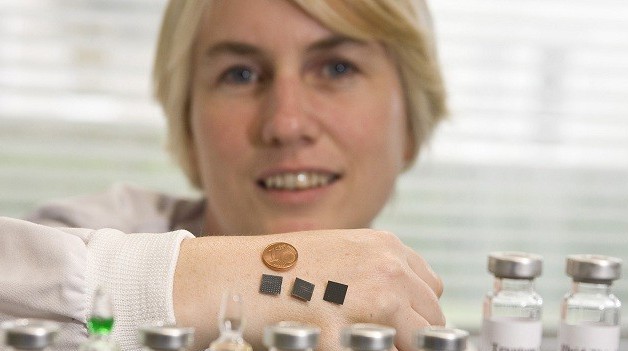
malaria_vaccineAt the University College Cork in Ireland, for example, scientists have just finished pre-clinical testing on an experimental malaria vaccine that is delivered through the skin. To deliver the vaccine into the body, the researchers used a skin patch with arrays of tiny silicon microneedles that painlessly create temporary pores. These pores provide an entry point for the vaccine to flow into the skin, as the patch dissolves and releases the drug.

To make the vaccine, the team used a live adenovirus similar to the virus that causes the common cold, but which they engineered to be safer and produce the same protein as the parasite that causes malaria. Adenoviruses are one of the most powerful vaccine platforms scientists have tested, and the one they used produced strong immunity responses to the malaria antigen with lower doses of the vaccine.

TB_microneedlesThe research showed that the administration of the vaccine with the microneedle patch solves a shortcoming related to this type of vaccine, which is inducing immunity to the viral vector – that is, to the vaccine itself. By overcoming this obstacle, the logistics and costs of vaccination could be simpler and cheaper as it would not require boosters to be made with different strains. Besides, with no needles or pain involved, there’s bigger potential to reach more people requiring inoculation.

This is similar to the array used by researchers at King’s College in London, who are also developing a patch for possible HIV vaccine delivery. Researchers at University of Washington used a similar method last year to deliver the tuberculosis vaccine. The method is an improvement on this type of vaccine delivery since it is painless and non-invasive. It’s use is also being researched in relation to other infections, including Ebola and HIV.

The details of the research appeared in the journal Nature. Lead researcher, Dr. Anne Moore, is set to negotiate with Silicon Valley investors and technology companies to commercialize the vaccine.

Sources: gizmag.com, (2), ucc.ie, nature.com

News from Mars: Mysterious Martian Ball Found!

Mars_ballThe rocky surface of Mars has turned up some rather interestingly-shaped objects in the past. First there was the Martian rat, followed shortly thereafter by the Martian donut; and very recently, the Martian thighbone. And in this latest case, the Curiosity rover has spotted what appears to be a perfectly-round ball. Even more interesting is the fact that this sphere may be yet another indication of Mars’ watery past.

The rock ball was photographed on Sept. 11 – on Sol 746 of the rover’s mission on Mars – while Curiosity was exploring the Gale Crater. One of Curiosity’s cameras captured several images of the centimeter-wide ball as part of the stream of photographs was taking. The scientists working at the Mars Science Laboratory based at NASA’s Jet Propulsion Laboratory (JPL), immediately began to examine it for indications of what it could be.

mars-selfie-01-140501As Ian O’Neill of Discovery News, who spoke with NASA after the discovery, wrote:

According to MSL scientists based at NASA’s Jet Propulsion Laboratory (JPL) in Pasadena, Calif., the ball isn’t as big as it looks — it’s approximately one centimeter wide. Their explanation is that it is most likely something known as a “concretion”… and they were created during sedimentary rock formation when Mars was abundant in liquid water many millions of years ago.

Curiosity has already found evidence of water at a dig site in Yellowknife Bay, which took place shortly after it landed in the Gale Crater two years ago. In addition, this is not the first time a Mars rover has found rocky spheres while examining the surface. In 2004, NASA’s Opportunity rover photographed a group of tiny balls made of a ferrous mineral called hematite. Opportunity photographed still more spheres, of a different composition, eight years later.

mars-blueberriesThe spheres likely formed through a process called “concretion”, where minerals precipitate within sedimentary rock, often into oval or spherical shapes. When the rock erodes due to wind or water, it leaves the balls of minerals behind and exposed. If in fact concretion caused the Mars spheres, then they would be evidence there was once water on the planet. However, some scientists believe the rock balls might be leftover from meteorites that broke up in the Martian atmosphere.

Curiosity is now at the base of Mount Sharp (Aeolis Mons) – The 5.6 km-high (3.5 mile) mountain in the center of Gale Crater – scientists are excited to commence the rover’s main science goal. This will consists of more drilling into layered rock and examining the powder so scientist can gain an idea about how habitable the Red Planet was throughout its ancient history, and whether or not it may have been able to support microbial life.

MarsCuriosityTrek_20140911_AMission managers will need to be careful as the rover has battered wheels from rougher terrain than expected. Because of this, the rover will slowly climb the slope of Mount Sharp driving backwards, so as to minimize the chance of any further damage. The Mars Reconnaissance Orbiter (MRO) will also be on hand to help, photographing the route from above to find the smoothest routes.

Despite the wear and tear that the little rover has experienced in its two years on the Martian surface, it has discovered some amazing things and NASA scientists anticipate that it will accomplish much more in the course of its operational history. And as it carried on with its mission to decode the secrets of Mars, we can expect it will find lots more interesting rocks – spherical, rat-shaped, ringed, femur-like, or otherwise.


Sources: cbc.ca, universetoday.com, news.discovery.com