Google, makers of the fame internet search engine, investors in future tech, and pioneers in commercial space flight (and no stranger to practical jokes, fyi) has just released a video for a new system known as Google Nose Beta. For too long, the video claims, people have been restricted when searching the internet, relying on clumsy explanations and words that just don’t capture the proper feel of what they are looking for.
And what’s more, the internet is so often a feast for the eyes and the ears, but sadly neglects an all-important sense that is so near and dear to our hearts. When it comes right down to it, our olfactory senses go beyond simply observing and witnessing and phenomena and make us a part of it. So why haven’t we found a way to include smells into our daily internet activity?
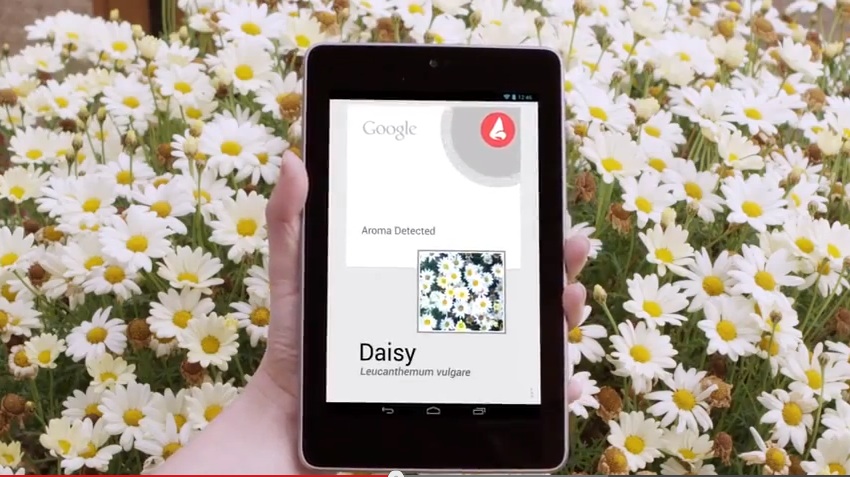
Apparently, this new system combines “photons with infrasound waves” and “temporarily aligns molecules to emulate a particular scent,” Google Nose allows users to experience simulated smells from various environments. And when it comes to identifying them, users can rely on the “mobile aroma indexing program” at the heart of the product which has amassed a “15 million scentibyte database of smells from around the world.”
And this is just the latest in a long string of quirky (and hilariously impossible) inventions brought to you by Google. Who can forget the 2007 TiSP, “a self-installed, ad-supported online service that will be offered entirely free to any consumer with a WiFi-capable PC and a toilet connected to a local municipal sewage system.” And what about Gmail Paper, a service that Google said would allow Gmail users to request paper copies (via postal service, of course) of their emails?
Sound too good to be true? Well that’s because it is, not to menti0n pretty damn ridiculous. But like any good sci-fi geek, it made me wonder, “just what would it take to make something like this real?” Within seconds, I was wondering if a quantum internet could theoretically beam particles into your laptop that would simulate a certain scent, but that’s as far as I got.
I think that’s the downside to being a geek. Our imaginations often mean we have a tenuous grasp on what’s real and what’s not. In the meantime, check out the hilarious video below, and learn more about this latest prank by clicking here.
You’re not going to believe this. But just 15 minutes ago, on his Facebook feed, George Takei announced that he will be starring in the upcoming Star Wars remake. Not only that, but he had a few newsworthy items to share about the upcoming sequel that the studio has not been sharing just yet. These include the name of the new film and when filming will begin.
Friends, I am thrilled to announce that I’ll be starring in the Star Wars reboot directed by JJ Abrams. I’ll be playing Master Ceti Maru, a member of the Jedi High Council. The new film, entitled “Star Wars: Galactic Empire,” is greenlit and will begin filming sometime early next year. It is truly a moment for The Star Alliance. Thanks to all my fans for their decades of support.
You may not think it, but even a little hint like the name of the film can tell you volumes. In this case, it would seem to confirm what Hamil has been saying, that the movie would be set in a time when the children of Han and Leia were growing up, a time where the Republic had been resurrected and was fighting the remnants of the Empire to take control of the Galaxy.
In addition, since he will be playing a Jedi Master, its clear that in this time period, the Jedi Order has been restored. So Luke won’t be the only one anymore. Perhaps he’ll just be the head honcho, which is a bit of a change-up ever since Yoda passed away. What’s more, Takei was sure to provided a little mockup photo to get fans in mind of what he would like sporting a Jedi robe and a lightsaber (I see he went with the Windu model). Excited yet? I know I am.
Addendum: It’s officially midnight, so Happy April Fool’s Day! George, you’re one mean SOB!
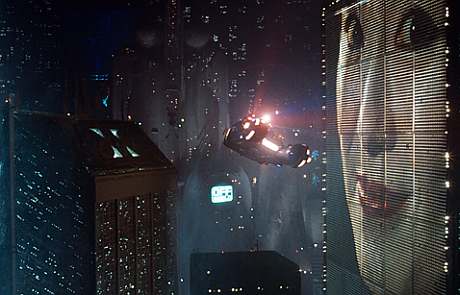
Twenty-five years ago, Los Angeles magazine envisioned what the world would look like in the current decade. And unlike Blade Runner, they avoided the cool but standard science fiction allegories – like massive billboards, flying cars and sentient robots – and went straight for the things that seemed entirely possible by contemporary standards.
The cover story of the magazine’s April 3, 1988 edition showed a futuristic downtown L.A. crisscrossed with electrically charged, multi-tiered freeways permeated by self-driving cars. The article itself then imagined a day in the life of the fictional Morrow family of the L.A. suburb Granada Hills, as “profiled” by the magazine in 2013 by science fiction writer Nicole Yorkin.
Ironically, the magazine did not envision that it would one day go out of business, or that print media would one day be lurching towards extinction. Nevertheless, the fictional article and the world it detailed were interesting reading. Little wonder then why, earlier this month, the LA Times along with an engineering class at USC, revisited the archives to assess what it predicted correctly versus incorrectly.
Together, professor Jerry Lockenour and his class made a list of the hits and misses, and what they found paints a very interesting picture of how we predict the future and how its realization so often differs from what we expect. Of the major predictions to be found in LA of the 2013, as well as in the lives of the Morrow family (get it?), here is what they got right:
Smart-Houses: In the article, the Morrows are said to begin every morning when their “Smart House” automatically turns on. This consists of all the appliances activating and preparing them breakfast, and no doubt turning on all the environmental controls and opening the shades to get the temperature and ambient lighting just right.
While this isn’t the norm for the American family yet, the past few years have proved a turning point for home devices hooking up with the Internet, to become more programmable and serve our daily needs. And plans are well under way to find a means of networking them all together so they function as one “smart” unit.
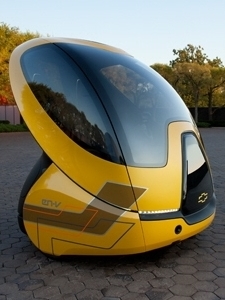
Self-Driving Cars: The writers of the article predicted that by 2013, cars would come standard with computers that control most of the settings, along with GPS systems for navigation. They also predict self-driving cars, which Google and Chevy are busy working on. In addition to using clean, alternative energy sources, these cars are expected to be able t0 self-drive, much in the same way a pilot puts their plane on auto-pilot. Drivers will also be able to summon the cars to their location, connect wirelessly to the internet, and download apps and updates to keep their software current.
But of course, they got a few things wrong as well. Here they are, the blots on their predictive record:
Homeprinted newspapers: The article also predicts that each morning the Morrows would begin their day with a freshly printed newspaper, as rendered by their laser-jet printer. These would be tailor-made, automatically selecting the latest news feeds that would be of most interest to them. What this failed to anticipate was the rise in e-media and the decline of printed media, though hardly anyone would fault them for this. While news has certainly gotten more personal, the use of tablets, ereaders and smartphones is the way the majority of people now read their selected news.
Robot servants and pets: In what must have seemed like a realistic prediction, but which now comes across as a sci-fi cliche, the Morrows’ home was also supposed to come equipped with a robotic servant that had a southern accent. The family’s son was also greeted every morning by a robot dog that would come to play with him. While we are certainly not there yet, the concept of anthropomorphic robot assistants is becoming more real every day. Consider, for example, the Kenshiro robot (pictured at right), the 3D printed android, or the proposed Roboy, the Swiss-made robotic child. With all of these in the works, a robotic servant or pet doesn’t seem so far-fetched does it?
Summary:
Between these four major predictions and which came to be true, we can see that the future is not such an easy thing to predict. In addition to always being in motion, and subject to acceleration, slowing and sudden changes, the size and shape of it can be very difficult to pin down. No one can say for sure what will be realized and when, or if any of the things we currently take for granted will even be here tomorrow.
For instance, during the 1960’s and 70’s, it was common practice for futurists and scientists to anticipate that the space race, which had culminated with humans setting foot on the moon in 1969, would continue into the future, and that humanity would be seeing manned outposts on the moon by and commercial space flight by 1999. No one at the time could foresee that a more restrictive budget environment, plus numerous disasters and a thawing of the Cold War, would slow things down in that respect.
In addition, most predictions that took place before the 1980’s completely failed to predict the massive revolution caused by miniaturization and the explosion in digital technology. Many futurist outlooks at the time predicted the rise in AI, but took it for granted that computers would still be the size of a desk and require entire rooms dedicated to their processors. The idea of a computer that could fit on top of a desk, let alone on your lap or in the palm of your hand, must have seemed farfetched.
What’s more, few could predict the rise of the internet before the late 1980’s, or what the realization of “cyberspace” would even look like. Whereas writer’s like William Gibson not only predicted but coined the term, he and others seemed to think that interfacing with it would be a matter of cool neon-graphics and avatars, not the clean, page and site sort of interface which it came to be.
And even he failed to predict the rise of such things as email, online shopping, social media and the million other ways the internet is tailored to suit the average person and their daily needs. When it comes right down to it, it is not a dangerous domain permeated by freelance hacker “jockeys” and mega-corporations with their hostile counter-intrusion viruses (aka. Black ICE). Nor is it the social utopia promoting open dialogue and learning that men like Bill Gates and Al Gore predicted it would be in the 1990’s. If anything, it is an libertarian economic and social forum that is more democratic and anarchistic than anyone could have ever predicted.
But of course, that’s just one of many predictions that came about that altered how we see things to come. As a whole, the entire thing has come to be known for being full of shocks and surprises, as well as some familiar faces. In short, the future is an open sea, and there’s no telling which way the winds will blow, or what ships will make it to port ahead of others. All we can do is wait and see, and hopefully trust in our abilities to make good decisions along the way. And of course, the occasional retrospective and issue congratulations for the things we managed to get right doesn’t hurt either!
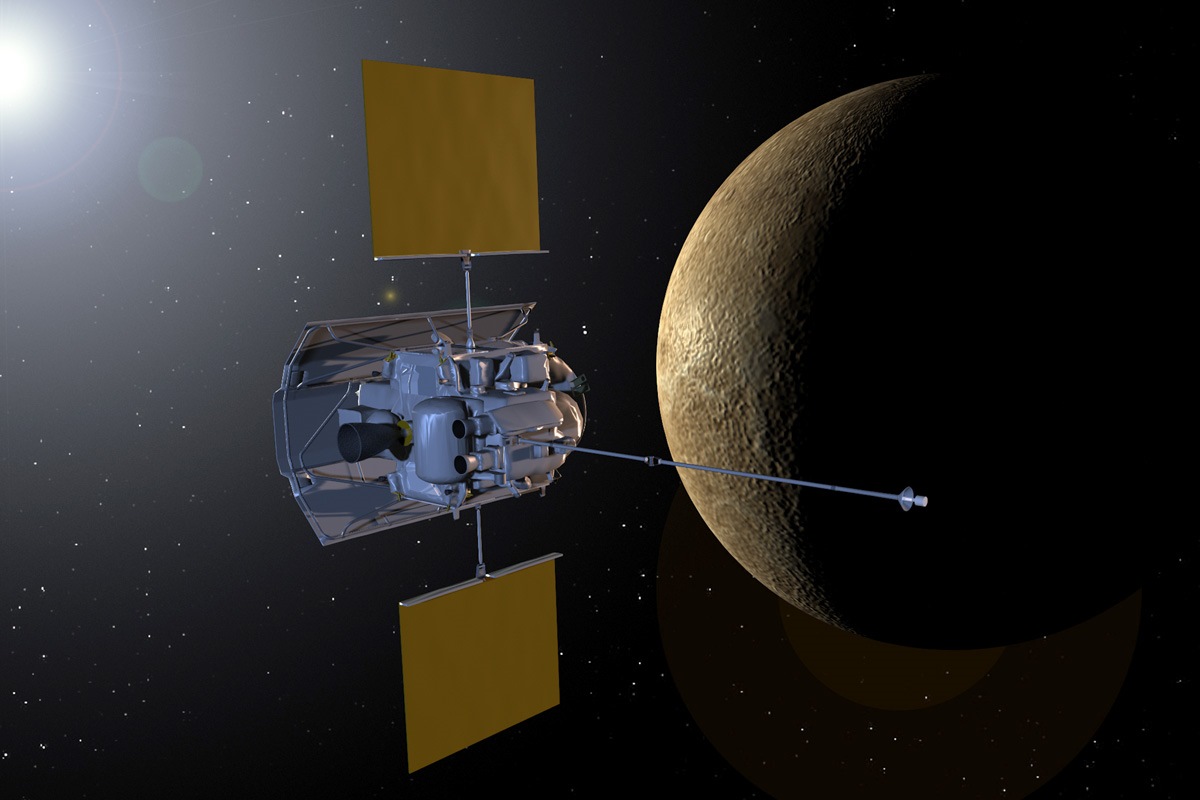
With Curiosity’s ongoing research and manned missions being planned for Mars by 2030, it seems that the other planets of the Solar System are being sadly neglected these days. Thankfully, the MESSENGER spacecraft, which has been conducting flyby’s of Mercury since 2008 and orbiting it since 2011, is there to remind us of just how interesting and amazing the planet closest to our sun truly is.
And in recent weeks, there has been a conjunction of interesting news stories about Earth’s scorched and pockmarked cousin. The first came in March 22nd when it was revealed that of the many, many pictures taken by the satellite (over 150,000 and counting), some captured a different side of Mercury, one which isn’t so rugged and scorched.
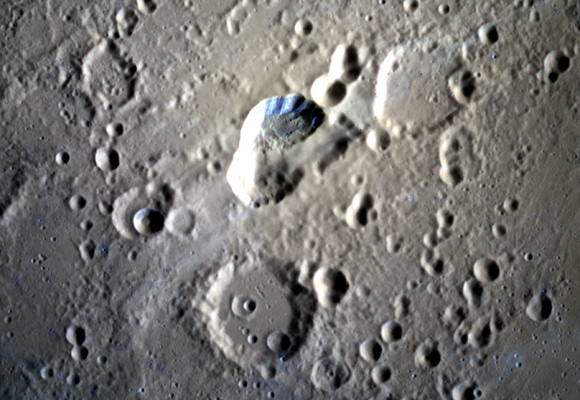
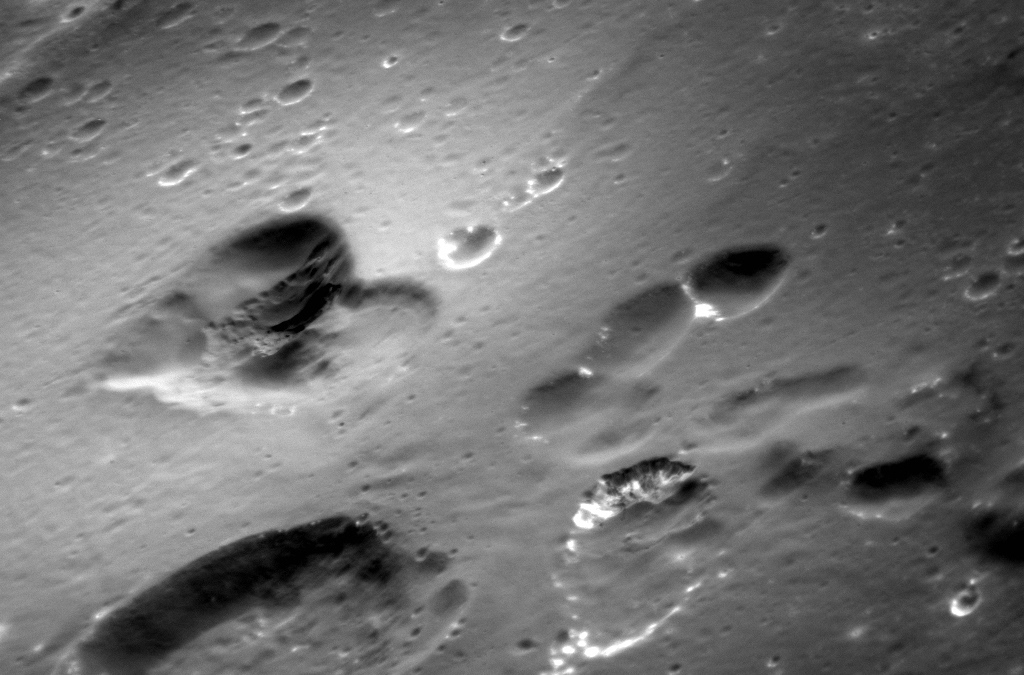
The pictures in question were of a natural depression located northeast of the Rachmaninoff basin, where the walls, floor and upper surfaces appear to be smooth and irregularly shaped. What’s more, the velvety texture observed is the result of widespread layering of fine particles. Scientists at NASA deduced from this that, unlike many features on Mercury’s ancient surface, this rimless depression wasn’t caused by an impact from above but rather explosively escaping lava from below.
In short, the depression was caused by an explosive volcanic event, which left a hole in the surface roughly 36 km (22 miles) across at its widest. It is surrounded by a smooth blanket of high-reflectance material, explosively ejected volcanic particles from a pyroclastic eruption, that spread over the surface like snow. And thanks to Mercury’s lack of atmosphere, the event was perfectly preserved.
Other similar vents have been found on Mercury before, like the heart-shaped depression observed in the Caloris basin (seen above). Here too, the smooth, bright surface material was a telltale sign of a volcanic outburst, as were the rimless, irregular shapes of the vents. However, this is the first time such a surface feature has been captured in such high-definition.
And then just three days later, on March 25th to be exact, Mercury began to experience its greatest elongation from the Sun for the year of 2013. In astronomy, this refers to the angle between the Sun and the planet, with Earth as the reference point. When a planet is at its greatest elongation, it is farthest from the Sun as viewed from Earth, so its view is also best at that point.
What this means is that for the remainder of the month, Mercury will be in prime position to be observed in the night sky, for anyone living in the Northern Hemisphere that is. Given its position relative to the Sun and us, the best time to observe it would be during hours of dusk when the stars are still visible. And, in a twist which that may hold cosmic significance for some, people are advised to pay special attention during the morning of Easter Day, when the shining “star” will be most visible low in the dawn sky.
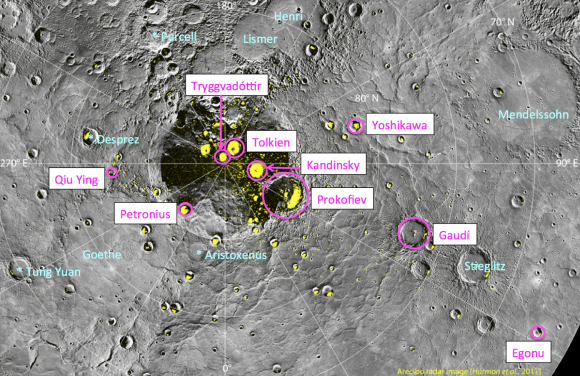
And then just three days ago, a very interesting announcement was made. It seems that with MESSENGERS ongoing surveys of the Hermian surface, nine new craters have been identified and are being given names. On March 26th, the International Astronomical Union (IAU) approved the proposed names, which were selected in honor of deceased writers, artists and musicians following the convention established by the IAU for naming features on the innermost world.
The announcement came after MESSENGER put the finishing touches on mapping the surface of Mercury earlier this month. A good majority of these features were established at Mercury’s southern polar region, one of the last areas of the planet to be mapped by the satellite. And after a submission and review process, the IAU decided on the following names of the new craters:
Donelaitis, named after 18th century Lithuanian poet Kristijonas Donelaitis, author of The Seasons and other tales and fables.
Petofi, named after 19th century Hungarian poet Sandor Petofi, who wrote Nemzeti dal which inspired the Hungarian Revolution of 1848.
Roerich, named after early 20th century Russian philosopher and artist Nicholas Roerich, who created the Roerich Pact of 1935 which asserted the neutrality of scientific, cultural and educational institutions during time of war.
Hurley, named after the 20th century Australian photographer James Francis Hurley, who traveled to Antarctica and served with Australian forces in both World Wars.
Lovecraft, named after 20th century American author H.P. Lovecraft, a pioneer in horror, fantasy and science fiction.
Alver, named after 20th century Estonian author Betti Alver who wrote the 1927 novel Mistress in the Wind.
Flaiano, named after 20th century Italian novelist and screenwriter Ennio Flaiano who was a pioneer Italian cinema and contemporary of Federico Fellini.
Pahinui, named after mid-20th century Hawaiian musician Charles Phillip Kahahawai Pahinui, influential slack-key guitar player and part of the “Hawaiian Renaissance” of island culture in the 1970’s.
L’Engle, named after American author Madeleine L’Engle, who wrote the young adult novels An Acceptable Time, A Swiftly Tilting Planet & A Wind in the Door. L’Engle passed away in 2007.
The campaign to name Mercury’s surface features has been ongoing since MESSENGER performed its first flyby in January of 2008. Some may recall that in August of last year, a similar process took place for the nine craters identified on Mercury’s North Pole. Of these, the names of similarly great literary, artistic and scientific contributors were selected, not the least of which was Mr. J RR Tolkien himself, author of Lord of the Rings and The Hobbit!
It’s no secret that the MESSENGER spacecraft has been a boon for scientists. Not only has it allowed for the complete mapping of the planet Mercury and provided an endless stream of high resolution photos for scientists to pour over, it has also contributed to a greater understanding of what our Solar System looked like when it was still in early formation.
Given all this, it is somewhat sad that MESSENGER is due to stand down at the end of the month, and that the next mission to Mercury won’t be until 2022 with the planned arrival of the joint ESA/JAXA BepiColombo mission. But of course, we can expect plenty of revelations and stories to emerge from all the scientific data collected on this latest trip. And I’m sure Mars will be more than willing to provide ample entertainment until 2022 comes to pass!
While we’re waiting, be sure to check out this informative video of MESSENGER’s contributions over the past few years:
The concept of commercial spaceflight has been growing considerably in recent years. Basically, the idea is that it would be private aerospace companies that would responsible for ferrying people to and from space and putting commercial satellites in orbit, thus leaving space agencies free to conduct more crucial research and deep space exploration missions.
Intrinsic to this dream is the creation of a cheaper, reusable rocket system, something that can be deployed, landed, and redeployed. This will not only save the companies responsible for this new age of space travel billions of dollars, it will make a whole series of projects possible – like Space-Based Solar Power (SBSP) arrays, commercial trips to the Moon, and bigger, more elaborate space stations in orbit.
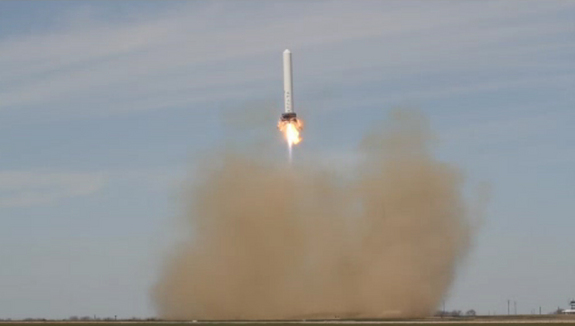
And that’s precisely what SpaceX founder Elon Musk is working on with his “Grasshopper” rocket system. Designed to be reusable, the company has been running the Grasshopper through an ongoing series of tests to make sure it can take off, achieve orbit, and then successfully return to the Earth and land in one piece. In the latest test, the Grasshopper achieved its highest flight yet – reaching 80 meters (263 feet) – before sticking its landing.
The flight took place on March 7th, and it was the fourth of its kind to be conducted at the SpaceX’s rocket development facility in McGregor, Texas. And though the flight was unmanned, the crews placed a dummy dressed like Johnny Cash into the side, which might explain why the footage of the test featured the song “Ring of Fire” in the background.
While this achievement might seem modest to some, its necessary to keep in mind that this is a very new concept. In addition, with each successive flight, the altitudes achieved have increased exponentially. In its first test flight in September of last year, the Grasshopper reached a height of only 2.5 meters (8.2 feet). In the two following tests in November and December, the rocket reached a height of 5.4 meters (17.7 feet) and 40 meters (131 feet) respectively.
With this latest flight, SpaceX believes it is getting close to their goal of a reusable rocket and its ultimate goal of making space travel cheaper and easier. Upon completion of this latest test, the company had positive things to say about the new rocket system:
With Grasshopper, SpaceX engineers are testing the technology that would enable a launched rocket to land intact, rather than burning up upon reentry to the Earth’s atmosphere.
Who knows? Given a few more tests, they might just be able to break atmo and land successfully. Then, all SpaceX has to do is sit back and watch their stock price jump by about a million points. At which time, I’m thinking missions will pour in for the deployment of just about any bit of space gear imaginable! Welcome to the era of renewed space exploration, my friends!
And be sure to check out this video of the Grasshopper makings its most recent jump!
As Climate Change becomes an ever increasing problem, nations are turning to alternative technologies and geological engineering to offset the effects. This means significant investments being made in technologies such as solar cells and other clean energies. However, the question of where to put all the resulting arrays is one which cannot be overlooked. Since we are trying to save the environment, it doesn’t exactly make sense to clear more tracts of land to make room for them.
Already, there is a land rush to build more solar power plants all around the world. In the U.S., the Department of Interior is currently processing leases for roughly 1.8 million acres in the West alone. Globally, solar photovoltaic (PV) capacity has been doubling annually, with another 16 gigawatts of power added just in 2010. At this rate, and considering how much space is needed to set up the average array, we could run out of room real fast!
And yet, the one thing that accounts for the majority of the planet’s surface area has been sadly neglected up until this point. I am of course referring to the oceans, lakes, reservoirs, retention ponds, and all other natural or unnatural bodies of water. As they account for over three-quarters of the planet’s real estate, they are quickly being targeted as the new frontier for floating solar power plants, with companies and locations being considered from India to Europe, to Napa Valley.
One of the more ambitious plans comes to us from Switzerland, will a proposed array will be built on Lake Neuchâtel later this year. As a collaborative effort between the solar developer Nolaris and the Swiss energy company Viteos, the proposed floating array will be the first of three set upon the lake. Each island will measure some 25 meters in diameter, be built from plastic and steel, and support 100 photovoltaic cells that will rotate with the sun.
What’s more, this is just one of several ideas under consideration. Other companies pursuing this concept are favoring floating pontoons with individual photovoltaic assemblies on the water’s surface. In this case, concentrating lenses will focus the sunlight on a solar cell while a simple motor, light sensors, and software rotate the cells to maximize power generation. In tropical climes, where many pilot projects are being considered and storms are quite common, the entire array will be able to submerge as the winds rise.
In other places, where land is particularly expensive, floating solar may even come to rival its land-based counterpart. In Australia, for example, a company named Sunengy is pushing the concept of “Liquid Solar Array” technology, which they claim will be able to match the power output of a typical hydroelectric dam and cover less than 10% of the reservoir’s surface. They are currently teaming up with the Indian giant Tata Power to build India’s first floating solar power plant, and estimate that if India used just 1% of its 11,500 square kilometers of captured water it could generate the equivalent of 15 large coal-fired power stations.
As the saying goes, necessity is the mother of invention. And as it stands, planet Earth needs energy, and needs to generate it in such a way that won’t mess up the environment any further or usher in the scourge of Climate Change. When the survival of our planet and our species is at stake, you can expect people to get very inventive. Very, very inventive!
Hello and welcome back to my ongoing series of PBTS, dedicated to all the advancements being made in solar power. Today’s entry is an interesting one, and not just because it involves an ion cannon… well sort of! It comes to us courtesy of Twin Creeks, a solar power startup that has come up with a revolutionary way to generate photovoltaic cells that are half the price of those currently found on the market.
For many decades, solar power has been held back due to the fact that the cost has been prohibitive compared to fossil fuels and coal. By offering yet another way of cutting the cost of their production, Twin Creeks is bringing this clean alternative one step closer to realization. Ah, but here’s the real kicker: turns out that this revolutionary process involves a hydrogen ion particle accelerator!
As has been mentioned in this series before, conventional solar cells are made from slicing 200-micrometer-thick (0.2mm) sections of silicon wafer from a large block. Then electrodes are added, a sheet of protective glass is placed on top, and they are placed in the sun to generate electricity. But of course, this approach has two serious drawbacks. One, a great deal of silicon is wasted in the production process. Two, the panels would if they were thinner than 200 micrometers, but silicon is brittle and prone to cracking if it’s too thin.
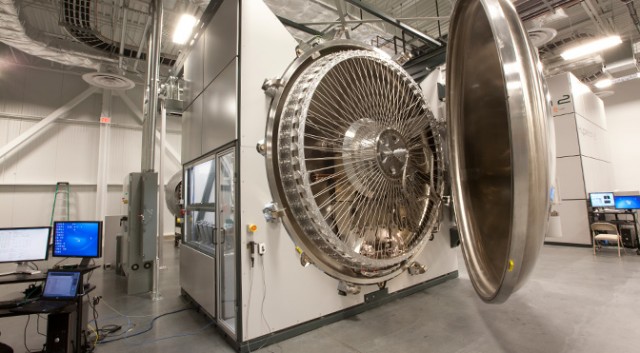
And this is where Twin Creeks ion cannon, aka. Hyperion, comes into play. It’s starts with a series of 3-millimeter-thick silicon wafers being placed around the outside edge of the big, spoked wheel (see above). The particle accelerator then bombards these wafers with hydrogen ions and, with exacting control of the voltage of the accelerator, the hydrogen ions accumulate precisely 20 micrometers from the surface of each wafer.
A robotic arm then transports the wafers to a furnace where the ions expand into hydrogen gas, which cause the 20-micrometer-thick layer to shear off. A metal backing is applied to make it less fragile as well as highly flexible (as seen on the right). The remaining silicon wafer is taken back to the particle accelerator for another dose of ions. At a tenth of the thickness and with considerably less wastage, it’s easy to see how Twin Creeks can halve the cost of solar cells.
This process has been considered before, but the cost of a particle accelerator has always been too high. However, Twin Creeks got around this by building their own, one which is apparently “10 times more powerful” (100mA at 1 MeV) than anything on the market today. Because of this, they are able to guarantee a product that is half the cost of solar cells currently coming out of China. At that price, solar power truly begins to encroach on standard, fossil-fuel power.
But, of course, there still needs to be some development made on producing solar cells that can store energy overnight. Weather strictures, such as the ability to generate electricity only when its sunny out, remains another stumbling block that must be overcome. Luckily, it seems that there are some irons in that fire as well, such as research into lithium-ion and nanofabricated batteries. But that’s another story and another post altogether 😉
Stay tuned for more sun-powered hope for the future!
For years, Antarctic research stations have been plagued by environmental conditions that go far beyond the extreme cold. For one, there’s the problem of moving ice, which recedes towards the ocean at a rate of about 0.4 kilometers a year. On top of that, literally, there is the ice and snow accumulation, which threatens to bury any building placed on the continent. Because of this, research stations have a top life expectancy of about ten years in Antarctica. But that may be about to change…
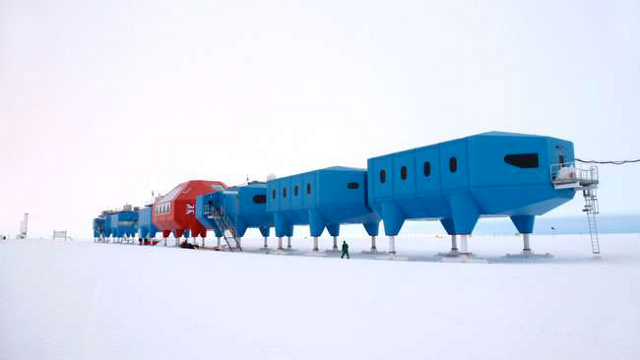
Meet the Halley VI Antarctic research station, a mobile structure which began operations this past February. The brainchild of Hugh Broughton Architects, and established by the British Antarctic Survey (BAS), the station features extendable legs on giant skis. Comprised of eight interconnected modules, the station rests atop a series of retractable hydraulic legs which enable the structure to clear the rising ground each year. And when the station needs to be moved, a bulldozer can simply tow it to a new location.
Cutaway of an individual module
The base can also accommodate 50 research scientists in its segmented hull. Living accommodations and laboratories, clad in blue glass-reinforced plastic, are positioned on either side of a larger unit clad in red, which serves as a social nexus. This space is especially crucial to the well-being of the station, since its crew will live in it year-round and have to endure the permanent darkness, -60 degree temperatures, and 125-kilomer (100 mph) winds the continent is known for.
Home comforts include a hydroponic salad garden and a climbing wall within a double-height central space lined with Lebanese cedar, selected for its scent. The architect also worked with a color psychologist to identify “refreshing and stimulating” shades, and developed a bedside lamp with a daylight bulb to simulate sunrise.
Said architect Hugh Broughton of the creation of Halley VI:
It has been a fascinating project because it combines microscopic examples of many different building types – an operating theater, air traffic control, a power plant – rolled into 20,000 square feet.
And since this project has led to similar appeals being made by other national research groups – which include scientists from Spain, India and Korea – this could be merely the first of many such stations standing near the South Pole. Almost makes the idea of being there for a year conducting research sound fun, doesn’t it?
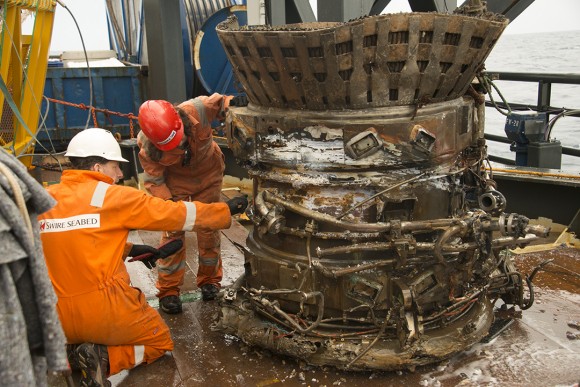
This past week, history was made when Jeff Bezos (founder of Amazon.com) and his privately funded company, Bezos Expeditions, announced that they had successfully retrieved pieces of the very engines that had once launched Apollo astronauts to the moon. Using remotely operated vehicles and a series of slings, the crew members recovered enough parts to reconstruct the majority of two F-1 rocket boosters.
Bezos Expeditions announced last year that using state-of-the-art deep sea sonar, that they had discovered the remains off the coast of Cape Canaveral off the coast of Florida. And this past Thursday, and with NASA’s help, Bezos located the fragments at a depth of almost 4.8 kilometers (3 miles) and began hauling them to the surface. Bezos claims they belonged to the historic Apollo 11 spaceflight, but further study and restoration will be needed before their identity can be confirmed.
Regardless, this is an exciting find, and the nature of the rocket boosters confirms that they were at least part of the Apollo program. Between 1968 and 1972, ten missions were conducted that flew out of the Kennedy Space Center, each one using the Saturn V rocket, that used five F-1 engines to boost them into orbit. Once the rockets had spent their fuel, they were detached and fell into the sea.
That means that approximately sixty five F-1 engines reside in the ocean off the coast of Florida. No telling which of those these ones could be, but it is hoped that serial numbers will be retrieved from the engines that can connect them to a specific Apollo mission. But regardless, this is an exciting find, and could not have come at a better time since NASA is looking to embark on a renewed era of exploration.
All told, Bezos and his team spent three weeks at sea, working almost 5 kilometers below the surface. During this time, Bezos claims that his team found so much:
We’ve seen an underwater wonderland – an incredible sculpture garden of twisted F-1 engines that tells the story of a fiery and violent end, one that serves testament to the Apollo program. We photographed many beautiful objects in situ and have now recovered many prime pieces. Each piece we bring on deck conjures for me the thousands of engineers who worked together back then to do what for all time had been thought surely impossible.
Naturally, NASA was pretty impressed with the find as well. After the find was announced, NASA Administrator Charlie Bolden made the following statement on behalf of the Agency:
This is a historic find and I congratulate the team for its determination and perseverance in the recovery of these important artifacts of our first efforts to send humans beyond Earth orbit. We look forward to the restoration of these engines by the Bezos team and applaud Jeff’s desire to make these historic artifacts available for public display.
Needless to say, this is an exciting find, regardless of whether or not these rockets were the same ones that sent Neil Armstrong, Buzz Aldrin and Michael Collins to the Moon. Naturally, I hope it is. I can think of no greater tribute to Armstrong’s memory so soon after his passing. I can imagine him looking down on this from the stars, where he now resides, with a big old smile!
And be sure to check out this video taken by the Bezos Expedition of the undersea find:
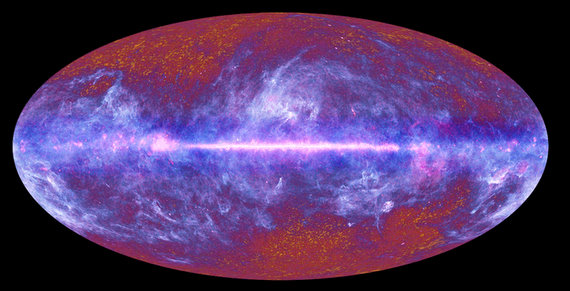
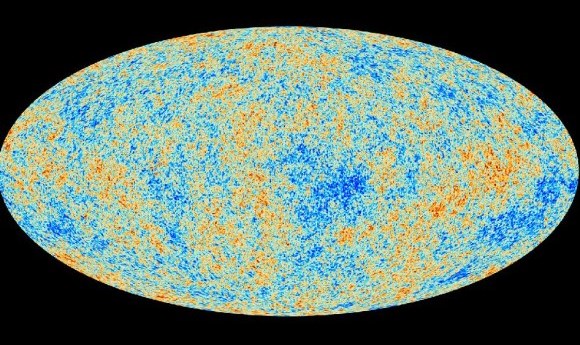
After 15 months of observing deep space, scientists with the European Space Agency Planck mission have generated a massive heat map of the entire universe.The “heat map”, as its called, looks at the oldest light in the universe and then uses the data to extrapolate the universe’s age, the amount of matter held within, and the rate of its expansion. And as usual, what they’ve found was simultaneously reassuring and startling.
When we look at the universe through a thermal imaging system, what we see is a mottled light show caused by cosmic background radiation. This radiation is essentially the afterglow of the Universe’s birth, and is generally seen to be smooth and uniform. This new map, however, provides a glimpse of the tiny temperature fluctuations that were imprinted on the sky when the Universe was just 370,000 years old.
Since it takes light so long to travel from one end of the universe to the other, scientists can tell – using red shift and other methods – how old the light is, and hence get a glimpse at what the universe looked like when the light was first emitted. For example, if a galaxy several billion light years away appears to be dwarfish and misshapen by our standards, it’s an indication that this is what galaxies looked like several billion years ago, when they were in the process of formation.
Hence, like archaeologists sifting through sand to find fossil records of what happened in the past, scientists believe this map reveals a sort of fossil imprint left by the state of the universe just 10 nano-nano-nano-nano seconds after the Big Bang. The splotches in the Planck map represent the seeds from which the stars and galaxies formed. As is heat-map tradition, the reds and oranges signify warmer temperatures of the universe, while light and dark blues signify cooler temperatures.
The cooler temperatures came about because those were spots where matter was once concentrated, but with the help of gravity, collapsed to form galaxies and stars. Using the map, astronomers discovered that there is more matter clogging up the universe than we previously thought, at around 31.7%, while there’s less dark energy floating around, at around 68.3%. This shift in matter to energy ratio also indicates that the universe is expanding slower than previously though, which requires an update on its estimated age.
All told, the universe is now believed to be a healthy 13.82 billion years old. That wrinkles my brain! And also of interest is the fact that this would appear to confirm the Big Bang Theory. Though widely considered to be scientific canon, there are those who dispute this creation model of the universe and argue more complex ideas, such as the “Steady State Theory” (otherwise known as the “Theory of Continuous Creation”).
In this scenario, the majority of matter in the universe was not created in a single event, but gradually by several smaller ones. What’s more, the universe will not inevitable contract back in on itself, leading to a “Big Crunch”, but will instead continue to expand until all the stars have either died out or become black holes. As Krzysztof Gorski, a member of the Planck team with JPL, put it:
This is a treasury of scientific data. We are very excited with the results. We find an early universe that is considerably less rigged and more random than other, more complex models. We think they’ll be facing a dead-end.
Martin White, a Planck project scientist with the University of California, Berkeley and the Lawrence Berkeley National Laboratory, explained further. According to White, the map shows how matter scattered throughout the universe with its associated gravity subtly bends and absorbs light, “making it wiggle to and fro.” As he went on to say:
The Planck map shows the impact of all matter back to the edge of the Universe. It’s not just a pretty picture. Our theories on how matter forms and how the Universe formed match spectacularly to this new data.
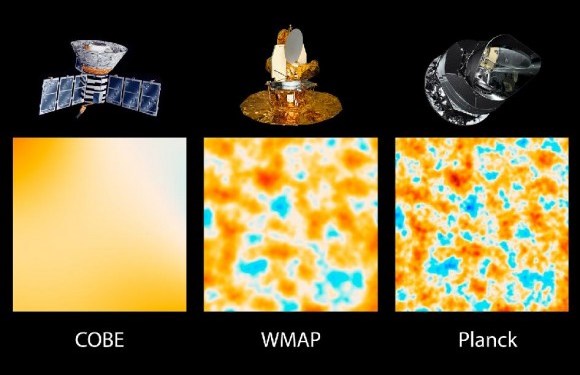
The Planck space probe, which launched in 2009 from the Guiana Space Center in French Guiana, is a European Space Agency mission with significant contribution from NASA. The two-ton spacecraft gathers the ancient glow of the Universe’s beginning from a vantage more than a million and a half kilometers from Earth. This is not the first map produced by Planck; in 2010, it created an all-sky radiation map which scientists, using supercomputers, removed all interfering background light from to get a clear view at the deep background of the stars.
However, this is the first time any satellite has been able to picture the background radiation of the universe with such high resolution. The variation in light captured by Planck’s instruments was less than 1/100 millionth of a degree, requiring the most sensitive equipment and the contrast. So whereas cosmic radiation has appeared uniform or with only slight variations in the past, scientists are now able to see even the slightest changes, which is intrinsic to their work.
So in summary, we have learned that the universe is a little older than previously expected, and that it most certainly was created in a single, chaotic event known as the Big Bang. Far from dispelling the greater mysteries, confirming these theories is really just the tip of the iceberg. There’s still the grandiose mystery of how all the fundamental laws such as gravity, nuclear forces and electromagnetism work together.
Ah, and let’s not forget the question of what transpires beneath the veil of an even horizon (aka. a Black Hole), and whether or not there is such a thing as a gateway in space and time. Finally, there’s the age old question of whether or not intelligent life exists somewhere out there, or life of any kind. But given the infinite number of stars, planets and possibilities that the universe provides, it almost surely does!
And I suppose there’s also that persistent nagging question we all wonder when we look up at the stars. Will we ever be able to get out there and take a closer look? I for one like to think so, and that it’s just a matter of time!

 Google, makers of the fame internet search engine, investors in future tech, and pioneers in commercial space flight (and no stranger to practical jokes, fyi) has just released a video for a new system known as Google Nose Beta. For too long, the video claims, people have been restricted when searching the internet, relying on clumsy explanations and words that just don’t capture the proper feel of what they are looking for.
 Apparently, this new system combines “photons with infrasound waves” and “temporarily aligns molecules to emulate a particular scent,” Google Nose allows users to experience simulated smells from various environments. And when it comes to identifying them, users can rely on the “mobile aroma indexing program” at the heart of the product which has amassed a “15 million scentibyte database of smells from around the world.”
 Sound too good to be true? Well that’s because it is, not to menti0n pretty damn ridiculous. But like any good sci-fi geek, it made me wonder, “just what would it take to make something like this real?” Within seconds, I was wondering if a quantum internet could theoretically beam particles into your laptop that would simulate a certain scent, but that’s as far as I got.