Eyes in the Sky: The Future of Asteroid Defense

asteroid_beltWith the recent passage of DA14 – an asteroid half as large as a football field and packing the power of a hydrogen bomb – and the rather explosive display that occurred above Russian skies, it’s little wonder then why NASA and other space agencies are publicizing various existing and proposed solutions to our “asteroid problem”.

Granted, there really isn’t much of a threat of an asteroid colliding with the Earth in the foreseeable future. And we also know that the meteor that graced the skies over the Urals was unrelated to the DA14 behemoth. But given that an impact could mean an Extinction Level Event, similar to the Cretaceous-Paleogene event that caused the extinction of the dinosaurs, a little planning doesn’t hurt.

neossat-580x317The first in a series of three existing or proposed designs is the NEOSSat – Short for Near-Earth Object Surveillance Satellite – that was built in Canada and was deployed last week on an Indian rocket with six others. In addition to watching space debris in orbit and tracking their movements, it will also be keeping a sharp eye out for asteroids that may swing by Earth in the future.

AIDA_mission_conceptThen there is the ESA’s proposed Asteroid Impact and Deflection Assessment mission (or AIDA), a group of planetary defense satellites that will are designed to collide with an asteroid, then push it off course. And after two years of planning, research teams from the US and Europe have selected the mission’s target – a so called ‘binary asteroid’ named Didymos – that AIDA will intercept when it passes the Earth by a mere 11 million km in 2022.

The third and final proposed solution is something that sounds ripped from the pages of a science fiction novel. Known as the DE-STAR, or Directed Energy Solar Targeting of Asteroids and exploRation, this satellite is essentially a orbiting laser that would be capable of destroying approaching asteroids 10 times larger than the DA14 and at a distance as far away as the Sun.

NASA_destarProposed by two California scientists – UC Santa Barbara physicist and professor Philip M. Lubin, and Gary B. Hughes, a researcher and professor from California Polytechnic State University – the satellite is designed to harness the power of the sun and convert it into a massive phased array of laser beams that can destroy asteroids that pose a potential threat to Earth. At the same time, it will be capable of changing an asteroid’s orbit – deflecting it away from Earth, or into the Sun.

Feel safer? Well, considering that the odds of Earth getting anytime soon are pretty low, and are likely to fall even farther once we get these rock killers destroyed. Once more, it seems that sane planning and sensible solutions are winning out over doomsday predictions. Good for us!

“The Moonlight”: China’s Hills get the Mega-City Treatment

moonlightArtist Yang Yongliang recently unveiled a new series of picture art in the gallery at the Galerie Paris-Beijing. In The Moonlight series,  he depicts China’s rolling hills in a hyper-futuristic context. With The Moonlight series, he combines his skills in traditional Chinese artistry with a little “urban romance”, adding a sprawling, shimmering megalopolis to the traditional setting and motifs.

Having studied traditional Chinese painting and calligraphy at the Shanghai Fine Arts Institute, Yang has long shown a preference for art that juxtaposes the natural with the man-made. As you scroll through the collection, you notice close ups of the cliff-scaling domiciles, crisscrossed patterns of roads, and even what appears to be cranes standing on mountain tops.

silentvalleyAnd of course, this is just the latest in a long line of Yang’s classic-modern masterpieces. In fact, Moonlight is quite similar to his earlier piece, The Silent Valley, where we see a woman in a white silk robe looking at hills in the distance. In two pictures, we see those hills are alive with brilliant lights, a clear indication of habitation.

moonlight2And then there’s Bowl of Taipei, where the Taiwanese mega-city – situated again on mountainous terrain – is depicted as a small island contained within a bowl. Resembling a world within a world, the clouds that wrap the hillside estates and waterfalls look very much like steam wafting up from a hot bowl of noodles!

Follow the links below to take a gander at the collection. And if you should find yourself in Paris, Brussels or Beijing in the near future, the show will be running from March 14th to April 27th of this year.

Source: IO9, thiscoloassal.com

Robots Meet the Fashion Industry

robot_fashionRobotics has come a long way in recent years. Why, just take a look at NASA’s X1 Robotic exoskeleton, the Robonaut, robotaxis and podcars, the mind-controlled EMT robot suit, Stompy the giant robot, Kenshiro and Roboy, and the 3D printed android. I suppose it was only a matter of time before the world of fashion looked at this burgeoning marketplace and said “me too!”

And here are just some of the first attempts to merge the two worlds: First up there’s the robot mannequin, a means of making window shopping more fun for consumers. Known as the MarionetteBot, this automaton has already made several appearances in shops in Japan and can expected to be making debut appearances across Asia, in North America and the EU soon enough!

Check out the video below to see the robot in action. Designed by the Japanese robotics company United Arrows, the mannequin uses a Kinect to capture and help analyze the movements of a person while a motor moves a total of 16 wires to match the person’s pose. Though it is not yet fast or limber enough to perfectly mimic the moves of a person, the technology shows promise, and has provided many a window-shopper with plenty of entertainment!


And next up, there’s the equally impressive FitBot, a shape-shifting mannequin that is capable of emulating thousands of body types. Designed by the British virtual shopping company Fits.Me, the FitBot is designed to help take some of the guesswork out of online shopping, where a good 25% of purchases are regularly returned because they were apparently the wrong size.

But with the FitBots, along with a virtual fitting room, customers will be able to see right away what the clothes will look like on them. The only downside is you will have to know your exact measurements, because that’s what the software will use to adjust the bot’s body. Click here to visit the company’s website and see how the virtual fitting room works, and be sure to check out there video below:


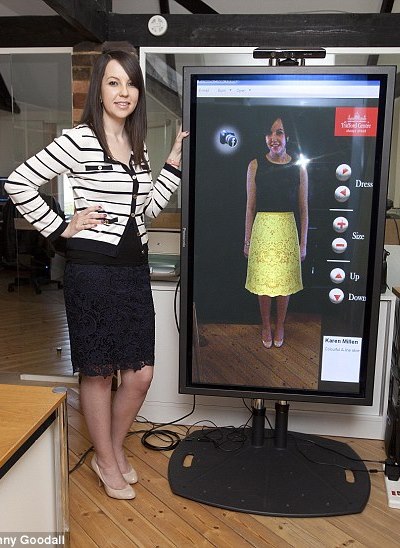
What does the future hold for the fashion industry and high-tech? Well, already customers are able to see what they look like using Augmented Reality technology displays, and can get pictures thanks to tablet and mobile phone apps that can present them with the image before making a purchase. Not only does it take a lot of the legwork out of the process, its much more sanitary as far as trying on clothes is concerned. And in a world where clothing can be printed on site, it would be downright necessary.

The "magic mirror"
The “magic mirror”

But in the case of online shopping, its likely to take the form of a Kinect device in your computer, which scans your body and lets you know what size to get. How cool/lazy would that be? Oh, and as for those AR displays that put you in the clothes you want? They should come with a disclaimer: Objects in mirror are less attractive than they appear!

Source: en.akihabaranews.com, technabob.com

Now Appearing at China Daily Mail!

China_dailymailSome news to share! Your humble yours-truly has been invited by the good folks over at China Daily Mail to join their cast of writers and bloggers. For those not familiar with their work, this is a site dedicated to sharing new about the nation of China that is free from state censorship and monitoring.

It is run by Craig Hill, a longtime educator and world traveller who has worked extensively in Australia and China, addressing issues of corruption, education, reconciliation and social justice. So over the coming weeks and months, don’t be too surprised if you see some additional post reblogged from that sight. That’s just me promoting work I’m doing in some other locale 😉

Thanks for the opportunity Mr. Hill and the good people of CDM! Glad to be aboard!

IT giants admit to being hacked by China

Game of Thrones – Season 3 Trailer!

GOT_Season3_teaserIt’s here at last, a GOT Season 3 trailer that isn’t just a despicable tease with no real footage to offer! But that’s to be expected, studios always love to treat their fans like a bunch of crack addicts. Get them hooked on a season, then tell them it’s going to be a year or more until the next one comes along. Feed them tiny crumbs along the way, and just before the next batch is ready, give them a taste!

Now that March has rolled around, we are just slightly less than a month away from the premiere. And from this trailer, some hints are given as to what’s in store for the characters of Robb, Daenerys, Tyrion, John Snow, Jaime, Cersei, and all those that fall somewhere in between this season. Naturally, fans of Martin would advise you not to get too attached! People have a way of dying off in his universe…

Enjoy!

The Future is Here: The Transparent Smartphone and USB Stick

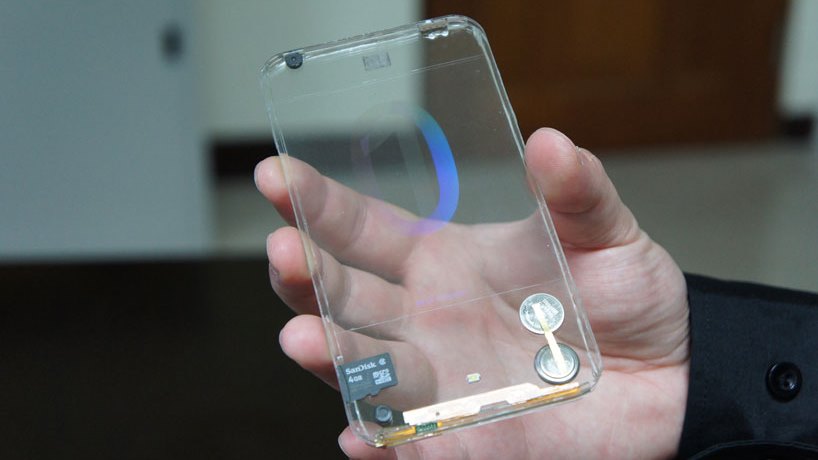
transphoneTwo years ago, Samsung made a big splash with the release of their concept video for a thin, transparent, AMOLED display tablet. Having showed a great deal of promise, thanks to the combination of paper thin technology and the Active-Matrix Organic Light-Emitting Diode display, they had to admit a fully transparent device was still many years away.

And in that respect, they were hardly alone. After the Consumer Electronics Show of 2010 and 2011, it seemed that every major company had their own concept for a transparent device, still many years in the making. Well, as it turns out they all may have spoken a little too soon!

In a recent story, a Taiwanese group named polytron introduced their concept for a transparent smartphone and USB stick. As purveyors of smart glass – glass with built-in LED displays, “privacy” glass, holographic glass, touchscreen glass, etc – this latest invention effectively combines what they do best with the world of computing and communications and has jump started efforts to create to completely transparent devices.

transphone1

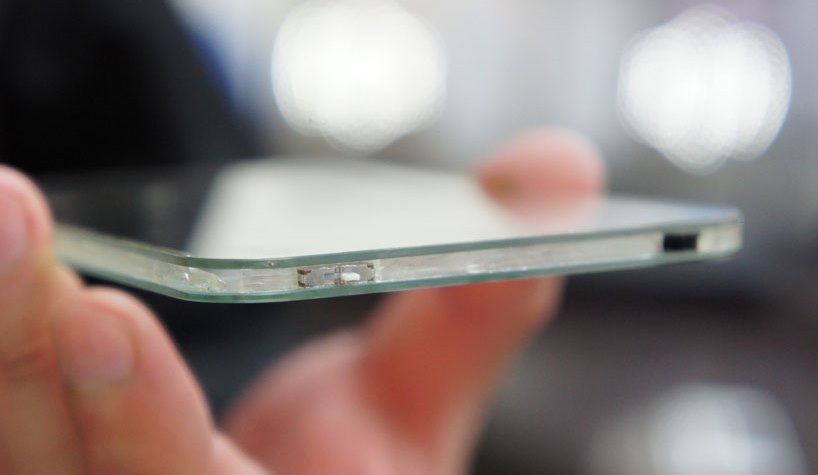
As you can see from the pics and video below, the phone has a thin frame, a slot for a SIM card, speakers mounted in the top, and is powered by two button cell batteries. It also boasts and LED screen, and is clearly still very much in the research and development phase. In the future, the company plans to mount a case across the bottom to hide the electronics, and an operating system will come as standard.

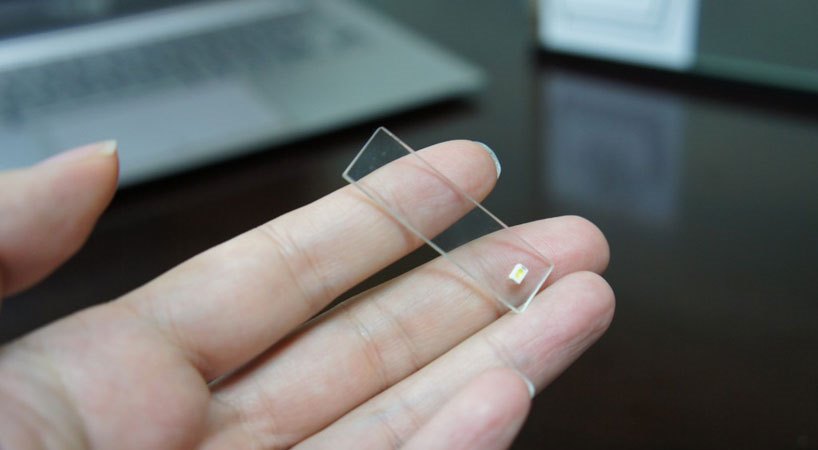
Much the same is true of their transparent USB stick. Combining an internal chip, a transparent case, and an embedded LED light to let you know when it’s plugged in, this device is likely to become the next generation of USB drives. And according to official rumors, the glass USB stick will also be made available with storage capacities of 4, 8, 16, and 32 gigabytes. No telling when it will be commercially available as of yet, but in all likelihood, sooner than the transparent phone.

transphone2

Be sure to check out these videos by Mobile Geeks, and follow the links at the bottom of the page to learn more about polytron’s smart glass products. I assure you, its really quite inspired!


Source: designboom.com, polyvision.com

Nominations for 2013!

fireworks1Folks, I’m ashamed to admit that I’ve been getting real lazy when it comes to blogger awards lately. In fact, about 18 months into this blog’s existence, I think I pretty much made the decision to stop participating in them. But you know what, people didn’t stop nominating me, which created a bit of a backlog of acknowledgments and nominations. People must have thought I was a real snob!

So as an act of contrition, I’ve decided to do a big ol’ thank you to all the people who nominated me so far for 2013. There were quite a few, interestingly enough. One might think I’ve made it onto a few blogrolls in recent months! Or perhaps it’s just the season for it. In any case, I would like to thank the following people for the following nomination on the following dates:

Liebster Blog Award:

notestoponder – Feb. 28th, 2013

Next Big Thing Blog Hop:

Rami Ungar the Writer – Feb. 21st, 2013

One Lovely Blog Award:

Rigzen Chomo – Jan. 3rd, 2013

Reality Award:

Mary-Ann Feb 28th, 2013

Very Inspiring Blog Award:

Tazein Mirza Saad – Feb. 23rd, 2013
Fashion and Style Guru – Feb. 08th, 2013
Ripley Conner – Jan. 03rd, 2013

Thank you to all of you for thinking of me and bestowing these honors! And thanks even more for doing it in such a timely and coordinated manner. With this many awards, there’s no way I could possibly do all of them justice and make my own lists of nominees. There’s be just too many! And I swear I don’t have anything less to tell people about myself. Yes, thank you indeed because this really cuts down on the paperwork 😉

But I promise, I shall do the right thing and properly thank you on a case by case basis in the future. Take care and thanks again!

The Future is Here: The VR Cave!

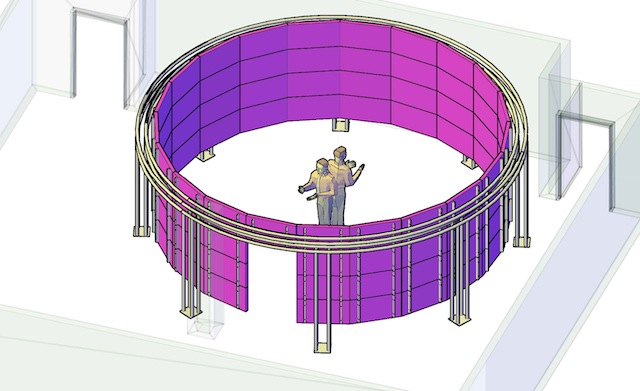
Cave2It’s called the CAVE2, a next-generation virtual reality platform that is currently the most advanced visualization environment on Earth. Whereas other VR platforms are either in 2D or limited in terms of interactive capability, the CAVE2 is about the closest thing there is to a real-life holodeck. This is accomplished through a series of panoramic, floor-to-ceiling LCD displays and an optical tracking interface that is capable of rendering remarkably realistic 3D environments.

Developed by the Electronic Visualization Laboratory (EVL) at the University of Illinois at Chicago, CAVE2 is a direct follow up to the VR platform the university created back in 1992. Like the original, the name stands for “Cave Automatic Virtual Environment”; but whereas its predecessor was set in a cube-shaped room, the new environment is set within a cylindrical, 320 degree immersive space. In addition, the screens, sounds, and resolution have all been vastly upgraded.

ModelFor example, the 7.5 by 2.5 meter space (24 feet x 8 feet) is covered floor-to-ceiling with 72 3D LCD screens, each of which outputs images at 37-megapixels (that’s 7,360 x 4,912 pixels, twice that of 2D). This allows for a pixel density that is on par with the human eye’s own angular resolution at 20/20 vision. Headgear is needed to get the full 3D effect, and the entire apparatus is controlled by a hand-held wand.

Yes, in addition to the holodeck, some other science fiction parallels are coming to mind right now. For example, there’s the gloved-controlled holographic interface from Minority Report, the high-tech nursery in Ray Bradbury’s short story The Veldt, and the parlor walls he envisioned in Fahrenheit 451. And apparently, this is no accident, since director Jason Leigh, the head of the project, is a major sci-fi geek!

mars_lifeBut of course, all this technology was designed with some real-life, practical applications in mind. These range from the exploration of outer space to the exploration of inner space, particularly the human body. As Ali Alaraj, a noted neuroscientist who used the CAVE2 put it:

“You can walk between the blood vessels. You can look at the arteries from below. You can look at the arteries from the side. …That was science fiction for me. It’s fantastic to come to work. Every day is like getting to live a science fiction dream. To do science in this kind of environment is absolutely amazing.”

All of this bodes well for NASA’s plans for space exploration that would involve space probes, holographics, and avatars. It would also be incredibly awesome as far as individual hospitals were concerned. Henceforth, they could perform diagnostic surgery using nanoprobes which could detail a patients body, inch for inch, from the inside out.

And of course, the EVL has provided a cool video of the CAVE2 platform in action. Check them out:

Source: IO9, evl.uic.edu

Biotech News: Artificial Ears and Bionic Eyes!

3d_earLast week was quite the exciting time for the field of biotechnology! Thanks to improvements in 3D printing and cybernetics – the one seeking to use living cells to print organic tissues and the other seeking to merge the synthetic with the organic – the line between artificial and real is becoming blurrier all the time. And as it turns out, two more major developments were announced just last week which have blurred it even further.

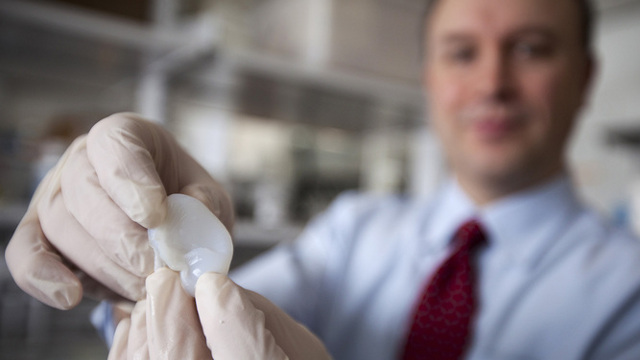
The first came from Cornell University, where a team of biotech researchers demonstrated that it was possible to print a replacement ear ear using a 3D printer and an injection of living cells. Using a process the team refers to as “high-fidelity tissue engineering”,  they used the cartilage from a cow for the ears interior and overlaid it with artificially generated skin cells to produce a fully-organic replacement.

3dstemcellsThis process builds on a number of breakthroughs in recent years involving 3D printers, stem cells, and the ability to create living tissue by arranging these cells in prearranged fashions. Naturally, the process is still in its infancy; but once refined, it will allow biomedical engineers to print customized ears for children born with malformed ones, or people who have lost theirs to accident or disease.

What’s more, the Cornell research team also envision a day in the near future when it’ll be possible to cultivate enough of a person’s own tissue so that the growth and implantation can happen all within the lab. And given recent the breakthrough at Wake Forest Institute of Regenerative Medicine- where researchers were able to create printed cartilage – it won’t be long before all the bio-materials can be created on-site as well.

Eye-cameraThe second breakthrough, which also occurred during this past week, took place in Germany, where researchers unveiled the world’s first high-resolution, user-configurable bionic eye. Known officially as the “Alpha IMS retinal prosthesis”, the device comes to us from the University of of Tübingen, where scientists have been working for some time to build and improve upon existing retinal prosthetics, such as Argus II – a retinal prosthesis developed by California-based company Second Sight.

Much like its predecessor, the Alpha IMS helps to restore vision by imitating the functions of a normal eye, where light is converted into electrical signals your retina and then transmitted to the brain via the optic nerve. In an eye that’s been afflicted by macular generation or diabetic retinophathy, these signals aren’t generated. Thus, the prosthetic works by essentially replacing the damaged piece of your retina with a computer chip that generates electrical signals that can be understood by your brain.

biotech_retinal-implantBut of course, the Alpha IMS improves upon previous prosthetics in a number of ways. First, it is connected to your brain via 1,500 electrodes (as opposed to the Argus II’s 60 electrodes) providing unparalleled visual acuity and resolution. Second, whereas the Argus II relies on an external camera to relay data to the implant embedded in your retina, the Alpha IMS is completely self-contained. This allows users to swivel the eye around as they would a normal eye, whereas the Argus II and others like it require the user to turn their head to change their angle of sight.

Here too the technology is still in its infancy and has a long way to go before it can outdo the real thing. For the most part, bionic eyes are still rely heavily on the user’s brain to make sense of the alien signals being pumped into it. However, thanks to the addition of configurable settings, patients have a degree of control over their perceived environment that most cannot begin to enjoy. So really, its not likely to be too long before these bionic implants improve upon the fleshy ones we come equipped with.

biotech_dnaWow, what a week! It seems that these days, one has barely has to wait at all to find that the next big thing is happening right under their very nose. I can foresee a future where people no longer fear getting into accidents, suffering burns, or losing their right eye (or left, I don’t discriminate). With the ability to regrow flesh and cartilage, and replace organic tissues with bionic ones, there may yet come a time when a human can have a close-shave with death and be entirely rebuilt.

I foresee death sports becoming a hell of a lot more popular in this future… Well, crap on me! And while we’re waiting for this future to occur, feel free to check out this animated video of the Alpha IMS being installed and how it works:


Sources:
IO9.com, Extremetech.com

The Future is Here: Peel and Stick Solar Panels!

solar_arrayEver since Albert Einstein first proposed the concept in 1921, photovoltaic cells – solar cells – have been at the forefront of alternative fuel and energy research. And while progress has been made, two key factors have remained as stumbling blocks to their widespread adoption: One, the cost of making solar cells; and two, the cost of installing them.

In order for this to change, analysts have predicted for some time that solar panels would need to be printed on cheap, durable materials that could be installed anywhere. Until such time, they would continue to lose out against the gas and coal equivalents, which would continue to generate as much energy as a single solar cell while remaining comparatively cheaper.

solar_powerAnd as it turns out, the wait may be coming to an end. According to Silvija Gradecak, a materials science and engineering professor at MIT, new research from around the world is driving us ever closer to that goal. And it is her lab, among others, that is making a major contribution, through the release of a new breed of bendy, peel-and-stick solar panels.

The focus of Gradecak’s team has been on the production of a organic, thin-film cells that are made from abundant materials which could be manufactured on the cheap. And in December of last year, they made a breakthrough with the production of a transparent photovoltaic cell by using flexible graphene and a nanowire coating. This thin, flexible and transparent photo cell, they claimed, could be mounted anywhere and is comparatively cheaper than current silicon based varieties.

solar_cellNaturally, Gradecak was sure to point out that this development did not take place in a vacuum. Nor was it the only one of its kind:

“”There was a significant effort to develop these type of devices and the slope of this improvement is very high… I personally believe this is not just theoretical. In a couple of years you will see these types of devices commercially.”

And in that respect, she is right. At Stanford, researchers presented their own concept for a next generation solar cell this past December: a flexible, peel-off panel that can stick to almost any surface. Composed of nickel, silicon and silicon dioxide and a protective polymer layer, the cell consists of multiple layers that can be peeled away and applied as needed.

Exciting times, these are, especially when long-awaited environmental solutions are finally becoming feasible. It also inspires hope that we might be able to tackle a little problem known as emissions before it is too late. Of course, that would require making this technology available worldwide, especially in developing economies where coal and gas power are especially lucrative. But anything is doable, especially if the price is right!

Source: Co.Exist.com