Searching for a new name…

KeplerIt was put to me recently that this site was in need of some rebranding. And I had to admit, she had a point. Storiesbywilliams doesn’t exactly paint an accurate picture of all that goes on here does it? It was a fair name back when I first started it, as a humble indie author hoping to showcase his own writing. But this site has evolved since then, so its only fair that the name evolve too.

So then… what to call this site? I’ve been thinking on it for the past day and have been coming up with too many possibilities, and yet none of them seem like a perfect fit. So I thought I’d do something that’s in keeping with the theme of this site and crowdsource it! I have a list of prepared names, but would love some suggestions.

I’m going to something that says science fiction, science and tech, astronomy, current events, fandom, nerdom, geekdom, video games, comic books, movies, literature, history, and the travails of writing. But nothing else! Don’t want to be overstepping my bounds here…

Pluto’s New Moon to be Named Vulcan

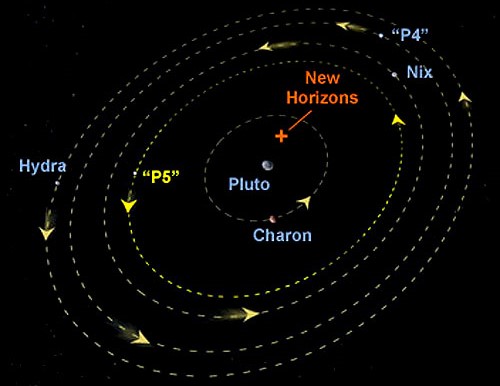
pluto1For roughly a month now, the SETI Institute (Search for Extra-Terrestrial Intelligence) has been holding an online poll – appropriately named Pluto Rocks! – to help them name Pluto’s smallest moons, officially designated P4 and P5. Discovered in 2011 and 2012 respectively, an online poll ran up until the end of February, at which point researcher and co-discoverer Mark Showalter took the names before the International Astronomical Union (IAU) to finalization.

Although there were several choices for for Pluto’s fourth and fifth moon, it was P4 that became the focus of a great deal of attention. Of all the names for this space rock, two top contenders came out on top: Vulcan and Cerberus. Out of a whopping 450,324 people who took part in the poll overall, 174,062 voted for Vulcan, effectively putting it in the top spot. This was perhaps due to a little Twitter intervention by Mr. William Shatner.

Pluto_moon_orbitsWhen the contest began back, it seemed that two camps emerged as the forerunners for naming the rock. On the one hand, there were the Trekkies who seemed determined to name P4 after famed-character Spock’s homeworld. On the other, there those who belong to IAU camp, who favored the classical Greek name of the beast that guarded the entrance to the underworld.

After just a few days in, William Shatner, Mr. James T. Kirk himself, proposed the name Vulcan, and not just because of the connection to his show. In Roman mythology, Pluto (aka Hades in the Greek pantheon) was the God of the underworld and Vulcan was one of his sons. Cerberus might have been more appropriate since this beast was Pluto’s/Hades companion, but the connection still works, and provides a nice little tie-in to one of the most popular science fiction shows of all time.

Pluto-and-VulcanFans and Trekkies worldwide rallied, and as of Feb. 25th, Vulcan had a comfortable lead over Cerberus and Styx, which were vying for the 2nd place position. SETI has now advised that people be patient, as it will take another months or two for the names of the two moons to be finalized and selected. However, barring any major objections or upheavals, I think it’s fair to say that P4 and P5 will henceforth be named Vulcan and Kerberos.

And I have to say, this is fascinating news in more ways than just one. Not only does it demonstrate that our collective knowledge of the outer Solar System is growing. It also demonstrates how henceforth, astronomical studies and cataloging may become a much more democratic affair. Once considered the province of academics and scholars, space exploration may truly be an open field in the future, subject to mass participation.

Oh, and congrats to Mr. Shatner for his enduring influence, to Mr. Nimoy for the shout-out, and to Trekkies the world over for showing what a committed fandom made up of millions of geeks can do! And may all the people who bullied you for your interests and keen intellectual skills consider what a force you’ve become and cower in fear!

RIP Hugo Chavez: Venezuelan Strongman and Master Troll

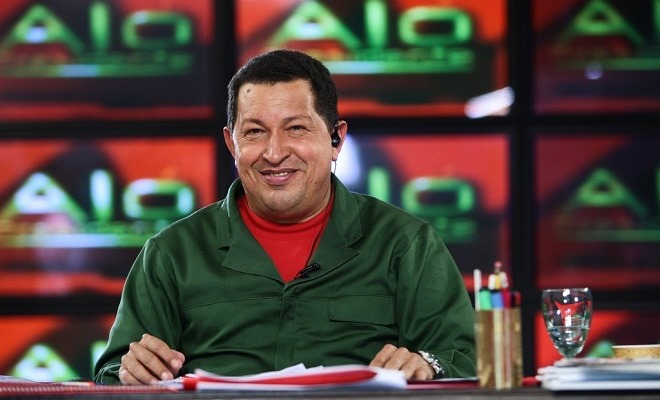
hugo_chavezThe death of Hugo Chavez, which took place on March 5th, has not only left a vacuum in Venezuelan politics, but deprived the world of one of its most prolific trolls. In his many years dominating South American politics, Chavez distinguished himself as more of a nuisance than a threat to US and western interests. But what a nuisance! And his tool of choice in this onslaught? Social media!

While he once thought Twitter was a tool of terrorism, Chavez became convinced it was an asymmetric tool to combat what he called a “conspiracy” of pro-American opponents. As a lover of hyperbole and over-the-top statements, how could he not take to a forum that rewarded such behavior? And like all good trolls, Chavez was evangelical in his vitriol, comparing his enemies to fascists and barbarians, making grandiose boasts, and dispensing exclamation points from a virtual pez dispenser!

And of course, his tweets kept pace with political intrigue, both domestic and foreign. In May 2011, when the U.S. State Department imposed sanctions against the Venezuelan state-run oil company PDVSA for selling gasoline reformate to Iran, Chavez’s cash-cow was blocked from receiving U.S. export licenses. In response, Chavez tweeted:

Sanctions against the homeland of [Simon] Bolivar? Imposed by the gringo imperialist government? Well: Welcome Mr Obama! Do not forget we are the children of Bolivar!

When Tripoli fell, the result of rebellions against Gadhafi and Coalition support, the long-time supporter of the Libyan dictator responded in the following way:

We must stop the unleashed imperial madness! World, good world, humane world, do not be overwhelmed by the barbarism!

And when Syria’s Alawite regime began to show signs of going the same way, also the result of uprisings from pro-democracy groups, Chavez moved quickly to declare his support for the Bashar Assad. In the midst of the regime using live fire to murder civilians, Chavez declared openly:

I talked a few minutes with the Syrian President, our brother Bashar. Syria is the victim of a fascist attack. God help Syria!!

And of course, he used Twitter plenty to disseminate plenty of self-serving propaganda at home. He dispensed advice on dealing with “traitors”, which amounted to a “raging socialist revolutionary offensive!” On accusations about poverty in Venezuela, he replied: “There is no poverty in Venezuela! Factory capitalism is poverty!” He also trolled an opposition primary debate: “The opposition is once again a fool!”

The US did not engage in flame wars with the former presidente, but the White House did release a statement offering condolences over his death. However a statement from President Obama on Tuesday evening was admittedly curt and seemed to hint that they were happy to be rid of his influence:

At this challenging time of President Hugo Chavez’s passing, the United States reaffirms its support for the Venezuelan people and its interest in developing a constructive relationship with the Venezuelan government.

Without a doubt, Chavez’ successor will have his hands full with regards to Venezuela’s economy and its internal political divisions. And I have to say, regardless of Chavez’s ongoing and annoying bombastic personality, he did pull much of Venezuela’s working class out of poverty. And even if you hated him, you had to admit, the man was interesting! RIP Hugo Chavez, you annoying bastard! Can’t imagine how quiet it’s going to be without you…

Pappa Zulu Complete!

zombie_goreAnd it’s done! The second installment of my zombie apocalypse is finally complete, and I’m set for a break! My thanks to those who’ve been following the story for lo’ these many months, and my hopes that you will be available when it comes time to start work on the third and (presumably) final chapter. But we’ll see how that goes. Could be this series is more of a “trilogy in four parts” kind of thing. You never know 😉

Anyway, onto the business of this novel. This one was even longer than the last! At 305 typed pages and 109,442 words, compared to Whiskey Delta which weighed in at 261 pages and 93,746 words. As I’m sure I’ve mentioned before, the Science Fiction and Fantasy Writers of America guidelines specify that a novel is any book with 40,000 words or more. At what point does a book become a tomb?

And much like before, I prepared a write-up and a cover for it’s eventual release in ebook and paperback, which I want to run by people now. As you can see, the cover is a mish-mash of army colors and a scene of paratroopers on the attack, while the back sports my usual “bio” pic and a small blurb on the book itself. Here’s what it says:

“Men rise from one ambition to another: first, they seek to secure themselves against attack, and then they attack others.” -Niccolo Machiavelli

In the barren deserts of New Mexico, the war against the Whiskey Delta continues. After years of fighting, the “Mage” and his Rattlesnakes have managed to get the upper hand on the undead, while back at their base, “Doc” Cooper and his team are getting close to producing a vaccine from the Patient Zero strain. But things quickly change when a new opponent enters the arena. Ever since their encounter with rogue forces in LA, the Mage has worried that there are military forces back East, people who owe allegiance to another master and want the Patient Zero strain for themselves…

Pappa_Zulu

Now comes the next part… At this point in time, I still need to finish doing edits for a Mr. Rami Ungar who’s made it clear he wants his new book Reborn City, to make the birthday deadline of November. In addition, I’ll be busying myself with the Yuva Anthology, which has expanded in recent months to take on more authors and now comprises five full-length short stories.

And once that is all done, I think I’ll get to work on that Apocrypha tale I’ve been reminiscing about. And of course there’s the matter of keeping up with all the cool science, tech, entertainment news and book reviews from the wide, wide world of science fiction. No slowing down over here! I’m just that awesome! Yeah, not really, but I do what I can… stay tuned!

Star Wars News!

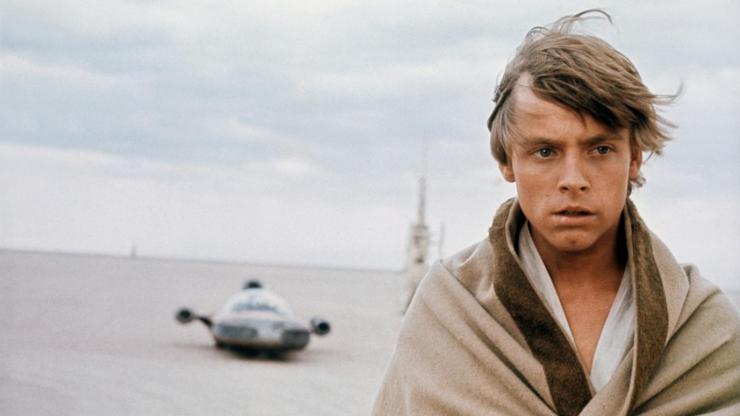
Star-Wars-Luke-Skywalker-TatooineEver since Mark Hamil announced that he would be returning to the Star Wars universe, courtesy of Disney and Lucas’ multi-billion dollar payout, fans have been wondering exactly how the aging star could reprise a role that occurred over thirty years ago. Well as it happens, Hamil had his own thoughts on the subject, and shared them during a recent interview with Comingsoon.net.

In essence, he believes that the new stories will be focusing on the offspring of the original cast, rather than simply picking up where the old stories left off. This would put Luke in a senior role, making him the sort of mentor figure that Obi-Wan was to him:

I’m assuming, because I haven’t talked to the writers, that these movies would be about our offspring — like my character would be sort of in the Obi-Wan range [as] an influential character. … When I found out [while making the original trilogy] that ultimate good news/bad news joke – the good news is there’s a real attractive, hot girl in the universe; the bad news is she’s your sister – I thought, ‘Well, I’m going to wind up like Sir Alec [Guinness]. I’m going to be a lonely old hermit living out in some kind of desert igloo with a couple of robots.

RS_fightHe was also keen to give some pointers to Abrams, the director of the new trilogy. Of particular interest was the fact that he advised that the new director steer away from a rather controversial aspect of Lucas’ newer films, which many fans felt placed special effects above substance and elbow-grease.

I said to George that I wanted to go back to the way it was, in the sense that ours was much more carefree and lighthearted and humorous – in my opinion, anyway….hope they find the right balance of CGI with practical effects. I love props, I love models, miniatures, matte paintings — I’m sort of old school. I think if you go too far in the direction of CGI it winds up looking like just a giant a video game, and that’s unfortunate.

Sage advice. In Hamil’s day, the sets were made to look like Franz Oz and Jim Henson were in charge, not a million computer geeks saturating every single frame with digital effects while actors spoke to tennis balls suspended from strings.

But most important of all, Hamil was sure to let people know that he hopes and intends to have all of the original cast back for another swing. Rumors abounded after he signed on to the project that others might be as well, which he quashed. However, he did let people know that he hoped they would:

Another thing I’d want to make sure of is are we going to have the whole gang back? Is Carrie and Harrison and Billy Dee and Tony Daniels, everybody that’s around from the original [returning]? I want to make sure that everybody’s on board here, rather than just one.

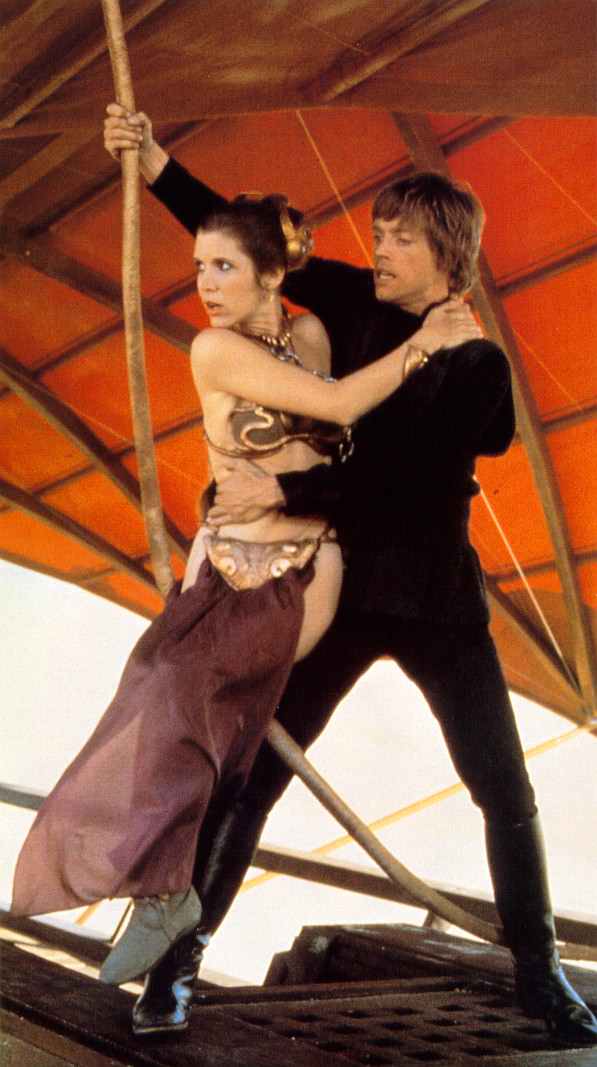
RJ_leiaAnd as it turns out, he may get his way yet. In a more recent interview with Palm Beech Illustrated, Carrie Fisher announced that she will be joining her “brother” as part of the cast and reprising her role as Princess Leia. In the course of a little QandA with the magazine, she was quite direct about what her plans were with the new movies. And she was more than a little cheeky about what it might look like:

Disney is going to continue the Star Wars saga, producing movies set to hit theaters starting in 2015. Can you confirm whether you’ll reprise the role of Princess Leia?

Yes.

What do you think Princess Leia is like today?

Elderly. She’s in an intergalactic old folks’ home [laughs]. I just think she would be just like she was before, only slower and less inclined to be up for the big battle.

And still wearing the bagel buns?

The bagel buns and the bikini, because probably she has sundowners syndrome. At sundown, she thinks that she’s 20-something. And she puts it on and gets institutionalized.

Solid enough for ya? So if I’m not mistaken, that just leaves and aging Harrison Ford, Billy Dee Williams, Frank Oz and a few extras to wear the Chewbacca, C3P0 and R2D2 suits, assuming the originals have retired. How hard could that be? Disney’s at the helm, not Lucas, and they’re sure to pay through the nose to get the old nostalgic-cast factor going. So c’mon, people, you got something better to do?

Source: Blastr, IO9

The Future is Here: The Sensory Prosthetic Hand

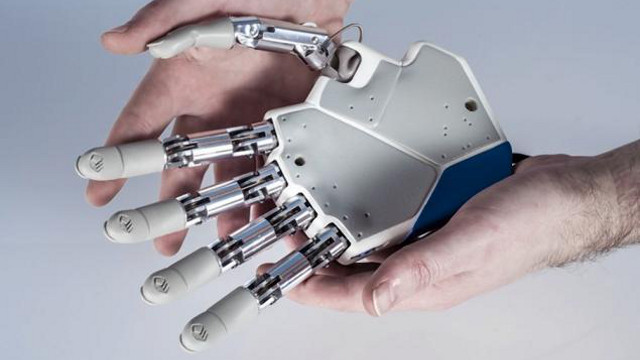
prosthetic_originalMuch has been made of the advancements made in mind-controlled prosthetics lately. For many, the advancements made in this field have led to comparisons with the prosthetic hand that Luke Skywalker received at the end of the Empire Strikes Back. Remember that, how he got a robotic hand that not only looked real but also allowed him to feel pain? Well as it stands, we may be closer to that than previously thought.

Witness the new era of robo-prosthetic devices, ones that will not only restore motion to a amputees and people born without limbs, but also sensory perception! Developed by Silvestro Micera of the Ecole Polytechnique Federale de Lausanne in Switzerland, it’s the first prosthetic that will provide real-time sensory feedback to its owners. Later this year, a man by the name of Pierpaolo Petruzziello, who lost half his arm in a car accident, will receive the first of its kind, once all the tests are concluded.

prostheticMuch like the mind-controlled prosthetics that have been making the rounds in recent years, this new device is wired directly to the user’s nervous system with electrodes, allowing them to control its movement. However, in this updated model, the process works both ways. Once the hand’s electrodes are clipped onto two of the arm’s main nerves, the median and the ulnar nerves, it will form a cybernetic connection allowing for the fast and bidirectional flow of information between the patient’s nervous system and the artificial hand.

In this respect, the arm works much as a real one does, using electrical stimuli to both send commands and receive sensory information. Announcing the development of the hand at the recently concluded AAAS conference in Boston, Micera was sure to highlight this aspect of the prosthetic, claiming that increased sensory feelings will improve acceptance of artificial limbs among patients.

prosthetic2Interestingly enough, this model is an updated version of one Micera and his team produced back in 2009, again for use by Petruzziello. He was able to move the bionic hand’s fingers, clench them into a fist and hold objects, and also reported feeling the sensation of needles pricked into the hand’s palm. However, this earlier version of the hand had only two sensory zones whereas the latest prototype will send sensory signals back from all the fingertips, as well as the palm and the wrists to give a near life-like feeling in the limb.

Once the hand and patient are united, he will wear it for a month in order to get a proper feel for the prosthetic and test out its many functions. Based on that test-drive, Micera hopes to develop a fully-functional and commercially viable model within the next two years.

Just think of it: prosthetics for amputees that will not only allow them to interact with their world again, but will provide them with the sensory information they need to actually feel like a part of it. One step closer to truly providing accident victims and people born without limbs a new and fully-functional lease on life. And perhaps to posthumanism as well!

transhuman3

Source: independent.co.uk, neurogadget.com

The Future is Here: Brain to Brain Interfaces!

?????????????????And I thought the month of February was an already exciting time for technological breakthroughs! But if a recent report from Nature.com is any indication, February will go down in history as the biggest month for breakthroughs ever! Why just last week, researchers in Natal, Brazil created the first ever electronic link between the brains of two living creatures.

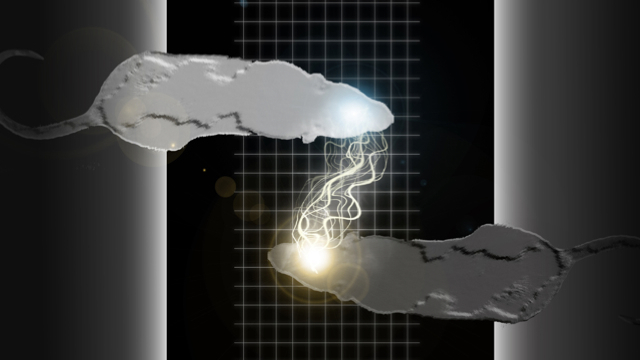
The creatures in question were rats, and the link between their brains enabled one to help the other solve basic puzzles in real time — even though the animals were separated by thousands of kilometers of distance. The experiment was led by Miguel Nicolelis of Duke University, a pioneer in the field of brain-machine interfaces (BMIs), and a team of neurobiologists who’ve been working in the field for some time.

BMIHere’s how it works: An “encoder” rat in Natal, Brazil, trained in a specific behavioral task, presses a lever in its cage which it knows will result in a reward. A brain implant records activity from the rat’s motor cortex and converts it into an electrical signal that is delivered via neural link to the brain implant of a second “decoder” rat. The second rat’s motor cortex processes the signal from rat number one and – despite being thousands of km away and unfamiliar with what rat one is up to — uses that information to press the same lever.

MMIBack in 2011, Nicolelis and his colleagues unveiled the first such interface capable of a bi-directional link between a brain and a virtual body, allowing a monkey to not only mentally control a simulated arm, but receive and process sensory feedback about tactile properties like texture. And earlier this month, his team unveiled a BMI that enables rats to detect normally invisible infrared light via their sense of touch.

However, this latest experiment really takes the cake. Whereas brain-machine interfaces have long been the subject of research, generally for the sake of prostheses, a brain-to-brain interface between two living creatures in something entirely new, especially one that enables realtime sharing of sensorimotor information. And while it’s not telepathy, per se, it’s certainly something close, what Nicolelis calls “a new central nervous system made of two brains.”

Obviously, this kind of breakthrough is impressive in its own right, but according to Nicolelis, the most groundbreaking application of this brain-net (or n-mind) is yet to come:

These experiments demonstrated the ability to establish a sophisticated, direct communication linkage between rat brains, so basically, we are creating an organic computer that solves a puzzle. We cannot predict what kinds of emergent properties would appear when animals begin interacting as part of a brain-net. In theory, you could imagine that a combination of brains could provide solutions that individual brains cannot achieve by themselves.

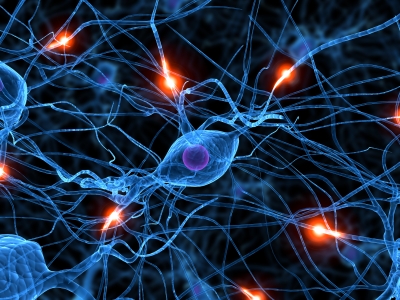
neural-networksNaturally, there are some flaws in the process, which were made evident by the less-than-perfect results. For starters, the untrained decoder rats receiving input from a trained encoder only chose the correct lever around two-thirds of the time. Those results could not be the result of random odds, but they are also a far cry from the 95% accuracy where the signals were reversed, going from the untrained decoder to the trained encoder. As any student of science knows, one-way results are not the basis of a sound process.

And I imagine the people who are lobbying to make biosoldiers illegal and limit the use of autonomous drones will be on this like white on rice! Hence why we can probably look forward to many years of research and development before anything akin to human trials or commercial applications of this technology seem realizable.

And of course, there is a video demonstrated the mind link at work. a word of warning first though. If you’re an animal lover, like me, the video might be a little difficult to take. You be the judge:


Source:
IO9, nature.com

More News from Mars… Lots More!

marsIt’s a good thing I’ve come down with a cold and have little to do but sit at my computer. Because in the last week, some very interesting news stories have been piling up that just scream for recognition. And wouldn’t you know it, more than a few have to do with our big red neighbor Mars, that world many human beings will one day think of as home.

The first story comes to us from the Siding Spring Observatory in New South Wales, where noted astronomer Robert McNaught recently sighted an new comet. From his observations, the icy interloper appeared to have originated in the Oort Cloud – a hypothetical cloud surrounding the solar system and containing billions of icy planetesimals that were cast out from our Solar System billions of years ago.

Mars_A1_Latest_2014After news of the discovery was released, the astronomers at the Catalina Sky Survey in Arizona looked back over their observations to find “prerecovery” images of the comet dating back to Dec. 8, 2012. These observations placed the orbital trajectory of the comet – now known as C/2013 A1 – through the orbit of Mars on Oct. 19, 2014. This means, in essence, that this comet could very well strike the Red Planet late next year.

Luckily, NASA’s Jet Propulsion Laboratory has run the calculations and indicated that their close approach data suggests the comet is most likely to make a close pass of the Martian surface. And by close, they mean at roughly 0.0007 AU, or approximately 100,000 kilometers (63,000 miles) from the Martian surface. So in all likelihood, Curiosity and Opportunity will be safe from a serious impact that could turn them into scrap metal!

But of course, predicting its exact trajectory at this time is subject to guess work, and ongoing observations will be needed. No doubt, the predictions will be refined a the next 20 months go by, and we’ll know for sure if this comet plans to miss Mars completely, or slam head-on into the surface at 200,000 km/h (126,000 mph).

Source: news.discover.com, astroblogger.blogspot.ca

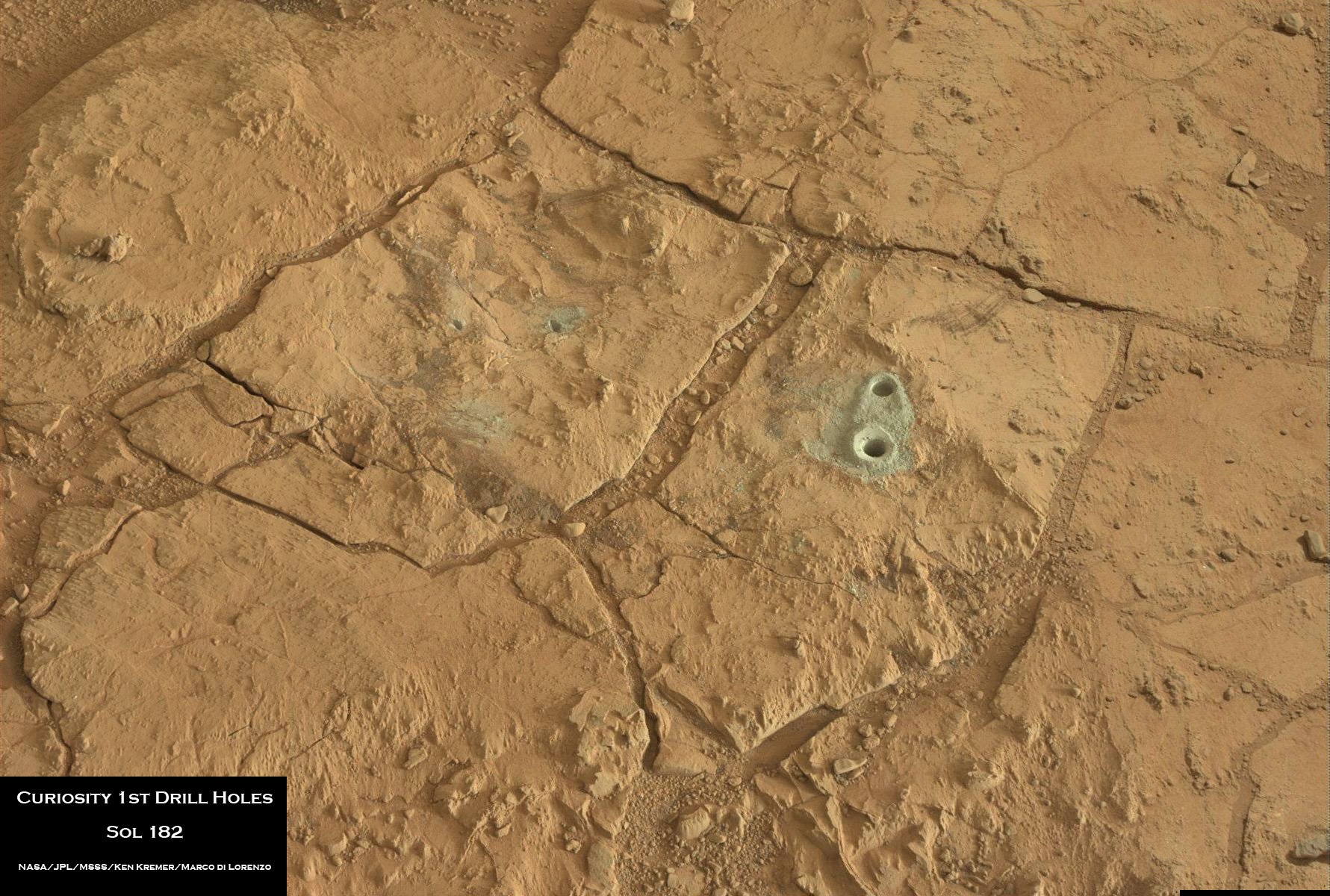
Mars_curiosity_drillingThe second bit of news comes to us from the good-ole Curiosity Rover! Roughly four weeks after conducting the first drilling operation into the Martian surface, the Rover ate its first sample of the grey dust that resulted. The delivery of the two aspiring-sized tablets of dust took place on Feb. 22nd and 23rd respectively after the robotic arm delivered them into the rover’s Chemistry and Mineralogy (CheMin) and Sample Analysis at Mars (SAM) laboratories for analysis. Results expected in two weeks!

Among other things, the results from the analysis are expected to give clues as to what the color change between the red surface and the grey interior means. One theory is that it might be related to different oxidations states of iron that could potentially inform us about the habitability of Mars inside the rover’s Gale Crater landing site.

Living-Mars.2At the same time, the Mars Science Laboratory team expects to find further evidence of what life was like in previous geological eras. The Curiosity team believes that the area inside the Gale Crater, known as Yellowknife Bay, experienced repeated exposure to flowing liquid water long ago when Mars was warmer and wetter – and therefore was potentially more hospitable to the possible evolution of life.

The rover will likely remain in the John Klein area for a month or more to obtain a more complete scientific characterization of the area which has seen repeated episodes of flowing water. Eventually, the six-wheeled mega rover will set off on a year long trek to her main destination: the sedimentary layers at the lower reaches of the  5 km (3 mile) high mountain named Mount Sharp.

Source: universetoday.com
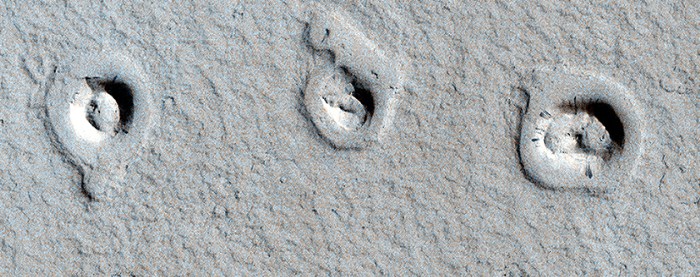
mars_hieroglyphsAnd last, but not least by any stretch of the imagination, is the discovery of “hieroglyphs” on the Martian surface. While they might appear like ancient glyphs to the untrained eye, they are in fact evidence of past subsurface water. The images were caught by the HiRISE camera on the Mars Reconnaissance Orbiter as it passed the surface area known as Amazonis Planitia.

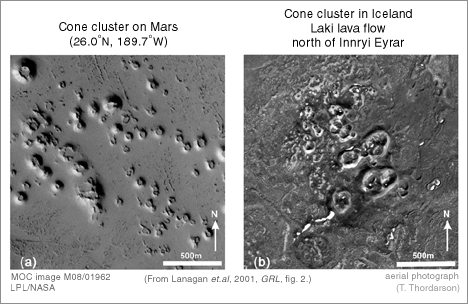
Known as ‘rootless cones,’ these geological features are the result of an explosive interaction of lava with ground ice or water contained within the regolith beneath the flow. Vaporization of the water or ice when the hot lava comes in contact causes an explosive expansion of the water vapor, causing the lava to shoot upward, creating what appears to be a button hole on the surface.

rootlessConesIn the past, Mars scientists have used geological patterns on Earth to make sense of similar ones found on Mars. For example, when the Curiosity Rover discovered veins of hydrated calcium in the rock surface in the Gale Crater, they compared them to similar patterns found in Egypt to determine that they were the result of long-term exposure to water flows. In this case, the rootless cones found in Amazonis Planitia are comparable to those found in Iceland’s Laki Lava Flow (as seen above).

According to Colin Dunas, from the US Geological Survey, the cones are rather large and most likely very old:

“The cones are on the order of a hundred meters across and ten meters high. The age of these specific cones isn’t known. They are on a mid- to late-Amazonian geologic unit, which means that they are young by Martian standards but could be as much as a few hundred million to over a billion years old.”

terraformingOnly time will tell if any subsurface water is still there, and hence usable by future teams of terraformers and settlers. According to Dundas, the odds are not so good of that being the case. Given the surface depth at which the ice was found, not to mention that at the low latitude at which it was found (22 degrees north), shallow ground ice is unstable. Dundas added that since ice stability varies as the obliquity changes, it’s even possible that ice has come and gone repeatedly since the lava erupted.

Too bad. That could have come in really handy for hydroponics, fuel cells, and even restoring surface water to the planet. Guess future generations of Martians will just have to look for their ground and irrigation water elsewhere, huh? Just another challenge of converting the Red Planet to a green one, I guess 😉

Stay tuned for more news Mars. As it stands, there’s plenty to be had! Stick around!

Source: hirise.lpl.arizona.edu, universetoday.com

Real-Life Batman Found!

batman_soloIt seems superheroes are becoming a real life phenomena, or at least vigilantes who insist on impersonating them. Not long ago, it was Pheonix Jones taking up the cause of justice in Seattle, and appealing to the public to join him. And now, over in Bradford, England, another would-be hero has shown up on the radar.

In an event that was caught on video, a man dressed as the “Caped Crusader” entered the Trafalgar House Police Station with a wanted man in tow, turned him over to police, and then disappeared into the night. Apparently, the wanted man in question was being sought by police in conjunction with theft and fraud, and was charged accordingly.

Despite speculation on some social media sites that the masked man might know the offender, or was himself known to police, the West Yorkshire Police spoke on record as saying:

“The person who brought the man in was dressed in a full Batman outfit. His identity remains unknown. We do not know the identity of the man dressed as Batman and do not know if he is friends with the man who was handed in.”

However, a local dress store owner believes she may have been the one to sell the costume to the local crime fighter. Kathryn Sutcliffe, of Kirkgate Market’s “The Joke Shop”, said she sold a Batman outfit to a man in his 20s a couple of days before the incident.

“Usually they want the Dark Knight costume but he wanted this one. He wanted the one with the muscly chest as well. It’s like the one Del Boy wears in Only Fools and Horses.”

Mrs Sutcliffe said the man had a local accent and was tall with curly black hair. She may be one of the few people who knows the Bradford Batman’s name, as he paid with a credit card and she has the receipt. But of course, she said she would keep his identity a secret.

Good for her! As we all know, art often imitates life. And in a world like ours, with such a rich tradition of superhero comics, movies, and television series’, the rules are pretty clear… with the exception of social media! Sure, we all know that you don’t go divulging a superhero’s identity and you don’t get in their way, but what are the rules regarding posting updates on Twitter and Facebook?

I’m thinking hating, second-guessing, jpegs and video clips are all fair game. Superheroes do depend on word of mouth-type publicity after all. But don’t post any info relating to their actual secret identity. That’s just plain wrong!

And a special shout-out to Nicola Higgins for bringing this story to my attention!

Source: BBC.news

Origins of Russian Meteor Found!

meteorJust over a week after a meteor exploded across the sky above the Chelyabinsk region of Russia, a group of astronomers published a paper that reconstructs where the rock came from. The men in question were Jorge Zuluaga and Ignacio Ferrin at the University of Antioquia in Medellin, Colombia. And the method they used was quite unconventional, and is perhaps a testament to the age we live in.

Basically, Zuluaga and Ferrin used the many sources of dashboard and security cameras that captured the event on film. Using the trajectories shown in the videos posted on YouTube, the researchers were able to calculate the trajectory of the meteorite as it fell to Earth and use it to reconstruct the orbit of the meteoroid before its fell to Earth and cause the shockwave that damaged buildings and shattered windows.

From their calculations, they were able to determine the height, speed and position of the meteorite as it fell to Earth. According to the team’s paper:

“…the Chelyabinski meteor started to brighten up when it was between 32 and 47 km up in the atmosphere. The velocity of the body predicted by our analysis was between 13 and 19 km/s (relative to the Earth) which encloses the preferred figure of 18 km/s assumed by other researchers.”

They then used software developed by the US Naval Observatory (called NOVAS) and the Naval Observatory Vector Astrometry to calculate the likely orbit. From all this, they came to the preliminary conclusion that the meteorite came from the Apollo class of asteroids, a well-known class of rocks that cross Earth’s orbit.

This conclusion has some worried, since the Apollo group, which orbits the Sun in the vicinity of Venus and Earth, contains over 2000 asteroids that are larger than 1 km in diameter. And considering that this one meteor, which measured between 17 and 20 meters, caused 1491 injuries and damage to over 4000 buildings in the area.

Lucky for us, NASA and every other space agency on the planet has some defensive strategies in mind. And of course, early warning is always the most important aspect of disaster preparedness. In the near future, we can expect some of the proposed observation satellites that will be going up to ensure there will be a better degree of early warning.

Source: universetoday.com