The Apocalyptic Papal Prophecy!

apocalypse-04Does the resignation of Pope Benedict XVI mean the world is coming to an end? Apparently yes, assuming you believe a 12th century prophecy attributed to the Irish Archbishop St. Malachy. In the latest in a very long series of apocalyptic predictions, it is now believed that Benedict’s successor will be the last pope, and that after him, the Day of Judgement will come. You know, I was wondering what the next one would be now that the Mayan Prophecy has passed us by.

The prophecy is dated to 1139 CE, at which point Archbishop Malachy predicted that their would be 112 popes before the world officially ended. Since Benedict XVI was number 111, that leaves only one before everything hits the fan. According to the legend, the list of popes originated from a vision Malachy said he received from God when he was in Rome while reporting on his diocese to Pope Innocent II.

malachy_prophAfter giving the list to Pope Innocent II, the document remained unknown in the Vatican Archives for some 440 years after until it was rediscovered and published by Benedictine Arnold de Wyon in 1590. The prophecy consisted of a series of brief, cryptic descriptions in Latin of each pope, culminating with the 112th, known as Petrus Romanus, or “Peter the Roman”.

According to the prophecy, Peter the Roman would “feed his flock amid many tribulations, after which the City of the Seven Hills shall be utterly destroyed, and the awful Judge will judge the people.” In short, the last pope will see his people through hard times, Rome will fall, and the apocalypse will soon follow. Talk about doom and gloom, and more than its fair share of apocalyptic cliches!

End_of_Days_by_taenaronNevertheless, this historic document has some people worried because some of its predictions have come true. For example, Malachy prophesied the first pope on his list would be “from a castle on the Tiber”, and Celestine II, elected in 1143, was born in Toscany on the shores of the Tiber River. Malachy further predicted that another pope would be “elevated from a hermit”, which Nicholas IV, pope from 1288 to 1292, had been at the monastery of Pouilles. The 45th pope in the prophecy was described as coming “from the hell of Pregnani”, whereas  Pope Urban VI (1378-1389) came from a village near Naples called Inferno (hell).

But as my grandpa used to say, “even a blind squirrel finds the odd nut”. What’s more, most scholars believe that the document is a fake, that it was written in 1590 and all its predictions and claims were made retroactively. A convincing point here is the fact that after 1590, the predictions and epithets become much more vague.

But of course, we can expect some, Catholics for the most part, to take this seriously. Lord knows (no pun!) people love a good doomsday prophecy, and some people need really do love the idea of the world ending within their lifetime. So if you’re the kind of person who doesn’t like getting egg on their face or caught with their pants down, start saying your prayers and repenting your sins. And keep on eye on Rome and any other city built on “seven hills” just in case it really does get leveled. You never know…

Source: news.discovery.com

The Future is Here: The Personal Fitness Band

Fitbit-FlexOf all the important new gadgets to make it to the Consumer Electronics Show this year, one stood out as far as morning joggers and fitness gurus were concerned. It’s called the Fitbit Flex, an activity tracker designed to be worn all day and monitor movement, sleep, and calories burned. In an age where electronics are getting more personal, flexible, and wearable, it seems that fitness industry is determined not to be left behind.

While the concept of a wearable fitness tracker is not entirely new, the Flex incorporates a number of new developments in the field of personalized technology. For starters, as the name suggests, its a flexible bracelet that is comfortable enough to be worn all day long and malleable enough to stay firmly wrapped around your wrist. And unlike pedometers or heart rate monitors which monitor a single vital function or activity, the Flex is designed to monitor all simultaneously and in terms of the individuals stated fitness goals.

fitbit_flex_syncAnd to top it all off, the band uses a wireless Bluetooth connection to sync with PCs and smartphones. This last aspect is something Fitbit is quite proud off, as the Flex is the first fitness band to sync using the latest Bluetooth 4.0 standard. In addition, the company has announced that it will eventually support Bluetooth syncing of fitness data with Android devices once an update becomes available, hopefully by late January or early February.

nike-fuelband-01Already, other companies have released fitness monitors similar to this new product. The Nike Fuelband is one such competitor, a flexible band that also used LED lights to indicate heart rate, distance, and overall fitness performance. It is also designed to sync up with mobile devices using the Nike+ iPod accessory. What’s more, the company claims that the band and a users Nike+ account will keep long-term track of a person’s fitness and offer incentives (such as awards badges) and motivational tips.

jawbone-upA third contender is the Jawbone Up band, another monitoring band that is even slimmer and more ergonic, as far as wearing it all day is concerned. Like it’s co-competitors, it too is syncable to an iPhone thanks to its specialized app. But unlike the others, it is designed to literally be worn 24/7, thus painting a more complete picture of a person’s health and fitness. What’s more, it has no screen, making its results only available through syncing.

All told, these bands and those like them range in cost from $100 to $269.99, and are somewhat limited in that not all are Bluetooth capable or able to link up with devices other than iPhones or unless you have an account with them (Nike+ being the big example here). But of course, that’s par for the course when it comes to competition between designers, who only want you to use their products and those they have business ties with.

All that aside, these and other products like them made a big impact at CES this year because they signaled that the fitness industry is on board with some of the latest trends and innovations. As technology continues to improve, we can expect more and more of our needs and wants to be handled by portable, wearable and (coming soon!) implantable electronics that are capable of interfacing with external computers to monitor, store and share our data.

Source: news.cnet.com, (2), (3)

DARPA’s New Sub-Hunting Robot

robot_sub-hunterWhen it comes to planning for the next possible conflict, military planners are often forced to take into account emerging trends in technology, and find both uses and countermeasures for them. And when it comes to future wars at sea, possibly fought in the Straight of Hormuz or the Sea of Japan, a number of startling developments are being taken into account, and solutions drawn up!

One such “solution” is the new robot sub-hunter being jointly created by the Science Applications International Corporation and DARPA – the Defense Advanced Research Projects Agency. That unmanned maritime robot, called the Anti-Submarine Warfare Continuous Trail Unmanned Vehicle, or ACTUV, doesn’t exist yet and won’t for years. But the SAIC’s plan does have the backing it needs, and presents an idea that is likely to inspire fear in submariners everywhere!

knifefish-drone-640x353For one, the unmanned vehicle will be capable of operating for periods ranging between 60 and 90 days, significantly longer than any aerial drone is capable of staying airborne. What’s more, SAIC is designing the ACTUV to be way more autonomous than contemporary drone aircraft. Once powered up, all a ship need do is release the drone and allow it to rely on its long-range acquisition sonar and other advanced sensors to scan for submarines, while at the same time steering clear of any nearby surface ships.

And then there is the advanced technology powering the drone’s sonar arrays. Unlike other ships, the ACTUV’s sensors create an acoustic image of its target to know it has the right one. Once the ACTUV thinks it’s got something, it pings nearby Navy ships through a satellite link, which they can either confirm or deny, either giving the ship the green light to hunt or instructions to search elsewhere.

And last, but not least, the ACTUV can operate alongside its surface fleet, remain in constant communication with a mothership as well as naval aircraft as they deploy sonar charges to help it hunt subs. This is a level of coordination that is rarely seen in aerial drones, which are either sent into action far from the front lines or controlled remotely by infantry in the field to offer fire support.

X-47BAh, but there’s one thing: the drone isn’t armed. Primarilyy developed to help Naval ships with hunting silent subs and/or cheap diesel-electric models, the ship may be capable of operating autonomously, but cannot take action to end lives. This feature may be the result of the Pentagon’s recent decision to limit the killing powers of UAV and autonomous drones, which amounted to ensuring that a human being will always be at the helm wherever the death of human beings is involved.

What’s more, the drone is designed with all kinds of futuristic and present-day scenarios in mind. While silent subs – ones that use advanced drive systems to generate little to no noise (a la The Hunt for Red October) – are one likely scenario, there is also the possibility of the US Navy running into the cheap diesel models which are technologically inferior, but can be much quieter and harder to track than anything nuclear. Russia is known to sell them and Iran claims to have them, so any military analyst worth his salt would advise being prepared to meet them wherever they present themselves.

And of course, the SAIC was sure to create a video showing the ACTUV in action:


Source:
Wired.com

Nokia Morph Concept Phone

nokia_morphThis story is a bit of an expansion on a preview post, and one which I’ve put off since I spent so much time talking about phones a few weeks ago. And the concept is a little dated at this point, but since it’s still in the works and just as revolutionary. And trust me, its quite cool and to read about!

It seems that there is no shortage of new and radical ideas when it comes to the field of personal communications these days! And when it comes to personal phones, it seems the sky’s the limit. In keeping with the trend to build smaller, ergonomic, flexible and thinner smartphones and PDA’s, Nokia has another concept which is making waves.

It’s known as the Morph, a new concept that showcases some revolutionary leaps being made in numerous fields. Thanks to ongoing collaboration between the Nokia Research Center (NRC) and the Cambridge Nanoscience Centre in the UK, this device incorporates numerous advances being made in terms of thin displays, flexible housings and nanotechnological processes. Once feasible, this phone will literary be assembled at the microscopic levels, leading to a phone made of “smart matter”.

In addition to the revolutionary nanoscale manufacturing process, the phone will present a number of radical new possibilities for users and device manufacturers everywhere. They include:

  • Newly-enabled flexible and transparent materials that blend more seamlessly with the way we live
  • Devices that are self-cleaning and self-preserving
  • Transparent electronics that offer an entirely new aesthetic dimension
  • Built-in solar absorption that charge a device and batteries that are smaller, longer lasting and faster to charge
  • Integrated sensors that allow people to learn more about the environment, empowering them to make better choices

In addition to the advances above, the integrated electronics shown in the Morph concept could cost less and include more functionality in a much smaller space, even as interfaces are simplified and usability is enhanced. What’s more, the development and combination of these technologies will have far-reaching benefits for the fields of communication and personal computing, revolutionizing how people do these in their daily lives.

And of course, Nokia was sure to create an animated video displaying the Morph concept in action. Take a gander:

Source: press.nokia.com, youtube.com

The Future is Here (and See-Through): The Intimacy Dress!

intimacy_dressLeave it to engineers to make our world a little more transparent! In what is sure to be a novelty amongst clothiers, perfect for one-on-one social occasions and soirees – but definitely not dress parties! – designer Daan Roosegaarde has unveiled a design he calls the “Intimacy Dress”. A first amongst fashion designers, this article of clothing responds to the wearers level of arousal, and responds by turning see-through, at least in some sections.

In short, the dress works thanks to a series of “e-foils,” which are opaque coils made of “electronics, LEDs, copper and other media” that are embedded in the fabric. In response to your heartbeat, the coils become highly transparent, enhancing a romantic “close and personal encounters with people.” The only possible drawback is that the dress could just as easily turn transparent due to elevated stress levels or anger, so avoid wearing it at family occasions!

Though it has been in development for many years, the 2.0 model will be hitting the market just in time for Valentine’s Day. Good news for anyone into high-fashion, high-tech, or both! Happy Valentines to all, and in the meantime, check out this (tasteful) video of the Intimacy Dress in action!

Source: IO9.com

Curiosity Drills!

curiosity_drillsIn what is a first amongst cosmic first, the Curiosity Rover drilled into Martian rock and collected fresh samples from the resulting dust. The precision drilling took place this past Friday, Feb. 8, 2013 – during the 182nd day of the mission – after numerous tests and procedures were conducted. The images were beamed back to Earth on the following day (Saturday, Feb 9) amidst a great deal of fanfare and celebration.

Given the fact that it took them nearly a decade of painstaking work and effort to design, assemble, launch and land the Curiosity Mars Science Laboratory (MSL) rover, it’s obvious while the rover team is overjoyed with this latest development. What’s more, this was more than just a first in the history of space exploration, it also marked Curiosity’s 6 month anniversary on the Red Planet since touching down on Aug. 6, 2012 inside Gale Crater.

John Grunsfeld, NASA’s associate administrator for the agency’s Science Mission Directorate, had this to say about the drilling:

“The most advanced planetary robot ever designed now is a fully operating analytical laboratory on Mars. This is the biggest milestone accomplishment for the Curiosity team since the sky-crane landing last August, another proud day for America.”

curiosity_drilling_sightCuriosity drilled a circular hole about  16 mm (0.63 inch) wide and 64mm (2.5 inches) deep into the red slab at the “John Klein” rock site. The  fine-grained sedimentary rock, which is rich with hydrated mineral veins of calcium sulfate, parted to produce a slurry of grey trailings surrounding the hole. These dust samples were then collected for examination using the rover’s on board laboratory.

The team believes the area known as Yellowknife Bay, where the drilling took place, repeatedly experienced percolation of flowing liquid water eons ago when Mars was warmer and wetter, and potentially more hospitable to the possible evolution of life. These latest samples, they hope, will offer additional compelling evidence to this effect, and also some traces of organic molecules.

curiosity_drillbitWhile this may sound like an ordinary day around NASA, it represents a quantum leap in terms of what remote landed craft are capable of doing. At no time in the past have astronauts been able to place mobile research platforms on a distant planet, collect samples of said planet, and conduct research on them, all the while beaming the results and images back to labs at Earth for analysis.

What’s next for the rover? Well, once the analysis is complete, the 1 ton robot will continue to investigate Yellowknife Bay and the Glenelg area. After that, it will set off on a nearly year long trek to her main destination – the sedimentary layers of the lower reaches of the  5 km (3 mile) high mountain named Mount Sharp – some 10 km (6 miles) away from its current position.

Source: universetoday.com

Cyberwarfare: Not Just for Anarchists Anymore!

Hack the Planet by von Shin Kurohoshi

For those deeply concerned about internet security and privacy, the year of 2013 certainly opened with a bang. First, there was the news that a cyberspy ring – apparently operating out of Russia – had been spying on embassies, governments and research institutions around the world for the past five years using a virus dubbed “Red October”. This was back in January, when the Moscow-based antivirus firm known as Kaspersky Lab announced the discovery of the international intrigue.

Then, on Jan. 30th, the New York Times announced that they too have been the target of hackers, this time from China. In a statement released by the newspaper, the company claimed that Chinese hackers have been persistently attacking their publication for the last four months, infiltrating its computer systems and getting passwords for its reporters and other employees.

Jin_jiaboaThe timing of the attacks coincided with a Times investigation, published online on Oct. 25, that found that the relatives of Wen Jiabao, China’s prime minister, had accumulated a fortune worth several billion dollars through business dealings. The hackers tried to cloak the source of the attacks on The Times by first penetrating computers at United States universities and routing the attacks through them.

With the help of  Mandiant, the internet security company hired by The Times, they were able track the intruders, study their movements and help erect better defenses to block them. In the end, The Times reported that they had successfully expelled the attackers and kept them from breaking back in. However, the fact these hackers were able to infiltrate the network of a private news organization in the first place was much cause for worry.

Cyber-WarFor one, this is not the first time that hackers, originating in China, have used these sort of subterfuge tactics to hack US databases. According to experts at Mandiant, their company has tracked many such intrusions back to the Chinese mainland, all of which used the same approach of cloaking their efforts using US servers. In addition, this incident, which smacked of state-involvement, did not occurr in a vacuum.

Back in 2008, internet security experts indicated that Chinese hackers had begun targeting Western journalists as part of a wider campaign to identify and intimidate their sources and contacts, and to anticipate stories that might damage the reputations of Chinese leaders. The purpose behind this far-reaching and growing spy campaign aimed at corporations, government agencies, activist groups and media organizations inside the US seemed to be for the purpose of controlling China’s public image, domestically and abroad, as well as stealing trade secrets.

cyber-war-1024x843But of course, China is hardly alone in these sorts of covert cyber-warfare. As already mentioned, Russia has already shown signs of developing cyber weapons to assist in spying abroad, and there’s mounting evidence that Israel, Iran and the US are on board too. Starting in 2008, Iran’s main nuclear enrichment plant was hit by a sophisticated computer worm that caused damage to it, thus putting a crink in their efforts to become a nuclear power.

While no one took responsibility for this incident, the evidence seemed to indicate that the worm originated from sources within Israel and the US. Attacks which took place later on American banks and oil companies within the US were believed to have been caused by Iran, in retaliation for the worm that hurt their main source of enriched uranium and a key component in their nuclear program.

anonymous_flagFor some time now, hacking federal databases has become something of a sport for various groups and causes who are seeking to reveal government secrets and expose their inner workings to public scrutiny. The “Hacktivist” group known as Anonymous is a perfect example, a group closely linked to Assange (of Wikileaks) who’s most recent infiltration of the Federal Reserve Bank made the news earlier this month as well.

But as I’m sure all will agree, it’s one thing when private citizen attack domestic and foreign databases, and quite another when nations attack each others. While cyber criminals may constitute a vague and slippery enemy, one which is much harder to identify and prosecute, nation-states constitute a far more frightening one. Not only are their resources far more vast, the consequences of battling them are far greater.

Knowing who your enemy is, and that they have nuclear capabilities and the ability to strike at you physically… Yes, I think that’s a much scarier prospect! While the old ways of plausible deniability and covert action may apply, no one likes the idea of subtle attacks which could escalate into a full-scale conflict. Even if it is waged entirely by computer, the effects are still likely to be felt!

Source: NYTimes.com, money.cnn.com

War Crimes In Video Games

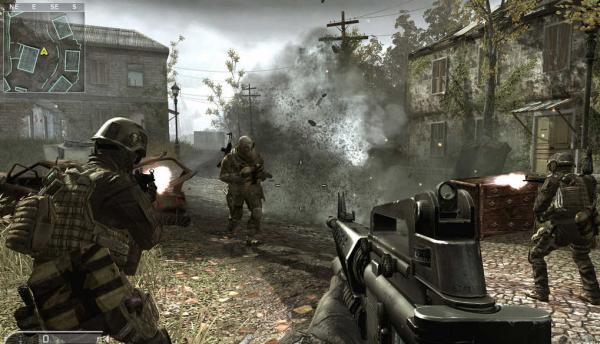
violent video gamesIt’s no secret that violence in video games has been a source of concern to many for some time now.  In addition to media watchdogs, family values groups, and consumer advocates, there are those who would claim that the proliferation and realistic nature of gore and violence in gaming is partly to blame for things like the school shootings at Columbine High, Virginia Tech, and Sandy Hook Elementary. And yet, after years of polarized debate, there seems to be no solid evidence tying the two together.

And in a move which is sure to polarize it even further and annoy the hell out of some gamers, a recent report from two Swiss Human-Rights organizations has gone a step further in asking for an end to video game violence. According to the report, released by Trial and Pro Juventute, there are some video games that depict war and battle actions that in real life would violate international human rights laws. In short, it is possible to commit war crimes in video games, a fact which has both groups worried about the message this sends.

Doesn't inspire confidence, does it?
Doesn’t inspire confidence, does it?

For the sake of research, the two groups selected 20 games – including Call of Duty 4, Metal Gear Solid 4, Far Cry 2, and several others – and had “young gamers” play the games as three attorneys watched to find actions in games that in real life would violate rules and regulations that govern armed conflict. The study attempted to determine if the acts gamers engage in while they play violent titles would “lead to violations of rules of international law, in particular International Humanitarian Law (IHL), basic norms of International Human Rights Law (IHRL), or International Criminal Law (ICL).”

After evaluating the 20 games, the group found that in many cases, “shooter” games failed to take into consideration international humanitarian law. In a statement, they expressed their conclusions as follows:

“The practically complete absence of rules or sanctions is nevertheless astonishing: civilians or protected objects such as churches or mosques can be attacked with impunity, in scenes portraying interrogations it is possible to torture, degrade or treat the prisoner inhumanely without being sanctioned for it and extrajudicial executions are simulated. At least a few games punish the killing of civilians or reward strategies that aim to prevent excessive damage.”

violence-in-video-gamesIn particular, Call of Duty 4 was pretty hard hit for its violations of many rules which any army would consider standard ROE. For example, the game violates several human-rights laws by allowing gamers to:

“attack civilian buildings with no limits in order to get rid of all the enemies present in the town who are on roof tops, open areas of the town, squares featuring statues, etc. Under IHL, the fact that combatants/fighters are present in a town does not make the entire town a military objective.”

Similarly, they took issue with the scene in which the games villain, Al-Asad is beaten for information and then executed once you are finished with him:

“[the] beating of Al-Asad amounts to torture or at least inhuman treatment, which are prohibited in any context, under any circumstances, whether in peace time or during armed conflict situations. Killing him amounts to an extra-judicial, summary or arbitrary execution as it falls outside the context of any legal framework.”

Similar evaluations were given to other games the groups evaluated. Naturally, they were quick to say that their study was not intended to “prohibit the games, to make them less violent or to turn them into IHL or IHRL training tools.” Instead, they say they want to work with developers to ensure that in the future, their games observe real-life human-rights laws.

In keeping with this, they recommended that developers make it clear to gamers that in any circumstance, human-rights violations cannot be allowed, even in a game setting. It also requested that, going forward, developers adhere to international human rights laws when they depict war or battle in a game. Ultimately, they hoped that their study would act as a sort of wake-up call for game developers to consider the kind of message they are sending to young people:

“It is regrettable that game producers hardly ever use this possibility to creatively incorporate the rules of international law or even representatives of such rules as specific elements in the course of the game. Pro Juventute and Trial call upon the producers of computer and video games to use their strong creativity and innovation for this purpose. It would mean a wasted opportunity if the virtual space transmitted the illusion of impunity for unlimited violence in armed conflicts.”

Personally, I think it’s a good thing they steered away from COD: Modern Warfare 2 and 3, where far worse violations take place. In the immediate sequel to MW, players have the option of taking part in a mass shooting in the Moscow Airport, where you are required (as an undercover member of a terrorist squad) to gun your way through civilians and security guards in order to advance the story. Can you say sicko shit?! Seriously, Infinity Ward, what the hell were you thinking?!

But alas, the question is one we all need to ask ourselves. These human rights groups specifically chose video games instead of movies because of their interactive nature and the fact that gamers are not mere passive observers, but active participants in the simulated violence they are witnessing. So really, does it make a difference that in this context, a person is seeing the death and destruction and war crimes from a 1st person POV? Or is this simply a case of more gratuitous entertainment that no one sane human being would try to emulate?

Source: news.cnet.com

Captain Kirk Hails the ISS

ISSIn a move that was sure to give Trekies a collective fangasm, William Shatner made contact with the International Space Station this week. This past Thursday, thanks to the marvels of 21st century communications technology, the man who portrayed Captain Kirk was able to speak to Chris Hadfield, an astronaut on board the International Space Station.

Captain-KirkThe conversation began when Shatner – ahem! – opened hailing frequencies and contacted the ISS. Hadfield replied and, using some Star Trek sound effects as background, the two had a live, streaming video conversation. The entire conversation was recorded and uploaded to Youtube for the benefit of fans and amateur astronomers everywhere.

Needless to say, when science fiction and reality collide like this, it is an epic day in nerdom! Check out the video below…


Source:
universetoday.com

Futurama Season 7B, Coming Soon!

futuramaThanks to IO9 and Raven Lunatick for turning me onto this! For fans of Futurama, the long wait for the second half of season 7 will finally be coming out this summer. And the buzz is pretty interesting, and promises to broach one of the saddest moments in the series. Yes, it seems that they hope to once again revisit the issue of Fry and Seymour – who’s relationship was cut tragically short when he was frozen. Good thing too, I don’t like how they ended that. You talk about a baller moment, and I aint talking basketball!

Other promises include a nod to the Planet of the Apes franchise, a Thing parody, Leela as a tentacle-monster (possibly a further mutation), a war with a Cobra-esque evil organization, and some more appearances from Robot Satan. And of course, we can all count on the return of our favorite characters and their trademark antics, which would include some smack-talk from Bender, some mild senility from the Professor, some incompetence and impoverished references from Zoidberg, and some limboing and thinly-veiled ganja jokes from Hermes.

Enjoy the preview and join me in counting the days!