Sexy Star Wars Costumes!

droid_costumesCame upon these entirely by accident. I love living in an age when geekiness and sexiness come together so nicely! Observe the following sexy takes on classic Star Wars characters. They are pretty hot, in the right hands of course!

Sexy C3P0:
This one I found as part of a Star Wars burlesque show. Dancers come out dressed as various characters with a sexy twist… and then proceed to get naked! Here we have a sexy twist on the effeminate, whiny, and possibly homosexual robot known as C3P0. Other pictures in this series featured another dancer in the argubaly less attractive R2D2 costume, hence why I selected this one on its own. Personally, I think ol’ “Goldenrod” looks a lot better this way 😉


Sexy Darth Vader:
This costume appeared as part of a Comic Con search. This is where most sexy twists on traditional Star Wars costumes are to be found. It’s a testament to geek culture and the versatility of science fiction that more and more women are coming to these things and dressing so lovely!

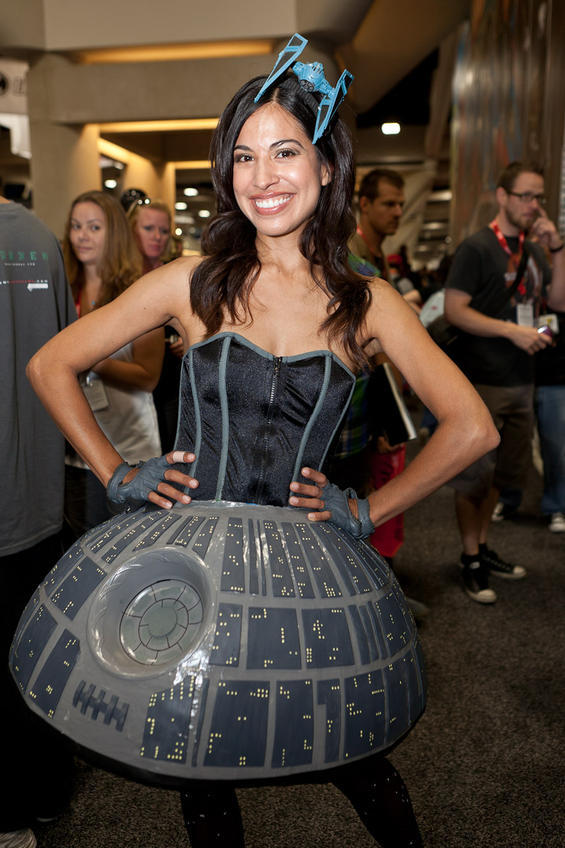
Sexy Death Star:
Here we have another entry that made its appearance during Comic Con season! And it’s a rather interesting take on the space station which is no moon, isn’t it? For all intents and purposes, it’s a bustier which opens up into a Death Star skirt. And check out the hair pin. An actual Tie Interceptor. Wow, this woman has it all covered. Beauty, brains, and a true geeks appreciation of Star Wars!

Sexy Jedi:
No idea where this one came from, but who the hell cares? It works, and on a number of levels. More and more, sexy, ass-kicking women are making their mark in the world in sci-fi. And there are few things more sexy than a Jedi woman in skin-tight leather and tall boots, weilding a lightsaber over the bodies of dead Stormtroopers! If Luke knew Jedi like this, he would have never wasted so much time with a little green man on Dagobah!

Sexy Leia:
Next up, there’s the sexy Leia costume. Unlike the others, this aint no sexy variant on an original theme, it’s the original costume! If there’s a heterosexual man who was born before 1980 and tells you he hasn’t fantasized about this outfit at some point in his life, he is either lying or dead! And here is an especially sexy take on the slave outfit. Sure, technically Leia was asked to wear this as part of mean plan by Jabbah to degrade the proud warrior, but in truth, she knew how much her fans would appreciate it and donned it for our sakes. And I speak for us all when I say we were REALLY thankful 😉

Sexy Stormtrooper:
Last, but not least, we have one of many sexy female Stormtrooper outfits that have made the rounds over the years. This one does not come from any Comic Con footage, however. No, this one is a professionally posed shot performed with a model and a factory spec costume. Ergonomic, sleek, and pretty easy on the eyes huh? Minus the exposed midriff, this costume could signal an end of the Empire’s highly sexist “men only policy” in their Stormtrooper outfits!

Addendum: Sexy Miss Chewbacca
Somehow I forgot this one, and granted the name sounds a little suspect and weird, but one look at this outfit will dispel any notions that a Wookie can’t be sexy. Check out the strategically placed furry bits that make us this outfit! Of course it would come as a belly shirt and mini skirt, right? But hey, Wookie fur don’t come cheap (sidenote: no Wookies were harmed in the making of this costume). Yes, one sight of this outfit would make even Chewie say “Wraaaaaarrrrr! Wump-wump! Wooh!” (translation: Whooooa! That’s hot!)

New Anthology Sample: The Torch!

Hello all and welcome back for another Anthology Update. As I said a few days ago, there is still plenty of news to be had vis a vis my groups ongoing efforts to create our our Magnum Opus about colonization and space travel, aka. Yuva. And the latest is that I’ve finally begun writing the prologue for the entire series.

Entitled “The Torch”, this first installment in the anthology shows the origins of the story’s central character (Magid Muktari) and his lifelong mission to see humanity colonize a distant world. Thanks to Khaalidah Muhammed-Ali who coauthored this with me and once again provided the characters and impetus for it’s creation! Hope you all enjoy!

“A man of cold, hard science, most assume that Magid Muktari was not a man of faith. At the press conference following the acceptance of his final proposal for the creation and international funding of the Yuva Colonization Project, Muktari was questioned thus by one young reporter: “Sir, can you please explain to us why this project is so important?” Muktari said in cryptic form, “Our Earth is alive.” When asked to elaborate Muktari said: “Has not Allah promised us in that every soul shall taste of death?”

-Magid Muktari, 2108

Masdar City, UAE, 2048

Magid Muktari took a deep breath and tried to remain calm. Oh how he hated waiting! Even after all the years he had spent on the front lines of his industry, waiting for meetings, trips to end, and plans to reach fruition, he still couldn’t stand the time it took to wait for a presentation. But that was the way of it, he knew. Anticipation was the thousand little deaths that preceded the actual execution. One could only surmise from this that humans weren’t designed to wait on others. Either that or the Universe had a very poor sense of humor.

To pass the time, Muktari began to punch up his presentation info. Adjusting his compad to a convex shape and resting it on his knees, he placed his contacts to display mode and waited for the computer to warm up. A command prompt appeared in his field of vision and asked for his password. He typed it in promptly.

Meşale

His eyes filled with a cerulean blue sky, small clouds and a series of desktop icons dotted the projected heavens. Accessing the proper folder, he accessed the presentation and waited a moment. The opening display image, five planets arranged from left to right, appeared in his visual field shortly thereafter.

The Future of Off-World Settlement, ran the title. A title bar appeared beneath the five planets, their names scrolling out as the marble-sized pictures became animated.

Gliese 581 g, Gliese 667C c, Kepler 22 b, HD 85512 b, Gliese 581 d

Placing his hands above the compad again, Muktari brought up the first of the five. The brown marble moved to the center of his visual field, displacing the rest and growing exponentially in size. A soft contralto began to speak in the background.

“Planet Gliese 581 g, fourth planet of the Gliese 581 star system. Discovered in 2000 by Lick-Carnegie Exoplanet Survey, led by principal investigator Steven S. Vogt, who named the planet Zarmina after his wife – ”

Muktari terminated the audio and began interfacing with the image. Zooming in on the planetary mass, he began to assess the features that had been observed from the most recent astronomical surveys. Being a tidally-locked body, only so much was visible, and most of that was only clear when the space telescope and the exoplanet’s rotations were in perfect sync. He moved back and forth, noting the outlines of a large continent facing towards the sun.

No, not a lot happening there, he thought gravely.

Putting it back in its place, he called forth the second in the list. Here too, the disc look particularly brown and mottled. However, its size and relevant characteristics set it apart from the previous entry, and here too Muktari began to worry. Super-Earth’s were not exactly a popular destination for colonists, not when they could expect a serious and potentially punitive adjustment period.

Muktari shut the display down and took a deep breath. Moments away from the greatest presentation he would ever make, that perhaps anyone would ever make, and he was already beginning to write himself off. Not a good sign, not if he wanted to have any chance at convincing Zimmerman of his sincerity.

There were those who said that the great Magid Muktari could sell ice to the Eskimos. Other’s said he could sell sand to the Arabs. He never cared for either assessment; both seemed to be both inaccurate and quite bigoted in his estimation. But the sentiment he understood.

But then again, the sheer scope of what he was proposing might have had something to do with that. Were this just another pitch, a proposal for more allocations, more surveys or more satellite deployments, he probably wouldn’t be giving it a second thought. And after years of bending the ears of government and industry officials who did business with them, he had earned himself enough capital to make a few pitches of his own.

If he screwed this up, all that capital would burn up and be gone. What’s more, he would be humiliated in front of the man he had come to respect more than any other…

Across from him, seated at her desk, the assistant seemed to stir. In her eye piece, the image of a face appeared and she began conversing with it. Muktari was only privy to one half of the conversation, which was mainly her agreeing.

 “Yes… yes… yes, sir. I will pass that along.”

The image faded and she looked over to Muktari.

“Mr. Zimmerman’s plane has just landed. He will be here in five minutes.”

Muktari nodded. Another thing that hadn’t changed over the years. Regardless of how much time transit really took, it was an administrative habit to say that it would take five. And he knew from experience that a pod ride from the aerospace port to the office building would take at least ten. And then he would no doubt be mobbed by half a dozen assistants and corporate middle-men who needed to advise him and brief him on his way in. In truth, he would be lucky if he spoke to him before the hour was out.

He checked his chrono just to get a sense of the time. His watch was still set to orbital time. He shook his head when he realized that that was the last time he had slept, in a room near the tip of the axis looking out at the southern tip of Chile. Ever since, he had been running on a non-stop diet of aerospace lag, adrenaline and EBME.

At last, the woman at her desk looked up again and got that distant look in her eyes. She repeated the familiar string of secretary talk.

“Yes… Hello. Yes, sir, he is. Right away, sir.” Her call ended and her eyes focused on him. “Mr. Zimmerman will see you now.”

Muktari smiled and placed his compad back in the satchel. Getting to his feet, he ran a hand through his hair and straightened his blazer. His clothes were fresh, but his skin still felt like it was carrying a few days’ worth of residue. He discreetly checked for any telltale signs of body odor as well, and was reasonably confident the natural musk he was carrying wouldn’t kill his boss. After many minutes in the same room as him, the secretary seemed undisturbed.

Here we go, he thought, and set off for the door.

The door slid open, revealing Zimmerman in the middle of freshening up. This consisted of him shedding his blazer and replacing it with one of the many he kept hanging in his side closet. He looked up with mild amusement at Muktari’s entrance.

“Magid,” he said, throwing on a fresh top. “You’ve travelled some distant to and come see me.”

“Yes I have, but only a fraction of your own, from what I hear.”

“Yes,” he said with a sigh. “The Jovian tour was quite extensive. One has to wonder why we can’t just teleconference the entire process.”

 Muktari smiled. Though he tended to complain upon his returns, everyone knew that Zimmerman remained an engineer at heart. Whenever new facilities went in and processing began, he insisted on conducting spot checks in person. Somehow, the virtual variety did not inspire much in the way of confidence from people like him, men who openly bragged about being educated in a simpler time.

“So…” he said, taking his seat. “What’s so important you had to see me as soon as I got back?”

“Well sir, I wanted to see you while the trip was still fresh in your mind.”

“Oh?” Zimmerman said with a nod. “Then this ought to be good.”

Muktari chuckled and placed his satchel down beside the seat in front of him. He removed his compad again and placed it directly on top of Zimmerman’s desk. He keyed up the 3D display and sat back.

“As it stands, this company is responsible for almost half of the development taking place in the outer Solar System. Unlike many other firms that see little promise in anything beyond the Belt, we’re renowned for taking the long view. That’s what I’m hoping to tap into.”

Zimmerman grumbled. “Why do I have the sinking feeling you’re winding up for a very slow pitch?”

Muktari chuckled. “Shall I cut to the chase?”

“Please do. Formal presentations are for board rooms and junior execs.”

Muktari terminated the display on his compad and stood. He walked to the room’s window and looked outside. The glittering spires of Abu Dhabi shined in the distance, visible just beyond the cities limits. He took a deep breath and started from the beginning.

“How long have I been in your employ, sir?  Ten years, the last six of which I’ve spent as the head of our eco-engineering division. Much of the technology that was borne here and is now being adapted by other cities worldwide originated in our labs. And yet, everywhere I go, I hear the same basic reports, the same alarming assessments.”

Zimmerman looked on and pursed his lips. He was still waiting for the point to emerge. His recent travel had clearly taxed his patience to its very limit. He decided to expedite things.

“As it stands, eco-engineering accounts for over twenty percent of our government’s annual global spending.  Investment and development have been moving more and more to off world locations. And it’s estimated that by the end of this century, the majority of our planet’s heavy industry will be relocated to Luna, Mars, and the Asteroid Belt. All this points towards a singular trend.”

“Extra-terrestrial development,” Zimmerman said obviously. “What of it?”

“But what drives it?” Muktari asked, turning to look him in the eye. “What knowledge prompted us to create orbital facilities, off-world mining and agricultural settlements, and to spend so much, year after year, trying to keep global mean temperatures down?”

Zimmerman nodded. The inclusion of that last detail was indication enough of what he was getting at. Naturally, he let him continue.

“The Earth is still cycling towards death, its oceans are still rising, its coastal areas are still plagued by floods and storms, drought and famine are still causing untold damage and death in the most densely populated regions, and humanitarian crises abound. What’s more, off-world settlement was hoped to be a means of relieving population pressures here at home; but you are certainly aware, the Solar Colonies maintain some of the highest birth rates, compared to Earth. Soon enough, there won’t be enough room and expansion will just shift the burden, but not by enough to make a difference here at home. When it comes right down to it, the scientific consensus on Earth’s longevity is clear.”

Zimmerman nodded, quoting from the latest findings. “Barring some major technological developments, such as the development of full-spectrum nanotechnology and/or a full-spectrum development of the Earth’s equatorial regions, and we can expect that most of the planet will be only partially habitable by 2100.”

Muktari extended his hand, palm facing up. The point was laid bare. He went back to his seat and lowered himself into it, careful not to strain any of his tired muscles.

“We proceed on track as if our current measurements will be enough to stay the torrent, but the problem continues to grow unabated. And just about everywhere I go, I am asked how we will save the planet.”

Zimmerman allowed for a brief pause and then raised his hands. “I’m on the edge of my seat, Muktari. What are you proposing?”

Muktari sighed and held his hands in front of him. This was where things would truly be tested. It was do or die time, he could hesitate no longer.

“Not too long ago, a colleague of mine, Adamcik, you’ve met him.” Zimmerman hummed affirmatively. “He hit me with a rejoinder not too long ago which truly vexed me. I asked him how we would go about addressing this planet’s needs. He retorted by asking me, ‘what if this planet is the problem?’”

Zimmerman frowned. Muktari had done much the same when he first Serge say it.

“When it comes right down to it, our homeworld is plagued by three separate problems – overpopulation, environmental degradation, and economic underdevelopment.” He raised his fingers, counting them off. “All of these are interrelated and compounded by one another. What’s more, attempts to remedy any one of them inevitably meets with failure due to the presence of the other two. We address the planet at the expense of the economy, we promote economic development at the expense of the environment, and all attempts at addressing the population fails as long as the economic divide remains. And our Extra-Terrestrial colonies aren’t going to solve this problem any time soon, and simply are not big enough to host our civilization should Earth fall.” He paused for the last time and took a deep breath. “So what if we looked farther abroad?”

Zimmerman raised an eyebrow. He was intrigued, Muktari was thankful for that much.

“Within this arm of the Galaxy, we’ve already confirmed the existence of several dozen Earth-like planets. Of the top five contenders, four are within 35 light-years from us; which, given the current state of technology and a hefty investment, can be traversed in just over a century.”

“Wait a minute!” Zimmerman raised his hand. “You’re talking about actual exoplanet colonization?” Muktari nodded. Zimmer waited for a moment, seemingly waiting for the punch line, and then scoffed. “Magid, you know as well as I do that research and development for deep space travel is a mere fraction of what we dedicate to aerospace development. For anyone to even begin contemplating an interstellar expedition, billions in investment capital would have to be poured into research and development.”

“I know,” replied Muktari. “Which is precisely what I suggest we do. If we create an exoplanet division, right away, we could produce a worthy vessel within a quarter of a century. Of all the viable candidates, two exist within the same star system and happen to be closest. Give them one-hundred years to reach –”

“How much?” Zimmerman said intrusively.

“All told, roughly fifteen percent of our annual gross. However, we’d need to outsource some of concerns, which would mean partnering with other corporations worldwide. We might also be able to convince a number of NGO’s and government bodies to –”

“Magid!” Zimmerman raised his hand again and kept it raised. When a few seconds of silence passed, he lowered it and sighed before talking again. Not that he needed to, Muktari had known for some time that he had lost him. He sighed and resigned himself for what was coming.

“You’ve compiled all this into a presentation, yes?”

“Yes,” Muktari said with a  resigned nod.

“Good. Let me look over it and present it at the next board meeting. I’m sure they will find it all… very illuminating.”

Muktari fetched his compad and keyed up the transfer sequence. Within seconds, a copy of his full presentation was transferred to Zimmerman’s personal files and the system acknowledged the receipt. Standing, he extended his hand and shook Zimmerman’s. He didn’t bother to get up.

He turned to leave, knowing there was little more that could be said. Unfortunately, something was holding him back once he reached the door. Some small shred still needed to be shared, a final push before he abandoned the office and trusted in his boss’ judgment to make the right decision. He knew that if he left without saying it, his idea would fall on deaf ears. With that degree of certainty, what else did he have to lose?

“Sir, if I may say one final thing…?” He turned to face his boss again, received a nod of approval. “Since time immemorial, civilizations have used the symbol of the torch to symbolize the life of their civilizations. I think the reason for this is obvious. Flames banish the darkness of confusion, death and despair. They light the way to the future. But most importantly, they are temporal. A flame, like a culture, or any other living thing, is impermanent. It requires care and commitment to keep it alight. When the flame begins to falter, or the bearer of it loses their footing, they must pass it onward. They throw the torch, as it were, to keep it aflame. If we are facing the death of our civilization here at home, then we must contemplate passing it onward, and to a suitable place. Before it’s too late.”

Zimmerman took a few slow, heavy breaths. When he was finished, all he could do was shook his head and offer the same tired reassurances.

“I admire your passion, Magid. However, I think your sights are focused just a little too far. In time, what you’re proposing might be feasible, but as it stands, no one is going to jump on this, not when the payoff is so immensely distant and the risks so high. I’d set your sights closer, focus on the work and development which needs to be done here. Then we’ll talk about looking to the stars.”

He smiled, a warm little gesture to let Muktari know he still held him in esteem. Muktari smiled back, thankful for that much, and showed himself out.

Total Recall: The Original

Wow, it seems that I have Mars on the brain today! How else am I to explain the constant deluge of Mars-related news and my insistence on publishing Mars-related posts? Not to mention the fact that a few nights back, my wife and I finally sat down and watched Total Recall together. the original, not the remake. And interestingly enough, the whole reason we watched it, aside from my insistence that it was a classic, was the fact that she expressed some desire to see the new one.

As for myself, I had little interest paying theater prices to  see the remake. But I figure I’ll have to catch on DVD (or download) sooner or later, if only so that I can provide a comparative review. My compromise with on this with el wifey was that she watch the original first, just so she’d know what she was missing when we finally did get around to seeing it 😉

Word around the camp fire is that the remake has made its share of money (it’s purpose from the get-go) but that the critical response has been pretty iffy. In fact, it received a 29% “rotten” rating on Rotten Tomatoes.com and was generally panned for lacking all the elements that made the original a hit. Of my friends and fellow armchair critics, the consensus seemed to be that it boasted cool action sequences, but lacked originality and depth.

So to be fair, and in preparation for my eventual exposure to the remake, I thought I’d give the original movie an official review. I mean, you have to know what makes an original movie awesome before you say that a remake fails to deliver right? Of course you do! And I apologize in advance for all the terrible puns, but this is an Anry movie dammit! They are to be expected. Okay, here goes. Cue the Arny noises:

“HLALALALALAL!”

Total Recall (1990):
Loosely based on Philip K. Dick’s short story “We Can Remember It For You Wholesale”, the story deals with the subject of false memories, identity, and free will. Although Dick’s original story did not take place on Mars, much of the plot had to do with Mars, Martians, and the fact that the main character was a hero who was in possession of secrets even he didn’t… (ahem) recall. In the end, the movie adaptation was faithful to the spirit of the story, if not the letter, and managed to expand on it greatly.

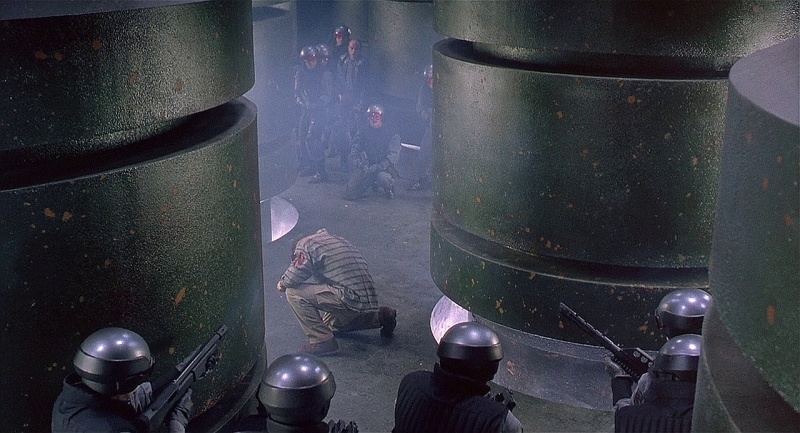
The film was a box office success, grossing over 250 million dollars and receiving largely positive reviews. In addition to its classic sci-fi themes and motifs, it boasted some very cool and cunning set designs, special effects, and action sequences. Plus, it possessed that rare and awesome Anry quality, where everything had a certain comical, cheesy element to it, even the somewhat gratuitous violence.  but of course, much of this was due to the directorial style of Paul Verhoeven, director of such gory over-the-top cinematic splatter fests as Robocop, Starship Troopers, and Showgirls!

Plot Synopsis:
The story opens on the apartment of a blue collar worker named Douglas Quaid (Arny) who is unhappy with his workaday life. At night, he dreams of being on Mars with a strange woman he doesn’t recognize, and interprets this as a latent desire to move there and become something more than he is.He asks his wife about moving to Mars, which she promptly shoots down given the violence between a mutant resistance faction and the Mars government, which is led by a man named Cohaagen (Ronny Cox).

Eventually, his desire to experience a trip to Mars leads him to seek out a company called Rekal, an organization that specializes in false memories. After hearing the sales pitch, he decides he wants to live out a fantasy where he is a secret agent who is sent to Mars, a scenario which resonates with him for some reason. Unfortunately, things go awry when Quaid begins his “implant procedure”, as it seems that he begins acting out his fantasy even before its been implanted in his mind. Naturally, the company is frightened and decides to dump Quaid in a cab and erase all traces of his visit from their computers.

When he returns home, a work friend finds him and asks about his visit, which he does not (ugh!) recall. The conversation then turns ugly as thugs grab him and his friend pulls a gun, telling him he must die because he “blabbed about Mars”. Quaid has no idea what he’s talking about, but quickly kills him and all the thugs with ease. Running back to his apartment, he tells his wife Lori (Sharon Stone) about what happened, insisting that it’s not a delusion. After washing the blood from his hands, he is shocked to find that another gunman is trying to kill him. This time it’s his wife!

After disarming Lori, he learns the truth. His name is not Douglas Quaid, and he and Lori were never married. His true identity was erased for reasons she does not know and she was to keep an eye on him, posing as his wife. When he realizes she is stalling and men are on the way to get him, he knocks her out and runs. He is pursued by an agent named Richter (Michael Ironside) who is apparently Lori’s boyfriend and works for Cohaagan. He is determined to kill Quaid, something which Cohaagan doesn’t want. He reveals that he is the one who erased Quaid’s memory and dumped him on Earth, and asks that he be returned to him alive.

After escaping, Quaid ends up in a dingy hotel and is contact by a man claiming to be his contact from Mars. He warns him that he has a trace bug in his skull, and tells him how he can muffle the signal. He then leaves Quaid a case with various items, such as money, ID cards, a device for removing the bug in his nose, and holographic device which projects a mirror image of himself. On top of all that, there is a laptop-like device that contains a recording which he made for himself, which begins to explain the situation…

Turns out his real name is Hauser, and that he was working for Cohaagen up until a few months ago. Then, he defected and joined the resistance, a move which prompted Cohaagen to erase his mind and dump him on Earth. The recording tells him to go to Mars and find the resistance, and that his mind contains enough info to ruin Cohaagen forever. Quaid escapes mere seconds before Richter and his men show up, and does as the recording tells him and gets his ass to Mars!

Once there, he has a bit trouble getting through security, as the disguise he brought begins to malfunction. Richter is in the vicinity and realizes it is Quaid, and a firefight begins. Quaid narrowly escapes thanks to a stray shot which shatters the dome, causing decompression. When the emergency doors begins to close, he manages to slide underneath one and make it away.

He then travels to the Hilton Hauser told him to seek out, where he finds a message in a safety deposit box written in his own hand. It tells him to go to a club called “The Last Resort” in the red light district (“Venusville”) and ask for a woman named Melina. A newfound friend named Benny, a cab driver with “five kids to feed”, picks him up in the midst of a resistance attack and explains that this is commonplace. Once in the “Last Resort”, which appears to be a front for the resistance, Quaid meets Melina; who as it turns out, is the woman from his dreams. They have a brief reunion, in which she slaps him and tells him they thought Cohaagen killed him. He replies that he doesn’t remember who he is, to which she replies that he was only ever using her to “get inside” and kicks him out.

Back at his hotel, Quaid receives some strange visitors: Rekall’s President, Dr. Edgemar, and his wife, Lori. He explains to Quaid that he is dreaming his experiences and never left Rekal, which makes some sense since everything that has happened to him is what he specified in his travel package. He offers him a way out by presenting a pill, which he claims is a symbol that will allow him to wake up from his self-sustaining dream. Quaid is about to comply, but notices that Edgemar is sweating and shoots him. Lori then attacks him with the help of some more thugs, and Quaid is beaten to near-unconsciousness.

However, Melina shows up to rescue him, and the two kill the thugs, shoot Lori, and then make a getaway. Once again, Richter shows up and is unable to capture them before they slip away. They run to the Last Resort and escape through a series of underground tunnels which lead to the resistance headquarters. Meanwhile, Richter and his men attack the club, but are told to pull back by Cohaagen. He then shuts down the ventilation shafts, slowly depriving Venusville and the mutant population of air.

In the resistance HQ, Quaid is taken before Kuato, leader of the resistance, who apparently lives within the stomach of one of his lieutenants. He helps Quaid to remember what he saw that made Cohaagen erase him memory, which turns out to be an underground reactor built by aliens millions of years before. He wakes up to discover that Cohaagen’s forces have found them and are coming through the walls. They escape into a airlock, but Benny betrays them and shoots Kuato’s host dead. With his final words, Kuato tells Quaid to start the reactor.

Captured, Quaid and Melina are brought to Cohaagen’s facility where he tells them the last of the story. It turns out Hauser was not a double agent at all, but a loyal member of Cohaagen’s inner circle who volunteered for the memory implant procedure so he could get close to Kuato and lead their forces to his lair. They knew that Hauser would not be able to fool Kuato unless he sincerely believed himself to be a double-agent, hence the implanted memories and feigned cover up. Quaid does not believe it, until Cohaagen shows him another recording where Hauser tells him himself that he’s been played.

Cohaagen orders them both placed in memory-implant chairs where Hauser will be restored and Melina will be turned into a willing supplicant of his. He then leaves with Richter, and Quaid manages to break his bonds and kill the scientists before the procedure can take effect. He pulls Melina out, who also appears unaffected, and they begin to fight their way to the reactor. Benny tries to take them out using a drilling machine, but Quaid manages to disable the machine and kill him with a drill!

Once they reach the reactor assembly, Richter attempts to stop them with a small army. But relying on the holographic device and some kick-ass shooting, Quaid and Melina manage to take them out. Richter tries to escape using the underground lift, but Quaid jumps aboard the and the two fight it out. Quaid manages to overpower Richter and tosses him over the edge. Richter grabs hold of Quaids arms and threatens to take him with him, but he loses his arms when they are crushed against the shaft, and he falls to his death.

Quaid reaches the reactor room where Cohaagen tries to stop him, telling him that the reactor will detonate the planet’s precious minerals. However, Quaid doesn’t believe him, and Melina arrives shortly thereafter to shoot Cohaagen. However, Cohaagen indicates that he has planeted a bomb on the device, which Quaid narrowly manages to toss down a shaft before it goes off. Once it explodes, it breaches the room’s seals, causing decompression and sucking Cohaagen out onto the surface where he dies of asphyxiation. Quaid manages to activate it mere seconds before he and Melina are sucked out as well and begin to suffocate.

The reactor fires up and begins to plunge a series of red hot rods into Mars’ core. This causes the ice core at the heart of the planet to melt and explode in plumes of air to the surface. This air leads to the creation of an atmosphere and a blue sky within seconds, saving Melina and Quaid from asphyxiation and destroying all pressure domes on the surface. The Red Planet has now become a habitable world, which is apparently what the Martian aliens had intended all along.

Quaid and Melina walk up to the nearest hilltop and look out at the sky. Quaid wonders aloud if he is in fact dreaming, to which Melina replies that he had better kiss her before he wakes up. The movie ends with the sunshine becoming a blinding flash of light, leaving viewers to wonder if it was all a dream, or actually happened.

Summary:
To cut straight to the chase, I really liked this movie. I saw it back when I was a surly teen, and appreciated it for what it offered – action, guns, and plenty of creative nudity! Remember that scene in the Last Resort with the three-breasted hooker? Scarcely a boy who grew up in the 80’s doesn’t know about her! But as I got older, I came to see the plot as something rather creative and complicated, which inevitably drew me back to the story again and again over the years.

Of course, the number of twists and explanations might seem a bit contrived, and even I thought so for awhile. But that was before I saw it again recently and actually thought them through. Basically, Hauser was himself when he found the resistance and posed as a defector. But Melina didn’t let him in, thinking his intentions weren’t pure. It was Cohaagen’s attempt to remedy this by staging his capture, circulating rumors of his torture and death, and then planting false memories and dumping him on Earth and setting him up to find his way to Mars and the resistance. It was only in this way that his sincerity could be seen as genuine, and the psychic Kuato wouldn’t be able to detect his true intentions. For all intents and purposes, he was Quaid when he met him, and his desire to learn the truth and help the resistance was genuine.

Sure, the overall twists, turns, and explanations for them all still present some degree of confusion, but that’s part of what’s good about this movie. Even after multiple viewings, audiences still debate whether or not everything was just a dream or real. They cite various tidbits of evidence, like the fact that Dr. Edgemar was sweating, that the story was exactly what Quaid asked for, that this coincidence was due to the fact that Quaid was looking to reclaim the life he lost, or that he had dreams of Melina before he went to Rekal. It all makes for a cool debate.

The plot also managed to make some rather cool commentary on the nature of identity, memory, false consciousness and free will. If it were possible to implant memories in a human being, then would they really cease to be who they were and become someone else? Would this be a possible remedy to the problems of criminal behavior and psychosis? Kuato offers a resolution to all this when he says to Quaid, “a man is defined by his actions, not his memories.” This is then thrown for a loop when Quaid discovers that his true and original self was an agent of Cohaagen’s, but he responds to this by embracing his new identity and fighting to free Mars.

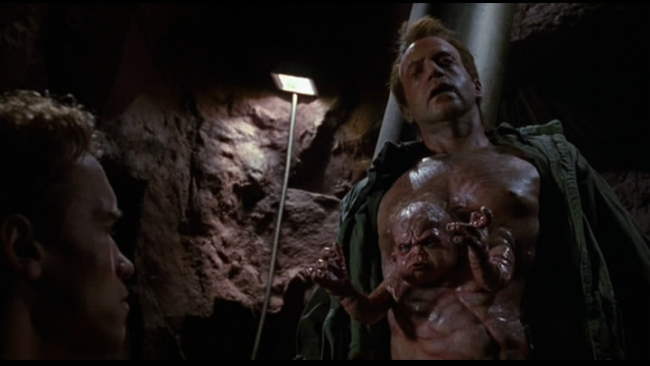
And of course, the special effects and sets were all very well done. Sure, there are plenty of people who would say that they looked cheesy, especially the animatronic heads that were used for the asphyxiation, robotic head, and bug-removing scenes, but they were pretty state of the art for the time. The mutants were also very well done, molded plastic imitating the effects of radiation quite well. And the animatronic limb that Benny showed and Kuato’s body-within-a-body was also pretty convincing! And this was done without the benefit of any CGI.

What’s more, it was original, which is a claim the remake can’t possibly make. though I have yet to see the movie, one thing that I hear from just about everyone is how the sets and effects seemed very much borrowed. The robot forces look like Storm Troopers and droids, the flying cars look like something out of Minority Report, and the cityscape seemed ripped from Blade Runner. In the case of the original, there was a latent cyberpunk 80’s feel to much of it, but nothing had been copied or borrowed, much as I can tell.

It was also well cast and ably acted. Cox and Ironside brought their usual awesomeness to their villain characters, Stone was convincing as the assassin/seductress, and the supporting cast was pretty solid. And let’s not forget, it was an Arny movie, which meant that it was automatically fun, cheesy, and full of hilarious one liners and his signatures “Hlalalalalalal!” And seriously, some of the lines he said: “Consider that a divorce”, “You blew my covah!”, and “See ya at the party, Richter!”. They rank right up there with “Get to tha choppa!”

The only real weaknesses were the many cheesy scientific implausibilities. For one, the scene where he removes the bug from his nose was impossible, as it would have broken his nose. Second, there’s no way anyone could create an atmosphere on Mars by simply evaporating water. Sure, it might be a good step in the right direction, but there’s no guarantee it would work, and it would take centuries, not mere seconds. Last, if you were already asphyxiating due to exposure to near-vacuum, you wouldn’t be instantly saved once breathable oxygen started pouring out. But of course, all of this could be dismissed by saying that it was all a dream. Or it can be simply written off as part of the cheese factor.

Overall, I’d say this movie deserves to be placed in the sci-fi classics section, between guilty pleasure movies and the films that actually have something to say and will make you think a little. If you haven’t seen it, then do so! And if you’re planning on seeing the remake, or already have, then get your ass to the video store and ask for Total Recall! And until next time, here’s a three-breasted hooker to keep you company! See ya at the party! Halalalalalalal!

First Look at the New Robocop!

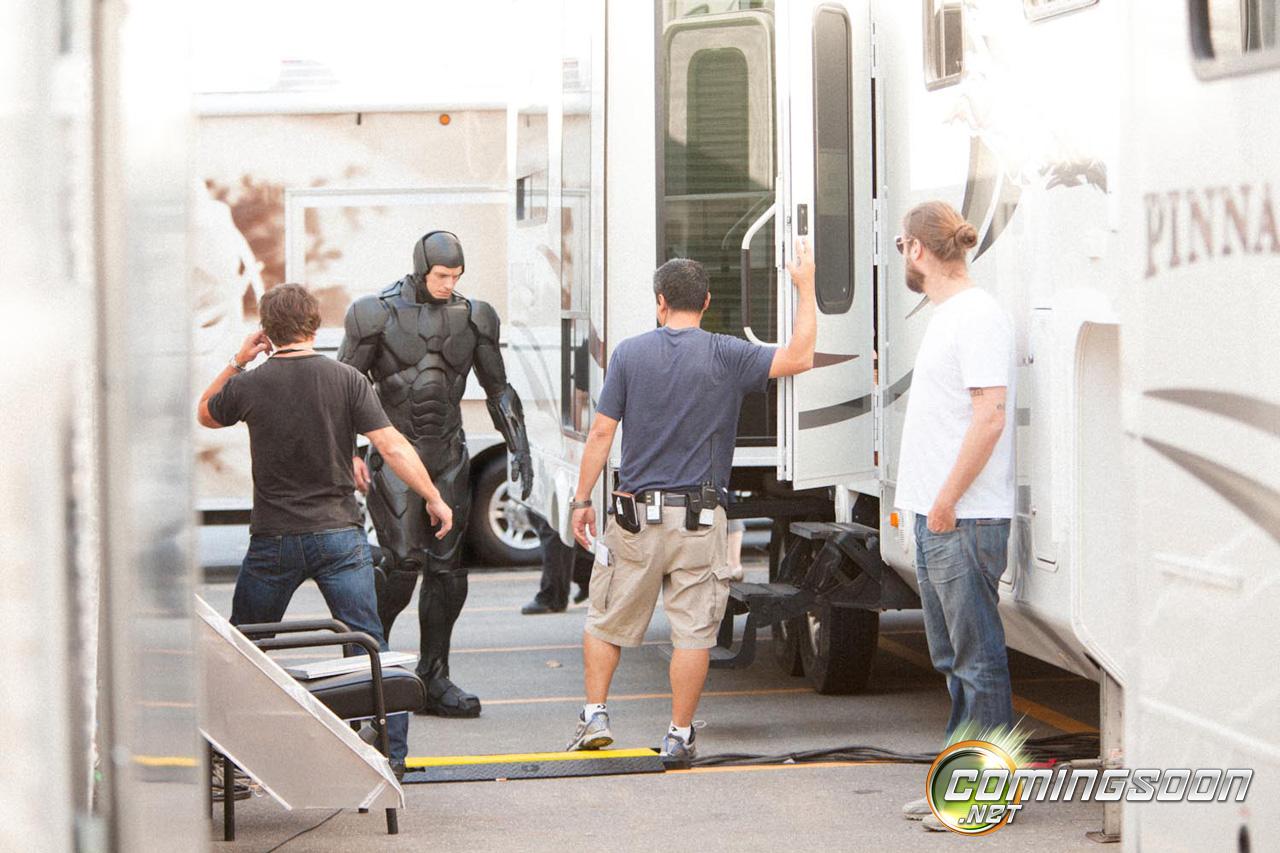
It seems the paparazzi are finally pulling their weight for us sci-fi geeks! This week, prospective audiences got their first glimpse at the new Robocop movie, which recently began filming on location in Toronto. Lead actor Joel Kinnaman, who plays Alex Murphy, was photographed wearing the new Robocop suit, and the new look has fans atwitter!

Yes, ever since the photos went public, countless fans took to Twitter to deplore Robocop’s admittedly Batman-esque outfit. Yes, it does look significantly different from the original. And upon closer examination, it seems that the new writers are diverging from the old script as well. For example, in the first photo you can clearly see that Alex Murphy has a human hand. In the other, his visor is up, which would seem to indicate that Murphy also has a fully-intact face.

This is starkly different from the original movie, where Murphy underwent a “full body prosthetic” after being shot to death. This, combined with the movie’s synopsis – which says that Alex Murphy was seriously wounded in the line of duty and not brutally murdered – suggests this reboot is also going to be less violent. Yes, Verhoeven had a weird fascination with over the top violence, but his movies made an impression and watering down an original does seem kinda wrong.

But take a look anyway and judge for yourself. Here he is the first photo, with Kinnaman wearing the suit for the first time:

And here he can be seen walking to his trailer, with the suit’s visor in the “up” position. Could just be for convenience, but it could also be a part of the new suit.

Via Comingsoon.net

Sid Meier’s Alpha Centauri, Best Lines!

Sid Meier’s Alpha Centauri, Best Lines!

Today, I thought I’d totally nerd out and share some additional cool stuff from one of my favorite games of all time: Sid Meier’s Alpha Centauri! As you may have noticed, I already did a review of the game itself. But returning to this game to boast about it some more was something I just couldn’t resist! After over a decade, I’m still not bored with this turn-based strategy game. It’s just that good.

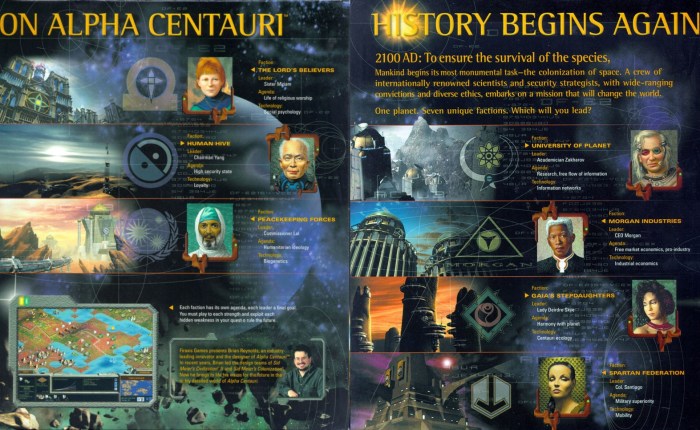
Anyhoo, today I thought I’d share something which I glossed over in my review. And that would be the games best one-liners. During every turn, whenever you build a special project, experience a research breakthrough, build a new type of facility, or develop a new type of unit, you get a line accompanied by some music and in the case of projects, even a little movie. Most are original creations, spoken by the faction leaders themselves, and give added depth to an already immersive gaming experience.

Here is the list of the ones I like best, broken down by faction. I also included some of the movies at the bottom. Enjoy!

Gaia’s Stepdaughters:
The Gaian’s are the natural ecologists and environmentalists of the game. As such, the majority of Lady Dierdre’s quotes (their leader) espouse cultivating an understanding of the planet’s ecology and the super-sentience that governs it. In many cases, these involve conversations between her and the planetary sentience itself, which are collected in the fictional tome named “Conversations with Planet”.

“Observe the Razorbeak as it tends so carefully to the fungal blooms; just the right bit from the yellow, then a swatch from the pink. Follow the Glow Mites as they gather and organize the fallen spores. What higher order guides their work? Mark my words: someone or something is managing the ecology of this planet.”

“Planet’s atmosphere, though a gasping death to humans and most animals, is paradise for Earth plants. The high nitrate content of the soil and the rich yellow sunlight bring an abundant harvest wherever adjustments can be made for the unusual soil conditions.”

“You are the children of a dead planet, earthdeirdre, and this death we do not comprehend. We shall take you in, but may we ask this question–will we too catch the planetdeath disease?”
-taken from “Conversations with Planet”, Dierdre’s dialogue with the planetary sentience

“No longer mere earthbeings and planetbeings are we, but bright children of the stars! And together we shall dance in and out of ten billion years, celebrating the gift of consciousness until the stars themselves grow cold and weary, and our thoughts turn again to the beginning.”
-“Conversation with Planet”, after you develop the “Ascent to Transcendance” where your faction merges with the planetary sentience

“Eternity lies ahead of us, and behind. Have you drunk your fill?”
-“Conversations with Planet”, during the game’s epilogue

Human Hive:
Led by Chairman Yang, the Hive is a totalitarian faction that is clearly inspired by Maoist China and the North Korea. The majority of his quotes have to do with the nature of his political beliefs, which occasionally digress into the spiritual, a combination of Taoism and ascetisim.

Einstein would turn in his grave. Not only does God play dice, the dice are loaded.”

“If our society seems more nihilistic than that of previous eras, perhaps this is simply a sign of our maturity as a sentient species. As our collective consciousness expands beyond a crucial point, we are at last ready to accept life’s fundamental truth: that life’s only purpose is life itself.”

“What do I care for your suffering? Pain, even agony, is no more than information before the senses, data fed to the computer of the mind. The lesson is simple: you have received the information, now act on it. Take control of the input and you shall become master of the output.”

“It is every citizen’s final duty to go into the tanks and become one with all the people.”
-upon building Recycling Tanks

“My gift to industry is the genetically engineered worker, or Genejack. Specially designed for labor, the Genejack’s muscles and nerves are ideal for his task, and the cerebral cortex has been atrophied so that he can desire nothing except to perform his duties. Tyranny, you say? How can you tyrannize someone who cannot feel pain?”
-upon building a Genejack Factory

Lords Believers:
The undisputed fundamentalist faction of the planet, led by Sister Miriam. As expected, the majority of what she has to say has to do with defending her traditional beliefs, calling into question the nature of technological progress, and condemning the majority of developments that take place late in the game.

“Some would ask, how could a perfect God create a universe filled with so much that is evil. They have missed a greater conundrum: why would a perfect God create a universe at all?”

“The righteous need not cower before the drumbeat of human progress. Though the song of yesterday fades into the challenge of tomorrow, God still watches and judges us. Evil lurks in the datalinks as it lurked in the streets of yesteryear. But it was never the streets that were evil.”

“Beware, you who seek first and final principles, for you are trampling the garden of an angry God and he awaits you just beyond the last theorem.”

“Men in their arrogance claim to understand the nature of creation, and devise elaborate theories to describe its behavior. But always they discover in the end that God was quite a bit more clever than they thought.”

“Will we next create false gods to rule over us? How proud we have become, and how blind.”
-after finishing the project The Self-Aware Colony

“And what of the immortal soul in such transactions? Can this machine transmit and reattach it as well? Or is it lost forever, leaving a soulless body to wander the world in despair?
-after creating the Bulk Matter Transmitter

“Already we have turned all of our critical industries, all of our material resources, over to these…things…these lumps of silver and paste we call nanorobots. And now we propose to teach them intelligence? What, pray tell, will we do when these little homunculi awaken one day announce that they have no further need for us?”

Morgan Industries:
CEO Morgan, leader of the Morganites, is an unquestioning believer in the art of laissez-faire economics and unadulterated capitalism. He has plenty to say on the subject of research and development, not to mention the continuance of monopolistic practices on the new planet. The environment and moderation be damned! Most of these are contained within his tomes “The Centauri Monopoly” and “The Ethics of Greed”.

“Human behavior is economic behavior. The particulars may vary but competition for limited resources remains a constant. Need as well as greed has followed us to the stars and the rewards of wealth still await those wise enough to recognize this deep thrumming of our common pulse.”

“Richard Baxton piloted his Recon Rover into a fungal vortex and held off four waves of mind worms, saving an entire colony. We immediately purchased his identity manifests and repackaged him into the Recon Rover Rick character with a multi-tiered media campaign: televids, touchbooks, holos, psi-tours– the works. People need heroes. They don’t need to know how he died clawing his eyes out, screaming for mercy. The real story would just hurt sales, and dampen the spirits of our customers.”

‘Abort, Retry, Fail?’ was the phrase some wormdog scrawled next to the door of the Edit Universe project room. And when the new dataspinners started working, fabricating their worlds on the huge organic comp systems, we’d remind them: if you see this message, always choose ‘Retry.’
-quote from one of Morgan’s software developers

“Resources exist to be consumed. And consumed they will be, if not by this generation then by some future. By what right does this forgotten future seek to deny us our birthright? None I say! Let us take what is ours, chew and eat our fill.”

“Fossils fuels in the last century reached their extreme prices because of their inherent utility: they pack a great deal of potential energy into an extremely efficient package. If we can but sidestep the 100 million year production process, we can corner this market once again.”

“Look at any photograph or work of art. If you could duplicate exactly the first tiny dot of color, and then the next and the next, you would end with a perfect copy of the whole, indistinguishable from the original in every way, including the so-called “moral value” of the art itself. Nothing can transcend its smallest elements.”

Peacekeeping Forces:
Led by Brother Lal, the Peacekeepers are perhaps the most balanced faction in this game. Dedicated to human rights, scientific research, democracy, freedom of information, and peace, they are quite to make enemies with many of the more extreme factions. And of course, the majority of quotes from this faction deal with inalienable rights of human beings, the importance of freedom, and the consequences of certain technologies.

“As the Americans learned so painfully in Earth’s final century, free flow of information is the only safeguard against tyranny. The once-chained people whose leaders at last lose their grip on information flow will soon burst with freedom and vitality, but the free nation gradually constricting its grip on public discourse has begun its rapid slide into despotism. Beware of he who would deny you access to information, for in his heart he dreams himself your master.”

“The Mind Worms are the natural defenses of the living Planet–the white blood cells, if you will. In a world in which unassimilated thought represents danger, the Mind Worm seeks out concentrations of sentient mental energy and destroys them, ruthlessly and efficiently.”

“The entire character of a base and its inhabitants can be absorbed in a quick trip to the Rec Commons. The sweaty arenas of Fort Legion, the glittering gambling halls of Morgan Bank, the sunny lovers’ trysts in Gaia’s High Garden, or the somber reading rooms of U.N. Headquarters. Even the feeding bay at the Hive gives stark insight into the sleeping demons of Yang’s communal utopia.”

“The Warrior’s bland acronym, MMI, obscures the true horror of this monstrosity. Its inventors promise a new era of genius, but meanwhile unscrupulous power brokers use its forcible installation to violate the sanctity of unwilling human minds. They are creating their own private army of demons.”

Spartan Federation:
The Spartans are aptly named, and represent the faction that believes that the right to bear arms in both inalienable and unquestionable. Led by Colonel Santiago, a total badass in her own right, the majority of what comes from them consists of philosophical tidbits taken from Sun Tzu’s Art of War, updated for the modern age, and some random bits of marching songs and barracks scuttlebutt.

“Information, the first principle of warfare, must form the foundation of all your efforts. Know, of course, thine enemy. But in knowing him do not forget above all to know thyself. The commander who embraces this totality of battle shall win even with inferior force.”

“I don’t know but I’ve been told, Deirdre’s got a Network Node. Likes to press the on-off switch, Dig that crazy Gaian witch!”
-Spartan marching song

“Industrial Grade Nano-Paste, one of Planet’s most valuable commodities, can also be one of its most dangerous. Simply pour out several canisters, slide in a programming transponder, and step well away while the stuff cooks. In under an hour the nano will use available materials to assemble a small factory, a hovertank, or enough rifles to equip a regiment.”
describing industrial nanomachines

“We shall take only the greatest minds, the finest soldiers, the most faithful servants. We shall multiply them a thousandfold and release them to usher in a new era of glory.”
-upon developing the Cloning Vats

The University:
Led by Academician Prokhor Zakharov, the University is Planet’s great espouser of technological progress and scientific research, unhampered by such things as spirituality and political controls. On the one hand, they call to mind the stereotype of the mad scientist. On the other, they are picture perfect representations of the empirical method and true believers in freedom. As such, they make good allies, but can turn into enemies rather easily as well. Consistent with their outlook, the majority of what their leader has to say concerns scientific ideas and a defense of their methods from what they see as small-mindedness or old world dogma.

“Man’s unfailing capacity to believe what he prefers to be true rather than what the evidence shows to be likely and possible has always astounded me. We long for a caring Universe which will save us from our childish mistakes, and in the face of mountains of evidence to the contrary we will pin all our hopes on the slimmest of doubts. God has not been proven not to exist, therefore he must exist.”

“A brave little theory, and actually quite coherent for a system of five or seven dimensions — if only we lived in one.”
-after researching String Theory

“What actually transpires beneath the veil of an event horizon… decent people shouldn’t think too much about that!”

“The first living thing to go through the device was a small white rat. I still have him, in fact. As you can see, the damage was not so great as they say.”
-after developing the technology for teleportation gates

“The popular stereotype of the researcher is that of a skeptic and a pessimist. Nothing could be further from the truth! Scientists must be optimists at heart, in order to block out the incessant chorus of those who say ‘It cannot be done.’

“We have reached an informational threshold which can only be crossed by harnessing the speed of light directly. The quickest computations require the fasted possible particles moving along the shortest paths. Since the capability now exists to take our information directly from photons traveling molecular paths, the final act of the information revolution will soon be upon us.”
-upon developing Optical Computers

Time travel in the classic sense has no place in rational theory, but temporal distortion does exist on the quantum level, and more importantly it can be controlled.

Other:
“A handsome young cyborg named Ace,
wooed women at every base
.
But once ladies glanced at
His special enhancement
They vanished with narry a trace!”
-Spartan Barracks Graffiti

“Mary had a little lamb, Little lamb little lamb, Mary had a little lamb, whose fleece was white as snow.”
-Assassins’ Redoubt Final Transmission, after you build the “Dream Twister”, a psionic weapon that drives people mad

“Please don’t go. The drones need you. They look up to you!”

I think that last one is my favorites. I queues up from time to time when you try to quit the game suddenly. Oh, and as promised, some movies from the gameplay. With the exception of the Intro segment, all play after you complete a Secret Project.

Intro:

The Human Genome Project:

The Hunter Seeker Algorithm:

The Cyborg Factory:

The Universal Translator:

The Self-Aware Colony:

The Dream Twister (My favorite!):

The Singularity Inductor:

The Voice of Planet:

The Ascent to Transcendence:

The Birth of an Idea: Fascis Ardens!

Inspiration is a funny, fickle thing! As I’m sure anyone who’s ever attempted to write knows, ideas seem to come when you least expect them. On the one hand, a person can go months without coming up with an original idea. And then, just like that, inspiration can strike suddenly and without warning. You find yourself not only coming up with an idea, but the concept for a full-length novel!

That’s what happened to me this weekend. Myself and my wife were preparing to head up island to see her family. I was contemplating books that deal with the concept of alternate history, and how ones that deal with alternate outcomes to World War II and the Civil War seem to be especially popular. In the former case, you have The Man In the High Castle by Philip K Dick and Fatherland by Robert Harris, two seminal novels that address what would have happened had Germany won the war.

In the latter case, you have stories like A Rebel In Time by Harry Harrison and The Guns of the South by Harry Turtledove, which merge time travel and alternate history to examine what would have happened if The South had won the Civil War.

In both novels, the plot revolves around a single or group of White Supremacists who use a time machine to bring modern guns to the Confederate Army. This allows the South to prevail, which they hope will prevent the rise of the Civil Rights movement, the end of Apartheid, and other equality movements.

That’s when it hit me! Why the heck hasn’t anyone done an alternate history story where White Supremacists go back in time to make sure Germany won the Second World War? Sounds like something that ought to have been done by now; but to my knowledge, no one’s tackled it yet. I got to thinking long and hard about it, about the plot, characters and potential twists. Eventually, I had what I felt was the bare bones of an idea. It varies slightly from the premise I just mentioned, but in ways I think work! I plan to call it…

Fascio
For those familiar with the Fascist movement of the 20th century, the concept of the Fascio is probably a familiar one. This was basically just a bundle of sticks with an axe tied on that was set afire at public gatherings. The ritual dates back to Ancient Rome, where the burning of these ceremonial bundles was meant to symbolize lighting the way to the future. Italian Fascists, under Mussolini, especially loved this ancient ritual, which they used to draw a connection to the past as much as to point to the future. Like all Fascist rituals, it was an inherent contradiction, more regressive than progressive in nature. But hey, the Fascists didn’t do logic…

Plot:
The story opens in 2050, where the world is reeling from the worst ravages of climate change and Fascist parties are once again taking hold of Europe and North America in response to numerous humanitarian crises. Two young history enthusiasts, believing that the worst is coming, decide to take advantage of an experimental new technology: Time Travel!

Using a machine they gain access to, the duo plan to travel back in time to Germany in 1920, where they plan to find a despondent young military officer named Hitler. Using futuristic technology, they plan to kill him without leaving a trace, and return to the future where things are surely to be much better.

Unfortunately, the time machine sends them to 1941 by accident. Unsure that they will be able to use the machine again in the future, they resolve to kill Hitler during the height of World War II, before he can enact the Final Solution and invade Russia. Relying on their knowledge of history and advanced technology, they manage to kill Hitler at his headquarters weeks before the Battle of Britain was to end and Operation Barbarossa (the invasion of Russia) began. After making a hasty retreat, they jump in the return module and set course of the future.

However, once again the machine drops them off in the wrong year. Rather than traveling 109 years into the future, they arrive in 1962, at roughly the same time as the Cuban Missile Crisis from their own timeline, and find a world starkly different than the one they read about in history books. Rather than finding a world dominated by the two superpowers of the United States and the Soviet Union, two different but equally menacing empires are in place. On the one side, there’s the Pan-American Alliance, led by the US, and on the other, the Axis Forces.

After combing through some records at the local library, they learn the terrible truth: assassinated Hitler in 1941, rather than ending the Second Word War, led Germany to victory. Without Hitler’s questionable and erratic leadership, Germany avoided making several mistakes which were directly attributable to him. For one, Germany did not give up the Battle of Britain a few weeks shy of victory. By choosing to maintain their operations against the RAF and its coastal airfields, they eventually overcame Britain’s air defenses. This allowed them to come to a cease fire agreement which took Britain out of the war.

Then, in 1942, they invaded Russia and were successful in capturing Moscow, Leningrad and Stalingrad, all within the space of a year. This led to the creation of Germania, an Empire which reached from Northern France to the Ural Mountains. In the Mediterranean, Italy became the dominant power, with possessions in the Balkans and all across North Africa. The US still went to war with Japan in the Pacific, where they were victorious, but in Europe, the Nazis and their Fascist allies were never defeated.

Thus the world was divided into two major power blocs. The US, Canada, Mexico and all of South America joined together and maintained alliances with India, Japan, China and Australia to safeguard against expansion into Asia and the Pacific. Germany, Italy, and their subservient allies came together to dominant Eurasia and set their eyes on the Middle East, Africa, and further East. Both sides developed nuclear weapons, and by 1960, tensions had reached an all-time breaking point.

Hence, the two historians bear witness to a different “Missile Crisis”, which still takes place in 1962, but was between the Axis and Allies, and actually took place. When the bombs begin to fall, they die, since the future they left is now erased from existence. In their last few moments, they realize the folly of tampering with timelines. Such things are just too complicated for people to handle!

And I was thinking about a possible epilogue chapter where the two main characters meet each other in the alternate future they have now created. The world they live in is a post-apocalyptic landscape, roughly ninety years since World War III, where life is hard and people live by a new form or “Iron Rule” – the rule of survival at all costs. Not sure, we’ll see…

So that’s my latest idea, a time traveling alternate future addressing World War II and the rise of neo-fascism in today’s world. I humbly submit to my followers for their approval. So tell me, what do you think?

Transhumanism… The Shape of Things to Come?

“Your mind is software. Program it. Your body is a shell. Change it. Death is a disease. Cure it. Extinction is approaching. Fight it.”

-Eclipse Phrase

A lot of terms are thrown around these days that allude to the possible shape of our future. Words like Technological Singularity, extropianism, postmortal, posthuman, and Transhuman. What do these words mean? What kind of future do they point to? Though they remain part of a school of thought that is still very much theoretical and speculative, this future appears to be becoming more likely every day.

Ultimately, the concept is pretty simple, in a complex, mind-bending sort of way. The theory has it that at some point in this or the next century, humanity will overcome death, scarcity, and all other limitations imposed on us by nature. The means vary, but it is believed that progress in any one or more of the following areas will make such a leap inevitable:

Artificial Intelligence:
The gradual evolution of computers, from punch cards to integrated circuits to networking, shows an exponential trend upwards. With the concordant growth of memory capacity and processing speed, it is believed that it is only a matter of time before computers are capable of independent reasoning. Progress is already being made in this domain, with the Google X Labs Neural Net that has a connectome of a billion connections.

As such, it is seen as inevitable that a machine will one day exist that is capable of surpassing a human being. This sort of machinery could even be merged with a human’s own mind, enhancing their natural thought patterns, memory, and augmenting their intelligence to the point where their intelligence is immeasurable by modern standards.

Just think of the things we could think up once that’s possible. Well… you can’t exactly, but we can certainly postulate. For starters, such things as the Grand Unifying Theory, the nature of time and space, quantum mechanics, and other mind-bendingly complex fields could suddenly make sense to us. What’s more, this would make further technological leaps that much easier.

Biology:
Here we have an area of development which can fall into one of three categories. On the one hand, advancements in medical science could very well lead to the elimination of disease and the creation of mind-altering pharmaceuticals. On the other, there’s the eventual development of things like biotechnology, machinery that is grown rather than built, composed of DNA strands or other “programmable” material.

Lastly, there is the potential for cybernetics, a man-machine interface where organic is merged with the artificial, either in the form of implants, prosthetic limbs, and artificial organs. All of these, alone or in combination, would enhance a human beings strength, mental capacity, and prolong their life.

This is the meaning behind the word postmortal. If human beings could live to the point where life could be considered indefinite (at least by current standards), the amount we could accomplish in a single lifetime could very well be immeasurable.

Nanotechnology:
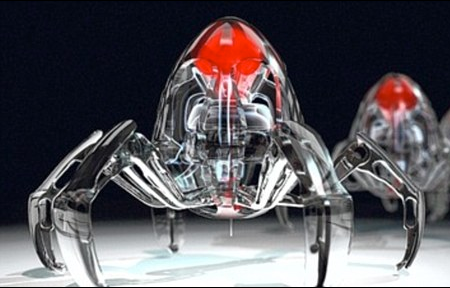
The concept of machines so small that anything will be accessible, even the smallest components of matter, has been around for over half a century. However, it was not until the development of microcircuits and miniaturization that the concept graduated from pure speculation and became a scientific possibility.

Here again, the concept is simple, assuming you can wrap your head around the staggering technical aspects and implications. For starters, we are talking about machines that are measurable only on the nanoscale, meaning one to one-hundred billionths of a meter (1 x 10⁻⁹ m). At this size, these machines would be capable of manipulating matter at the cellular or even atomic level. This is where the staggering implications come in, when you realize that this kinds of machinery could make just about anything possible.

For starters, all forms of disease would be conquerable, precious metals could be synthesized, seamless, self-regenerating structures could be made, and any and all consumer products could be created out of base matter. We’d be living in a world in which scarcity would be a thing of the past, our current system of values and exchange would become meaningless, buildings could build themselves, and out of raw matter (like dirt and pure scrap) no less, societies would become garbage free, pollution could be eliminated, and manufactured goods could be made of materials that are both extra-light and near-indestructible.

Summary:
All of this progress, either alone or in combination, will add to a future that we can’t even begin to fathom. This is where the concept of the Technological Singularity comes in. If human beings were truly postmortal (evolved beyond death), society was postscarce (meaning food, water, fuel and other necessities would never be in short supply), and machines would be capable of handling all our basic needs.

For Futurists and self-professed Singularitarians, this trend is as desirable as it is inevitable. Citing such things as Moore’s Law (which measures the rate of computing progress) or Kurzweil’s Law of Accelerating Returns – which postulates that the rate of progress increases exponentially with each development – these voices claim that it is humanity’s destiny to conquer death and its inherent limitations. If one looks at the full range of human history – from the Neolithic Revolution to the Digital – the trend seems clear and obvious.

For others, this prospect is both frightening and something to be avoided. When it comes right down to it, transhumanity means leaving behind all the things that make us human. And whereas some people think the Singularity will solve all human problems, others see it as merely an extension of a trend whereby our lives become increasingly complicated and dependent on machinery. And supposing that we do cross some kind of existential barrier, will we ever be able to turn back?

And of course, the more dystopian predictions warn against the cataclysmic possibilities of entrusting so much of our lives to automata, or worse, intelligent machines. Virtually every apocalyptic and dystopian scenario devised in the last sixty years has predicted that doom will result from the development of AI, cybernetics and other advanced technology. The most technophobic claim that the machinery will turn on humanity, while the more moderate warn against increased dependency, since we will be all the more vulnerable if and when the technology fails.

Naturally, there are many who fall somewhere in between and question both outlooks. In recent decades, scientists and speculative fiction writers have emerged who challenge the idea that technological progress will automatically lead to the rise of dystopia. Citing the undeniable trend towards greater and greater levels of material prosperity caused by the industrial revolution and the post-war era – something which is often ignored by people who choose to emphasize the down sides – these voices believe that the future will be neither utopian or dystopian. It will simply be…

Where do you fall?

Big Bang Theory, Season Six

Man I love this show! Before it came around, scientific theories and geeking out weren’t considered mainstream at all. And for those who enjoy the show, the season 5 ender was quite the cliffhanger. The gang got together to give Howard and Bernadette a wedding before his big mission, Howard was seconds away from being launched into space, and everyone, including Sheldon and Amy, joined hands to wish him well. Touching, and also pretty hilarious!

Check out the promo for the Season 6 opener which promises to have more hijinks. Naturally, they open with a sci-fi reference, this one to Alien – “In Space No One Can Hear You Scream…” Just two weeks to go… man, they sure are taking their time on this one!

The Future Is Here: The EyeTap

There has been some rather interesting and revolutionary technology being released lately, and a good deal of it involves the human eye. First, there was the Google Glasses, then there were the VR contact lenses, and now the new EyeTap! This new technology, which is consistent with the whole 6th sense computing trend, uses the human eye as an actual display and camera… after a fashion.

Used in conjunction with a portable computer, the EyeTap combines the latest in display technology and Augmented Reality which allows for computer mediated interaction with their environment. This consists of the device taking in images of the surrounding area, and with the assistance of the computer, augment, diminish, or otherwise alter a user’s visual perception of what they see.

In addition, plans for the EyeTap include computer-generated displays so the user can also interface with the computer and do work while their AFK (Away From Keyboard, according to The Big Bang Theory). The figure below depicts the basic structure of the device and how it works.

Ambient light is taken in by the device just as a normal eye is, but are then reflected by the Diverter. These rays are then collected by a sensor (typically a CCD camera) while the computer processes the data. At this point, the Aremac display device (“camera” spelt backwards) redisplays the image as rays of light. These rays reflect again off the diverter, and are then collinear with the rays of light from the scene. The light which the viewer perceives is what is referred to as “Virtual Light”, which can either be altered or show the same image as before.

While the technology is still very much under development, it represents a major step forward in terms of personal computing, augmented reality, and virtual interfacing. And if this sort of technology can be permanently implanted to the human eye, it will also be a major leap for cybernetics.

Once again, Gibson must be getting royalties! His fourth novel, the first of the Bridge Trilogy, was named Virtual Light and featured a type of display glasses that relied on this very technology in order to project display images in the user’s visual field. Damn that man always seems to be on top of things!

And just for fun, here’s a clip from the recent Futurama episode featuring the new eyePhone. Hilarious, if I do so myself!


A Tribute To Sidekicks

Hey all! Today, I thought I’d cover a topic I’ve been thinking about for some time. Over the few years that I’ve been writing now, something has been missing from this site. I’d payed tributes to franchises, novels, series, movies, heroes, and even robots. But not once have I acknowledged the critical supporting characters who have provided comic relief and made the lives of the heroes that much easier over the years.

And so I present the following list of the top 13 sidekicks from the field of sci-fi, at least the ones that I know of and/or care to acknowledge. Not  a lucky number I know, but I couldn’t bring myself to exclude any of the people here. They are hardly alone in being faithful companions, comedic foils or much needed helpers, but they are the people that I feel capture the full range of side-kick abilities and personalities. Hope you enjoy, and as always, suggestions are welcome, just in case I decide to make further installments.

Abraham Whistler:
This first sidekick comes to us from the Blade franchise where he serves the vampire hunter as mentor, weapons maker, and surrogate father figure. This last aspect is especially important, since it forms the basis of his relationship with Blade. Whereas Blade never had a family, Whistler was robbed of his. Both blame vampires for this travesty, and therefore make the perfect team. Whereas Blade provides the muscle and the daring, Whistler makes the weapons and is the voice of reason.

According to his bio, as provided by the both the Marvel Universe and the movie adaptation, Abraham became a hunter after his family was murdered by a vampire. It was in the course of hunting one evening that he came upon  a teen-aged Blade who was in the midst of preying on a homeless person. After realizing that Blade was a half-vampire (aka. a dhampir), he chose to spare his life and began training him to become a hunter himself.

Like the bad-ass vampire hunter he helped create, Whistler is a man of few words who seems pretty rough around the edges. But, also like Blade, underneath that gruff exterior beats the heart of a man who still seems to care. While he’ll often advise Blade against sticking his neck out or taking unnecessary risks, in the end he’s still willing to go the extra mile to help those in need.

Bender:
From a distance, Bender might seem like a wise-cracking, alcoholic, kleptomaniac robot, but once you get to know him… well, you pretty much realize that’s who is! On top of that, he seems to have a moribund fascination with killing all humans, a theory he has occasionally attempted to put into practice!

However, it would be wrong to say Bender’s a superficial kind of guy. In addition to being terrified of can openers and secretly wanting to be a country-western singer, he’s also shown himself to be pretty sensitive at times. When Fry moved out of their apartment, he went on a Bender of non-drinking, which for him is a very bad thing!

On top of all that, he’s also come through on numerous occasions to save Fry and the crew of Planet Express. Never without complaint, of course, but still. I guess you could say Bender is an exercise in contradiction. An automaton designed to bend girders who excels at not making human lives any easier!

Chewbacca:
Here’s the hairy side-kick who taught us the immutable lesson about living in the Star Wars universe. When you’re in a jam, it’s always good to have a Wookie in your corner! And of the universe’s many Wookies, Chewbacca is probably the best. In addition to being delightfully shaggy, he’s very strong, fiercely loyal, and mechanically inclined. Not a bad guy to have around!

Intrinsic to Chewie’s relationship with Han is the concept of the Wookie life-debt. At some point in the unspecified past, Han came to Chewies aid by freeing him from an Imperial slave-labor camp. As a result, Chewie is bound to Han for life. This is something Chewbacca takes very seriously, as any attempt to put Han is danger is usually met with a severe beatdown! When Han’s family expanded, after marrying Leia later in the franchise, Chewie’s life debt extended to them as well.

Chewie’s past also shows through when it comes to his attitude about restraints. When Luke tried to put some on him, even though it was part of ruse, he didn’t react too well! Beyond that, not much is known, like whether or not he has family back on Kashyyk or elsewhere in the Galaxy. But then again, Chewie doesn’t talk about this stuff. Like most Wookies, he doesn’t talk about himself much, preferring to express himself in a series of warbled utterances or loud growls.

Gabrielle:
The next entry on this list is the faithful, staff-twirling sidekick from the Xena: Warrior Princess franchise. Gabrielle, a former farm girl turned warrior companion, became the model of friendship and loyalty for countless girls and young women all over the world. In addition, numerous Lesbian rights advocates saw her and Xena as examples of the kind of love and dedication that can exist between two women. Whether or not they had this kind of relationship is a matter of speculation; the point is, they did love each other, regardless of whether it was platonic or romantic.

Gabrielle’s story as Xena’s sidekick began in small Greek village after she and her sister were taken as slaves. After being rescued by Xena, Gabrielle wanted to become just like her, in part because she was impressed by her fighting skills but also because she didn’t want to end up in an arranged marriage. The two women became friends and enjoyed countless adventures over the course of their many years together.

As time went on, Gabrielle evolved from being a young, naive girl who stood in Xena’s shadow to being a fully-fledged warrior. Her choice weapon was the staff, but in time, she also incorporated kicking and acrobatic abilities. Eventually, she became a heroine in her own right and was even replaced by the klutzy Joxer as the dependent sidekick.

Harley Quinn:
Here we have an interesting side-kick, one who exemplifies dedication and diabolical intent. A one-time psychiatrist who was brought in to assess Gotham’s criminal mastermind, Dr. Harleen Quinzel soon found herself sympathizing and even becoming enamored with the Joker and helped him escape from custody. Once her involvement was made clear, she fled herself, changing her name to Harley Quinn and becoming the Joker’s full-time assistant.

Making her debut in the Batman animated series, she was quickly incorporated into the DC Comics series. Ever since, she has made numerous appearances in the graphic novels, spin-off shows, and video games. Unlike the Joker’s usual henchmen, she has staying power and the ability to live to fight another day much “Mr. J” himself, as she affectionately calls him.

Though her affection and attachment to the Joker is the picture of obsessive and unhealthy behavior, it is precisely because of this that her loyalty and commitment shines through. No matter what nefarious schemes the Joker gets up to or who he hurts, she sticks by him and always has his back covered!

Kaylee:
Next up, there’s the spunky, charming, cheerful and mechanically inclined engineer of the Serenity! Yes, in the Firefly universe – a universe permeated by thugs, freelancers, mercenaries and privateers – Kaylee is a breath of fresh air and a spot of sunshine. Not what you’d expect in a ship’s mechanic, but that’s an undeniable part of her charm! When it comes right down to it, she is as much at home in coveralls and machine grease as she is in a pretty dress and a parasol.

According to the series, Captain Mal first met Kaylee during a chance encounter when his previous mechanic brought her to the engine room for a little sumthin’ sumthin’! After realizing that she had more talent in her pinky finger than the other dude had in his entire frame, her promptly hired her! Since then, neither Mal nor Kaylee has ever looked back.

On top of all that, Kaylee is quite the romantic. All series long, she held an obvious torch for Dr. Simon Tam, River Tam’s protective brother and the ship’s doctor. Although her early attempts to facilitate a hook-up failed, she later learned that he held the same feelings, but denied them because he was too focused on protective his sister. In the end, they got together, a fitting and happy ending for this pretty ray of sunshine!

R2D2 and C3P0:
Yes, they are technically not a single side-kick, but they come as a pair so I shall not deal with them separately. And when it comes right down it, they really don’t work well on their own since they’re essentially comedic foils for each other. Together, they are the comic relief and workhorse of the Star Wars universe.

Making their debut at the very beginning of the original trilogy, R2 and 3P0 captured people’s hearts as the unlikely duo on whose shoulder’s the fate of the universe rested. Whereas R2 was an astrometric droid, a rolling Swiss Army knife with a stubborn attitude and endless gumption, 3P0 was a prissy, effeminate translator who specialized in protocol and etiquette. Together, they were the robotic odd of the universe!

As time went on, the two bonded and became totally inseparable. In addition, no matter where the main characters took them, they both seemed to always be indispensable. R2 opened doors, interfaced with machines and disabled traps, while 3P0 talked to the natives and advised the group on the safest course of action. While they frequently fought and lobbed insults at each other, their affection for each other was clear. When R2 was damaged during the Battle of Yavin, 3P0 selflessly offered his own components to help fix him. As the franchise expanded after the original trilogy, they even got their own animated show, aptly named Droids.

Robin:
Where would Batman be without his trusty side-kick, Robin, “the Boy Wonder”? Probably dead, to be frank. Yes, this sprightly acrobat has been their for Bruce Wayne on many occasions, pulling his chestnuts out of the fire and taking down the villains who were about to get the best of him. And yet, Batman has gone through several Robins over the years. Only one died, and was even resurrected. But still, that’s a high turnover rate!

The first Robin was known as Dick Grayson, an 8 year old who’s parents were murdered by mobsters, prompting  Bruce Wayne to take him under his wing and teaching him the ways of vengeance and justice. After taking down the man responsible, Batman and Robin went on to have many adventures together until Dick eventually went independent and became Nightwing.

He was replaced by Jason Todd, a young man with a similar backstory. Like Grayson, he was an acrobat who’s family was murdered. But in Todd’s case, he reacted to this trauma by becoming a hard-nosed street kid who stole to survive. After catching him in the act of trying to steal his tires, Batman began to train Todd as his new Robin. Unfortunately, this side-kicks life ended tragically when the Joker killed him and his birth mother with a bomb.  He was resurrected as the Red Hood shortly thereafter, but never reprized the role of Robin.

Thereafter, a string of Robins came and went, but in each case, their basic role and characteristics remained the same. Whereas Batman was always the tall, strapping and bulky hero, Robin was always smaller, faster and slighter of build. And whereas Batman was always the quite, ultra-serious brooding type, Robin could be counted on to tell a joke and crack a joke.

Roger:
Some people might disagree with my choice to include Roger on this list, as he is as much an independent character as a side-kick. However, I’ve been looking for an excuse to write about Roger on this site and this seems like the perfect one! Also known by various personas he’s assumed over the years, Roger is the alien from American Dad that lives in the Smith’s attic, coming down every so often to take part in family affairs and hijinks.

From a passing glance, Roger might seem like a drug-addled, alcoholic sociopath. But there’s a reason for that! In addition to being an avid wine guzzler, coke head, pill-popper, and pansexual weirdo, he’s also reputedly the one who invented disco, the drug ecstasy, Jar Jar Binks, and the man go got the Captain of the Exxon Valdez drunk! Aside from all that, he’s spent the majority of his life avoiding government agents and impersonating colorful men and women.

In fact, Roger is so in love with impersonating other people that fashion montages have become a recurring part of his existence. And while he can certainly impersonate men well enough, his preferred aliases tend to be women. This is in keeping with Roger’s pansexual identity, which seems to involve gender confusion, bi-curiosity, and a total lack of boundaries. In fact, when in women’s constume, it wouldn’t be an exaggeration to say he’s a bit of a tramp!

Many years back, Roger came into the Smith household after saving Stan’s life in Area 51. Since that time, they have had a dynamic not unlike Han and Chewie, where obligation gave way to lasting friendship. Years later, Roger is considered a fully-fledged member of the Smith family, despite his ruinous activities and the high cost of keeping him entertained and under wraps!

Saul Tigh:
Okay, this guy might not be the perfect side-kick, but he’s definitely a rich and interesting character. On the one hand, he’s lived a rather rough and gruff life as a man, participating in the First Cylon War, going through a divorce, then developing a recurring drinking problem. On the other, he was a freaking Cylon and didn’t even know it! So yeah, maybe not the best guy to have in your corner, but he does have his upsides!

According to the relaunch series, Saul Tigh met William Adama in a bar a few years after the First Cylon War. After bailing him out of a close shave with several angry men, the two became fast friends and bonded over their shared experiences. Many years later, when Adama became commander of the Galactica, Saul was appointed as his XO. When the Second War began, he and everyone else were forced back into action.

In time, he became reunited with his estranged wife, a manipulative woman who also turned out to be one of the “Final Five” Cylons. Over the next few years, he maintained his position as XO, continued to have a rocky relationship with her, and never quite shook his drinking problem. In fact, it seemed that whenever times were tough, Saul would turn to the bottle.

Nevertheless, through it all, Saul remained a committed and loyal officer, one could be counted on to whatever what was necessary when the pressure was on. During Cylon offensive, when the Galactica was hit by a tactical nuke, he stepped up and made some tough calls which may have prevented the destruction of the ship. When Adama was shot by Boomer, herself a Cylon sleeper, he stepped into the Captain’s shoes and did his best to keep the fleet together. And when New Caprica became occupied by Cylon forces, Saul led a human resistance that kept up the fight against the occupation until Adama and Apollo could liberate the planet.

All in all, Saul was complicated. He was gruff, short, and had absolutely no patience for people he didn’t approve of. He could also be violent sometimes and was definitely a problem drinker! But he had a good heart and somehow managed to stay sane through it all, even after he learned that he was a Cylon. In truth, a lot of people would probably be dead were it not for this man, which is probably one of the reasons that Adama kept him around. That and the fact that, like Saul, Adama too was a fiercely loyal man.

Samwise Gamgee:
When it comes to dedication, selflessness, and versatility, Samwise Gamgee definitely takes the cake! The noble, stalwart and immensely loyal friend to Frodo Baggins, Sam was the very reason the quest to destroy the One Ring succeeded. Though a bit of a simpleton, his levelheadedness and stout heart were a constant source of strength and support for the Ringbearer. Hell, had it not been for his tireless help, cooking, and ability to come through in a pinch, Frodo would have been dead for sure!

Ostensibly employed as Frodo’s gardener, Samwise became involved in the quest to destroy the One Ring after Gandalf caught him eavesdropping on their little conversation. Before parting company with them, Gandalf instructed him never to let Frodo out of his sight. Sam took these instructions very literally, and thereafter did not leave Frodo alone for one minute! After setting off together, it was Sam who made sure they always had food and their spirits were high.

When Gollum entered their party, Sam never once stopped warning Frodo about him. Though Frodo seemed to think that Gollum had a role to pay or could be redeemed somehow, Sam remained committed to the belief that he was evil and untrustworthy. In the end, he was proven right, but then again, Frodo was in a way too… whatever, it’s complicated!

Towards the end of their quest, when things became truly difficult, Sam came through like never before. When Frodo was paralyzed by Shelob and taken captive by Orcs, Sam risked everything to rescue him, charging headlong into Minas Morgul and kicking the crap out of every Orc that stood in his way. And when Frodo finally faltered under the weight of the One Ring, Sam carried him up the Mountain to the Cracks of Doom.

Through it all, Sam never once complained or considered leaving Frodo’s side. Naturally, some speculate this was because the two were more than just friends. Lousy gossip mongers! But in truth, Sam was just that committed to those he considered friends and what he considered to be right. These are qualities he passed along to his thirteen children after he and Rose Cotton got married. Wow, loyal, friendly, and fertile too! Samwise has got it all!

Wedge Antilles:
When it comes to side-kicks, Wedge has some of the best characteristics of all. He’s loyal. He’s reliable. And best of all, he never dies! In addition, Wedge (who’s name alone makes him cool) is also one of the best pilots in the Rebel Fleet and the co-founder of Rogue Squadron (along with Luke Skywalker). Throughout the original Star Wars trilogy and the expanded universe, Wedge has always been there in his trusty X-wing and other attack craft, providing much needed support and kicking Imperial ass!

His impressive resume includes an assault on the First Death Star, where as a junior officer in Rogue Squad, he provided cover for Luke as he launched the torpedoes that would destroy the terrifying space station. When Imperial Forces attacked Echo Base on planet Hoth, he was there in a speeder and scored a major victory by being the first to take down an AT-AT walker with a tow cable. And finally, he played a major role by helping to lead Rebel Forces to a decisive victory in the battle of Endor.

Because of all this, Wedge gained the reputation of being the greatest pilot in the Galaxy. As the sole survivor of both Death Star runs, he was given command of Rogue Squadron before being promoted to General and given command of an entire fleet. Throughout it all, Wedge never once lost his soft-spoken and humble attitude. It just goes to show you, nice guys really can kick ass!

Zoe Washburne:
And last, but definitely, DEFINITELY not least, there Zoe, the heroine of the Firefly universe. As a veteran soldier, freelance butt-kicker, executive officer, and loving wife, she’s got the whole package, at least when it comes to science fiction heroines. A good woman to settle down with and to have aboard your ship, guarding your precious cargo and your ass. No wonder Mal trusts her with his life, and Wash loves her so!

Having served in the War of Unification as a Browncoat, Zoe served under Mal when he was a Sergeant in the Independents Army. In the end, they were the only two to survive the battle, which bonded them for life. Afterward, she took a job as his XO aboard the Serenity and never looked back. Of all the other crewmembers, she was the only one who routinely referred to Mal as “sir” and obeyed his orders. However, that didn’t stop her from expressing concern over his decisions and letting him know when she thought they were totally stupid!

In the course of her service as XO, she met Wash, the ship’s pilot, and the two fell in love. They got married shortly thereafter, and even talked about settling down and having children (something their lifestyle wasn’t exactly conducive too). Due to her close relationship with Mal, Wash was often jealous of then, which at times caused friction. However, Wash soon realized that his concerns were for naught, as it became clear to him that the loyalty she had towards her commander did not conflict with her love of him.

In short, she’s the kind of woman a man would want as a friend, a sidekick, and a lover. Though tough as nails and the kind of no-nonsense lay who’d kick your ass if you messed with her or her crew, she could still be tender and make her man feel like a man. Wink, wink, nudge, nudge! Know what I mean? Just don’t tell her I said that, she’d kick my ass!

Summary:
So, having looked into all these personalities, I think it’s fair to say that I have some inkling of what makes a decent sidekick tick. In short, I think the following characteristics, alone or in combination, are what add up to a good supporting character, one which the hero is likely to want to keep around.

  1. Loyalty: This, above all, seems to be what makes a sidekick both desirable and endearing to audiences. As heroes undergo their trials and tribulations, they need someone who will stick with them, keeping them on the straight and narrow and making sure they don’t succumb to temptation or their enemies machinations.
  2. Levelheadedness: As the saying goes, “It’s always a true friend who will tell you what you need to hear, even when you don’t want to hear it”. And when it comes to sidekicks, this is not only desirable, its a job requirement. When the heroes life is on the line, the last thing they need is an ego stroke or to be let down easy. And frankly, the view really is better from the cheap seats!
  3. Sense of Humor: And remember, it’s important to keep things light. Whenever the pressure is on, danger is all around, and the tension is palatable, a good wisecrack or a little slapstick is usually in good order. Just refrain from poop jokes or overtly juvenile humor (look at you, Jar Jar!) And if were talking comedy instead of action and drama, the sidekick should be especially comedic! Their antics should inspire hysterical laughter from time to time, even if it’s a little in bad taste 😉
  4. Mad Skills: Remember, just because the hero is the focal point of the story doesn’t mean that you can’t steal the show every once in awhile. In fact, said skillz can pay the billz! And by that I mean a skilled sidekick can come in extremely handy to a hero from time to time. After all, if you’re constantly requiring rescuing, the hero will very quickly grow tired of you and find someone to replace to you! It also doesn’t hurt to have a gimmick, a weapon or characteristic that sets you apart. For example, if the hero is a big, He-Man/Amazon kind of hero, go small and wiry. If they are a smaller, wisecracking personality who relies on their wits more than their physique, be the muscly, enforcer type. It’s also good to carry your own unique brand of weapons. They set you apart and diversify your killing power!

That’s all I got for now. Like I said before, I’m open to suggestions for other candidates. If I can assemble enough, I’ll be sure to do a second installment. Otherwise, expect more of the usual posts dedicated to franchises, concepts, technology, and the latest in science fiction!