For several decades now, the widely accepted theory is that almost 27% of the universe is fashioned out of an invisible, mysterious mass known as “dark matter”. Originally theorized by Fritz Zwicky in 1933, the concept was meant to account for the “missing mass” apparent in galaxies in clusters. Since that time, many observations have suggested its existence, but definitive proof has remained elusive.
Despite our best efforts, no one has ever observed dark matter directly (nor dark energy, which is theorized to make up the remaining 68% of the universe). It’s acceptance as a theory has been mainly due to the fact that it makes the most sense, beating out theories like Modified Newtonian Dynamics (MOND), which seek to redefine the laws of gravity as to why the universe behaves the way it does.
Luckily, MIT recently green-lighted the DarkLight project – a program aimed at creating tiny tiny amounts of dark matter using a particle accelerator. In addition to proving that dark matter exists, the project team has a more ambitious goal of figuring out dark matter behaves – i.e. how it exerts gravitational attraction on the ordinary matter that makes up the visible universe.
The leading theory for dark matter used to be known as WIMPs (weakly interacting massive particles). This theory stated that dark matter only interacted with normal matter via gravity and the weak nuclear force, making them very hard to detect. However, a recent research initiative challenged this view and postulates that dark matter may actually consist of massive photons that couple to electrons and positrons.
To do this, DarkLight will use the particle accelerator at the JeffersonJefferson Lab’s Labs Free-Electron Laser Free Electron Lase in Virginia to bombard an oxygen target with a stream of electrons with one megawatt of power. This will be able to test for these massive photons and, it is hoped, create this theorized form of dark matter particles. The dark matter, if it’s created, will then immediately decay into two other particles that can be (relatively) easily detected.
At this point, MIT estimates that it will take a couple of years to build and test the DarkLight experiment, followed by another two years of smashing electrons into the target and gathering data. By then, it should be clear whether dark matter consists of A prime particles, or whether scientists and astronomers have barking up the wrong tree these many years.
But if we can pinpoint the basis of dark matter, it would be a monumental finding that would greatly our enhance our understanding of the universe, and dwarf even the discovery of the Higgs Boson. After that, the only remaining challenge will be to find a way to observe and understand the other 68% of the universe!
You’ve heard of self-healing concrete, you’ve heard of self-healing polymers. And now, it seems that researchers at MIT have found a way to make metals heal themselves after tiny cracks form. As the latest in a series of materials that is capable of maintaining itself, this discovery could very well help pioneer the revolution in manufacturing everyone has been waiting for.
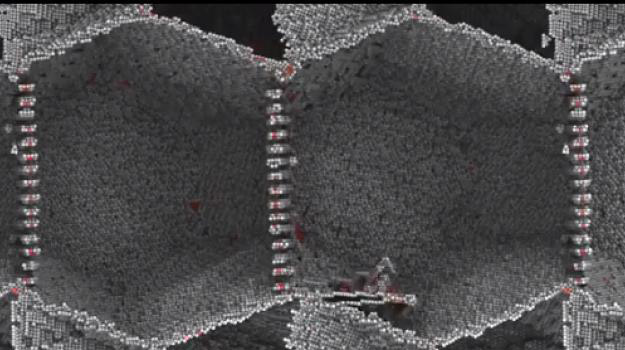
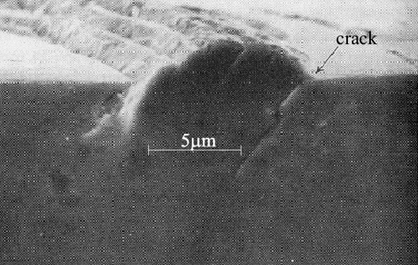
Led by graduate student Guoqiang Xu and professor Michael Demkowicz, the process of getting metals to heal themselves was made almost entirely by accident. The discovery first came when they were modelling a sheet of nickle and tiny microscopic cracks were applied. Once tension was applied, the cracks became smaller and then disappeared as the edges fused together.
Apparently, the key has to do with the fact that most metals are composed of microscopic crystalline grains, the size and orientation of which affect the overall strength and characteristics of the material. Nickel has always been of interest because of its use in so many superalloys, many of which are used in harsh environments – jet turbines, deep sea oil rigs, heavy industry joints.
It turns out that the grains making these materials so strong are not as static as scientists thought. As the metal is pulled outward, the edge of the crystalline grains begins to migrate and can eventually fill in the crack completely. The migration of this crystalline boundary is what heals the gaps in the material. And while it is not exactly polymorphic alloy (see pic below), its certainly big news.
And while researchers have only been able to reproduce this healing behavior with cracks at the microstructural level (known as disclination), these micro-defects are the source of much larger and sometimes catastrophic cracks and metal fatigue. The geometry of disclinations can actually reverse an applied force locally, which is how the tension leads to the metal pulling itself back together.
The team believes this newfound knowledge can be used to prevent superalloys from accumulating structural cracks that could lead to real damage with time. Materials could also be designed to direct damage into disclination-type structures, areas that could absorb damage and then heal themselves. Given time, it could even lead to metals that don’t weaken with age.
Still, you shouldn’t be expecting something like this guy anytime soon! And be sure to enjoy this brief but poignant video of the self-healing effect in action:
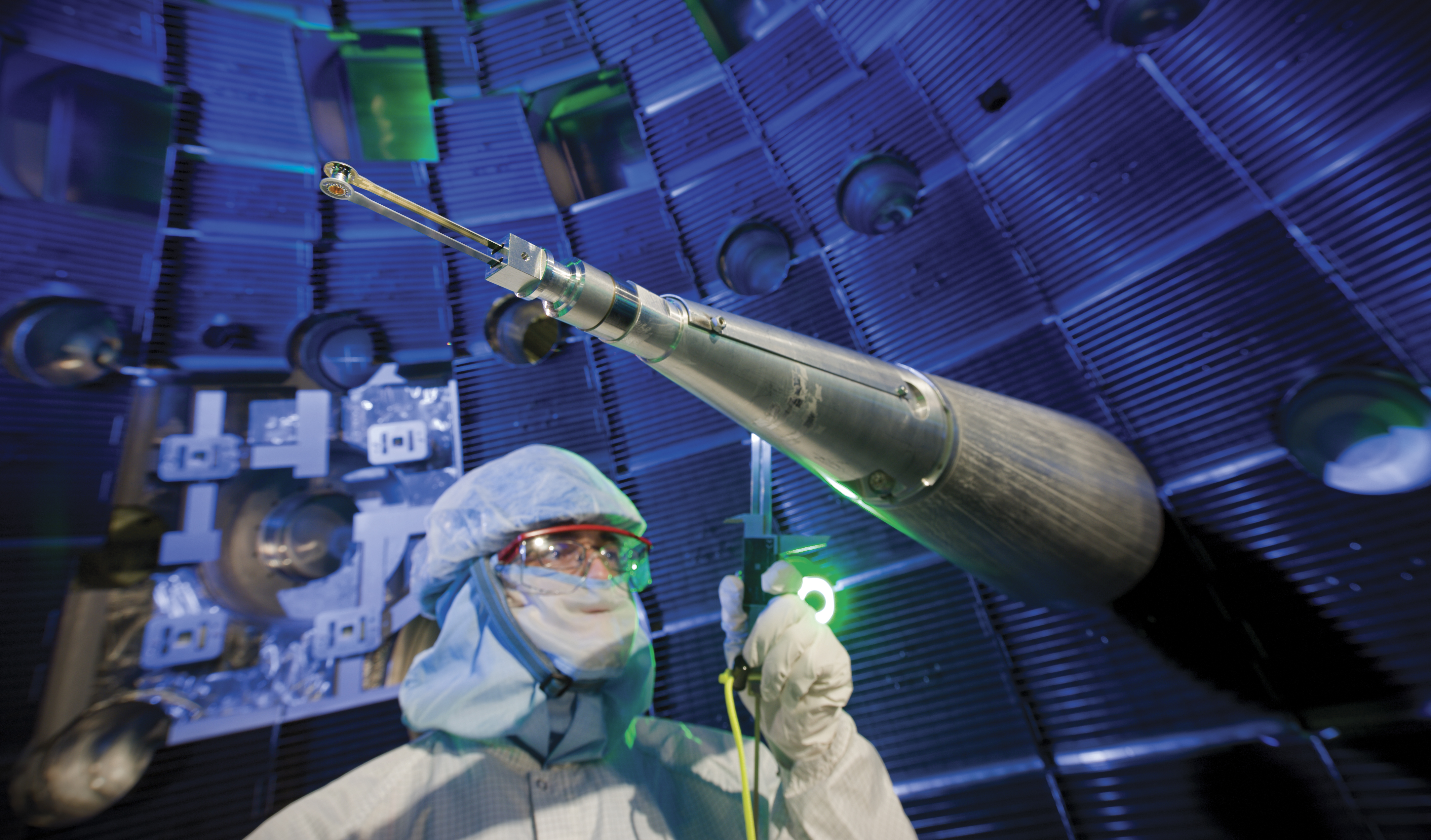
The National Ignition Facility (NIF) in Livermoore, California has made quite a bit of headlines lately. But when you’re goal is to harness fusion power – a clean, unlimited and cheap source of energy – that is abound to happen. For decades, the challenge of harnessing fusion has been to create a process that produces more energy than it consumes; a goal which has remained elusive.
However, a recent breakthrough at NIF has brought us all one step closer to viability. Apparently, the breakthrough happened in late September, where the amount of energy released through the latest controlled fusion reaction exceeded the amount of energy being absorbed by the fuel. This was the first time this had been achieved at any fusion facility anywhere in the world.
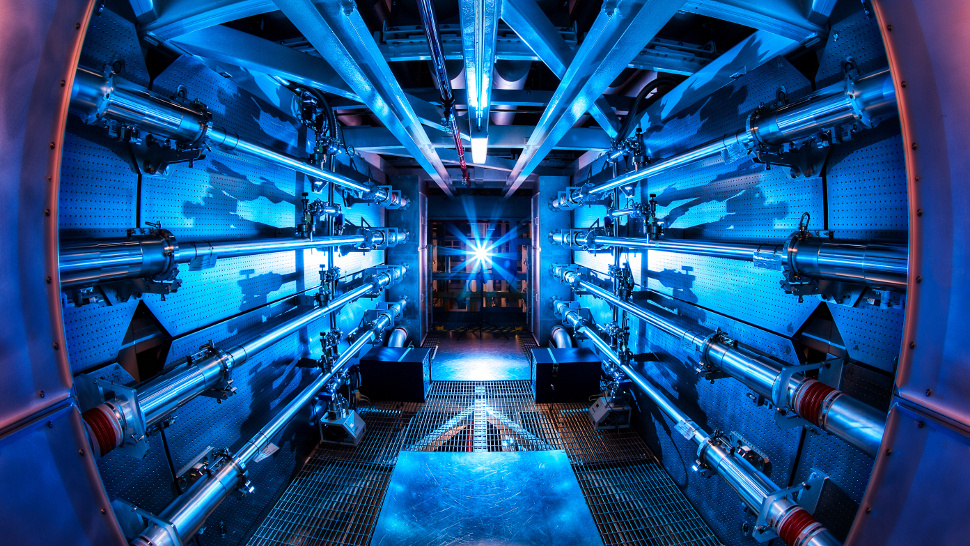
NIF, based at Livermore in California, uses 192 beams from the world’s most powerful laser to heat and compress a small pellet of hydrogen fuel to the point where nuclear fusion reactions take place. Viability, in this case, meant producing more energy from a fusion reaction than was consumed by the lasers themselves and any inefficiencies that cost power along the way.
As already noted, this breakthrough has been decades in the making. After nearly 50 years of experimentation and failure, the NIF announced in 2009 that its aim was to demonstrate nuclear fusion producing net energy by 30 September 2012. But unexpected technical problems ensured the deadline came and went; the fusion output was less than had originally been predicted by mathematical models.
Soon after, the $3.5 billion facility shifted focus, cutting the amount of time spent on fusion versus nuclear weapons research – which was part of the lab’s original mission. However, the latest experiments showed that net energy output is possible, which in turn will provide a welcome boost to ignition research at NIF as well as encouraging fusion research in general.
Despite this breakthrough, there are worries that the research will not be able to continue. Thanks to the government shutdown, federal funding for major research labs like the NIF is threatened. A suspension in funding can be just as harmful as it being cut off altogether, as delays at a crucial juncture can mean all progress will be lost.
Luckily, the NIF is just one of several projects around the world aimed at harnessing fusion. They include the multi-billion-euro ITER facility, currently under construction in Cadarache, France. However, ITER will take a different approach to the laser-driven fusion, using magnetic fields to contain the hot fusion fuel – a concept known as magnetic confinement.
What’s more, NASA’s own research into cold fusion that relies on weak nuclear forces – as opposed to strong ones – is likely to continue, regardless of whether it meets the requirements for emergency exemption. And given that the prize of this research is a future where all our energy needs are provider for using a cheap, abundant, clean alternative, there is no way we’re stopping now!
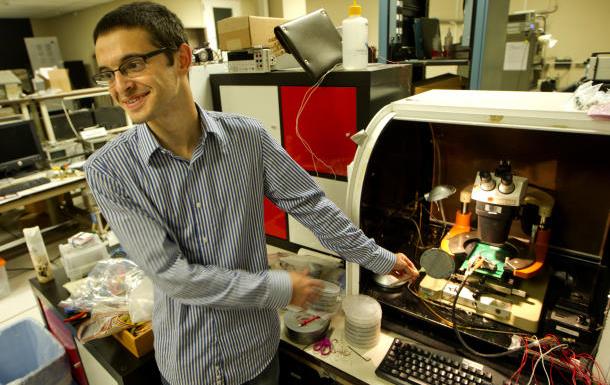
Silicon Valley is undergoing a major shift, one which may require it to rethink its name. This is thanks in no small part to the efforts of a team based at Stanford that is seeking to create the first basic computer built around carbon nanotubes rather than silicon chips. In addition to changing how computers are built, this is likely to extend the efficiency and performance.
What’s more, this change may deal a serious blow to the law of computing known as Moore’s Law. For decades now, the exponential acceleration of technology – which has taken us from room-size computers run by punched paper cards to handheld devices with far more computing power – has depended the ability to place more and more transistors onto an individual chip.
The result of this ongoing trend in miniaturization has been devices that are becoming smaller, more powerful, and cheaper. The law used to describe this – though “basic rule” would be a more apt description – states that the number of transistors on a chip has been doubling every 18 months or so since the dawn of the information age. This is what is known as “Moore’s Law.”
However, this trend could be coming to an end, mainly because its becoming increasingly difficult, expensive and inefficient to keep jamming more tiny transistors on a chip. In addition, there are the inevitable physical limitations involved, as miniaturization can only go on for so long before its becomes unfeasible.
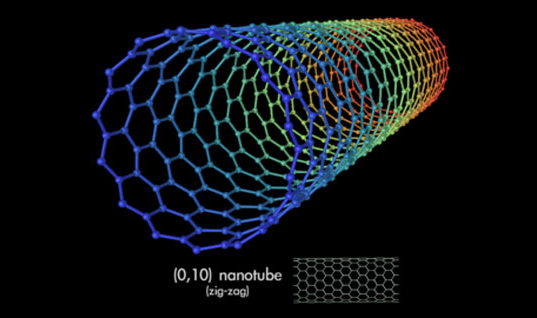
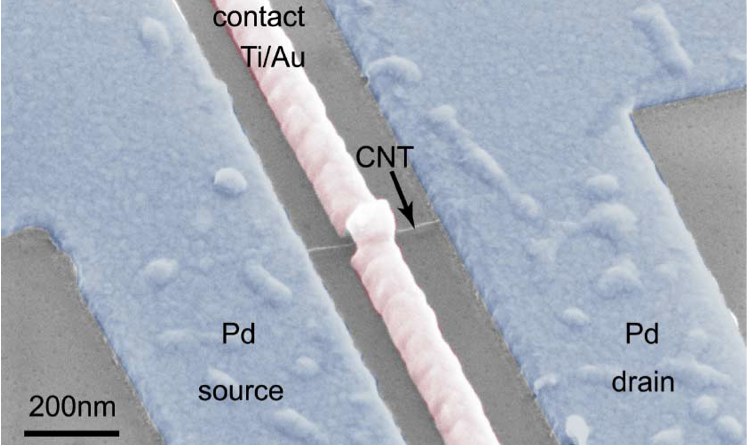
Carbon nanotubes, which are long chains of carbon atoms thousands of times thinner than a human hair, have the potential to be more energy-efficient and outperform computers made with silicon components. Using a technique that involved “burning” off and weeding out imperfections with an algorithm from the nanotube matrix, the team built a very basic computer with 178 transistors that can do tasks like counting and number sorting.
In a recent release from the university, Stanford professor Subhasish Mitra said:
People have been talking about a new era of carbon nanotube electronics moving beyond silicon. But there have been few demonstrations of complete digital systems using this exciting technology. Here is the proof.
Naturally, this computer is more of a proof of concept than a working prototype. There are still a number of problems with the idea, such as the fact that nanotubes don’t always grow in straight lines and cannot always “switch off” like a regular transistor. The Stanford team’s computer’s also has limited power due to the limited facilities they had to work with, which did not have access to industrial fabrication tools.
All told, their computer is only about as powerful as an Intel 4004, the first single-chip silicon microprocessor that was released in 1971. But given time, we can expect more sophisticated designs to emerge, especially if design teams have access to top of the line facilities to build prototypes.
And this research team is hardly alone in this regard. Last year, Silicon Valley giant IBM managed to create their own transistors using carbon nanotubes and also found that they outperformed the transistors made of silicon. What’s more, these transistors measured less than ten nanometers across, and were able to operated using very low voltage.
Similarly, a research team from Northwestern University in Evanston, Illinois managed to create something very similar. In their case, this consisted of a logic gate – the fundamental circuit that all integrated circuits are based on – using carbon nanotubes to create transistors that operate in a CMOS-like architecture. And much like IBM and the Standford team’s transistors, it functioned at very low power levels.
What this demonstrated is that carbon nanotube transistors and other computer components are not only feasible, but are able to outperform transistors many times their size while using a fraction of the power. Hence, it is probably only a matter of time before a fully-functional computer is built – using carbon nanotube components – that will supersede silicon systems and throw Moore’s Law out the window.
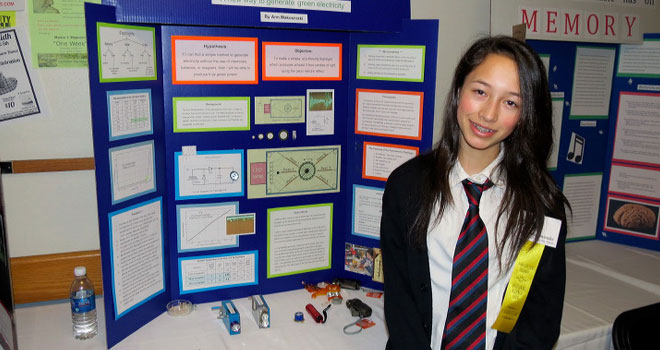
Every year, IT giant Google holds an online competition open to students aged 13-18 from around the globe to come up with new and challenging scientific ideas. And this year, one the winners just happens to hail from my hometown of Victoria, British Columbia. Her name is Ann Makosinki, a 15 year old high school student who invented a way to power a flashlight using only the warmth of your hand.
She claimed a trophy made of Lego for the 15-16 age category at an awards gala that was held on Monday, Sept. 23rd. Her prizes were a $25,000 scholarship and a “once-in-a-lifetime experience” from either CERN (the European Organization for Nuclear Research), LEGO or Google. Quite the impressive accomplishment for a 11th grader, but then again, Makosinki has been a scientist at heart ever since she was a little kid.
For starters, when other children were playing with toy cars and dolls, she busied herself with transistors and microcircuits. What’s more, by Grade 6, she began submitting projects to science fairs and began showing an interest in alternative energy. Still, Makosinki was surprised to be getting an award, given her competition. As she said:
I’m in shock, I’m in shock. It’s actually kind of embarrassing because I didn’t even change [before the awards ceremony]. I didn’t even comb my hair or anything. I must have looked like an absolute mess on stage because I didn’t expect to go up at all.
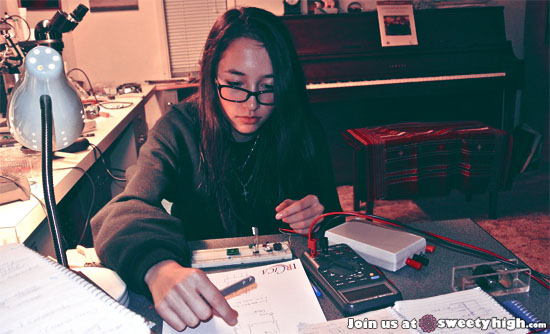
As for the invention itself, it is easy to see why she won. Basically, it is an LED flashlight that relies on the thermoelectric effect to generate electricity when held. This is done through a series of devices that are known as Peltier tiles, which produce electricity when heated on one side and cooled on the other. The tiles are fixed to the outside of the flashlight while the tube itself is hollow.
When held one side of the Peltier tiles are heated by the warmth of the person’s hand, air flowing through the hollow tube helps keep the other side cool. This combination of body heat and air cooling allows enough power to be generated to maintain a steady beam of light for 20 minutes. And all without the need for batteries and the resulting ewaste when they go dead.
Makosinki came up with the idea while researching different forms of alternative energy a few years ago. Already, she had experimented with Peltier tiles for her Grade 7 science fair project. While researching her project, she thought of them again as a way to potentially capture the thermal energy produced by the human body. After doing some calculations, she found that the amount of energy produced by a person’s hand was theoretically sufficient to power an LED light.
However, putting it into practice proved somewhat more difficult. After buying some Peltier tiles on eBay, she tested them and found that while they generated more than enough power, the voltage produced was only a fraction of what she needed. She rectified this problem after doing some further research, where she discovered that the addition of transformers could be used to boost the voltage.
She spent months doing research on the internet, experimenting with different circuits and even building her own transformers, which still didn’t provide enough voltage. In the end, she came across an article on the web about energy harvesting that suggested an affordable circuit that would provide the voltage she needed when used with a recommended transformer. Finally, the circuit worked.
Makosinski admitted there were points in the experiment when she thought it would never work. But as she said:
You just kind of have to keep going. This took quite awhile ’cause I had to do it during the school year as well and I had homework, plays, whatever that I was also doing.
After making it to the Google Science Fair, she and her colleagues spent the day presenting at Google’s headquarters in Mountain View, California. Here, the 15 judges – which included scientists from a variety of fields, science journalists, an astronaut, and a former Google Science Fair winner – witnessed their creations and tried to determine which held the most promise.
The other winners included Viney Kumar, an Australia student who captured the 13-14 age category for an Android app that warns drivers of an approaching emergency vehicle more than a minute in advance, in order to help clear a path for it. And then there was Elif Bilgin of Turkey, a 16-year old who took home the Scientific American Science in Action Prize and the Voter’s Choice Award for inventing a way to make plastic from banana peels.
The Grand Prize for the 17-18 age category went to Eric Chen, a 17 year old student from San Diego who is researching a new kind of anti-flu medicine using a combination of computer modelling and biological studies. He received the top prize of a $50,000 scholarship and a 10-day trip to the Galapagos Islands.
Alas, Makosinki felt the best part of the competition was getting to meet the other finalists in person at last.
It’s just so inspiring to see other people who are kind of like me and kind of want to make a difference in the community not just by talking about it but by actually doing stuff.
What’s next for the young inventor? Personally, I hope Makosinki and her fellow prize winners will be forming their own research group and looking for new and exciting ways to come up with renewable energy, recycling, vaccinations, and electronics. What do you think Makonsinky, Kumar, Bilgin, Chen? That’s what Andraka and his fellow finalists did after winning ISEF 2012, and they seem to be doing pretty good. So… hintedy, hint hint!
And be sure to enjoy this video of Ann Makosinki showing off her invention, courtesy of Technexo:
Studying the known universe is always interesting, mainly because you never know what you’re going to find. And just when you think you’ve got something figured out – like a moon in orbit around one of the Solar Systems more distant planet’s – you learn that it can still find ways to surprise you. And interestingly enough, a few surprises have occurred back to back in recent weeks which are making scientists rethink their assumptions about these moons.
The first came from Io, Jupiter’s innermost moon and the most volcanically active body in the Solar System. All told, the surface has over 400 volcanic regions, roughly 100 mountains – some of which are taller than Mount Everest – and extensive lava flows and floodplains of liquid rock that pass between them. All of this has lead to the formation of Io’s atmosphere, which is basically a thin layer of toxic fumes.
Given its distance from Earth, it has been difficult to get a good reading on what the atmosphere is made up of. However, scientists believe that it is primarily composed of sulfur dioxide (SO2), with smaller concentrations of sulfur monoxide (SO), sodium chloride (NaCl), and atomic sulfur and oxygen. Various models predict other molecules as well, but which have not been observed yet.
However, recently a team of astronomers from institutions across the US, France, and Sweden, set out to better constrain Io’s atmosphere. Back in September they detected the second-most abundant isotope of sulfur (34-S) and tentatively detected potassium chloride (KCl).Expected, but undetected, were molecules like potassium chloride (KCl), silicone monoxide (SiO), disulfur monoxide (S2O), and other isotopes of sulfur.
But more impressive was the team’s tentative of potassium chloride (KCl), which is believed to be part of the plasma torus that Io projects around Jupiter. For some time now, astronomers and scientists have been postulating that Io’s volcanic eruptions produce this ring of plasma, which includes molecular potassium. By detecting this, the international team effectively found the “missing link” between Io and this feature of Saturn.
Another find was the team’s detection of the sulfur 34-S, an isotope which had previously never been observed. Sulfur 32-S had been detected before, but the ratio between the 34-S and 32-S was twice that of what scientists believed was possible in the Solar System. A fraction this high has only been reported once before in a distant quasar – which was in fact an early galaxy consisting of an intensely luminous core powered by a huge black hole.
These observations were made using the Atacama Pathfinder Experiment (APEX) antenna – a radio telescope located in northern Chile. This dish is a prototype antenna for the Atacama Large Millimeter Array (ALMA). And while Io is certainly an extreme example, it will likely help terrestrial scientists characterize volcanism in general – providing a better understanding of it here on Earth as well as outside the Solar System.
The second big discovery was announced just yesterday, and comes from NASA’s Cassini space probe. In its latest find investigating Saturn’s largest moon, Cassini made the first off-world detection of the molecule known as propelyne. This simple organic compound is a byproduct of oil refining and fossil fuel extraction, and is one of the most important starting molecules in the production of plastics.
The molecules were detected while Cassini used its infrared spectrometer to stare into the hydrocarbon haze that is Titan’s atmosphere. The discovery wasn’t too surprising, as Titan is full of many different types of hydrocarbons including methane and propane. But spotting propylene has thus far eluded scientists. What’s more, this is the first time that the molecule has been spotted anywhere outside of Earth.
These finding highlight the alien chemistry of Saturn’s giant moon. Titan has moisture and an atmosphere, much like our own, except that its rains are made of hydrocarbons and its seas composed of ethane. Scientists have long wanted to explore this world with a boat-like rover, but given the current budget environment, that’s a distant prospect. Still, sales of propylene on Earth are estimated at $90 billion annually.
While no one is going to be mounting a collection mission to Titan anytime soon, it does offer some possibilities for future missions. These include colonization, where atmospheric propylene could be used to compose settlements made of plastic. And when it comes to terraforming, knowing the exact chemical makeup of the atmosphere will go a long way towards finding a way to make it breathable and warm.
And in the meantime, be sure to enjoy this video about Cassini’s latest discovery. With the government shutdown in effect, NASA’s resources remain offline. So we should consider ourselves lucky that the news broke before today and hope like hell they get things up and running again soon!
Scientists have been making great strides in coming up with treatments and cures for illnesses that were previously thought to be incurable. While some of these are aimed at eliminating pandemics that have taken millions of lives worldwide (such as HIV/AIDS) others are aimed at treating the more common – but no less infectious – viruses, like the common flu.
When it comes to the latter, the difficulty is not so much in creating a cure, as it is a cure all. The flu is a virus that is constantly evolving, changing with the seasons and with each host. This requires medical researchers to constantly develop new vaccines year after year to address the latest strain, as well as specialized vaccines to address different types – i.e. H1N1, swine, avian bird.
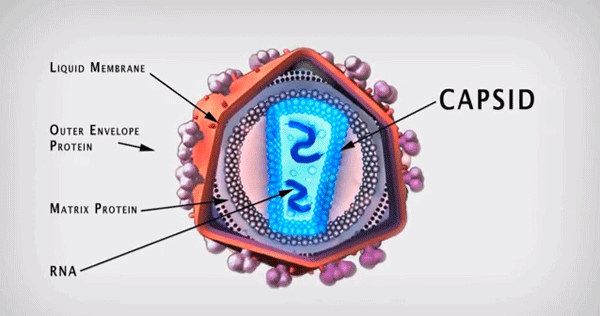
Luckily, a research team at Imperial College London say they have made a “blueprint” for a universal flu vaccine. Their report appeared in a recent issue of Nature Medicine. In their report, they specified that the key to creating a universal vaccine lies in targeting the core of the virus, rather than its ever-evolving DNA.
Just last year, researchers at the Friedrich-Loeffler Institute in Riems Island, Germany sought to create a similar vaccine that would target the virus’ RNA structure rather than the key proteins found in the DNA. By contrast, the Imperial researchers set about looking into T-cells, the crucial part of the immune system that is thought to be able to recognize proteins in the core.
Their research began with a series of clinical examinations of the 2009 swine flu pandemic, which was produced by the combining of earlier strains of pig and bird flu. The team then compared levels of one kind of T-cells at the start of the pandemic with symptoms of flu in 342 staff and students at the university. They showed that the higher the levels of the T-cells a patient had, the milder their symptoms were.
Researchers then teased out the specific part of the immune system that offered some pandemic flu protection and which part of the virus it was attacking. from there, They began developing a vaccine that would trigger the production of these cells – known as CD8 T cells. These cells would attack the invading flu virus, ignoring the outer protein structure and focusing on the core which it had encountered before.
Prof Ajit Lalvani, who led the study, told the BBC:
It’s a blueprint for a vaccine. We know the exact subgroup of the immune system and we’ve identified the key fragments in the internal core of the virus. These should be included in a vaccine. In truth, in this case it is about five years [away from a vaccine]. We have the know-how, we know what needs to be in the vaccine and we can just get on and do it.
The benefits of such a vaccine would be profound and obvious. While many of us consider the seasonal flu to be an inconvenience, it is important to note that it kills between 250,000 and 500,000 people worldwide each year. While this is a fraction of the total number of deaths attributed to AIDS (1.6 to 1.9 million in 2010, it is still a significant toll. What’s more, new pandemics have the potential to take doctors by surprise and kill large numbers of people. However, the Imperial College researchers admit that it is generally harder to develop a T-cell vaccine than a traditional one designed to provoke an antibody response. The challenge will be to get a big enough of a T-cell response to offer protection and a response that will last. So while the blueprint is in place, medical researchers still have a long road ahead of them.
Prof John Oxford, of Queen Mary University of London, put it this way:
This sort of effect can’t be that powerful or we’d never have pandemics. It’s not going to solve all the problems of influenza, but could add to the range of vaccines.It’s going to be a long journey from this sort of paper to translating it into a vaccine that works.
What’s more, there are concerns that a T-cell vaccine would be limited when it comes to certain age groups. Jenner Institute at Oxford University, explains:
Live attenuated influenza vaccines which are given by nasal spray and will be used in children in the UK from this autumn are much better at increasing the number of influenza-specific T cells, but these vaccines only work in young children who haven’t yet had much exposure to influenza virus, so we need an alternative approach for adults.
Interestingly enough, this approach of stimulating the production of T-cells bears a striking resemblance to the work being done at the Vaccine and Gene Therapy Institute at OHSU, where researchers are working towards a vaccine that could also cure HIV. This research also appeared in Nature Medicine last month.
So not only could we be looking at a cure for both HIV and the flu in the near future, we could be looking at the containment of infectious viruses all over the world. As these two cases demonstrate, advances in medical science towards antivirals appear to be tied at the hip.
Scientists recently made a major breakthrough that may completely alter our perceptions of quantum physics, and the nature of the universe itself. After many decades of trying to reformulate quantum field theory, scientists at Harvard University discovered of a jewel-like geometric object that they believe will not only simplify quantum science, but even challenge the notion that space and time are fundamental components of reality.
This jewel has been named the “amplituhedron”, and it is radically simplifying how physicists calculate particle interactions. Previously, these Interactions were calculated using quantum field theory – mathematical formulas that were thousands of terms long. Now, these interactions can be described by computing the volume of the corresponding amplituhedron, which yields an equivalent one-term expression.
Jacob Bourjaily, a theoretical physicist at Harvard University and one of the researchers who developed the new idea, has this to say about the discovery:
The degree of efficiency is mind-boggling. You can easily do, on paper, computations that were infeasible even with a computer before.
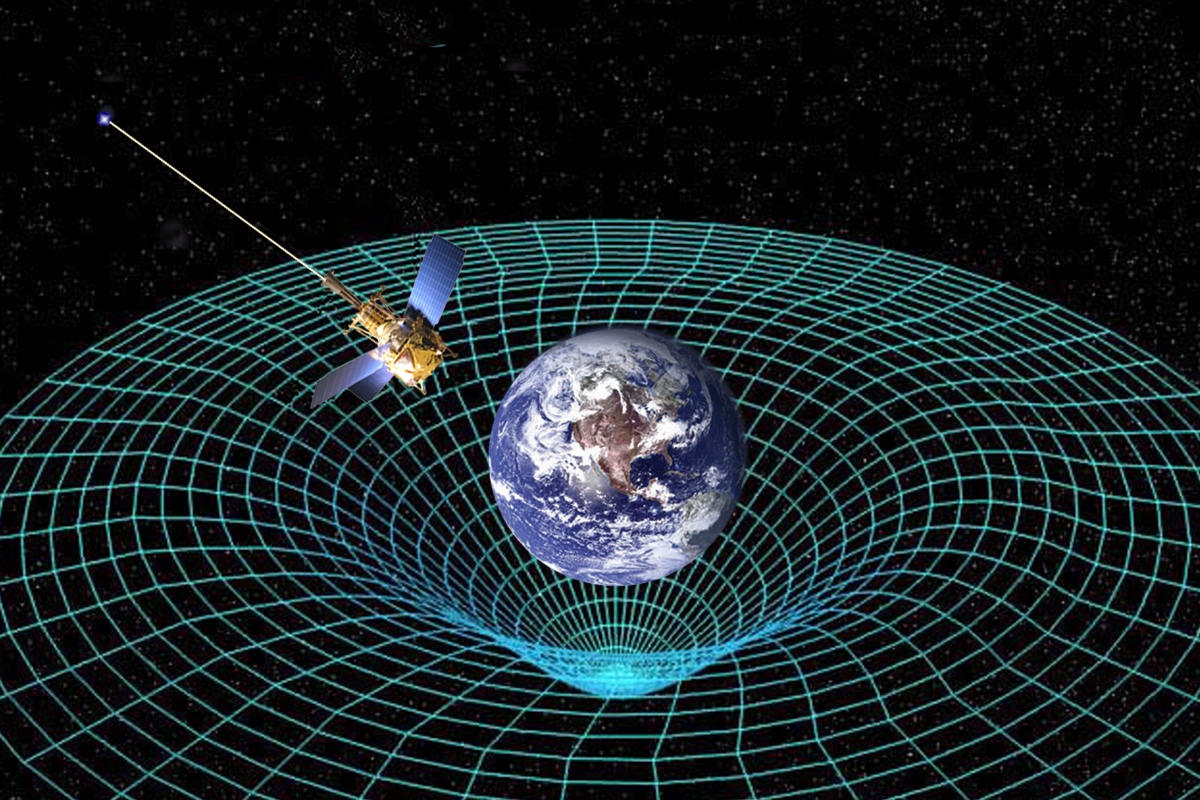
This is exciting news, in part because it could help facilitate the search for a Grand Unifying Theory (aka. Theory of Everything) that manages to unify all the fundamental forces of the universe. These forces are electromagnetism, weak nuclear forces, strong nuclear forces, and gravity. Thus far, attempts at resolving these forces have run into infinities and deep paradoxes.
Whereas the field of quantum physics has been able to account for the first three, gravity has remained explainable only in terms of General Relativity (Einstein’s baby). As a result, scientists have been unable to see how the basic forces of the universe interact on a grand scale, and all attempts have resulted in endless infinities and deep paradoxes.
The amplituhedron, or a similar geometric object, could help by removing two deeply rooted principles of physics: locality and unitarity. Locality is the notion that particles can interact only from adjoining positions in space and time, while unitarity holds that the probabilities of all possible outcomes of a quantum mechanical interaction must add up to one.
The concepts are the central pillars of quantum field theory in its original form, but in certain situations involving gravity, both break down, suggesting neither is a fundamental aspect of nature. As Nima Arkani-Hamed – a professor of physics at the Institute for Advanced Study in Princeton, N.J. and the lead author of the new work – put it: “Both are hard-wired in the usual way we think about things. Both are suspect.”
In keeping with this idea, the new geometric approach to particle interactions removes locality and unitarity from its starting assumptions. The amplituhedron is not built out of space-time and probabilities; these properties merely arise as consequences of the jewel’s geometry. The usual picture of space and time, and particles moving around in them, is a construct.
And while the amplituhedron itself does not describe gravity, Arkani-Hamed and his collaborators think there might be a related geometric object that does. Its properties would make it clear why particles appear to exist, and why they appear to move in three dimensions of space and to change over time. This is because, as Bourjaily put it:
[W]e know that ultimately, we need to find a theory that doesn’t have [unitarity and locality]. It’s a starting point to ultimately describing a quantum theory of gravity.
Imagine that. After decades of mind-boggling research and attempts at resolving the theoretical issues, all existence comes down to a small jewel-shaped structure. I imagine the Intelligent Design people will have a field day with this, and I can foresee it making it into the new season of Big Bang Theory as well. Breakthroughs like this always do seem to have a ripple effect…
Scientists and researchers have been making great strides in the fight against HIV/AIDS in recent years. In addition to developing vaccines that have shown great promise, there have even been some treatments that have been shown to eliminate the virus altogether. And it seems that with this latest development, which was published in Nature earlier this month, there might be a treatment that can double as a cure.
Developed at the Vaccine and Gene Therapy Institute at the Oregon Health and Science University (OHSU), this new vaccine proved successful in about fifty percent of the clinical subjects that were tested, and may be able to cure patients who are currently on anti-retroviral drugs. If successful, this could mean that a preventative vaccine and cure could come in the same package, thus eliminating HIV altogether.
Currently, anti-retroviral drugs and HIV vaccine typically aim at improving the immune response of the patient in the long term. However, they are limited in that they can never completely clear the virus from the body. In fact, aside from a very few exceptional cases, researchers have long believed that HIV/AIDS could only be contained, but not completely cured.
The OHSU team, led by Dr. Louis Picker, has been working on its own vaccine for the past 10 years. In that time, their research has shown that an immune response can in fact go beyond containment and systematically wipe the virus out of the body. As with most early vaccine candidates, the study revolves around SIV – a more aggressive virus than HIV that can replicate up to 100 times faster and, unchecked, can cause AIDS in only two years.
Picker and his research team created the vaccine by working with cytomegalovirus (CMV), another virus which is itself persistent, but doesn’t cause disease. In their initial tests, the vaccine was found to generate an immunoresponse very similar to that generated by CMV, where T-cells that can search and destroy target cells were created and remained in the system, consistently targeting SIV-infected cells until the virus was cleared from the body.
For the sake of their clinical trials, simian subjects were used that were infected by the HIV virus. When treated with the team’s vaccine, half of the subjects initially showed signs of infection, but those signs gradually receded before disappearing completely. This sets it apart from other vaccines which also generate an immunoresponse, but one which fades over time.
According to Dr. Picker, it is the permanency of the T-cells that allows the immunoresponse to be consistent and slowly eradicate the virus, eventually eliminating it completely from the system. Says Dr. Picker of their trials and the possibilities for the vaccine:
The virus got in, it infected some cells, moved about in various parts of the body, but it was subsequently cleared, so that by two or three years later the monkeys looked like normal monkeys. There’s no evidence, even with the most sensitive tests, of the SIV virus still being there... We might be able to use this vaccine either to prevent infection or, potentially, even to apply it to individuals who are already infected and on anti-retroviral therapy. It may help to clear their infections so ultimately they can go off the drugs.
Currently, Picker and his the team are trying to understand why some of the vaccinated animals did not respond positively, in the hopes of further increasing the efficacy of the vaccine. Once these trials are complete, it could be just a hop, skip and a jump to getting FDA approval and making the vaccine/cure available to the open market.
Imagine, if you will, a world where HIV/AIDS is on the decline, and analysts begin predicting how long it will take before it is eradicated entirely. At this rate, such a world may be just a few years away. For those working in the field of medicine, and those of us who are around to witness it all, it’s an exciting time to be alive!
And be sure to enioy this video from OHSU where Dr. Picker speak about their vaccine and the efforts to end HIV:
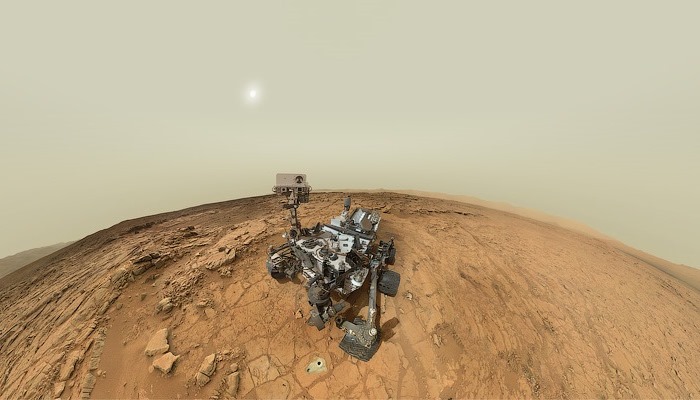
The recent discoveries and accomplishments of the Curiosity and Opportunity rovers have been very impressive. But for some, these successes have overshadowed the limitations that are part of the rover designs. Yes, despite their complexity and longevity (as evidenced by Opportunity’s ten years of service) the robot rovers really aren’t that fast or agile, and are limited when it comes to what they can access.
Case in point, Curiosity is currently on a year-long trek that is taking it from the Glenelg rocky outcropping to Mount Sharp, which is just over 8 km (5 miles) away. And where crevices, holes and uneven terrain are involved, they’ve been known to have trouble. This was demonstrated with the Spirit Rover, which was lost on May 1st, 2009 after getting stuck in soft soil.
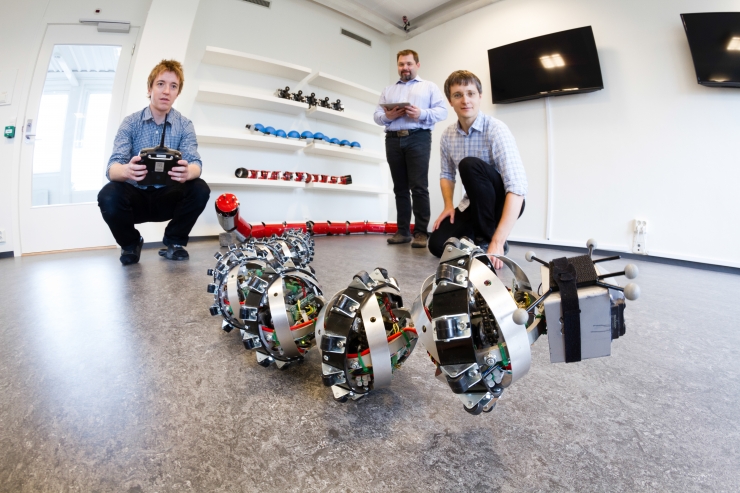
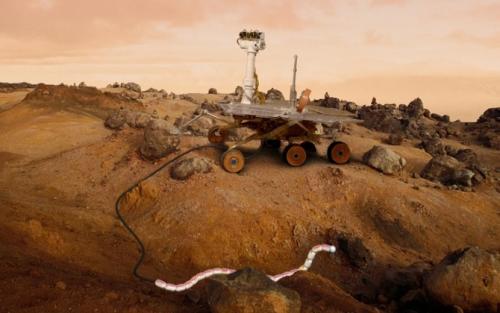
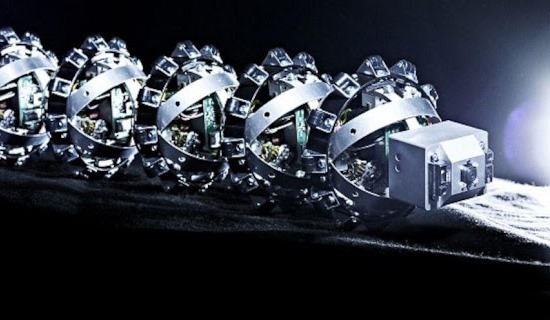
As a result, the European Space Agency is planning on a sending a different type of rover to Mars in the future. Basically, their plan calls for the use of robot snakes. This plan is the result of collaborative study between the ESA and SINTEF – the largest independent research organization in Scandinavia – that sought to create a rover that would be able to navigate over long distances and get into places that were inaccessible to other rovers.
They concluded that a snake-like robot design would open up all kinds of possibilities, and be able to collect samples from areas that other rovers simply couldn’t get into. In addition to being able to move across challenging surfaces, these snake-bots would also be able to tunnel underground and get at soil and rock samples that are inaccessible to a land rover. Curiosity, which despite its advanced drill, is limited in what it can examine from Mars’ interior.
The researchers envisage using the rover to navigate over large distances, after which the snake robot can detach itself and crawl into tight, inaccessible areas. A cable will connect the robot to the vehicle and will supply power and tractive power – i.e. it can be winched back to the rover. Communication between the pair will be also be facilitated via signals transmitted down the cable.
According to Pål Liljebäck, one of the researchers developing the snake robot at SINTEF, the challenge presents several opportunities for creative solutions:
We are looking at several alternatives to enable a rover and a robot to work together. Since the rover has a powerful energy source, it can provide the snake robot with power through a cable extending between the rover and the robot. If the robot had to use its own batteries, it would run out of power and we would lose it. One option is to make the robot into one of the vehicle’s arms, with the ability to disconnect and reconnect itself, so that it can be lowered to the ground, where it can crawl about independently.
An additional benefit of this rover-snake collaboration is that in the event that the rover gets stuck, the snake can be deployed to dig it out. Alternately, it could act as an anchor by coiling itself about a rock while the rover using the cable as a winch to pull itself free.
Liljebäck and his colleague, Aksel Transeth, indicate that SINTEF’s Department of Applied Cybernetics has been working closely with the Norwegian University of Science and Technology’s (NTNU) Department of Engineering Cybernetics for many years. However, it was only recently that these efforts have managed to bear fruit in the form or their robot snake-rover design, which they hope will trigger a long-term partnership with the ESA.
In addition to researching rover design, Transeth, Liljebäck and other researchers working with the ESA are looking for ways to bring samples from Mars back to Earth. At present, soil and other materials taken from Mars are analyzed on board the rover itself, and the results communicated back to Earth. If these samples could be physically transported home, they could be studied for years to come, and yield much more fascinating information.
And be sure to enjoy this video of the robot snake in action:
The researchers are busy working on a feasibility study assigned to them by the ESA. The ESA and the researchers believe that by combining a rover that can navigate over large distances with a snake robot that can crawl along the ground and can get into inaccessible places, so many more possibilities could be opened up.

 For several decades now, the widely accepted theory is that almost 27% of the universe is fashioned out of an invisible, mysterious mass known as “dark matter”. Originally theorized by Fritz Zwicky in 1933, the concept was meant to account for the “missing mass” apparent in galaxies in clusters. Since that time, many observations have suggested its existence, but definitive proof has remained elusive.
 Luckily, MIT recently green-lighted the DarkLight project – a program aimed at creating tiny tiny amounts of dark matter using a particle accelerator. In addition to proving that dark matter exists, the project team has a more ambitious goal of figuring out dark matter behaves – i.e. how it exerts gravitational attraction on the ordinary matter that makes up the visible universe.
 To do this, DarkLight will use the particle accelerator at the JeffersonJefferson Lab’s Labs Free-Electron Laser Free Electron Lase in Virginia to bombard an oxygen target with a stream of electrons with one megawatt of power. This will be able to test for these massive photons and, it is hoped, create this theorized form of dark matter particles. The dark matter, if it’s created, will then immediately decay into two other particles that can be (relatively) easily detected.
 But if we can pinpoint the basis of dark matter, it would be a monumental finding that would greatly our enhance our understanding of the universe, and dwarf even the discovery of the Higgs Boson. After that, the only remaining challenge will be to find a way to observe and understand the other 68% of the universe!
 You’ve heard of self-healing concrete, you’ve heard of self-healing polymers. And now, it seems that researchers at MIT have found a way to make metals heal themselves after tiny cracks form. As the latest in a series of materials that is capable of maintaining itself, this discovery could very well help pioneer the revolution in manufacturing everyone has been waiting for.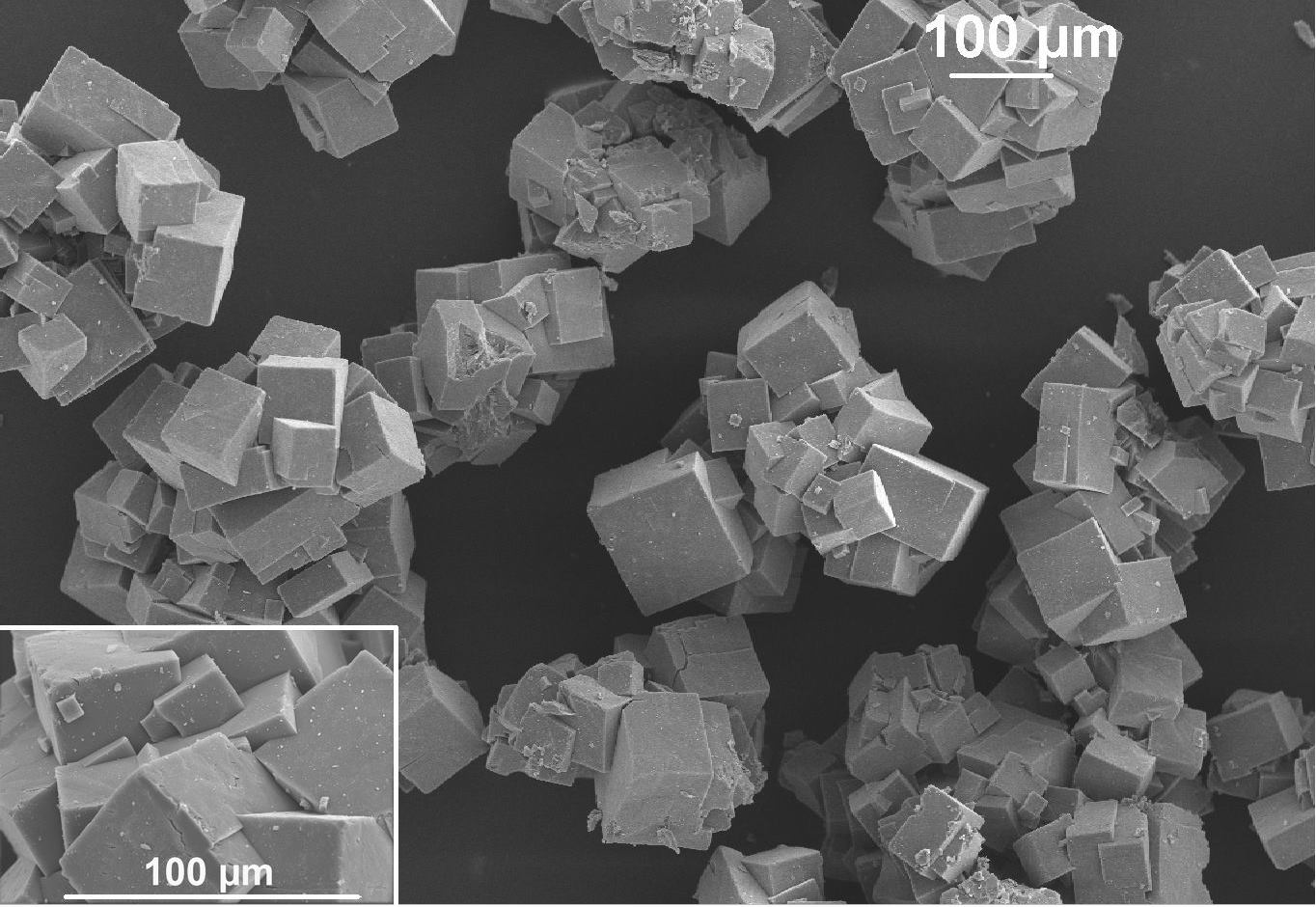






















 Stories by Williams