World’s Most Advanced Microscope – Now In My Hometown!

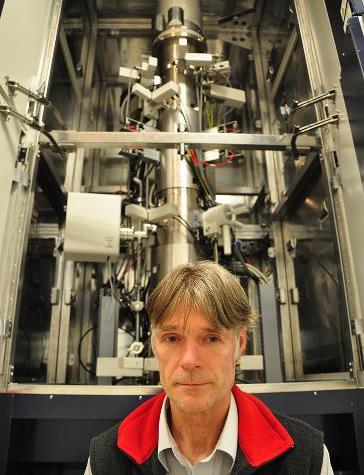
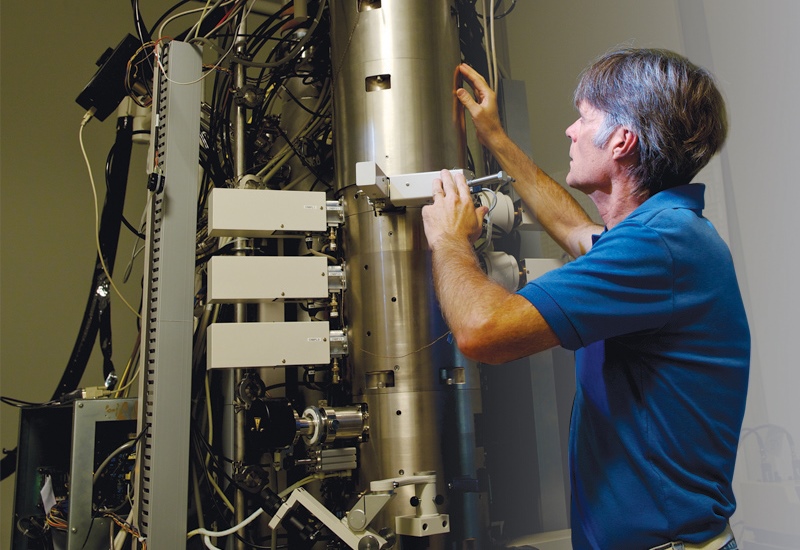
Uvic_microLess than one month ago, the University of Victoria – located just 20 km from where I live – made history when its Scanning Transmission Electron Holography Microscope (STEHM) went online and began taking pictures. The microscope, which is located in the vault beneath the University, conducted its first operation by zapping a fleck of gold and producing the world’s most highly magnified image.

The nondescript shot of gold atoms proved what many were already hoping for – that his STEHM is indeed the most powerful in the world, even during its “tuning” phase. Built by Hitachi High Technologies Canada, the STEHM is a one-of-a-kind machine and is the highest-resolution microscope ever built, designed to allow researchers to see things at a magnification up to 20 million times larger than the human eye can see.
Uvic_micro2Apparently, the image of the gold atoms resolved at 34 picometres, thus breaking the record for highest resolution shot ever made by an electron microscope. Previously, this record was held by the This beats out the Lawrence Berkley National Laboratory in California which took an image at a resolution of 49 picometres. A picometre, it should be noted, is a trillionth of a meter, and a gold atom is about 332 picometres in diameter.

Rodney Herring, a professor of mechanical engineering and director of UVic’s Advanced Microscopy Facility, had this to say about the image in an interview with Saanich News:

For me it was a relief. I’d been telling everybody this could potentially have the best resolution and be the most powerful microscope in the world. But it wasn’t proven yet. Now we’ve got information down to 34 picometres and we aren’t done yet. We are still tuning the lab.
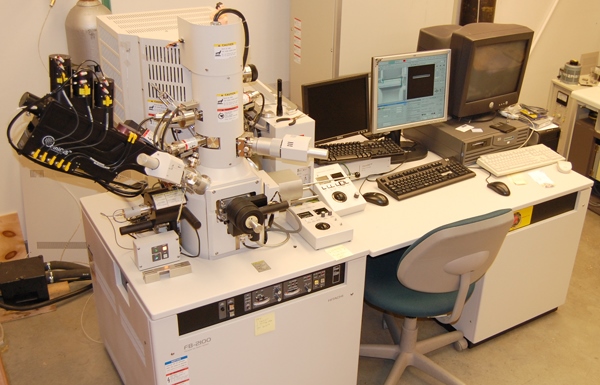
Uvic_micro3With the tuning and testing phase complete, Herring and his associates launched the microscope this month. The university had hoped to open the lab to outsider researchers this past winter, but the microscopes assembly and calibrations have been so maddeningly complicated that any such plans have been stalled and it only recently became operational. However, as Herring noted, tons of researchers are already lined up and looking to use it.

Literally everyone- from engineers, physicists, and chemists, to biologists and medical researchers – are looking to use the microscope to advance the sciences of medical and environmental diagnostics, communications, computers, alternative energy and manufacturing. However, the potential scientific breakthroughs for such a machine are yet to be fully contemplated, and present many exciting possibilities.Uvic_micro1All told, this machine will be able to probe and create 3D images of items like brain neurons and their synapses and muscle tissue, or probe microchip circuitry assembled at nearly the atomic level. Herring said the machine could create “pico technology,” where devices would be made one atom at a time.

This research would prove to be a boon for many areas of science, but especially for nanotechnology. Chemistry professor Alex Brolo oversees nanotechnology development related to items like medical sensors and solar cells at UVic, and said the STEHM will be critical in creating more precise devices, and without having to use powerful electron microscopes elsewhere in Canada.

solar_beadsAnd considering that more and more technology is being scaled at the nano level, any advancements made in this field would be both lucrative and incredibly significant. As it stands, the STEHM is the only microscope of its kind because of its complexity, and because of this, Hitachi has indicated that it does not plan to manufacture another like it anytime soon.

All of this puts the Advanced Microscopy Facility, and the University of Victoria in general, in a pretty comfortable position. For what could be years to come, they will have the most advanced microscope in the world at their disposal and be able to take part in some serious scientific advances. What’s more, they will surely be suffocated by petitions from research labs and scientists looking to get access to it.

Sometimes, it pays to have the most powerful microscope on the block!

Sources: vicnews.com, communications.uvic.ca

Patenting Genes: US Supreme Court Says No

dna_doublehelixLast week, in a landmark decision that is expected to have far-reaching consequences, the United States Supreme Court announced in a unanimous decision that no part of the human DNA sequence – or the DNA of any living organism – is patentable. This decision came after thirty years of patents being issued on genes for the sake of genetic research, and which was spurred on by recent developments, such as the publication of the human genome.

Specifically, the case came down to a claim made by Myriad Genetics, the company that discovered the BRCA-1 and BRCA-2 genetic mutations that can lead to higher incidences of breast cancer. They patented these sequences in the hopes of having a lucrative investment when it came to future screenings and treatments. But for many, this signaled that a line was being crossed, and the case went to court.

us_supremecourtFor critics of Myriad’s attempt to patent the genetic mutations, they claimed that this made screening often prohibitively expensive. Angelina Jolie was one such person, who drew attention to the fact that her mother – who died of breast cancer – and women like her would be unable to afford the treatment if Myriad got it’s way. Myriad fought back by saying that without the possibility of future financial gain, there would be no incentive for companies to sink money into searching for these genes.

In the end, the Supreme Court voted 9 to 0 that genes are products of nature and not human-made inventions, which makes them ineligible for a patent. For many, this decision has temporarily closed Pandora’s Box and prevented corporations from obtaining the right to carve up the human genome and lay claim to it, a process which many believed would lead to monopolies of gene treatments and the potential ownership of human beings themselves.

GMO_seedsOn the other hand, the court’s ruling did not apply to one other key issue: synthetic genes. Basically, genetic modifications that are made my companies for the sake of modifying foods, agricultural produce, and even animals are still up for grabs. And at least one major corporation is pretty pleased about this. In allowing for synthetic genes to remain a grey area, Monsanto is likely to continue seeking to patent its genetically-modified seeds.

Just over a month ago, the Supreme Court ruled in favor of the giant agribusiness in one of the most important lawsuits filed by the company in recent years. In essence, the court’s ruled that an Indiana soybean farmer was infringing on Monsanto’s soybean patent by buying the seeds from a nearby grain elevator and then saving them.

agribusinessOf the 144 lawsuits filed against 410 farmers and 56 small farm businesses throughout the U.S. in the past few years (according to the Center for Food Safety), this case was especially important. It essentially set the precedent that anyone selling genetically-modified grains had to pay royalties to the company responsible for their creation. This in turn has long-reaching implications which go far beyond agribusiness.

Though it is still a grey area, the legal battle over modified genes seems all but decided at this point. Whereas natural genes cannot be subject to patents, anything a company modifies in a lab already have been. But given the growth of skunkworks and biohacking labs around the world, there is still time for small operations and independent companies to get in on the action.

As time has shown, diversification is the natural enemy of monopolization. But by far the most important thing of all, whether it’s about patenting genes or modifying them for our use, is for people to remain informed on the issue. As long as people know what decisions are being made behind closed doors, they will have a shot at controlling the outcome.

Sources: fastcoexist.com, (2)

Ending Cancer: “Computational Cell Biology”

Cancer-researcherOne doesn’t think that diseases themselves would be vulnerable to infections; in fact, it seems counter-intuitive at best. And yet, that is what a group of scientists from Ottawa, Ontario (my old hometown) are proposing. Using and advanced mathematical modeling system to engineer viruses that will infect and destroy cancer cells, the team has been investigating how treatment techniques and genetic modification might allow cancer-killing (oncolytic) viruses to overcome cancer cells’ anti-infection defenses and kill them.

In a report filed with Nature Communication magazine, the lead authors – Dr. Mads Kaern and Dr. John Bell, a medical researcher and senior biologist from the University of Ottawa – detailed how the team used mathematical modeling to create techniques to render cancer cells highly vulnerable to infection while leaving healthy tissue untouched. The modified oncolytics zero in on the very thing that makes cancer cells so destructive β€” their potential to proliferate and grow explosively and unchecked, and blocks it.

dnacomputingCancer cells and normal cells are equipped with defensive mechanisms that protect them from invading cells. By using mathematical models, the Ottawa team has managed to equip oncolytic viruses with a gene that helps them override many kinds of cancer cells’ natural defenses, slowing the cancer’s reproduction and also making it more vulnerable to other infections.

Kaern and Bell constructed a mathematical model of the process of infection of a cancer cell, including how the virus would replicate, spread itself and override the cancer’s biological defenses. The study used predictive models to understand how the viruses might better overcome the cancer’s defenses, models that turned out to be surprisingly accurate.

cancer_cellIn an interview with Raw Story, Kaern explained the process and how it works:

These viruses tend to replicate better in cancer cells, because cancer cells tend to grow and divide more with an increased metabolism. The viruses are sort of exploiting that by replicating more aggressively, specifically in cancer cells.

The trick, Kaern said, is to engineer viruses that do that, but with minimal harm to surrounding healthy cells. The engineered viruses are built to not propagate in healthy tissues. But when it comes to cancer cells, it only takes one oncolytic virus making contact with one cancer cell to begin the propagation process.

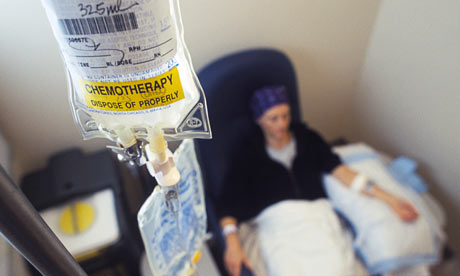
chemotherapy2The benefits of this kind of treatment are obvious and profound. In addition to being self-propagating, it will also eliminate the need for expensive and unhealthy treatment:

You don’t really have to overload the system with tons of chemotherapy, which also targets specific cancers, right? But you have to ingest these large amounts intravenously and people get really sick from that because all the cells in the body are affected. So the advantage of the viruses is that they will find where they have to go and you only need one to start to process.

Of course, their is still a great deal to learn though. As Kaern points out, “cancer is a very complicated and diverse disease, and some viruses work well in some circumstances and not well in others.” While a β€œmagic bullet” anti-cancer panacea is probably not going to arise in the near future, the use of mathematical modeling is speeding up the research process and opening up exciting possibilities.

Source: rawstory.com

Glowing Plants and the Future of Gene Patenting

DNA-1Synthetic biology – also known as biohacking – is an emerging and controversial scientific field that uses gene-writing software to compile DNA sequences. And thanks to a recent ruling handed down by the US Supreme Court, it is a process which is now entirely legal. All told, the potential applications of synthetic biology are largely useful, leading to lifesaving cures, or altered crops that survive in any environment.

However, there are numerous potential (and potentially harmful) commercial applications that could emerge from this as well. One such advancement comes from a DIY synthetic biology lab known as Glowing Plant, one that specializes in synthetic bio hacking. Basically, the project was one of many that emerged out of Singularity University – a research institute dedicated future technologies today.

glowing_plantsGlowing Plant wasΒ  originally created to show the power of DIY synthetic biology, and has since sets its sights on developing a species of glowing house plant for consumers. To fund their goal, they opened up a Kickstarter campaign – the first of its kind – with the goal of $65,000. Based on research from the University of Cambridge and the State University of New York, the Glowing Plants campaign promised backers that they would receive seeds to grow their own glowing Arabidopsis plants at home.

glowing_plants2Glowing Plant also announced that if the campaign reaches its $400,000 stretch goal, glowing rose plants will also become available. As of the publication of this article, they passed that goal with a whopping $484,013 from a total of 8,433 backers. It seems there are no shortage of people out there who want to get their hands on a glowing house plant.

But Glowing Plant, the laboratory behind the project, has no intention of stopping there. As Antony Evans, co-founder of the project explained:

We wanted to test the idea of whether there is demand for synthetic biology projects. People are fundamentally excited and enthusiastic about synthetic biology.

Given the thousands of people backing the project, I’d say he’s right! But rest assured, Evans and his team have no intention of stopping there. The ultimate goal is to create larger species of glowing plants.

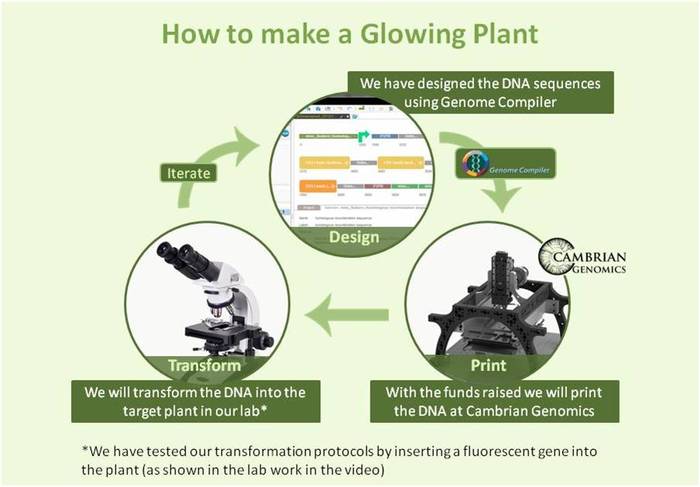
glowing_plants1The method used to achieve this is really quite interesting. It starts with the team downloading the luciferase-lucifern genes – the firefly DNA that allows them to glow – into a Genome Compiler, and then rewiring the DNA so that the proteins can be read by plants. The DNA sequences are then sent off to DNA printing company Cambrian Genomics, which has developed a relatively low-cost laser printing system. Those sequences are printed, put on a little spot of paper, and mailed back to the team.

After that, the team relies on one of two methods to transmit the firefly DNA into the Arabidopsis’ themselves. One way is to use a bacteria solution that is capable of injecting its own DNA into plants and rewriting theirs, which then causes the altered plants to germinate seeds of the new glowing strain. The other involves gold nano-particles coated with a DNA construct that are then fired at the plant cells, which are then absorbed into the plant chromosomes and alters their DNA.

NanoparticlesThis second method was devised to do an end run around specific Department of Agriculture regulations that govern the use of viruses or other pathogens to modify DNA. Though technically legal, the process has attracted resistance from environmental groups and the scientific community, fearing that the DNA of these altered plants will get into the natural gene pool with unknown consequences.

In fact, an anti-synthetic biology group called ECT has emerged in response to this and other such projects – and is centered in my old hometown of Ottawa! They have countered Glowing Plant’s Kickstarter campaign (which is now closed) with a fundraising drive of their own, entitled “Kickstopper”. In addition, the group has started a campaign on Avaaz.org to force the Supreme Court to reconsider the ruling that allows this sort of bioengineering to take place.

At present, their fundraising campaign has raised a total ofΒ  $1,701 from 58 backers – rougly 9% of its overall goal of $20,000 – and their Avaaz campaign has collected some 13,000 signatures. With 36 days left, there is no telling if they’re efforts will succeed in forcing a legal injunction on Glowing Plant, or if this is the first of many synthetic biology products that will make it to the market through private research and crowdfunding.

A fascinating time we live in, and potentially frightening…

Sources: fastcoexist.com, (2), kickstarter.com, glowingplant.com

Ending Cancer: Cell-Phone Sized Cancer Detector!

ISEF2012-Top-Three-WinnersThe name Jack Andraka is already one that researchers and medical practitioners are familiar with. Roughly a year ago, the 16-year old boy developed a litmus test that was capable of detecting pancreatic cancer, one of the most lethal forms of the disease and one of the most difficult to treat. And given that his method was 90% accurate, 168 times faster than current tests and 1/26,000th the cost, it’s title wonder why he’s considered something of a wonder kid.

Well, it seems boy genius is at it again! Shortly after receiving first place at the 2012 Intel International Science and Engineering Fair (ISEF), Andraka assembled a crack team of young scientists and began working on a handheld, non-invasive device that could help detect cancer early on. Much like Scanadu, the company that recently release a sensor for testing vitals, Andraka and his team were looking to create a genuine tricorder-like device.

Tricorder X_prizeAnd while their group – known as Generation Z and which was formed from the other 2012 finalists – is working towards such a device, Andraka presented his own concept at this year’s ISEF. Apparently, what he built is modeled on a tradition raman spectrometer –Β  a device that can be used to detect explosives, environmental contaminants, and cancer in the human body.

A conventional raman spectrometer is extremely delicate, can be as large as a small car, and cost up to $100,000. By contrast, the one designed by Andraka costs only $15 and is the size of a cell phone. According to Andraka, a raman spectrometer works by “[shooting] a powerful laser at a sample and tells the exact chemical composition.” Such a device also relies on a liquid nitrogen cooled photodector to examine the chemical composition of whatever material is currently being examined.

Those powerful lasers alone can cost up to $40,000, so Andraka swapped out the big lasers for an off-the-shelf laser pointer and replaced the photodetector with an iPhone camera. According to Andraka, the results are comparable, at a fraction of the size and, more importantly, the cost. So once more, the boy genius has presented medical science with a cheap, effective means of early detection, something which could save lives and millions in health care costs.

Tricorder XAndraka admits that this device was pretty much all his, but he plans to incorporate it into the tricorder design that he and his colleagues in Generation Z are developing. Once realized, the resulting device will be competing for the Tricorder X Prize – a ten million dollar grant that is given to any entrant that can create a handheld mobile platform that can diagnose 15 diseases across 30 patients in just three days.

But of course, they will have some stiff competition, not the least of which will come from Scanadu, which just happens to have the backing of NASA’s Ames Center.Β  But then again, the world loves an underdog. And when it comes to medical devices, cancer, and other diseases of the body, its clear that Andraka and his peers are just getting started!

And be sure to check out this video with highlights from the 2013 ISEF:


Sources:
fastcoexist.com,Β (2)

News From Mars: Revelations on Radiation

mars_astronauts1As the projected date for a manned mission to the Red Planet approaches, the Mars Science Laboratory and Curiosity team continue to conduct vital research into what a human team of explorers can expect to find. Unfortunately, earlier last month, that research led to a discouraging announcement which may force NASA and a number of private companies to rethink their plans for manned missions.

Earlier in May, a number of scientists, NASA officials, private space company representatives and other members of the spaceflight community gathered in Washington D.C. for a three day meeting known as the Humans to Mars (H2M) conference. Hosted by the spaceflight advocacy group Explore Mars, the attendees met to discuss all the challenges that a 2030 manned mission would likely encounter.

mars_astronautsFor starters, the human race currently lacks the technology to get people to Mars and back. An interplanetary mission of that scale would likely be one of the most expensive and difficult engineering challenges of the 21st century. Currently, we don’t have the means to properly store enough fuel to make the trip, or a vehicle capable of landing people on the Martian surface. Last, and most importantly, we aren’t entirely sure that a ship will keep the astronauts alive long enough to get there.

This last issue was raised thanks to a recent confirmation made by the Curiosity rover, which finished calculating the number of high-energy particles that struck it during its eight month journey to Mars. Based on this data, NASA says that a human traveling to and from Mars could well be exposed to a radiation dose that is beyond current safety limits.

NASAsolar_radiationThis was performed with the rover’s Radiation Assessment Detector (RAD) instrument, which switched on inside as the cruise vessel began its 253-day, 560-million-km journey. The particles of concern fall into two categories – those that are accelerated away from our Sun and galactic cosmic rays (GCRs) – those that arrive at high velocity from outside of the Solar System. This latter category is especially dangerous since they impart a lot of energy when they strike the human body, can cause damage to DNA and are hard to shield against.

What’s more, this calculation does not even include time spent on the planet’s surface. Although Curiosity has already determined that planetary levels were within human tolerances, the combined dosage would surely lead to a fatal case of cancer for any career astronaut looking to take part in an “Ares Mission”. Cary Zeitlin from the Southwest Research Institute in Boulder, Colorado, and colleagues reported the Curiosity findings in the latest edition of Science magazine.

They claim that engineers will have to give careful consideration to the type of shielding that will need to be built into a Mars-bound crew ship. However, they concede that for some of the most damaging radiation particles, there may be little that can be done, beyond delivering them to Mars as quickly as possible. This presents an even greater challenge, which calls for the development of something better than existing propulsion technology. Using chemical propellants, Curiosity made the trip in eight months.

spaceX_elonmusk However, the good news is that at this juncture, nothing is technologically impossible about a manned Mars mission. It’s just a matter of determining what the priorities are and putting the time and money into developing the necessary tools. Right now NASA, other space agencies, and private companies are working to bring Mars within reach. And with time and further developments, who knows what will be possible by the time the 2020’s roll around?

Some alternatives include plasma and nuclear thermal rockets, which are in development and could bring the journey time down to a number of weeks. What’s more, SpaceX and other agencies are working on cheaper deliver systems, such as the grasshopper reusable rocket, to make sending ships into space that much more affordable. In addition, concepts for improving radiation shielding – like Inspiration Mars’ idea of using human waste – are being considered to cut down on the irradiation factor.

So despite the concerns, it seems that we are still on track for a Mars mission in 2030. And even if there are delays in the implementation, it seems as though a manned mission is just a matter of time at this point. Red Planet, here we come!

Sources: bbc.co.uk, wired.com

Powered By The Sun: Visualizing Swanson’s Law

solar_power1For decades, solar power has been dogged by two undeniable problems that have prevented it from replacing fossil fuels as our primary means of energy. The first has to do the cost of producing and installing solar cells, which until recently remained punitively. The second has to do with efficiency, in that conventional photovoltaic cells remained inefficient as far as most cost per watt analyses went. But thanks to a series of developments, solar power has been beating the odds on both fronts and coming down in price.

However, to most people, it was unclear exactly how far it had come down in price. And thanks to a story recently published in The Economist, which comes complete with a helpful infographic, we are now able to see firsthand the progress that’s been made. To call it astounding would be an understatement; and for the keen observer, a certain pattern is certainly discernible.

PPTMooresLawaiIt’s known as the “Swanson Effect” (or Swanson’s Law), a theory that suggests that the cost of the photovoltaic cells needed to generate solar power falls by 20% with each doubling of global manufacturing capacity. Named after Richard Swanson, the founder of the major American solar-cell manufacturer named SunPower, this law is basically an imitation of Moore’s Law, which states that every 18 months or so, the size of transistors (and also their cost) halves.

What this means, in effect, is that in solar-rich areas of the world, solar power can now compete with gas and coal without the need for clean energy subsidies. As it stands, solar energy still accounts for onlyΒ  a quarter of a percent of the planet’s electricity needs. But when you consider that this represents a 86% increase over last year and prices shall continue to drop, you begin to see a very trend in the making.

What this really means is that within a few decades time, alternative energy won’t be so alternative anymore. Alongside such growth made in wind power, tidal harnesses, and piezoelectric bacterias and kinetic energy generators, fossil fuels, natural gas and coal will soon be the “alternatives” to cheap, abundant and renewable energy. Combined with advances being made in carbon capture and electric/hydrogen fuel cell technology, perhaps all will arrive in time to stave off environmental collapse!

Check out the infographic below and let the good news of the “Swanson Effect” inspire you!:

swanson_effectSource: theeconomist.com

New Podcast Series: Space Stations!

star_trek_space_stationMy good buddy, Fraser Cain, a co-inventor and publisher over at Universe Today, has just unveiled a new podcast series which I strongly recommend to anyone who loves space, science, and fiction pertaining to them. Those who follow this site may recognize the name, as Universe Today just happens to be my go-to source for all things space related. From the Curiosity Rover and the Cassini Probe to the mysteries of life on Earth and the universe at large, these guys can be trusted to be in the know!

I even had the honor of writing articles to them for about a year and a half, and I credit this experience with honing my ability to take hard science, gain a basic understanding of it, and then convey it to a general audience in an understandable fashion. Yes, before I worked for these guys, I was truly a geek-in-waiting, someone who didn’t know their quasars from their quarks. Now… well, I’m a little better!

In any case, the podcast series is called Space Stations, and comprises four episodes that take a look at man-made structures in space, beginning with Salyut and Skylab – the earliest Soviet and American attempts to put a manned station into orbit – and then moving onto Russia’s Mir space station, the International Space Station (ISS), and then taking a look at what the future holds for humans living and working in space.

ISSYou can check out the series at their website here, or just head on over to Astronomy Cast, the site for Universe Today‘s podcasts, and start listening willy-nilly. Me, my favorite is the fourth and final episode which takes a look at the future of space stations, and anyone claiming to know the first thing about me will not wonder why! I mean, c’mon, future of space, what’s not to love about that???

And of course, you can check out their voluminous archives, which contain podcasts on subjects ranging from Aliens to Physics, Astronomy to Planetary Science, and the history of space flight to current missions and the future of space exploration. I can promise you that if you’re the kind of person who finds the science jokes in The Big Bang Theory hilarious, you will feel like a kid in a candy store!

Trivia Question: Where does the name Universe Today come from? If you answer this question (no Googling!) you will have my enduring respect forever!

Sources: universetoday.com, astronomycast.com

The Future of Cities and Urban Planning

future-city-1With the development of vertical farms, carbon capture technology, clean energy and arcologies, the future of city life and urban planning is likely to be much different than it does today. Using current trends, there are a number of people who are determined to gain some understanding of what that might look like. One such group is Arup, a design and engineering firm that produced a mockup that visualizes what urban environments will look like in 2050.

Based on the world as it is today, certain facts about the future seem relatively certain. For starters, three-quarters of the population will live in cities, or 6.75 billion of the projected 9 billion global total. In addition, everyone will have grown up with the Internet, and its successors, and city residents will have access to less natural resources than they do today, making regeneration and efficiency more of a priority.

Add to this several emerging technologies, and our urban environments are likely to look something like the building mockup below. As you can see, it has its own energy systems (“micro-wind,” “solar PV paint,” and “algae facade” for producing biofuels). There is an integrated layer for meat, poultry, fish, and vegetable farming, a “building membrane” that converts CO2 to oxygen, heat recovery surfaces, materials that phase change and repair themselves, integration with the rest of the city, and much more.

future_urban_planning

Most futuristic of all is the fact that the structure is completely modular and designed to be shifted about (by robots, of course). The building has three layer types, with different life-spans. At the bottom is a permanent layer – with a 10 to 20-year lifespan – which includes the “facade and primary fit-out walls, finishes, or on-floor mechanical plant” – and a third layer that can incorporate rapid changes, such as new IT equipment.

As Arup’s Josef Hargrave described the building when unveiling the design:

[A]ble to make informed and calculated decisions based on their surrounding environment… [a] living and breathing [structure] able to support the cities and people of tomorrow.

In short, the building is designed with personal needs in mind, based on information gleamed from a person’s behaviors, stated preferences, and even genetic information.

aircleaning_skyscraper3But what is even more interesting is how these buildings will be constructed. As countless developments are made in the field of robotics, biotechnology and nanotechnology, both the materials used and the processes involved are likely to be radically different. The rigid construction that we are used to is likely to give way to buildings which are far more flexible, adaptive, and – best of all – built by robots, drones, tiny machines and bacteria cultures.

Once again, this change is due mainly to the pressures that are being placed on urban environments, and not just technological advances. As our world becomes even more densely populated, greater proportions of people live in urban environments, and resources become more constrained, the way we build our cities must offer optimum efficiency with minimal impact.

nanomachineryTowards this end, innovations in additive manufacturing, synthetic biology, swarm robotics, and architecture suggest a future scenario when buildings may be designed using libraries of biological templates and constructed with biosynthetic materials able to sense and adapt to their conditions.

What this means is that cities could be grown, or assembled at the atomic level, forming buildings that are either living creatures themselves, or composed of self-replicated machines that can adapt and change as needed. Might sound like science fiction, but countless firms and labs are working towards this very thing every day.

It has already been demonstrated that single cells are capable of being programmed to carry out computational operations, and that DNA strains are capable of being arranged to carry out specialized functions. Given the rapid progress in the field of biotech and biomimetics (technology that imitates biology), a future where the built environment imitates organic life seems just around the corner.

biofabrication For example, at Harvard there is a biotech research outfit known as Robobees that is working on a concept known as “programming group dynamics”. Like corals, beehives, and termite colonies, there’s a scalar effect gained from coordinating large numbers of simple agents to perform complex goals. Towards this end, Robobees has been working towards the creation of robotic insects that exhibit the swarming behaviors of bees.

Mike Rubenstein leads another Harvard lab, known as Kilobot, which is dedicated to creating a β€œlow cost scalable robot system for demonstrating collective behaviors.” His lab, along with the work of researcher’s like Nancy Lynch at MIT, are laying the frameworks for asynchronous distributed networks and multi-agent coordination, aka swarm robotics, that would also be capable of erecting large structures thanks to centralized, hive-mind programming.

nanorobot1

In addition to MIT, Caltech, and various academic research departments, there are also scores of private firms and DIY labs looking to make things happen. For example, the companies Autodesk Research and Organovo recently announced a partnership where they will be combining their resources – modelling the microscopic organic world and building bioprinters – to begin biofabricating everything from drugs to nanomachines.

And then there are outfits like the Columbia Living Architecture Lab, a group that explores ways to integrate biology into architecture. Their recent work investigates bacterial manufacturing, the genetic modification of bacteria to create durable materials. Envisioning a future where bacterial colonies are designed to print novel materials at scale, they see buildings wrapped in seamless, responsive, bio-electronic envelopes.

ESA_moonbaseAnd let’s not forget 3D printing, a possibility which is being explored by NASA and the European Space Agency as the means to create a settlement on the Moon. In the case of the ESA, they have partnered with roboticist Enrico Dini, who created a 3-D printer large enough to print houses from sand. Using his concept, the ESA hopes to do the same thing using regolith – aka. moon dust – to build structures on Earth’s only satellite.

All of these projects are brewing in university and corporate labs, but it’s likely that there are far more of them sprouting in DIY labs and skunkworks all across the globe. And in the end, each of them is dedicated to the efficiency of natural systems, and their realization through biomimetic technology. And given that the future is likely to be characterized by resources shortages, environmental degradation and the need for security, it is likely to assume that all of these areas of study are likely to produce some very interesting scenarios.

As I’ve said many times before, the future is likely to be a very interesting place, thanks to the convergence of both Climate Change and technological change. With so many advances promising a future of post-scarcity, post-mortality, a means of production and a level of control over our environment which is nothing short of mind-boggling – and a history of environmental degradation and resource depletion that promises shortages, scarcity, and some frightening prospects – our living spaces are likely to change drastically.

The 21st century is going to be a very interesting time, people. Let’s just hope we make it out alive!

Sources: fastcoexist.com, (2)

The Science of Sleep: Seeing Dreams and Augmenting Your Z’s

sleepingBeautySleep is a preoccupation the vast majority of human beings simply cannot shake. Unlike those lucky few who seem to be able to get by on a few hours a night, most people require a good eight hours of rest to be able to work, play, and function properly. Given that so much of our lives are spent in sleep – a full third, if we’re lucky – it’s little wonder then why the science of sleeping continues to fascinate us and garner so much attention.

Just this past April, Yukiyasu Kamitani and his colleagues at the ATR Computational Neuroscience Laboratories in Kyoto, Japan, announced that they were close to realizing their goal of being able to visualize people’s dreams. By this, of course, they meant the ability to take what a person was seeing while in deep REM sleep and project it onto a screen.

brain-activityThe process relies on a functional magnetic resonance imaging (fMRI) device, which examines the flow of blood in the brain to monitor activity. Using this data, the team then managed to create an algorithm that they claim can accurately display in real time what images are appearing in the subject’s dream. This is the first time, it is believed, that objective data has been collected from dreams.

But of course, the concept is predicated on the idea that when you experience a thought, your brain behaves in a specific, repeatable function. Assuming that this much is true, then the results could very well be quantifiable and rendered. The technology has already been demonstrated to work with a fair degree of effectiveness, as shown as the 2011 experiment at the University of California, where subjects watched movie trailers and had the images they were watching reconstructed.

Science-can-tell-what-you-are-dreamingAnd while some researchers are working on seeing dreams, others are working to reduce the time we spend doing it. Yes, given the hectic pace people who live in the modern, industrialized world are now forced to live by, there are actually research teams out there looking to find ways – pharmaceutical and neurological – to reduce our dependency on sleep.

The purpose is simple, to increase the amount of time we have in which live, produce and enjoy ourselves not by living longer, but by increasing the efficiency of sleep so we can spend more of our lives awake. In an extended essay that is available at Aeon magazine, Jessa Gamble – a writer specializing in the science of sleep – explains how new technologies could make this a reality.

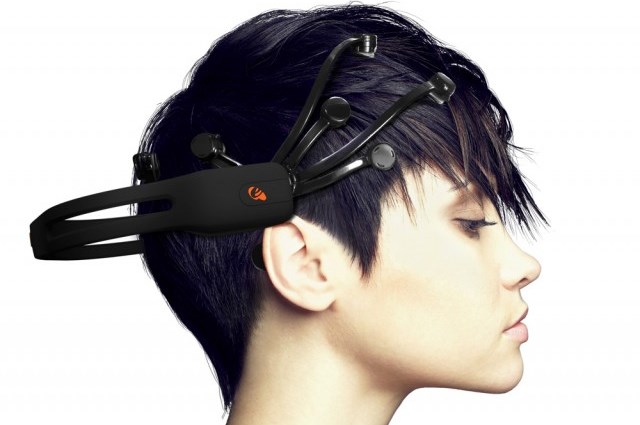
tcdsSuch technologies include things like the Somneo Sleep Trainer, a special mask that is being developed by Advanced Brain Monitoring and DARPA to help US servicemen and women combat fatigue, sleep deprivation, and experience more restful sleeps when they take them. By using a device that combines an EEG monitor and a series of blue-LED lights to supress melatonin, the mask is able to restrict the wearer’s sleep to only the most restorative phases of sleep.

And then there is the technology of transcranial direct-current stimulation, which involves such devices as the tDCS headband. Here, an electrical current is sent through the sleep-important parts of the brain, specifically the dorsolateral prefrontal cortex. The mild stimulation augments awareness and allows subjects, according to Gamble, to “learn visual search skills at double the speed.” They also sleep better later on, with “briefer waking periods and longer deep-sleep sessions.”

Using a technique called transcranial magnetic stimulation whichA third potential technology that could be used is known as “transcranial magnetic stimulation” (TMS), a process which induces “slow-wave oscillations” in the brain, pushing the subject into a state of deep sleep in less time. Whereas the Somneo Sleep mask puts people into a lighter phase of sleep quicker, TMS will allow them to achieve a deeper state of sleep almost instantaneously. Add to that a better sleep cycle and better periods of wakefulness, and you’ve got what can only be described as “augmented sleep”.

But of course, this technology is being spearheaded for the sake of armed services, but has immense civilian applications as well. According to the CDC, roughly 30% of Americans live with less than adequate amounts of sleep, which drastically increases the risks of chronic disease. So realistically, this technology has the power to remediate the problem of those not getting enough sleep before it begins “enhancing” the sleep of others.

And I for one wonder where I might get myself a tCDS headband. While I have no intention of cutting down on the total number of hours I spend in the sack, I do like the idea of making the sleep I get more sound and my waking hours more wakeful. Then people can expect me to be a lot more productive. I know there have been some complaints about my output on this site lately πŸ˜‰

Sources: cnet.news.com, fastcoexist.com, theloop.ca