News in Science: CERN Getting an Upgrade!

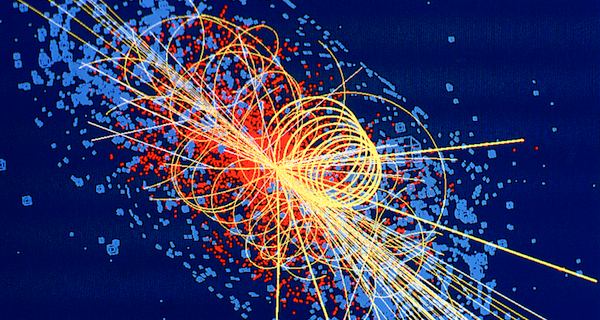
CERN_upgradeNot that long ago, the CERN laboratory announced that they had found the first evidence of the Higgs Boson. After this momentous discovery, many were left wondering what would be next for CERN and their instrument, the Large Hadron Collider. While they had confirmed that what they had found was a Higgs Boson, it might not necessarily be the Higgs Boson. Other such particles might exist, and questions about how these particles interact and explain the nature of the universe still need to be unlocked.

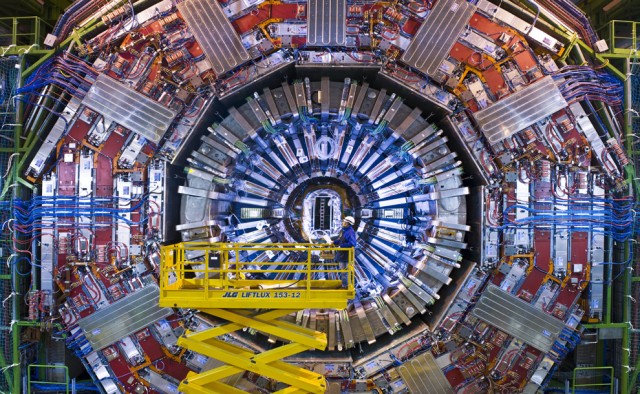
Well, it just so happens that this past April, the researchers who run the Large Hadron Collider (LHC) decided to take it offline so they could give it some long-awaited upgrades. These upgrades will take two years and cost a pretty penny, but once they are done, the LHC will be almost doubled in power and be able to do some pretty amazing things. First, they will be able to see if their Higgs Boson is the real deal, and not some random subatomic particle simply imitating its behavior.
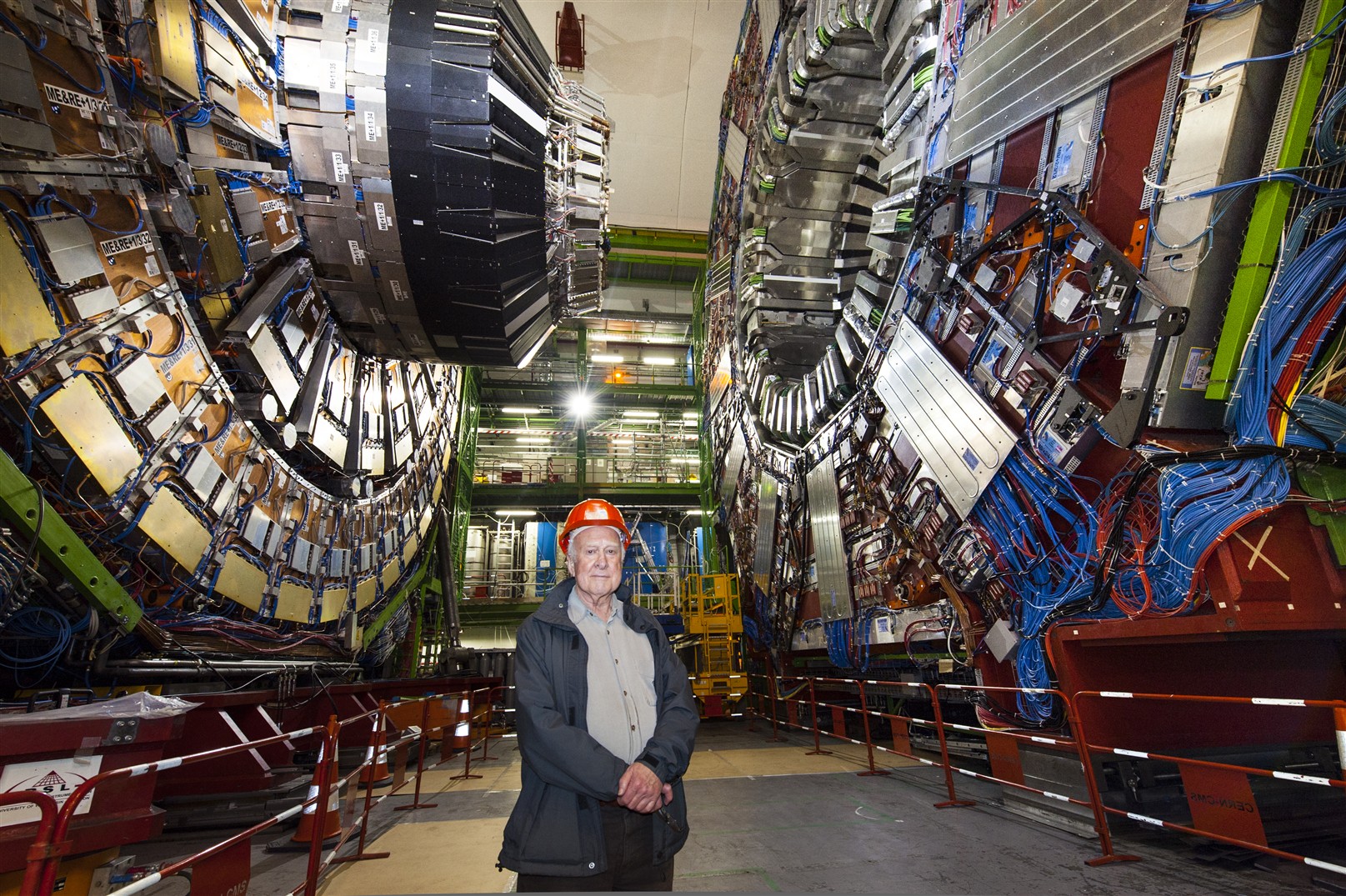
Peter Higgs (who proposed the Higgs boson), hanging out at LHC’s CMS detector
Peter Higgs (who proposed the Higgs boson), at the LHC

After that, according to CERN, they will take on the next big step in their ongoing research, which will consist consist of testing the theory of supersymmetry. Having demonstrated the Standard Model of particle physics to be correct, which the existence of the Higgs Boson confirms, they are now seeking to prove or disprove the theory that seeks to resolve its hierarchy problems.

Originally proposed by Hironari Miyazawa in 1966, the theory postulates that in nature, symmetry exists between two elementary particles – bosons and fermions – which are partnered to each other. Not only does this theory attempt to resolve theoretical problems stemming from the Standard Model (such as how weak nuclear force and gravity interact), it is also a feature of Superstring Theory, which attempts to explain how all the forces of the universe coexist.

universe_expansionFor some time, scientists have been trying to ascertain how the four major forces of the universe  – electromagnetism, strong nuclear forces, weak nuclear forces, and gravity – interact. Whereas the first three can be explained through quantum theory, the fourth remains a holdout, explainable in terms of Einstein’s Theory of Relativity, but inconsistent with quantum physics. Because of this, scientists have long sought out the missing pieces of the puzzle, hoping to find the subatomic particles and relational forces that could explain all this.

A number of theories have emerged, such as Superstring and Loop Quantum Gravity, but testing them remains a very difficult process. Luckily, by the time the LHC comes back online in 2015, not only will the researchers at CERN be able to confirm that they have found the real Higgs Boson, they will also have a far better shot at unlocking the greater mysteries of the universe…

Exciting news, I just wish it didn’t take so long to upgrade the darn thing! At this rate, it could be decades before we get to see gravitons, the other bosons, or whatever the heck those subatomic particles are that hold the universe together. I don’t know about you, but I’m eager to see how it all works!
universe

Source: Extremetech.com

100,000 Stars: An Interactive Exploration of the Milky Way

100,000starsWith interactive maps becoming all the rage, I had a feeling it was only time before someone premiered an interactive browser that would let you explore the cosmos. And now there is, and it goes by the name 100,000 stars. Personally, I would have preferred Google Galaxy, like I suggested before, but forget it! You can’t teach these big time web developers anything 😉

In any case, 100,000 stars is an experiment for Chrome web browsers, but it will also work with Firefox, Safari, or just about any other WebGL you might have. Open it up, and you can see where our Solar System is in relation to the Orion Arm of the Milky Way Galaxy. Then zoom in to see the local star groups that are closest to us, our sun, and the planets and asteroids that make up our Solar System.

Also, I should note that the site provides a guided tour for the newly-initiated. I recommend you use that first, then try tinkering with the settings a little before mucking about to get a look at our little corner of the universe. The site can be a bit clunky at times, but keep in mind that there’s plenty of graphic info that’s being streamed at any given time. But if your machine and/or internet connection is faster than mine (a distinct possibility) you might have no trouble at all.

Simply click here and start exploring!

Source: thisiscolossal.com

Big News in Quantum Computing!

^For many years, scientists have looked at the field of quantum machinery as the next big wave in computing. Whereas conventional computing involves sending information via a series of particles (electrons), quantum computing relies on the process of beaming the states of these particles from one location to the next. This process, which occurs faster than the speed of light since no movement takes place, would make computers exponentially faster and more efficient, and lead to an explosion in machine intelligence. And while the technology has yet to be realized, every day brings us one step closer…

One important step happened earlier this month with the installment of the D-Wave Two over at the Quantum Artificial Intelligence Lab (QAIL) at the Ames Research Center in Silicon Valley, NASA has announced that this is precisely what they intend to pursue. Not surprisingly, the ARC is only the second lab in the world to have a quantum computer.  The only other lab to possess the 512-qubit, cryogenically cooled machine is the defense contractor Lockheed Martin, which upgraded to a D-Wave Two in 2011.

D-Wave’s new 512-qubit Vesuvius chip

And while there are still some who question the categorization of the a D-Wave Two as a true quantum computer, most critics have acquiesced since many of its components function in accordance with the basic principle. And NASA, Google, and the people at the Universities Space Research Association (USRA) even ran some tests to confirm that the quantum computer offered a speed boost over conventional supercomputers — and it passed.

The new lab, which will be situated at NASA’s Advanced Supercomputing Facility at the Ames Research Center, will be operated by NASA, Google, and the USRA. NASA and Google will each get 40% of the system’s computing time, with the remaining 20% being divvied up by the USRA to researchers at various American universities. NASA and Google will primarily use the quantum computer to advance a branch of artificial intelligence called machine learning, which is tasked with developing algorithms that optimize themselves with experience.

nasa-ames-research-center-partyAs for what specific machine learning tasks NASA and Google actually have in mind, we can only guess. But it’s a fair bet that NASA will be interested in optimizing flight paths to other planets, or devising a safer/better/faster landing procedure for the next Mars rover. As for Google, the smart money says they will be using their time to develop complex AI algorithms for their self-driving cars, as well optimizing their search engines, and Google+.

But in the end, its the long-range possibilities that offer the most excitement here. With NASA and Google now firmly in command of a quantum processor, some of best and brightest minds in the world will now be working to forward the field of artificial intelligence, space flight, and high-tech. It will be quite exciting to see what they produce…

photon_laserAnother important step took place back in March, when researchers at Yale University announced that they had developed a new way to change the quantum state of photons, the elementary particles researchers hope to use for quantum memory. This is good news, because it effectively demonstrated that true quantum computing – the kind that utilizes qubits for all of its processes – has continually eluded scientists and researchers in recent years.

To break it down, today’s computers are restricted in that they store information as bits – where each bit holds either a “1″ or a “0.” But a quantum computer is built around qubits (quantum bits) that can store a 1, a 0 or any combination of both at the same time. And while the qubits would make up the equivalent of a processor in a quantum computer, some sort of quantum Random Access Memory (RAM) is also needed.

Photon_follow8Gerhard Kirchmair, one of Yale researchers, explained in a recent interview with Nature magazine that photons are a good choice for this because they can retain a quantum state for a long time over a long distance. But you’ll want to change the quantum information stored in the photons from time to time. What the Yale team has developed is essentially a way to temporarily make the photons used for memory “writeable,” and then switch them back into a more stable state.

To do this, Kirchmair and his associates took advantage of what’s known as a “Kerr medium”, a law that states how certain mediums will refract light in a different ways depending on the amount shined on it. This is different from normal material materials that refract light and any other form of electromagnetic field the same regardless of how much they are exposed to.

Higgs-bosonThus, by exposing photons to a microwave field in a Kerr medium, they were able to manipulate the quantum states of photons, making them the perfect means for quantum memory storage. At the same time, they knew that storing these memory photons in a Kerr medium would prove unstable, so they added a vacuum filled aluminum resonator to act as a coupler. When the resonator is decoupled, the photons are stable. When resonator is coupled, the photons are “writeable”, allowing a user to input information and store it effectively.

This is not the first or only instance of researchers finding ways to toy with the state of photons, but it is currently the most stable and effective. And coupled with other efforts, such as the development of photonic transistors and other such components, or new ways to create photons seemingly out of thin air, we could be just a few years away from the first full and bona fide quantum processor!

Sources: Extremetech.com, Wired.com, Nature.com

The Future is Here: Cellular Computers!

dnacomputingComputing has come so far in such a relatively short space of time. Beginning with comparatively basic models, which relied on arrangements of analogue circuits (such as capacitors and resistors), scientists were able to perform complex calculations, crack impenetrable cyphers, and even know how and where to deploy counter-measures against incoming missiles. And as we all know, sometimes you have to look back to the fundamentals if you want to move any farther ahead.

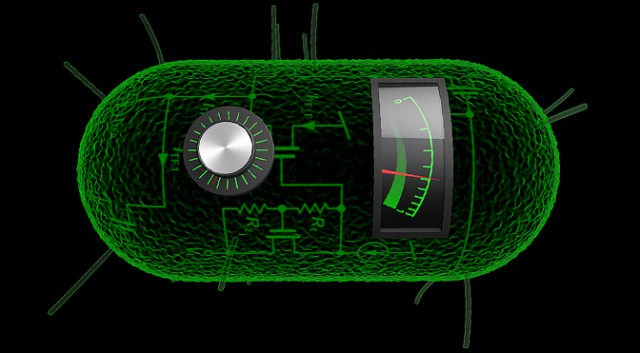
And that’s precisely what researchers at MIT have done with their latest innovation: an analog computer that works inside a living cell! A massive step towards a future where machinery and biology are one and the same, these “cellular computers” were not only able to perform arithmetic, but also more complex functions like taking logarithms, square roots, and even do power law scaling.

biological-analog-computers-in-cells-640x353This news comes on the heels of researchers at Stanford who were able to create a biological transistor inside a cell. Relying on DNA and RNA to create a “transcriptors”, the Standford researchers were able to create a biological logic gate, and all on the microscopic scale. When combined the sorts of digital and analog circuits common to computing, this research could lead to powerful sensing and control platforms built on very small scales.

And like many recent innovations and developments made within the world of computing and biotechnology, the possibilities that this offers are startling and awesome. For one, all cells work with a certain biological clock, which regulates growth, circadian rhythms, aging, and numerous biological process. Thus far, the researchers in question have been hosting their biological computers in bacterial cells. But if they were to develop analogous circuits that operate in mammalian cells, these functions might be brought into better use.

DNA-molecule2What this means is that we could be very well seeing the beginning of biology that is enhanced and augmented by the addition of technology on the cellular level. And not in the sense of tiny machines or implants, things made of silicon and minerals that would regulate our blood flow, administer drugs or monitor or vitals. No, in this case, we would be talking about machines that are composed of self-regulating DNA and RNA and work in the same way our organic tissues do.

On top of that, we would be able to create things like flash drives and computation software from living tissue, cramming thousands of terabytes of into into a few cells worth of genetic material. Human beings would no longer need smartphones, PDAs or tablets, since they would be able to carry all the information they would ever need in their body. And the ability to do this could very well lead to the creation of AI’s that are not build, but grown, making them virtually indistinguishable from humans.

caprica_6And you know what that means, don’t you? The line between biological and artificial would truly begin to dissolve, Voight-Kampff and genetic tests might have to become mandatory, and we could all be looking at robots that look something like this…

Man the future is awesome and scary!

Sources: Extremetech.com, (2)

Towards a Cleaner Future: The Molten Salt Reactor

nuclear-power

What if you heard that there was such a thing as a 500 Megawatt reactor that was clean, safe, cheap, and made to order? Well, considering that 500 MWs is the close to the annual output of a dirty coal power station, you might think it sounded too good to be true. But that’s the nature of technological innovations and revolutions, which the nuclear industry has been in dire need of in recent years.

While it is true that the widespread use of nuclear energy could see to humanity’s needs through to the indefinite future, the cost of assembling and maintaining so many facilities is highly prohibitive. What’s more, in the wake of the Fukushima disaster, nuclear power has suffered a severe image problem, spurred on by lobbyists from other industries who insist that their products are safer and cheaper to maintain, and not prone to meltdowns!

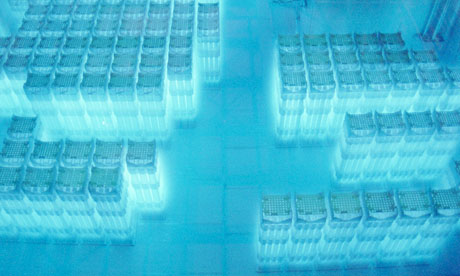
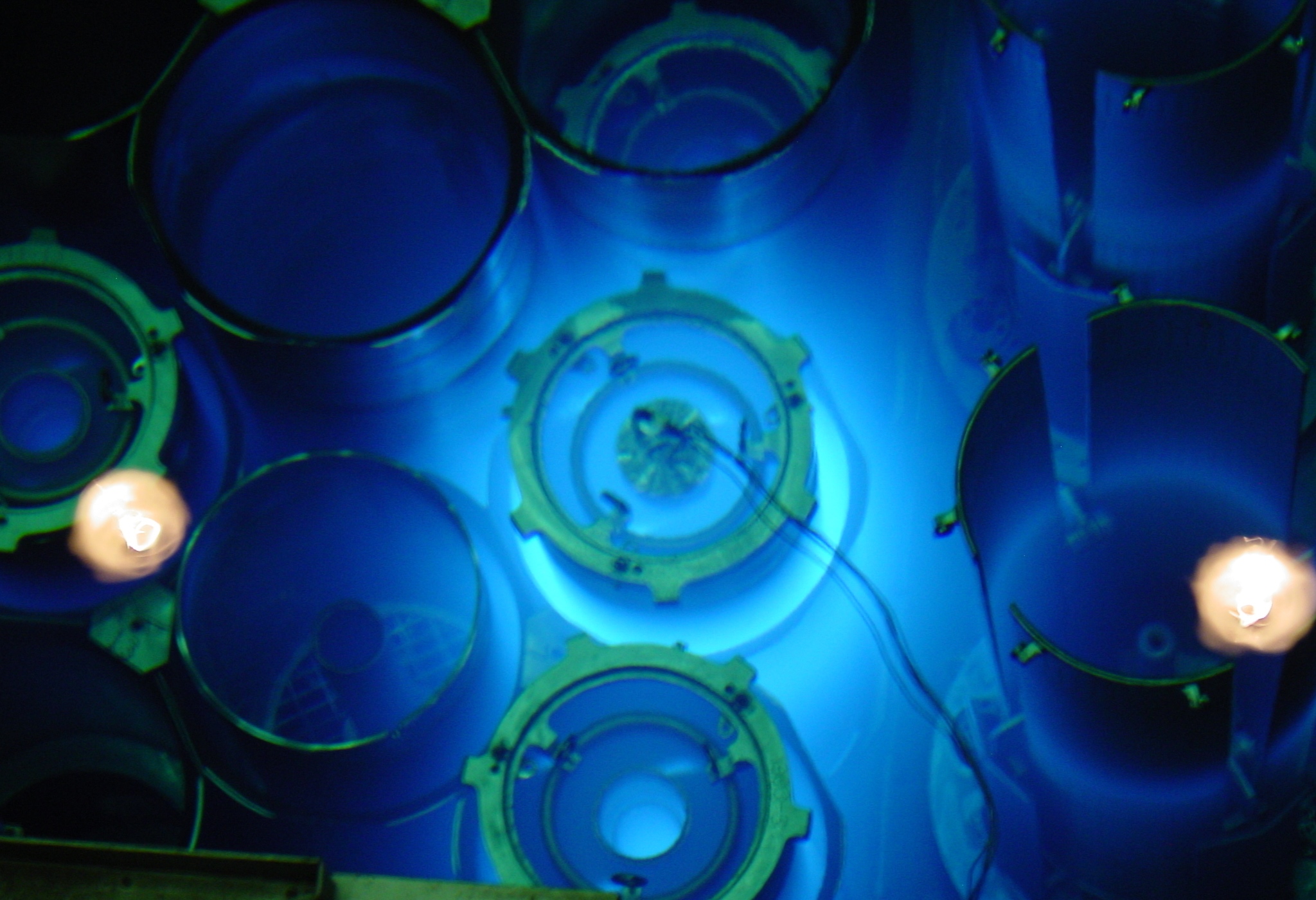
Nuclear MOX plant : recycling nuclear waste : Submerged Spent Fuel Elements with Blue Glow

As a result of all this, the stage now seems set for a major breakthrough, and researchers at MIT and Transatomic’s own Russ Wilcox seems to be stepping up to provide it. Last year, Wilcox said in an interview with Forbes that it was “a fabulous time to do a leapfrog move”. Sounded like a bold statement at the time, but recently, Transatomic went a step further and claimed it was mobilizing its capital to make the leap happen.

Basically, the plan calls for the creation of a new breed of nuclear reactor, one which is miniaturized and still produces a significant amount of mega-wattage. Such efforts have been mounted in the past, mainly in response to the fact that scaling reactors upwards has never resulted in increased production. In each case, however, the resulting output was quite small, usually on the order of 200 MW.

???????????????????????????????

Enter into this the Transatomic’s Molten Salt Reactor (MSR), a design that is capable of producing half the power of a large-scale reactor, but in a much smaller package. In addition, MSRs possess a number of advantages, not the least of which are safety and cost. For starters, they rely on coolants like flouride or chloride salts instead of light or heavy water, which negates the need to pressurize the system and instantly reduces the dangers associated with super-heated, pressurized liquids.

What’s more, having the fuel-coolant mixture at a reasonable pressure also allows the mixture to expand, which ensures that if overheating does take place, the medium will simply expand to the point that the fuel atoms too far apart to continue a nuclear reaction. This is what is called a “passive safety system”, one that kicks in automatically and does not require a full-scale shutdown in the event that something goes wrong.

moltensalt_reactor1

Last, but not least, is the addition of the so-called freeze plug – an actively cooled barrier that melts in the event of a power failure, leading all nuclear material to automatically drain into a reinforced holding tank. These reactors are “walk away safe,” meaning that in the event of a power failure, accident, or general strike, the worst that could happen is a loss of service. In a post-Fukushima industry such disaster-proof measures simply must be the future of nuclear power.

Then, there is the costs factor. Transatomic claims their reactor will be capable of pumping out 500 megawatts for a total initial cost of about $1.7 billion, compared to 1000 megawatts for an estimated $7 billion. That’s about half the cost per megawatt, and the new reactor would also be small enough to be built in a central factory and then shipped to its destination, rather than requiring a multi-year construction project to build the plant and reactor on site.

The project has raised $1 million dollars of investment so far, and Transatomic appears to be putting all their eggs in this one basket. Their researchers also claim their design is production-ready and they are just waiting for orders to come in. And given the current energy crisis, it’s not likely to be long before government and industry comes knocking!

Source: Extremetech.com
The Future is Here: Passthoughts Replace Passwords

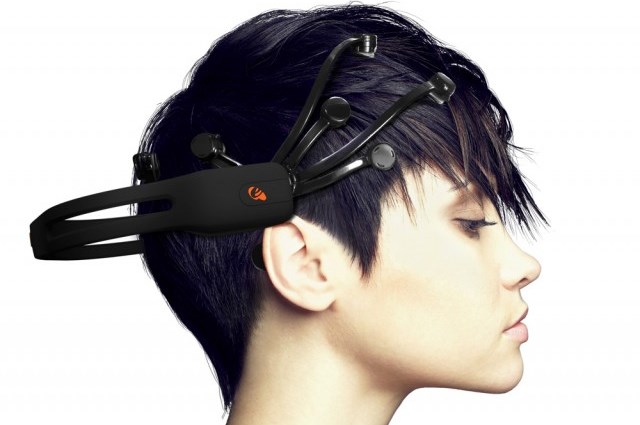
tcdsYou’ve heard of the Muse Headband, or perhaps the Neurosky Mindwave; devices that measure your brainwaves? Well as it happens, researchers at UC Berkley are using the technology to pioneer and new and revolutionary concept: passthoughts! Whereas accessing your computer, tablet or smartphone now is a matter of typing passwords on a (sometimes terribly small) keyboard, in the future it could be as easy as putting on a band and thinking.

Basically, the concept calls for the use of a mind-reading headband as a biometric identifier. Much like a person’s DNA or the blood vessels in their retina are specific to that individual, brainwaves also seem to be unique and can be used to identify them. An especially useful fact, if you want to log into a computer or otherwise prove your identity. Unlike passwords, credit card info or social security numbers, brainwaves cannot be stolen or faked… yet!


neurosky
To do this, the Berkeley researchers used a $100 commercial EEG (electroencephalogram), in this case the Neurosky. This device resembles a Bluetooth headset, with the slight difference of it having a single electrode that rests on your forehead and measures your brainwaves. These are then transmitted via a Bluetooth to a nearby computer. Much like a clinical EEG, the system has an error rate of less than 1%, but requires a single electrode instead of between 32 and 256.

To develop the brain-biometric process, participants were asked to complete seven different tasks with the EEG equipped. Three of the tasks were generic, requiring the participants to focus on breathing in and out, imagine moving their finger up and down, and listening for an audio tone. The other four tasks required participants to focus on an individual/personalized secret, such as singing a song of their choice, or performing a repetitive action.

brainwavesWhile performing these tasks, their brainwaves were monitored for heuristic patterns. And as it turns out, all seven tasks — even just sitting there and focusing on your own breathing — provided enough information to authenticate the subjects identity. So when it comes right down to it, this means of identifying oneself works effectively, and eliminates the need for passwords and could provide another layer of identity protection. All for the onetime price of $100.

But of course, there are some issues. For one, the bulk and unaesthetic nature of the EEG and the accuracy of the system, but these are both remediable. As it stands, no one would really want to wear a Neurosky EEG in public, but if the electrode were concealable – say, within a Bluetooth headset – this wouldn’t be a problem. As it stand, accuracy is the far more important issue. While a 99% accuracy rate is good, it is not good enough for serious and possibly security-based applications.

?????????????????But looking forward, it is not hard to imagine that the accuracy of the system will increase, as EEG hardware and biometric algorithms improve in quality. It is also very easy to imagine smartphones that can identify their users through their brainwaves, provided they are wearing a Bluetooth headset with an EEG equipped. In addition, computers that come equipped with headbands so people can log in and start working simply by sitting down and issuing the proper thoughts.

Thinking truly long-term, its not hard to imagine that the headband itself will be done away with in favor of a wireless EEG implanted underneath the skin. Much in the same way that these are allowing people to control robotic limbs, they may also allow us to log into computers, type documents, surf the net, and play video games with just our thoughts. Move over Xbox Connect! Here comes Xbox Thinx (patent pending!)

my_future_office_by_ishmakey-d3l9n3t

Source: Extremetech.com
The Future is Here: Using 3D Printing and DNA to Recreate Faces

strangervisions-1In what is either one of the most novel or frightening stories involving 3D printing and genetic research, it seems that an artist named Heather Dewey-Hagborg has been using the technology to recreate the faces of litterbugs. This may sound like something out of a dystopian novel – using a high-tech scenario to identify perpetrators of tiny crimes – but in fact, it is the basis of her latest art project.

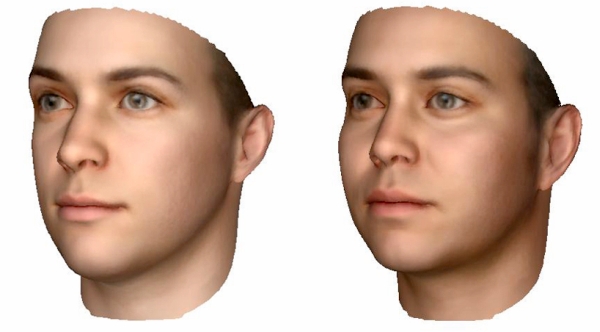
It’s known as Stranger Visions, a series of 3D printed portraits based on DNA samples taken from objects found on the streets of Brooklyn. Using samples of discarded gum and litter collected from the streets, a her work with a DIY biology lab in Brooklyn called Genspace – where she met a number of biologists who taught her everything she now knows about molecular biology and DNA – she was able to reconstruct what the strangers looked like and then printed the phenotypes out as a series of 3D portraits.

According to Dewey-Hagborg, the inspiration for this project came to her while waiting for a therapy session, when she noticed a framed print on the wall that contained a small hair inside the cracked glass. After wondering who the hair belonged to, and what the person looked like, she became keenly aware of the genetic trail left by every person in their daily life, and began to question what physical characteristics could be identified through the DNA left behind on a piece of gum or cigarette butt.

strangervisions-3In a recent interview, Dewey-Hagborg explained the rather interesting and technical process behind her art:

So I extract the DNA in the lab and then I amplify certain regions of it using a technique called PCR – Polymerase Chain Reaction. This allows me to study certain regions of the genome that tend to vary person to person, what are called SNPs or Single Nucleotide Polymorphisms.

I send the results of my PCR reactions off to a lab for sequencing and what I get back are basically text files filled with sequences of As, Ts, Cs, and Gs, the nucleotides that compose DNA. I align these using a bioinformatics program and determine what allele is present for a particular SNP on each sample.

strangervisions-5

Then I feed this information into a custom computer program I wrote which takes all these values which code for physical genetic traits and parameterizes a 3d model of a face to represent them. For example gender, ancestry, eye color, hair color, freckles, lighter or darker skin, and certain facial features like nose width and distance between eyes are some of the features I am in the process of studying.

I add some finishing touches to the model in 3d software and then export it for printing on a 3d printer. I use a Zcorp printer which prints in full color using a powder type material, kind of like sand and glue.

The resulting portraits are bizarre approximations of anonymous people who unknowingly left their genetic material on a random city street. Naturally, there are plenty of people who wonder how accurate her approximations are. Well, according to Dewey-Hagborg, the portraits bear a “family resemblance” to the subject, and at this time, no person has never recognized themselves in any of her exhibitions. Yet…

strangervisions-4And of course, there are limitations with this sort of phenotype-DNA identification. For starters, it is virtually impossible to determine the age of a person from their DNA alone. In addition, facial features like scars and hair growth cannot be gauged, so Dewey-Hagborg casts each portrait as if the person were around 25 years of age.

And yet, I cannot help but feel that there is some awesome and terrible potential in what Dewey-Hagborg has created here. While her artistic vision had to do with the subject of identity and anonymity in our society, there is potential here for something truly advanced and invasive. Already it has been considered that DNA identification could be the way of the future, where everyone’s identity is kept in a massive database that can either be used to track them or eliminate as suspects in criminal cases.

But in cases where the person’s DNA is not yet on file, police would no longer need to rely on sketch artists to identify potential perps. Instead, they could just reconstruct their appearances based on a single strand of DNA, and use existing software to correct for age, hair color, facial hair, scars, etc, and then share the resulting images with the public via a public database or press releases.

strangervisions-2And as Dewey-Hagborg’s own project shows, the potential for public exposure and identification is huge. With a sophisticated enough process and a quick turnover rate, cities could identity entire armies of litterbugs, polluters, petty criminals and even more dangerous offenders, like pedophiles and stalkers, and publicly shame them by posting their faces for all to see.

But of course, I am forced to acknowledge that Dewey-Hagborg conducted this entire project using a DIY genetics lab and through her own ardent collection process. Whereas some would see here an opportunity for Big Brother to mess with our lives, others would see further potential for a democratic, open process where local communities are able to take genetics and identification into their own hands.

Like I said, the implications and potential being shown here are both awesome and scary!

Source: thisiscolossal.com

Powered by the Sun: The Artificial Leaf

solar_power1Despite progress made in recent decades, solar power still has some obstacles to overcome before it can be completely adopted. Thanks to several innovations, the price of manufacturing and installing solar panels has dropped substantially, intermittency remains a problem. So long as solar power remains limited by both geography and weather, we can expect to remain limited in terms of use.

And short of building Space-Based Solar Power (SBSP) arrays, or producing super-capacitor batteries with graphene – both of which are being explored – the only other option is to find ways to turn solar power into other forms of usable fuel. When the sun isn’t shining, people will need something else to power their homes, appliances, heating and AC. And given that the point is to reduce pollution, it will also have to be clean.

??????And that’s precisely what Daniel Nocera and his team are doing over at the University of Harvard. Their “artificial leaf” – a piece of silicon (solar cell) coated with two catalysts – is a means of turning sunshine into hydrogen fuel. Basically, when sunlight shines in, the leaf splits the water into bubbles of hydrogen and oxygen on each side, which can then be used in a fuel cell.

Efforts in the past to build similar solar cells have faltered, due largely to the costs involved. However, with the price of solar-related materials dropping in recent years, this latest device may prove commercially viable. And built to a larger scale, the device could provide a super-cheap and storable energy source from which could then be piped off and used in a fuel cell to make electricity. And combined with arrays of solar panels, we could have the energy crisis licked!

artificial-leafNocera and his team first announced the technology back in 2011, back when he was still a chemist at MIT. Since that time, they have published a follow-up paper showing how the team has improved the leaf’s efficiency, laying out future challenges, and how these might be overcome. Foremost amongst these are a field trial, with the eventual aim of building a commercial device for the developing world.

Beyond that, Nocera hopes to commercialize the technology through his company, the Massachusetts-based Sun Catalytix. Once realized, he plans to to put his dream of giving the poor “their first 100 watts of energy” into action. Here’s hoping he succeeds. The poor need power, and the environment needs a break from all our polluting!

Thank you all for reading the latest installment of PBTS! And be sure to check out this video of the artificial leaf in action:

Zodiac

????????????

Zodiacal light, the kind that takes millions of years to come

What revelations will it share, which are already so old?

The edge of the universe, the boundary of creation

Pulsing with the same power that once beget it all.

How can it be, when a billion are swirled into one,

And a billion more circle each other ad infinitum,

That I can think myself the paragon of creation?

But a billion billion voices still seem to cry out with one voice,

To letting me know how small and insignificant I truly am

And at the same time, so very rare and precious.

But more than this, how very much I am not alone.

Selling Yourself: The Future of Advertising

DNA-1If you thought your world was already permeated enough by adspace, hang on to your hat! According to =researchers and geneticists, the age of genetic-based advertising is right around the corner, and is likely to be even more profitable than internet, television, radio or billboard ads ever were! Yes, in this brave new future, selling yourself will take on literal dimensions, with people signing over their genetic information and tailoring what ads they receive based on that very same thing.

Call it another unintended consequence of the Human Genome Project and ENCODE, which the latter of which recently finished cataloging the function of every part of the human genome. Or it could just be a case of advertising and the commercial industry making inroads, following the path traced by researchers and scientists in the hopes of finding the next place to saturate with ads.

dna_selfassemblyRegardless, geneticist Michael Schatz of the Cold Spring Harbor Laboratory sums up the possibility as follows:

Today, it’s such a niche market, but there’s tremendous growth opportunities there. In the endgame, it’s certain [genetics is] going to become one of the factors that big retailers would consider, but I think that’s pretty far off.

But as it turns out, it may not be as far off as he thinks. Already, a Minneapolis-based startup named Miinome is building a platform that will help consumers control what offers they get from retailers based on their genetic makeup, and to possibly cash in on the value of their DNA by selling the data back to marketers and researchers.

Through an open API, Miinome plans to collect genetic and environmental data mined from social networks like Twitter, Facebook and LinkedIn and run that through their proprietary algorithm to come up with a profile of you that’s richer than anything that exists on the internet today. Then, they will be able to infer what environmental factors and personal traits are likely to cause you concern, or gives rise to special needs.

dna-computingThese could something along the work-related stress and the problems associated with it – i.e. weight gain, hair loss, erectile dysfunction, etc. – and then recommend ads that would help the person address these. If a person so chooses to broadcast this kind of information to Miinome’s business partners, they could show you very targeted ads for weight loss supplements, hair care products, boner pills and anything else you might want.

The company, which is launching in closed beta this spring, will essentially be a repository and brokerage firm for your genetic information that will allow its members to choose what academic institutions, pharmaceutical companies or marketing firms can take a peek at which of their genes. Miinome, which boasts geneticist George Church and Autodesk’s Andrew Hessel as advisers, will essentially make money every time one of your traits is accessed by companies.

DNA-molecule2Whether you are for or against such an idea, you have to admit, it’s a pretty shrewd and sound business plan. In a company statement, Miinome CEO Paul Saarinen put forth the following mission statement:

We believe we can make your genetic information useful every day, not just when you’re sick. We’re the first member-controlled, portable human genomics marketplace.

Well, that’s one way to look at it. Another way would be to say that this is yet another invasion of people’s privacy, reaching beyond cookies and web-surfing habits to find a truly effective and intrusive way to spam them. Naturally, Saarinen also pointed out that everything will be opt-in and Miinome business partners won’t be able to get their hands on raw genetic data.

Still, one can expect privacy and human rights advocates to have something to say about this real soon!

 Source: Wired.com